

German WW2 Cemetery near Kyiv: Wehrmacht Losses in Ukraine 1941-1944
This article covers the history of German war graves and military cemeteries in Ukraine from the First World War through the present day, with a focus on the German WW2 cemetery at Vita-Poshtova (Віта-Поштова), located approximately 25 kilometres south-west of Kyiv. The cemetery is maintained by the Volksbund Deutsche Kriegsgräberfürsorge (German War Graves Commission) and is the largest German military burial site in the greater Kyiv area.
The article is structured in seven sections: (1) the German tradition of war grave commemoration and the origins of the Volksbund, from the First World War to June 1941; (2) the Wehrmacht’s advance into Ukraine in 1941 — Operation Barbarossa and the Battle of Kyiv; (3) the death of Army Group South in Ukraine, 1943–1944; (4) the total death toll of the Wehrmacht in Ukraine; (5) a general overview of German WW2 war cemeteries across Ukraine; (6) the five largest German military cemeteries in Ukraine; and (7) a detailed guide to the Vita-Poshtova cemetery near Kyiv, visiting information and personal photos from a 2022 visit.
The article includes more than 90 archival photographs from Ukrainian and German archives, many published for the first time, alongside the author’s personal photographs from the Vita-Poshtova site.
Note for German-speaking researchers (Hinweis für deutschsprachige Leser): Dieser Artikel behandelt den deutschen Soldatenfriedhof in Wita-Poshtowa bei Kiew sowie die Geschichte der deutschen Kriegsgräberstätten in der Ukraine. Der Volksbund Deutsche Kriegsgräberfürsorge betreut diese Anlage.
GERMAN WAR GRAVE TRADITION (1914–1939): WWI CEMETERIES, VOLKSBUND DEUTSCHE KRIEGSGRÄBERFÜRSORGE AND HELDENGEDENKTAG
While the German nation never suffered such substantial military losses before the XX century, its tradition of commemoration of the fallen soldiers stretches back centuries in the past. A new practice of national memorialization came during the Napoleonic Wars and hardened in Prussia in the 1860s-1870s. The image of the fallen warriors finally gained a semi-religious concept of eternal sacrifice, made for the sake of the whole nation. Apart from being monumentalized in poetry, theatrical performances, and paintings, the sites of significant battles witnessed the erection of monuments and later pilgrimage. The First World War brought unprecedented and never-before-experienced losses. The death of more than two million German soldiers (the highest death toll among the nations in the war), combined with millions of wounded and sick, became an enormous demographical, social, and economic catastrophe for the nation.

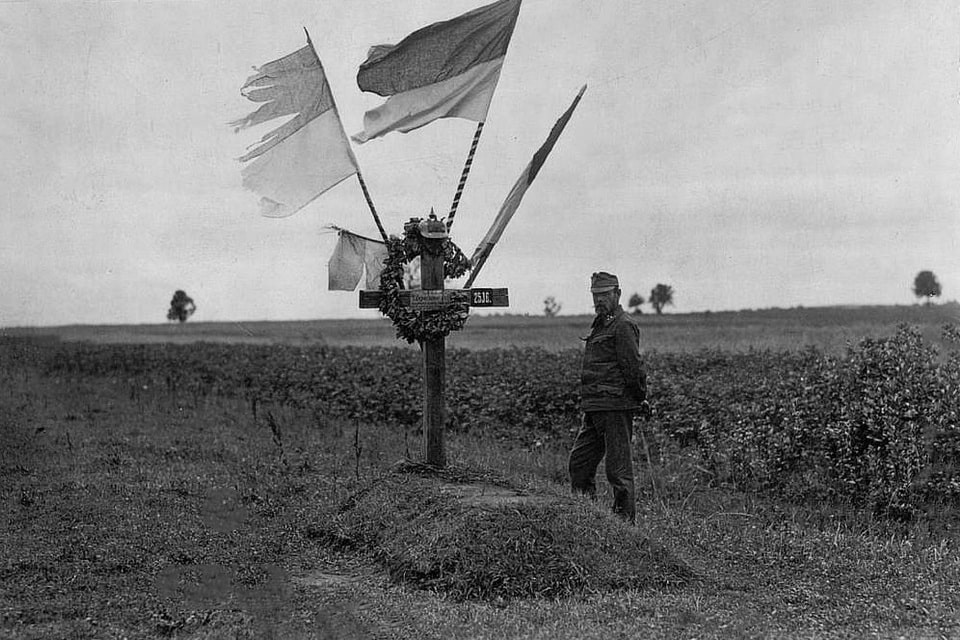
At the beginning of the conflict in 1914, Kaiser’s army aimed to make the individual burial of every fallen soldier possible but the overwhelming death toll deteriorated the burial and commemoration practices, most particularly at the sites of the largest slaughters such as Marne (260 000 killed or wounded), Verdun (430 000 Germans killed or wounded), Somme (at least 340 000 total losses), Ypres (around half a million in four battles). The scale and the geographic density of the losses were wartime factors but after the end of the War in 1919, came the factor of post-war geography. Since most German soldiers died beyond the state border, particularly in France, Belgium, or Eastern Europe, an appropriate commemoration of the fallen became a problem in the post-war years. Those combat veterans who died at home from wounds were dispersed across the country at Catholic graveyards.
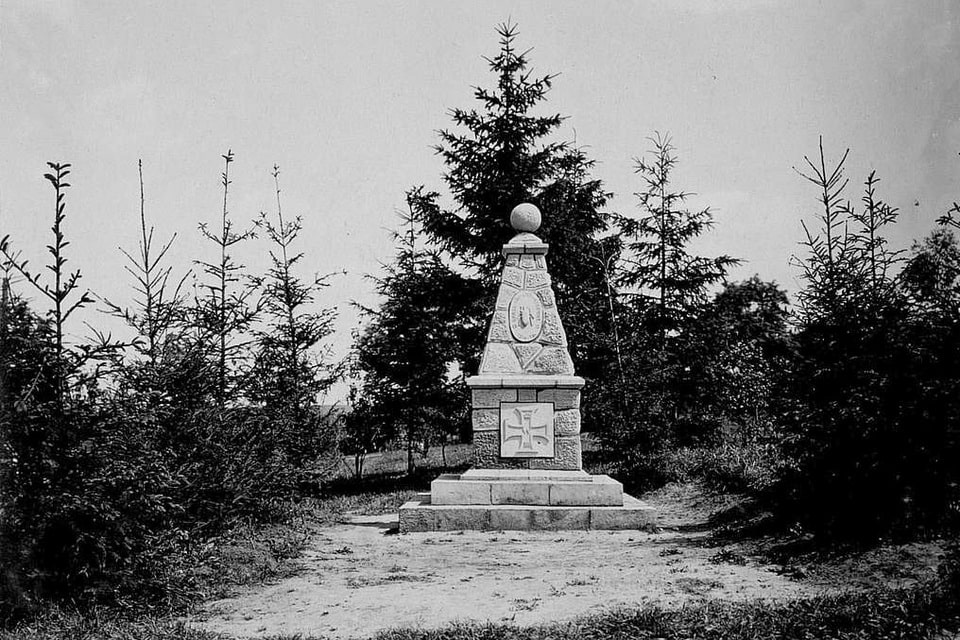
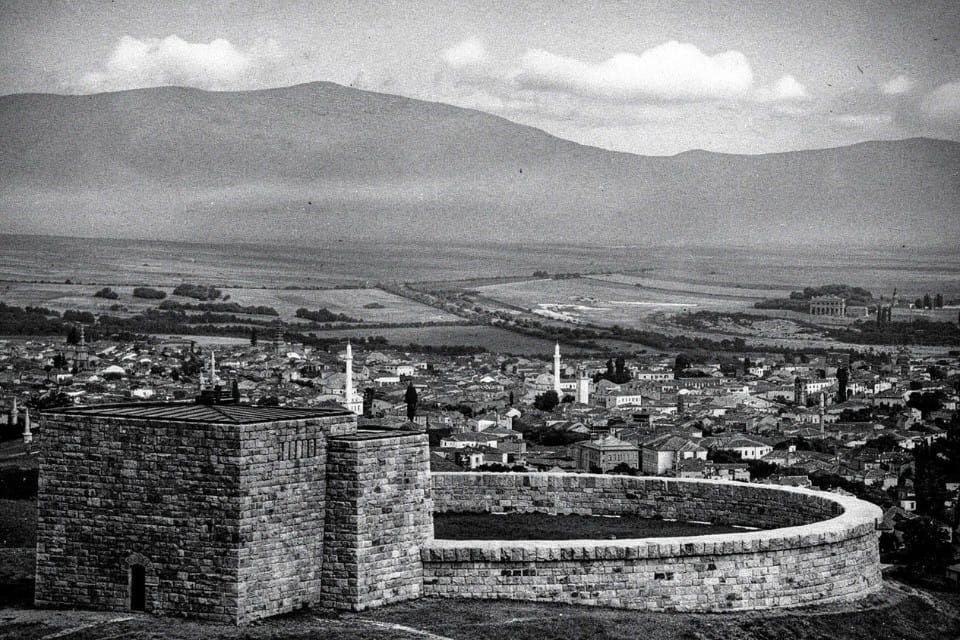
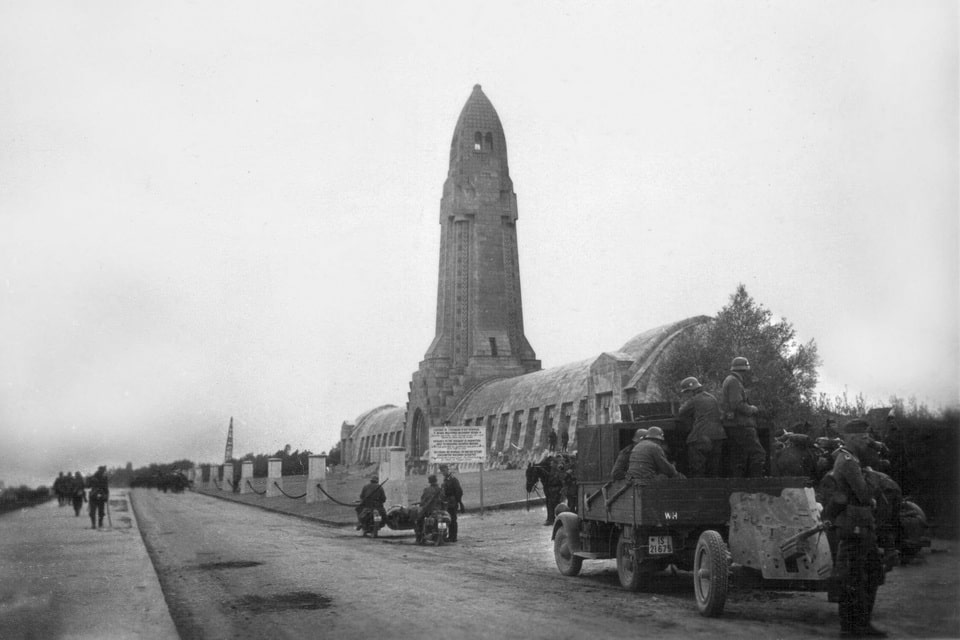
The army was stripped of access to the war cemeteries abroad, and the commemoration was held by the newly created (December 1919) ‘Volksbund Deutsche Kriegsgräberfürsorge’ (German War Graves Commission). The former soldiers had to commemorate their combat brothers at home with family and church rather than in military traditions. Since the government of the newly created Weimar Republic was zealous in distancing itself from the militaristic past of the German Empire, it brought tension in the society, considering the enormous national loss. Such a strain could not go unnoticed by the pangerman and right-wing organizations and political parties. From the start of his rise to power in the early 1920s, Adolf Hitler capitalized on the topic of the Versailles Treaty, and the Nazi-orchestrated myth about the ‘step in the back’ of the army, among other things, exploited the painful issue of commemoration of the fallen in the Great War. After seizing power in 1933, the Nazis and Hitler personally corrupted the idea of front comradeship and even linked their losses in the 1923 failed Beer Hall Putsch to the German martyrs of the past. As early as February 27, 1934, the regime invented ‘Heldengedenktag’ (Day of Commemoration of Heroes), which deformed the traditional mourning into national celebrations. Hitler himself used to make public appearances at the war memorial, especially those of the Great War, while he was planning another World onslaught.
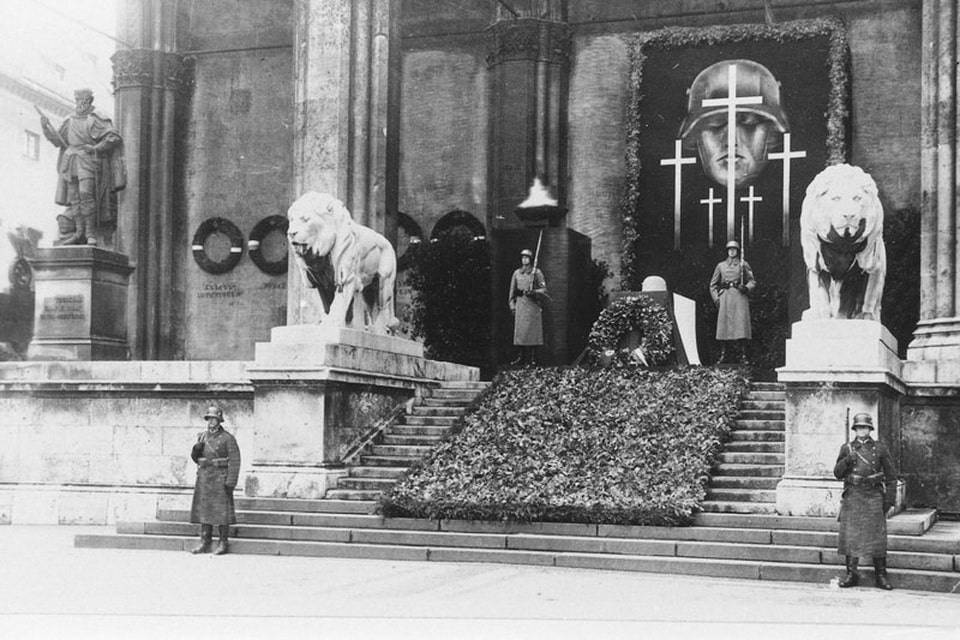
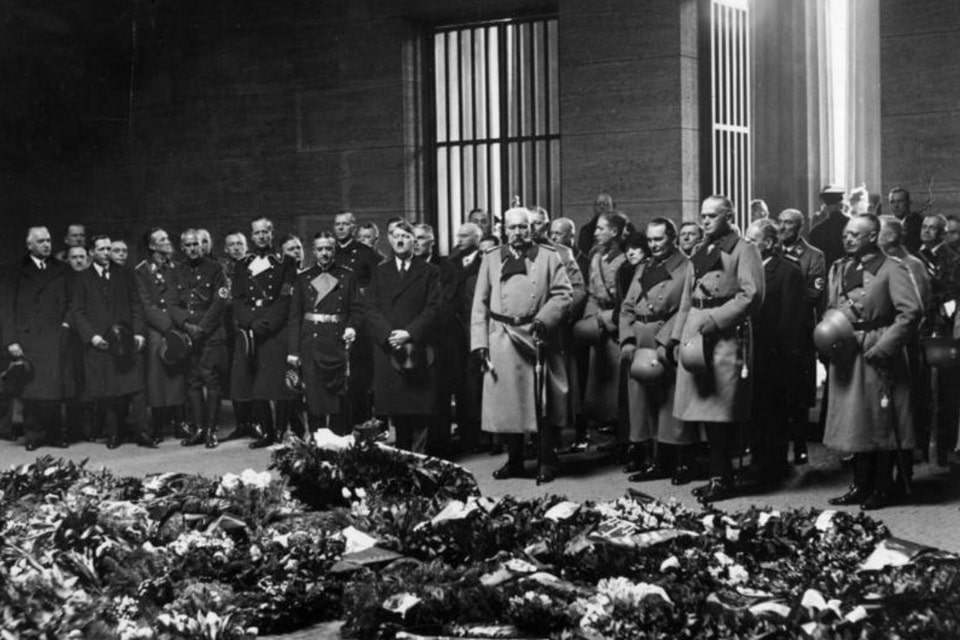
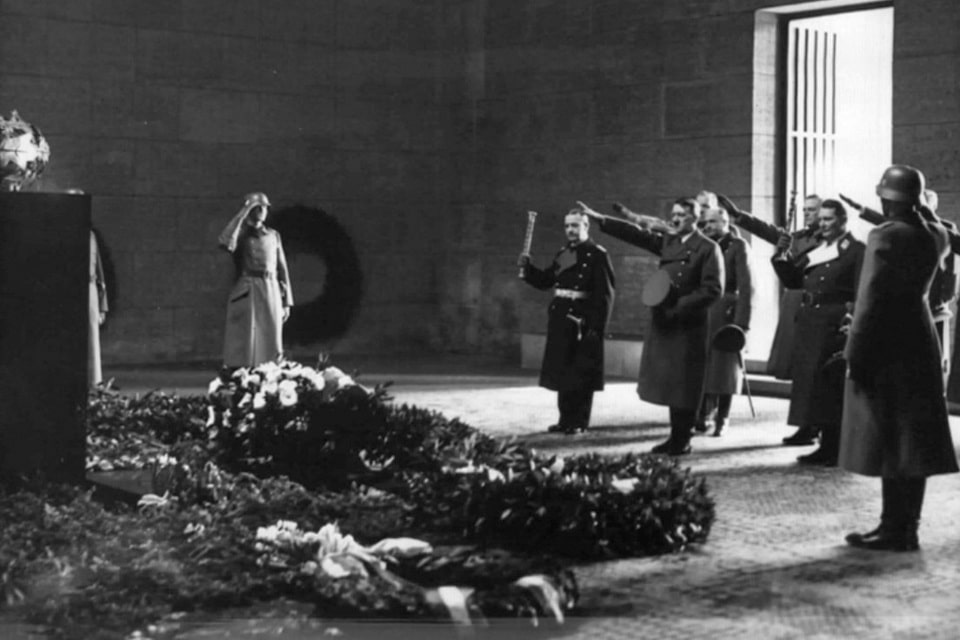

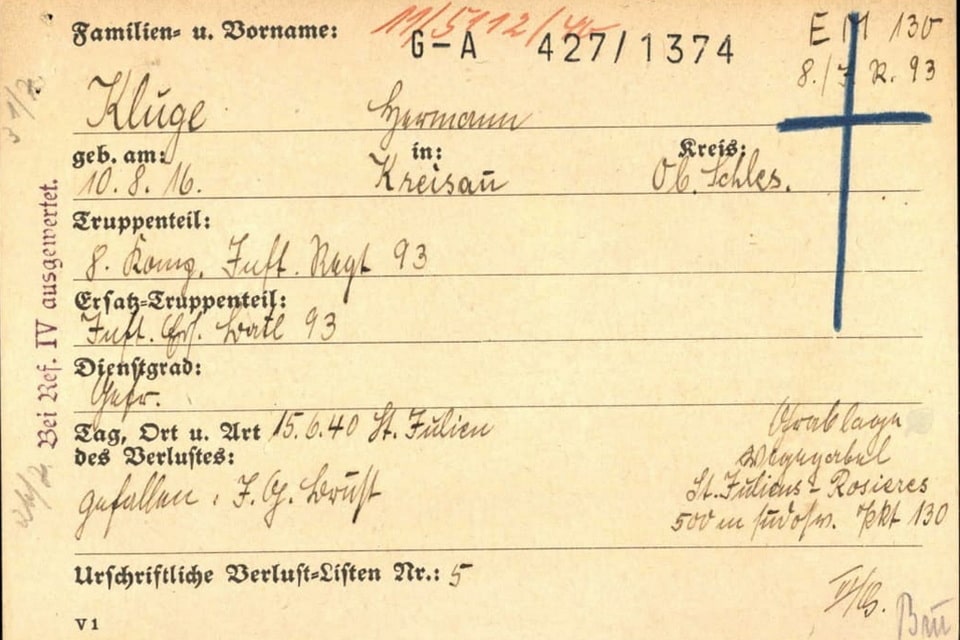
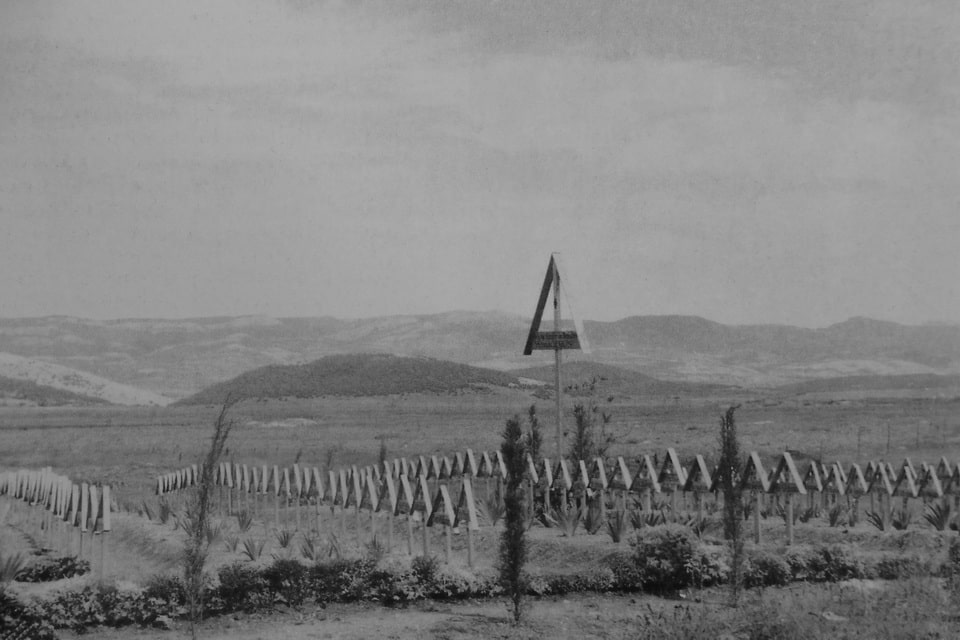
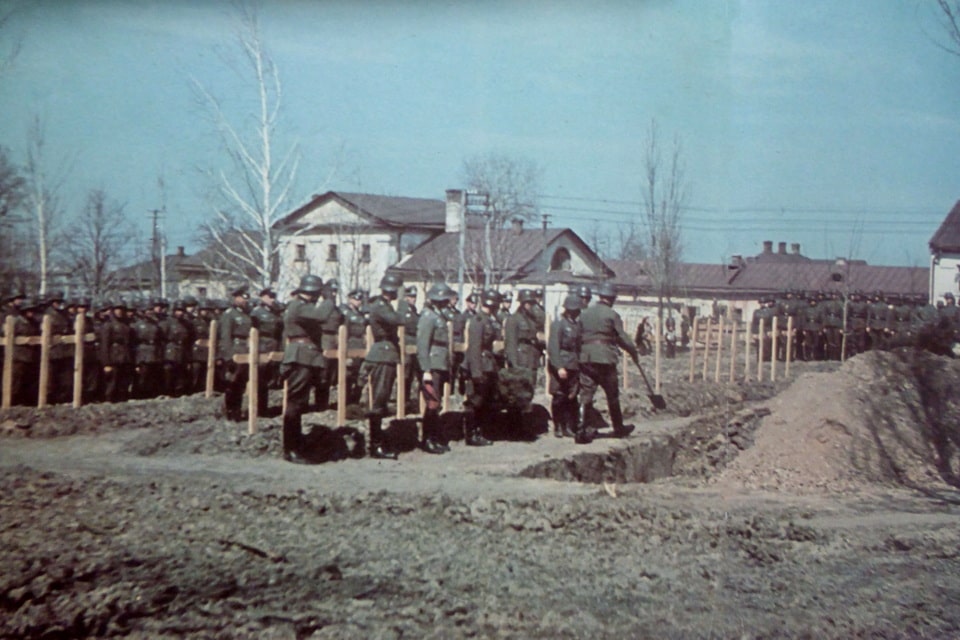
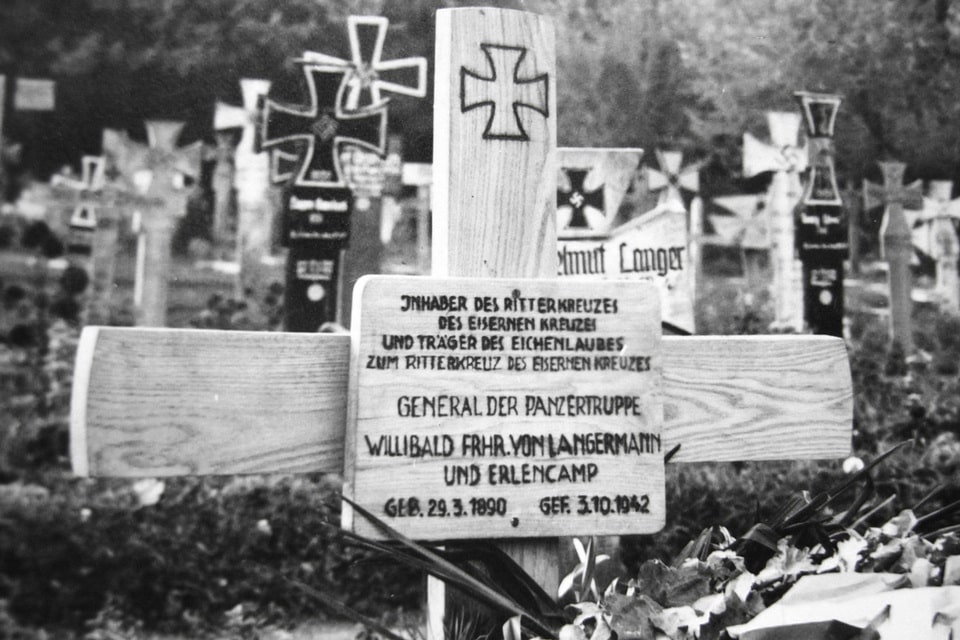
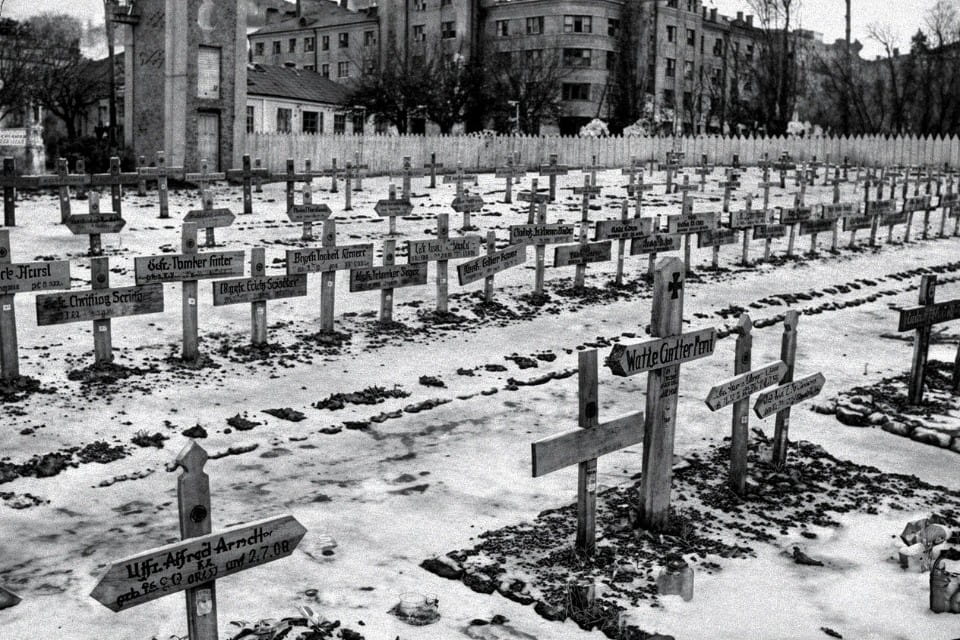
Since Hitler unleashed another devastating war on Europe in September 1939, the responsibility for German military burials abroad was transferred from ‘Volksbund’ to the Wehrmacht, a step which was mainly favored in the army circles. In simple terms, the organization, now infiltrated by the Nazis and completely in alliance with the regime, retained duties for the graves of WWI, while the army was now responsible for the dead of WWII. Wehrmacht Information Center for War Losses and Prisoners of War (short version in German Deutsche Dienststelle) and its officers were obliged to register every case of German military losses in the War, including those killed, died from wounds, injured or ill, disabled, missing in action, or captured. The ‘grave officers’ (gräberoffiziere) were assigned to every large army unit. The organization was assigned to create centralized war cemeteries to contain the remains of the soldiers who had been initially buried elsewhere. Hitler insisted that the dead soldiers should remain on or near the battlefields and not be taken to the Reich. Such permanent resting places were regulated by norms of orderly appearance. In contrast to the mass graves of the Great War, new cemeteries had to commemorate every fallen German soldier individually. A personal grave with a wooden Iron cross or a stone slab and markings. Among ‘grave officers’ were army chaplains who conducted Christian ceremonies, while commanding officers or doctors contacted relatives of the fallen soldier.
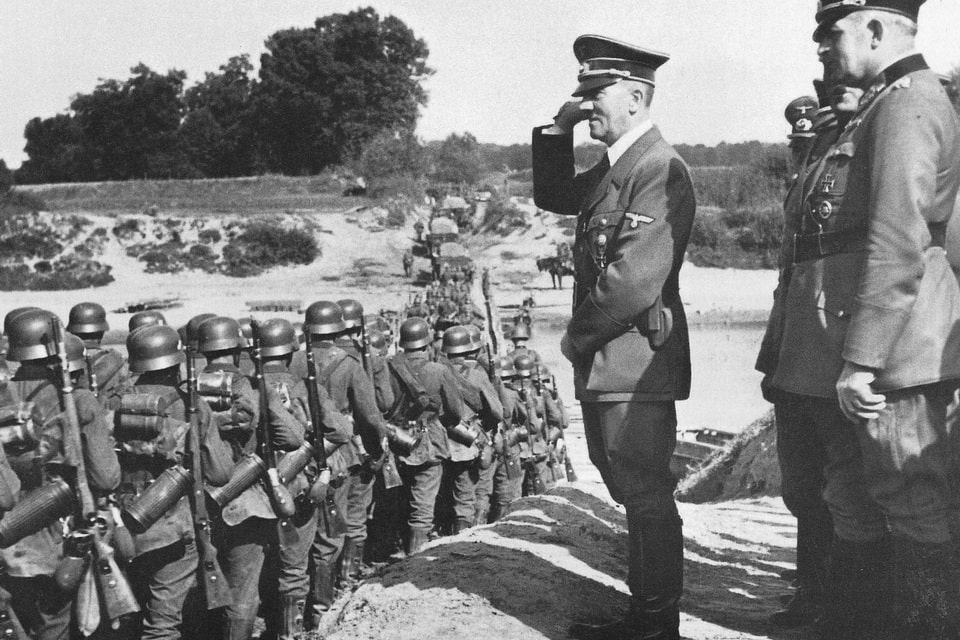

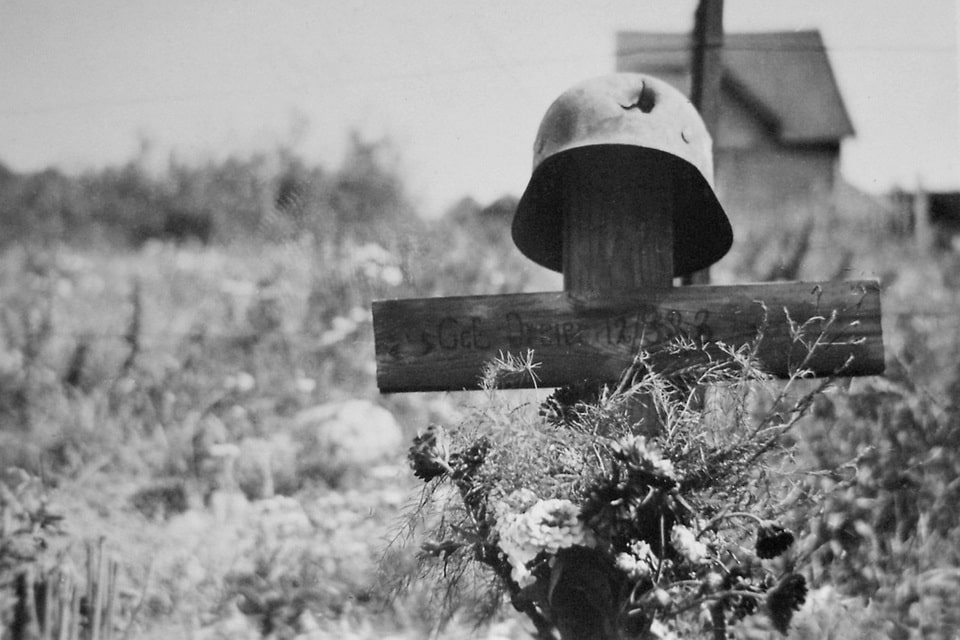
Despite the initial high-sounding words about the upcoming commemoration of the new War, the invasion of Poland in September 1939 brought substantial difficulties to the burial practices. At this stage, the confusion came not because of the great losses but because of logistic and organizational problems, since the gräberoffiziere were mainly inexperienced and the German fast ‘Blitzkrieg’ advance left around 10%, or 2000 out of 17 000 of the soldiers dead, unidentified or unmarked. The situation did not improve during the 1940 campaigns in the West, and in France, the officers of ‘Deutsche Dienststelle’ were highly criticized by the army for their ineptitude in properly registering and commemorating all killed or missing. The French war graves were often maintained in more diligent ways.


In the months before the German invasion of the Soviet Union, the army bureaucrats made efforts to learn from the failures of the past campaigns. While the overall administration supervision was left to special ‘grave officers’, the OKW issued instructions to all three Army Groups about the appropriate attitude to taking care of the graves of those fallen in the battle. In wider terms, a commemoration of the killed soldiers was declared a duty of all members of the army, thus preparing the Wehrmacht for the anticipated substantial losses that the army would experience in the East. In March 1941, Hitler, an amateur architect himself, issued the creation of another body called ‘General Baurat fur die Gestaltung der Kriegsgräber’ (General Building Council for the design of war graves). It was supposed to create large war cemeteries after the War, which Hitler regarded as new pilgrimage shrines for the Germans of the future, and at the moment as a propaganda asset. Hitler intended to create a new front mythology, stronger than the orchestrated one regarding the Great War. In the Nazis’ worldview, the upcoming fallen soldiers sacrificed their lives for the greatness of Germany, the idea of comradeship, and thus expressed their loyalty to the regime.
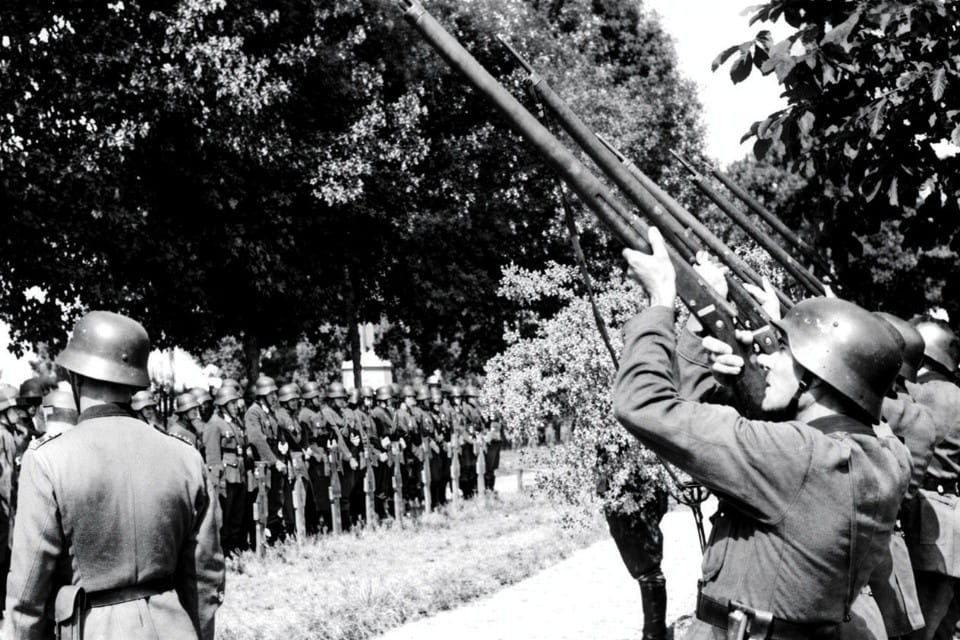
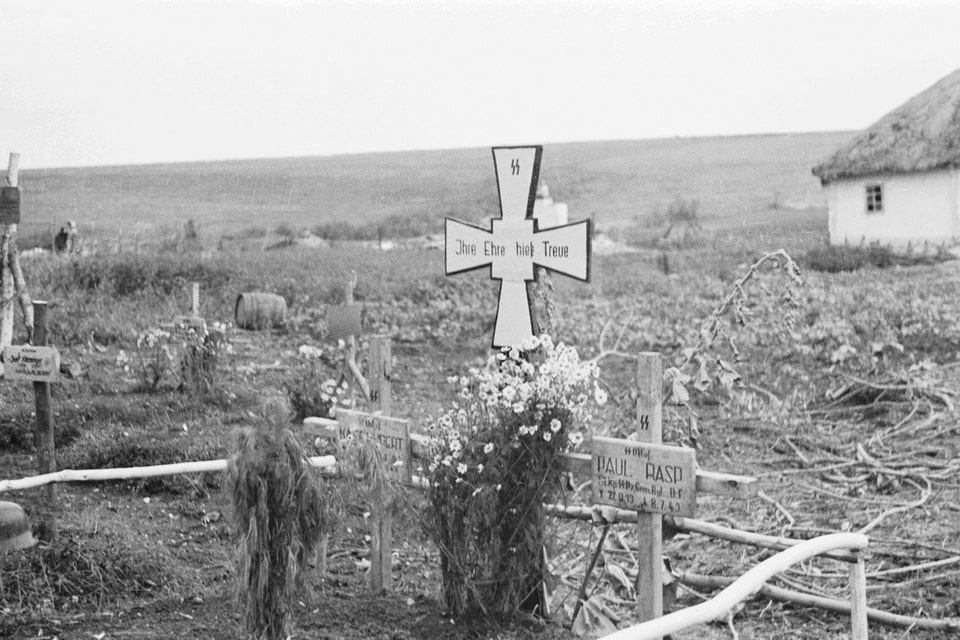
Hitler’s Third Reich was ready not only to unleash the bloodiest war the world had ever seen but also to reinvent Germans’ attitudes toward their fallen husbands, brothers, sons, and fathers. The end of life on the battlefield thousands of kilometers away from home should now be regarded as the ‘death of a hero’, an eternal sacrifice, the culmination of his life. The collective memory of the nation, in Hitler’s mind, would remember the myth about the merciless racial struggle for the ‘Living Space’, the comradeship of the Wehrmacht against the enemies, rather than relatives would mourn about the loss of their loved ones. A celebration should fill the gap of mourning, and relatives would be happy to send a new martyr to the front. More than that, those killed should serve as an admirable example for a younger generation, whose fate is also to die for the country if needed. Despite the regime’s efforts to create new semi-religious practices, death in the Wehrmacht remained closely connected to the Christian traditions, and relatives at home were more concerned about the salvation of the soldier’s soul rather than his place in the Nazis’ martyrdom.

The history of the Eastern Front conventionally omits the fact that, at least on paper and before the outbreak of the onslaught, the Germans even considered humane treatment of the dead Soviet soldiers. While the Nazi leadership already planned to starve tens of millions of people to death and execute communists and Jews, the ‘grave officers’ in the Wehrmacht were instructed to treat the fallen enemies in a civilized way. In theory, the Wehrmacht was supposed to register all Soviets killed, bury them, and take care of the cemeteries in a similar way to their own fallen. In this way, the German army pretended to be strict on international rules of war, and such measures were regarded as a potential propaganda means. Each Red Army soldier’s grave should have a sign regarding the Wehrmacht registration efforts: a striking contrast to the Soviets, who did not have appropriate burial procedures at that time. In this way, Germany wanted to assert not only military but civilizational and moral superiority over the defeated enemy. When the onslaught finally broke out in June 1941, any regulations regarding the registration and burials of the dead enemies were left behind.

SEIZING KYIV: ARMY GROUP SOUTH IN UKRAINE 1941 — OPERATION BARBAROSSA, THE ENCIRCLEMENT AND OCCUPATION (SEPT. 19, 1941)
While Hitler had dreamed about the conquest of the East for years, the practical realization of the invasion of the Soviet Union materialized in the summer of 1940 after a striking German triumph over France and England. The faith in the might of his army, regardless of the ongoing war with the British Empire, assured the dictator that he could gain his objectives in the East in one devastating blow. The final version of the plan, which would be known as ‘Barbarossa’ (Unternehmen Barbarossa) after Holy Roman Emperor Frederick Barbarossa, was ready on December 18, 1940, and the January 31, 1941, directive of the Oberkommando des Heeres (OKH) ordered to ‘inflict defeat on Soviet Russia in a fast-paced campaign before the war with England is over’. Hitler wanted to assert what he believed was Germany’s ‘Lebensraum’ (Living space), on the way to annihilating the Soviet regime, eliminating racial and political enemies, and turning the rich regions into a breadbasket or resource supply hub.


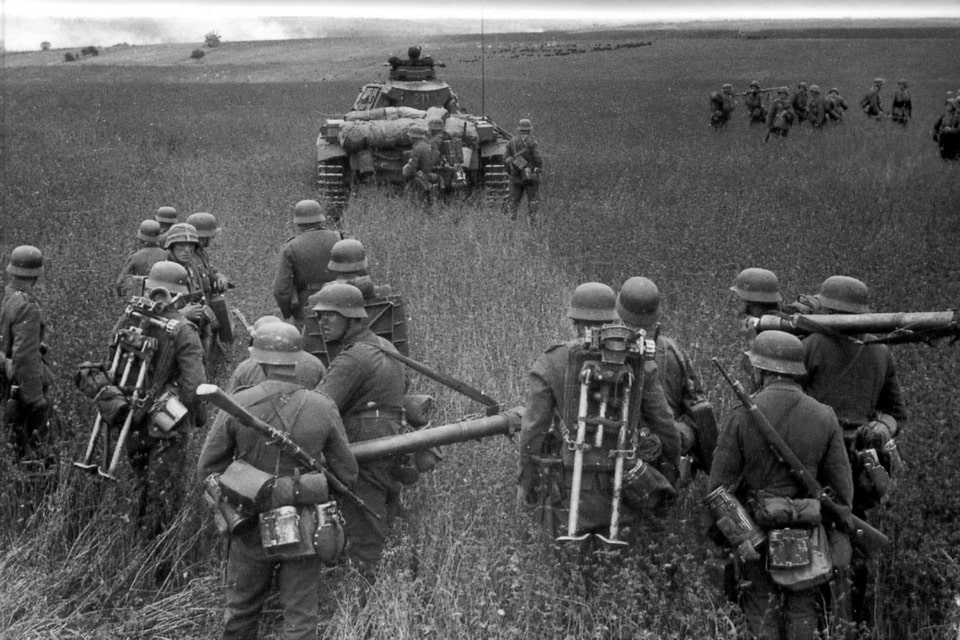
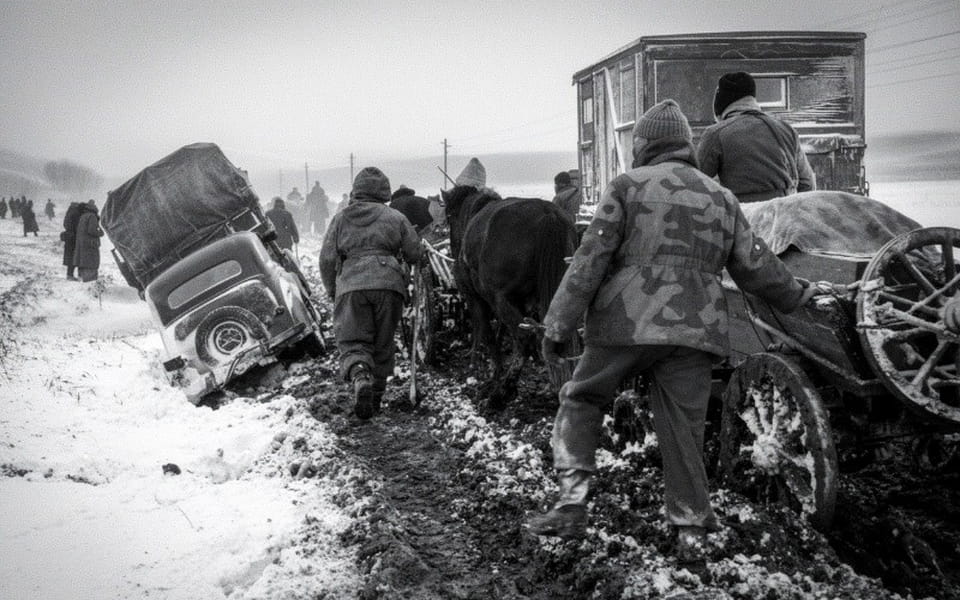
The theater of war against the Soviet Union posed challenges that the German army had never experienced before, neither in Poland nor in the Balkans nor in Western Europe. Despite the evolution of military equipment and transport since the Napoleonic crusade to the East, in June 1941, the Wehrmacht still faced the same heaviness of climate, primitive infrastructure (with only 64 000 kilometers of paved roads and 82 000 railroads), diversified landscape, and, first of all, vast distances. The remoteness of the campaign’s objectives in the East in many ways diminished the technical sophistication of what was known as the ‘German Blitzkrieg’. The initial frontline on the day of the invasion stretched for 1464 kilometers from the Baltic Sea to Romania. Each of the three designated German Army Groups had to cover vast distances to reach their operational goals. Army Group North (Heeresgruppe Nord) under Field Marshal Wilhelm Ritter von Leeb (1876-1956) was assigned to advance up to the city of Leningrad, 788 kilometers from their starting point. The central front of ‘Heeresgruppe Mitte’ under Fedor Von Bock (1880-1945) had to cover 990 kilometers and take Moscow, while the most ambitious advance was given to Army Group South under Gerd Von Rundstedt (1875-1953), with the objectives to reach the Urals and Caucasus in 2400 kilometers.


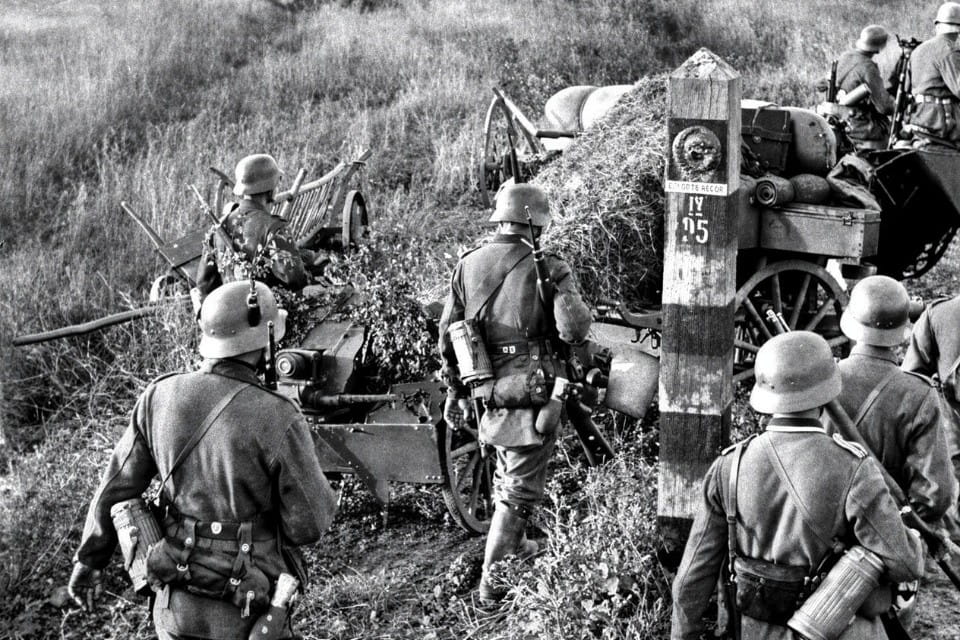
Three million of the ‘Ostheer’ or Eastern Army, which Hitler possessed against the Soviet Union in June 1941, were mainly the best-trained and hardened fighting troops in the world, with the core of the army forged in the battlefields of Poland and France. On the other hand, its power depended on mass to a lesser extent than on revolutionary combat warfare principles, battle experience, and technical superiority in mechanization. The Wehrmacht’s ‘Bewegungskrieg’ (war of movement) and the form of rapid advance by panzer groups was now to face an unprecedented challenge in covering thousands of kilometers, where the concentrated firepower was in some ways dispersed. It is important to note that neither German intelligence nor the foreign observers considered the Red Army possible to withstand the ongoing invasion of the Wehrmacht, at least in 1941. The campaign was seen as another series of rapid and highly successful sweeping movements and encirclements, which should lead to the defeat of the Soviet forces in a matter of weeks or months.
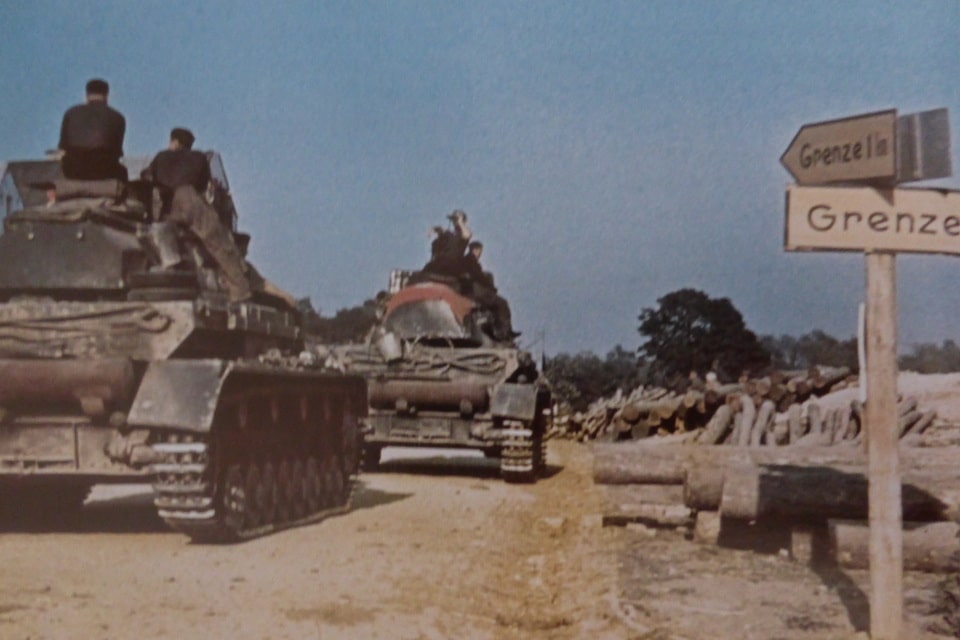
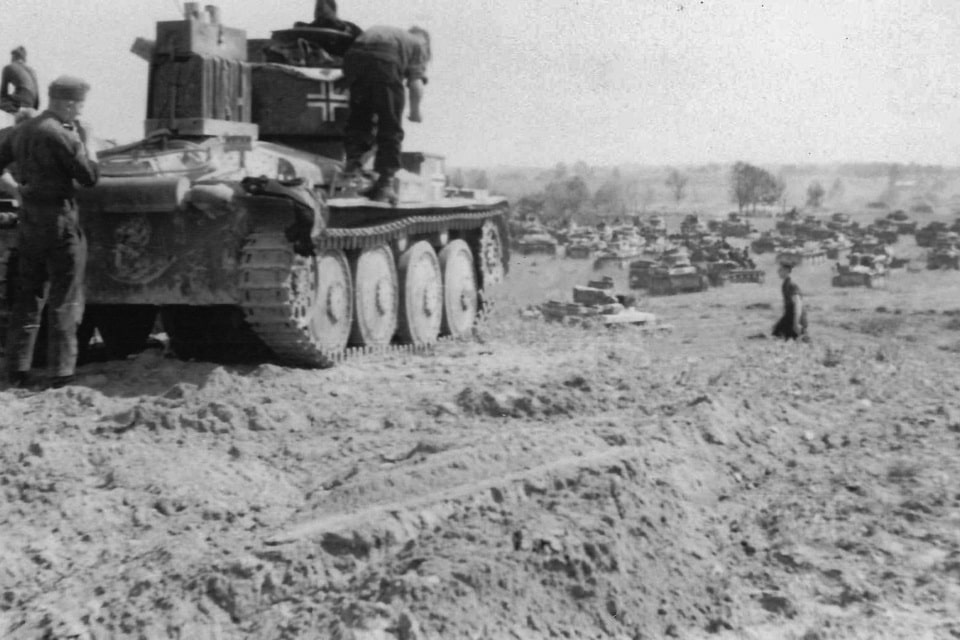

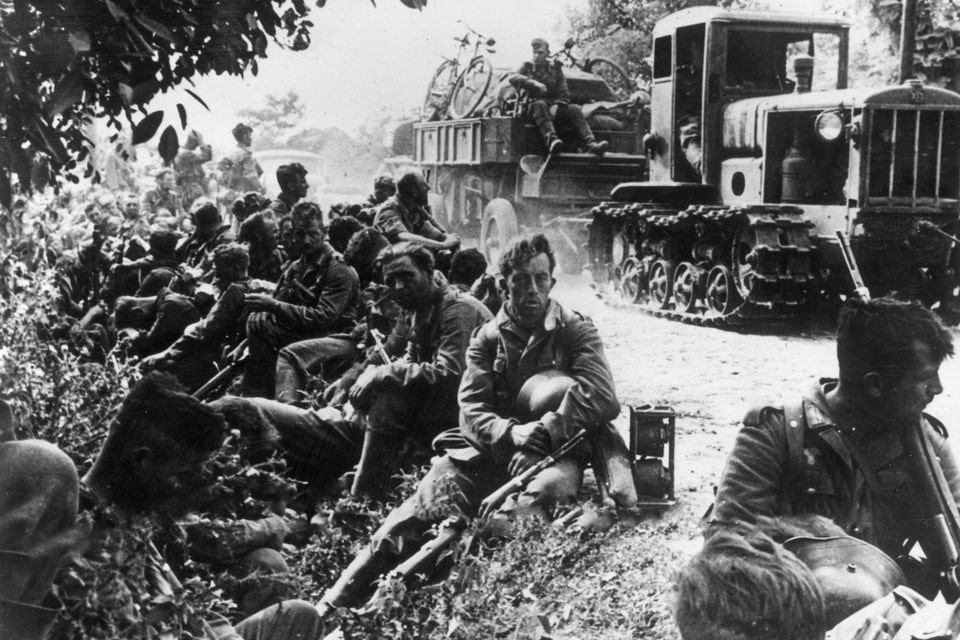
Toward the summer of 1941, the combined forces of the Wehrmacht and the SS amounted to seven million people, among which three million were concentrated at the border with the Soviet Union, whose army amounted to five million, but with another fourteen million trained reservists. Despite the established belief that the Wehrmacht was fully motorized, an advance to the East was backed by 600,000 at a minimum or even as many as 750,000 horses, with a large proportion taken from Poland. The logistics of such an enormous force were far from ideal, taking into consideration around 2000 types of vehicles for 600,000 units. The initial invasion relied on 3350 tanks of 73 models and modifications, 170 kinds of artillery pieces, and 2270 aircraft. Apart from 3.05 million German troops (and another 67,000 in Northern Norway), the invasion was backed by 650,000 German allies, including 500,000 Finns and 150,000 Romanians. On June 22, 1941, this unprecedented Axis force faced Soviet 170 divisions of 3,488 million men in the near-border regions, with around 7000 aircraft based in the Western districts. The invasion became the largest military undertaking the world had ever seen.


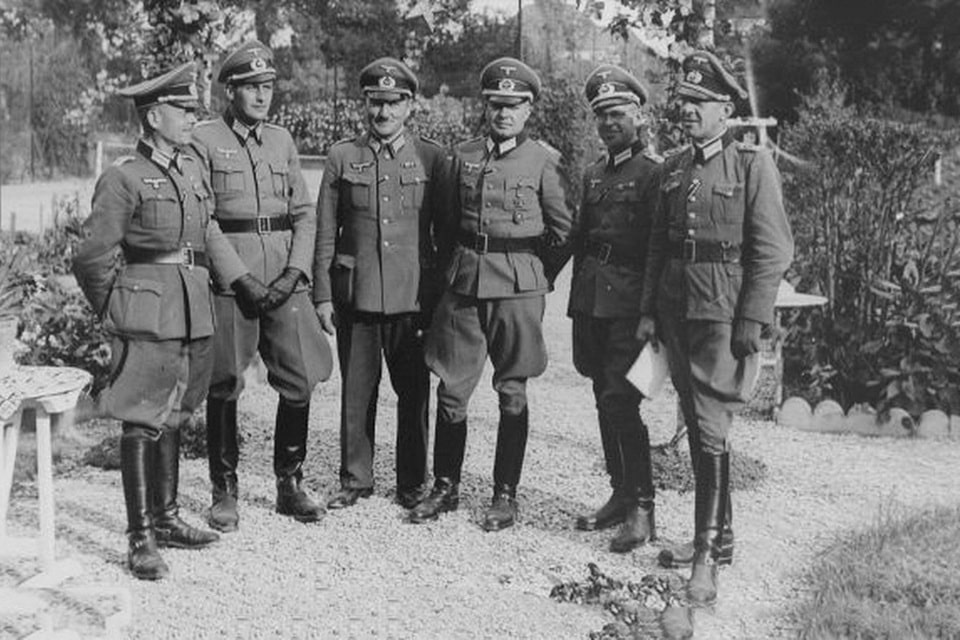
Hitler always emphasized the importance of Ukraine in his conquest of the East, and his interest was economically centered in the first place; military considerations were regarded as secondary. Army Group South faced part of the front from Southern Poland and the Romanian coast of the Black Sea. Its theater of invasion was divided into two parts since Hungary did not take part in the initial attack against the Soviet Union, thus making a 300 km gap in the South. The northern wing of the advance was concentrated in Poland (with headquarters in Rzeszów) and faced Western Ukraine, and the southern wing advanced from Romania into the Odesa region and Crimea. The second largest Army Group (smaller than Center and larger than North) possessed 800 000 men in Poland and another 175 000 in Romania, 970 000 men in total, backed by 1267 tanks and assault guns, 1163 aircraft, 1277 anti-aircraft guns, and over 5000 mortars. Sixty-five-year-old Field Marshal Gerd von Rundstedt (1875-1953) from an old Prussian family had served in the army since 1892, when Adolf Hitler was three years old. In 1941, he was assigned the enormous task of seizing Ukraine with access to the Black Sea and advancing into the Caucasus, more than 2000 kilometers in distance from the starting point. Apart from the frontline units, Army Group South included supporting units, particularly 39 construction battalions, 16 engineer battalions, 8 bridge-building brigades, and 16 battalions for road laying and repair. Rundstedt’s forces also included two SS units: the SS Motorized Division “Wilting” and the “Leibstandarte SS Adolf Hitler” motorized brigade, made of volunteers.
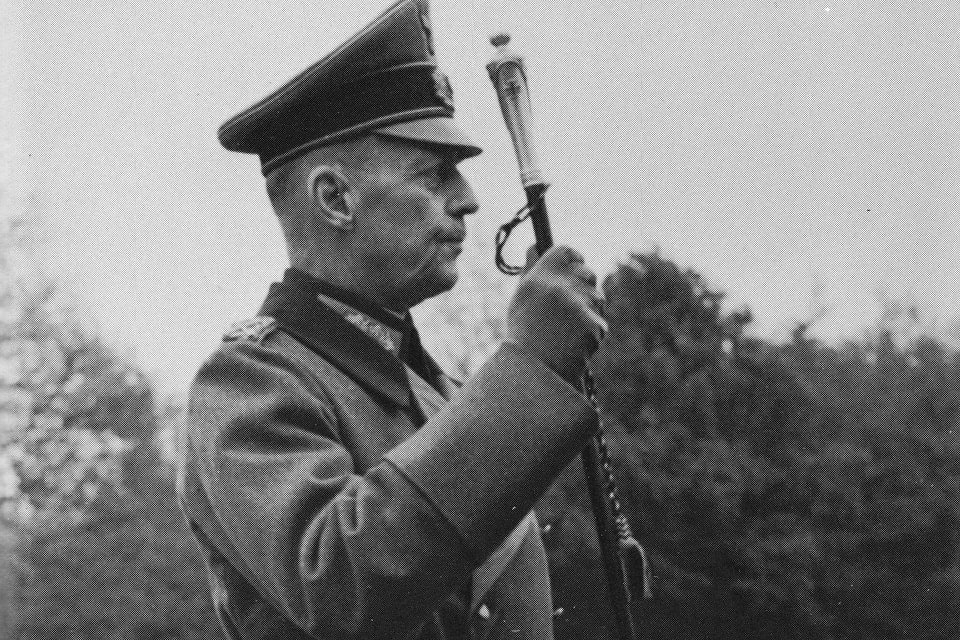


In May 1941, a month before the invasion, General Friedrich Fromm, the commander of the Reserve Army (better known because of the July 20, 1944, plot), warned the army command that he had only 80 000 men with basic training in reserve back in Germany, with another 350 000 as potential replacements toward the end of the year. In simple terms, the Wehrmacht could not allow itself to suffer total losses of more than 430,000 men in the next seven months. Since the onslaught unleashed on June 22, the German army suffered a steady decline in its manpower and mechanized capabilities. On the contrary, despite millions of soldiers dead, wounded, or taken prisoners in 1941, the Red Army only increased its numbers: from 5.373 million on June 22, to 6.9 million on September 1, to around 8 million in December. In contrast to the established belief that Napoleon’s army lost the most during their 1812 winter retreat, in fact, the French army had suffered major losses during their summer advance, and now, 129 years later, the German army was bleeding every month to support enormous advances and operational successes, destroying the whole enemy’s army groups, and taking millions of prisoners.

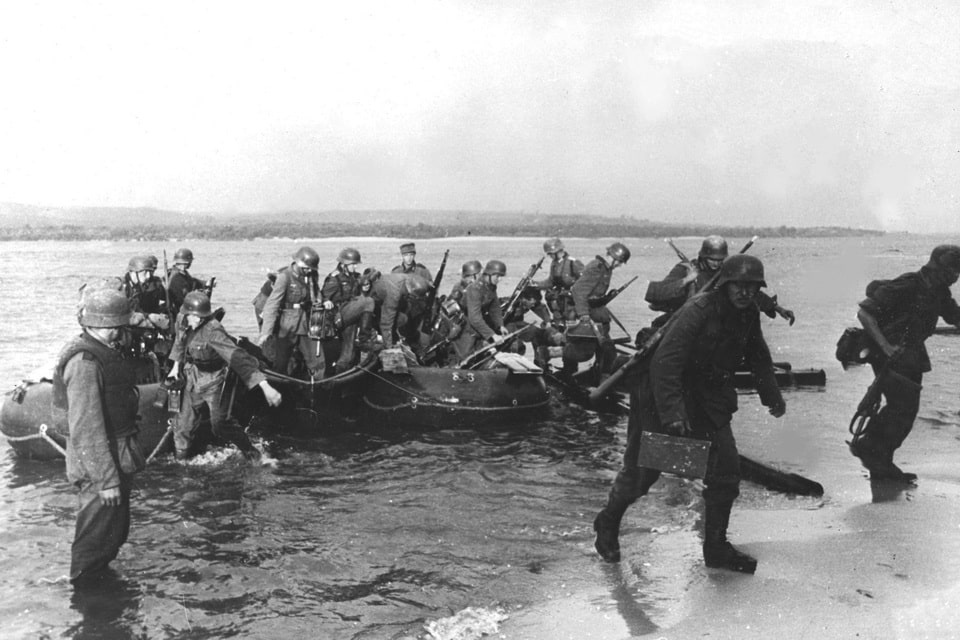
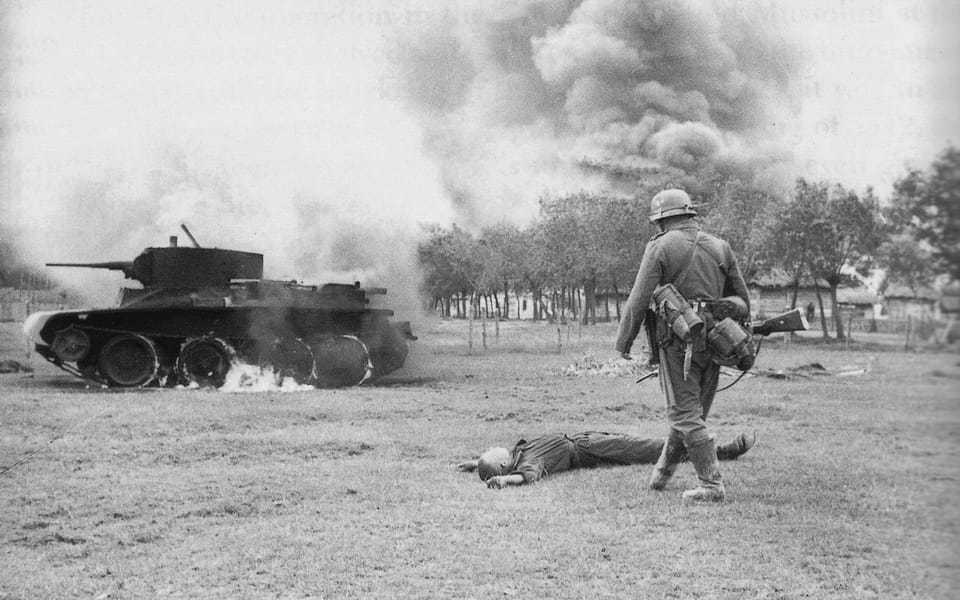
While Soviet losses were without doubt unprecedented, the Germans suffered serious casualties from day one. In just the first nine days of the invasion between June 22 and 30, the Wehrmacht lost 25 000 men killed, with an enormous 63 000 dead in July (172 214 total losses), 46 066 in August (196 592 total), and 51 033 in September (141 144 overall). As early as September 10, 1941, eighty-four German divisions (every second from the initial disposition) lacked 50% of their initial combatants or more. Toward the end of the year, the German army lost 302 000 men killed or missing, with total losses, including wounded, of around one million (around half of them were not replaceable), not counting German allies. In December 1941, the Wehrmacht suffered 90,000 casualties from non-combat causes. Apart from manpower, in the first six months of war, Germany lost 2700 tanks compared to the initial 3350, 41 000 vehicles, 4900 aircraft compared to 2270 in possession on June 22, and a third of its horses. In the same period, the Red Army lost three hundred divisions, 1.2 million people killed, and 3.3 million taken prisoners (2 million would be dead by February 1942), 1.6 million square kilometers of territory. In the first half of the year of the war, the Red Army lost 22 340 tanks (91% of the June 22 figure), 12 100 anti-tank guns (81% of pre-war stocks), 7200 of 8400 bombers, 9600 of 11 500 fighters.
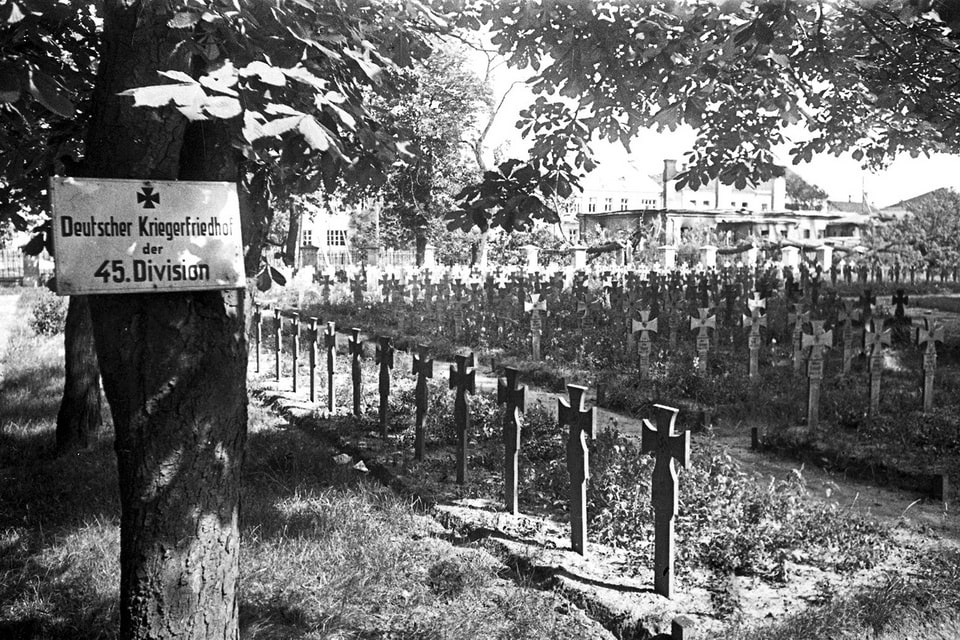
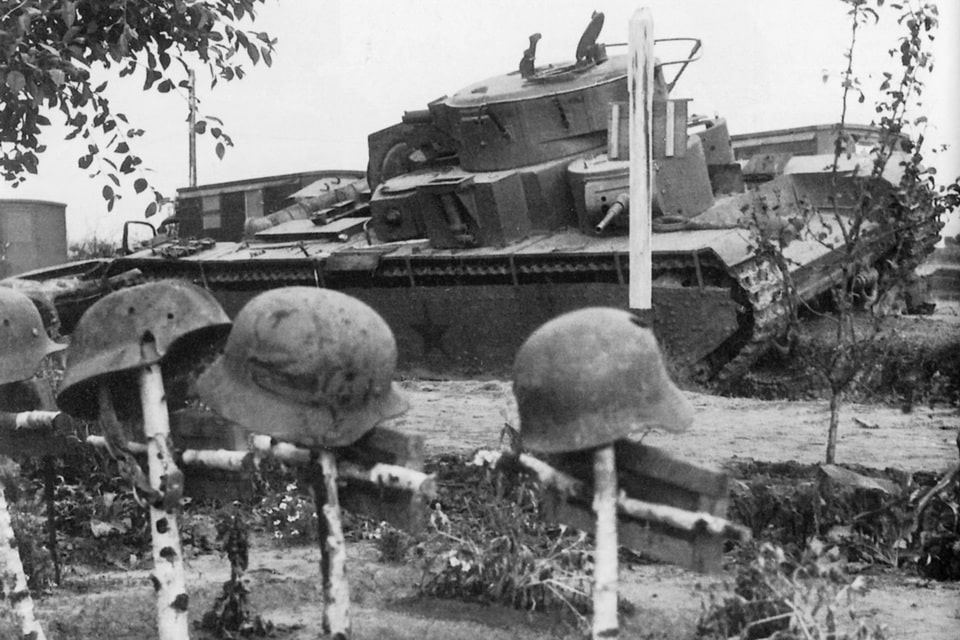
When it comes to the number of German soldiers killed on the battlefield of Ukraine in 1941, generally, they could not be identified in detail, since we often possess only the overall casualties of all three Army Groups. What we know is that between June 22 and August 2, Rundstedt’s forces suffered at least 63,000 overall losses, with only 10,000 replacements. Apart from combat casualties and injuries, exhausting advances caused sickness and physical ailments, generally not included in the official statistics. The troops did not always have access to clean water, and the hygiene standards deteriorated, too. Getting back to Ukraine, the Army Group South suffered significant losses in the Battle of Kyiv in September 1941, with at least 13,000 men killed and another 50,000 wounded. At the same time, it should be mentioned that in August-September, a part of the Army Group Center joined Rundstedt forces in Ukraine, and a part of the casualties accrued to Bock’s forces.


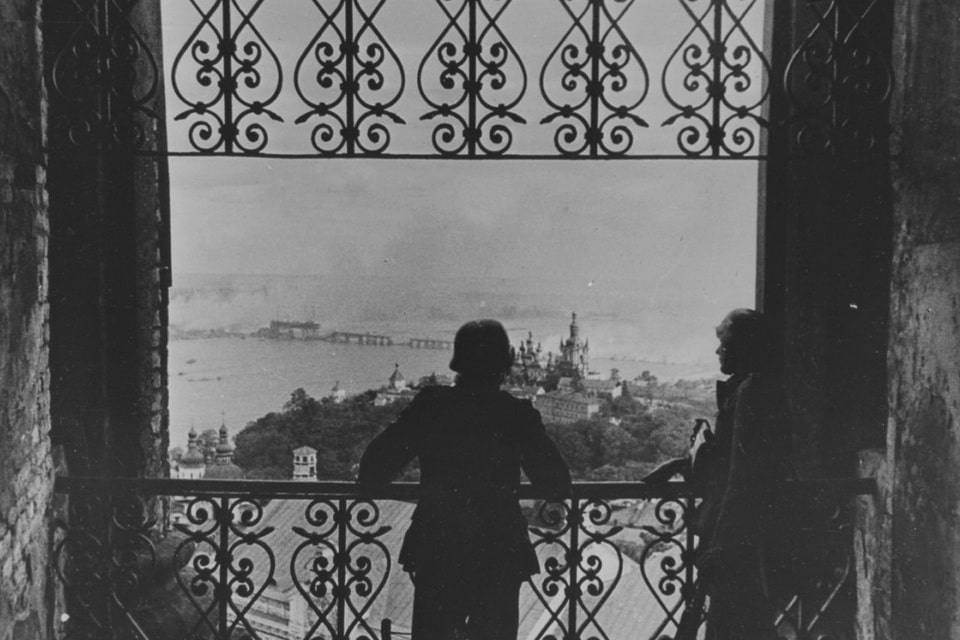
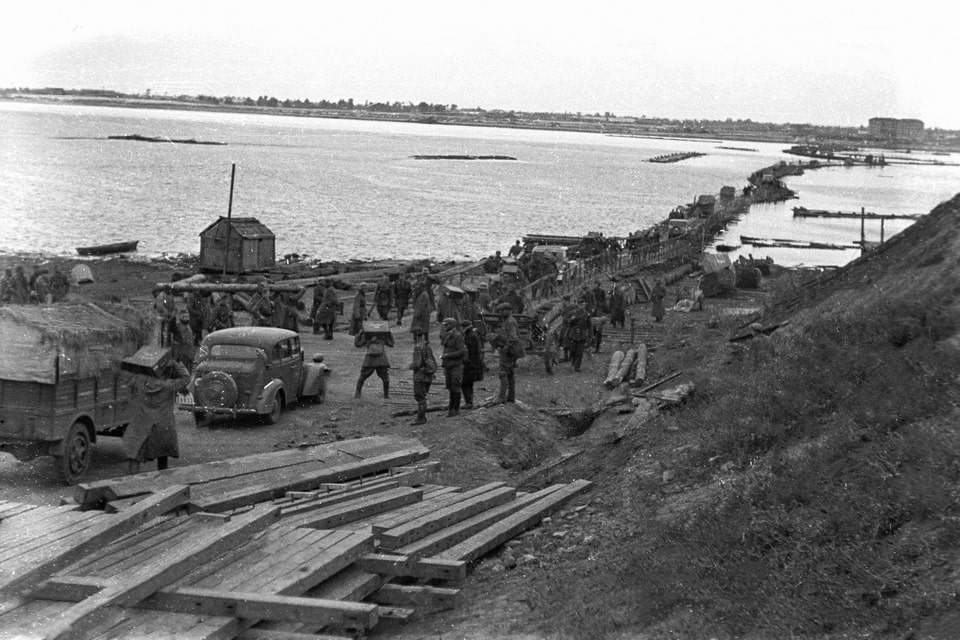
Toward the end of 1941, Army Group South advanced further than the borders of Ukraine in the East and successfully occupied the Ukrainian peninsula of Crimea in the South. The city of Kharkiv fell on October 24: it was the first battle for the largest Ukrainian city in this war, not definitely not the last. The commander Gerd von Rundstedt was pessimistic about Hitler’s directives to continue advancing toward the Caucasus, and he was relieved from his post on December 1. Rundstedt’s successor, a recent commander of the 6th Army, Walter von Reichenau, convinced the command that the old general was right, and the Army Group South halted its advance until 1942. In the winter of 1941-1942, the greatest proportion of German casualties amounted to the Center and North, though Soviet losses were six times heavier than the Wehrmacht (Red Army lost 1 million 638 thousand soldiers in the winter months compared to 262,000 Germans).
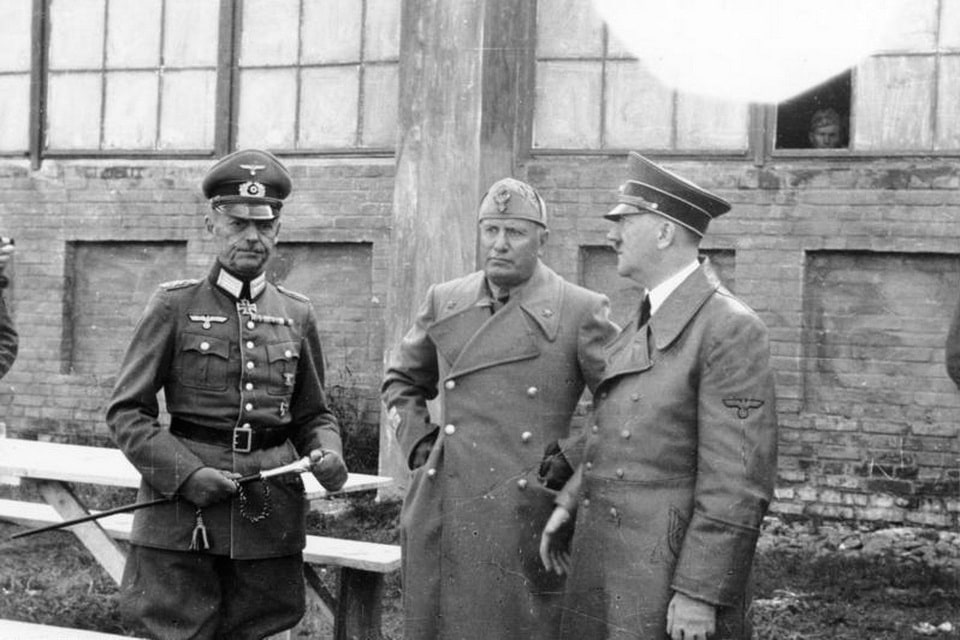
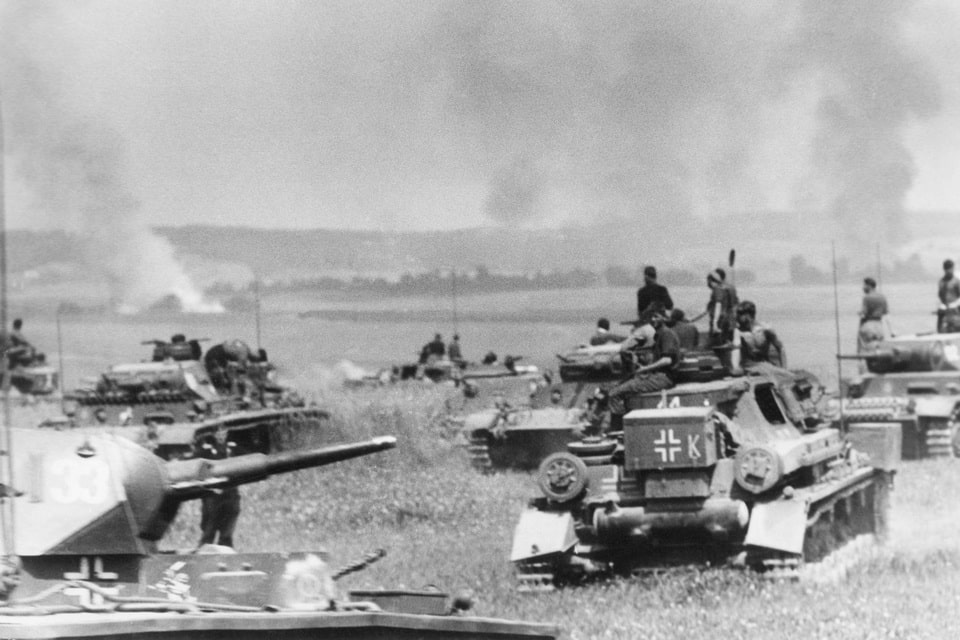

The year 1942 is generally known for the ‘Operation Blue’ and German advance to the Caucasus mountains and the battle of Stalingrad, in which the Army Group South was designated to play a key role. At the same time, not all battles in 1942 happened beyond Ukrainian borders, and German soldiers continued to die and be buried in the cemeteries in Ukraine. The German summer campaign had to be preceded by several preliminary battles. In May, the German-Romanian Eleventh Army under General Erich von Manstein eliminated the Soviet forces in the Kerch peninsula, killing, capturing, or wounding 177,000 soviet soldiers at the expense of 30,000 German casualties. In the same month, Stalin launched a failed attempt to encircle German forces around Kharkiv, which resulted in a complete Soviet defeat with 207,000 losses, while the German cost was 30,000 dead, wounded, or missing. Apart from direct combat losses, Germans died in Ukraine in hospitals from wounds, diseases, and partisan attacks. The same divisions that fought their way into Kyiv in September 1941 left behind a different set of burial grounds inside the city: the ravine at Babyn Yar and the sites immediately around it, from the old Jewish cemetery to the anti-tank ditch on Dorohozhytska. Behind the army came the civil administration. From late 1941 the region was governed as Reichskommissariat Ukraine, and in June 1942 its architect, Alfred Rosenberg, came to Kyiv in person to inspect what his ministry had built.
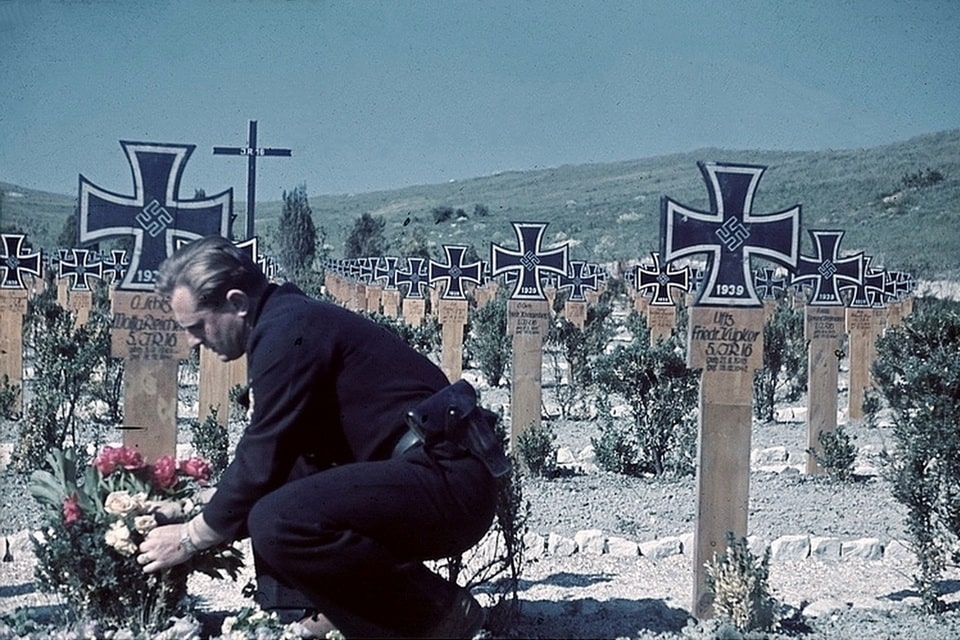
DEATH OF ARMY GROUP SOUTH IN UKRAINE 1943–1944: FROM STALINGRAD TO THE DNIPRO CROSSING AND LIBERATION OF KYIV (NOV. 6, 1943)
The German defeat at Stalingrad and the withdrawal from the Southern Caucasus in early 1943, particularly the loss of the entire 6th Army, much of the 4th Panzer army, and satellite armies, reduced the Axis forces in the East to 3 million men (including 900 000 from allies), a minimum since the invasion. In January-February 1943, the Soviets launched a staggering advance in the South, penetrating Ukraine up to 250 kilometers, retaking Voroshilovgrad (modern Ukrainian Luhansk), advancing close to Dnipropetrovsk (modern Dnipro), and recapturing Kharkiv on February 16, 1943, inflicting heavy losses to Wehrmacht forces in Eastern Ukraine. Newly arrived reserves of twenty-five divisions helped the Germans to stabilize the front, retaking Kharkiv once again on March 16: the latter third battle for the city cost the Wehrmacht at least 4500 men killed and 7000 wounded. From March to June 1943, the battlefield in Ukraine witnessed tactical battles of local importance, while both sides prepared themselves for the summer campaign.
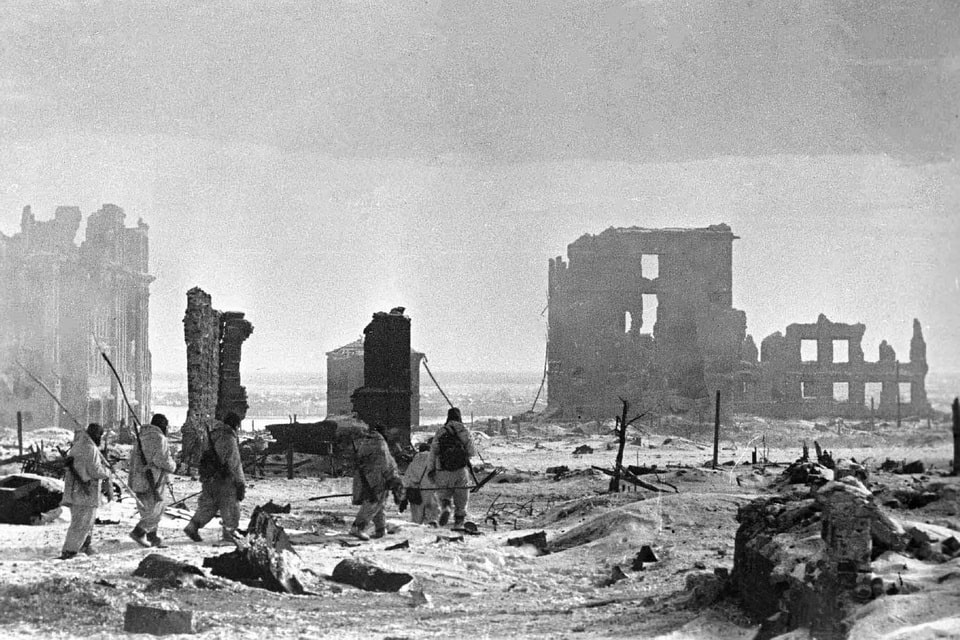
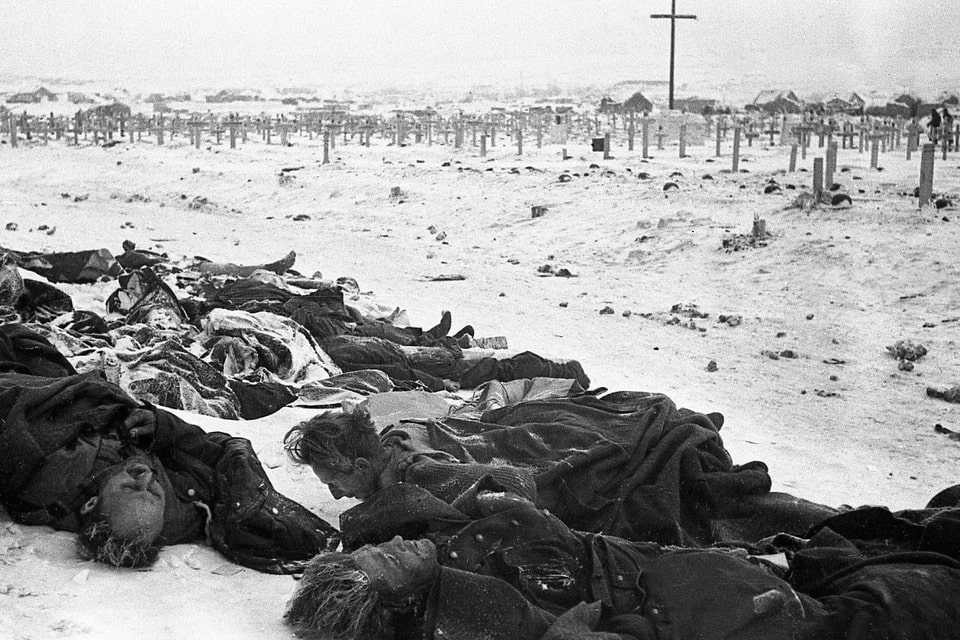
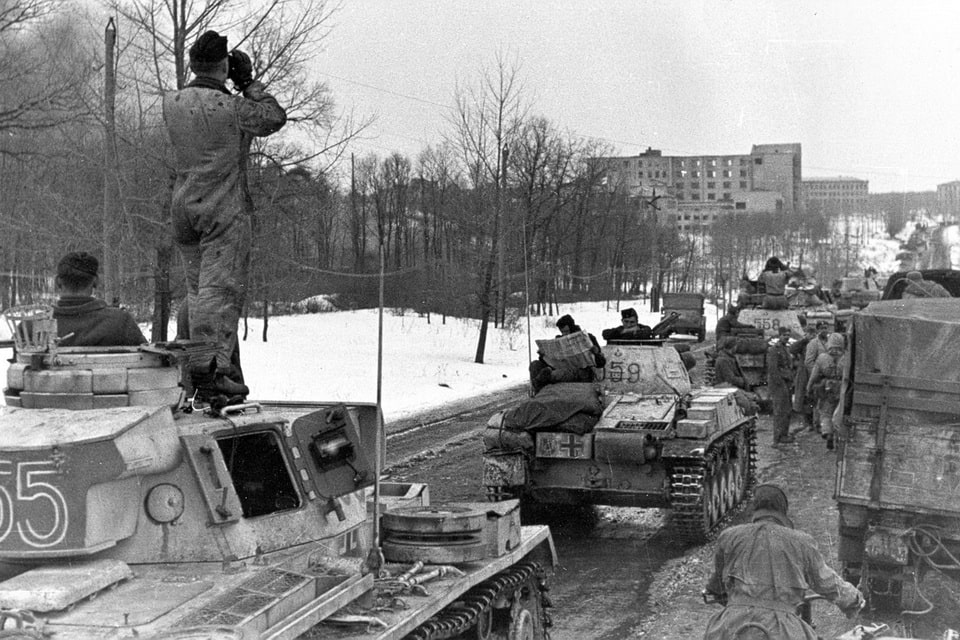

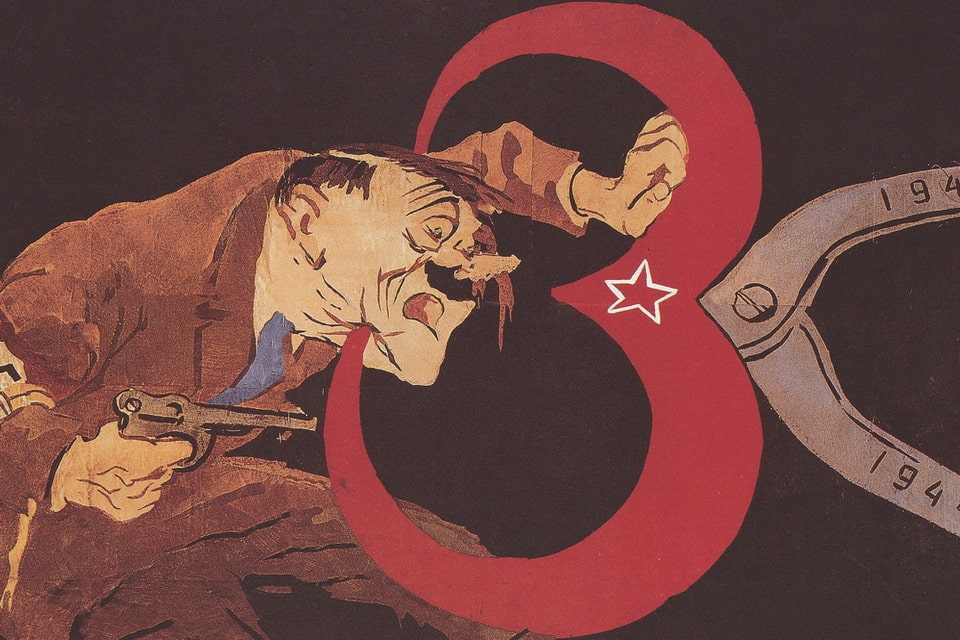
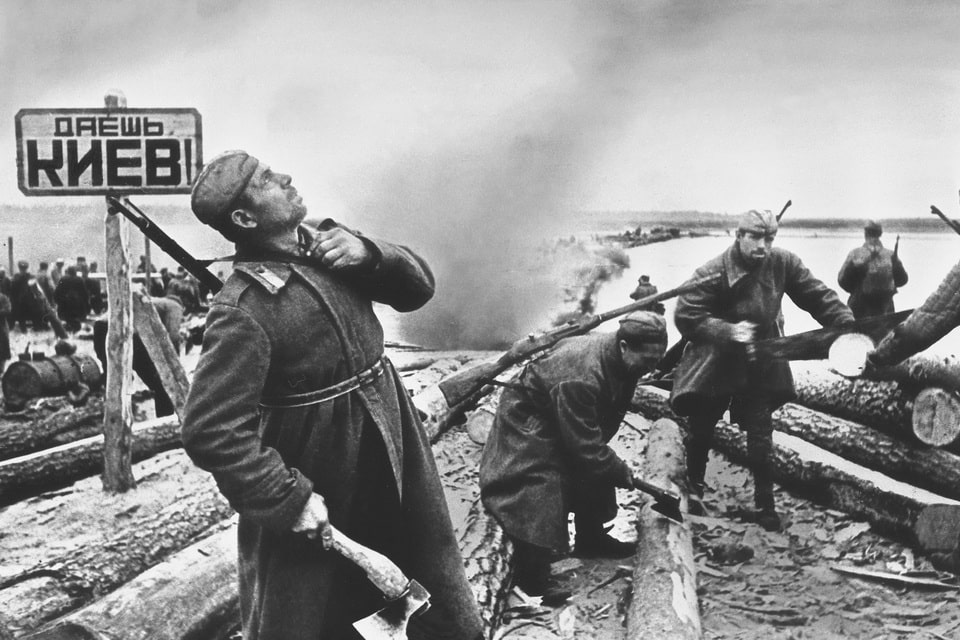
Starting from June 22, 1941, toward June 1943, the Red Army lost 6.8 million men killed, missing, or captured, and another 7.3 million wounded or sick: 14 million casualties in total. In July 1943, the Red Army managed to outnumber the Wehrmacht on the Orel-Kursk front with 2 226 000 million men compared to only 900 000 Germans, and after the German retreat, launched a wider offensive against Army Groups South and Center. In the following months until December 1943, the Red Army retook significant territories and reached the Dnipro River, thus causing the Germans to retreat on a wide front in Ukraine. The Soviet side accumulated an impressive superiority in resources. Three million Red Army soldiers faced 1.2 million Germans in Ukraine, with 51,000 artillery pieces compared to 12 600 Germans, 3000 tanks against 2100, and 2800 aircraft against 2000. The Wehrmacht forces in Ukraine were under the command of Erich Von Manstein, who inflicted heavy losses on the Soviets during the German retreat to the Western bank of the Dnipro. The Battle of Dnipro, as it is known in the history of WWII, lasted four months, and by December, Soviet forces crossed the river in several places, retook Kyiv on November 6, and after getting reserves, the Red Army continued its advance into Western Ukraine. It is estimated that between August 26 and December 24, the Red Army lost 1.3 million men compared to 370,000 on the German side. At least 100,000 Wehrmacht soldiers were killed in Ukraine in this period, getting only 200,000 replacements in the following months.
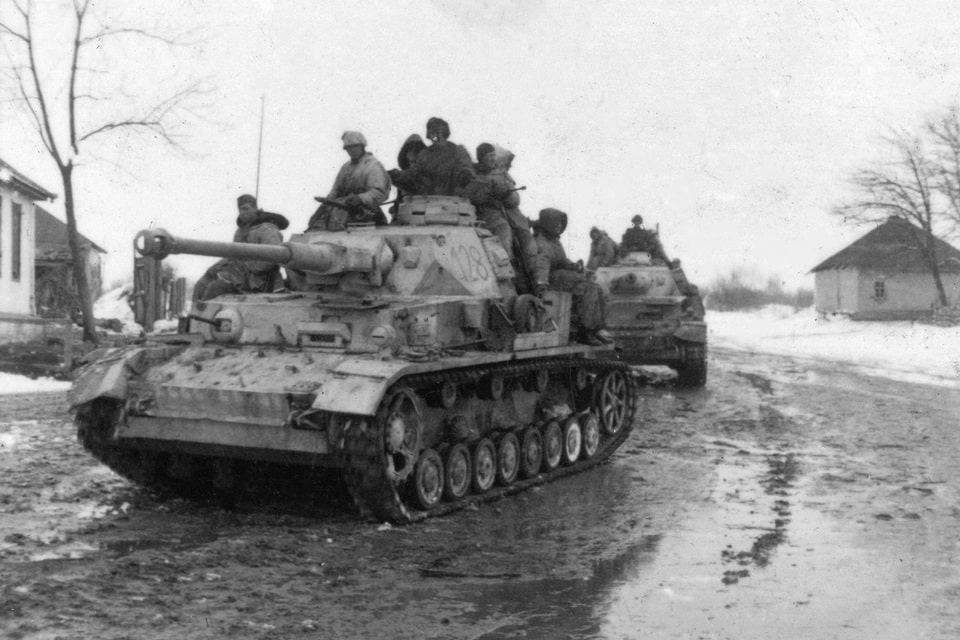
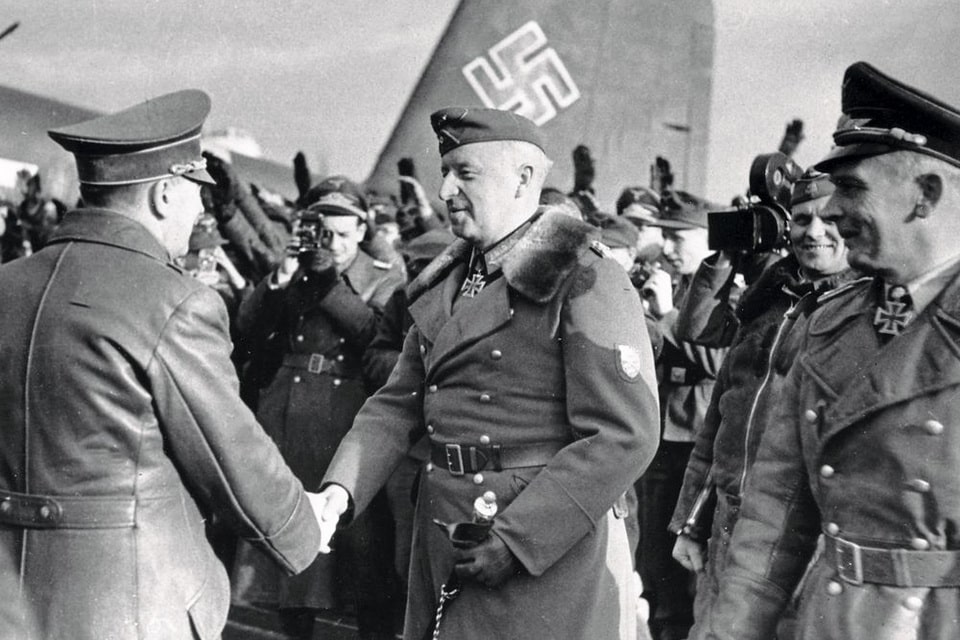
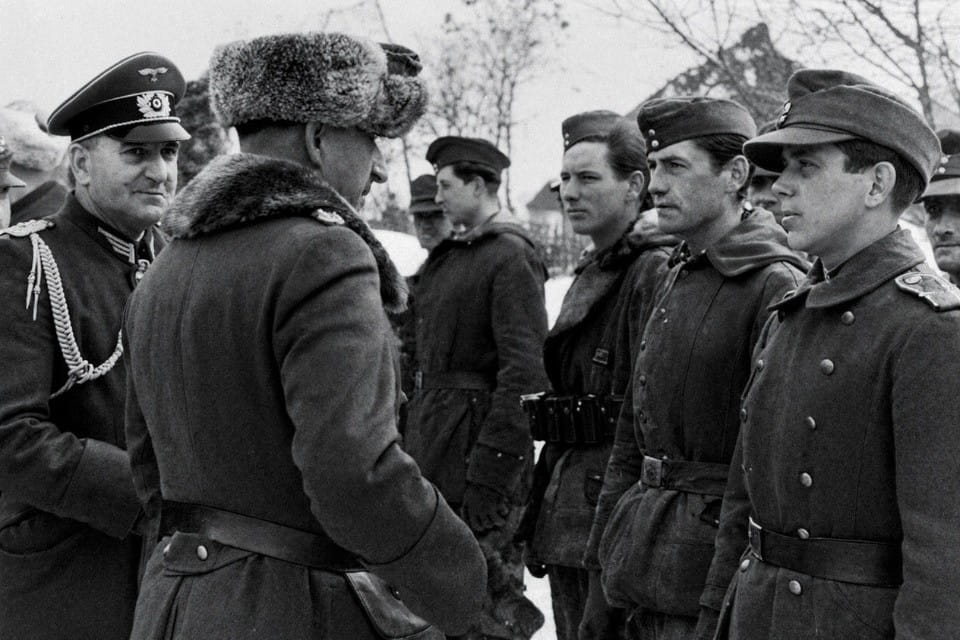
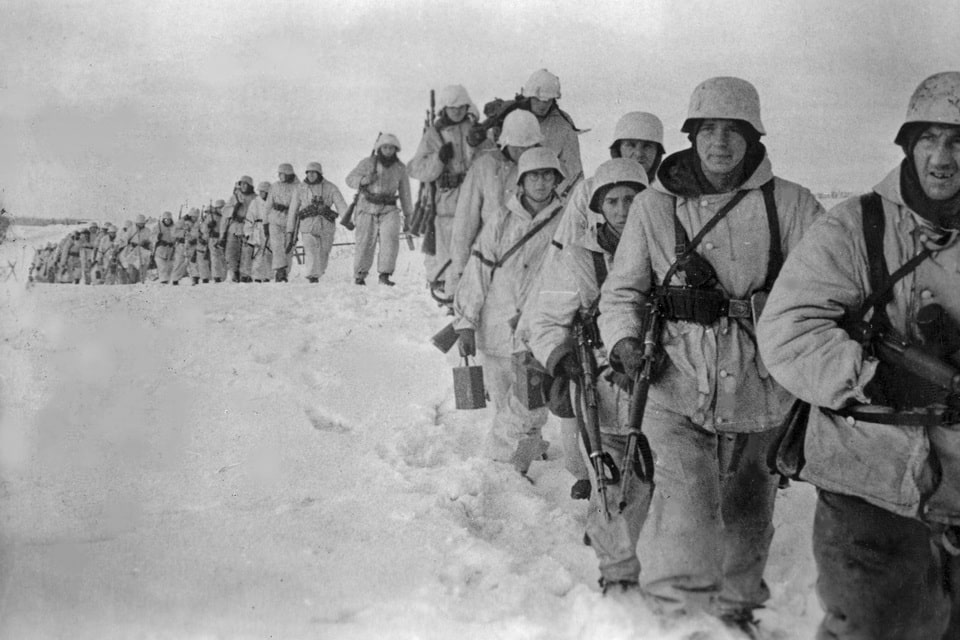
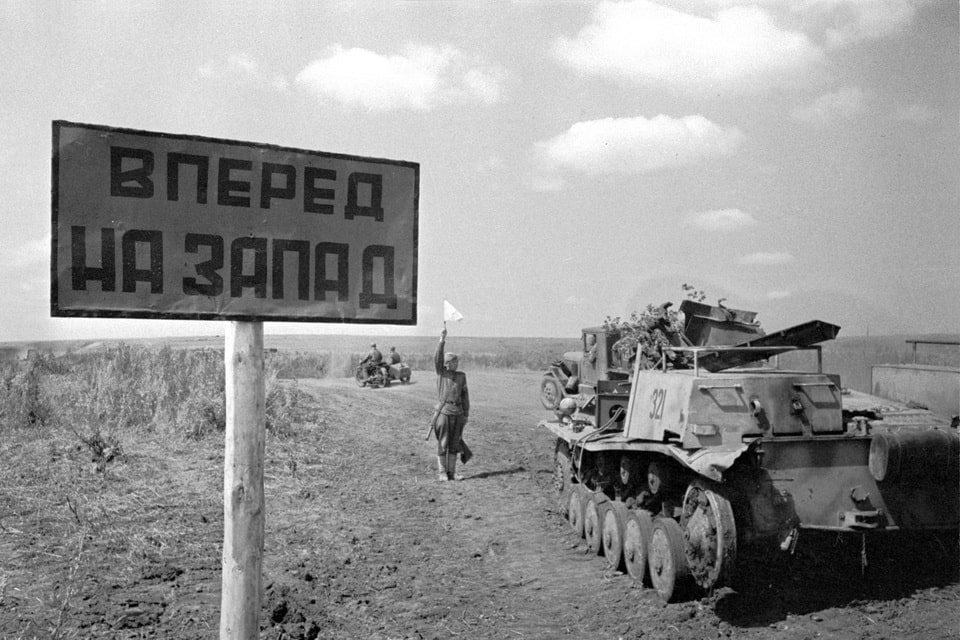
On the threshold of 1943-1944, the Soviet High Command planned a series of ambitious offensive campaigns against the remaining German forces in Western Ukraine, with a milestone aim to reach the borders of Romania, Poland, and Czechoslovakia. One of the largest offensive campaigns in the war was called ‘The Dnieper–Carpathian offensive,’ and the total strength of the two sides amounted to almost four million soldiers: 2.4 million Red Army soldiers, 915 000 Germans, and 450 000 of the latter’s allies: 300 000 Romanians and 150 000 Hungarians. The first stage of the Soviet offensive lasted two months until late February 1944 and included five major operations, including the elimination of the so-called ‘Cherkasy pocket’, where at least 30,000 Germans were killed or captured. The second phase of the offensive in Ukraine lasted between February and May 1944, consisting of six successful offensives to Western Ukraine and Crimea. By mid-February 1944, the Red Army liberated the whole of Ukraine from German troops. In this second phase, between December 1943 and May 1944, the Wehrmacht lost at least 251 000 men (of 341 950 on the whole Eastern front) in Ukraine, of which 92 000 were killed or missing (most of them killed).

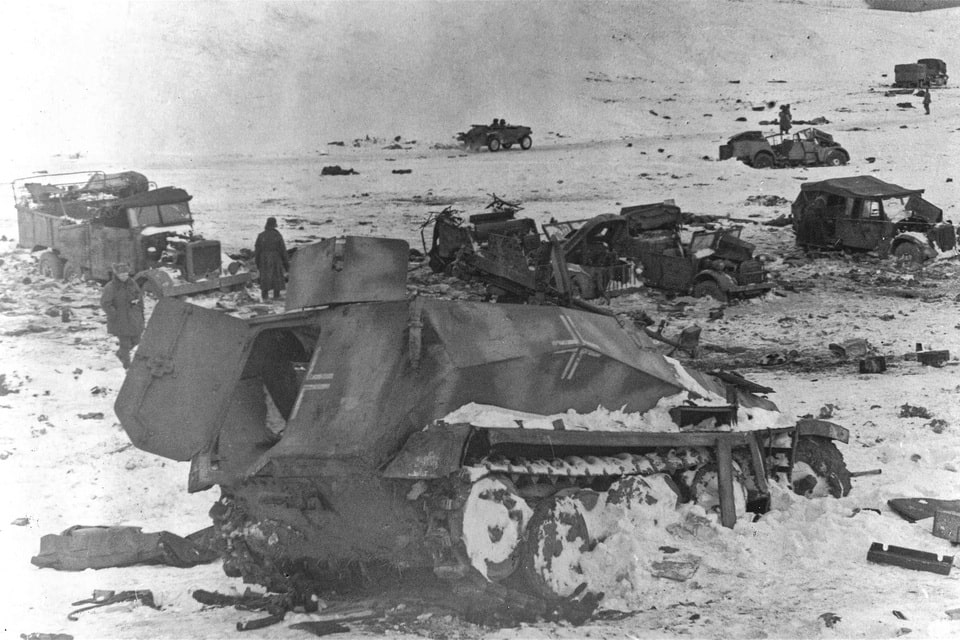
The liberation of Ukraine was not an easy walk for the Soviet soldiers. The later communist and Russian historiography would omit the fact that up to 70% of Red Army losses during the battles in Ukraine in 1943-1943 amounted to native Ukrainians, who had been called to arms in Stalin’s army. In other words, it was mainly Ukrainians who put the effort into liberating the country from one dictatorship to get back to the existence of another one. Between December 1943 and May 1944, the Red Army lost 1,192 900 men, of which at least 288 600 were dead or missing: the actual toll was probably even higher. Apart from human resources, the Soviets suffered the loss of 676 aircraft and around 5000 Armored Fighting Vehicles.


GERMAN MILITARY CASUALTIES IN UKRAINE 1941–1944: EASTERN FRONT DEATH TOLL
The issue of the German losses on the Eastern front between 1941 and 1945 remains a pending issue, and it took researchers decades to come close to figures apparently close to the real ones, though the exact casualties could never be affirmed. The estimates of the total death toll of the German army in WWII have changed over time. The figures highly depended on the country of origin of the experts and the sources used in the demographic calculations. Unfortunately, the OKW casualty figures, which survived the War, had many flaws, particularly lacking the losses after January 1945, which were, in fact, the highest in the whole conflict. The most common reasons why you may find different German losses overview in almost every book are: 1) Different approach in calculating those missing in action, who in most cases were killed, rarely taken prisoners; 2) Many researchers uses only figures until the end of 1944; 3) Pre-1990s calculations lacked archival data from the Soviet sources; 4) Different approach in calculating either all German forces or only land forces; 5) Some historians do not include the losses of the SS formations, security and supporting units; 6) Many does not include German pows who died in the Soviet captivity. One modern Ukrainian estimate gives the figure of at least 580 000; 7) The figures of Austrian and ethnic German conscripts may be included in some cases and excluded in others.


Evidently, the first estimate of German losses in WWII, which became public and was published as early as July 1945, was based on the captured OKW inner statistics and showed the casualties of 3.6 million men killed or missing toward the end of 1944. In 1954, the above-mentioned ‘Deutsche Dienststelle’ military search service organization identified 2 730 000 military dead and another 1 240 000 missing. In 1960, the Western German government published its own calculations showing 1 965 000 killed, 1 858 000 missing, and 5 240 000 wounded, though covering only the period to December 31, 1944. The year 1969 saw the research of German military historian Burkhart Müller-Hillebrand, which covered the period to April 30, 1945, and showed 2 230,000 killed and 2 870,000 missing, putting the total losses at around 5 million. Apparently, the most accurate research came in 2000 by another German historian, Rüdiger Overmans. According to his figures, which are regarded as most credible nowadays, 5.3 million German military personnel died in WWII, among which 3 070 000 were confirmed dead and another 2 250 000 listed as missing, of which Overmans considered around 700 000 deaths in Soviet captivity. Of this figure, at least 750,000 were either Austrians or conscripted ethnic Germans from the occupied territories. We should also mention that in total, 18 million people fought in the German Army in WWII, of which 13.5 million were in the Army, 3.4 million in the Luftwaffe, and 1.5 million in the Navy.
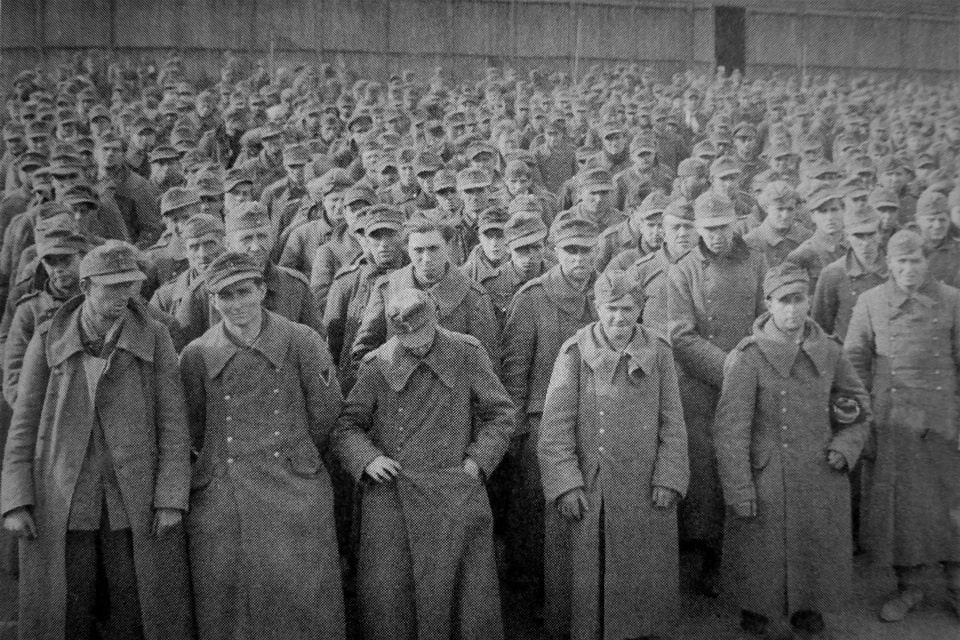
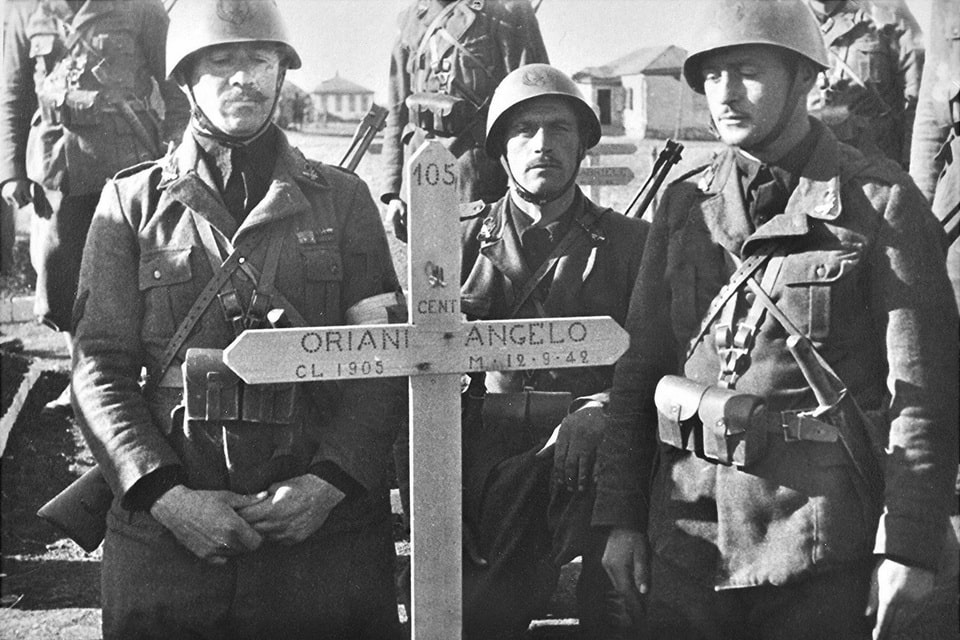
If taking Overman’s analysis as the most credible in our possession, it is important to understand the German losses specifically on the Eastern Front between June 22, 1941, and May 1945. According to Overmans’ research, 4 170,000 German soldiers were killed in the War with the Soviet Union, among them 2 742 00 in 1941-1944 and another 1 427 000 between January and June 1945. The authors put the total Soviet losses in the same period at 10 million men, 9 376 000 of whom died in 1941-1944, with 2 993 000 killed both in 1941 and 1942. If you take the German losses in the East by year, Nazi Germany lost 302 000 men in 1941, 507 000 in 1942, 701 000 in 1943, 1 233 000 in 1944, and 1 427 000 in 1945: all killed, without considering those being wounded. When it comes to wounded, the figures vary from 3.5 to 4.5 million on the Eastern Front, out of 6 million in the army in total. Compared to other theaters, Germany lost 4.17 out of 5.3 million on the Eastern Front, or 79%. Apart from Germans, 550 000 Romanians (380 000 on the German side and 170 000 on the Soviet), 136 000 Hungarians, and 85 000 Italians died in the East.

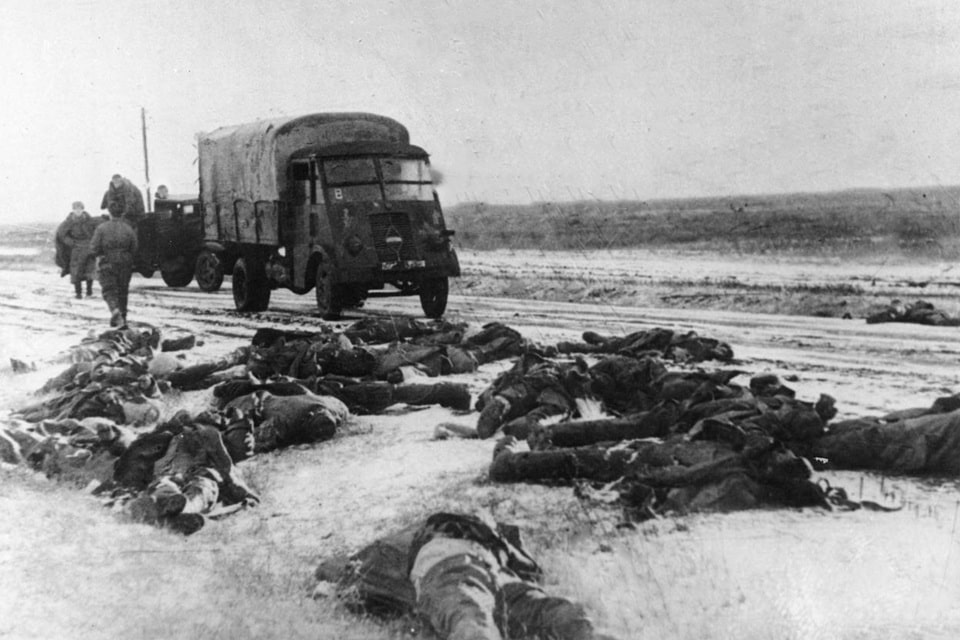
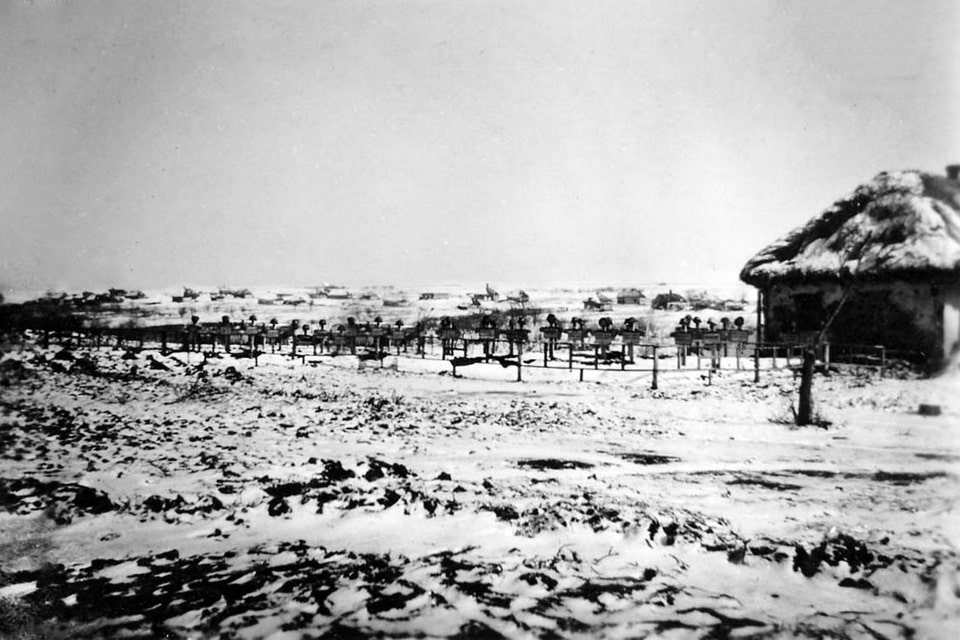
Considering more than five million deaths on all fronts and more than four million on the Eastern front, the latter figure is higher than all German forces unleashed against the Soviet Union in June 1941 at the outbreak of Barbarossa. Getting back to the topic of burial procedures, in the first two years of war in the East, officers and soldiers tried to conduct proper commemoration of their fallen comrades. As long as conditions were applicable, dead Wehrmacht soldiers got their individual graves and ceremonies, while the ‘grave officers’ ensured registration, ‘accounting,’ and centralized cemeteries. For this reason, the burials of the Wehrmacht soldiers who were buried in 1941-1942 were administered in a more ordered way, at least in the beginning. The violence and large territories in the East did not allow the creation of large cemeteries according to Hitler’s pilgrimage vision, and most of the soldiers were buried near the hospitals, near Soviet cemeteries, or in the parks, though ‘grave officers’ mainly controlled the choice of the site and preferred picturesque locations, often on the hills.


As Ukraine was mainly a backyard of the war from late 1941 to mid-1943, commemoration in temporary German cemeteries generally preserved all formalities. When possible, soldiers made speeches, laid flowers, and pleased chaplains. Army newspapers often gave details of such ceremonies to allow those advancing further to the East to read about the commemoration of their fallen, and propaganda worked to encourage men to keep fighting. In this stage of the war, Wehrmacht soldiers knew well that in the case of death, their families would get financial help from the state, and their names and honor would be protected against offenders. Considering the mood back at home in Germany, at least in the first years of war, both military men and the civilian population praised the commitment of the army and state to the fallen soldiers.
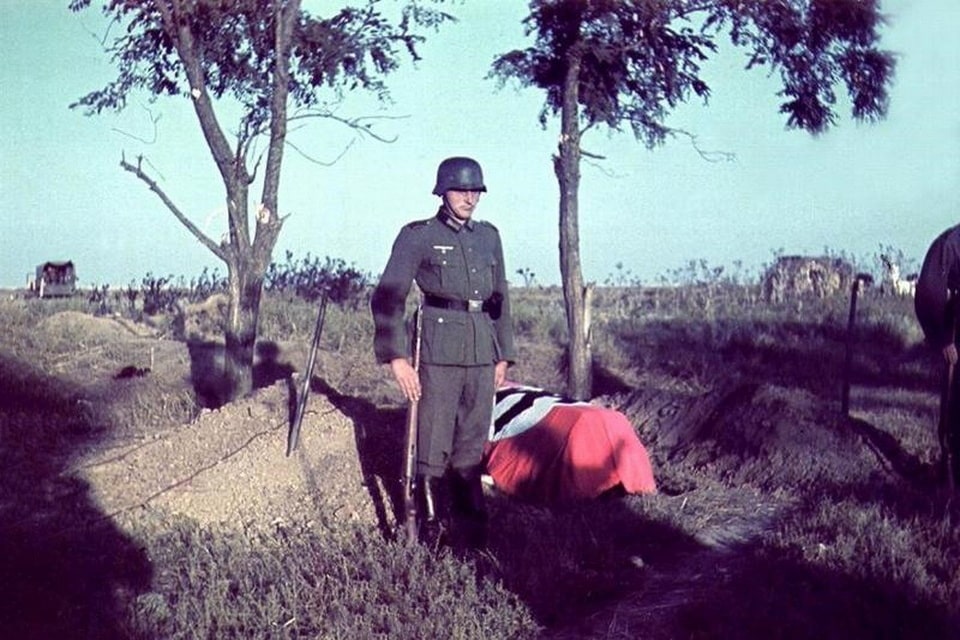

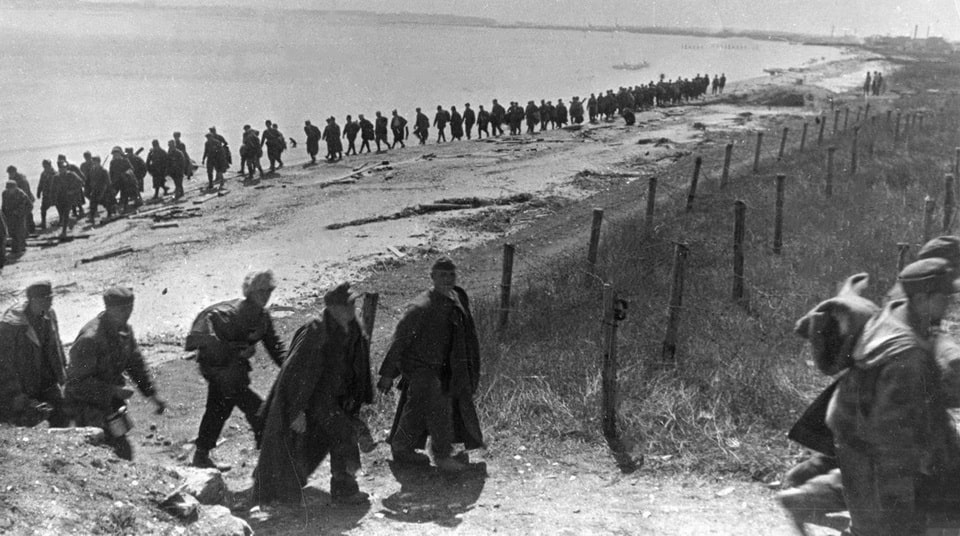
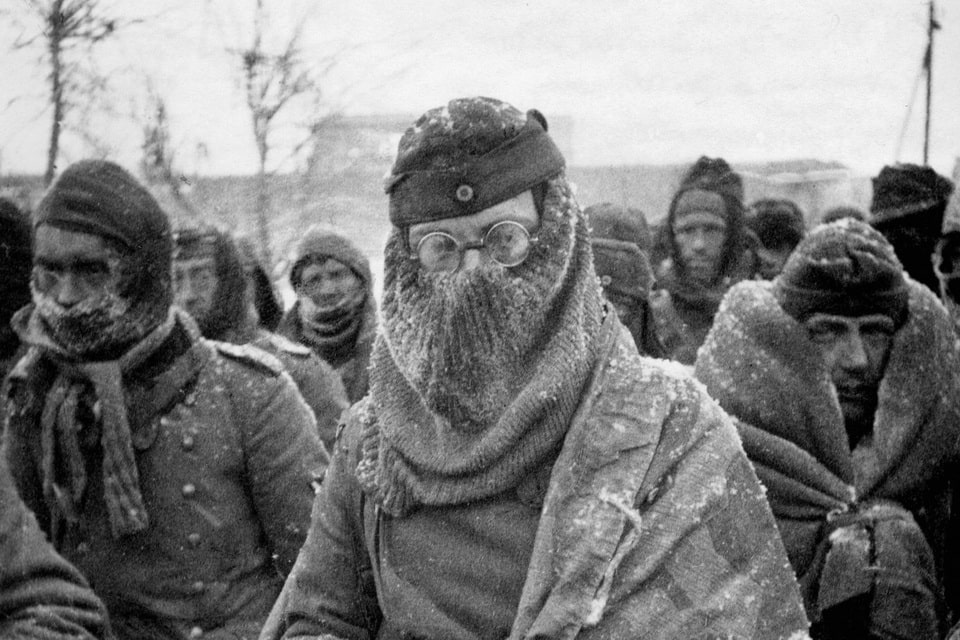
The harsh realities of the war in 1943-1945 largely contested the Wehrmacht’s ability to properly bury and honor all military dead. This second period of the war was characterized by a much more indifferent and apathetic attitude toward the overwhelming casualties. The German soldiers began to question more and more the heroic interpretation of just why they should give their lives on the battlefield. Those who invaded Poland, France, Yugoslavia, and the Soviet Union in 1939-1941 with the feeling of their own superiority, were now complaining about the death and harsh conditions. The Yesterday invaders, mass murderers, and occupants reinterpreted their own role in this war, and when the Wehrmacht began to step back and lose, they spoke more about themselves as victims rather than conscious perpetrators. The post-war myth about the ‘clean Wehrmacht’ and the challenges of ‘Ost Kampfer’ in their memories distorted the fact that it was the German army, which had invaded other countries, killed people in mass, and expropriated resources, and pretended to be all anti-communists, anti-Hitlerists, and pacifists in 1945, should not hide the truth. It is also worth noting that in the later years of the War, it was often Germany’s enemies who buried fallen Wehrmacht soldiers, whom they considered inferior. The Soviet answer to the same war stands on the opposite bank of the river, and on a wholly different scale: the WWII Memorial Complex above the Dnieper, with the Motherland Monument, was built as the official monument to the Soviet victory.
Where are the commanders of Army Group South buried?
The senior officers who commanded German forces in Ukraine between 1941 and 1944 shared varied fates after the war, and their burial sites are scattered across Germany and beyond:
Field Marshal Fedor von Bock (1880–1945), commander of Army Group South during the Battle of Kyiv, was killed in an Allied air raid on 4 May 1945. He is buried at the Lübecker Stadtfriedhof (Lübeck municipal cemetery), Germany.
Field Marshal Erich von Manstein (1887–1973), commander of Army Group South during Operation Zitadelle and the Dnieper campaign, died in 1973. He is buried at the military section of the Burgfriedhof in Irschenhausen, Bavaria.
Field Marshal Gerd von Rundstedt (1875–1953), overall commander of Army Group South in 1941, is buried at Stadtfriedhof Hannover-Stöcken, Germany.
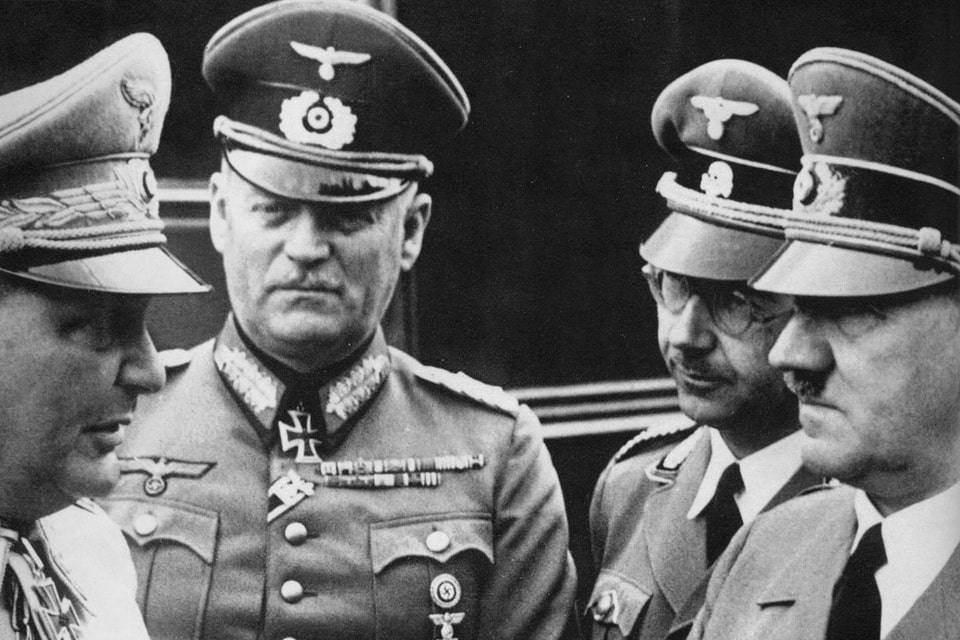
Field Marshal Wilhelm Keitel (1882–1946), Chief of the OKW, was executed following conviction at the Nuremberg Trials on 16 October 1946. His remains were cremated and scattered in an undisclosed location — he has no grave. None of these commanders is buried in Ukraine, in contrast to the hundreds of thousands of ordinary Wehrmacht soldiers commemorated at other Volksbund-maintained cemeteries on Ukrainian soil.

GERMAN WW2 WAR CEMETERIES IN UKRAINE: VOLKSBUND DEUTSCHE KRIEGSGRÄBERFÜRSORGE AND POSTWAR COMMEMORATION
When it comes to the German losses in Ukraine, particularly between June 1941 and May 1944, it would be reasonable to identify three different periods, when the Wehrmacht experienced heavy losses on Ukrainian soil
June – November 1941. The losses of Army Group South are unfortunately indistinguishable among all casualties on the Eastern Front in this period (302,000 dead or missing). Considering its share of the losses and soldiers who died afterward from wounds, it’s safe to assume that until relieving Rundstedt from his commanding post, his forces lost 75,000 – 100,000 men in Ukraine only.
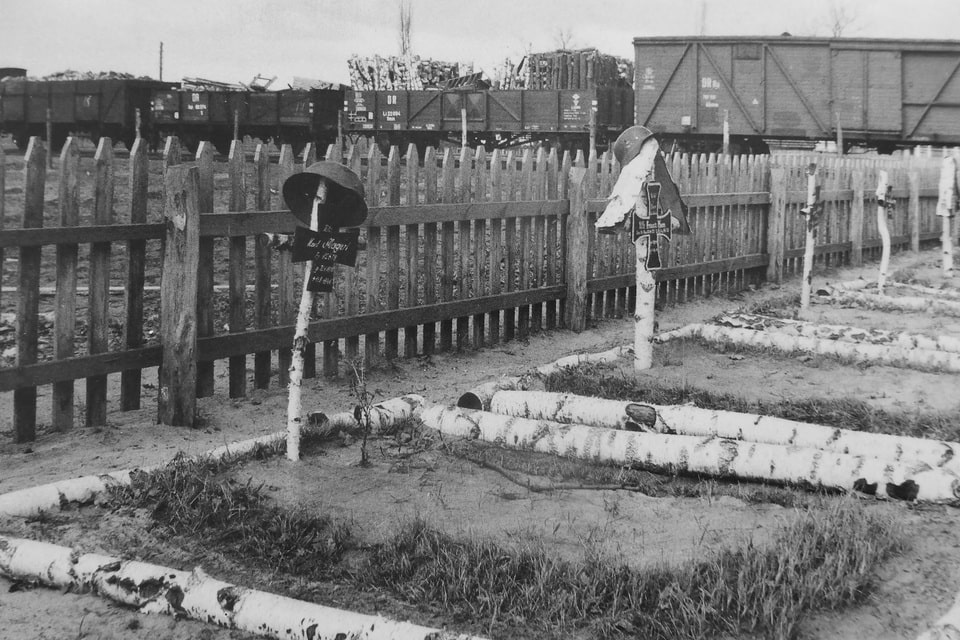
November 1941-July 1943. The most human resources drain in this one-and-a-half-year period is connected with the Battle of Crimea and the Second Battle of Kharkiv, which amounted to around 30,000 casualties in both cases, though only a part of them died.

August 1943 – May 1944. The most bloody period for the Wehrmacht in Ukraine, though also known because of the brilliant command of Erich Von Manstein. At least 100,000 German soldiers were killed between August and December, and another 92,000 until May 1944, putting the overall casualties in this period to 200,000 men.
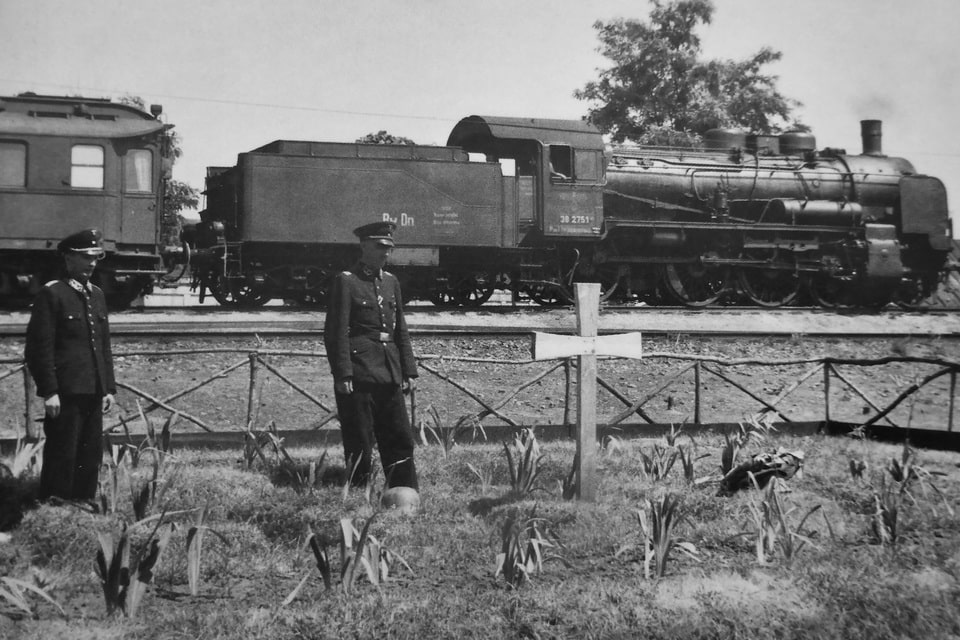
Putting all direct military casualties in 1941-1944, indirect and sanitary losses, accidents, and deceased German POWs (at least 494 000 were designated to work in Ukraine after June 1945, among them 34 000 in Kyiv), the ‘Volksbund’ put the figure of all German soldiers who died in Ukraine to 400 000. This number may seem non-substantial compared to 4.3 million dead on the Eastern Front altogether, less than 10%, but there are a few arguments that should be mentioned. The fighting in Ukraine in 1941 was characterized by a relatively successful ‘Blitzkrieg’ advance, destroying or capturing whole Soviet armies, plenty of initial resources, and not yet overextended logistics. When Ukraine again became a major battlefield in 1943-1944, the German army was more flexible in retreating under Manstein than on other fronts. It is also worth noting that a third of Germans killed in the East lost their lives in 1945 on the territories of Eastern Europe rather than the Soviet Union. German burials and cemeteries in modern Ukraine are among the most documented and best-kept.
Getting back to the German efforts to commemorate its fallen soldiers, Volksbund Deutsche Kriegsgräberfürsorge, or simply ‘Volksbund,’ is still the primary organization, which accounts for and takes care of the military burials in Germany and abroad, including Ukraine. Since regaining its Independence in 1991, Ukraine not only condemned the Soviet regime and its crimes but also opened doors to international organizations, including the German ‘Volksbund’. The first legal agreements with local authorities emerged as early as 1994. Federal Chancellor Dr. Helmut Kohl visited Ukraine, and in 1996 in Bonn, the two countries signed ‘An agreement on the care of war graves’, ratified in Ukraine on June 15, 1997. Since then began the cooperation between the Ukrainian ‘State Commission for Preserving the Memory of Victims of War and Political Repression’ and the German ‘Volksbund’ which is still active nowadays. By 1999, they managed to create and facilitate five large German cemeteries in Ukraine, each capable of burying up to 50,000 remains.


FIVE MAIN GERMAN WW2 CEMETERIES IN UKRAINE: HONCHARNE, KHARKIV, KARLIVKA, POTELYCH, KYIV
Honcharne village near Sevastopol (24 800 burials). This cemetery is located approximately 20 kilometers south of the large Ukrainian city of Sevastopol in the Western part of the Crimean peninsula. It was created in 1998 and initially contained 5500 remains of German soldiers, who died in Crimea in 1941-1944. Ukraine transferred a land plot of around five hectares to Germany for indefinite and free use, according to an intergovernmental agreement (1999) specifically for the creation of a memorial complex for the burial of soldiers. The cemetery was finally opened in September 2001, and since then, until the Russian occupation of Crimea in 2014, Ukraine and Germany allocated 24 800 remains from over three hundred local burials throughout the peninsula. The names of German Wehrmacht soldiers were identified using medallions found at the site of death and can be found in the Book of Remembrance, accessible to the public. A paved road created by ‘Volksbund’ leads to the cross two meters high in the center.
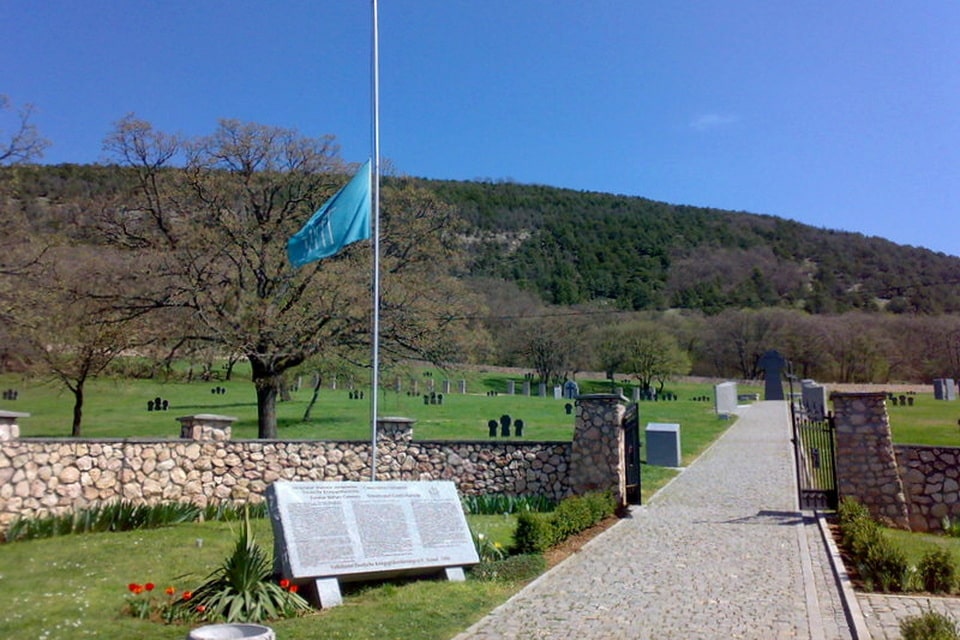
Kharkiv cemetery (48,000 burials). The city of Kharkiv earned its place in the historiography of WWII due to four bloody battles, which took place in October 1941, May 1942, February-March 1943, and August 1943. In this vein, the area around the city was among the bloodiest battlefields for the Wehrmacht in Ukraine, and tens of thousands of soldiers died and were buried here. According to an agreement between Ukraine and Germany, a plot of land of about five hectares was given to ‘Volksbund’ at the so-called ‘17th Civilian cemetery’ at the Northern outskirts of Kharkiv. It accommodated not only the remains of German soldiers from the surrounding area but also from six Ukrainian regions: Sumy, Kharkiv, Poltava, Dnipropetrovsk, Donetsk, and Luhansk oblasts. The inauguration ceremony took place in February 1998 in the presence of German President Roman Herzog (1934-2017). By March 2022, 47,993 German soldiers had been reburied in the cemetery in Kharkiv, of which more than half were identified. Unfortunately, the Russian murderous invaders shelled both cemeteries with artillery fire until they were thrown out of the Kharkiv region during a successful Ukrainian counter-offensive in September 2022.

Karlivka village near Kropyvnytskyi (22,000 burials). This cemetery is slightly smaller in size than the two previous ones and covers an area of around three hectares. It is interesting to note that the location was chosen because the area had once been known as ‘Alt Danzig’ (Old Danzig), a German settlement from the late 18th century. Since the late 1990s, ‘Volksbund’ has reburied more than 22,000 remains of German soldiers from the Central and Southern regions of Ukraine. Many of those Wehrmacht soldiers died not in combat but from wounds and illnesses in the numerous hospitals. The cemetery was opened in 2000.
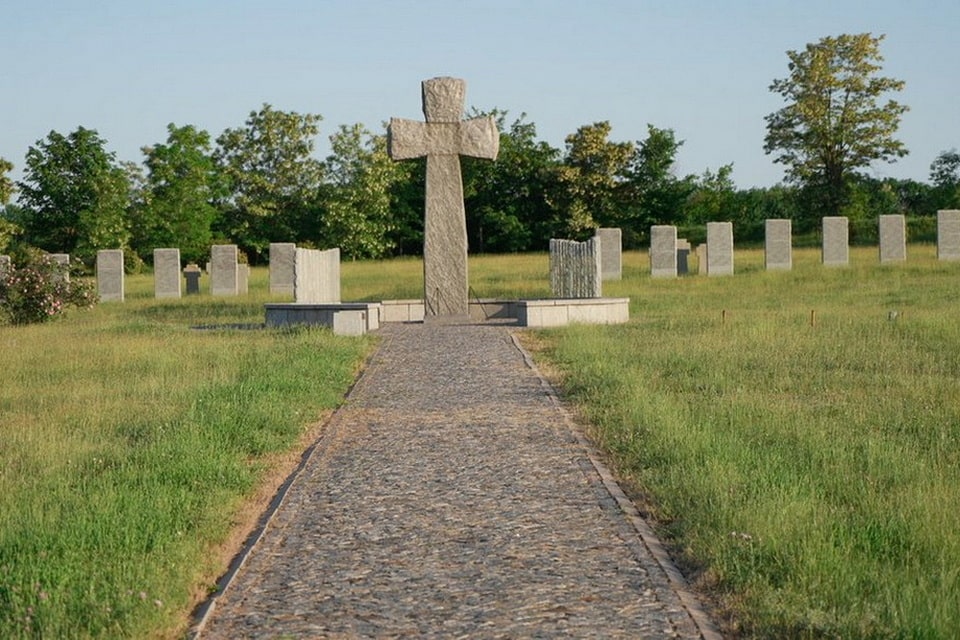
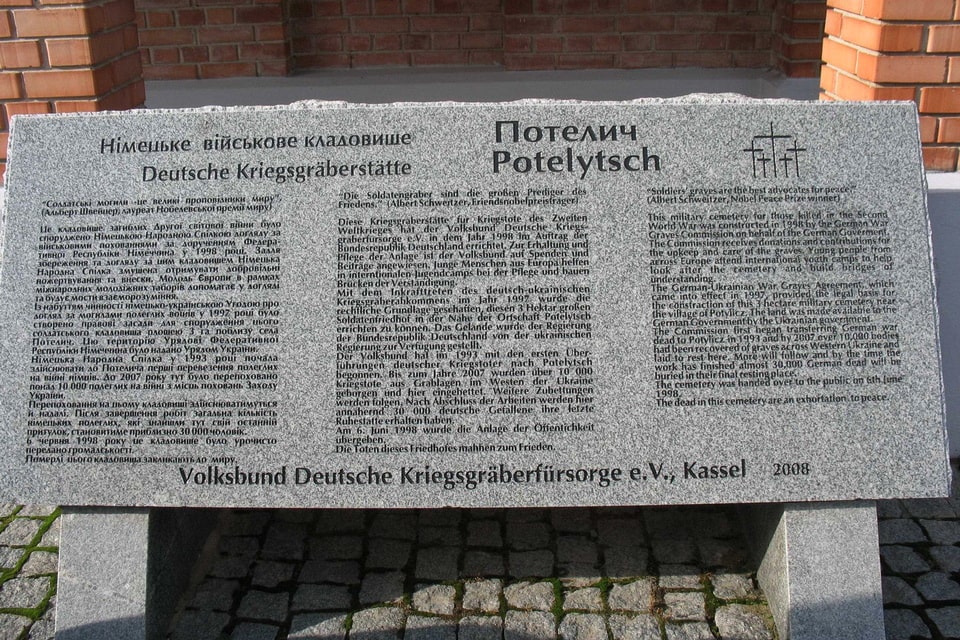
Potelych Village in Lviv Oblast (16,000 burials). A large Ukrainian village, Potelych, with around 2500 inhabitants currently, was first mentioned in 1262. In 1997, the local authorities agreed to assign a plot of land of 2.6 hectares to ‘Volksbund’ as a last resting place for German soldiers who were killed and buried in Western Ukraine in 1941-1944. The inauguration ceremony took place on June 6, 1998. In the first decades, more than 10,000 remains from Lviv, Volyn, Rivne, Khmelnytskyi, Ternopil, Ivano-Frankivsk, Chernivtsi, and Zakarpattia regions were buried here, and the current number of graves is 15 843.
GERMAN WW2 CEMETERY AT VITA-POSHTOVA NEAR KYIV (27 000 BURIALS)
Before getting into detail about the largest of five German cemeteries in Ukraine, it is important to say a few words about the history of Wehrmacht burials in or around the Ukrainian capital during World War Two. The First Battle of Kyiv lasted between July 7 and September 26, 1941, and resulted in not only the seizure of the city but the elimination of whole Soviet army groups. On the other hand, Army Groups South and Center experienced heavy casualties in the area, causing at least 12,000 men killed in combat and another fifty thousand wounded, some of them dying in the following months. The first German cemeteries in Kyiv were situational and primitive: soldiers were buried in city parks (for example, next to the Mariinskyi Palace, Botanic Garden), garden squares, and suburbs: at around twenty locations overall. As the Battle of Kyiv ended on September 26, the occupational administration assigned the creation of several centralized war cemeteries in the city, which were designed according to German military tradition.
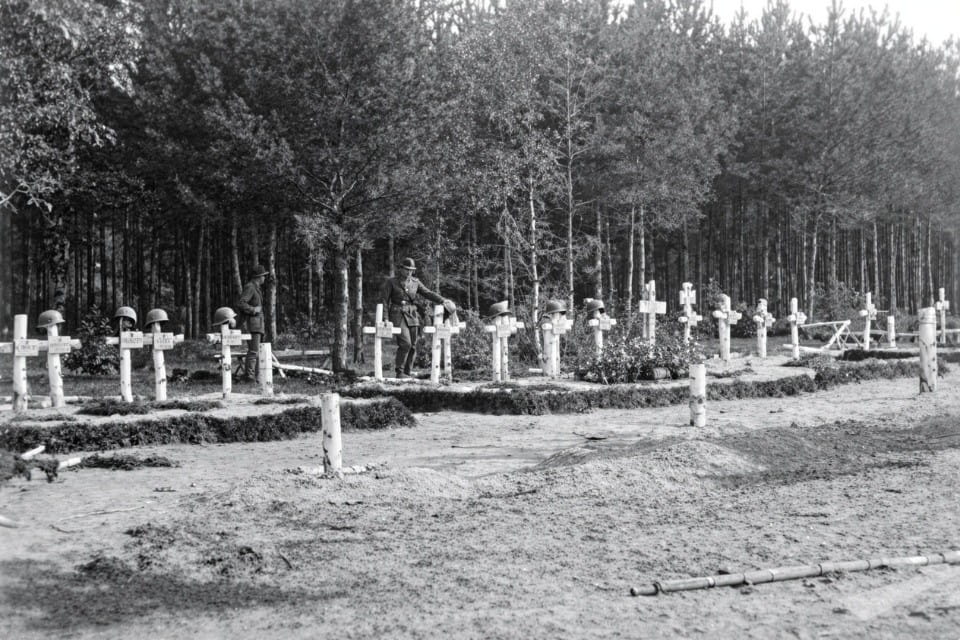
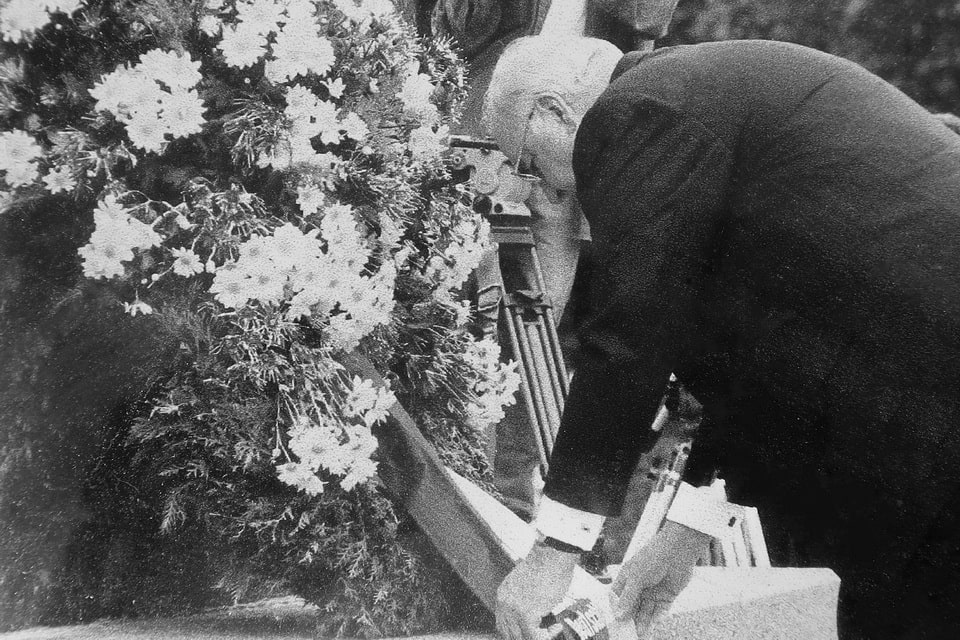
The largest centralized cemetery of this kind was created on the territory of Askold’s Grave, a semi-sacral ancient cemetery of the Kyiv Rus and Ukraine, which was barbarically turned into a park by the Soviet regime in the 1930s. Between September 1941 and the Fall of 1943, the Germans steadily reburied around 2500 German, Italian, Romanian, and Hungarian soldiers in the cemetery, which they officially named ‘The Cemetery of the Heroes of Wehrmacht №1’. The cemetery had a typical plan with rows of individual graves with wooden crosses above, and several statue memorials. In October 1943, only a month before retreating from Kyiv, the Germans set up the ‘Heroes of Wehrmacht Cemetery №2’ at the territory of another park: Ivana Bahrianoho Park (former ‘Pushkin Park’), where around 500 soldiers were buried in a hurry. Less pompous cemeteries existed near Feofaniia Park (1182 burials), on the territory of Darnytsia Silk Factory (I also have covered the history of Stalag 339 (Darnytsia) camp in Kyiv), at the sections of the existing city cemeteries, such as ‘Baikove Cemetery’ (Lutheran sector). With the coming of the Red Army in November 1943, German burials were generally bulldozed to the ground, turned into parks or Soviet cemeteries, or built up. The only existing German WW2 cemetery in the city limits of Kyiv is situated in the area of Syrets, next to the former territory of the infamous Syrets concentration camp near Babyn Yar ravine.
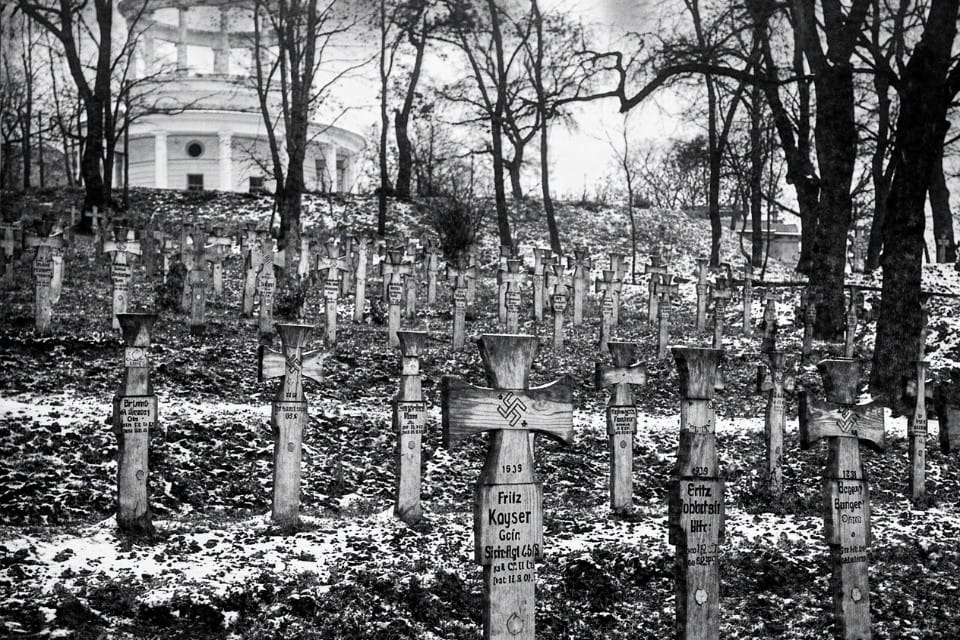
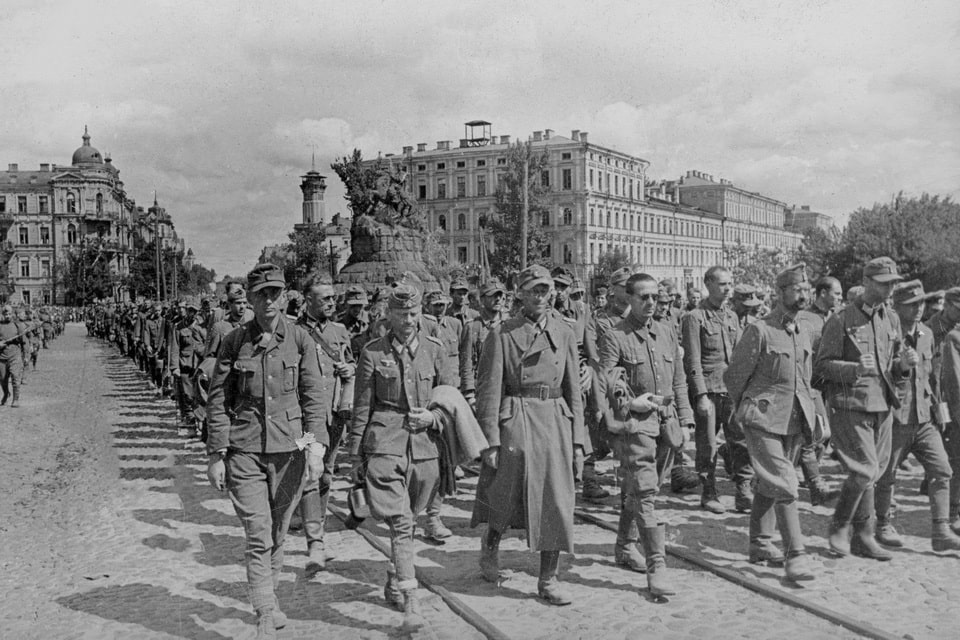
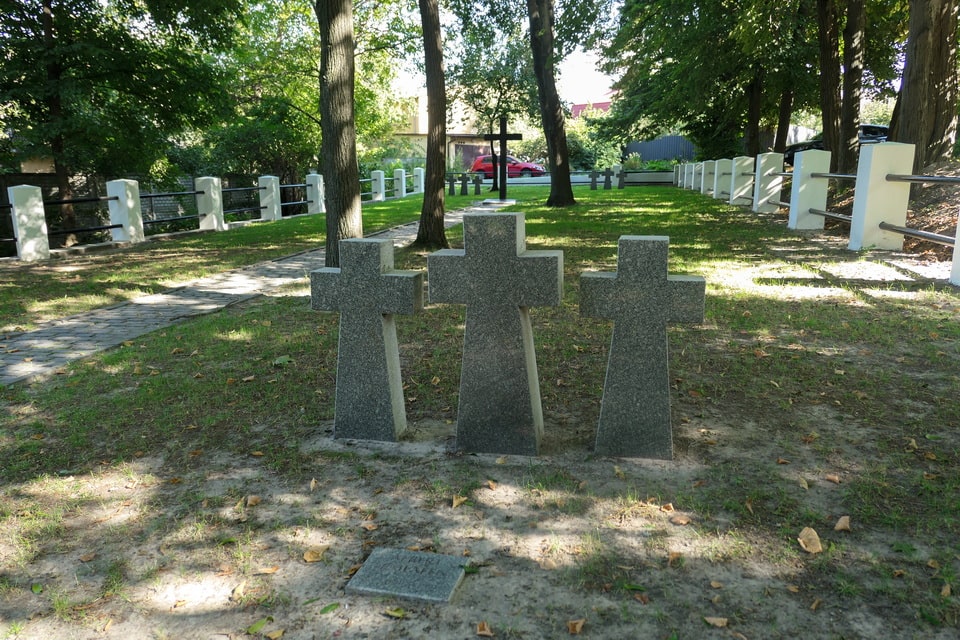
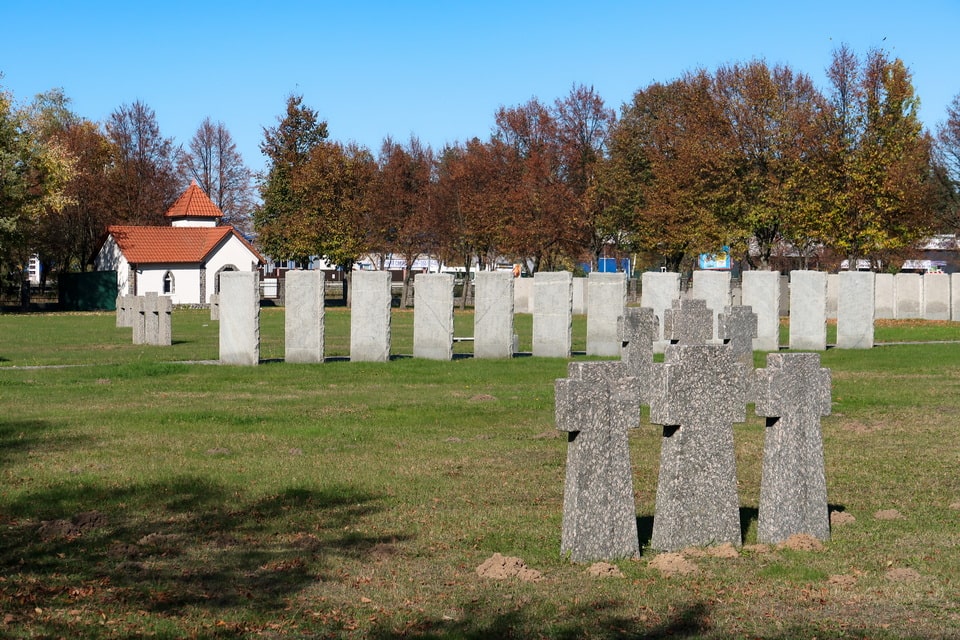
The German WW2 cemetery near the village called Vita-Poshtova was the first major centralized burial site for the Wehrmacht soldiers among five across Ukraine. As early as January 1996, the year when Ukraine and Germany signed an ‘An agreement on the care of war graves’ and a year and a half before it was completely ratified, Kyiv regional administration allotted a plot of land of three hectares to ‘Volksbund’ for the creation of a war cemetery for those Wehrmacht soldiers who died in the Kyiv and Northern Ukraine area in 1941-1944. The area of the modern village (1500 inhabitants nowadays), 15 kilometers from Kyiv, has been known since the XII century and bears its name from a combination of the river name ‘Vita’ and the Ukrainian definition of postal ‘Poshtova’, thanks to a XIX century post station. Despite the fears of the Ukrainian authorities, the local population in the village did not protest against such a neighborhood with the German fallen soldiers of WWII. The German War Graves Commission started the works on the designated plot of land in 1996, and the cemetery was opened on September 3 of the same year in the presence of German Chancellor Helmut Kohl.
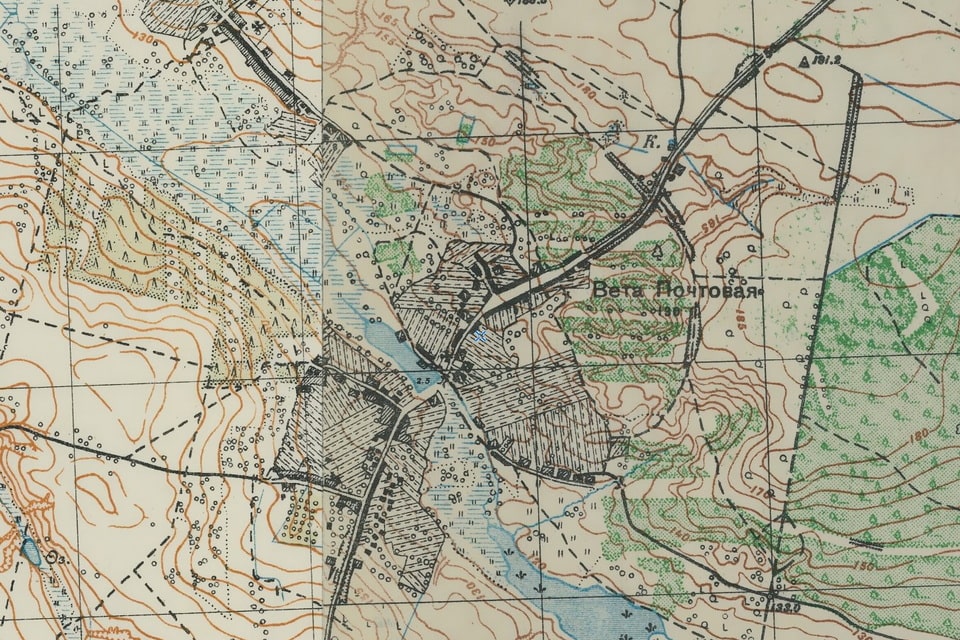
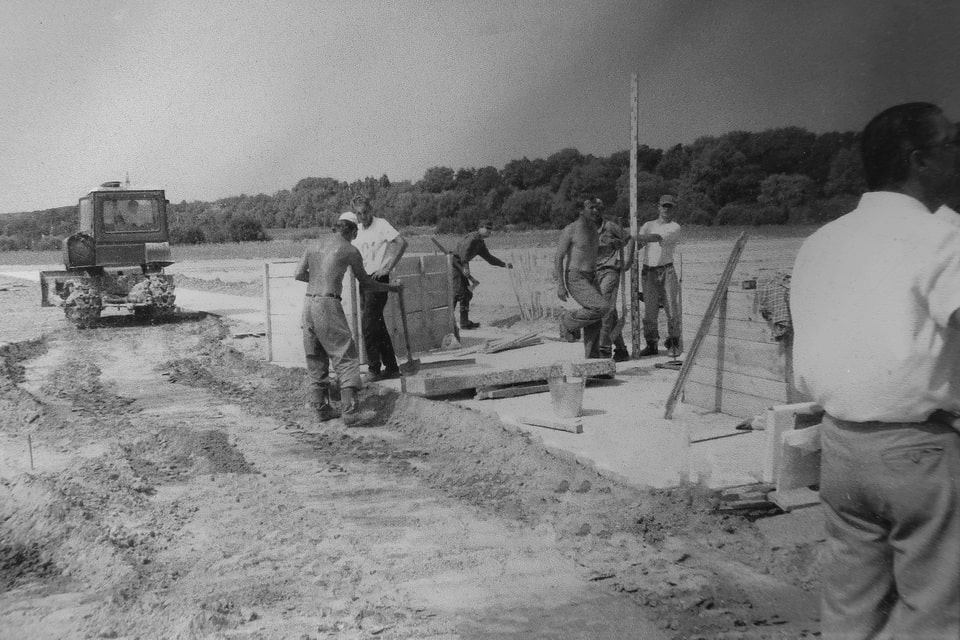
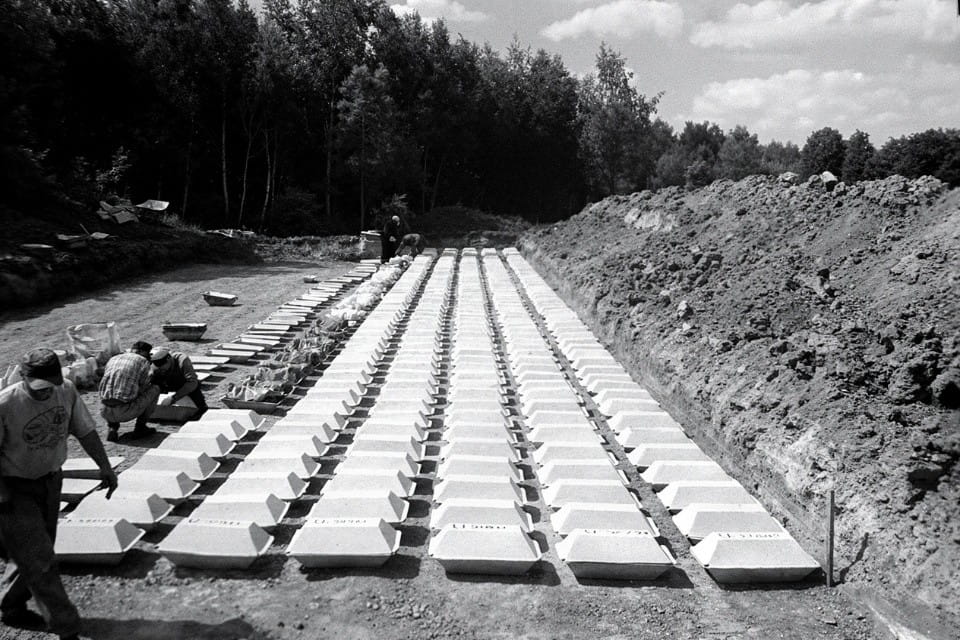
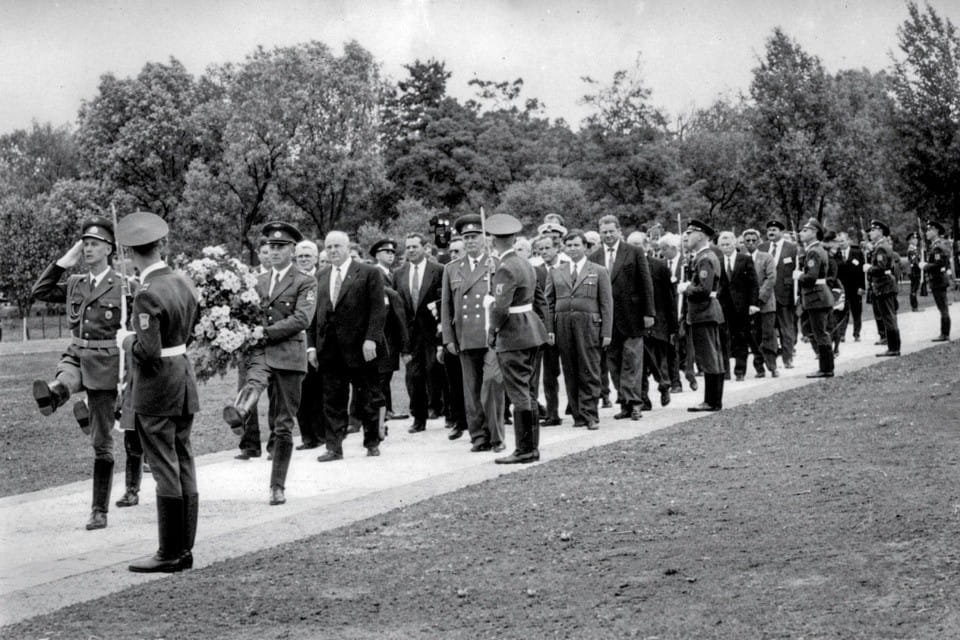
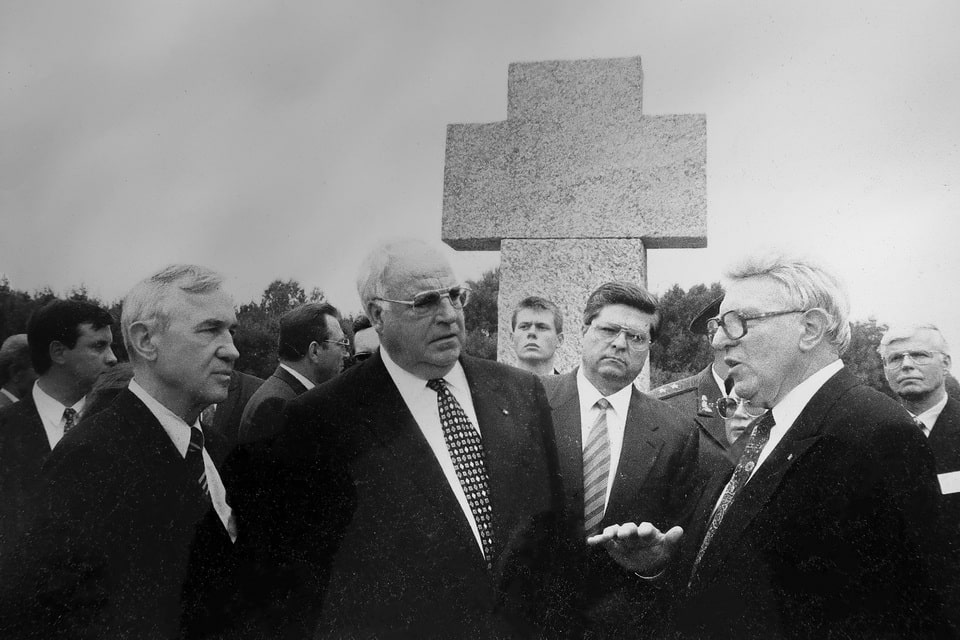
Starting from 1996, the ‘Volksbund’ and the Ukrainian government cooperated on the works of reburying German soldiers to this centralized cemetery, and currently, it contains the remains of 26 558 Wehrmacht soldiers. It is interesting to note that the fallen Germans are conventionally better accounted for than the Red Army soldiers. The cemetery near Vita-Poshtova is not the largest when compared to Kharkiv, with its almost 50,000 burials, but it was designed to include up to 40 000 remains in perspective. Not all temporary cemeteries of the WWII era are accessible, and sometimes hundreds of fallen Germans still lie under buildings or predation facilities of the Soviet era. Probably the most ambitious reburial of the recent decade took place in the above-mentioned Askold’s Grave in 2015-2017, when 2060 remains were found and taken to Vita-Poshtova cemetery.
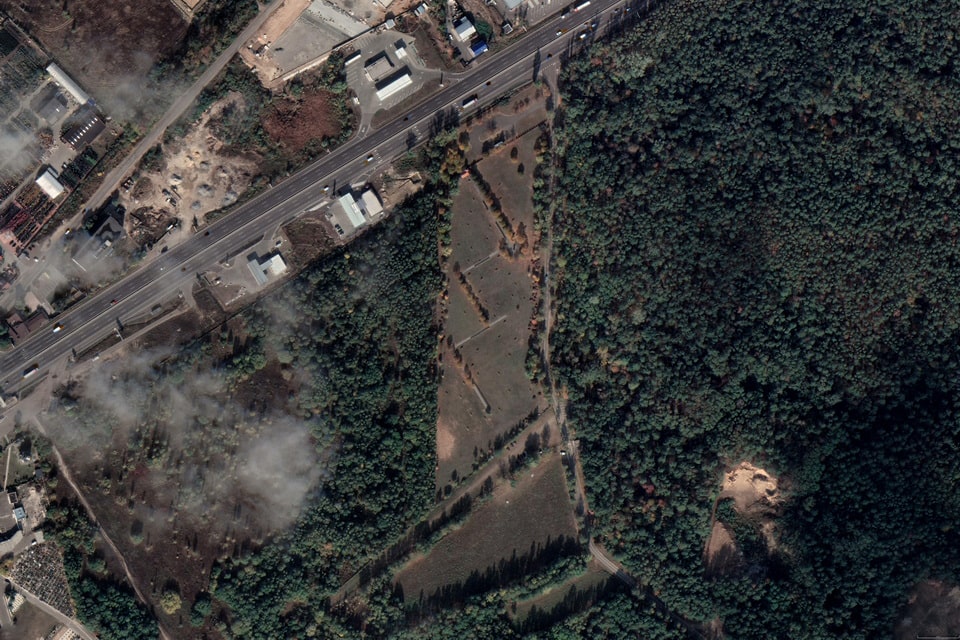
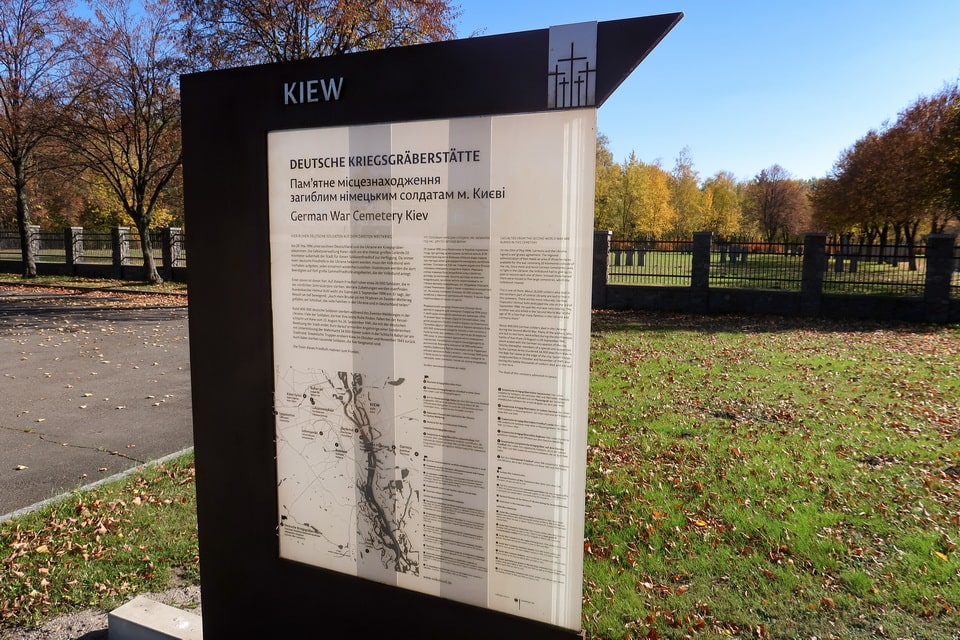
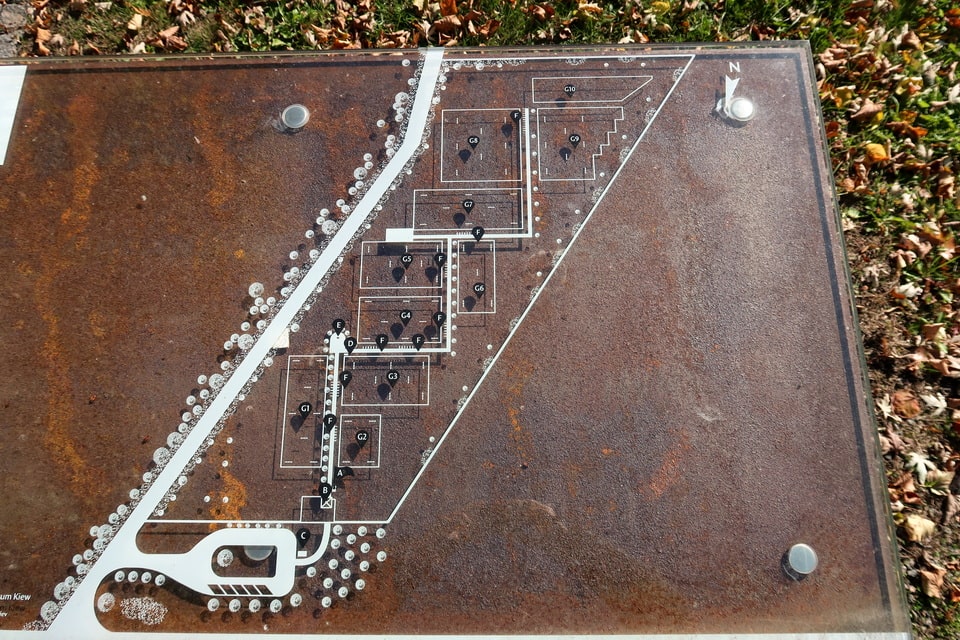
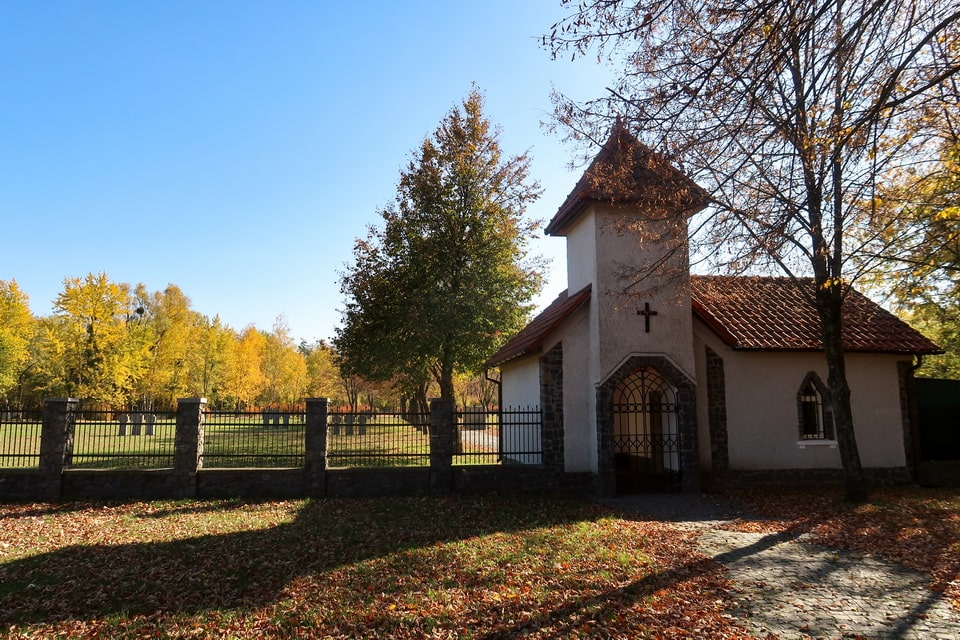
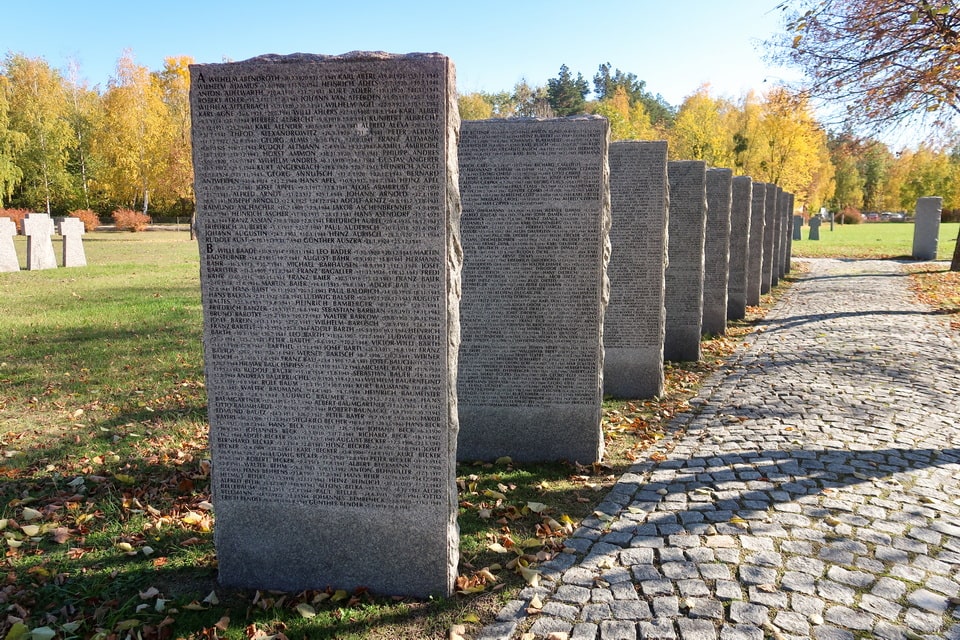
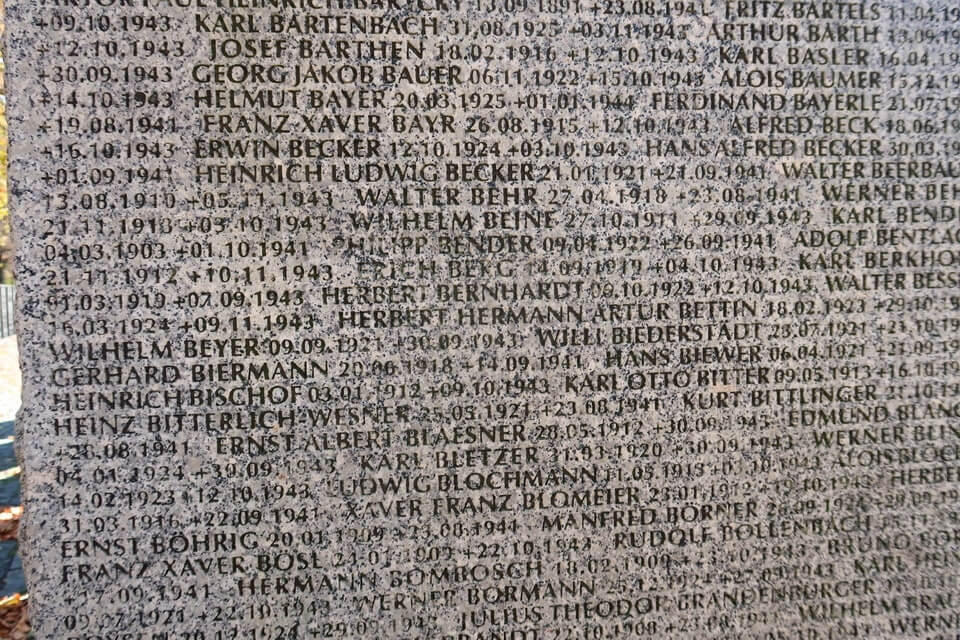
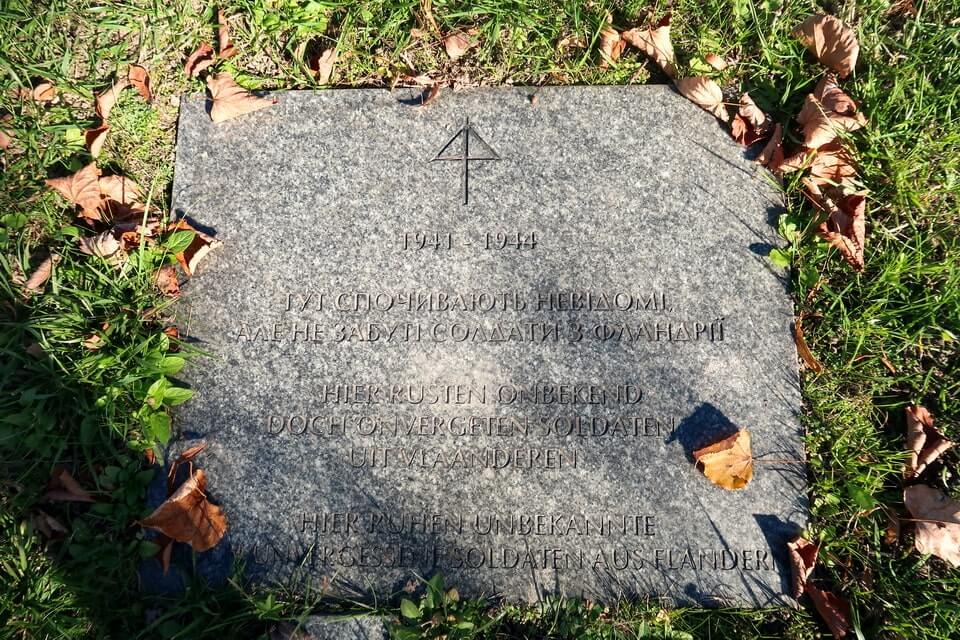
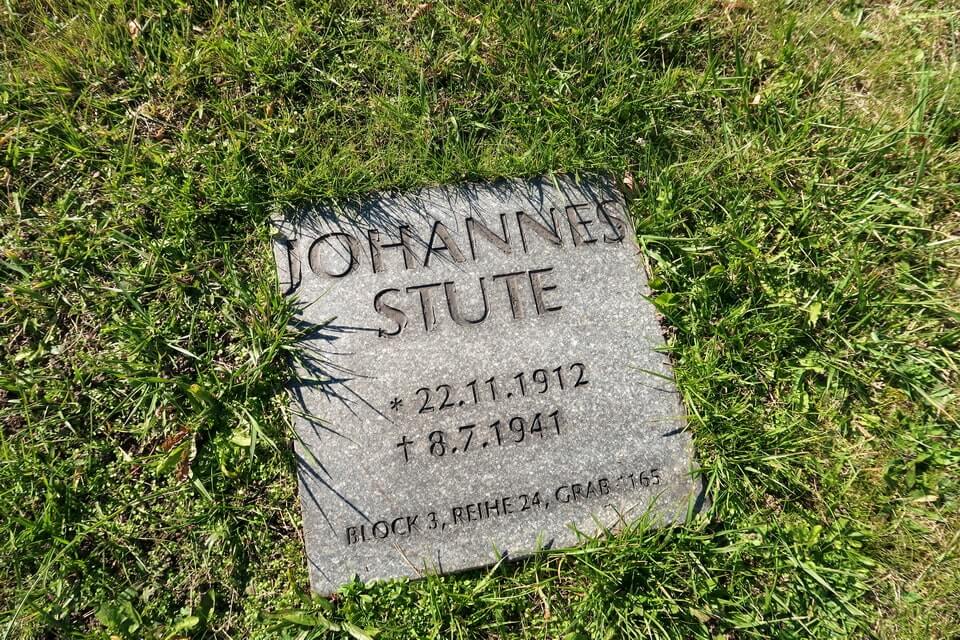
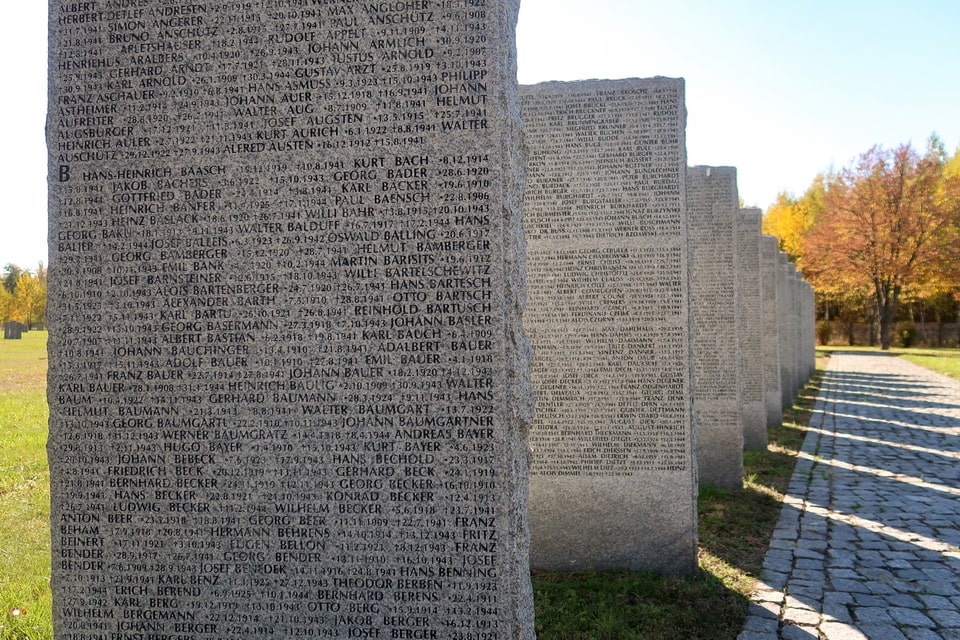
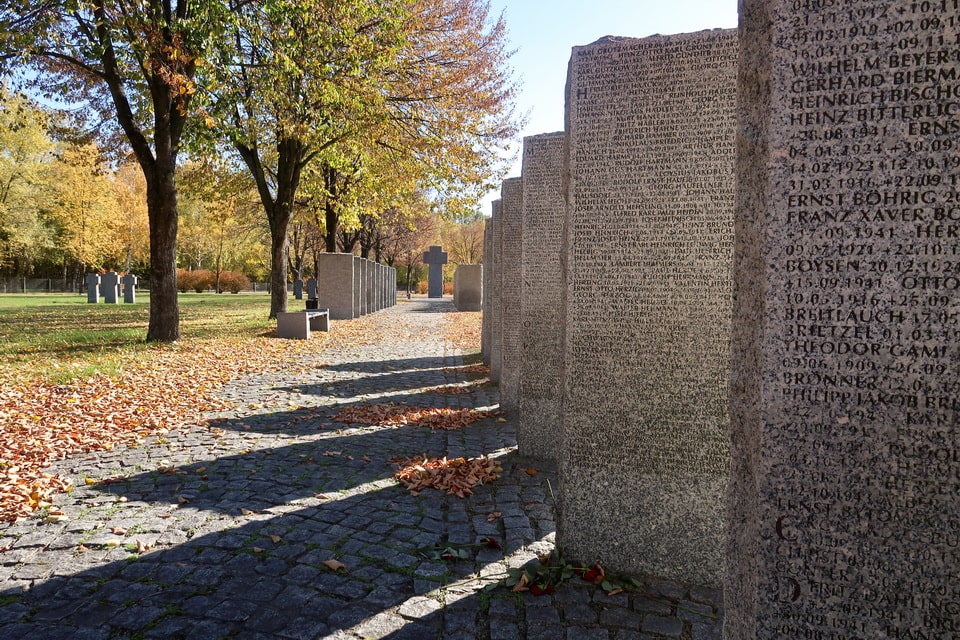
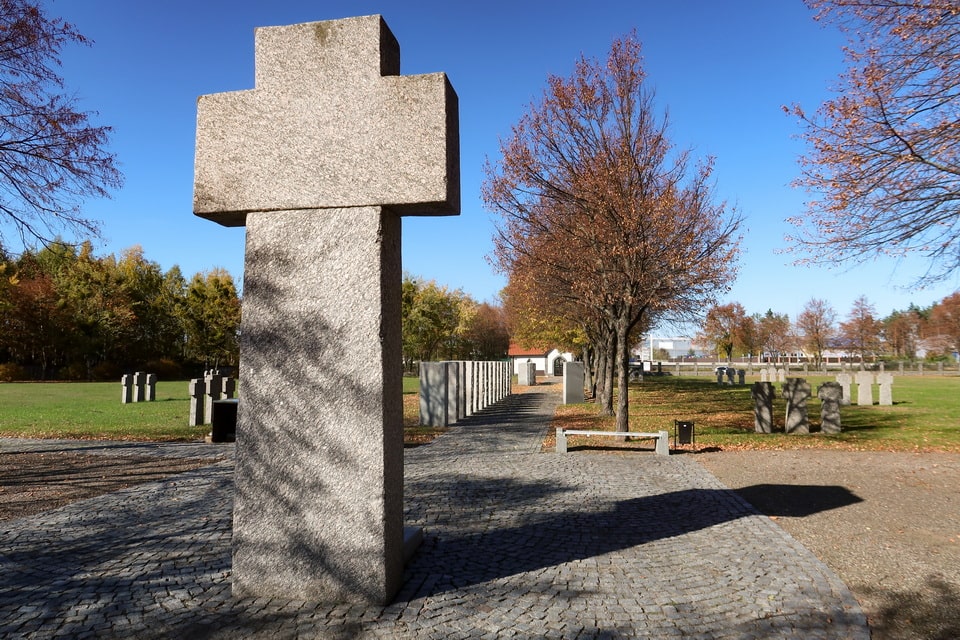
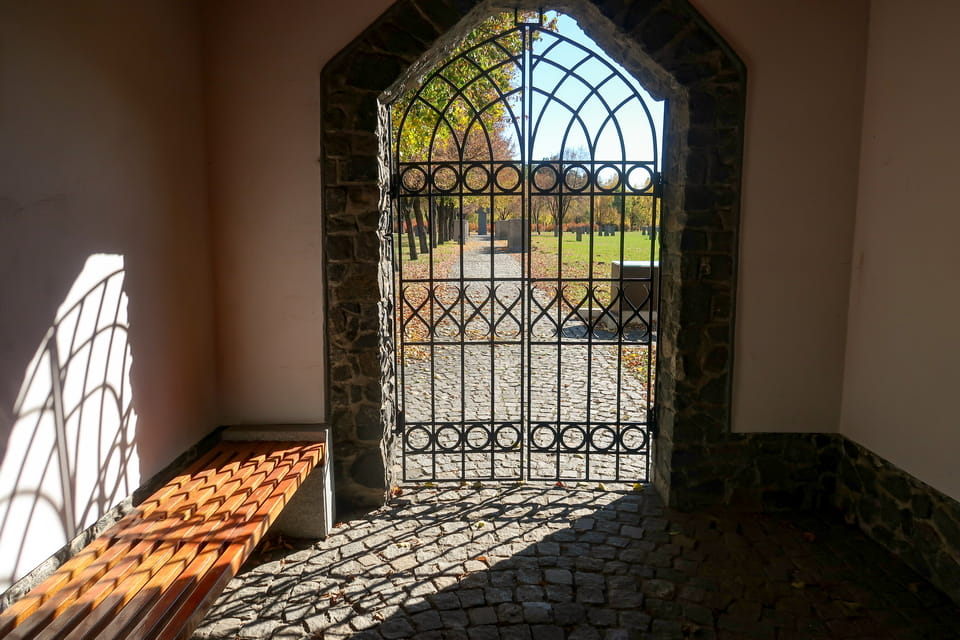
The cemetery is easily reachable from Kyiv by car or even public transport. The very first informational sign welcomes visitors already in the parking lot, even before you enter the territory through a modest entrance. A paved road leads to a large stone cross, the central part of the memorial area, with granite steles with the names of the identified Wehrmacht soldiers on both sides. The names are listed in alphabetical order to simplify the process of searching for the relatives, and each soldier’s name is accompanied by the dates of birth and death if the latter is known. As the new reburials took place, additional slabs were added with their own alphabetic order. The cemetery is divided into ten sectors, each marked with German crosses. The representatives of the German government annually commemorate the site, and in October 2017, Wolfgang Schneiderhan, a Bundeswehr retired general and the president of ‘Volksbund,’ in his speech here underlined Germany’s gratefulness for the support in commemorating German soldiers.
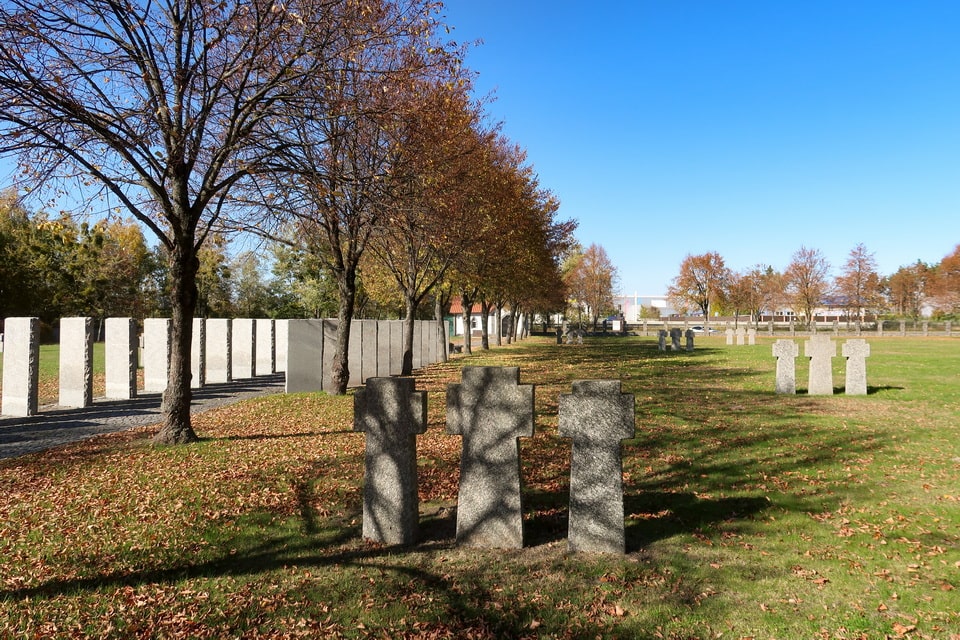
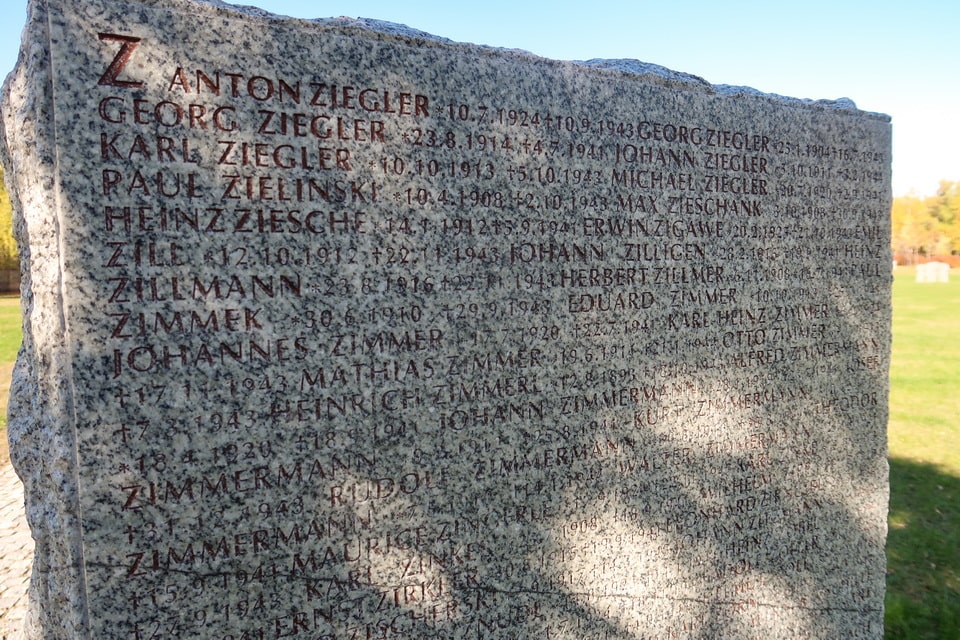
Visiting the German WW2 Cemetery at Vita-Poshtova near Kyiv
Location & Address:
Vita-Poshtova (Віта-Поштова), Kyiv-Svyatoshynsky district, Kyiv Oblast, Ukraine. The cemetery is situated near the Vita-Poshtova village, south-west of Kyiv. GPS coordinates: 50.300619°N, 30.372148°E.
Getting to the Cemetery from Kyiv Centre: (~25 km south-west)
- By Car: approximately 35–45 minutes from central Kyiv via the Zhytomyr Highway (E-40) or the Ring Road toward Odesa/Bila Tserkva direction. The route is straightforward; parking is available near the main gate.
- By Suburban Bus: A viable public transport option exists, though it requires some walking. You can take a suburban bus (e.g., Bus № 305 from Teremky Metro Station, or № 303 from Vystavkovyi Tsentr heading toward Fastiv/Bila Tserkva) and ask the driver to stop in “Vita-Poshtova” on the main highway. Note that the cemetery is not directly at the stop; a 10–15 minute walk (~1.5 km) along local roads is required. Using a mapping app for navigation is highly recommended.
Visiting Details & Preparation:
- Maintenance: Maintained by the Volksbund Deutsche Kriegsgräberfürsorge. The site is serene, dignified, and well-kept. Maintain silence and respectful conduct. Bring your own water; there are no facilities on site. Photography is permitted for personal use.
- Admission & Open: Entry is free of charge. The site is typically accessible during daylight hours year-round. It is not guarded. Bring printed grave search results from the Volksbund database if searching for a specific person.
Important safety note (As of 2026): Ukraine remains under active Russian military aggression. While Kyiv Oblast is accessible, visitors must check current travel advisories and prioritize safety. The cemetery was not damaged as of the author’s 2022 visit. Official advisories from your government are essential before any trip.
I am very grateful to war archives, museums, libraries, private collections, and writers for the historical photos in this article. To the extent that some author or a copyright owner may not want some of the above black-and-white photos to be used for educational purposes here, please contact me for adding credits or deleting the pictures from the article.