

Holocaust in Dnipropetrovsk (Dnipro) 1941–1943: German occupation
This article documents the Holocaust and German occupation of Dnipropetrovsk between August 1941 and October 1943. The city is known by several names across different languages and historical periods:
— Dnipro (Дніпро) — the current official Ukrainian name since 2016 under the decommunisation law
— Dnipropetrovsk (Дніпропетровськ) — the Soviet-era name used from 1926 to 2016, and the name in use during the German occupation of 1941–1943
— Dnepropetrovsk — the russian-language transliteration, commonly used in Western historical sources and older publications based on archaic Soviet sources.
— Dnjepropetrowsk — the German-language name used in Wehrmacht and Nazi administrative documents during the occupation
— Yekaterinoslav (Єкатеринослав) / Katerynoslav — the city’s pre-Soviet name until 1926; relevant for the pre-war Jewish community history covered in Section 1
This article uses Dnipropetrovsk as the primary form (the name in use during the events described), with Dnipro when referring to the present-day city.
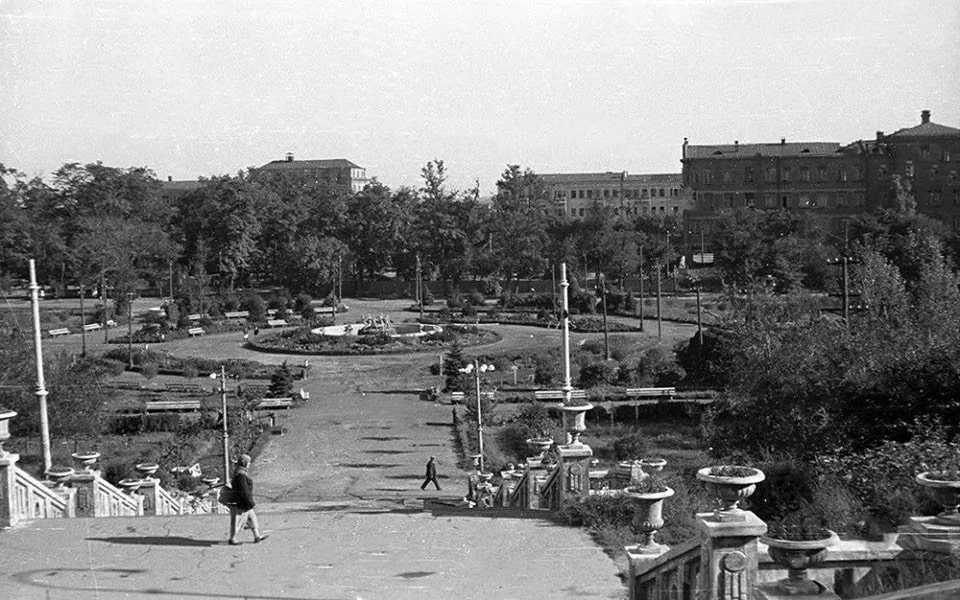
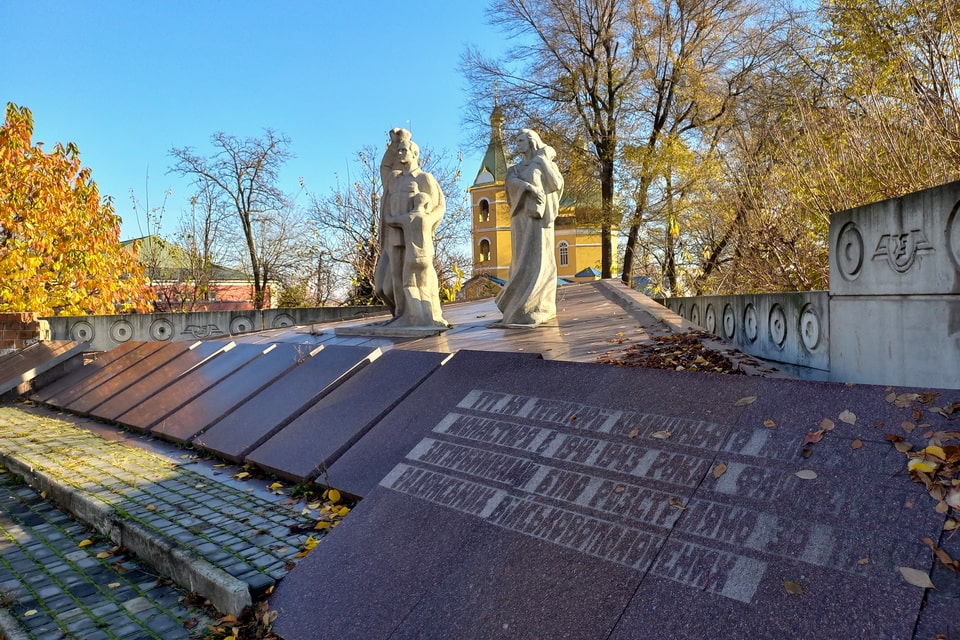
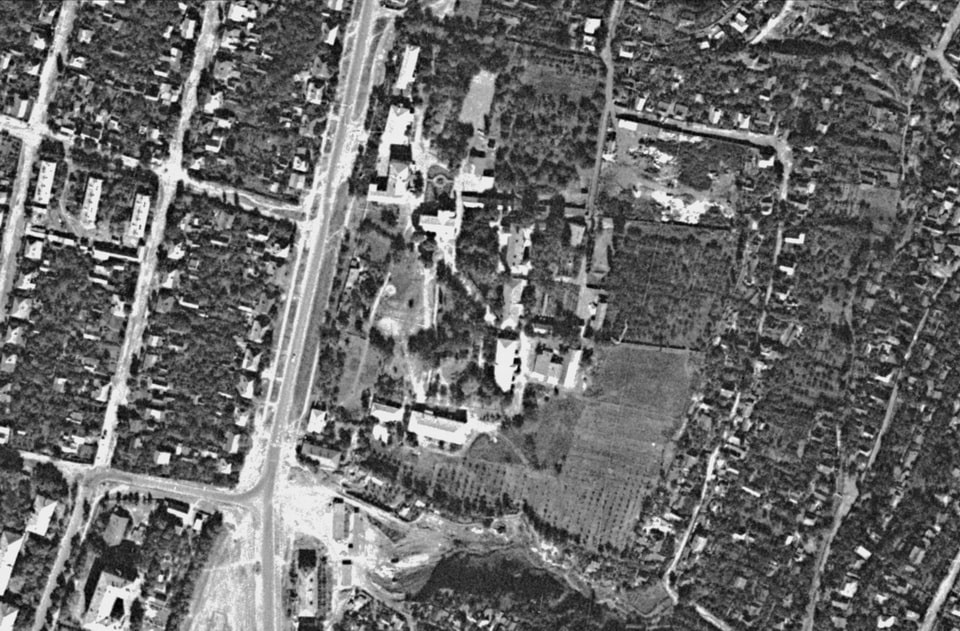
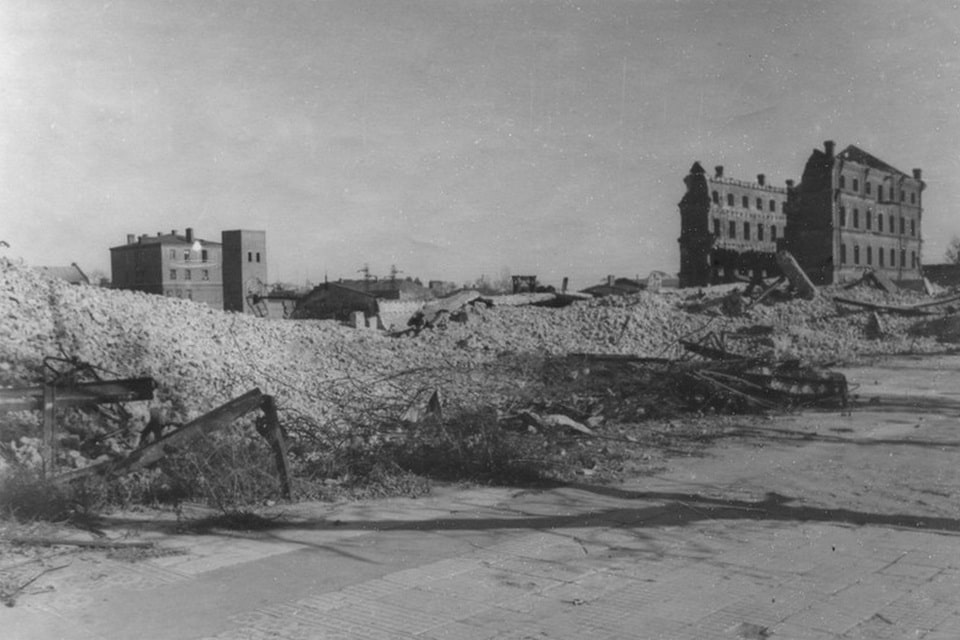
The article includes archival photographs from Ukrainian archives and the author’s personal photos of the key sites in Dnipro, since I have been living all my life in the city and have visited these locations multiple times.
THE JEWISH COMMUNITY OF YEKATERINOSLAV/DNIPROPETROVSK BEFORE 1941: 89,000 JEWS, GOLDEN ROSE SYNAGOGUE AND SOVIET REPRESSION
The socio-economic life of Ukrainian lands in the 16th century was heavily influenced by the creation of a monarchic confederal state called ‘The Polish–Lithuanian Commonwealth’. The provisions of the ‘Union of Lublin’ signed in 1559, among other things, allowed Polish rich families to obtain substantial land allotments on both banks of the river Dnipro in the south-eastern part of a newly created giant state, and they were followed by peasants ready to work on those lands. Broadly speaking, the first notable Jewish settlers came to the territory of modern Ukraine from the Polish inner regions on the threshold of the 17th century. The persecution of national minorities in ‘The Polish–Lithuanian Commonwealth’ resulted in a series of rebellions, the most notable among which emerged in Ukraine and became known as the ‘Khmelnytsky Uprising’ (1648-1657), named after its leader Bohdan Khmelnytsky (1595-1657), also known as the ‘Cossack-Polish War’ or in Ukraine as ‘National Liberation War’. The war resulted in the death or eviction of two-thirds of the Jewish population in these territories, which amounted to fifty thousand before 1648.
The first documented references to Jews on the territory of the modern Dnipropetrovsk region date back to the middle of the 18th century. The Ukrainian Cossacks at that time did not make a national distinction when accepting someone to their ranks, though Jews had to be converted to Christianity. While the self-proclaimed autocratic ruler Katherine II, who had killed her husband to become an Empress, disallowed Jews from participating in trade in most of the Empire, on December 23, 1791, she allowed the Jewish population to get citizenship in the ‘Ekaterinoslav Vicarage’ (part of modern Dnipropetrovsk, Poltava, Kirovohrad, and Donetsk regions). While being restricted and sometimes persecuted elsewhere, the Jewish population in the region used all its rights and freedoms. Yekaterinoslav, the largest city in the vicarage and its administrative center, would later be better known in the 20th century as Dnipropetrovsk and nowadays as Dnipro, proudly named after the river.
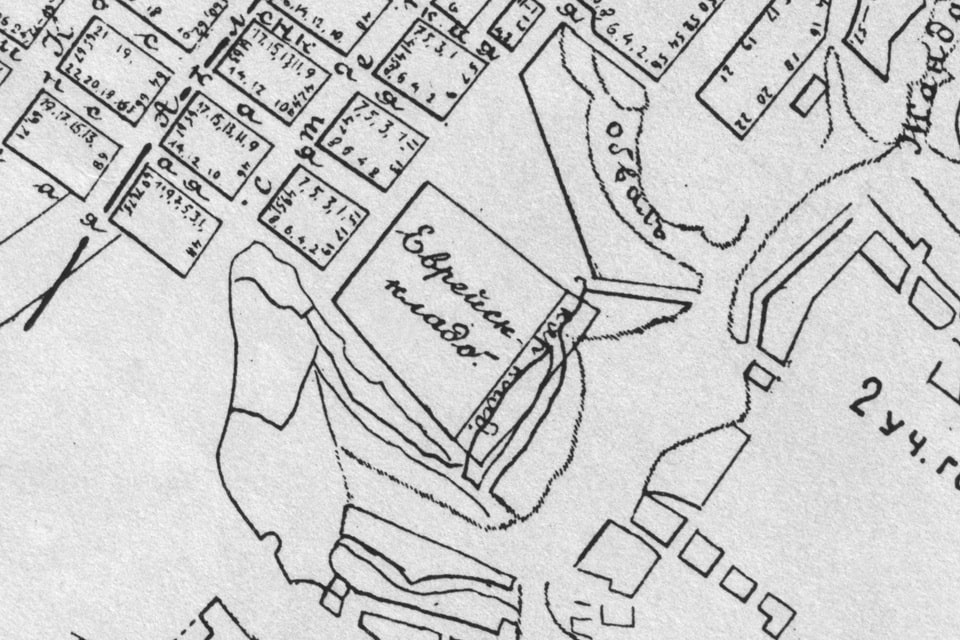
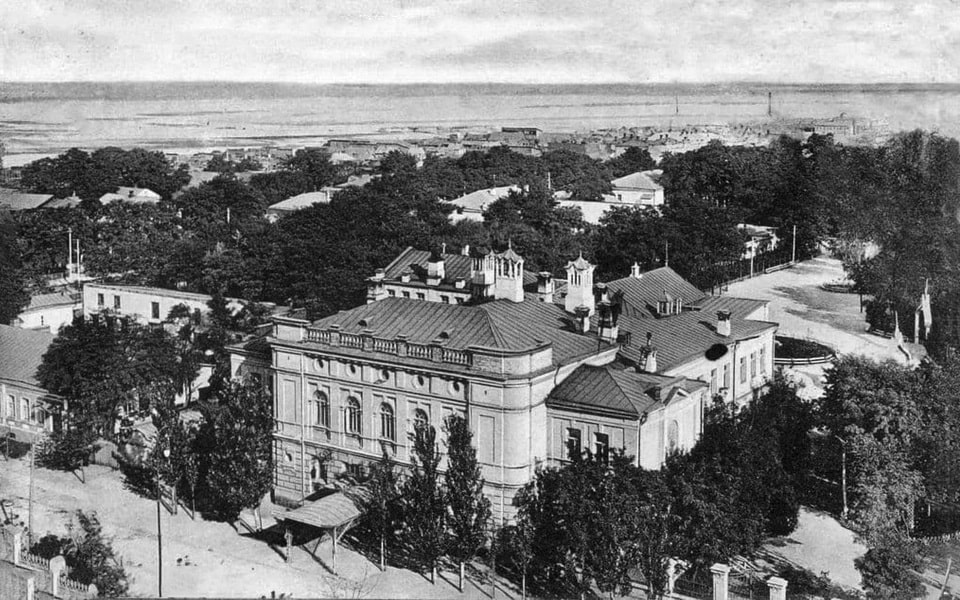
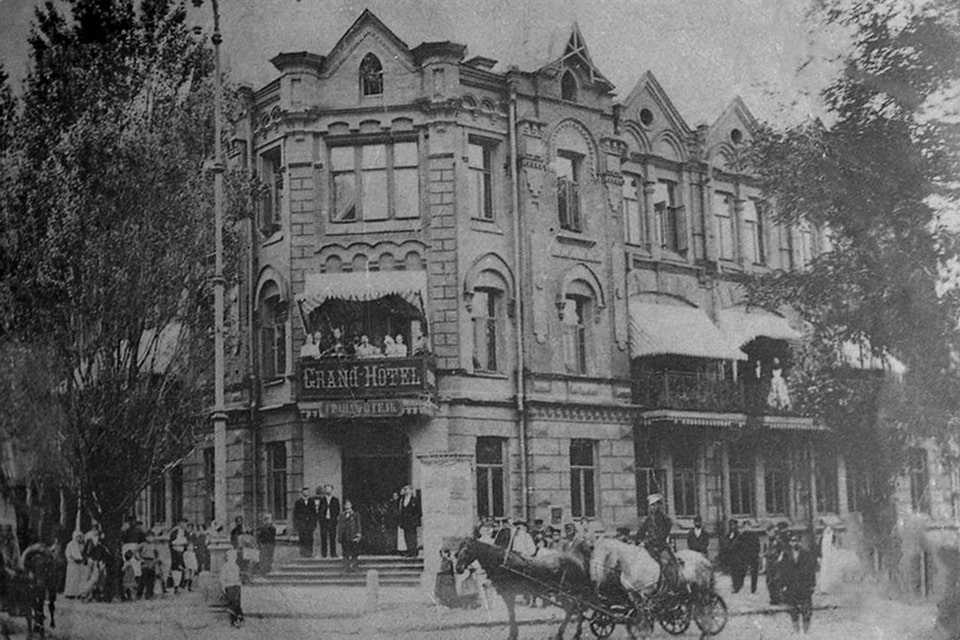
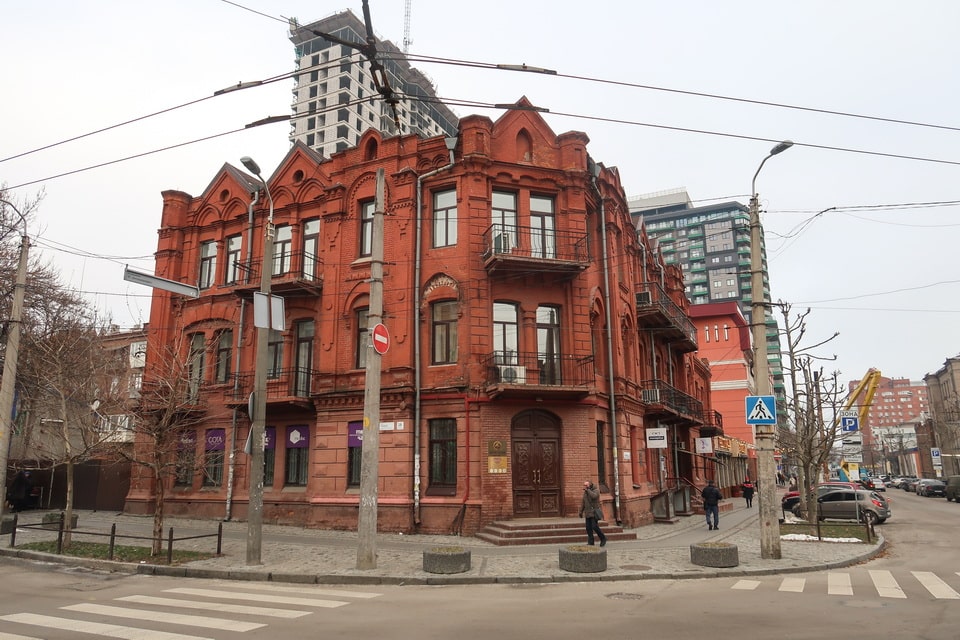
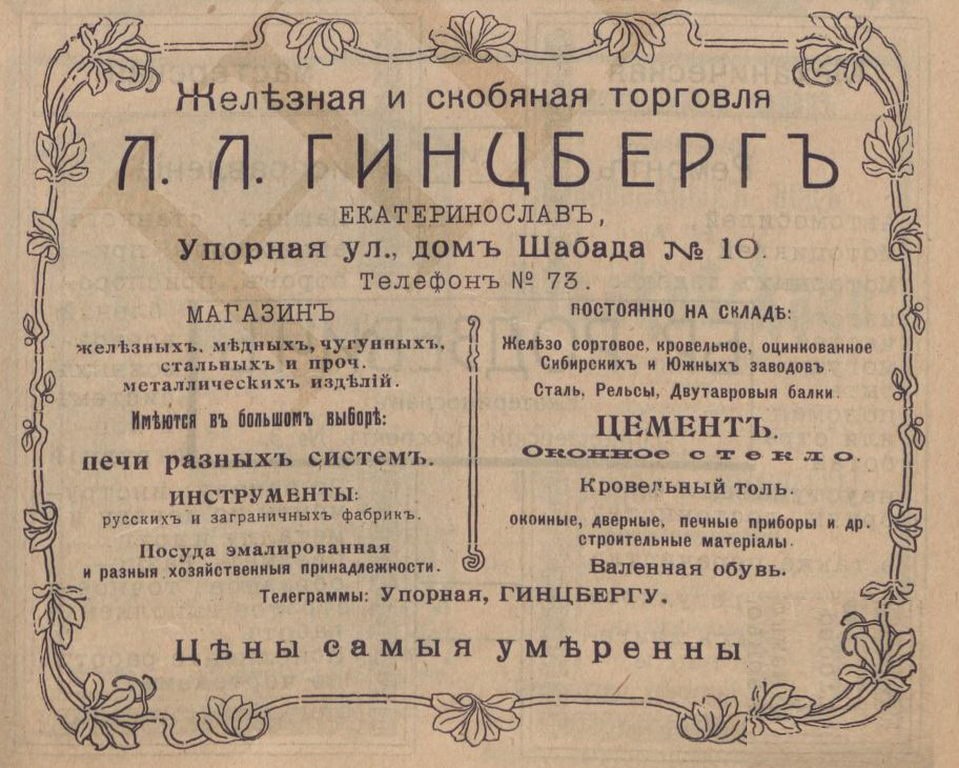
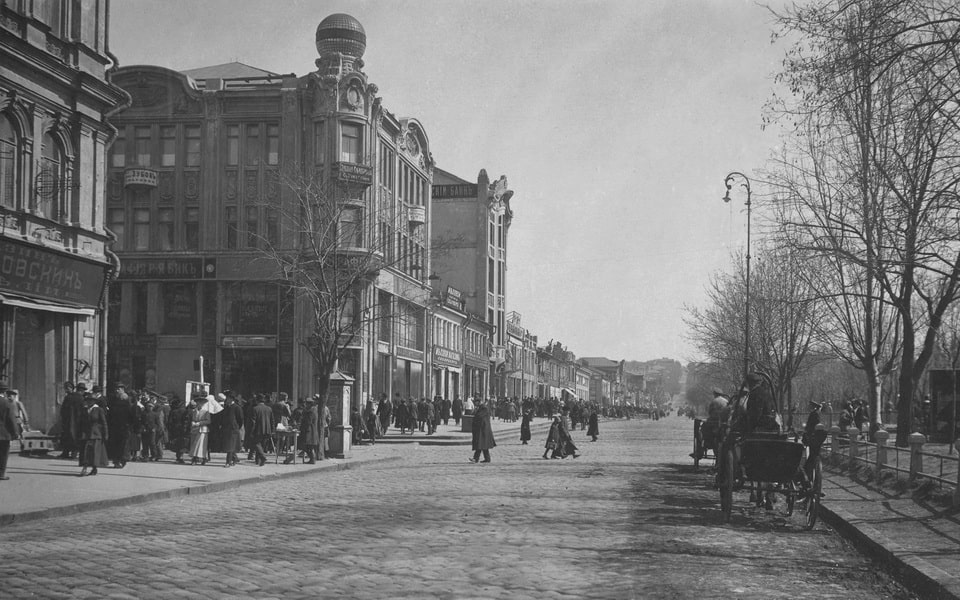
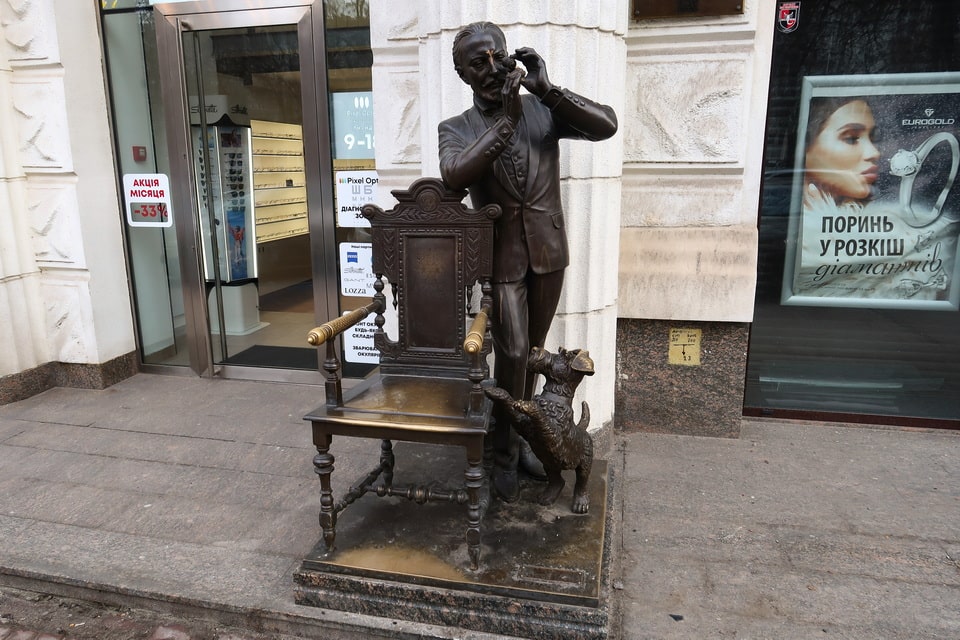
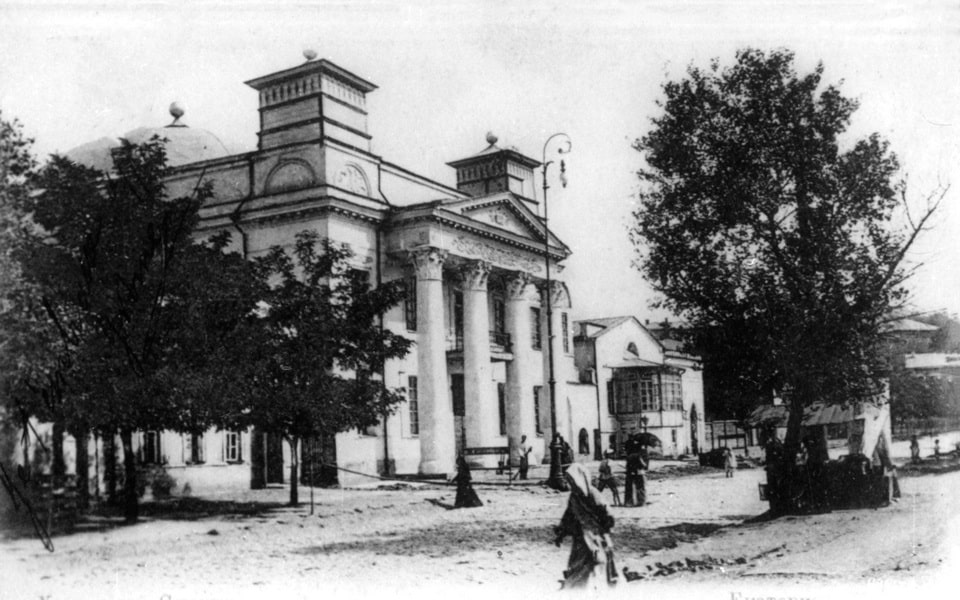
The Jewish population of Yekaterinoslav amounted to a moderate 380 people at the turn of the 19th century, and toward the end of the century, 39 979 Jews constituted a third of the total city’s population of 112 839 (at that time the fourth largest city in Ukraine after Kyiv, Kharkiv, and Odesa). In contrast to such an urbanized amount of townspeople, 101,000 Jews in the whole region comprised only 4.8% of the total mainly peasant population, of which only about 2% lived in rural areas. Getting back to Yekaterinoslav, such a proportion in the total census resulted in high assimilation of the Jewish community, and they possessed a substantial influence in merchant trade, the financial sphere, tailoring, pharmacy, jewelry, and the educational sphere. On the eve of the 1917 revolution, forty-four synagogues operated in the city, among them a large ‘Choral Synagogue’ nowadays known as the ‘Golden Rose’, which was built as far back as 1852 in the heart of the city. In 1903, the Jews in Yekaterinoslav attended 25 Jewish specialized schools, 3 Talmud Torah religious schools, 89 Cheddars primary schools, and 1 public school. Back in 1898, the Yekaterinoslav Society for Helping Poor Jews was established, and soon after, the institute of precinct trusteeships. The Society also operated a free Bureau, which was engaged in finding work for unemployed Jews. In 1924, the Communists banned all charity institutions, including the affiliate branch of the ‘Joint’ Society, which had helped the citizens to live through the 1921-1923 famine.
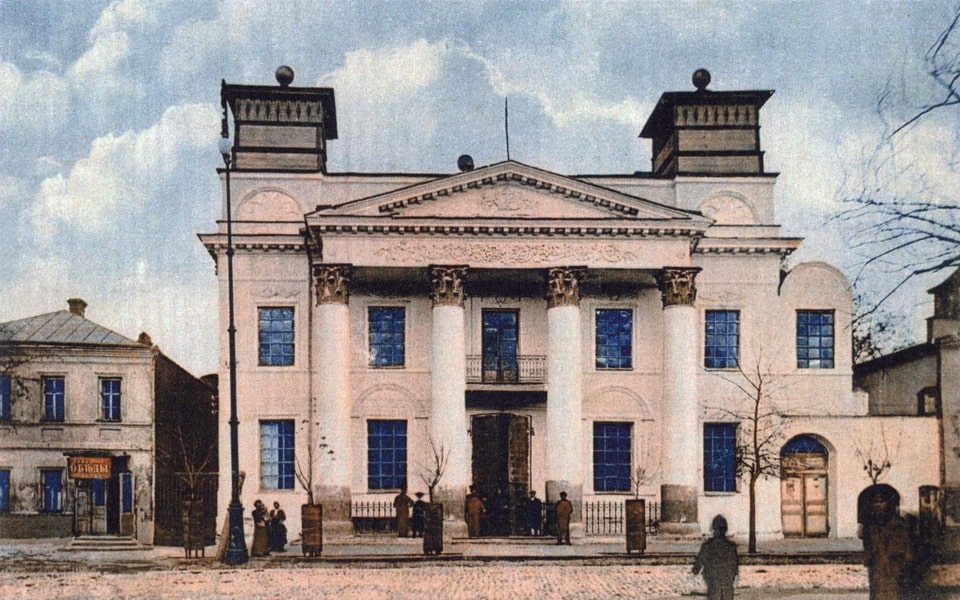
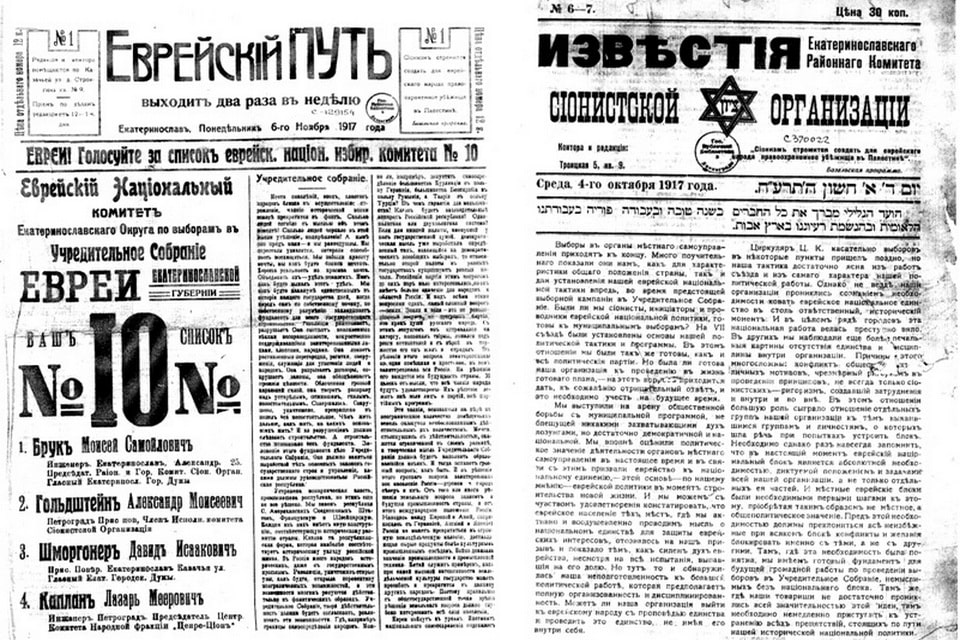

Despite the murderous Communist revolution, the Civil War, the 1921-1923 famine, and poor Soviet economic management, by 1926 the population of the city doubled to 232 336 persons, of which the Jewish population amounted to 62,043 or 27%. In the first years of the occupational Soviet regime in the 1920s, the self-proclaimed government conducted a relatively mild anti-religion policy that predominantly rested on propaganda, though some Christian and Jewish sites of prayer were closed. The new offensive on religion came in 1929 when seizing, robbing, and turning churches and synagogues into warehouses, stables, gyms, or municipal buildings became a routine reality. In October 1933, only seven synagogues were still open in the city, now renamed Dnipropetrovsk, and in 1938, with the intensification of Stalin’s reign of terror, all Jewish schools were banned, leaving formerly ten thousand pupils without appropriate education. Similar to any nationality in the state, the Jews suffered the crimes of the ‘Great Terror’ in 1937-1938, and toward the start of the Second World War, almost all the former features of Jewish self-identification, at least in public, were suppressed. Against all odds and the criminal nature of the Soviet state, the Jews in Dnipropetrovsk were a highly assimilated part of the society and still comprised a large share of the city’s population.
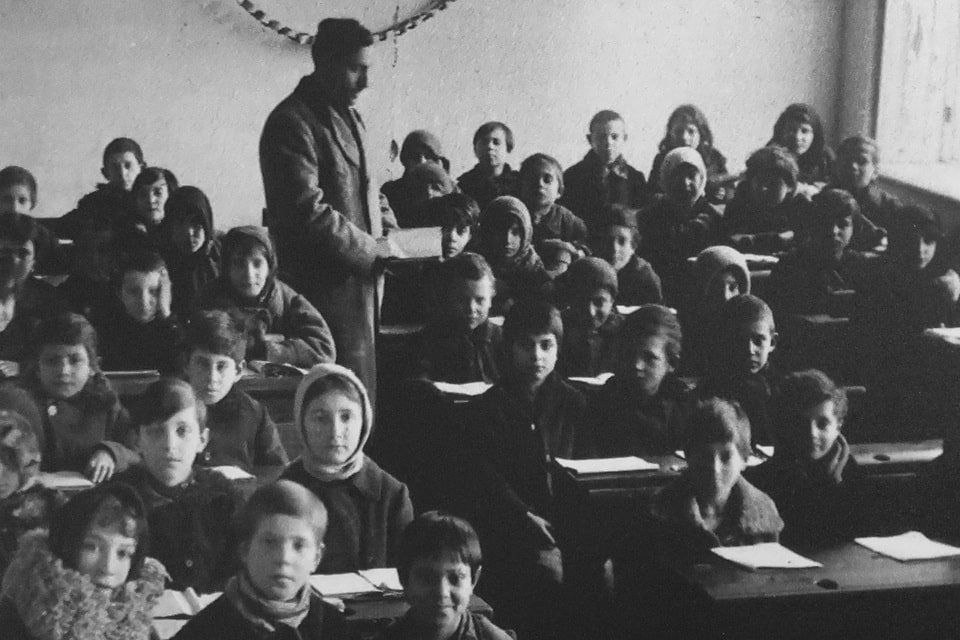
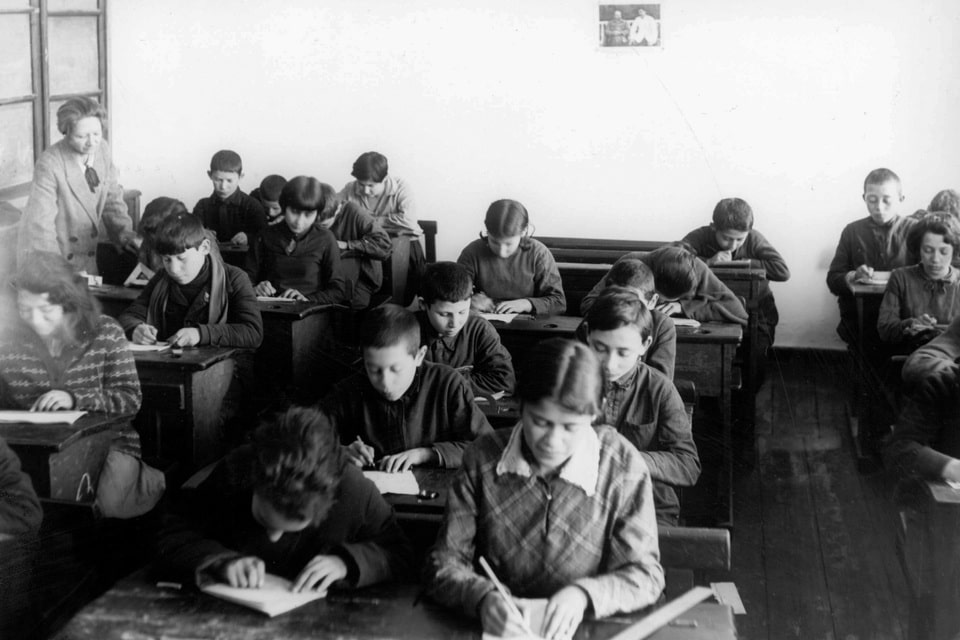
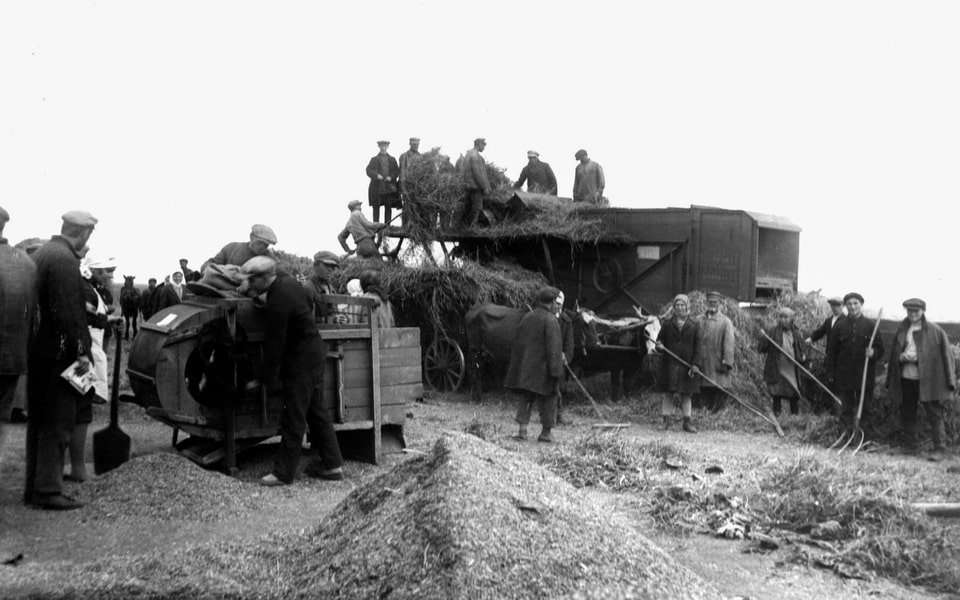
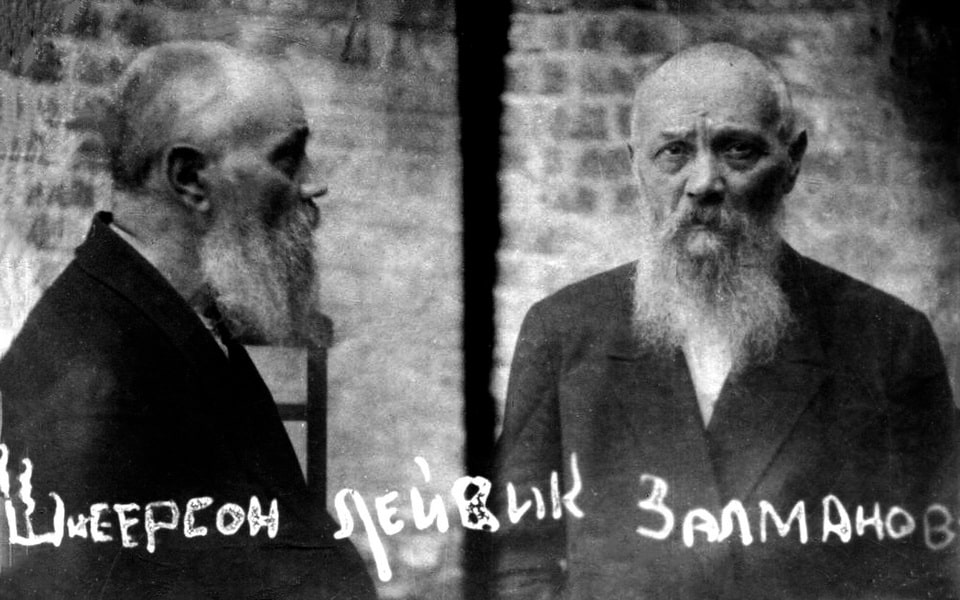
The last prewar census was conducted in 1939 and the Jewish population of the Dnipropetrovsk region (an administrative unit created in 1932) amounted to 129 439, which was the eighths highest amount of Jews in Ukrainian regions after Lviv region (355 000), Kyiv region (297 000), Odesa (272 000), Vinnytsia (142 000), Ivano-Frankivsk (140 000), Kharkiv (137 000), and Ternopil (136 000). After Stalin and Hitler partitioned Poland in September 1939, Ukraine gained the largest Jewish population in Europe (2.5-2,7 million people) and the second largest in the world after the United States. When it comes to the city of Dnipropetrovsk, among 528 000 citizens, Jews comprised 89 529 or 18%. Other largest Jewish communities in the region were in Kryvyi Rih (12 745 Jews), Dniprodzerzhynsk (modern Kamianske, 4900 Jews), Nikopol with 3,767, and Pavlograd with 2,510. With the outbreak of war between Nazi Germany and Stalin’s USSR on June 22, Dnipropetrovsk accepted thousands of refugees from Western Ukraine. While the evacuation was announced on July 7, in reality, people needed to obtain a special pass to leave the city, and the largest proportion of the male population was called to arms starting from June 23. In a situation when the Soviet state-party authorities did very little to save their citizens, the latter had to rely only on themselves, including the Jews.
GERMAN FORCES ENTER DNIPROPETROVSK: OPERATION BARBAROSSA AND THE BATTLE FOR THE DNIEPER BRIDGES (AUGUST–SEPTEMBER 1941)
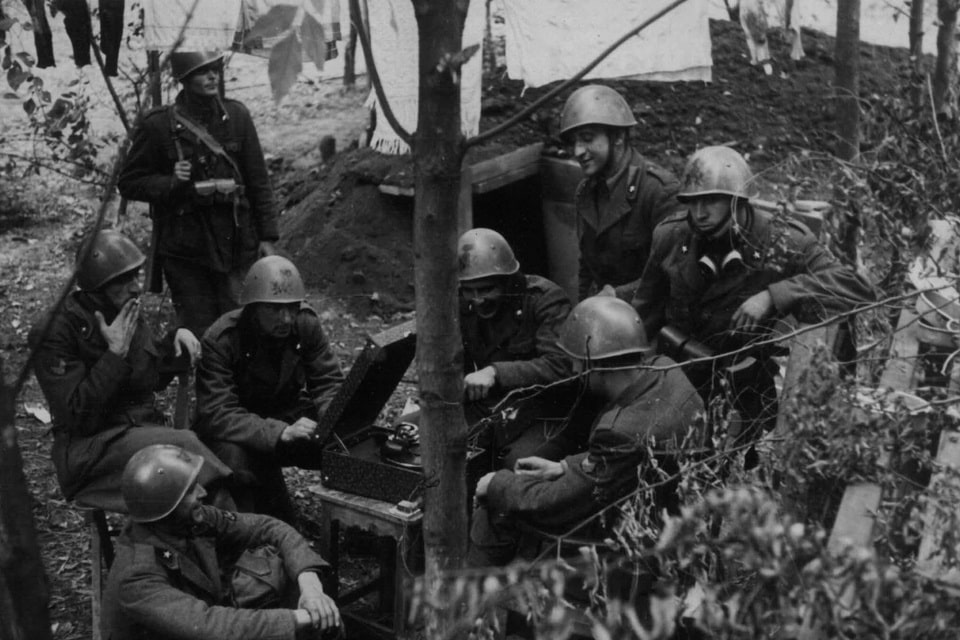
The first months of Operation Barbarossa were characterized by rapid advances of large Wehrmacht formations across Western regions of the Soviet Union, particularly in Ukraine. 1st Panzer Army (Panzer Armee Oberkommando 1), which rushed for the crossings over the Dnipro River, was one of the most battle-effective German units of its kind. Formed in the Spring of 1940 under General Ewald von Kleist (1881-1954), the tank group played a substantial role in the Invasion of France and the Balkan Campaign. The main war effort of seizing Dnipropetrovsk was put on the III. Army Corps under the command of Eberhard von Mackensen (1889-1969), later reinforced by SS Division “Wiking” and the XIV Panzer Corps, and even two Italian formations: 9th Infantry Division “Pasubio” and the 52nd Infantry Division “Torino”. Seizing Dnipropetrovsk bore the primary military objective of seizing the bridges across the river. After two weeks of fierce fighting on the way to the city, on August 25 the vanguard German troops entered the larger part of the city on the right bank of the Dnipro and at 8 a.m. reached the waters.
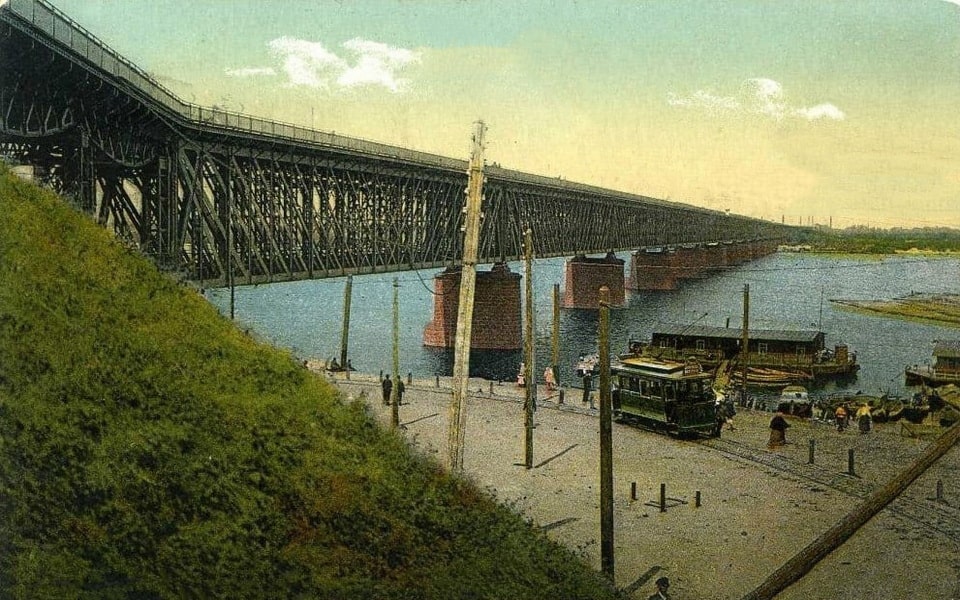
Despite the crushing of the Soviet resistance near Dnipropetrovsk, Mackensen’s troops failed to seize the river crossings untouched as the retreating Red Army had blown up all three city bridges, including the railway bridge particularly important for the logistics. Until the engineering troops repaired one of the bridges in the second half of 1942, the German army had to use pontoon bridges and ferry crossings in Dnipropetrovsk, the fourth largest city in Ukraine, and the well-known transport and railway hub. Despite the seizure of the key part of the city, the Germans failed to conduct an effective crossing and gain the left bank of the river. On August 26, the Red Army units launched a counter-attack, and in the following weeks, both sides became exhausted in the battles for complete control over Dnipropetrovsk. Above all, only a few of the German units possessed detailed plans of the city, while many relied on outdated maps from the 1920s. Since then, Dnipropetrovsk has developed into a giant industrial city with a pre-war population of half a million. The stalemate lasted until September 28, when the shattered remnants of Soviet troops finally retreated and the III. Army Corps finally secured the bridgehead on the left bank and rushed toward Rostov.

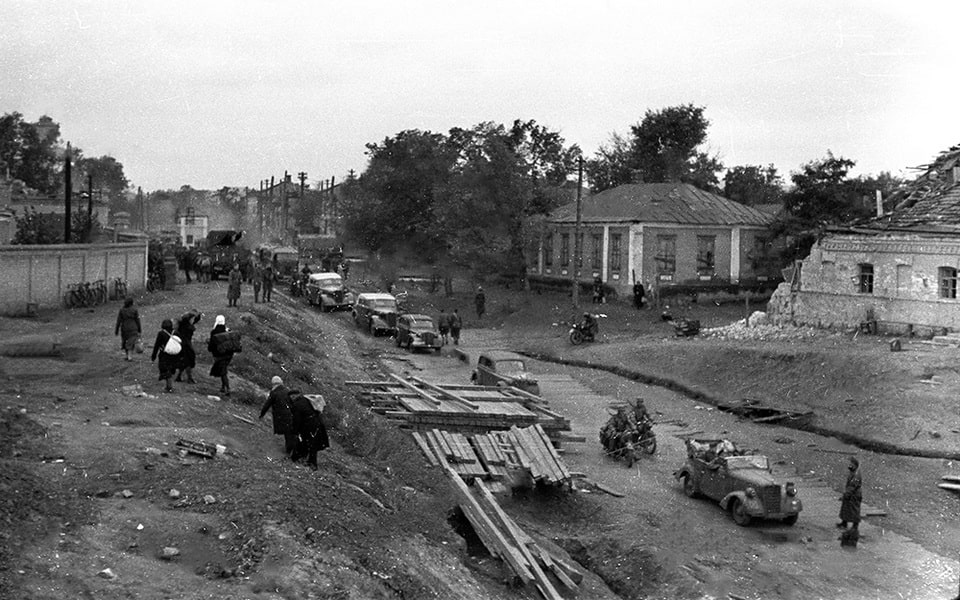
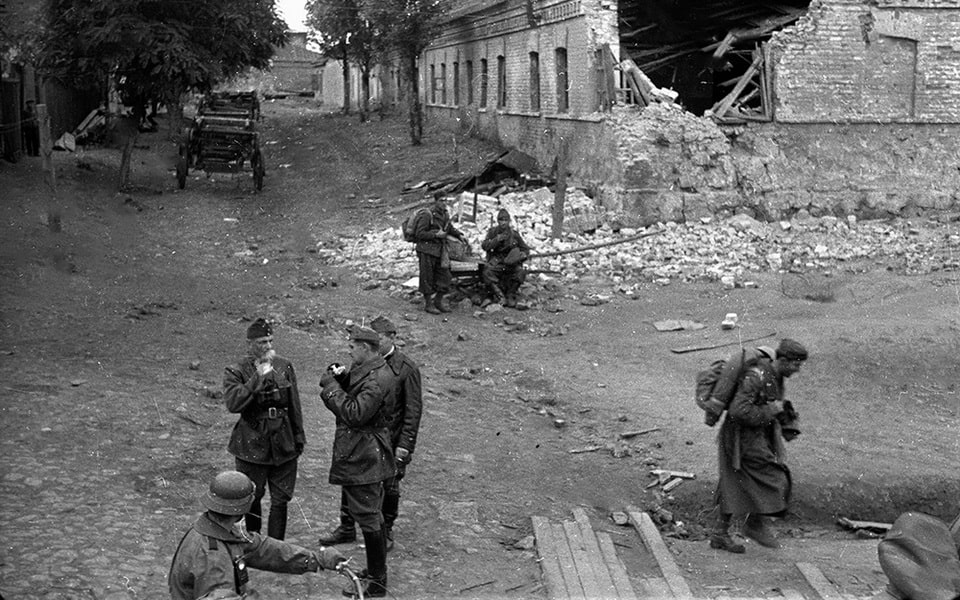
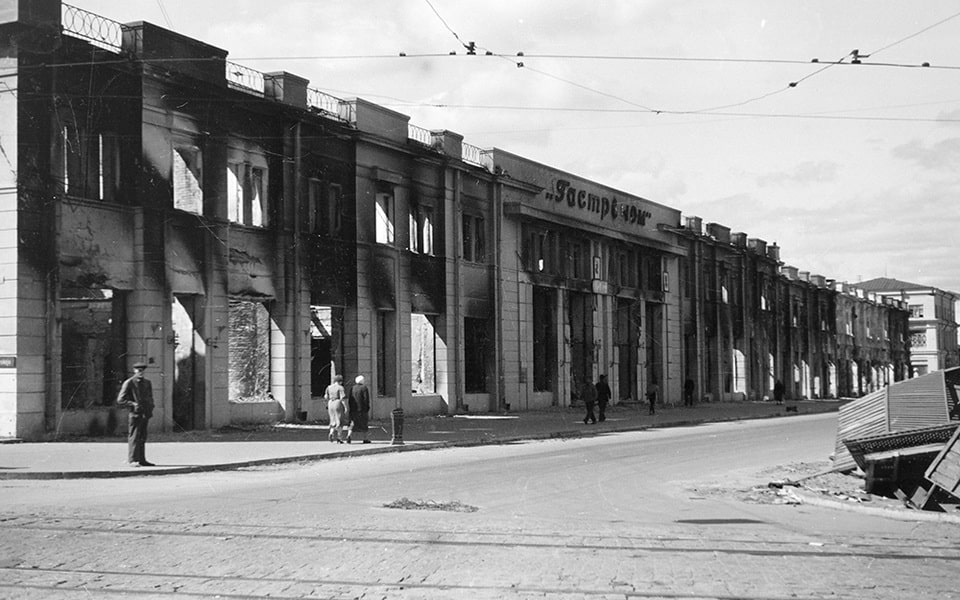
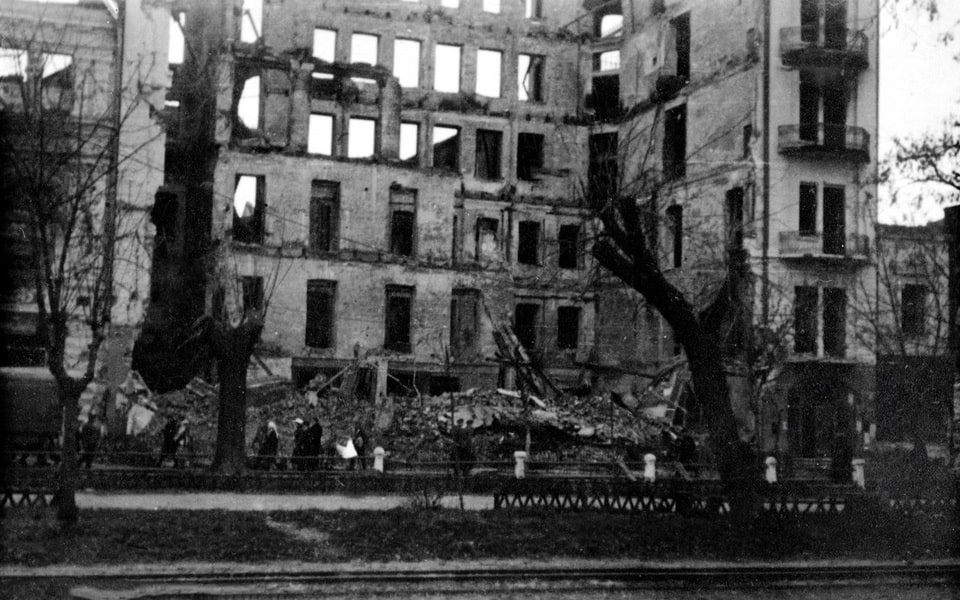
On September 28, Franz Halder, the Chief of the General Staff of the German Army High Command, made another entry in his famous war diary: ‘’Kleist’s troops successfully advanced, pushing back the enemy near Dnipropetrovsk, and took control of the crossing over the Samara River’’. In his postwar memoirs, General Eberhard von Mackensen stated that in total the German troops lost 373 killed, 8 missing in action, and 1347 wounded during the battle of Dnipropetrovsk, while the later Soviet estimations put the German casualties at around 1000 killed. A month of fierce fighting over the river crossing and artillery fire from both sides resulted in civilian losses and severe damage to the historical part of Dnipropetrovsk. Particularly, Soviet artillery fire from the left bank across the river infuriated the citizens.
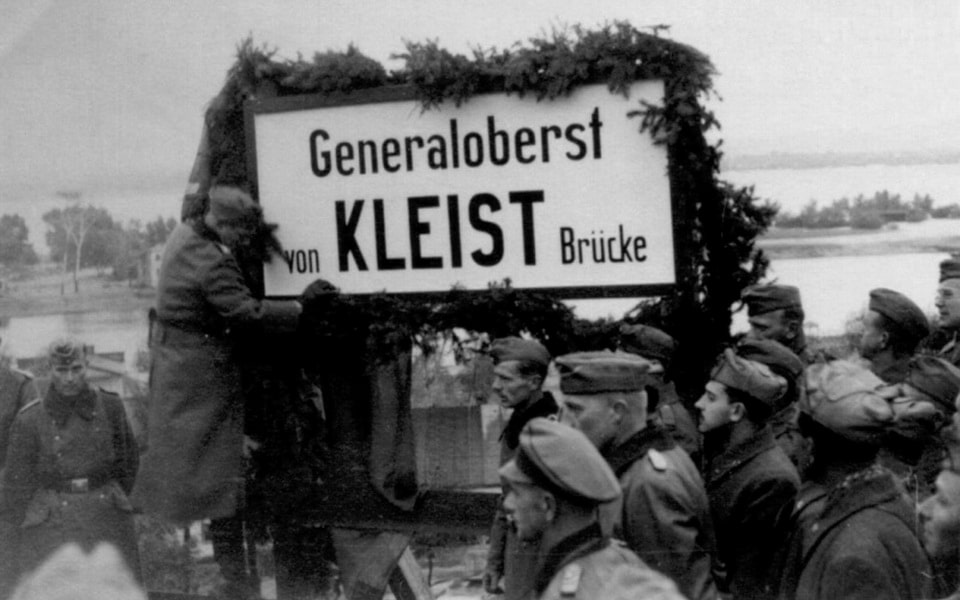

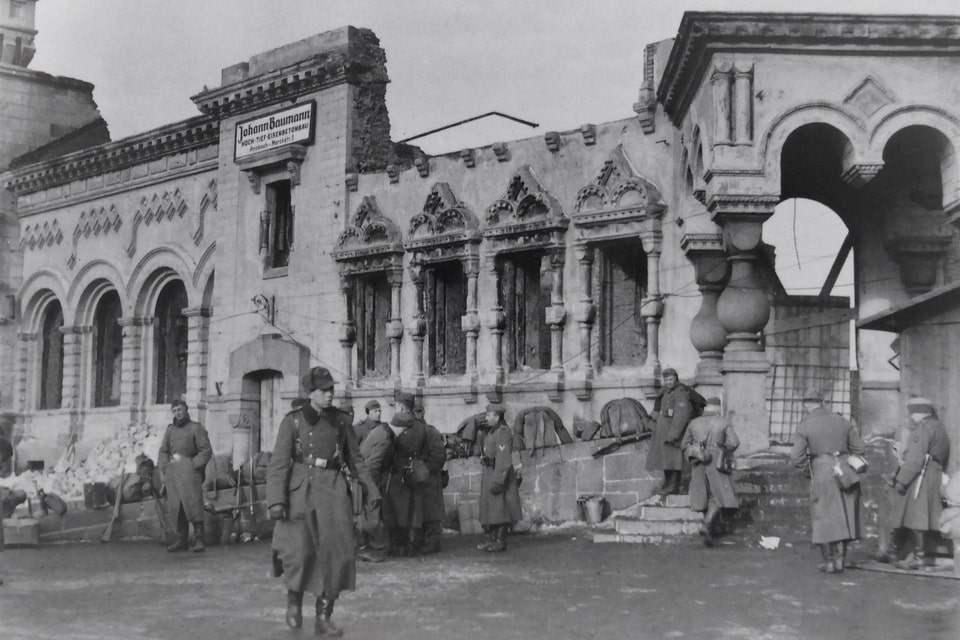
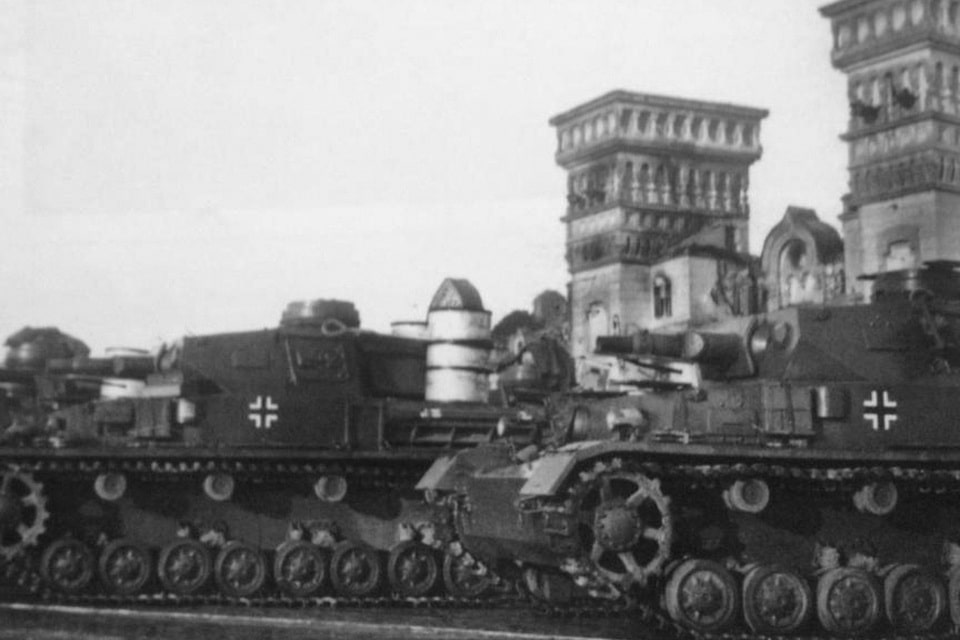
Apart from military damage, the retreat of Soviet troops in late August 1941 resulted in several days of looting of the stores and warehouses. At the beginning of October, the occupational administration used the facts of the August robberies, blaming them exclusively on the Jewish population of the city. It is also worth noting that in the initial period of the occupation, repressions, in particular physical annihilation, were unleashed against participants of various forms of resistance (Soviet underground, partisans, members of the OUN), potentially malicious and dangerous (Soviet prisoners of war, party and Soviet activists), or those who were subject to Nazi racial doctrine (Jews and Roma). As for peaceful citizens of Slavic origin, whom Hitler’s propaganda portrayed as second-class people, they came under the Nazi repressive rule somewhat later. Soviet prisoners of war died in comparable numbers, and the largest camps were further north. At Stalag 339 in Darnytsia, on the outskirts of Kyiv, tens of thousands perished between 1941 and 1943.
ANNIHILATION OF THE JEWS OF DNIPROPETROVSK: EINSATZKOMMANDO 6, ERHARD KROEGER AND THE OCTOBER 12, 1941 DECISION
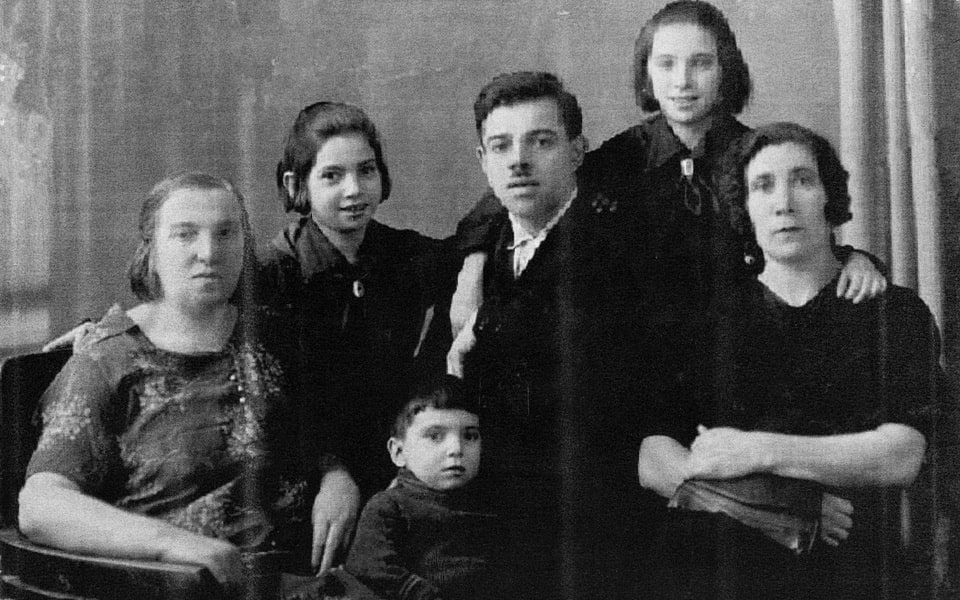
After the outbreak of the war on June 22, the Jewish population in Dnipropetrovsk was exposed to the same processes as other citizens. Despite the influx of refugees from Western regions of Ukraine, in general, the city’s population decreased significantly. Of around 100,000 Jews in the city at its peak, from 65 to 70 thousand left Dnipropetrovsk between June and September 1941. The infamous report of Einsatzkommando 6 of Einsatzgruppe C (a mobile killing squad) made on November 19, 1941, stated retrospectively that: ‘’From around 100 000 Jews who had lived in Dnipropetrovsk, 70 000 escaped in advance of German arrival’’. The 19.10.1941 report of Feldkommandantur 240, which was stationed in the city since the occupation, reported 35 000 Jews in Dnipropetrovsk at the time of the Wehrmacht’s arrival in late August. The outflow of two-thirds of the pre-war Jewish population since June 22 was mainly caused by calling Jewish men to arms and the evacuation of those who had special passes, though thousands of people left eastwards in an unregulated way.
While formally, Wehrmacht units entered Dnipropetrovsk on August 25 and seized the larger part of the city on the right bank, the battle for complete control over the left bank part lasted for another month. Here lies the key reason why the Jewish population was not exposed to systematic harassment until late September 1941: the Germans were too busy fighting with the Red Army and with the artillery shelling of the seized part of the city. The first anti-Jewish prescriptions came as early as September 25, three days before Soviet troops completely left the area. The commandant of the newly created occupational military administration prescribed that all Jews and half-Jews upon reaching 10 years of age, wear a white armband with a star of David on the arm. The disobedience was threatened with death. On October 5, 1941, the new norms of distributing food in the city prescribed 500-700 grams of bread to working men, while Jewish citizens got 300 grams, and only 200 grams for children, the old, and the sick without occupation.
As was stated above, when the time came, the Germans decided to blame the Jewish population for the days of uncontrolled looting in late August. On October 2, 1941, the occupational authorities issued a decree, which ordered the Jewish community of Dnipropetrovsk to pay out a contribution of three million German marks or an equivalent of 30 million karbovanets in the designated period between October 12 and November 1. In case of late or incomplete payment of the fine, the order provided for taking “the strictest measures and, if necessary, increasing the amount of the fine’’. Employing such slander and accusations, the Nazis, on the one hand, discredited the Jews in the eyes of the rest of the townspeople, and on the other hand, they developed the thesis about the supposed criminal nature of the Jews. The first systematic killing of Jews in the Dnipropetrovsk region was unleashed as early as late August when Einsatzkommando 6 (EK6) of Einsatzgruppe C under Erhard Kroeger (1905-1987) executed 105 Jews in Kryvyi Rih. The unit continued mass killings in the rural areas and arrived at the city of Dnipropetrovsk between 23 and 28 September 1941 and until October 4 executed ‘’85 political functionaries, 14 saboteurs and robbers”, as well as 179 Jews, according to its report.
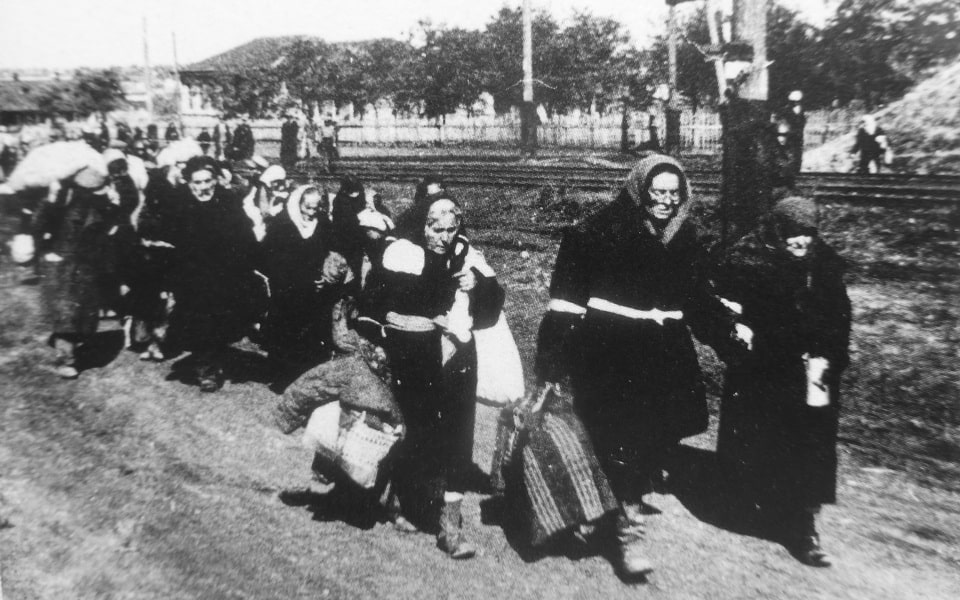
The decision to annihilate the entire Jewish population of Dnipropetrovsk came on October 12, 1941, during a meeting of representatives of the occupation authorities, representatives of the SD, the German police, the city administration, and the local police, at which the course of the future criminal action was discussed. Already in the afternoon, the heads of the divisions set the appropriate tasks for their subordinates. The entire Jewish population was to be informed by 5 a.m. On October 13, they were ordered to gather at the square next to the Central Department Store in the center of the city. Despite forming special patrols for this purpose, the task of informing Jews was mainly transferred over to street cleaners and house managers. Four days before, on October 8, all householders and house managers were ordered to submit lists of Jewish residents within three days. In case of non-compliance with the terms of execution of this order or submission of inaccurate information, managers and owners of buildings were to be prosecuted “according to the laws of wartime”. However, according to the data provided, on October 12, 1941, only 7,962 people of Jewish origin lived in the city. Of course, the real number of Jews was much higher (around 30,000). Such discrepancies were probably because many of them submitted only approximate data on the residents of the house, a certain number of Jews changed their place of residence and managed to avoid registration, and some of them managed to bypass the registration orders thanks to a note about another nationality in identification documents (passports).
THE OCTOBER 13–14, 1941 MASSACRE: ASSEMBLY AT THE DEPARTMENT STORE
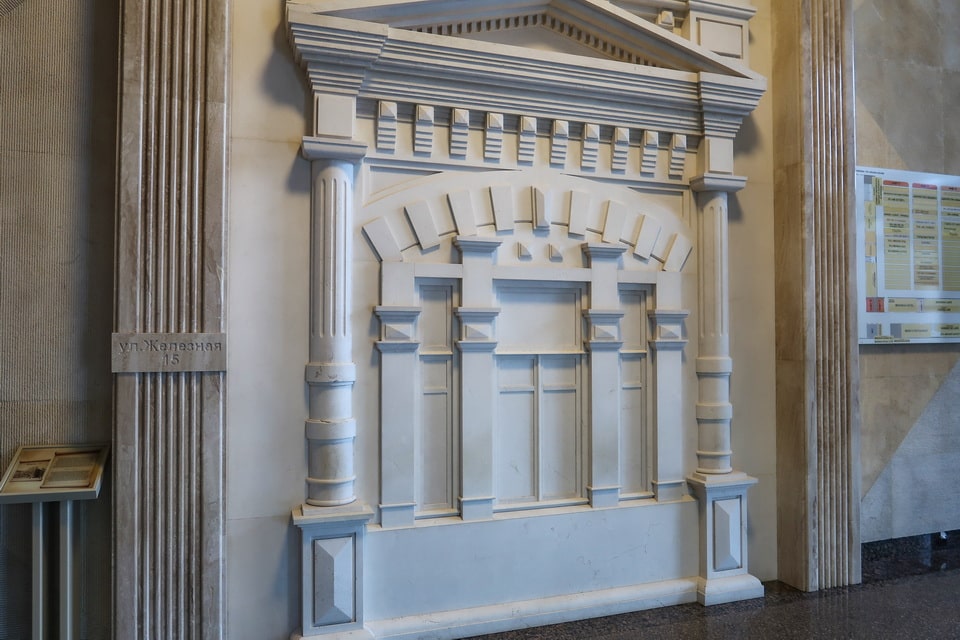
On October 13, 1941, Jews flooded out to the streets of Dnipropetrovsk in cold and damp weather. It was raining mixed with snow, the wind was blowing, and the roads and pedestrian paths turned into viscous mud. Thousands of women, children, and elderly men (young men were mainly called to arms or fled with the enterprises) were making their way to the heart of the city to the assembly point (the infamous German notion ‘Umschlagplatz’) at the intersection of Karl Marx and Zheleznaya streets. The main prospect in Dnipropetrovsk was named after the infamous socialist Karl Marx (1818-1883). From the early hours, the Jewish population filled a little square next to the city’s Main Department Store. The Germans on the spot, mainly the members of Police Battalion 314, had been present at the assembly point since the night and now turned a huge four-story building into a mass expropriation and looting area. The Jews with valuable personal possessions were led in and ordered to leave the baggage in the building. Jewelries, watches, wedding rings, bracelets, cigarette cases, and rich clothes were taken from defenseless people, and then they were pushed once again outside the building.
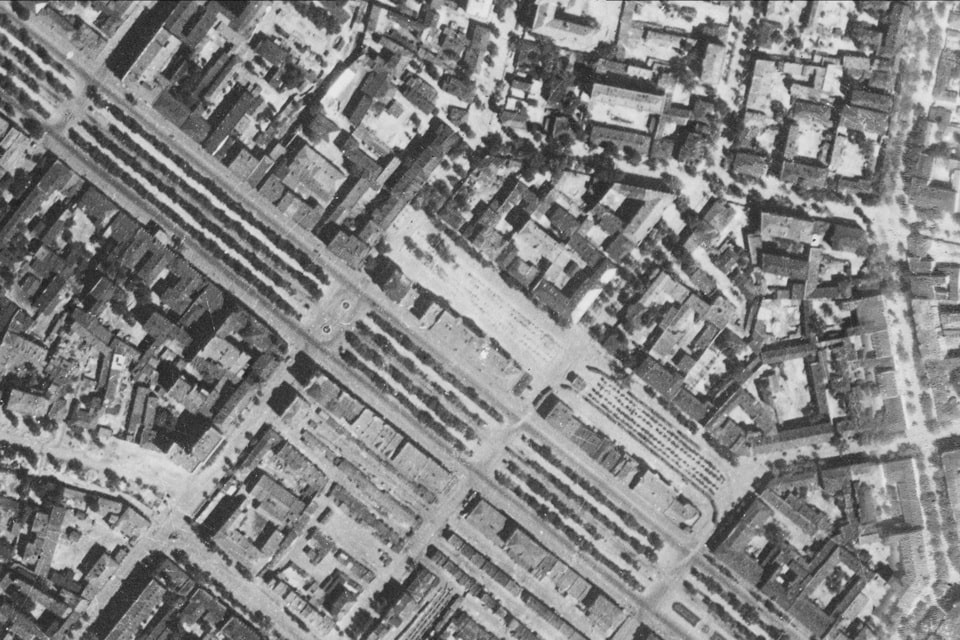
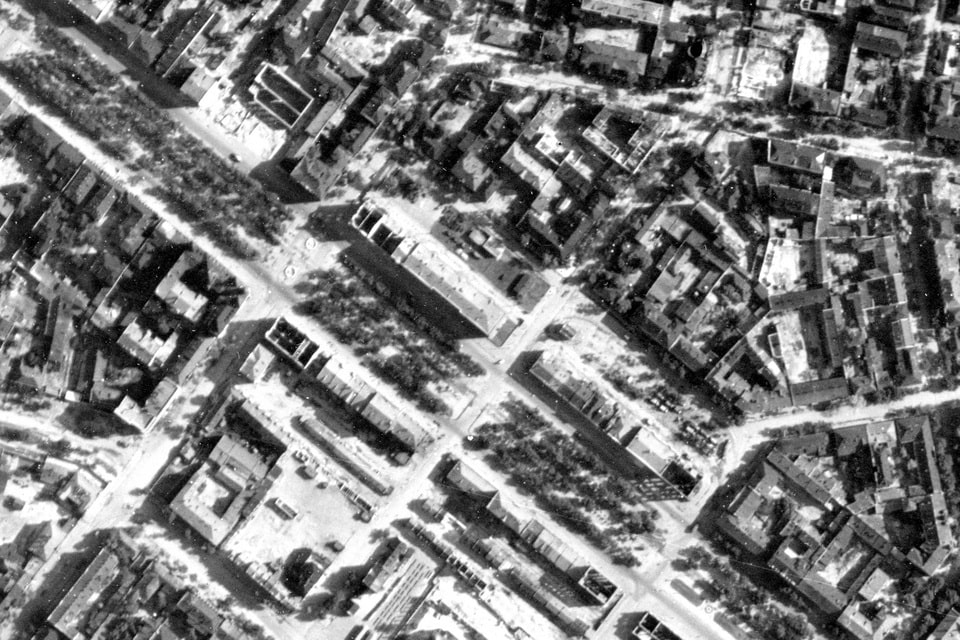
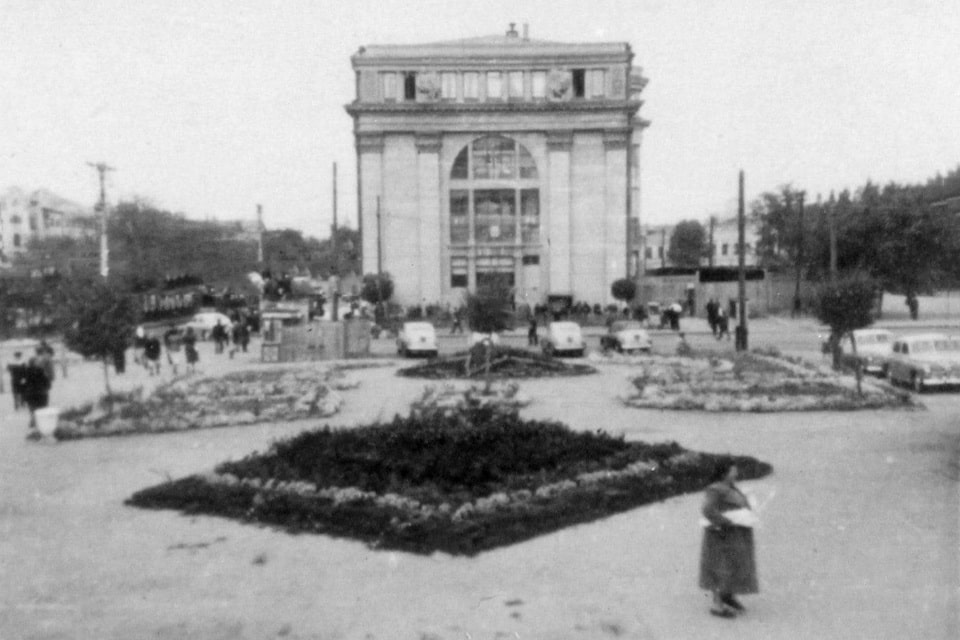
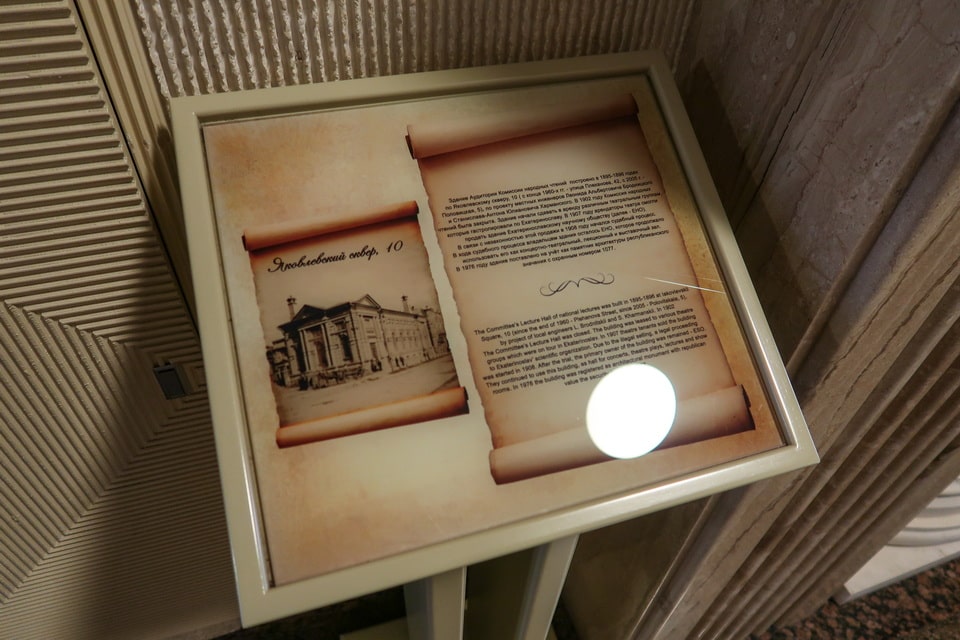
The Main Department Store of Dnipropetrovsk was planned for opening on January 1, 1937, but the construction dragged on partially due to engineering reasons, such as a need to review the foundation design and carry out drainage work, partially due to the Soviet failed planning, and even due to the reign of Stalin’s 1937-1938 purges. The Main Department Store was finished only in late 1938 and welcomed its first guest on January 1, 1939, on the site of the former eight smaller stores. The grandiose four-story building with a total retail area of 3,270 square meters had 24 departments, special fitting and alteration rooms, a mother and child room, an information center, and a telephone point. 225 sellers worked behind its counters, welcoming up to 1200 customers at once. The entire 4th floor was occupied by staff services. There were offices, wardrobes, restrooms, showers, toilets, a dining room, a first-aid post, and a hairdresser. The basement was occupied by storage and unpacking areas. There were three staircases for buyers, and goods were transported to each floor by three elevators. The building had 6 entrances. During the 1941-1943 occupation, the Germans used the building mainly as a military warehouse, and it was badly damaged during their retreat to be fully restored as late as 1948. The massive reconstruction took place in the 1970s and still accommodates hundreds of retail stores.
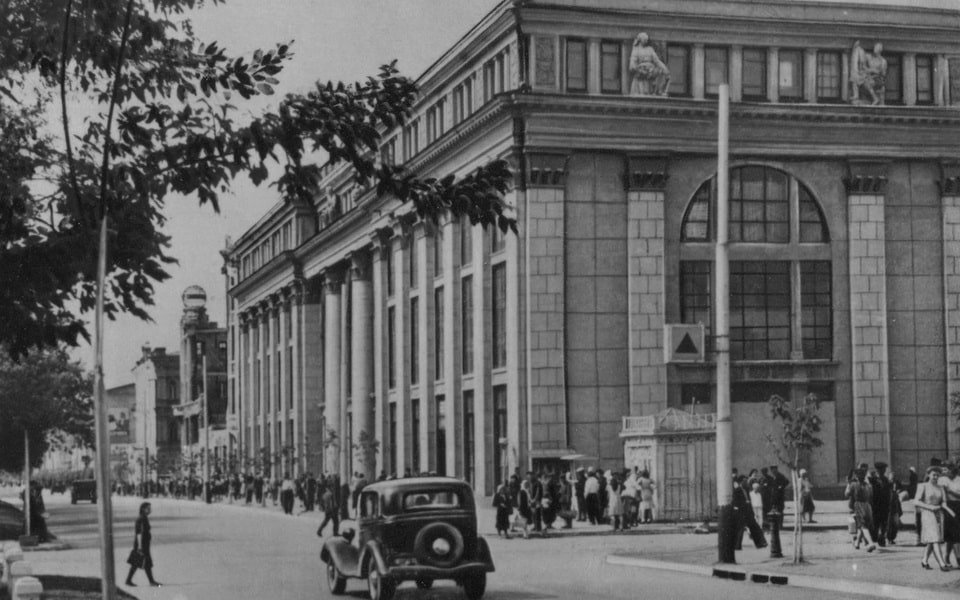
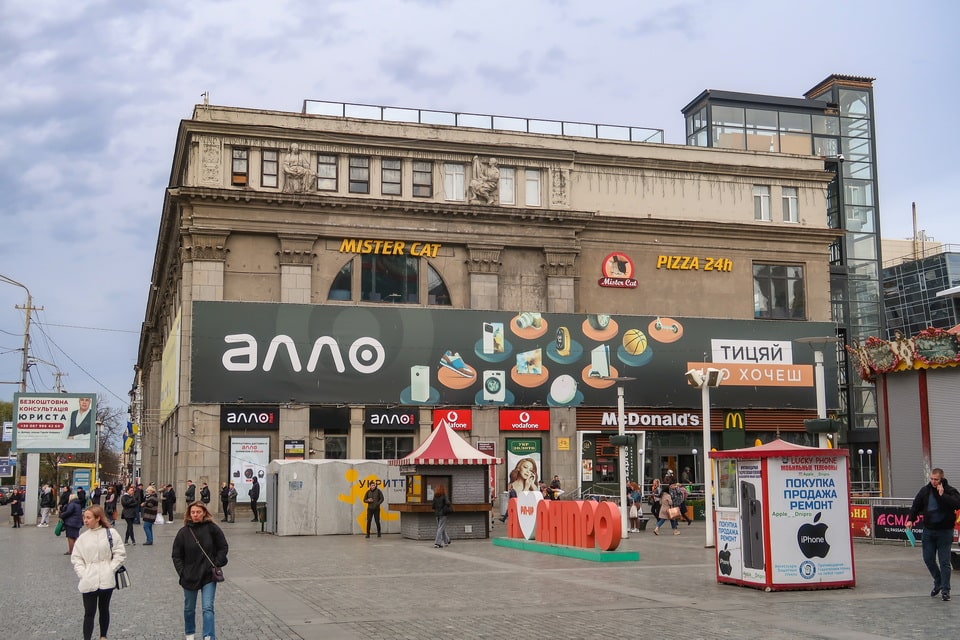
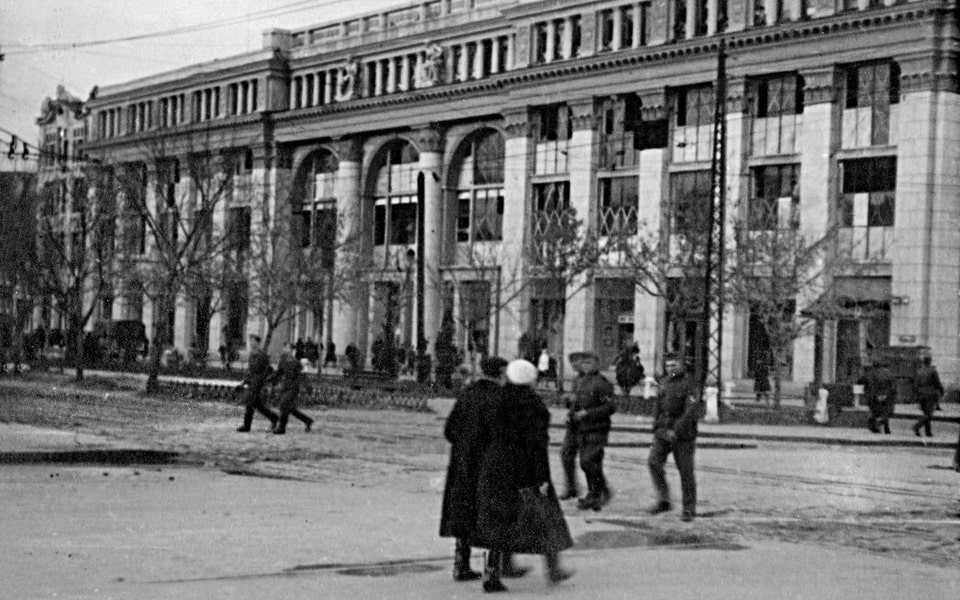
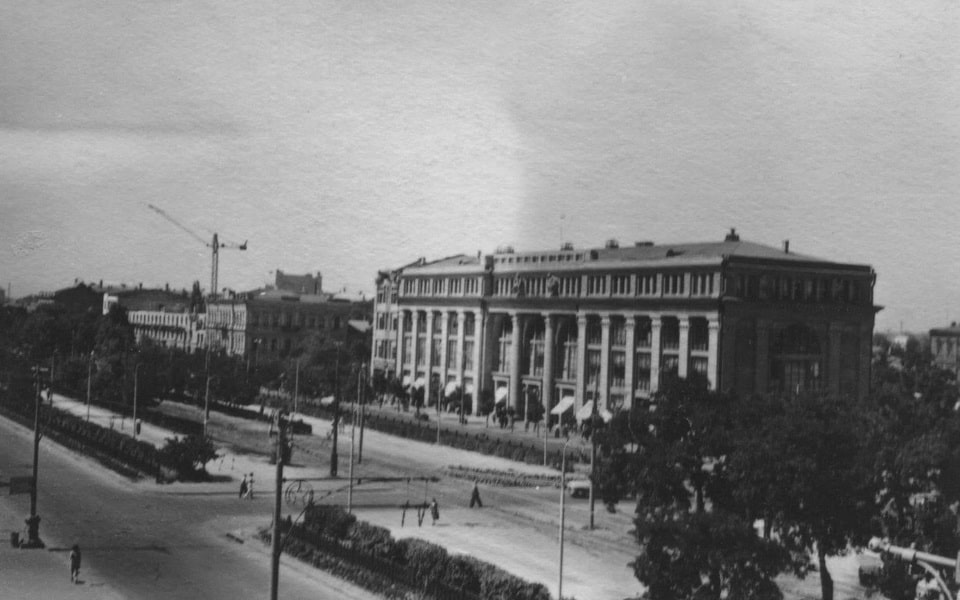
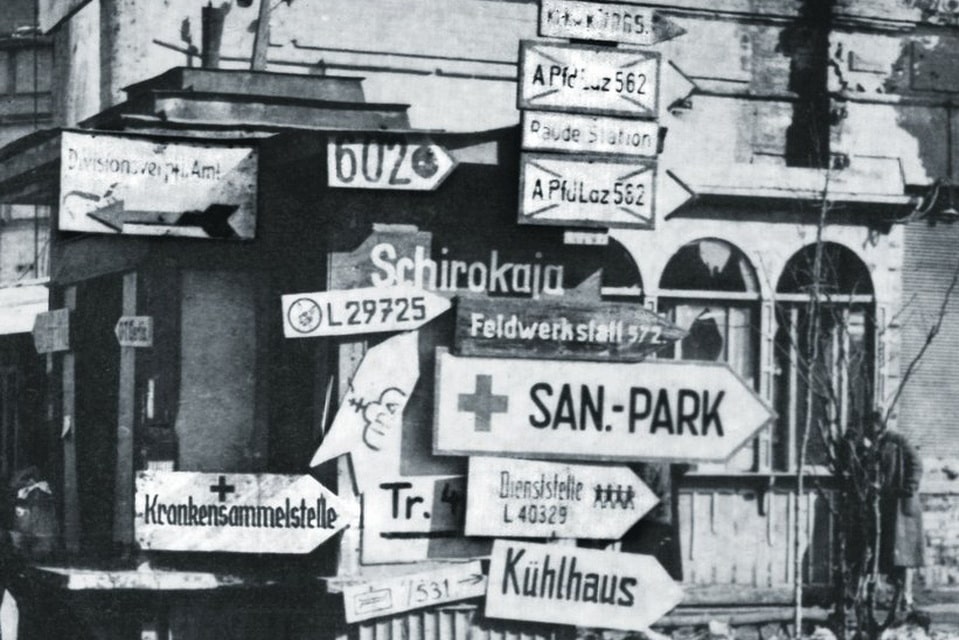
Back on October 13, 1941, thousands of those who came to the assembly point were deprived of their belongings and were disoriented regarding their destination. The versions that spread in the crows were a mix of self-made rumors, German disinformation, and often hopeful thinking. Some believed that they would be transferred from the city to special collective farms only for Jews in the rural areas of the region. More grotesque rumors suggested a journey to Palestine. More pragmatic people thought about the need to pay a contribution or move into the ghetto. People saw that Germans sorted their possessions on the spot, putting gold and silver in separate boxes with wooden handles, but could hardly imagine the execution of the whole Jewish population of Dnipropetrovsk. The members of the Police Battalion 314 continued to bring new groups of people from the central streets, and now they formed those who had already been robbed into large columns of 800-1000 people and routed them to Karl Libknecht Street. The street is one of the oldest in the city, emerging on the first city plans from 1791 as ‘Kazanska’ and was renamed after German socialist Karl Liebknecht (1871-1919) in 1923. In Independent Ukraine, the street was renamed after Ukrainian politician, historian, and statesman Mykhailo Hrushevsky (1866-1934).
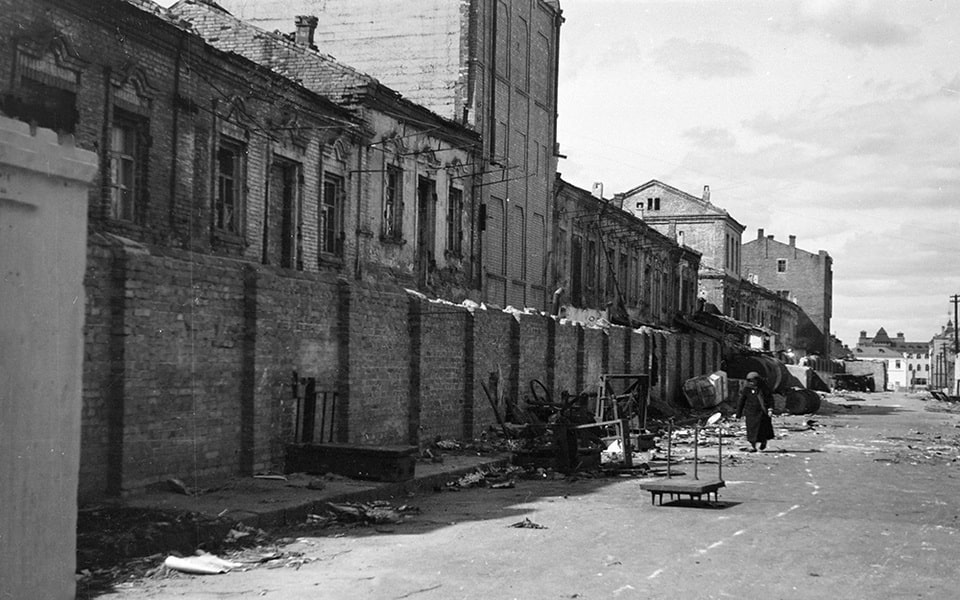
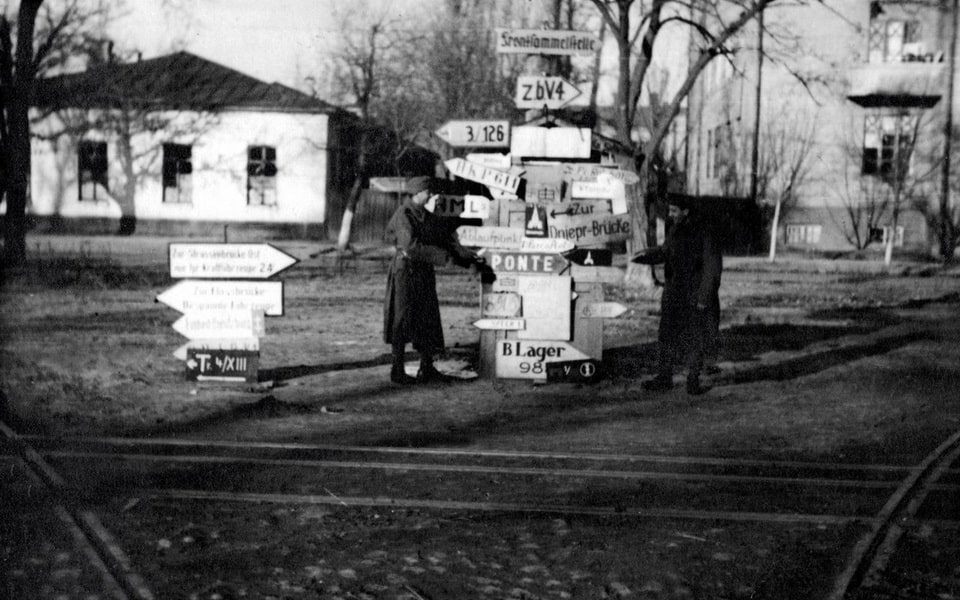
The columns of people up to ten in a row were driven up a steep street with a large slope, which was a hard challenge, especially with the mud that day. The Germans showed no specific violence during this march, even allowing relatives from mixed families and neighbors to accompany the Jews in the column toward the city outskirts. From time to time, trucks with old, sick, and children passed by: those who could not cover the distance on foot without help. On several occasions, Germans passed near the column in open cars and laughed after breaking up horrified people. The members of the Police Battalion were mainly silent and met the questions about the destination with a brief ‘Zum campen’ (to the camp). On their way up the hill, the column passed near a large market area and Holy Trinity Cathedral, built in the mid-19th century. The first 2.5 kilometers were a dense urban area, and many local non-Jews could witness the exodus of Dnipropetrovsk’s Jewish community. One of the witnesses who testified after the War saw this column on the way to the Southern outskirts of the city and called it ‘The second exodus from Egypt,’ thus referring to a Biblical story.
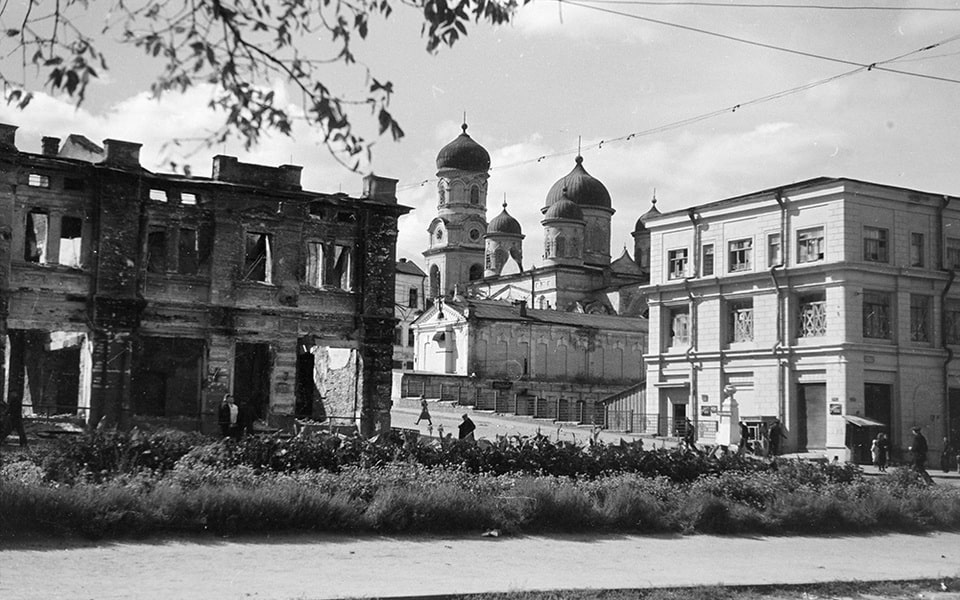
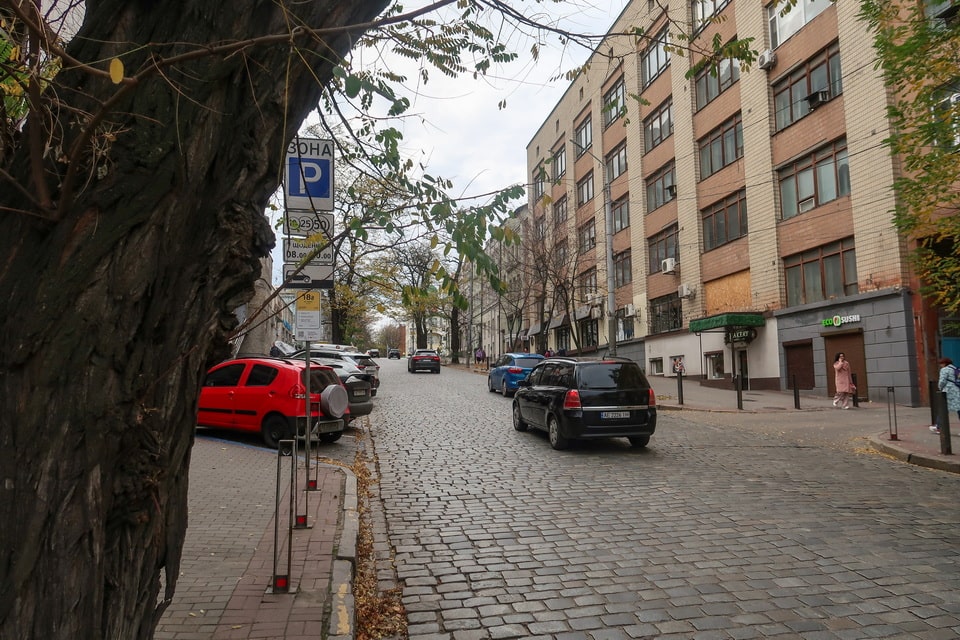
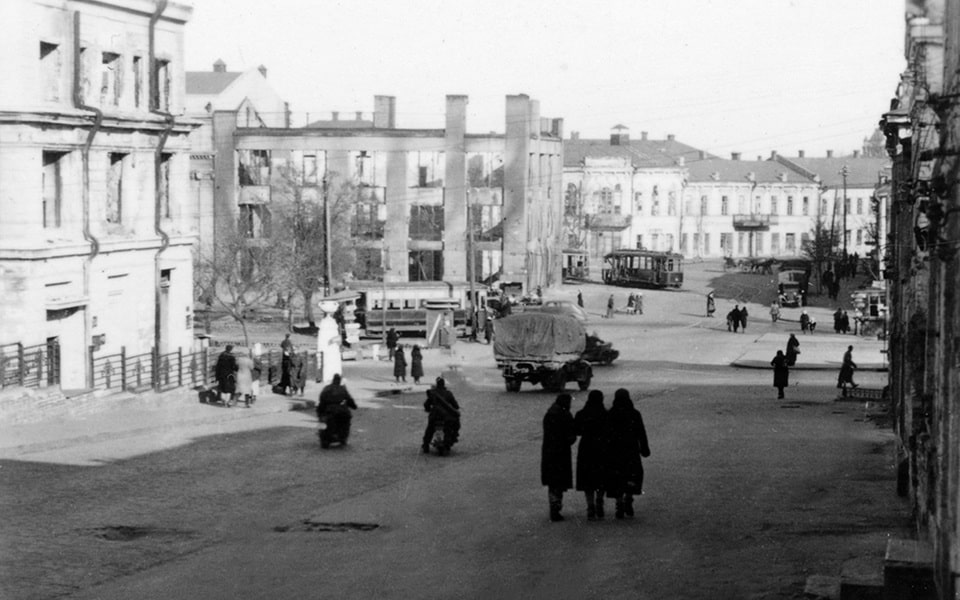
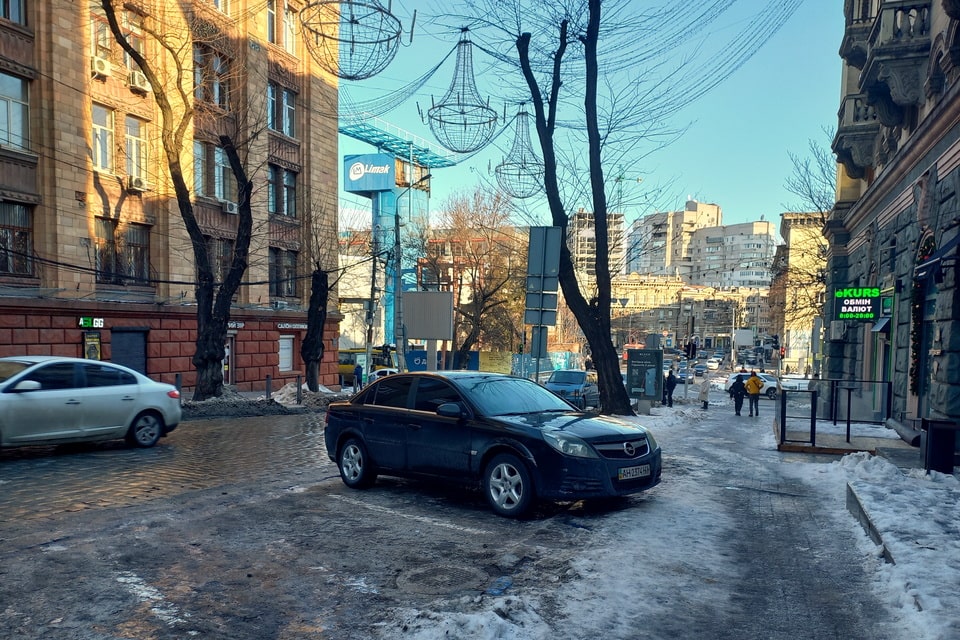
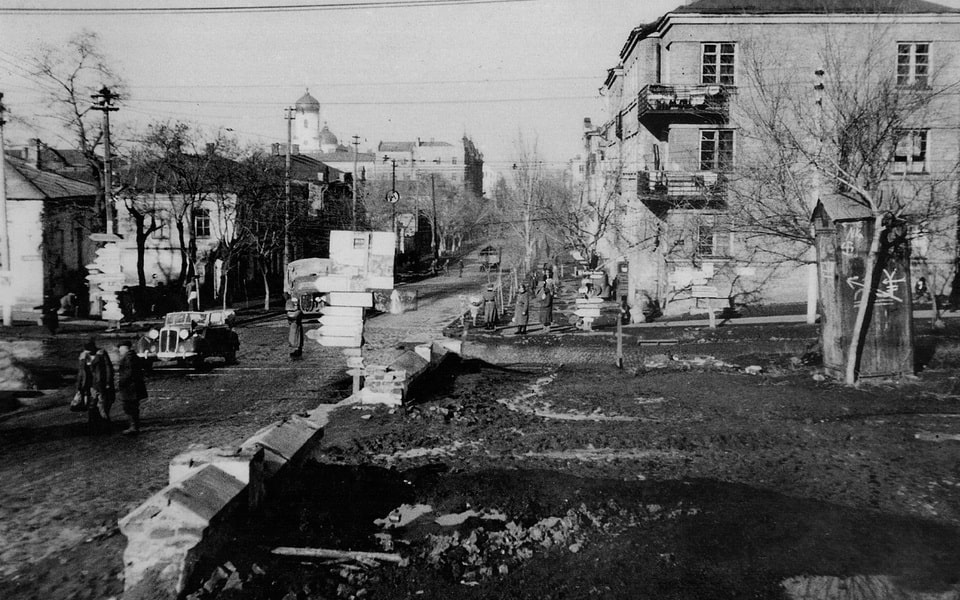
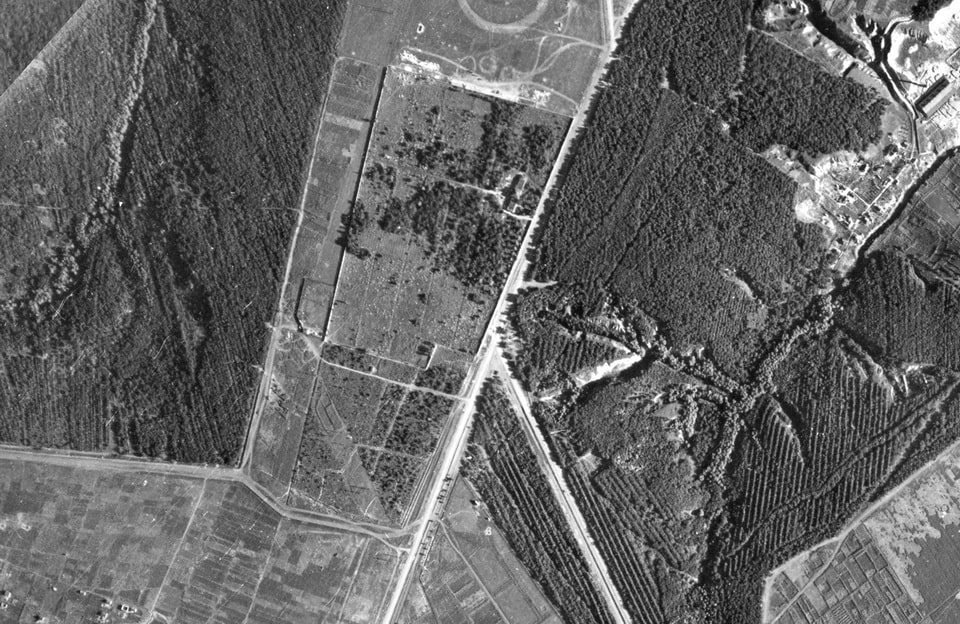
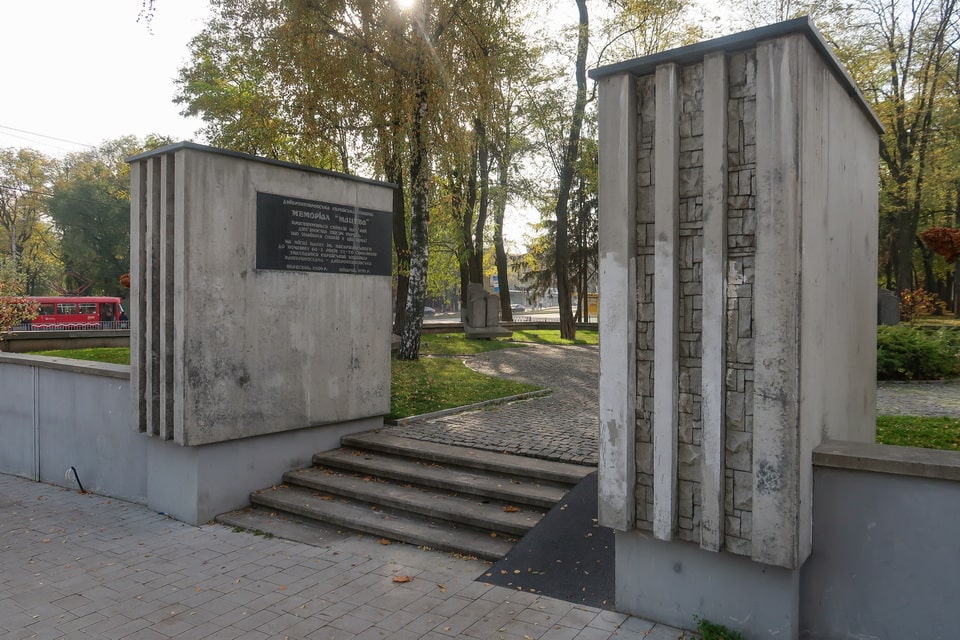
After covering about five kilometers from the assembly point, the crowd of people passed the local hippodrome opened in 1911 for up to 3000 visitors. The next location, which later found its way into the recollections of those who survived, was the New Jewish Cemetery. The local authorities of the Tsarist times designated 8.5 hectares back in 1900, and later on (in the 1920s) it was merged with the Christian and Muslim cemeteries nearby, with a total area of 33 hectares. At the turn of the XX century, the location was far beyond the city limits. After WWII, the Communist regime practiced the destruction of the old pre-revolution cemeteries in large cities and turned them into parks, roads, residential areas, stadiums, etc. While many tombstones and cradles survived the Nazis, in the 1960s, the New Jewish Cemetery was ferociously leveled to the ground and turned into Pisarzhevsky Park, named after a local scientist and the founder of one of the city’s universities. Apart from trees and alleys, several residential buildings and a local garage cooperative were built on the bones of tens of thousands of people. Decades passed without appropriate commemoration for Jewish graves during the Soviet era, until finally, in Independent Ukraine, the local Jewish community opened the “Matzevah” Memorial Complex in memory of the history of this place in 2009.
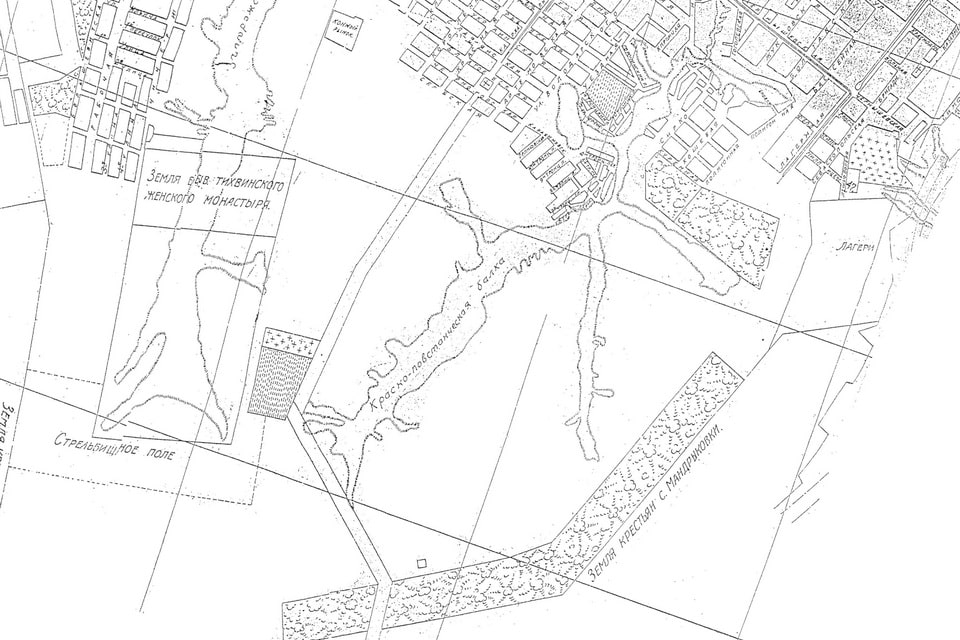
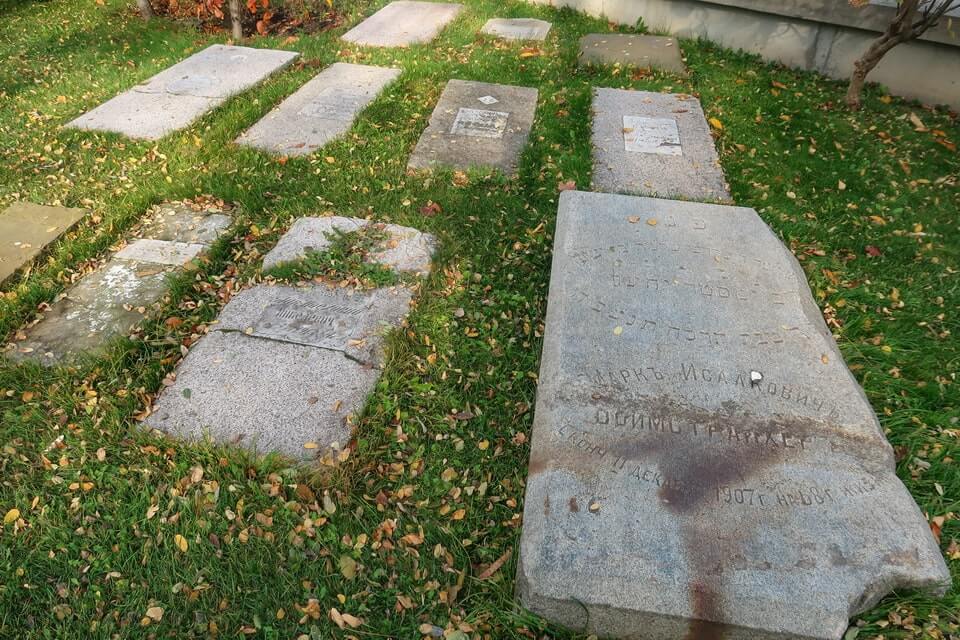
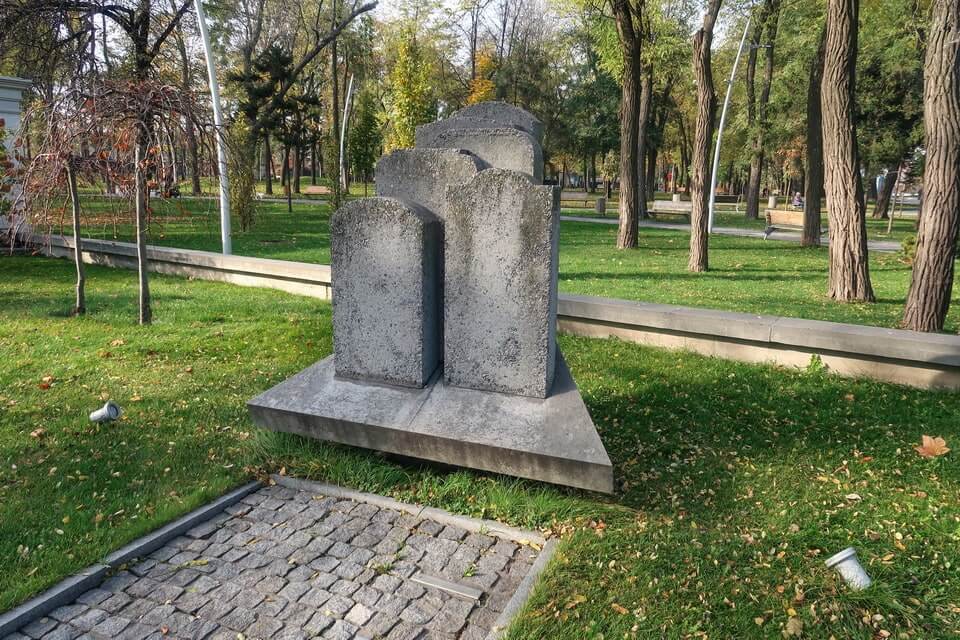
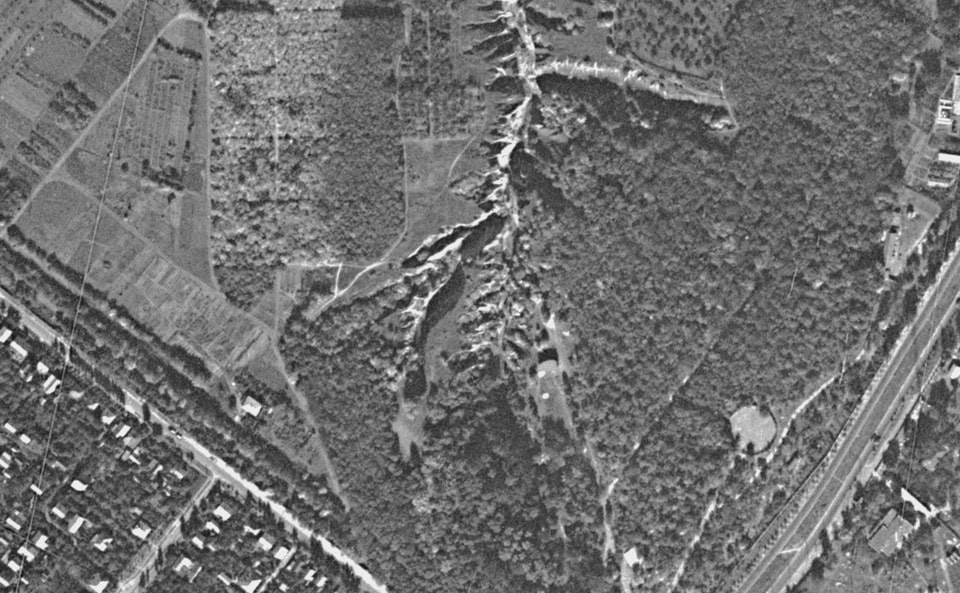
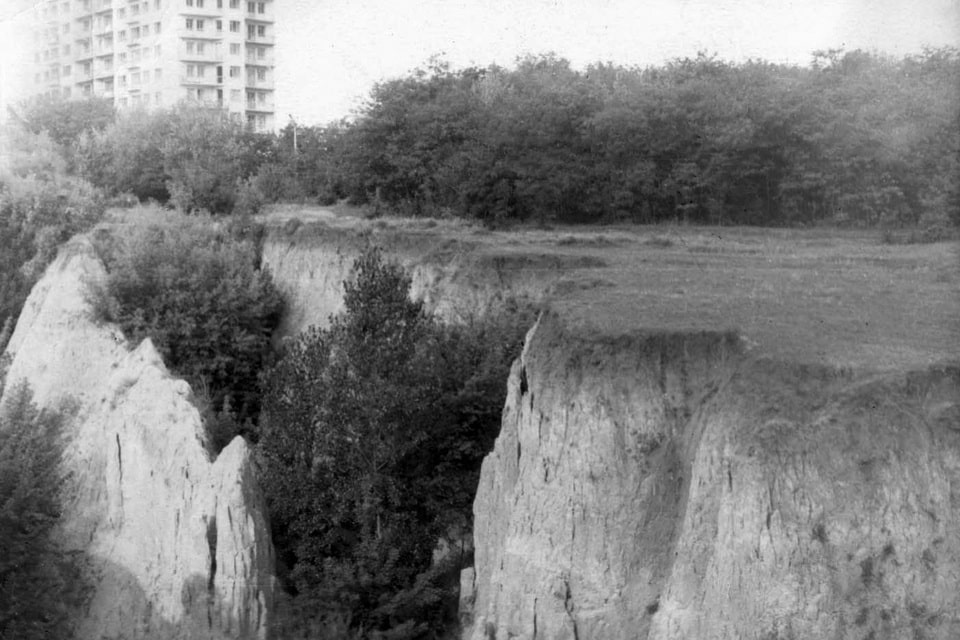
After passing the Jewish cemetery, the columns of people were directed leftwards (from modern Bohdan Khmelnytsky to Gagarina Streets) across the wasteland area next to a railway spur. Two kilometers further down the route, the procession finally reached one of the spurs of a giant local ravine called Krasnopovstancheskaya Balka. Just a few decades before, at the end of the 19th century, this ravine crossed the whole city of Ekaterinoslav from south to north, reaching the waters of the river Dnipro. In its lower part, it was called ‘Provalye’ (a lexical equivalent to a ravine without a bottom) because of the very steep, inaccessible slopes. Before the communists, it was officially known as ‘Dolgaia’ (long), then ‘Zhandarmskaia’ (gendarme), and in 1920 renamed Krasnopovstancheskaya (the Red rebels, a reference to Bolshevik revolution fighters). The ravine finally got its historical name back and was renamed ‘Dovga’ in 2015 (ukrainian pronunciation of ‘long’). After the war, the few survivors recalled that they had heard the sound of screams and gunfire when approaching the ravine. The situation was very similar to the massacre in Babyn Yar ravine in Kyiv a month before, on September 29-30, 1941.
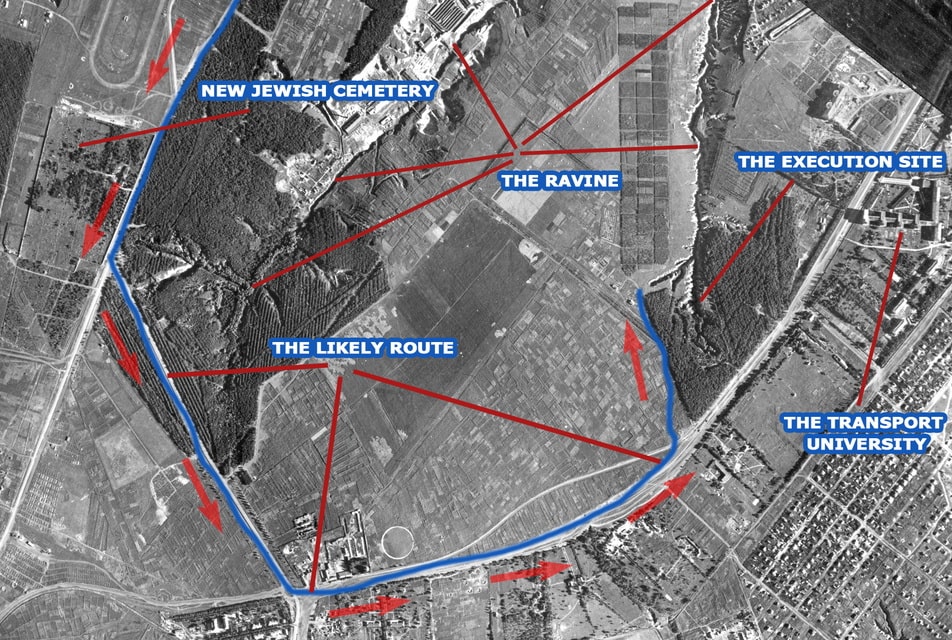
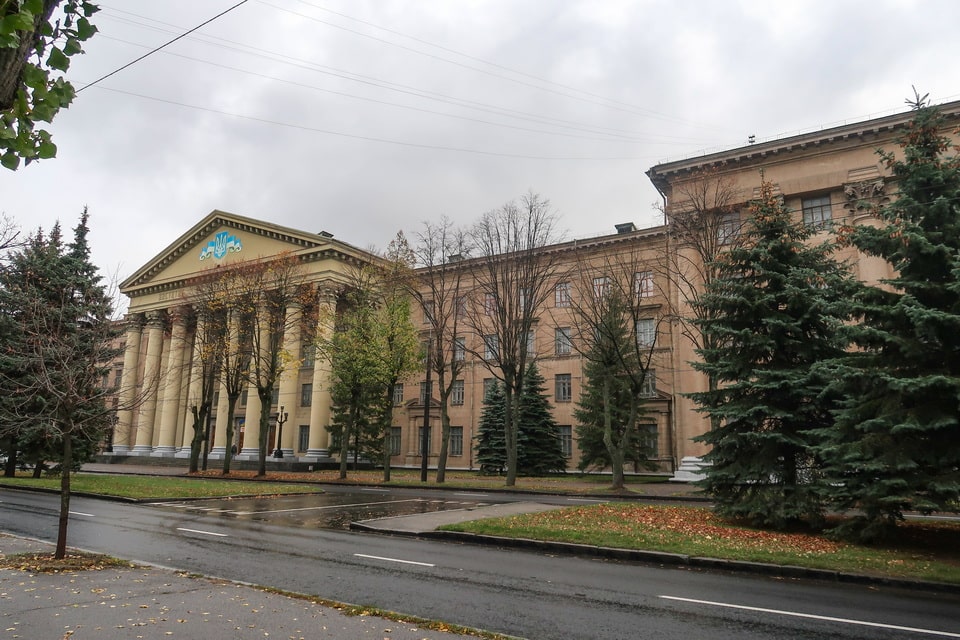
This upper spur of the ravine ended on the territory of the local Botanic Garden, opened in 1931. In 1933, it became a part of a local university (modern Oles Honchar Dnipro National University), and in several years, 8 out of 13.5 hectares of the designated area were planted with 500 rare flora species. The Botanic Garden was located not far from the local Transport University, with a huge campus area less than a kilometer away from the ravine. Getting back to October 13, 1941, an outbreak of panic emerged in the ranks of people who had heard gunshots and screams, but they were directed by the Germans further. Some of the scared people cried, some tore their hair out, banged their heads on the ground, some elderly people had heart strokes, and a few went insane even before the execution started. People were directed to the edge of one of the spurs of the ravine, 15-20 meters deep, one group after another in a never-ending annihilation process. Every group had to wait its turn while hearing the heart-rending agony of the people before them.
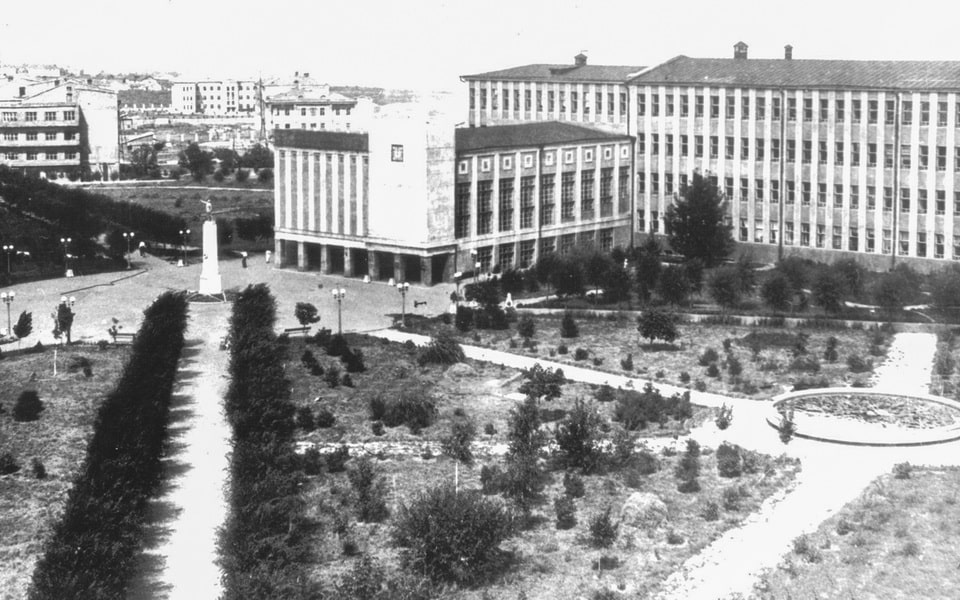
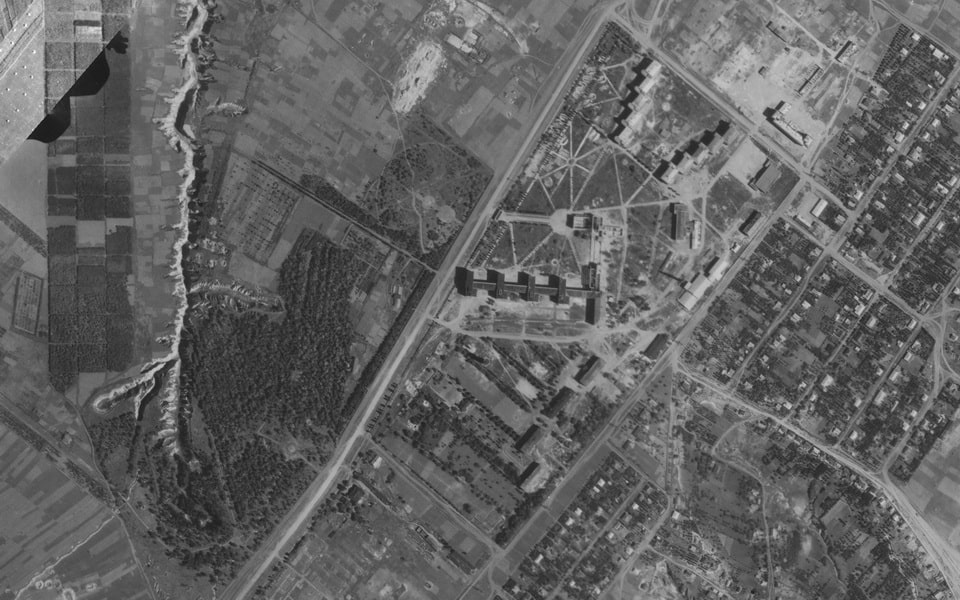
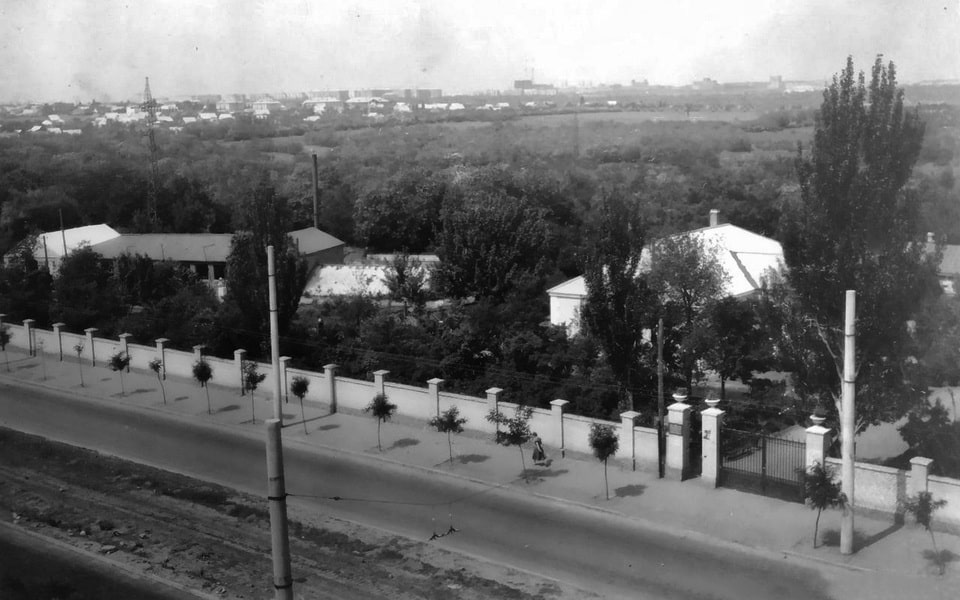
When driven to the open space next to the ravine, the Germans ordered Jews to undress, leaving only underwear, then directed them to the edge by groups of 20-30 people, but with their backs to the ravine, and were machine-gunned. The bodies fell into the ravine, and the next group of Jews was taken here. While there were shooters among the Germans, others brought munitions instantly to avoid delays in the execution. Killed on the spot, wounded, and even unharmed people, mainly women and children, fell down the slopes of the ravine. Some mothers with breastfed children jumped themselves down while many Jews were forced to come to the edge.
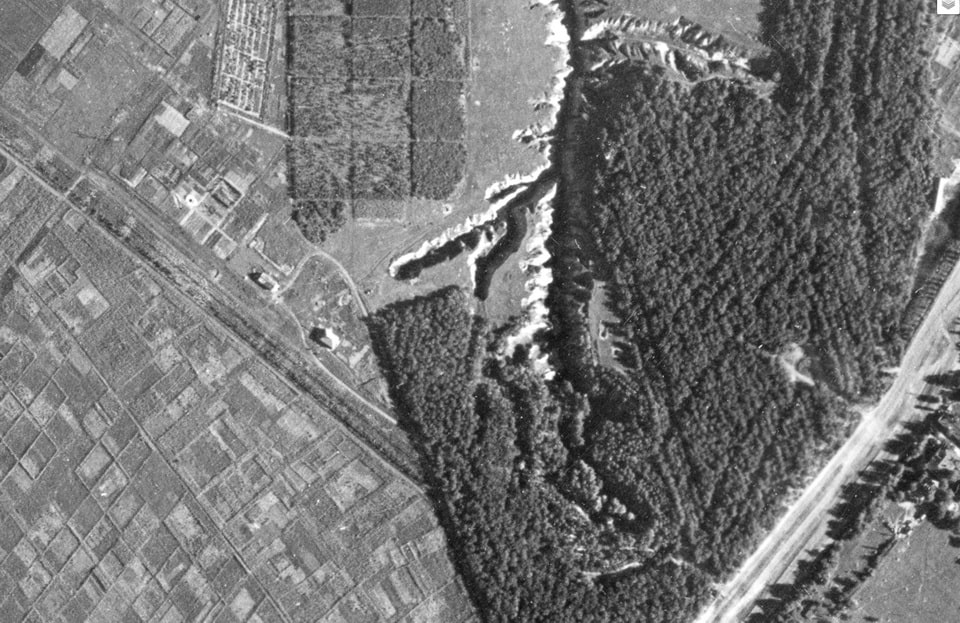
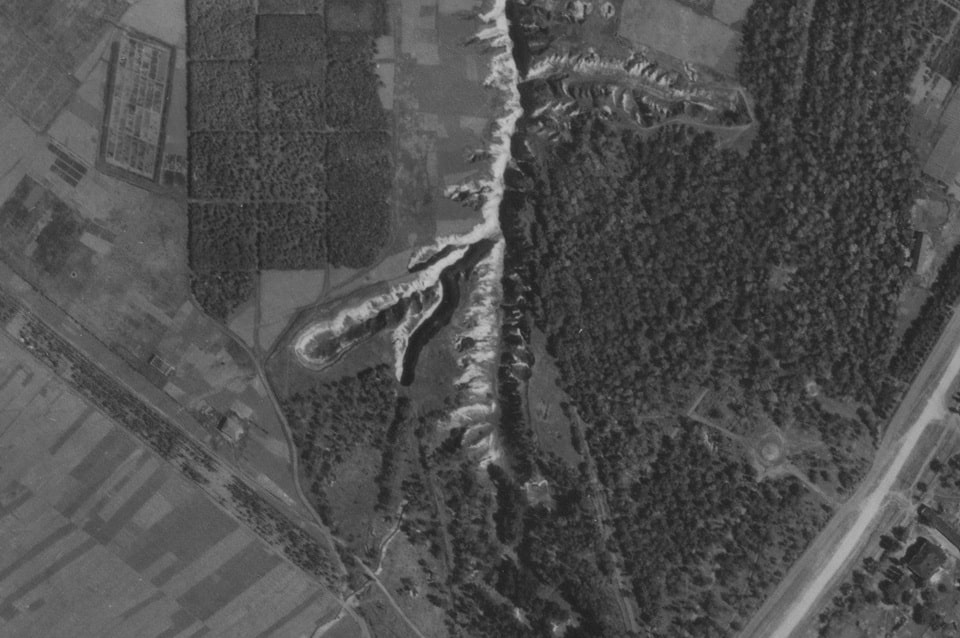
Similar to the Babyn Yar massacre in Kyiv, the executioners did not expect such a high number of people, and one day was not enough to kill all Jews who came or were brought by trucks, even considering the rotation of killing squads. When it got dark, the Germans halted the execution process until the next morning, thus leaving thousands of people in the open air on cold October days. A group of Jews tried to escape, but the Nazis fired into the air and contained the crowd on the spot. While the Germans cordoned off the area of the Botanic Garden and the wasteland, thousands of people were left in the open field. Women, children, and elderly people of both sexes who now mainly understood the nature of the process and their further fate, instinctively herded together to try to keep their bodies warm. Some could not withstand the nervous shock of their tragic situation and fell dead. Children were placed on top of their bodies because there was nowhere to put them. Many of them cried and begged to go home to their beds. Some old men were praying.

The executions resumed early in the morning of October 14 and continued all day, consuming more and more groups of those who were left to wait the day before. Apart from people already on the spot, Germans continued to bring Jews using trucks. At the same time, the assembly point next to the Department Store was no longer used anymore and the Jews were mainly brought from their homes throughout the city. In the Botanic Garden, half-dead people who lay on the ground were brought to the ravine and shot like the others. The area was full of dead bodies of those who did not live through the cold night, some frozen to the soil, and of children who were trampled in the ground by the crowd of people above them. In total, the execution lasted until 5. p.m. October 15 and demanded the lives of 11,000 people. In 1943, the Nazis organized two units aimed at eliminating the traces of mass killings of Jews in the occupied Eastern territories. The so-called Sonderkommando 1005b (Special unit 1005b) operated in Dnipropetrovsk in September and early October 1943, particularly digging out and burning corpses of the victims from 1941 in Krasnopovstancheskaya ravine near the Botanic Garden.
 SLIDE me
THE EXECUTIONERS: EINSATZGRUPPE C, SICHERHEITSDIENST AND POLICE BATTALION 314 IN DNIPROPETROVSK
In the reporting documents of Einsatzkommando 6 dated November 19, 1941, the mass murder of Dnipropetrovsk Jews was briefly reported in a completely mundane tone: “…approximately 10,000 were shot on October 13, 1941, by the command of the higher SS Fuehrer and the police.” The direct executor of the murder of Jews on October 13–14, 1941, was a special SD team numbering about 20 people. Unfortunately, the post-war trials revealed not enough information about the individuals of this unit under the so-called ‘Höherer SS- und Polizeiführer’ (HSSPF) or ‘Higher SS and Police Leader‘. The task forces of the security police and the SD were ideologically trained and mobile “special units” that the Reichsführer SS Heinrich Himmler commissioned for mass murders, initially in Poland and the Balkans, and since June 1941 in the Soviet Union. The Einsatzkommando 6 unit operated in Dnipropetrovsk from late September 1941 under the command of Erhard Kroeger (1905-1987), an SS member since October 1938 and NSDAP member since August 1940. After WWII, he successfully hid for two decades until being tried in 1969 and sentenced to only three years of imprisonment under the accusations of mass murder of Jews in Ukraine in 1941-1942. He died from natural causes at the age of 82.
While the members of Einsatzkommando 6 (EK6) of Einsatzgruppe C were directly involved in the shooting of Jews in Dnipropetrovsk between late September and late November 1941, they were not the only executioners on October 13-15. Another infamous formation that took part in the annihilation of the Jewish community in Dnipropetrovsk was the infamous Police Battalion 314. One of the twenty-three Police Battalions of the Nazi ‘Order Police (Ordnungspolizei) was assigned to participate in the Invasion of the Soviet Union in 1941 (toward the end of 1941, three more Police Battalions were added). Like other units, Police Battalion 314 set up in Vienna in March 1940 was mainly formed of German police workers 25-40 years old (32 was the average age, and many were born in 1909-1912), sympathizers to the Nazi racial ideology. Along with Battalion 45 and 303, the infamous participants in the Babi Yar massacre in Kyiv, Battalion 314 was deployed into the USSR as a part of the ‘The Police Regiment South’ (Polizei-Regiment Süd). The members were the providers of the ‘War of annihilation’ strategy, and themselves were highly racially trained to hate Jews and the Soviet Union. Before the invasion, their training included writing essays on German expansionism to the East and the danger of ‘Judeo-Bolshevism’. It is worth noting that the platoon leaders (junior officers) of the battalion were mostly young men under 35, including the youngest, such as Lieutenant Schellwath (21), Lieutenant Schleich (21), Lieutenant Pütz (19), Lieutenant Panis (21), thus representatives of the so-called ‘Hitler Youth Generation’. Many of the officers were Austrians, some from Vienna.
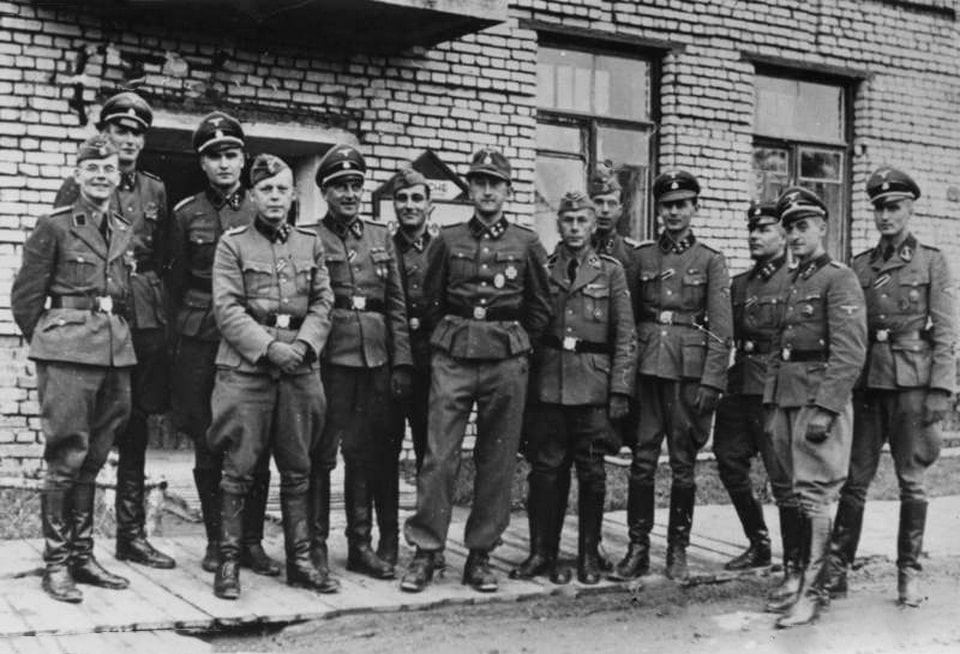
Throughout July and August 1941, Police Battalion 314 was involved in the genocide in the occupied territories of Poland and the Soviet Union. The unit was deployed in Tschenstochau (Częstochowa) from June 21 and moved to the Kovel area on July 14, where they participated in the massacres of the Jews until early September 1941. Initially, they killed men, and in late August participated in the killing of Jewish women. On September 1, the Police Battalion 314 left Kovel for the Ukrainian city of Vinnytsia (massacring hundreds of Jews on September 12), leaving it on September 14 for Kirovohrad (modern Kropyvnytskyi), and finally reached Dnipropetrovsk on September 21, a few days before the arrival of Einsatzkommando 6 (EK6) to the city. While previously traveling and killing Jews in separate companies, for the first time since the invasion, the unit gathered in Dnipropetrovsk in full strength of about five hundred men. Similar to other Police Battalions that participated in the Holocaust, in August-September, the 314th received an influx of new members from the ranks of the SS, who had not been police workers before the war.
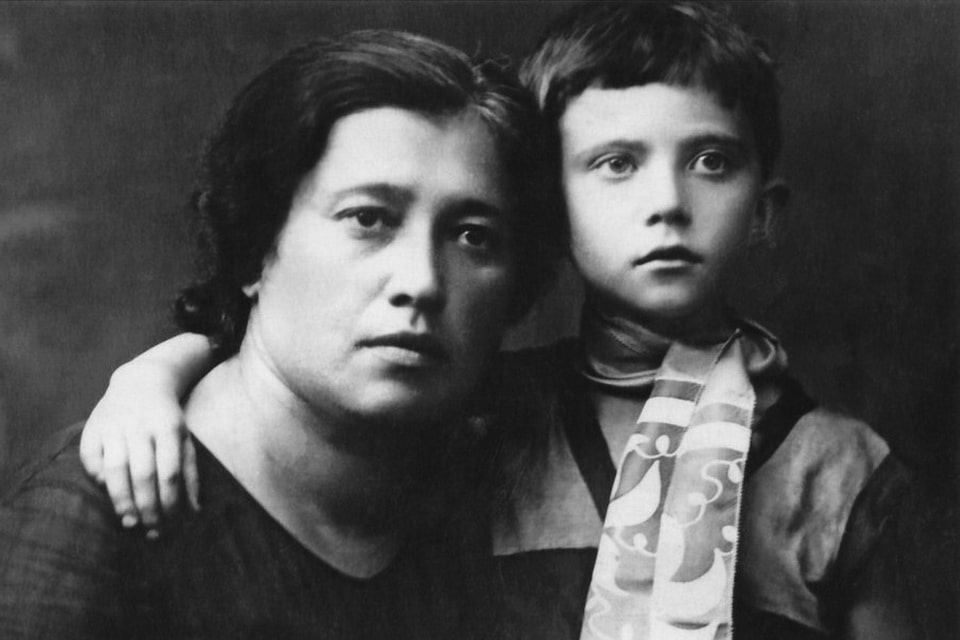
Considering scattered killings in the previous three months, the annihilation of the Jews of Dnipropetrovsk in October 1941 was the first massacre on such a scale for the Police Battalion 314. According to the order of Friedrich Jeckeln, the Higher SS and Police Leader, the 314 were assigned to leave Dnipropetrovsk on October 13; however, another order came a day before ordering the Battalion to participate in the liquidation of the Jews in Dnipropetrovsk. On October 12, a newly appointed (since mid-September) battalion commander, Otto Severt (born 1891), ordered his company leaders to round up Jews in the city, securing the assembly point at the Department Store, providing escort to the Jews to the execution area. Otto Severt was a career policeman from 1919 and the fourth consecutive commander of the 314 Police Battalion after Major Schmidt, Major Kahr, Oberst Willy Dressler (born 1891, NSDAP member since 1933), since March 1940. In 1942, he was replaced by Walter Meisel, a leader of Company 3. On that October 12, 1941, meeting, he was backed by his adjutant, Lieutenant Steinmann (born 1915, an SA member since 1933).
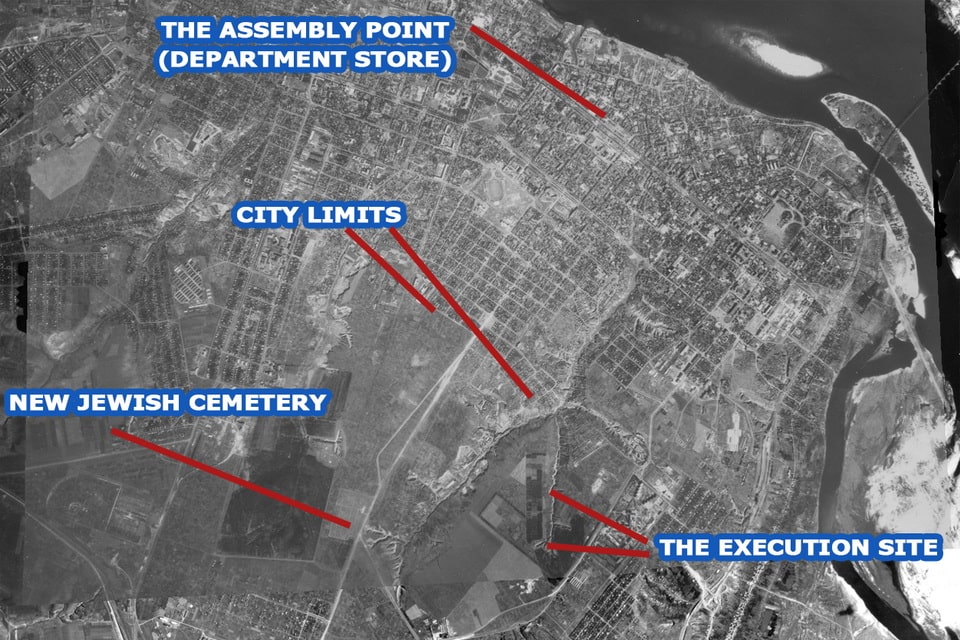
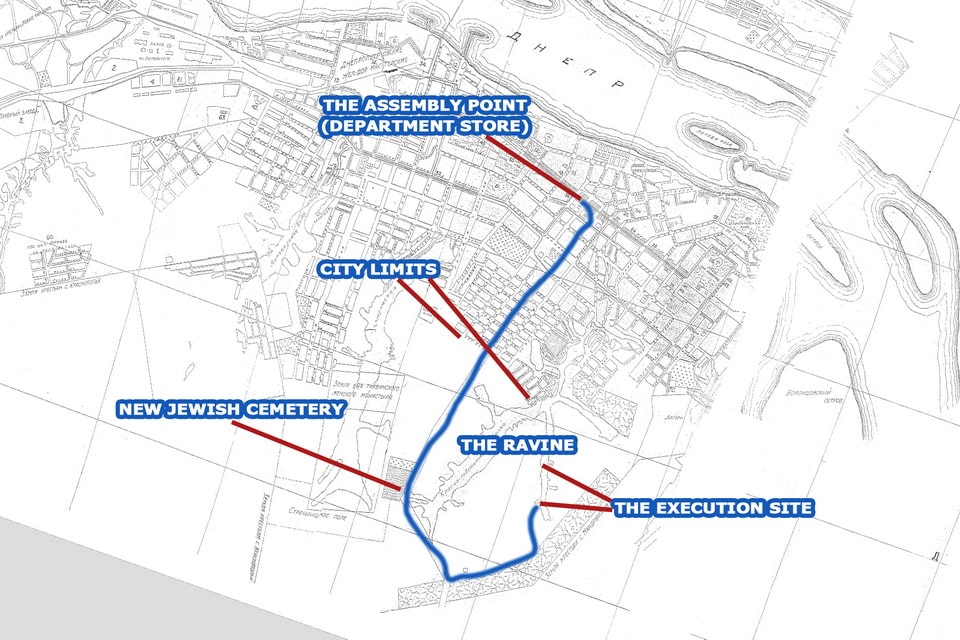
There were no written orders, and Severt instructed his company commanders verbally, though at this stage, the executions were not mentioned: only securing the area and escorting. The staff of Companies 1 and 2 were ordered to secure the ‘Umschlagplatz’ inside and around the Main Department Store, expropriate valuable belongings from the Jews, escort them to the assigned location to the South of the city, and cordon off the area of the final destination. Apart from their service weapon, soldiers were armed with heavy machine guns. At the initial stage, the platoons raided residential buildings and evicted Jews to the assembly point at the Department store. Later on, they secured the streets, adjusted to the planned pedestrian route, and used trucks to deliver the old and sick to the execution area in the Botanic Garden. The soldiers of Police Battalion 314 secured the area around one of the upper spurs of the ravine with two separate perimeters.
The post-war trials of the 314th staff revealed that even though the Battalion was not meant to be involved in shooting directly, leaving it to the SD staff of EK6, on the spot, the officers of Einsatzkommando asked for volunteers among gendarmes, and some stepped forward. It is an essential fact regarding the annihilation of Dnipropetrovsk Jews on October 13-14: the shooting was carried out not only by the SD members of EK6 but also by volunteers among the policemen of the 314th Battalion, two dozen in total from both units. Similar to other mass killings of Jews in the East, there was a strong presence of the officers during the execution, including Battalion Commander Otto Severt and the Company’s leaders, though they did not participate directly. At night, the 314th staff crushed the attempt of the Jews to break out of the cordoned area. Both the SD and the gendarmes spent two days massacring Jews in the Botanic Garden, rotating each other so as not to freeze.

After the massacre of Dnipropetrovsk Jews was completed, Police Battalion 314 was transferred further north on October 16-17, through Kremenchuk to the Pereiaslav-Khmelnytskyi district in the Kyiv region, where it was involved in ‘cleansing operations’ against partisans and Jews. At this stage, the British Intelligence at Bletchley Park intercepted a flow of coded messages regarding the activities of Police Regiment South, including the deployment of Police Battalion 314. After killing actions in the Kyiv area, the 314th moved to Kharkiv, where in the winter of 1941-1942 it participated in the massacre of 12 000 Jews along with sonderkommando 4a, including the use of gas vans in the Kharkiv area. In July, the Battalion was incorporated into the newly created 10th SS Police Regiment, and in 1943, several junior officers were sent back to Germany as educators in police training schools. Subunits of the former 314th were deployed at the front, though mainly assigned to requisition harvest and fight with the partisans rather than combat with the Red Army.
It should be noted that after WWII, the ‘Oder Police’ was not declared a criminal organization of the perished Nazi regime, and at least some of the former gendarmes from Police Battalion 314 resumed their police work in Austria. Several separate trials against its former members were conducted in West Germany in the 1960s and 1980s, but none of the 314th staff got substantial sentences for their crimes in Poland and Ukraine. The British decrypts of the wartime orders were declassified as late as 1993, decades after trials against the members of the units.
THE ANTI-TANK DITCH AND THE JEWISH CEMETERY: MAIN KILLING SITE OF THE DNIPROPETROVSK HOLOCAUST
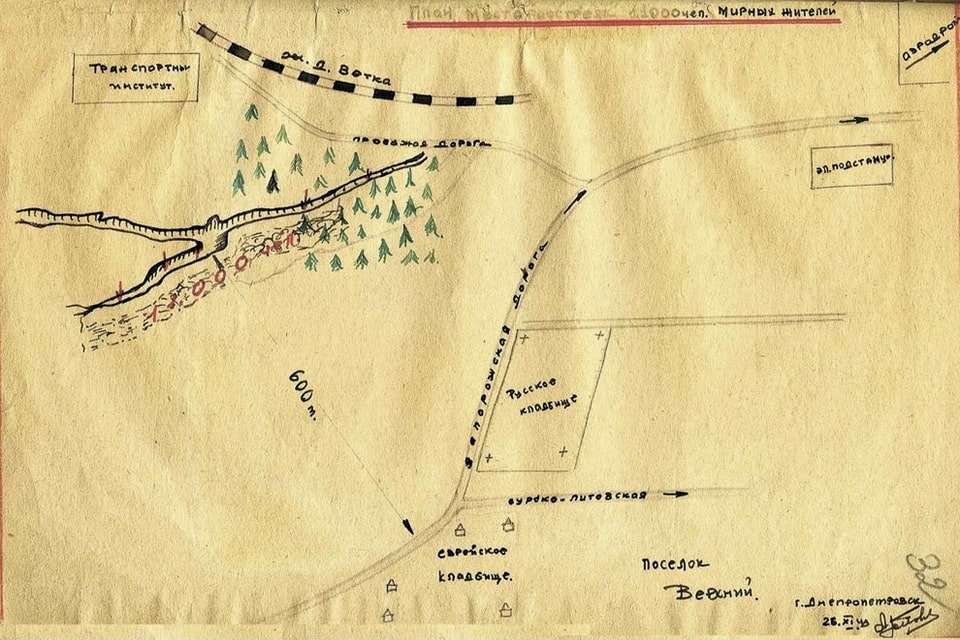
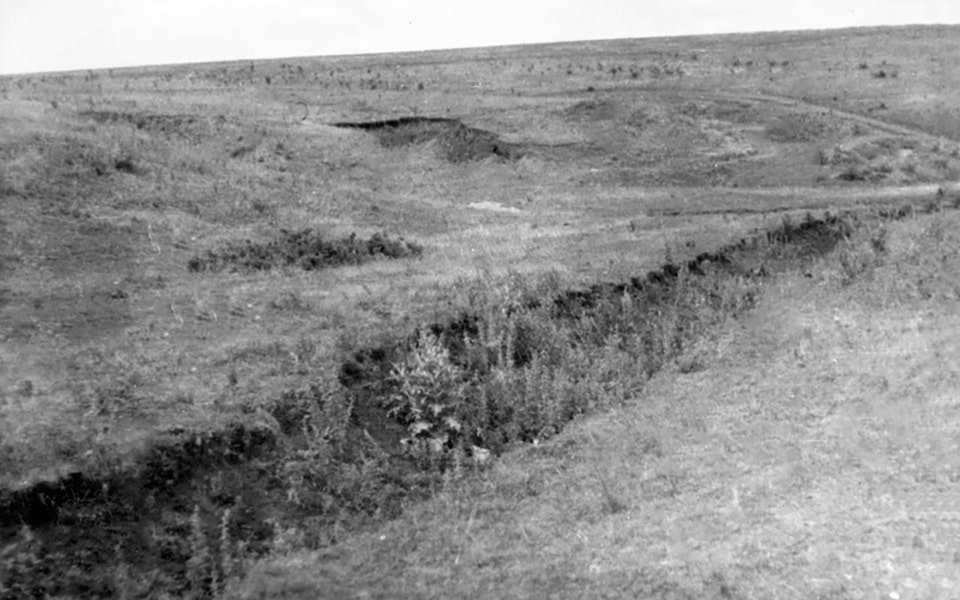
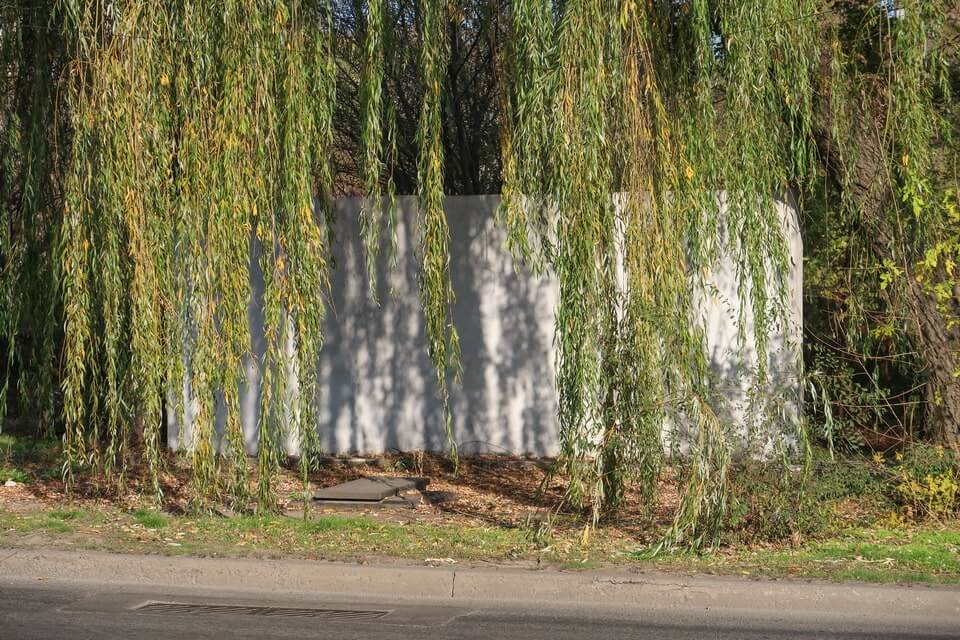
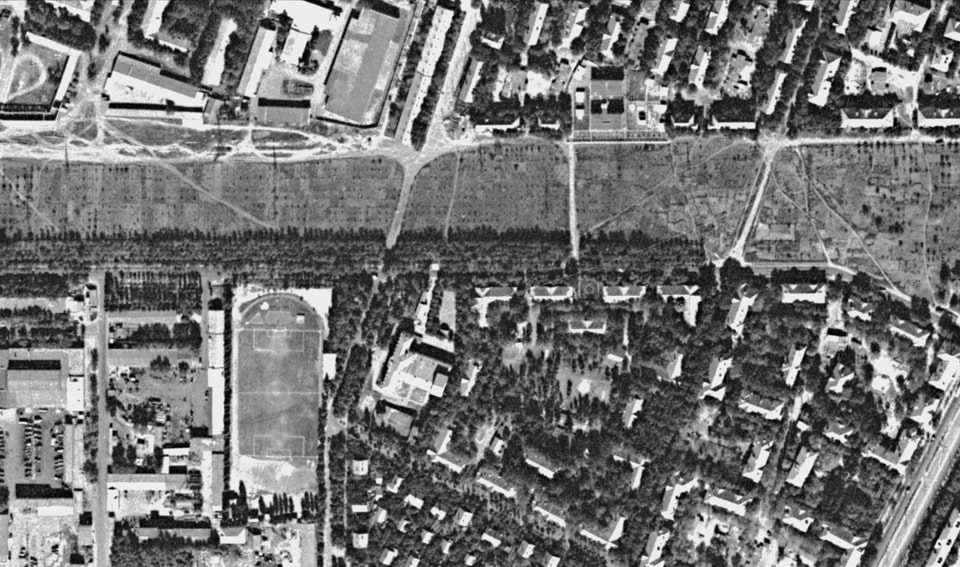
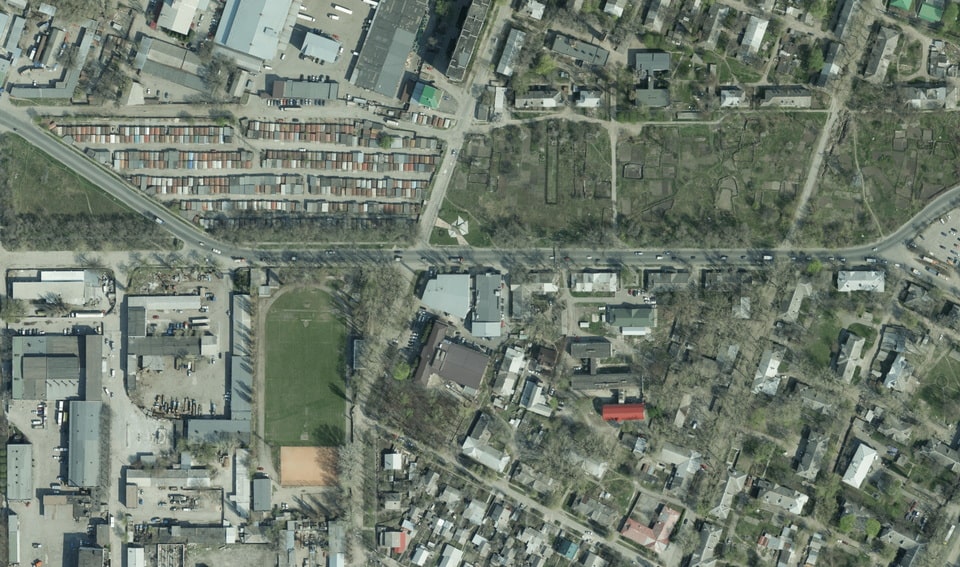
One of the spurs of the Krasnopovstancheskaya ravine in the Botanic Garden was not the only killing site on October 13-15, 1941, in Dnipropetrovsk. Several survivors and witnesses recalled after the war that on the first day of executions, several groups of Jews were driven further to the South, including those brought by lorries. While most of the victims were directed to the left after passing by the New Jewish Cemetery, a small proportion were taken further south, approximately 2 kilometers from the cemetery. This additional killing site was organized next to a long anti-tank ditch that had been dug in the summer months of 1941, in anxious waiting on the German advance toward Dnipropetrovsk. It stretched for approximately 1.5 kilometers from East to West, crossing the south interstate from the city in the direction of Zaporizhzhia. The ditch, just one of many of this kind, was hurriedly dug around Dnipropetrovsk after June 22. It was 6 meters wide and 2.5 meters deep, located 4 kilometers from the city limits, and was a convenient killing site for the German actions in Dnipropetrovsk.

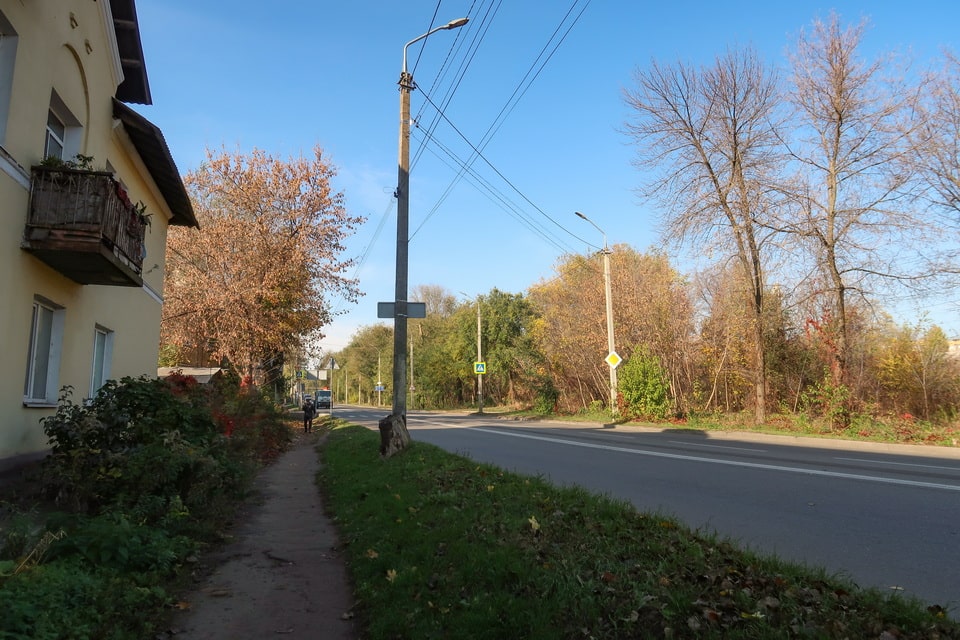
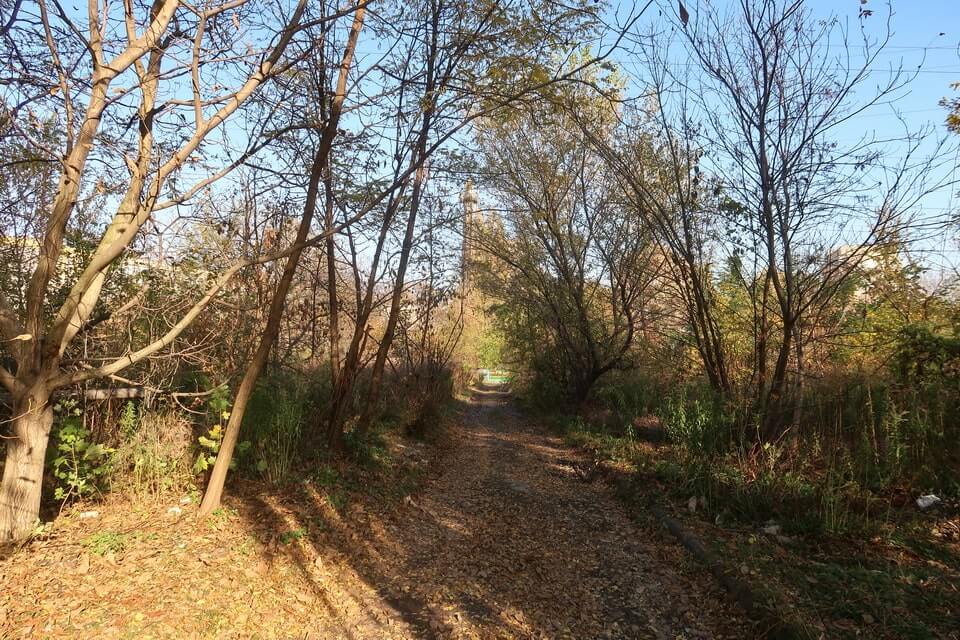
The process of mass extermination at the anti-tank ditch differed a little from Nazi practices in other shooting sites: trenches, ravines, and pits throughout occupied territories, including Dnipropetrovsk Botanic Garden. The victims were mainly brought here by trucks to save the time of potential escort men among the Germans. Each truck brought up to 30 people and unloaded close to the anti-tank ditch. Then Jews were ordered to line up next to the trench and were machine-gunned by the SS shooting squad from a distance of 10 to 15 meters. When the bodies fell into the trench, they were dusted with soil, and the execution continued layer by layer. People from the next group were left at a distance not to see the shooting, but they heard screaming and machine-gun work and knew their fate. The killing site was only half a kilometer from a small settlement called ‘Verkhniy’ (Ukrainian variant of ‘upper’), and after WW2, several locals testified about seeing executions next to the anti-tank trench, including the killing of Jews in the Fall of 1941. Some locals threw pieces of bread to those Jews who were escorted on foot.
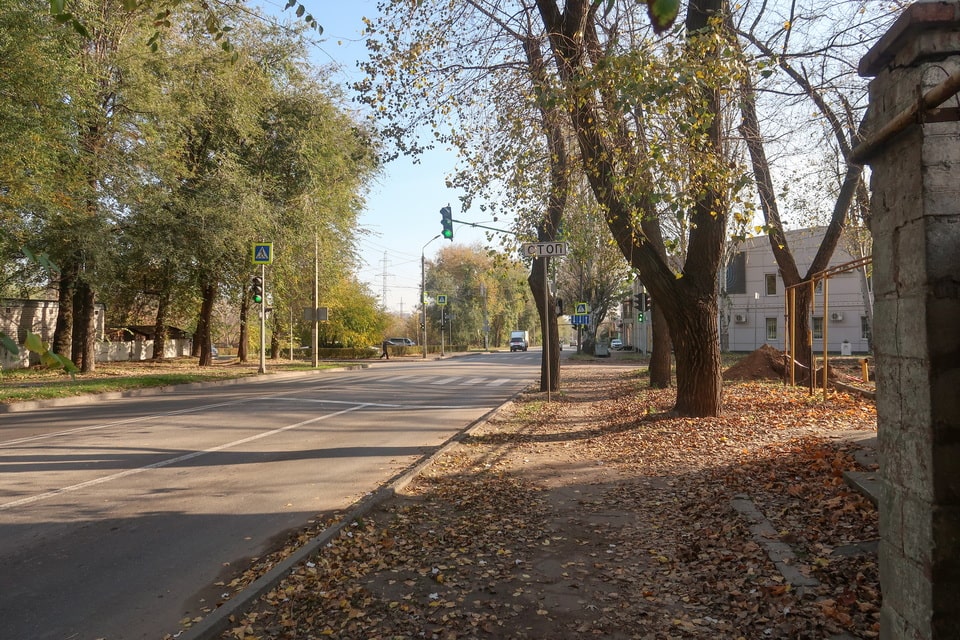
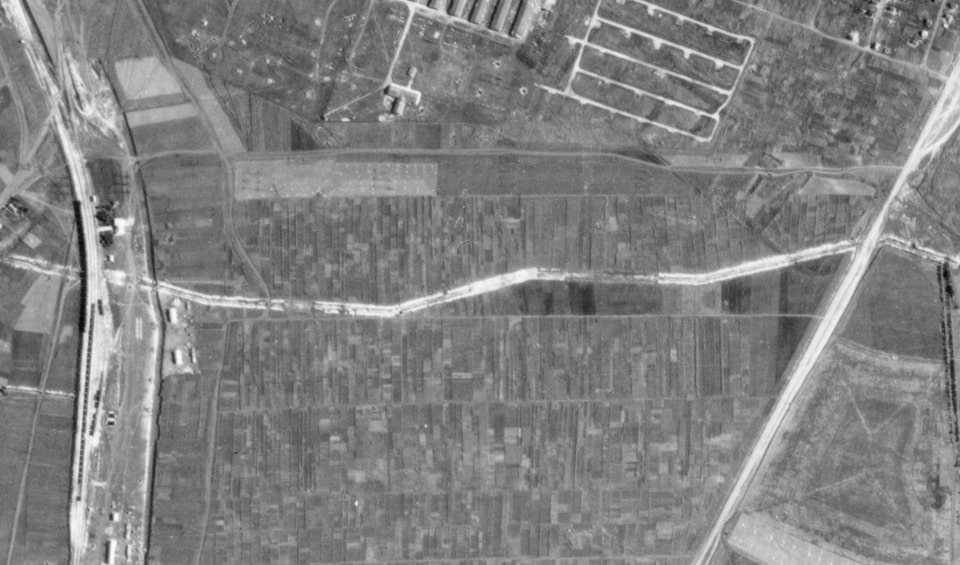
In contrast to the mass execution site in the Botanic Garden that was not used after the October 13-15 massacre, Germans used the anti-tank to the south of Dnipropetrovsk throughout the occupation until leaving the city in October 1943. While Jews were primary victims at this site in October-November 1941, in the following two years, thousands of Slavic people were brought here and killed, and their bodies dumped into the pit. As months passed into 1942, the killing of the unloyal population of Dnipropetrovsk turned into a daily routine with less secrecy than at the initial stage of the occupation. In May-June 1942, hundreds of Soviet POWs were assigned to better cover the bodies in the anti-tank trench with soil. The local authorities were concerned that parts of the dead people: arms and legs stuck out of the trench, and even were eaten by dogs. At this stage in the German-Soviet war, the ‘Vernichtungskrieg’ (War of Annihilation) was not a secret for those still alive in the occupied territories.
The anti-tank ditch was one of the objectives of the operation to conceal the crimes conducted by the so-called Sonderkommando 1005b (Special Unit 1005b) in September-October 1941. Due to the fast advance of the Red Army and the German retreat from the city in late October, only part of the bodies buried here were excavated and burned in an open-air, while thousands of bodies remained at the bottom of the trench still covered with soil. They were discovered just days after the official liberation of Dnipropetrovsk (October 27, 1941) by the members of a special Commission known as the ‘Extraordinary Commission on Verification and Investigation of Acts of Atrocities of the Nazis’. They discovered a section of the anti-tank ditch 300 meters in length filled with decomposed human remains: a layer 300 meters long, 6 meters wide, and 1.5 meters thick covered with one meter of soil and clay.
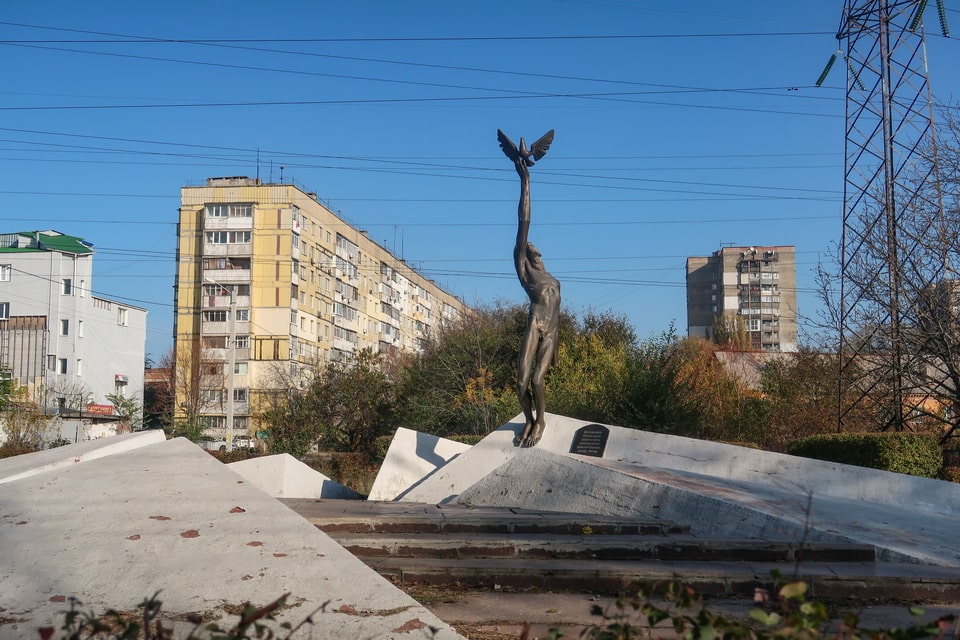
The forensic analysis identified victims of both sexes and different ages, some invalids with crutches. In addition, they discovered another section approximately 30 meters long with a thick layer of human ashes and incompletely burned bones. The investigators also revealed several recent mass graves with bodies killed up to four months before. The hands of some killed were tied behind their backs, and many bodies revealed the traces of torture. In the majority of corpses, an expert examination established the presence of gunshot wounds in the head region (occiput, forehead, thigh); in some cases, a wound in the chest was found. The Commission concluded that the whole area of the anti-tank ditch was a killing site of 17 to 20 thousand people between October 1941 and October 1943.
 SLIDE me
THE FATE OF THE MENTALLY SICK IN DNIPROPETROVSK: PATIENTS KILLED BY EINSATZKOMMANDO 6 at Igren Mental Hospital, 1941–1942
Nazi Germany treated their own mentally disabled people and even handicapped children as a biological threat and ‘useful eaters’, a burden for the economy and society. As early as July 14, 1933, Hitler’s chancellorship adopted the so-called ‘Gesetz Zur Verhütung Erbkranken Nachwuchses’ (Law for the Prevention of Offspring with Hereditary Diseases), which resulted in the forced sterilization of around 300 000 people, at least 5000 of whom perished in the process. Since late summer 1939, the Nazis had been killing physically or mentally disordered children in the so-called ‘special children’s wards’ and later under a wider euthanasia program, in total murdering 10 000 underages until 1945. On October 9, 1939, Hitler issued a short decree giving the green light to a program of ‘granting mercy death’, better known as the ‘euthanasia program’ or ‘T4’. The first centralized period between January 1940 and August 1941 claimed the lives of 70 273 people with physical or mental disorders in the Reich and was later extended to the prisoners of the concentration camps (“Sonderbehandlung 14f13” or ‘Aktion 14F13’ or simply ‘14F13’), foreign laborers, invalids, and general patients of the German clinics.
Hitler’s authorization of the euthanasia program in the Reich also launched a wave of murdering the first victims among the mentally disordered people in the occupied territories in the East: Polish mental patients. Toward May 1940, at least 7000 physically or mentally handicapped people were killed in Poland, and at least 16 500 toward the end of the war. With all that, the mass murdering of handicapped people in Poland was dramatically a prelude to even wider killing practices in the occupied territories of the Soviet Union, starting from June 1941. While Jews were the primary victims of the shootings in the latter half of 1941, they were not the only group of people whom the Nazis regarded as not only racially inferior, like Slavic people, but also dangerous and useless: Soviet psychiatric patients.

Similar to the mass shootings of Jews, the process of eliminating disordered people radicalized in the first weeks and months after the invasion. In contrast to the euthanasia program in Germany and Austria, and even to the killing process in Poland, no centralized program or instructions were issued regarding the fate of Soviet psychiatric patients. Their fate was decided after seizing particular cities and towns in parallel to the Wehrmacht’s advance to the East. The patients of mental clinics were regarded as useless for the new occupational regime, beyond control, a potential source of diseases, and a threat to the ‘racial health’ of the newly created Europe under Hitler. First, their rations were significantly cut beyond the survival level, then the buildings were used by the Wehrmacht and the SS, and finally, the extermination came in late August 1941, including Ukraine. In the years of the German occupation of Soviet territories, at least 17,000 mental patients were murdered in the East, among them thousands of children. One of the largest actions of this kind, if not the largest, was conducted in Dnipropetrovsk.
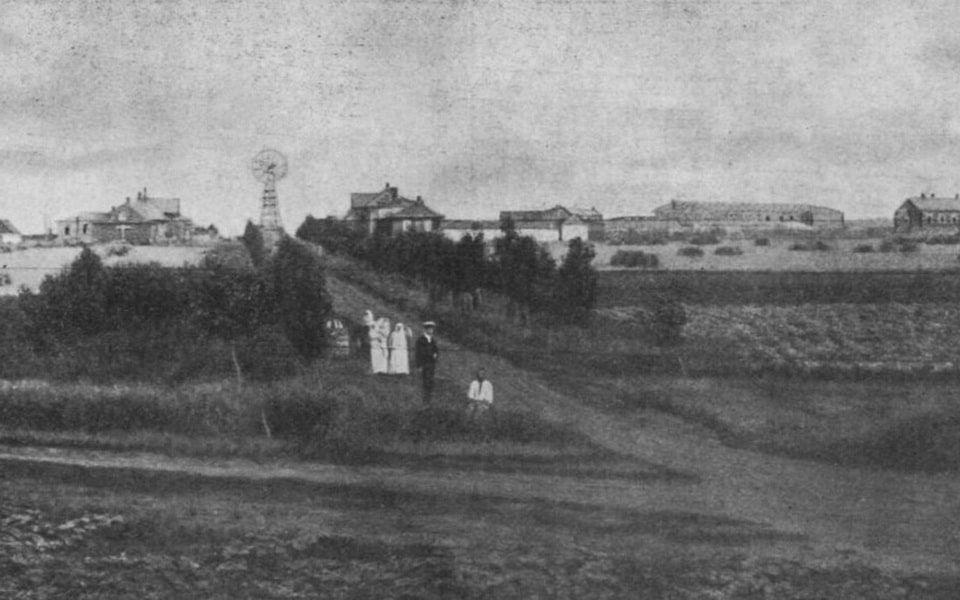
After the mass murder of at least 11,000 Jews of Dnipropetrovsk on October 13-15, 1941, the mass killings in the city continued, expanding the groups of victims. In late October, a group of German Gestapo officers, including at least one former doctor, visited a large psychiatric clinic known as the Igren clinic (Igrin in Ukrainian pronunciation) on the less populated left bank of the city. The chief medical officer, Viacheslav Honcharov (whose predecessor was called to arms) was ordered to eliminate the majority of patients in the clinic within three days and leave not more than 100 people out of fifteen hundred. When the superintendent handed this ultimatum to his medical staff, some of them, mainly young doctors, rejected participation in selecting victims and killing innocent people, and they filed for voluntary leave. The remaining staff decided that severely ill and Jewish patients were to be killed in the first instance.
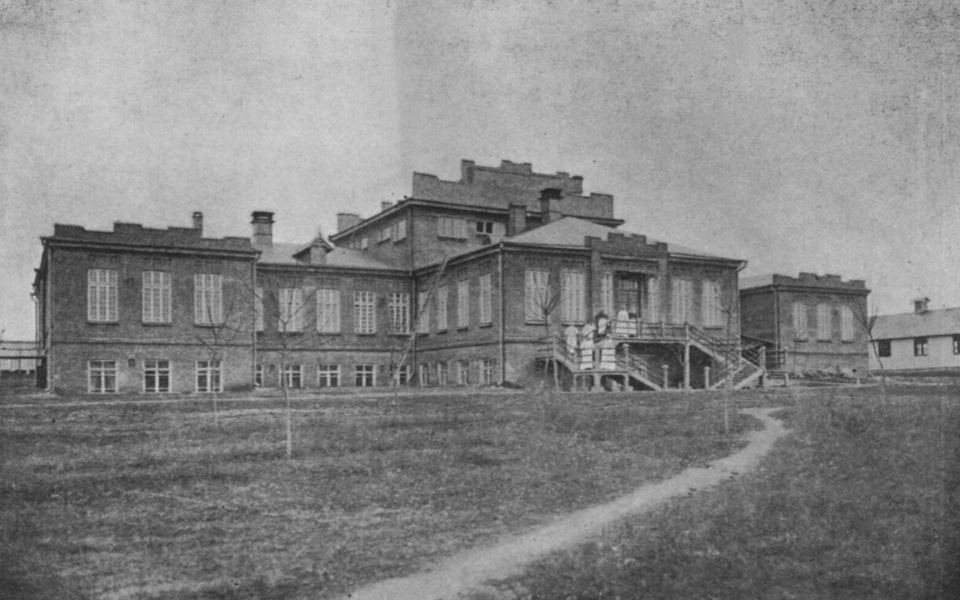
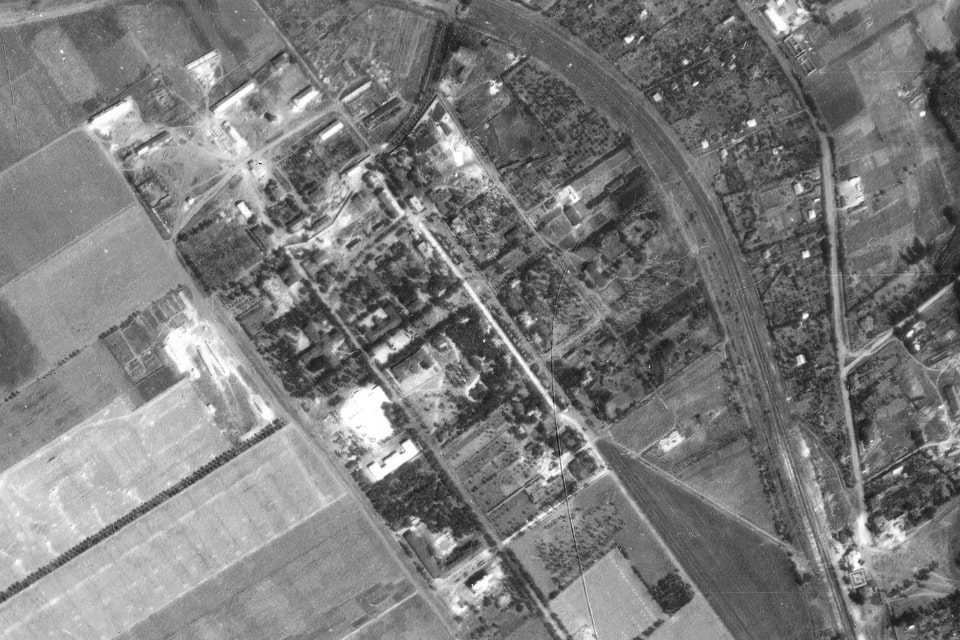
The medical staff of the Igren Mental Clinic decided to use morphine as a primary ‘mercy killing’ substance. After murdering several patients with a lethal injection, it became apparent that the amount of morphine in the storage was very limited to proceed with the task of killing more than a thousand people. Some doctors suggested using liquid ammonia and strychnine for lethal injections, both available in stock in sufficient quantities. It must be said that, in contrast to relatively painless death from high doses of morphine, injections of ammonia and strychnine led to the unbearable physical suffering of patients. Lethal doses of insulin were also used to murder psychiatric patients. The bodies of patients killed in this way were dumped in silo pits near the piggery near the local railway. After the war, the investigators found about thirty mass graves, but the remains of many people were never found. At the same time, children among patients died of cold and hunger in the unheated wing of the hospital.
The pace of the murder process was not sufficient for the Germans, and in December 1941, they came back and ordered to prepare the remaining patients for being shot by the members of Einsatzkommando 6 of Einsatzgruppe C, which participated in the October 13-15 action and were still stationed in Dnipropetrovsk, where they reported another 1000 Jews killed in November. The chief medical officer, Viacheslav Honcharov, ordered hundreds of patients to be placed into the hospital garage, where many of them died of winter cold when the Germans had not come for days. The innocent people were naked as one of the stewards took their clothes so as not to waste them. EK 6 killed 400 remaining patients of the Igren clinic in February 1942. The total number of mentally ill people killed here is estimated to range from 1200 to 1500 victims. It is important to say that after the October meeting of the staff, some patients, among them no Jews, were released from the hospital to avoid death. After the war, the Soviet court tried the medical staff of the hospital: on charges of killing patients, some doctors were executed (including Honcharov), and others were sentenced to long prison terms.
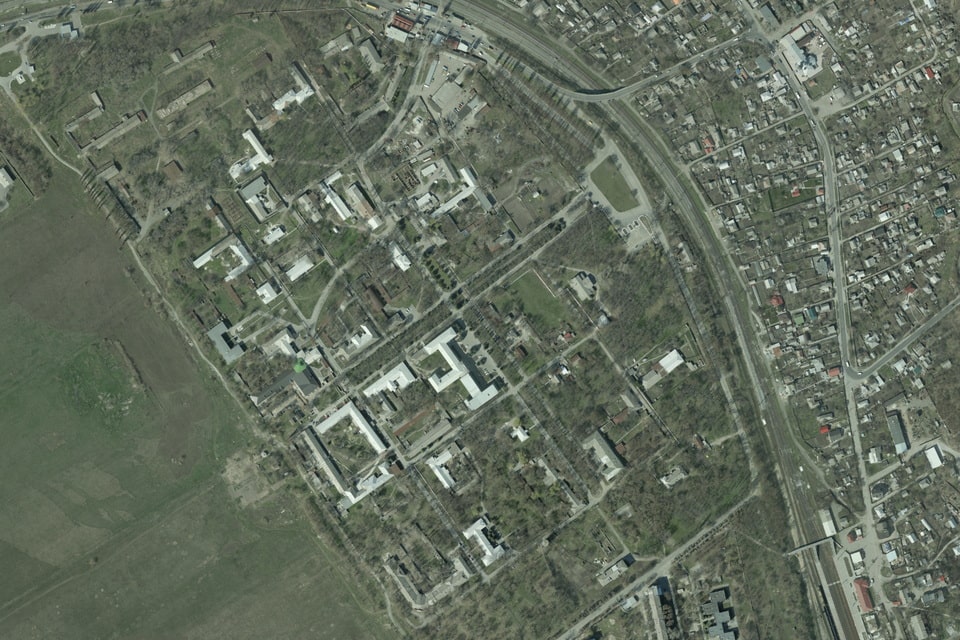 SLIDE me
The history of Igren Mental Clinic originated in 1897 with the decision to build a colony for lunatics and mentally ill patients next to the local railway station called ‘Ogren’ (modern Igrin). By 1910, the first nineteen houses for patients were built, and the expansion continued until the outbreak of World War I. After the Soviet occupation of Ukraine, the expansion of the clinic slowed until the late 1930s, when Igrin was capable of accommodating more than one thousand mentally ill people, not only from Dnipropetrovsk but from neighboring regions of Zaporizhzhia and Luhansk. In the fall of 1943, the Igrin Psychiatric Hospital was liberated from the German occupation, but was destroyed. It was rebuilt in 1950 according to a new project that met all the requirements of modern science and hospital technology, but regained the prewar capacity of accommodating 1500 patients not earlier than in the 1970s. The Soviet regime used the Igren clinic to conduct the forced treatment of dissidents and human rights defenders. In 1973, a memorial was erected to commemorate ‘Soviet citizens’ who were murdered here in 1941-1943, similar to other places, without the mention of Jews, who were the first victims, including several members of the medical staff.
THE FURTHER FATE OF DNIPROPETROVSK JEWS: SURVIVAL, HIDING AND EXECUTION UNDER OCCUPATION 1942–1943
Neither the October 13-15 massacre of 11 000 Jews in the Botanic Garden and the anti-tank ditch to the South of Dnipropetrovsk, nor the further killing of 1000 Jews by EK6 ended Nazi efforts put in ‘Endlosung’ (The final solution). After the killing phase came the hunt for the property in the city. On the one hand, only 240,000 people were left in Dnipropetrovsk out of the 530,000 prewar population, leaving houses and property of those evacuated, called to the Red Army, and killed accessible for taking over. On the other hand, the battle for the city in August-September, particularly the German air raids and the artillery duels of both sides, resulted in significant damage to the housing estate in the most populated right-bank part of the city (the historical center). Beyond that, the plans of the German occupation apparatus for systematic eviction of residents in the сentral part of the city to further inhabit these districts exclusively with the German population, the issue of better living conditions grew noticeably.

As early as October 14, 1941, when the mass shooting of thousands of Jews was in full swing, Petro Sokolovskyi, the recently appointed head of the collaboration city administration, issued a decree prescribing that housing authorities and private owners were to protect all livestock and poultry belonging to Jews. The Jewish property was priority number one for expropriation, and a greater proportion was handed over by the authorities to shops for further sale to “new residents”. In particular, on November 20, 1941, an announcement appeared on the pages of the local press that the city finance department and the city administration’s city trade department had begun “the sale of household items left in the apartments of communists and Jews.” However, already on January 24, 1942, the sale of items from Jewish apartments was suspended ‘’due to the great need of German occupation institutions for furniture’’. Another decree dated March 24, 1942, announced that all persons “who occupied private houses, the owners of which were evacuated, or from Jews” had to undergo mandatory registration in the Housing Department. In total, at least 23, 496 apartments in Dnipropetrovsk were exposed to such “redistribution of property”. The objects of encroachment were not only housing but also smaller properties belonging to Jews.
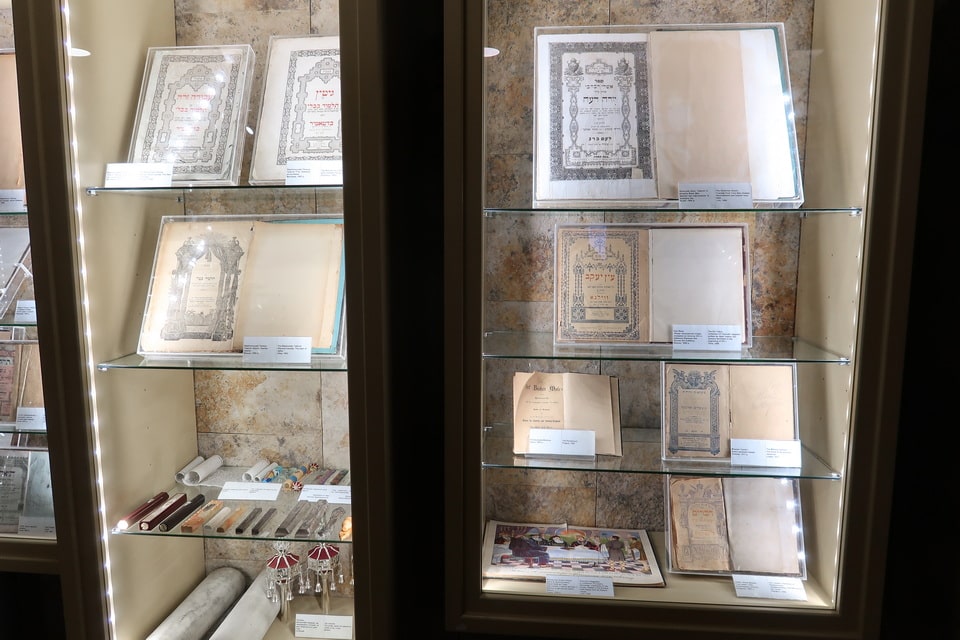
In parallel to the seizure of Jewish private property, the occupation brought the expropriation of the property of the Jewish community. The synagogues, which had previously survived the Soviet harassment and looting, were now robbed of remaining goods such as ritual clothes, marble, and even wooden benches. The lack of marble in the occupied city during the occupation resulted in using this material from the tombstones of Jewish cemeteries of Dnipropetrovsk. Apart from being used as a construction and decorative work material, marble was used to extract calcium chloride widely used in medicine at that time. In June 1942, the deputy head of the Dnipropetrovsk regional administration of pharmacies appealed to the head of the city administration to grant permission to use marble tombstones from the Jewish cemetery for this purpose. The request was accompanied by a corresponding application for the dismantling of 10 tons of marble monuments. Within a week, this application was submitted to a local funeral service for execution.
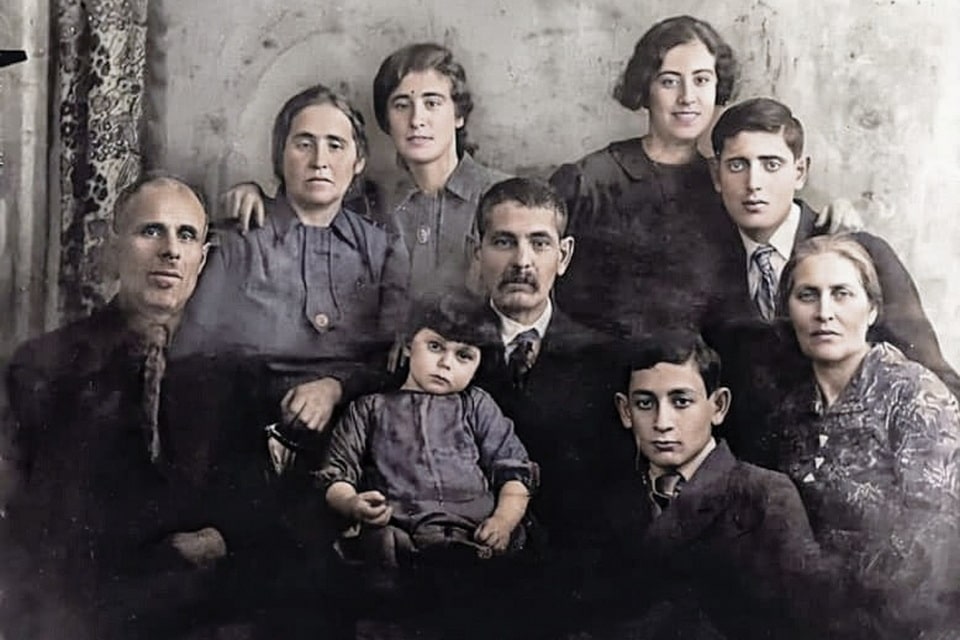
A month after the major massacre of the Jewish population and after the first phase of the annihilation of the mentally sick patients at the Igrin Clinic, the occupational authorities conducted a population census in Dnipropetrovsk, which lasted several weeks. As of early December 1941, 240, 000 people still lived in the city: 177 619 on the right bank and 62,000 on the less urban developed left bank. This figure attests to a 55% decrease in population since the last official Soviet census in 1939. When it comes to national distribution, Ukrainians comprised 70.4% (164 134), russians 22.3% (51 981), Belorrusians 3.8% (8 856), Polish 1.3% (3 083), Germans 0.8% (2 001), others 1% (2 270), and finally Jews only 0.4% or 922 registered persons. While thousands of Jews managed to leave Dnipropetrovsk after the occupation, were in hiding, or evaded the census, the official Jewish population declined from prewar 18% to only 0.4% in 1941. The total figure of Jews who survived the October-November killing was higher since some of them had papers of other nationalities. Those who were still alive at the end of 1941 faced new challenges and restrictions imposed by the occupational authorities.
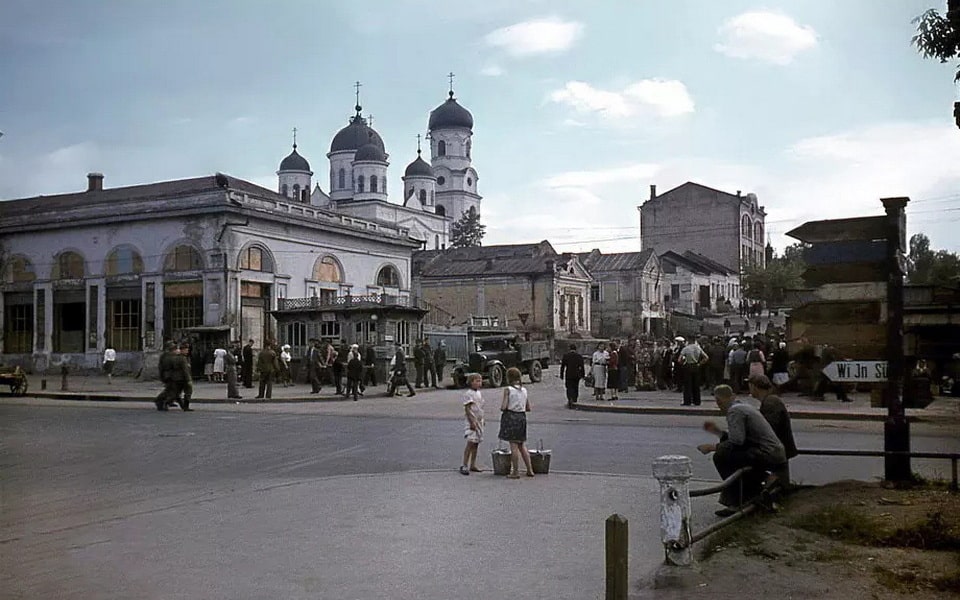
Apart from racial hatred and the Nazi obsession with racial hygiene, the remaining Jews were also regarded as the minions of the ‘Judeo-Bolshevik’ Soviet regime, secret agents, and saboteurs. They faced more strict restrictions on movement in the city: the curfew hour for Jews started three hours before the closing time for other citizens. Registered Jews could work only in a limited number of enterprises, got a lower salary, and had to pay an enormous 50% tax. They were generally deprived of appropriate medical care, of using the postal service, and excluded from social welfare and public places. The collaborative occupational press spoke about such measures as achievements. In December, the Jewish population was ordered to visit the local SD office and got a special stamping in the passport at the cost of 50 Ukrainian karbovanets and under penalty of a fine of 5000 for ignoring. As time showed later, this bureaucratic measure was invented to reveal and account for the remaining Jews more efficiently for their upcoming annihilation.
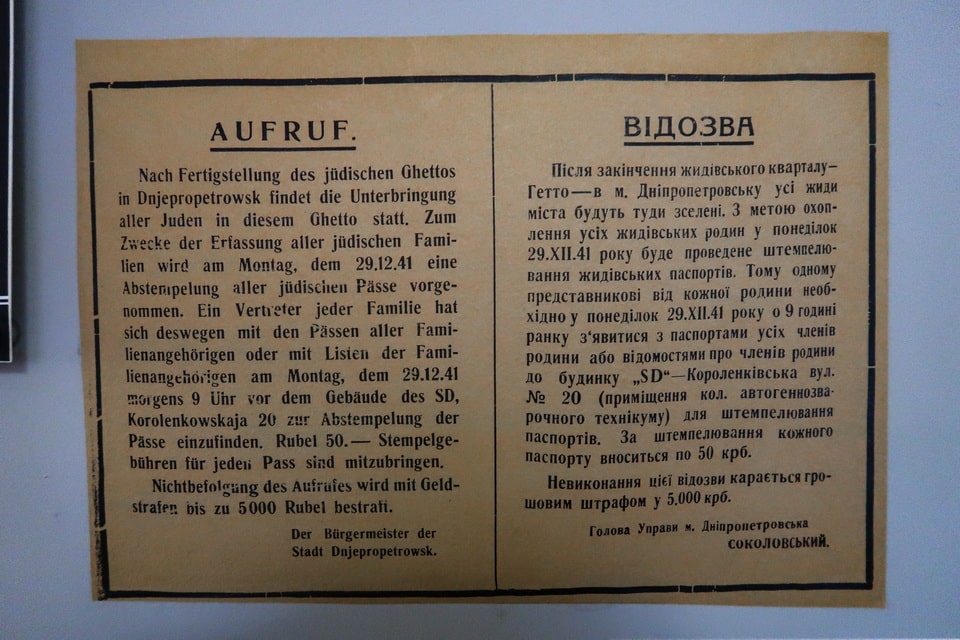
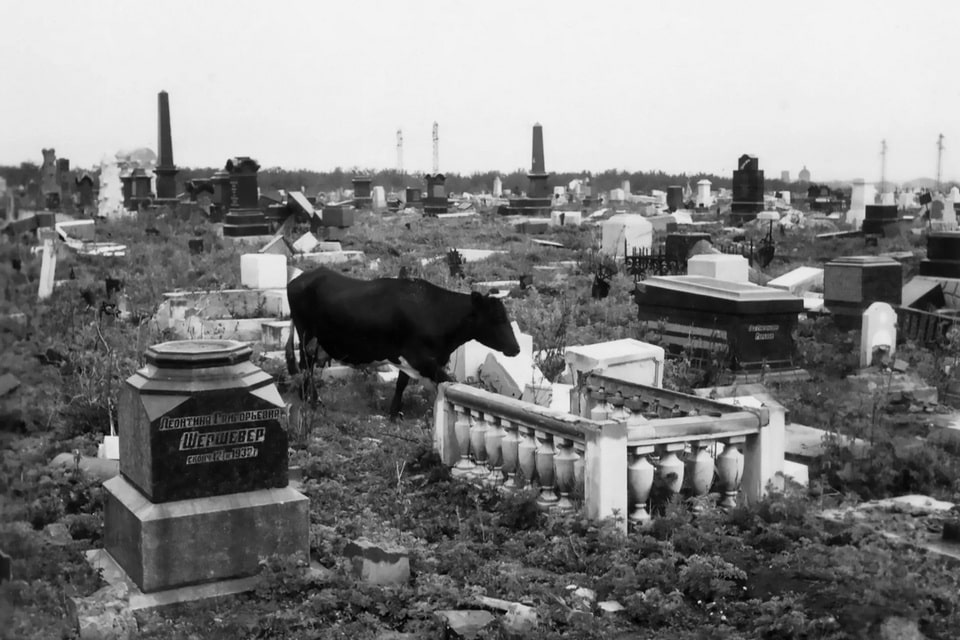
The process of killing the remaining Jews in Dnipropetrovsk continued after both the October massacre and the November cleansing operations conducted by Einsatzkommando 6 (EK6), when another 1000 Jews were reported killed until November 19, 1941. The larger part of the remaining Jewish population, especially those registered during the census or the SD stamping procedure, and those from the left bank of the city, were killed in the period between December 1941 and May 1942. At this stage, the key executioners were from the so-called ‘Mordkommando Plath’ (Plath’s killing squad), unofficially named after its commander, SS-Hauptsturmführer Karl-Julius Plath (1910-1943) from Hamburg. The official name was ‘Kommando beim Befehlshaber des rückwärtigen Heeresgebietes’ (Command to the commander of the rear army area) and the later euphemism was even longer: Kommando des Beauftragten des Chefs der Sicherheitspolizei und des SD beim Kommandierenden General der Sicherungstruppen und dem Befehlshaber des Heeresgebietes Süd (Command of the representative of the head of the security police and the SD to the commanding general of the security forces and the commander of the southern army) The unit was formed on the base of EK5 and was subordinate to the Higher SS and Police Leader “South. One of the killing actions was conducted in December 1941 when around 150 Jews were shot near the cliffs over the Dnipro River.
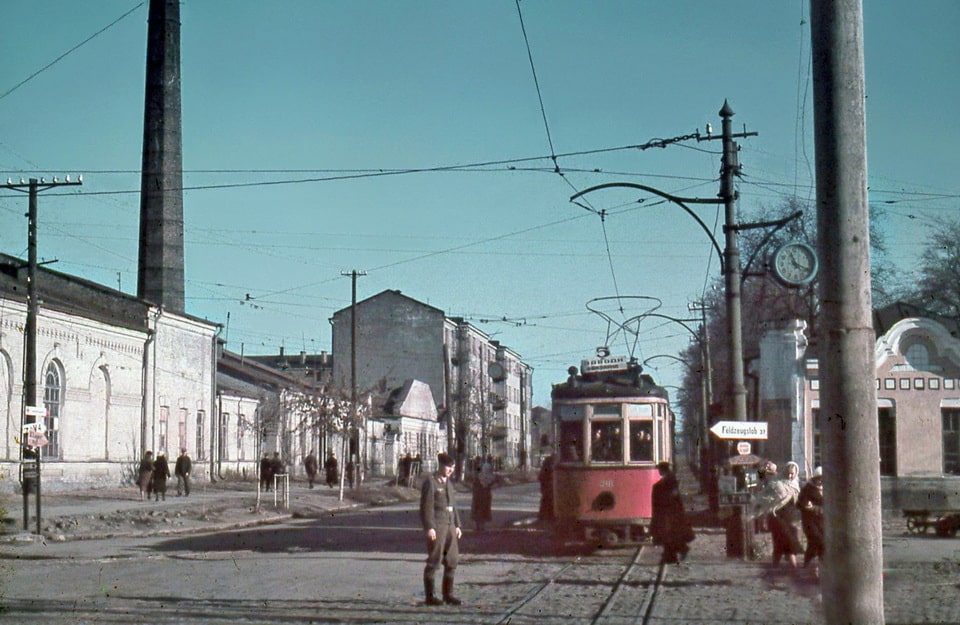
One of the last documented records regarding the murder of Jews in Dnipropetrovsk was the so-called ‘Ereignismeldung UdSSR 25.02.1942’ (The Einsatzgruppen Operational Situation Reports dated February 25, 1942). According to this document, between January 10 and February 6, 350 Jews in Dnipropetrovsk were shot, in addition to 103 Communist officials, 17 criminals, 16 partisans, and 720 mental patients. In March 1942, the local German commander prescribed the creation of a ghetto for 4-5 thousand Jews, probably to concentrate all surviving Jews from the whole region, but the plans never materialized, evidently due to the lack of identified Jews in the Dnipropetrovsk area. The Germans conducted another census in May 1942 on the right bank, which showed 151 923 compared to 177 619 in December 1941, among them only 377 Jews or 0.25%. The last occupational census conducted in May 1943 attested 173 533 citizens on both banks of Dnipropetrovsk, and not a single living Jew was recorded. After killing the remaining registered Jews during the winter months, toward the middle of 1943, Dnipropetrovsk was declared a ‘Jew-free’ city. Modern Ukrainian historiography calculated that from 17,000 to 21,000 Jews were killed in the city during the German occupation and up to 35,000 in the whole region.
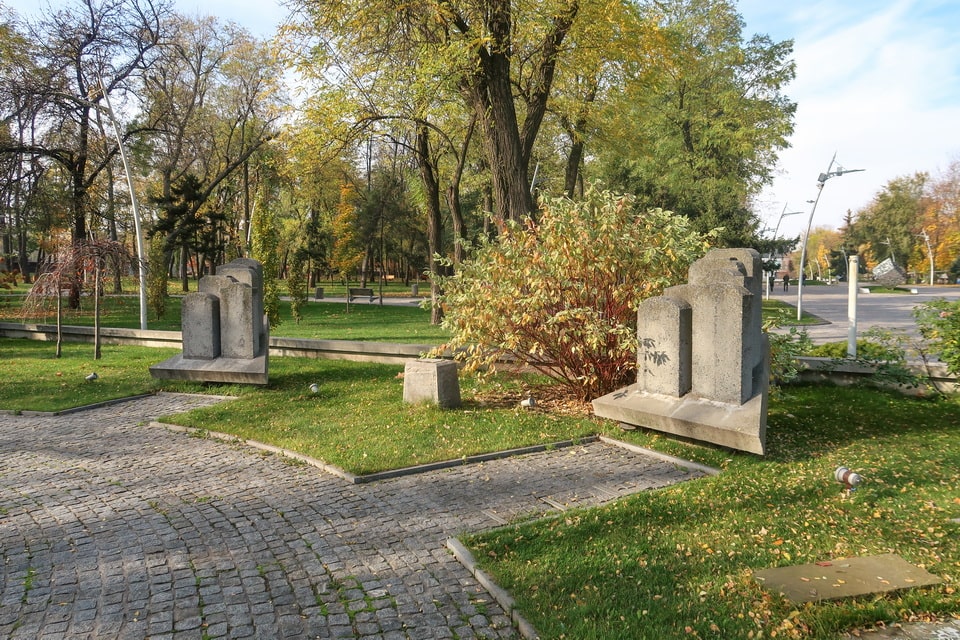
The fate of those Jews who, against all odds, managed to survive the Nazi occupation became one of the most vivid manifestations of resistance to the Nazi “new order”. While many books on the Holocaust contain mentions of Ukrainians and representatives of Baltic countries as willing collaborators and guards at the death camps, it was the case of thousands opposed to millions who fought against Hitler’s regime. More than 7.5 million Ukrainians fought in the Red Army, 100,000 in the Ukrainian Insurgent Army, 260 000+ in Allied armies (120,000 in the Polish Army, 80,00 in the U.S, army, 45,000 in the Canadian Army, 11,000 in the Czechoclovak military units, and 6,000 in the French army and underground), of which 3 to 4 million died, apart from 5.5 million civilians who perished. Two and a half million Ukrainian soldiers were awarded medals and military decorations. Around 20% of all people who gained titles The hero of the Soviet Union, 2,069 were Ukrainians.
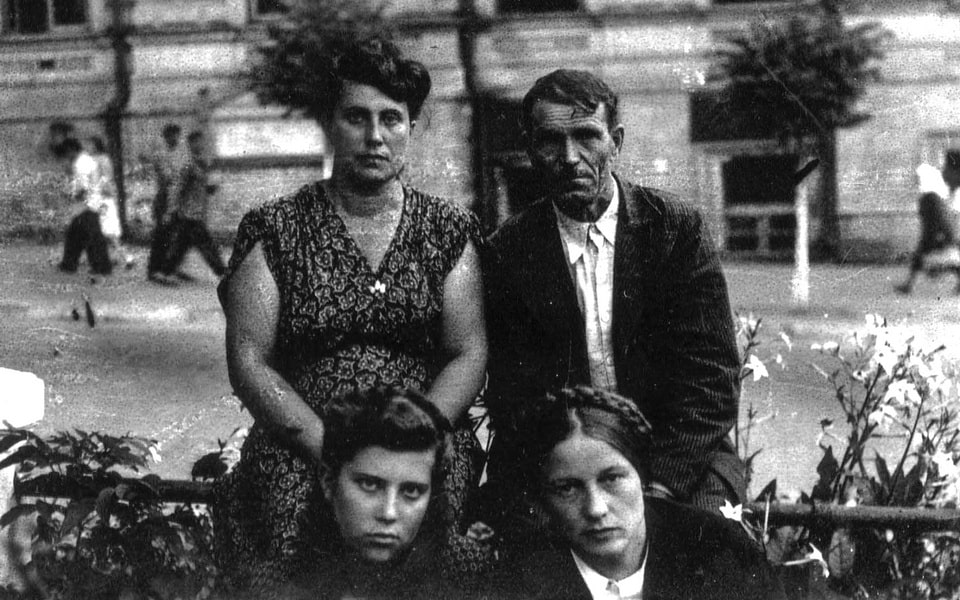
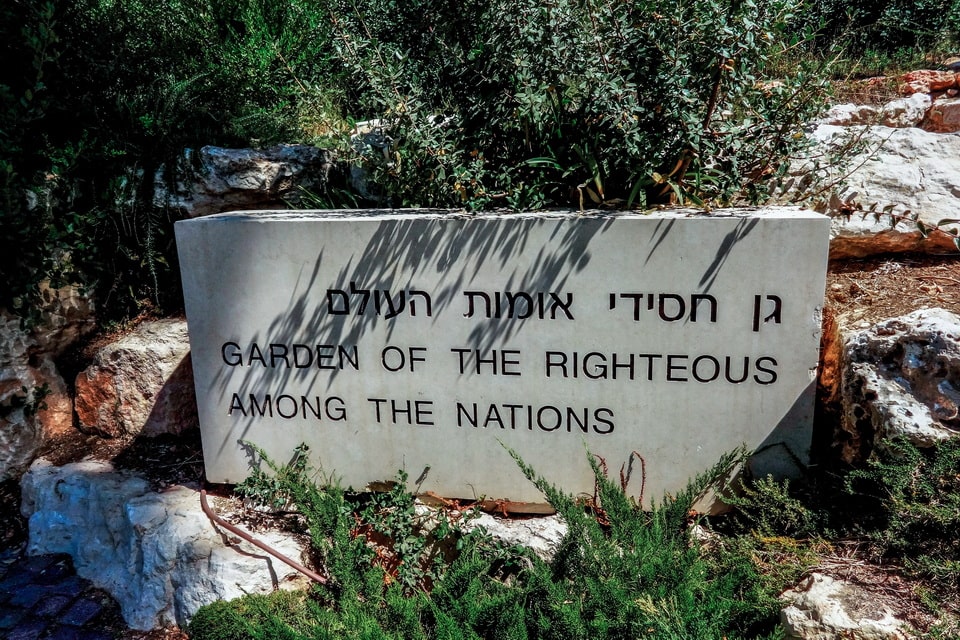
2.4 million Ukrainians were deported for forced labor to the Reich, of which at least 400,000 died. More than 700 cities and 28,000 villages were destroyed. Ten million people became homeless or lived in the damaged buildings. Ukraine suffered 42% of all USSR economic losses in the war. When it comes to the Holocaust, 2707 Ukrainians became Righteous Among the Nations for saving Jews: the fourth largest number in Europe after Poland, the Netherlands, and France, while around 1.5 million Jews in Ukraine died. Unfortunately, due to the Soviet regime (the diplomatic relations with Israel were cut off until 1985), the real search for Ukrainian Righteous Among the Nations became possible only in the 1990s, when many of them had already passed away, so the real figure is much higher, including those 24 known in Dnipropetrovsk.
DNIPROPETROVSK UNDER OCCUPATION 1941–1943: ADMINISTRATION, EXPLOITATION AND LIBERATION (OCTOBER 25, 1943)
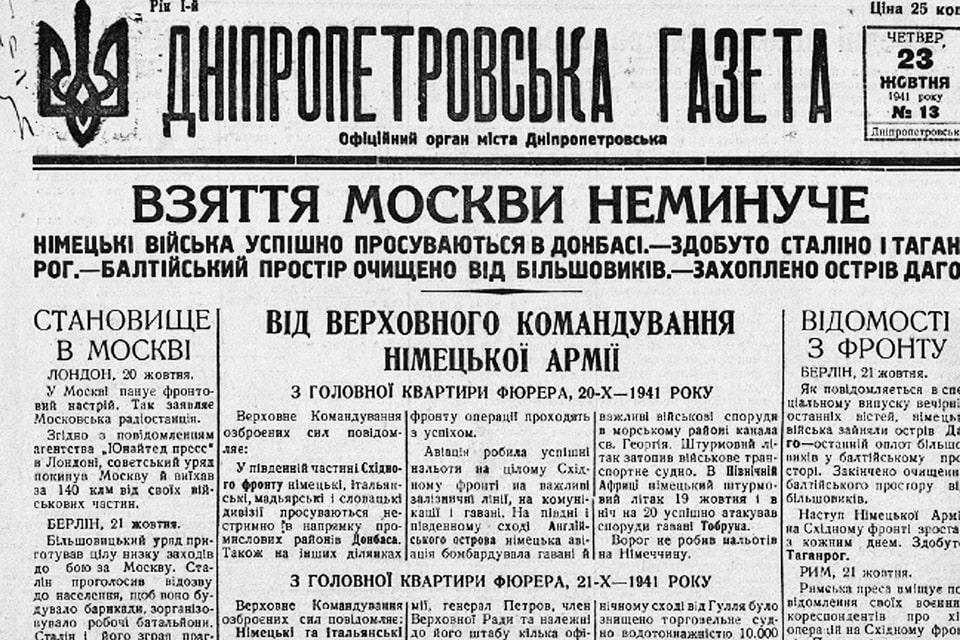
Even though the population of Dnipropetrovsk significantly decreased in the first months of the war and after occupation, from 528 to only 240 thousand people, the German occupants’ agenda did not include ensuring normal living conditions (not to mention the development) of cities with a large population in the occupied Eastern territories. In his letter to Alfred Rosenberg dated July 23, 1942, the infamous Martin Bormann, Chief of the Party Chancellery and Hitler’s secretary, stated that ‘’In no case should the cities be rebuilt or Germans engaged in their development’’. At the same time, securing an order implied a multi-layered administration system. Under the Nazis, Dnipropetrovsk and a part of Zaporizhya regions comprised one of five ‘Generalbezirke’ (General regions as a part of the so-called ‘Reichskommissariat Ukraine’), ruled by Generalkommissaren (General Commissar), a position similar to the Gauleiters in the Third Reich.
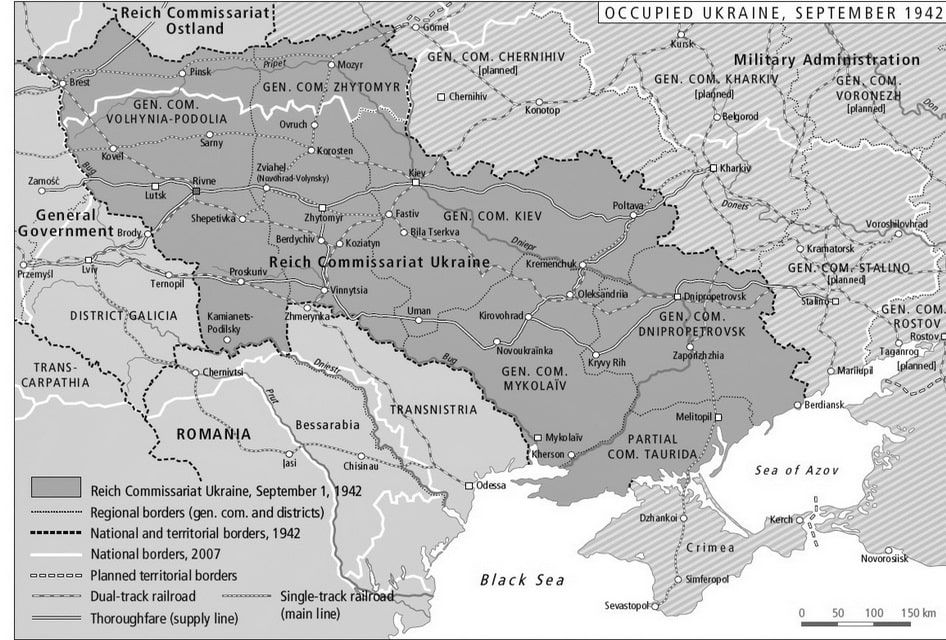
Nikolaus „Claus“ Selzner (1899-1944) was appointed ‘Generalkommissar von Dnjepropetrowsk’ (General Commissar of Dnipropetrovsk) on September 1, 1941, when the battle for the city continued. A veteran of the First World War, Selzner became an early Nazi supporter in 1924 and became an NSDAP member in 1925 (membership number 24, 137), and joined the SS in 1936. In addition, Dnipropetrovsk was one of five cities in the Reichskommissariat Ukraine with the status of a separate administrative unit, ruled by a Stadscommissar. Because of its prewar important status as a railway junction, Dnipropetrovsk was turned into a transport and logistics hub for the Wehrmacht in the East. After the occupation, the Germans set up a puppet city administration under Petro Sokolovskyi (born 1896). Before the War, he occupied a management position in a local branch of the Institute of Urban Design and Development. With the beginning of the Nazi occupation of Dnipropetrovsk, Sokolovskyi volunteered to cooperate with the German authorities and was appointed to the position of head of the newly formed city administration. At the initial phase, this collaborative city administration ruled only the right-bank part of the city, and after the first quarter of 1942, extended its authorities to the left-bank part. They were motivated by extra ration and goods distribution and threatened with death in case of violation of orders. The body consisted of thirteen departments, and its staff numbered five hundred people.
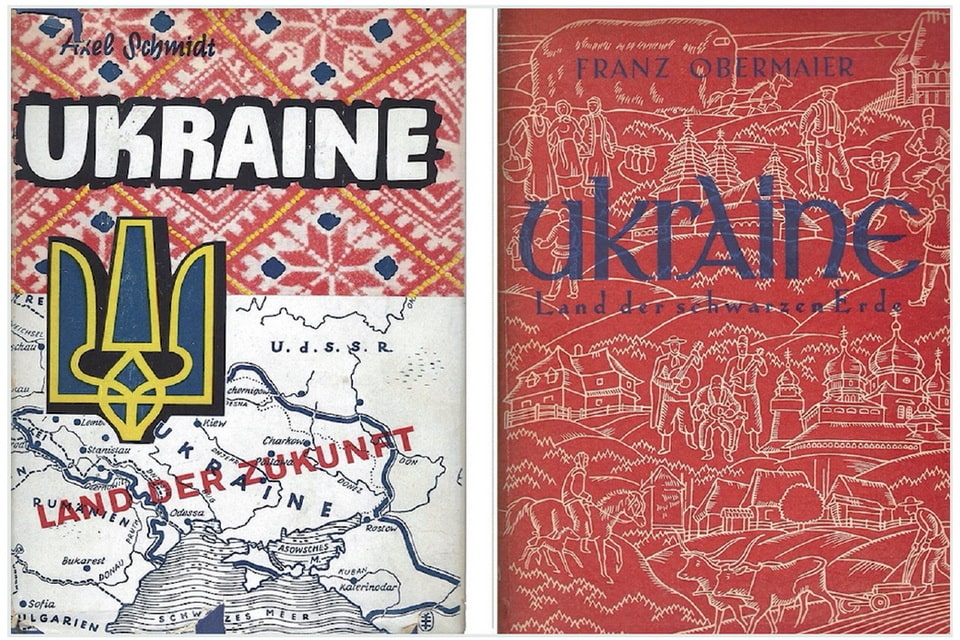
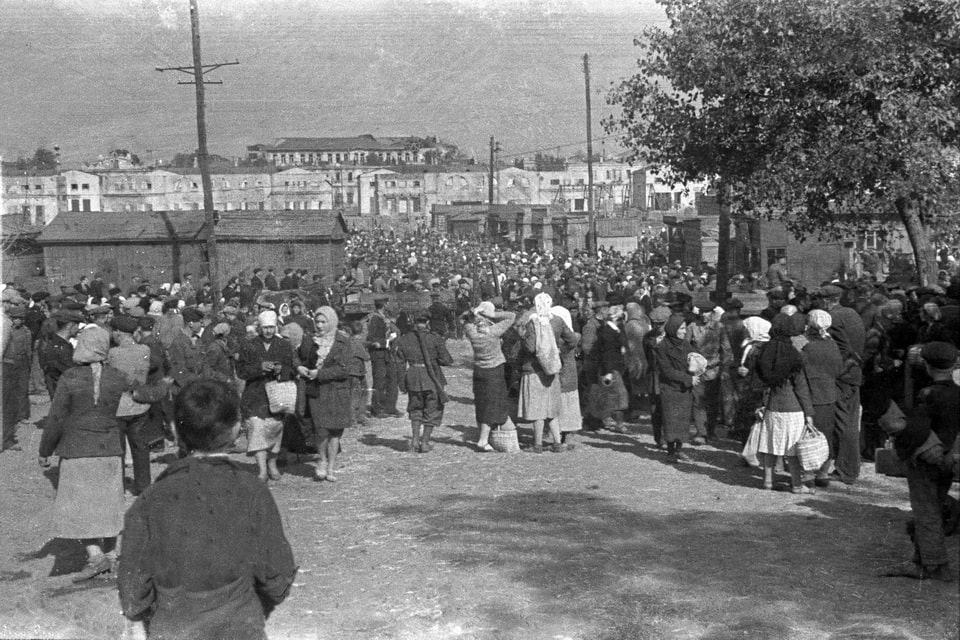
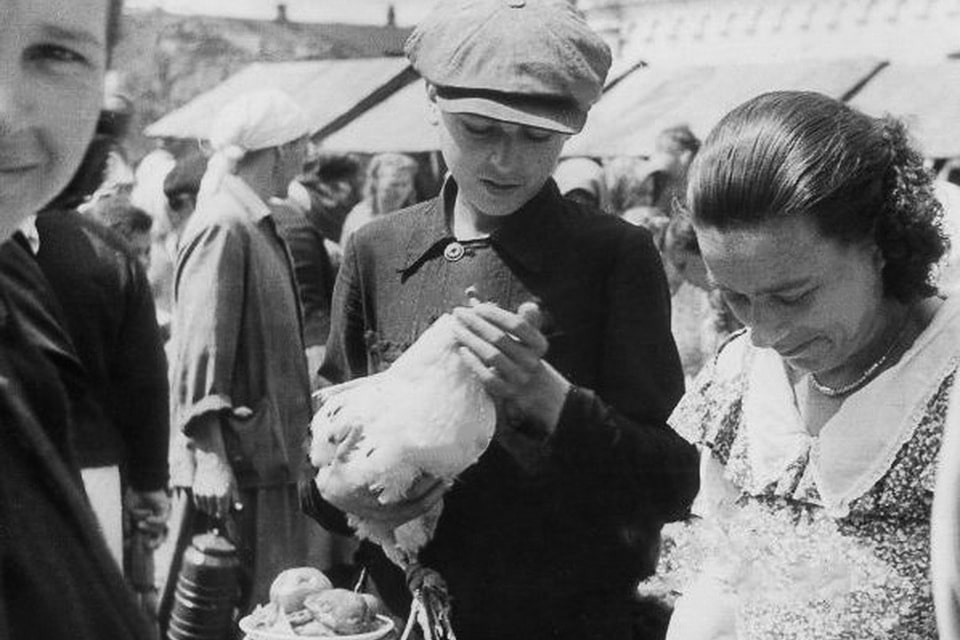
After the failure of the 1941 Blitzkrieg and the continuation of the war of attrition, the Nazis faced the necessity to restore industrial capacities in the occupied Eastern territories. The following industries were primarily subject to reconstruction: energy, coal mining, oil refining, transport, textile, construction, woodworking, and machine building. All raw materials and products should be used primarily for restored plants and factories, and the remainder should be sent to Germany. Despite the involvement of all able-bodied people from 18 to 45, the production volume of the newly rebuilt industry by the occupiers was insignificant, especially compared to the prewar capacities. Among the reasons were the damage to industry during the fight for Dnipropetrovsk in August-September 1941, the evacuation of the most valuable equipment to the east of the USSR, the disabling of mechanisms and industrial infrastructure during the Soviet retreat, the lack of a sufficient number of qualified workers, the sending of the able-bodied population to Germany, unwillingness to work without adequate remuneration, and deliberate sabotage by the employees of these enterprises. Several German industrial giants worked in the Dnipropetrovsk region or created filiations:
- ‘Brown, Boveri & Cie‘, a Swiss electric engineering company (had subsidiaries in Germany during the Nazi era);
- ‘Felten & Guilleaume’ cable manufacturing and electrical engineering company based in Cologne;
- Siemag Siegener Maschinenbau GmbH metallurgical and rolling mill technology from Düsseldorf.
- Mannesmannröhren-Werke AG, a steel group based in Düsseldorf, which used forced laborers from 1940;
- Mitteldeutsche Stahlwerke AG, a steelwork conglomerate of companies, was absorbed by the Nazis in 1933 and later incorporated into ‘Reichswerke Hermann Göring’.
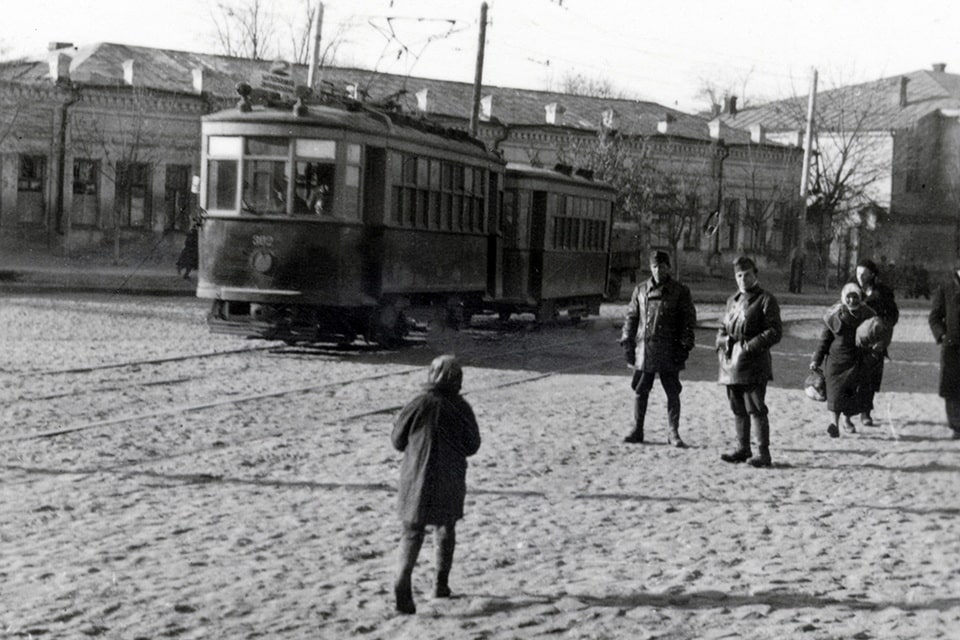
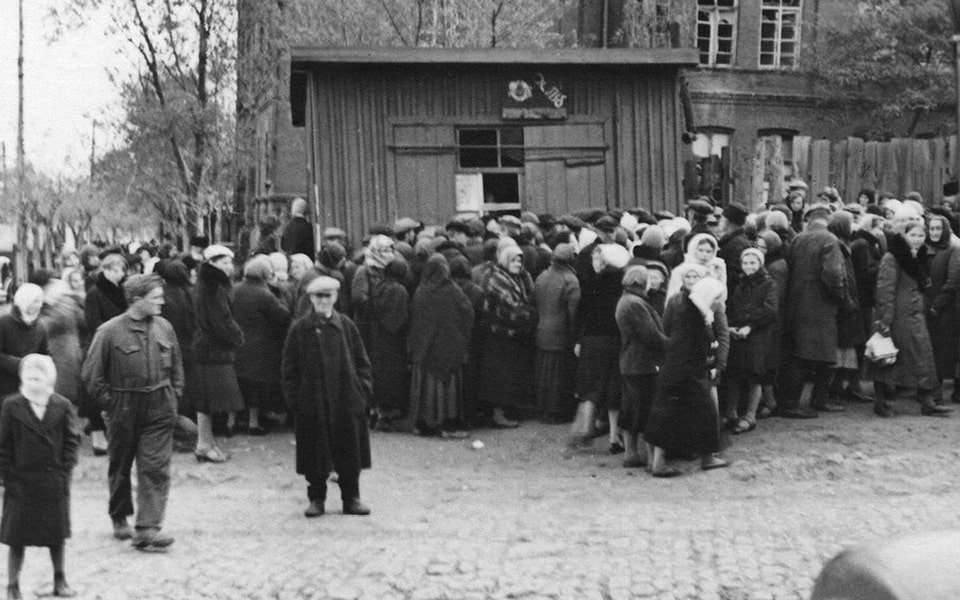
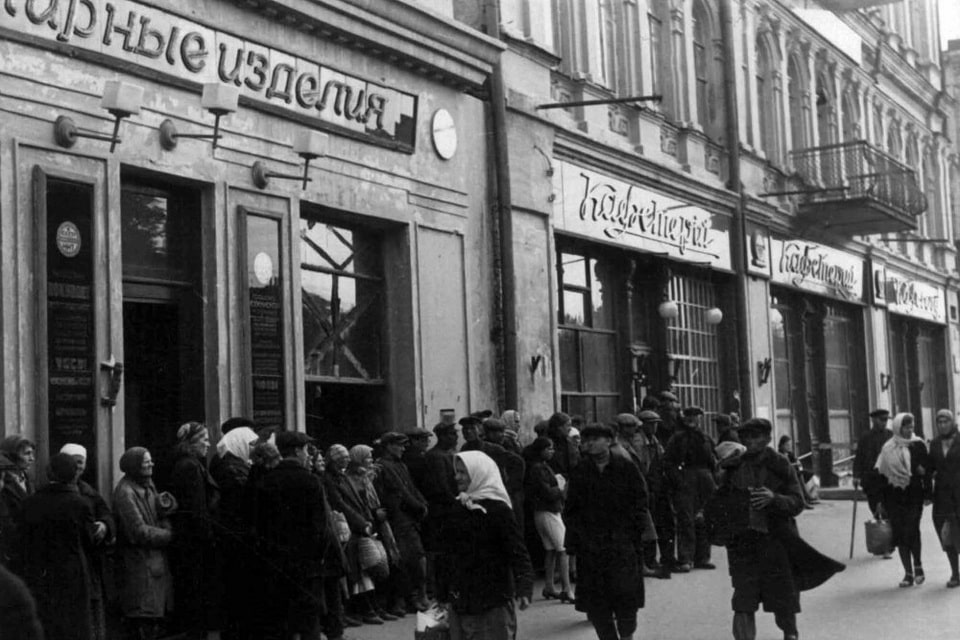
The task of restoring industrial capacities in Dnipropetrovsk demanded a partial restoration of the city infrastructure for purely economic reasons, without concern about the living conditions of people. One of the issues of occupational concern was the control of the epidemic situation in the city. Only fifteen medical institutions were open during the 1941-1943 occupation, with only 241 practicing doctors (November 1942): a small share compared to the pre-1941 healthcare levels. The most urgent problem in the city and the most challenging page of the occupation of Dnipropetrovsk was malnutrition. The German occupiers were quite frank about their indifference to the problems of the survival of the local population. Even though the able-bodied population was covered by the labor obligation and received wages and food cards, this could not in any way satisfy all nutritional needs. Several restrictive documents of the local administration appeared, according to which the sale of food had a semi-legal nature, which only worsened the situation. In contrast to Ukrainians and Jews, the so-called ‘Volksdeutsche’ in the region temporarily got extended rights. The December 1941 census identified 2000 people from this category in the city, and later on, 5400 were concentrated in the Dnipropetrovsk region.
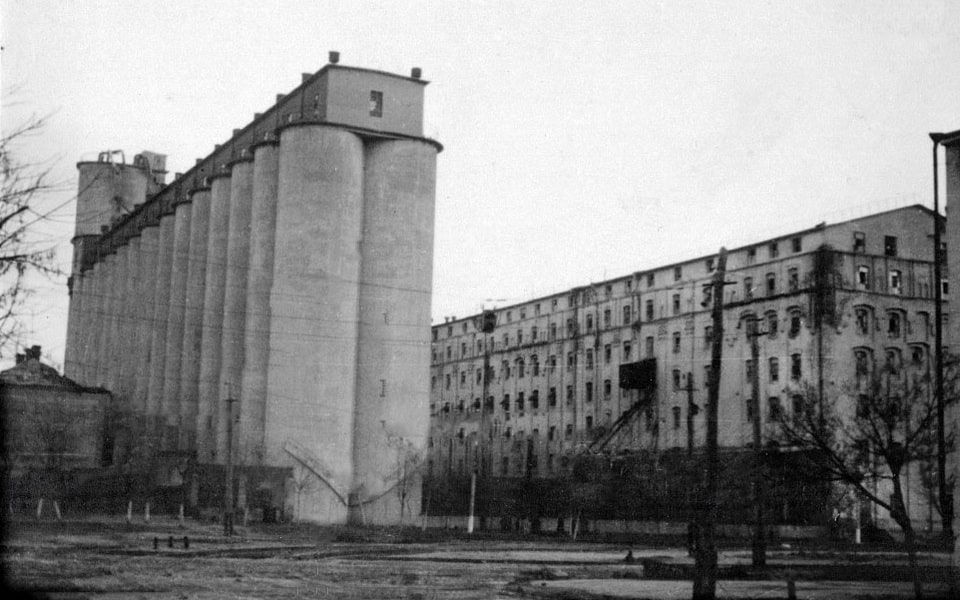
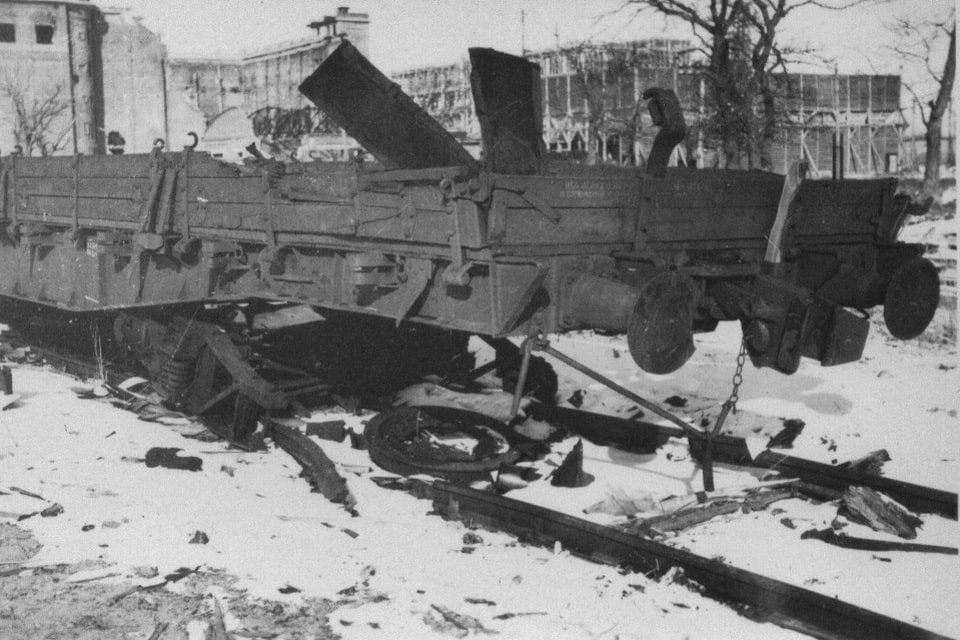
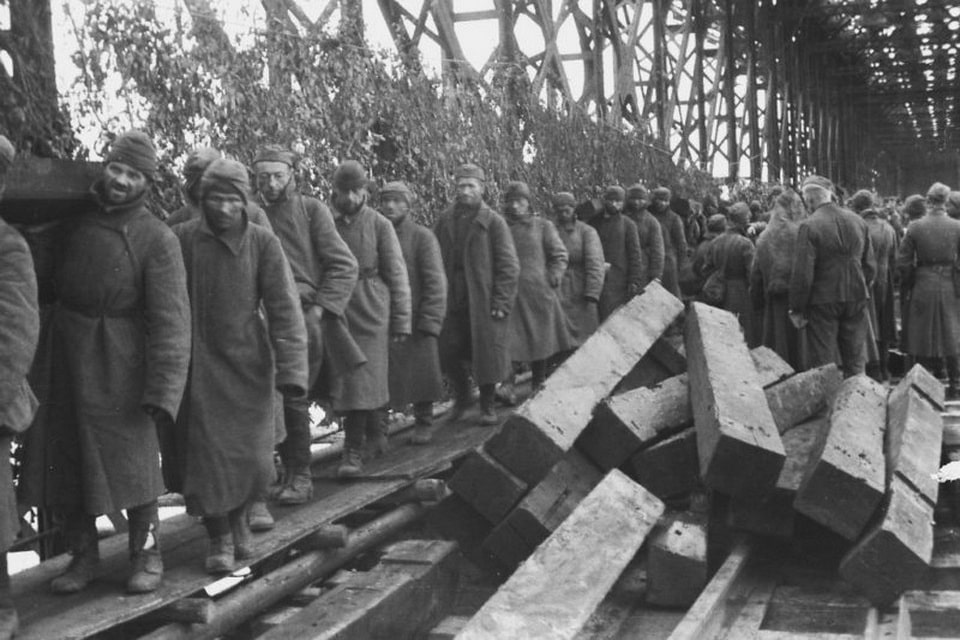
With all the restrictions, pressure, harassment, and famine among the citizens of Dnipropetrovsk, their life under occupation was more bearable than the fate of the Soviet prisoners of war. Starting from the summer of 1941, the Nazis formally justified their brutal treatment of Soviet POWs by the fact that the USSR did not sign the 1929 Geneva Convention on the Rights of Prisoners of War. Hitler’s regime had neither resources nor, which is much more important, a desire to keep millions of Red Army soldiers alive, which resulted in the hunger death of 3.3 million Soviet POWs in German captivity. There were several large camps of this kind in the Dnipropetrovsk area, of which the largest and deadliest was set up on the territory of the local sisterhood convent (modern Nadii Aleksieienko Street). According to the postwar investigation, up to 30,000 Soviet POWs died here from ‘unbearable living conditions’: poor food distribution, cold, the lack of any medical care, and forced labor. The help to escapees from such camps was threatened with death, and despite this, some locals helped POWs to hide.
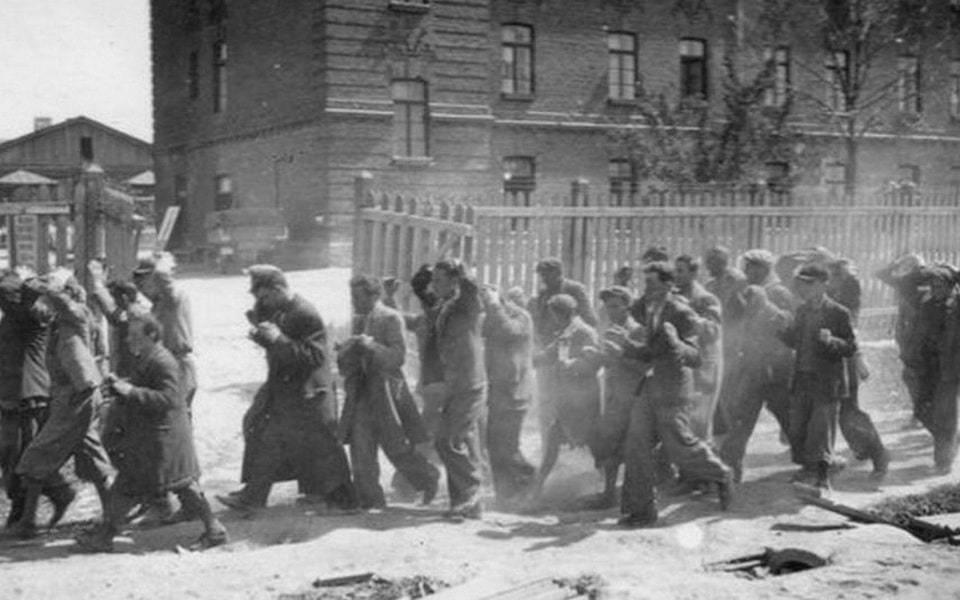
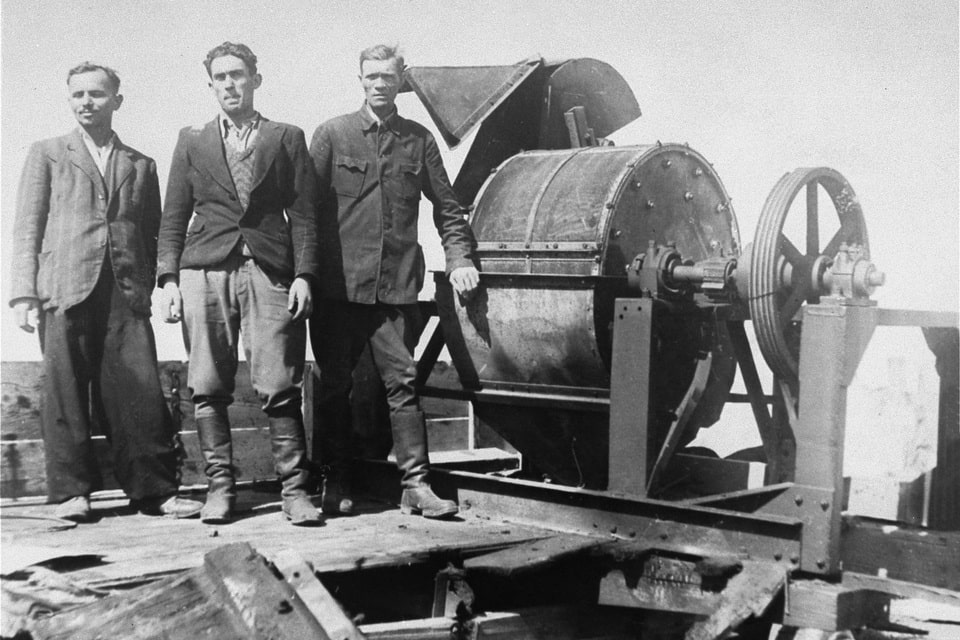
One of the reasons why the restoration of industrial capacities in the occupied territories failed was the process of forced deportation of the able-bodied population to the Old Reich. Every second, so-called ‘ostarbeiter’ (Eastern worker) deported from the USSR during the war, were taken from Ukraine: 2.4 million people in total. In the initial phase, the move was more or less voluntary, and people volunteered because of hunger and German propaganda images regarding bright prospects for life and work in the Reich. Mobile propaganda exhibitions were held, and color posters, brochures, newspapers, and postcards were distributed among the population. Potential labor migrants in Germany were promised good wages, free housing and medical care, and the opportunity to be the first to receive an allotment when collective farmlands began to be sold. As the war of attrition progressed, the occupiers began to satisfy the shortage of workers in the Reich by force. Indeed, the sending of young people to work in Germany was guaranteed, first of all, by violent measures. The implementation of the plan was often achieved through raids conducted in crowded places. According to the post-war estimates, up to 75,000 citizens of Dnipropetrovsk were sent to work in Germany during the war.
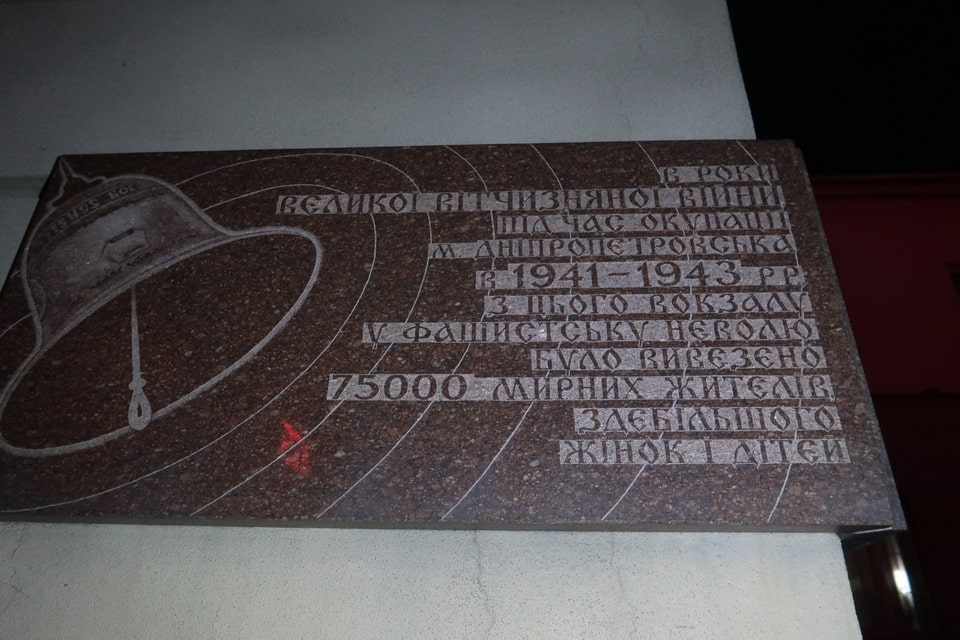
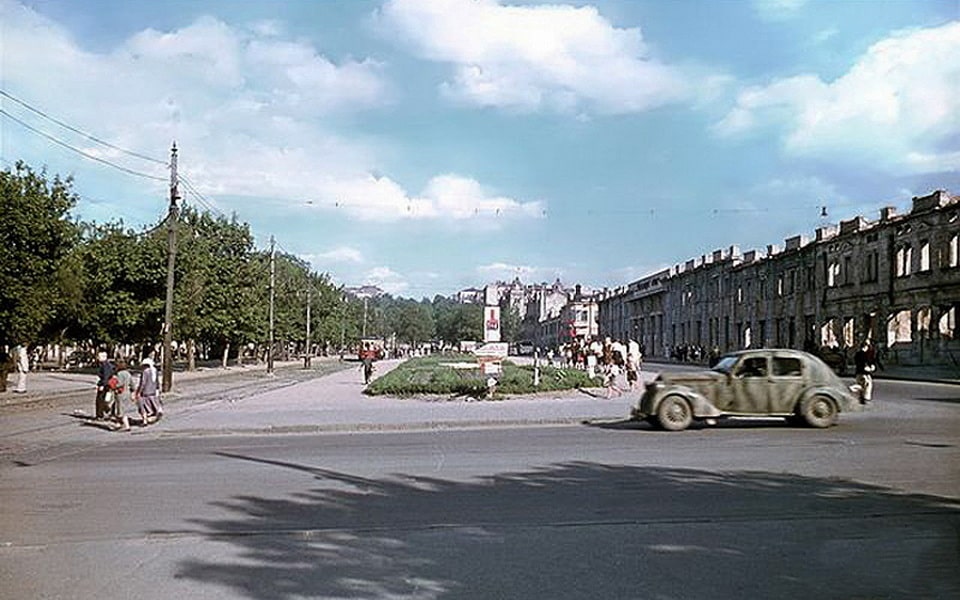
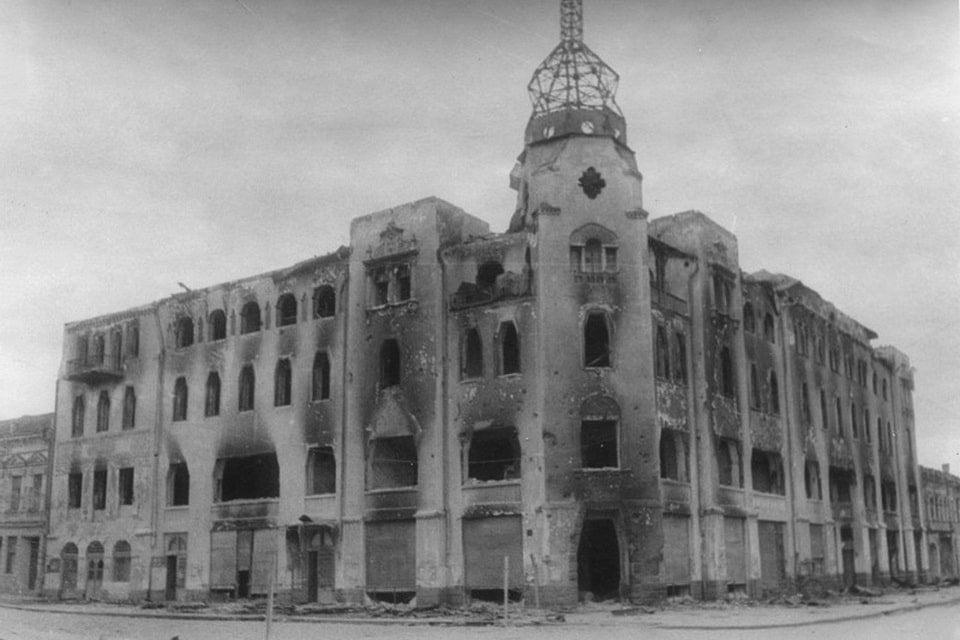
The elimination of traces of mass killings by the so-called Sonderkommando 1005b was not the only sign of the upcoming German retreat in the Fall of 1943. Hans-Adolf Prützmann (1901-1945), SS-Obergruppenführer and Supreme SS and Police Leader in Ukraine got an order from Hitler to apply the ‘scorched earth’ policy during the German retreat from the occupied territories. The idea was similar to the Soviet tactics in 1941-1942, though the Germans did not expect to come back again. Apart from the evacuation of the inmates of the camps to Germany in September, the Germans ordered the evacuation of all men in Dnipropetrovsk younger than 60 years old, which was later extended to the whole population, including women and children. The declared task was unrealistic, and most people preferred to hide and escape the forced eviction. The battle for the liberation of Dnipropetrovsk began in the second half of September 1943 and had several stages. On September 27, units of the 3rd Ukrainian Front liberated the left-bank part of the city. In almost a month, as a result of the Dnipropetrovsk offensive operation, with the assistance of units of the 2nd Ukrainian Front and fierce battles on the right bank, on October 24-25, 1943, the city of Dnipropetrovsk was completely liberated from the Germans. According to the post-war estimate, 187 multi-story, 1,345 low-rise residential buildings, and more than 5000 private homes were destroyed or badly damaged.
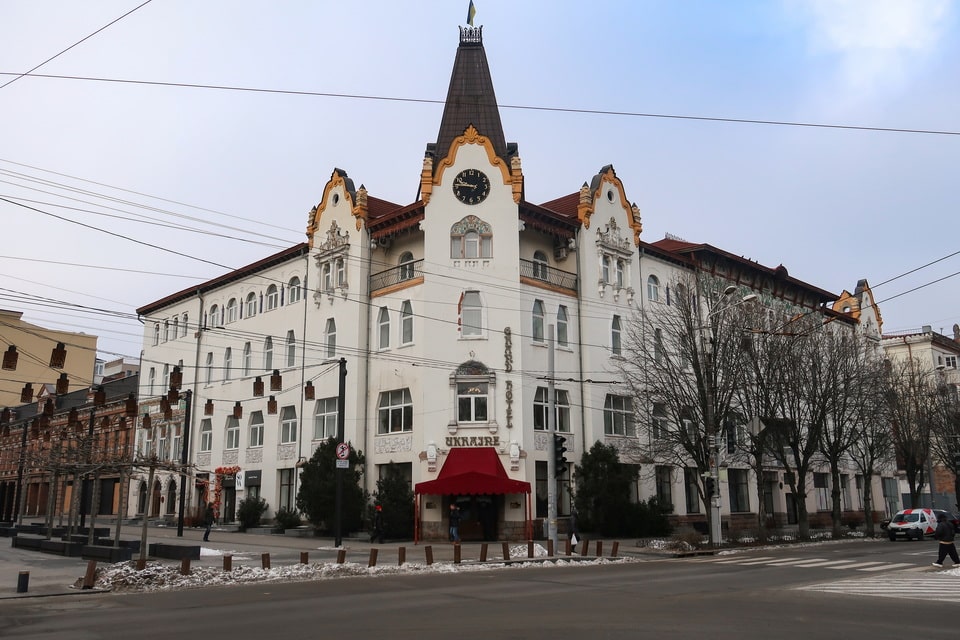
COMMEMORATION AND HOLOCAUST MEMORIALS IN DNIPRO: IGREN MEMORIAL, MENORAH CENTRE AND THE GOLDEN ROSE SYNAGOGUE TODAY
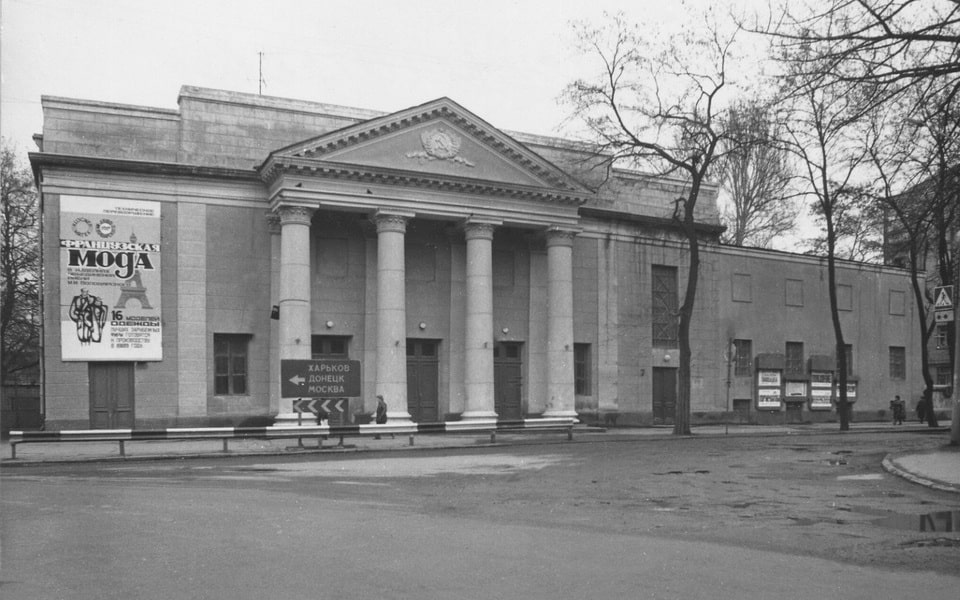
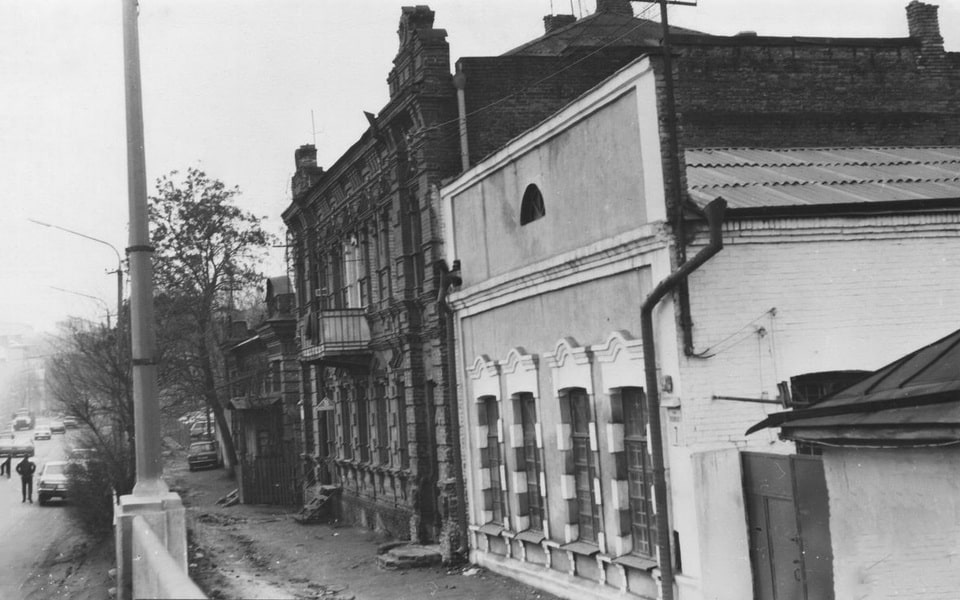
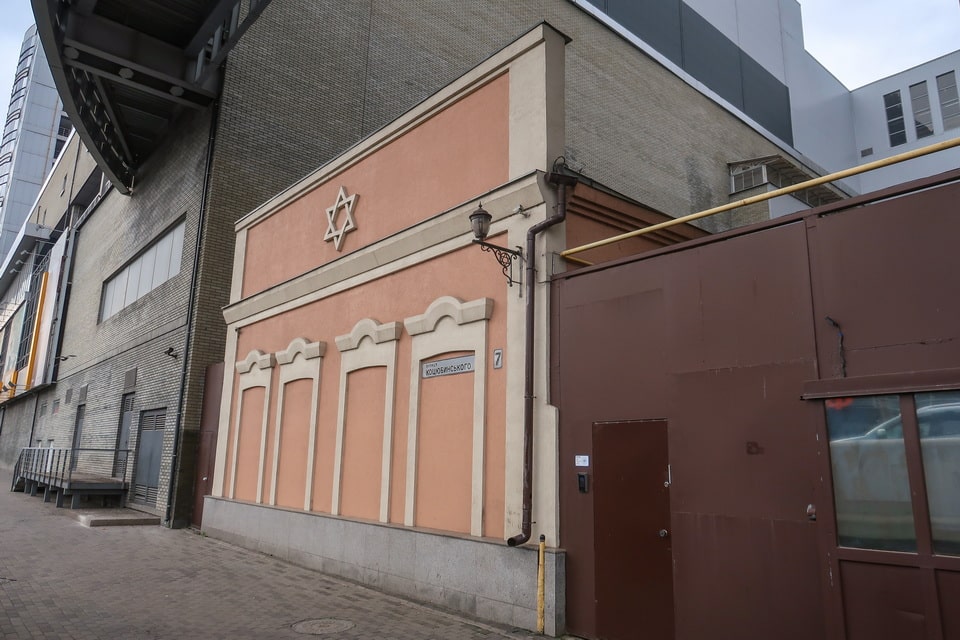
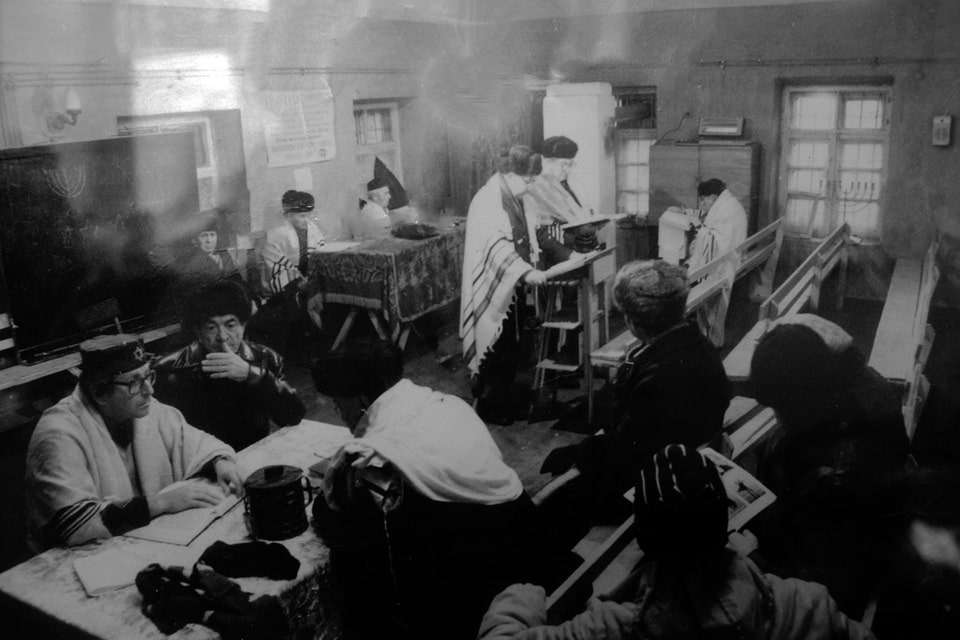
The end of the occupation did not bring peace and prosperity to Dnipropetrovsk, as the city’s infrastructure was badly damaged between 1941 and 1943. Even though the number of citizens significantly decreased, the lack of accommodation and food was an urgent issue in the first post-war years. When thousands of Jews, those evacuated in the summer of 1941 and Jewish men demobilized from the Red Army, found their way back home to Dnipropetrovsk, they often faced the situation that their houses were occupied. Despite the urgency to restore the industrial capacities, many Jews faced the challenges of getting their prewar positions back. The years of Soviet anti-Jewish propaganda and constrained attitude to those evacuated in 1941 created tension in the postwar USSR, deep in Stalin’s paranoid antisemitic campaign. In November 1945, Soviet authorities rejected the Jewish appeal to open a synagogue on Zheleznaya Street (which was closed by the communists in 1932 and turned into a municipal office) and instead were given a smaller building on Mykhailo Kotsiubynskoho Street, built in 1902. This synagogue of only 140 m2 thus became the center of Jewish life in the city for the next half a century.
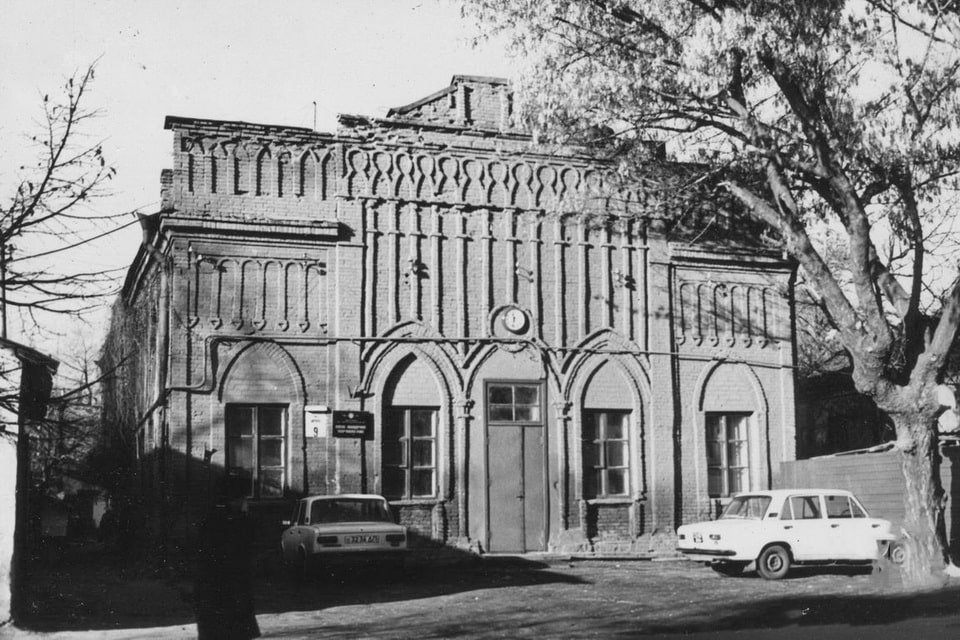
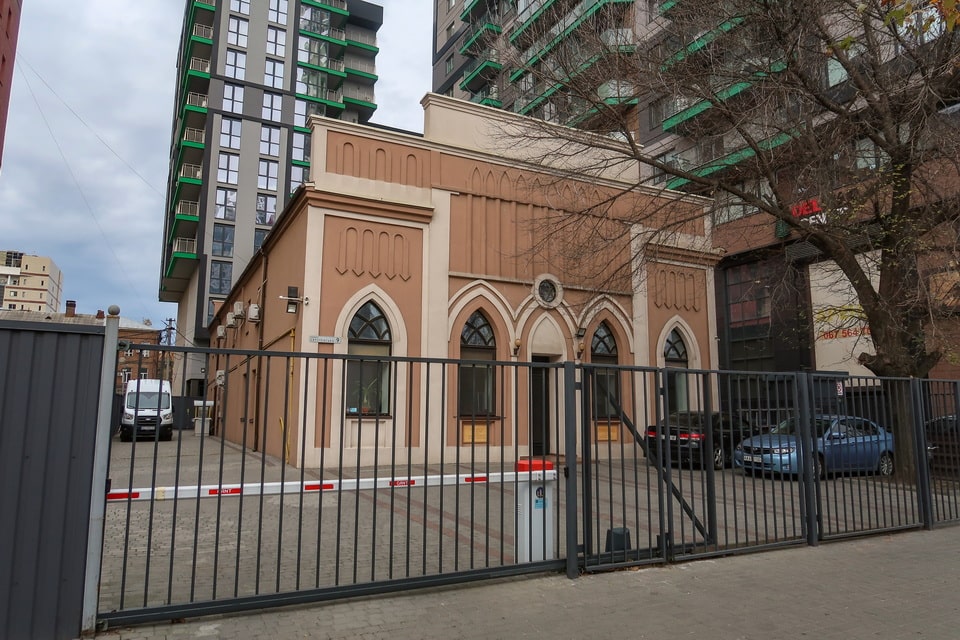
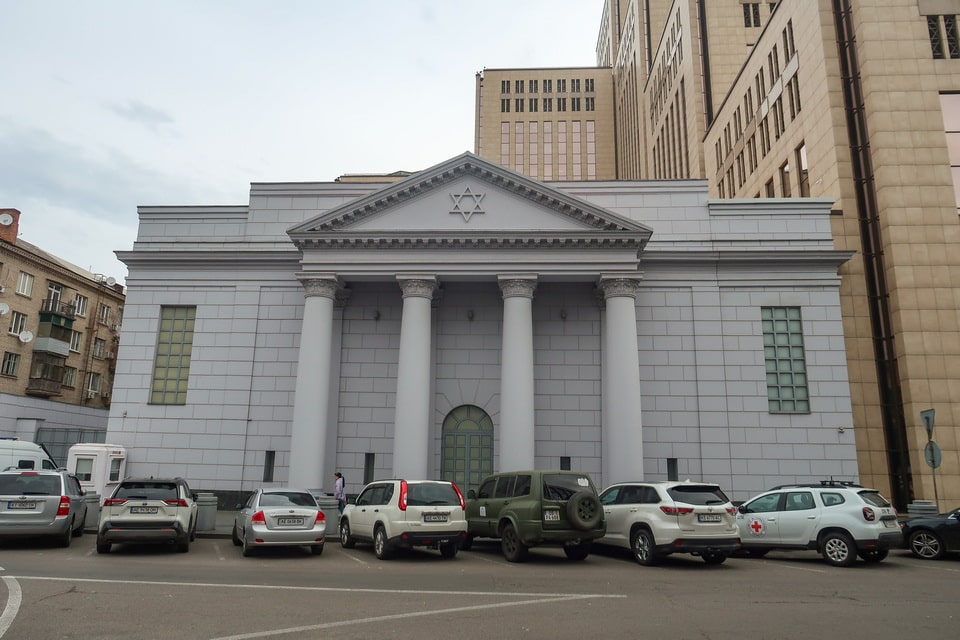
On paper, the Jewish religious community in Dnipropetrovsk was re-established on December 30, 1946, and in 1948, 12.7% of the region’s party members and 24.2% in the city were Jews. Dramatically, a new Soviet antisemitic campaign was unleashed in 1949. Any sympathy for the newly created Independent State of Israel was banned, and the authorities were zealous in rooting out any Jewish public organizations and groups inside the Soviet Union. Even though the campaign was put on hold after the death of Stalin in 1953, for decades, the Jews faced problems when applying to universities, administrative positions, and even some enterprises. Jews in mixed marriages preferred to register their children according to the nationality of their spouses. Another Soviet anti-Jewish campaign came in 1957. Against all odds, the Jewish population in Dnipropetrovsk rose to 53,400 in 1959, though no Jewish candidate participated in the elections to the Supreme Council of the Ukrainian SSR that year. In the 1970s, only one synagogue on Mykhaila Kotsiubynskoho Street was opened, and the Jewish population decreased to only 17,869 or only 3% in 1989, toward the end of the Soviet Union.
The proper memorialization of the victims of mass executions had never been one of the priorities of the Soviet regime, especially the commemoration of hundreds of thousands of Soviet Jews. In Dnipropetrovsk, the nature of the killing sites in the Botanic Garden, anti-tank ditch, Igren Mental Clinic, and other locations was investigated in 1943-1944 by ‘The Extraordinary Commission on Verification and Investigation of Acts of Atrocities of the Nazis’. Despite the Nazi effort to destroy the traces, the evidence was revealed in each of these locations. I have already stated the revelations of the anti-tank ditch with mass graves, layers of decomposed bodies, and human ashes. When it came to the ravine in the Botanic Garden, the Commission dug out a thick layer of bodies of elderly men, women, and children, who were killed approximately two years before (October 1941). A small brick sign was put near the ravine in 1945 with no mention of the Jewish victims, who were primarily victims here.
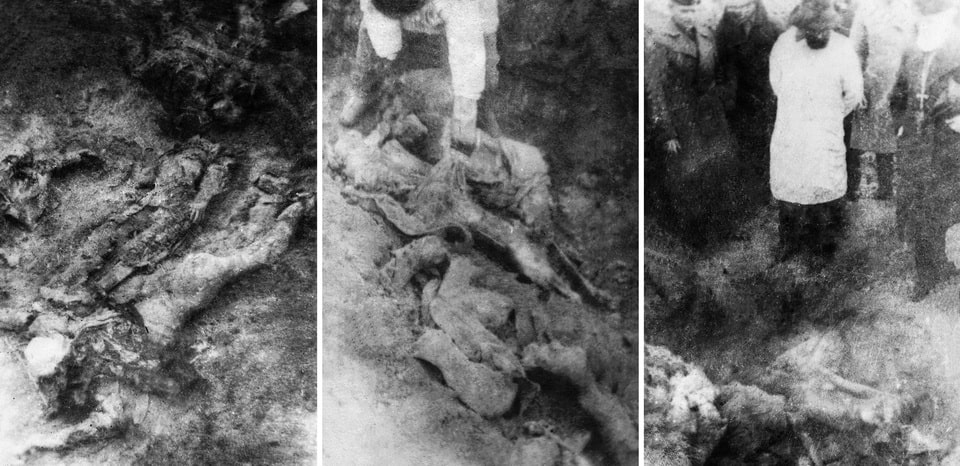
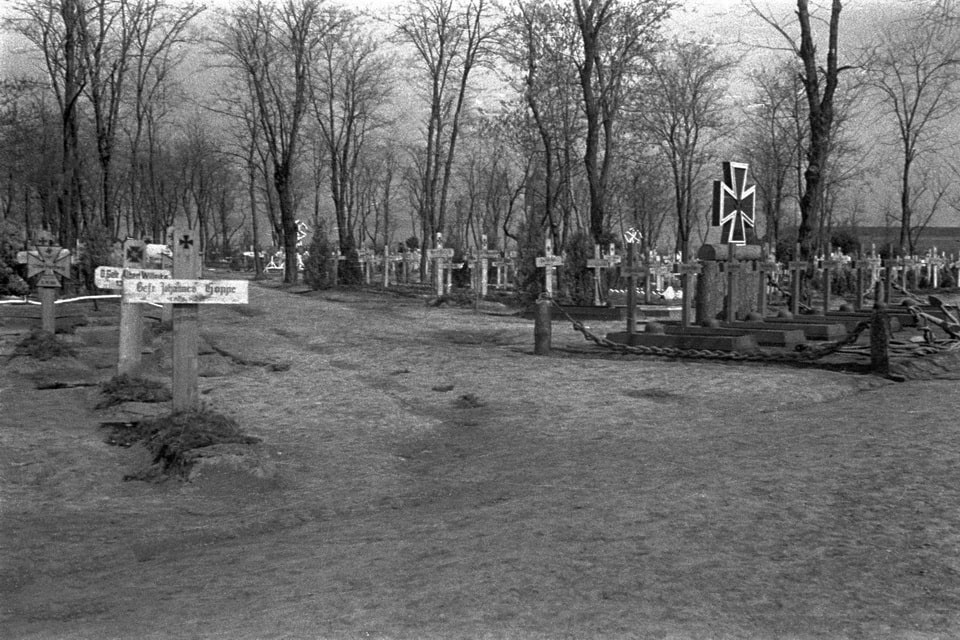
The criminal Soviet regime never expressed sentiments toward the cemeteries and places of commemoration, especially when they were in the way of urban development. In Dnipropetrovsk, none of the old city cemeteries dating back to the XVIII-XIX century outlasted communism. The large city cemetery with more than 100,000 burials was leveled and in 1936 replaced with a stadium, whose ancestor ‘Dnipro-Arena’ still exists nowadays on bones and ashes. Another old cemetery dating to the 1790s on the site of the oldest manufacturing area in the city became a military cemetery for thousands of German, Italian, and later Soviet soldiers killed in 1941-1943, and was turned into a park after the war. An old XIX-century cemetery with 10,000 burials of the soldiers of the 1853-1856 War was turned into a park in the 1950s. It should come as no surprise that such an inhuman approach to the burials did not keep Jewish cemeteries away from destruction, especially regarding Soviet antisemitism.
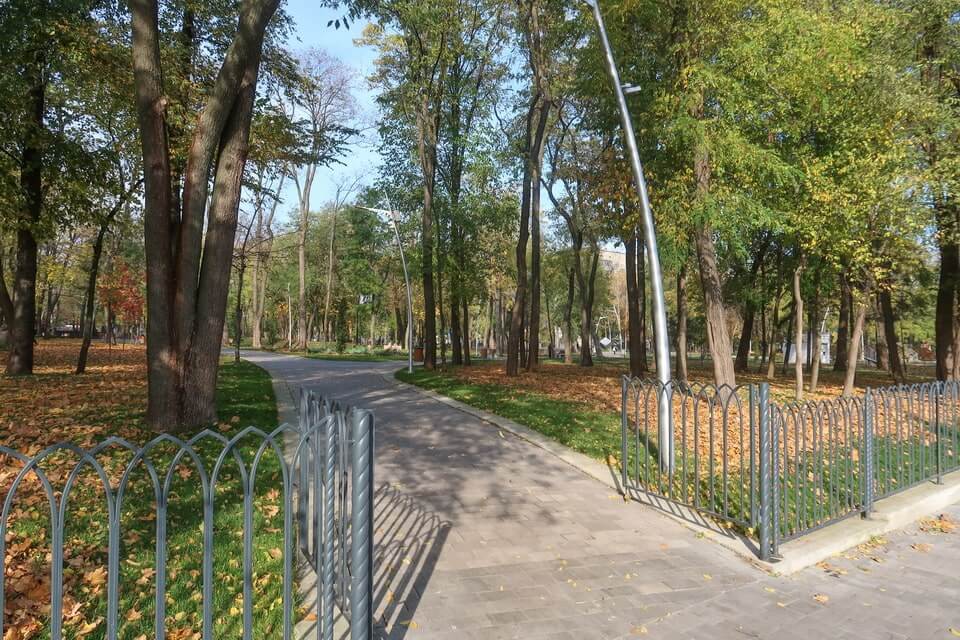
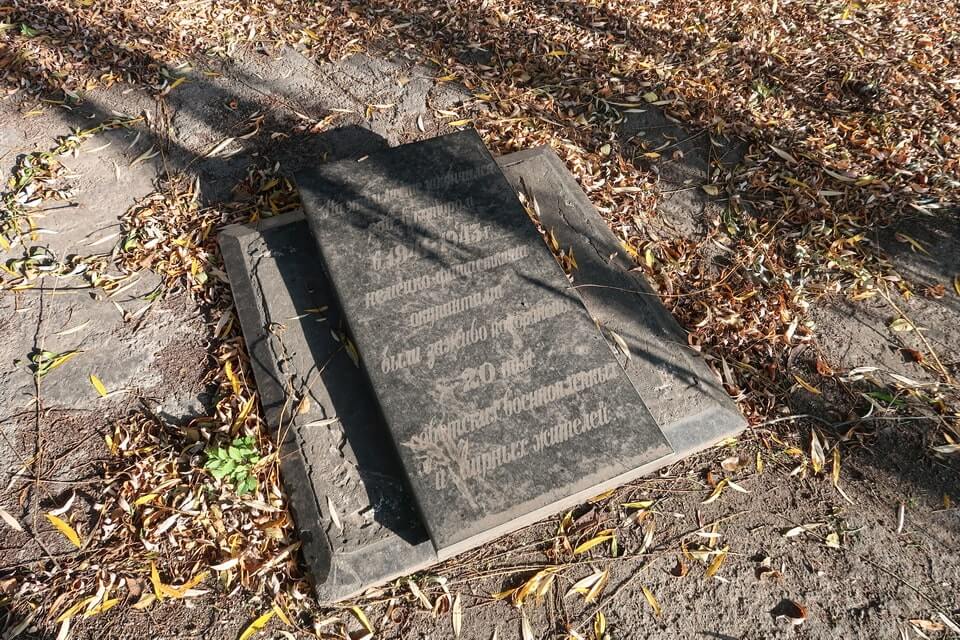
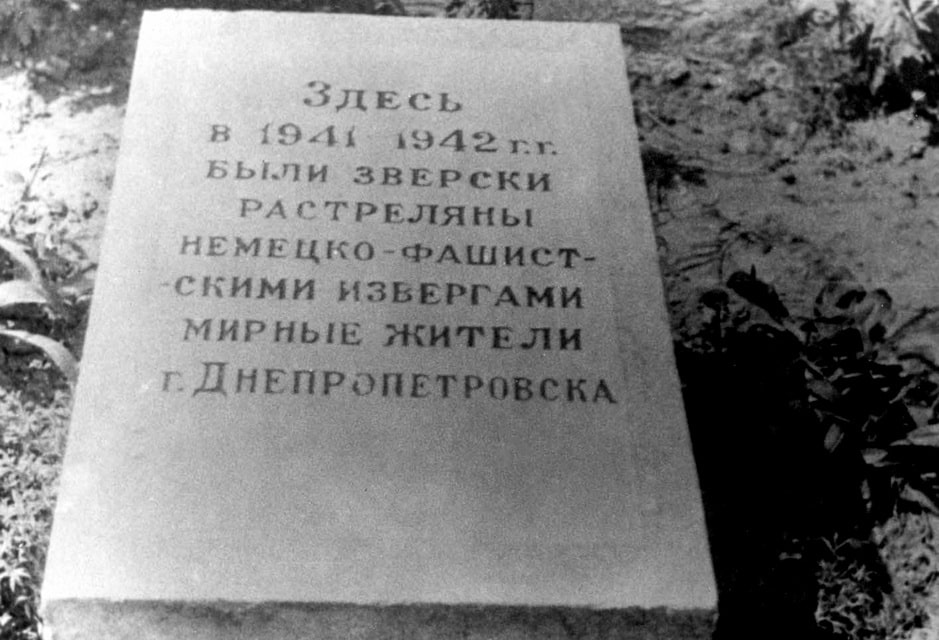
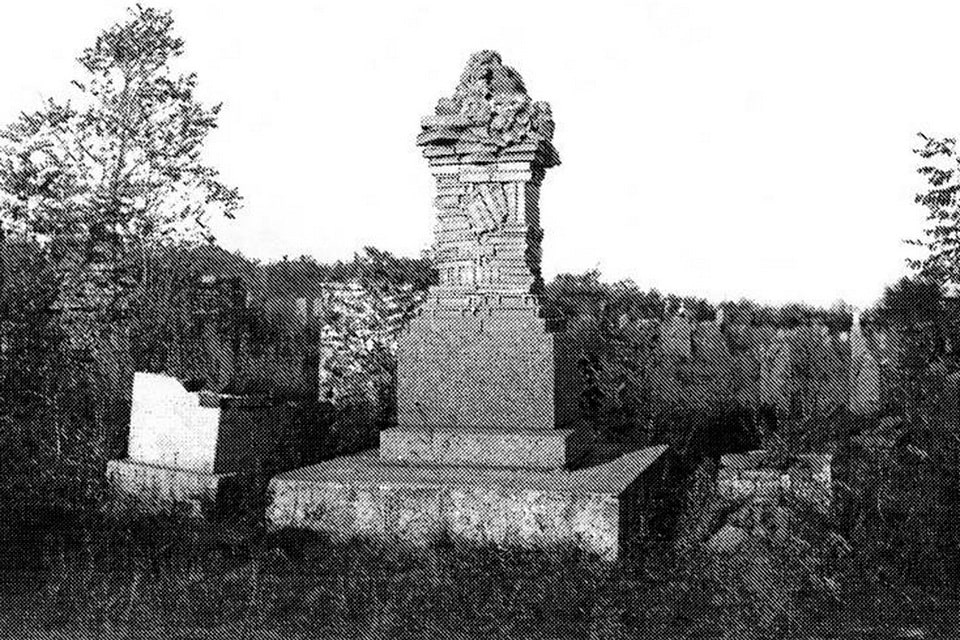
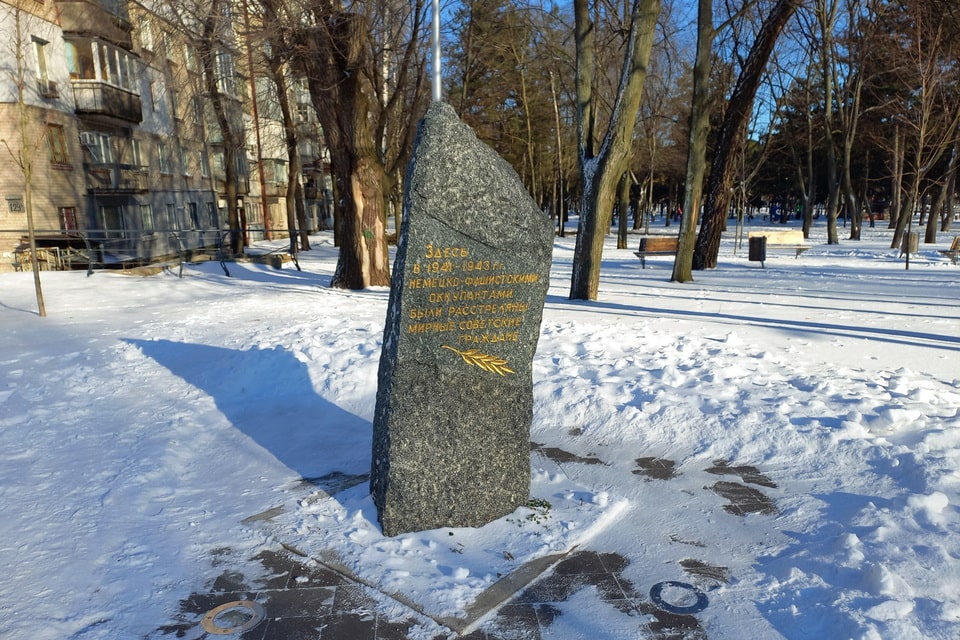
The Old Jewish cemetery from the early XIX century (the land was designated in 1839) in the city center was leveled to the ground in 1947 and built with residential houses on the site of the former 90,000 Jewish burials. The area with private houses still exists nowadays, with no sign of the former resting place of tens of thousands of Jews. The New Jewish Cemetery, next to which the columns of Jews passed on October 13-14, 1941, was located beyond the city limit at that time and appeared to be surrounded by a new city residential district in the 1960s. It was leveled to the ground, and a new Pisarzhevsky Park was created on its territory. Several dozen garages for private cars were put above the former burials next to the park. A small stone stele was up next to the main alley with an inscription: ‘’Here, in 1941–1943, peaceful Soviet citizens were shot by German-fascist occupiers.” Two details should be mentioned. The Nazis indeed shot some people on the territory of the New Jewish cemetery, but the Soviet sign probably referred to both the anti-tank ditch approximately 2 km away and the Botanic Garden. It is worth noting the tone of the inscription, with no mention of Jews as a category and the cliche ‘Soviet citizens’, a practice similar to Babyn Yar in Kyiv during Soviet times, and other locations.
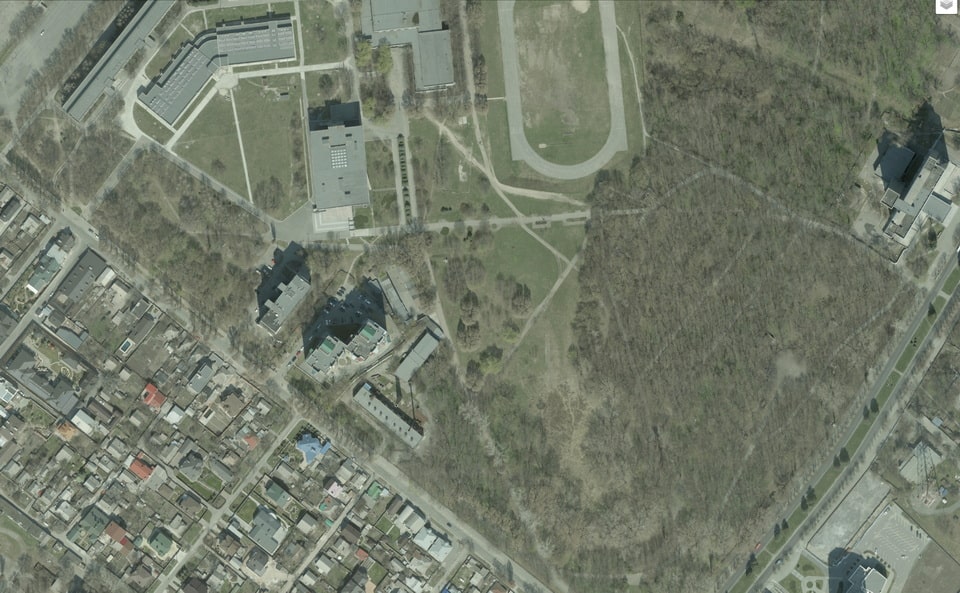
The primary site of mass killings of Jews in Dnipropetrovsk, the upper spur of the Krasnopovstancheskaya ravine (Dovga Balka nowadays) in the Botanic Garden, was also urban redeveloped after the war. In the 1970s, the National University, which continued to develop the Botanic Garden, built in the territory of the 1941 killing site with alleys, a complex of educational buildings, including a large library, and a stadium that still stands on the site of the former upper spur of the ravine. The elevation difference nowadays still serves as an evident indicator of the former terrain where 11,000 Jews of Dnipropetrovsk were buried. The first centralized sign was put on a hill above the stadium as late as 1974 with the usual neutral inscription: ‘’To peaceful citizens, victims of fascism. October 1941. The representatives of the Jewish community were not invited to participate in both the creation and the opening of the stone slab. Everything about the appearance of the monument indicates that it was intended to be inconspicuous: the color (gray), the design (a rectangle without any additional details), the location (on the side of a pedestrian alley that led from Gagarin Avenue to various buildings of the university) and, of course, the text is so laconic and non-specific that an empty plate would look more eloquent.
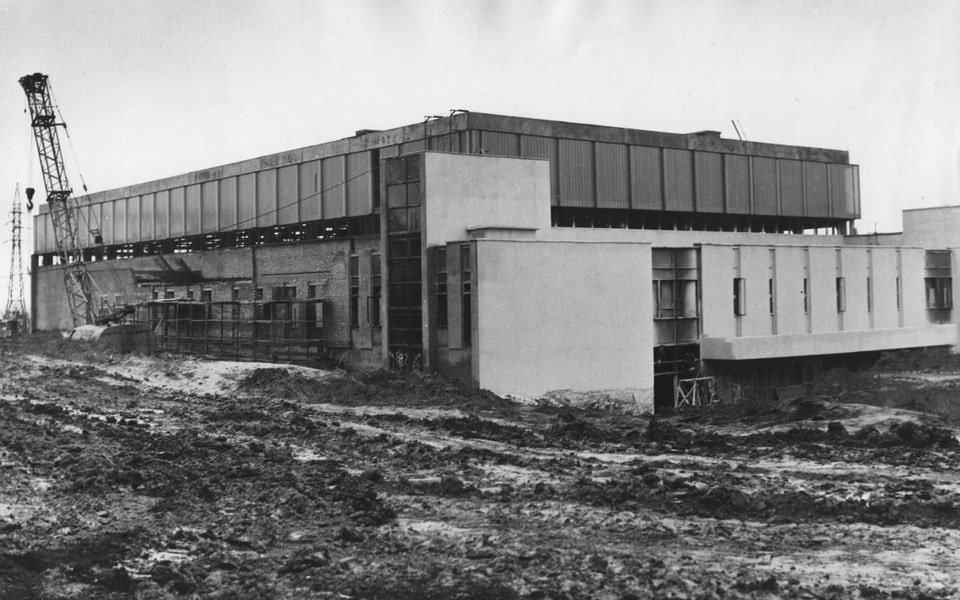
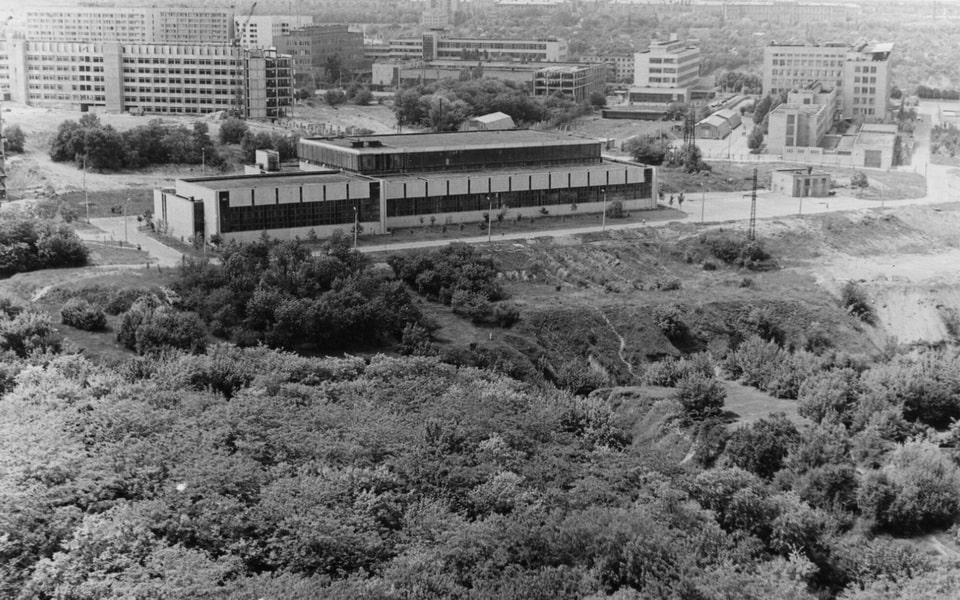
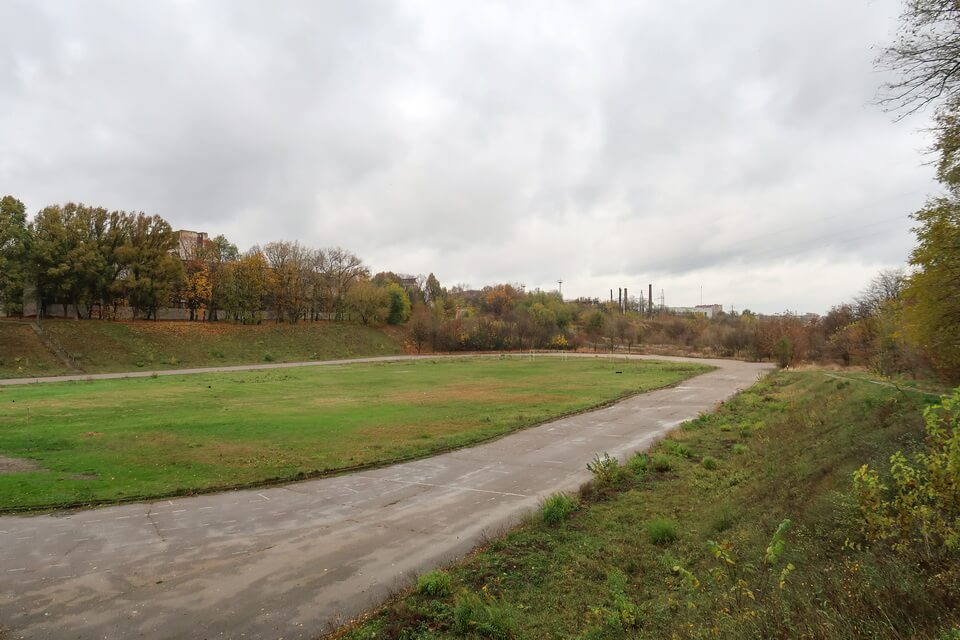
Soviet authorities banned any centralized Jewish commemoration ceremonies on the sites of the mass killings in Dnipropetrovsk for decades, leaving place to only some unofficial commemorations. The first event of such kind was permitted as late as May 1989, when citizens came to the Botanic Garden and paid tribute to the victims, among them not numerous representatives of the Jewish community, who secretly read prayers on the site. The freedom of being Jews and the commemoration of the Holocaust victims finally came after the Independence of Ukraine in 1991. Though the 1990s witnessed a new exodus to the State of Israel when the borders were finally opened. In 2001, the Jewish community finally erected an appropriate memorial on the site of the 1941 mass killings. In contrast to the Soviet gray slab, it has a more notable design, identifying that more than 10,000 Jews were killed here, and was put just next to the former edge of the ravine, while the Soviet stone had been located aside so as not to interfere with paying sports at the stadium.
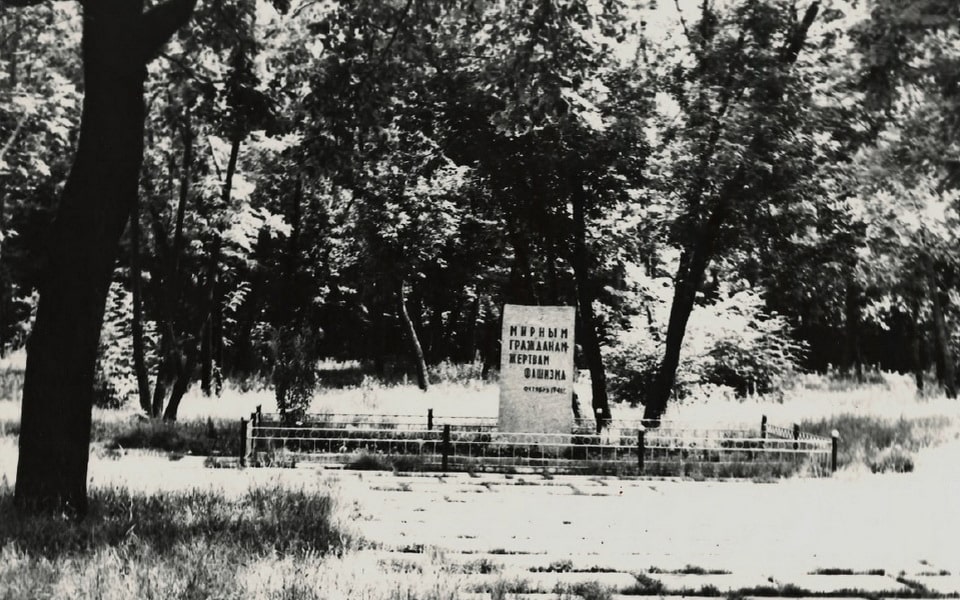
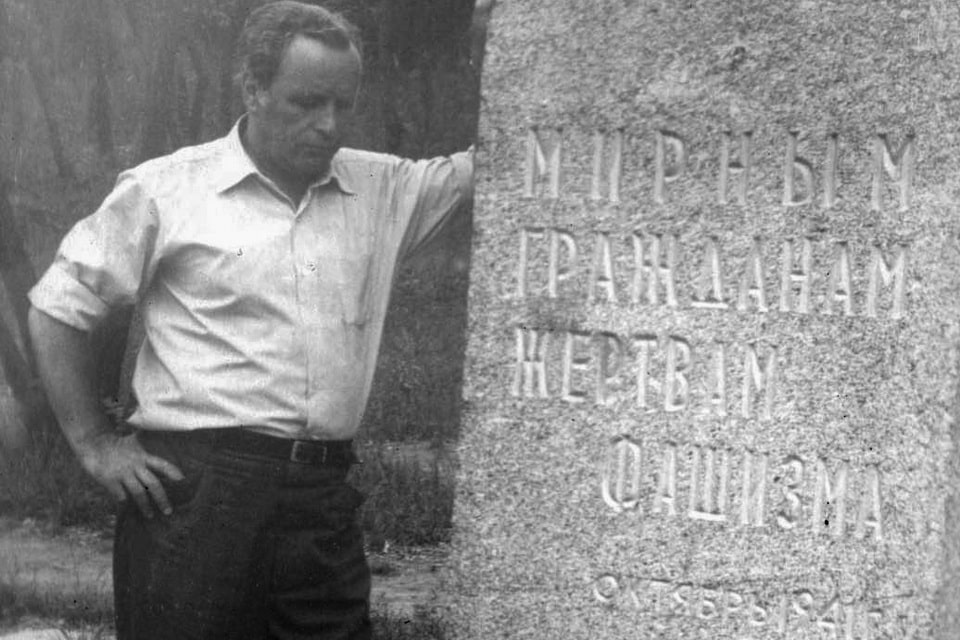
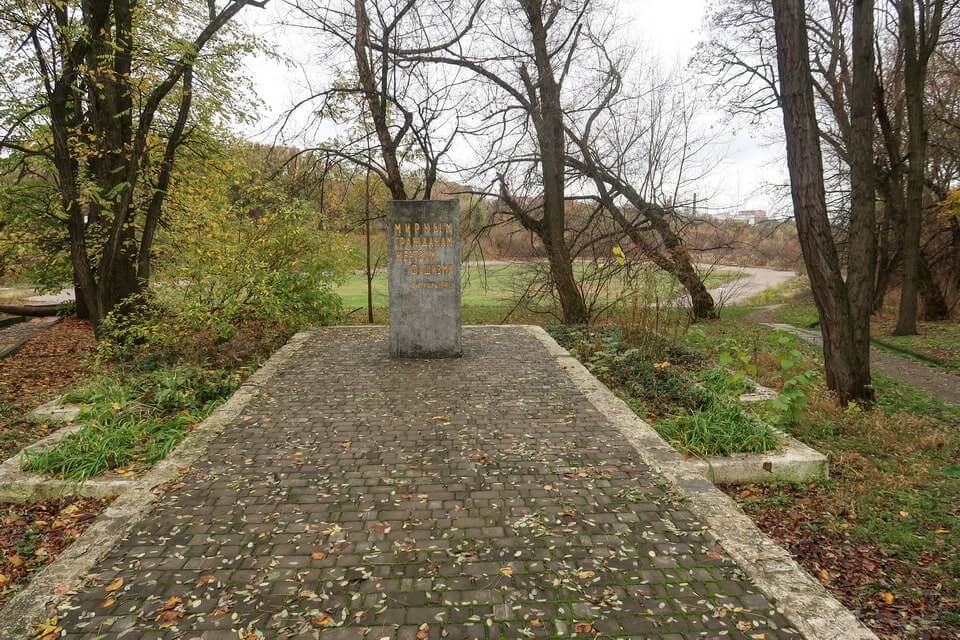
The Jewish monument is made of a tall black granite slab decorated with drawings and Jewish religious symbols; the text in Hebrew and Ukrainian is placed in the center. The small area in front of the monument is paved with cobblestones and surrounded by a low wrought-iron fence, also interspersed with Jewish symbols (the Star of David). According to Jewish religious tradition, stones are placed at the foot instead of flowers. On the monument, there is a quote from the prayer and the following text: “In this land lie the ashes of 10,000 peaceful Jews of Dnipropetrovsk, brutally murdered on October 13-14, 1941, and many more of our holy brothers and sisters, tortured and shot by the fascists (1941–1943)“. In 2010, the Jewish community put a plate on the wall of the Main Department Store, commemorating the 1941 assembly point, from which Jews were driven outside the city limits to the killing sites in the Botanic Garden and anti-tank ditch.
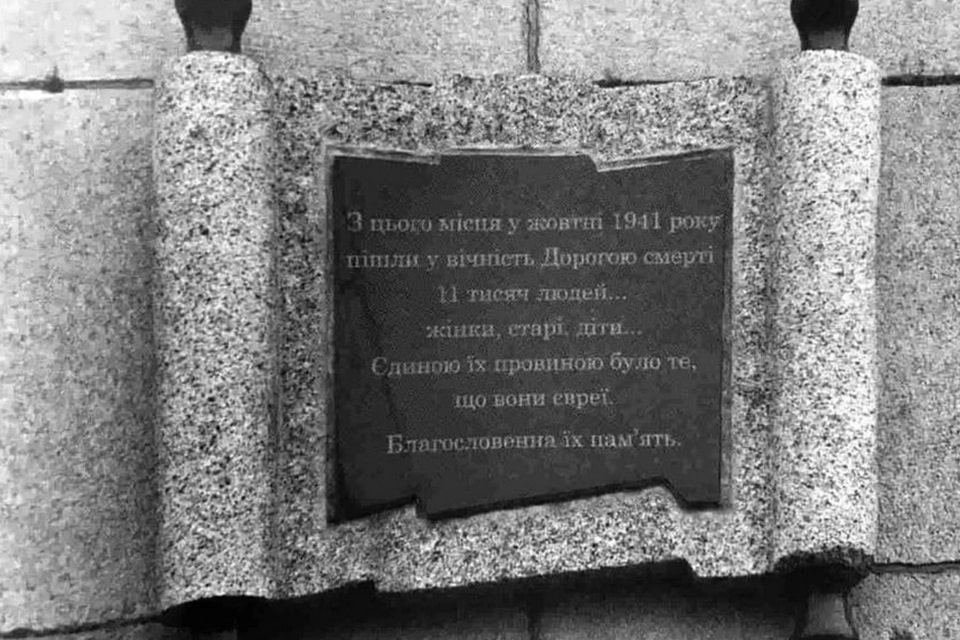
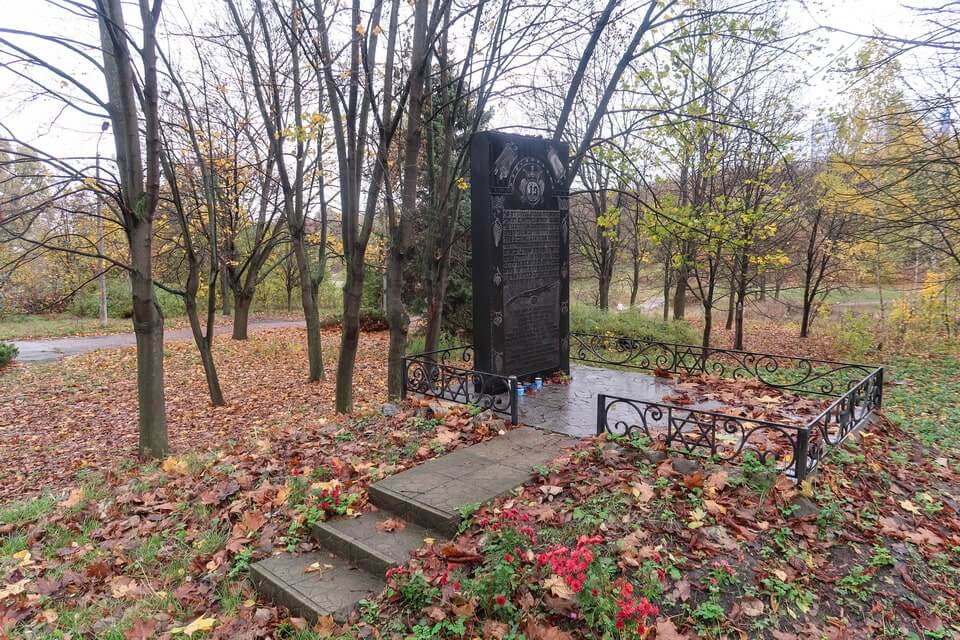
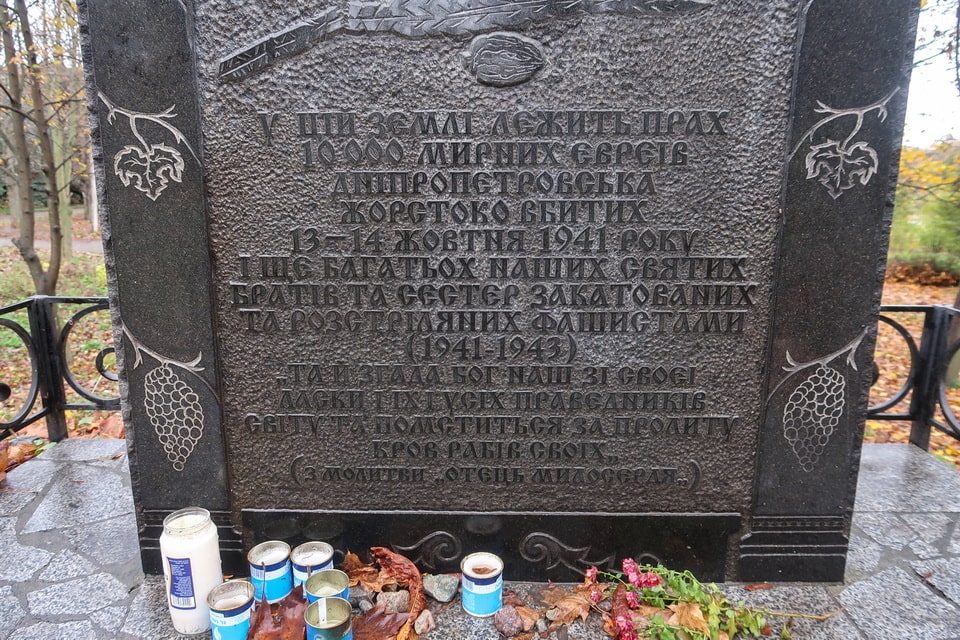
The commemoration of the victims killed and buried in the anti-tank ditch outside the city limits has a long history. After the 1943-1944 investigation, when three dozen mass graves were revealed apart from the thick layer of human bodies in the ditch, the trench was partially filled with soil and leveled. In the late 1940s, the road along the former anti-tank ditch was built with one-story cottages for the workers of the local enterprise; many of them still stand nowadays. The Soviet memorial was erected in the 1970s and commemorated the memory of 20,000 citizens of Dnipropetrovsk who were killed there. Another stone slab was put next to the road, thus identifying one of the edges of the 1941-1943 trench. While only a small share of victims here were Jews, neither sign includes any information about the nationalities.
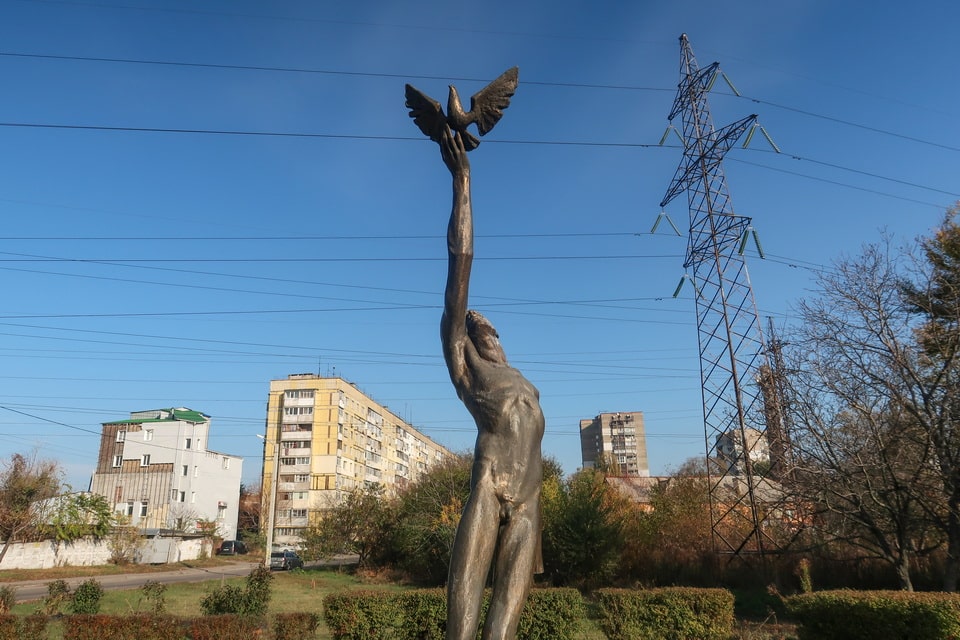
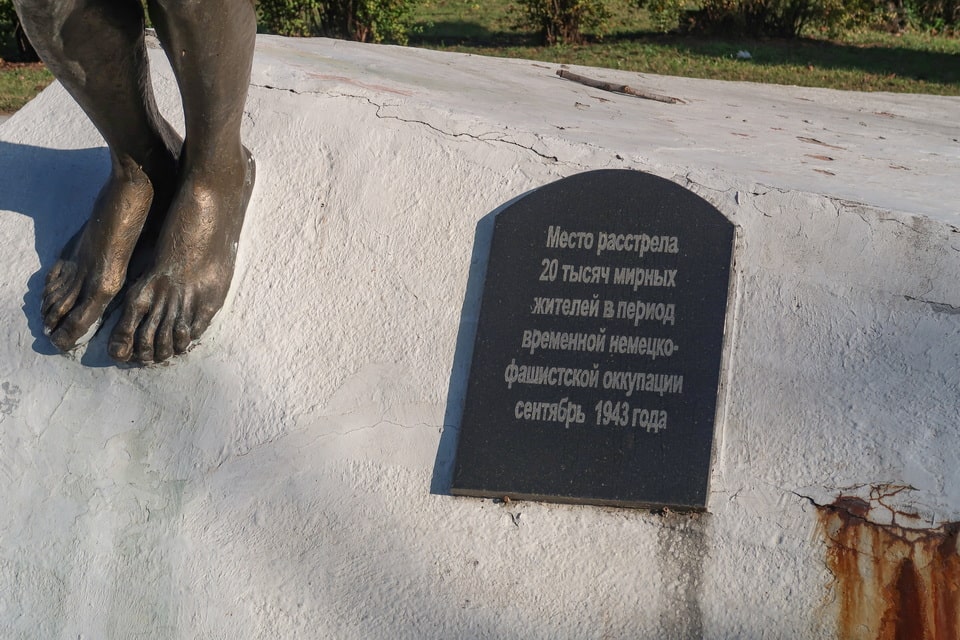
In 2011, during the reconstruction of the stadium built near the place of executions, the remains of 441 human bodies were found at a depth of about half a meter from the surface. This was another piece of evidence that in Soviet times, exhumation was not carried out properly, and construction took place literally on bones. In 2012, the remains were reburied next to the already established memorial.
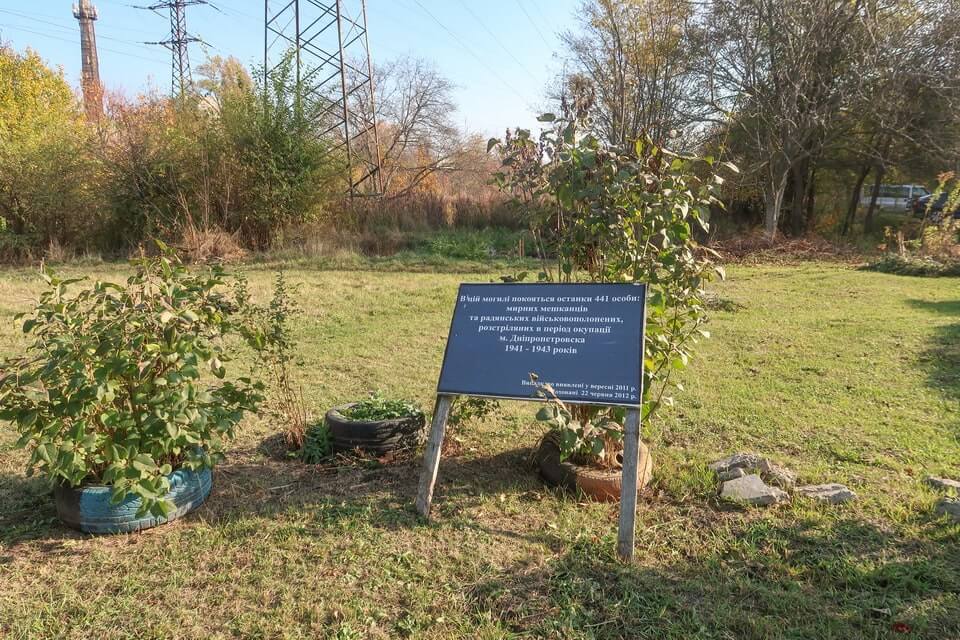
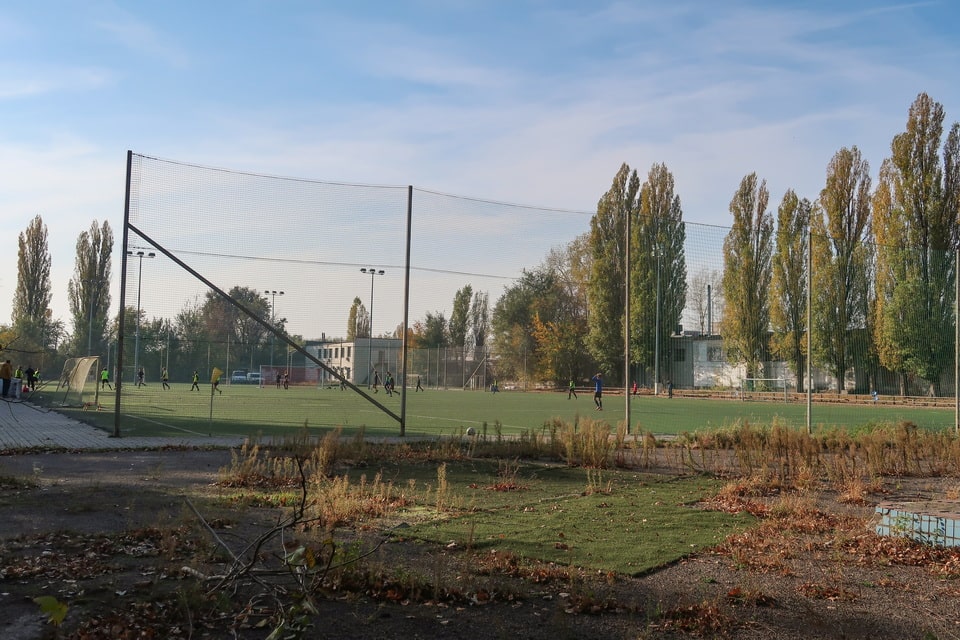
The Jewish community of the city of Dnipro worked on the creation of the Holocaust Museum since the late 1990s until it was finally opened in 2012 in the ‘Menorah’ Center, a huge building of respective shape. On the first floor of the museum, the visitor can learn about the history of the Jews first in Katerinoslav, and later in Dnipropetrovsk and Dnipro. The collection includes unique historical pieces that have been preserved. The exhibition on the second floor is devoted to the Holocaust and particularly to the Nazi persecution and murder of Jews in the city. The Museum, while smaller in size, looks familiar to those who visited the Yad Vashem Holocaust Memorial Museum in Jerusalem. “The Memory of the Jewish People and the Holocaust in Ukraine’’ in Dnipro is the largest of its kind in Eastern Europe.
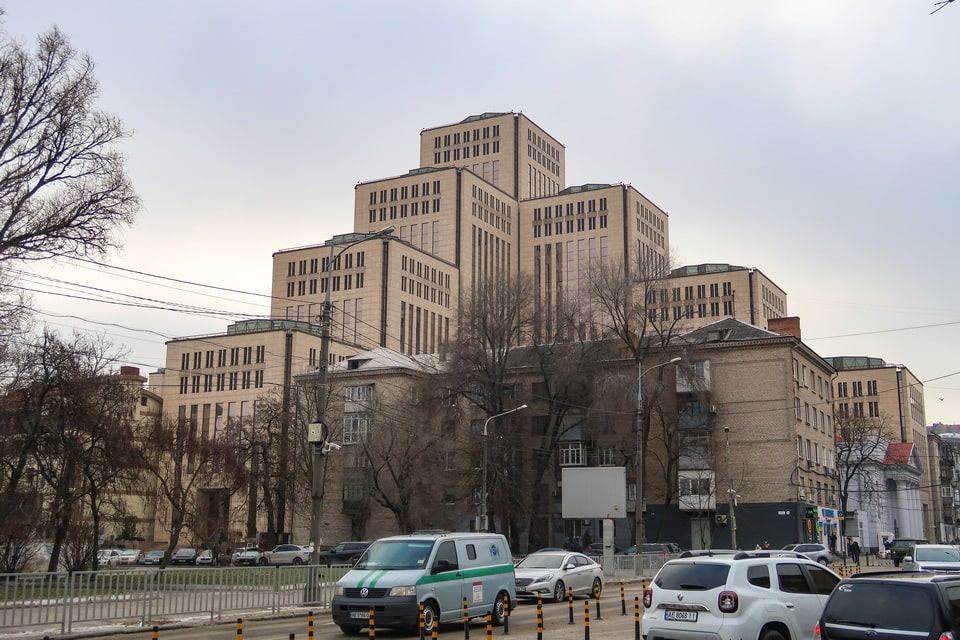
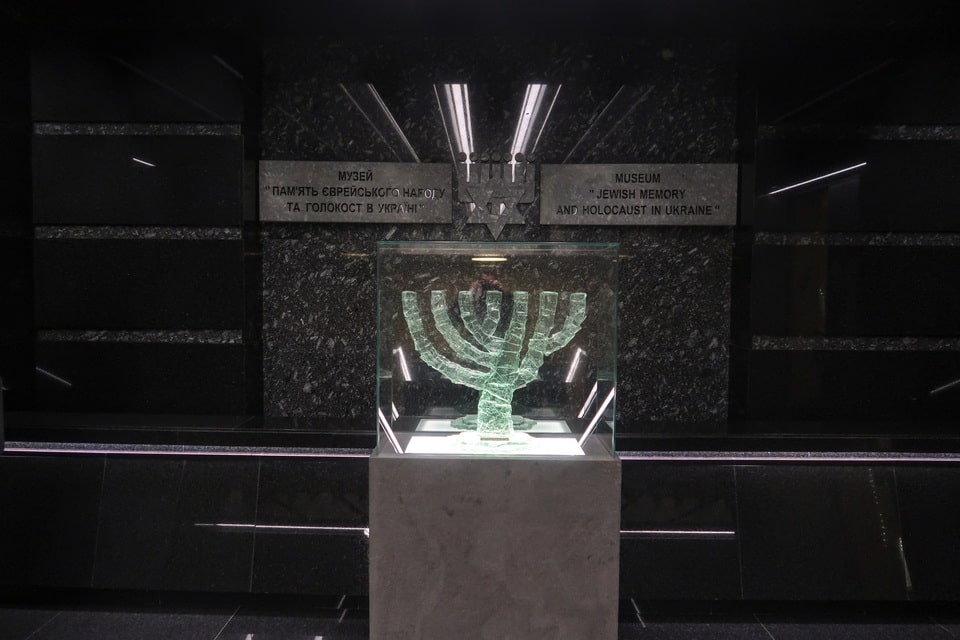
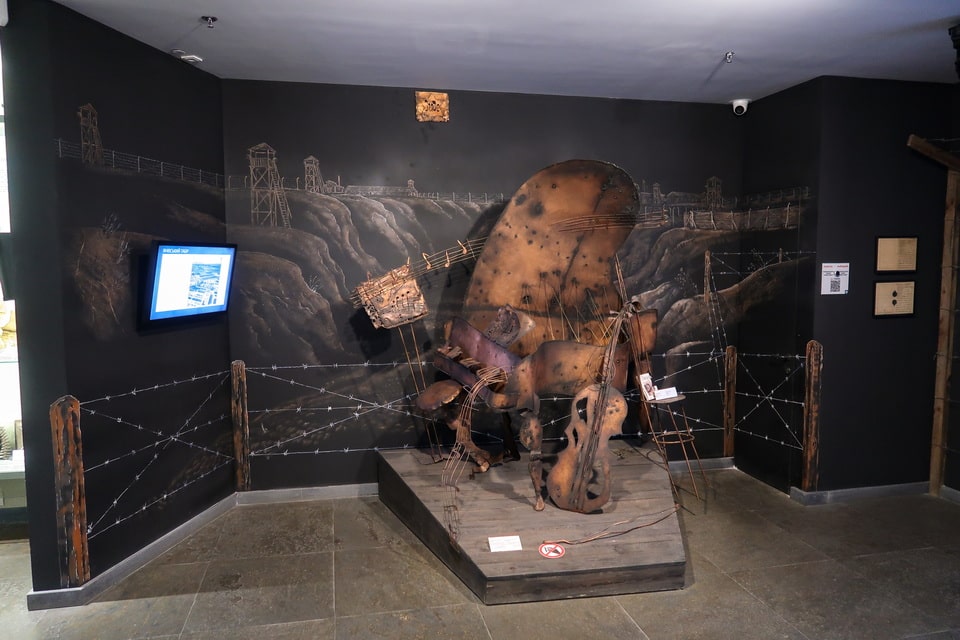
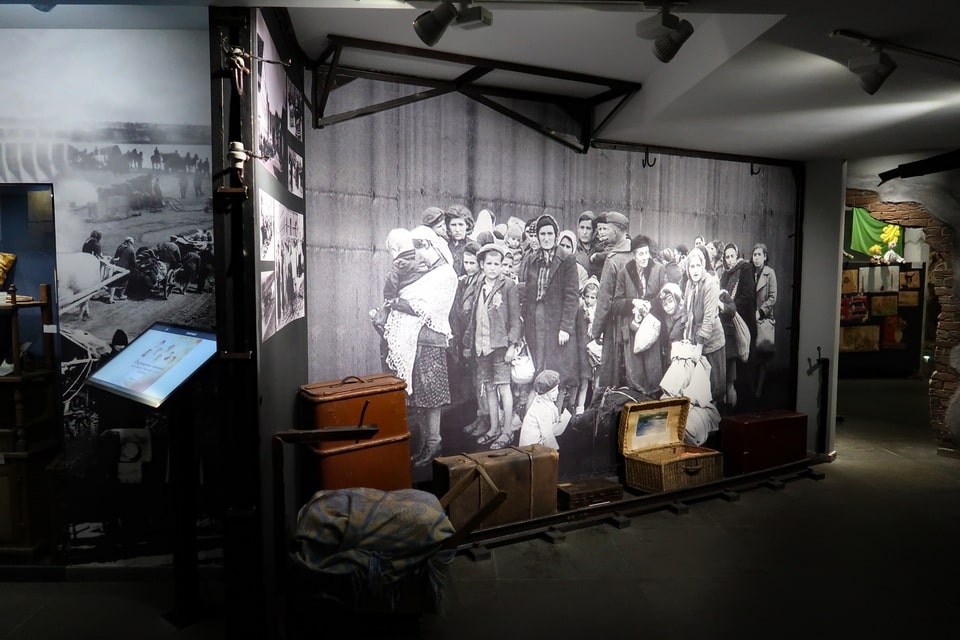
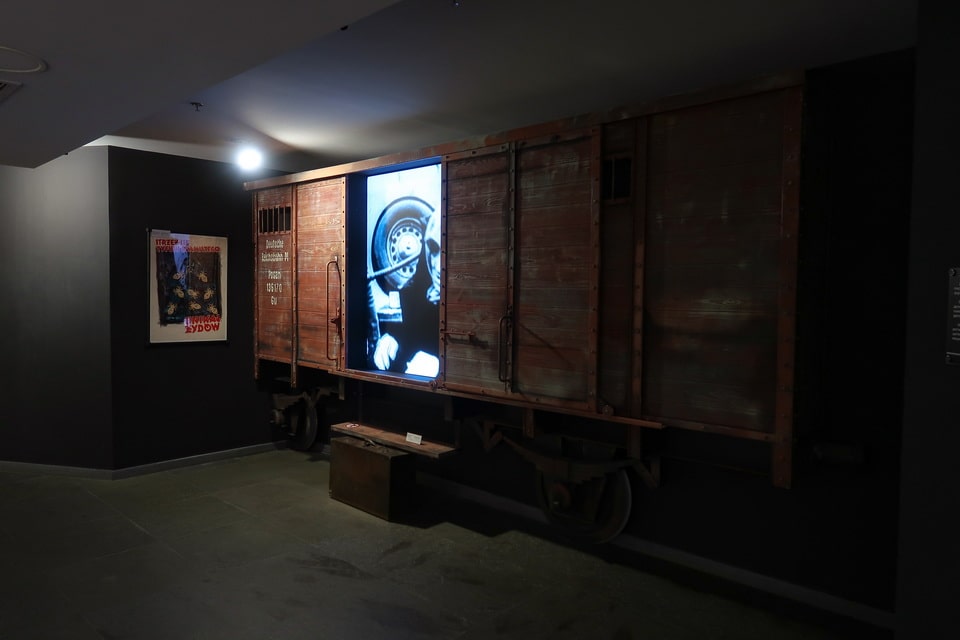
I am very grateful to war archives, museums, libraries, private collections, and writers for the historical photos in this article. To the extent that some author or a copyright owner may not want some of the above black-and-white photos to be used for educational purposes here, please contact me for adding credits or deleting the pictures from the article.