

Alfred Rosenberg in Kyiv, June 1942: Reichskommissariat Ukraine & Nazis
On 19–22 June 1942, Alfred Rosenberg — the Reichsminister für die besetzten Ostgebiete (Reich Minister for the Occupied Eastern Territories, also known as the Ostminister) — made a propaganda tour of Nazi-occupied Ukraine, particularly to Kyiv. This article reconstructs his itinerary location by location, using archival documents and rare photographs.
The visit encompassed: the Brovary airfield (arrival); the Reichenau Bridge over the Dnipro; the Kyiv-Pechersk Lavra (Monastery of the Caves); Askold’s Grave and the German officers’ cemetery; Saint Sophia Cathedral; and the National Opera of Ukraine. Each location is documented in a dedicated section below, with archival photographs from Ukrainian and German archives.
The visit cannot be understood without its broader context: the article opens with the history of Nazi colonialism in Ukraine and the administrative structure of the Reichskommissariat Ukraine (RKU), its capital in Rivne (German: Rowno), and the power conflict between Rosenberg’s Ostministerium and Gauleiter Erich Koch.
Note on terminology: The city is referred to as «Kyiv» (correct Ukrainian transliteration) throughout this article. In German occupation documents of 1941–1944, it appears as «Kiew». In Soviet-era and older Western sources: «Kiev». All three forms refer to the same city.
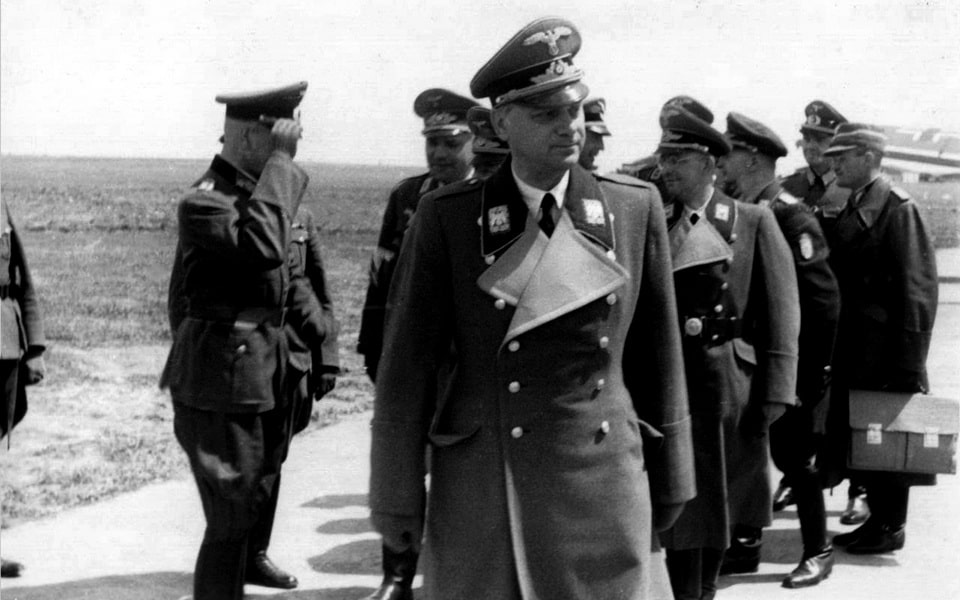
NAZI COLONIALISM IN UKRAINE: GERMAN PLANS FOR UKRAINE FROM THE FIRST WORLD WAR TO HITLER’S REICHSKOMMISSARIAT (1941)
German expansionist plans toward Ukraine hark back to the 18th century. Among the early believers and advocates of such a policy of dominance was Hitler’s role model, Frederick II, the Prussian King better known as ‘Frederick the Great’. In his book ‘The History of My Own Times’ (1789), the ruler designated Ukraine as the most valuable and food-rich part of the Russian Empire, which should always be given to the Prussian monarchy. In the 19th century, two European wars: The Crimean War (1853-1856) and the Franco-Prussian War (1870-1871) reasserted the German necessity to gain ‘the living space’ in the East up to the line Narva-Azov Sea (between modern Estonia and Ukraine). Philosopher Karl Robert Eduard von Hartmann (1842-1906), a close confidant of Chancellor Bismarck, wrote about Ukraine as the ‘Kyiv Kingdom’ (thus referring to the times of the Kyiv Rus) that should live in vassalry under German rule. One of the contrived pretexts was the claim that 1.8 million people of German origin had lived in the Western part of the Romanov Empire, 600,000 of them in Ukraine in particular.
In wider terms, it was German pangermanists of the late 19th century who gave the wording and articulated the idea of moving to the East, particularly to gain control over Ukraine. The potential colonists of the East were seen as heroes and pioneers of German might in the region. Such colonialism, also relevant at the time in the Austro-Hungarian Empire as well, muscled support in the diversified societies of the two European Empires and would be defeated as late as half a century later with the collapse of the Third Reich. It was during WWI that German colonialism for the first time gained control of Ukraine. In 1918, the so-called Central Powers were in Kyiv and supported the creation of a temporary puppet regime, while German General Erich Ludendorff ruled the military occupation for a while. Although the Wilhelminian Empire ceased to exist in the same year, specific interest in Ukraine as a colony was a reality.


In the interwar period, German nationalists, first of all Adolf Hitler and his NSDAP party, made use of and expanded the old pangermanic fantasies. The Nazis were not the pioneers, but they combined and intensified the German nostalgic idea of going to the frontier with racism and racial dominance, utopianism, and German nationalism. The nation that had lost the war and its colonies due to the Versailles Treaty happened to be receptive to Hitler’s geo-determinism of expansion in Europe. Several important clauses of the notorious Twenty-five Points of the German Workers’ Party Program (February 24, 1920) determined the supposed German right to self-determination and expansion of borders for land and territory. This pursuit of Lebensraum by Hitler existed side by side with his open hatred of Jews. Since their rise to power in 1933-1934, the Nazis intensified propaganda, and their foreign policy focused on the proclaimed ideas of gaining what the German people deserved from the Nazi perspective. Toward June 1941, the Third Reich and Hitler particularly had all the means to conquer Stalin’s Red Empire in the East with all the brutality in ‘Vernichtungskrieg’, ‘ A war of annihilation’.

For the Nazis, Ukraine lacked the exotic nature of the African colonies of the Wilhelminian generation, yet in contrast to poor-fertile territories in the South, Ukraine was regarded by Hitler as an agricultural and industrial ground for imperialistic empire building, a natural direction to expand and to put utopian fantasies of ‘Lebensraum’ into practice. When it comes to people, the old pangermanic lack of sentiment and materialistic approaches were now turned into anti-semitism and ideas of racial superiority. While Ukrainians were regarded as more civilized than the Russians, the population of the country was to be treated as racial inferiors to the Germans, the people who were unfit in Hitler’s mind, to rule themselves. The Nazi dictator derived inspiration from distorted analogs of British rule in India. While he expected his men to become ‘proud settlers’ and ‘pioneer farmers in the East’, the local population of this ‘Garden of Eden’ was treated mercilessly as aborigines, who deserved neither education, nor human-like attitude, nor even enough supplies for existence. Probably being in the grip of his childish fantasies from the books of Karl May, Hitler was ready to give ‘colonial people’ trivial matters, and the violent colonization of America was his inspiration in Eastern Europe.
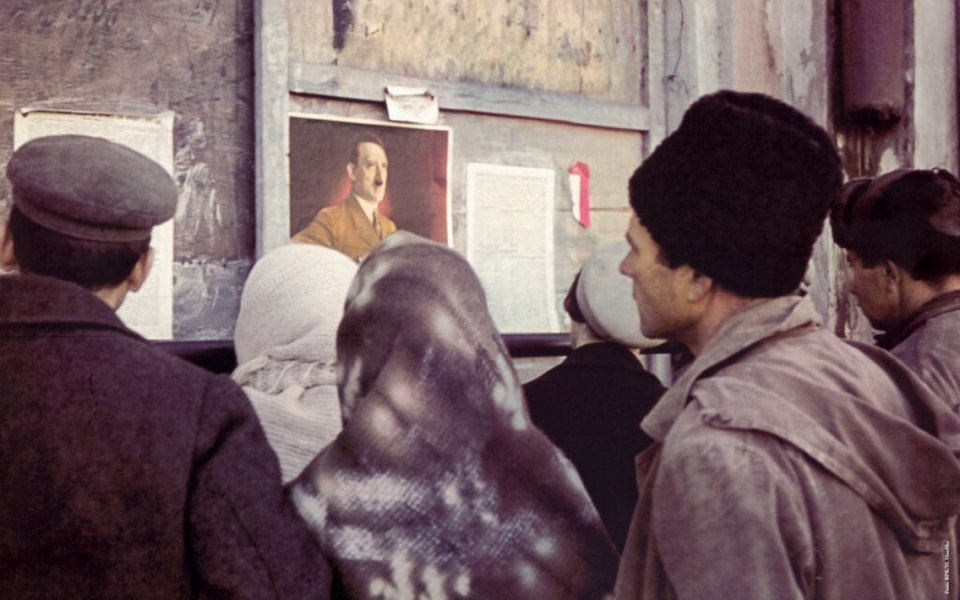
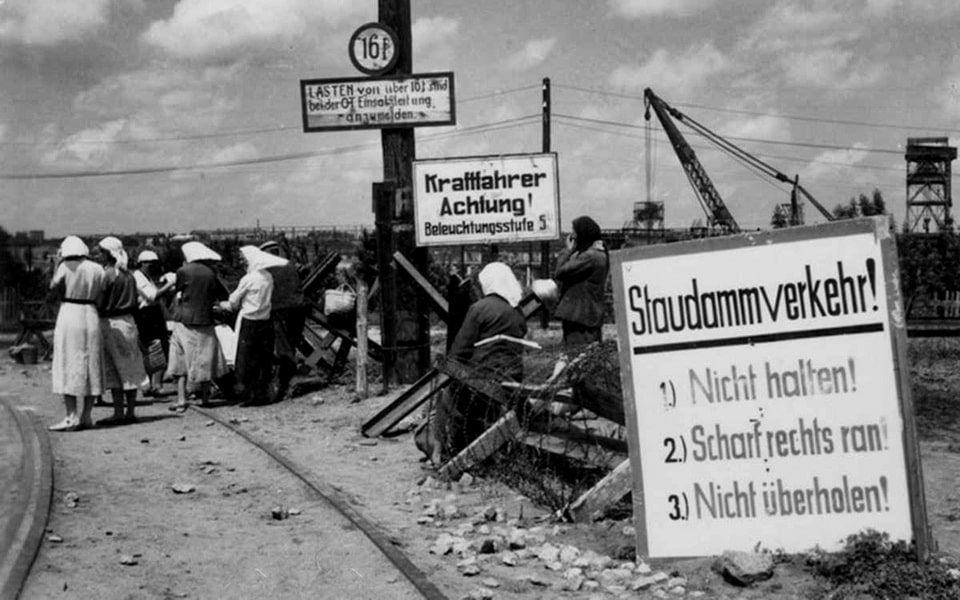
In contrast to British practices, for Nazi colonialism, the economic exploitation of the area was not a goal in itself. The Nazis aimed for the depopulation of the local people, whom they regarded as ‘racially inferior’. In Hitler’s mind, Ukraine was to become a colonial marketplace for several generations of German settlers as well as the breadbasket for the whole empire. Thus, grain, vegetables, and meat designated for the Reich were to be ferociously taken from Ukrainians: the shortage of goods in Germany meant famine and the death of millions in the East. The Nazi elite, Hitler and Heinrich Himmler to the extreme, perceived Ukraine as a kind of French Riviera with autobahns and German tourists in their cars, such as Volkswagen, thus separating the local population from any convenience. Hitler opposed any improvements in the living conditions of the people in the occupied Ukrainian territories, as well as the idea of educating people. In his worldview, the Ukrainians should have enough education just to manage work and to identify road signs, not to be run over by German automobiles. At the same time, some Ukrainians with ‘Aryan’ characteristics, such as blue eyes and white hair, were theoretically regarded as those acceptable for Germanization as in the Nazi racial hierarchy, they stood higher than Poles, Russians, and Belarusians, Jews, and Gypsies. The conquered Eastern territories were mastered by three competitive Nazi bodies under Alfred Rosenberg (civil administration), Hermann Goering (economic exploitation), and Heinrich Himmler (‘security’ and reprisals), respectively.
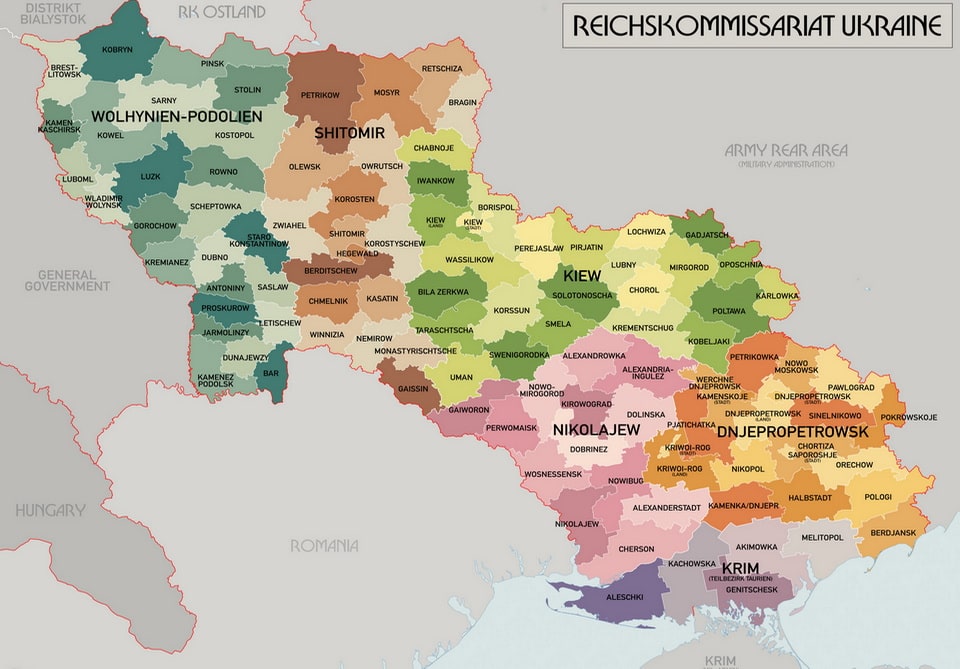
As early as August 20, 1941, when the fight for Kyiv and left-bank Ukraine was at its peak, Hitler issued a decree assigning actions for the creation of the so-called ‘Reichskommissariat Ukraine,’ administered by Erich Koch and under the overall management of the Reich Ministry for the Occupied Eastern Territories under Rosenberg. The territory of ‘Reichskommissariat Ukraine’ was supposed to enlarge with the successful move of the Wehrmacht forces to the East. The initially planned seven general commissariats were never fully incorporated since the Eastern regions of Ukraine were left under military administration even when the frontline in 1942 was further to the East. On the day of Hitler’s decree in August 1941, ‘Reichskommissariat Ukraine’ occupied only 71 000 km2, enlarged to 235 000 km2 in November, and its maximum of 339,258 km2 on September 1, 1942. At its peak, the six commissariats ruled over 16.9 million Ukrainians. When the territories were passed to the civil administration, it gained control over the economic expropriation, besides supplying the Wehrmacht with food.
The notorious Erich Koch, Gauleiter of Gau East Prussia since 1928, openly claimed in one of his speeches that his task was to completely ‘squeeze resources’ out of Ukraine, regardless of the feelings or living conditions of the Ukrainians, without mercy or regret. He openly called the local population Aboriginals. In the years of German occupation, the policy of economic expropriation evolved, but the core aim was a merciless export of all valuable resources from Ukraine for the sake of the German war effort and the prosperity of the ‘master race’ in the Reich. In the Nazis’ worldview, Ukraine was destined to become a ‘bread basket’ for Europe, though Ukrainians themselves had no place in this future except for hard labor and death. Such a cannibalistic approach turned Ukraine into a key supply hub for Hitler’s Germany. In 1942, a year of the maximum conquest of the Wehrmacht to the East, the robbery of Ukraine supplied the Third Reich with 80% of bread consumed, 83% of meat, and 74% of animal fats.
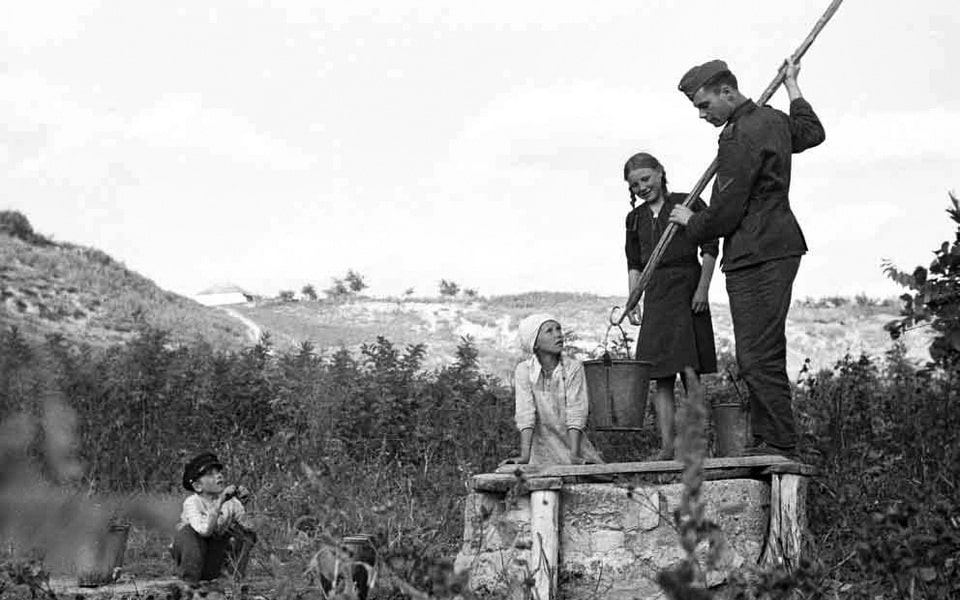

Toward the summer of 1942, the German occupants significantly restricted the flow of food supplies from villages to cities, which caused malnutrition in Kyiv and Kharkiv. The citizens of the historical capital of Ukraine, Kyiv, were allowed to bring no more than ten kilograms of potatoes, one chicken, and ten eggs per month from the countryside, a critically insufficient amount for survival. In parallel with such a food blockade of large cities, Germans initiated the mass robbery of the Ukrainian countryside. The Germans, along with local collaborators, prowled from one village to the next and confiscated any grain they could find or other livestock if they had no grain. Only in the Kyiv district, the occupants and the local Order Police expropriated 38,470 tonnes of grain in June 1942, 26,570 tonnes in July, and the remaining 7,960 tonnes in August 1942. While most of this food was eaten by the Wehrmacht in the East, thousands of railway cars were sent to the Reich in 1942, and the so-called ‘Agriculture Department’ reported that the whole harvest was collected and nothing was left to the peasants in Ukraine either for seed or for eating. Germans themselves were amazed that millions of Ukrainians were still alive after two winters of 1941-1942 and 1942-1943. One of the dramatic explanations for this was the fact that people in Ukraine survived barbaric Soviet collectivization and man-made famine in 1932-1933, Stalin’s genocide against Ukraine, which had demanded the lives of at least 3.5 million people. In contrast to ‘Holodomor’, this time towns and cities mainly suffered from malnutrition.

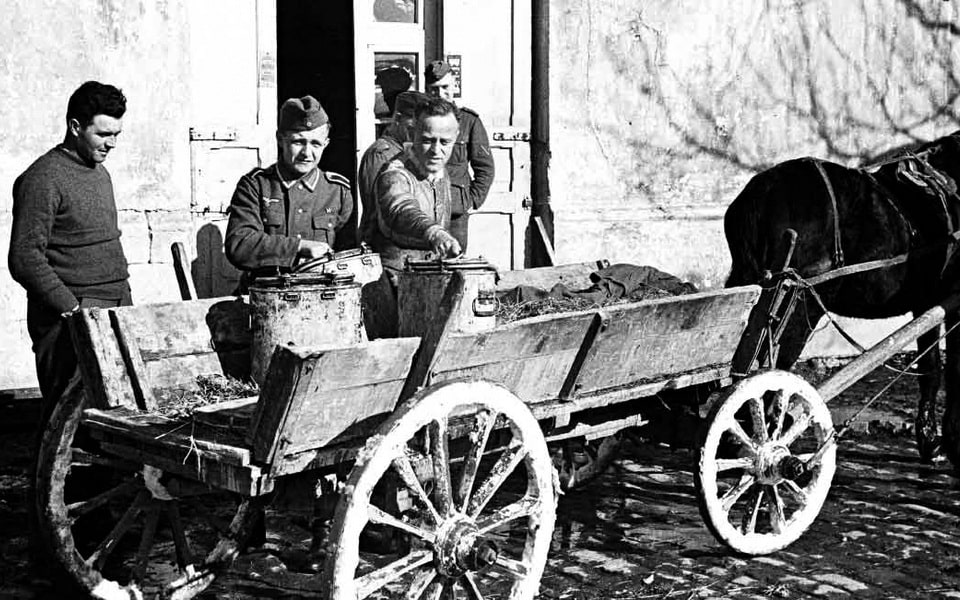
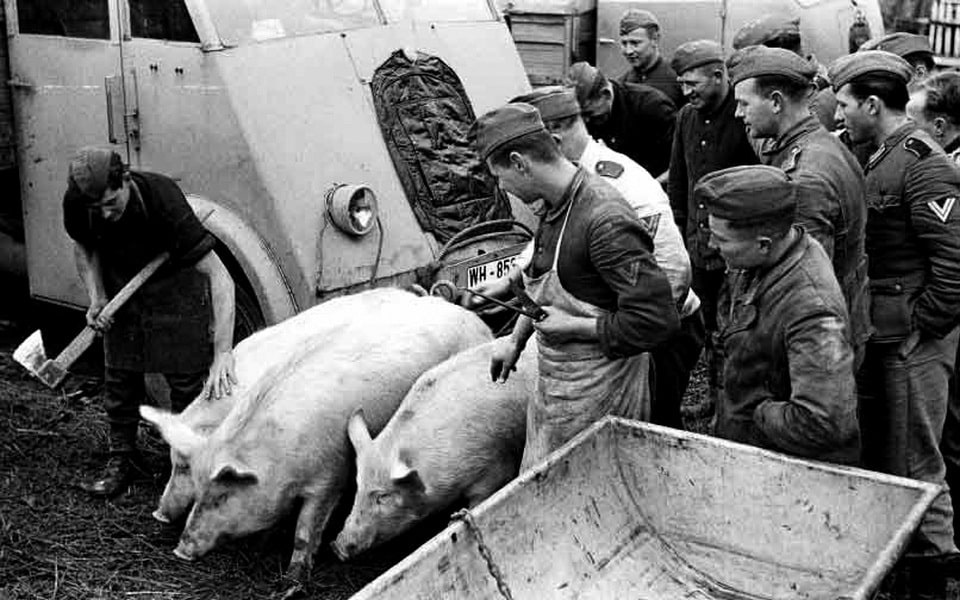
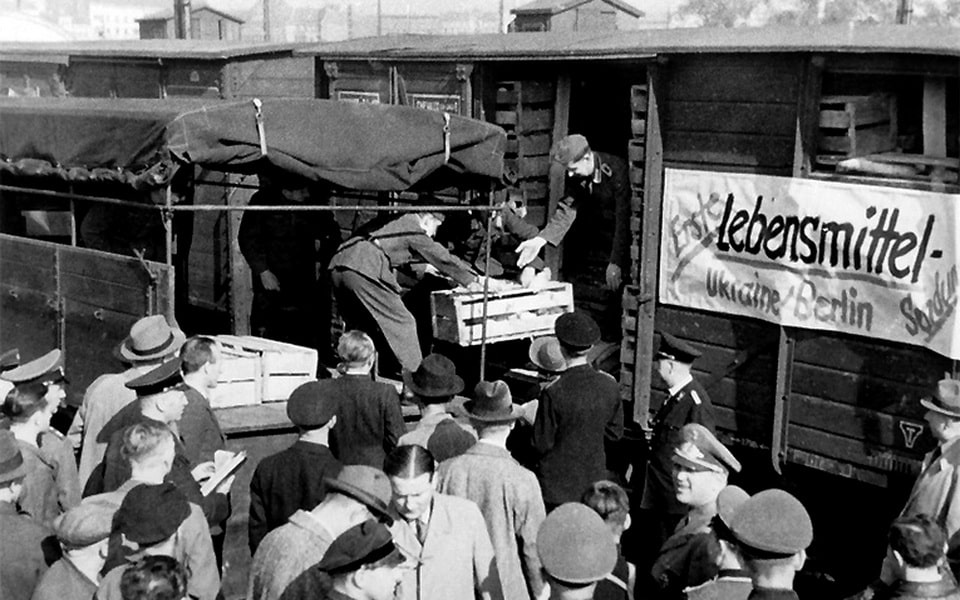
The overall number of supplies robbed from Ukrainians in the years of occupation between 1941 and 1944 is astonishing. The exact figures could not be estimated, but one of the post-war investigations revealed that the Germans expropriated 23 million tonnes of grain and wheat from Ukraine only. At least 9 million pigs, 7 million sheep, 7 million cattle, and an enormous 60 million fowls, 6 thousand tonnes of fish were either eaten by the Wehrmacht or taken to the Reich from Ukrainian peasants. 2 million tonnes of potatoes and other vegetables and fruits, 100 000 tonnes of legumes, 610 000 tonnes of sunflower seeds, 35 000 tonnes of butter, 155 000 tonnes of sugar, 320 million eggs, 5000 tonnes of honey, and even 250 000 tonnes of beer were taken from Ukrainians in the years of occupation. At least 3.4 million horses were used by the German army or taken Westward. Apart from food, the occupants expropriated 56,000 tractors and 24,000 harvester combines. Along with such a massive centralized robbery, the Germans sent 11.6 million so-called ‘food parcels’ to their families in Germany from Ukraine only. In October 1942, Goering announced an increase in the meat and bread rations in Germany, while millions of Ukrainians were left to starve.
ALFRED ROSENBERG: REICH MINISTER FOR THE OCCUPIED EASTERN TERRITORIES (OSTMINISTERIUM), EINSATZSTAB AND PLANS FOR UKRAINE
Alfred Rosenberg was a key advocate of creating puppet state formations in the East dominated by Germans in the spirit of the frontier. He was among the early architects of Adolf Hitler’s paranoia and obsessiveness with the idea of a global Jewish conspiracy and conjunction with Communism. Since the early 1920s, Rosenberg had consistently repeated his claims and, by 1941, became a guiding theorist of the ideas that Hitler took to justify his Vernichtungskrieg against the Soviet Union. Rosenberg was born in the modern city of Tallinn in 1893 in the family of ‘Baltendeutsche’ (Baltic Germans) and made his way to Munich, Germany, as late as November 1918, when he was twenty-five and had been an anti-semite for several years. While he was one of the early Nazi party members from the Fall of 1919 (met Hitler at that time), a temporary NSDAP leader after the failed Beer Hall Putsch in 1923, Rosenberg never had key positions in Hitler’s hierarchy despite his influence on Hitler’s worldview after the summer of 1920. For some time, he expected to obtain a post of Foreign Minister, but Hitler preferred Joachim von Ribbentrop in February 1938, leaving Rosenberg with the less powerful position of the Leader of the Foreign Policy Office of the NSDAP, which he had held since 1933. In wider terms, it was a question of time for Hitler to give Rosenberg a high post. As the latter was never acknowledged in Germany as Goering, Goebbels, or Himmler, despite his writings (Rosenberg’s notorious book ‘The Myth of the Twentieth Century‘ sold one million copies by 1945), he craved far-reaching influence. It should be noticed that Hitler paid little attention to Rosenberg’s printed works, though he accepted many of his theoretical considerations and incorporated them into state policy. Back in 1922, Hitler claimed privately that Alfred Rosenberg was the only man whom he always listened to and regarded as a ‘true thinker’.


The upcoming war with the Soviet Union, the champion advocate of which, after Hitler himself, was Rosenberg, finally gave the Baltic German his limelight. Apart from being wholeheartedly loyal to the Führer, the two always had a consensus on fundamental questions regarding the necessity of obtaining the ‘Lebensraum’ in the East. On April 2, 1941, just two and a half months prior to the invasion of the Soviet Union, Rosenberg prepared a detailed memorandum of the vision for German dominance in the soon-to-be-occupied territories in the East. He gave voice to Hitler’s own vision of the East as a German colony with a new administrative system and borders between different semi-state formations. While three Baltic states were to be incorporated into the Reich, Belarus and Ukraine were planned to become separate formations. It should be noted that Rosenberg initially advocated a more flexible approach with Ukraine and the Baltic States as potential allies against Russia. He supported the idea of a kind of cultural independence for Ukrainians, though he strongly supported the need to expropriate all the resources for the war.

Hitler spent the night of April 2-3, 1941, reading Rosenberg’s memo, and soon he personally said to his minion that Rosenberg’s great hour had finally arrived, and he would be in charge of a whole new ministry devoted to the Eastern question with no money or bureaucratic limitations. While the initial title of ‘Protector-General for the Occupied Eastern Territories’ was not adopted, Rosenberg’s new position on July 17, 1941, would sound even more prestigious: Reich Minister for the Occupied Eastern Territories. His rivals, particularly Himmler, Goering, Bormann, and Goebbels, put little esteem on Rosenberg and regarded him as a theoretician rather than an executioner and skillful organizer. Along with that, their criticism was only half-truth as Rosenberg possessed the deepest understanding of the matter of Eastern territories among the key Nazi officials, which was backed by Hitler himself. The German dictator appreciated Rosenberg’s Baltic origin and half of his life spent in the Russian Empire and considered his disciple an ‘expert’ superior to all others in his entourage.
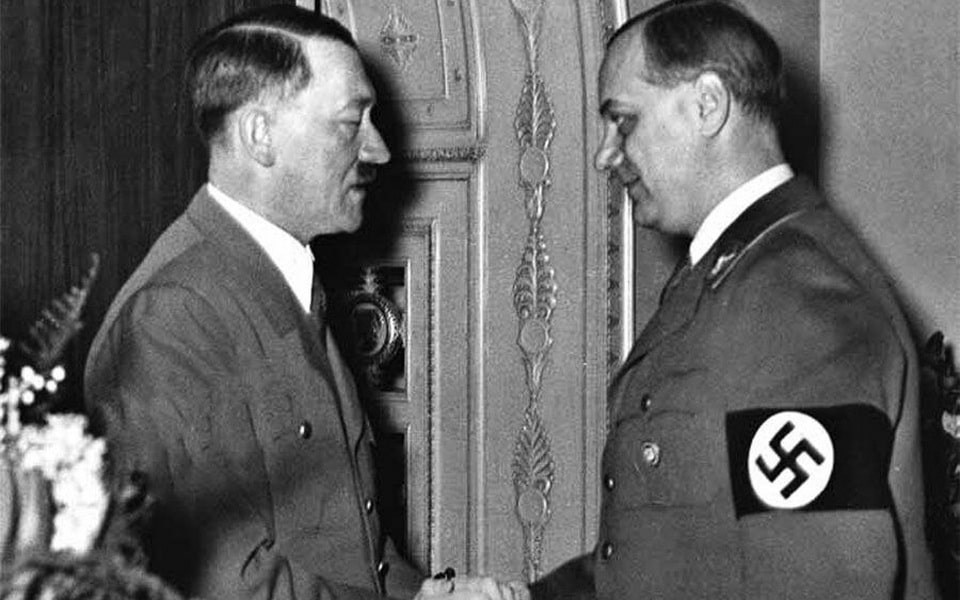
As the war in the East would reveal, Rosenberg’s main problem in promoting his own interest was not in the lack of knowledge or Hitler’s support, but a lack of political skills vital in the rivalry against other top Nazis such as Heinrich Himmler with his SS and police apparatus, and Herman Goering with his economic empire and dominant image in the Third Reich’s hierarchy. Above that, his Ministry was not the sole executioner of the administrative duties in the East and had competition with the Reich Chancellery, the Foreign Ministry, and the Interior Ministry. Along with that, Alfred Rosenberg has the power to appoint every civil administrator in the occupied Eastern territories (passed by the Wehrmacht to civil management) under the rank of General Commissar.
In the weeks after his formal appointment by Hitler in April 1941, Rosenberg summoned an enormous number of 3000 so-called ‘experts on Russia’, whose main duties, as the time would show, would be to collect, account, and confiscate cultural valuables, libraries, pieces of art, and history from the occupied territories. The notorious ‘Einsatzstab Reichsleiter Rosenberg’ (Reichsleiter Rosenberg Taskforce), one of whose headquarters was set in Kyiv, was directed by ‘Reichsministerium für die besetzten Ostgebiete’ (Reich Ministry for the Occupied Eastern Territories). This task force was commissioned to ‘take under control’ the cultural valuables which ‘may be of interest for National Socialist research’. The expropriation of any valuables in the occupied territories, particularly from Ukraine, should have theoretically been approved by Rosenberg’s task force.
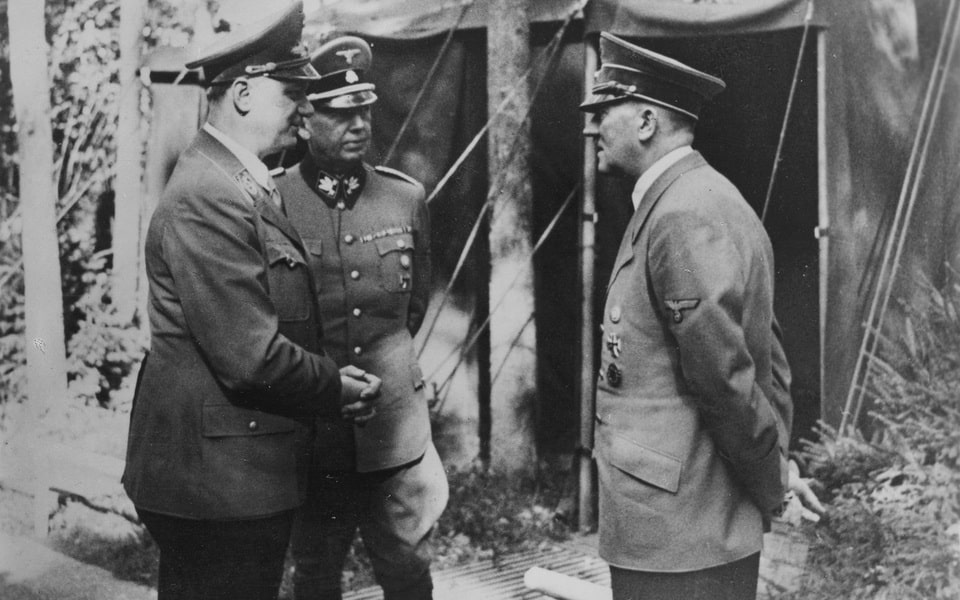

Alfred Rosenberg has been the subject of several documentary films. Researchers searching for these productions will find the following:
«Nuremberg: Its Lesson for Today» (1948, dir. Stuart Schulberg) — the original Nuremberg Trial documentary, in which Rosenberg features among the defendants.
«The Decent One» (Der Anständige, 2014, dir. Vanessa Lapa) — a documentary about Heinrich Himmler (not Rosenberg), sometimes confused due to similar subject matter.
«Alfred Rosenberg: The Man Who Gave Nazism Its Ideology» — a 2015 History Channel documentary covering Rosenberg’s role in developing Nazi racial ideology.
The Rosenberg Diaries (published 2015 by Robert Wittman & David Kinney: The Devil’s Diary) — a book, not a film, based on Rosenberg’s recovered wartime diary. Frequently searched as «alfred rosenberg film» by those seeking the story behind the diary recovery.
RIVNE (ROWNO): CAPITAL OF REICHSKOMMISSARIAT UKRAINE AND THE SEAT OF ERICH KOCH, 1941–1944
Alfred Rosenberg visited the territory of Ukraine for the first time as far back as the summer of 1917, at that time as a part of the Romanov’s Empire, as well as his native Baltic States. It should come as no surprise that it took Rosenberg almost a year to come to the ‘Reichskommissariat Ukraine’ after he was appointed Reich Minister for the Occupied Eastern Territories on July 17, 1941. The process of passing the rule over the territories from the Wehrmacht to the civil administration was slow-paced and partial because the Eastern regions of Ukraine never came under Rosenberg’s or Erich Koch’s control. In fact, even in June 1942, the trip was postponed after the initial train Rosenberg was to use, derailed after the local saboteurs damaged the railway tracks. Upon setting foot on the railway station of the Ukrainian town of Rivne (or Rowno due to the russian manner of pronunciation at that time), Rosenberg visited Ukraine for the first time since his Ministership, for the second time in his life after half a century.
The Ukrainian town of Rivne traces its history to the 13th century and since then has been a part of Lithuania, Poland, and the Russian Empire, then between 1921 and 1939 again taken by Poland. The German troops entered Rivne as early as June 28, 1941, the eighth day of the war in the East, and the area was included in the ‘Reichskommissariat Ukraine’ on August 20 of the same year. Rivne had one of the largest Jewish population densities in the region: 30,000 people in the city of 60,000 in June 1941 were Jewish, including 5,000 refugees from Poland. Some of them succeeded in fleeing eastward, and in August the Germans conducted a census which identified twenty-five nationalities in the town, including 20,000 Jews (9400 women, 500 men, and ten thousand children under 16), 8540 Polish, and 5136 Ukrainians. The 17,500 Jews who survived in the first months of occupation were massacred on November 6-8, 1941, in the ravine beyond the town. In the same way as in Babi Yar in Kyiv a month before, people were told to come to the assembly point with food for three days. It should be noted that after the massacre, the Germans set up a Rivne ghetto and put 5000 Jews within its boundaries from the whole area. The ghetto would be meticulously liquidated in July 1942, a month after Alfred Rosenberg’s visit.
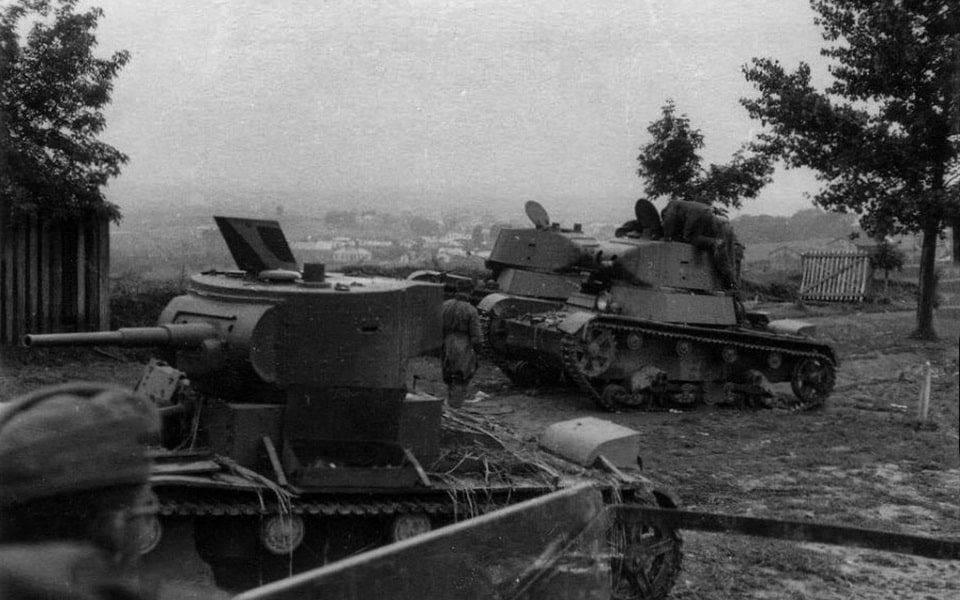
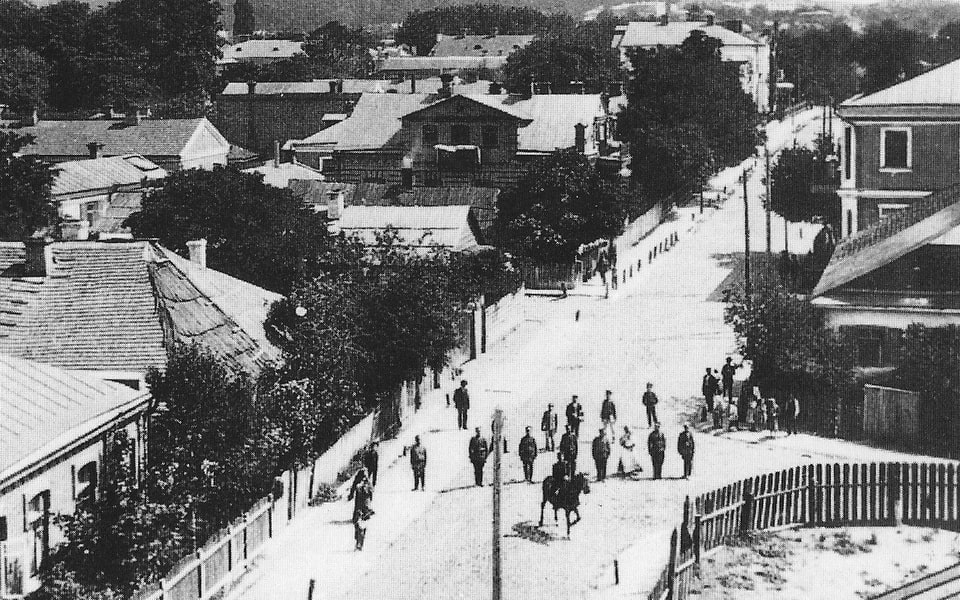
The man who strongly backed Hitler’s vision of not giving anything to non-Germans in the Eastern territories was Erich Koch, forty-five years old in 1941. In contrast to Rosenberg’s ideas of cooperation with the conquered nations, the Gauleiter of Gau East Prussia was contemptuous toward Ukrainians, whom he was appointed to administer as Reich commissioner for Ukraine from September 1, 1941. On paper, Rosenberg was Koch’s superior, but in fact, the latter conducted a separate policy, more ruthless and uncompromising. As early as the autumn of 1941, Rosenberg voiced his criticism against Koch to Hitler personally; the German dictator told his Minister not to interfere in the practical means of Reich Commissaries and to focus on strategic issues. Koch was extremely loyal to Hitler, similar to Rosenberg, but the Führer appreciated the harshness of his Gauleiter more than Rosenberg’s books and PhD. Koch’s own idea was that he was the ruler of Ukraine, and had to plunder all resources during the war, and Rosenberg’s involvement could be possible after the war.
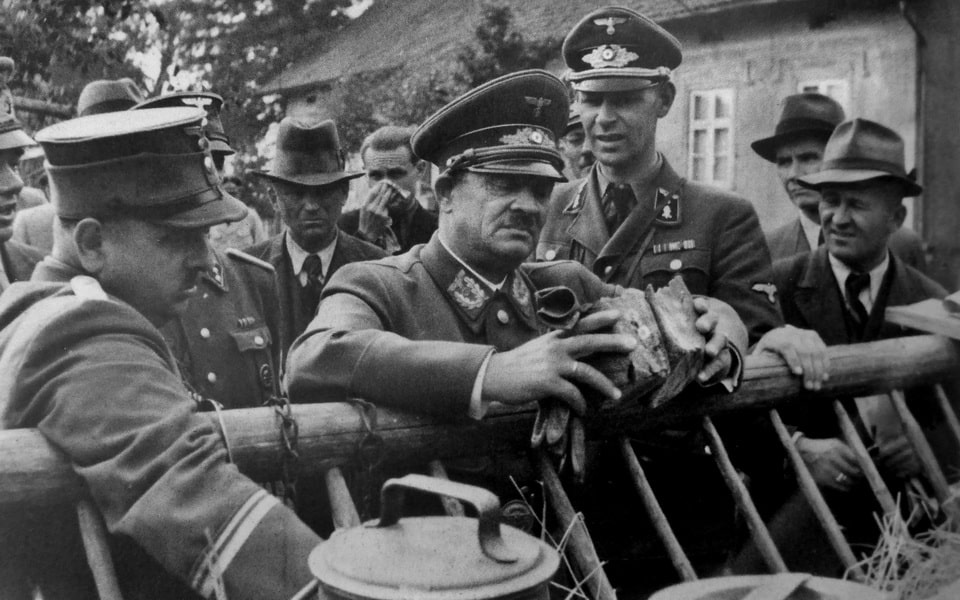
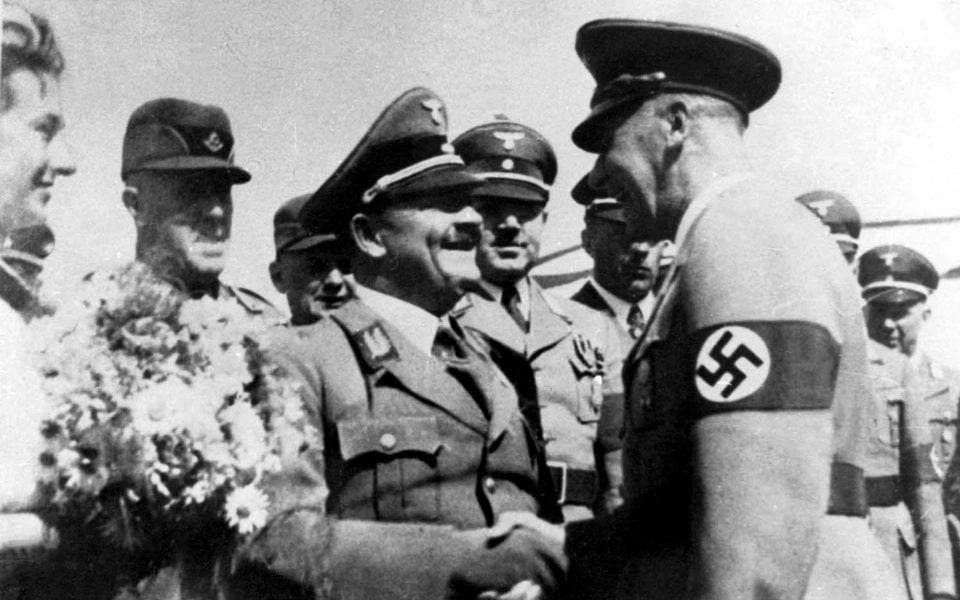
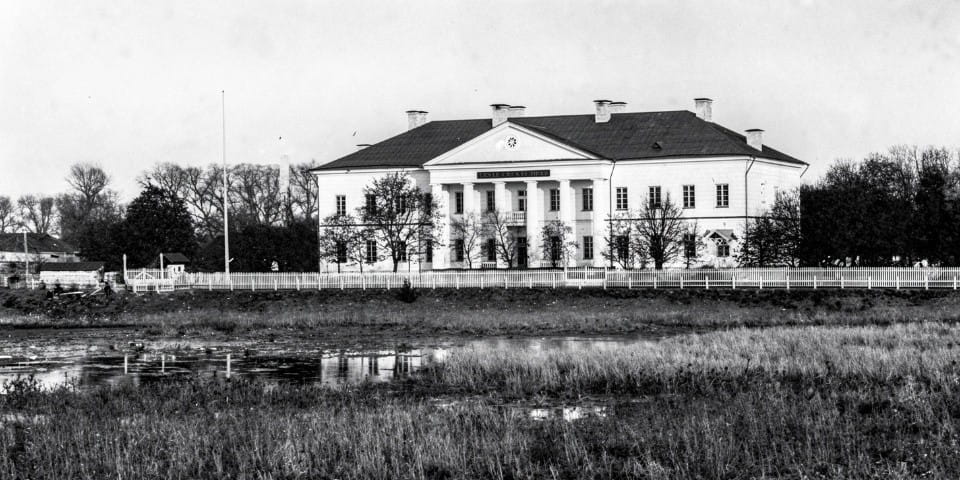
Erich Koch chose the small town of Rivne, rather than the historical Ukrainian capital Kyiv, as the seat for his administration of Reichskommissariat Ukraine. There were several reasons for such a decision. The first one lay in Koch’s distaste toward Ukrainians, and ignoring Kyiv was a kind of humiliation to the people, similar to Hans Frank’s rule in Poland from Krakow rather than from Warsaw. In fact, Koch disputed the idea of ruling Ukraine from Kyiv as an option with Hitler personally, but the latter rejected such an idea without giving the five Ukrainians any encouragement. The more practical reason was that Koch spent much of his time either in East Prussia, where he remained a Gauleiter until April 23, 1945, or on journeys to Hitler’s headquarters in Vinnytsia (Wehrwolf) or Rastenburg (Wolfsschanze). Rivne had railway and road connections with East Prussia, and at the same time, war was further from the frontline than Kyiv, and a little town was safer for the Reich commissioner in terms of personal protection. Koch set up his staff of Reichskommissariat Ukraine in the building of the town’s headquarters of the Communist party, the modern Rivne Regional Local Lore Museum, built as far back as 1839. The German administration was cordoned off with barbed wire, guard towers, and security checkpoints with driveway barriers. Only personnel with passes could get into the Reichskommissariat Ukraine.
After several delays, the train with Alfred Rosenberg and his entourage arrived at the train station of Rivne on Saturday, June 19, 1941. Reich Minister for the Occupied Eastern Territories, Rosenberg, was accompanied by an impressive retinue. Among them were:
Alfred Meyer (1891-1945). Deputy Reichsminister for the Occupied Eastern Territories, Staatssekretär (State Secretary), and the second man after Rosenberg himself in the Ministry’s hierarchy. Early the same year, in January, Meyer attended the notorious Wannsee Conference on behalf of Rosenberg and was among the architects of the annihilation of Jews, particularly in the occupied Eastern territories. Obergruppenführer der SS since 1938. Doctor of Philosophy. He would commit suicide on April 11, 1945.
Friedrich Schmidt (1902-1973). A former Deputy Gauleiter in Lodz, and the author of the notorious book called ‘Das Reich als Aufgabe’ (The Nation as a Duty). Schmidt was an early Nazi member since May 1925 and a member of the SS since 1936. In 1944, he would be taken as a POW in the rank of SS-Untersturmführer, later sentenced to thirty months in jail and the confiscation of property.
Georg Leibbrandt (1899-1982). Head of the Eastern Division of the Foreign Policy Office of the NSDAP since 1933 and Undersecretary in the Reich Ministry for the Occupied Eastern Territories since 1941, both positions under Rosenberg. Leibbrandt was chosen by his chief to administer the Main Department I (or Political Department), thus he became responsible for national groups in the occupied territories, including the Ukrainians. In January 1942, he accompanied Aldred Meyer to Wannsee. After the War, Leibbrandt spent four years as a POW and was released from charges in the genocide, and lived another three decades in the United States and West Germany.
Wilhelm Ter-Nedden (1904-2002). A doctor in Law and Political Science, between 1933 and 1941, he worked in the ‘Reichs Wirtschaftsministerium’ (Reich Ministry of Economics). After the creation of the Reich Ministry for the Occupied Eastern Territories, he was appointed by Rosenberg as Ministerialrat (Ministerial Counselor) and a representative of Gustav Schlotterer, a Ministerial Director, Head of the “East” Department in the Reich Ministry of Economics. After the War, Ter-Nedden worked as a civil servant in the government of West Germany until his retirement in 1969 as a Ministerial Director in the Federal Ministry of Transport. Decorated in 1969 with the Grand Cross of Merit with the Star of the Federal Republic of Germany.
Wilhelm Kinkelin (1896-1990). A German physician, an SA member since 1937, SS member since 1937. From 1941, Kinkelin occupied posts in the staff of the Reich Security Main Office and in the Reich Ministry for the Occupied Eastern Territories. In Rosenberg’s Ministry, Kinkelin worked under Georg Leibbrandt and was responsible for Ukraine as department head in Division I/3 Ukraine. At the same time, he was responsible for Department I/7 (“Volkstum and Settlement”). Apart from this, he had close connections with Erich Koch personally. His highest rank at the end of the War was SS-Brigadeführer.
Georg Marquart (1904-1979). A doctor of Philosophy, Marquart studied Slavic Studies when he was young. He joined both the SA and the NSDAP in 1932. He served in the Wehrmacht between December 1939 and June 1941, and in July 1941, Rosenberg appointed Marquart his personal adjutant. At the same time, he continued his service in the SS, and his highest rank was SA Standartenführer. Marquart spent three years in the internment camp and later worked as a clerk in the hotel and as a sales manager.
Captain Körner as representative of Ministerial Director Riecke,
Chief Medical Officer Dr. Wegener
Higher Regional Court Councilor Dr. Wilhelmi
Major Cranz, chief of press for the occupied eastern territories.

Upon arrival at the train station of Rivne, Rosenberg and his retinue were greeted by the Wehrmacht honorary company, local police detachment, and a company of Royal Hungarian Honved. Erich Koch greeted Rosenberg as the main host and was accompanied by most of the staff of Reich Commissariat Ukraine, who were all technically under the command of Alfred Rosenberg on paper, but loyal immediate subordinates to Koch, who had regarded himself as a true master of Ukraine with Hitler’s personal backing. Apart from the civil servants and bureaucrats, on that day at the station, several high-ranking army and police officials were present as well.

Karl Kitzinger (1886-1962). Wehrmacht Commander-in-Chief in the Reichskommissariat Ukraine between July 1, 1941, and July 21, 1944. A veteran of the First World War, Kitzinger served in various positions between the two wars, particularly as a training officer in the Reichswehr. In the first months of WWII, he was an inspector of the Luftwaffe formations, then commanded Air Region Norway. As a Wehrmacht commander in Ukraine was partially responsible for the mass killing actions and issued reprisal orders. In July 1944, Kitzinger took the position of Carl-Heinrich von Stülpnagel in France, since the latter had been involved in the July 20 plot. Spent only two years in British captivity, never faced trials for his wartime crimes in Ukraine, and worked as a clerk until his death.
Josef Feichtmeier (1883-1945). Commander of the POWs section under Wehrmacht-Commander Ukraine Kitzinger. An Austrian officer, who was called to service in 1939 after eight years in retirement. After a few minor commanding posts, he was assigned as chief of staff for the placement of prisoners in Vienna and Ukraine in the same years. Feichtmeier bore responsibility for the death of hundreds of thousands of Red Army POWs who perished in the improvised open-air camps in 1941-1942. Was released from this post in November 1942, taken as a prisoner by the Soviets in 1945, and died or was killed in captivity in the same year.
Rudolf Meltzer (1883-1973). A signal Leader in the Wehrmacht Forces in Ukraine (Wehrmachtbefehlshaber) under Kitzinger. Meltzer was a professional signal officer from 1908, thus responsible for transmitting messages between the forces and their leadership using wire and radio. Transferred from Ukraine in November 1943. Got his last promotion to Generalleutnant in March 1945. Spent three years in British captivity and was released in 1948.
Hans Adolf Prutzmann (1901-1945). The Higher SS and Police Leader at the Reich Commissariat Ukraine. He joined the SA in 1929, the SS, and the NSDAP in 1930. From June 1941 to October 1941, Prützmann was the Higher SS and Police Leader of ‘Russland Nord’ based in Riga and later got the same post in Ukraine, which he held until 1944. Prutzmann was one of the architects of the mass executions of Jews in the occupied Eastern territories. In 1945, he cowardly committed suicide in British captivity when faced a perspective to being extradition to the Soviet Union.
Otto von Oelhafen (1886-1952). After Operation Barbarossa, Von Oelhafen was assigned to Kyiv from September 1941 to October 1942 as Commander of the notorious Ordnungspolizei (Order Police) for the Reichskommissariat Ukraine. He masterminded the massacre of the Jews in Rivne in November 1941, killing at least 17,500 people in two days outside the city. For such an ‘Aktion,’ Oelhafen was promoted to lieutenant general of police and SS group leader. At the end of the War, he was taken as a POW, participated in the Nuremberg Trials as a witness, and was never charged for his participation in the Holocaust and war crimes in Ukraine.

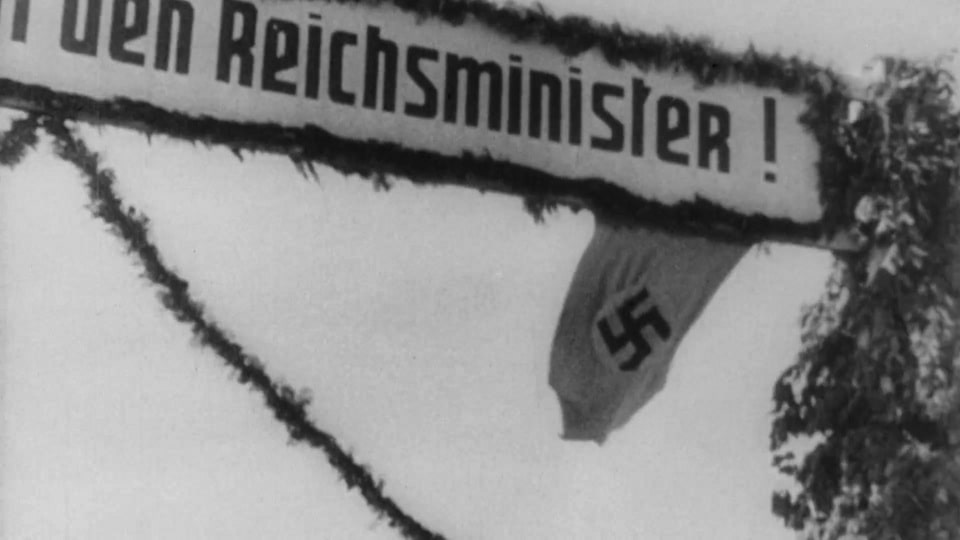
Upon the arrival at the Rivne train station and ritual greetings between two rivals, Rosenberg and Koch, an extensive cortege headed to the RKU headquarters in the former Soviet Party House for a meeting. In front of the heads of the departments and key bureaucrats of the Reichskommissariat Ukraine, Rosenberg held a speech in his traditional philosophical and less practical manner. The work in the administration in the occupied Eastern territories, according to Rosenberg, was a task of historical importance. In the afternoon, a large entourage conducted a kind of sightseeing tour around the Rivne area, particularly visiting the old horse farm. This shortstop was later highlighted in the propaganda brochure devoted to Rosenberg’s visit to Ukraine. He was said to be greeted with bread and salt, a traditional welcome symbol in Ukraine. After overseeing horses and stables, the German delegation returned to Rivne.
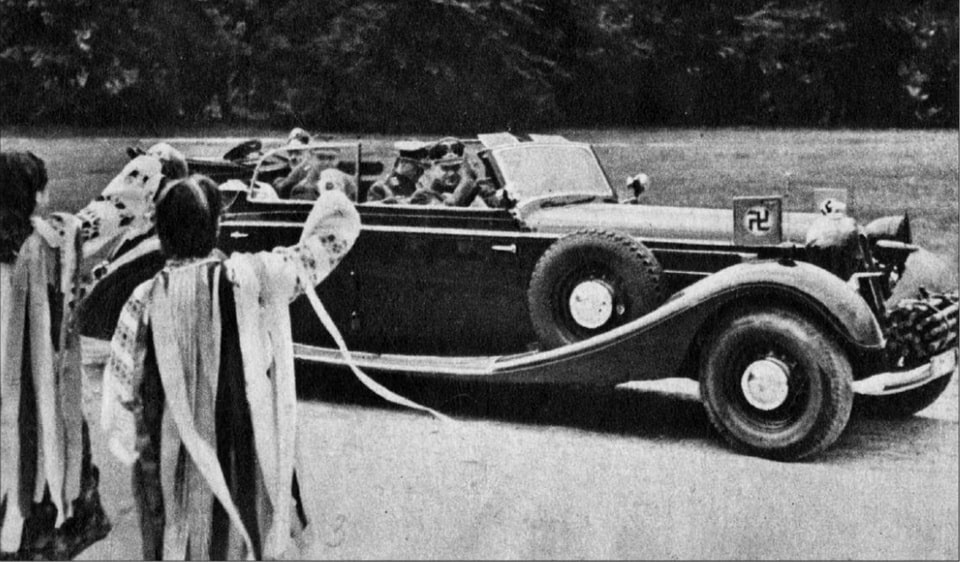

In the evening of the same day, the Germans, particularly Erich Koch, held a pompous reception aimed to signify the visit of Rosenberg. In his speech, Rosenberg stressed the need for the Ukrainians to integrate into the new Nazi vision of their land. At the same time, he underlined one more time that feeding German people is the highest priority in the East.


LANDING IN OCCUPIED KYIV: BROVARY AIRFIELD AND ROSENBERG’S ARRIVAL, JUNE 1942
June 19, 1942, was the starting point of Rosenberg’s long-planned visit to Ukraine, and the delay in railway connections made it possible to make the date of the visit close to the anniversary of the German invasion of the Soviet Union a year before. The next day, June 20, a large procession departed for Kyiv. Although Koch and Hitler intentionally diminished the significance of the old Ukrainian capital, Kyiv, it was the largest city that the Germans managed to occupy in the East so far, though now the population decreased from the pre-war 930 000 (600 000 in Odesa, 530 000 in Dnipropetrovsk, 300 000 in Minsk) in June 1941 to less than 400 000 in the Spring of 1942. Kyiv is the mother town of the whole of Eastern Europe and the Orthodox world, a pearl of Christianity next to Constantinople and Rome. Among its historical, cultural, and industrial significance, Rosenberg had his largest ‘Einsatzstab Reichsleiter Rosenberg’ (Reichsleiter Rosenberg Taskforce) in the city, which was a kind of counterforce to Koch’s influence in Rivne. In this respect, Rosenberg probably craved to leave Koch’s kingdom to see his own.

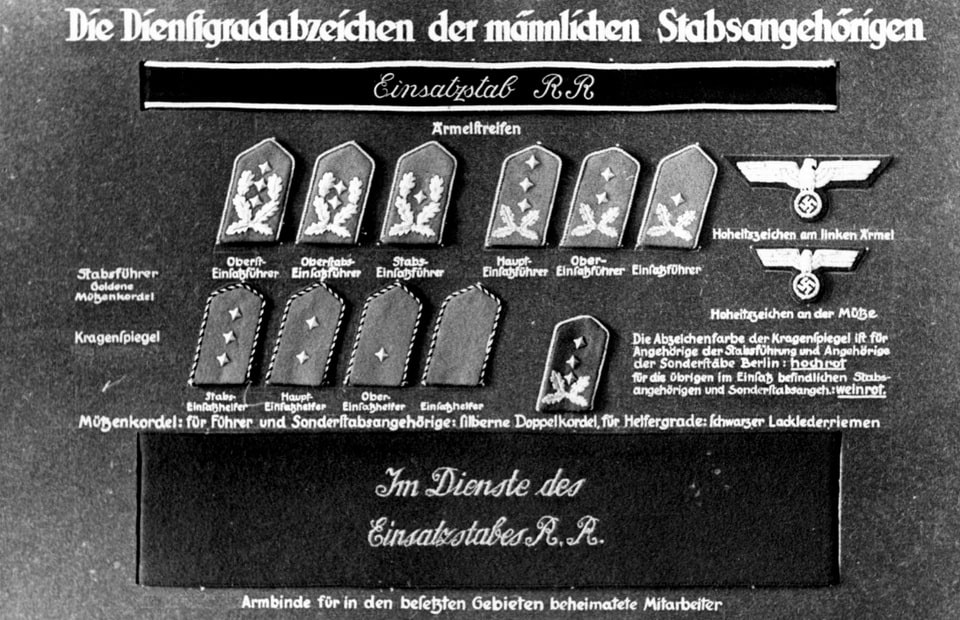
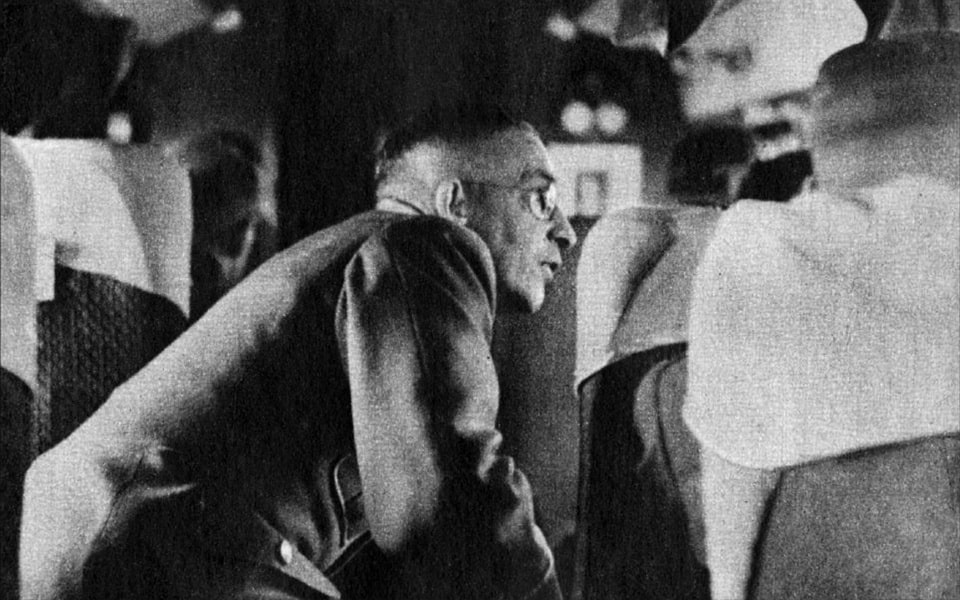
The reason why the German procession chose a plane rather than a train or motorcade was evidently a matter of security, as the journey of 350 kilometers across a hostile country was dangerous for both Rosenberg and Koch. The propaganda brochure later included a passage about a discussion that took place during the flight. According to it, Reich Minister and his deputy Alfred Meyer discussed the state of the agricultural lands in Ukraine and the work that had been done by the German occupation forces to ensure a new harvest of 1942, despite all faults of the Soviet collectivization in the previous two decades. Rosenberg’s claim that the German ‘liberation’ fueled Ukrainian countrymen with enthusiasm and energy to work on designated spots of land was, of course, false and an unprecedented act of fakery. It is a fact that the Soviet system was a competitive evil, and the Communist regime drained resources from Ukraine and killed millions of people during collectivization and Holodomor in the 1920s and 1930s. In the summer of 1941, the Germans were shocked by the level of poverty in rural Ukraine caused by years of Sovietization, but they were as ruthless as Stalin’s regime to drain supplies from Ukraine to the last sack of grain, as the communists before them. Above that, the poverty of peasants made Germans feel even more superior. On September 30, 1941, the so-called ‘Economy Inspectorate South’ banned peasants from nearby villages from entering Kyiv and selling supplies, thus initiating a kind of food blockade of the Ukrainian capital.
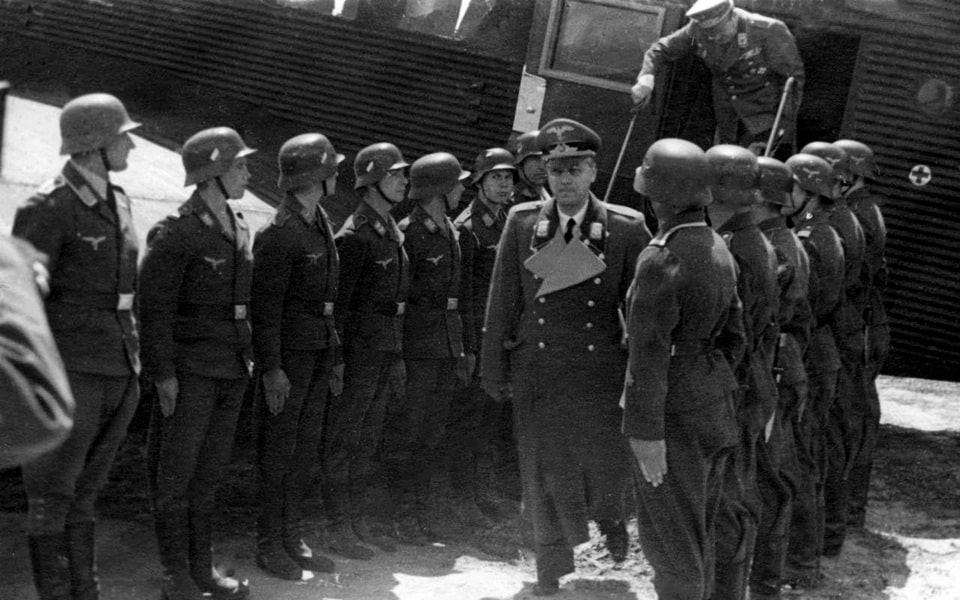
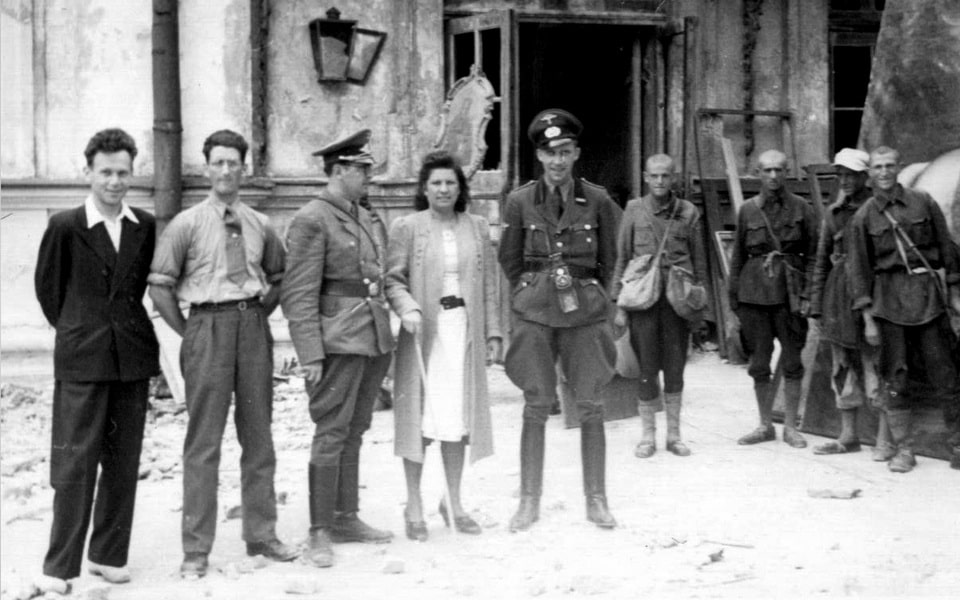
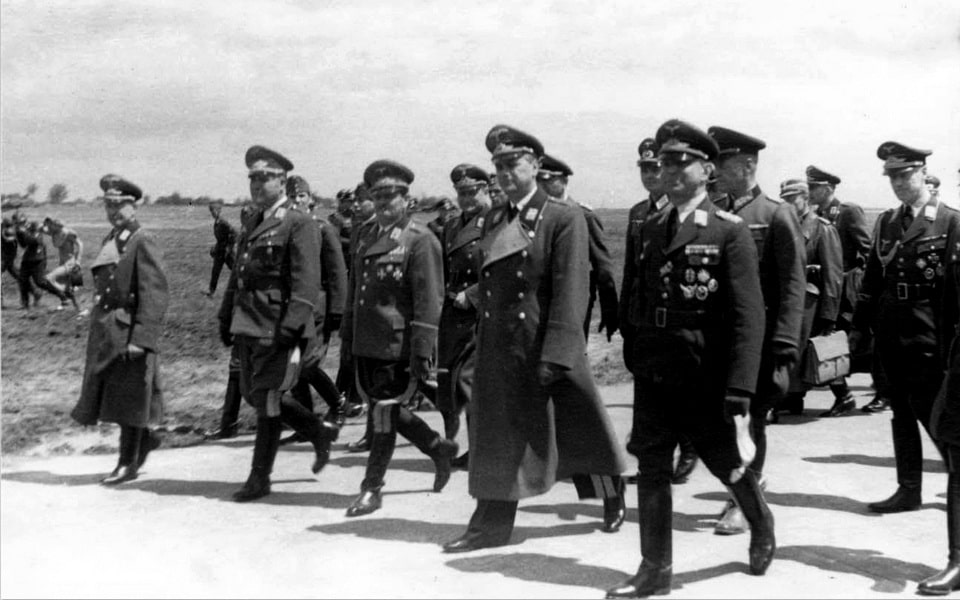
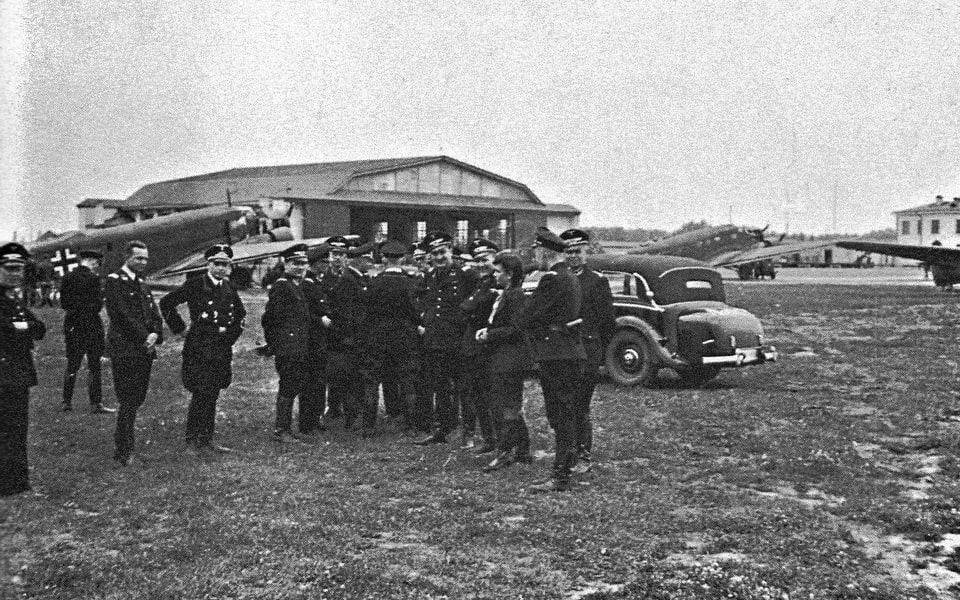
The plane with a delegation of Koch, Rosenberg, and their subordinates flew over the city of Kyiv from West to East and landed on a long landing strip on one of the pre-war airfields in Brovary, a small city in the vicinity of Kyiv. Brovary traces its history to the early 17th century, when it was a Cossack settlement. The first large road between Brovary and Kyiv emerged in 1836 and 1868 and witnessed the construction of the railway station and line. Toward the end of the 19th century, its population was 4300 people. After the German invasion in 1941, the headquarters of the so-called Soviet ‘Southwestern Front’ was stationed in Brovary. When the German plane landed at the former main airport of Kyiv in Brovary on June 20, 1942, a cameraman was the first person to leave the plane to take photographs of Alfred Rosenberg. Several preserved photos depicted Rosenberg, Koch, Meyer, and others at the airfield, greeted by commanders of the local police, SS, and party functionaries in Kyiv. Rosenberg personally reviewed a detachment of the Luftwaffe soldiers who used the airfield.
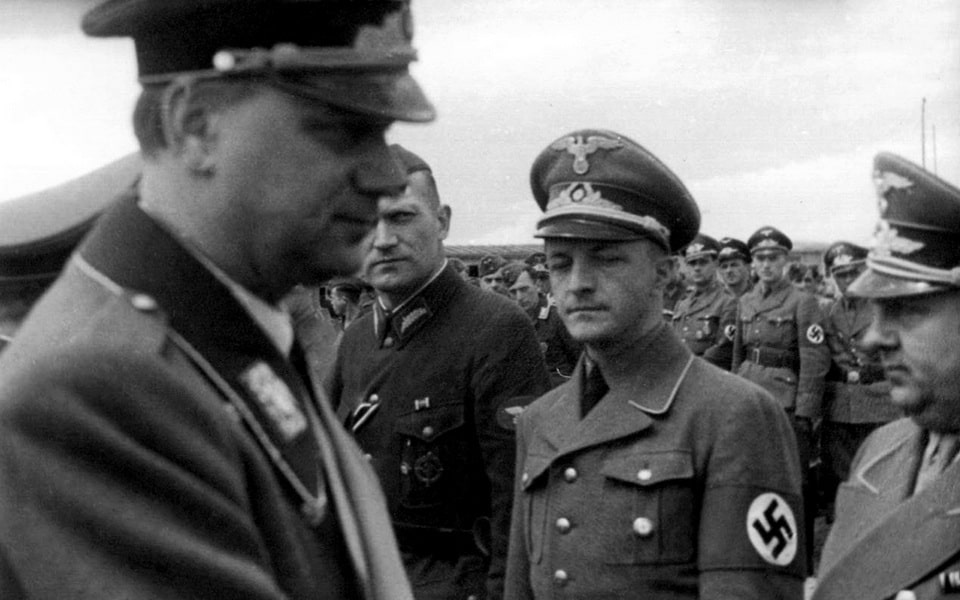
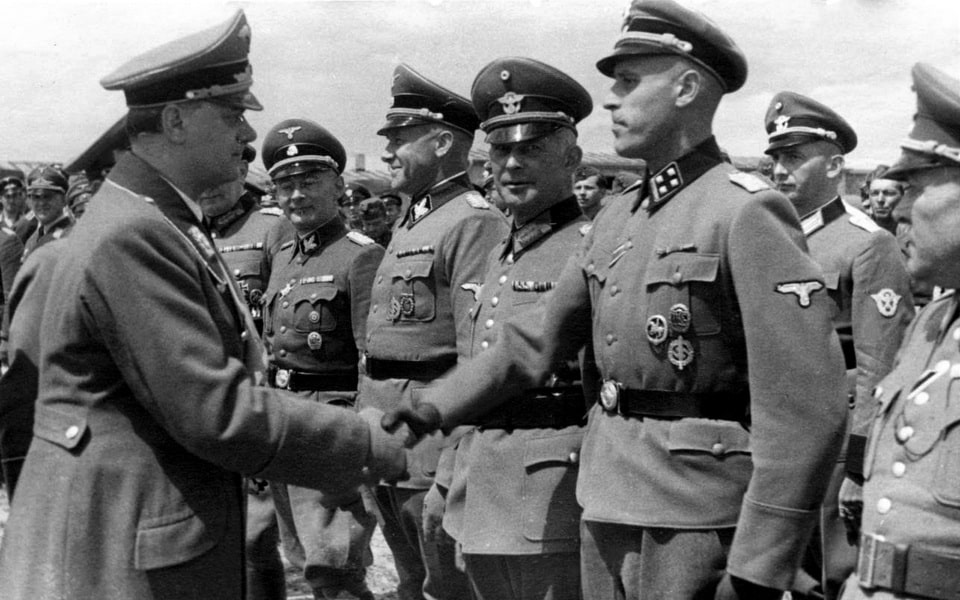
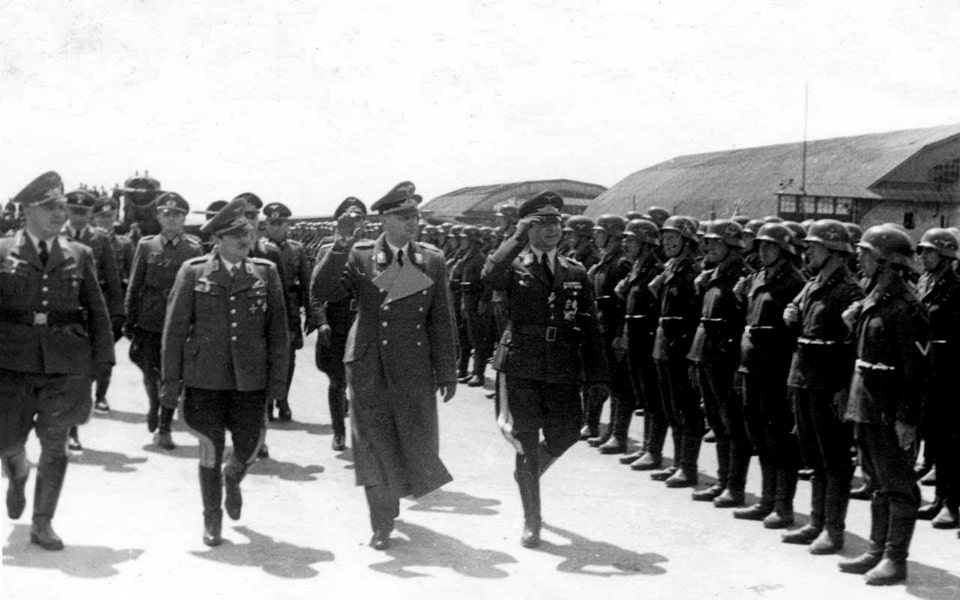
While Romanov’s Empire was hardly a pioneering country in aviation, between 1910 and 1916, four different airfields were set up in the vicinity of Kyiv. One of them was set up in the Brovary area. As early as 1913, this airfield witnessed a combined arms military exercise with the involvement of a separate air unit. At the same time, Kyiv would not have its full-fledged civil airport until the mid-1930s, while some flights between Kyiv and Kharkiv (then the capital of Ukraine) became a reality after 1924, using a landing strip in the Southern part of Kyiv, at the site of the modern Zhuliany airport. As late as 1931, it was decided to build a fully functional airport for Kyiv, and the old airfield of the Tsarist times in Brovary was chosen as a location. It is interesting to note that the Soviet regime organized a propaganda campaign and collected 4 million karbovanets (Ukrainian currency at the time) for the creation of an airport, thus financed not by the state but by people in Kyiv and nearby areas. It should also come as no surprise that the Communist government used the labor of people, who were ordered to assist in construction in their spare time after their main work. The first phase of construction in 1932-1933 coincided with a man-made famine in Ukraine, masterminded by Stalin, which demanded the lives of 3.5 to 4 million people in the country, thus making the building of the Brovary airport a hell of a job. Taking money from people and forcing them to work to death was a common feature of the Communist regime.

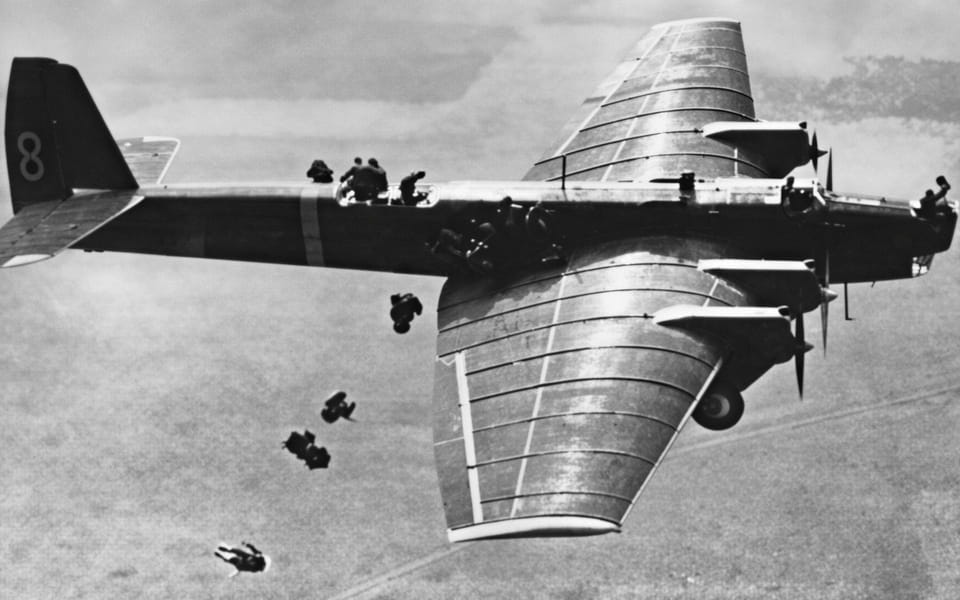
The Brovary airport was technically opened in February 1933, with the first full-fledged flight possible in August of the same year. The new airport was one of the most modern in the Soviet Union, with a large airport terminal building (finished in 1936), service hangars and workshops, a canteen, etc. The working staff of the airport got apartments in two residential buildings, which had been previously built by compulsory labor next to the airfield. As early as 1935, a new line between Kyiv and moscow supplemented the schedule. In September 1935, the Brovary airfield witnessed large-scale military exercises with the landing of 1188 paratroopers and 1765 soldiers of two rifle regiments with machine guns, an artillery unit, and even one tank. It is interesting that among the high-ranking army officers who attended the event in Brovary were two later notorious Soviet warlords of WWII, Georgy Zhukov and Semyon Budyonny. In May 1940, a new line to the recently seized Lviv (from Poland in September 1939) was opened from Brovary, which made it possible to reach the capacity of 50,000 passengers in 1940. In the last pre-war month of June 1941, the Brovary airport serviced up to fifty planes daily. Apart from civil use, the landing strips were used by local military air units.
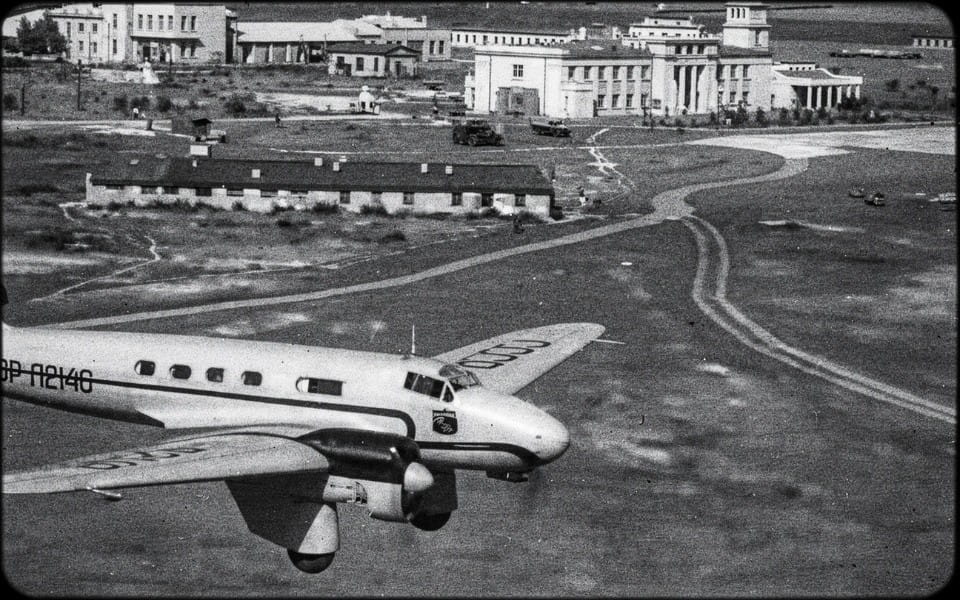
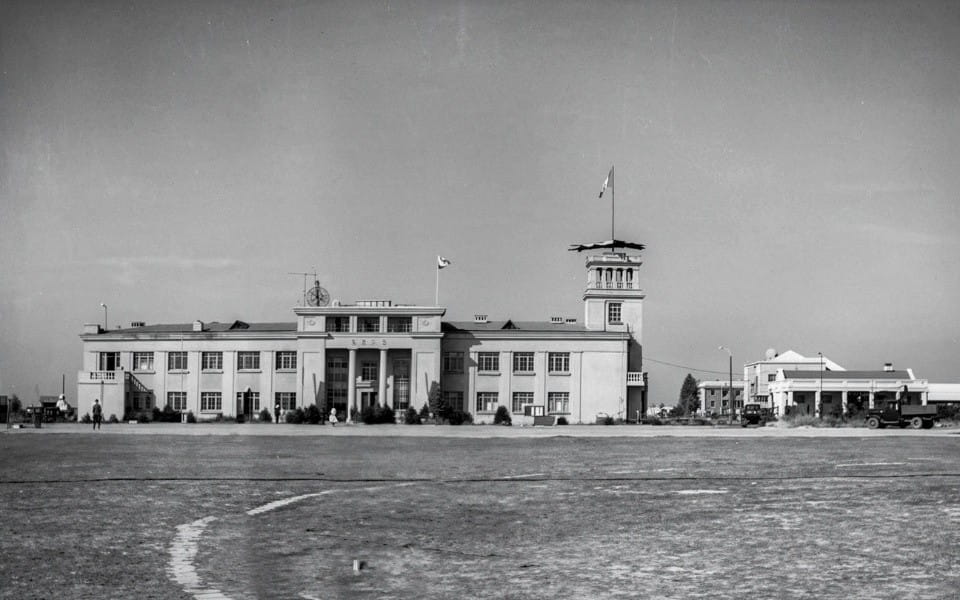
Brovary was beyond Germany’s first massive air attack on Kyiv on June 22, 1941, but it was spared for only three days. On June 25, Junker 88 and Heinkel 111 bombed the Brovary airport from a low height of one hundred meters. Only nine German bombers were enough to almost destroy the terminal building, killing at least two hundred people who at the time of the attack were in the canteen, destroying a dozen planes on the ground. Despite the heavy damage, including to the landing strip, Brovary was actively used by Soviet forces in the next two months to deliver munitions, fuel, and medicine, as a landing place for Reconnaissance planes, and as a means to evacuate those wounded. After the seizure of Kyiv, the Germans used the airfield for direct purposes, including receiving a delegation with Rosenberg on board in June 1942. The city of Brovary was retaken by the Red Army in September 1943, one and a half months before the liberation of Kyiv itself, and Brovary airfield was temporarily used by air units.
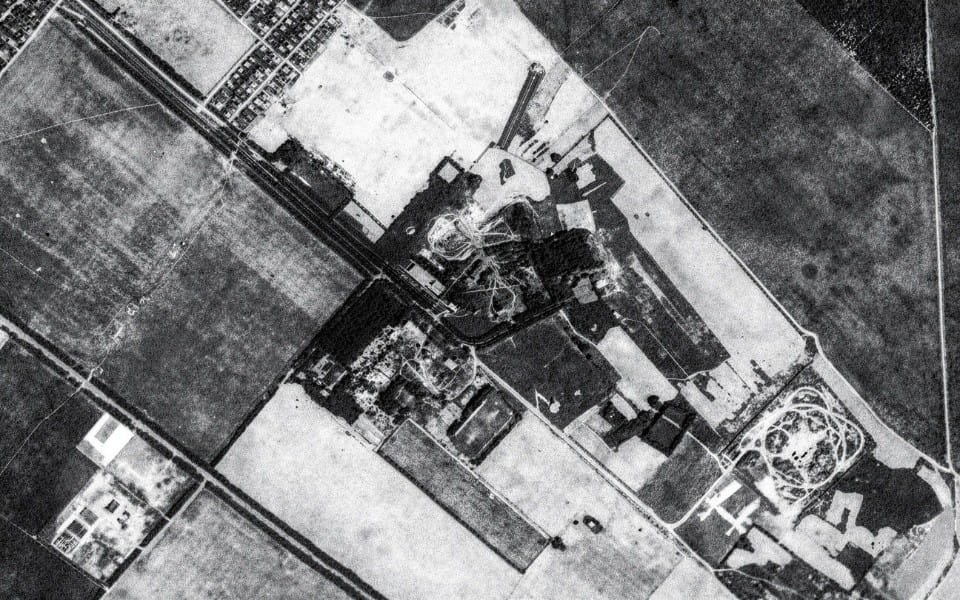
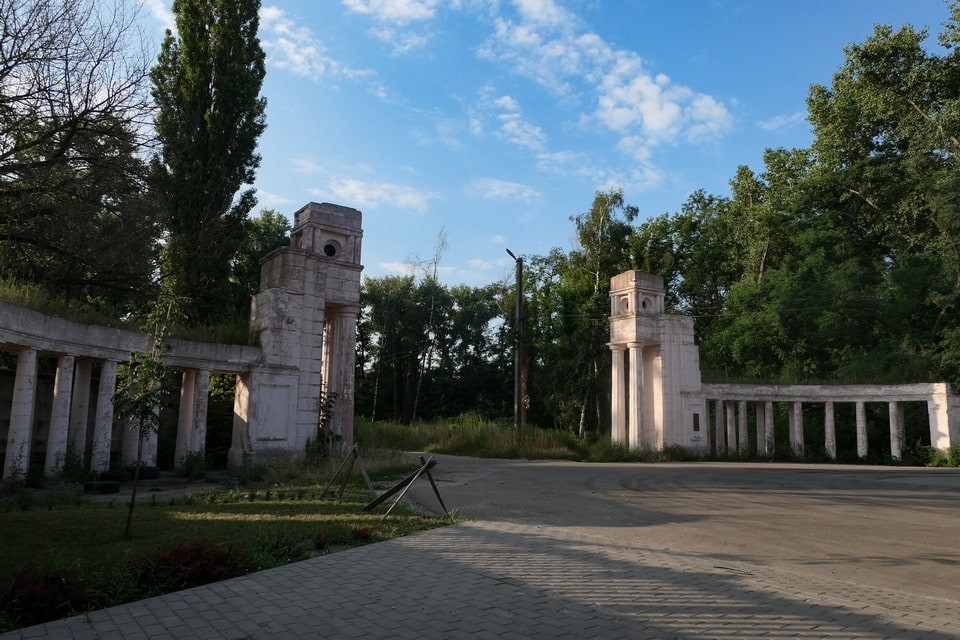
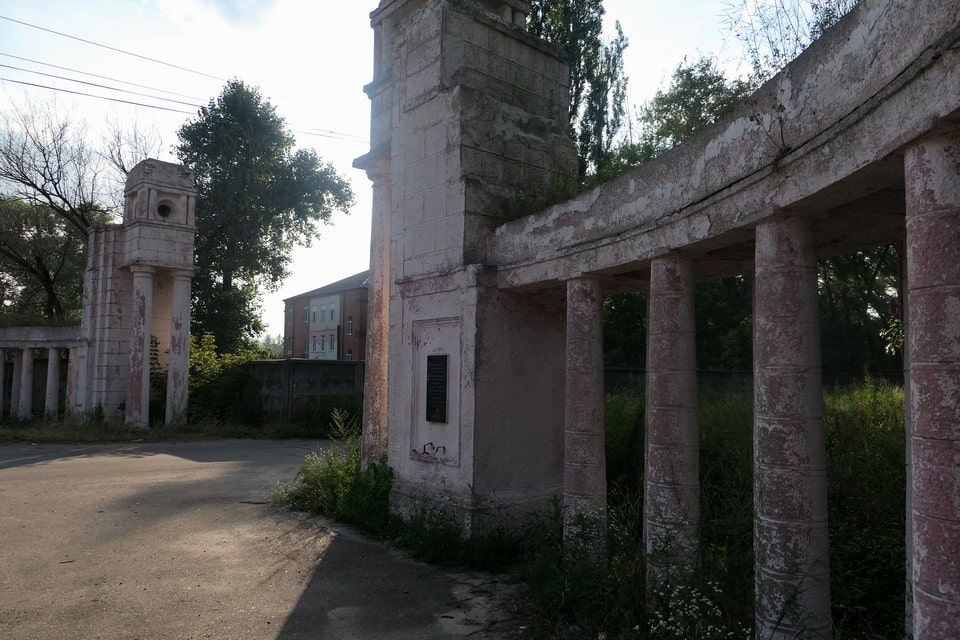
After the War, it was decided not to restore this air gate and instead build a new airport in modern Zhuliany. For decades, the territory of the former main airport of Kyiv has been falling into decay. Among the pre-war erections, several residential buildings from the late 1930s are still usable by local people, who live in one of the poorest conditions in Kyiv. While the major part of the former vast area is abandoned, at least a part of it is being used by a local shooting complex. Evidently, the most memorable heritage of the old Brovary airport is the propylaeum, a remnant of the former entrance to the area. Also, a small Soviet monument, a figure of a soldier who went to his knee, can still be identified in the field of grass.
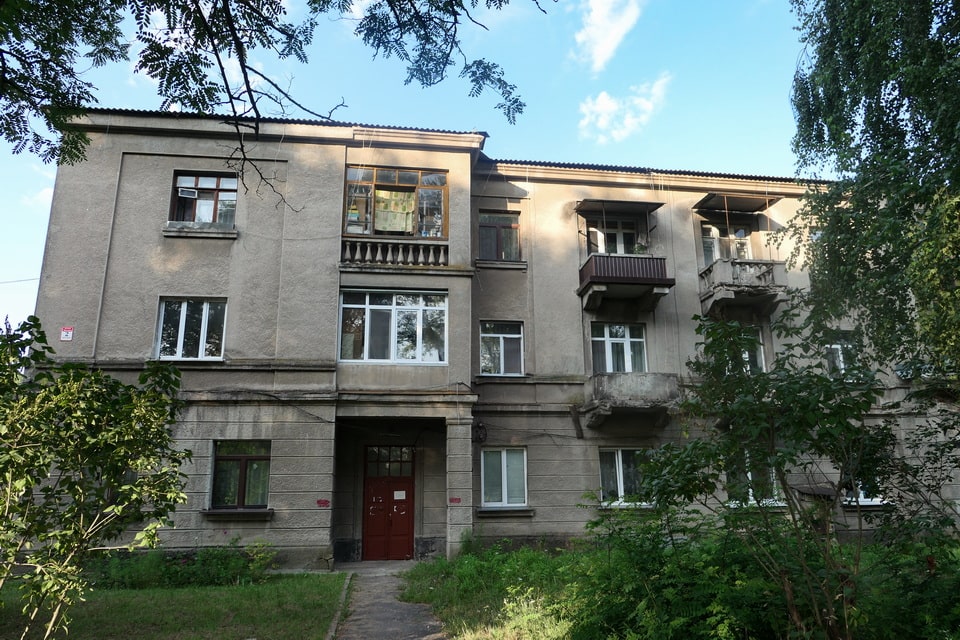
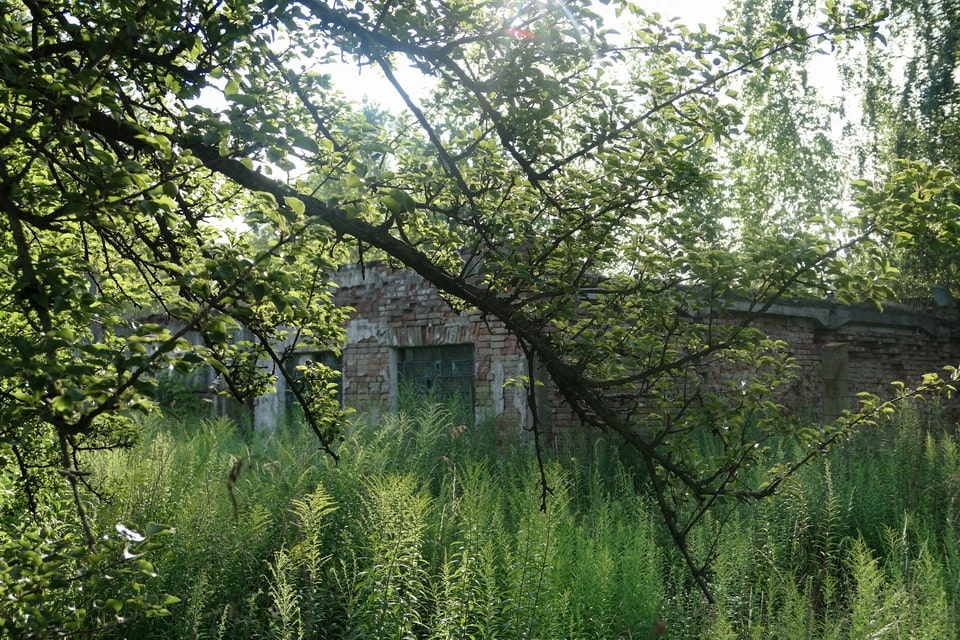
REICHENAU BRIDGE OVER THE DNIPRO: THE GERMAN MILITARY BRIDGE IN KYIV 1941–1943 AND ROSENBERG’S CROSSING
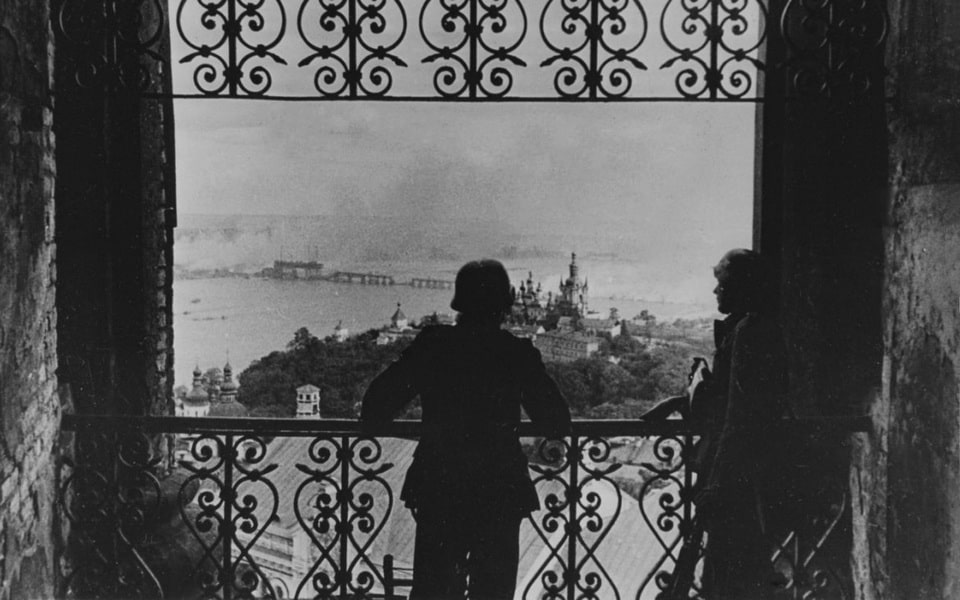
If we take a look at the German wartime map of Kyiv, the interstate between Brovary and Kyiv was simply marked ‘Nach Browary 20 km, Govel 250 km’. After ceremonial arrangements at the airfield, the German delegation, with Koch and Rosenberg, changed the means of transport to a motorcade. They covered approximately 20 kilometers to reach the city borders of Kyiv, passing by the infamous ‘Bykivnia graves’ with mass burials of the victims of Soviet NKVD. In the years of the ‘Great Terror,’ the Soviet regime killed and buried at least 30-35 000 Ukrainians in this forest, and at least 2600 Polish prisoners of War were killed here in March 1940. The site is less well-known to the public than the infamous Katyn forest. As the Soviet troops destroyed bridges in Kyiv during their retreat in 1941, on June 20, 1942, the German delegation had only one option on where to cross the river to enter the key right bank of Dnipro. At that time, it was the so-called ‘Reichenau bridge.’ There is a preserved photograph of an escort vehicle from Rosenberg’s motorcade on this bridge while crossing the river Dnipro with the legendary Kyiv-Pechersk Lavra in the background.


In September 1941, before the retreat from Kyiv, Soviet troops mined Khreshchatyk, as well as some other buildings in the central part of the city, but few people know that at that time the bridges over the Dnipro were also mined: Zaliznychny, Darnitsky, Navodnytskyi, and Yevgenia Bosch bridge. On September 19, units of the NKGB blew up the metal trusses of both railway and truck bridges (named after Yevgenia Bosch) across the Dnipro, setting fire to the wooden Navodnytskyi bridge. Not all Red Army soldiers even managed to cross over to the left bank; some died during the explosions, as well as civilians. Stalin’s order of the ‘Scorched Earth’ was uncompromising when it came to the lives of ordinary Soviet people, as, according to the Communist worldview, all these people under occupation were, in one way or another, traitors.
The first documented crossing on the site where Rosenberg in 1942 crossed Dnipro, traced back to the XI century as one of the first river crossings in the ancient city, the capital of the mighty ‘Kyiv Rus’, one of the most powerful state formations in Europe at that time. In the 16th century, the Navodnytskyi crossing consisted of two ships that transported people and goods between two river banks. The first full-fledged wooden bridge on this site was built as early as 1744: it was 960 meters long and reinforced by ropes made of osier from the trees at Kyiv-Pechersk Lavra. A much more impressive wooden bridge on a pile basis was built here in 1915 during WWI. An impressive erection of 1780 meters in length was set on fire five years later, in June 1920, this time by the retreating Polish troops during the Polish-Soviet war. In 1921, the bridge was mainly restored and then used until the mid-1930s. The Soviets built a new wooden bridge in 1935, the one they blew up in September 1941 with people on it. As early as 1939, the construction of a permanent metal bridge with supports on a caisson base of a through-beam system with small spans began nearby, but it was not finished by the outbreak of the war in June 1941.

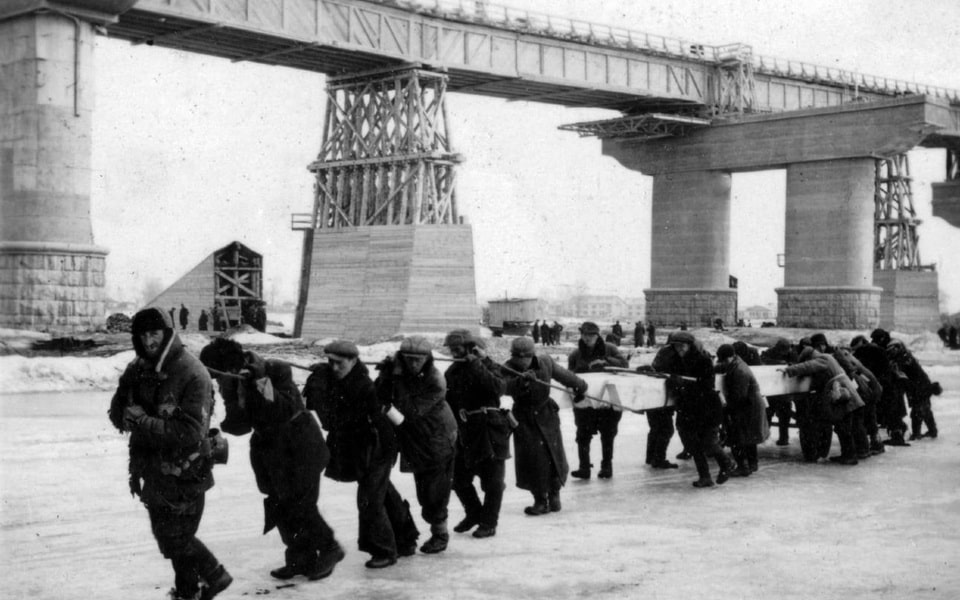


Upon the seizure of Kyiv in September 1941, the Germans faced a situation where all bridges over the Dnipro had been either destroyed or badly damaged. They even used the word ‘zerstort’ (destroyed) to mark these bridges on their maps. Anyway, the boat crossings could serve only a temporary solution, and the Wehrmacht decided to build a wooden bridge next to the destroyed Navodnytskyi wooden bridge, using the supports on a caisson base of the never-finished metal bridge. There are dozens of photos depicting the construction works during the winter of 1941/1942, which were mainly performed by Hungarian soldiers, particularly by de-mining specialists. In the winter months, local citizens crossed the river by walking across the ice. The construction works in general were finished in the Spring of 1942, a few months before Rosenberg’s visit. The Germans named it ‘Von Reichenau Brücke’ after the notorious former commander of the 6th Army, a field marshal who had died on January 17, 1942. They would destroy it during the retreat in the Autumn of 1943. After resizing Kyiv, the Soviets built a temporary wooden crossing on the site (used until 1944), and as late as 1953, the modern Paton Bridge was erected. Several pier footings of the old, never-finished pre-war bridge can still be identified nearby.


KYIV-PECHERSK LAVRA UNDER NAZI OCCUPATION: ROSENBERG’S JUNE 1942 VISIT AND THE 1941 GREAT BELL TOWER EXPLOSION
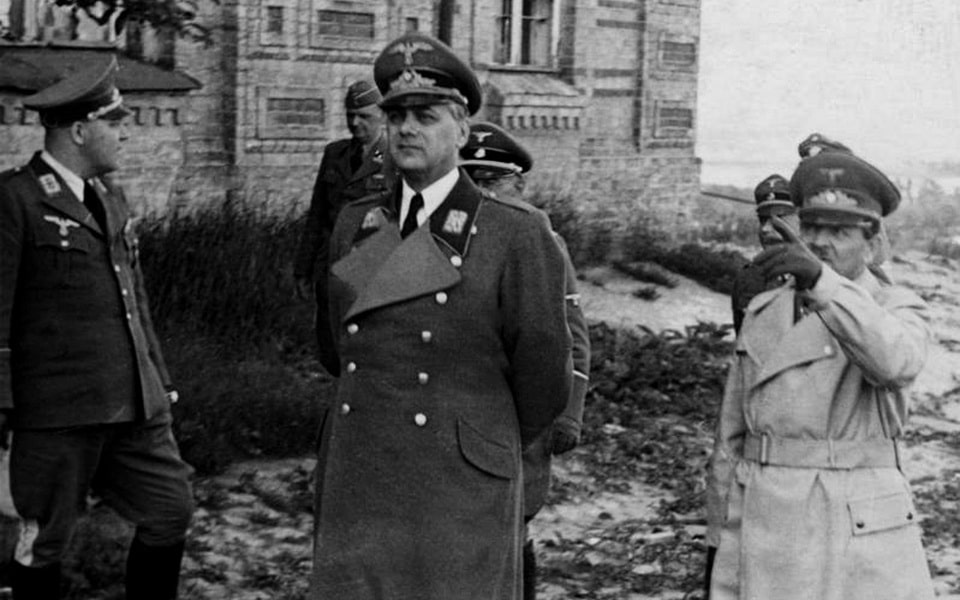
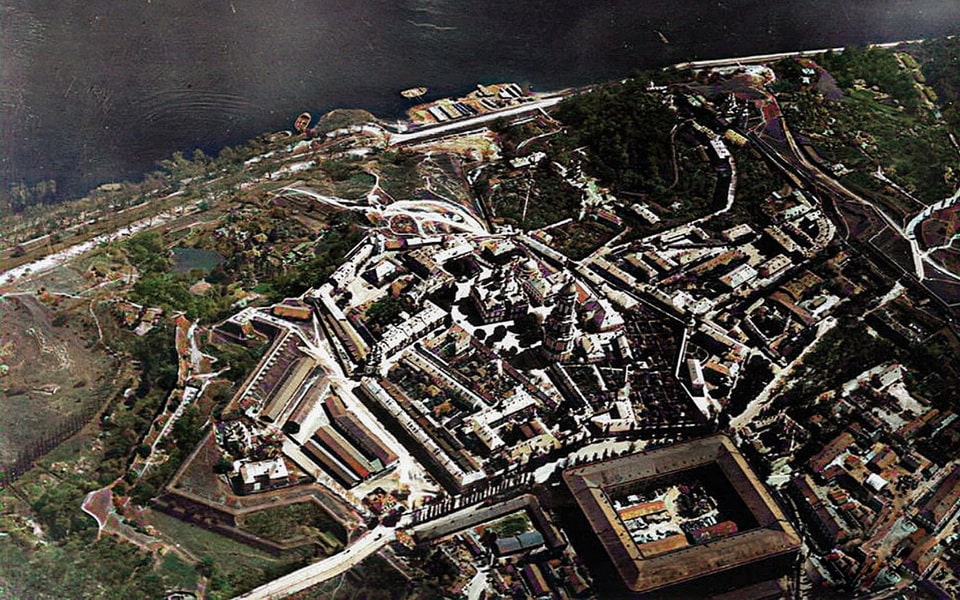
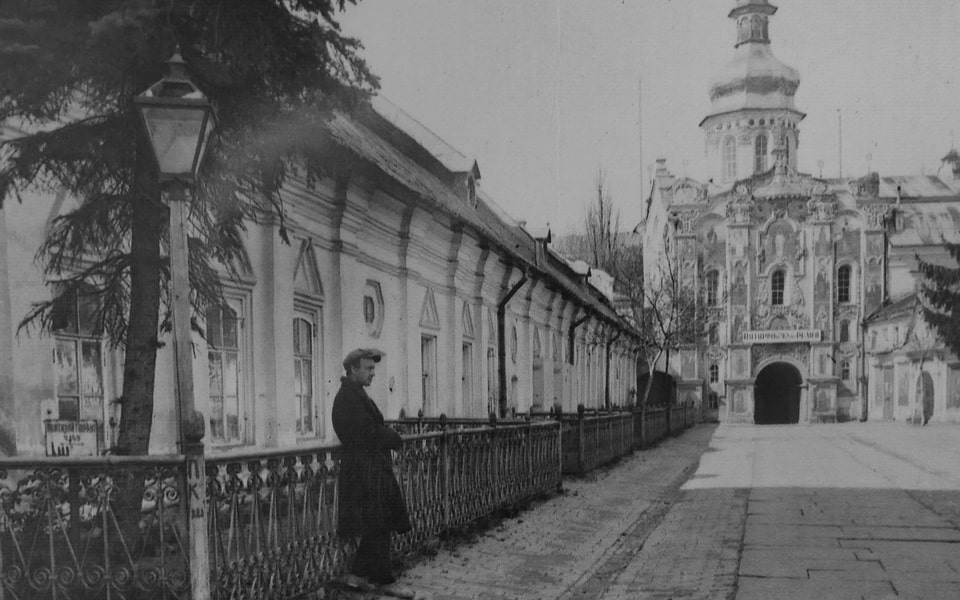
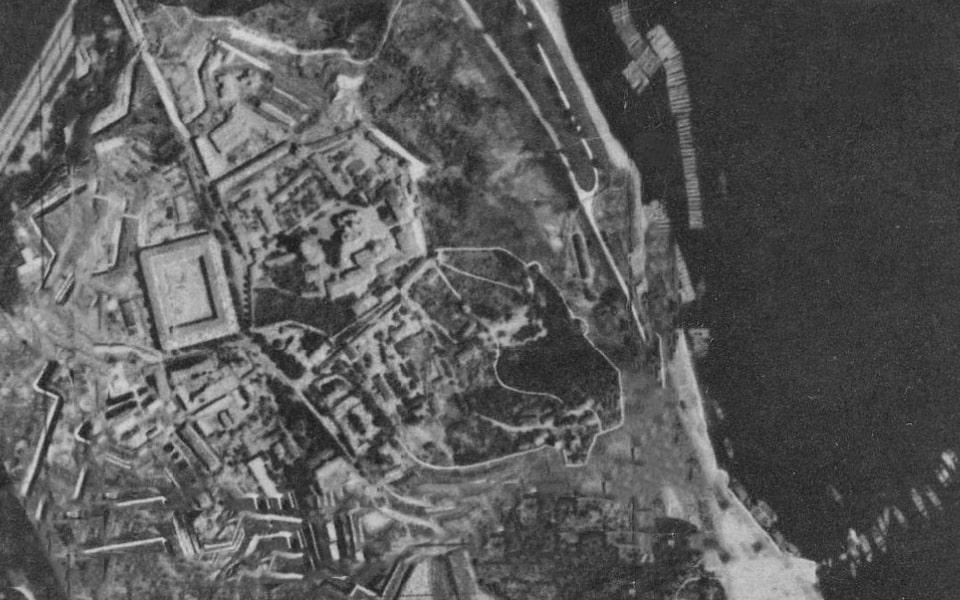
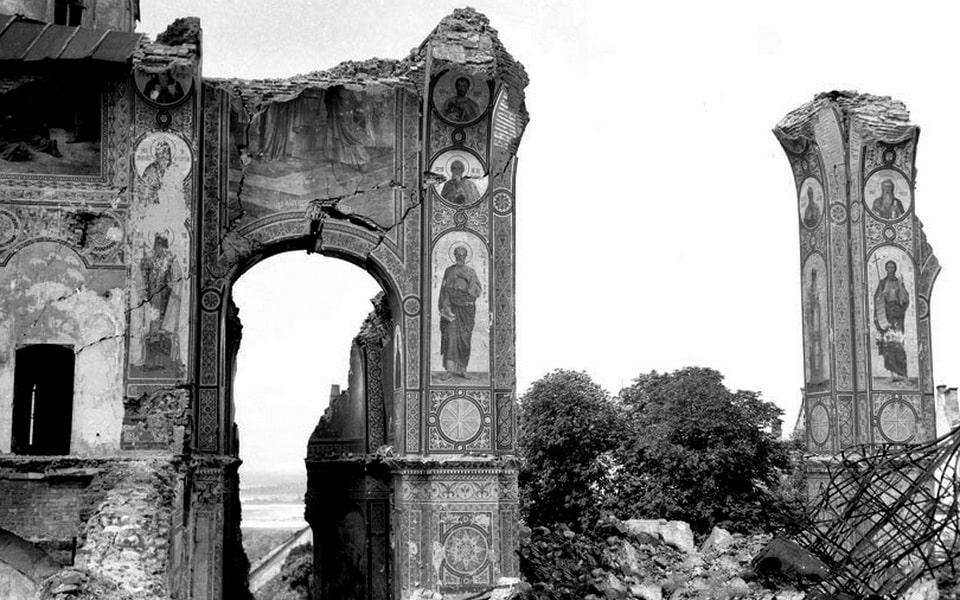
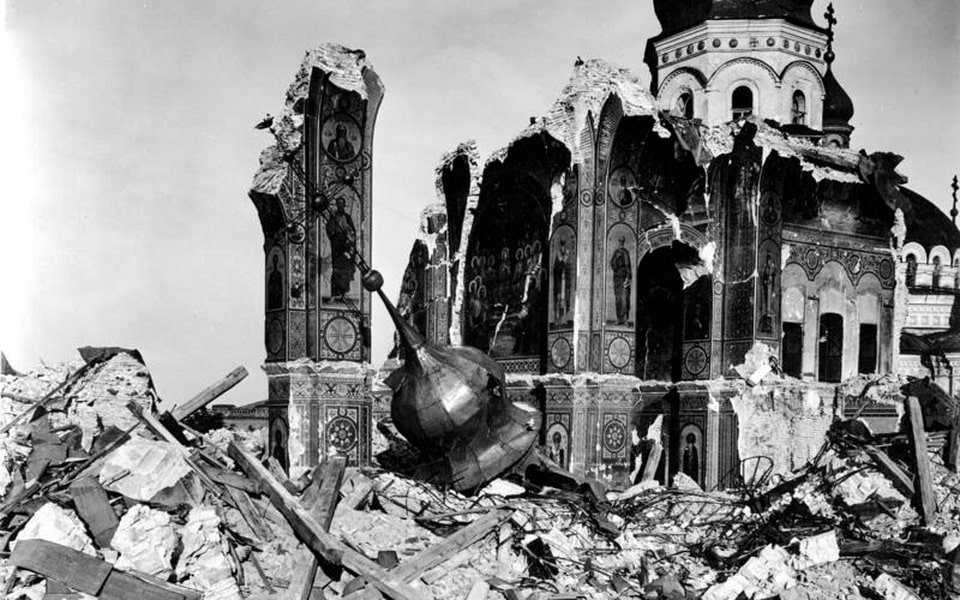
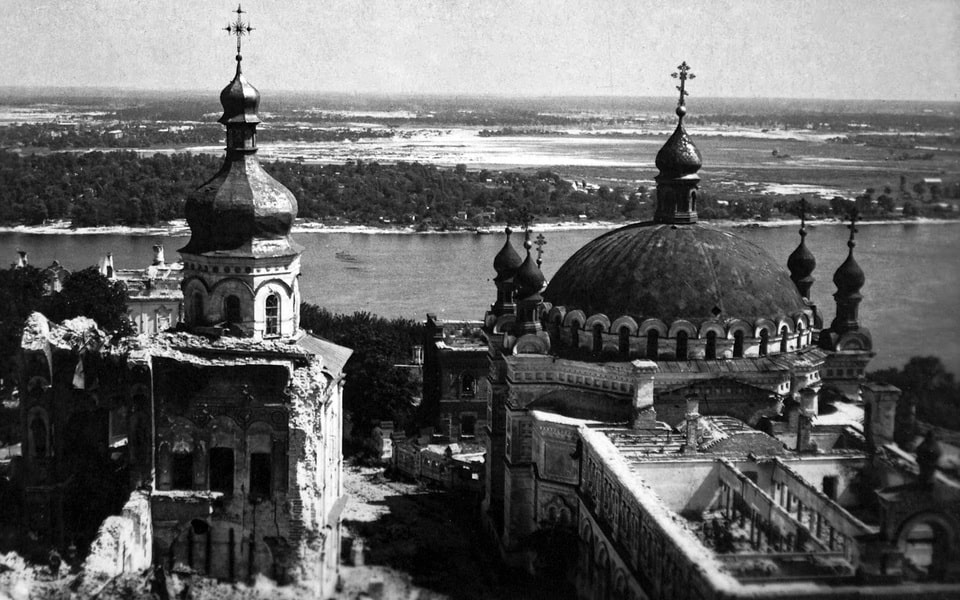
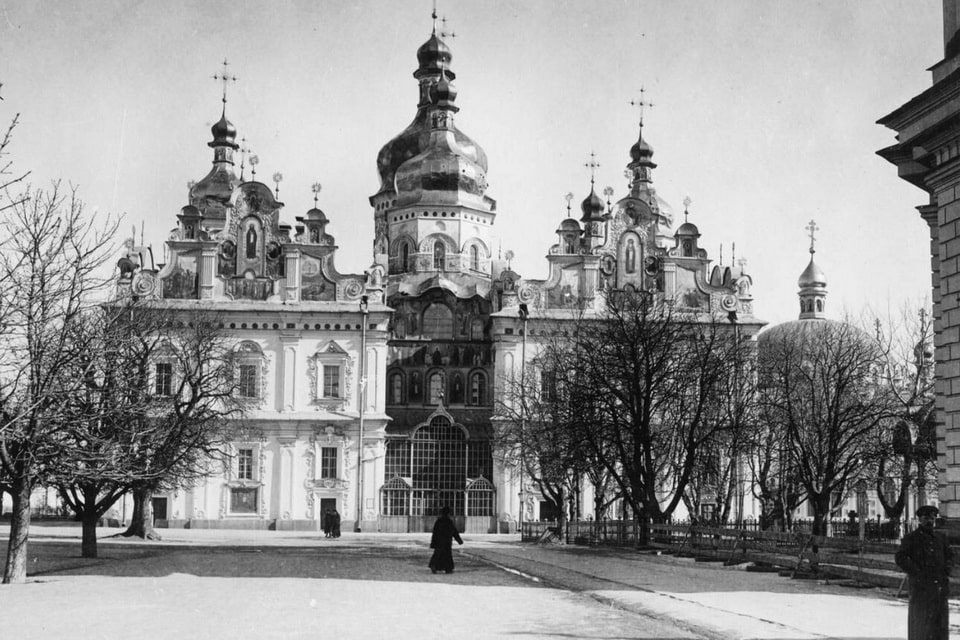
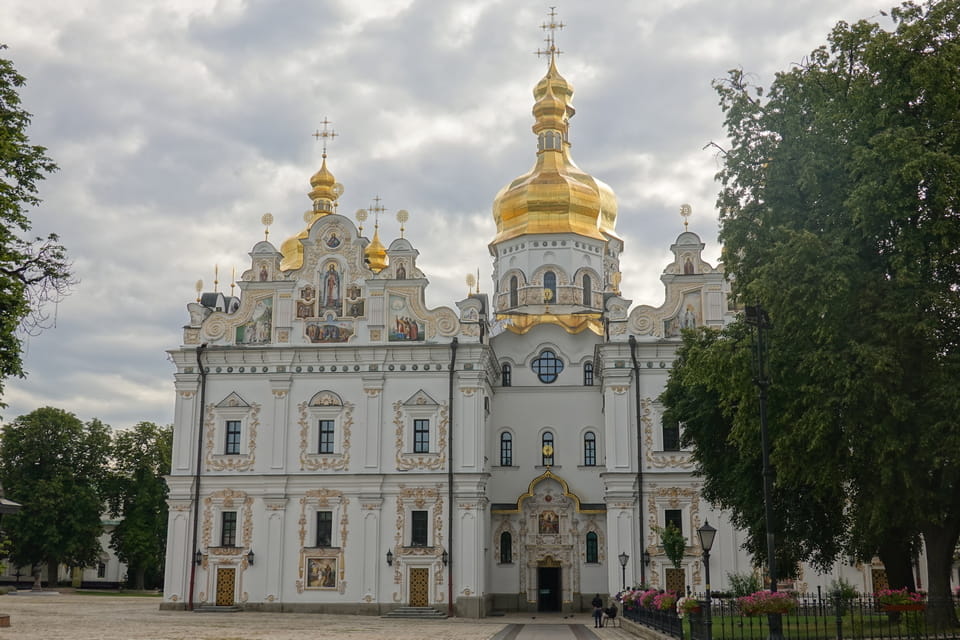
When the cortege procession entered the main right-bank part of Kyiv, the cars headed for Kyiv-Pecherska Lavra, an iconic historical and religious complex, a heritage of all Ukrainians. A few minutes before, they could observe a magnificent Bell Tower, which dominates the landscape and is easily visible from the bridge. Kyiv has been historically known as the ‘Second Rome’ and is known for its historical hills as well. Koch, Rosenberg, and their retinue left their cars in the heart of the Lavra complex near the Bell Tower, the devastated Assumption Cathedral of the Holy Mother of God. There are several photos of Minister Rosenberg, who walks near the ruins of the ancient Cathedral, which had been blown up by the Soviet NKVD units in September 1941. The later published propaganda booklet of his visit to Ukraine would include his comments that the Communists had turned an ancient sacred place into the propaganda of godlessness and atheism. Another interesting photo shows Koch and Rosenberg next to the art workshop with a panoramic view over the Dnipro River.
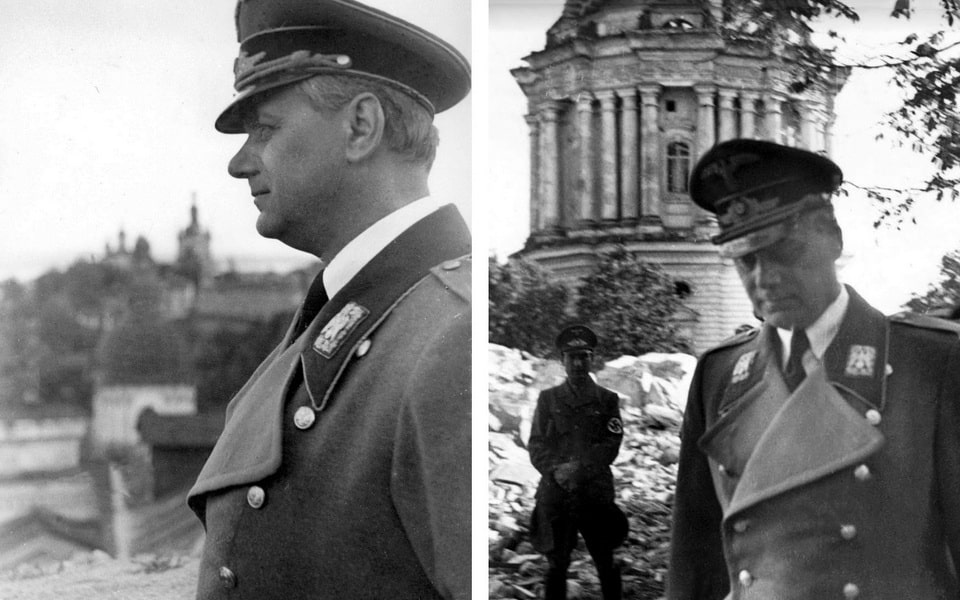
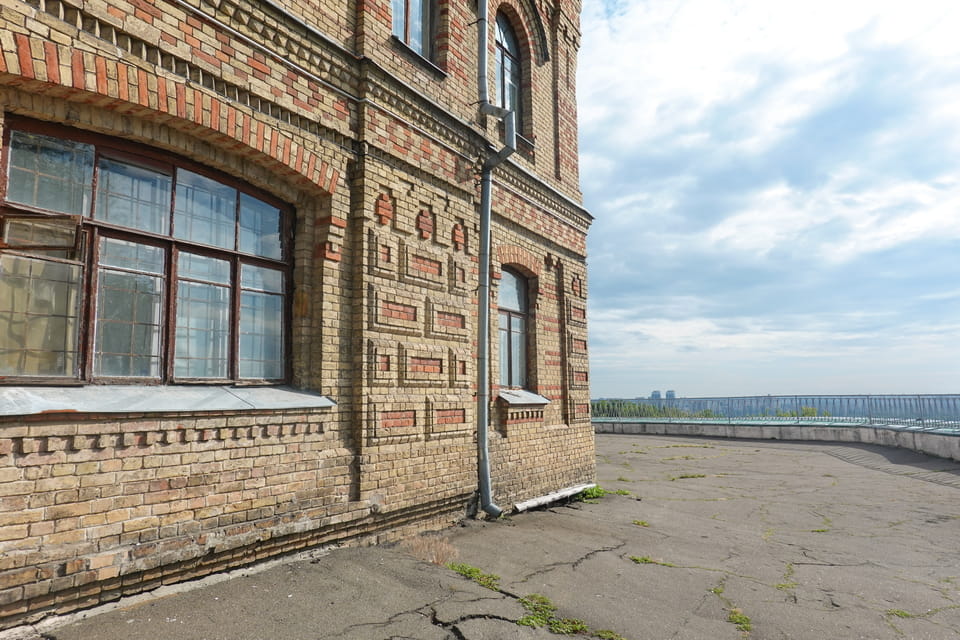
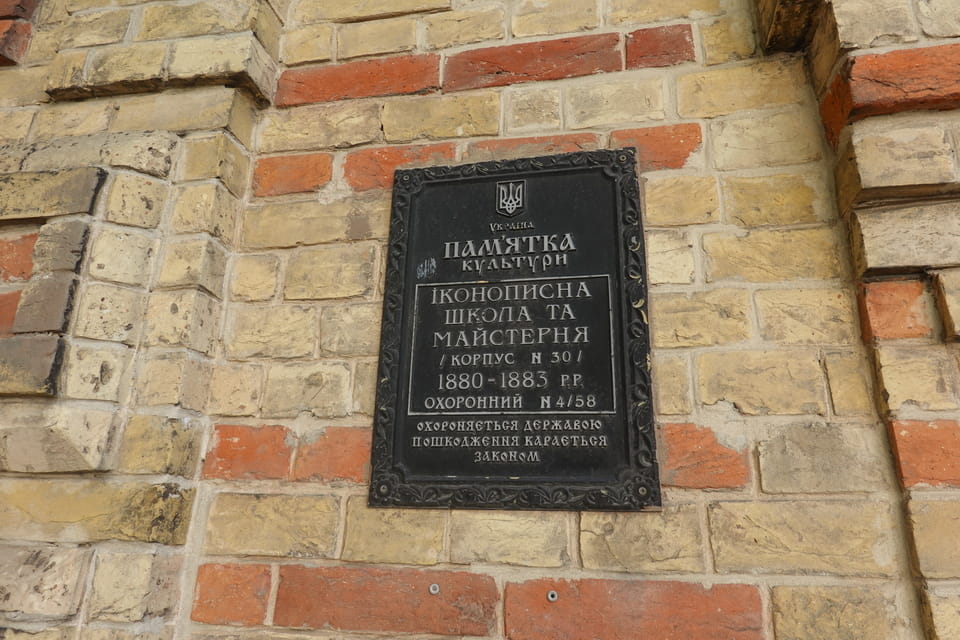
Kyiv-Pechersk Lavra traces its history to the middle of the XI century when the complex of religious buildings and caves on the high bank of the river Dnipro became the heart of the Orthodox religion in the ‘Kyiv Rus’ state. The Assumption Cathedral was built in five years between 1073 and 1078 and finally opened for church service in 1089, which makes it one century older than the famous Notre Dame in Paris. Through the centuries, the Cathedral was one of the most recognized pearls of Christianity in Europe. It witnessed major renovations first in the XVII century, and later in the first half of the XVIII century, and turned into a remarkable example of baroque style. The dark times came with the occupation of Ukraine by the Communist regime when the Lavra was closed in 1920, and its Father Superior was tortured to death. By 1929, the Soviets turned the former sanctuary into a museum city for the propaganda of atheism, forcibly evicted many of its monks, expropriated property, and abandoned Kyiv people from praying.
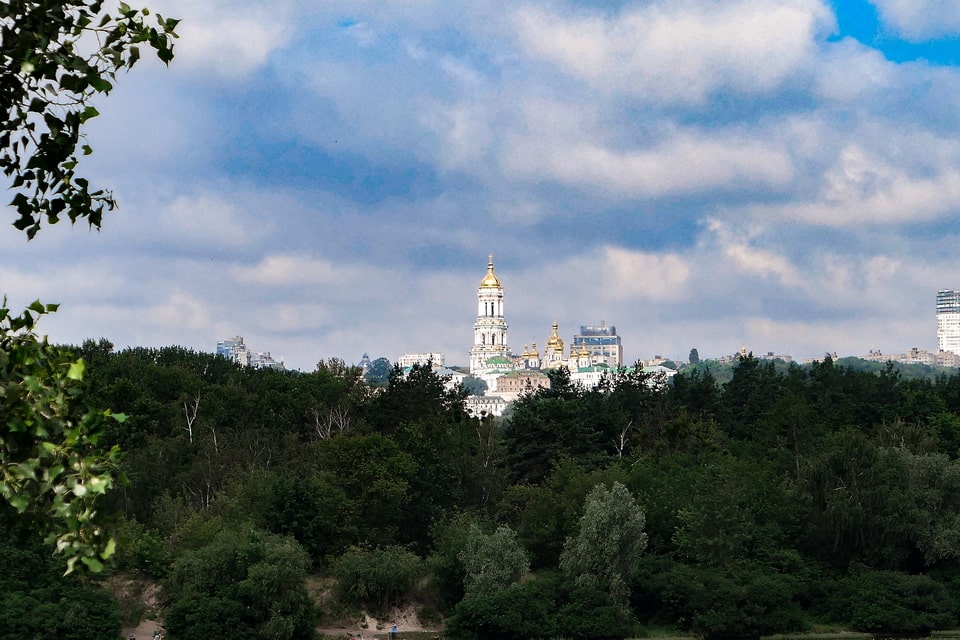
With the outbreak of the war with Germany in June 1941, the local Soviet military administration turned the Lavra complex into one of the strategic objects of defense of Kyiv. The Soviets expropriated and ‘evacuated’ valuable items one more time, evicted monks again, called to arms its staff, and later mined the area. The arrival of the Germans brought a new wave of robbery of precious historical items, particularly by Rosenberg’s ‘Einsatzstab Reichsleiter Rosenberg’. More than 4000 pieces of old weapons, the silver gate, valuable chasubles, silver cradles, evangelistaries, documents of the Hetman times from the XV-XVIII centuries, a collection of coins, ancient manuscripts, and engravings: only a small share of the taken property would be regained after WWII. In this vein. Rosenberg’s claims about the barbarity of the Communist regime are true, though the Nazis did not appear to be better than their barbaric counterparts when it came to the accumulation of property.
The culmination of barbarism in the Lavra during the Second World War was, of course, the devastation of the Assumption Cathedral of the Holy Mother of God conducted by the Soviet mining units. In the decades after WWII, the communist regime refused to admit the blowing up of Kyiv city center and the sanctuaries in the Kyiv-Pechersk Lavra complex, and modern Ukrainian historians gained access to the Soviet archives only as late as the 1990s. There is still the so-called ‘Version of German guilt’, which has neither been documented nor provided with testimonies nor provided with logical proof and exists as a reminder of Soviet propaganda and yellow-page journalism, still seeking headlines. A new generation of Ukrainian and Western historians put together conclusive evidence that Soviet units mined and blew up Kyiv in September-November 1941, killing thousands of civilians, leaving at least 50 000 homeless, and destroying the heritage of Ukraine.
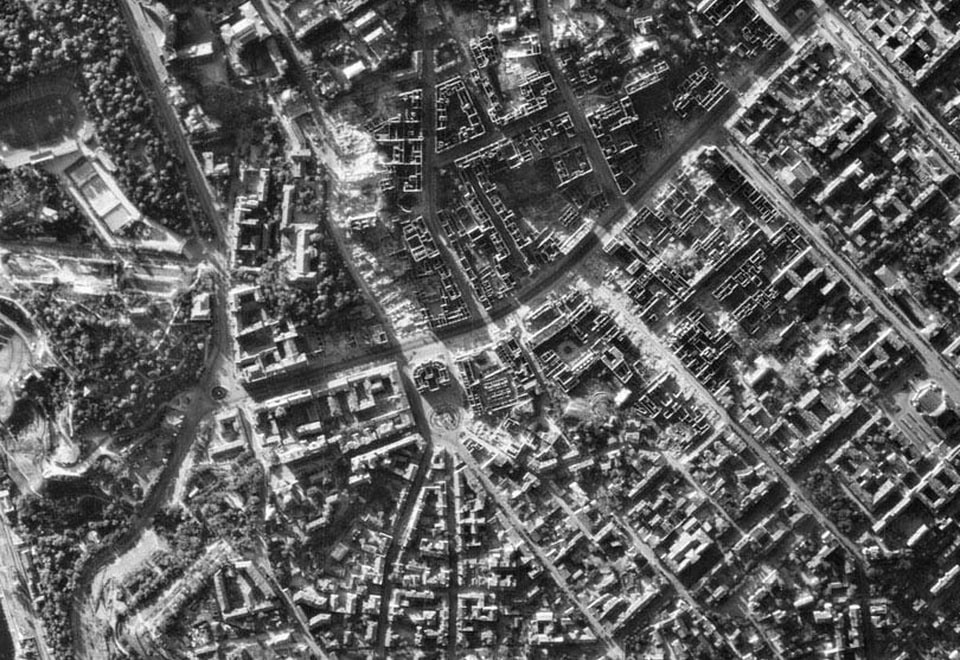
In total, five separate units of special purpose, i.e., special mine-mining, were operating in Kyiv in August-September 1941, before the Soviet retreat from the city. In addition to communications, numerous public and residential buildings were mined in the city center by these units. On September 24, 1941, five days after the Germans entered Kyiv, the explosives planted weeks before blew up dozens of buildings along Khreshchatyk, the main street of the Ukrainian capital, which set the city center on fire, which lasted until September 28, killing thousands in the fire and leaving dozens of thousands without homes or places of work. Kyiv-Pechersk Lavra was among the strategic objects designated for mining. Numerous witnesses later gave their testimonies that the special Soviet detachment set charges under the local viewpoint and in Assumption Cathedral. The logic for Communists to mine the iconic Orthodox Cathedral was based on a banal assumption that, soon after seizing Kyiv, the high-ranking German officials and officers would attend a mass prayer in Lavra and thus could be an easy target for diversion.

The later declassified documents revealed that inside the Cathedral, the units used radio-controlled charges, the control unit of which included a power battery. The operational period of a radio-controlled mine in economical mode was 40 days, plus another four days when the charge was activated. In fact, three different types of fuses were left under the Cathedral: a) through a radio signal, b) an electric detonator connected to the electrical network, and c) a conventional ignition cord. A special sabotage unit was left to activate the explosives, which carried out an explosion with the help of a fuse, namely an ignition cord. So, the cathedral was mined with a radio charge, and the electric detonator and the ignition cord served as additional fuses, which left the Ukrainian pearl to the fate of chance. The Soviets felt no regard for blowing up a sanctuary with a thousand-year history of their attitude toward Lavra in previous years, and the general distaste toward Ukrainian culture and history. The mass explosions in Kyiv correlated fully with Stalin’s policy of ‘Scorched earth’. The vanguard units of the Wehrmacht entered the Lavra complex on September 19, 1941, and at 1.30 p.m. local time, they raised the Nazi banner over the Great Bell Tower without knowing that tonnes of explosives were waiting for an appropriate moment.
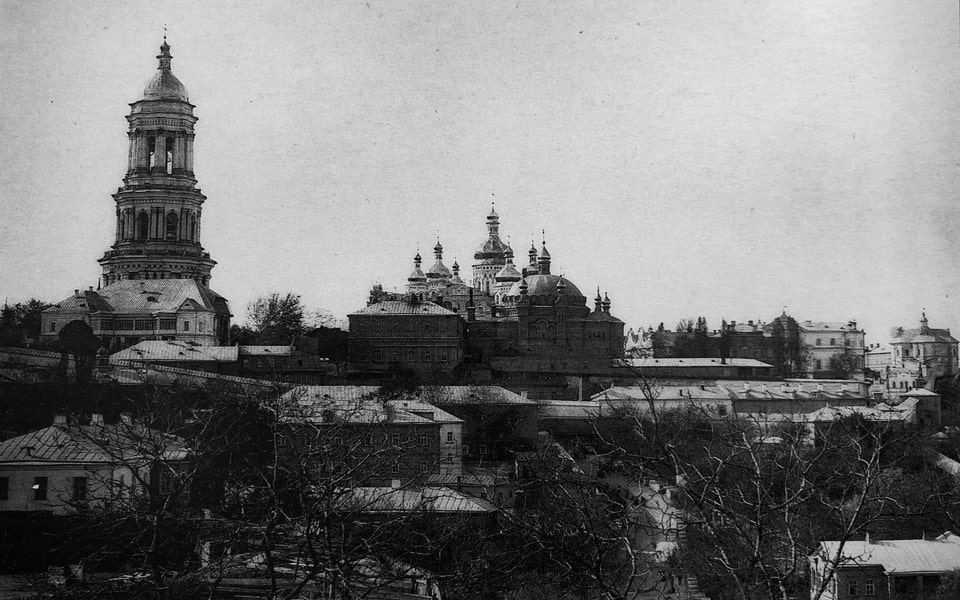
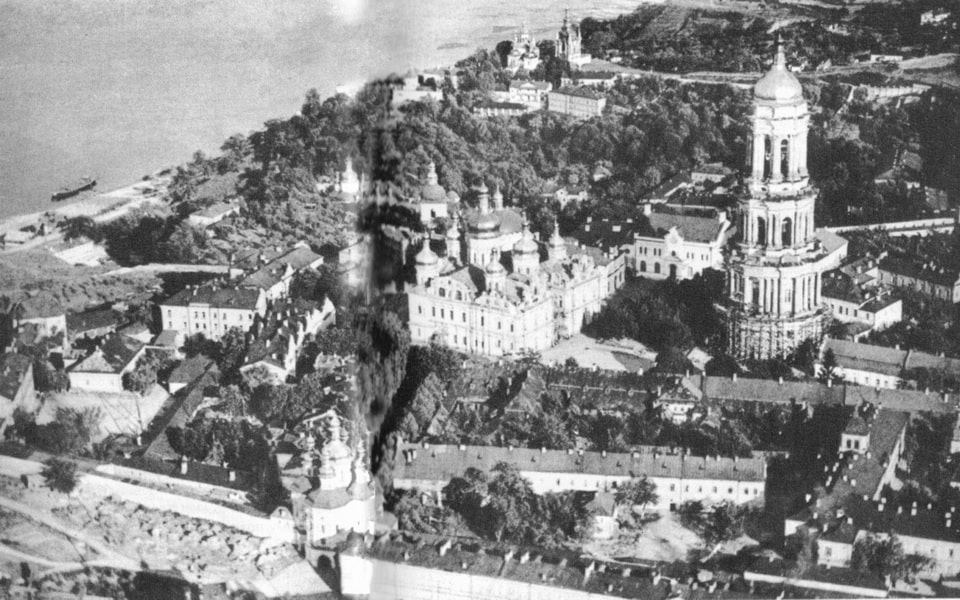
The moment came on November 3, 1941, during the visit of the Slovak pro-German dictator Josef Tiso (1887-1947). The Germans evicted the residents of the ‘Lower Lavra’ in the early hours of that Monday for security measures, one of the few poor arguments for the so-called Soviet forged ‘Version of German guilt’. During that trip to Ukraine inside the “Gräf & Stift’ К 39-45 РS bus, Tiso visited Lviv and on November 3, 1941, reached Kyiv. Followed by a ceremonial reception in a local headquarters, A Slovak delegation, accompanied by German officers and cameramen, three dozen men in total, entered Kyiv-Pechersk Lavra at 11.40 a.m. and left it as early as 12.30, leaving Kyiv at 3 p.m. The first minor explosion inside Assumption Cathedral was heard at 2.30 p.m., and the German guards killed three members of the sabotage units who ran out of the building. A few minutes later, a giant, unexpected explosion devastated the ancient sanctuary. The preserved German documents reveal the scale of the unexpectedness of the explosion for the Germans who tried to overcome the fire in Lavra for three days. The Soviet false version looks even more grotesque because tonnes of explosives were set under the ground, whilst the Germans could use ten times fewer charges if they had the intention.
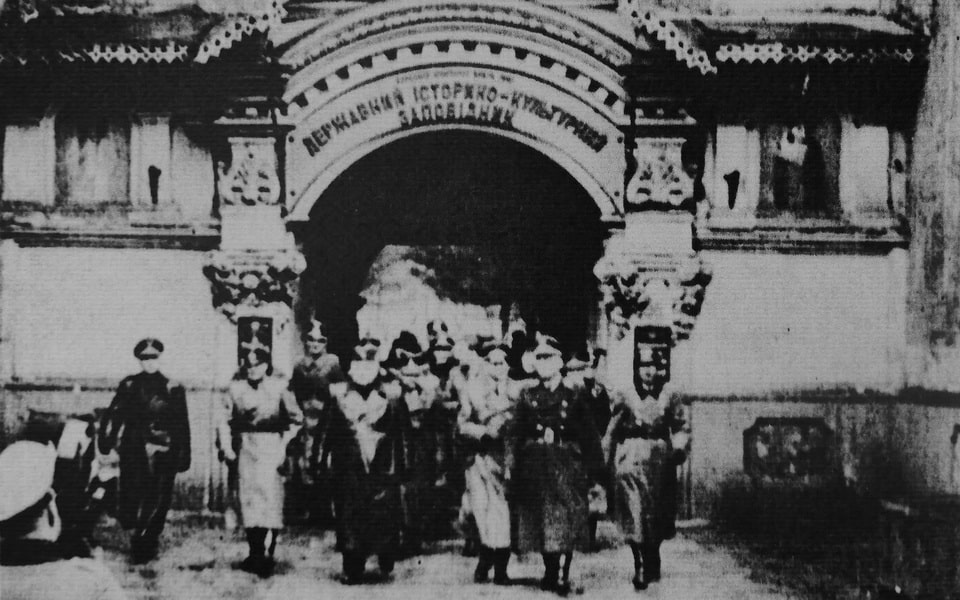
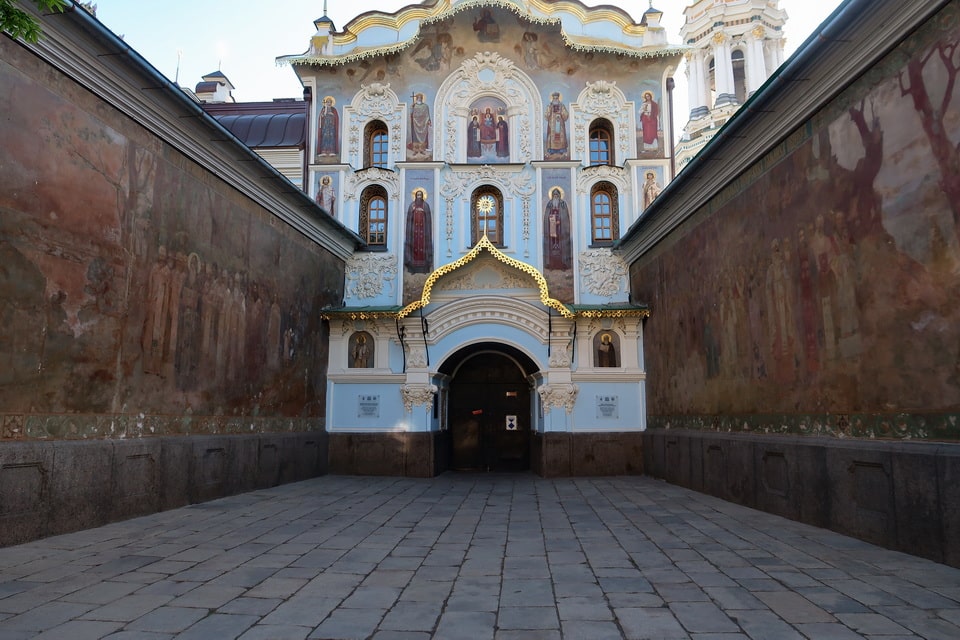
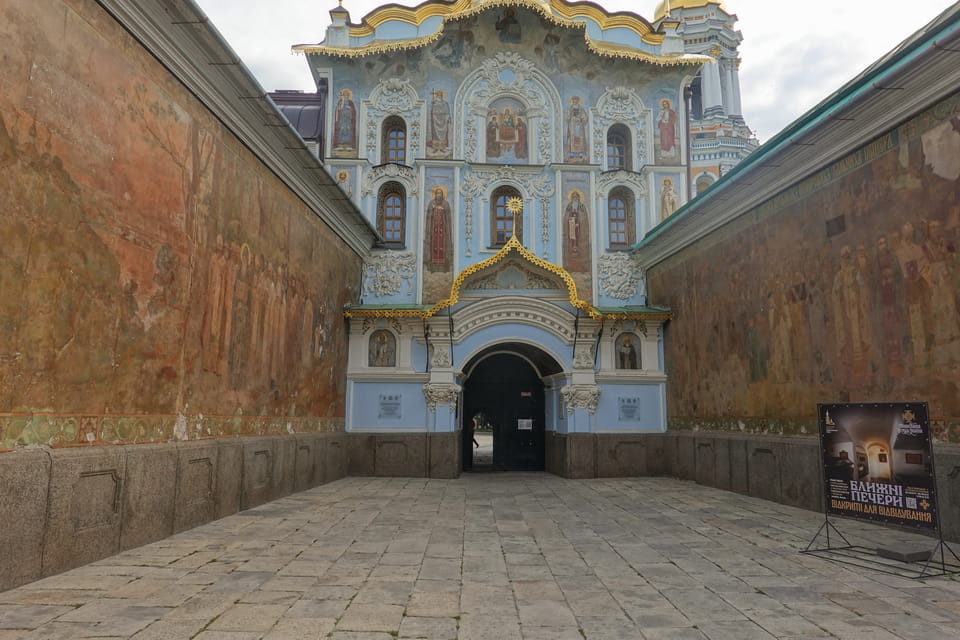
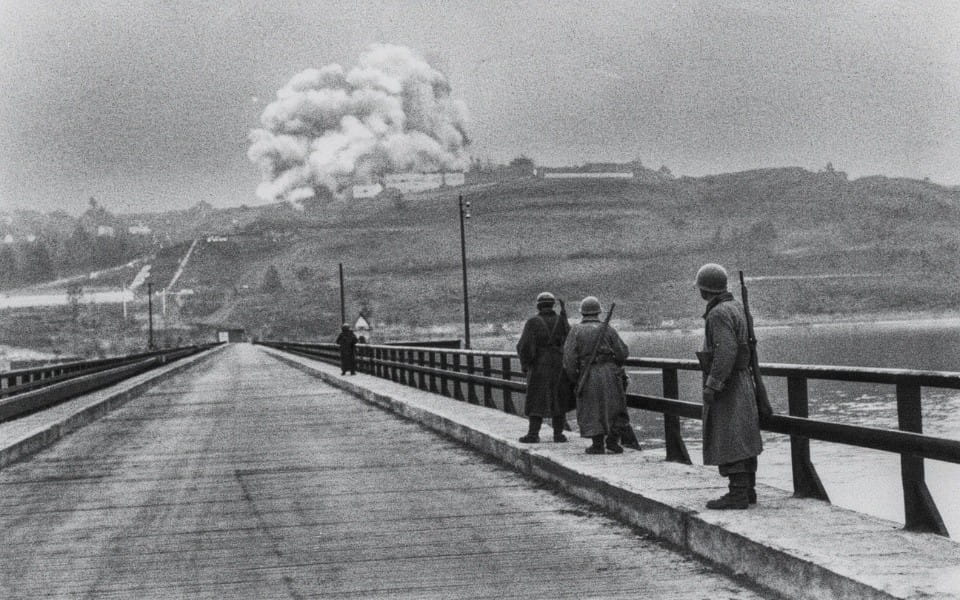
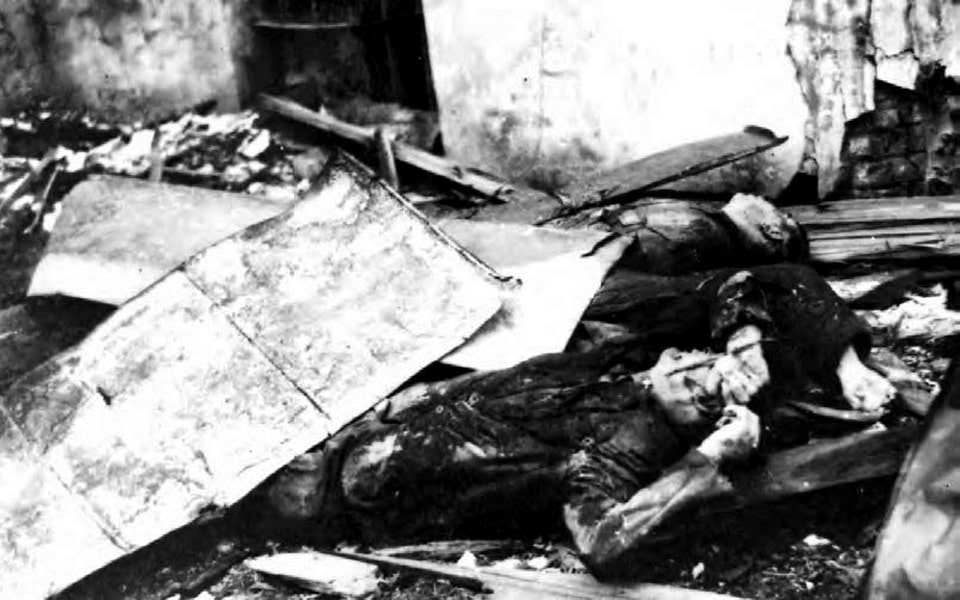

While some ruins were cleared in 1942 by the Hungarian soldiers (first of all to extract valuables), the Soviet authorities waited another two years until, in 1947, the ruins were studied for historical purposes, as the communists had not done this in the previous two decades, being too absorbed by suppressing the fate. The bodies of the three Soviet saboteurs, who activated the charges on November 3, were left lying among the ruins until March 1942, when they were buried by local monks. The archeological excavation lasted until the 1970s, and a surviving section of the Cathedral was turned into an open-air museum piece. The restoration of the Cathedral was first discussed only in the 1980s when photo experts recreated architectural plans based on pre-war photographs. The communist regime failed to restore the sanctuary it had destroyed, and the restored Independent Ukrainian state resumed work in the mid-1990s. The works lasted two years, and a restored Assumption Cathedral of the Holy Mother of God was finally inaugurated on August 24, 2000, on Independence Day of Ukraine.
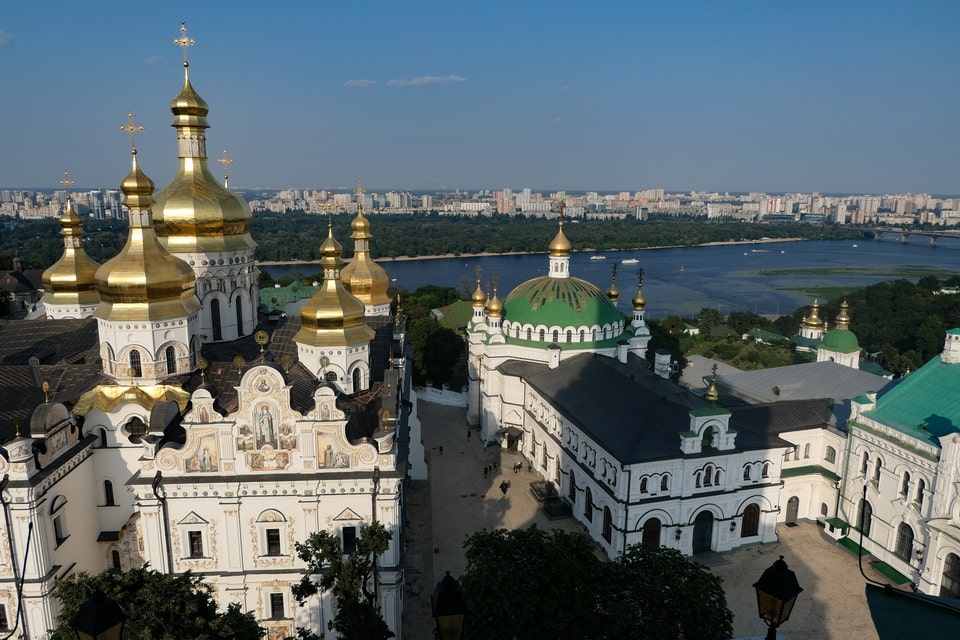

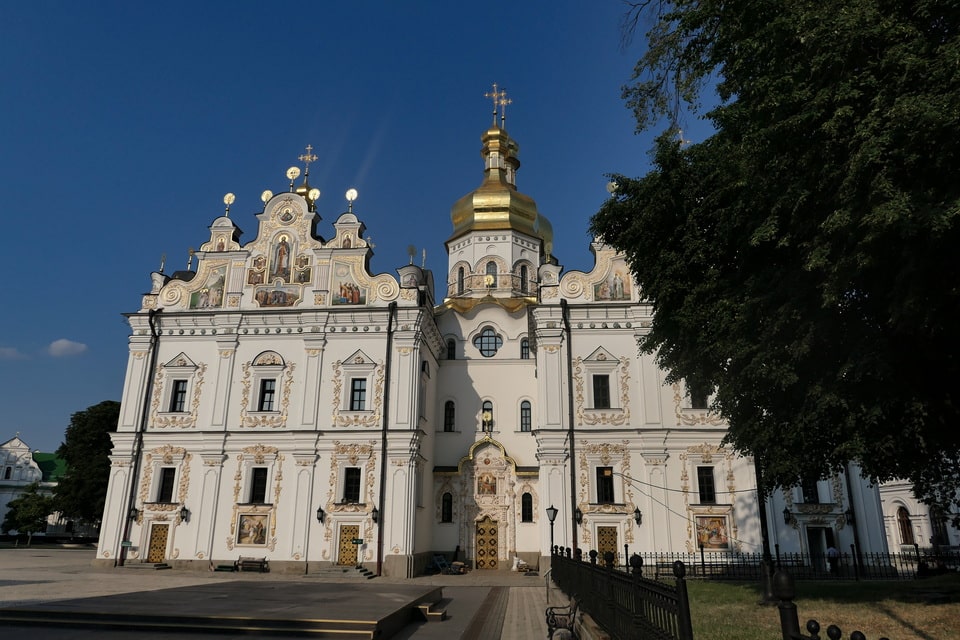
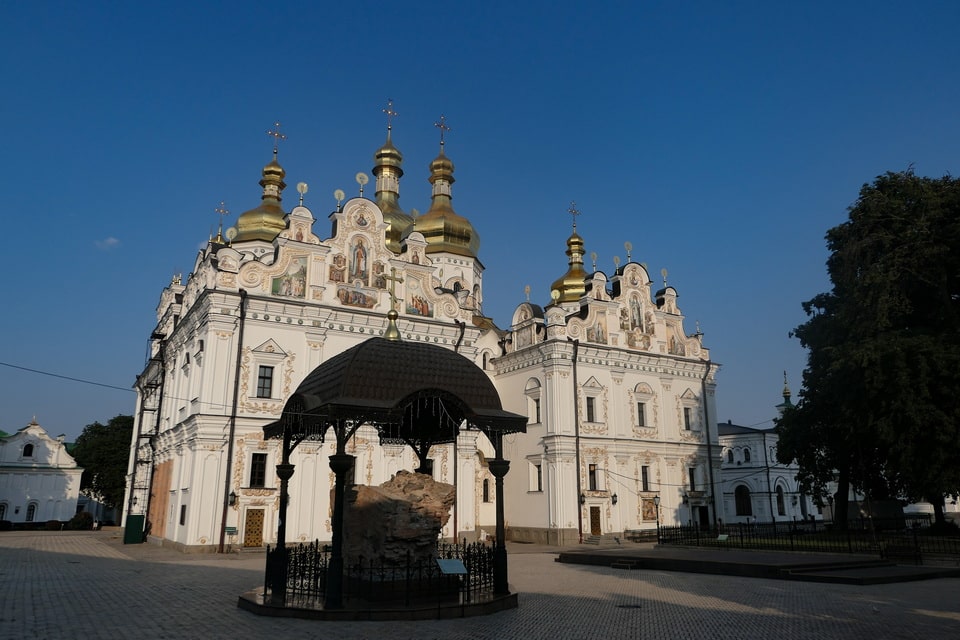
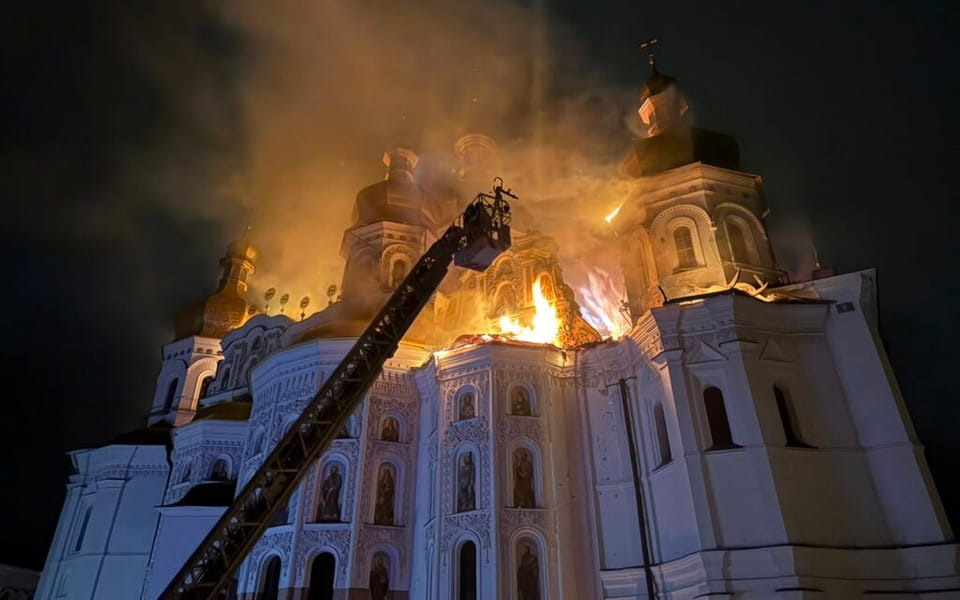
In the early hours of 15 June 2026, the terrorist state russia launched a combined attack of 70 missiles and 611 drones against Kyiv and other Ukrainian cities. A russian Shahed/Geran-2 drone struck the altar section of the Dormition Cathedral (Assumption Cathedral) — the central church of the 975-year-old Lavra complex. 800 square metres of the cathedral roof caught fire. Firefighters battled the blaze through the night; the fire was extinguished by midday on 15 June. The vault was preserved and did not collapse, limiting structural damage. Religious relics, ancient icons, and sacred items were evacuated from the cathedral during the attack. President Zelensky, who visited the site that morning, called it «one of the most serious crimes against Christian culture to date». The Mystetskyi Arsenal art gallery, located directly opposite the Lavra entrance, was also hit and burned. The attack killed 5 people in Kyiv and left 140,000 households without power.
Getting there: Metro Arsenalna (Line M1, Red), followed by a 20-minute walk southeast along Lavrska Street, or take buses 38 / 24 from the metro station. The Dormition Cathedral area is closed for assessment and restoration.
Visiting: The Upper Lavra reserve is open daily 09:00–18:00. Entry requires a ticket (approx. 100–150 UAH). Independent walks through the territory are permitted, offering the same vantage points photographed in 1942.
ASKOLD’S GRAVE AND THE GERMAN OFFICERS’ CEMETERY IN KYIV: NAZI-ERA BURIAL SITE AND ITS POSTWAR FATE
Another location that the Rosenberg-Koch delegation visited upon arrival in Kyiv on June 20, 1942, was the temporary German cemetery in the heart of Kyiv. The belletristic style of the propaganda brochure explained that the Minister paid tribute to the heroes, who had given their lives in the world’s struggle against Communism. It is estimated that by September 19, 1941, when the German vanguard forces entered Kyiv, the losses amounted to 480,000 soldiers (550,000 at the end of the month) and officers killed or wounded since June 22 among the whole invading forces in the East. Among 185,000 confirmed Germans killed in the first three months of Barbarossa (an equivalent of one division every week), 51,000 lost their lives in September only, many of them during the force battle around Kyiv and Leningrad. In his well-known wartime diary, Franz Halder, the chief of staff of the Army High Command (OKH), noted that in this period, the Wehrmacht was losing on average 196 officers per day.
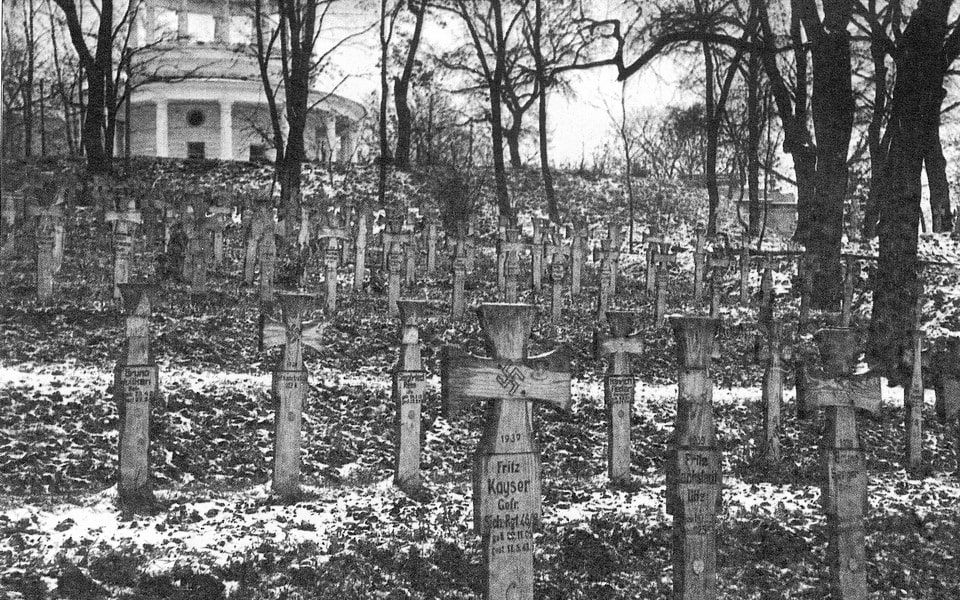
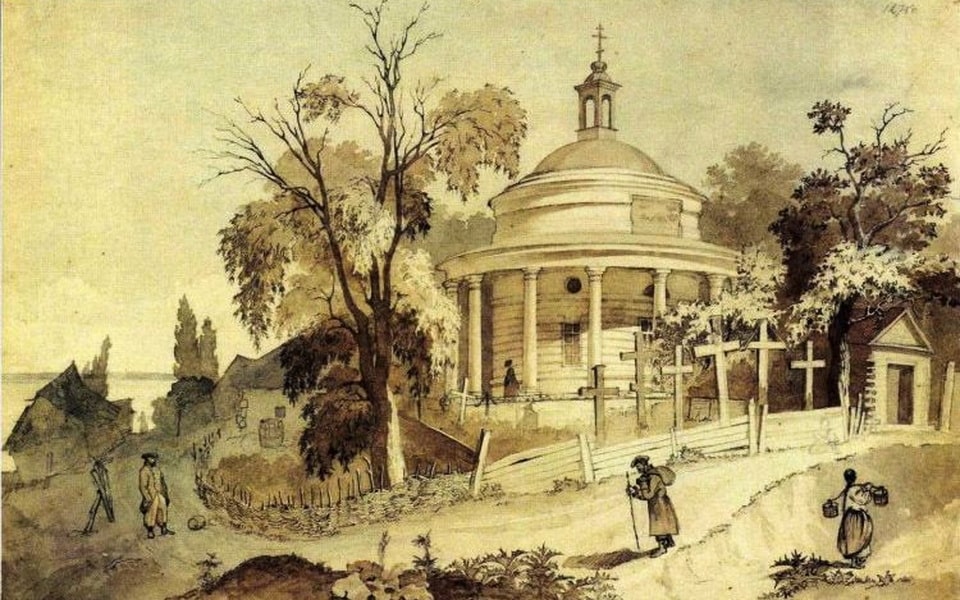
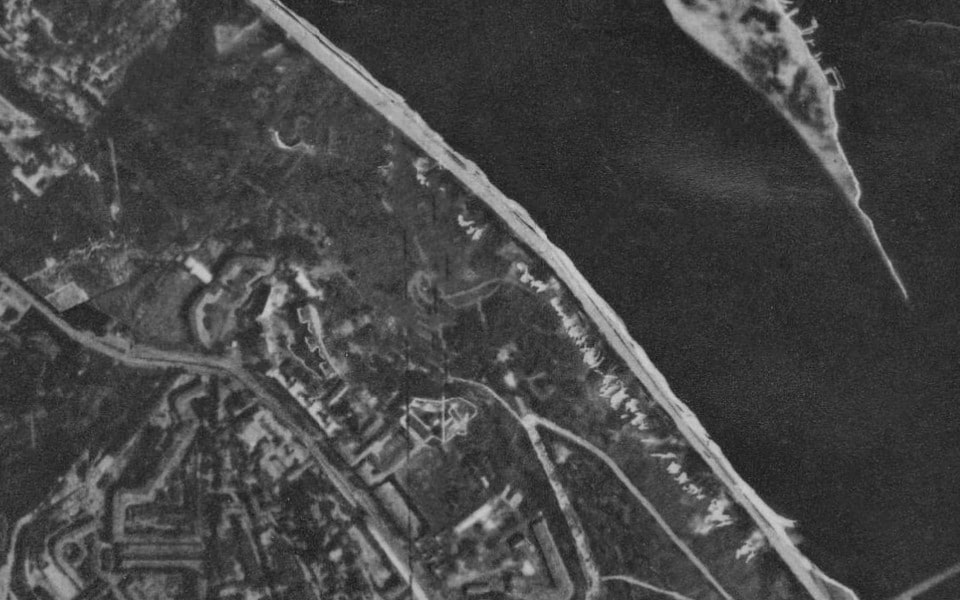
The cemetery with a magnificent view over the Dnipro River and the left bank of Kyiv that Rosenberg visited that day was the famous Askold’s grave, a five-minute car ride from Kyiv-Pechersk Lavra. According to historical manuscripts, Askold and Dir, two Kyivan princes, were killed at this place in 882 by the invaders from the North. In contrast to the imposed theory of the Soviet times, Askold and Dir were not pagans but, in fact, the first Christian rulers of Kyiv who were turned into fate more than a century before the well-known 988 date. The first commemoration erected on the hill, a wooden church, was erected as early as the 10th century, then destroyed, later restored, and survived until the 18th century. In 1786, the location became a key cemetery for noble and rich Kyiv citizens, which rose around the grave of Askold on nine terraces over the Dnipro. In 1934, the barbarian Soviet regime decided to destroy the ancient cemetery and turn it into a park, a common practice for Communists. In less than a year, thousands of graves were leveled, including 2000 sculptures and cradles, a stone from which was used for roads and alleys. Only a small number of graves were reburied in other cemeteries. A small cozy church of St. Nicholas, built in 1810, was turned into a pavilion, later to become a part of the historical museum.
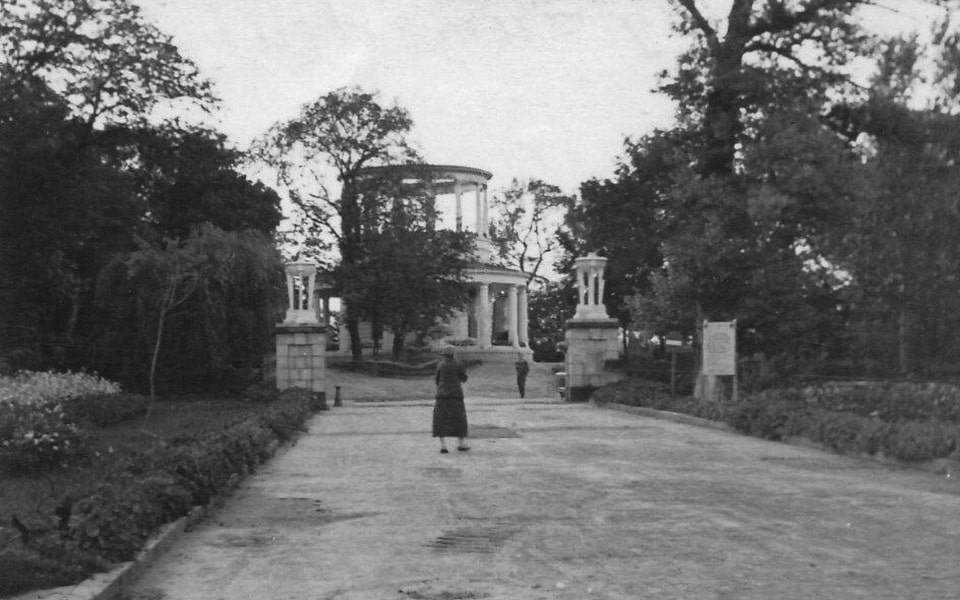
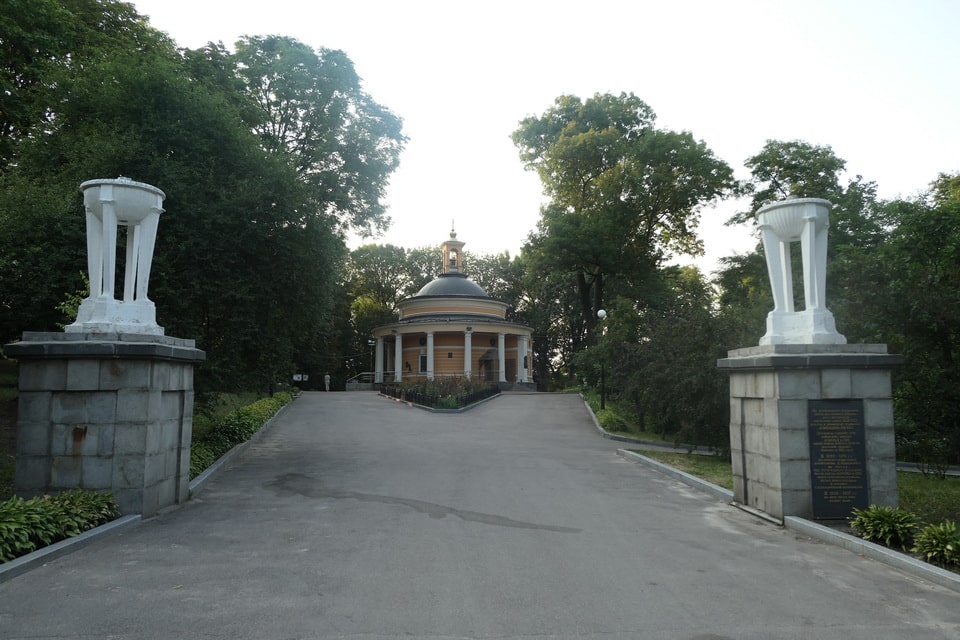
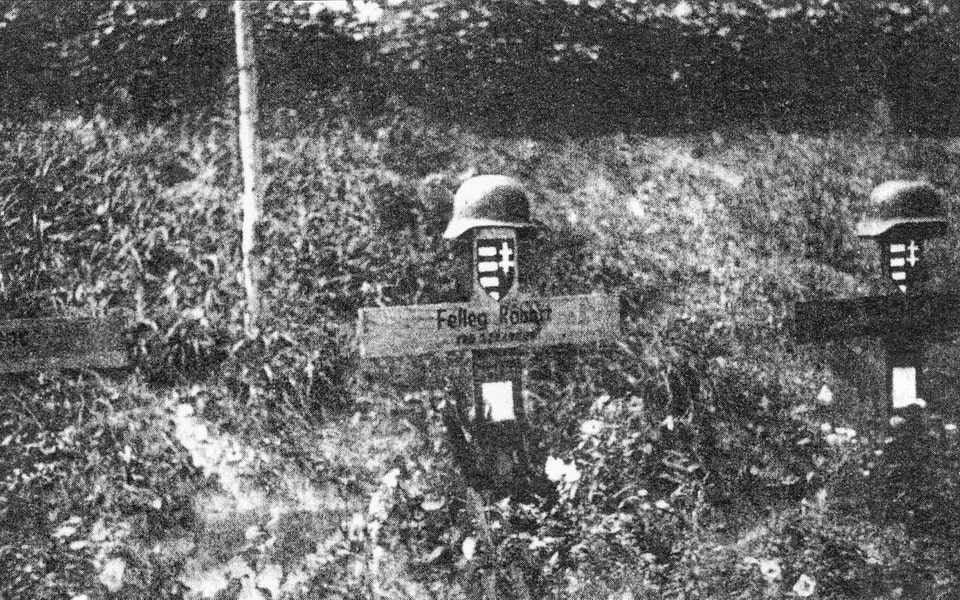
In total, around 400,000 German soldiers died and were buried in Ukraine between 1941 and 1944, probably every tenth of them around the Kyiv area. The first graves of the German soldiers, primarily of the 6th Army, emerged in the city during the first days of occupation in late September 1941. Those burials were scattered around the suburbs of Kyiv and set up in city parks and gardens. At least two dozen cemeteries of this kind existed in the years of occupation, and several of them, the largest ones, were called ‘Heroes of the Wehrmacht’. The burial place known as ‘The Cemetery of the Heroes of Wehrmacht №1’ was created on the territory of Askold’s grave, at the Soviet-era park. Taking their time, the administration steadily reburied up to 2,500 German, Hungarian, Italian, and Romanian soldiers in the location of minor temporary cemeteries in Kyiv. The cemetery that Koch and Rosenberg visited in June 1942 had a typical plan with sections and rows of graves with identical wooden crosses. Near the pavilion (former St. Nicholas church), there was a statue, the head of a soldier in a helmet.
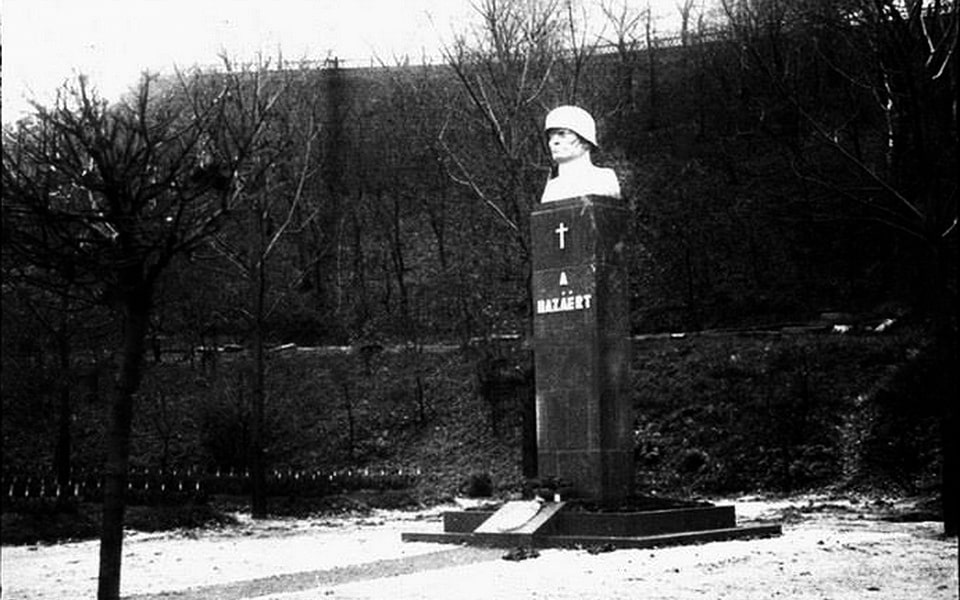

The Soviet troops who recaptured Kyiv in November 1943 waited for a little while before destroying the German cemetery at Askold’s grave in 1944. Similar to many places in the liberated Soviet Union, now the remains of Red Army soldiers were buried in the same soil that their enemies had been in the previous years. As late as 1957, the remains of the Soviet soldiers were reburied at the ‘Park of Eternal Glory’ closer to the Kyiv-Pechersk Lavra. The families of the Germans had to wait for decades until the fall of the Communist dictatorship and Ukraine’s Independence. The German War Graves Commission (Volksbund Deutsche Kriegsgräberfürsorge) initiated cooperation with the Ukrainian government in the 1990s, and in 2015-2017, 2060 remains were found at Askold’s grave and reburied at a large German WW2 cemetery near the village of Vita-Poshtova outside Kyiv, a centralized site with more than 20 000 graves. Among those 2060 remains, 1994 were identified as Germans, 42 Hungarians, and 24 Italians.
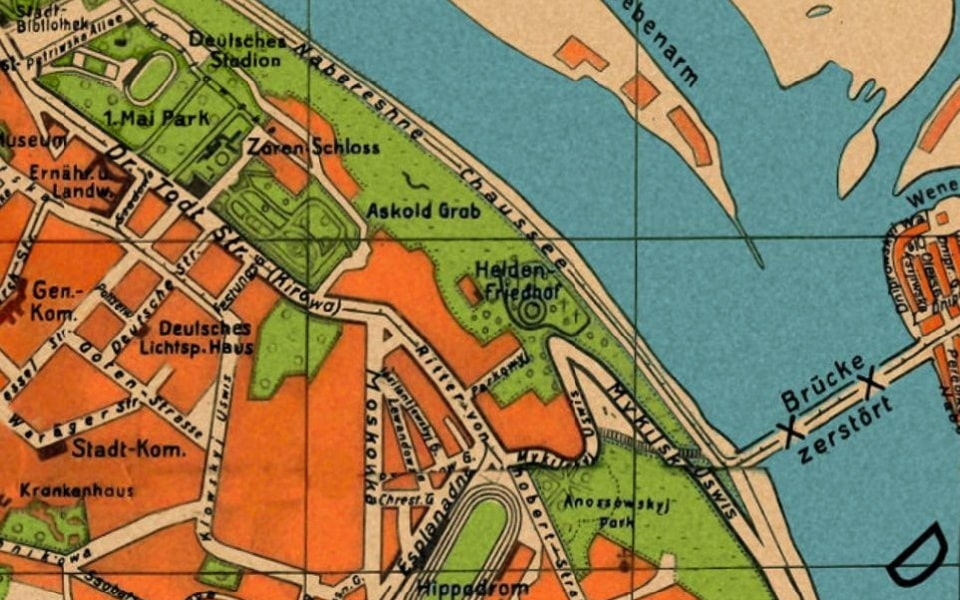
The Askolds Grave itself also waited for the Independence of Ukraine to commemorate the memory of its Kyiv prince, Ukrainian heroes from the times of the struggle against Communism in 1918 (Battle of Kruty), and the archaeological work on the site of the old XVIII-XX century cemetery, which had been destroyed by the Soviet regime. In 1998, the iconic St. Nicholas church was finally restored after six decades of serving as a park pavilion.
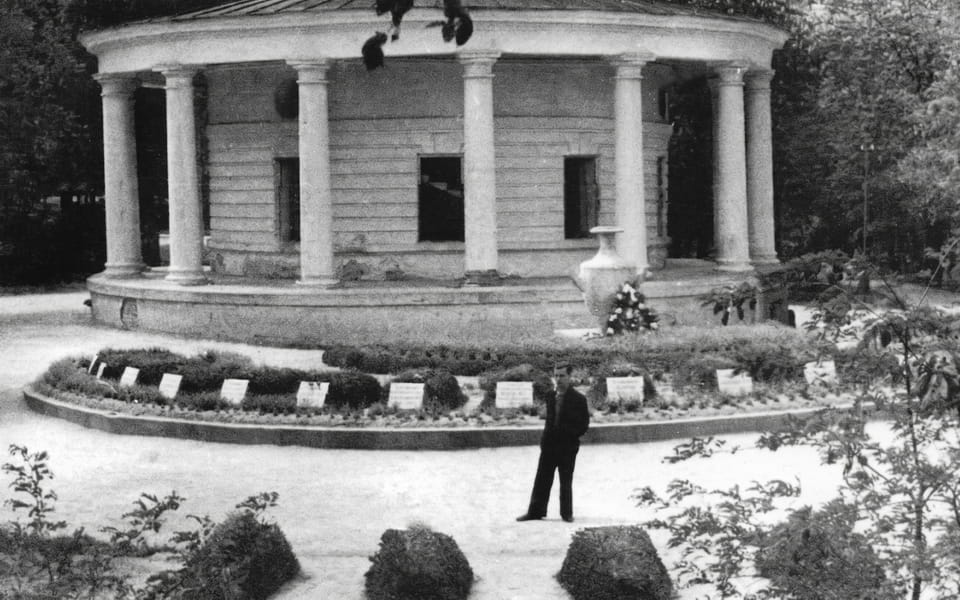
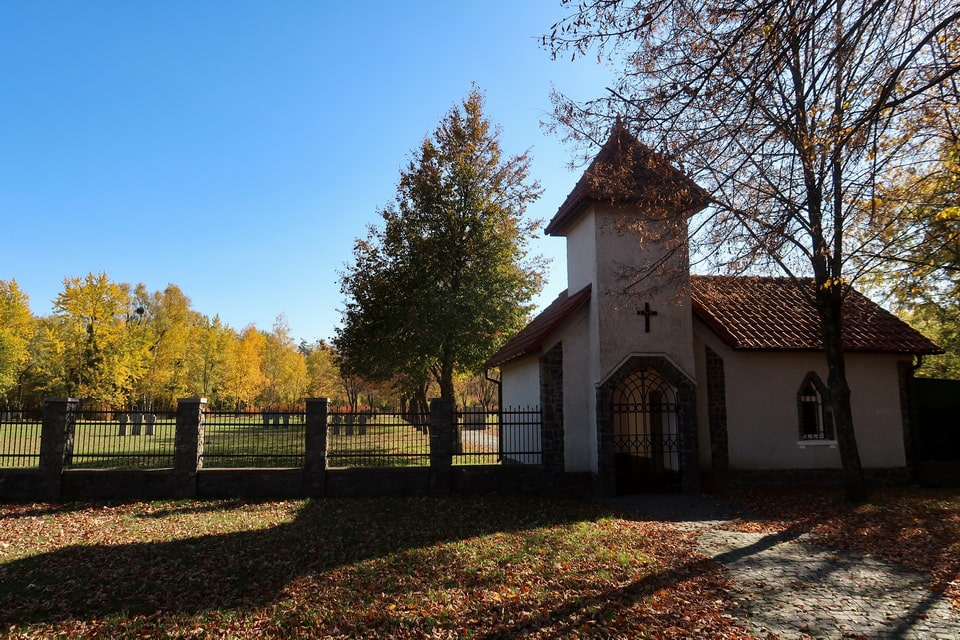
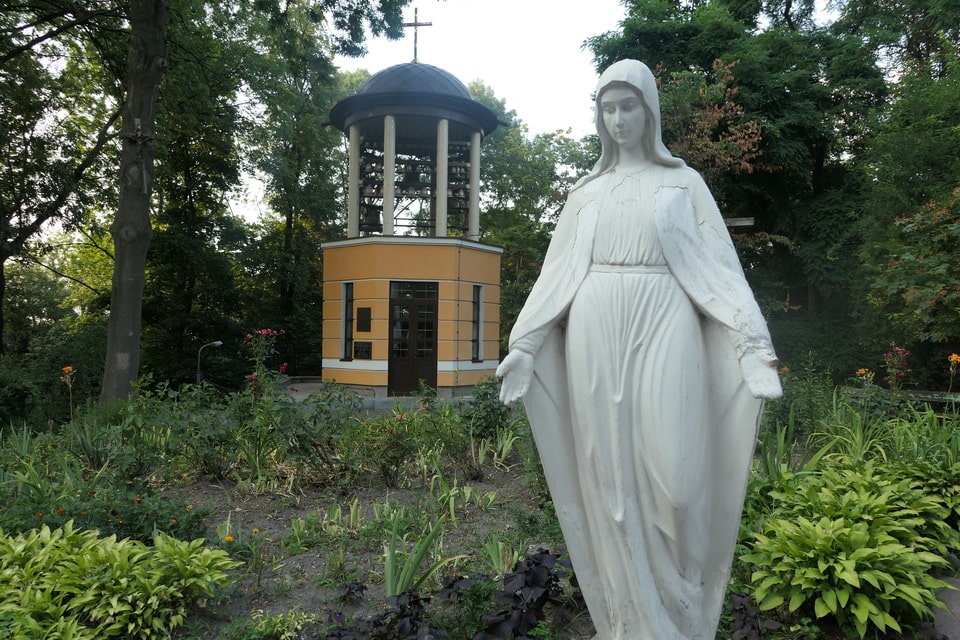
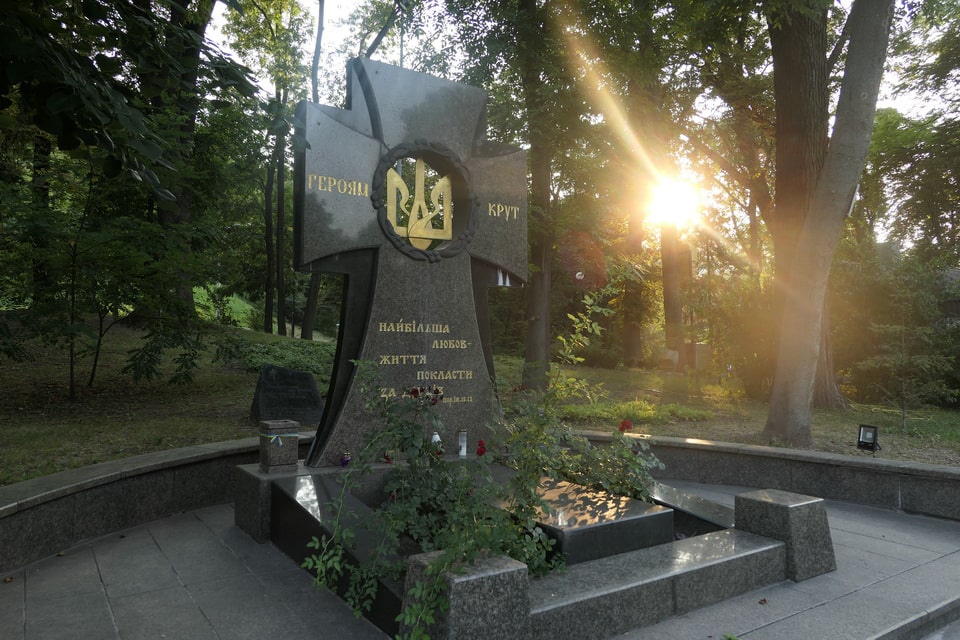
The rotunda of St Nicholas (1810) and the surrounding park are fully accessible. Address: Parkovaya Doroga (Паркова дорога), 2/2, Kyiv — on the Pechersk slopes between the Lavra and the Dnipro embankment. Opening hours: Park: open 24 hours, free. The rotunda church interior: check locally (typically open for services mornings and evenings). Getting there: From Arsenalna metro, walk south-east and then descend the Pechersk slope via Parkovaya Doroga (~15 min). Alternatively, walk uphill from the Dnipro embankment. The site is directly on the walking route between the Lavra and the river.
SAINT SOPHIA CATHEDRAL UNDER GERMAN OCCUPATION: ROSENBERG’S VISIT AND NAZI HERITAGE POLICY
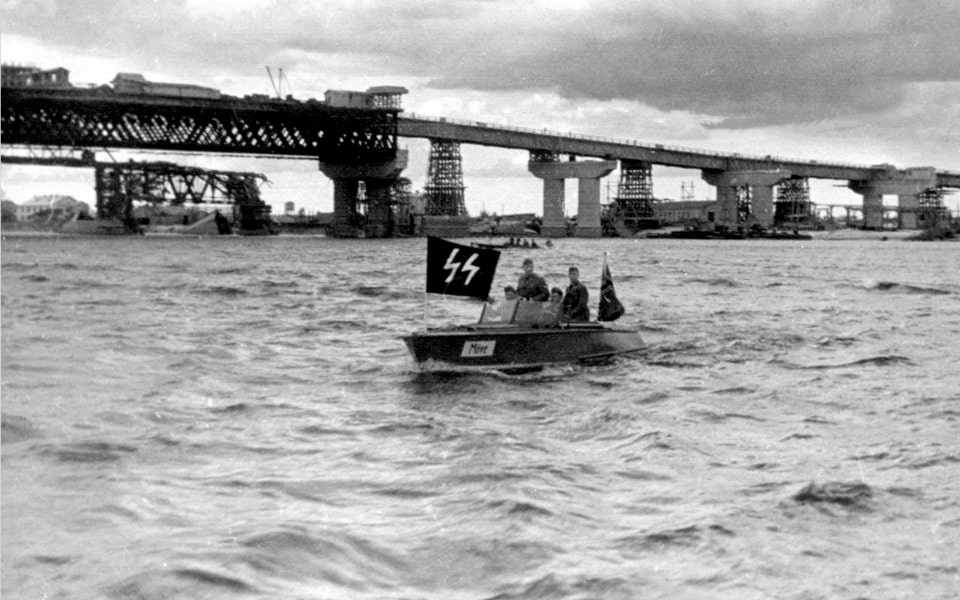
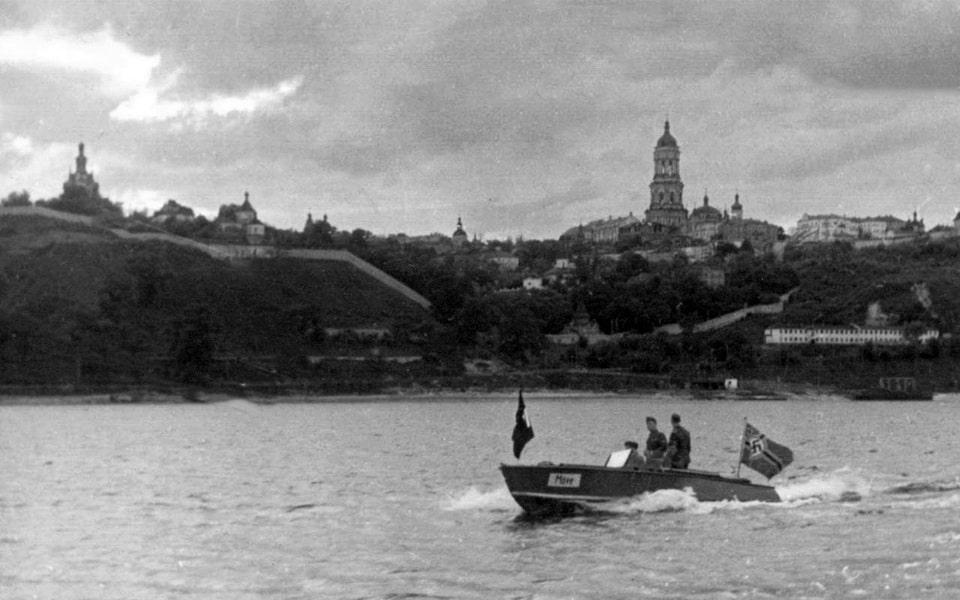
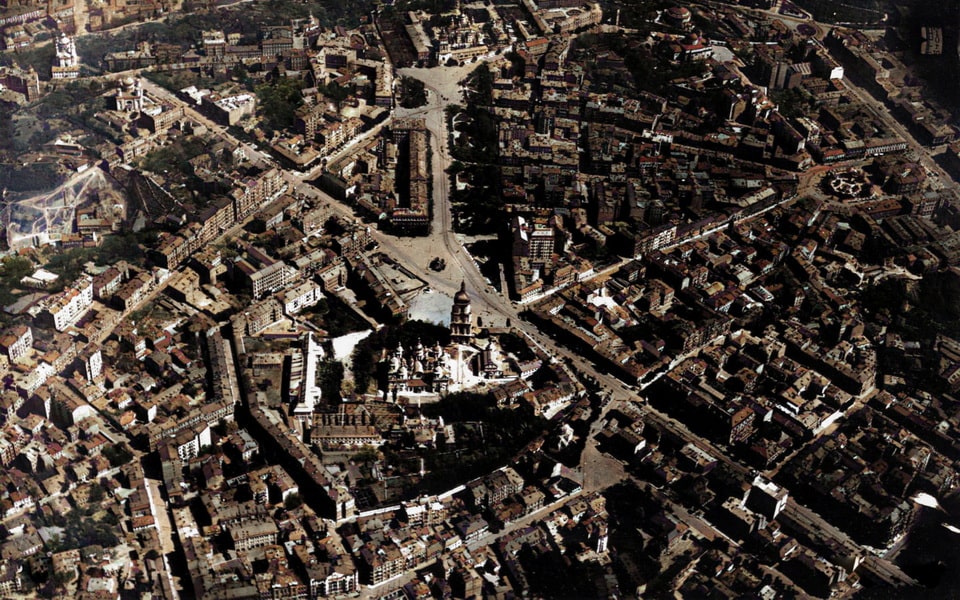
The propaganda booklet devoted to Rosenberg’s journey to Ukraine includes several photos of the motor boats on the Dnipro River with a commentary that, after visiting the German cemetery, both Rosenberg and Koch performed a boat ride on the river. Only one photograph of poor quality depicted two Nazi administrators, while several others grasped an escort motor boat with the SS symbols. The starting and ending points remain unclear, but they were photographed near the Reichenau bridge, which they had come across before, with Kyiv-Perchersk Lavra in the background. On the same day, highly likely after visiting Askold’s grave and a boat ride, the delegation moved to the center of Kyiv and visited the St. Sophia Cathedral. On their way to the iconic place for Ukrainians, the cortege had to witness the devastated city center of Kyiv, blown up by Soviet NKVD units on September 24, 1941, nine months before Rosenberg’s arrival. While the Germans bombarded the city during the battle of Kyiv, evidently, the most severe damage that day was caused by either retreating Soviet troops or by sabotage units. Of course, Rosenberg’s visit was a farce, since tens of thousands of civilians had been killed by the German invaders since that time, particularly in the infamous Babyn Yar ravine, where around 40 000 Jews were massacred in late September-early October 1941 only.
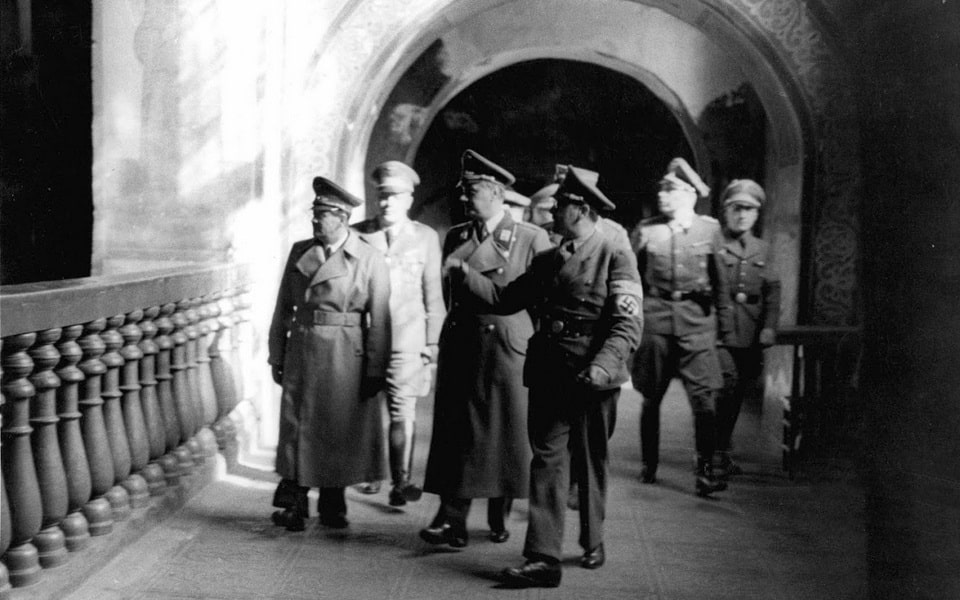
The cameraman captured Rosenberg, Koch, and their retinue on the second floor of the Sophia Cathedral. According to a brochure, the Minister commented that to his delight, the ‘Soviet bandits’ did not manage to destroy this ancient sanctuary in contrast to the main Cathedral at Kyiv-Pechersk Lavra.
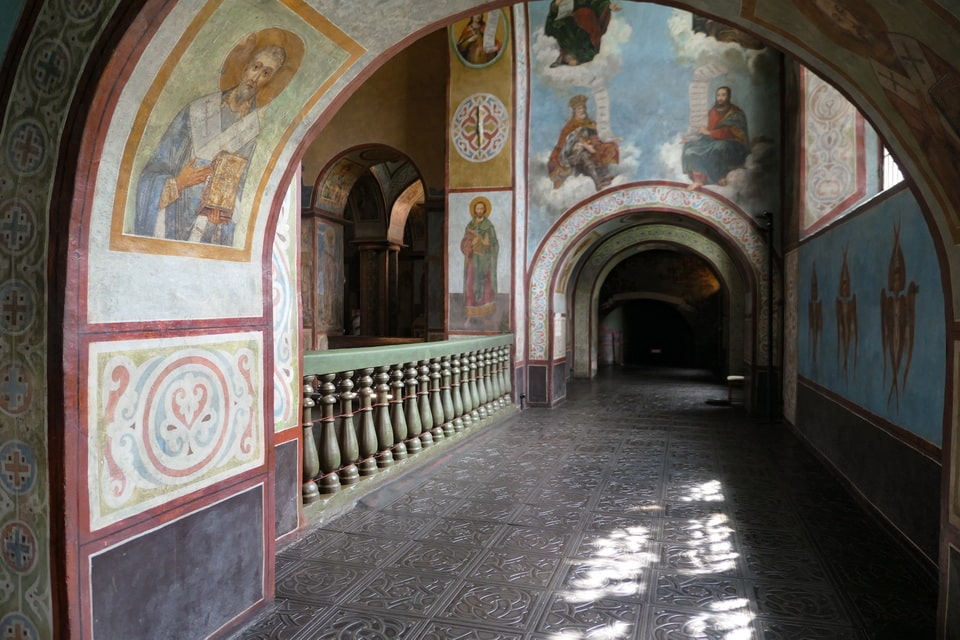
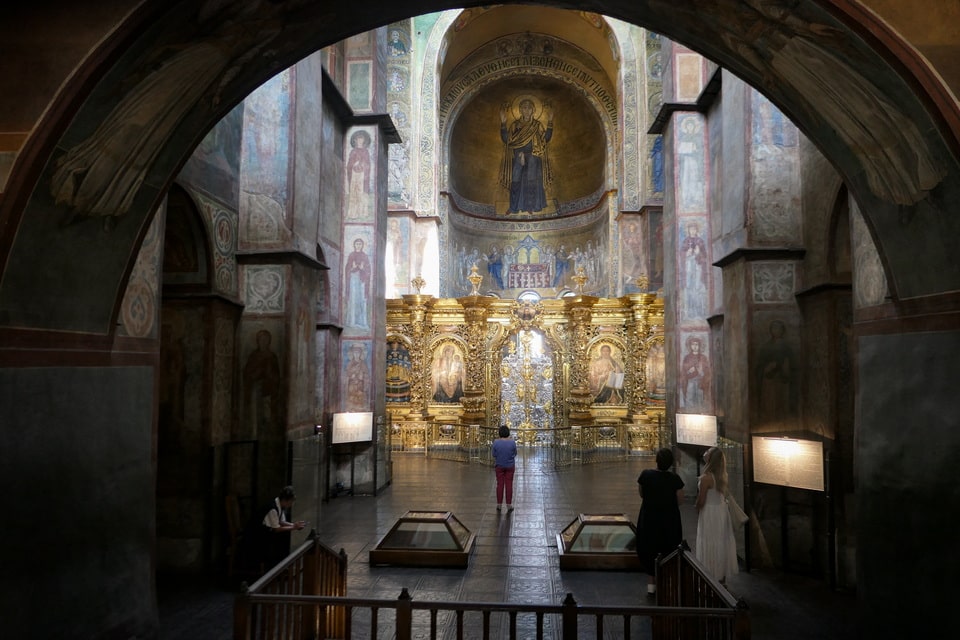
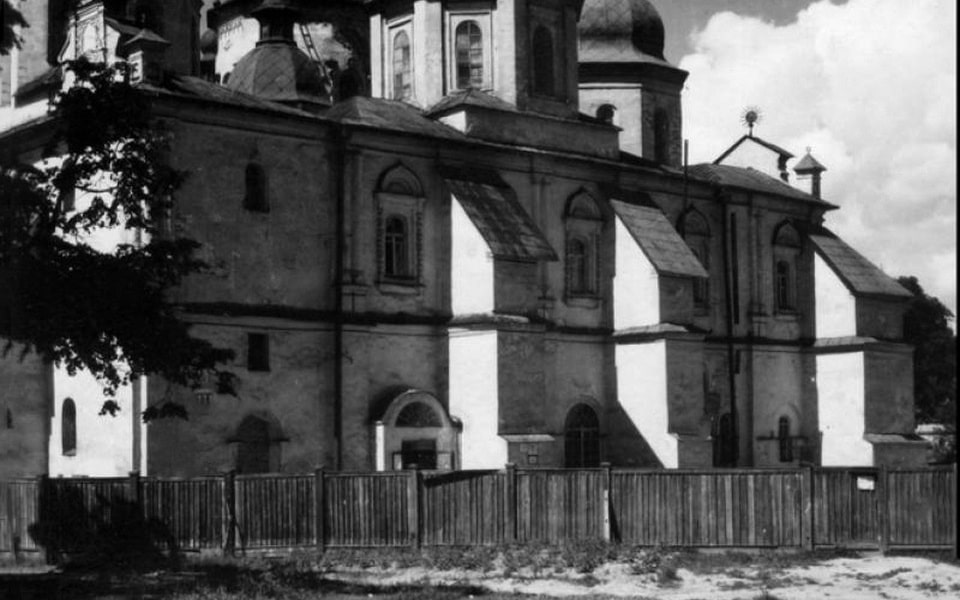
Sophia Cathedral in Kyiv was laid in the early XI century with a strong reference to the famous Sophia Cathedral in Constantinople, and the building process was supervised by Greek architects. The new landmark soon became a center of political, cultural, and religious life in Kyiv Rus, with the large open site in front of the Cathedral becoming a square for public expressions of national ruling. The Cathedral witnessed several fires and devastating lootings: in 1169 during the invasion of Kyiv, in 1180 during a fire, and in 1240 during the Mongol invasion when the city was seized and set on fire. In the next several centuries, Sophia was left to decay until the patronage of Ukrainian Hetman Ivan Mazepa at the end of the XVII century. The reconstruction lasted until 1767 and resulted in the building up of several buildings, including the Bell Tower, and the monastery wall around the city. In 1934, the barbaric Communist regime decided to level the entire site, as they did later with the XII century St. Michael’s Golden-Domed Monastery, but Sophia was saved by the advocacy of the French government and turned into a National Sanctuary. The Soviets banned services in the cathedral. All gold and silver items (royal gates, icons, silver incense sticks, candlesticks, church robes, books) were taken, the gilded iconostasis was dismantled, gold was stripped off, and the rest was burned.
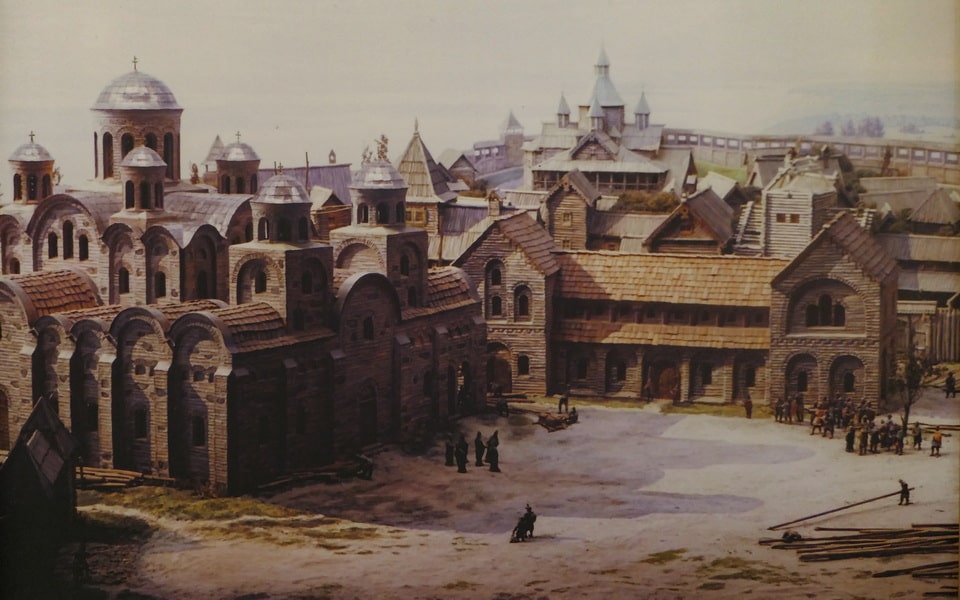
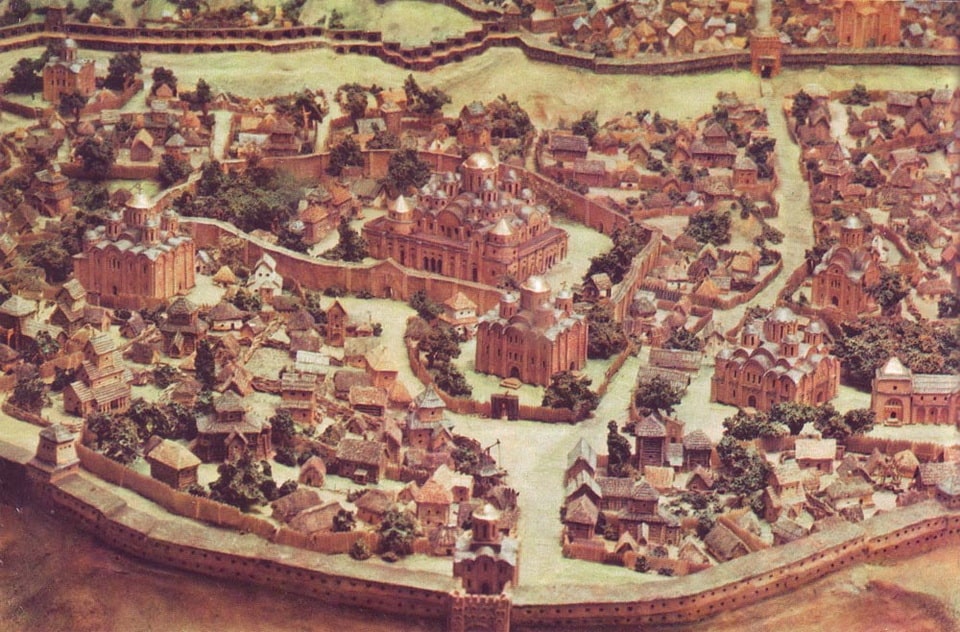
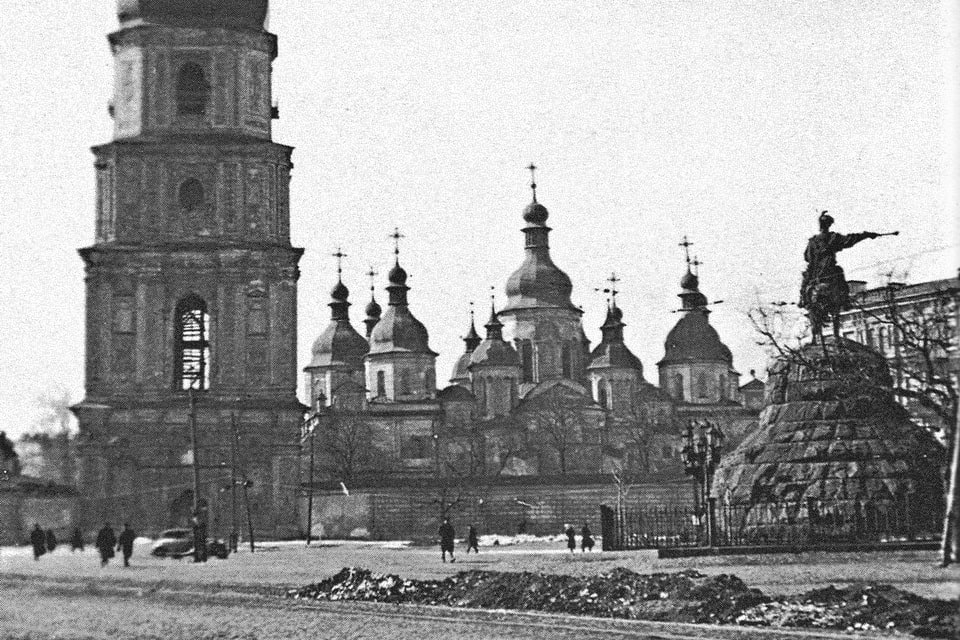
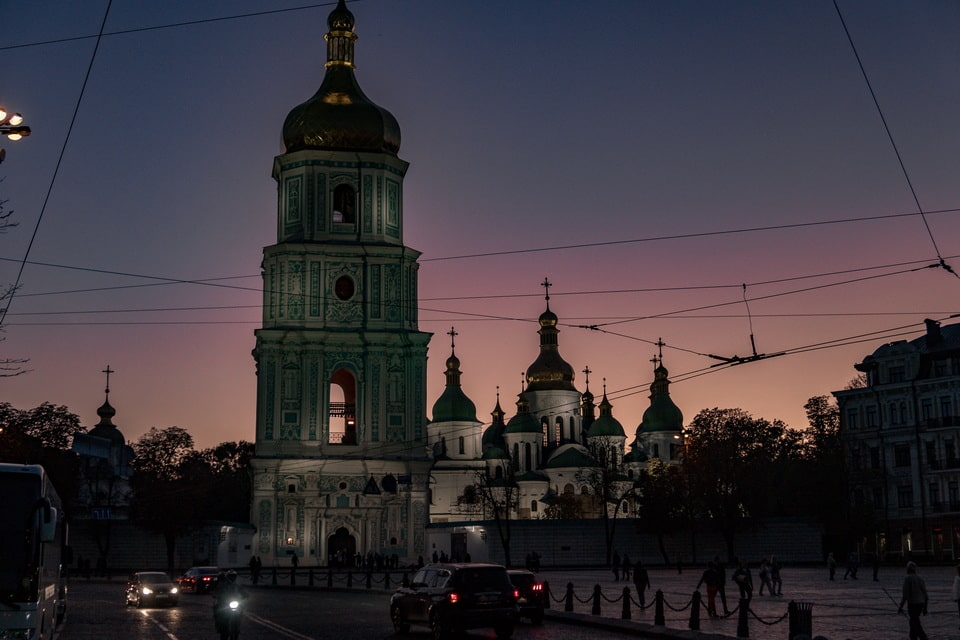
According to several testimonies, Sophia Cathedral was among the objects mined by the NKVD sabotage groups in September 1941, but later, the Germans deactivated the charges, and thus, the brutal invaders saved it from other barbarians. The new occupants partially resumed service as early as October 6, 1941, and in January 1942, the Germans set up an architectural and historical museum. The representatives of Rosenberg’s ‘Einsatzstab Reichsleiter Rosenberg’ (Reichsleiter Rosenberg Taskforce), particularly Doctor von Franke, were deeply involved in the listing of the remaining valuables in Sophia. The museum was closed at the end of 1942 and reopened in March 1943 for excursions until shutting down in October 1943 before the German retreat from Kyiv. The German commission investigated the state of the buildings, documented poor conditions, and even started renovation works that were already finished by the Soviets after WWII. Before retreating, the Nazis expropriated some of the remaining valuable historical pieces, and only a small part of them were later returned to Kyiv. After the fall of the Soviet Union, the Sophia Cathedral, along with its outbuildings, was finally included in the UNESCO World Heritage List, and today it is one of the most important Ukrainian landmarks.
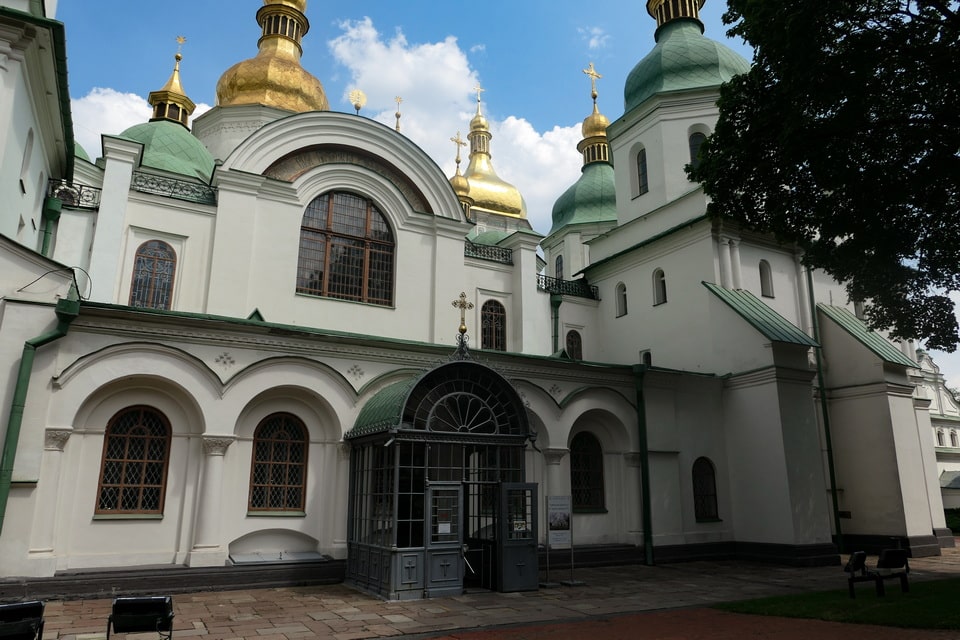
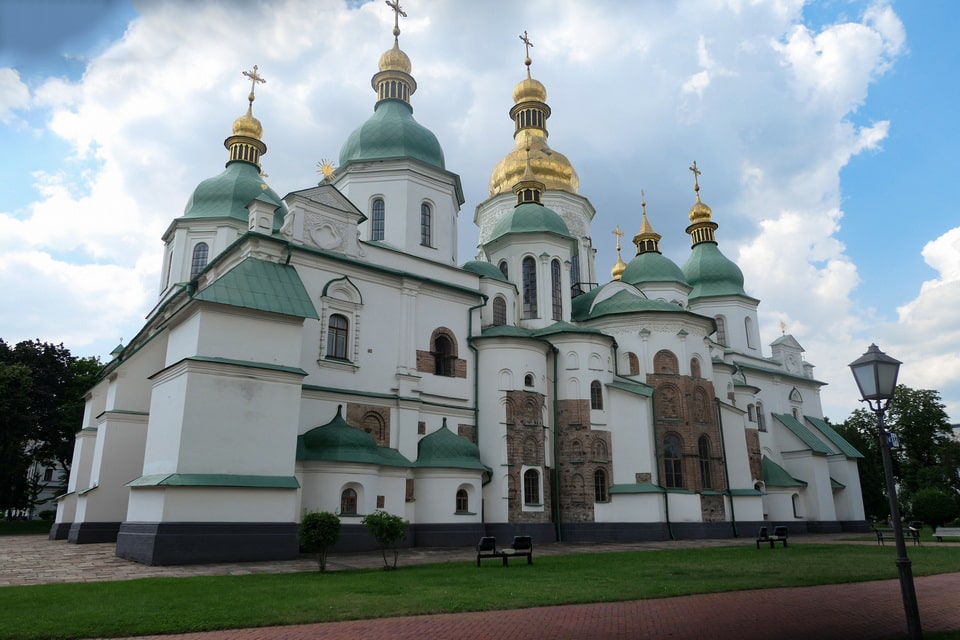
Open as a museum-reserve. The cathedral is not used for regular services — it functions as a national architectural monument and museum. Address: Sofiivska Square (Софійська площа), 24, Kyiv 01001. Opening hours: Thursday–Tuesday 10:00–18:00. Closed Wednesday. Last admission 17:30. Bell tower may have separate hours. Admission: Cathedral + grounds: approx. UAH 200 (adult), UAH 100 (student/child). Bell tower: separate ticket, approx. UAH 100. Combined tickets available at the entrance kiosk. Getting there: Metro M1/M2 to Maidan Nezalezhnosti, then walk north-west along Volodymyrska Street ~10 min. Or metro to Zoloti Vorota (M3), then 5 min walk southeast. The Sofiiivska Square is pedestrianised and easy to find.
THE NATIONAL OPERA OF UKRAINE UNDER NAZI OCCUPATION, 1941–1943: ROSENBERG’S VISIT AND GERMAN CULTURAL POLICY IN KYIV
Rosenberg’s last stop in Kyiv on June 20, 1942, had to have a touch of culturedness, which the Nazi officials always wanted to be associated with, despite the cannibalistic nature of the Third Reich. The propaganda coverage of the visit later gave generous praise to Rosenberg’s so-called efforts in the ‘cultural revival’ of the occupied territories, which was, of course, a farce similar to the Communist regime in Ukraine, which had suppressed the national identity of the Ukrainian people in the same way. The German delegation, with Alfred Rosenberg and Erich Koch in charge, was brought to Kyiv Opera, just a few minutes’ ride from Sophia Cathedral. On that evening, they watched ‘Coppelia’, a comedic ballet choreographed to the music of French composer Leo Delibes. Educated Germans knew the fact that the first premiere of this ballet in 1870 in Paris was marred by the Prussian siege of the city during the Franco-Prussian War. Several months after that day in 1942, the Germans imprisoned a Soviet spy who confessed to the failed attempt to assassinate Rosenberg in June. The plan involved blowing up a bomb in the Opera House, but the building was filled with civilians that evening, and the saboteurs backed out.
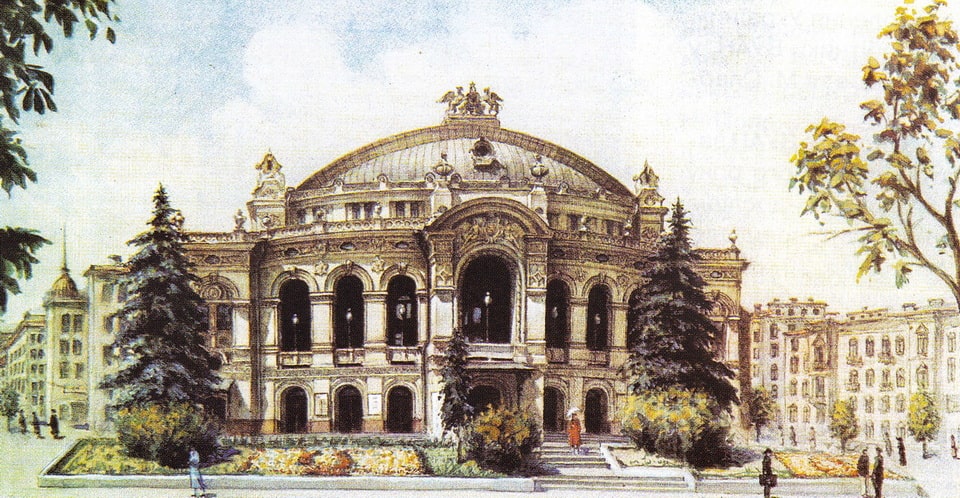
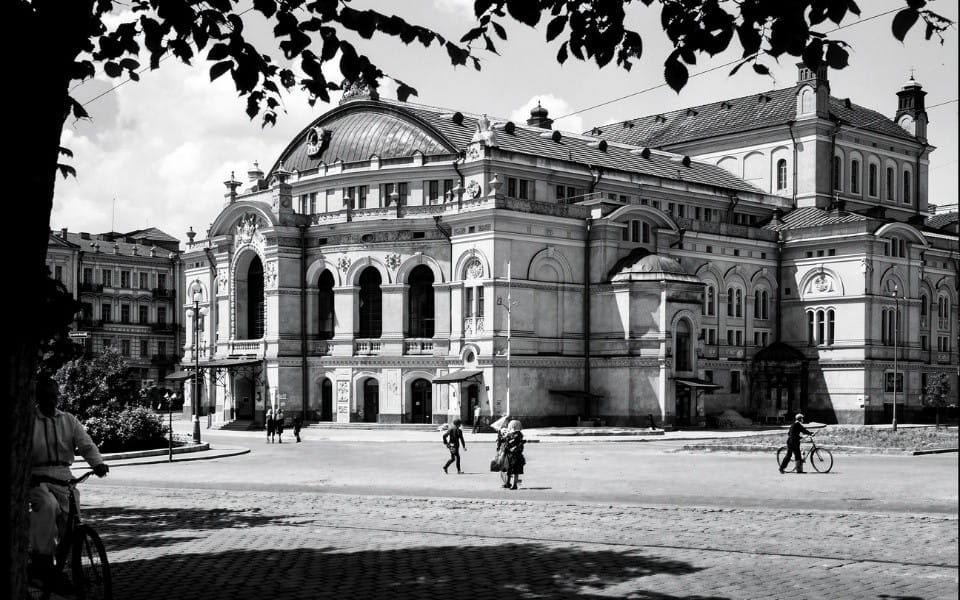
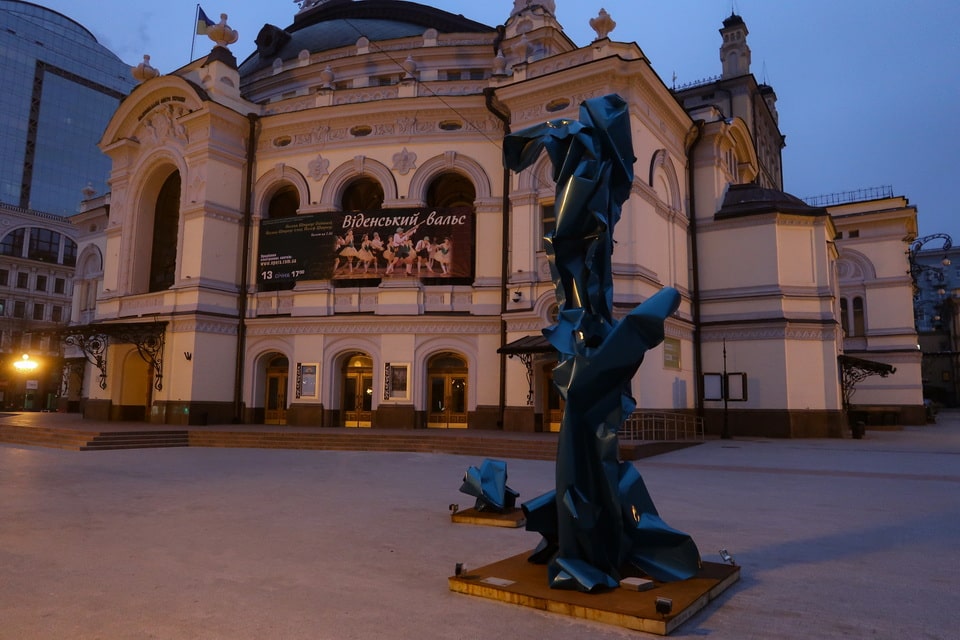
The Opera House at the intersection of modern Volodymyrska and Bohdana Khmelnytsky streets was neither the first opera in Kyiv nor the first one on this site. The very first lyric theater in the city was opened on Khreschatyk in 1804, followed by a wooden building on Volodymyrska in 1851. The initial erection was destroyed by fire in 1896, and the current Opera House was inaugurated in September 1901. The theater was named after Taras Shevchenko (1814-1861), an iconic Ukrainian poet, and welcomed its visitors with mirrors in Venetian style, marble staircases, patterned stucco walls and ceilings, floor mosaics, velvet chairs and elegant lamps from Vienna, and the magnificent chandeliers. At the time of the opening in 1901, the stage in Kyiv was the largest in the whole Romanov Empire: 34.3 m wide, 17.2 m in depth, and 22.7 m high. In 1911, the Opera House witnessed the assassination of Prime Minister Pyotr Stolypin. After the occupation of Ukraine by Communists, the theater, fortunately, avoided ‘proletarian reconstruction’ in the 1930s and met WWII and occupation by Germans in pretty much the same appearance as on the date of opening.
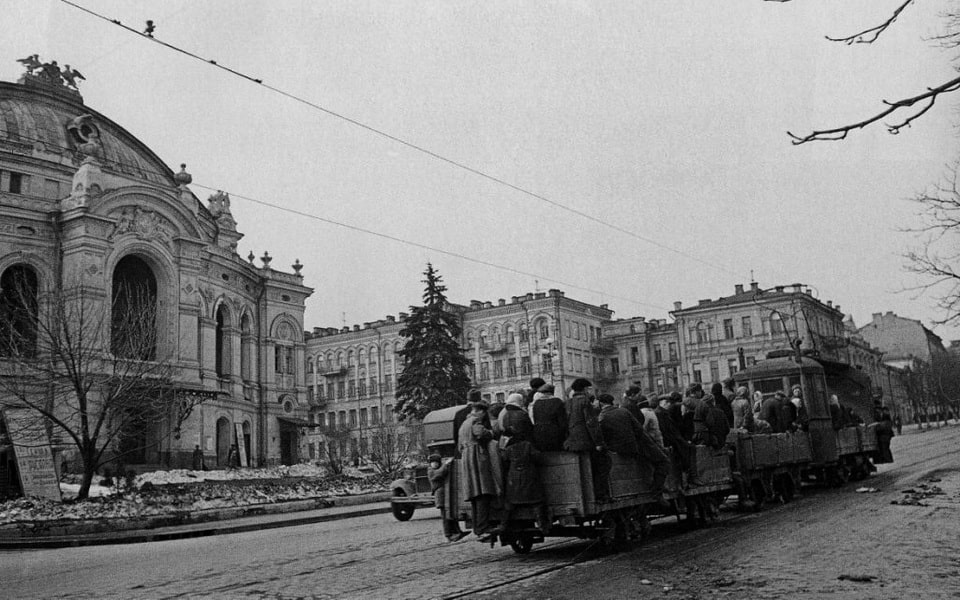
The Opera House was reopened by the new invaders on December 27, 1941. Evidently, the pre-war list of performances was changed for German classics mixed with apolitical programs. It was open on weekends and holidays and in the daytime between 2 and 6 p.m. due to the curfew hours after 7 p.m. in Kyiv, the disobedience of which meant death. There was an overdemand for visiting the Opera house, though it was attended mostly by German, Italian, Hungarian, and Romanian soldiers and officers, and the representatives of the civil administration. The Ukrainian population would avoid visiting theaters and cinemas after 1942 as a result of the forced sending of people as laborers to Germany. A failed plan to kill Rosenberg by explosion was not the only plan of such kind during the occupation, but none was performed. The Opera House was badly damaged on May 8, 1943, when a heavy air bomb hollowed the ceiling, got stuck in the sand layer under the floor, and fortunately did not detonate. The accident killed four German officers and wounded a dozen others. After liberation, the theater waited four decades for a reconstruction, and nowadays the National Opera of Ukraine can welcome 1304 viewers at a time with 60 thousand square meters of space.
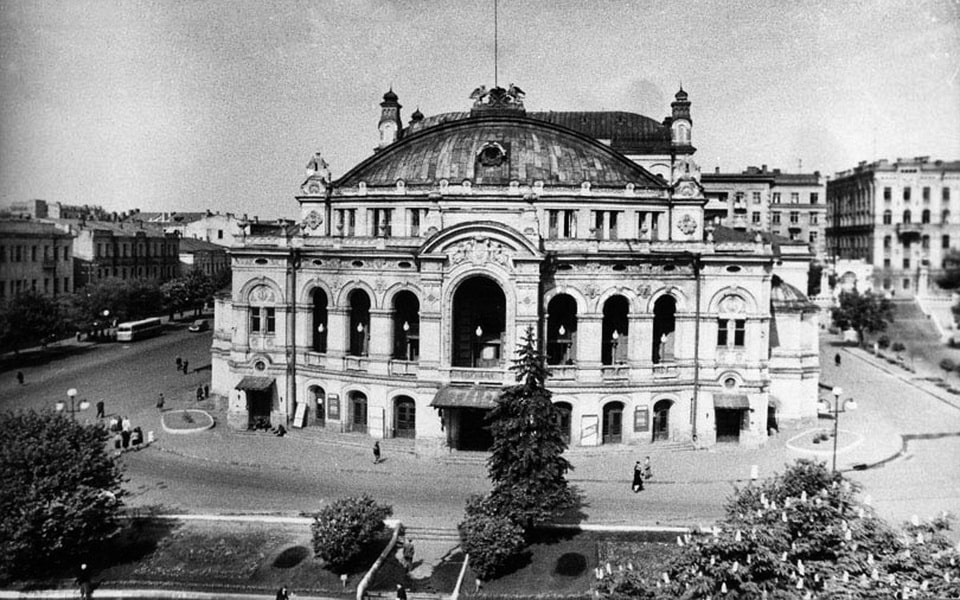
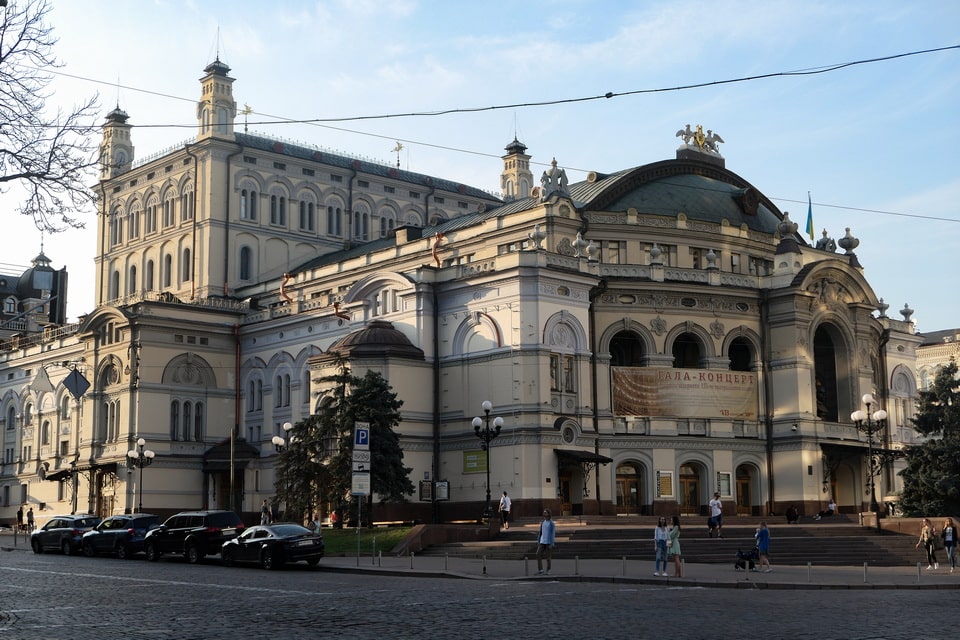
The opera continues to perform throughout the war, including during blackout periods. Check the schedule for current programming. Address: Volodymyrska St, 50, Kyiv 01601 (вул. Володимирська, 50). Tickets: Tuesday–Sunday 11:00–19:00. Ticket prices range from approx. UAH 250–1 500 depending on production and seat. The main season runs September–June; the summer schedule is reduced, but performances continue. Getting here: Metro M1/M2 to Teatralna station or Zoloti Vorota (M3) — 5–7 min walk. The building is on Volodymyrska Street between Bohdan Khmelnytsky Street and Lypska Street, unmistakable by its Neo-Baroque façade.
AFTER KYIV: ROSENBERG’S CONCLUSIONS AND THE LEGACY OF NAZI OCCUPATION POLICY FOR UKRAINE
The entries from the preserved diary of Alfred Rosenberg, known as ‘Devil’s Diary’, reveal that at the time of the visit to Kyiv, he experienced frustration rather than admiration. His comments evidently included references to the impotence of the Communist regime, which had left such a great city in decay for decades before the War. ‘The houses have not been painted for more than fifty years’ was his reminiscence. Nevertheless, the German delegation continued their journey across Ukraine in the next few days rather than returning to Rivne immediately. They went to visit a former Soviet state farm, now seized by the Germans, near the village of Salivonky, 60 kilometers from Kyiv and 20 kilometers from Bila Tserkva. The settlement witnessed the horrors of the Holodomor in 1932-1933, when at least 350 of its citizens died of hunger in a man-made famine, and in 1942, the villagers looked ragged and miserable. Rosenberg was amazed that those poor people paid little interest to his cortege and were more absorbed by the daily routines of survival. His later comments suggested that twenty-five years of leveling human instincts by Communists was the case, yet the German occupation and exploitation of Ukraine by the Reich was another challenge. The administration Rosenberg came to inspect had its own camps. The Syrets concentration camp, set up on the edge of the Babyn Yar ravine in 1942, was run inside the same Reichskommissariat.
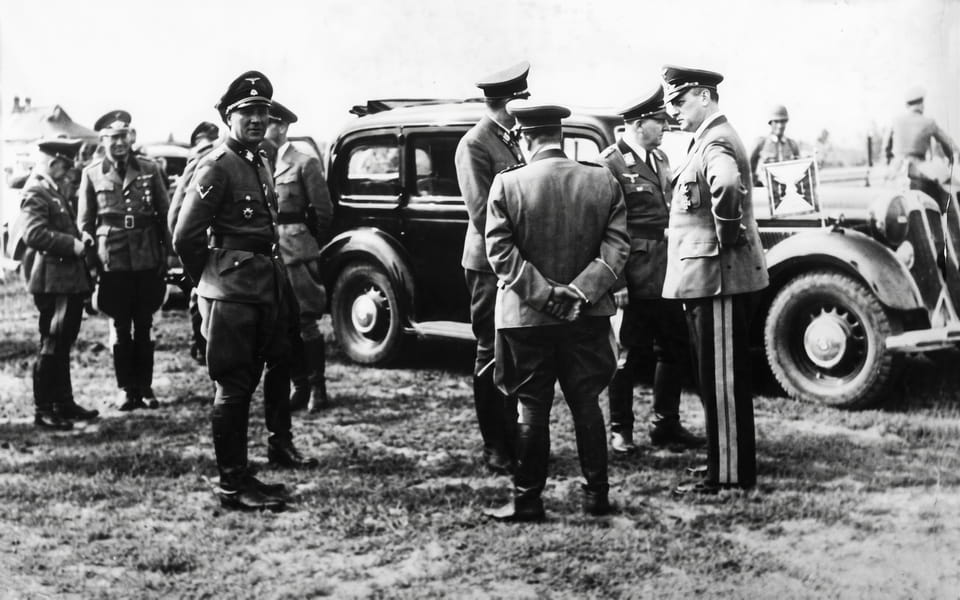
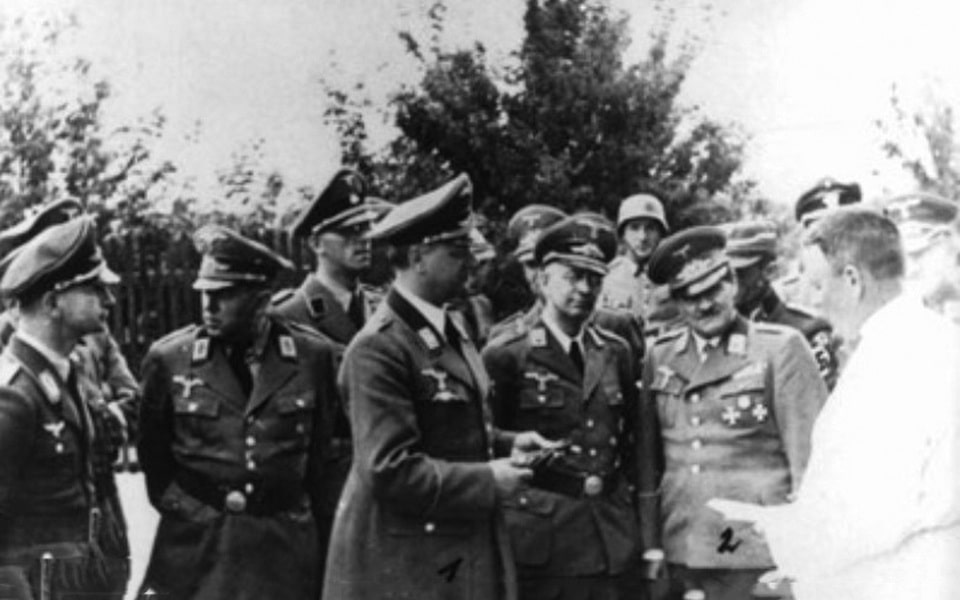
The propaganda brochure of the visit included a false-face story about the kindness of Alfred Rosenberg, who stopped his retinue to make two little ducklings cross the road. Such an odious statement seems grotesque when it comes to a man who was one of the architects of the unprecedented expropriation of resources from Ukraine, dooming millions of people to starve to death. The staged progress of the German ruling methods in the farm was to convince the readers of the booklet that not only Rosenberg was a masterful administrator, but that the Third Reich invested a lot of effort into restoring the drained lands in the East to match the agriculture of the region with German standards. Such a fake picture of care was a farce in itself. Hitler’s Germany craved only to drain all juices from the Ukrainian lands, and the local farms had to survive under a rule similar to that of Stalinism or even worse. The limits of the harvest expropriated were determined not by the size of farming land or its harvest capacity, but by the needs of Germany.
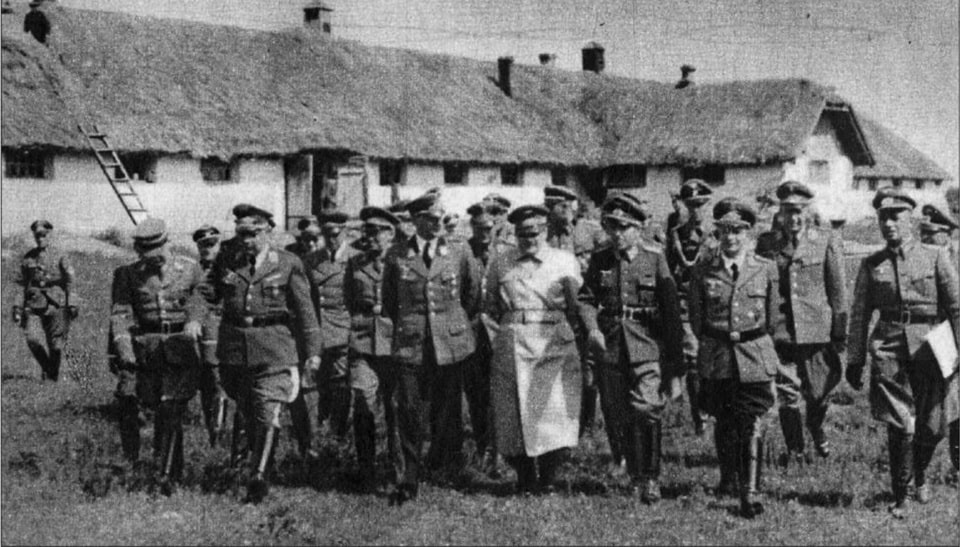
In their effort to retain full control over the agricultural capacity of the Ukrainian land, the Nazi administrators preserved the Soviet ‘kolkhoz’ system of collective farms, disallowing local villagers from private harvesting. In rare circumstances, those farmlands were supervised by local agriculturists, and mainly by the so-called ‘agricultural specialists’, brought to Ukraine from Germany. Toward the summer of 1942, more than 7600 such ‘Landwirtschaft Führers’ (farming leaders) were operating in Ukraine only. It is important to note that at the time of his visit to Ukraine in June 1942, Rosenberg was concerned with the necessity to supply the German summer campaign toward the Volga and Caucasus, of course, from Ukrainian land by expropriating 1.3 million tonnes of grain only. In 1943, Hermann Göring would demand to ship up to 3 million tonnes of grain from Ukraine to supply the whole German army in the East at the expense of the lives of Ukrainians. The scale of draining resources from the rural regions of Ukraine and around Kyiv, in particular, was so unprecedented that the Germans organized an engagement of multiple private enterprises and companies to participate in the process. The most notorious player of this kind was the ‘Die Zentralhandelsgesellschaft Ost für landwirtschaftlichen Absatz und Bedarf’ (The Central Trading Company ‘East’ for Agricultural Sales and Needs), which was a German monopoly company for agricultural purchases and sales in the German-occupied areas of the Soviet Union during World War II. Thanks to the efforts of Goering and Rosenberg, this company gained a state credit of 300 million marks and exclusive rights for ‘buying and trading’ fruits of Ukrainian labor in the villages. During the occupation, ‘Zentralhandelsgesellschaft Ost’ founded eleven subsidiary companies and 130 branches in Ukraine, which totally controlled the agricultural resources of 31,000 farming lands. Rosenberg was frustrated by the poverty of the people, but his regime left them few means of survival. Apart from villagers, people in cities such as Kyiv got their ration cards after 1942, though they were issued to supply people with only 850 calories per working adult, which was less than in the Nazi concentration camps during the same period.
After visiting the rural lands around Kyiv, Rosenberg’s delegation left for the South, particularly the industrial city of Dnipropetrovsk (modern Dnipro) and Zaporizhzhya. ‘Einsatzstab Reichsleiter Rosenberg’ (Reichsleiter Rosenberg Taskforce) operated in several large cities in Ukraine: Kyiv, Kharkiv, Dnipropetrovsk (Dnipro), Kryvyi Rih, Kirovograd (modern Kropyvnytskyi), Mykolaiv, Kherson, and Simferopol. Dnipropetrovsk was an important industrial hub with its pre-war production of 20% of all cast iron and 16.5% of steel in the USSR. In 1942, Koch’s instructions made people fear going outside since the round-ups to send the workforce to Germany. The last pre-war census in 1939 in the city showed a population of 527 000, 54% of them ethnic Ukrainians, which dramatically decreased to 200 000 at the end of 1941. There are no details about the locations Rosenberg visited in Dnipropetrovsk, but he conducted several meetings with local civil administrators and members of his staff, who coordinated the listing of museum pieces and libraries. One of the discussions involved arguing about the possibility of reopening universities in the city.
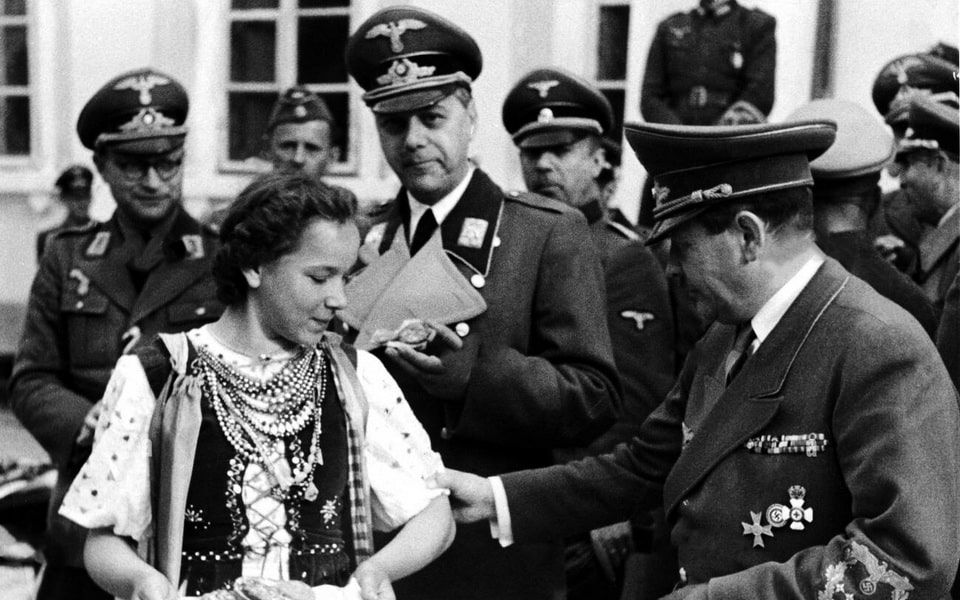
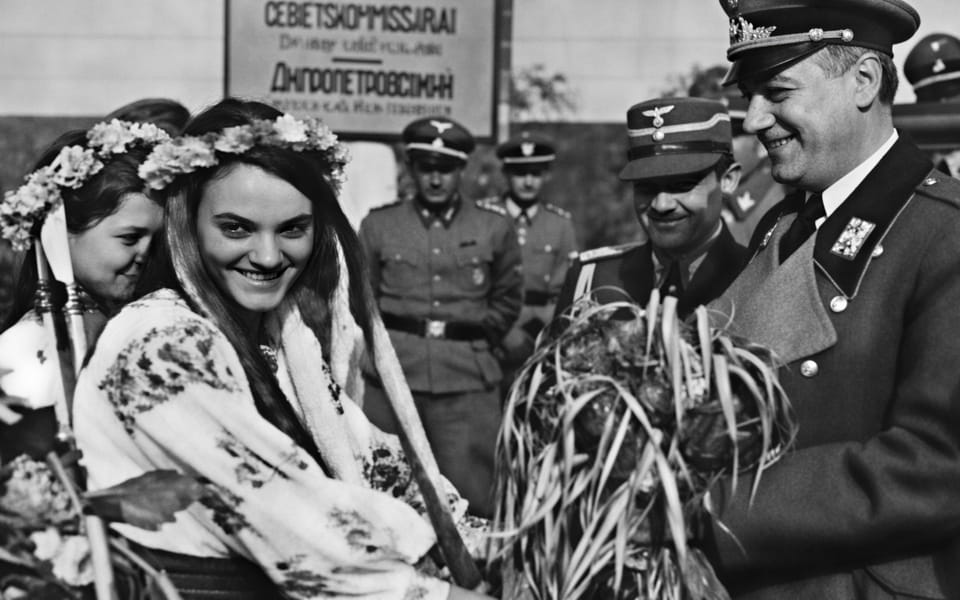
It was not the plans for urban development of Dnipropetrovsk (modern Dnipro), which amazed Rosenberg, according to his ‘devil’s diary,’ but a short visit to villages in the region. The delegation made several brief stops, one, particularly between Dnipropetrovsk and Dniprodzerzhynsk (modern Kamianske). Similar to a farce story with two ducklings near Kyiv, the propaganda coverage later told the story of how kind Alfred Rosenberg was to local girls, who were said to welcome him with flowers. According to the German brochure, the minister ‘melted their hearts with a smile’, but it was probably not a surprise to impress depressed and occupied people in the Ukrainian villages, especially under the surveillance of the local ‘Landwirtschaft Führers’. While in 1941 Ukrainians anticipated the long-awaited liberation from Stalin’s tyranny, one year later, the nature of the Nazi regime and its attitude to people made no secret of it anymore. Rosenberg used his moderate knowledge of the Russian language to communicate with the locals, and he felt more comfortable among peasants than among the intelligentsia in Kyiv.
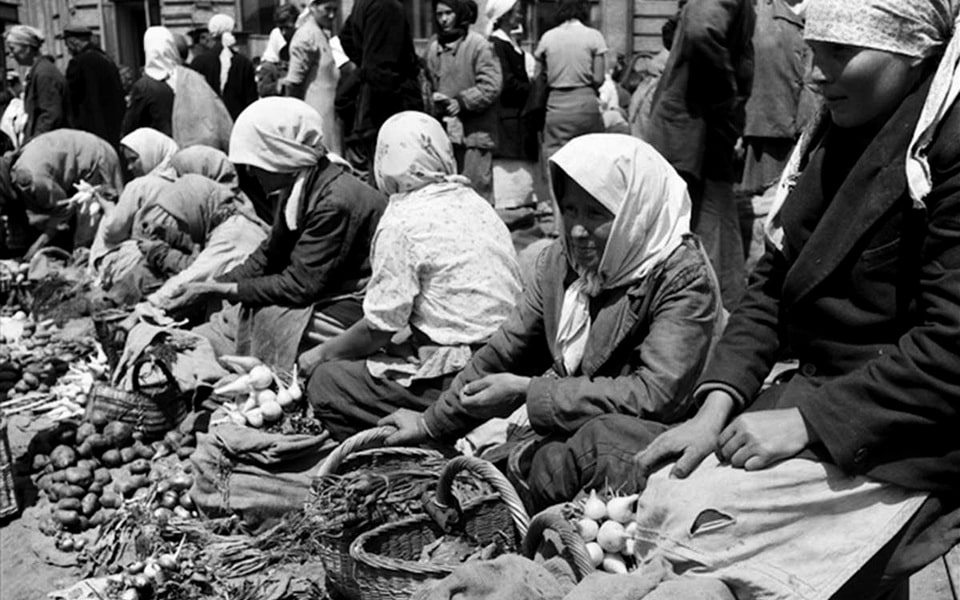
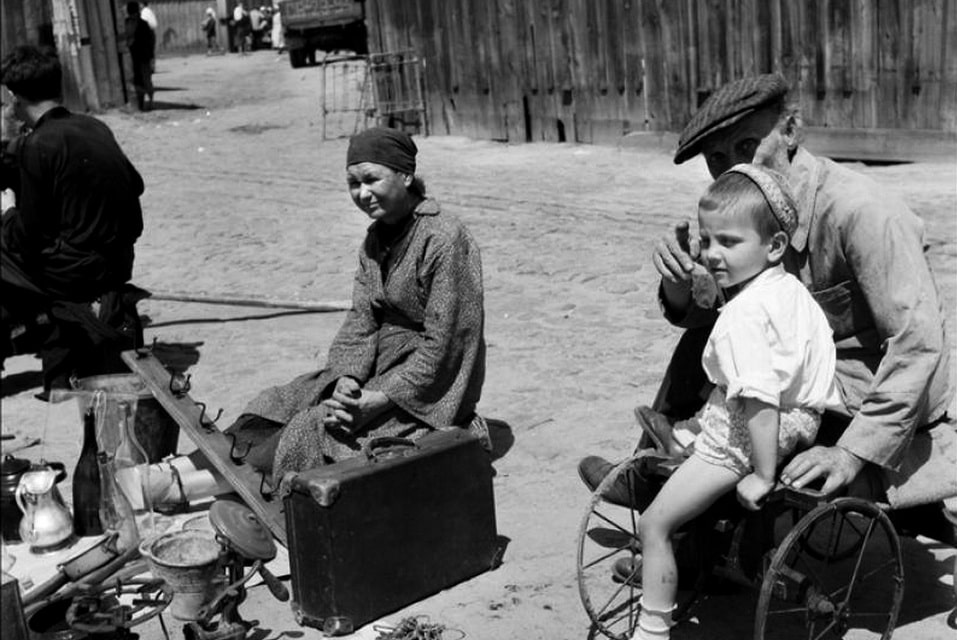
The next staged admiration for Rosenberg’s arrival was set up in the city of Zaporizhzhya, 70 kilometers to the south of Dnipropetrovsk. The pre-war population of 289 000 in 1939 decreased dramatically to only 103 375 according to German consensus in May 1942, which should come as no surprise, with 157 000 people forcibly taken from the region to Germany during the occupation. Rosenberg was taken to visit the German settlement on the island of Khortytsia. The German Mennonites came to the location as far back as 1789, and the first 228 families founded eight villages. For one and a half centuries, they lived in relative autonomy until the First World War and later the seizure of power by the Communist regime. The Khortytsia colony faced forced expropriation, brutal Soviet collectivization, forced exile to Siberia, the seizure of their property by local communists, and the spread of venereal diseases and typhus. After the outbreak of war in June 1941, the Soviet government intended to evict the settlement, but the Wehrmacht’s advance ruined those plans, leaving several thousand Mennonite descendants in Khortytsia. In June 1942, they welcomed Rosenberg, and in contrast to the Ukrainians elsewhere, it is reasonable to assume that those German settlers were glad to meet Alfred Rosenberg. After the German retreat from Ukraine in 1943-1944, those settlers were mainly left behind, then brutally deported by Stalin’s regime, and only a small percentage of them survived. It is important to note that in the Reich, the Mennonites were among the few religious groups that openly supported the Nazi regime in the mid-1930s, and, in contrast to Jehovah’s Witnesses, Reform Adventists, and Christadelphians, allowed their young male generation to join the Wehrmacht.
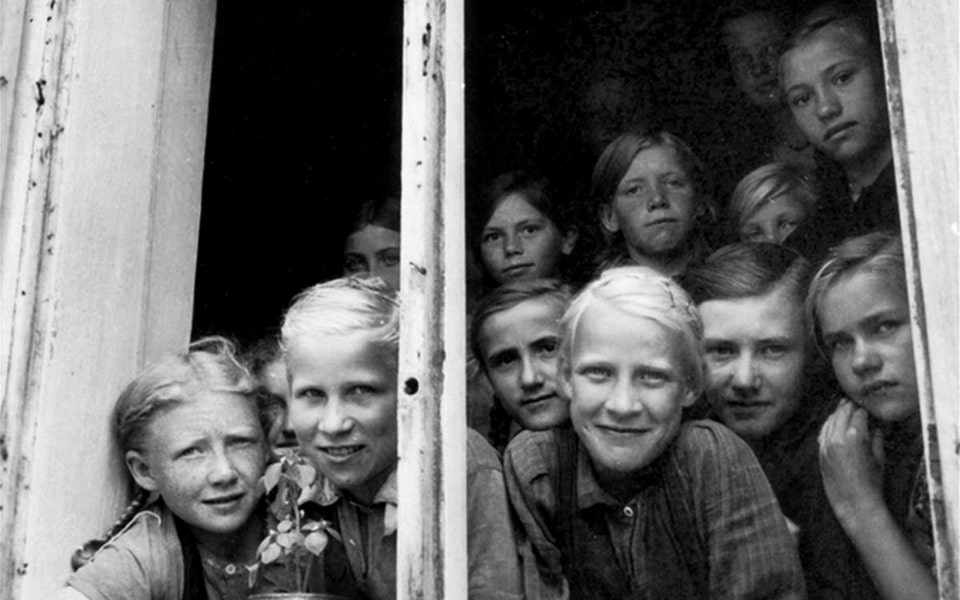
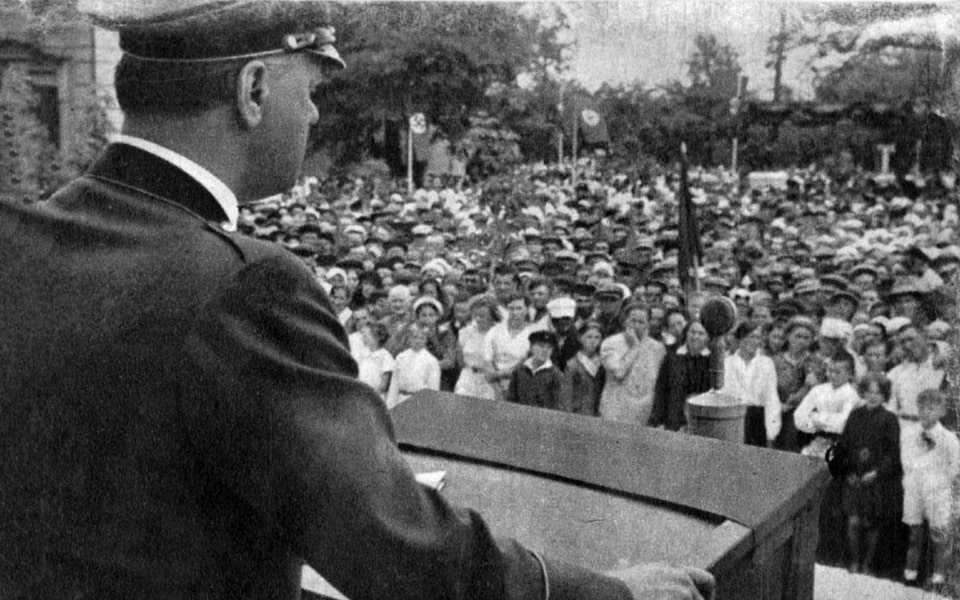
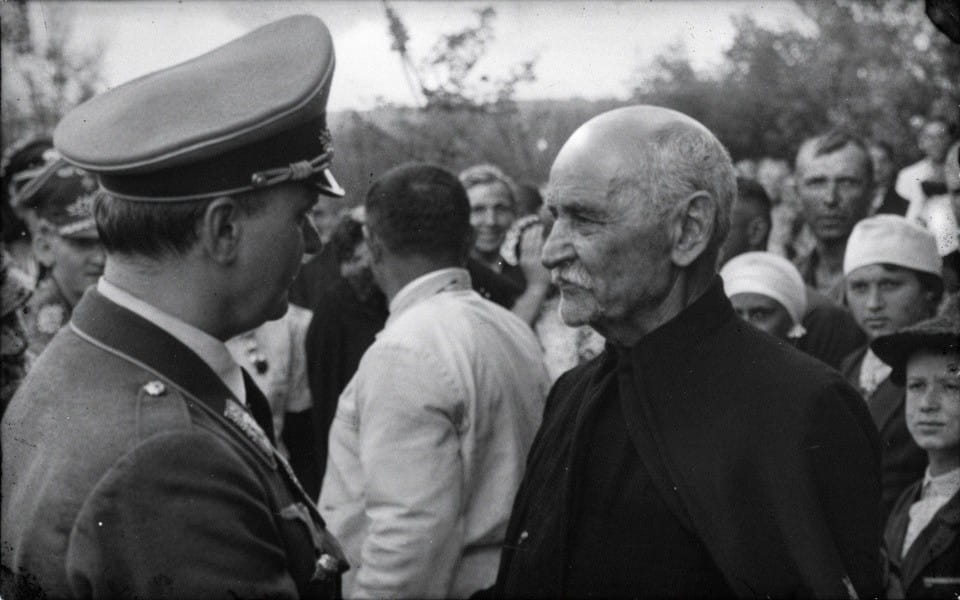
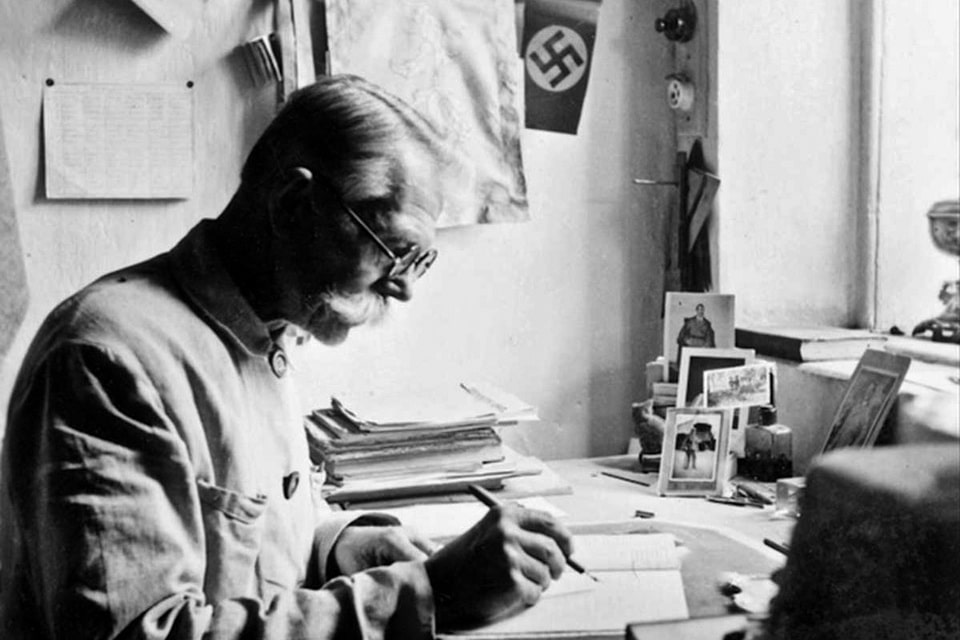
Apart from seeing Mennonite settlers in Khortytsia, the German delegation visited the Dnieper Hydroelectric Station or ‘DniproHES’. Similar to the explosions in Kyiv, one of the largest power stations in the world was blown up by the retreating Soviet forces on August 18, 1941, making a hole of 175 meters in length. The exact number of people who died in the flood of water down the river is uncertain, with the lowest estimate of 3000 civilians. Rosenberg was taken to the main generation hall and inspected the restoration work from the outside. The Germans initiated repair works as early as December 1941, and up to 3000 men (2000 workers and 1000 POWs) worked on the site until the Station was almost fully repaired in early 1943. Apart from Organisation Todt, Philipp Holzmann AG, and Siemens Bauunion companies participated. It is important to note that the retreating Wehrmacht blew up a section of DniproHES, smaller in size than in 1941, one more time in October 1943, and the Station would be fully operational as late as 1950.
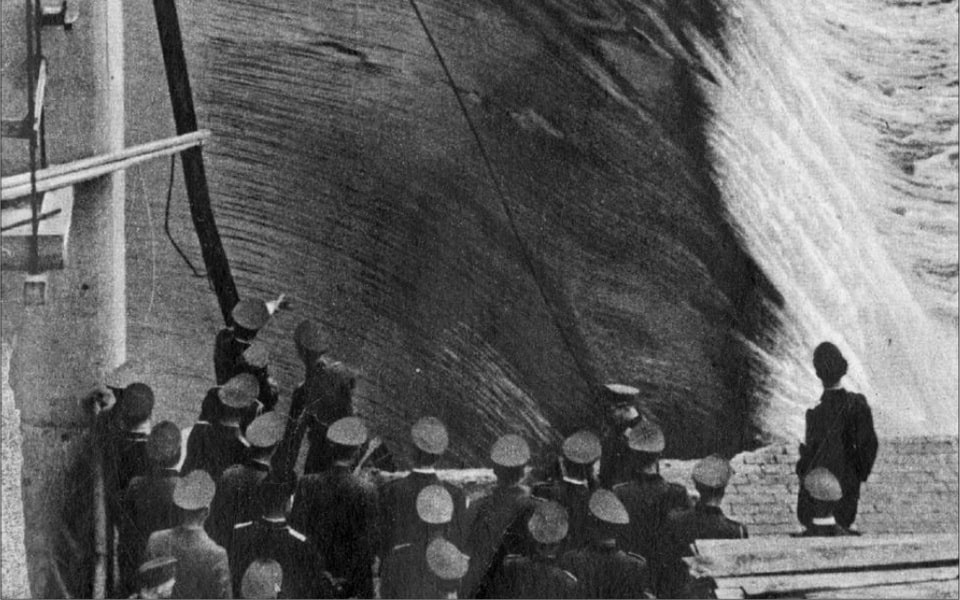
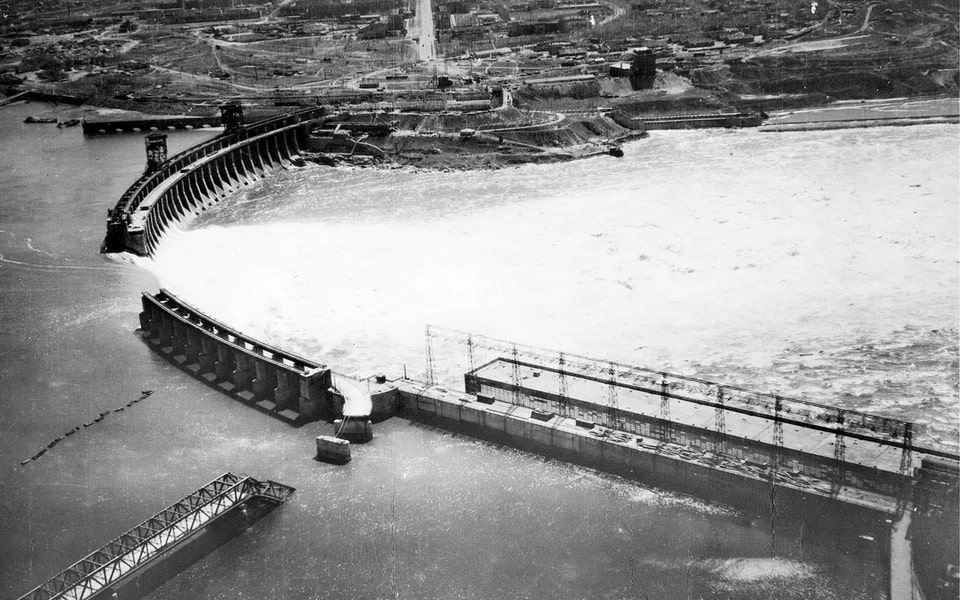
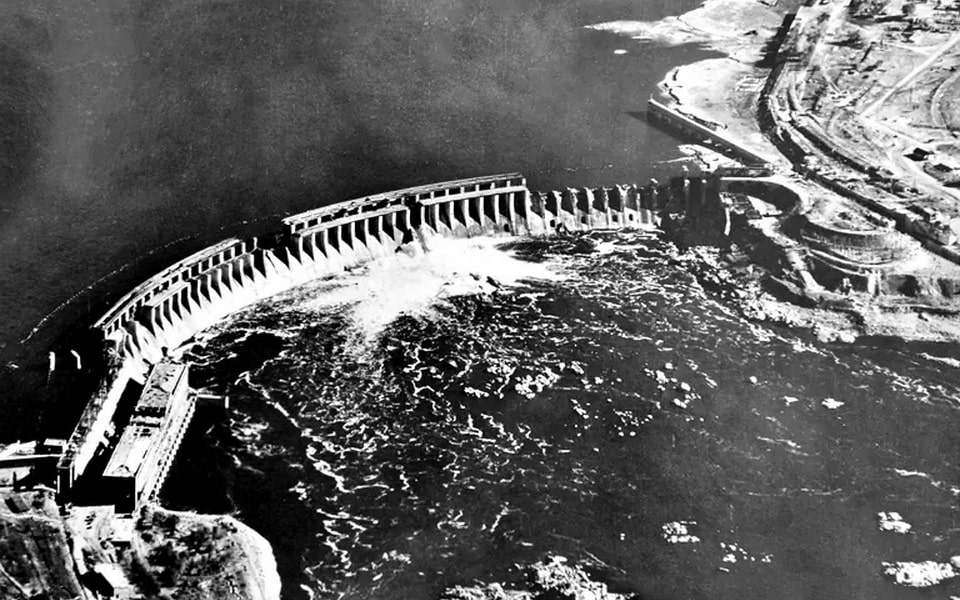
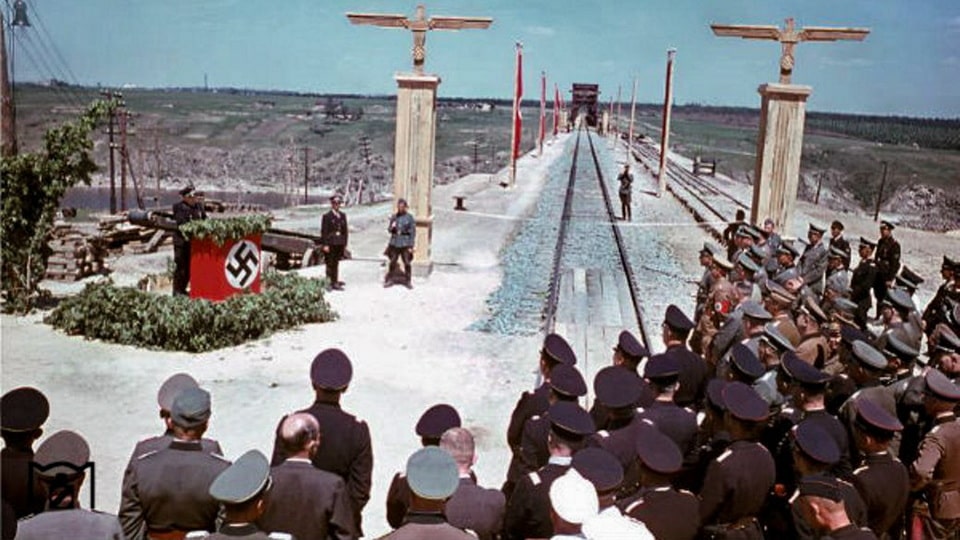
Rosenberg’s theatrical concern about the restoration of production in occupied Ukraine should be regarded in correlation with the number of production capacities that were taken from the country during the 1941-1944 occupation. The Germans took 24 750 train carriages with industrial equipment from Kyiv only, and toward their departure from Ukraine, they took 128 00 electric engines, 781 000 filing tables, and 19 000 pieces of blacksmithing and pressing equipment. During their retreat in 1943-1944, the Wehrmacht adopted Stalin’s policy of ‘Scorched earth’ in Ukraine, destroying 220 000 km of wire connections, blowing up or badly damaging 5600 bridges, 700 water towers, 120 train depots, 1400 water pump stations, and damaging 181,000 train carriages. 80% of the pre-war bakery industry in Ukraine lay in ruins, as well as 90% of vegetable oil and 100% of tobacco. Apart from the industrial equipment, 2.4 million workers were taken to the Third Reich during the occupation of Ukraine only, comprising 48% of all ‘Ostrabaiters’ taken westwards from the USSR. A significant share of those forced workers were young women.
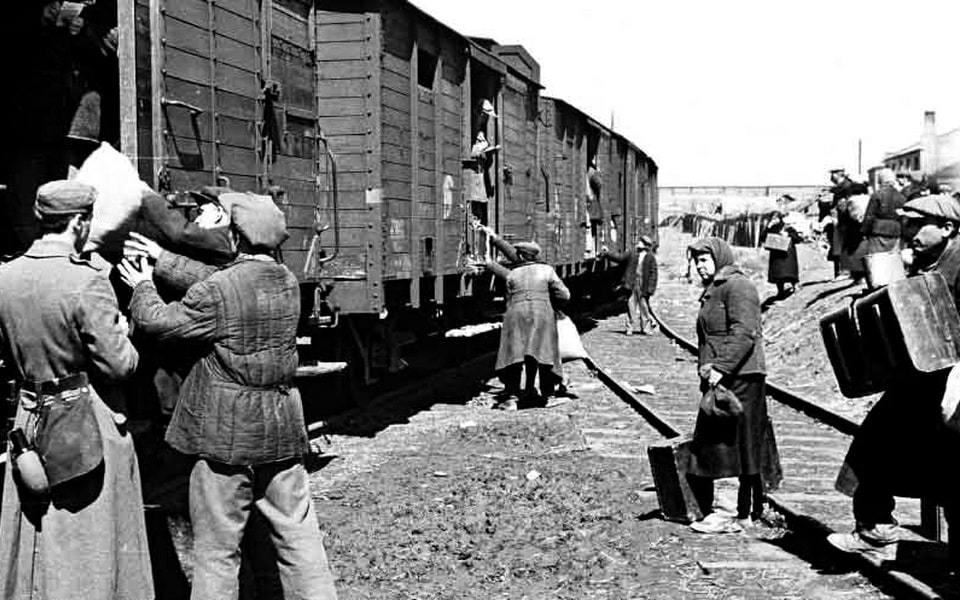
There is no definite answer on when Alfred Rosenberg left Ukraine, but one of the sources states that on 22 June 1941, the first anniversary of the start of Barbarossa, Rosenberg’s cortege reentered Rivne before departing further to the West. On the contrary, some Ukrainian sources include the information that he spent three days in the Dnipropetrovsk region only between June 22 and 25. Following his visit, the aforementioned propaganda brochure called ‘Alfred Rosenberg besucht die Ukraine’ (Alfred Rosenberg visits Ukraine) was published with brief comments and photos from that June 1942 trip, which was the last occasion Rosenberg ever set foot on Ukrainian soil. In July, he visited Hitler’s wartime headquarters near Rastenburg and shared his impressions about his trip with the German dictator.
As for Rosenberg’s fate after the War, he was captured and tried in Nuremberg in 1945-1946, found guilty on four main charges, and hanged on October 16, 1946. Erich Koch managed to escape captivity until 1949, waited for his trial until 1958, was sentenced to death in Poland, but was later left alive for life imprisonment. The architecture of genocidal occupational policy in Ukraine lasted until 1986 and passed away being ninety years old.
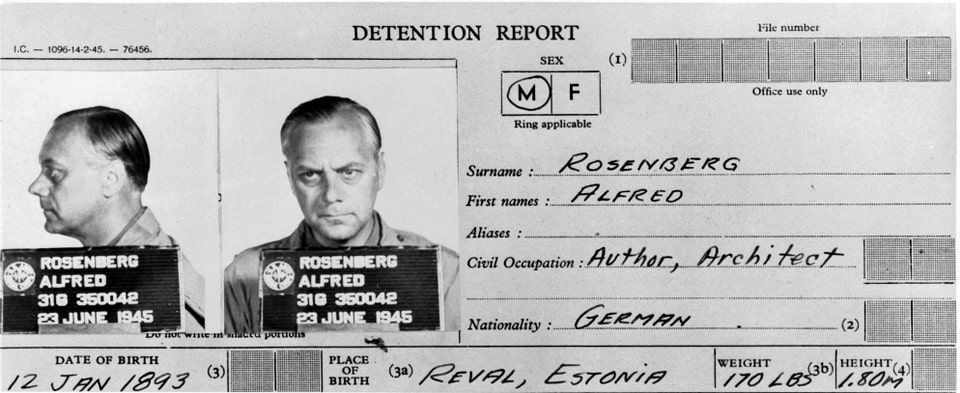
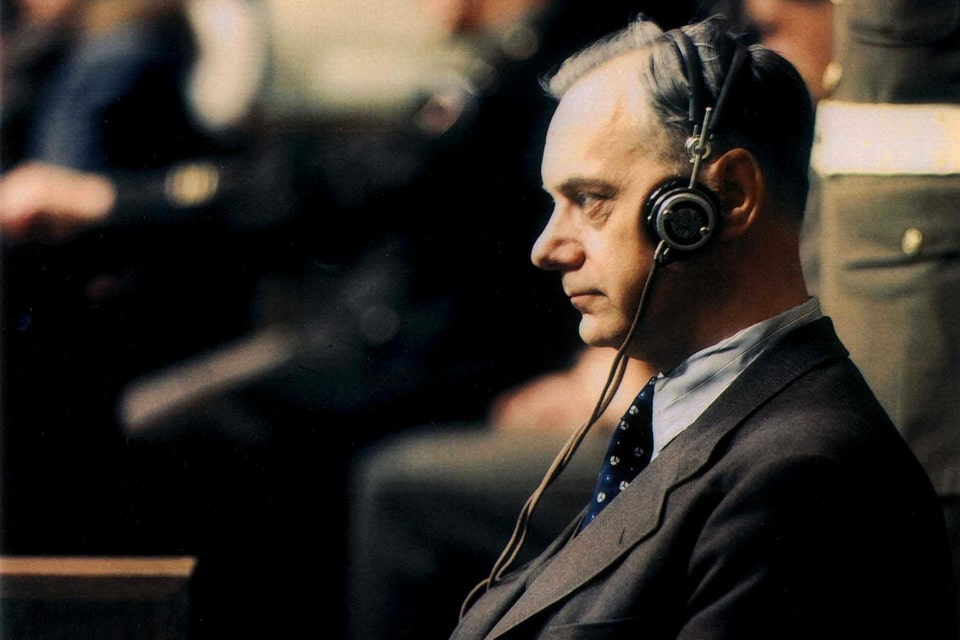
Visiting the Kyiv Locations of Rosenberg’s June 1942 Tour
Alfred Rosenberg’s June 1942 propaganda itinerary through occupied Kyiv can be retraced today on foot and by public transport. All six locations remain accessible — though one, the Kyiv-Pechersk Lavra, sustained significant damage in a russian missile attack on 15 June 2026, and access may be restricted. All sites above are in central Kyiv and accessible by public transport. Kyiv continues to operate as a functioning capital city despite ongoing Russian missile and drone attacks. Visitors should:
— Download the Kyiv air alert app (or «Повітряна тривога» app) and follow shelter instructions during alerts
— Note that many museums have reduced hours or temporary closures during high-alert periods
— Check the current status of the Lavra before visiting, given the June 2026 Dormition Cathedral damage
— Nearest metro shelter to the Lavra area: Arsenalna station (105.5 m deep — one of the world’s deepest metro stations, and one of the most effective air raid shelters in Kyiv)
For a broader walking tour of Kyiv’s WWII sites, see the companion article: Kyiv WWII Memorial Complex →
I am very grateful to war archives, museums, libraries, private collections, and writers for the historical photos in this article. To the extent that some author or a copyright owner may not want some of the above black-and-white photos to be used for educational purposes here, please contact me for adding credits or deleting the pictures from the article.