

Photographer Heinrich Hoffmann: His Munich Studios Then and Now
Heinrich Hoffmann was born in Fürth in 1885, opened a photographic studio in Munich in 1909, and spent the next quarter century taking the pictures by which Adolf Hitler is still recognised — perhaps two and a half million of them. He is the reason there is almost no candid photograph of Hitler. Every pose, every angle, every backlit profile was arranged, approved and sold, and Hoffmann held the copyright: he was paid a royalty on each portrait, including the one on the postage stamps. By 1943 his firm was turning over fifteen million Reichsmarks a year across ten branches.
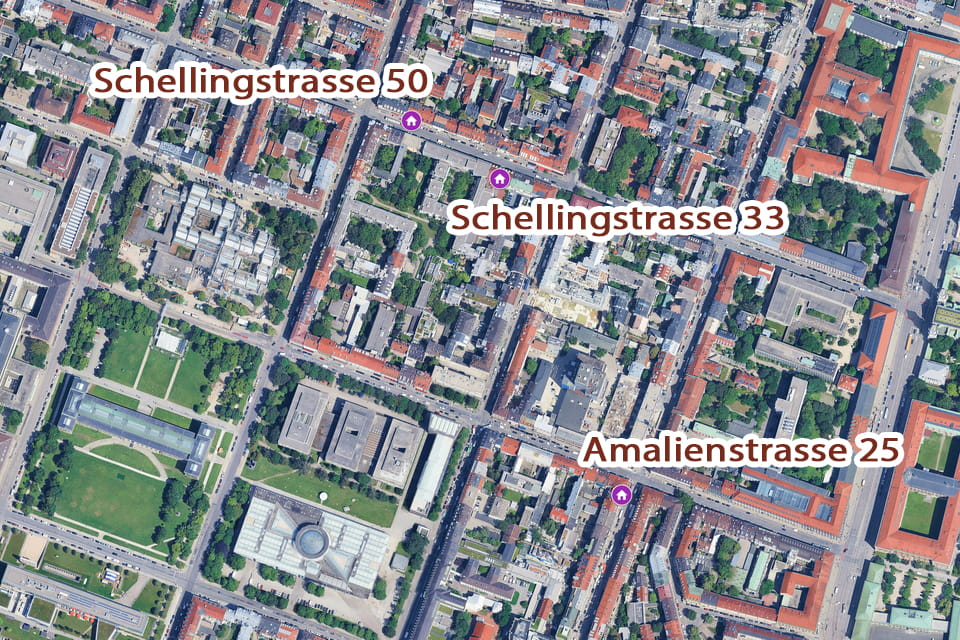
All of it began at three addresses within a few streets of each other in Munich’s Maxvorstadt. Schellingstrasse 33, the first small atelier, from 1909. Schellingstrasse 50, where in 1925 he rented twelve of his thirteen rooms to a party that had just been refounded — making his own studio the NSDAP headquarters for the next five years. And Amalienstrasse 25, above the Café Stefanie, where in October 1929 a seventeen-year-old shop assistant named Eva Braun was introduced to a forty-year-old customer as «our good little Fräulein Eva».
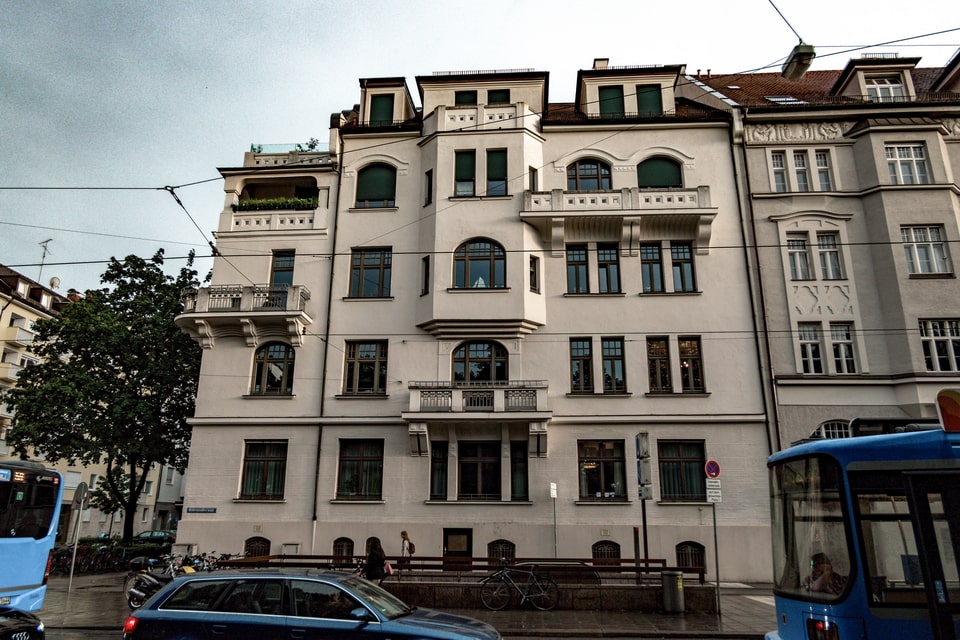
All three buildings, related to Hitler’s photographer, still stand, and I photographed them in 2018. This article follows the three studios in order, with the archive images and my own, and ends with the question people ask most often: where are Hoffmann’s photographs now? The answer involves a courtroom in Nuremberg, a warehouse in Maryland and a library in Munich.
WHO HEINRICH HOFFMANN WAS: FÜRTH, REGENSBURG, MUNICH 1909
Similar to his contemporary, a female cinematographer and director, Leni Riefenstahl (1902-2003), Heinrich Hoffmann has become notoriously associated with the heritage of the Nazi regime, not because of his immediate involvement in the crimes. He neither sent people to the concentration camps nor participated in the decision-making of the Second World War. Along with that, he called himself a friend of Adolf Hitler, and being the photographer next to the German dictator and at all key events in the history of the NSDAP, Hoffmann self-consciously glorified the murderous regime. To some extent, he made Hitler the undisputed ruler in Germany. Like a pen, which can be more powerful than a sword, thousands of photographs placed at the right time and place before the right audience proved a disastrous form of image-making. Even though at the end of his life, Heinrich Hoffmann pretended to be a bystander, an artist, his personality and relation to Hitler and the Nazi regime were more complex, and thus worth attention.


Heinrich Hoffmann was born three and a half years before Hitler, on September 12, 1885, in the Franconian city of Fürth, near Nuremberg. He was introduced to the art of photography by his own father, Robert Hoffmann, who worked as a court cameraman first under Luitpold Karl Joseph Wilhelm Ludwig, Prince Regent of Bavaria (1821-1912), and later for King Ludwig III (1845-1921). The boy’s uncle of the same name, Heinrich (1862-1928), was also a famous photographer. At the turn of the XX century, young Heinrich worked in the photo atelier of his father, and once reaching eighteen, he spent the next years on journeys, working as a cameraman in Germany, Switzerland, France, and England. He gained experience from famous photographers of his time until he finally came to Munich in 1909. Even though Heinrich enjoyed his career development and the lovely atmosphere in London, he wanted to come back home to Germany. Upon arriving in Munich, he bought a small premises on Schellingstrasse 33 and turned it into a photo studio, thus following the example of his father and uncles, who had opened their atelier in Regensburg back in the 1880s. Previously having dreams of becoming a painter and prevailed on by his father, a twenty-four-year-old Heinrich Hoffmann completely tied himself to the world of photography.
2 AUGUST 1914: THE PHOTOGRAPH THAT MADE THE HITLER MYTH
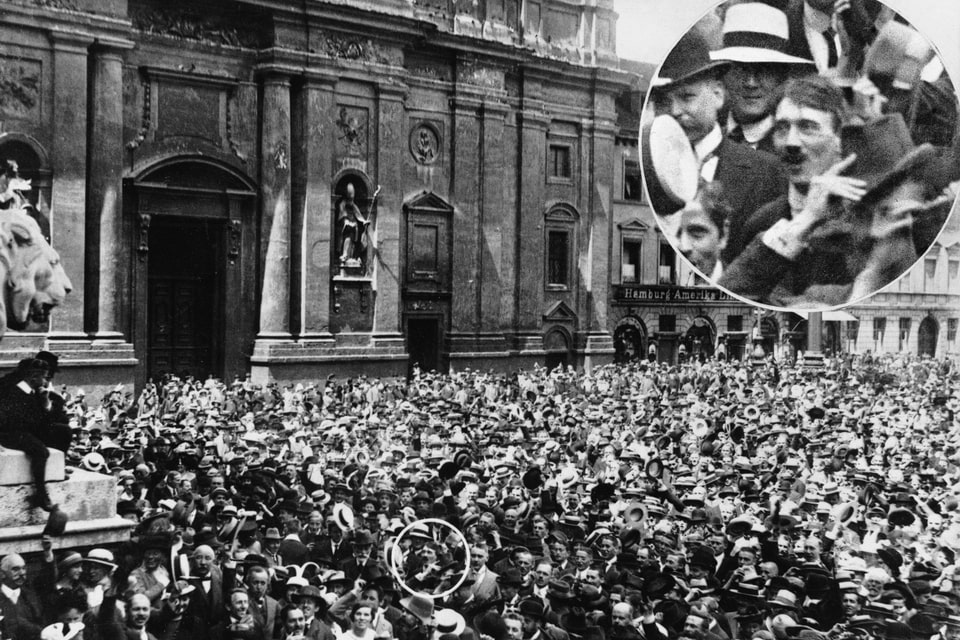
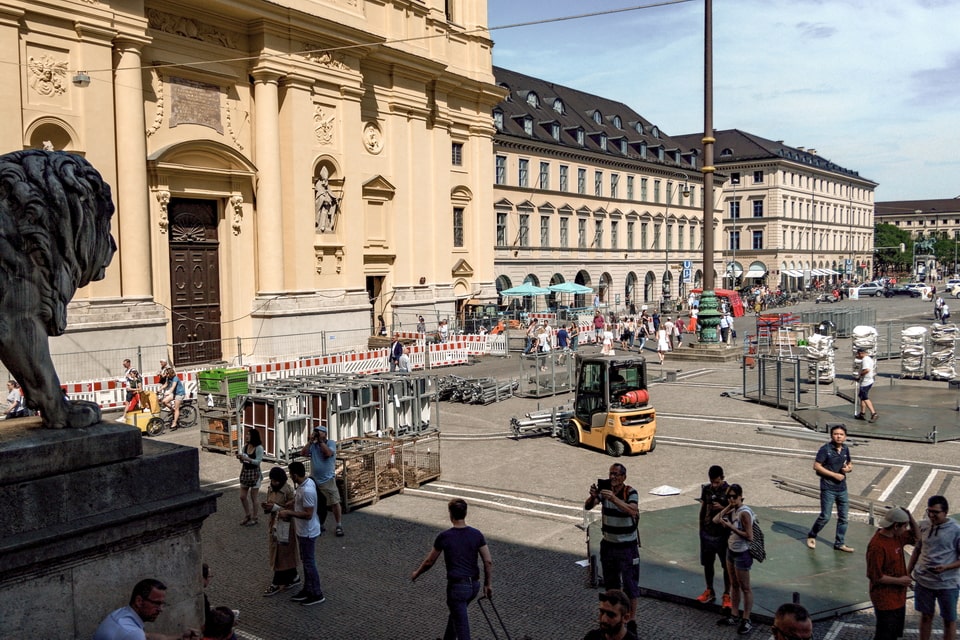
With the opening of his own atelier and a ‘Hoffmann Fotoreport’ service in Munich, Heinrich Hoffmann quickly gained a reputation as a skillful portrait photographer. His services were in demand among Bavarian politicians and Bohemians, whose portraits taken by Hoffmann appeared from time to time on the pages of local newspapers, including the famous weekly ‘Münchner Illustrierte Zeitung’. Hoffmann’s political views before the outbreak of the First World War remain unknown, but on August 2, 1914, a day before Germany declared war on Belgium and France, he took one of his most well-known photos. Hoffmann took a series of photos of the patriotic crowd that gathered on Odeonsplatz square in front of the Feldherrnhalle war memorial. Among this mob was a twenty-five-year-old shabby painter named Adolf Hitler, who had come to Munich in May 1913, and, like the men around him, supported the outbreak of war. Years later, Hitler told Hoffmann that he was among the crowd that day, and the enlargement of the August 2, 1914 photo revealed him in the center of the shot. This photo contributed to the establishment of the ‘Hitler myth’ during the Third Reich era, pointing to him as a war veteran and a man of the people.
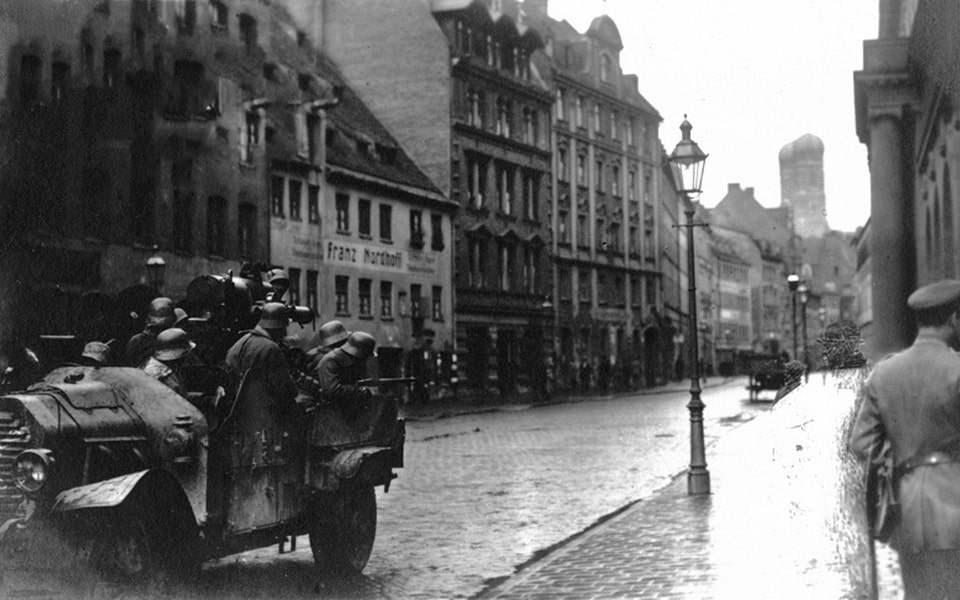
Not aware of the existence of Hitler at the time, Hoffmann was assigned as a war photographer on the Western Front. He spent the next four years mainly in the rear, far away from the battlefields, and among other matters, Hoffmann worked on developing photos of the air reconnaissance. Along with his service, his photo business also drew profit from selling postcards during the war, which saved his atelier on Schellingstrasse 33 from closure. At the end of the Great War, Heinrich Hoffmann came back to Munich, and in the next several months, he made himself a chronicler of the uneasy period in German history. First, in November 1918, he documented the proclamation of the so-called ‘People’s State of Bavaria’ led by a former theater critic, Kurt Eisner. After his assassination came the governments of Martin Segitz and later of Johannes Hoffmann, when finally, in April 1919, the communist radicals proclaimed the notorious ‘Bavarian Soviet Republic’.
HOW HOFFMANN BECAME HITLER’S PHOTOGRAPHER, 1919–1925
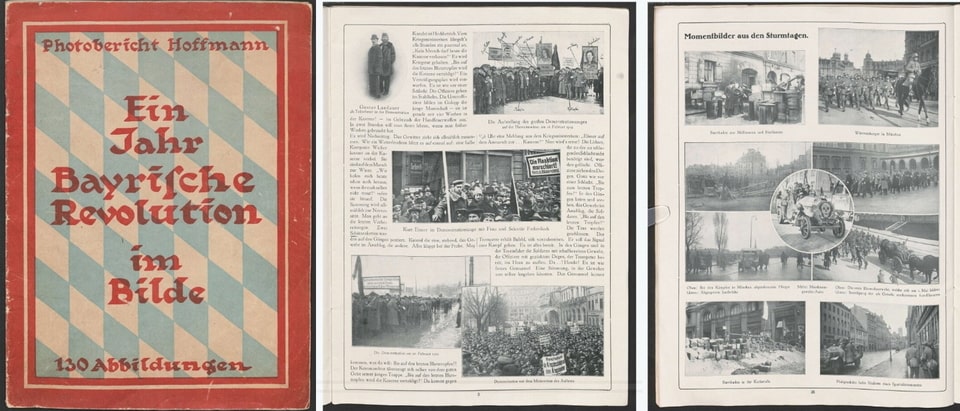
Heinrich Hoffmann took photos of the events in Bavaria, and in the fall of 1919, he published a 32-page brochure called “Ein Jahr Bayerische Revolution im Bilde” (A Year of the Bavarian Revolution in Pictures). The context of the photo album was anti-revolutionary and of a right-wing nature; many photos were purposely staged or edited for Hoffmann’s views. The first edition, with 130 black-and-white plates, included 10,000 copies. With the second edition in January 1920, the total number of issues reached an enormous 120,000, thus making Heinrich Hoffmann one of the unevident architects of right-wing propaganda in Bavaria in the early 1920s. Like Adolf Hitler, Heinrich Hoffmann became radicalized and formed his political direction probably in 1919. It is important to note that even though Hoffmann joined the NSDAP as early as April 6, 1920, and probably met with Hitler for the first time the same year, the two became relatively close only three years later.
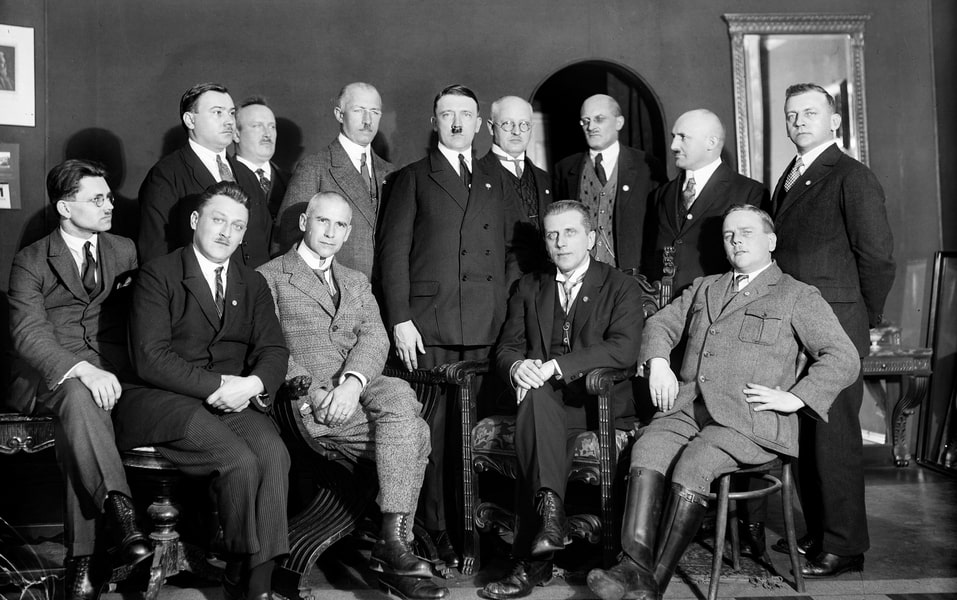
In his 1955 memoirs, Hoffmann cultivated the idea, which was exploited by several generations of historians, that Hitler consciously avoided being photographed before the fall of 1923 as a sophisticated propaganda concept to create an aura of mystery around himself. The reality was more banal, like many other issues regarding Adolf Hitler. First of all, he avoided the outsider press being too uncertain in the image they would present him outside his artificial self-made image. Years later, he expressed frustration regarding the images of Benito Mussolini not being properly staged. The second reason for Hitler’s uncertainty was his banal fear of attracting excessive attention outside Bavaria, especially from the police. So when Hitler allowed Heinrich Hoffmann to make his first staged photo set in September 1923, Hitler got enough confidence in the Nazi supporter Hoffmann, who had previously proved himself a trustworthy member of the right-wing circles in Munich and knew Hitler’s associates such as Dietrich Eckart (1868-1923). Hoffman eliminated Hitler’s fears of possible damage to his self-made image, and from then on, the failed painter could control and orchestrate his public presentation with the help of masterfully staged visual imagery of Heinrich Hoffmann. How deliberately that image was constructed, and how much Hitler himself directed it, is discussed throughout Ian Kershaw’s biography — the book that did most to shift the argument from Hitler’s psychology to the machinery around him.
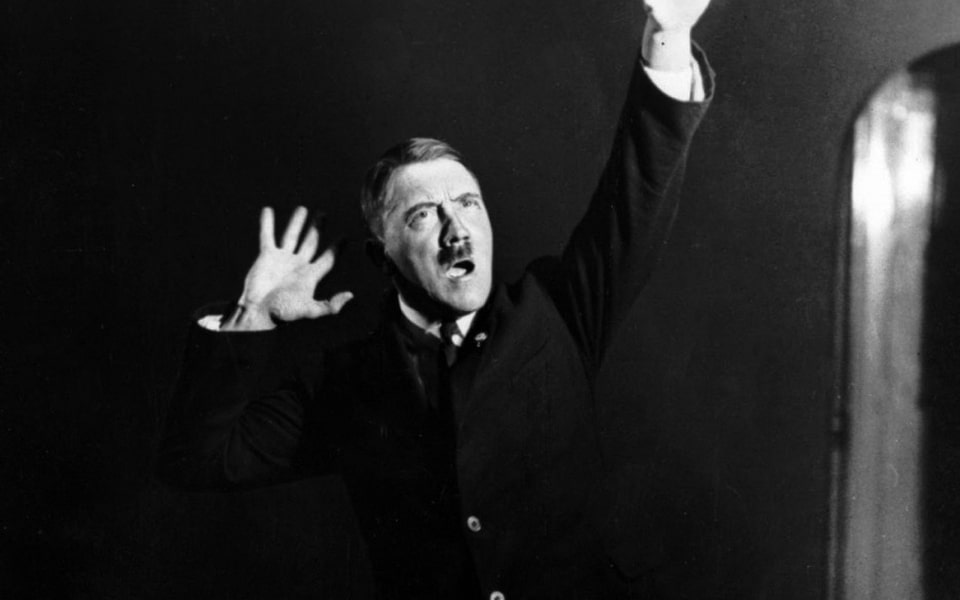
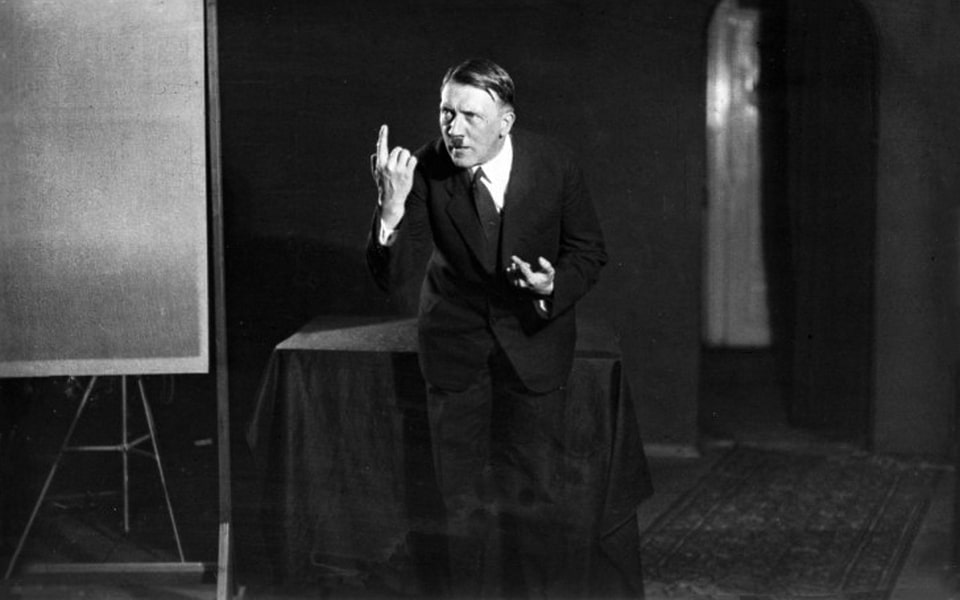
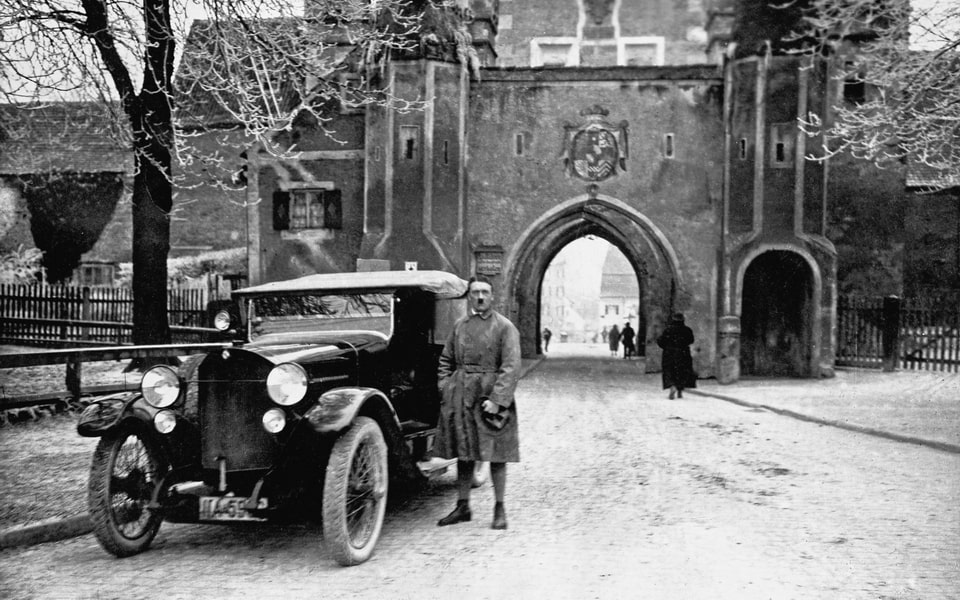
After publishing the first allowed photographs of Hitler, the latter made Hoffmann a member of his inner circle and later a ‘Führerfotograf’ (Führer’s photographer). In November, Hoffmann did not directly participate in the failed Beer Hall Putsch and arrived at the Feldherrnhalle after key events had happened, though he later took several photos from the trial against Hitler and other putschists. On December 20, 1924, when Hitler was released from Landsberg prison, sixty kilometers to the West of Munich, Heinrich Hoffmann and Adolf Müller (1884-1945) were the two people who picked up the released prisoner. Müller was Hitler’s friend, and a year later, he acted as a publisher of Mein Kampf and later became the key Nazi publisher. Hoffmann and Müller came to Landsberg in the afternoon in the latter’s newly bought Mercedes-Benz, and when the trio reached the gates, Hoffmann took one of the most well-known photos of Adolf Hitler posing near the car with the Landsberg prison in the background.
THE PHOTOGRAPHIC EMPIRE AND WHAT HAPPENED TO HOFFMANN AFTER 1945
Heinrich Hoffmann did not shy away from the NSDAP during Hitler’s imprisonment and governmental ban of the party, and on April 24, 1925, he joined the reestablished party, receiving party number 59. In the years to come, he and Hitler continued to stage and carefully orchestrate Hitler’s public image through postcards, pamphlets, brochures such as ‘DEUTSCHLANDS ERWACHEN’ (Germany’s Awakening), and many others. Hoffmann’s involvement in the policy extended beyond photography, and in 1926, he became a member of the Upper Bavarian District Council and, in 1929, a City Councilor of Munich. On November 14, 1933, Heinrich Hoffmann received his golden party badge and became a professor in 1938 and a Reichstag delegate in 1940. During the Third Reich era, Hoffmann’s photographic empire rose dramatically, reaching 683,000 Reichsmark in annual sales in 1933 and an enormous fifteen million by 1943, when he owned ten branches with a total staff of more than 300 people, earning 3,235,000 Reichsmark in profit. He ended the War with six million in savings and property, including houses in Munich, Altötting, Haag, Amsterdam, and Strasbourg.

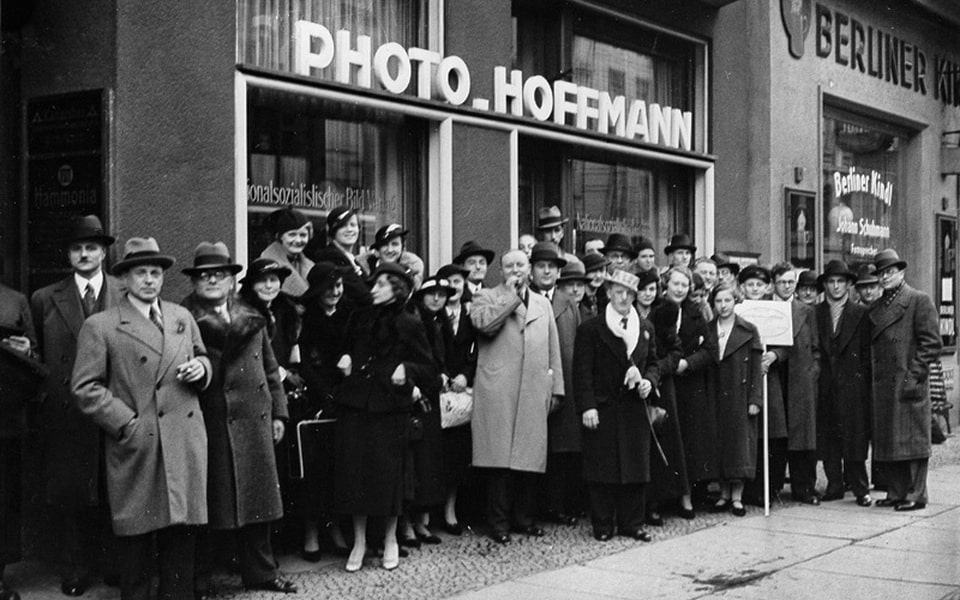
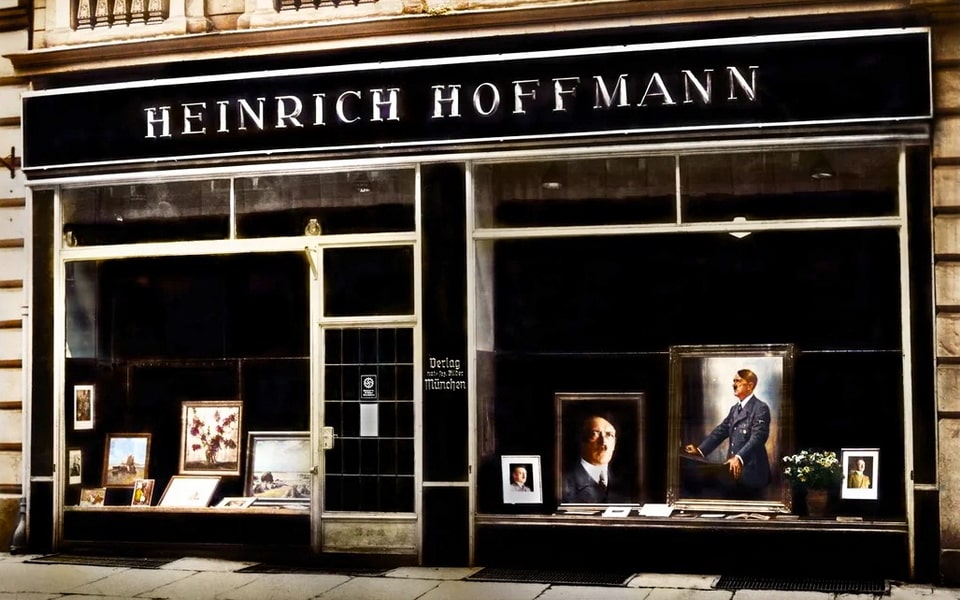
Heinrich Hoffmann was married twice, first to an actress and singer, Therese Baumann (1886-1929), with whom he had two children: Henriette Hoffmann, later Schirach (1913-1992), and Heinrich Junior (1916-1988). They met each other in Hoffmann’s photo atelier on Schellingstrasse 33. On April 18, 1934, six years after Therese’s death, he married female composer Erna Grobke (1904-1996). Heinrich Hoffmann was arrested by the US Counter-Intelligence Corps (CIC) on June 30, 1945. In 1947, the Munich House of Court classified him as category I or ‘Hauptschuldige’ (Major offenders) for his propaganda activities, involvement in the Nazi movement, and profiting from the regime. A year later, his initial ten-year conviction was suspended, and in 1950, it was set at five years, but he had already spent them in prison, so Hoffmann was released on February 4, 1950. The same year, he was reclassified to the second category of ‘Offenders’, and in 1955, he appealed to restore his confiscated property. In February 1946, Hoffmann was compensated with 350,000 Reichschmark, and on December 16, 1957, he passed away at the age of seventy-two.

THE FIRST ATELIER AT SCHELLINGSTRASSE 33 (1909-1919)
As I have already written above, Heinrich Hoffmann settled in Munich in 1909 after several years of journeys and learning as a photographer. He purchased a small premises on Schellingstrasse 33 and turned it into a photo atelier, later known for his portraits. While the German word ‘Schellen’ has several translations: a bell, a clamp, a grip, and even diamonds, the street got its current name in 1857 after a German philosopher Friedrich Wilhelm Joseph Schelling (1775-1854), who had lived in Munich for four decades and served first as secretary of the Royal Academy of Fine Arts and later as a lecturer at the Bavarian Academy of Sciences. At the turn of the XX century, Schellingstrasse became one of the favorite meeting places for Munich artists, writers, and actors. Among its frequent visitors were: an Austrian poet, Rainer Maria Rilke (1875-1926), a German novelist, Bertolt Brecht (1898-1956), the famous novelist Thomas Mann (1875-1955), the poet and a mentor of the Stauffenberg brothers, Stefan George (1868-1933), and many others. It is worth noting that the infamous communist Lenin attended Café Altschwabing during his stay in Munich.

SCHELLINGSTRASSE 50 (1919-1929). PHOTO STUDIO AND THE NSDAP HQ
Heinrich Hoffmann appreciated the location of his photo atelier as Schellingstrasse was one of the main transport arteries in the Munich districts of Maxvorstadt and Schwabing. A two-kilometer street ran in parallel to the well-known art galleries and ended in the east next to the famous Bavarian State Library. Hoffmann’s photo studio complied perfectly with the bookish and artistic atmosphere of the neighborhood, and it should come as no surprise that he chose a location for a new atelier on the same street. He sold the premises on Schellingstrasse 33, but unfortunately for Hoffmann, the inflation ground off much of the sum acquired. On August 1, 1919, he rented premises further down the street on Schellingstrasse 50, where he would spend the next ten years of commercial activity. In 1921, he bought out the rented rooms previously owned by Munich actor Max Nadler (1875-1932), and around this time delved into the movie industry. With two other partners, he founded Hokomar-Filmgesellschaft, where Hokomar was formed from the first letters of the three surnames of the owners: ‘Ho’ from Hoffmann, ‘Ko’ from Martin Kopp, and ‘Mar’ from Otto Martini. The production company produced only one comedy film with Munich actors, on which Hoffmann worked as a cameraman and a screenwriter, and it became bankrupt, getting him back to photography.
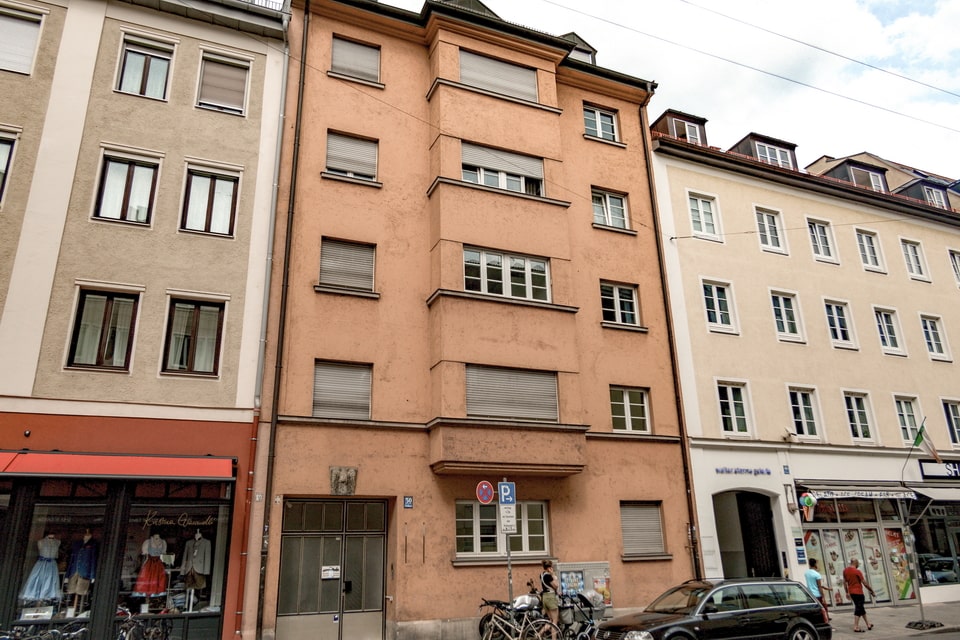
The financial situation of Hoffmann’s Weiss-Blau-Atelier (White-Blue Atelier) in the early 1920s was constrained, and he was looking for a chance to rent empty rooms in his studio to someone. Finally, in 1925, the solution came not from a fellow photographer but from Adolf Hitler, whose intimate circle Hoffmann had already entered. On February 27, 1925, the NSDAP leader announced the refounding of the party, and during the initial period, the party offices were temporarily accommodated by the ‘Franz Eher Nachf. Verlag publishing house on Thierschstraße 11. Later on, it was Heinrich Hoffmann who suggested his vacant rooms on Schellingstrasse 50 to Adolf Hitler, who agreed to rent twelve out of thirteen premises, which was a bit of great luck for Hoffmann. The deal was drawn on June 4, 1925, and on June 24, the new Nazi office was opened. The opening became possible thanks to the donations of wealthy party supporters, including Elsa Bruckmann (1865-1946), who helped the new Nazi offices with furniture.
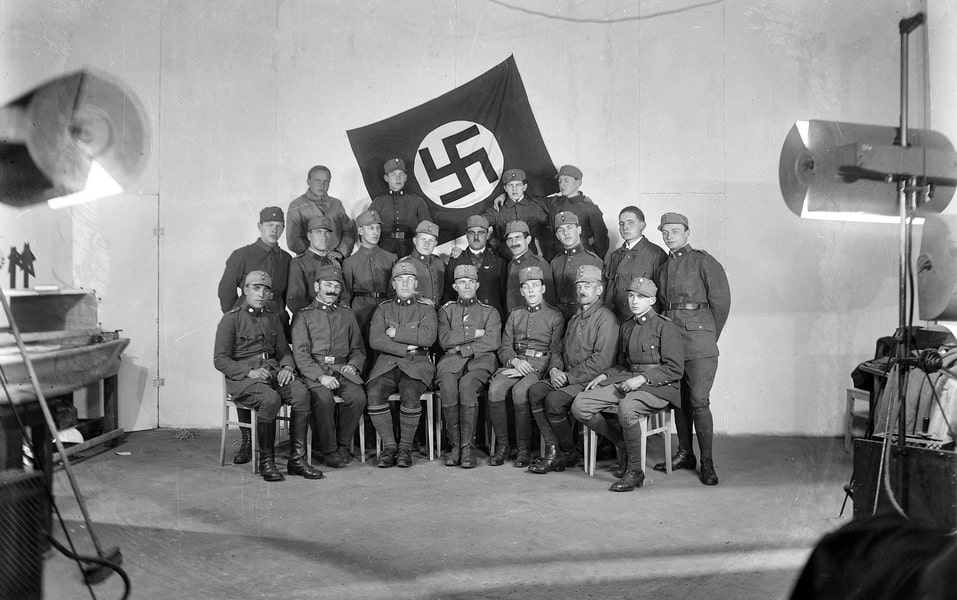

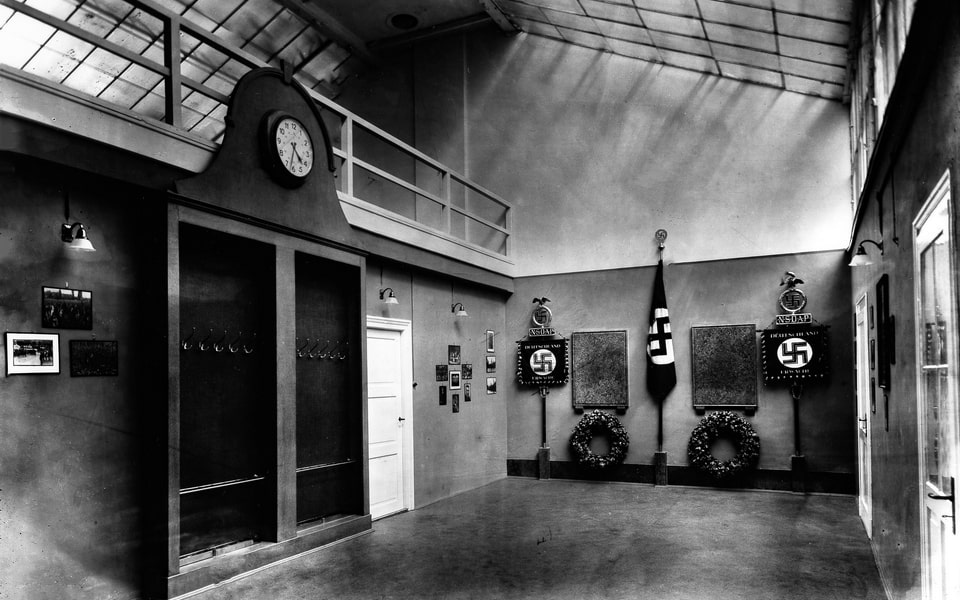
The new spacious headquarters allowed the NSDAP to go nationwide from here, while according to one of the party’s principles, the seat of the party should always be in Munich. Philipp Bouhler (1899-1945), a young and ambitious Nazi, was appointed by Hitler as Reichsgeschäftsführer der NSDAP (Reich Managing Director of the NSDAP), simply speaking, the boss of the new headquarters. Max Amann (1891-1957), who had previously been Bouhler’s chief and the first managing director, became the head of the party’s publishing empire. Another participant of the failed Beer Hall Putsch, Franz Xaver Schwarz (1875-1947), left his job to become ‘Reichsschatzmeister’ (National Treasurer). Among other purposes, the new offices at Schellingstrasse 50 accommodated the party archive with the database of member cards. In early 1928, Gregor Strasser (1892-1934) became the Chairman of the NSDAP Organizational Committee as ‘Reich Organization Leader’ with an office in the party headquarters on Schellingstrasse. Strasser already accommodated one of the rooms here starting from 1926 with young Heinrich Himmler as his assistant.
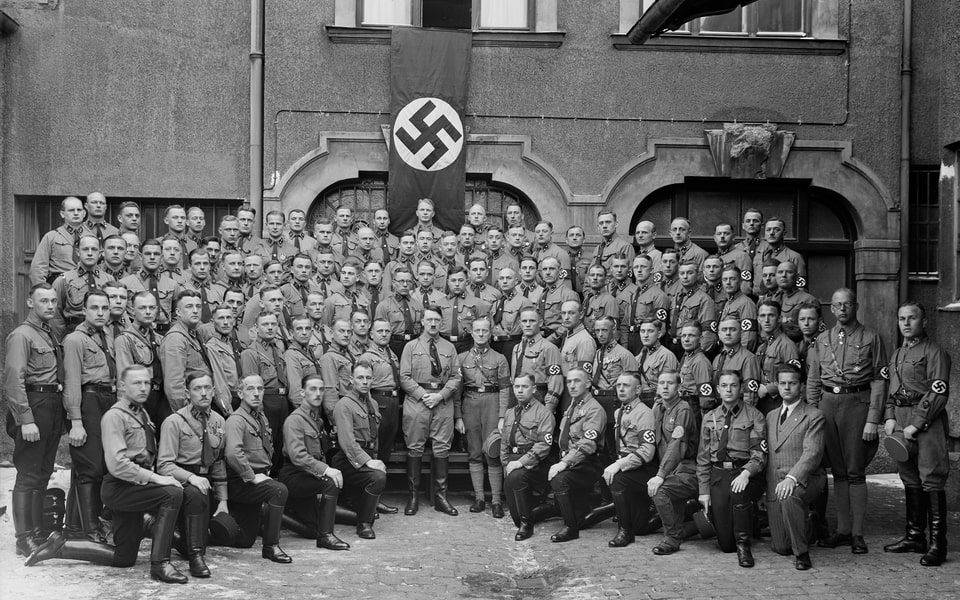
Formerly uneventful building of Schellingstrasse 50 served as the Nazi command center for six years between June 1925 and May 1930. Hitler dreamed about a massive renovation of the headquarters, but party expenditures used to grind off most of the income. For example, in 1927, the NSDAP earned 254,000 Marks while expenses amounted to 252,000, thus leaving no money for building renovation. Even the idea of selling symbolic bricks to potential donors met with constrained results. One of the Nazi structures that accommodated the headquarters was the so-called ‘Supreme SA leadership (OSAF). Its ‘Oberster SA-Führer’ (Supreme SA Führer), Franz Pfeffer von Salomon (1888-1968), transformed splinter groups into a powerful paramilitary organization with the help of his apparatus, including his chief of staff, Dr. Otto Wagener (1888-1971), whom Salomon hired in 1929. When Hitler’s future secretary Christa Schroeder came to Schellingstrasse 50 for the first time in March 1930, she was impressed by the contingent of OSAF, mainly formed by the Bavarians, former soldiers, and officers. Schroeder herself applied to a newspaper advertisement in Münchner Neuesten Nachrichten and won the position among 87 other female applicants.
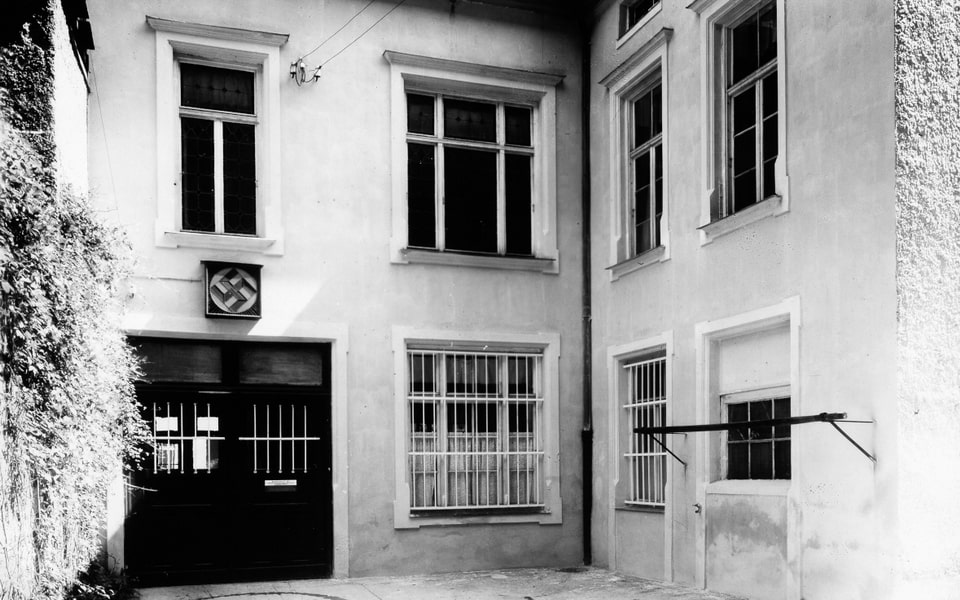
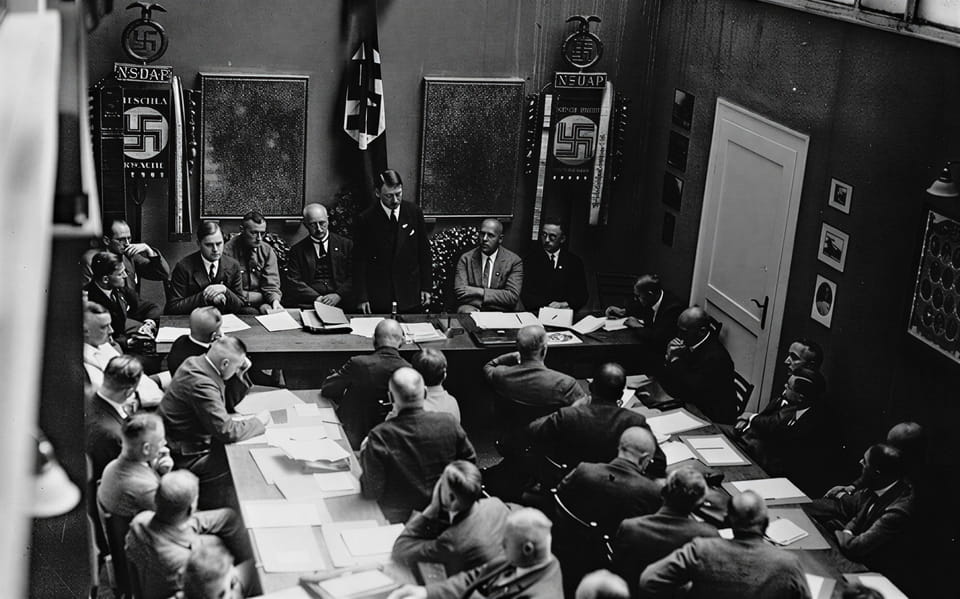
As years passed, Hitler felt that the party headquarters on Schellingstrasse did not fit anymore for the expanding Nazi organization, and the NSDAP purchased Palais Barlow near Königsplatz in May 1930, which was officially opened on January 1, 1931. The party apparatus moved to a new building known as the ‘Brown House’, while Schellingstrasse 50 was left in a supportive role, which changed only after the end of the Second World War. While the building exterior has changed slightly in the past eighty years, the only detail that still reminds one of the dark past of the location, apart from the courtyard where many photos were taken in the late 1920s, is the silhouette of an eagle with outspread wings above the entrance from Schellingstrasse. The swastika sign was obviously and rightfully obliterated, and the eagle is barely noticeable.

SCHELLINGSTRASSE: THE WHOLE STREET AND THE THIRD REICH
It is interesting to note that Schellingstrasse had other connections with the history of the Third Reich, Adolf Hitler and his entourage, apart from Hoffmann’s ateliers and the 1925-1930 NSDAP headquarters. Schellingstrasse 39-41 was the location of the editorial office of the infamous Völkischer Beobachter newspaper, which the party bought in late 1920. During the summer of 1923, before the failed putsch, the Nazis used some premises here as their headquarters. In the 1920s, Heinrich Hoffmann lived in house number 9 on the adjoining Schnorrstrasse, only a few minutes’ walk from his atelier on Schellingstrasse and the Nazi party headquarters. As a guest at this home, Adolf Hitler was introduced to some impactful personalities, for example, to Bernhard Stempfle (1882-1934), a Catholic priest who gained great influence on Hitler and later assisted in writing Mein Kampf.
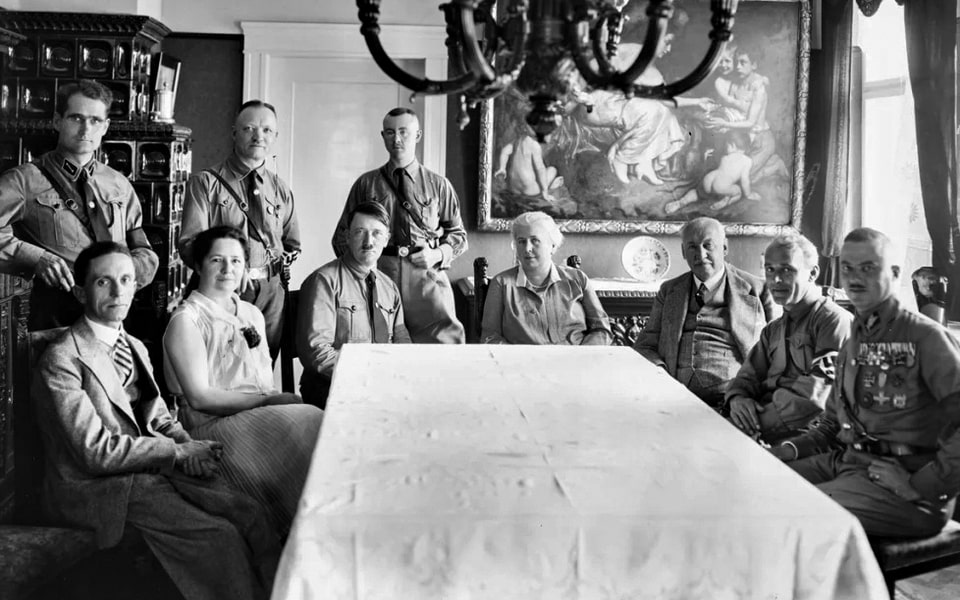
The notorious Hitler Youth leader Baldur von Schirach (1907-1974), who came to Munich in 1925, lived on Schellingstrasse 29, where he later organized the headquarters of the so-called Nationalsozialistischer Deutscher Studentenbund or NSDStB (National Socialist German Students’ League). In 1932, he married Hoffmann’s daughter, Henriette (1913-1992). Schelling Salon on Schellingstrasse 56 was one of Hitler’s favorite restaurants in Munich. The famous Munich pub survived the Second World War, and it has been owned by the same Mehr family since 1872. Another interesting location on Schellingstrasse was the local Mercedes-Benz dealer’s office, where Hitler bought his first Mercedes after his release from Landsberg prison. He purchased the car from the Benz dealer Jacob Werlin (1886-1965), an Austrian who sold cars in Germany. He met Hitler in 1923 because his office was located just next door to the Völkischer Beobachter headquarters. Later on, he became Hitler’s link with the automobile industry, joined the SS in 1932, and the NSDAP a year later, and ended the war in the rank of SS-Ehrenführer (SS Honorary Leader).
AMALIENSTRASSE 25: THE NEW STUDIO ABOVE CAFÉ STEFANIE, 1929
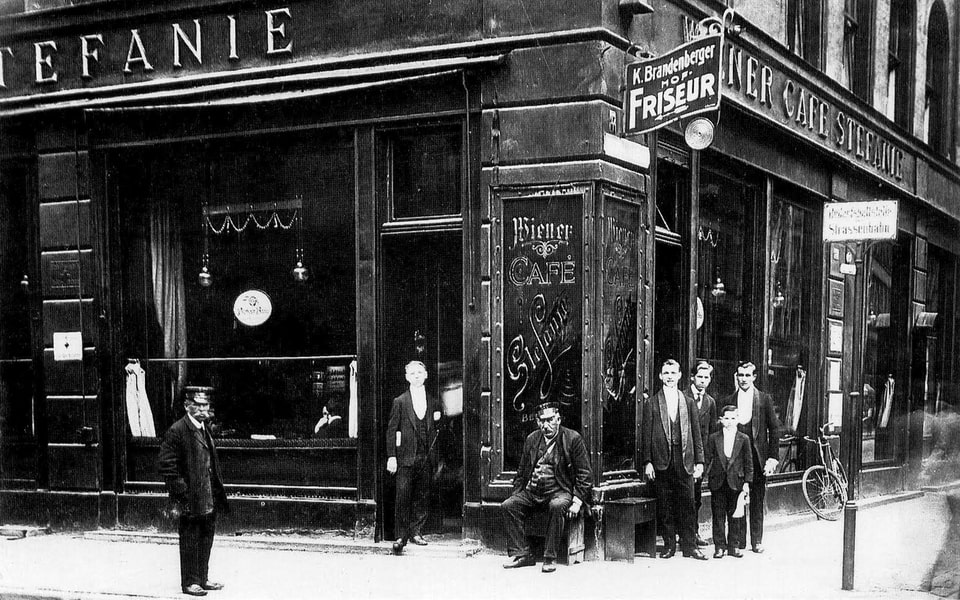
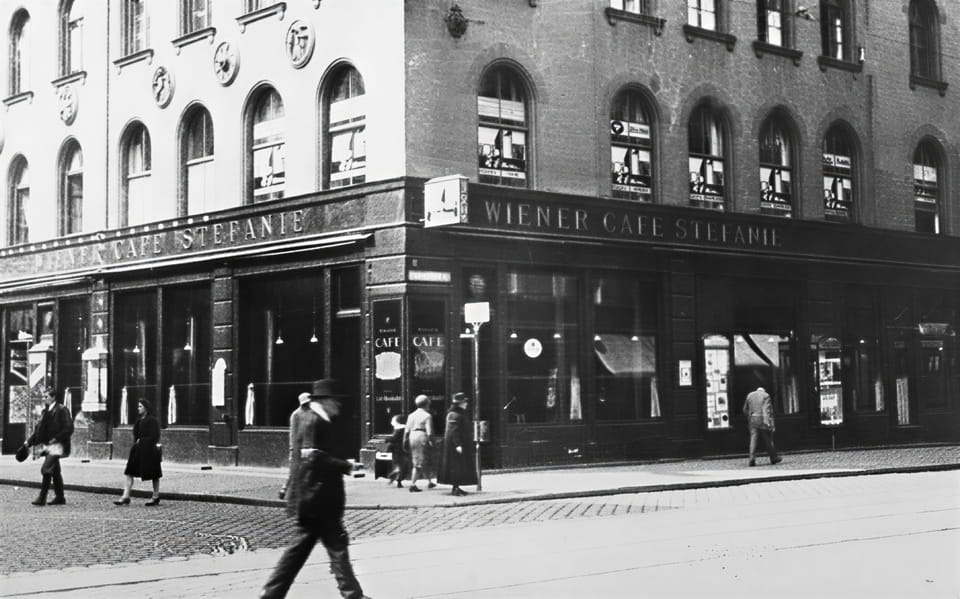
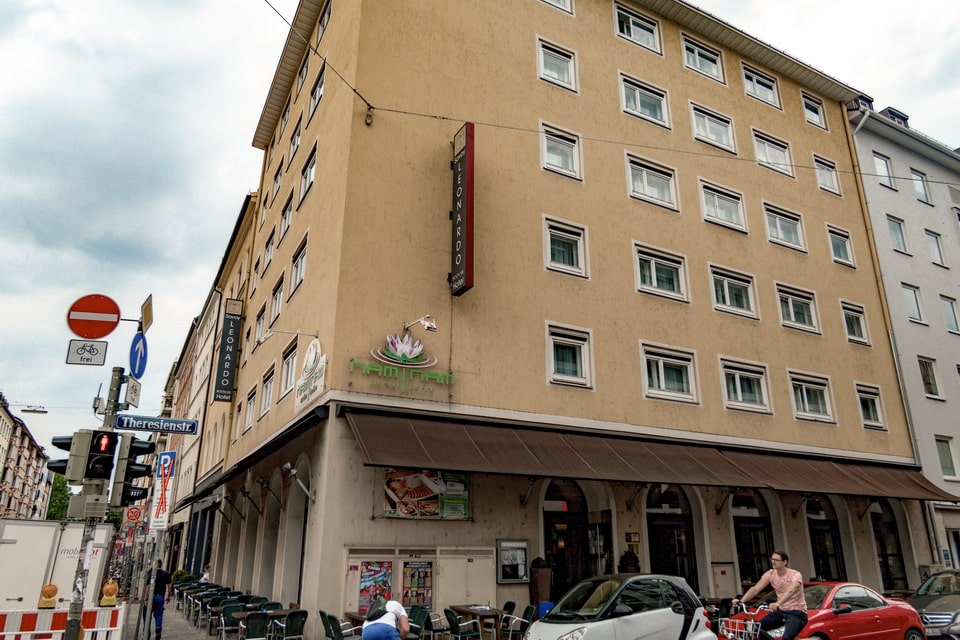
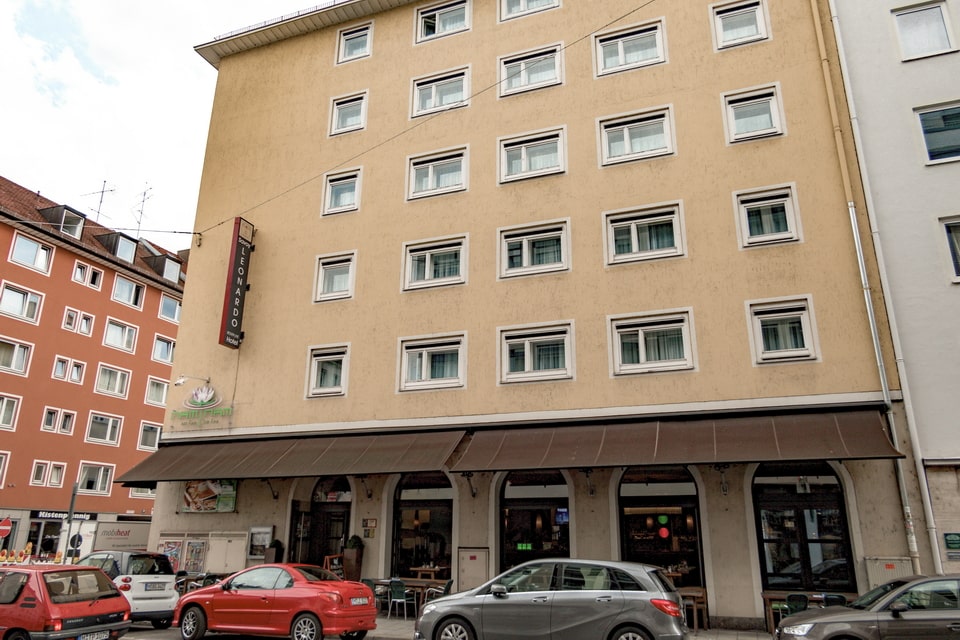
For decades, some sources mistakenly mentioned that Hitler met Eva Braun for the first time at Hoffmann’s photo atelier on Schellingstrasse in October 1929. The date is correct, but this notorious couple originated at another location. Even though back in 1925, Hoffmann craved to rent his empty premises to someone and succeeded in doing so with Hitler and the NSDAP, by 1929, he made up his mind to buy larger premises for his new photo studio. He served notice regarding closing his atelier on Schellingstrasse 50 as early as September 10, simultaneously opening a new one on Amalienstrasse 25 on the corner with Theresienstrasse, just a few blocks away from the previous address. Amalienstrasse got its current name in 1812 after Amalie Auguste (1801-1877), Bavarian princess and Queen consort of Saxony. Hoffmann chose premises on the second floor above the well-known ‘Wiener Cafe Stefanie’, a well-known meeting place for Swabian Bohemia. The cafe was also informally called ‘Café Größenwahn (Cafe of big illusion or, alternatively, megalomania) since it was attended by both the intelligentsia and those who considered themselves as such.
EVA BRAUN AT HOFFMANN’S STUDIO: HOW SHE GOT THE JOB
Hoffmann was obliged to make a new purchase with the loan he got from the Nazi party, as well as his inheritance, which allowed him not only to buy premises on Amalienstrasse but to expand his staff. One of these ‘additional’ staff was destined to become a seventeen-year-old Eva Braun, who would spend much of her next eight years in Hoffmann’s studio on Amalienstrasse. Eva was born in Munich at Isabellastrasse 45 on February 6, 1912, as the second child in a family of a schoolteacher, Friedrich Braun (1879-1964), and a former needlewoman, Franziska, born Kronberger (1885-1976). She had an older sister, Ilse (1909-1979), and in 1915, the third daughter, Margarete, was born. All the girls were raised as Catholics after their mother, while Friedrich was a Lutheran. Their parents divorced when Eva was nine years old, but only a year later, they remarried, leaving the marriage unhappy and the relations at home constrained. From 1918 to 1922, Eva attended elementary school, then spent six years in secondary school (lyceum) for girls located on Tengstraße, finishing it with medium grades. In 1928, her family sent her to the Bavarian town of Simbach am Inn, where she spent a year in a prestigious Catholic ‘Institute of English Ladies’. It is interesting to note that Simbach am Inn is located on the opposite side of the same river from the Austrian town of Braunau am Inn, where Adolf Hitler was born in 1889.
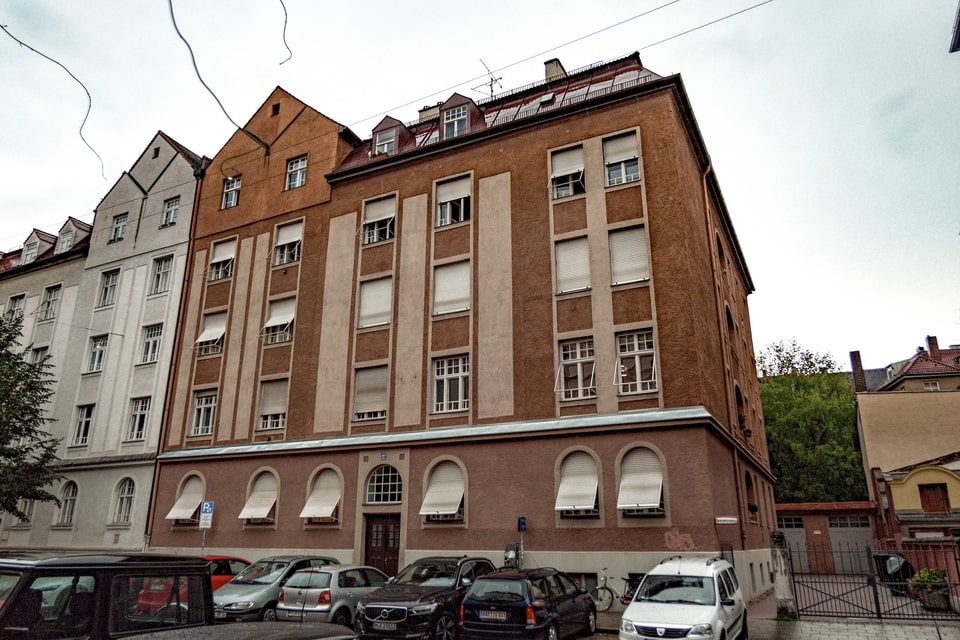

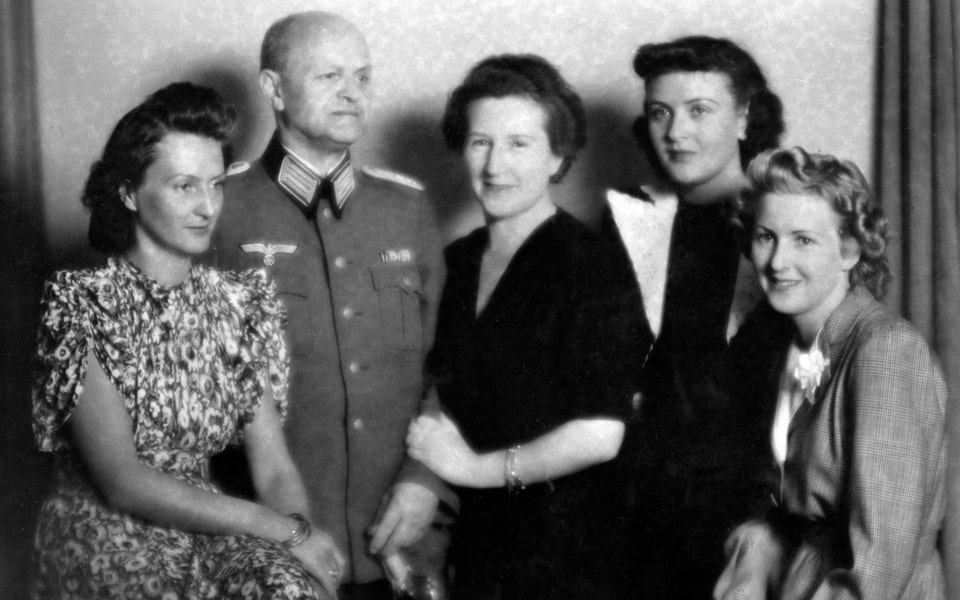
Eva Braun knew nothing about Hitler and his birthplace across the river when she lived in Simbach am Inn in 1928-1929. The castle-like Baroque-style ‘Marienhöhe’ Institute was run by the Sisters of the Order, and here, girls were taught household science. Eva showed a talent for athletics and learned the basics of typing and bookkeeping, skills applicable to clerical work. After finishing one year in the Institute, Eva came back home to Munich. Since 1925, her family had been living in a new, more spacious apartment at Hohenzollernstrasse 93, a few blocks from their previous home on Isabellastrasse. Eva once again joined her parents and younger sister, though her elder sister Ilse left the house in 1929. Leaving the strained financial situation of the early 1920s crisis behind, the Braun family afforded a servant, and a few years later, they even bought a car, a BMW 3/15. After returning to Munich, Eva had two short-lived occupations. She responded to an advertisement by Gunther Hoffmann (namesake), a forty-one-year-old gynecologist, and worked in his office on Theresienstraße 74 as a doctor’s assistant. She soon felt bored and tried to work as a typist at the document correspondence bureau on Türkenstrasse, but not for long.
After several weeks of boredom, Eva or, more probably, her father Friedrich saw an advertisement for a job as an apprentice assistant at a newly opened photo atelier on Amalienstrasse 25, a twenty-minute walk away, a few tram stops from their apartment on Hohenzollernstrasse. Eva had been enthusiastic about photography since she was given her first camera four years before, and she used to take pictures of her school friends and family, but more often of herself posing in front of the mirror. Her father, Fridrich, probably because of his occupation as a teacher, nurtured his daughters in learning and hoped that photography could become a more desirable occupation for Eva, especially when she left her first two employers in a few weeks. A vacant position in Hoffmann’s atelier was a hybrid solution: being a secretary but in a photo studio. They replied to an advertisement stating that Eva had recently finished her education, had skills in typing and accounting, worked as a secretary, and had a true passion for photography.
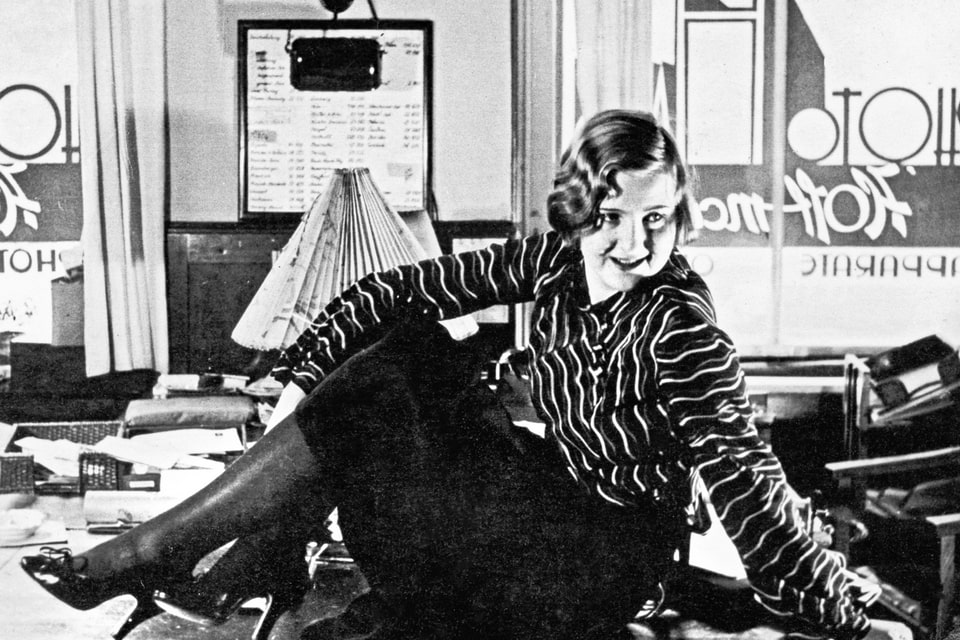
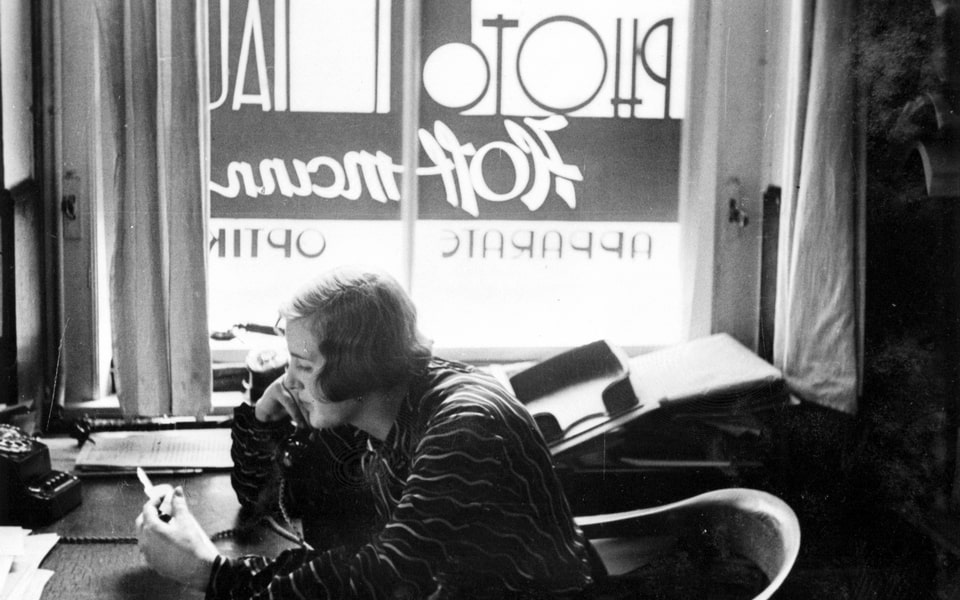
As I already mentioned above, Eva Braun came to Hoffmann’s atelier in October 1929, and it was the newly opened studio at Amalienstrasse 25, not the already-closed office (after September 10) at Schellingstrasse 50. The position was aimed at a young girl to do bookkeeping, run correspondence, and sell films. It is interesting to note that in 1949, Hoffmann stated that it was his studio manager, Remer, who gave employment to Eva Braun, and he (Hoffmann) saw her for the first time already at work. From the start, her everyday duties put her behind the counter in the atelier. Eva Braun communicated with the customers, typed, created invoices, and sold pictures, postcards, and even photographic equipment to potential clients. In addition, she became involved in the process of photo processing, thus transforming her formerly teenage skills in this still novel yet respectful business. In a wider sense, Eva Braun fulfilled the dreams of many women of her time, being involved in the world of portrait and even fashion photography.

A new photo atelier at Amalienstrasse 25 had a perfect location on the busy crossroad and the second floor above the popular ‘Café Stefanie’. Twelve windows and large banners with Hoffmann’s name faced Amalienstrasse and Theresienstrasse. The main entrance was from Amalienstrasse, which led clients through luxurious stairs to a spacious salesroom, where Eva Braun worked. This retail space was furnished with flair: blue curtains, yellow-pink-silver furniture, and a large clock behind glass. The walls were covered with enlarged photographs, including those made with a new Rolleiflex series, which clients could buy, as well as equipment for photograph processing for privately owned laboratories. Hoffman’s studio also included a large atelier with professional background and lighting for portrait photography. A darkroom with developing baths and dry boxes capable of processing a film stock in less than half an hour. A laboratory with equipment for the enlargement of photos and making copies, and large storage rooms.
OCTOBER 1929: WHERE HITLER AND EVA BRAUN ACTUALLY MET
When Eva Braun was hired in October 1929, she joined a small staff of four people, which, according to Hoffmann’s tax documents, would reach seventeen people by 1932. It was one of the Fridays in October 1929, the exact date is unknown, when Adolf Hitler came through the doors of Hoffmann’s studio on Amalienstrasse and saw a seventeen-year-old Eva Braun for the first time. He knew every one of Hoffmann’s employees, and Braun was new to him. As for the girl, she had already come up against Hitler through Hoffmann’s photos made by Hoffmann. Her duties included assisting in photo processing, printing, and making copies, particularly those with Hoffmann’s most important client: Adolf Hitler. He came in the afternoon to select photographs from the last photo session with Hoffmann, and the photographer met him at the entrance. A forty-year-old Hitler shamelessly looked at the legs of a seventeen-year-old Eva Braun, who wore a short skirt and used the ladder to reach the upper shelves. Hoffmann introduced the girl as ‘Our good little Fräulein Eva’, and according to Hitler’s adjutant Julius Schaub, Hoffmann made a joke and introduced Eva Braun as his niece with a reference to Hitler’s niece, Geli Raubal. The two girls met each other a year later during the 1930 Oktoberfest. Eva Braun also entered a new period in her life when she started working for Hoffmann. On October 1, 1929, Hitler moved from his small rented apartment on Thierschstrasse 41 to a huge nine-room apartment at Prinzregentenplatz 16. Hoffmann introduced Hitler to Braun as ‘Herr Wolf’, a nickname the latter preferred at the time, also a part of his self-made image. After the war, Heinrich Hoffmann reflected Hitler’s first impression of Eva Braun as ‘sweet’.
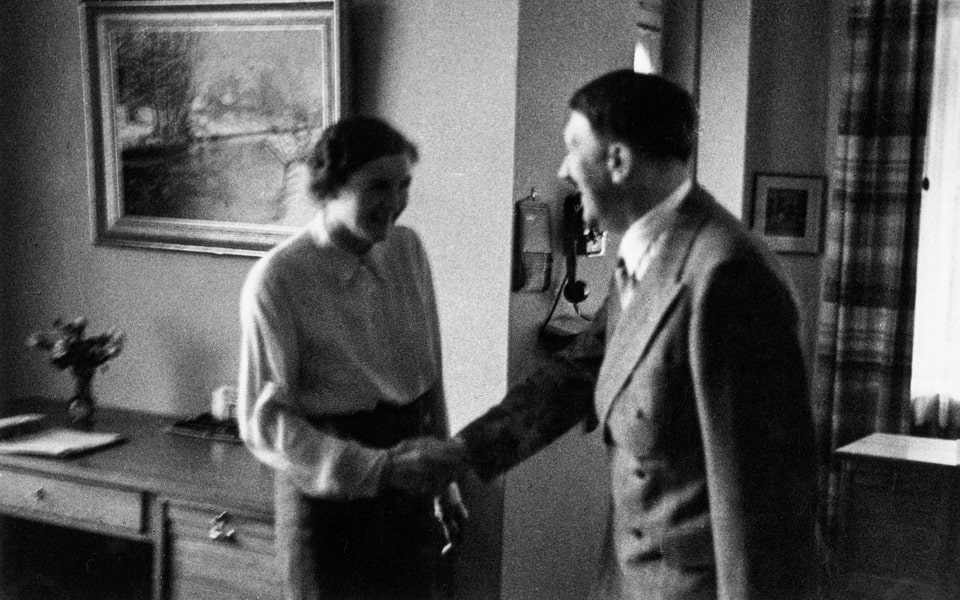
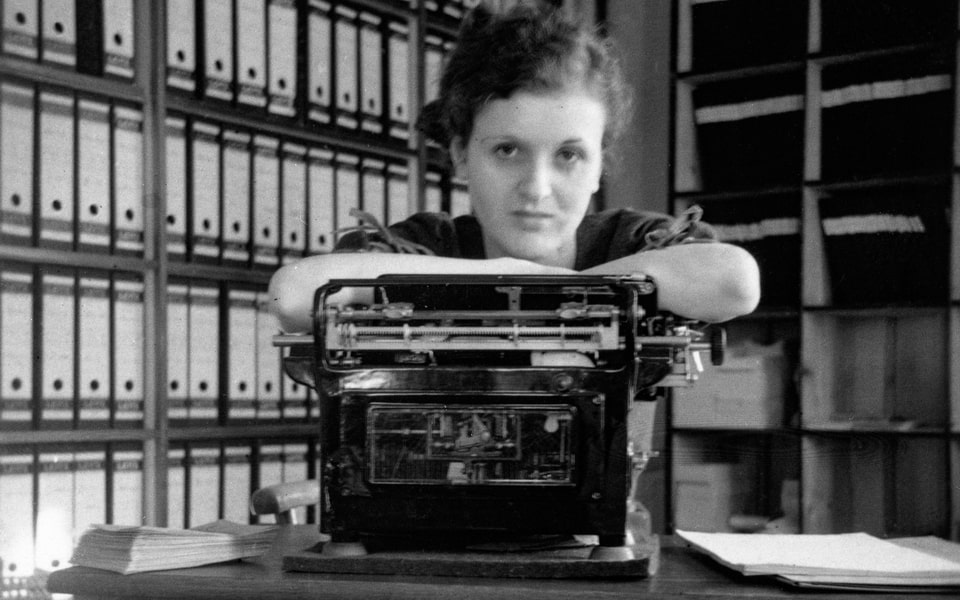
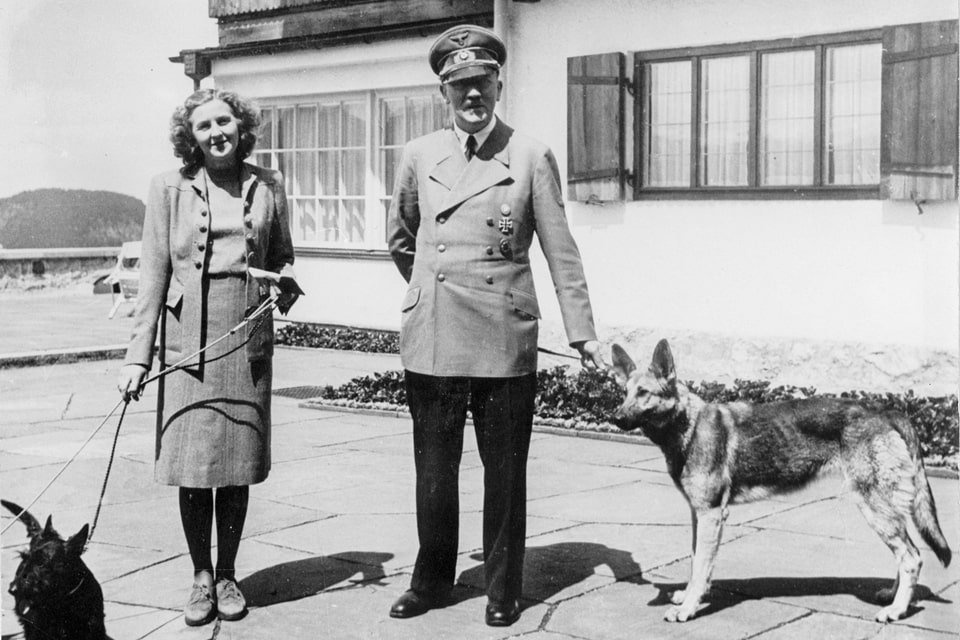
After their first meeting, Hitler became a more frequent visitor to Hoffmann’s atelier, and he started to give Braun rising attention by inviting her to the theater and, more usually, to join him at the Osteria Bavaria restaurant. This popular place was located at Schellingstrasse 62, just a few steps from the Nazi headquarters and a few blocks from Hoffmann’s new atelier on Amalienstrasse. Osteria Bavaria, an Italian restaurant, was opened as far back as 1890 and established itself as a desired destination in the Maxvorstadt district. At the beginning of the relationship, Eva Braun was just one among a few young women who joined Hitler and his entourage during the lengthy evening discussions. At the same time, she told her friends that Hitler was in love with her and they were going to marry, a dream that would not become a reality until 1945. Later on, Hitler asked Martin Bormann to carefully check Braun’s genealogy, and the latter confirmed that the girl had no Jewish ancestors, thus making her an appropriate companion for the German dictator. As their relationship progressed, especially after the death of Geli Raubal in 1931, Eva Braun continued her work at Hoffmann’s office on Amalienstrasse, hiding her connection with Hitler.

WHERE HOFFMANN’S PHOTOGRAPHS ARE TODAY: MUNICH AND MARYLAND
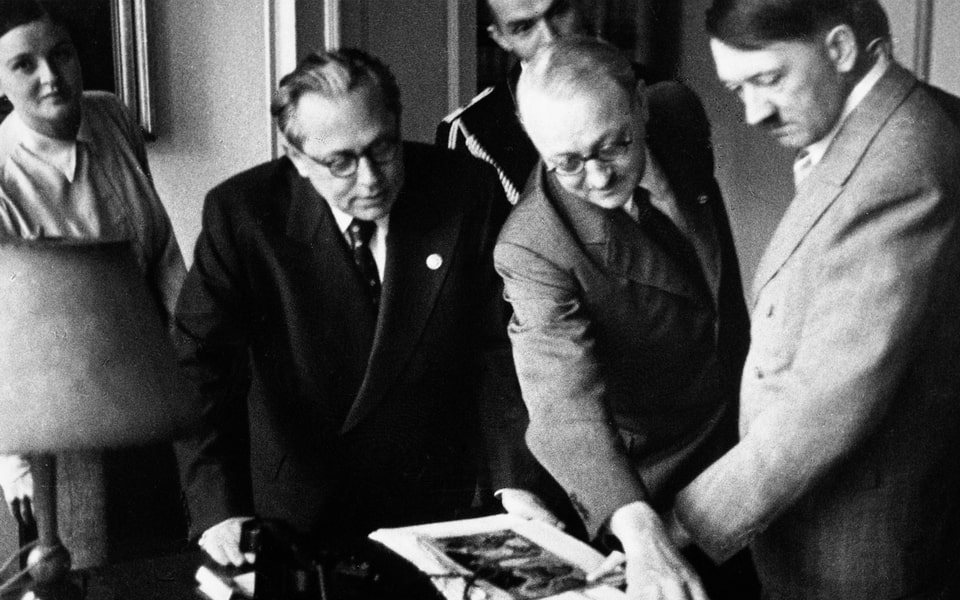
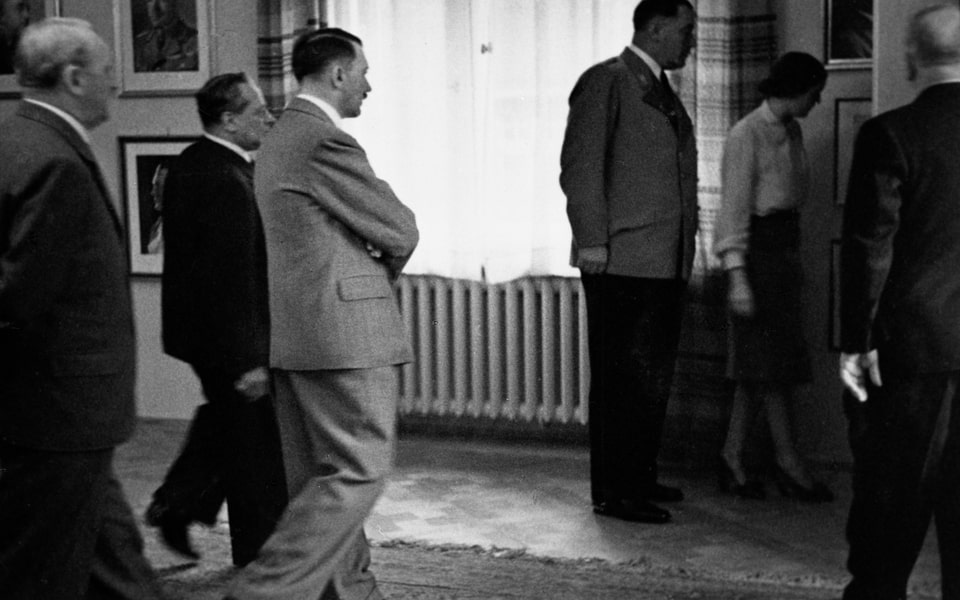
In the spring of 1945, the bulk of the firm’s central picture archive was moved out of Berlin to Winhöring in Bavaria. From there it went to Nuremberg — and to one of the strangest assignments of the post-war years. Hoffmann was made to sort his own archive, with his son’s help, as evidence for the Nuremberg trials. The two photographs in this article of him bent over negatives in the Palace of Justice are from exactly that work. While they were doing it, father and son smuggled a substantial number of pictures out of the courthouse.
What the Americans kept, they kept. The central archive was confiscated as war booty, and the larger part of it — the Hoffmann Collection, around 280,000 items including glass plates and contact prints — has been in the U.S. National Archives at College Park, Maryland, ever since. Because the images were seized as former Nazi property, they are treated in the United States as public domain, which is why Hoffmann’s photographs circulate so freely online while so much other wartime material does not.
The family fought for it. Hoffmann’s daughter Henriette von Schirach and her brother spent decades trying to recover the archive from the United States and litigated the seizure unsuccessfully; the last judgment went against them in 1995.
Meanwhile, the part that stayed in Germany went back into business. From the 1950s, Hoffmann and his son sold prints through their own Zeitgeschichtliches Bildarchiv in Munich. In 1992, 2001 and 2003 the Bayerische Staatsbibliothek bought the whole remaining holding — roughly 70,000 negatives and prints, including some 6,700 images from the Vienna branch and post-war work by Heinrich Hoffmann junior. That archive is now fully catalogued, digitised and searchable online, and it is the first place to look if you want to see what Hoffmann’s camera actually produced.
So the answer to the question is: Munich and Maryland. Two hundred and eighty thousand items in an American depot, seventy thousand in a Bavarian library, and an unknown number in private hands — some of them, presumably, the ones that left Nuremberg in a coat pocket.

THE THREE ADDRESSES OF HOFFMANN’S FORMER ATELIERS TODAY
All three studios are within a ten-minute walk of one another in Maxvorstadt, the university quarter north of the old city, and all three buildings survive.
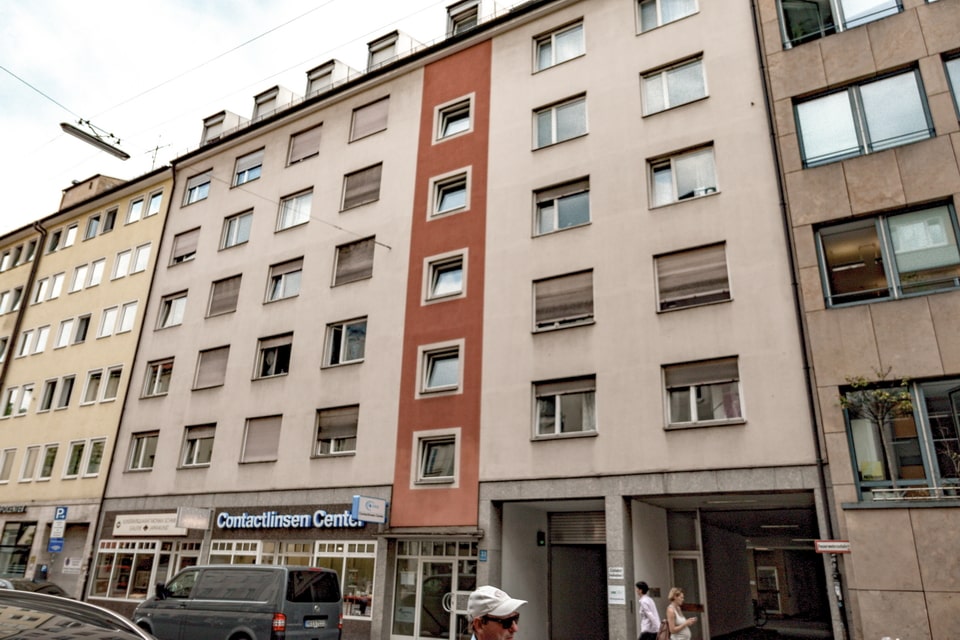
Schellingstrasse 33 — the first atelier, 1909 to 1919. An ordinary Maxvorstadt block with shops at street level, unmarked. Hoffmann sold it in 1919, and inflation ate most of the proceeds.
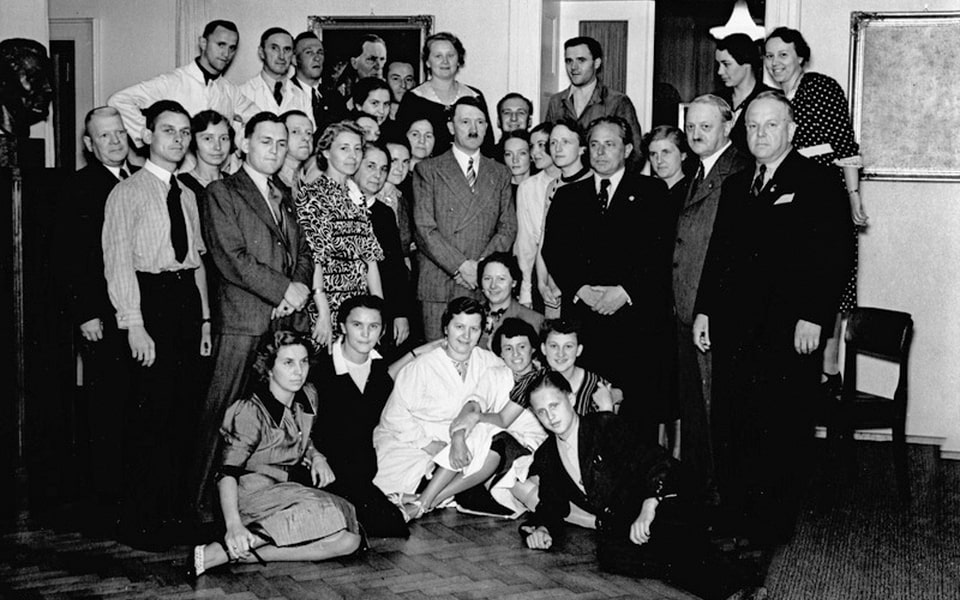
Schellingstrasse 50 — the studio, and from June 1925 to 1930 the national headquarters of the NSDAP. This is the one address on the route where something is still visible: the silhouette of an eagle with outspread wings above the entrance, from which the swastika was removed after the war. It is faint and easy to miss, and it is the only physical trace of the party’s headquarters left on the street. The courtyard behind — where most of the 1925–1928 group photographs in this article were taken — is still recognisable.
Amalienstrasse 25 — on the corner with Theresienstrasse, from September 1929. Hoffmann’s studio was on the floor above the Café Stefanie; the twelve windows that carried his name faced both streets. Nothing marks it.
Two more addresses belong to the same short walk. Schnorrstrasse 9, where Hoffmann himself lived in the 1920s, is around the corner from both Schellingstrasse studios. And Schellingstrasse 62, the Osteria Bavaria where Hitler took Eva Braun in the early 1930s, is still a restaurant — today the Osteria Italiana, and still serving.
Getting there. Universität (U3/U6) puts you on Schellingstraße; Theresienstraße (U2) is two minutes from Amalienstraße 25. The Alte Pinakothek is at the end of the same street, which is worth knowing if you are combining this with anything else in Munich.
FREQUENTLY ASKED QUESTIONS
Who was Heinrich Hoffmann? Adolf Hitler’s personal photographer from 1923 until 1945, and the man who built the visual image of the Nazi leadership. He is not to be confused with Heinrich Hoffmann the Frankfurt psychiatrist who wrote Struwwelpeter, or with the painter Heinrich Hofmann, both of whom are also widely known. This Hoffmann was born in Fürth in 1885 and died in Munich in 1957.
Where was Heinrich Hoffmann’s studio in Munich? There were three, all in Maxvorstadt: Schellingstrasse 33 from 1909, Schellingstrasse 50 from 1919, and Amalienstrasse 25 from September 1929. All three buildings still stand and are described, with photographs, in the sections above.
Where did Hitler and Eva Braun meet? At Hoffmann’s studio on Amalienstrasse 25, on a Friday in October 1929 — not at Schellingstrasse 50, as many accounts still say. The Schellingstrasse studio had already closed on 10 September that year, three weeks or so before the meeting. Eva was seventeen and had just started as an assistant; Hoffmann introduced her to Hitler as «our good little Fräulein Eva», and Hitler was introduced to her under the name «Herr Wolf».
Is the famous photograph of Hitler meeting Eva Braun genuine? The image usually captioned as their first meeting shows a different woman entirely. It was taken on 1 July 1939, ten years later, and the young woman greeting Hitler is Gretl Braun, Eva’s younger sister, who also worked for Hoffmann. The mislabelling is repeated in a great many books and websites.
Did Gretl Braun work for Hoffmann too? Yes. Eva’s younger sister joined the firm in the 1930s and appears in several of Hoffmann’s studio photographs. She later married Hermann Fegelein.
Where are Heinrich Hoffmann’s photographs now? Split between two countries. Around 280,000 items are in the U.S. National Archives in Maryland, seized as war booty in 1945 and treated in America as public domain. Around 70,000 negatives and prints are in the Bayerische Staatsbibliothek in Munich, which bought the remaining German holding between 1992 and 2003 and has digitised and catalogued all of it.
Was Hoffmann tried after the war? He was arrested by American counter-intelligence in June 1945 and classified in 1947 as a «major offender» — the highest of the denazification categories — for propaganda activity and for profiting from the regime. He served his sentence and was released in February 1950, then reclassified into a lower category. He spent his last years trying to recover his confiscated property and published his memoirs, Hitler Was My Friend, in 1955.
Can you visit the studios? Not inside — all three are ordinary buildings in private and commercial use. The one thing worth going for is the faded eagle above the entrance at Schellingstrasse 50, the only visible trace of the party headquarters that occupied Hoffmann’s studio between 1925 and 1930.
I am very grateful to war archives, museums, libraries, private collections, and writers for the historical photos in this article. To the extent that some author or a copyright owner may not want some of the above black-and-white photos to be used for educational purposes here, please contact me for adding credits or deleting the pictures from the article.