

Nuremberg Trials Location: Palace of Justice, Courtroom 600 & Prison
Where were the Nuremberg Trials held? Between November 20, 1945, and October 1, 1946, the International Military Tribunal sat inside Courtroom 600, on the second floor of the eastern wing of the Palace of Justice (German: Justizpalast) in Nuremberg, Germany, at what is today Bärenschanzstraße 72. Twenty-four of the most senior surviving leaders of the Third Reich — among them Hermann Göring, Rudolf Hess, Albert Speer, and Joachim von Ribbentrop — were tried here for crimes against peace, war crimes, crimes against humanity, and conspiracy. Twelve U.S.-led follow-up trials continued in the same courtroom until 1949, bringing the total number of defendants tried at this address to 199.
The building was chosen for a practical reason as much as a symbolic one: it was one of the few large court complexes in Germany still standing after Allied bombing, and it had an adjoining prison — connected to the courtroom by a covered wooden passage — large enough to hold the defendants securely throughout the trial. Today, the eastern wing houses the «Memorium Nuremberg Trials» museum, and Courtroom 600 remains, remarkably, still in active judicial use.
I visited the Nuremberg Trials location in 2018, and this guide is a personal, room-by-room «then and now» walk-through of every part of the site open to the public — the courtyard, the museum lobby, the historic courtroom itself, the exhibition halls, and the surviving wing of the Nuremberg prison where Göring and the other defendants were held. It combines my own photographs with rare archival images from 1945–1946, plus fully updated 2026 visiting information — tickets, hours, and how to get there — at the end.
WHERE WERE THE NUREMBERG TRIALS HELD? THE PALACE OF JUSTICE
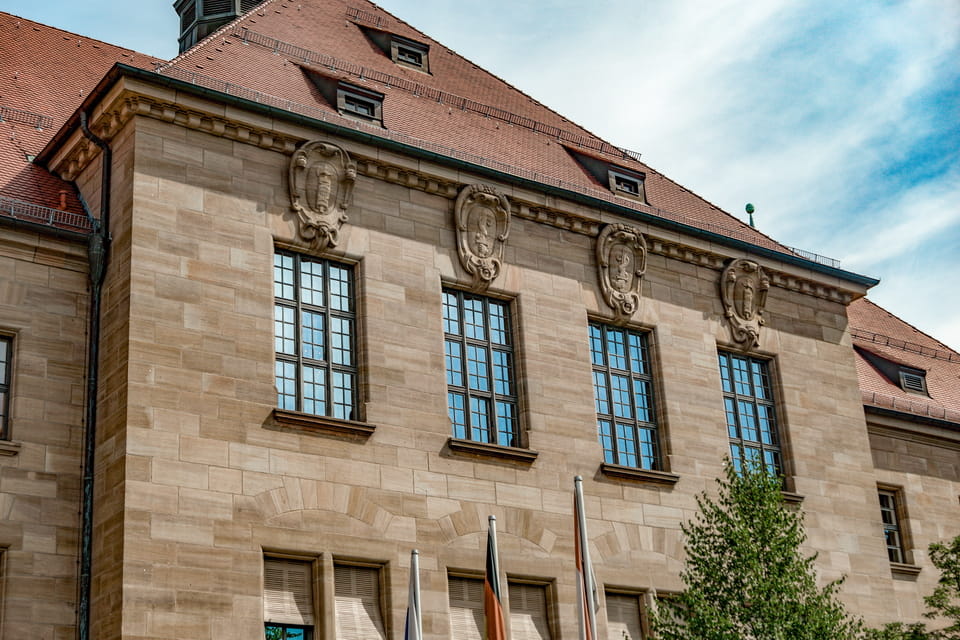
The Palace of Justice in the city of Nuremberg is nothing more and no less than the largest institution of its kind in Bavaria. It took seven years to erect this complex of buildings, which was ceremonially opened by Ludwig III, king of Bavaria, in September 1916. Since the location was a little more than a random choice, the Palace of Justice was built a stone’s throw from the Nuremberg prison, an architectural colossus of four wings erected in 1868. In the years before 1933 and the rise of the Nazis in Germany, the prison had witnessed common criminals on criminal or administrative charges. With the Third Reich’s ascent, the Palace of Justice in Nuremberg was now meant to conduct trials against political opponents of the new regime as well as the Jews.
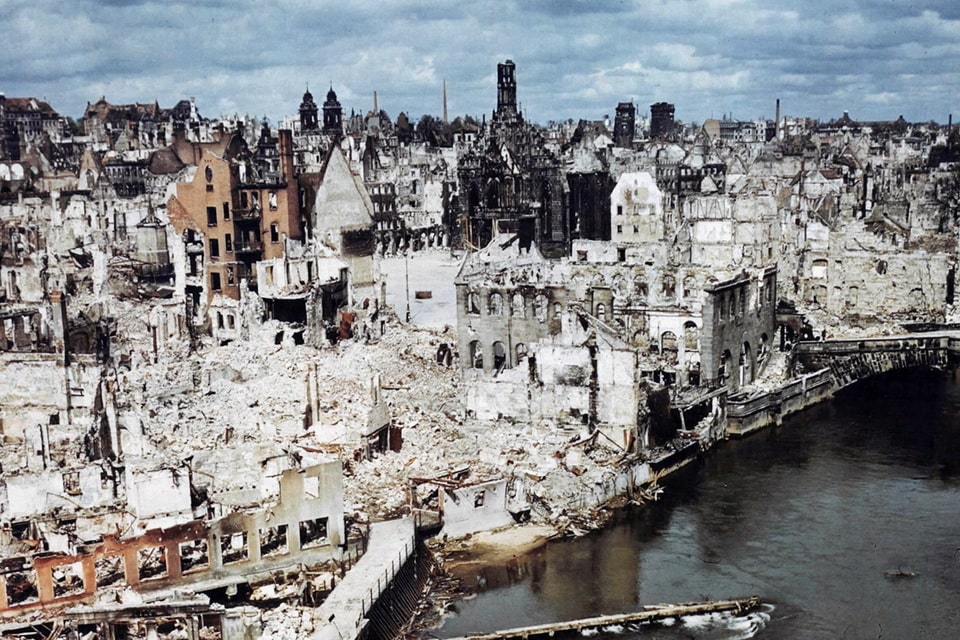
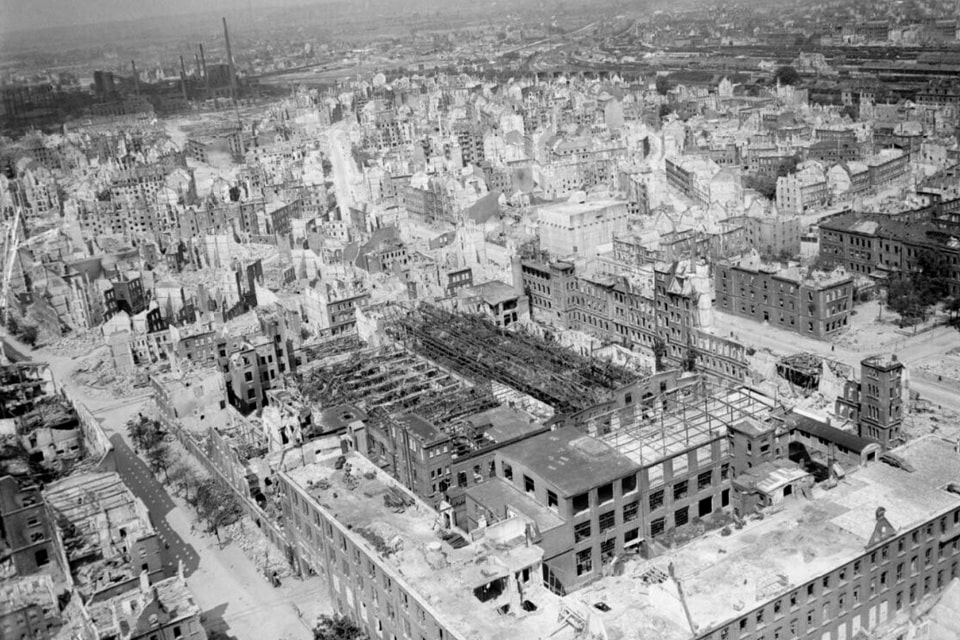
The historical landmark survived the Second World War and the air raids on Nuremberg, and since April 1945 has been occupied by the Allied forces. A new wooden passage was constructed between the Eastern wing, housing detention premises for the main war criminals, and the Palace of Justice, intended as a much more functional solution than the underpass that had been buried years before the war. These complexes of buildings near the Nuremberg city center have become infamously well-known due to the NUREMBERG TRIALS or NUREMBERG PROCESS, a series of military tribunals against the major war criminals of the perished Third Reich. The years between 1945 and 1949 witnessed several war tribunals against prominent executives of Nazi Germany, a historical and legal precedent when the representatives of any country were taken to trials to be prosecuted for war crimes and crimes against humanity.


Already in 1952, the Palace of Justice, as well as the former prison, were placed under the control of the Nuremberg city authorities to be once again used for the intended purpose. In 1961, the ‘new-old’ proprietors dismantled the major engineering innovations of the Nuremberg trials and restored the initial architecture of the premises, including the famous COURTROOM 600. Since then, for more than half a century, the Palace of Justice has been performing its primary functions. Regardless of the historical importance of the complex of buildings, three of four prison blocks, including the wing which was to be a detention basis in 1945-149, were demolished in the 1980s. Nowadays, hundreds of thousands of tourists from all over the globe annually come here to experience the historical landmark and the COURTROOM 600 with one eye, yet organized access was granted only in May 2000. The ever-increasing importance of the site has resulted in establishing ‘MEMORIUM NUREMBERG TRIALS’ on the grounds of the Palace of Justice, and the current exhibition came into access in November 2010.

THE COURTYARD OF THE PALACE OF JUSTICE: THEN AND NOW
Once you find yourself in front of the world-renowned Palace of Justice in Nuremberg, it’s a common thing to notice the modest scale of its Eastern wing as a part of the whole complex. The Palace of Justice on Further Strasse 110 (not to be confused with ‘Führer’) occupies an area of a city district with a total of 530 premises, 80 of which, once (at the end of the War) were meant to serve as the courtrooms. The world-recognized Eastern wing at Bärenschanzstraße 72, which includes Courtroom 600, covers only a tiny architectural part of the complex. The Palace of Justice was historically ‘lucky’ to avoid the massive bombardments of the city of Nuremberg, as well as the liberation battles. In this landmark respect, it has been preserved very much the same appearance as it used to have in the Weimar Republic, the dark years of the Third Reich, and during the Nuremberg trials back in 1945-1949.


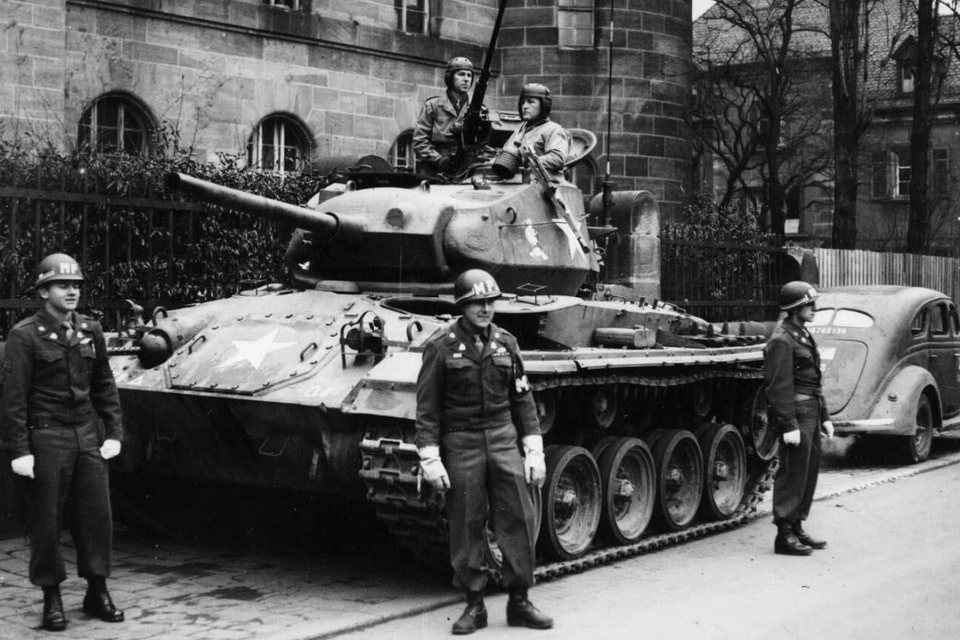
The famous colored image of the year 1945 not only complements an informational board for the tourist but also provides a glimpse of what the courtyard of the Nuremberg Trials once had. A sign for the military vehicles parking, lorries with white Allied stars, and the white-helmeted American soldiers. Shifting our attention from the photo, we could indeed observe that the courtyard has changed a little since 1945, with only an auto workshop ‘dislocating’ the original panorama from Further Strasse. The eastern wing itself has also remained nearly unchanged up to the details, including windows, stone bas-reliefs, the ink color of the roof, and the gates. It’s easy enough to experience oneself surrounded by history in its purest form.


THE LOBBY OF THE MEMORIUM NUREMBERG TRIALS: TICKETS AND AUDIO GUIDE
The first or ground floor of the historic landmark has a cozy reception desk with two polite and ‘well-English-speaking’ museum regulars who sell tickets at a symbolic price, provide audio guides, and answer your foreseeable questions with great respect. It’s also a good chance to use a small museum shop to purchase pamphlets, books, postcards, and guidebooks devoted to the Nuremberg trials. Both black-and-white and colored cards generally depict the historical shots from 1945-1946. The audio guide included in the ticket price (7.5€) should not be neglected if you have failed to ‘do your homework’ before coming to Nuremberg. You can use either a lift or stairs to get to the main exhibition on the second and third floors (first and second according to German tradition).

COURTROOM 600: WHERE THE NUREMBERG TRIALS TOOK PLACE, THEN AND NOW
Without waxing too historically poetic, Courtroom 600 can be deservedly called one of the most recognized sites, connected with the Second World War. The ‘official’ information for tourists makes a notice of the accessibility of Courtroom 600, which is still used for its direct purposes and is out of access on particular days, which is a rare occasion. Within this access workflow, the ‘jewel in the crown’ of the whole Nuremberg Trials location is nearly always accessible. Forwarding our way to the second (first) floor, we found ourselves within a small inter-room lounge, only a few confident steps to connect with history.

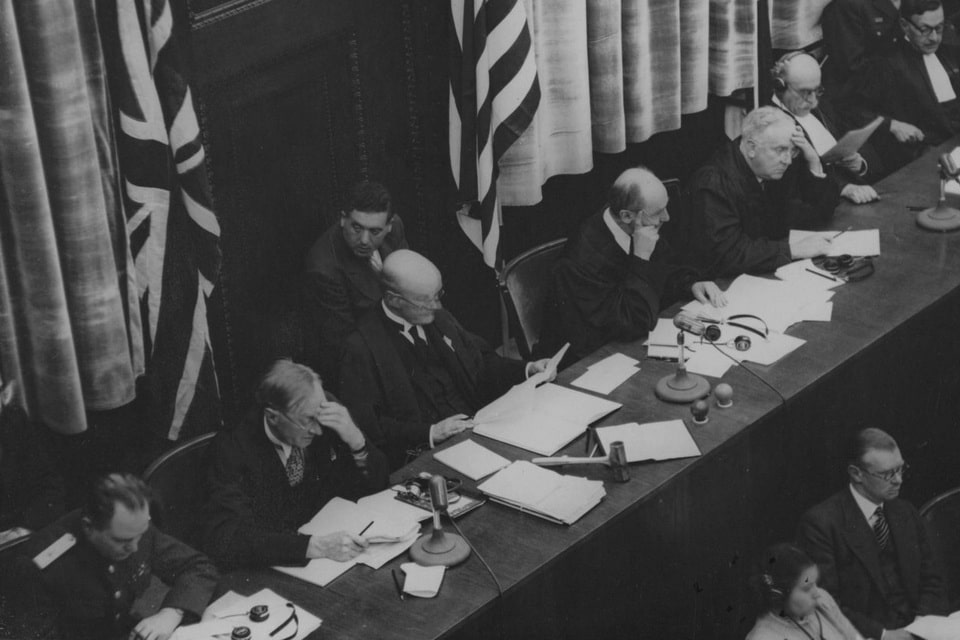
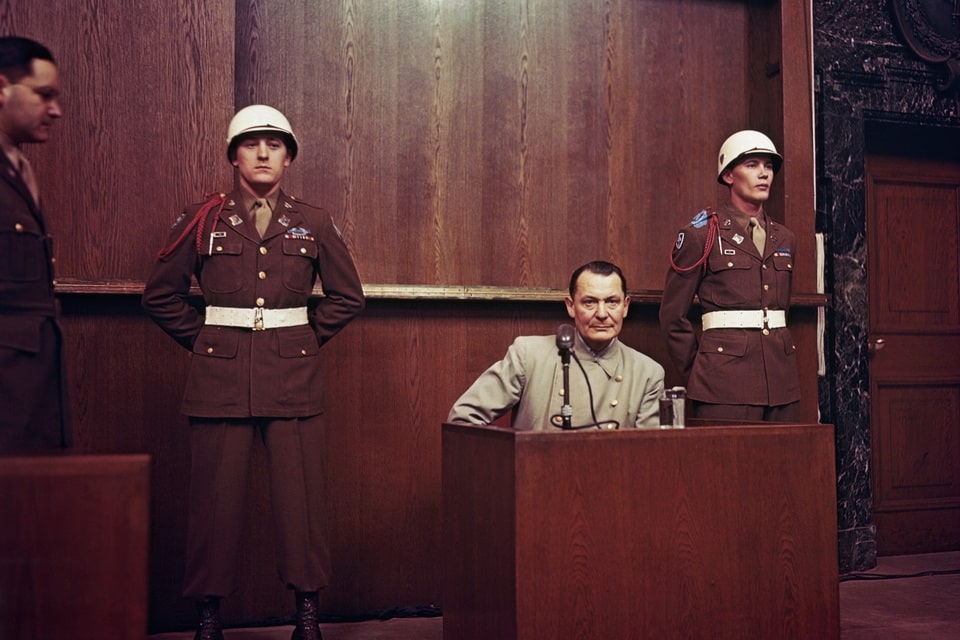
On the surface, Courtroom 600 is pretty much the same as it was depicted in a historical newsreel, yet in detail, the truth is. The main courtroom of the Nuremberg trials, 1945-1949, is felt so tiny that it is breathtaking to try to ‘emplace’ all the participants and viewers inside it. We should consider more than a perception difference between the photo/video and reality. The lounge we used a minute before entering the courtroom was restored after the trials, and back in 1945-1949, this space was occupied by two large tribunes. One stand was erected for the press with 235 seats and one for the visitors with an additional 128 seats.


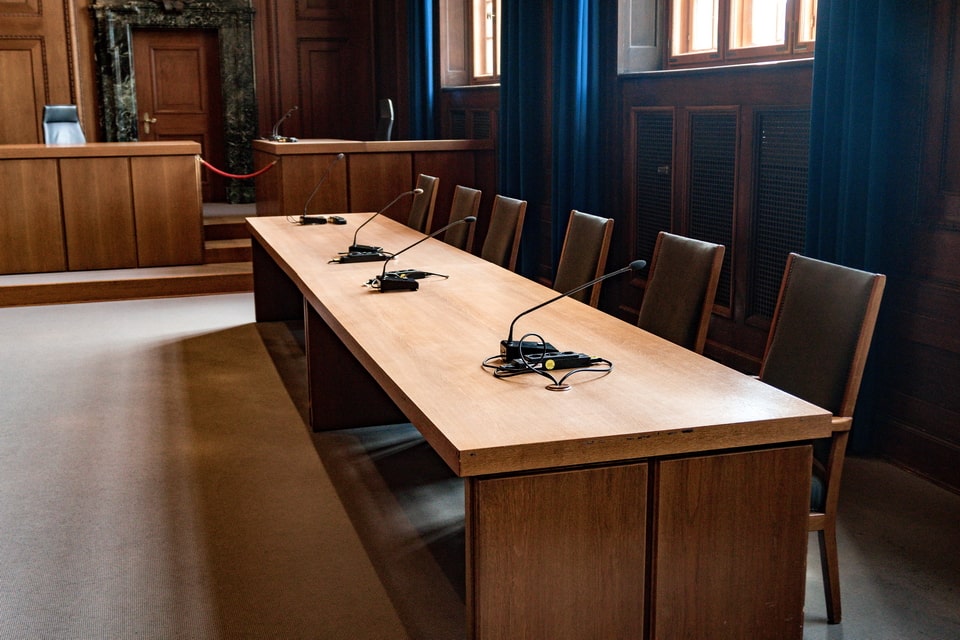
Back in 1945, the tribune for the judges was resettled to the right part of the room, beneath the windows, and in front of the criminal defendants. Now it occupies its primordial location. Furthermore, you would fail to find the spotlights under the ceiling, which once provided the balancing, steady illumination to light the tribunals properly, while the windows were curtained. It is also a never-to-be-taken challenge to find the additional little windows in the back wall, once installed, to take photos and videos with the faces of the Major War Criminals on their defendants’ benches. One of such windows was added above the main entrance, which used to be located to the left.
By the light of nature, the modern Courtroom 600 has not preserved the section for interpreters, who had used the IBM machinery to provide a simultaneous translation into four languages at once. A section for the defendants’ benches now occupies a massively smaller space with only one row. An assumed wooden upstand divides the courtroom into the spectator area and the main court space with benches and space for judges and lawyers, partially accessible for tourists.


MEMORIUM NUREMBERG TRIALS MUSEUM EXHIBITION: DEFENDANTS, VERDICTS AND THE HAGUE LEGACY
The permanent exhibition of the Nuremberg Trials has gained the same historical importance as the Palace of Justice and Courtroom 600. The multi-room exhibition on the third floor (or second, German-like manner) is thematically divided into three sections. It’s not hard to guess that the primary one is devoted to the war tribunal of 1945-1946 against the major war criminals. It was created to intimately correlate the pre-war years before the Second World War, the establishment of the International Military Tribunal in Nuremberg back in 1945, and to pay attention to the major participants of the trials: Defendants / Prosecution / Witnesses. The second section of the permanent exhibition deals with the 1946-1949 follow-up trials, a Tokyo trial in particular. The third section is related to the Legal, Historical, and Social heritage of the Nuremberg trials.

THE BACKGROUND. The initial station of the historical exposition intimately deals with the background history of the Third Reich, the racial policy against Jews, and the Second World War. Three major boards are called: KRIEG UND FRIEDEN (War and Peace); DER WEG IN DER KRIEG (World at War), and VERGELTUNG ODER RECHENSCHAFT (Nemesis and Retribution).

EVIDENCE BOX. The far-left corner of the exhibition hall places one among the authentic US Army boxes dating back to the years of the Second World War. One among many of the same kind, which was once used to transport the evidence documents to the Nuremberg Trials, had been captured as the trophies of the vanished Third Reich.

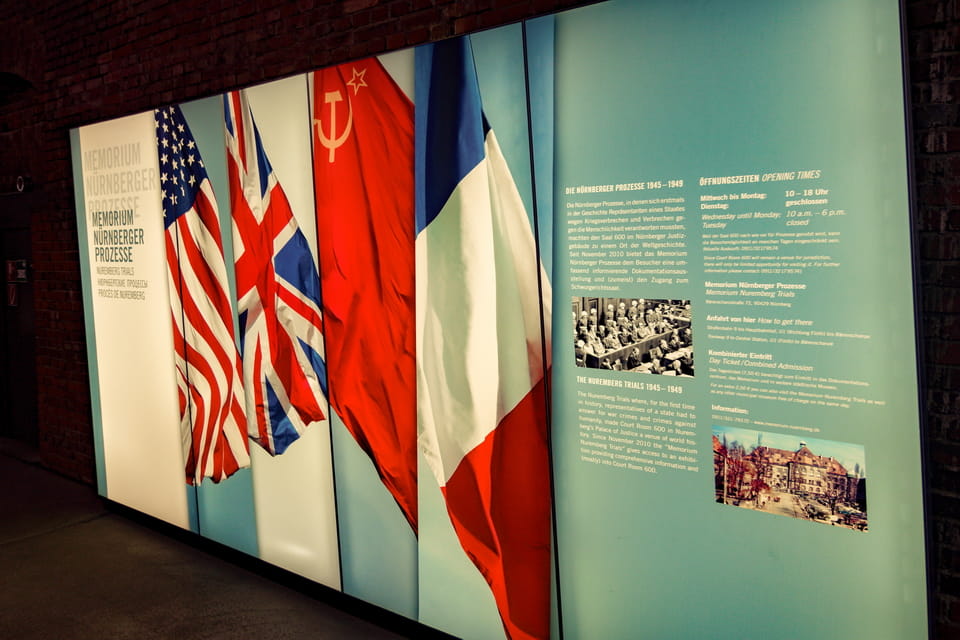
INTERNATIONAL MILITARY TRIBUNAL STATUTE. Another information board depicts the diversification of the authorities and powers among the ‘Victor-countries’ within the International Military Tribunal in Nuremberg. The USA, GREAT BRITAIN, USSR, and FRANCE. Robert Jackson, the chief prosecutor, was honored with a board just in front of the tribunal statute.

THE PARTIES OF THE PROCESS. The five separate exhibition mounts a rectangular zone for the visitor to get an insight into the parties, which once took part in the Nuremberg Trials alongside the DEFENDANTS. The PROSECUTORS of the Allied countries. The DEFENCE COUNCILS and defense strategies. The JUDGES of the Nuremberg International Military Tribunal. The WITNESSES of both Prosecution and Defense. The INTERPRETERS of the Nuremberg Trials.


VENUE OF THE TRIAL. The GERIGHSORT NURNBERG (The venue of the trial: Nuremberg) board briefly describes the history of the city within the Third Reich and during the Second World War, particularly the notorious Nazi Party Rallies, as well as the primary motivation and causes to choose Nuremberg as the venue of the Nuremberg Trials.


DEFENDANTS. Every visitor to the exhibition has a chance to see the authentic dock, a defendant’s bench. This corner disposes of two of the very benches, which have become world-renowned due to the photos of the major war criminals in Courtroom 600. There are two informational boards on both sides of the dock with photos and brief biographies of every defendant of the 1945-1946 process.


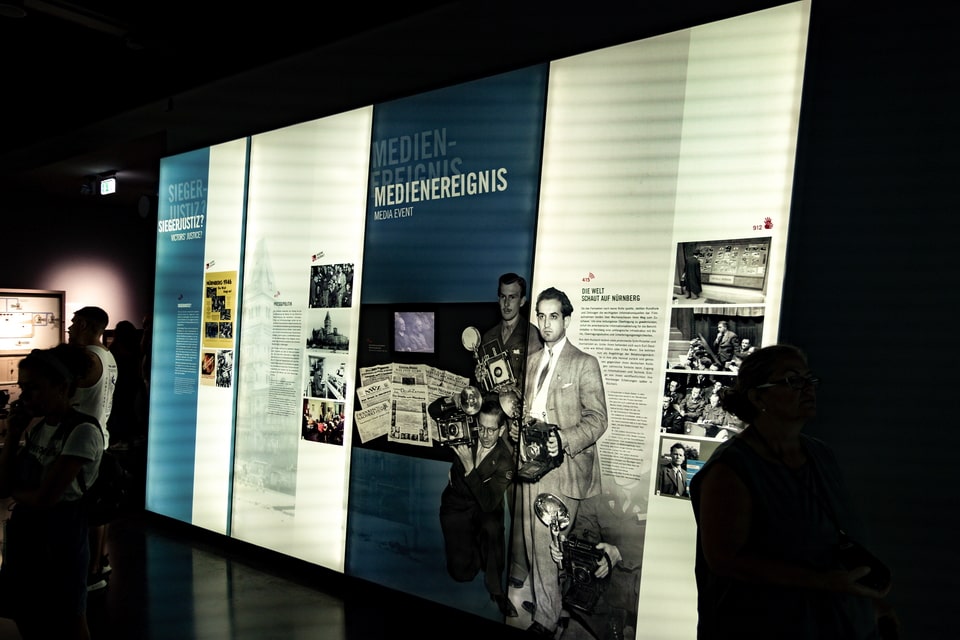
MEDIA AND PRESS. It’s easy to guess from the title that this station reveals the journalist once accredited to highlight the Trials from the separate tribune, implemented within Courtroom 600.
CONDUCT AND VERDICTS. The boards in keywords summarize the major periods and events of the Nuremberg trials as well as the verdicts, pronounced on October 1, 1946. A large digital reprint of the German SÜDDEUTSCHE ZEITUNG newspaper recollects the sentences for each of the defendants in Nuremberg.


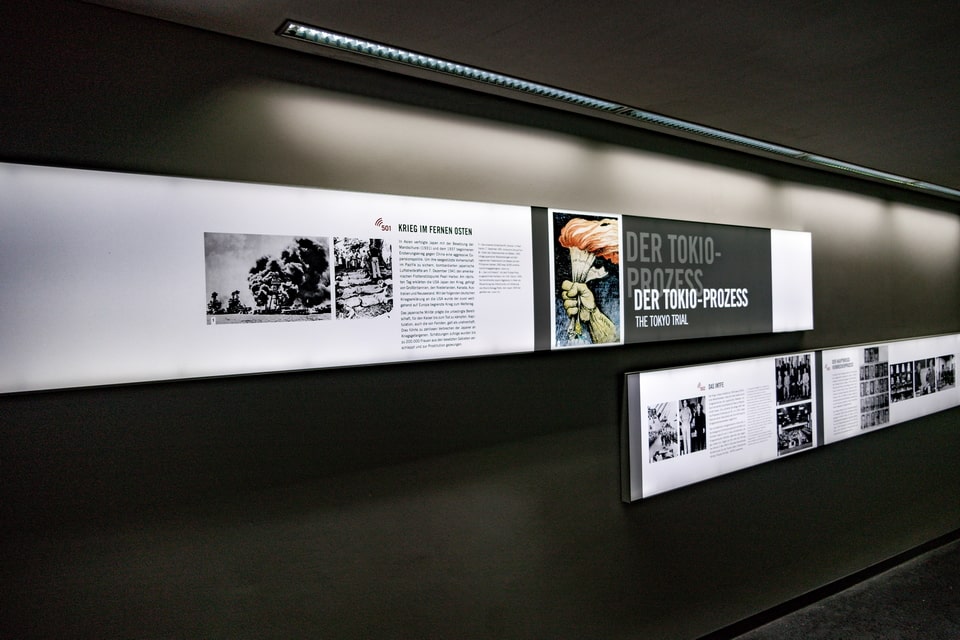
TOKYO TRIAL. In a similar historical equivalent to the International Military Tribunal in Nuremberg, Japan conducted its process against the major war criminals in the years from 1946 to 1948.
NUREMBERG PRISON TODAY: WHERE THE MAJOR WAR CRIMINALS WERE HELD (AND WHERE GÖRING DIED)
The old, authentic Nuremberg trials building of the prison, built back in the 19th century and once used as a detention for major war criminals, has been preserved employing only one wing. A view from one of the windows reveals several modern constructions, yet a regardant eye can still catch the crumbling building.
Connected to the Palace of Justice by a covered wooden passage, the Nuremberg prison held all the defendants throughout the trial — each in an individual cell, watched around the clock by American guards under strict suicide-prevention protocols after Robert Ley, the former head of the Nazi Labour Front, managed to hang himself with a torn towel in his cell on October 25, 1945, weeks before the trial even began. Those protocols failed once more, at the very end. On the night of October 15, 1946 — hours before he was due to be hanged — Hermann Göring swallowed a hidden potassium cyanide capsule and died in his cell. Exactly how he obtained the poison, after months of searches, remains disputed to this day; suspicion has fallen on everyone from a sympathetic guard to Göring’s own wife, smuggling it in during a farewell visit. The following morning, October 16, 1946, ten of his co-defendants — including Ribbentrop, Keitel, and Kaltenbrunner — were hanged in the prison gymnasium; several of the executions were notoriously botched, with Keitel taking close to 28 minutes to die.
The defendants’ state of mind was the responsibility of US Army psychiatrist Douglas Kelley, who evaluated all of them, including Göring, over the course of the trial and later published his findings in the 1947 book 22 Cells in Nuremberg. In an eerie echo of the man he studied, Kelley himself died by swallowing a cyanide capsule in 1958 — a parallel now dramatised, alongside Göring’s story, in the 2025 film Nuremberg (Sony Pictures Classics), with Russell Crowe as Göring and Rami Malek as Kelley.


Physically, only the prison’s west wing survives today; the east, northeast, and northwest wings, together with the execution gymnasium, were demolished between 1980 and 1986, and the site has since been rebuilt for modern use as part of Nuremberg’s active remand and juvenile justice facilities — it is not open to casual visitors. What the museum lets you see instead is the wing nearest the Palace of Justice, glimpsed from inside the Memorium exhibition, alongside rare 1945–1946 photographs of the cell corridors, the exercise yard where prisoners were allowed brief walks, and the wooden passage linking the cells directly to Courtroom 600.


THE FOLLOW-UP TRIALS. This part of the permanent exhibition is known as NACHFOLGEPROZESSE or the follow-up process. The after-war years of 1946-1949 witnessed another twelve war tribunals against the German war criminals: doctors, judges, warlords of the Wehrmacht, and the Eastern Front.


FROM NUREMBERG TO THE HAUGE. The next two halls tell us about the historical heritage of the Nuremberg trials. The way the world has been changed once and for all, many new legal and political institutions were established all over the world to prevent wars of aggression after the lessons of the Second World War and the Holocaust. The informational boards trace a path for the Nuremberg Trials to become a forefather of the Hague Tribunal, which is now the main platform to condemn war crimes and crimes against Humanity.


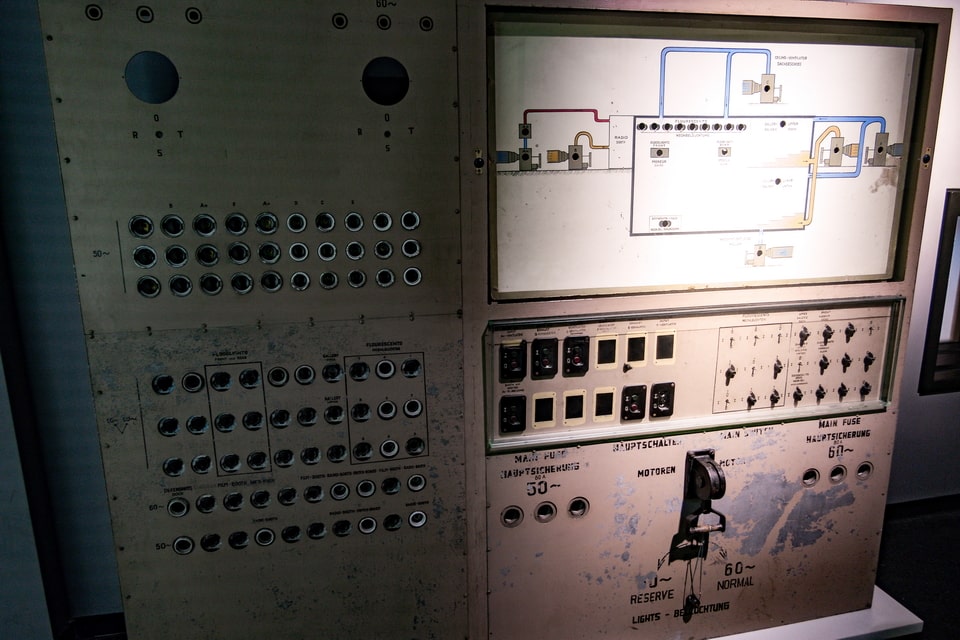
ELECTRIC CONTROL PANEL. The very last station of the exhibition can still impress and excite us with a preserved electric control panel of American origin, which was directly involved in the illumination of Courtroom 600 during the 1945-1949 trials.
VIEW INTO THE COURTROOM 600. This very spot was once occupied by two tribunes for the press and visitors of the Nuremberg trials, granted to become a part of history. In this respect, there were no windows here during the process, and this ‘amendment’ was added in the 2000s while building up the exhibition. Being tolerant of dim lighting, you can take incredible photos of Courtroom 600 and correlate the perspective with the famous historical footage. A wooden model of the courtroom’s 1945 appearance provides a glimpse of the former disposition of all the parties involved in the process.


VISITING THE NUREMBERG TRIALS MEMORIUM: TICKETS, HOURS, GETTING THERE, CURRENT ACCESS (2026)
Address & hours: Memorium Nuremberg Trials, Bärenschanzstraße 72, 90429 Nürnberg. Check current opening hours at museums.nuernberg.de before visiting — Courtroom 600 is occasionally closed to tourists on days with active court sessions.
Tickets (2026): Admission, including the audio guide, costs 7.50€. For an extra 4€, the same ticket grants the same-day access to Nuremberg’s other municipal museums. A free companion app, «Memorium Nuremberg Trials», includes an interactive game called «Tribunal 45». An English-language guided tour runs on select Saturdays — check the official site for current dates.
Getting there: Take U-Bahn line U1 to Bärenschanze station (about 5 stops / 7 minutes from Nürnberg Hauptbahnhof), then a 3–5 minute walk. Bus lines 35, 38, and 39 stop at Maximilianstraße nearby. Allow at least 1.5–2 hours for the visit.
Tip: Visiting on a Saturday improves your odds of accessing Courtroom 600, since weekday court sessions can close it to visitors.
Frequently asked questions
Where were the Nuremberg Trials held? The trials took place inside Courtroom 600 of the Palace of Justice in Nuremberg, Germany, from November 1945 to October 1946, followed by twelve further US-led trials in the same room until 1949. The building was chosen partly because it was one of the few large court complexes in Germany to survive the war largely intact, and partly because it had an adjoining prison connected directly to the courtroom.
Is Courtroom 600 still standing, and can you visit it? Yes — the courtroom survives essentially as it was in 1945–1946 and can still be visited as part of the Memorium Nuremberg Trials museum. It remains an active courtroom to this day, however, so it is occasionally closed to visitors on days with real court sessions; visiting on a Saturday improves your odds of seeing it.
Can you visit the Nuremberg prison where the defendants were held? Only the west wing of the original prison survives; the wing that held the war criminals, along with the execution gymnasium, was demolished between 1980 and 1986, and the site was rebuilt for modern use. Visitors can still see the surviving wing from inside the museum, alongside rare 1945–1946 photographs of the cell corridors and exercise yard.
How did Hermann Göring die? Göring committed suicide by swallowing a hidden potassium cyanide capsule in his cell on the night of October 15, 1946, hours before his scheduled execution. How he obtained the poison after months of searches by his American guards has never been conclusively established and remains debated by historians today.
Why was Nuremberg chosen for the trials? The choice was largely practical: the Palace of Justice was one of the few large, undamaged court buildings left in Germany, and its adjoining prison could securely hold two dozen high-profile defendants throughout a trial expected to last months. Nuremberg’s symbolic association with the Nazi Party’s own rallies also made it a deliberate choice by the Allies.
How much does it cost to visit today, and how do you get there? As of 2026, admission, including the audio guide, costs 7.50€, with a same-day combination ticket for other Nuremberg museums available for an extra 4€. The museum is reached via U-Bahn line U1 to the Bärenschanze stop, about 5 stops from Nuremberg’s main station, followed by a short walk.
I am very grateful to war archives, museums, libraries, private collections, and writers for the historical photos in this article. To the extent that some author or a copyright owner may not want some of the above black-and-white photos to be used for educational purposes here, please contact me for adding credits or deleting the pictures from the article.