

Darnytsia POW camp (Stalag 339) in Kyiv 1941-1943 Then & Now
The Darnytsia POW camp (German: Kiew-Darniza; initial designation: Kiew-OST; formal Wehrmacht designation: Stalag 339) was a German prisoner-of-war camp operating between September 1941 and September 1943 in the Darnytsia district on the left bank of the Dnipro River in Kyiv (then occupied by Nazi Germany). Approximately 300,000 Soviet soldiers and civilians passed through the camp; at least 68,000–70,000 perished here from starvation, disease, exposure, and execution — making it one of the deadliest POW sites in Nazi-occupied territories.
A note on transliterations: the location is known as Darnytsia (Дарниця) in Ukrainian, Darnitsa (Дарница) in russian, and Darniza or Darnytsa in German wartime documents. The camp itself was designated by the Wehrmacht administration as Stalag 339. In Ukrainian and russian-language searches, the camp is frequently referred to as Дарницький концтабір (Darnytsia concentration camp) or Дарницкий лагерь. This article uses the Ukrainian form «Darnytsia» throughout. Where «Darnitsa» appears in quotations or a search context, it refers to the same place.
The article also documents a lesser-known chapter of the same location: the First World War POW camp at Darnytsia (1915–1919), which held Austro-Hungarian prisoners, including the Czech writer Jaroslav Hašek, the Hungarian communist Béla Kun, and the future Prime Minister of Hungary Imre Nagy.
DARNYTSIA (ДАРНИЦЯ): KYIV’S LEFT BANK — HISTORY, ETYMOLOGY AND PRE-WAR DISTRICT (62,500 RESIDENTS BY 1941)
While the Ukrainian word ‘Дарниця’ is closely connected with the daily life of hundreds of thousands of people in Kyiv, both the word and the history of one of the largest and deadliest Nazi camps for Soviet prisoners of war remain mainly untouched in the Western world. Up to 300,000 people, primarily the captured soldiers of the Red Army, but also civilians, passed through a spot of land around 1.5 square kilometers in size, of which around 70,000 died there between September 1941 and September 1943. The infamous Darnytsia camp, labeled by the Germans first as ‘KIEW-OST’ (Kyiv East) and later as ‘Kiew-Darniza’ (Kyiv Darnytsia), represented the worst scenes and practices that could be attributed to the treatment of prisoners of war. In fact, everything that could go wrong went wrong here. Captured soldiers and officers were crammed by tens of thousands in open air without a shelter in the autumn, left for days without food and medical care, and in the later phases, worked to death and executed in the nearest forest by thousands. As with all my other articles, I believe it is essential to begin this story long before September 1941 and to examine a broader history and context, especially for Western readers, among whom only a small number have ever heard of this place.
Modern Kyiv, the capital of Ukraine, is divided into ten administrative districts. Since the giant city with three million citizens is spread out on both sides of the Dnipro River, seven districts exist on the right bank and three on the left: Dniprovskyi, Desnianskyi, and Darnytskyi. Darnytskyi district has nothing special to offer in terms of either area or population. With 315,000 citizens, it has the sixth-largest population in Kyiv, and its 134 km2 area is the third-largest in the city. The word ‘Darnytsia’ has been historically derived from the Kyivan Rus and Ukrainian word ‘дар’ (a gift), and the modern Ukrainian verb ‘дарувати’ means ‘to give gifts’. Some historians believe that the name meant that the area was given as a gift in the times of the Kyivan Rus, a well-known pro-Ukrainian state. Another version assumes that, during the same period, it served as a staging point for ambassadors and merchants, who came to Kyiv with ‘дари’ (gifts) to present themselves to the Kyivan Rus rulers. A more prosaic alternative says that the lands here on the left bank of the Dnipro River were costless (Ukrainian word ‘задарма’) compared to the more preferable right bank.
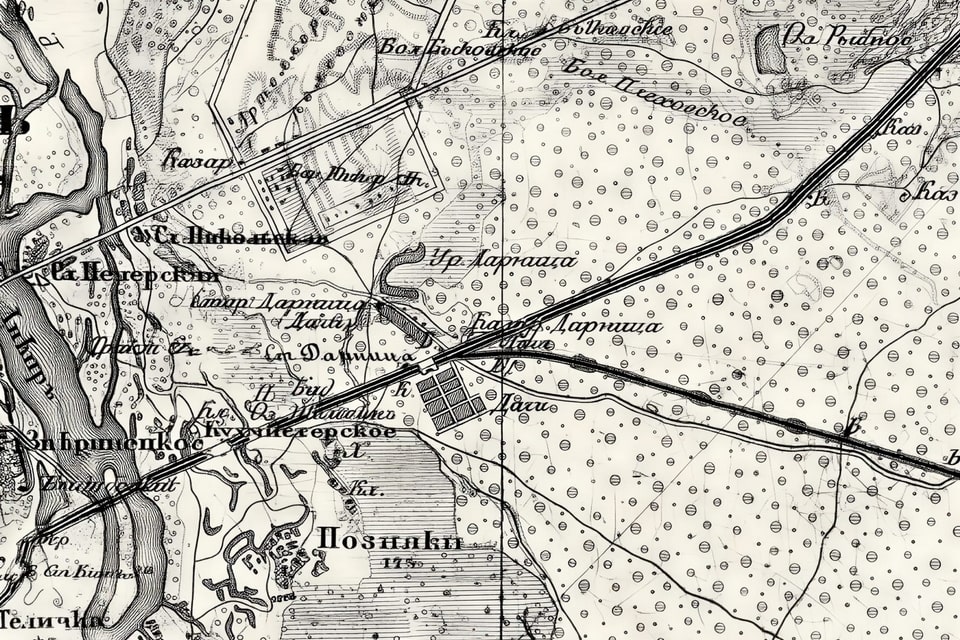
Over hundreds of thousands of years, the Dnipro repeatedly changed its course before finally reaching the high right-bank hills. It left behind a lowland meadow-sandy terrace 3–7 km wide with old-growth forests, pierced by small tributary rivers, floodplain meadows, and scattered across them, like a necklace, dozens of lakes, floodplains, and swamps. The first written evidence of the territory located on the opposite bank of the Dnieper River opposite Kyiv appears during the time of the Kyivan Rus state. The chroniclers reported the events that took place there as those that took place “beyond the Dnipro” (Ukrainian ‘Задніпров’я’), thus avoiding using the phrase “on the left bank”. Near the crossings in the Kyiv ‘beyond the Dnipro’ region, the so-called Iron Trade Route began – a road that in the 8th-12th centuries ran at a distance from the floodplains along the Dnipro bank and led to the southern steppes and Black Sea ports. This route was also used by the Kyiv princes on long campaigns, as it was the most convenient for horse crossing. The flat, gentle relief of the Left Bank was unsuitable for the construction of fortifications capable of withstanding a long-term siege, which determined its functional use for the needs of the city, which was home to at least 50 thousand residents during its heyday of Kyivan Rus.
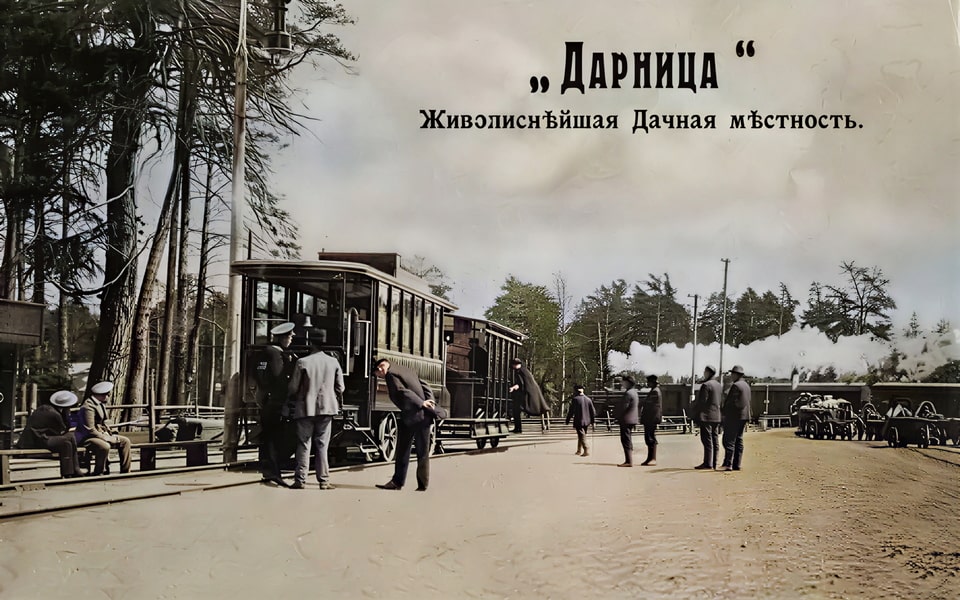
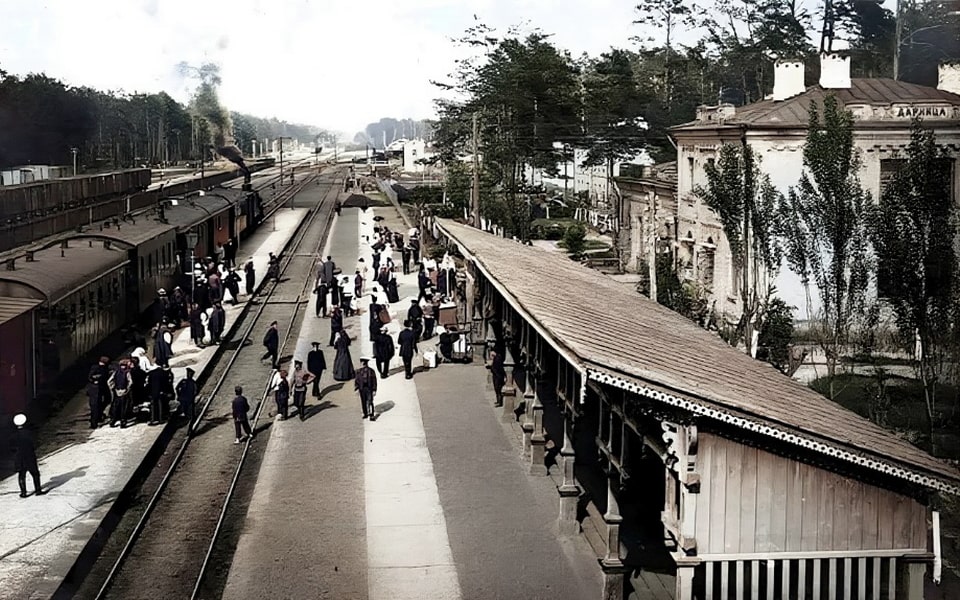
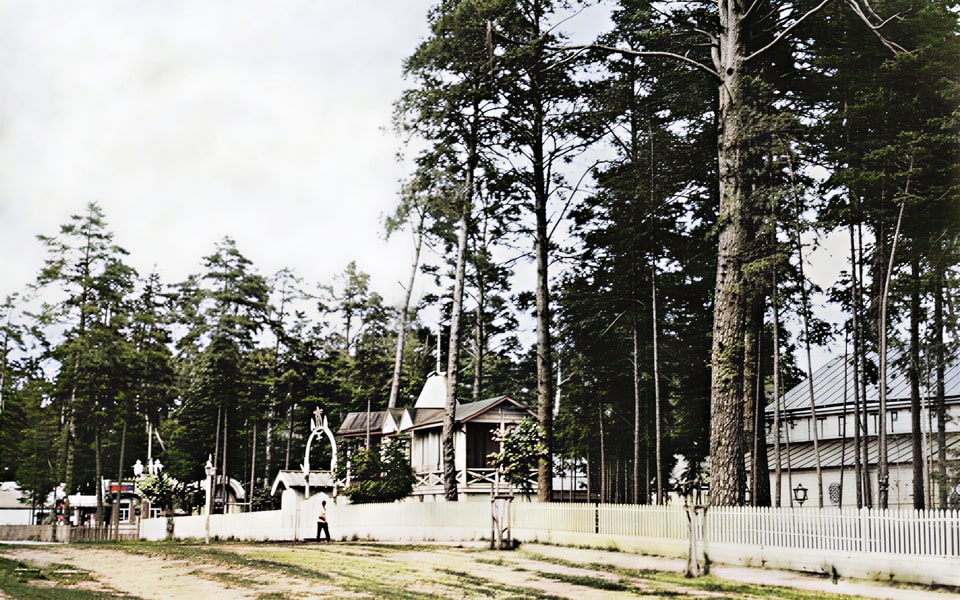
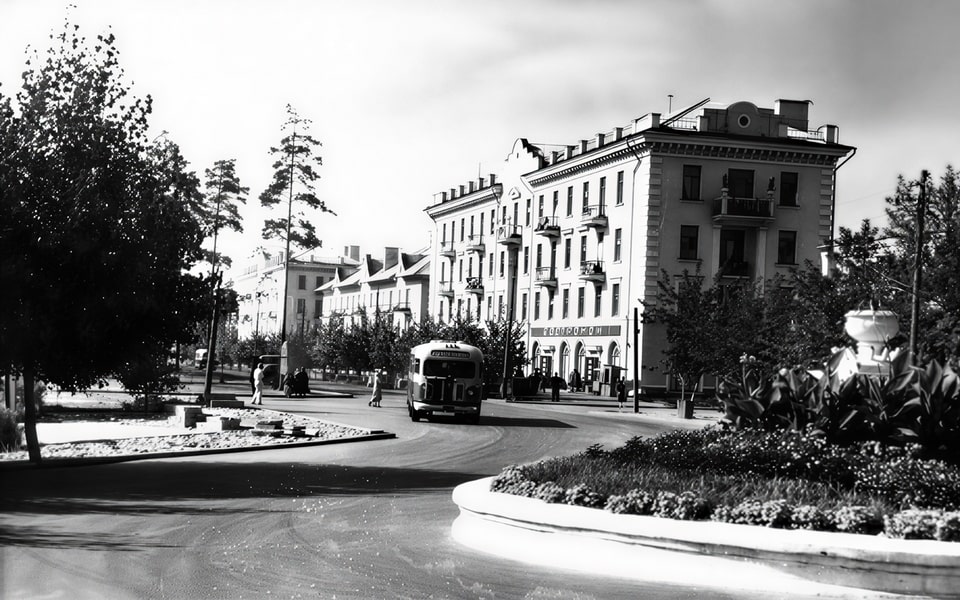
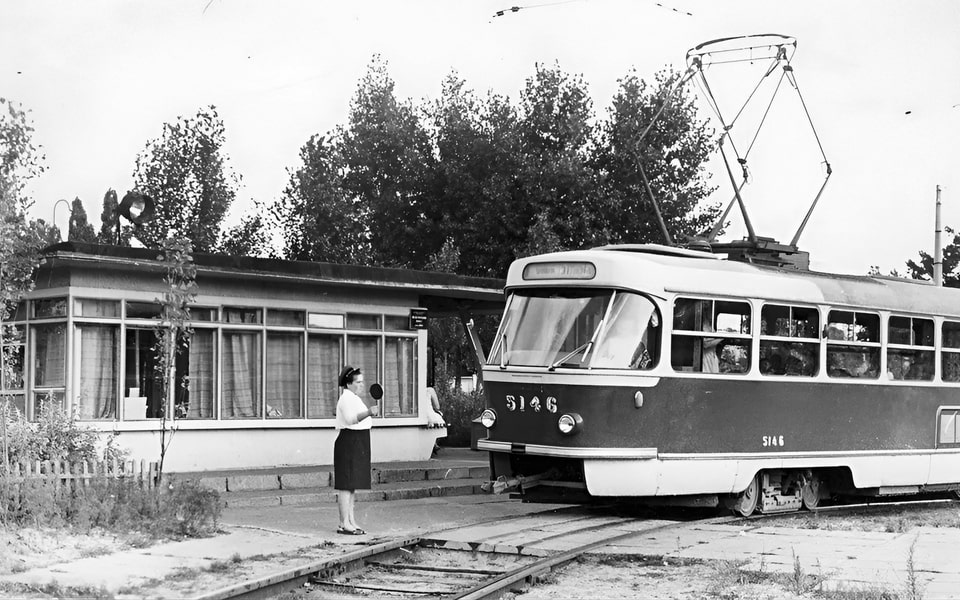
What was Darnytsia like when there were few settlements in it? Hay meadows on a wide, open lowland, thickets of vines, and fish lakes, all of which are flooded by spring water every year. The first written mentions of Darnitsa refer to the river of the same name in the 16th century. At the end of the 18th century, three Darnitsky farms were known, while the mass settlement of Darnitsa began in the second half of the 19th century in connection with the construction of the Kyiv-Poltava railway line. Railway workers settled on the left side of the track, in a more or less inhabited part of the area. This territory, a little later, began to be called the Old Darnytsia – as opposed to New Darnytsia. Industry gradually began to develop here one way or another, connected with the railway: railway workshops, plywood and sawmill factories, and a slaughterhouse. In 1923, Darnytsia and the adjacent settlements were included in the boundaries of Kyiv, which at the time was already under Soviet rule. In 1927, Darnytsia was finally subordinated to the Kyiv City Council, and only in April 1935 did it serve as the center of the formation of the Darnytskyi district, which included all the settlements of the Kyiv Left Bank, except for Vygurivshchyna, Troieshchyna, and Bortnychi. The transformation of Darnytsia into a large industrial region occurred during the pre-war Soviet years.
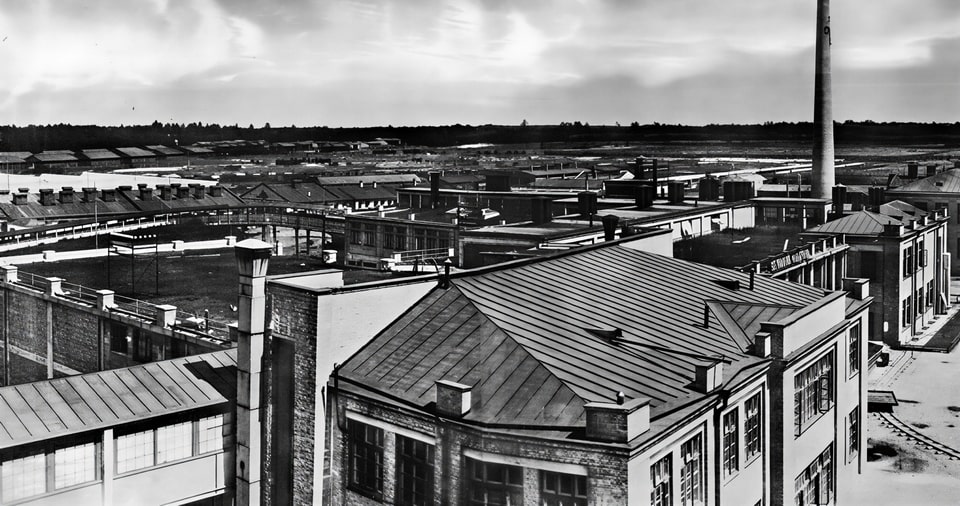
The last pre-war census was conducted in January 1939, and it showed that 54,046 people lived in the Darnytskyi district, the lowest result among all city districts of Kyiv at the time. The obvious reason for this lay in the industrial nature of the area, but also in the fact that before the Second World War, Darnytsia was mainly built up with one-storey wooden buildings, and the dwelling space in the previous decades had risen mainly thanks to private buildings. In 1941, Darnytsia district had 19 schools, 10 kindergartens and 6 nurseries, 3 hospitals and 5 clinics, 14 clubs, 16 libraries, 174 shops, and 4000 residential buildings, of which only 73 were many-storeyed houses. According to a post-war estimate, on the eve of the outbreak of the war between the Soviet Union and Hitler’s Germany in June 1941, the population of Darnytsia amounted to 62,500 people who lived on 274,000 km2 of floor space or approximately 4 m2 for a person.
As a result of the German invasion on June 22, 1941, most of the production power in Darnytsia shifted its focus to the needs of the war. The German Luftwaffe bombed the local railway station as early as June 25 in an attempt to disrupt the logistics. Among 150,000 citizens of Kyiv, who participated in building defensive lines around the city, every tenth was from Darnytsia. Similar to other large industrial cities in Ukraine, July 1941 witnessed enormous efforts in the evacuation of production facilities to the East. In Darnytsia, by July 15, all four key enterprises, including the Armored vehicle repair base No. 7, were evacuated, which included key staff and the most valuable equipment. 700 out of 800 automobiles in the area were given to the war effort. At least 4,200 valuable workers were evacuated to the East along with their enterprises. Out of 60,000 citizens in the district, 10,000 men and women were called to arms for the Red Army in June-July 1941. Despite all enormous efforts put into defense, the Red army units left the right bank of Dnipro on September 17, and two days later, when vanguard German units entered Kyiv, the Soviet NKVD unit blew up Darnytskyi railway bridge. The last organized Soviet units left the left bank and Darnytsia area on September 21, and three years of brutal occupation were unveiled.
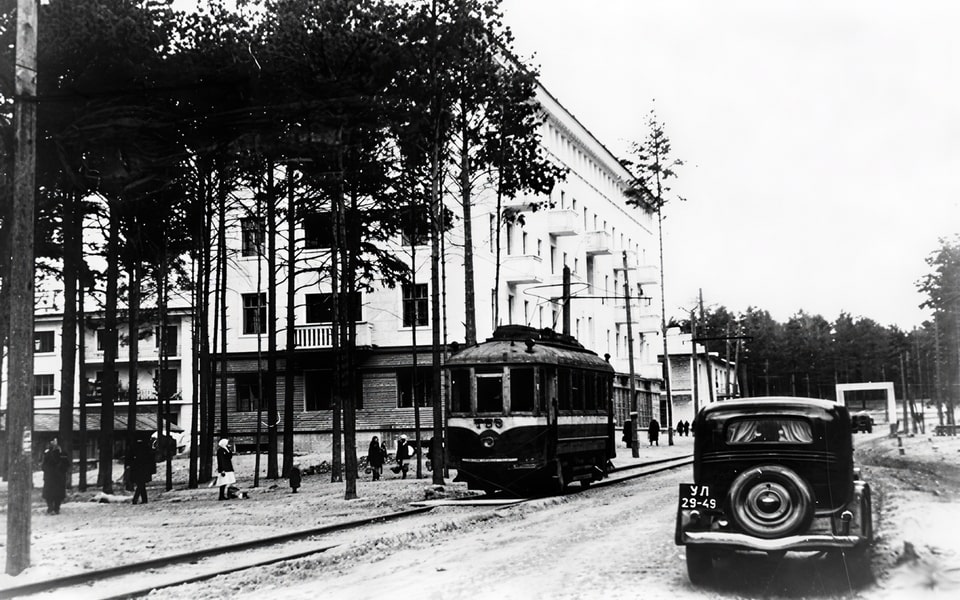
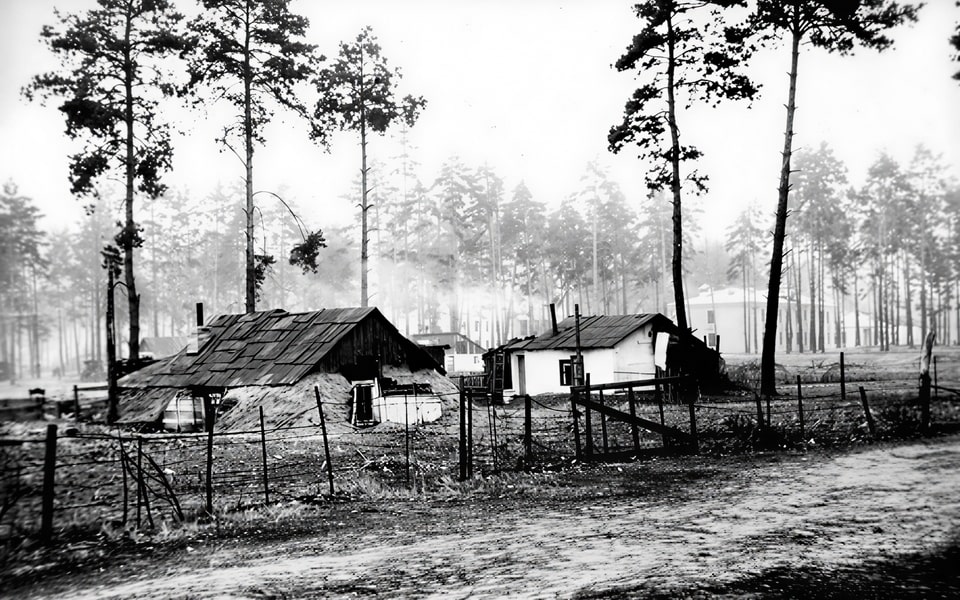
DARNYTSIA POW CAMP IN THE FIRST WORLD WAR (1915–1919): JAROSLAV HASEK, BÉLA KUN AND 25,000 AUSTRO-HUNGARIAN PRISONERS
Before getting into details with the 1941-1943 period in Darnytsia, it is important to take a step backward in time nd discuss a lesser-known page in the history of the area, which took place three decades before the Second World War. As far back in time as 1868, Romanov Emperor Alexander II (1818-1881) granted large areas on the left bank of the Dnipro in Kyiv to the army, and with time, they created a large military training area. If we take a look at the map of the Kyiv region from 1868, we can easily identify several ‘military barracks’ toponyms on the left bank: Pozharnia, Trostianets, and Darnytsia. A large artillery training ground, which rose to the North of Danytsia in the 1860s, existed until the 1930s. In the 1890s, the area was a place of service for twenty-two artillery battalions with a total contingent of 4,320 servicemen, which also operated four military hospitals. Large areas were also given to the construction of military warehouses, which, apart from munitions, also stored medical equipment for twenty field hospitals and forty in reserve. When the First World War broke out in 1914, the area of artillery firing range was actively used for accelerated training of artillerymen. Residents of the surrounding villages were not delighted with such a neighborhood, although they were informed about each exercise in advance.
It is not an exaggeration to say that even fewer people know that there was a large POW camp in Darnytsia at the time of the First World War than about the infamous Nazi camp in 1941-1943. At the same time, a significant proportion of prisoners of war from the Central Powers (Germany, Austria-Hungary, the Ottoman Empire, and Bulgaria), who were captured on the Eastern Front, passed through a POW camp in Darnytsia starting from the spring of 1915. In particular, fate brought here such famous people as the Czech writer Jaroslav Hasek (1883-1923), the Hungarian communist internationalists Béla Kun (1886-1938) and Imre Nagy (1896-1958), and the Austrian writer Heimito von Doderer (1895-1966). With the outbreak of the First World War, Kyiv became an essential rear logistical center on the Eastern Front, and the Kyiv Military District included Volyn, Podil, Kyiv, Chernihiv, Kursk, and Kharkiv provinces. In August 1914, with the beginning of World War I, the Kyiv Military District became the basis for the formation of the Southwestern Front of the russian empire. As for Kyiv as a rear hub, it was vital for the front because of its location and a sophisticated logistics system.
It is important to note that while in different periods of the First World War, the Germans supplied a significant share of troops on the Eastern front, from one-third to a half, the proportion of prisoners of war was different. The incompetence of the military command and the weakness of the Austro-Hungarian armed forces led to the fact that the Imperial Austrian and Royal Hungarian armies on the Eastern Front, in the battles that took place on Polish lands, and from August 1915 north of the Pripyat River, lost many more soldiers as prisoners than their German allies. In total, 2.4 million soldiers from the Central powers were captured on the Eastern Front throughout the whole WWI (400,000 of which died by 1916), of which the Germans comprised only 170,000, Turks around 80,000, and the Austro-Hungarian forces amounted to an enormous 2.1 million. It is important to note that among this number, up to 1.8 million prisoners were sent to the camps in Ukraine, or they were transited further passing Ukrainian territories, most of them passed through Kyiv.
In the second half of 1914 and early 1915, Kyiv still witnessed only a small share of the prisoners from the Central powers. In this initial period, a reception and assembly point for prisoners of war was set up in the Pechersk Fortress, an old complex of fortifications in the center of Kyiv, and it was capable of dealing with a relatively small number of captured enemies. After the Austrian Przemysl Fortress capitulated on March 22, 1915, after a six-month siege, 118,000 exhausted defenders became prisoners of war, and in the course of the next six weeks, they were sent into the Romanov Empire. Even though only a part of this amount reached Kyiv, the local logistics department concluded that the size of the Pechersk Fortress no longer met the task of sorting thousands of prisoners, many of whom were afflicted with infectious and other diseases or wounded and needed medical care and appropriate sanitary conditions. The fortress could no longer cope with around 5,000 men, who came here daily.
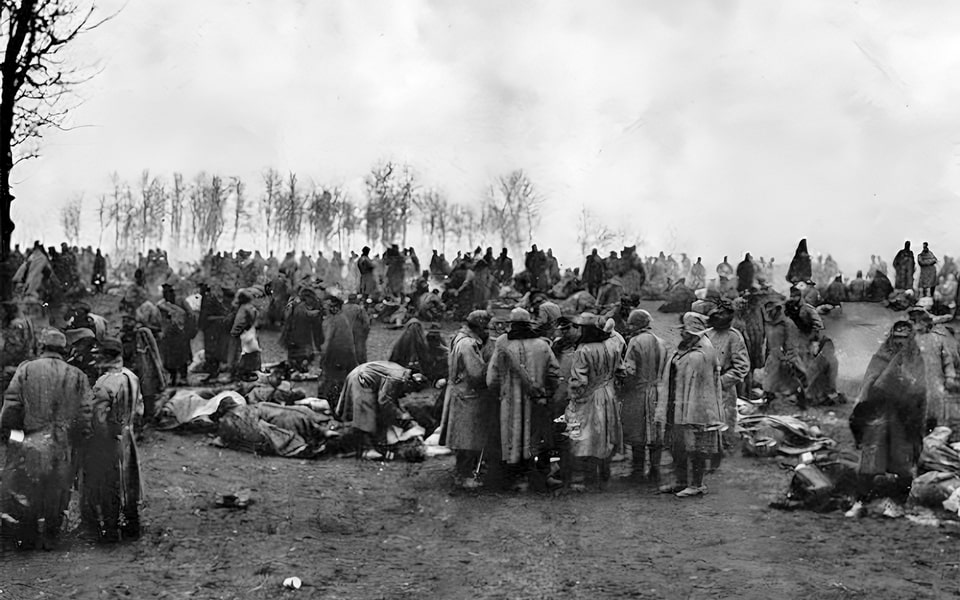
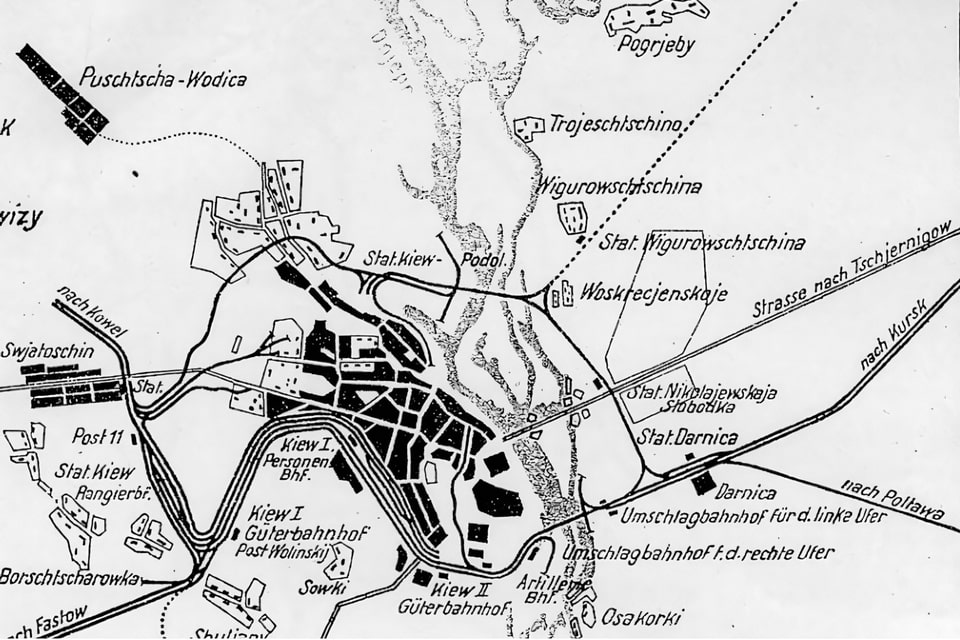
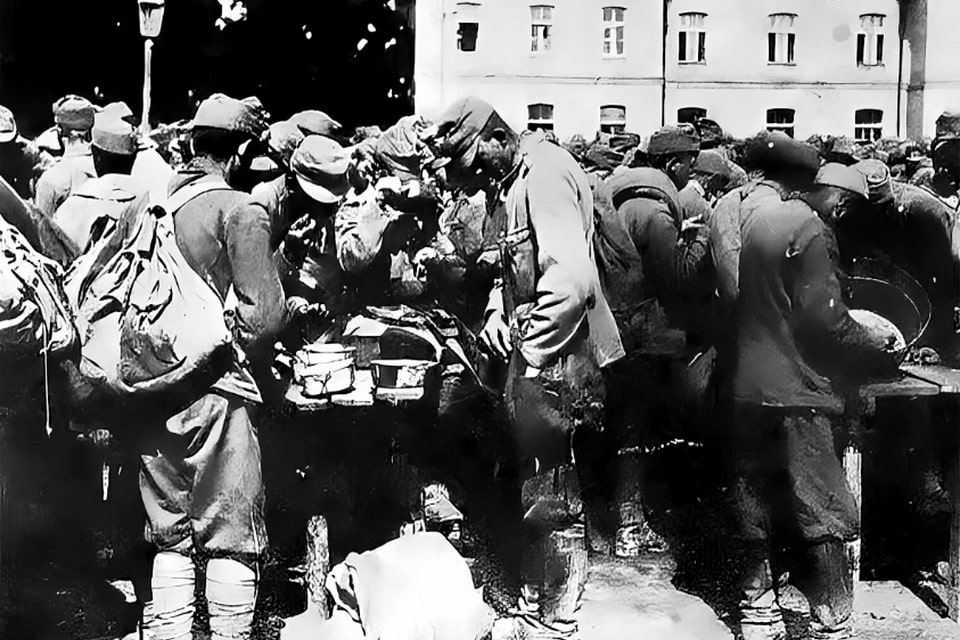
Precisely for health reasons, it was decided to set up a completely new camp, and the location was chosen next to a small Darnytsia railway station across the river on the left bank. The railway station, which had existed since 1899 on the line between Kyiv and Poltava, provided logistical means for the arrival of prisoners, and a secluded area in the forest provided safety measures. A newly set Darnytsia camp for prisoners soon became the largest of its kind on the Eastern Front, and in late 1915 it had an inner personnel of 117 men, mostly recruited from the Austrians under the supervision of local command. Toward September 1, 1916, the staff rose to 525 people, of which 480 were prisoners and only 45 were not, plus around 250 russian guards to provide oversight. Out of these 480 prisoners in administrative positions, 184 were Czechs: they worked in the office, at the post office, were barracks supervisors or their assistants. Czechs were almost not involved in physical work. Another 99 were Poles – they worked in the sanitary service and cleaning service. In November 1916, the number of camp personnel increased to 915 people, of whom 444 or 49% were Czechs.
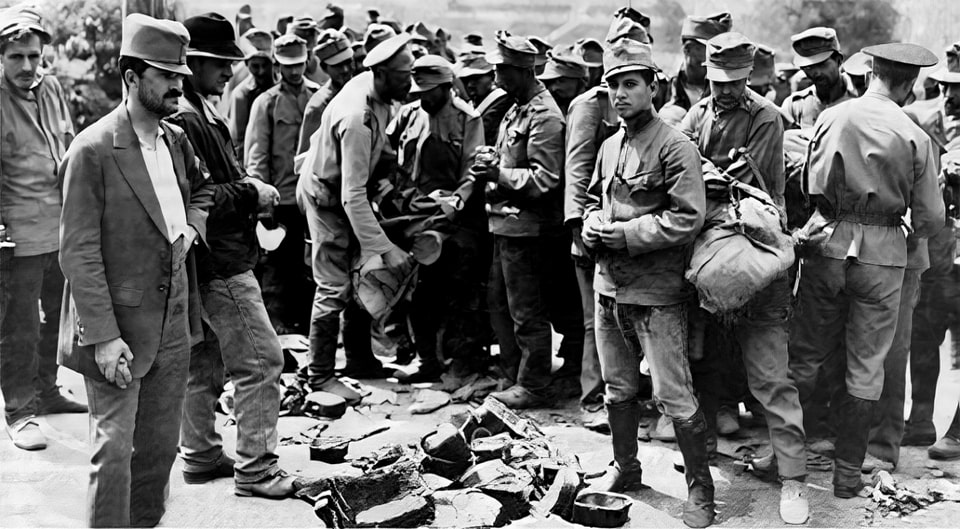
Since the Austro-Hungarian army was multinational, one of the key practices that was implemented in dealing with POWs in the camps, and particularly in the largest of all in Darnytsia, was an institutionalized division of prisoners based on their nationality. This practice soon led to inequality. Slavs were tolerated, as well as Romanians, Italians, and Lombards who were willing to betray their military oath and work or fight against Austria-Hungary. As for the Austrians, Hungarians, and representatives of Slavic peoples and other nationalities who refused to embark on the path of betrayal of Emperor Franz Joseph, the attitude towards them was bad. It sometimes got to the point that ‘Slavic’ prisoners lived in the barracks, while German-speaking Austrians spent the night in the open air. June 1916 witnessed a peak of 25,000 prisoners in the Darnytsia camp, and in later periods the number of prisoners, including the inner administration, amounted to 3-5 thousand at a time. The camp had 31 barracks in the early stage and up to 39 in later years, and the condition of these erections varied from bad to worse. Those who died in the camp, and they amounted to 2 thousand toward the end of the war, were buried in a specially created cemetery nearby.
In the second half of 1916, a third of all Central Powers prisoners of war were held in Ukraine. During 1917, this figure reached approximately 660,000, after approximately 400,000 of the total number of prisoners had already died. In the Ukrainian provinces, prisoners were used in various jobs. Many of the prisoners of war – not only Slavs, but also Germans and Hungarians – were immediately hired by landowners for agricultural work. Thus, as of August 8, 1916, almost 600 thousand prisoners of war were already working in the agriculture of the russian empire. If we judge the situation according to the reports of the Kyiv press at the time, the prisoners who were in the Darnytsia camp (isolation and checkpoint) were treated relatively well by the military authorities and civilian residents. The soldiers of the Austro-Hungarian army who lived in Darnytsia and were involved in various works in Kyiv felt so free that this caused discontent among the leadership of the Kyiv military district. At least 1,170 POWs from Darnytsia camp were used in street works in Kyiv.
In addition, Czechs, Slovaks, and South Slavs were transferred to the national legions that were to fight against the Central Powers. For example, in 1917, Romanians – former Austro-Hungarian servicemen – were recruited for the Romanian Royal Army in Darnytsia. With the arrival of a new camp commandant, General Major Goerg Fedorovich Eeiche (1863-1920) in October 1916, the treatment of ‘undesirable’ elements in the Darnytsia camp shifted toward more careful selection and recruitment. His measures were aimed at creating a more effective structure for recruiting volunteers among prisoners and their subsequent redistribution. Among the measures taken were efforts to cope with the mass robbery of newly arrived prisoners, who were often forced to give up their personal belongings.
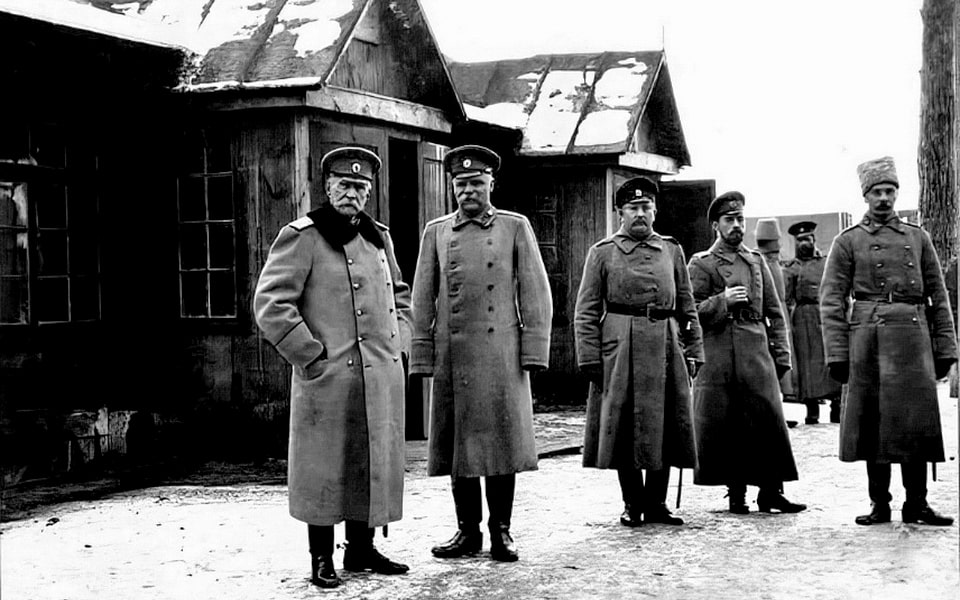
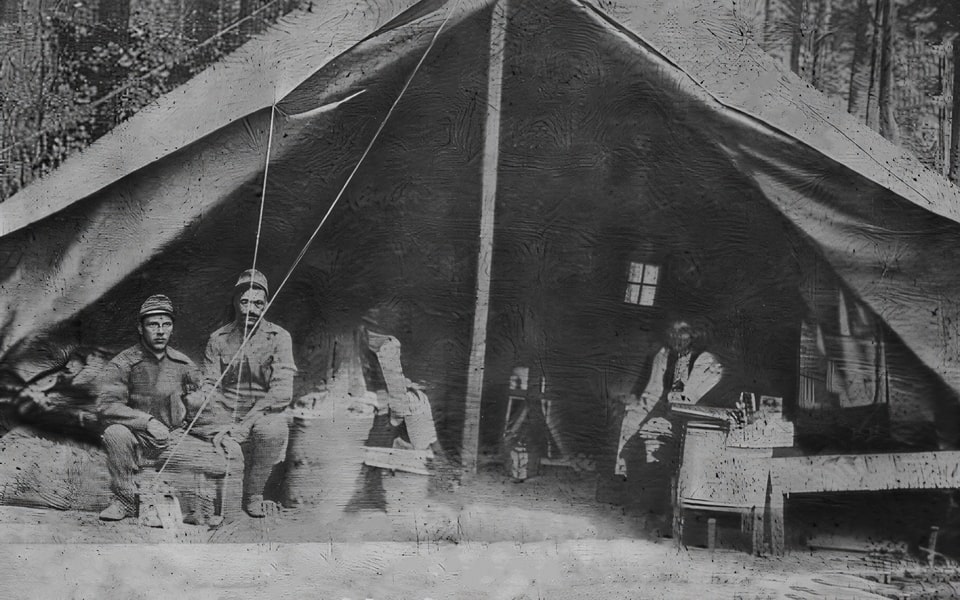
Evidently, the most well-known prisoner of Darnytsia camp, who was also recruited to fight against his former countrymen, was Jaroslav Hasek (1883-1923). He was called to the Austro-Hungarian army in February 1915 and joined the 91st Regiment, which comprised mostly Czechs. On September 24, 1915, Hasek and his men were taken prisoners near the village of Khórupan (modern Rivne Oblast in Ukraine). The men from the 91st Regiment were marched on foot to the Ukrainian city of Zhytomyr, around 200 km to the East, and from there they were transported by train to Kyiv. From the city railway station, prisoners were escorted passing Khrechatyk main street, crossed Dnipro through the Mykolaivskyi Chain Bridge, and reached Darnytsia camp. Jaroslav Hasek, who gained camp number 294217, was held here until December 1915, when he was transferred further inland. In early 1916, he volunteered to join the Czechoslovak Rifle Regiment, a unit that fought on the side of former enemies. Hasek returned to Kyiv in April 1916 with a battalion of volunteers. The military medical commission found the writer unfit for military service, and he spent the latter period of the war as a correspondent and an agitator to fight against Austro-Hungary.
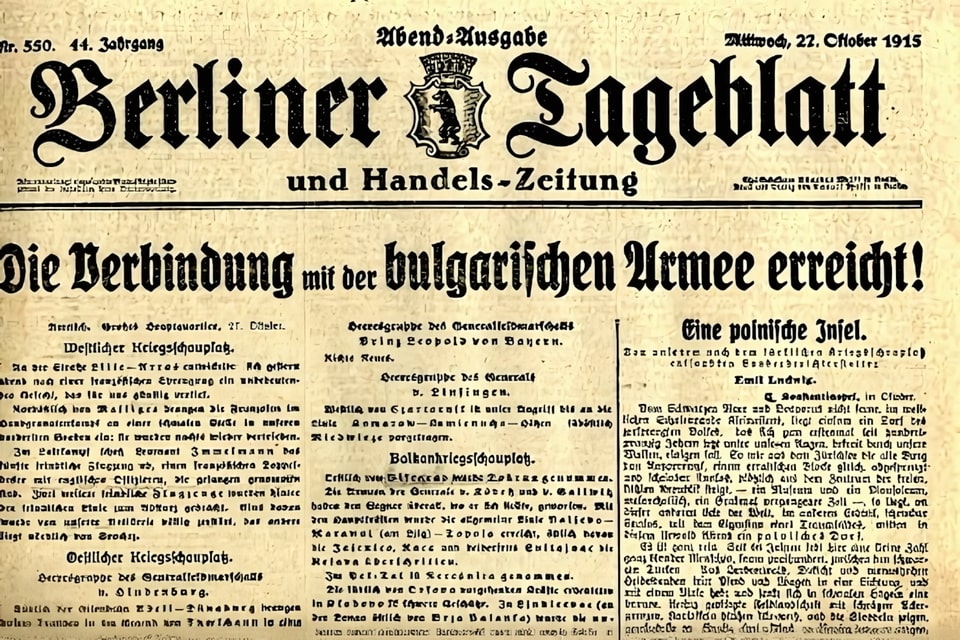
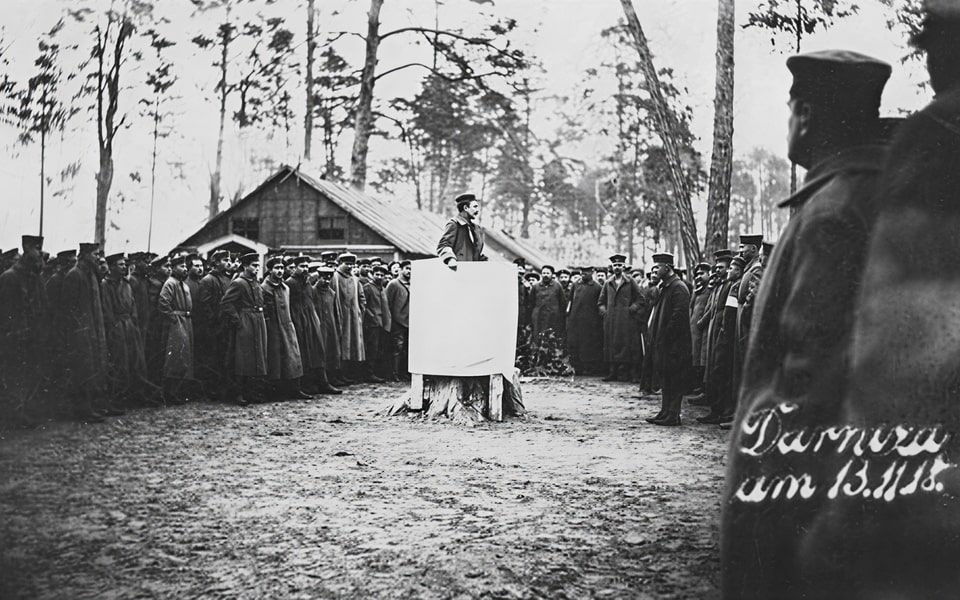
In May 1917, Darnytsia camp for POWs got a new commandant, Major General Kuzmin-Karavaev (1857-1920), who had been written off to the reserve for health reasons at the headquarters of the Kyiv Military District a year before. He was often absent from the camp, and in a later period, Darnytsia camp was mainly operated by the administrators, who were mainly Czechs. The last prisoners fled from internment here in November 1917 after the disintegration of the Empire’s army following the communist revolution. However, at the same time, prisoners of war arrived from other internment areas, who were eager to get to Kyiv and then escape to the West. In early December, the temporary commandant of the camp reported that 400 South Slavs were still in Darnytsia. In January 1918, a unit of the Czech Legion was stationed there. From all this, we can conclude that in the winter of 1917–1918, Darnytsia often served as a transit camp for prisoners of war of certain nationalities who were no longer considered prisoners and were temporarily housed there during transportation to their destinations. In January 1918, there were still 2,230 prisoners in Darnytsia who were unemployed and about to leave for Kyiv.
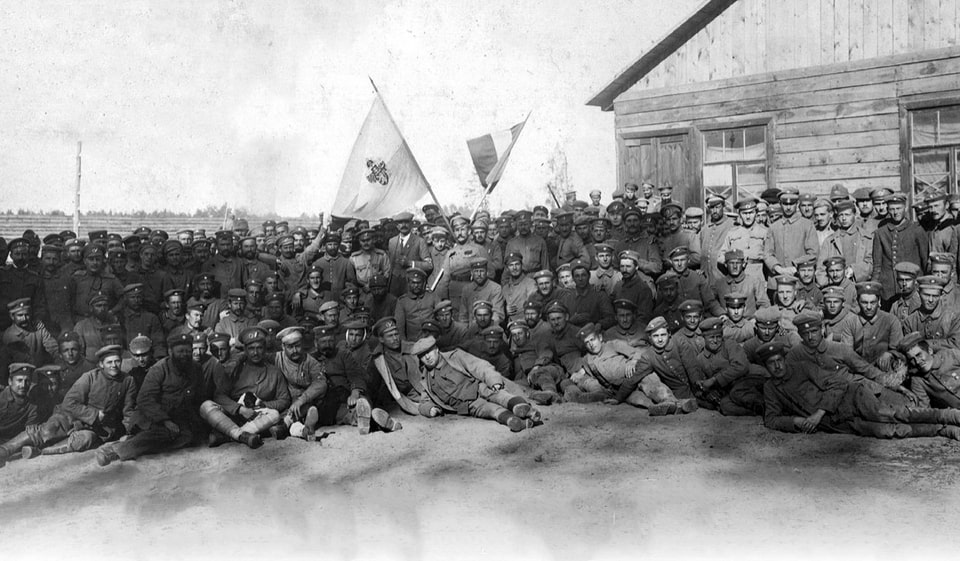
In March 1918, Kyiv was taken under control of the Central Rada of the newly created Ukrainian People’s Republic, which asked military assistance from the Germans and Austro-Hungary. German troops came to the city by train on March 2, 1918, and after their arrival, the former Darnytsia camp saw a new influx of soldiers; this time, they were German former prisoners of war, who came here temporarily on the way back home to the West. For a while, the camp was supervised by a German commandant. The Germans were well informed about Darnytsia’s convenient location in the transport communications system and used the camp exclusively for their own purposes, while a separate army camp was urgently allocated for the Austro-Hungarian returnees, 4 km south of Kyiv, capable of holding up to eight thousand men.
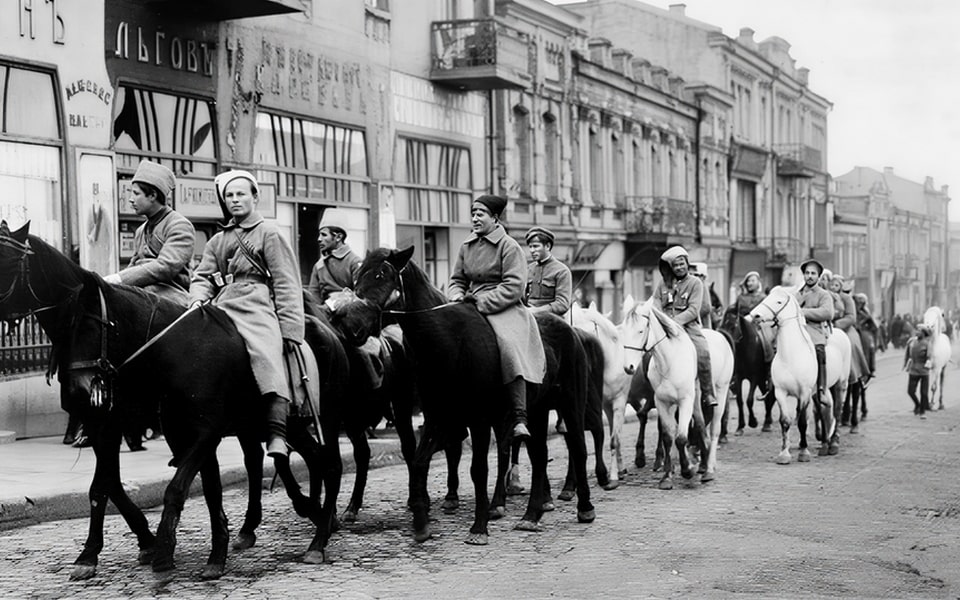
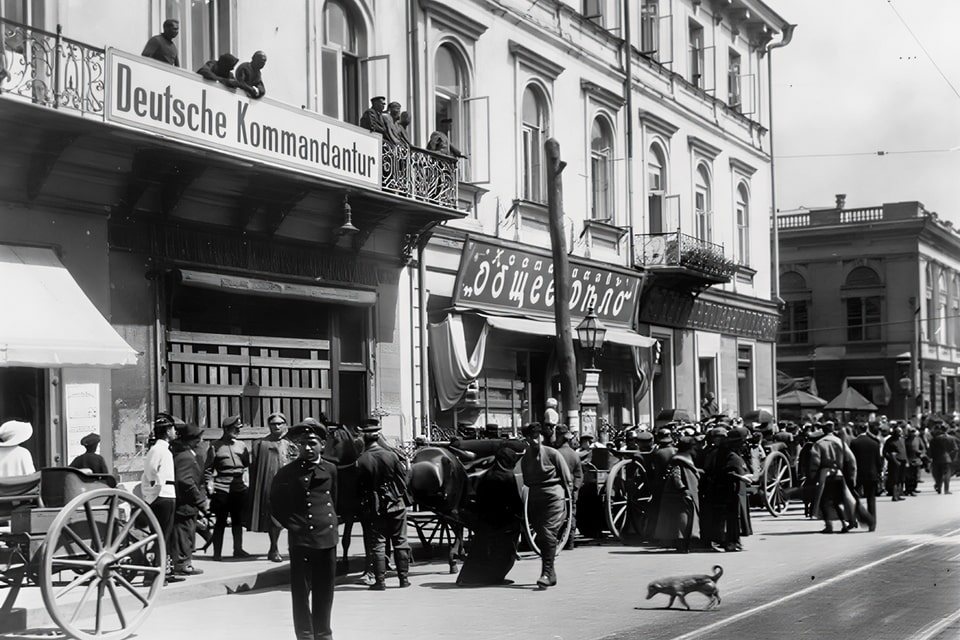
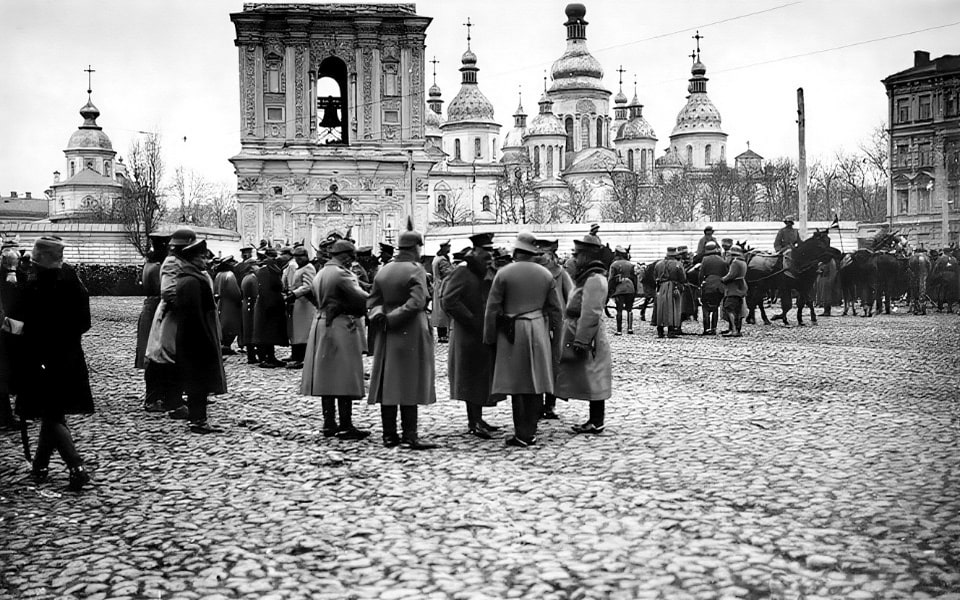
By the end of April 1918, the Austrian POW mission in Kyiv had registered that over 380,000 former Austro-Hungarian prisoners of war were seeking to return to their homeland through Kyiv alone. There were comparatively fewer Germans from Germany at that time, approximately several tens of thousands of people. This number also included thousands of civilian Germans interned in Russia. In the summer months, the total number of repatriated prisoners of war from the Central Powers – military personnel, civilians, and even Russian Germans who sought to get to the West through Kyiv and Darnytsia – could have been over 100,000. The camp once again changed its masters and residents in late 1918 and early 1919, when German troops left Ukraine and communists occupied most of the country for the next seven decades, including Kyiv, which fell on February 5, 1919. After this, Darnytsia became an internment camp for the captured soldiers from the Ukrainian People’s Army, who were held here in poor sanitary conditions until the liquidation of the camp in 1921. Camp was still visible on the map of Kyiv from the 1930s, but despite some sources, it was not used by the Nazis in 1941-1943, and the infamous camp for prisoners was set up further South. Today, the territory of the former WWI camp is an industrial area.
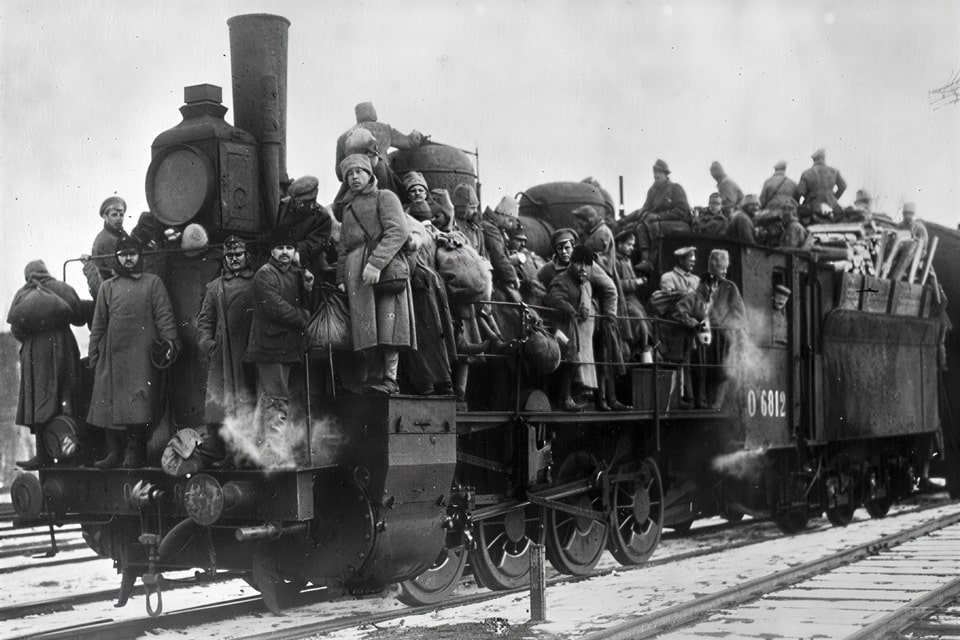
THE FATE OF THE SOVIET PRISONERS OF WAR IN WW2: 5.7 MILLION CAPTURED, HUNGER PLAN AND THE BATTLE OF KYIV (665,000 POW)
A distinctive feature of the war on the Eastern Front between Hitler’s Germany and the Soviet Union was the fact that a significant share of its victims were not killed with arms in their hands on the battlefield, but in the course of occupation. mostly among civilians, Jews, and Soviet prisoners of war. As a matter of fact, no other group of POWs in the Second World War suffered and died in the measure and numbers as the Soviet soldiers, captured by the Wehrmacht, especially those taken prisoners in the second half of 1941. It is a matter of common knowledge that on the spot, German units were overwhelmed with the number of prisoners they captured after the launch of Barbarossa, but on a strategic level, such a scenario was anticipated. As the army planners prepared the Wehrmacht for a Blitzkrieg rapid movement into the Soviet Union, it was clear that in the process, millions of Soviet soldiers would have to be encircled and defeated. Capturing the whole army was planned, but the nazi planners neglected the fate of the POWs, since the overall strategy of invading the Soviet Union included the anticipated death of tens of millions of people, and in the Nazi worldview, captured Red Army soldiers were no longer than just a part of these millions doomed to death.
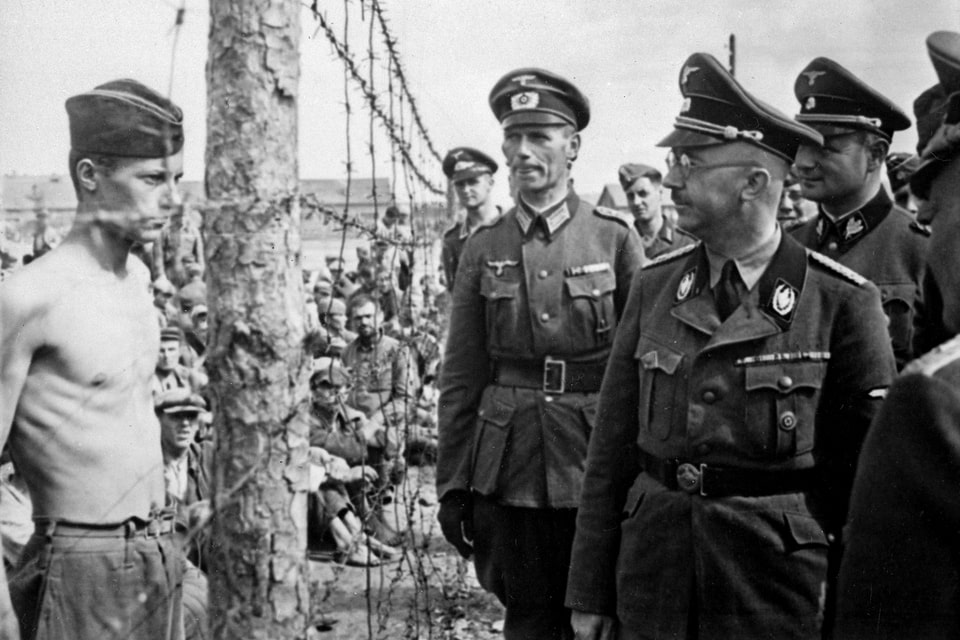
Another important thing is that Hitler hoped to destroy the Soviet state in just a few months. In the event of such success, the German economy would not need millions of workers. In this mindset, Soviet POWs were fated to suffer twice, first on the battlefield, then from starvation as a part of a larger ‘der Backe-Plan’, a hunger plan named after its architect, Herbert Backe (1896-1947), a high-ranking bureaucrat from ‘Reichsministerium für Ernährung und Landwirtschaft’ (Reich Ministry of Food and Agriculture). In a meeting on May 2, 1941, Backe summed up considerations that had circulated among high-ranking Nazi officials since Hitler’s decision to invade the Soviet Union in late 1940. ‘Taking what we need out of the country’ meant that not much would be left to the millions of civilians and captured enemy soldiers. The fate of the POWs was even more vulnerable than civilians, since they were deprived of access to the rural areas and the agricultural sector, and to the lack of a market, which saved millions later during the occupation. Summing up, Soviet POWs were not only exposed to the ‘hunger plan’, but they also became the targeted objects of it even before the first shot was heard on the Eastern Front on June 22, 1941. Only when the initial Blitzkrieg ambitions failed, and the fight against the Soviet Union turned into a war of attrition, was the use of prisoners of war reconsidered.
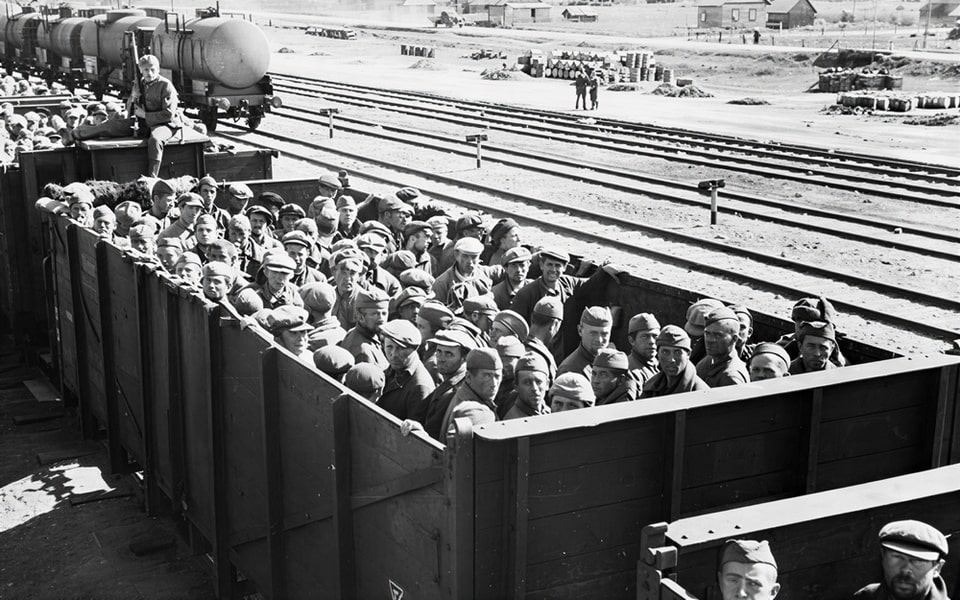
The modern historiography of the Second World War usually navigates between two estimations of the total number of Soviet prisoners in German captivity, of which only one is taken as credible. The one which is not is, no hard to guess, a Soviet underestimated figure of 4.5 million captured Red Army soldiers, which, like many other post-war Soviet sources, deserved little credit. In his highly acclaimed work ‘German rule in russia 1941-1945’, American historian Alexander Dallin gave a widely accepted figure of 5,7 million Soviet soldiers who were captured between June 22, 1941, and January 1, 1945, of which 3.355 million were captured in 1941, and 2.2 million in 1942-1945. In another well-known book from 1978, ‘Keine Kameraden. Die Wehrmacht und die sowjetischen Kriegsgefangenen, 1941–1945’ (No Comrades: The Wehrmacht and Soviet Prisoners of War, 1941–1945) by a professor of Heidelberg University, Christian Streit, the author came to the same figure of 5.7 million overall (5,734,528), of which 3.3 million died, of which 2 million until February 1942. More modern research by Christian Hartmann and Dieter Pohl confirmed the established figure of 5.7 million. It is important to note that according to Soviet post-war estimations, among 1.837 million who came back from captivity, 1 million got back to the army, 600,000 were assigned to labor battalions, and 233,400 were sent to NKVD camps as traitors; thus, for hundreds of thousands, liberation meant just new camps.
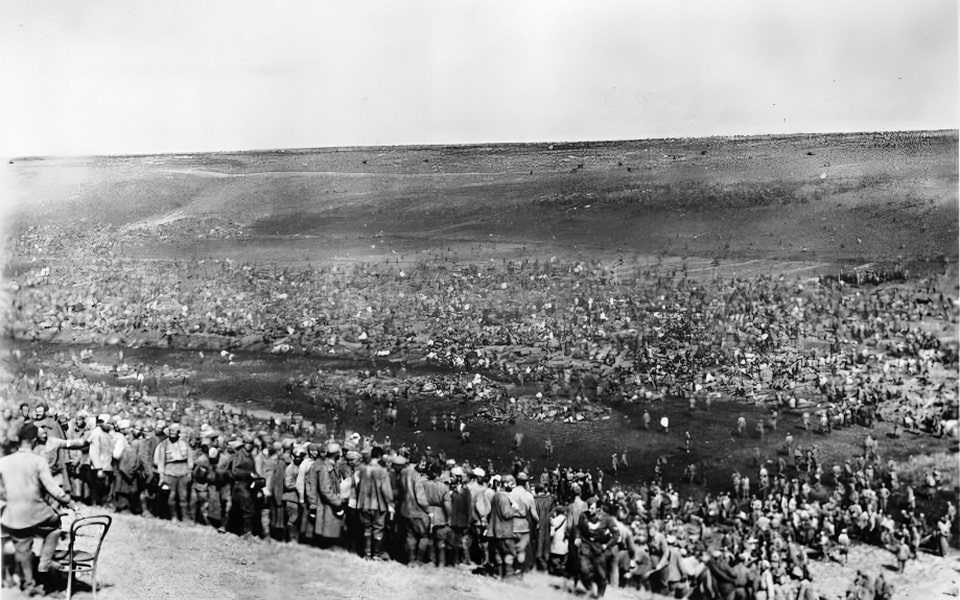
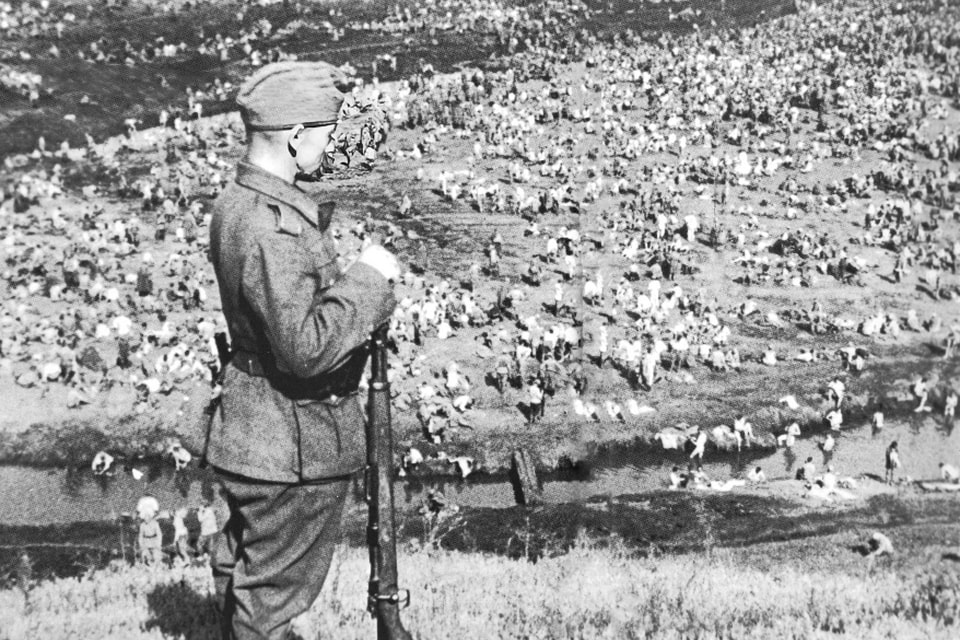
The Battle for Kyiv, which lasted between July 7 and September 19 (Germans entered the city, and on September 26, they completed the encirclement of large Soviet formations), resulted in the elimination of four Soviet armies of the South-Western Front. The German sources claimed they took 665,000 prisoners, which made this battle the largest encirclement on the Eastern Front based on the Wehrmacht statistics. This figure has been regarded as credible for decades and still is, even though the Soviet version claimed a much lower figure of 452,720, of which 58,895 were officers, and 21,000 of the total reached other units. It is important to note that the German figure may actually include all the losses of the Soviet side in the ‘Kyiv strategic defensive operation’, which are estimated as around 700,000. 1st Panzer Group under Ewald von Kleist (1881-1954) alone took 227,719 Soviet POWs, and 2nd Panzer Group under Heinz Guderian took 86,000 prisoners in their area of responsibility. At least some part of these figures were civilians, which could be another reason for the difference in the estimates.
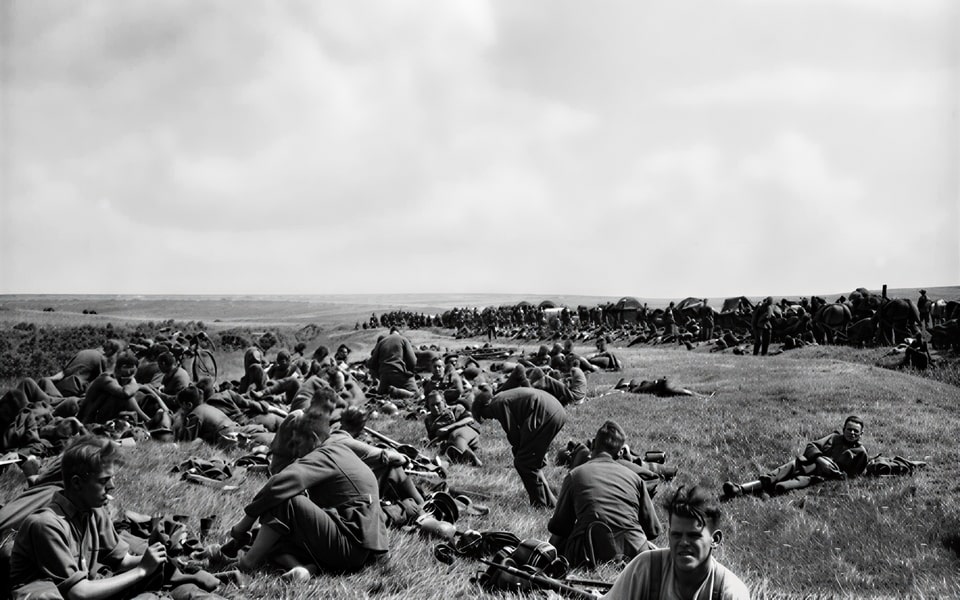
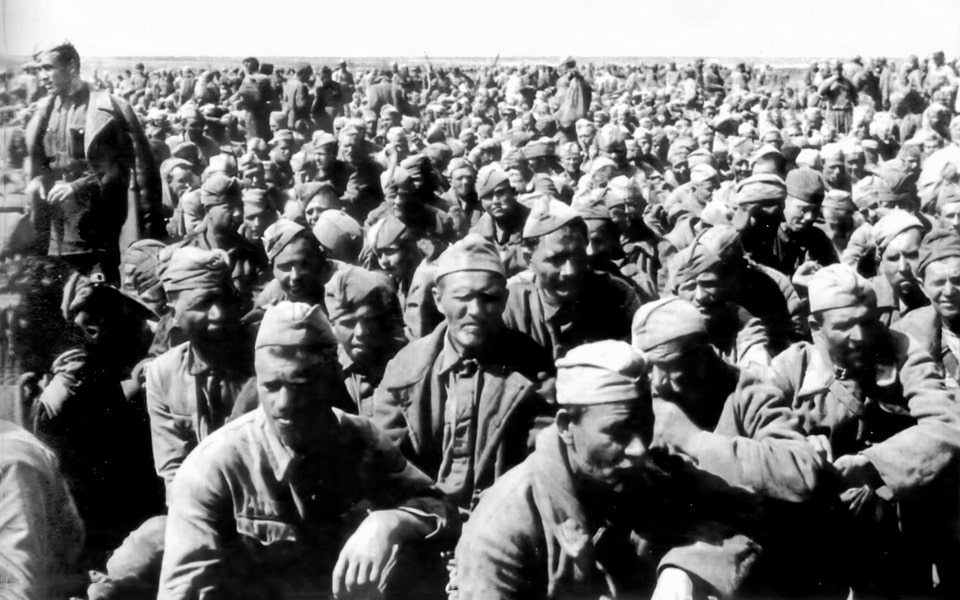
When the encirclement ended on September 26, 1941, hundreds of thousands of Soviet soldiers and officers were squeezed on the left bank of the Dnipro River in Kyiv, Cherkasy, Poltava, and Chernihiv regions. While the front and the vanguard Wehrmacht units moved forward, the German army command directed several units to cope with the encircled Soviet armies on the left bank of the Dnipro. Among the units was the 24th Infantry Division from the 17th Army, which moved from Kremenchuk and was later left as an occupying force until October 1941. Another veteran division of the Polish and French campaign, the 62nd Infantry Division, a part of the notorious 6th Army, suffered high losses during the Battle of Kyiv and was transferred to the rearguard. Before being returned to combat duties, the division was used as a reprisal and anti-partisan force against the local population and committed numerous war crimes in Ukraine. The third unit was the 113th Infantry Division, which was sent to Serbia in November to fight against partisans. The last formation assigned to deal with the Soviet POWs to the East of Kyiv was the 454th Security Division, which operated in the rear of the Army Group South in Ukraine. It became notorious for its participation in war crimes and ‘cleansing operations’
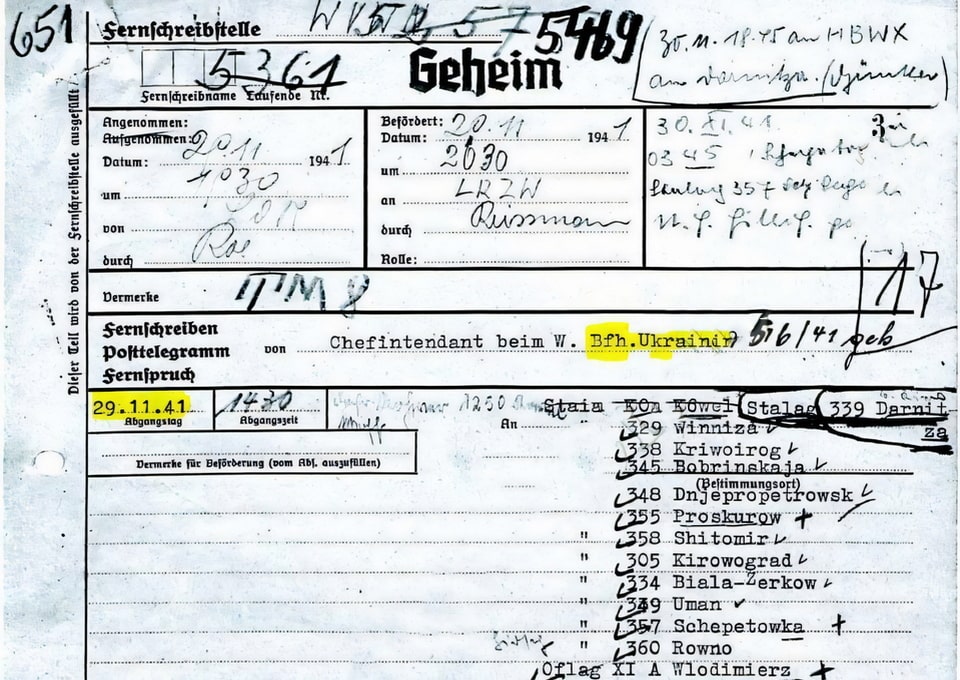
The path of the Soviet prisoners of war captured near Kyiv lay through the divisional assembly points of the units that captured them, to the ‘Armee-Gefangenensammelstellen’ (army prisoner collection points) in the rearguard. Temporary camps for prisoners of war (apparently, these were divisional and army assembly points) were located in the following settlements of the left-bank Kyiv region: Boryspil, Yagotyn, Goholev, Baryshivka, Berezan, Velyka Krupil, Brovary, Yerkivtsy, Ivankov, Kuchakovo, Pereyaslav-Khmelnytskyi, Sulymivka. Most of these camps are not mentioned in any German or Soviet official document; they were only identified thanks to eyewitness accounts.
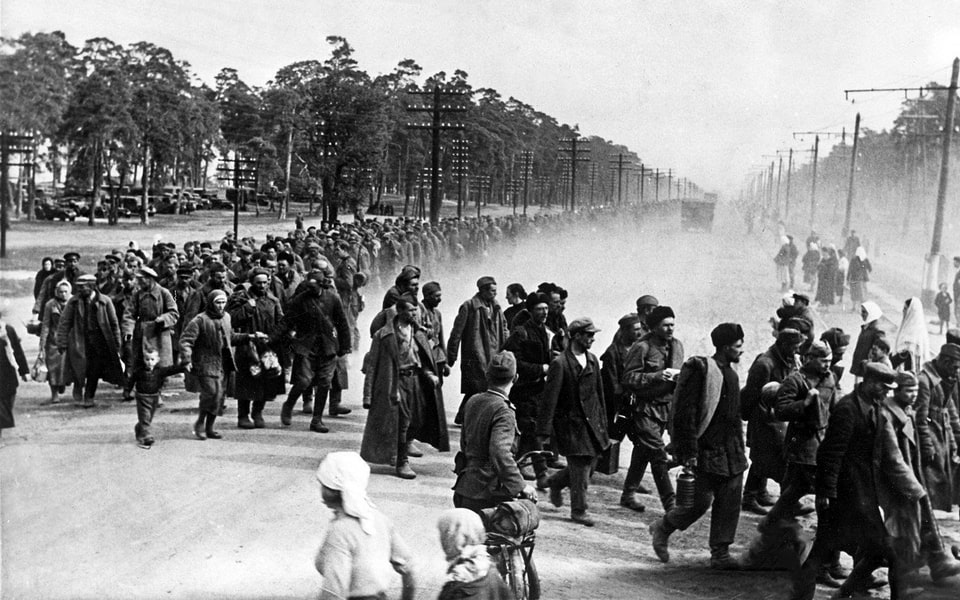
In these temporary camps, prisoners were held for a short time and then sent to transit camps, or the so-called ‘dulags’ (Durchgangslager), in the area of responsibility of the rear of the ground forces. The further route lay through transfer points in stationary camps or ‘stalags’ (Stammlager) of the Reich Commissariat ‘Ukraine’, the General Government and Military District I (East Prussia), or to the camps on the territory of the Reich. At the time the battle of Kyiv ended, 10 stationary camps (Stalags) for soldiers and one for officers were already operating in the area of responsibility of the commander of the operational rear area of Army Group South. In late August, they already accommodated 225,000 prisoners of war, and the number rose to 300,000 in September and to an enormous 445,00 at the beginning of October 1941. Around 10,000 guards were responsible for sustaining order in these camps.
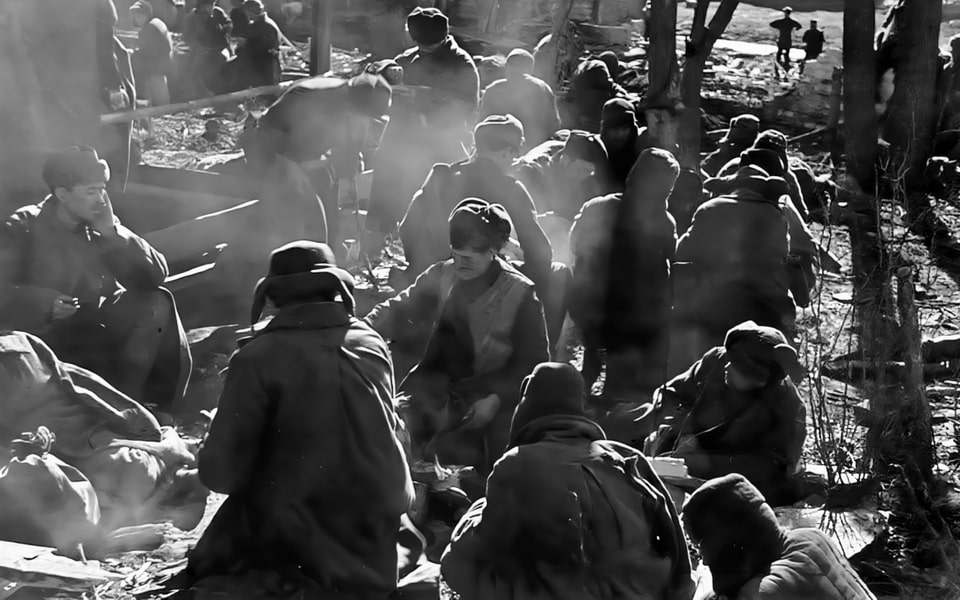
With a peak of prisoners in these camps in early October 1941, in November the figure decreased to 243,000, of whom 140,000 were already assigned for labor work in the armament industry. December 1941 left us with more detailed statistics, with the total number of prisoners in ten stationary camps in Ukraine amounting to 175,696, of whom 112,000 were assigned to labor units, 59,000 in the civil sector, and 53,000 in armament production. Between November and December, 33,713 POWs died, another 3,100 escaped, 4.500 were delegated to the Luftwaffe, and 791 were freed as persons unable to work. In January 1942, the toll of POWs in ten camps decreased to 141,675, of whom 90,000 were regularly sent to work. 6,000 died, 1,200 were deported to the Reich, 1,100 escaped, 575 were entrusted to the Luftwaffe and the SD, and 1,500 were released. In March, 137,000 were still kept in these Stalags in ‘Reichskommissariat Ukraine’, though toward May 1942 the POWs toll skyrocketed to 194,384. It is important to note that not all Soviet soldiers, who were captured, found their way to these stationary camps, and tens of thousands were sent to the General Government in Poland or to the Reich. In May 1942, 17,950 POWs were sent to Germany to perform labor duties, and another 4,500 joined the so-called ‘Ostgruppen’, volunteer army units recruited to fight for Germany, and some number also joined the notorious ‘Schmuntzmannschaften’ auxiliary units under the supervision of SS/Orpo.
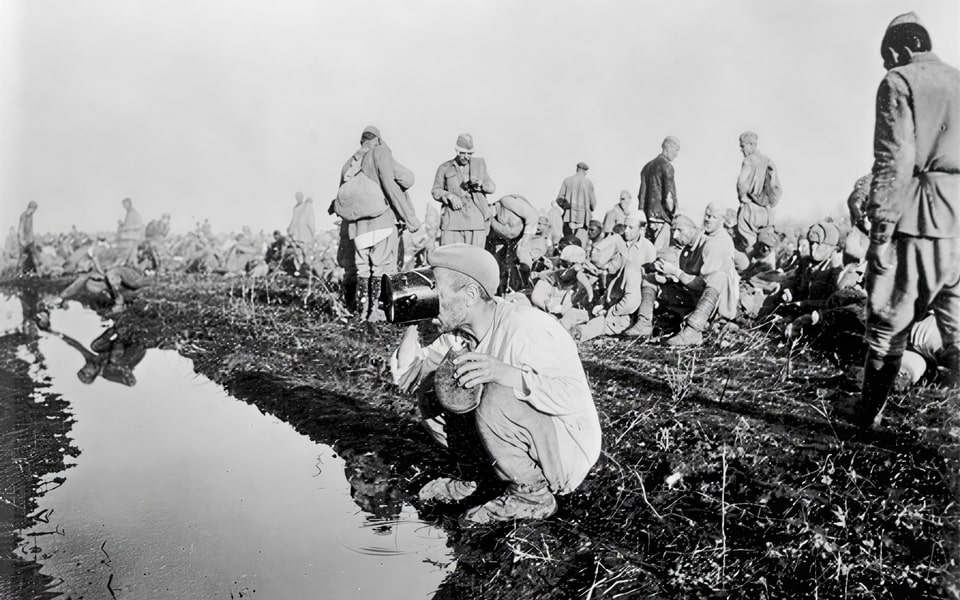
Autumn 1941 saw heart-rending scenes of mass movement of tens of thousands of Soviet POWs to the rear, and the road to stationary camps (Stalags) could take weeks, while army assembly points and temporary camps (Dulags) became places of mass death. The constant movement of assembly points, dulags, and stalags, and the change in their subordination depending on the situation on the front of military operations, made the lives of Soviet POWs even more vulnerable. Late September and early October 1941 saw daily marches of prisoners, particularly in the Kyiv region. Most often, Red Army soldiers were captured wounded after heavy fighting, long wanderings in the environment, when they did not receive food for several days, and did not have a normal night’s sleep. Already exhausted, once in captivity, they were subjected to additional physical and moral abuse. The war diary of a German artilleryman, Eugen Zabalt, mentioned how around fifty German soldiers guarded and escorted 18,000 Soviet POWs from the area of Boryspil airport to Brovary on September 23-24. He described how exhausted prisoners fell on the ground and drank dirty water from rain puddles, and Zabalt hoped that he and his fellow Germans would never have to go through something like this.
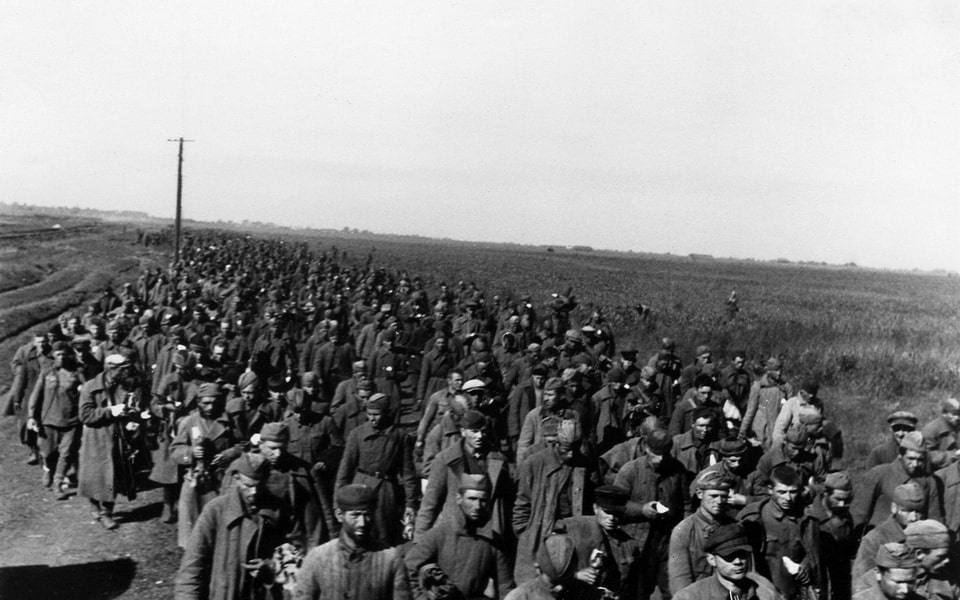
A Ukrainian soldier from Kyiv later described his experience of the first stage of captivity as more worth than combat. He spent days without food or water, on the bare ground under the open sky in a military tunic. With a clouded consciousness, he walked mechanically for dozens of kilometers, trying not to fall on the ground. Some assembly points and Dulags were so overcrowded that the number of prisoners driven in soon became larger than the population of the nearest town. For example, Dulag 172, which changed locations several times in 1941, once stationed near the Ukrainian city of Zviahel (Novohrad-Volynskyi at the time), contained 8,000 captured soldiers, in contrast to 12,000 pre-war civil population nearby. The length of the columns of escorted prisoners near Kyiv amounted to several kilometers, and their movement often created traffic jams for hours for the movement of Germans. The German escorting guards indifferently and routinely shot all exhausted prisoners, who could not walk anymore, and the bodies sometimes lay on the streets for days. They also forbade prisoners from receiving help, water, and food from the local population, particularly from women, who desperately tried to help the exhausted Soviet soldiers. Guards beat them with sticks and rubber batons or shot at the air, sometimes at the prisoners. The Germans were not the only occupying nation that acted like this, since the Hungarian units showed a merciless attitude toward the POWs, too.
In total, during the occupation between 1941 and 1944, the Germans set up 367 camps in Ukraine, of which two were concentration camps (Janowska near Lviv and Syrets), 15 forced labour camps, 7 correctional labour camps, 78 correctional abd labor camps for Jews, 23 transit camps, and 242 prisoners of war camps.
SETTING UP THE DARNYTSIA POW CAMP: KIEW-OST AND KIEW-DARNIZA — 1.5 KM² FOR 300,000 SOVIET PRISONERS
In the German armed forces, the Supreme Command of the Armed Forces of Germany (Oberkommando der Wehrmacht, OKW) and the Main Command of the Ground Forces (Oberkommando des Heeres, OKH), and later the SS, dealt with the affairs of prisoners of war. In the area of responsibility of the OKW, issues of prisoners of war were dealt with by the General Administration of the Wehrmacht (Allgemeine Wehrmacht – Amtes, AWA) under the command of General Hermann Reinecke (1888-1973). It included the Prisoner of War Department (Abteilung Kriegsgefangene, Abt. Kgf.), which was headed by Colonel Hans-Joachim Breyer until the beginning of 1942. The competence of the OKW included prisoner-of-war camps located on the territory of the Reich, the General Government, the Reichskommissariats ‘Ukraine’ and ‘Ostland’, in Norway, Belgium, and France. OKH was responsible for the POW camps in the territories that included the operational areas, that is, the combat zone, together with the rear zone adjacent to it.
In the occupied territories, in the areas of civil administration, the system of camps for prisoners of war was headed by the territorial commanders of the German armed forces (Wehrmachtbefehlshaber), who were subordinate to the chiefs of prisoners of war (Kommandeure der Kriegsgefangenen), who in turn were subordinate to the commandants of the Stalags. In the Reichskommissariat ‘Ukraine’, the system of prisoner-of-war camps was subordinate to the Commander of the Wehrmacht in Ukraine, Lieutenant General Karl Kitzinger (1886-1962). He was the chief of prisoners of war in Ukraine from July 1941 to November 22, 1942, and his successor, Kurt Wolff (1886-1971), obtained the position from November 23, 1942, until December 15, 1943. Summing up, the POW management system was duplicative in nature. How the OKW and OKH actually interacted with each other in matters of prisoners of war is difficult to answer unequivocally. It is not entirely clear to what extent the POW Department of the Ukrainian Armed Forces had the formal right to give instructions to the Quartermaster General of the Ground Forces in the front-line zone.
Getting closer to the Darnytsia, this district of Kyiv became a separate closed area in the city in the first days of occupation. Access here from the right bank of the Dnipro was possible only with a special pass, and moving outside of the area was strictly forbidden. Such security measures were aimed at granting control over the area, which was designated for the creation of one of the most notorious POW camps in human history. The Darnytsia camp for POWs was set up just two days after German units entered Kyiv from the West, and the same day, September 21, 1941, the last organized Soviet units escaped from the left-bank part of Kyiv. In the German sources, it was known as Kriegsgefangenenlager «KIEW-OST» (Prisoner of war camp Kyiv East). The term Kriegsgefangenenlager was a general term for the German POW camps; thus, in the first months of its existence, the camp in Darnytsia was neither a Dulag (transit camp) nor a Stalag (stationary camp) yet, which gives one of the explanations regarding the inhumane conditions here in the Autumn of 1941.
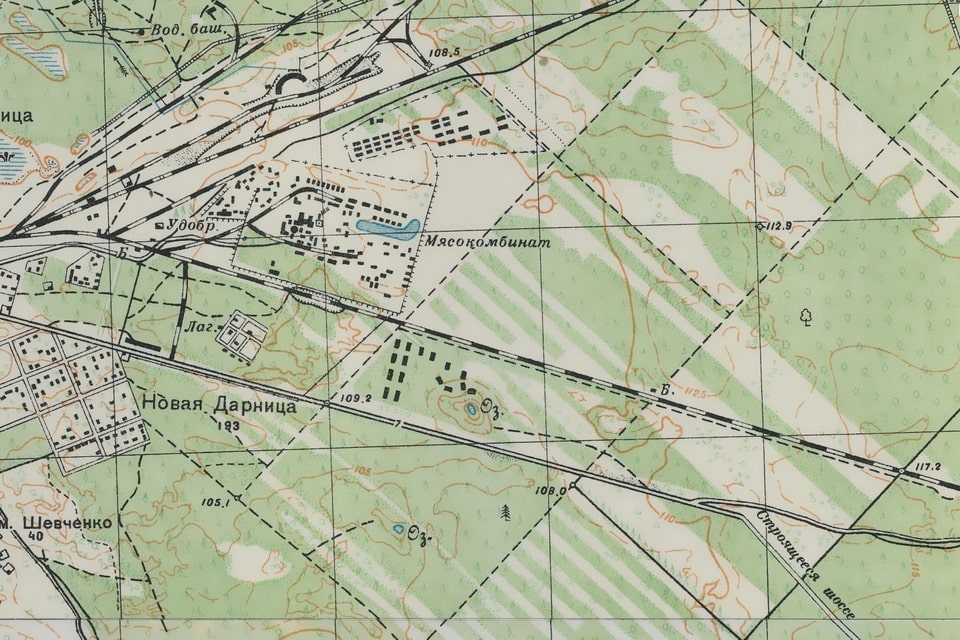
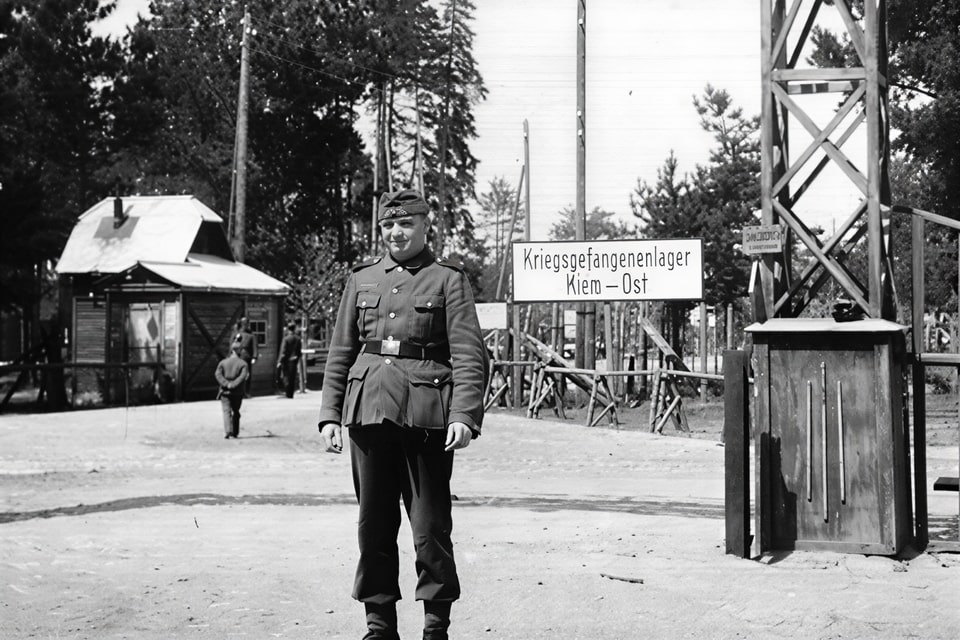
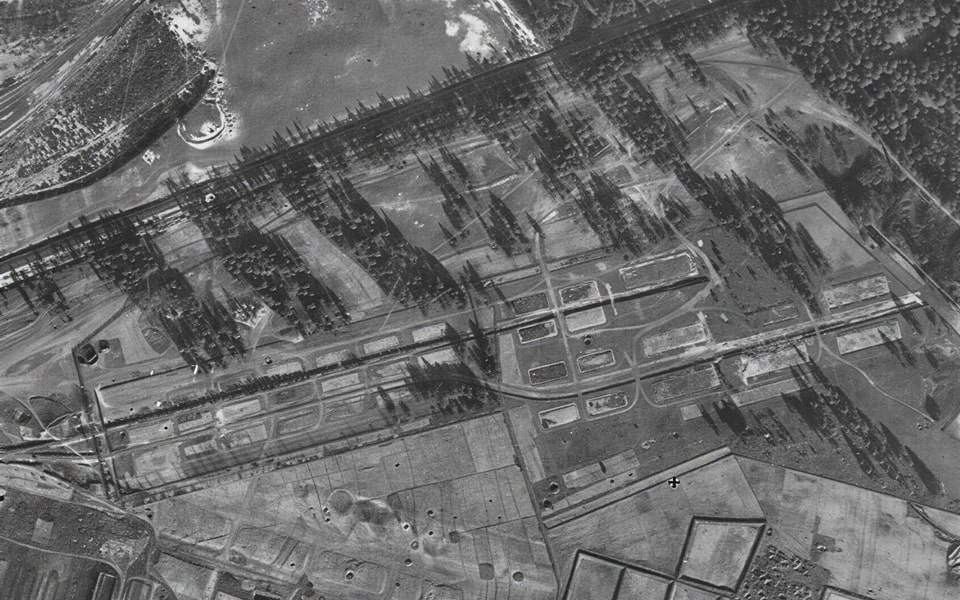
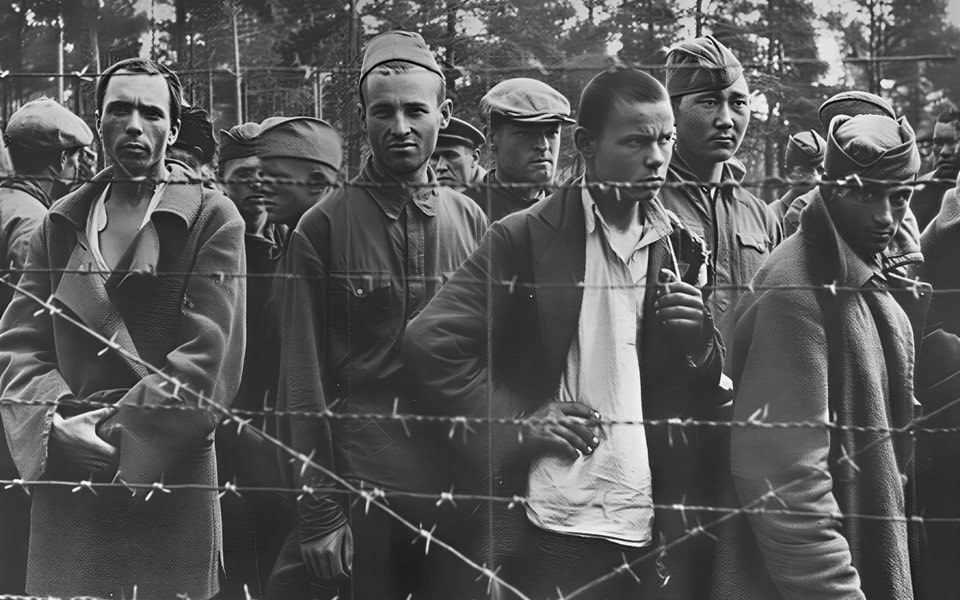
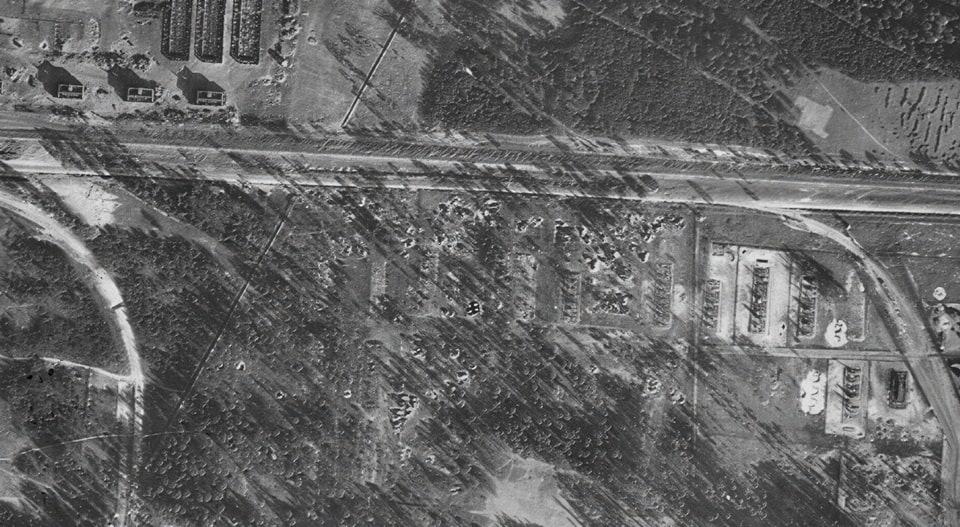
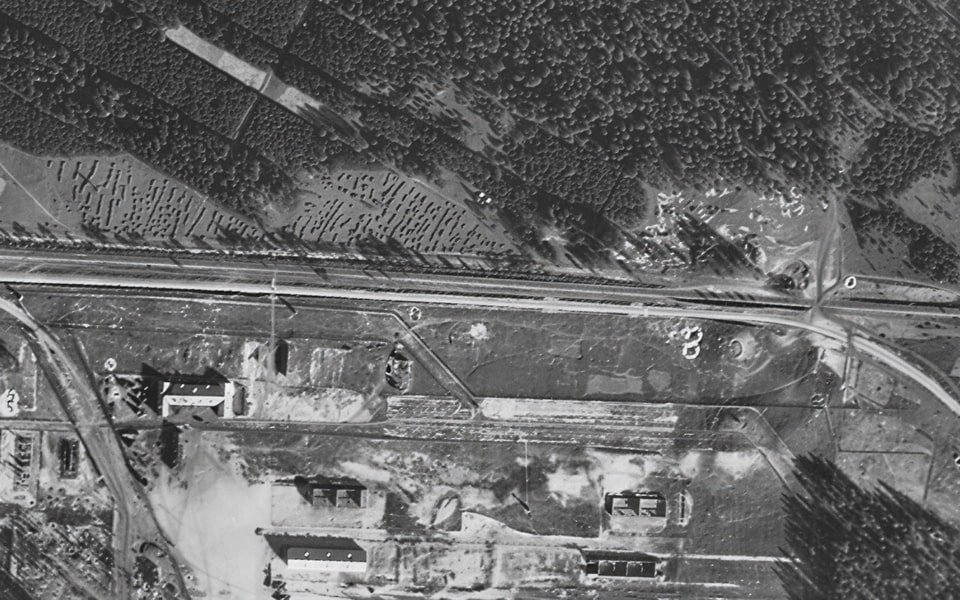
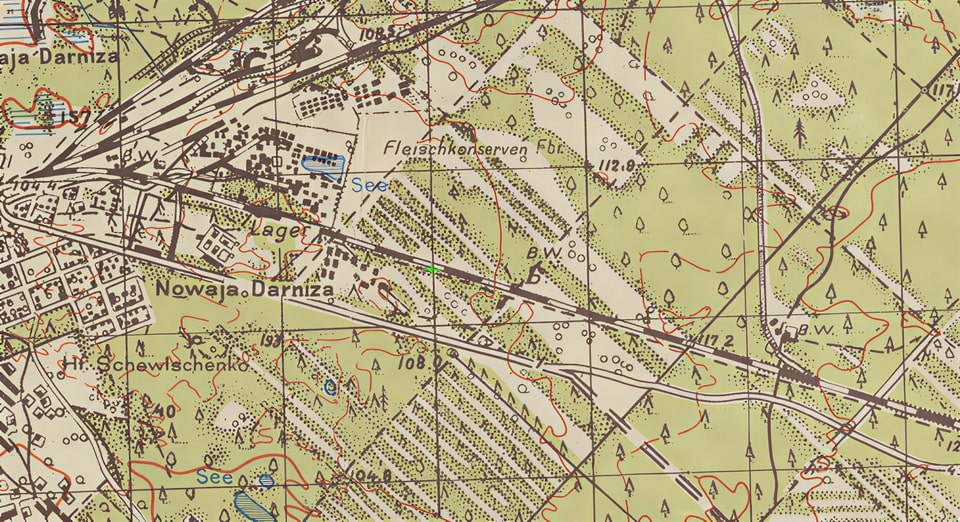
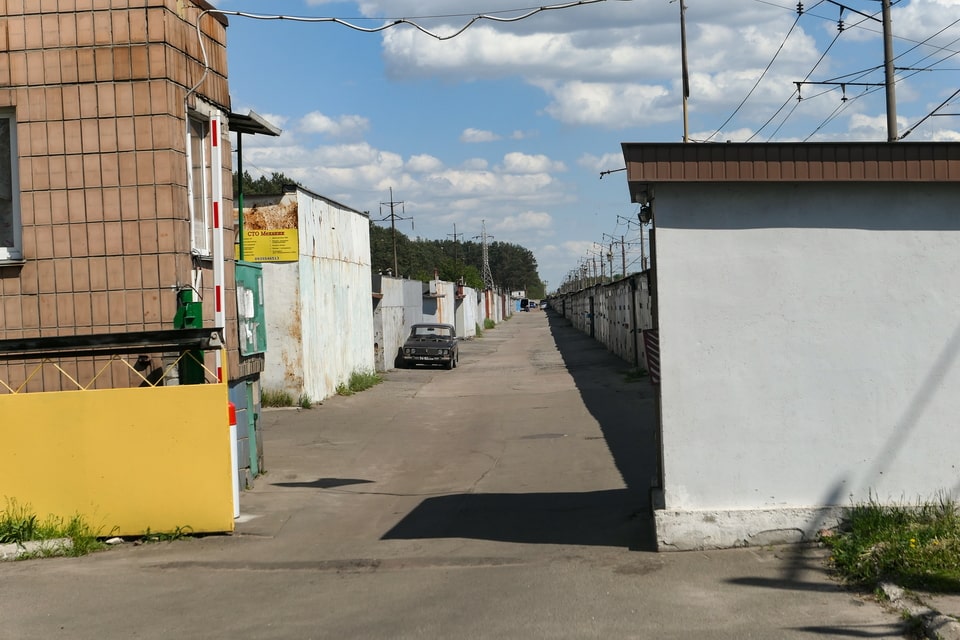
In the first stage of its existence, the Darnytsia camp had a primitive security system, since the Germans fenced off the camp by simply stringing barbed wire right along the pine trees in the forest, and only with time, a fully-fledged 3-row barbed wire fence 3 meters high was added. The area was located approximately 2.5 kilometers from the nearest residential area, a worker’s settlement called ‘New Darnytsia’. From the North side, it bordered the forest area and the railway line between Kyiv and Poltava, along with a huge meat-processing plant to the north-west. The forest area is also bordered by the east and south, as well as a large Armored vehicle repair base No. 7 (built in 1935). When Kyiv was liberated in November 1943, it became obvious that the Darnytsia camp consisted of two camps, ot more precisely, there were two areas, which, anyway, were a part of a large camp complex. I emphasize this matter, since the claim that there were two separate Darnytsia camps is at least inaccurate. The giant overall area of approximately 1.5 square kilometers (1.5 kilometers in length and 1 in width) was divided into two large areas, each of which, with time, was further partitioned into smaller zones.
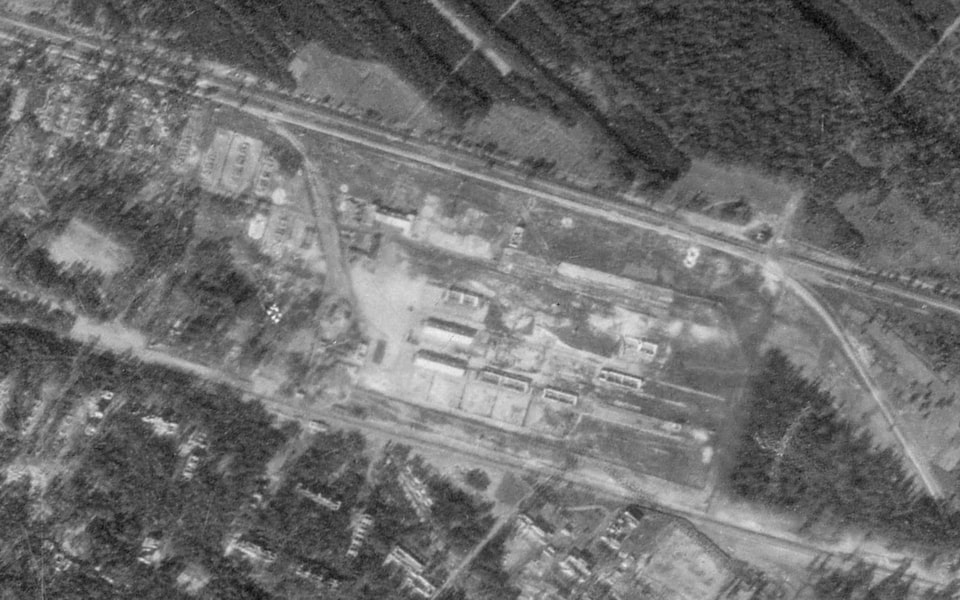
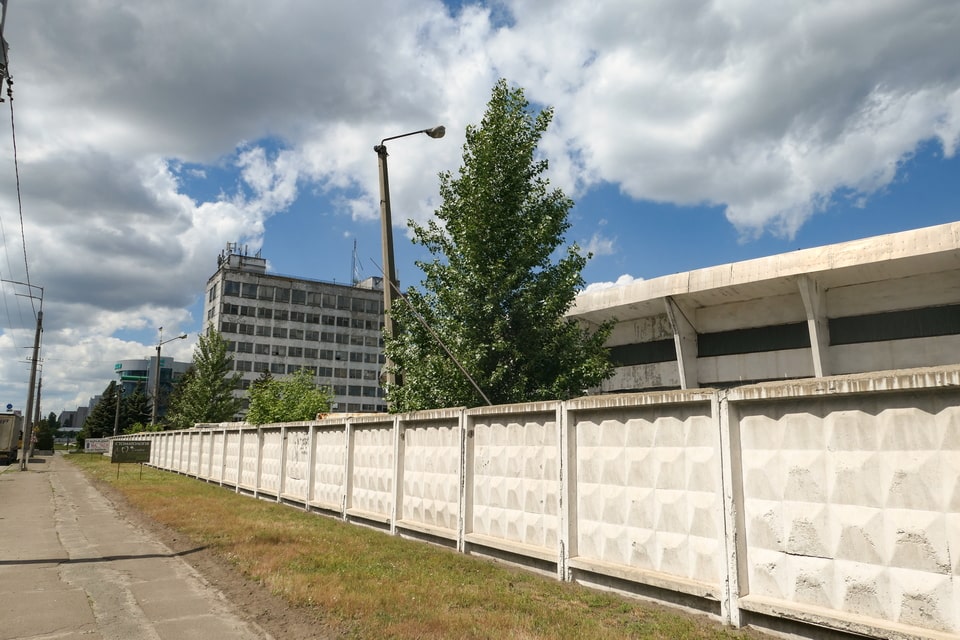
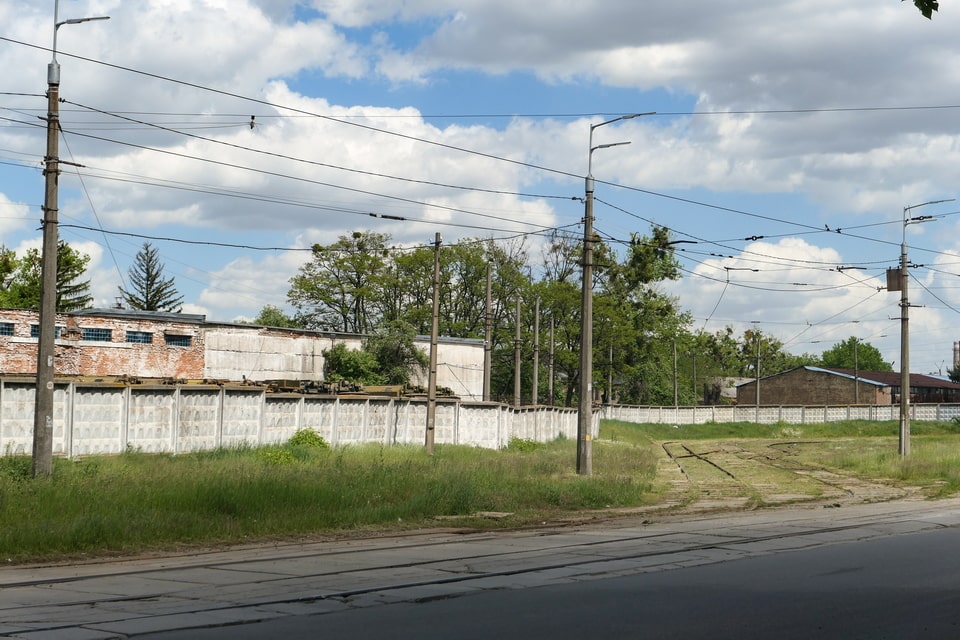
The first cordoned area was set up on the territory of the former military warehouses, probably from the times of the 19th century, which in 1941 had already been heavily absorbed by the forest. The Germans made use of several remaining brick barracks and a wooden ramp, but prisoners brought here spent days and nights open-air, vulnerable to the Autumn weather. At this initial period, the Darnytsia barbed wire enclosure had two rows, which were later added by another row, as well as by guarding towers. Further on, the camp was enlarged to the east and occupied a part of the area of Armored vehicle repair base No. 7, which had a few more brick constructions on its territory, which had been previously used to store vehicles. The idea was to create a separate cordoned area for Red Army officers and political officers with more centralized covered buildings, but the area turned into another zone of death. There was a so-called infirmary, where the wounded and sick were kept. The sick and wounded had no care, were not bandaged, lay with bandages soaked in pus, worms were bred in the wounds, and they did not receive linen or other help necessary for sick people. The food was terrible. There was no medical care. The natural consequence of such a situation was mass mortality.
In October 1941, the camp saw its densest population with up to 20,000 exhausted prisoners, who were held here without cover, medical supplies, water, and food for days, which resulted in the high daily death toll and a spread of diseases. At this period, Kriegsgefangenenlager «KIEW-OST» was not yet a fully-fledged stationary camp, and its primary intended purpose was to detain thousands of Soviet POWs until they died from hunger and cold or were transferred to other camps in the occupied territories. One report from December 30, 1941, signed by Erich Friderici (1885-1967), the commander of Army Group South Rear Area, reported about the transfer of 1,348 prisoners from Piriatyn (Poltava region of Ukraine) to Darnytsia camp in Kyiv. Starting from January 1942, the camp was officially regarded as ‘Stalag 339 Kiew-Darniza’ in German. The camp never saw the influx of POWs on the scale of the Autumn of 1941. In February 1942, it held 8,300 POWs, and the number decreased to 5,500 in June, reached a peak of 14,300 in October, and 10,200 in December 1942.
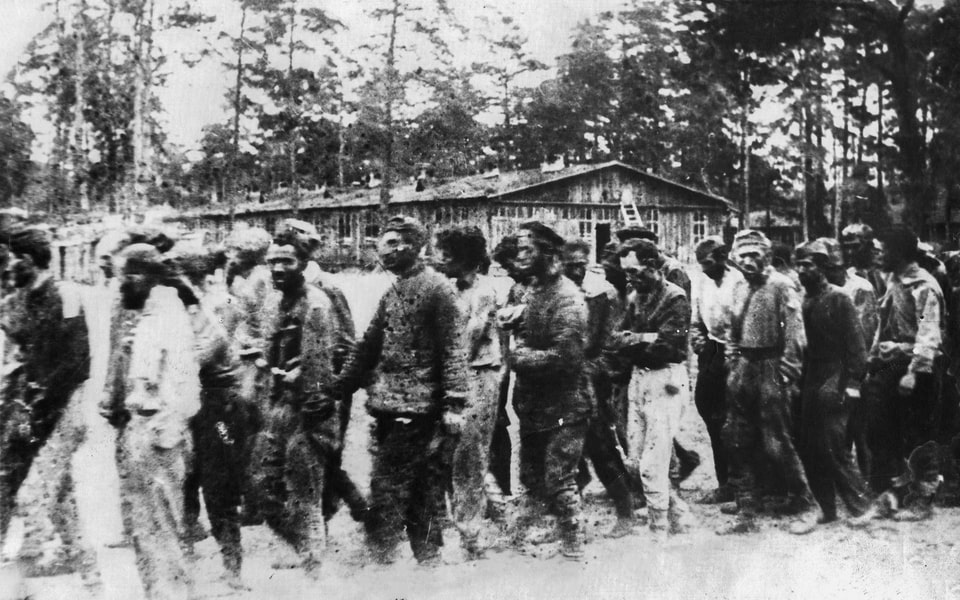
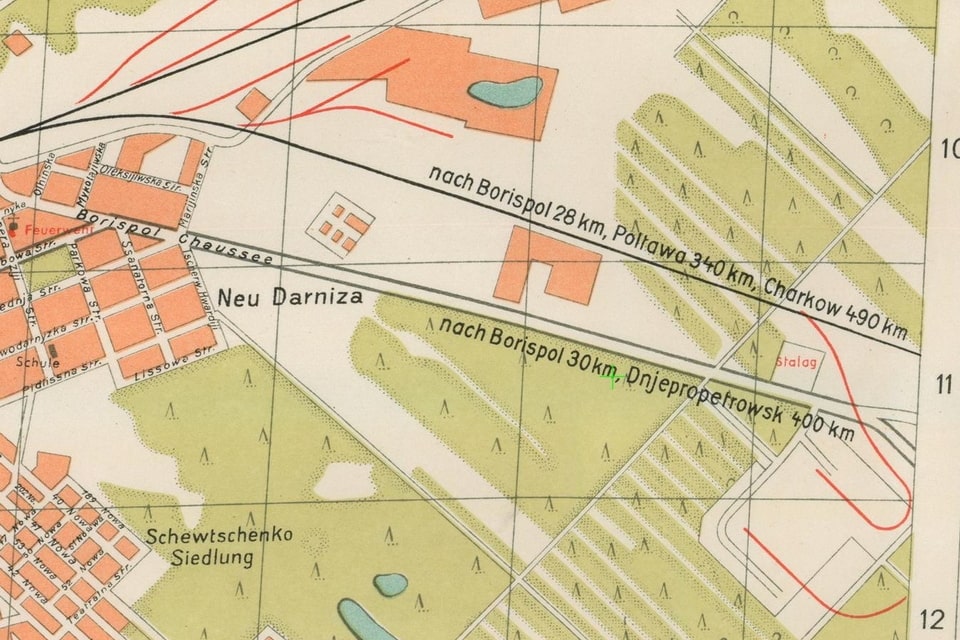
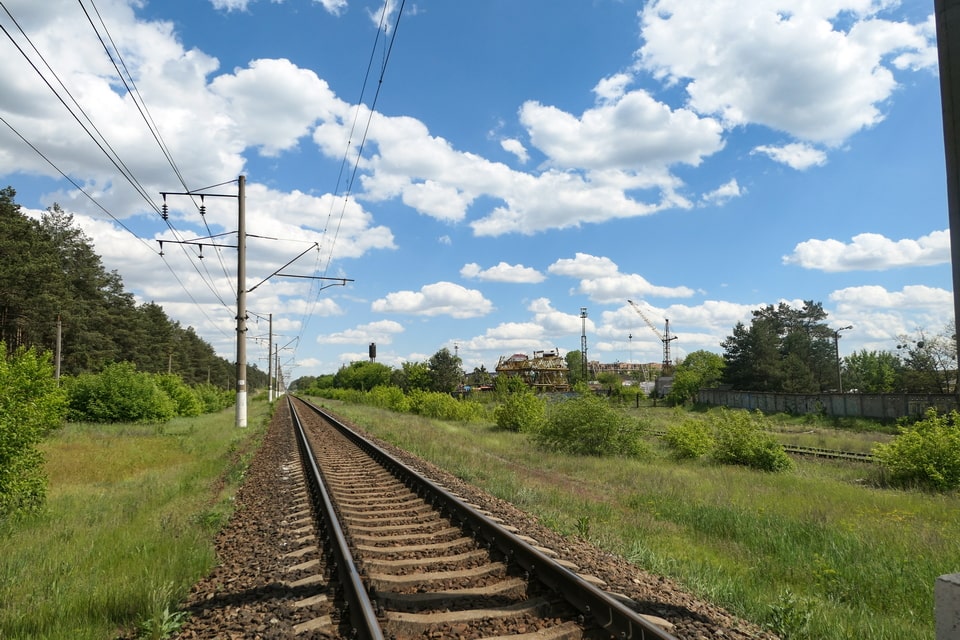
In 1942, the camp territory was further subdivided into smaller areas. In 1943, Stalag 339 housed an assembly point for the formation of units of A. Vlasov’s Liberation Army. In June 1943, the camp with 10,000 inmates was transferred to the Ukrainian town of Berdychiv in the Zhytomyr region. The final cessation of the camp’s existence was dated September 28, 1943, thus its operation lasted for 737 days, and n the course of these two years, up to 300,000 Soviet prisoners of war and civilians went through this deadly site in the woods of Darnytsia district in Kyiv, of which 70,000 died here from numerous reasons, from cold and epidemics, to orchestrated starvation, death through hard labor, and shootings in the forrest. The Darnytsia camp was one of the three camps of this kind in Kyiv in 1941-1943, but neither the notorious camp on Kerosynna Street (modern Sholudenka), nor the deadly Syrets concentration camp, killed as many people as the Germans killed in Darnytsia. None of the remaining two existed for such a prolonged period of time, starting from the first days of occupation and until September 1943. When Stalag 339 moved to Berdychiv in June 1943, for two months, a staff of Stalag 384 moved here until leaving for Bila Tserka in late July.
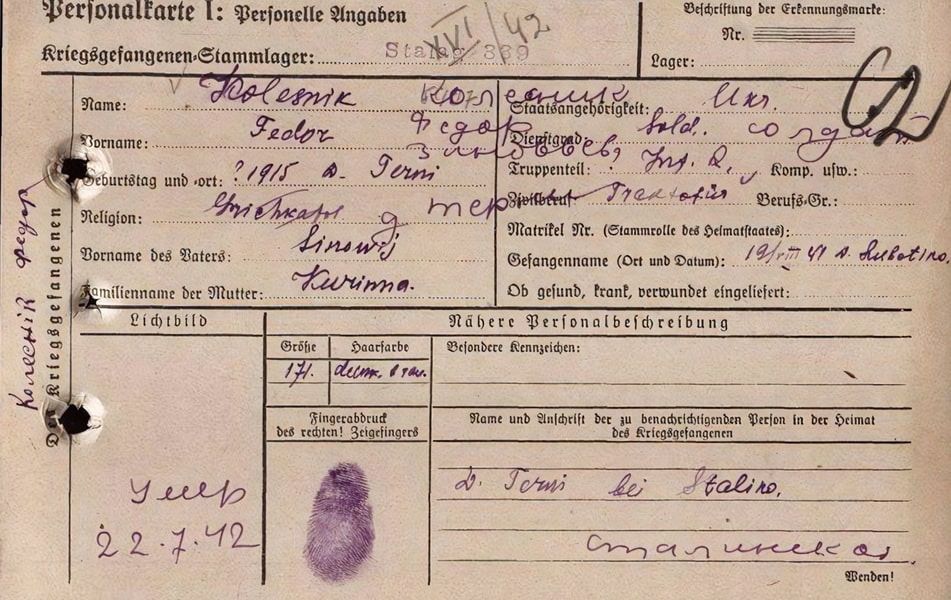
THE DAILY LIFE AND DEATH IN STALAG 339 (DARNYTSIA): STARVATION, DISEASE, AND MASS MORTALITY AMONG SOVIET POWs
As I have stated above regarding the areas of responsibility between OKW and OKH for the POW camps, it was primarily the Wehrmacht, which ran facilities such as Darnytsia camp, not the SS units like SS-Totenkopfverbände (Death’s Head units), in contrast to the death empire in the concentration and death camps. The existence of poorly administered camps for Soviet prisoners of war, which resulted in the death of more than 3 million of them, lies with the German army and serves as another reminder about the false notion of the so-called ‘Clean Wehrmacht’. The camp regime in army collection points, Dulags, and Stalags was established based on instructional materials and directives developed by the Wehrmacht. The order became a part of a more widely established system of reducing (by extermination) the population of the occupied territories in the East. It was believed that the principles of the Geneva (1929) Conventions were not applicable in these territories. The Nazi leadership argued that the USSR had not signed the 1929 Geneva Convention on the Treatment of Prisoners of War; thus, in the Nazi worldview, Germany was not obliged to apply it to Soviet prisoners. At the same time, the former Romanov Empire signed the 1899 and 1907 Hague Conventions (widely applicable during the First World War), which provided basic norms for the protection of civilians and prisoners of war – but they were deliberately ignored by the Wehrmacht in 1941-1945.
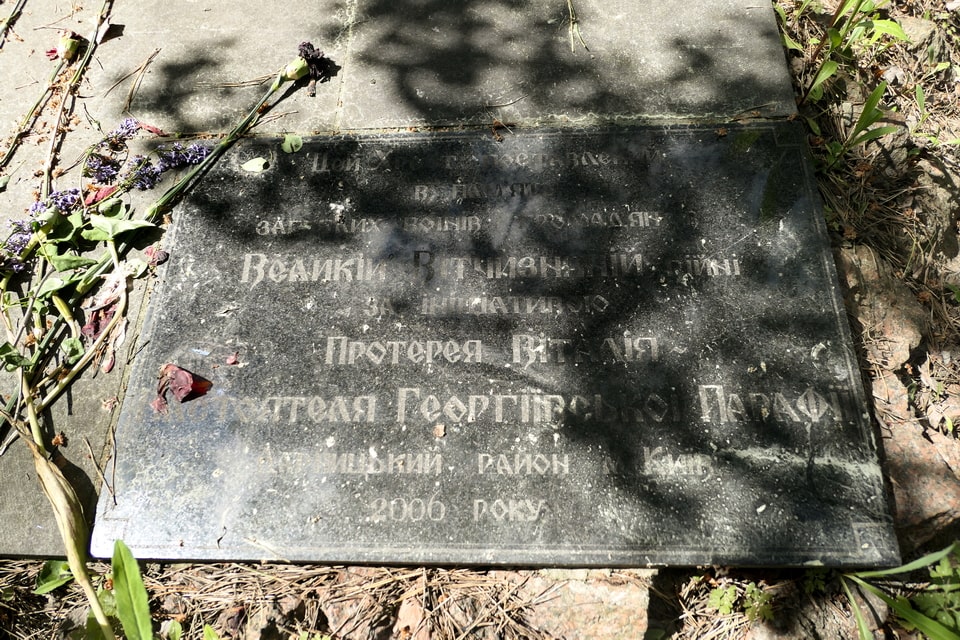
The Stalag 339 camp administration was comprised exclusively of the Wehrmacht officers, particularly its two commanding officers, Major Schaller and, after November 1942, Oberst Schmitt. Darnytsia camp’s guards were men from the so-called ‘Landesschützen-Bataillon 778’. The role of the ‘regional defense battalions’ is often overlooked in the context of the Nazi occupational policy in the occupied territories. In 1941-1944, ‘Landesschützen-Bataillon’ units were widely used in the East to secure the Wehrmacht’s rear areas, including in Ukraine. They were usually assigned to secure railway depots, bridges, roads, and headquarters, but also performed as guards at the POW camps and escorted prisoners. These units were generally comprised of men deemed unfit for an active front-line service, often 40-50 years old, including former First World War veterans, mixed with young recruits awaiting further transfer to combat units. The men from the ‘regional defense battalions’ obtained minimal combat training and possessed outdated equipment. At the same time, their involvement in guarding POW camps, such as at Darnytsia, with full harshness resulted in high mortality, thus making them direct executioners of the genocidal police against Soviet POWs.
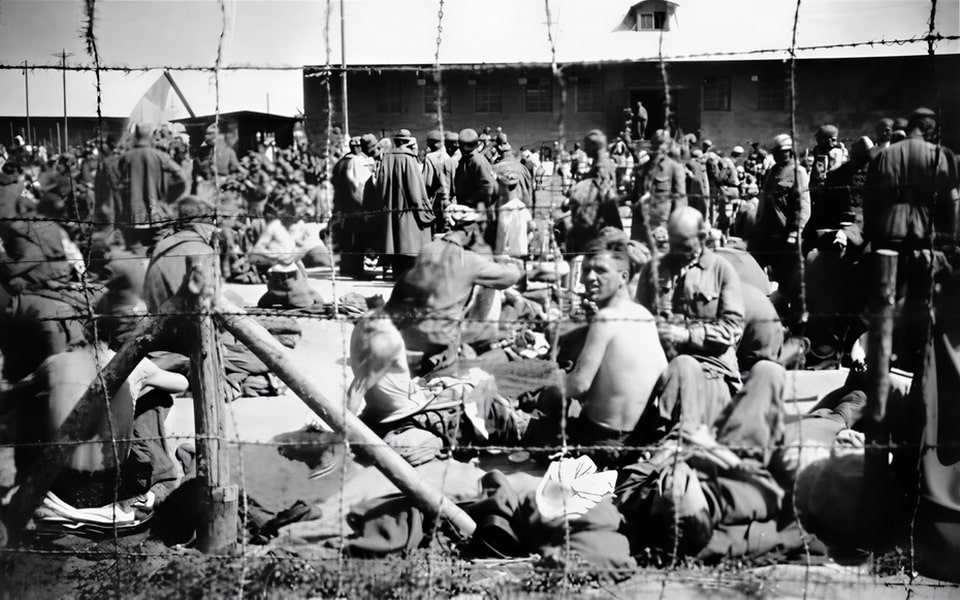
Landesschützen-Bataillon 778 was formed on October 1, 1940, in Military District XII (Wiesbaden) and comprised three companies. After the start of Operation Barbarossa, the battalion was sent to the East and put under the command of Wehrmachtbefehlshaber Ostland (Wehrmacht Commander Ostland), and then parts of it were transferred to Ukraine. At Darnytsia, two of its companies, the 2nd and 3rd, were involved in guarding the camp. The camp administration also included security and military intelligence units. Apart from German guards from the Wehrmacht, a significant role in the day-to-day activity of Stalag 339 was assigned to the so-called ‘Hilfsschutzmannschaft’ (Auxiliary protection teams) or simply Hischu, in other words, a camp police, created at the request of the German authorities. Such formations were stipulated as early as September 8, 1941, in a document issued by the above-mentioned head of the General Office of the Armed Forces, Hermann Reinecke. According to the text, ‘’in camps and large work teams, it was necessary to create a police force from reliable Soviet prisoners of war, which should be used by the commandant to restore order and maintain discipline. Although the policemen from the ‘Hilfsschutzmannschaft’ remained formally prisoners of war, they were actually in slightly better conditions: they were better fed, provided with clothing, and lived in separate rooms in the Stalag. In addition to security and disciplinary duties, the men from the camp police were often the direct executors of various punishments for prisoners, including the death penalty. Service personnel (fitters, electricians, drivers, cooks, etc.) for the Stalag 339 were recruited from the local civilian population.
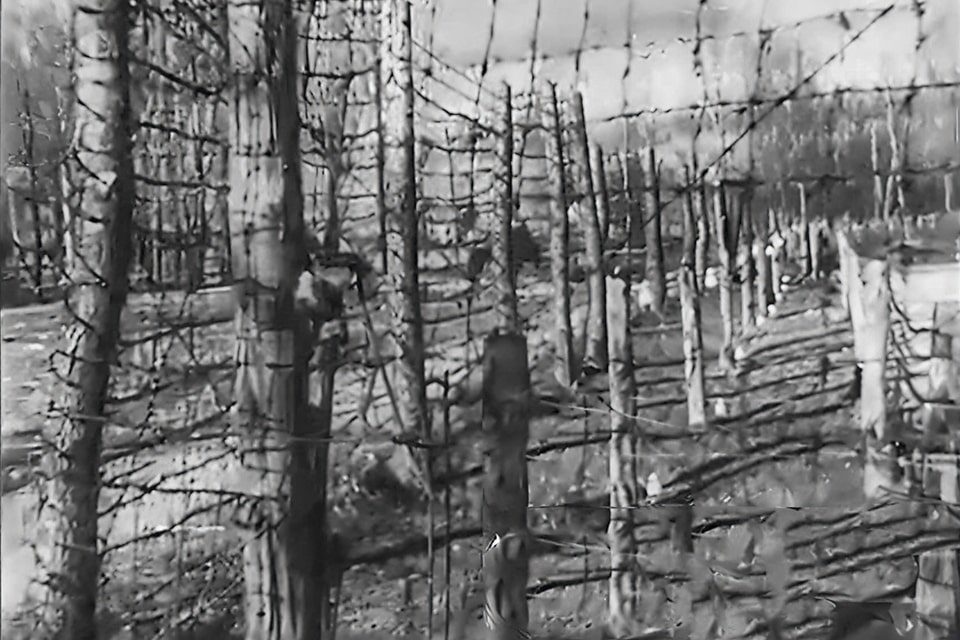
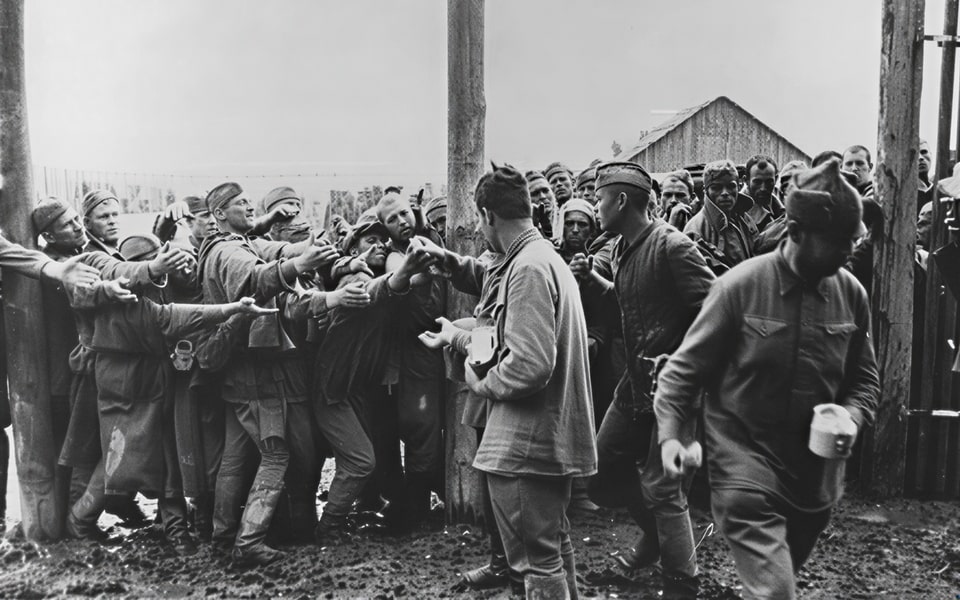
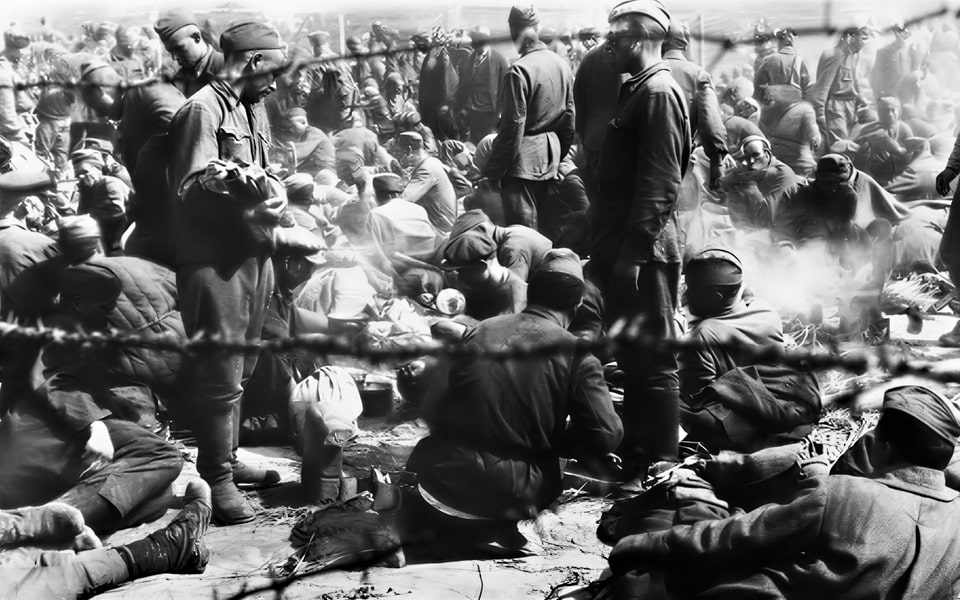
Even though the lack of shelter in the Autumn of 1941 for tens of thousands of POWs in Darnytsia camp was an act of disastrous neglect toward the prisoners of war, one topic dominates the eyewitness accounts of those who survived: the lack of food. In the first two months of the camp’s existence, the Germans distributed no food to the exhausted prisoners except for balanda, which was made from buckwheat and millet bran. Regarding the number of prisoners cramped here, up to 20,000 in October-November 1941, many among the POWs did not have access even to that thin broth, itself completely inadequate for survival. The prisoners had no access to the drinking water and survived thanks to the Autumn rains. Over time, the food distribution improved somewhat, with vegetables and so-called bread included in the diet, but it was still not enough calories for living. Such a ration not only made prisoners unable to work, but also led to mass deaths from hunger and related diseases.
Wehmarcht’s reaction to the mass starvation of the Soviet POWs was sinister and completely inadequate, forged by the long-formed attitude to the enemy in the East as subhumans. On October 12, 1941, the infamous German commander of the 6th Army, Generalfeldmarschall Walter von Reichenau (1884-1942), issued and distributed an order ‘Concerning the conduct of the troops in the eastern territories’. Apart from speaking about the harsh treatment of Jews and suppressing mercilessly any resistance, Reichenau also stated that feeding prisoners of war and civilians was a ‘misconstrued humanity’, and that the German soldier must not give supplies to the enemy. The opposite reaction came from Ukrainian civilians, particularly women from Kyiv. On October 1, 1941, an appeal was sent from ‘all women of Kyiv’ to the local authorities, asking permission to organize the feeding of the prisoners in Darnytsia. In this letter, the prisoners of war were called ‘essential laborers’ needed for the creation of a new state.
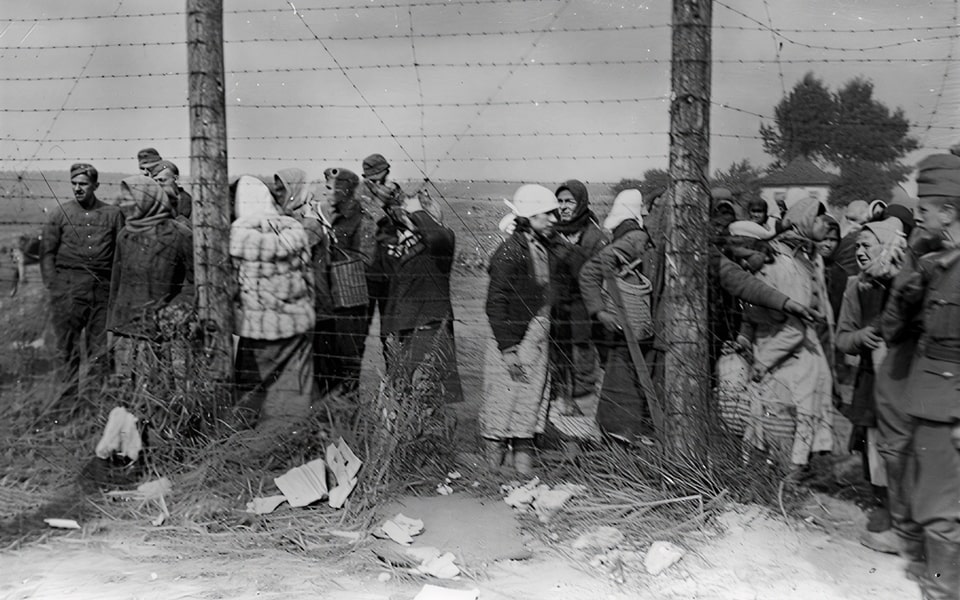
Hundreds of Ukrainian women made their way to the forest of Darnytsia. Some just wanted to help the incarnated soldiers, but hundreds of them were also eager to find their husbands, fathers, brothers, and sons. At the same time, the roads around Kyiv were still full of Soviet POWs, who were escorted between the collecting points and camps, and they now witnessed columns of women with bags and improvised bundles of supplies. When reaching the Darnytsia enclosure, women begged German guards to release their men, and in the initial phase, some POWs were actually set free from the camp, especially those who were the locals, from the left bank part of Kyiv. Later on, such releases stopped, as well as the flow of women to the restricted area, but in late September and October, at least some minimum of supplies were brought to the camp. German guards usually took the parcels with food, then took the deliveries to the detached house and unpacked the contents for milk, cheese, meat, and white bread. After realizing this fact, Ukrainian women brought mainly potatoes, carrots, and whole-grain rye bread, thus improving the chances that the deliveries would be given to the prisoners of war. When women tried to throw parcels against the fence, guards threatened them and fired in the air. Some prisoners managed to pass a note to the women with their names and asked them to find their wives in Kyiv or even further.
Of course, women tried to find their men among the prisoners, but since the guards were not motivated to help them search among thousands of POWs, women left their parcels without a specific addressee anyway. Even if a woman succeeded in finding her husband or son, the Germans never gave a parcel to him directly. More than that, the deliveries that passed through the looting were not incorporated into the daily ration of prisoners, but the guards often just threw food on the ground and made fun of the exhausted prisoners, who fought for dribs and drabs. The next level of such abuse was not allowing poor men to take food from the ground and shooting those who obeyed. Similar to the Nazi concentration camps, the victims of the Darnytsia and many other POW camps were exposed to conscious dehumanization by the camp’s administration and guards. Some prisoners realized that at least some calories could be gained at the rubbish pit near the German kitchen, and they searched it for potato husks, onion peels, and moldy bread.
Even after the first months of its existence, when the situation in the Darnytsia camp slightly improved, the newly arrived could not get any calories for days, which resulted in the death of hundreds of prisoners daily. It should also come as no surprise that the captured Soviet soldiers did not have any kitchenware, even spoons, and had to eat with their hands. More than that, the newly arrived were systematically robbed of their belongings, especially after November 1941. The situation with food was so desperate that the prisoners soon ate all the grass and greenery that they could reach inside the camp. The so-called infirmary, which was set up, gave neither additional rations nor any medical care to the exhausted and sick prisoners. There were no sheets or pillows in this building, and sick men lay on the cold floor and died en masse. In later autumn, the Germans enlarged the camp territory and set up barracks for the prisoners, which were all overcrowded, and soon Darnytsia inevitably faced epidemics, and now hungry prisoners died not only from exhaustion and cold, but from a spread of lethal diseases and common sicknesses, which were not dangerous in general circumstances, but often lethal in the Nazi POW camp.
Similar to other ows camps set up in the occupied territories of the Soviet Union and in the Nazi concentration camps, the most severe danger of epidemic came from typhus, also often regarded as the ‘starvation disease’. The Wehrmacht leadership, which neglected an adequate police of millions of captured enemy soldiers, bore primary responsibility for the epidemics in the camps such as Stalag 339 in Darnytsia. The German army ignored the provisions of international law, which guaranteed medical care and food to the prisoners of war, but in the autumn of 1941, they became very concerned with the prospect of massive epidemics of typhus, which could endanger the Wehrmacht. As early as July 1941, the OKG issued an order regarding the necessity of setting up infirmaries in all camps, but we have already seen how such hospitals actually functioned. At least on paper, the Soviet prisoners of war were to get vaccination against typhoid fever and smallpox, which never materialized on an adequate scale.
In October 1941, the epidemics of typhus broke out first in the camps and ghettos in the General government, and by the end of the year, it came to almost all camps in the occupied territories in the East, including the Darnytsia camp. The typhus epidemic even spread into the Wehrmacht, but there, the military doctors contained a relatively small mortality level, which was the opposite in the war camps. At the same time, even among the POWs, the number of deaths was much lower than that of those who died of malnutrition, cold, and other diseases. When the number of prisoners decreased due to a mass death from these reasons, the epidemics of typhus also came under control in the summer of 1942.
While in the first two months of its existence, the Darnytsia camp, Kriegsgefangenenlager «KIEW-OST» at the time, played only a function of concentrating and isolating captured Soviet prisoners of war, with time it functioned more like a labor camp, though with an unproportionally high mortality rate. The inmates from Stalag 339 were used for various labor assignments inside the perimeter: building barracks, digging trenches, cutting down trees, unloading, and cooking. The other specter of this role for POWs was working assignments outside the camp, which soon became a ghostly way for survival. Regardless of the time of the year or weather conditions, a day in the Darnytsia camp started at 6 a.m. with hitting the rail. The inmates got their lean ration and presented themselves at the roll call in front of the barracks and waited for an assignment to a working unit. Similar to concentration camps such as Mauthausen, Dachau, and others, the roll-call procedure could last hours. These labor units never returned to the camp one and all, since the guards mercilessly killed those POWs who fell exhausted or simply did not work hard enough in the eyes of the guards. At the same time, getting a work assignment meant not only work and ration, but also a chance to escape from Darnytsia, which was easier outside the camp. Most escapes from the camp happened during labor assignments in the city.
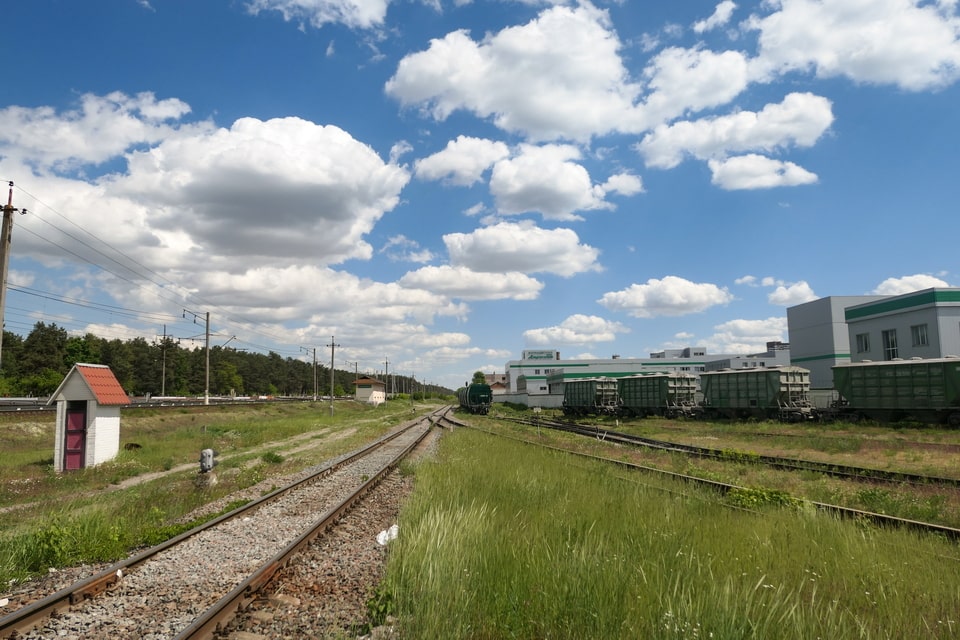
The closer area of work included Darnytsia district itself, where the inmates were assigned to work at the nearby railway station to the North, used to take care of the railway lines, in labor battalions in the production facilities, and for lumber harvest. On rare occasions, the inmates were taken for work in the surrounding villages in the suburb of Kyiv, but were always taken back to the Stalag in the evening. As early as November 1941, two hundred POWs from the Darnytsia camp were assigned to work on the restoration of the bridge over the Dnipro River (which had been blown up by the retreating Red Army on September 19, 1941), and this time they were placed in an improvised camp next to the site. Later on, they were kept on the territory of the ancient Vydubychi Monastery on the slopes of the right bank of the river in front of the Darnytsia bridge. This temporary, small labor camp was unique, since it had its own commanding officer and guards. Another labor unit, which worked on the same bridge, was stationed on the opposite side of the river on the left bank.
In the spring of 1942, the POWs from Stalag 339 (renamed in January 1942) were used for clearing the banks of the Dnipro, which was actually a Sisyphean labor for exhausted workers. Another working unit from Stalag 339, which was subordinate to the city commissar of Kyiv, worked in the Sviatoshyn city district on peat (turf) extraction. In the spring of 1942, it was planned to harvest turf for the city economy at the expense of around 800 people, mainly POWs from Darnytsia. One report dated August 19, 1942, included information about two prisoners from Stalag 339 who escaped from the work camp in Sviatoshyn. Probably the most prolonged working destination was at the Kyiv-Petrivka station on the right bank. The first group from Stalag 339 came here as early as January 1942, and then in the spring, another 150 inmates were sent to the site. The prisoners lived in the warehouse and were used in various loading and other physically demanding jobs on the station until August 1943, when they were first sent back to Darnytsia, and then transferred to Bila Tserkva, and later to Vinnytsia. Pows from Stalag 339 were also used by Organisation Todt (OT) on distant locations such as: railway construction in Bucha (the site of the infamous war crimes by russians in 2022), in Pryluky in Chernihiv region, and in Pereiaslav.
MASS EXECUTIONS IN THE DARNYTSIA CAMP (STALAG 339): SD, POLICE UNITS AND THE FOREST KILLING SITES, 1941–1943
Mass man-made hunger, the spread of diseases and epidemics, cold weather, and streets were not the only causes of mass death in the Darnytsia camp. As I mentioned above, the German guards used to kill inmates for entertainment when they were not allowed to touch the food on the ground. The post-war testimonies of the survivors included many occasions when POWs were killed and beaten without any reason. One testimony tells us the story of a German feldwebel named Bitser, who was a skillful hunter and used his rifle to kill the Soviet prisoners of war in Stalag 339. Similar to the infamous scene from Schindler’s List, this German guard in Darnytsia used to perform manhunting. He would shoot at a sparrow, then immediately turn and shoot at the prisoner. Once at the sparrow, once at the prisoner, and he would hit both of them accurately. Such excesses were a part of daily life in the camp, but there was a more centralized approach to the life and death of Soviet POWs.
The killing practice actually started on the way to the camp, since hundreds of captured Soviet soldiers were deliberately killed during the marches between army collective points, Dulags and Stalags, as was stated above. On one occasion, on October 26, 1941, around 200 POWs were killed on their way from Boryspil to Darnytsia (Kriegsgefangenenlager «KIEW-OST»). Upon arrival at the camp, the guards killed those unable to stand or those who looked too exhausted on the spot, without any sorting procedures. According to the information from December 1941, the executions were led by the commandant of the Darnytsia garrison, Hauptmann Prytskovsky, and Ober Kvast. After POWs arrived at the camp, they were exposed to the selection, which was a common practice at all prisoner of war camps in the East. The main aim of this sorting procedure was to identify Soviet political officers and Jews: two of the most vulnerable groups among millions of Soviet POWs who fell into the hands of the Nazi regime, and primary targets in Darnytsia from the first days of its existence.
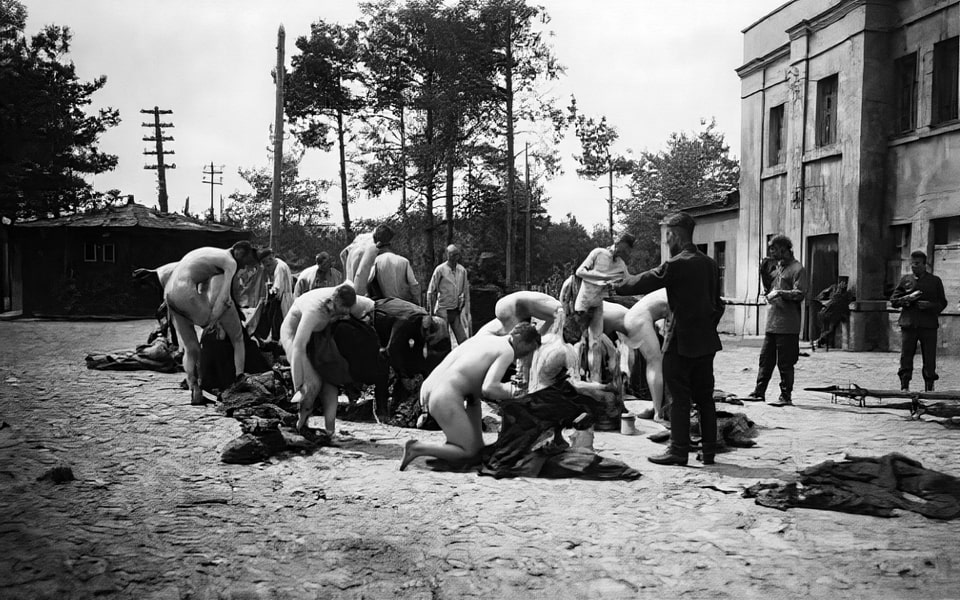
Targeting Soviet political prisoners (commissars) and Jews among the POWs was not accidental or simply discriminatory, but a part of a Nazi agenda in the East. As early as July 17, 1941, the notorious chief of the Reich Security Main Office, Reinhard Heydrich (1904-1942), issued the so-called Operational Order No. 8, in which he explained the guidelines to the SD and Sipo units regarding treating ‘politically intolerable elements’ in the war against the Soviet Union. Among other stipulations, Heydrich stated that all Jews in the prisoner of war camps must be separated and executed, even among the civilians of Jewish origin who happened to be found in those camps. These guidelines were coordinated with the OKW department responsible for the prisoners of war. Later on, an operational order dated October 29, 1941, once again specified the targeted groups among Soviet POWs: political officers and party functioners, intelligentsia, and Jews. Targeting Soviet political officers was specified as early as June 6, 1941, in the notorious Kommissarbefehl (Commisar order) issued by the OKW, which specified the execution of the political officers (commisars) among the prisoners of war. The guidelines to the Wehrmacht stated that these commissars were not soldiers and that international law did not apply to them.
At Darnytsia, camp guards performed a sorting upon the arrival of new prisoners. Regardless of their state, those who were not killed on the spot were divided into groups. Common soldiers were put in the general section of the camp, sometimes further divided into Ukrainians and russians. When the selection revealed Red Army officers, political commissars, and Jews, they were put in a separate area inside the camp and exposed to even harsher treatment than was common. One eyewitness account from 1941 included a horrible scene, when these targeted groups of prisoners were not given any rations at all, not even a ‘balanda’, a thin broth. In several days, they were so desperate with hunger that the men ate grass, plant roots, and their own leather belts and even shoes. Germans watched carefully to prevent other prisoners, themselves on inadequate rations, from throwing food to the Jews and commissars. According to this survivor, two weeks after arrival, some of these poor men were still alive.
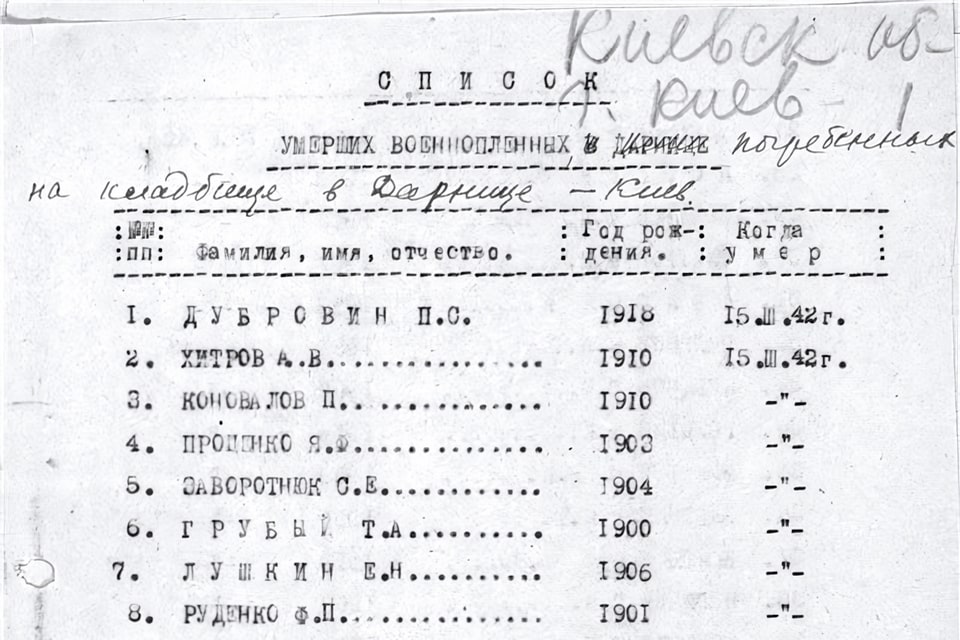
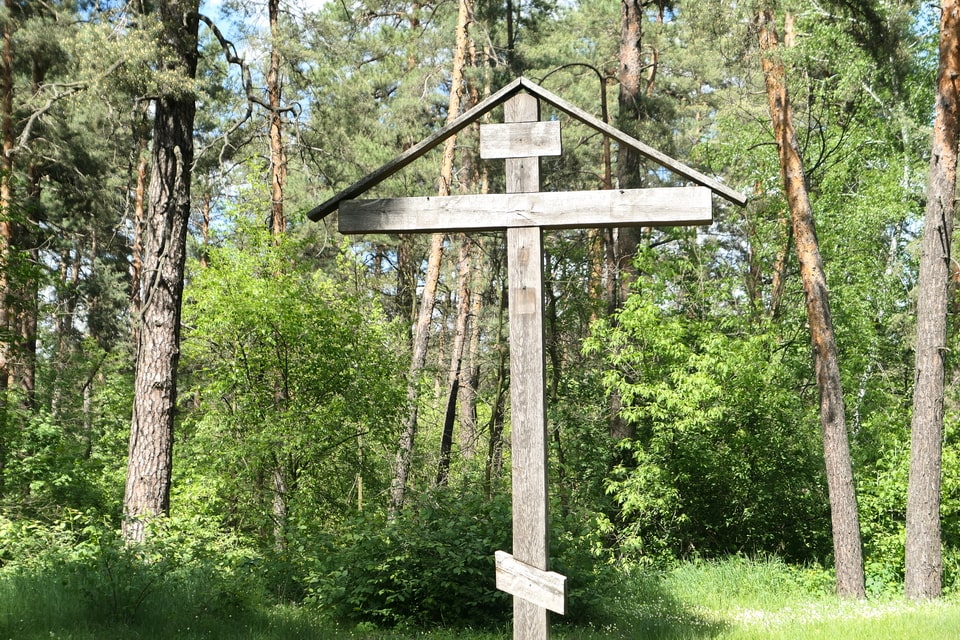
While the above episode was more common for the early period of camp existence in the autumn of 1941, later on, after selection, the targeted groups were usually assigned to Gestapo officers, who frequently visited the camp. It is unclear whether they were permanently stationed in Stalag 339, as the documents and eyewitness accounts mention units of 20-30 individuals who would come to the camp from Kyiv. They often took commissars and Jews to separate barracks for torture and interrogation, or escorted them to the nearby forest and shot them without delay. One way or another, political officers and Jews were executed and buried in the pits in the surrounding forest and in an improvised cemetery in the camp, not far from the notorious infirmary. Sorting and killing prisoners en masse became a permanent work by the Nazis, which continued throughout the camp’s existence from 1941 to 1943.
On one occasion in the spring of 1942, 443 men of Jewish origin were executed in the forest near the Darnytsia camp after the arrival of a large contingent of prisoners of war brought here from the Vorohesh front. Selected victims were escorted from the camp by Wehrmacht guards and shot in the forest by a team of 20 men, probably from the SD. On another occasion, in the same spring of 1942, the Germans set several barracks with prisoners on fire, which killed several thousand men inside. In March 1943, while retreating from the city of Sumy to the west, the Germans transferred a large group of prisoners of war here to Darnytsia, 1,500 of whom were shot on the way to Kyiv. In the periods of the most intense selection and executions in Stalag 339, up to 200 men could be killed in one day. Darnytsia was one node in a much larger geography of killing around the city. On the right bank, the ravine at Babyn Yar and the sites around it — the anti-tank ditch, the old Jewish cemetery and the Pavlov clinic — accounted for tens of thousands more.
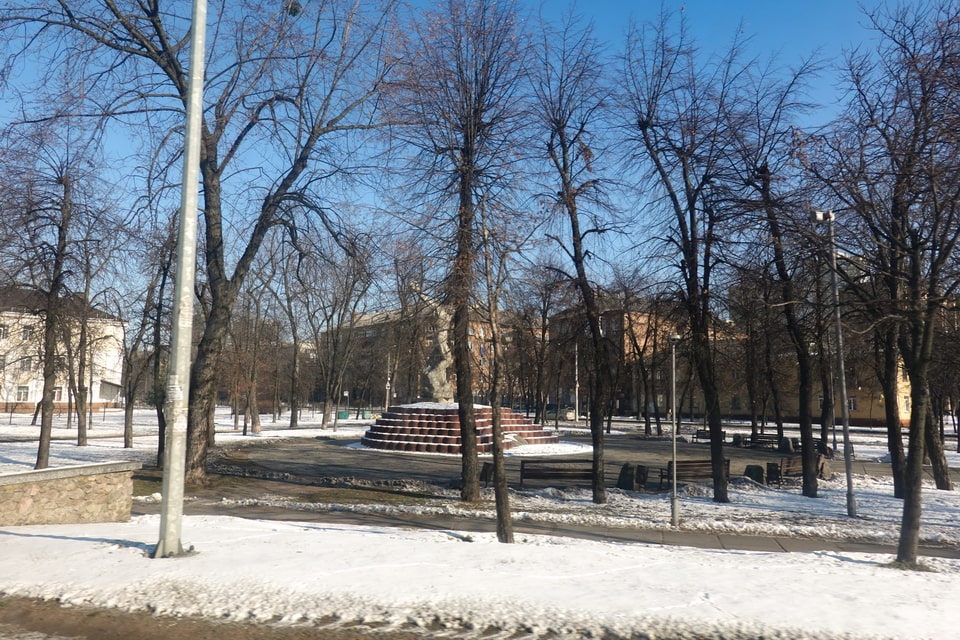
HORRIFIC REVELATIONS: SOVIET POST-WAR INVESTIGATIONS OF THE DARNYTSIA CAMP AND INTERNATIONAL DOCUMENTATION
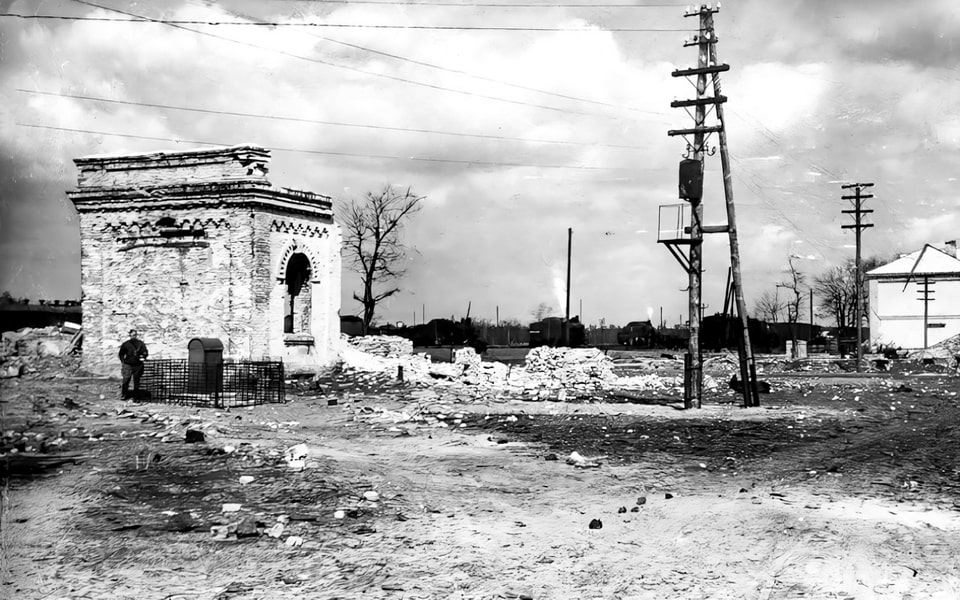
As stated above, Stalag 339 was evacuated to Berdychiv as early as June 1943, while the territory was still used by the Stalag 384 administration for another two months before being transferred to Bila Tserkva. It is accepted that Darnytsia POW camp was terminally shut down on September 28, 1943, when the front not only came close to Kyiv, but the Soviet 38th Army already fought for the liberation of the left bank of Dnipro. As a part of the strategy of their defense, the Wehrmacht used a tactic of scorched earth, and between September 19 and 26, the Germans burned or destroyed by shelling most of the villages and settlements on the left bank to the east of Kyiv, including putting heavy damage to the Darnytsia district. Most of the production facilities, including those restored since 1941, were demolished or evacuated, and special attention was paid to the railway infrastructure. The railway track was damaged with special hooks, and the rails were blown up with charges every 3 meters to make it impossible to reuse them. Out of 4000 residential buildings in Darnytsia before 1941, only 242 were still standing in late 1943. The total sum of damage was later estimated as 437.6 million rubles, of which 352.5 million rubles was inflicted on production facilities. At least 6,000 citizens of Darnytsia were forcibly deported during the occupation.
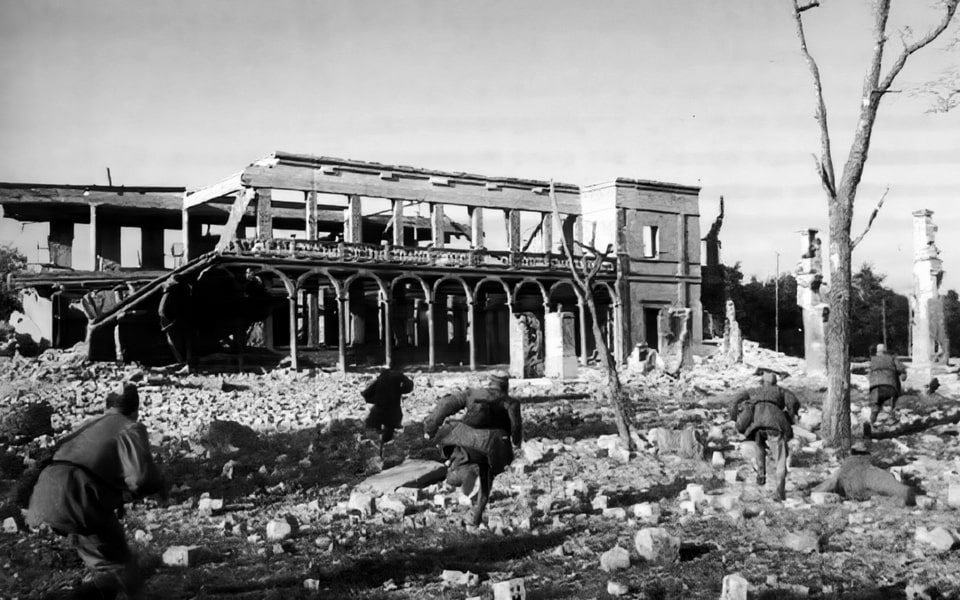
A complete liberation of Kyiv from the Germans became possible as late as November 6, 1943, at the expense of significant losses from both sides: 17,000 Germans, of which at least 6000 were killed, and 118,000 Soviet soldiers were killed, missing in action, or wounded. There is no statistic of how many civilians were still alive in the Darnytsia district at the time of liberation, but in December 1943, at least 3511 people worked in the local industry. Darnytsia and Kyiv were liberated, but another bloody episode of the war came almost half a year after the Germans had fled from the city. On April 8, Luftwaffe bombers attacked the Darnytsia railway station, an important transport hub at the time. Unfortunately, the air raid on April 8 occurred during a period when, due to the destruction of a temporary bridge across the Dnipro, dozens of trains were waiting on the left bank in a giant traffic jam. The Luftwaffe attack found twenty-eight trains at Darnytsia station and in the vicinity, which resulted in the death of at least three thousand people, mostly soldiers, but also of around three hundred railway workers. The bodies of those killed in the raid were buried in the crater from a 1,500 kg German bomb. In the post-war Soviet time, the regime tried to destroy documents and suppress commemoration on the site, and a memorial devoted to those killed here was erected only in Independent Ukraine.
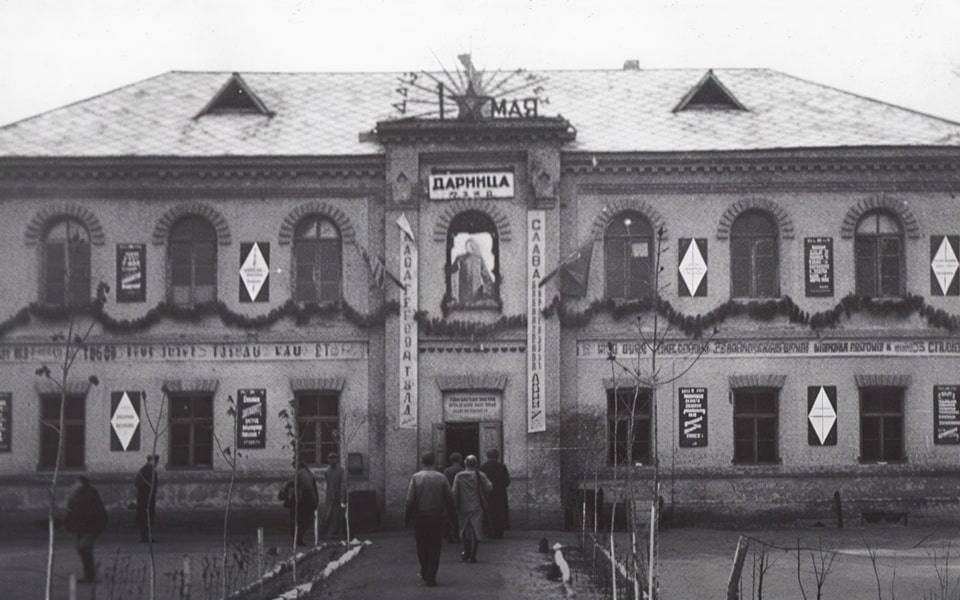
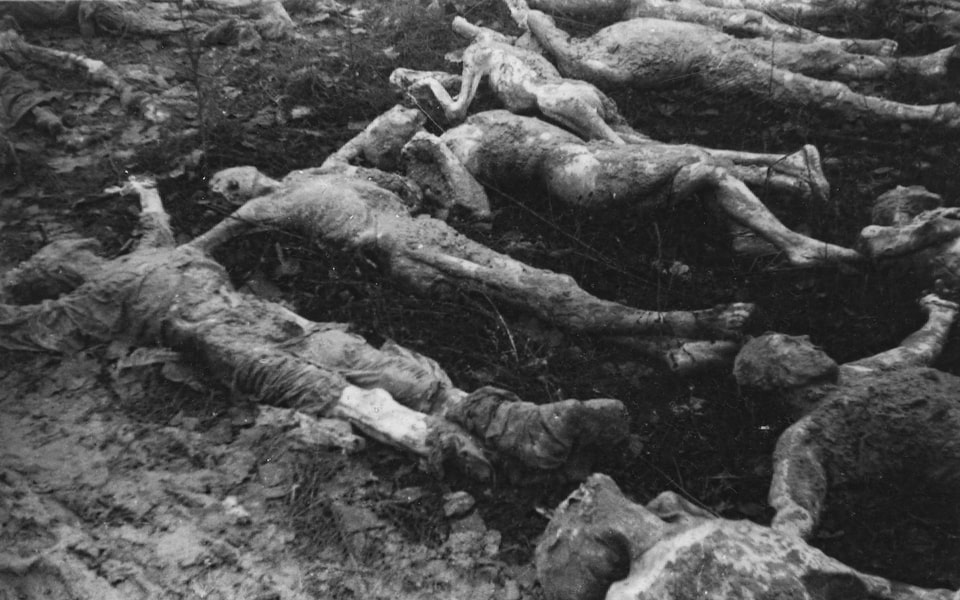
In November-December 1943, a special Soviet body called ‘The Extraordinary State Commission for the Establishment and Investigation of the Crimes of the German-Fascist Invaders’ (ChGK) visited the sites of mass detention and death in Kyiv: Syrets camp and the Babyn Yar ravine in the western part of Kyiv, and the Darnytsia camp for the prisoners of war on the left bank. The commission worked on the location of the camp, interviewed surviving prisoners and local witnesses in Darnytsia, conducted excavations of mass grave sites, and its members conducted medical examinations of the remains found. Like in many other places of such kind, the findings of The Extraordinary State Commission became the only credible investigation of the crimes perpetrated by the German side, since in the later Soviet era most of such places were turned into city parks or production facilities, without further interest in history. The materials of The Extraordinary State Commission were partially published in the Soviet Union and translated into English abroad in 1944, and later comprised most of the Soviet evidence base for the Nuremberg Trials.
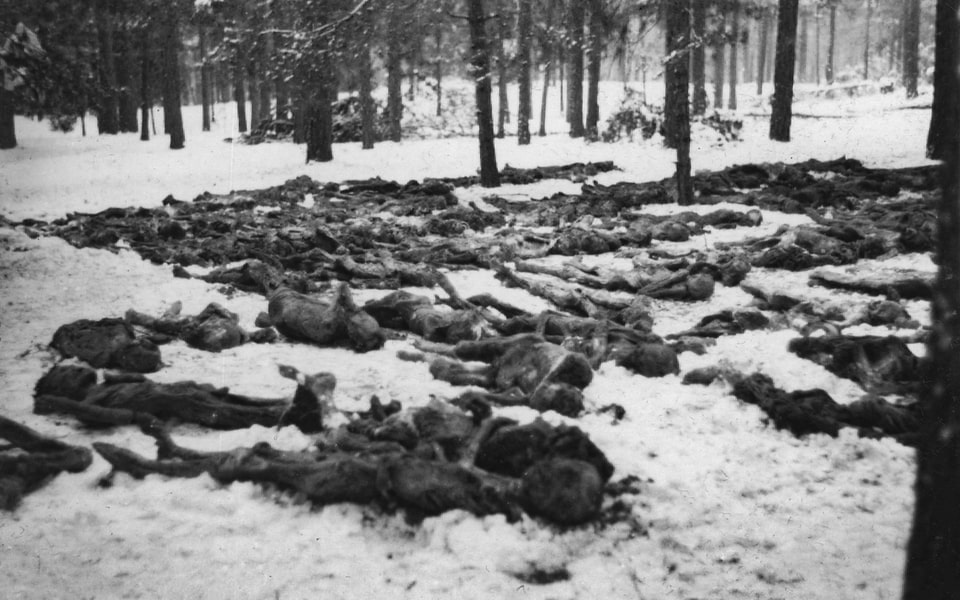
Thanks to the testimonies of eyewitnesses, the Commission performed excavations in the pine forest to the north of the camp, and according to the official report, at a distance of 326 meters from the camp territory, they found five mass graves with human remains. Four pits were 12 meters long and 6 meters wide, and one grave was square, 6*6 meters. One survivor testified that around 2000 Jews and political officers were executed in the forest and buried in these pits between October 1941 and March 1942. The total amount of human remains, which the Commission found in the forest, amounted to 11,000 according to the official report. All, except one body, were men between 18 and 40 years old, densely buried in layers at a depth of one to two meters. Most of the men buried here were earthed naked with penetrating gunshot wounds in their skulls with bone fragmentation and extensive fractures, including in the lower jaw. There are also skull fractures with extensive bone depressions from a blow with a blunt, hard, heavy object. Most of the bodies were exhausted, had no subcutaneous fat, and no traces of food in their stomachs or intestines. These pits in the forest across the railway line were later commemorated by the 1968 Soviet memorial.
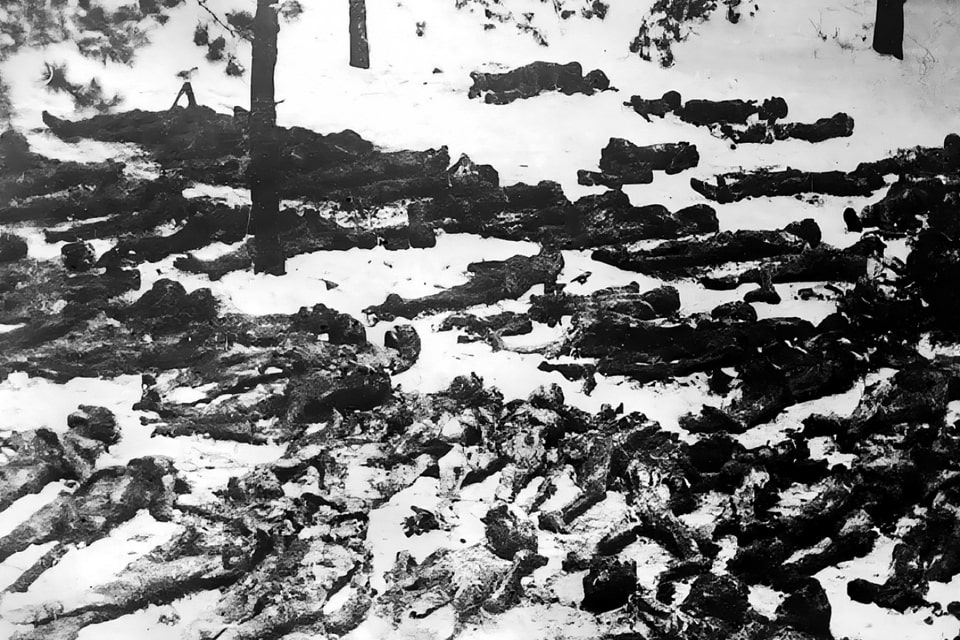
Another site with mass burials was found not far from the above-mentioned second area of the camp, located on the territory of Armored vehicle repair base No. 7. The investigators revealed a large camp cemetery with, according to the official report, 40,000 bodies buried here outside the camp near the forest. This ‘cemetery’ included graves with tablets with names, even individual graves, which at least looked like this. In reality, when the Commission dug those graves, they found that the real number of bodies inside was 6-8 times higher compared to the number of names stated on the tablets. Beyond this cemetery with five rows of graves was another section, with large pits, mostly 6 meters long and 3 meters wide, but some were even larger. These huge pits included hundreds of bodies each and were similar to the graves in the pine forest to the north of the camp. What differed these remains in the cemetery from those buried in the forest is the fact that most of them had no visible traces of wounds or any other damage, and they died of hunger and diseases. According to the eyewitness accounts, the Germans brought dead men here with trucks and made the selected prisoners drag bodies with hooks to the pits where they were then buried. Most of the bodies here were identified as those who died in the second half of 1941 and early 1942, a period of the largest death toll.
Another 17,000 bodies were stated to be buried in other locations inside or around the Darnytsia camp, and the sum of these three figures (11,000+40,000+17,000) formed the established figure of at least 68,000 people who died in Stalag 339 between September 1941 and September 1943. The real death toll of the Darnytsia camp would never be established, since after the war, the Soviet regime showed minimal interest in documenting and preserving the memory of those killed during the occupation, especially if they were prisoners of war (traitors according to the regime’s worldview) and Jews, who for decades experienced anti-semitism. Similar to the fate of the Syretz concentration camp near Babyn Yar, at least some territory of the Darnytsia camp was used after 1944 by the NKVD as a camp for the German prisoners of war, who were detained in Kyiv and used in various labor assignments after the liberation and years after the war ended. Such use of former camp facilities bore not only ethical issues, which never bothered the communist regime, but in practical terms made further investigation of the wartime crimes irrelevant for the government.
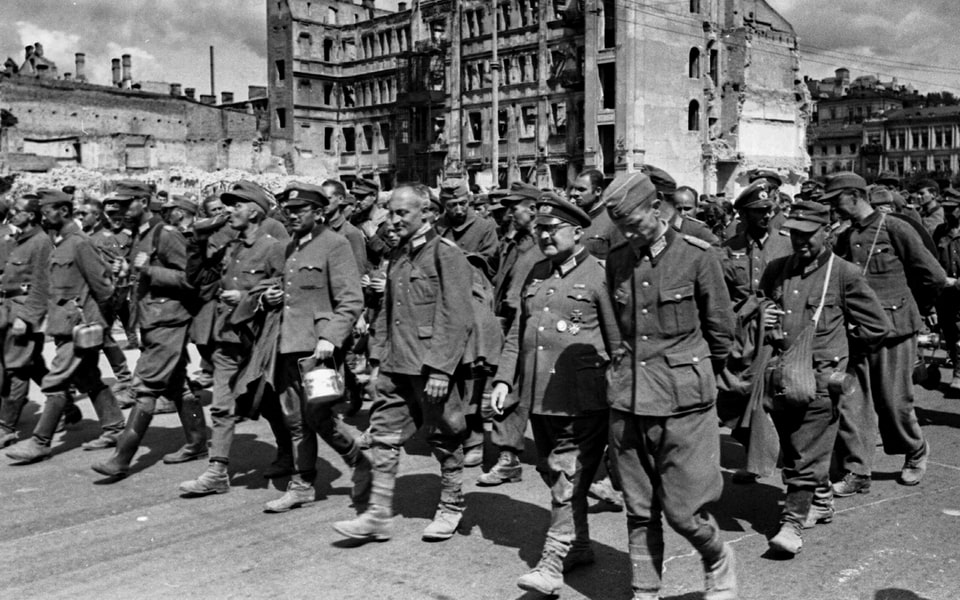
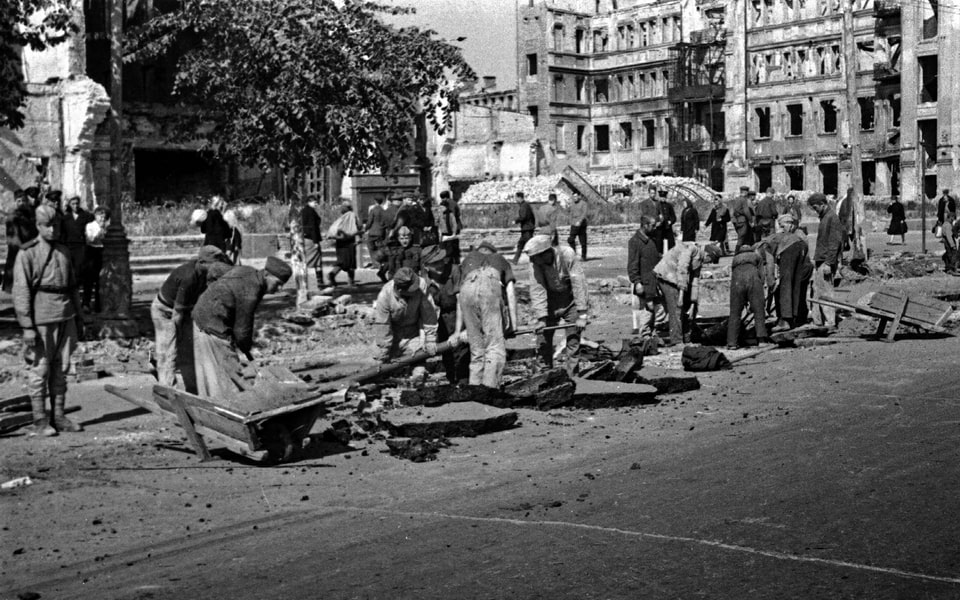
As early as February 26, 1944, a special NKVD order №00184 ordered the establishment of the so-called ‘special subcamp №1’ for 2000 prisoners of war in Darnytsia as a part of a centralized camp №62 in Syrets near Babyn Yar. The premises of the former German camp for Soviet prisoners of war were used for this new subcamp for German captives. A special inspection came to the site in March 1944 and specified in their report that at least three brick buildings on the territory of the former camp for Soviet POWs were usable for the new labor camp. These three buildings survived in the territory of the smaller section of the former camp on the pre-war territory of Armored vehicle repair base No. 7 in the eastern part of a giant facility. It was decided to give control over the complex to the notorious NKVD. On September 18, 1944, by order No. 001171, the NKVD of the USSR authorized the creation of camp department No. 13 at the Darnytsia Car Repair Plant with a limit of 1,000 people for the use of prisoners of war in the construction of housing for employees of the NKVD of the Ukrainian SSR. In total, in February 1945, at least 14,000 German prisoners of war were kept and used in Kyiv for reconstruction. From the very beginning, the area of application of prisoners of war labor was quite wide – construction, enterprises of heavy, light, and food industry, energy, and transport. The other side of those losses is buried outside the city. The German war dead of the 1941–1943 campaign in this region were gathered after 1991 into a Wehrmacht cemetery at Vita-Poshtova, south-west of Kyiv.
DARNYTSIA AFTER THE WAR: COMMEMORATION, MEMORIAL SITE, AND THE MEMORY OF 68,000 VICTIMS
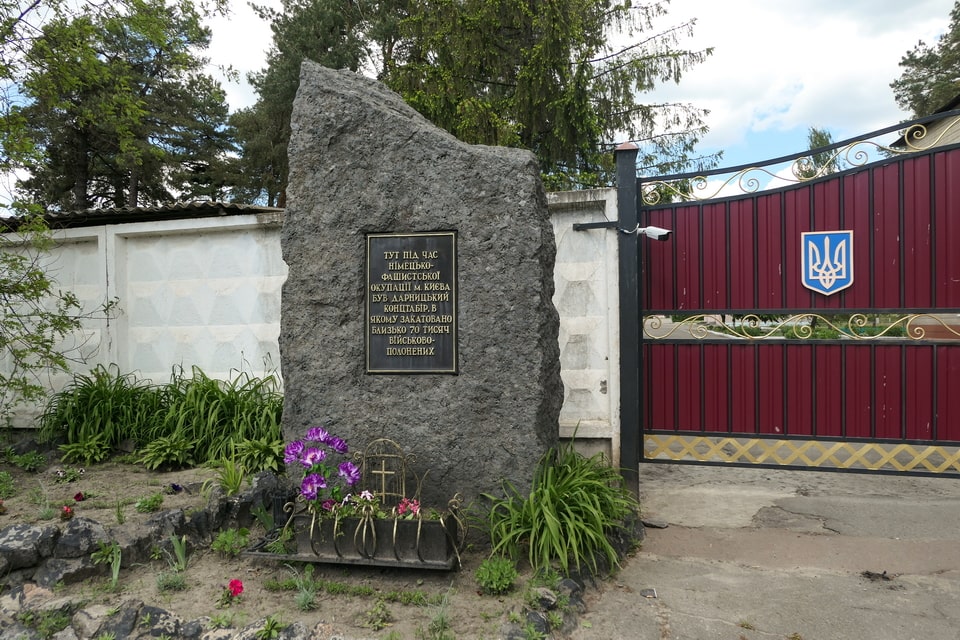
For more than two decades after the end of the occupation and the war, the existence of a large camp for the prisoners of war in Darnytsia was not properly commemorated. We don’t know exactly when the camp facilities, used after 1944 as a camp for the German POWs, were dismantled, but the territory was never intended to become a place of commemoration. The Soviet government had no interest in preserving the memory of tens of thousands of its own prisoners of war, and the territory of the former camp was soon returned to the national economy, since Darnytsia district regained its status as a production hub in Kyiv. The territory of the former inner camp with the notorious infirmary was first turned into an NKVD detention camp for Germans in 1944, and then restored and given back to the Armored vehicle repair base No. 7. When the Soviet Union finally collapsed in 1991, this defense enterprise continued its work in Independent Ukraine, and nowadays it is still a closed area. Before the full-scale russian invasion in 2022, there was an annual practice of letting visitors come once a year in May. When I visited the site in 2021, the guard told me that the existing building from the time of WWII still has gunshot pits on its walls. The only exterior element that reminds us of the existence of Stalag 339 here is a memorial sign in front of the main gate. The inscription in Ukrainian says:
‘’Here, during the German-fascist occupation of Kyiv, stood the Darnytsia concentration camp, in which nearly 70 thousand prisoners of war were tortured.’’
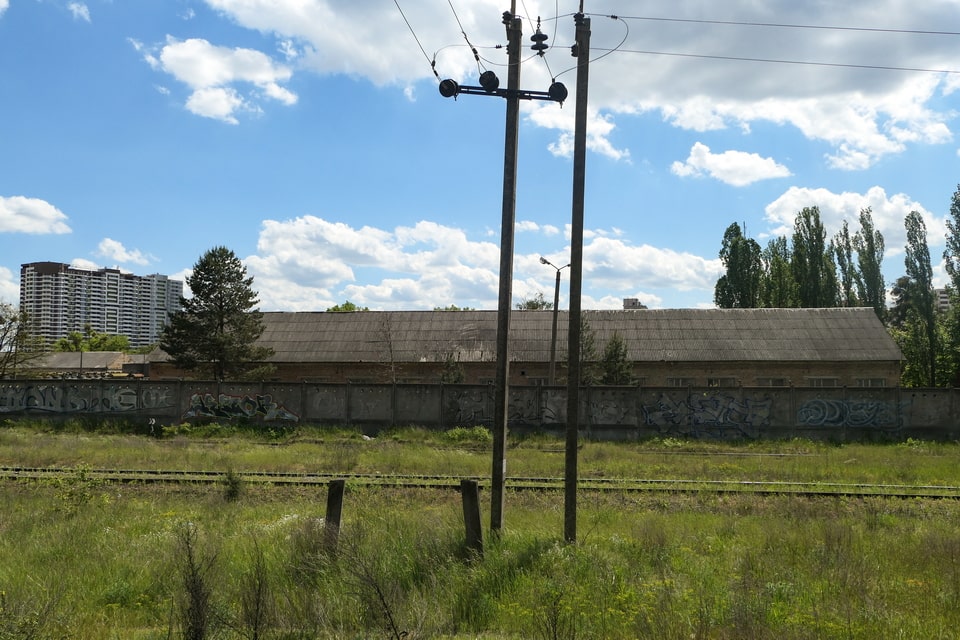
While the territory of the former repair base has slightly changed since the 1930s, the territory of the former Stalag 339 to the west of it has changed beyond recognition. In 1954, a large territory just across the forest, where thousands of POWs were buried, was allocated for the construction of a giant Darnytsia Chemical and Pharmaceutical Plant in Kyiv. It was established as a branch of the Ukrainian Institute of Experimental Endocrinology, which began producing medicines as far back as 1932. After a year of construction, in 1955, the enterprise moved to its new production facilities on Boryspilska Street, the company’s location since then and until nowadays. In 1964, two new workshops were put into operation: glassblowing and ampoule-tablet workshops, and in 1975, two more: chemical and tablet. In Independent Ukraine, ‘Pharmaceutical company Darnitsa’ has become the largest and most recognized enterprise of its kind on the national market.
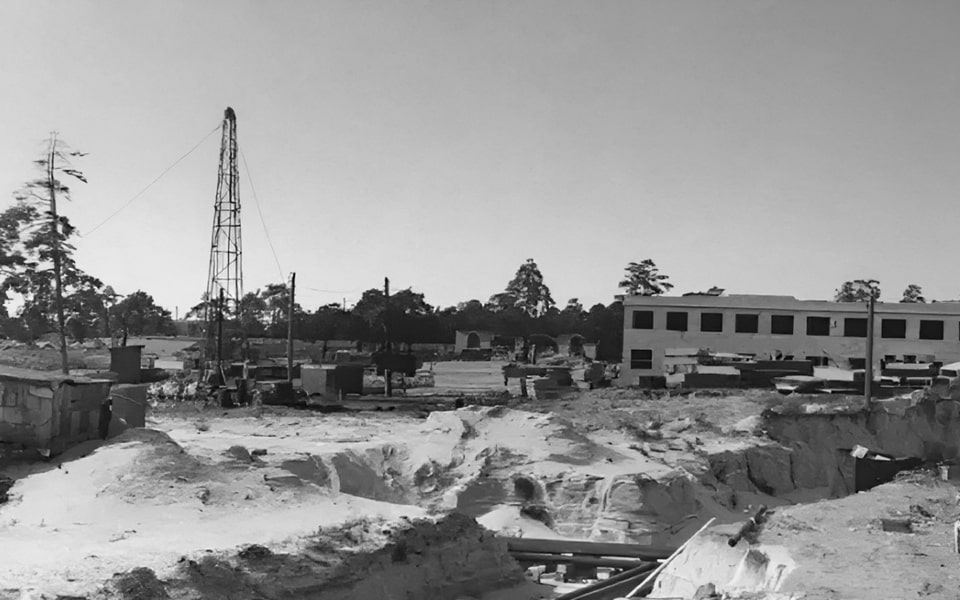
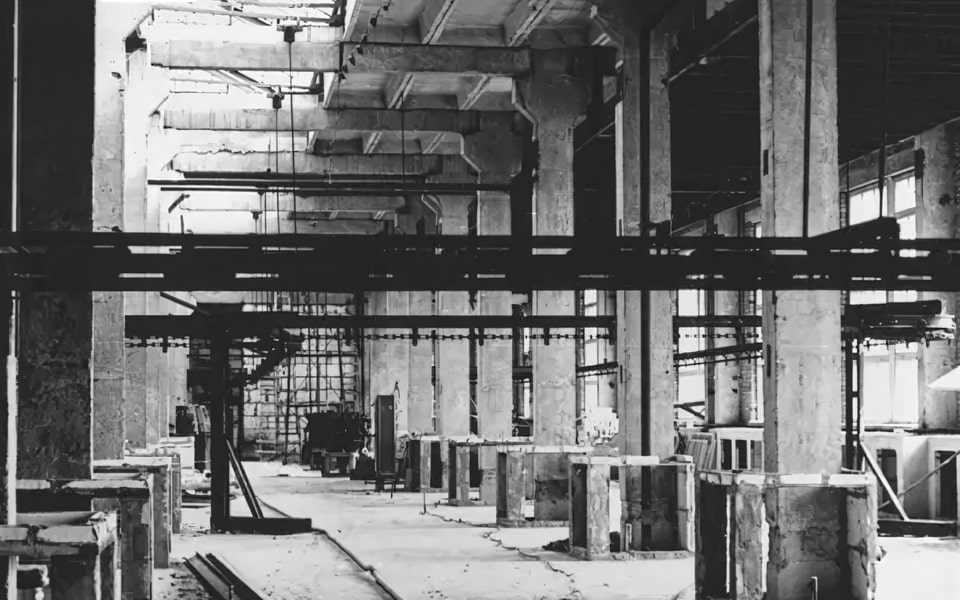
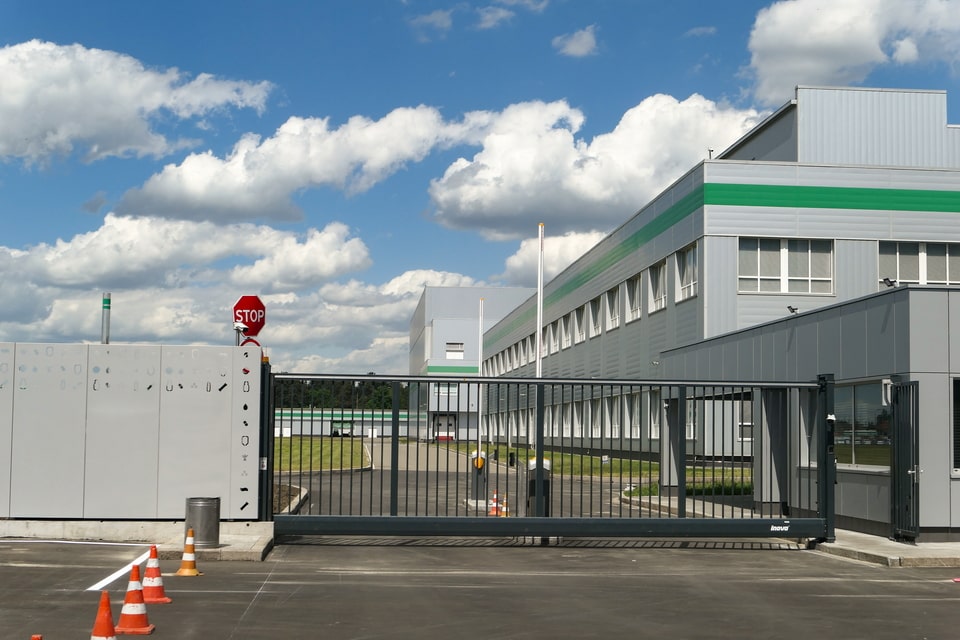
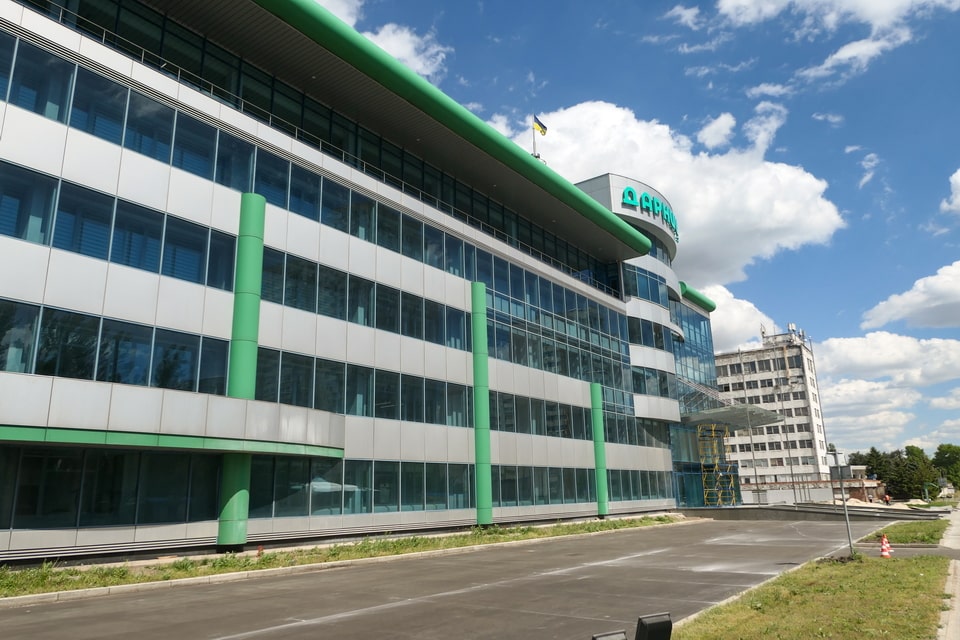
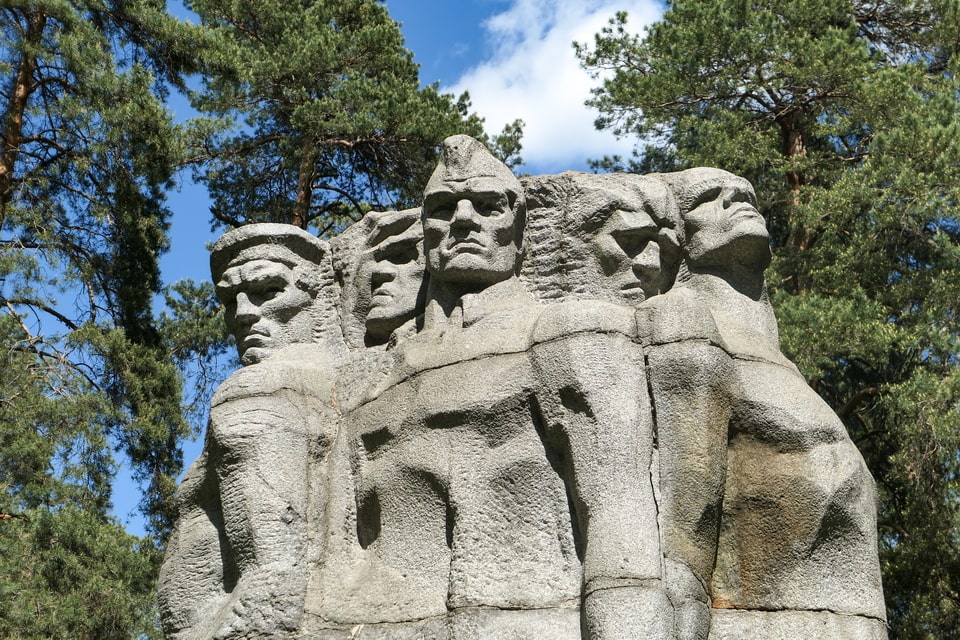
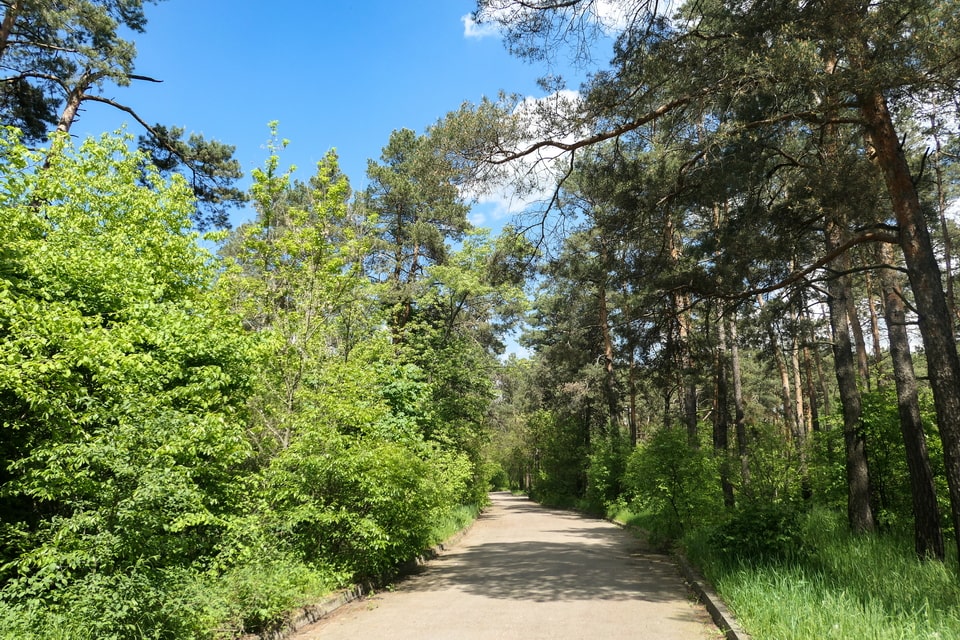
Except for some improvised signs and annual commemorative walks of the veterans and their families, the site of the former Darnytsia camp was not commemorated until 1968, when a memorial complex was finally created in the forest to the north, across the railway line. It was erected on the site where, in 1944, the State Commission found the remains of 11,000 Soviet POWs. It is important to say it one more time that the 1968 Soviet memorial is located 300 meters from the former territory of the Darnytsia camp, beyond its primary fence. While the location was a killing site and a mass burial place in 1941-1943, it is at least inaccurate to claim that Stalag 339 was located here on the site of the memorial. This part of the forest was used, as well as other similar locations around the camp, but it was not included in the inner perimeter.
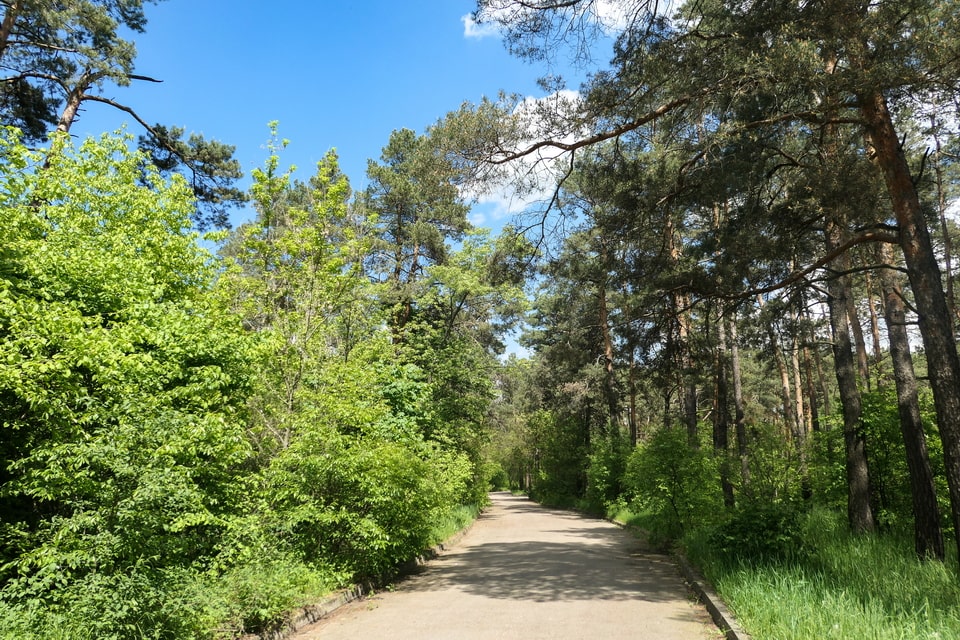
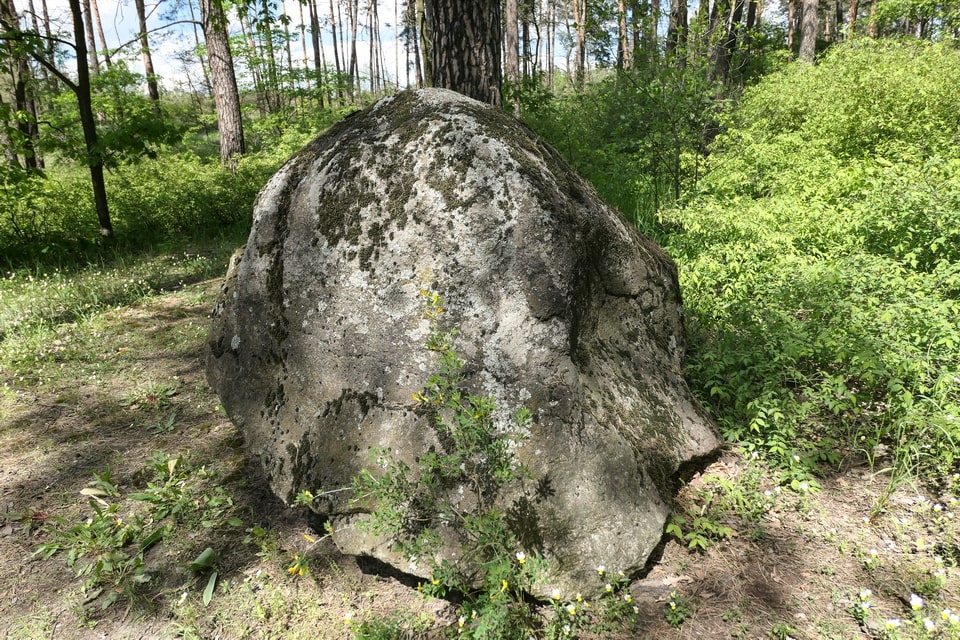
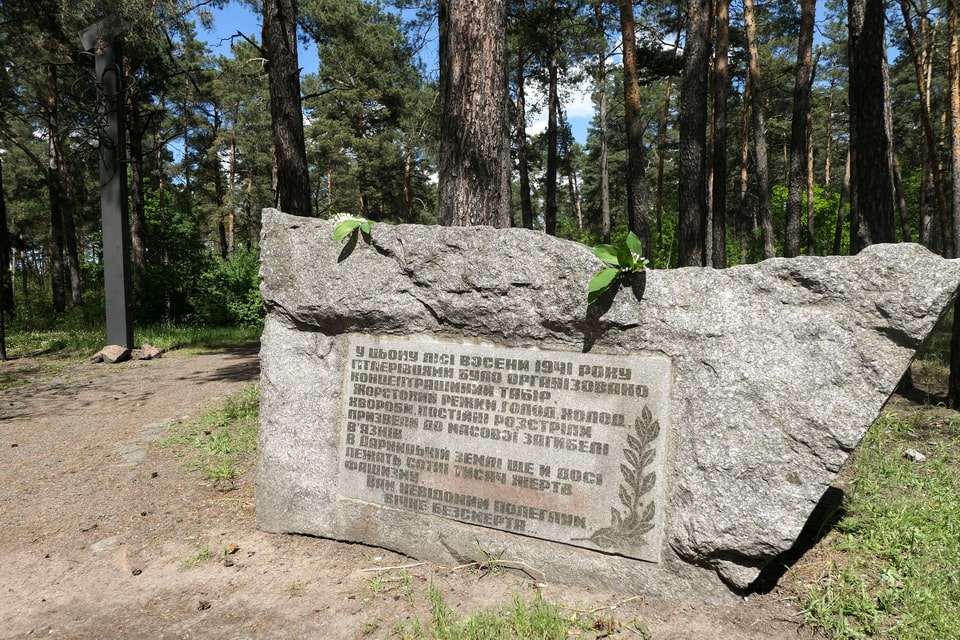
The landscape and sculpture complex known as ‘To those tortured in the Darnytsia concentration camp’ welcomes its guests with a stone and an inscription on it:
‘In this forest in the fall of 1941, the Nazis organized a concentration camp. The cruel regime, hunger, cold, disease, and constant shootings led to the mass death of prisoners. Hundreds of thousands of victims of fascism still lie in the Darnytsia land. Eternal immortality to the fallen, unknown to you.’
Further, we see a granite stele with the Ukrainian inscription:
“Here in 1941-1943, 68 thousand Soviet soldiers were tortured in a fascist death camp. They gave their lives for you, for the freedom of the Soviet Fatherland. Remember at what price peace was won”.
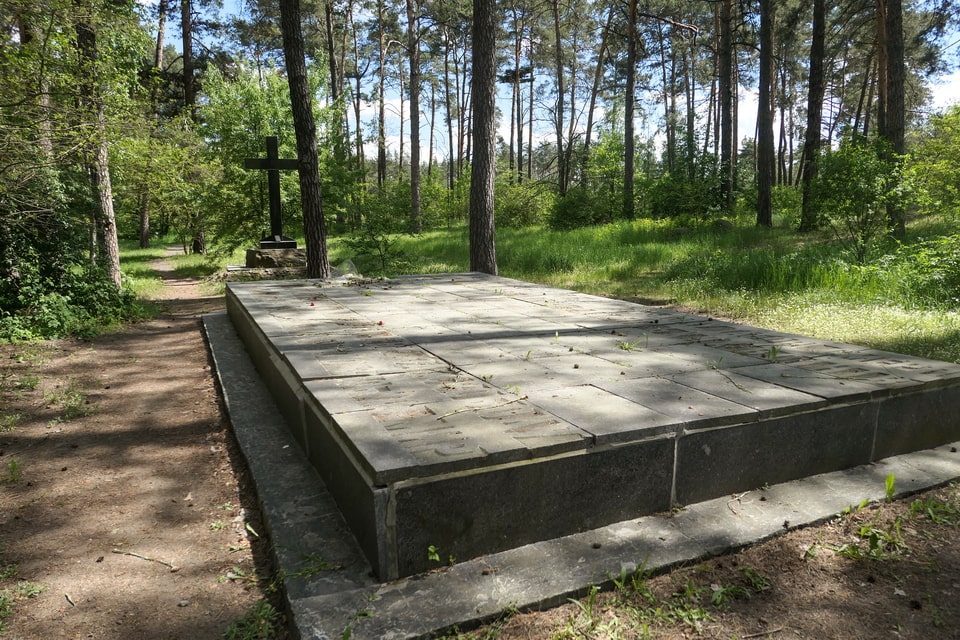
We also see the replica parts of a barbed wire fence, which play the role of historical evidence, and granite slabs along a paved path, which symbolize burials. On one of the stone blocks near the path that led to the execution of prisoners of war, there is an inscription: ‘The last path of the tortured. Exhausted, hungry, bloodied, they walked along this path to the shooting, carrying in their hearts hatred for the enemies and faith in our victory.’ In the center of the complex is a sculptural five-figure composition made of monolithic blocks of pink granite, installed on a low earthen hill. At the foot is a flat granite tombstone. The monolithic group of soldiers and sailors seems to grow out of the stone blocks. The authors are Ukrainian sculptor Valentin Znoba (1929-2006), architects Olexander Malinovsky (1915-1976) and Yurii Moskaltsov. The memorial complex was opened to the public in December 1968.
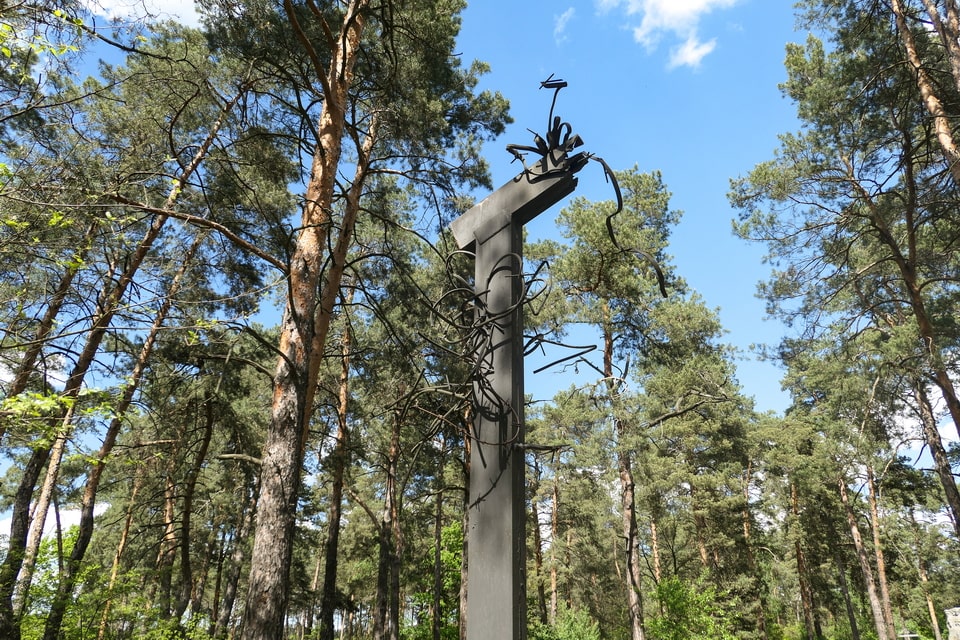
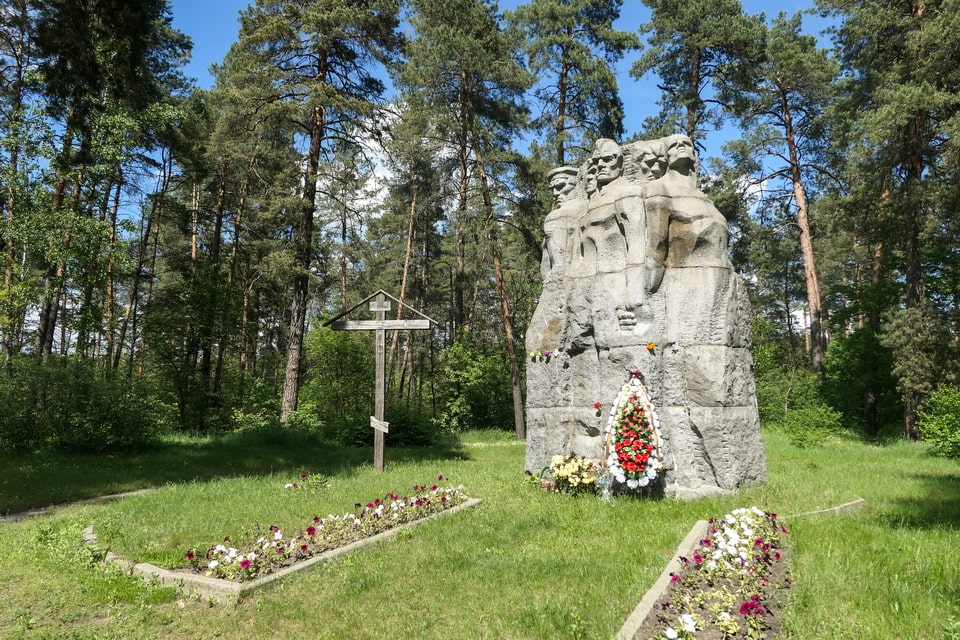
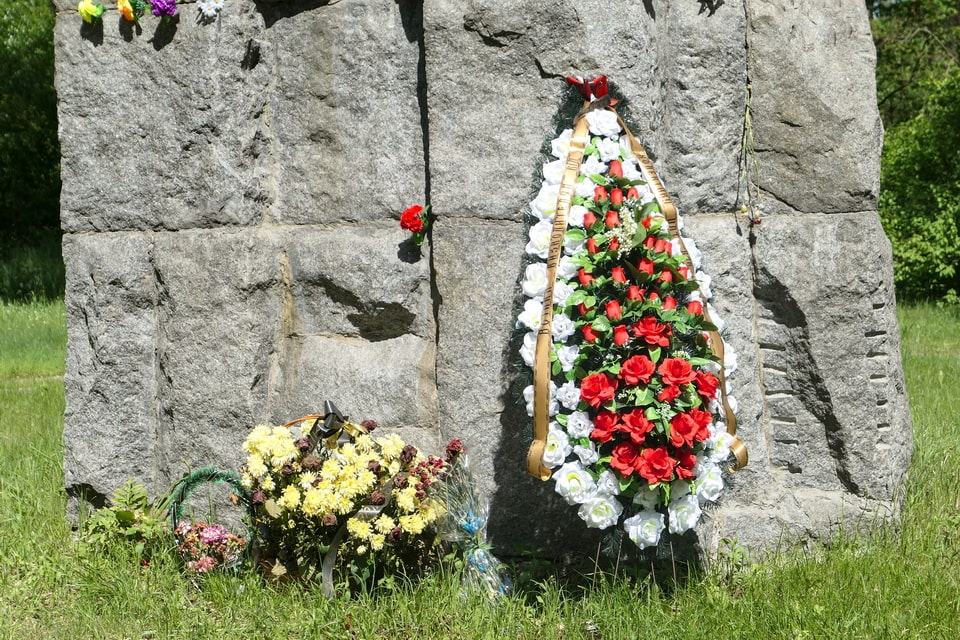
Another stone here says in Ukrainian:
‘’Thousands of people, deprived of their freedom and the law, died in this camp, slaves in their own land, giving the living their last bows and farewells.’’
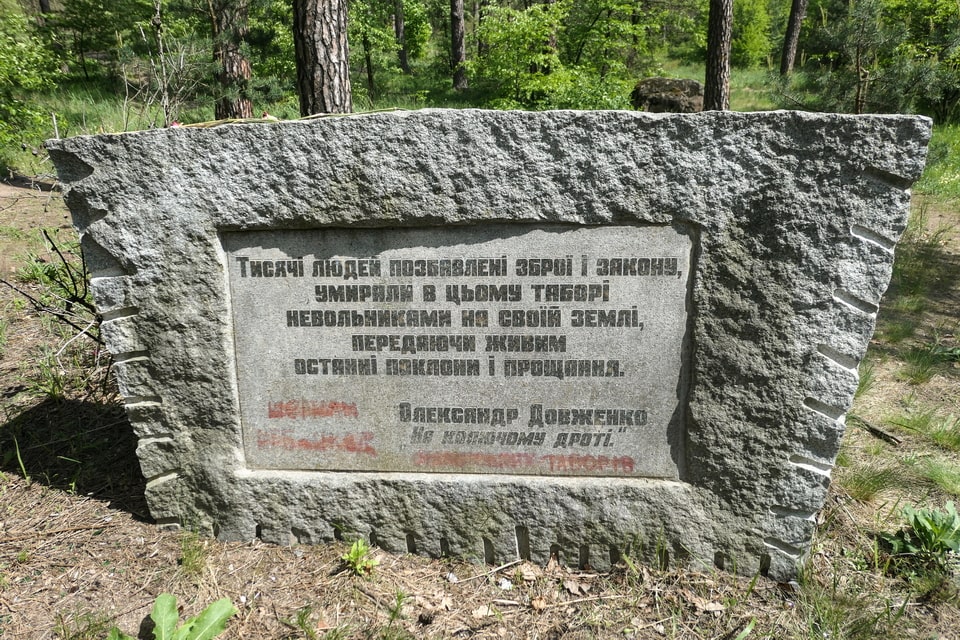
In 2006, by order of the local authorities, the memorial was supplemented with a cross made of black marble.
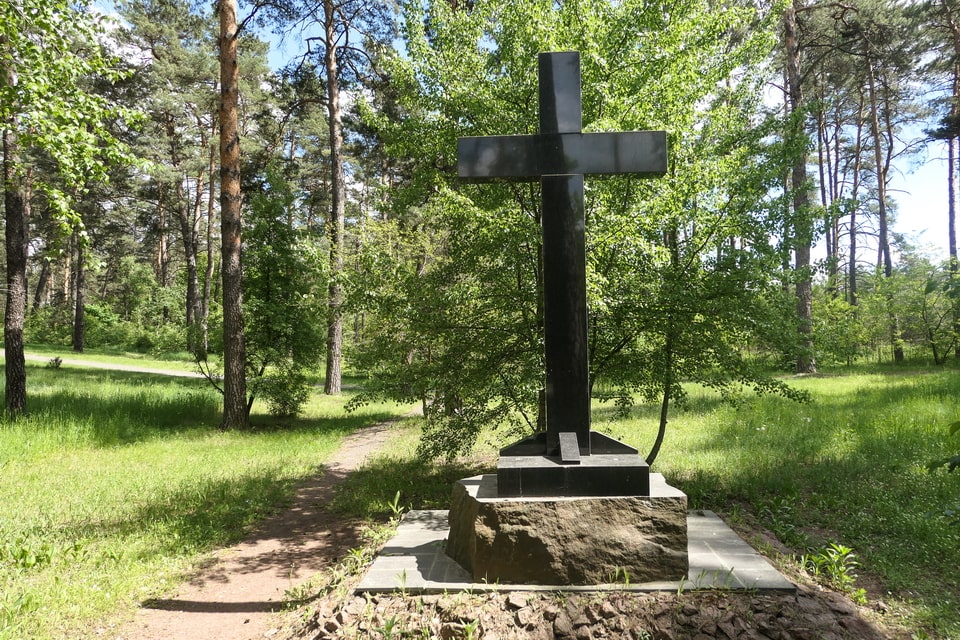
At the same time as the memorial complex was opened in the forest, in the late 1960s, the local government allocated an empty spot of land between the Darnytsia Pharmaceutical enterprise and the Tank repair base for the construction of a motorcar park for public transport vehicles. Unfortunately, there is no preserved information regarding the findings on the construction site of the former Stalag 339, which was absorbed by the giant Bus Depot №7, which was finally finished in 1973 after eight years of construction. In addition to the 9-story administrative building, the territory gained a huge covered bus parking lot, which in its shape resembled a circus ring or a drum with a diameter of 165 meters; two hundred heavy-duty metal cables are stretched between the wall and the column, on which concrete slabs are fixed, thus forming the roof of the parking lot. This parking lot, whose area is 20,000 square meters, once accommodated and serviced four hundred Kyiv city buses, and at its peak was a place of work for 1400 men and women. In April 1986, when the Chornobyl disaster occurred, about 70 buses from the depot were used to evacuate people from the infamous town of Pripyat. The giant depot was closed in 2015, and it still contains around 900 abandoned vehicles. There were plans to demolish the crumbling building, but 10,000 citizens signed a petition for its preservation.
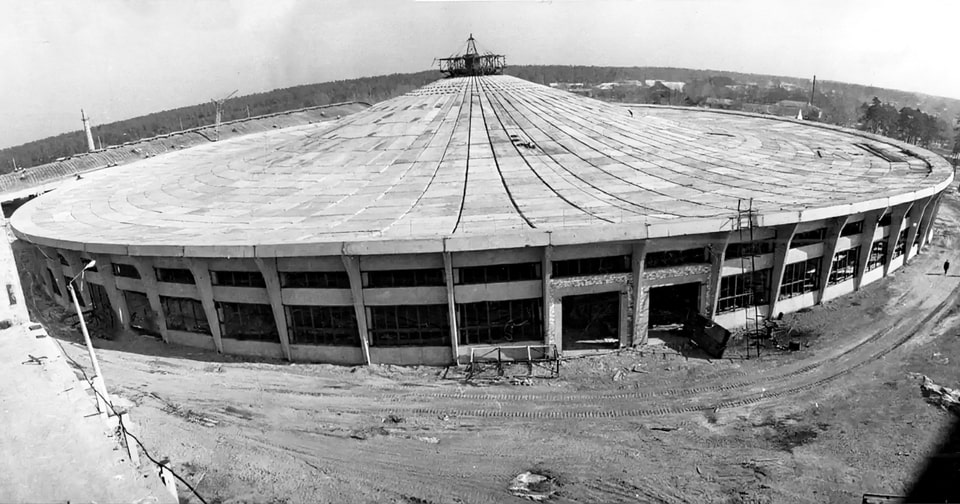
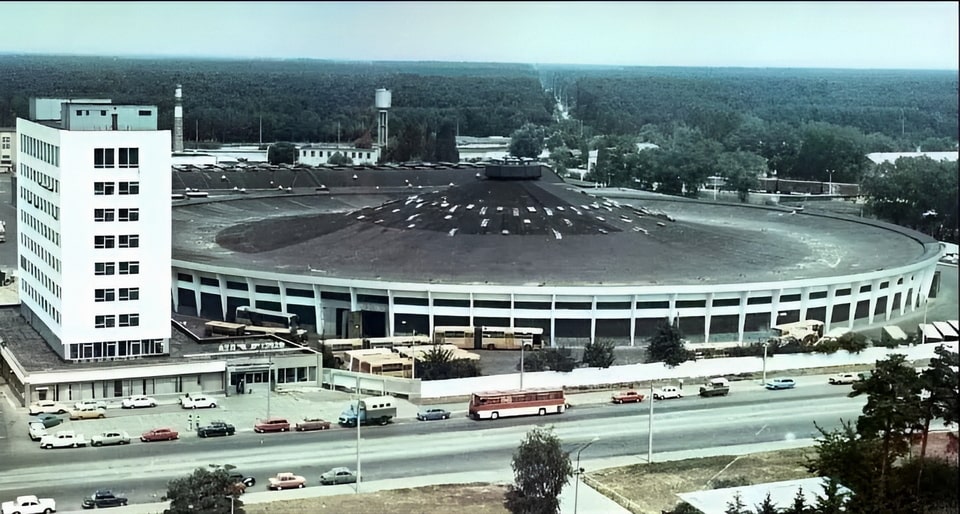
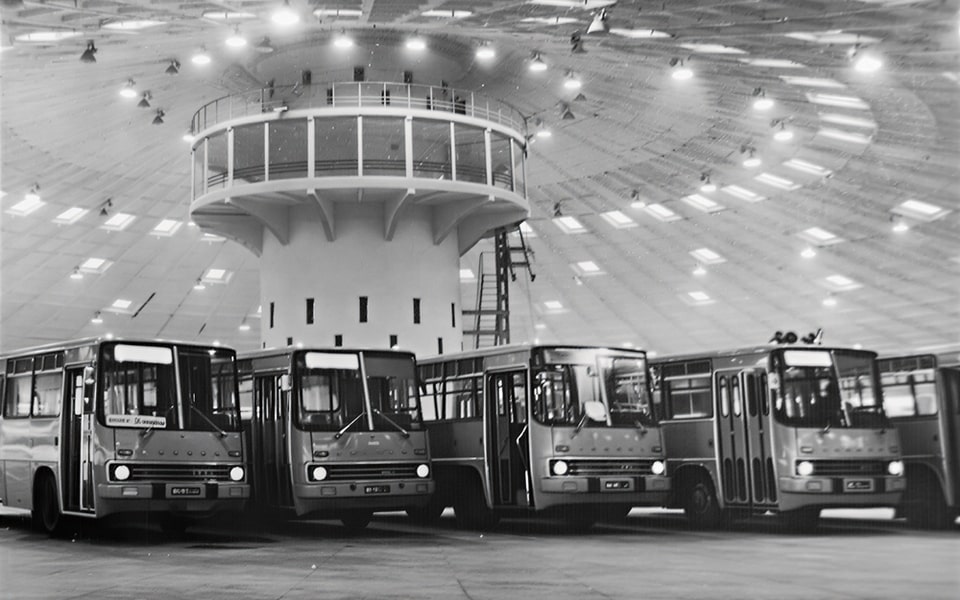
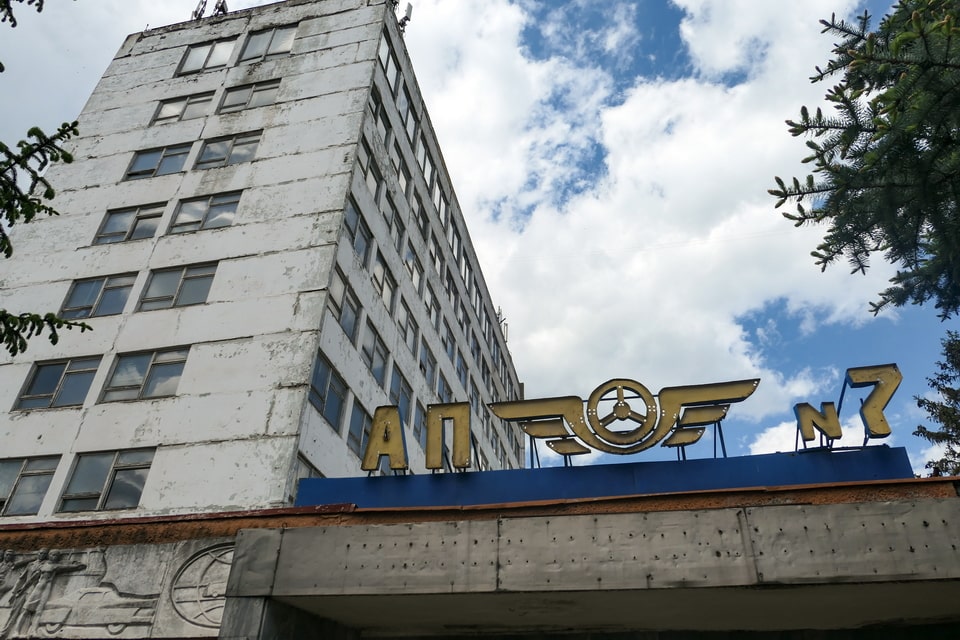
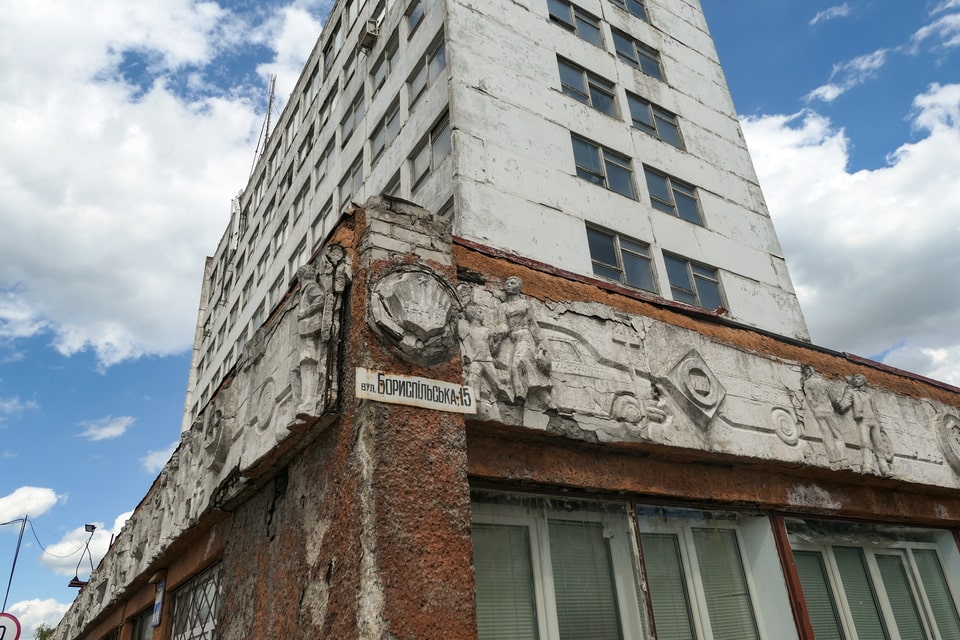
Another important historical episode related to the former territory of the Darnytsia camp occurred in late 1977 during the construction of School №217. The construction was sponsored and patronized by Chief Marshal of Armored Troops A. Babajanyan (1906-1977). During the Second World War, he participated in the operations in Ukraine, and in 1956, he participated in the notorious Soviet suppression of the Hungarian Revolution, being one of the bloody perpetrators, and was even awarded for this massacre. Later on, his personal belongings were showcased in the school’s museum. During the construction of School 217, thousands of human remains were excavated, and as the first school’s director, Kalinichev Andrii Herasymovych recalled, at least five buckets of bones were dug out and reburied in the military cemetery near Babyn Yar. While the site of the school is located at a distance from the former Stalag 399 perimeter, it was probably one of the mass burials that were unrevealed in 1944 during the investigation. The school welcomed its pupils on November 12, 1977. In later years, a museum was founded in the school, part of which was devoted to the Darnytsia camp. In independent Ukraine, school staff also created a memorial alley and a stone with the names of two thousand victims of the notorious WW2 camp.
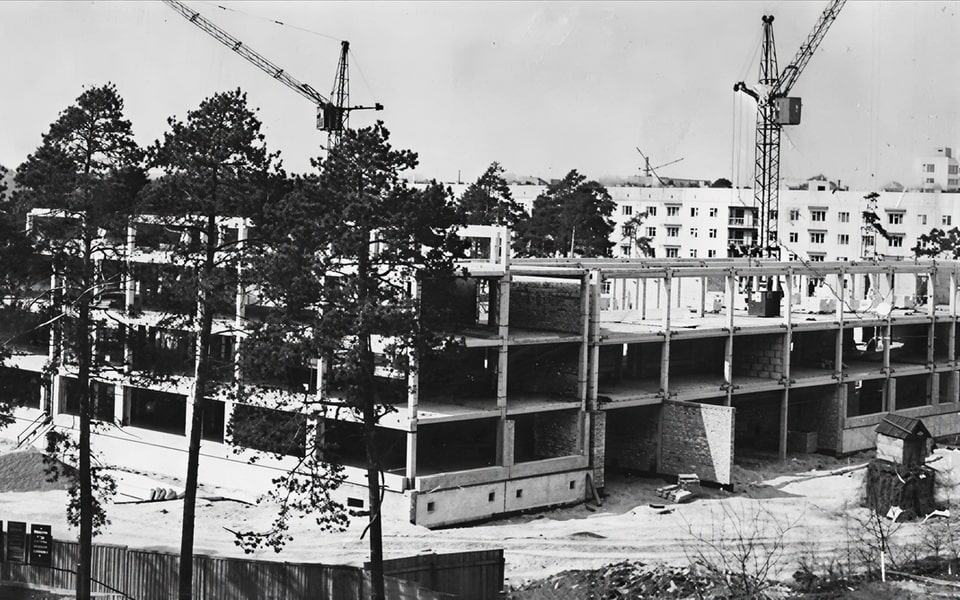
VISITING THE DARNYTSIA POW CAMP MEMORIAL TODAY: HOW TO GET THERE, AND WHAT TO SEE
The territory of the former Darnytsia POW camp (Stalag 339) is located in the modern Darnytskyi district of Kyiv, on the left bank of the Dnipro, east of the city centre. Unlike many wartime sites, parts of the camp area are memorialised and accessible to visitors.
1. Main memorial complex to Darnytsia camp victims
A memorial ensemble commemorating the victims of the Nazi POW camp was inaugurated in Kyiv’s Darnytsia district and includes a memorial plaque and a commemorative stone marking the site of mass deaths.
Address: in the vicinity of Kyivska Street (вул. Київська), Darnytskyi district. Access: open 24 hours. Free of charge.
2. Darnytsia railway station (historical landmark)
The Darnytsia railway station on the Kyiv–Poltava line is the same station used to bring prisoners to the camp from September 1941 and to transport WWI prisoners from 1915. The station building dates to the early XX century. It remains operational today as a suburban railway stop. Address: Darnytsia railway station (станція Дарниця), on the Kyiv suburban railway network.
3. Former WWI camp territory (industrial area today)
As noted in Section 2 of this article, the First World War camp was in a different location from the WWII Stalag 339 — further north, in an area that is now an industrial zone. No memorial exists at the WWI site, but the 1943 aerial photograph reproduced in this article shows its footprint clearly. The area is not open to visitors.
Getting there from central Kyiv
— Metro M1 (Red line) to Darnytsya station (Дарниця) — this is the closest metro stop to the Darnytsia district. From the station, taxis and buses connect to the memorial area (~10 min).
— Metro M1 to Boryspilska station for the southern part of Darnytskyi district.
— Suburban train to Darnytsia railway station from Kyiv-Pasazhyrskyi (central station) — approximately 15 minutes.
— By car: via the Boryspilske Highway (E40) heading east from central Kyiv, cross the Dnipro via the Southern Bridge or the Paton Bridge, then turn south into Darnytskyi district. Total distance from Maidan Nezalezhnosti: ~12 km, approximately 20–30 minutes (depending on traffic on the Paton Bridge).
Combining with other Kyiv WWII sites
The Darnytsia memorial pairs well with visits to: the Kyiv WWII Memorial Complex (National Museum of Ukraine in the Second World War, on the right bank — 30 min by car or 45 min by metro); full guide →
The Babi Yar (Babyn Yar) memorial complex (north-west of the city centre — metro Dorohozhychi, M3); full guide →
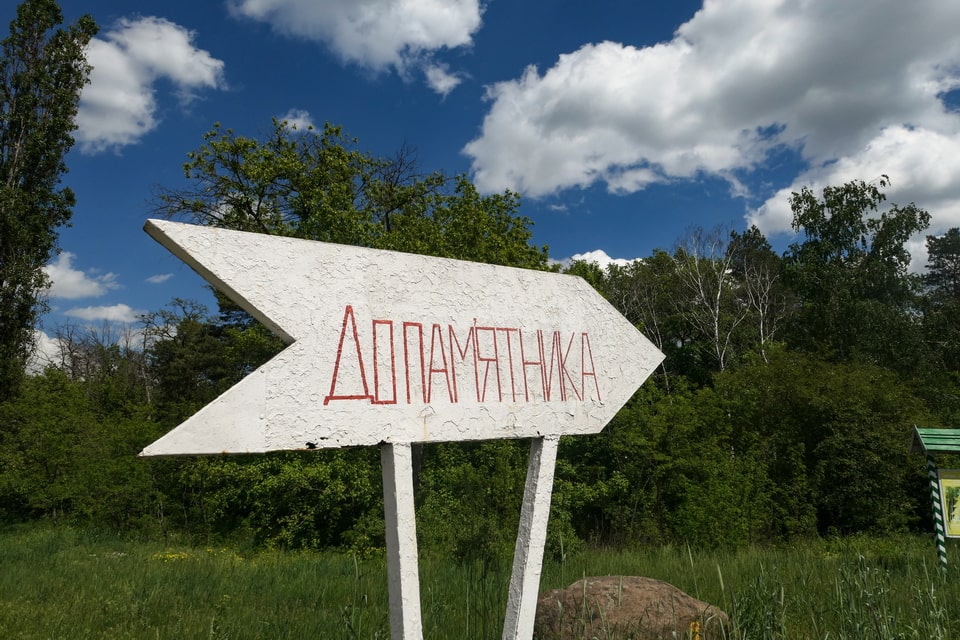
I am very grateful to war archives, museums, libraries, private collections, and writers for the historical photos in this article. To the extent that some author or a copyright owner may not want some of the above black-and-white photos to be used for educational purposes here, please contact me for adding credits or deleting the pictures from the article.