

German Occupation of Greece 1941–1944: the Athens Sites Then and Now
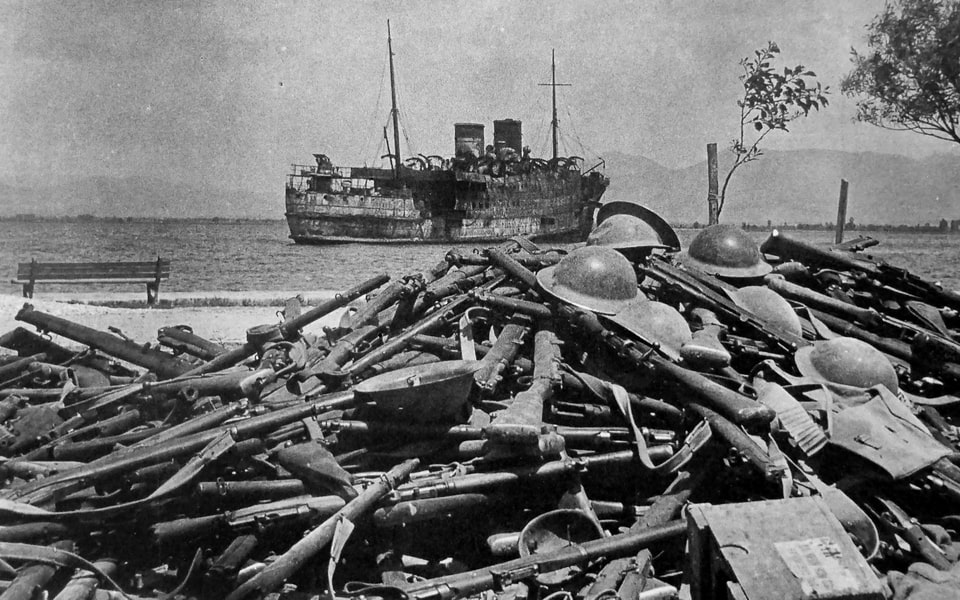
At a quarter to nine on the morning of 27 April 1941, two German soldiers raised a swastika flag on the eastern bastion of the Acropolis. Nobody stopped them. Athens had been declared an open city, the Greek army had capitulated four days earlier, and the last British ships were still loading at the southern beaches. The occupation of Greece had begun, and it would last three and a half years.
That flag came down thirty-three days later. On the night of 30 May 1941, two students, Manolis Glezos and Apostolos Santas, climbed the north face of the rock, found the flagpole unguarded, and took it. Glezos appears again at the end of this article — in December 1944, laying dynamite in the sewers under a hotel on Syntagma Square.
This article covers the whole of it, from Mussolini’s invasion of 28 October 1940 through Operation Marita in April 1941 to the German withdrawal in October 1944 — the three-way partition of the country between Germany, Italy and Bulgaria, the famine that killed around 300,000 people in a single winter, and the destruction of one of the oldest Jewish communities in Europe.
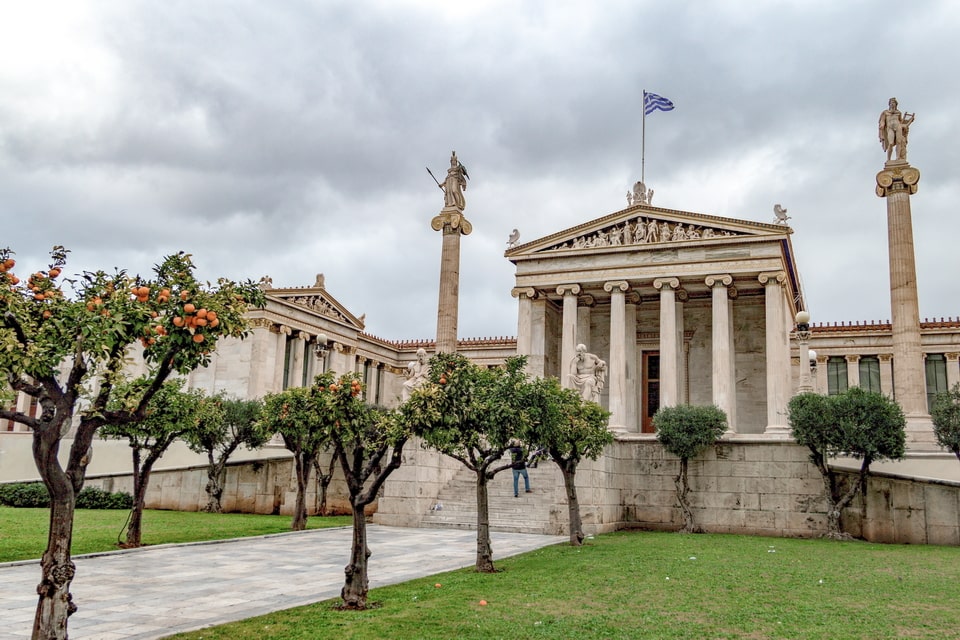
But its centre of gravity is Athens, and specifically the places you can still stand in. Korai 4, the Gestapo interrogation cells six metres under a shopping street, with the prisoners’ writing still on the walls. Panepistimiou Street, where a crowd of at least a hundred thousand marched on 22 July 1943 and twenty-two of them were shot. Phaleron War Cemetery, where 2,029 Commonwealth soldiers lie, 596 of them unnamed. The Georgios Averof, the warship whose crew hacked through a harbour boom with axes to get her out of Greece. The Hotel Grande Bretagne, German headquarters for three years and then very nearly the site of Churchill’s death.
Archive photographs are paired with my own from the same ground. Where the popular account is wrong — and on Athens it very often is — that is said plainly.
MUSSOLINI’S FAILED AMBITION: THE ITALIAN INVASION OF GREECE, 28 OCTOBER 1940
While Adolf Hitler’s ambitions to rule by force in Europe, defeat his ideological enemies, and aggressively reshape the world order cannot be questioned, his minor Axis partner, Benito Mussolini, had always had a more ambiguous strategy. After the half-successful Italian campaign in Africa and Italy’s involvement in the Spanish Civil War, Mussolini spent 1939 trying to avoid direct involvement in a new European War. While in public speeches, he demonstrated aggressive imperial rhetoric suitable for the status of a Great Power; on a more intimate level, the fascist leader, who had ruled for seventeen years starting from 1922, expressed doubts about whether his country was ready and needed to join Hitler in his historical crusade. He, with reason, realized the state of his army and war production, both inadequate to stand against Britain and France. On the one hand, his ambitions and the self-made masculine image of a great ruler pushed Mussolini to the war side by side with Hitler. On the other hand, Italy gained its place in the sun as a great power the previous year without directly confronting the most powerful states. In 1938, he became a respected mediator of the Munich crisis, a man whose involvement was desired to protect the nation from the fire of a new World War.

On a strategic and historical level, Mussolini made a smart choice by not joining Hitler immediately in September 1939 by declaring war on France and Britain, and nine months later, he joined the fight that was going to end with Hitler’s triumph only when it became clear that such a move was safe for Italy. In many ways, Italian involvement in WWII was inevitable, but one major reason was subjective. Benito Mussolini became more anxious about losing his role in Europe compared to Hitler, who became a conqueror of nations and the true ruler of the continent. The role of a peacemaker was not on the table anymore, and becoming Hitler’s minor partner frustrated self-centered Mussolini. ‘Patto d’Acciaio’ or ‘The Pact of Steel’, signed with Germany in May 1939, pushed Mussolini even further in his efforts to match this alliance. After the fall of France and forcing British expeditionary forces out of Western Europe, both German achievements, Mussolini felt a chance to gain control over the Eastern Mediterranean. Previously, in the fall of 1939, he rejected the idea of a German invasion of Greece by claiming that the country was too poor to conquer it, but in the second half of 1940, the situation with the British presence changed, and the Italian dictator sought out an appetite for a successful conquest. Later on, the decision to invade Greece proved to be disastrous for Italy, but in late 1940, it did not seem so to Mussolini.

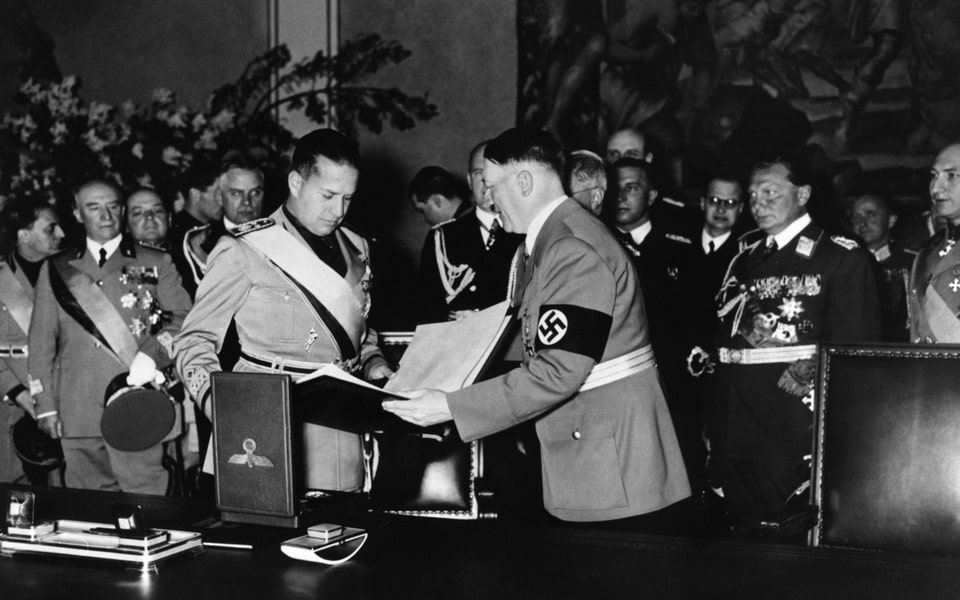
Mussolini did not have much choice for his conquest, as Greece was the only direction with which he had a border through his colony, Albania, where he could act in 1940, except for Yugoslavia. Albania, across the Adriatic and Ionian seas, was invaded by Italian forces in April 1939, forcing its leader, King Zog I (1895-1961), and his family to flee the country to Greece. Back then, Mussolini declared the creation of an Italian Empire, and the Albanian economy and its army were merged with Italy. In June 1940, Albania, as a protectorate, joined Italy in its war against France and England, and several months later became a stepping stone for Mussolini’s invasion of Greece. The latter was ruled by a dictator, Ioannis Metaxas (1871-1941), since 1939, who previously masterfully maneuvered between Germany and England, keeping his country out of the European War. While after the fall of France, Hitler became focused on his existential struggle against the Soviet Union, Benito Mussolini made up his mind to invade Greece. From a propagandistic point of view of a new Empire, Greece was a desired trophy for Italy in terms of recreating the Roman Empire, whose dominance once began with conquering Ancient Greece. From the perspective of self-image and dominance, Mussolini claimed Greece was the last stronghold of British influence in Europe and the only obstacle to his own dominance in the Mediterranean, which, of course, was untrue regarding North Africa and the Middle East.

While the protest by other countries against the occupation of Albania in April 1939 was inadequate, Britain and France assuredly supported Greece, Romania, and Turkey in the event of any further challenge to their independence. On April 13, the next day after the nominal annexation of Albania by Italy, British Prime Minister Neville Chamberlain reaffirmed to his colleagues in the House of Commons that the Empire was bound to provide Greece with any support it may need. Mussolini imperiously commented on British commitments but took no action against Greece for another half a year until German successes assured him of being on the winning side. More than that, the Pact of Steel, signed between Hitler’s Germany and Mussolini’s Italy on May 22, 1939, de jure bound each side to fight next to its ally in any defensive or offensive war. In the first stage of the war, the Pact of Steel was more like a piece of paper, since Italy participated neither in the attack on Poland in September 1939 nor in the German Norwegian campaign, nor well as actively participate in the fights against France and Britain in May-June 1940.

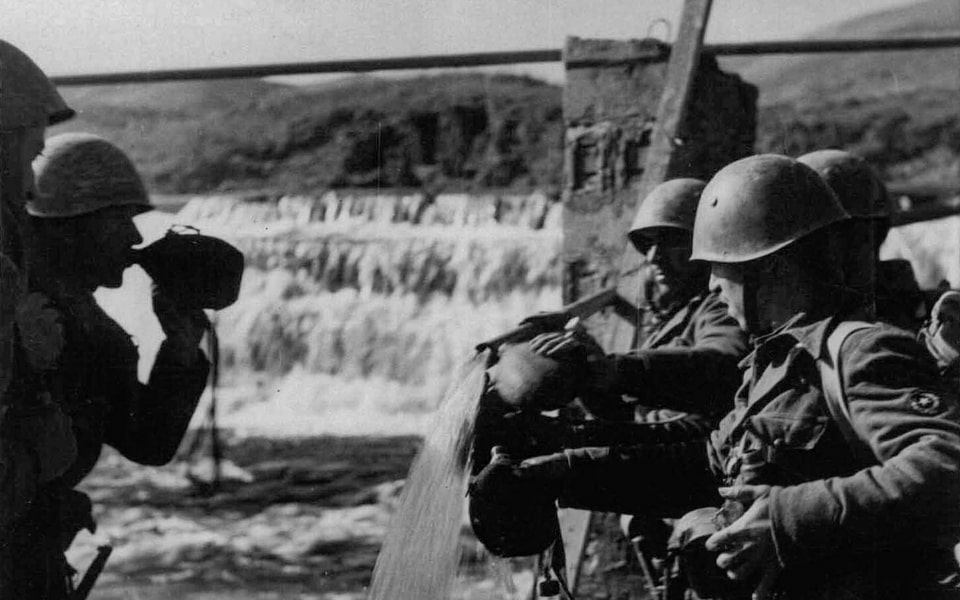
In the sense of the flexibility of the Pact of Steel, Mussolini thought he could seize Greece without Hitler’s help, presenting the latter with a fait accompli, as the German dictator had previously done with the Duce. Toward the second half of 1940, Mussolini craved a military triumph more impressive than a six-day campaign in Albania to ensure an equal status for his new Italian Empire next to the Third Reich. His largest miscalculation in this affair was the false sense of Italy’s military power and a conviction that Mussolini could conquer Greece relatively smoothly, similar to an easy walk in Albania. More than that, being a poor strategist and military leader, he tried to match Hitler in the scale of involvement in military matters. In Italy, Benito Mussolini was not only a nominal dictator, but he also combined the posts of Prime Minister, Commander-in-Chief of the armed forces, and five separate ministries, limiting the country’s freedom to act based on his approval of even minor issues.
Mussolini’s final decision to invade Greece came on October 15, 1940, and in parallel with this, he ordered the demobilization of 600,000 soldiers. The Italian dictator wanted to create a false feeling that affairs were going well in the country, as well as to conquer Greece with small forces involved, a decision which later proved to be a disaster. On October 24, 1940, the Italian army had 150,000 men prepared to support the invasion, with another 25,000 arriving later, thus comprising a total of 175,000. Being badly constrained in the modernity of military equipment, the Greek army, initially comprised of only 50,000 troops, later mobilized 209,000 men and 125,000 horses to face the invading troops. Even before the invasion, the Italian staff professionals calculated that after both sides completed their mobilization, the Italian army might face up to 330,000 Greeks, a figure that was anything but an easy walk for fulfilling Mussolini’s ambitions: another grievous miscalculation. Mussolini sent his ultimatum to the Greek side in the early hours of October 28, 1940, demanding that any ties with the British be cut and particular territories be given to Italy without a fight. Duce expected no settlement, and thus the Greco-Italian War began on the same day.


When the Italian forces moved across the border between Albania and Greece in several directions, theoretically, they had several advantages over the opposing side. On the day of the invasion, they had more troops on the frontline; they had tanks and air superiority over the battlefield. Above all, Mussolini’s army had some recent battle experience from its campaigns in Abyssinia and Albania. Unfortunately for Mussolini and fateful for the Greeks, on October 26, two days before the outbreak of the war, the weather deteriorated, resulting in thick clouds and heavy rain, which eliminated Italian superiority in the sky and complicated the advance on the ground through the complex terrain. The Greeks proved to have their advantages over the enemy. They knew the terrain better, and their supplies, even with the shortage of military equipment, were easier to manage compared to the Italian extended lines of supplies, which relied on delivering supplies from Italy across the sea. The Italian army proved to be poorly supplied, and the advancing troops lacked transport and even enough munitions, especially when the war did not prove to be a short, easy walk. The Italians had to split their divisions into smaller units and put them under other formations, which disrupted the command process and morale.


Instead of taking advantage of their air superiority on the battlefield, the Italian air forces used resources to attack Greek cities: Salonica (Thessaloniki), Athens, Patras, and Corfu, killing civilians. A complex terrain and the lack of paved roads neutralized the Italian initial advantage in mechanization, particularly the use of tanks, which the Greeks lacked. The Greek forces successfully used flexible defense tactics and used to trap Italian units, while the latter used narrow gaps in the defensive line to move inland. The demobilization of the Italian army, initiated by Mussolini in mid-October, was finally halted on November 10, followed by the opposite process. Several weeks into the war, the Greek forces reassured their success and moved into Albania in several directions, particularly pushing the enemy to leave Korytsa (Albanian: Korce) on November 22, and taking up to 2,000 prisoners of war and a bulk of military equipment. After this success, the Greeks continued with their counter-advance into Albania and later pushed the Italians out of several other cities like Pogradec, Gjirokastër, Himara, and Klisura.
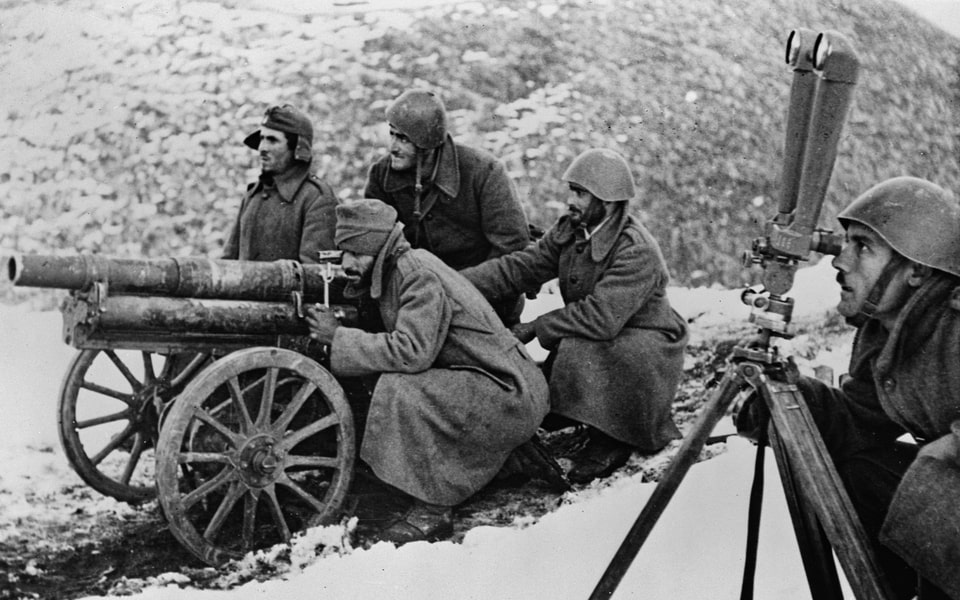

After two months of fighting, the Italian army abandoned the idea of an easy victory over Greece, and its situation with supplies deteriorated significantly. It appeared that the Italian army could not fight a war on its own, and in December 1940, it appealed to Germany for assistance, particularly asking for 800 tanks, 7,850 lorries and trucks, and 2,640 anti-aircraft guns. The overall picture of the failed Italian campaign might have worsened by the fact that Mussolini also suffered humiliating setbacks in his campaign in North Africa. The most sobering for the Duce was the loss of the port of Tobruk in January, when the British and Australian troops seized the strategic port in Libya and, more than that, took 25,000 Italian prisoners of war. But the situation in Albania was so embarrassing and catastrophic that, even considering the hardships in Libya, Italy threw all its resources to the Balkans, increasing its presence on the Greco-Italian front to 380,000 men, compared to 125,000 in Africa. Such a rapid, unprepared boost of Italian forces inevitably resulted in heavy losses on the battlefield, but Mussolini pushed his commanders to regain an advance into Greece.

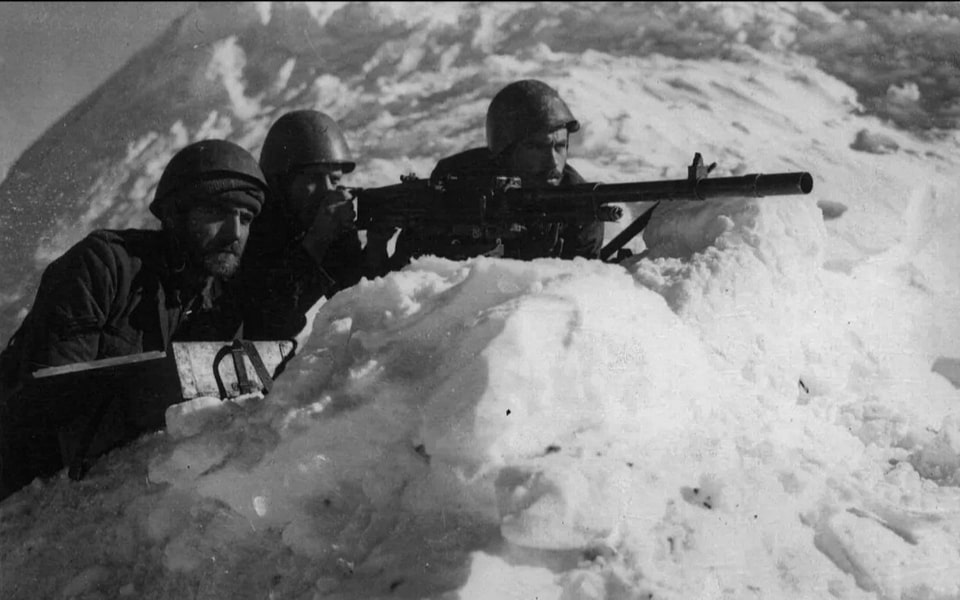
The Italian dictator arrived in Albania on March 2, 1941, to personally observe the Italian counter-attack toward Klisura, which began on March 9 with a massive artillery firing of 100,000 shells. After a week of fierce fighting, often in close combat like in the old wars, the Italian side suffered an enormous 12,000 casualties, and their small advances were led by the Greek counter-movements in the region. The operation was halted on March 16, and Mussolini had to go back to Italy, suffering a devastating blow to his self-made image of a great leader of a great European power. This disgrace was witnessed carefully by both Germany and Britain. In late March 1941, the Italian staff asked for German intervention in the conflict. Out of almost half a million men who were deployed to Albania between October 1940 and April 1941, 38,832 were killed or regarded as missing in combat (13,755 and 25,067, respectively), with another 50,974 wounded and 52,108 more sick, of which 12,368 got frostbite. After the failed Italian campaign in Greece, Mussolini had little choice other than to stick with Hitler and ask for assistance, once again as a minor partner in the alliance, so had wanted to change. Germany had to deploy their troops in North Africa in January 1941.


OPERATION MARITA: HITLER INVADES YUGOSLAVIA AND GREECE, APRIL 1941
On November 4, 1940, only one week after the start of the Italian advance from Albania into the border territories of Greece, Adolf Hitler requested his army staff officers to examine possible German intervention to help Mussolini. Even after the flow of Italian requests for military equipment later that month, Hitler did not hurry to fulfill his commitments from the Pact of Steel. He had no intention to intervene until the spring of 1941, leaving the situation and Italian disgrace to flourish. More than that, in contrast to Benito Mussolini, who still had to show military power by invading an independent country on a false pretext, Hitler gained another kind of control in the Balkans without a single shot. Since September 1940, German soldiers, advisors, and technicians have been present in Romania, followed by an official appeal from the local government. For the next four years, Germany would control and take great advantage of the Ploesti oilfield area, one of Europe’s largest petroleum centers, with its giant oil refineries located in southeastern Romania. On March 1, 1941, Bulgaria joined the so-called Tripartite Pact with Germany, Italy, and Japan (first signed by the latter three in September 1940); the treaty was previously also joined by Hungary and Romania.
Initially, Hitler did not consider direct intervention in the Greco-Italian war until March 1941, not to divert his preparations to invade the Soviet Union, and even the actual failure of Italian war efforts was not his trigger point. The problem came from Yugoslavia, which also joined the Tripartite Pact on March 25, 1941, but two days later, a military anti-German and pro-British coup took place, placing a seventeen-year-old King Peter II (1923-1970) in power. A young boy, a representative of the old Karađorđević dynasty, who had nominally reigned under a regent since 1934 after his father, Alexander I, was killed, had a pro-British position. A new government, which rejected any previous commitments to Germany, was set up on March 27. The civilian population cheered a young king and supported the anti-German sentiments by raising British and French flags across Belgrade. Hitler was furious about the coup in Yugoslavia, and he immediately ordered a revision of the previous plans for the invasion of Greece, which now had to expand to include Yugoslavia as a matter of one powerful blow in the Balkans. Understanding the upcoming events, the Greek government tried to contact the German side by reviving an appeal to act as a mediator with Italy, but Hitler ignored it. Though averting attention and resources from preparing for Barbarossa was not in his plans, he could not leave Yugoslavia and Greece due to the British rising presence in the region, a threat to his southern flank against the Soviet Union, and the important Ploesti oilfields. The Balkan campaign of spring 1941 falls squarely inside the period covered by James Holland’s The War in the West: Germany Ascendant 1939–1941, which treats it as one of the overextensions that would matter within a year.
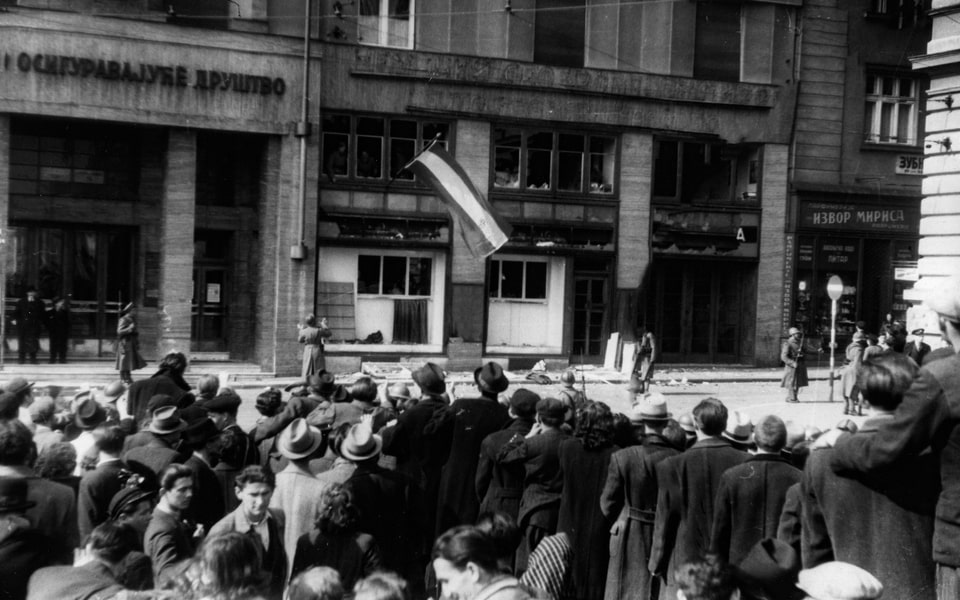
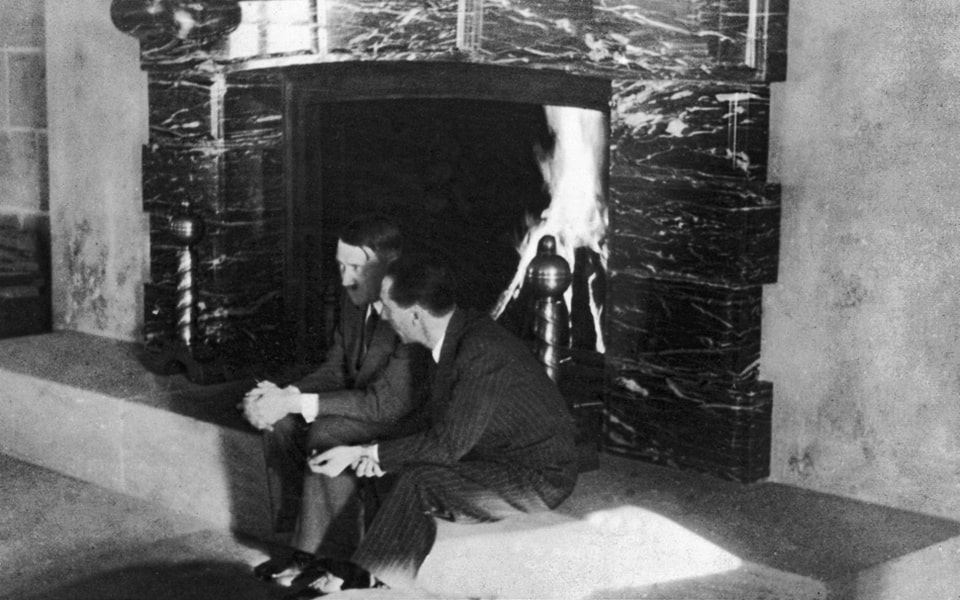
Having previously obeyed the British presence on their mainland not to provoke the Germans, the Greek side now reconsidered their attitude and the need for British assistance against the upcoming invasion from Bulgaria. More than that, the death of a Greek military dictator, Ioannis Metaxas, on January 29, 1941, a man who rejected the Italian ultimatum and went to war, deprived the country of a strong leader. On the other hand, his successor, Alexandros Koryzis (1885-1941), finally asked Britain to dispatch forces to Greece. The British side switched the flow of their military resources from North Africa to Greece in the hope they could organize an anti-German stronghold in the Balkans by uniting Yugoslavia, Greece, and possibly Turkey. Meanwhile, the combined German attack against both Yugoslavia and Greece was scheduled for April 6, 1941, Orthodox Easter Sunday.
On paper, the Yugoslavian army comprised almost a million men under arms, and in contrast to Greece, even had tanks, of which only five dozen were relatively modern models from the 1930s. The country also possessed five hundred aircraft, of which around two hundred were not so much outdated. In reality, the army, like the Greeks, had an inferior mechanization level and mostly relied on horses and mules. The Yugoslav forces, which were not fully mobilized on April 6, faced the invasion from four different directions: Austria, Hungary, Albania, Bulgaria, and Romania to the east. The ill-prepared army was thus stretched on a huge front of more than 1,500 kilometers against the well-mechanized and combat-experienced Wehrmacht, which invaded the country with thirty-three divisions, including six armored, 337,00 men in total, supported by one thousand aircraft and 875 modern tanks. In parallel with a stunning penetration from four sides, in the early hours of April 6, the German Luftwaffe conducted a massive air raid on Belgrade, killing at least 3000 to 4000 people, disrupting the chain of command, and destroying most of the Yugoslavian aircraft on the ground. The Yugoslavian army was swept by the German strength, and Skopje fell on April 7, Zagreb and Ljubljana three days later, and finally Belgrade on April 13. The short reign of young King Peter ended on April 17 with his flight to London and unconditional surrender.
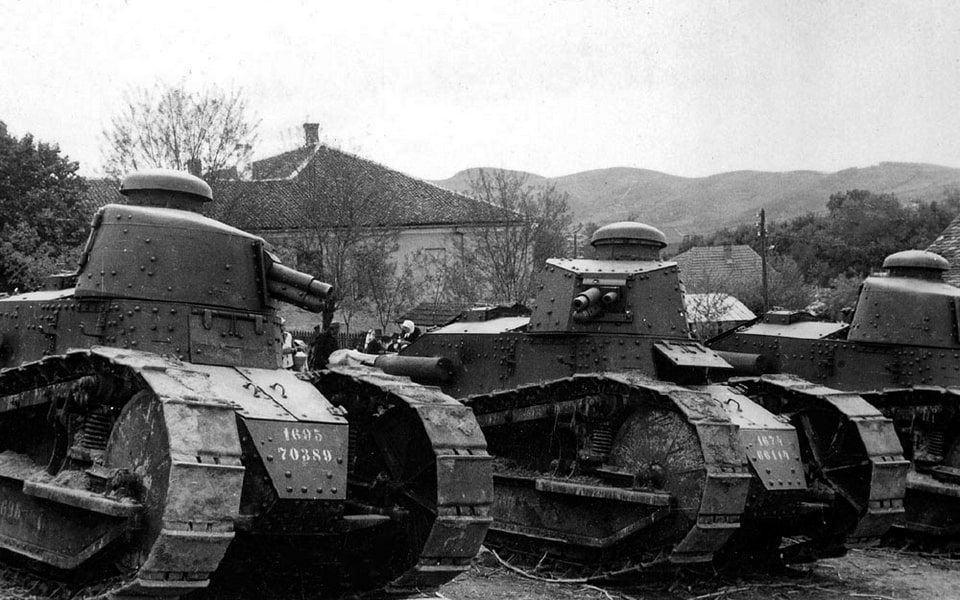

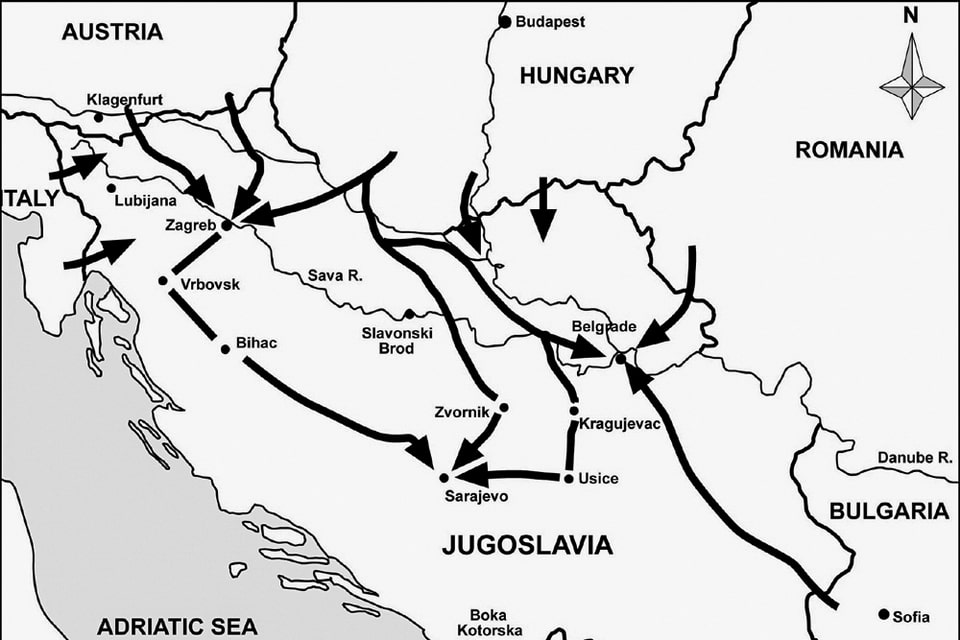
After the surrender, Yugoslavia was cut into pieces by Germany, Italy, Bulgaria, and Hungary, and thus began the bloody four years of occupation, fierce partisan movement, and population evictions, which finally resulted in the death of around one million people between 1941 and 1945. More than 300,000 soldiers were taken prisoner in April 1941, and the army suffered a total of one hundred casualties, killed, missing, or wounded. Hitler conquered Yugoslavia at the expense of only 558 men, of whom 151 were killed, 392 wounded, and fifteen missing in combat. What was also important in the military context, by seizing the territory of Yugoslavia, the Germans gained logistical routes to proceed to Greece. The Yugoslavian railway system was connected with Germany through Austria, as well as with Romania and Hungary. Taking the main roads in Southern Yugoslavia also opened a path to Northwestern Greece along the coast behind the main defensive lines.


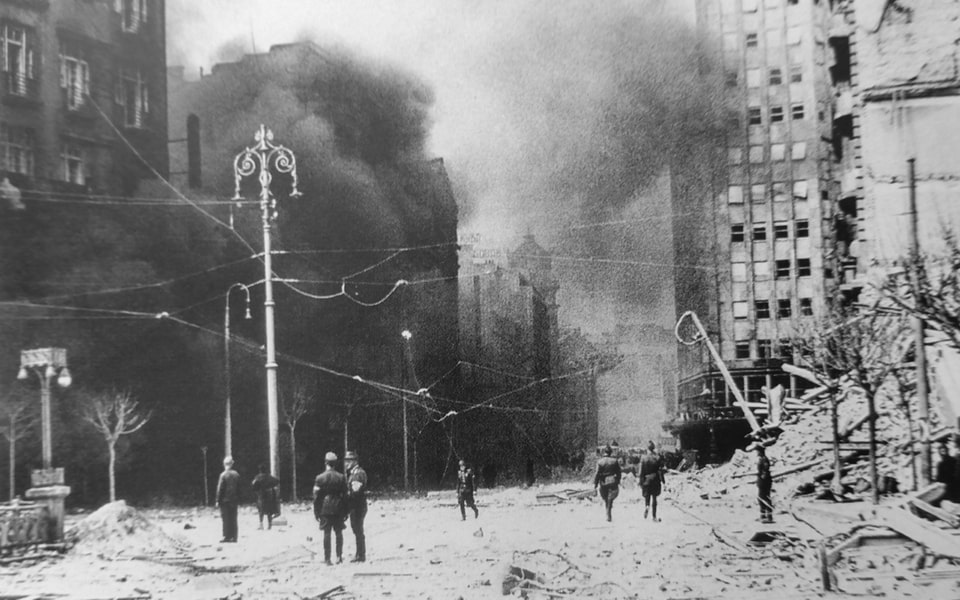
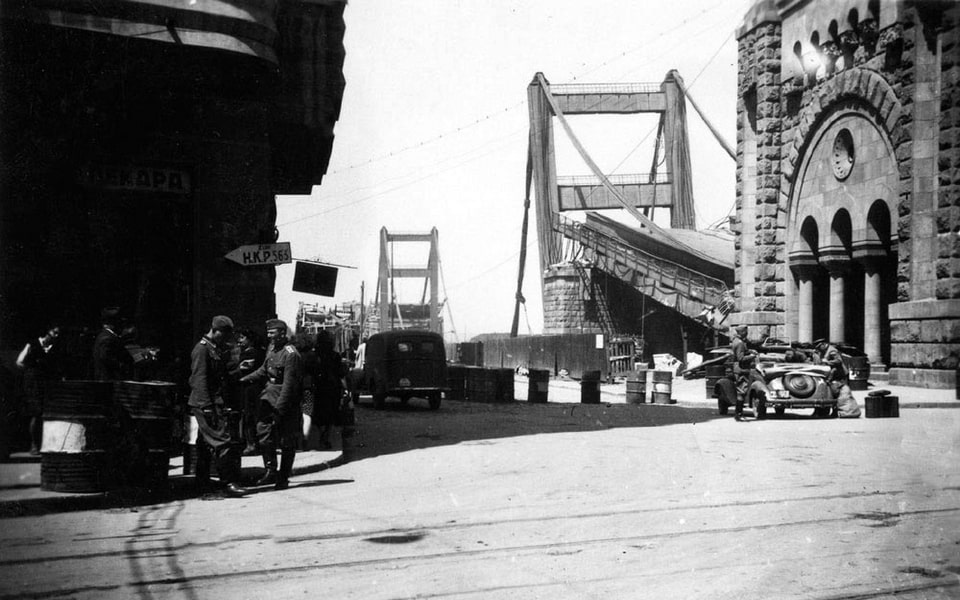
The Germans did not wait until the fall of Yugoslavia to invade Greece, as they launched a simultaneous attack on both countries on April 6. They used Bulgaria as a launching ground to penetrate the Greek border from the east with the force of 11 divisions under the command of Fieldmarshal Wilhelm List (1880-1971). This direction, also known as the Metaxas line, was held by only three under-armed Greek divisions. Another ten German divisions under the command of Generaloberst Maximilian von Weichs (1881-1954) targeted Greece from Yugoslavia. In total, twenty-one highly professional and well-mechanized German divisions faced only six Greek and three Allied divisions on the mainland, while most of the Greek army, twelve divisions, were still shackled against twenty-one Italian divisions in Albania. The Allied support to Greece amounted to 15,400 British soldiers, 17,000 New Zealanders, and 17,000 Australians under the overall command of Henry Maitland Wilson (1881-1964), better known as Jumbo Wilson. At the start of the invasion in early April, the Axis possessed an overwhelming advantage in the air: 800 German and 300 Italian aircraft against only 80 of the Royal Air Force. One hundred light tanks brought from North Africa were in poor condition and lacked spare parts.
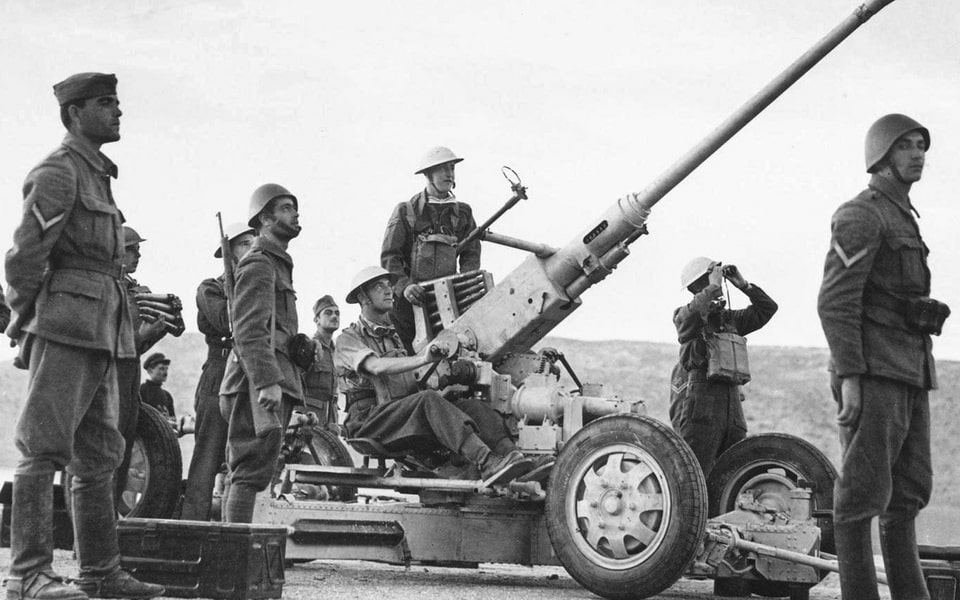


In the first days of the invasion, the combined Greek and Commonwealth forces formed four different defensive lines, each of which was to be abandoned further into the battle with the lightning-fast advance of the enemy. After the fall of Yugoslavia and the threat of Wehrmacht forces cutting the Albanian line of defense, the Greeks had to withdraw from this front: first from Koritsa on April 9, and three days later, the general retreat from Albania was ordered. The Metaxas line, 155 kilometers in length and comprised of twenty-one separate defensive fortifications, was mostly outflanked by April 10. German commander Wilhelm List highly praised the courage and resistance of the Greek soldiers on this front and even ordered his soldiers to salute the enemy after the latter surrendered their arms and supplies. At the same time, another Greek-Allied defensive line known as the Aliakmon Line was abandoned for a strategically better position to the West, aimed at facing the German units moving from Yugoslavia through the Monastir Gap. While the British and Commonwealth forces withdrew further and further to the south with an order, in just ten days since the start of the invasion, the Greek army lost its effectiveness as a battle force, and their battle orders disintegrated.


On April 15, the remaining Greek and British troops were ordered to retreat further south to a new temporary line at Thermopylae. The references to the heroic 300 Spartans and the 480 B.C. battle did not work against the overwhelming German offensive, whose vanguard units were now less than 50 km from the Gulf of Corinth, a marathon distance from pushing their opponents into the sea. What made the Greek-British retreat even more complicated was the flow of civilian refugees, who flooded the roads, similar to eight million French civilians in May-June 1940, less than a year before, facing the same enemy. On April 17, the Greek Army minister gave army generals a free hand in deciding further actions. The next day, Prime Minister Alexandros Koryzis committed suicide, and the Greek newspapers concealed the true end of the man, claiming a heart attack, not to increase panic in the country even more. On April 19, 1941, Archibald Wavell, the British commander in the Middle East and Africa, visited Athens to receive Greek consent for the evacuation of the Commonwealth forces from the mainland. The next day, King George II gave his formal permission to the British to abandon Greece, and two days later, the King appealed to his fellow countrymen by radio, calling them to fight to the end, but the fall of Greece was already inevitable. On April 23, the remaining Greek forces in Albania and the northwest mainland had to surrender as well.


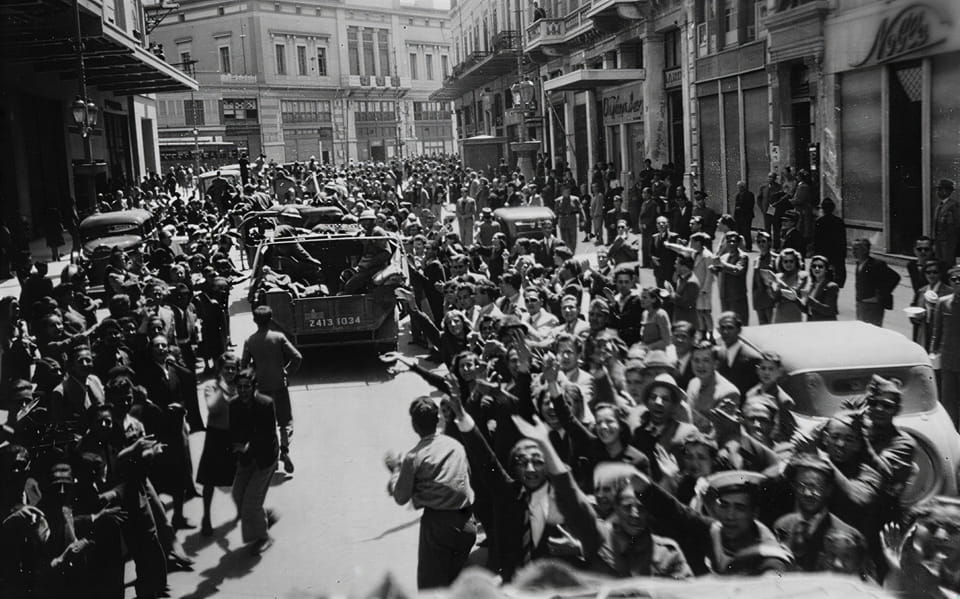

On April 22, 1941, the expeditionary forces were given the order for general evacuation, and on April 23, Greek King George II, his family, and remaining members of the government, except for Alexandros Papagos, fled the country first to Crete, then through Egypt to London. The Royal family spent the years of occupation in exile by formally running a Greek government in exile before returning home as late as September 1946, where he ruled for only half a year before George’s death in April 1947. The Commonwealth troops moved toward four evacuation points with one more in reserve, from which they planned to withdraw first to Crete and then to Egypt. When the last British ships left the southern port of Monemvasia on the night of April 29, 1941, in total 50,000 men were evacuated, of which 25,000 troops went to Crete, where the following month witnessed a fierce battle for the island known as the Battle of Crete. The Royal Navy left behind at least 9,000 men (other sources give up to 14,000) captured by the Germans throughout the fight on the mainland and nearly 2,200 dead or missing, as well as 8,000 vehicles, 200 aircraft, and 100 tanks lost in battle or left behind. The Greek losses amounted to 75,000 men, with another 218,000 captured as prisoners of war. The German losses were much more moderate, with only 1,099 killed and another 385 missing in combat, and 3,752 recorded as wounded, compared to the British, Greek, and Italian: the latter lost 40,000 killed or missing and 63,000 wounded. The German occupation of Greece began, which later resulted in the death of at least 300,000 people throughout the war, of which 40,000 died of hunger toward the end of 1942, when the loaf of bread cost two million drachmae, and the olive oil had become a hard currency.

The phrase “Battle of Athens” turns up constantly in searches and in popular accounts, and it describes something that did not happen. There was a Battle of Greece — three weeks of it, from 6 to 30 April 1941, fought on the Metaxas Line, at the Monastir Gap, on the Aliakmon, at Thermopylae and on the beaches of the Peloponnese. But the capital was deliberately left out of it.
The sequence was this. On 20 April Lieutenant General Georgios Tsolakoglou, commanding the Greek Epirus Army and cut off in the north-west, surrendered on his own initiative; the armistice was signed on 23 April. The King and the government had already flown to Crete. The British were evacuating from the southern beaches. With no army left to hold it and nothing to gain by its destruction, Athens was declared an open city — the formal declaration under the laws of war that a place will not be defended, in exchange for not being attacked.
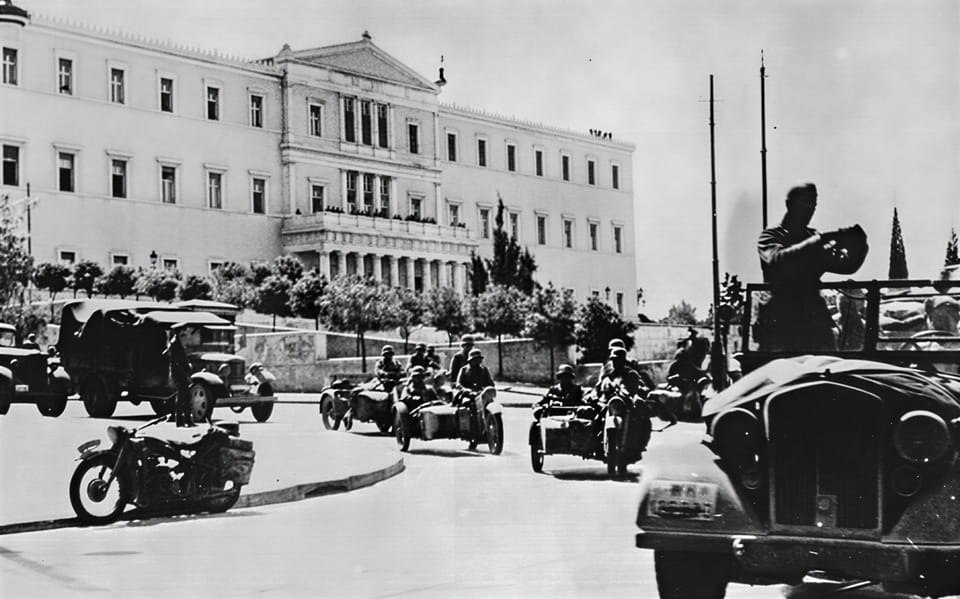
So on the morning of 27 April 1941 the leading German units simply drove in. Photographs from that morning show them motoring down empty boulevards past shuttered shops, with a few civilians watching from the pavement. There was no battle, no siege, no last stand. The flag went up on the Acropolis at a quarter to nine, and by lunchtime the occupation was an administrative fact.
THE SWASTIKA OVER THE ACROPOLIS: 27 APRIL 1941 — AND THE TWO STUDENTS WHO TOOK IT DOWN
The rumors and fears regarding the coming of the German troops spread to the civilian population in Athens as early as April 18, the day Prime Minister Alexandros Koryzis shot himself. While the nature of his death was unknown to people at the time, ordinary people felt the upcoming tragedy, among other things, was incited by the Germans through a radio broadcast calling Greek people to oppose the British and to loot stores for food in anticipation of the worst. On April 20, 1941, people in Athens witnessed the last air battle of this campaign between the remaining squadron of the Royal Air Force and the Luftwaffe aircraft above the city, which lasted about half an hour. As the Commonwealth forces initiated a general move toward the ports and evacuation of more than fifty thousand men, German bombers went on bombing the outskirts of Athens, particularly the famous Port of Piraeus, one of the largest in Europe. The civilian population saw the withdrawal of the British and a chaotic disintegration of their army, and the coming of the refugees from the North only intensified fear and anxiety during the painful anticipation of the German invaders in late April. The national spirit of solidarity and unity, which had united the country in late 1940 against the Italian invasion, now made space for desperation, last attempts to take savings from the banks in the city, and buying goods in the empty stores.

In the early hours of April 27, two days before the last British ships left the Greek harbors and four days after the Greek royal family left the country, the vanguard German units finally reached the Greek capital. They were the soldiers from the 6th Gebirgs-Division (6th Mountain Division), which was formed in 1940, participated in the French campaign and, since April 6, 1941, fought in Greece, moving inland from the direction of the collapsed Metaxas line. After the Balkan Campaign, the 6th Division was transferred to Finland, where it fought against the Soviet Union until the end of the war, and was later captured by the British forces. But around 8 a.m. on April 27, 1941, they were the victors, who entered Athens from the north in armored vehicles, tanks, cars, and motorbikes, and now moved toward the ancient city center. The city streets were still patrolled by the local Greek police, and thousands of civilians now witnessed the enemy columns moving across their beautiful city. The Wehrmacht soldiers from the 6th Mountain were joined by the 2nd Panzer Division, whose motorbikes now moved toward the Acropolis.

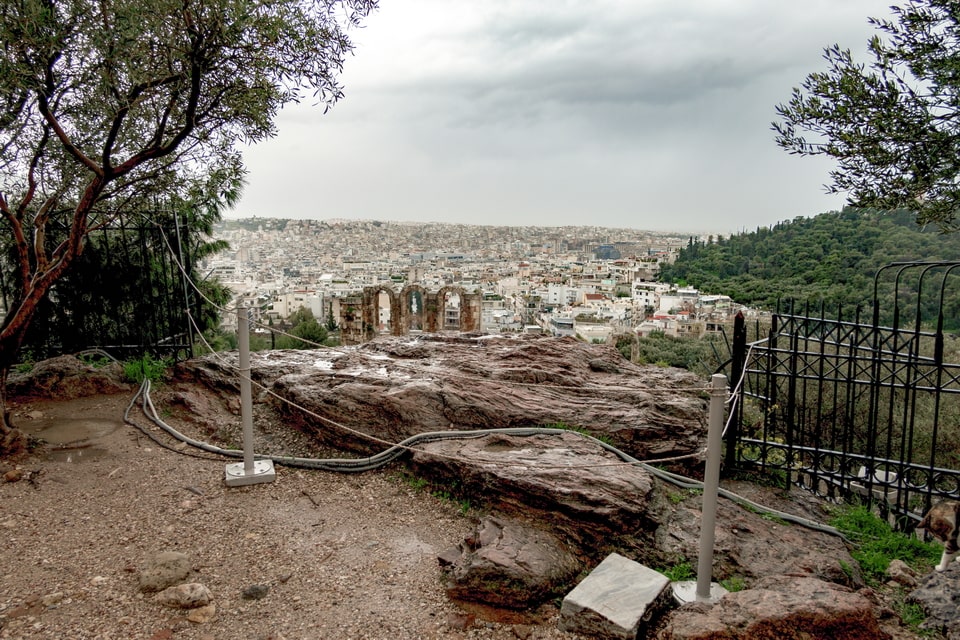
When the vanguard German units reached the top of the Acropolis Hill, they put down the Greek flag and hoisted the swastika over the conquered Athens. On May 9, 1941, the famous British Daily Mail newspaper revealed a story about a young Greek, Konstantinos Koukidis, who supposedly rejected German orders to take down the national flag of Greece, covered himself with it, and jumped from the cliff of the Acropolis to his death. Since then, the story has become a symbol of the self-sacrifice of the Greek people during the war and the occupation, and the image of Konstantinos Koukidis has been highly praised. Unfortunately, the modern historical investigation made by Greek scholars did not find any factual evidence about a man named Konstantinos Koukidis and the event that supposedly took place on April 27, 1941. On the other hand, the image has since become a part of a collective memory, and in 2000, a commemorative flag was installed on the edge of one of the cliffs of the Acropolis in the southeast part of the hill. Every year on October 28, on Ohio Day, which commemorates the rejection of the Greeks of the Italian ultimatum in 1940, the commemorative plaque of Konstantinos Koukidis becomes a highly visited historical landmark, one of the most praised Athens WW2 locations.


There are several infamous photos of the German soldiers and the hoisted swastika raised above the height of the Acropolis Hill. In May 1941, the site was visited by Field Marshal von Brauchitsch (1881-1948), Commander-in-Chief of the German army, whose entourage in Athens included a Nazi archeologist, Walther Wrede (1893-1990). The photo of Brauchitsch atop the Acropolis appeared in 1942 in a German booklet devoted to the Balkan campaign. The famous historical hill was not the only location on April 27, 1941, chosen to hoist the swastika. More Nazi flags appeared on the buildings across the city, and at 10:45 a.m., the city was formally handed to the German troops during a meeting between the Athens mayor and the German high-ranking officer Georg Stumme (1886-1942), the commander of the XXXX Panzer Corps. On the same day, the national anthem of Greece on the radio was muted, and the Athenians heard the voice proclaiming the capture of the city.


While the story of Konstantinos Koukidis became a myth without factual basis, on the night of May 31, when the Germans finally seized the island of Crete and pushed the British forces out of it, another real story took place on the slopes of the Acropolis, this time touching the German swastika they put up on April 27. Two young Greeks, both aged nineteen, Apóstolos Sántos and Manólis Glézos, secretly climbed the unevident path toward the top of the Acropolis, cut down the German flag, cut it into pieces, and vanished into the night, while the German guards were having their time with local girls. Despite later Nazi efforts, the two were never caught, and their story became public only after the war ended in 1945. Manólis Glézos lived to be 97, years old until 2020, being both a Greek Parliament member and a European Parliament member with strong pro-communist beliefs. His companion Apóstolos Sántos also lived a long life until he died in 2011.


KORAI 4: THE GESTAPO CELLS SIX METRES UNDER CENTRAL ATHENS
As early as April 29, the Germans allowed the conquered Greeks to form a puppet government comprised of former generals, who expressed their willingness to collaborate with the occupants. Initially, Adolf Hitler was considered to form a fully controlled state body led by King George II and Emmanouil Tsouderos, the Prime Minister since April 18, and a successor of Alexandros Koryzis, who had committed suicide. Since both leaders fled the country in late April and formed a Greek government-in-exile, the role of a key collaborationist was given to Lieutenant General Georgios Tsolakoglou (1886-1948), a high-ranking Greek army officer, supported by several other officers. He surrendered his troops to the Germans willingly as early as April 20 and six days later wrote a personal appeal to Hitler asking the German dictator for permission to form a collaborationist government. Despite Tsolakoglou’s protest against giving Italy its zone of occupation, Greece was divided into three parts. Germany took Thessaloniki and the Macedonia area, the coastal part with Athens, a buffer strip of land next to the Turkish border, the Western part of Crete, and the Aegean islands: Lesvos, Chios, and Lemnos. Bulgaria was permitted to occupy an adjusting area in northeast Greece, and the Italians were left with the remaining mainland and the islands.

After the fall of Greece, Hitler immediately shifted his focus back to his preparations for the invasion of the Soviet Union, and minimal military forces were left in the Balkans; the Greeks were to suffer three years of terror led by Nazi henchmen, of which the last phase of occupation was the most severe. The offices of SiPo /SD (Sicherheitspolizei / Sicherheitsdienst) and Gestapo (Geheime Staatspolizei) were opened in Athens and Thessaloniki at the onset of the German occupation, and in May 1941, the capital even witnessed a visit from notorious Heinrich Himmler, who seemed to be mostly interested in visiting the sites, particularly the Acropolis. The man responsible for the initial penal practices against the Greek citizens was Kurt Geissler (1902-1963), an experienced criminal police officer who joined the Gestapo in 1933. After the fall of Greece, he was deployed to Athens and assigned to track down the opponents of both the Greek puppet government and the German authorities. Like in many other countries occupied by Nazi Germany in WW2, there were lists of potential enemies prepared in the way before the war by the Reich Security Head Office (RSHA) in Berlin, which mostly included intelligentsia and politically active people, communists, and army officers.


The initial arrests conducted under the supervision of Kurt Geissler proved to be more problem-provoking than effective since the round-ups and measures to search homes often targeted people connected with the new regime and the German administrators. More than that, the methodless arrests interfered with the efforts of German officials to win the support of elites in Greek society. Annoyed by the Geissler activity, it was diplomats who made him leave the country in the summer of 1941, particularly Genther Altenburg (1894-1984), Reich plenipotentiary in Greece, and thus the senior civil official in the country. A period between the summer of 1941 and the autumn of 1943 witnessed moderate activity of the punitive system of terror in Greece, particularly in Athens, targeted against Greek civilians. In this period, it was primarily the Wehrmacht and Foreign Office diplomats who had the reins of power in occupied Greece, and the military counter-intelligence services, Abwehr, were the primary body for intelligence matters in the country, leaving Sipo/SD on the outskirts of making significant decisions. During these two years, most of the punishment measures against the population were made under the Wehrmacht’s summary court-martial orders.
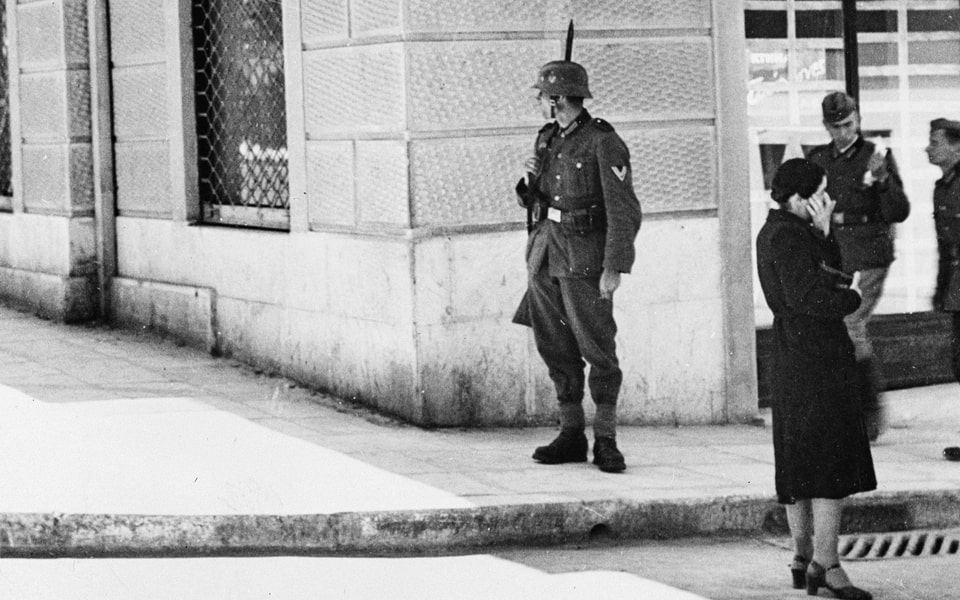
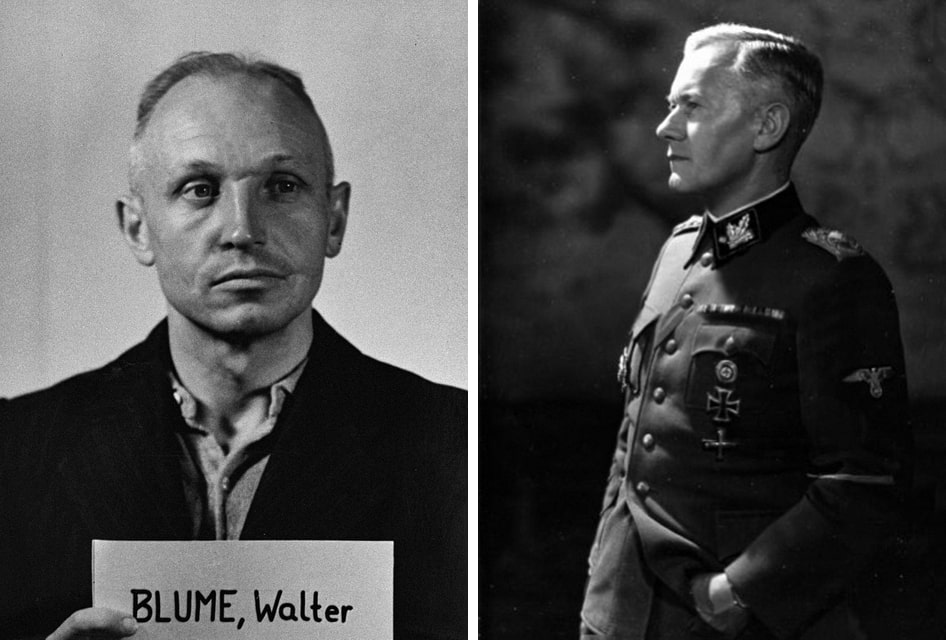
The situation for the Greeks changed dramatically in September 1943 with the capitulation of the Italian forces and the rise of the SS influence on the occupied territories outside the Soviet Union. The process was not unique to Greece, and during that period of war, Himmler’s empire of terror absorbed the previous military and summary court-martial judicial system, which de facto ceased to function, though it remained on paper. There were the SS courts, but they served political purposes and were not a means of defense for the civilian population. In September 1943, Himmler appointed Jürgen Stroop (1895-1952), the infamous suppressor of the Warsaw Ghetto Uprising, as a Higher SS and Police Leader in occupied Greece, but he was rejected by the locals as an unacceptable figure and was replaced in October by Walter Schimana (1898-1948). While the new commander was an energetic proponent of the persecution of Greeks and Greek Jews, the real power in the decision-making of terror was in the hands of Walter Blume (1906-1974), a former commander of Sonderkommando 7a on the Eastern Front. Blume was appointed the commander of Sipo/SD in Greece and later became one of the architects of the mass deportation of Greek Jews and the atrocities against the Greek population.
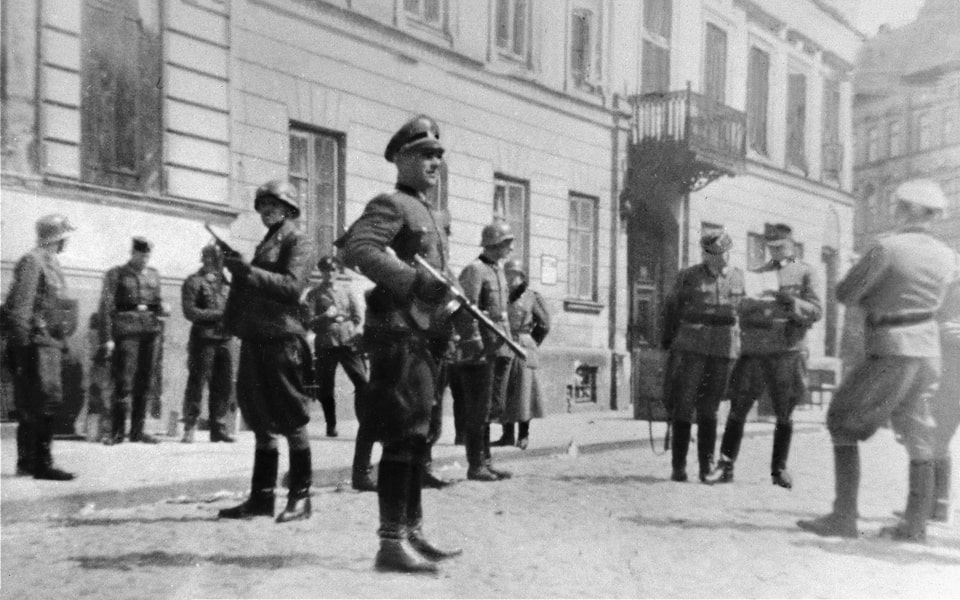

The initial restrictions set upon the civilian population in 1941 were ratcheted up, and even minor disobedience offered prospects of arrest, torture, or death without any proper judicial process, even formal. New executioners sent to Greece were the veterans of mass killings on the Eastern Front. Walter Schimana was previously an SS and Police Leader in Belarus, orchestrating mass punitive actions. Walter Blume was responsible for the atrocities as a Sonderkommando leader in Einsatzgruppe B and supervised the killing of thousands of Jews. Another man sent to Greece in 1943 was Paul Radomski (1902-1945), who commanded the infamous Syrets concentration camp in occupied Kyiv, Ukraine. Franz Kleedorfer was a former criminal secretary of the Gestapo headquarters in Vienna and worked in the East further into the war. After the expansion of the SD and Gestapo presence in Athens, the round-ups, tortures, and killings became a daily routine, and people vanished from the streets en masse.
One of the most infamous sites in Athens during the German occupation in 1941-1944 was a requisitioned building at 6, Merlin in the heart of the city, at arm’s length from the Tomb of the Unknown Soldier. It served as the Gestapo headquarters and was turned into a reign of terror, especially after October 1943, when the staff was expanded from a dozen men to several dozen to cope with the scale of arrests. The scope of repression covered all matters in the region, from catching people who owned the Greek flag, to dealing with the black marketers, to eliminating partisans. Blume’s staff here commanded some SD posts around the country and gained information from a wide network of secret agents and collaborators. The building at Merlin Street was transformed into a vast interrogation center with rows of prison cells and torture facilities, capable of working with dozens of potential victims at once. Later on in 1944, the executioners were guided by quotas, targeting a specific number of people without investigation or pretext, thus torturing and killing people who showed no disobedience to the regime.

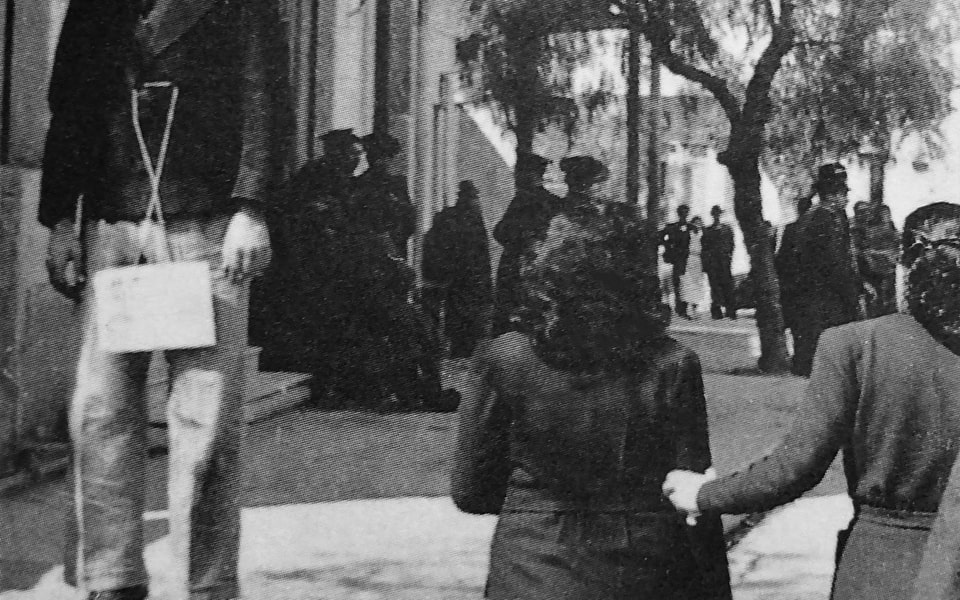
Hundreds of people who went through the Gestapo headquarters in the center of Athens lost their lives here due to intensive torture, were executed, and many more, after interrogations, were sent to the infamous Haidari concentration camp, which operated in the suburb of Athens between September 1943 and September 1944. Most of them were either executed there or sent further to Auschwitz. In a wider sense, a young boy who sang a Greek song on the streets of Athens could end his life in the barracks of Birkenau or its gas chamber. Sometimes, the Gestapo officers ordered local collaborators to hang the bodies of tortured people on trees as an act of humiliation for the civilian population. Toward the end of the occupation in September 1944, the scope of terror was halted simply because Walter Blume was ordered to leave Greece, and he never fulfilled his ‘chaos thesis’ of sending every able-bodied Greek to German camps. On September 7, he left the country. In 1948, he was first sentenced to death; then the sentence was shifted to twenty-five years of imprisonment; and finally, in 1955, Blume left the prison, only after ten years of confinement, and lived until 1974.
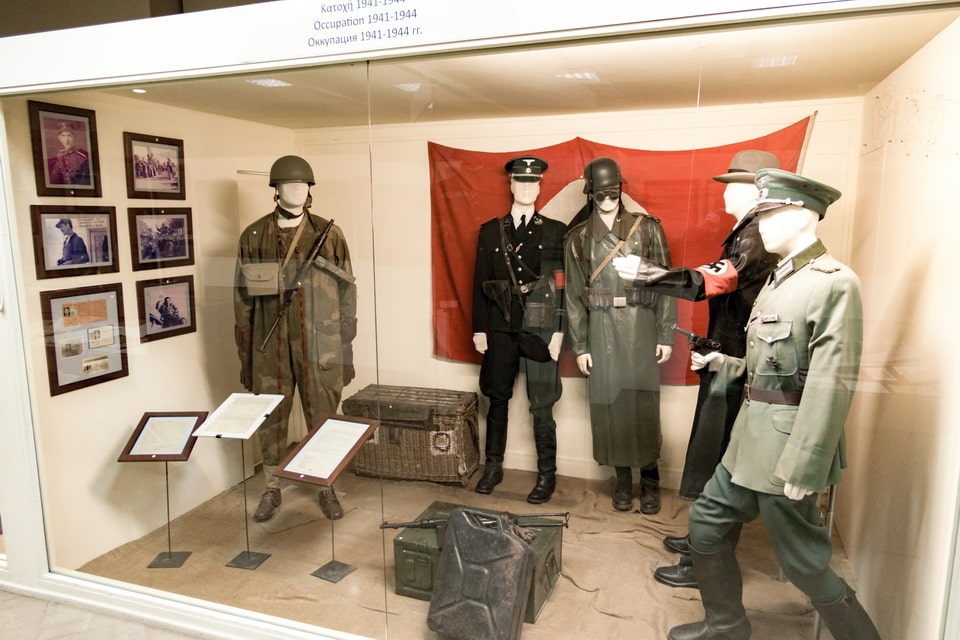
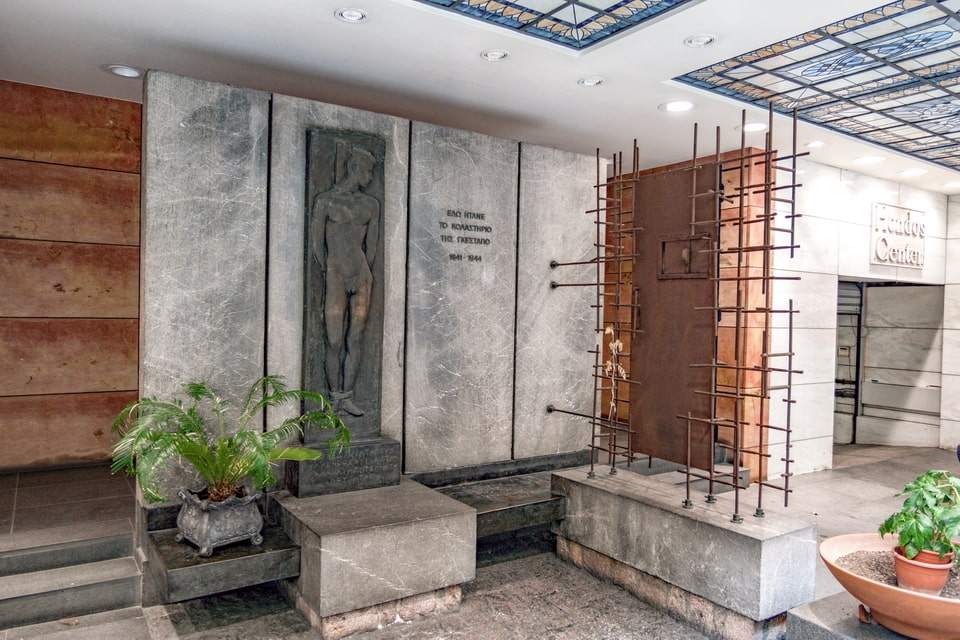
Getting back to the Merlin 6 building, after the withdrawal of German troops in 1944 and the end of the occupation, it was once again used for civilian purposes. In the 1980s, it became a shopping center, and today beauty shops occupy the former torture and interrogation center. There is a memorial at the entrance devoted to the victims of the Gestapo in Greece during the 1941-1944 occupation. A statue of a naked man with his arms tied behind his back and several plaques in Greek. One says: ‘This used to be the Gestapo Hellhole, 1941-1944’ and the other ‘Free people were led through this door’.
THE HOLOCAUST MEMORIAL IN ATHENS AND THE DESTRUCTION OF GREEK JEWRY
Similar to the ‘enemy’ lists of the citizens of European countries, particularly Greece, as early as 1938, the Nazi bureaucrats accumulated information regarding the Jewish communities on the continent. These figures were later transformed into the infamous Wannsee Conference estimates of living Jews in Europe. When German units entered Athens and reached the coast in late April 1941 and divided the conquered country between themselves, Italy, and Bulgaria, they estimated that the size of the Jewish community in Greece numbered from 70,000 to 80,000 people. Apart from the bare figures, the Nazis knew the mixed nature and the distribution of the community. The largest share of Jews in Greece were Sephardic Jews, the descendants of Jewish refugees who abandoned Spain in 1492 and settled in Northern Greece and Macedonia. The absolute majority of them now lived in Thessaloniki (Salonica), a city taken from the Ottoman Empire in 1912 and now considered one of the Jewish capitals in Europe. Even five centuries after leaving Spain, most of them still spoke a rare dialect called Ladino and were poorly assimilated into Greek society. A smaller share of Greek Jews were the Romaniot Jews, historically distinctive from the Sephardim, a more ancient community that came to Greece two thousand years ago. They were mostly highly integrated into Greek society and populated central and southern Greece, including Athens, and some of the Ionian islands.
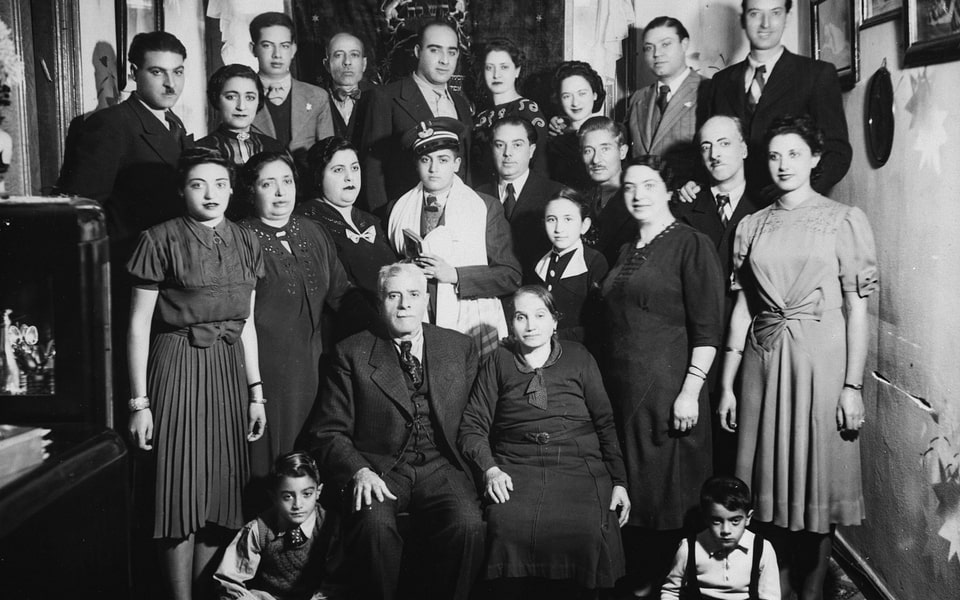
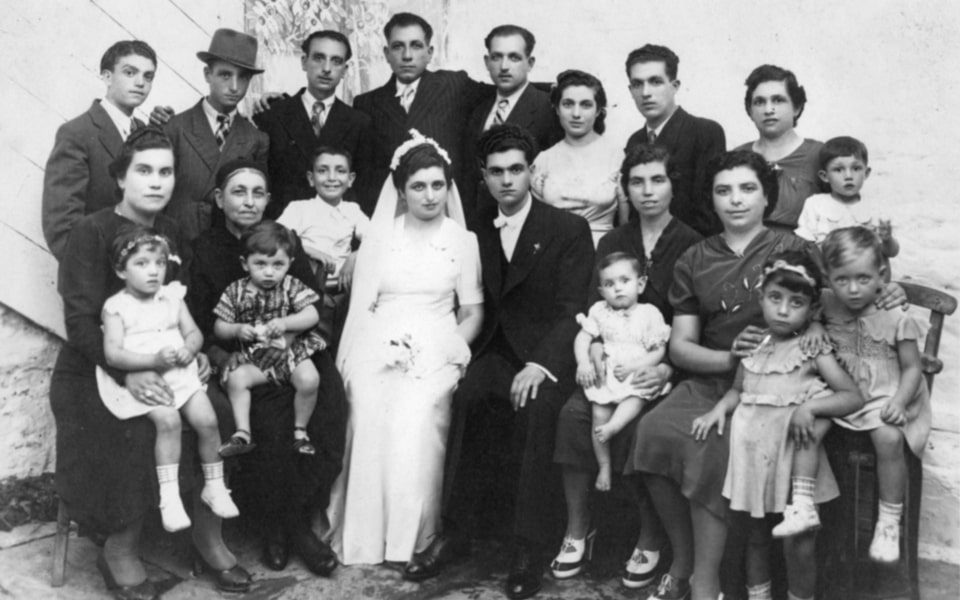
In the first two years of occupation, the lives and deaths of the Greek Jews were mostly similar to those of the Christians and Muslims under the Nazi Empire. They experienced humiliation, confiscation of property, suffered and died from hunger, and were subjected to persecution, arrests, and torture, but not as the main targets. In a wider sense, in the first stage of occupation, the Jewish community in Greece shared the same challenges and hardships as other ethnic groups. The situation deteriorated in mid-1942 with the mass round-ups and forced labor units in Thessaloniki, and public humiliation targeting specifically Jews. March 1943 brought two new dimensions. First, in March, more than 4000 Jews in the territories occupied by Bulgaria, the absolute majority of the local community, were arrested, held in local camps, and later sent to the Treblinka extermination camp, where every one of them was gassed to death. The first mass deportation began in Thessaloniki on March 15, and in the next five months, before August 1943, most of the Jews were deported to Auschwitz, whose records showed that 48,974 people arrived, of whom 37,386 were killed upon arrival in gas chambers. After the end of the war, considering the returning Jews, fewer than two thousand Sephardic Jews lived in Thessaloniki.
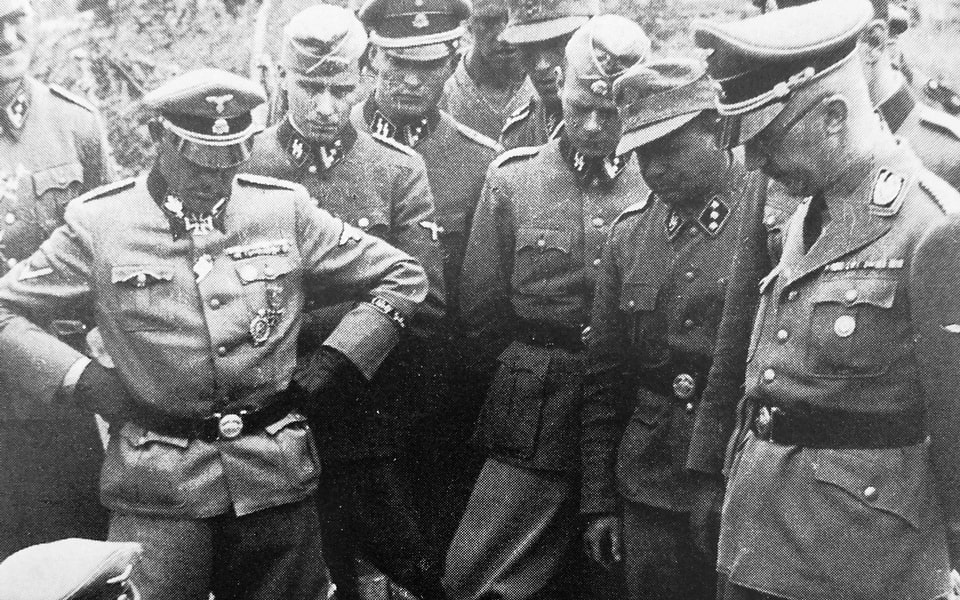
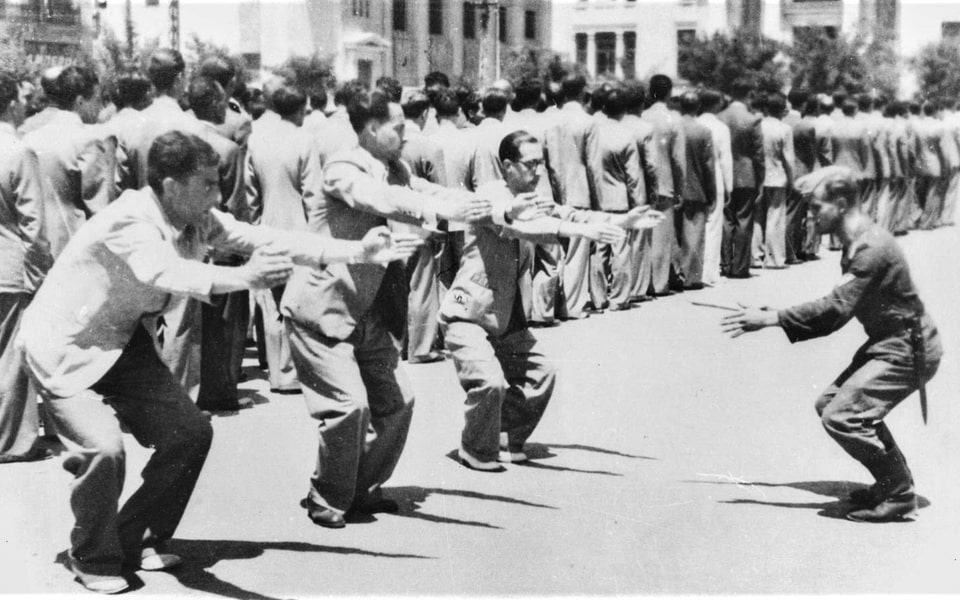
While some Thessaloniki Jews left the city for Athens, later in 1943, the fate of the Jewish community there was threatened. After the elimination of the Italian occupational zone and the rise of the influence of the SS in Greece in September 1943, Athens saw the coming of the notorious Jürgen Stroop. In less than a month, he was superseded by Walter Schimana, but Stroop initiated the process of mass targeting of the Jewish population in Greece and Athens in particular. Adolf Eichmann, one of the other most inglorious architects of the Holocaust, was dissatisfied that the Greek Jews outside Thessaloniki were still not deported to Auschwitz, and he sent his special team of ‘Jewish experts’ to Athens. The group arrived in the city on September 20 and was led by another notorious figure, Dieter Wisliceny (1911-1948), an obese 32-year-old SD official. An expert in ghettoization and deportation of Jews, he was ordered by Eichmann to organize a special department under the newly appointed SiPo/SD commander Walter Blume.
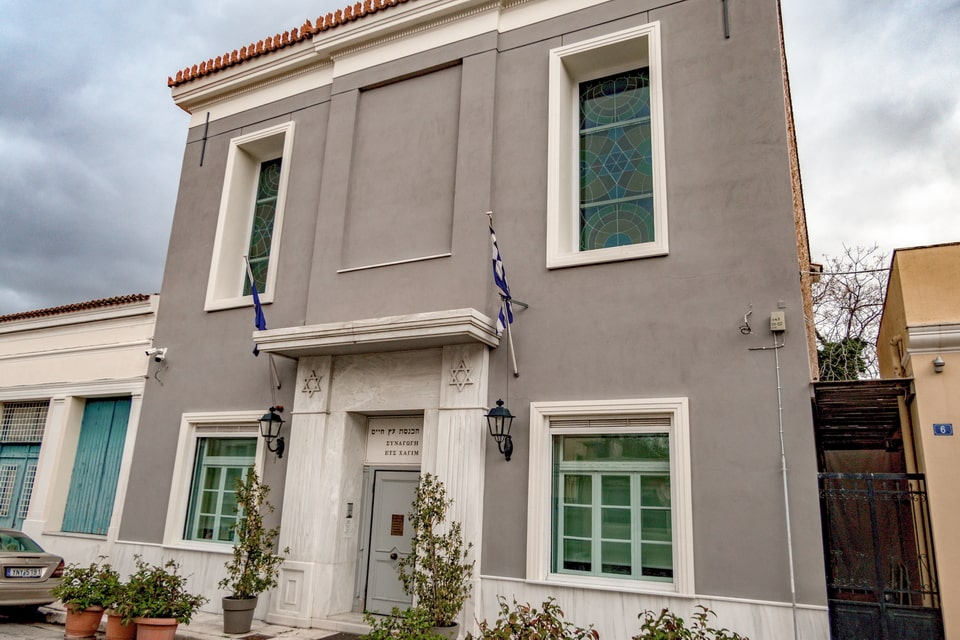
The main rabbi of Athens was ordered to pass the Germans a complete list of the local Jewish community, but he said the lists had been destroyed by the anti-German partisans, and secretly alerted Jews in Athens to danger. Then the Jewish population was ordered to register themselves on October 4, but the deadline was postponed for two weeks to no avail, as only around two hundred people obeyed out of an estimated 8,000 Jews still living in Athens. Hundreds of people fled the city, and so did the Grand Rabbi Elias Barzilai (1891-1979). The German plans to deport every remaining Jew in Athens were postponed to 1944. By March of the next year, most of the city’s 3,000 Jewish residents and another 5,000 refugees from other regions had fled the city. On March 23-24, the Nazis rounded up and arrested 700-800 Jews in the Beth Shalom Synagogue, another 700 in the Athens area, and 600 more in the surrounding region. Up to 2,000 people in total were initially placed into the infamous Haidari concentration camp, then transported by rail to Thessaloniki, where they were joined by another 3,000 Jewish people, loaded on eighty trucks and sent to Vienna, from where most of them ended up in Auschwitz and Bergen-Belsen.

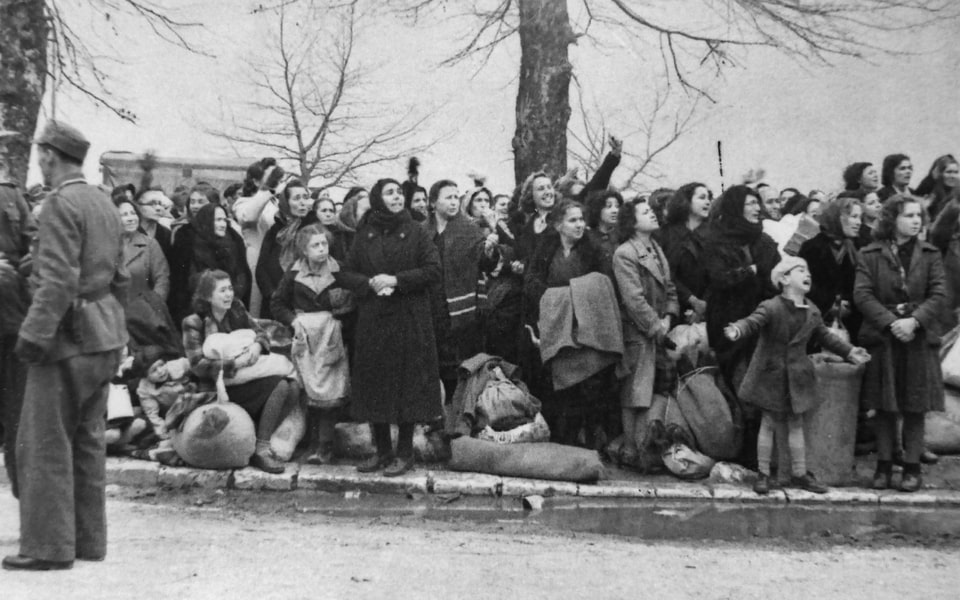
Greece bears one of the highest rates of Jewish population killed in the Holocaust, at around 83-90%, depending on the estimates taken. Modern historians agree that out of 70,000 to 80,000 Jews living in the country in 1941, fewer than 10,000 survived the Final Solution. Most of the victims ended their lives in Auschwitz, whose official records accounted for at least 54,533 registered Jews brought to the camp from Greece, though the exact number may be around 60-65 thousand, considering those not included in the lists. Of this dramatic figure, only 12,757 were left alive for some time as a working force in Auschwitz, and the remaining 75% were killed upon arrival. By September 1944, only around 2400 Jews sent to Auschwitz were still alive. Most of those selected for work died later in the camp. Of all Greek Jews killed in the Holocaust, around 50,000 were from Thessaloniki.

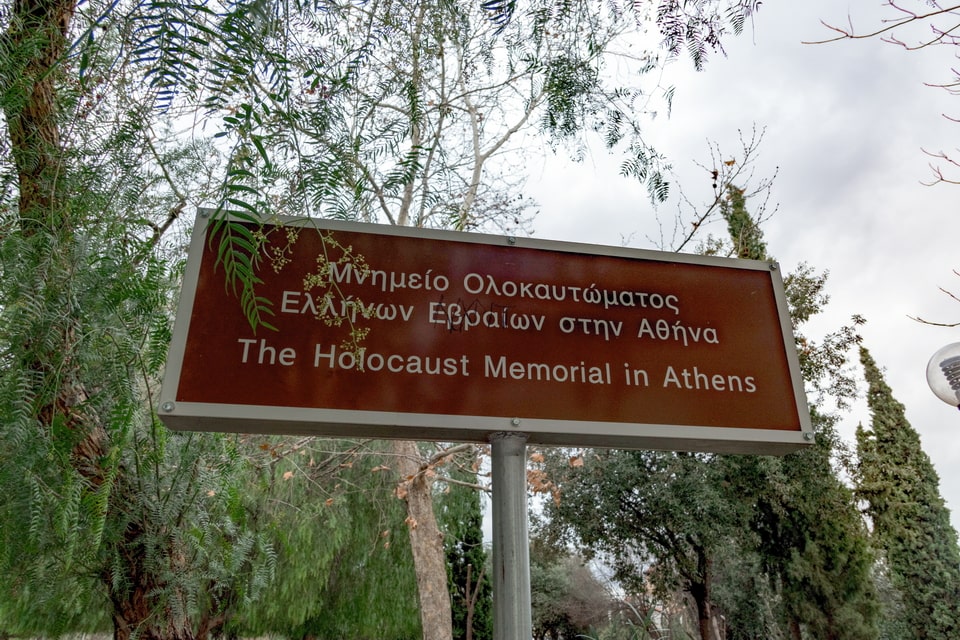
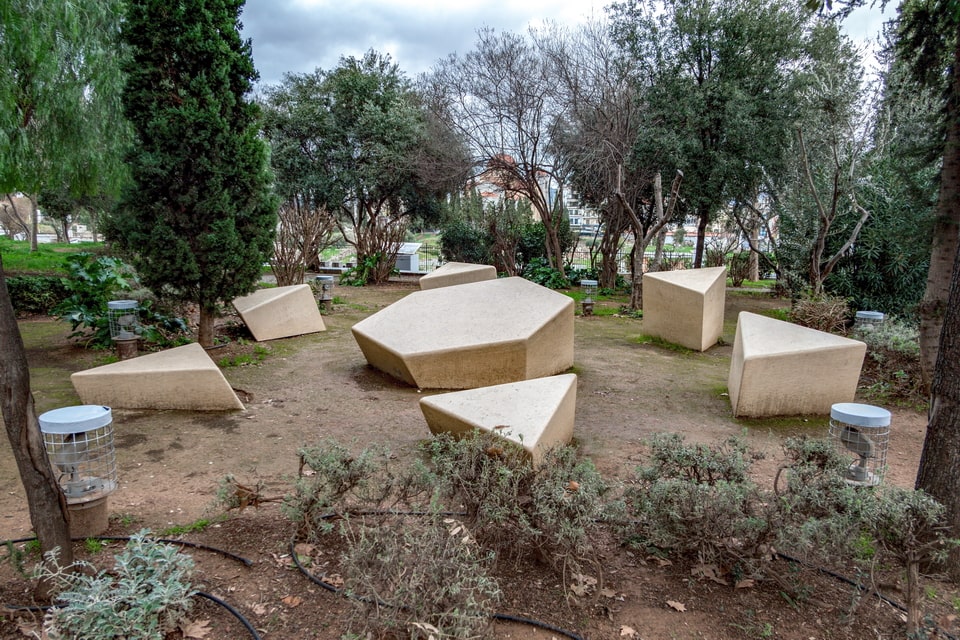
A small memorial garden was opened in 2010 to commemorate all the Jewish victims of the Holocaust in Greece, particularly in the Athens area. The monument is located at the arm’s end of the well-known Etz Synagogue on Melidoni Street and includes a memorial garden with a composition of stones placed in the form of the Star of David. The stones bear the toponyms of Greek cities, towns, and villages with large Jewish communities that were annihilated by the Nazis. Apart from the stones, there is an almost unnoticeable plaque with a quote from Elie Wiesel, a Nobel Prize laureate and a holocaust survivor. The whole memorial area was created by a Greek-American female artist, Deanna Maganias (born 1967).
22 JULY 1943: THE ATHENS PROTEST THAT STOPPED THE BULGARIAN ZONE
The cruel order of occupation of Greece in the German-controlled zone and the famine in 1941-1942 were used to turn the local population into an obedient mass, easily controlled by the moderate military forces. The actual effect during the war was the opposite, as the Greek population cultivated strong anti-German sentiments and was characterized by the Gestapo as much more rebellious than other nations, such as the French, the Czechs, and later Italians. Greek opposition to the occupants also extended to the Italian and Bulgarian sides, who shared the division of the country with Germany in the spring of 1941. Bulgaria officially annexed the territories adjacent to its border in Eastern Macedonia and Thrace on May 14, 1941, and in the following two years initiated a process of brutal bulgarization of the controlled lands. They banned the Greek language among the population, deported thousands of representatives of the Greek intelligentsia, renamed local toponyms, and evicted people from their homes in favor of Bulgarian settlers, pushing Greeks to migrate to other zones of occupation.
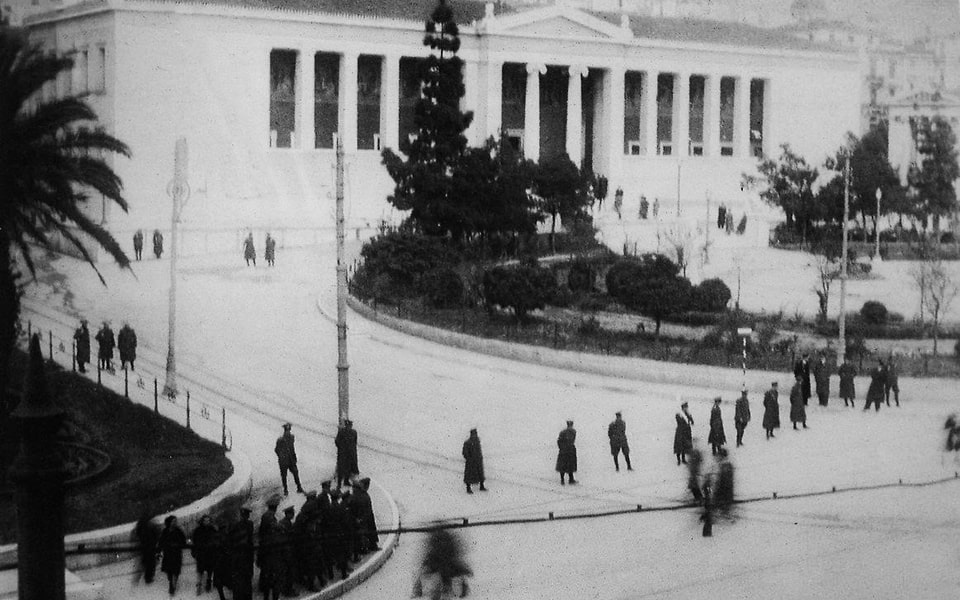
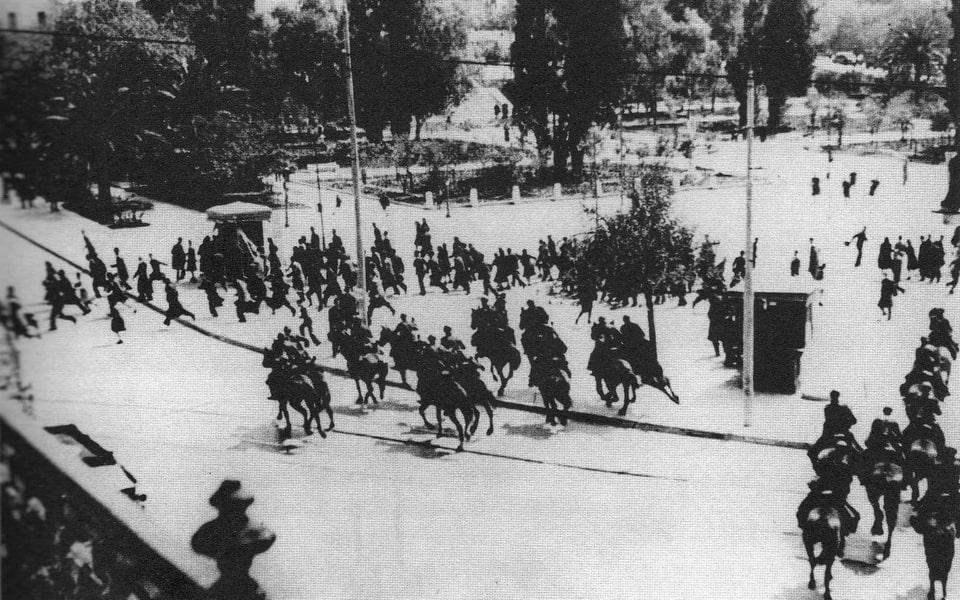
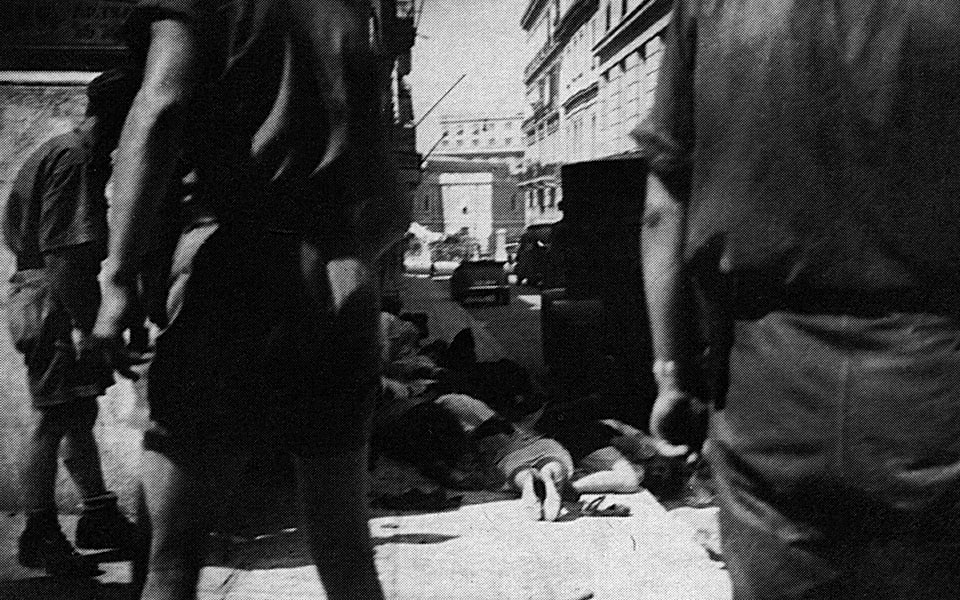
The Greeks hated both the Germans and the Greeks, and when in July 1943 the news spread that the Bulgarian zone of occupation and presence would be extended, the national sentiment against this turned into a series of protest strikes. Adolf Hitler proposed to the Bulgarian side to enlarge their zone in Macedonia in place of the Italian troops. The Greeks launched the nationwide strikes in support of Macedonia province, the first of which on July 13 involved tens of thousands of people in Athens, Thessaloniki, and other towns in the north. The protests proved to be successful in the capital, and nine days later, the Greek activists orchestrated a second, much more ambitious protest specifically in Athens. On July 22, up to 300,000 people rallied on the streets of central Athens, and this massive crowd paralyzed the city. When the column tried to overcome the German barricade, the defenders opened fire against unarmed people, killing at least twenty-two people and leaving hundreds more wounded. The protest, while not ending the occupation itself, put the plans of Bulgarian expansion to a halt, and they were never put in action.
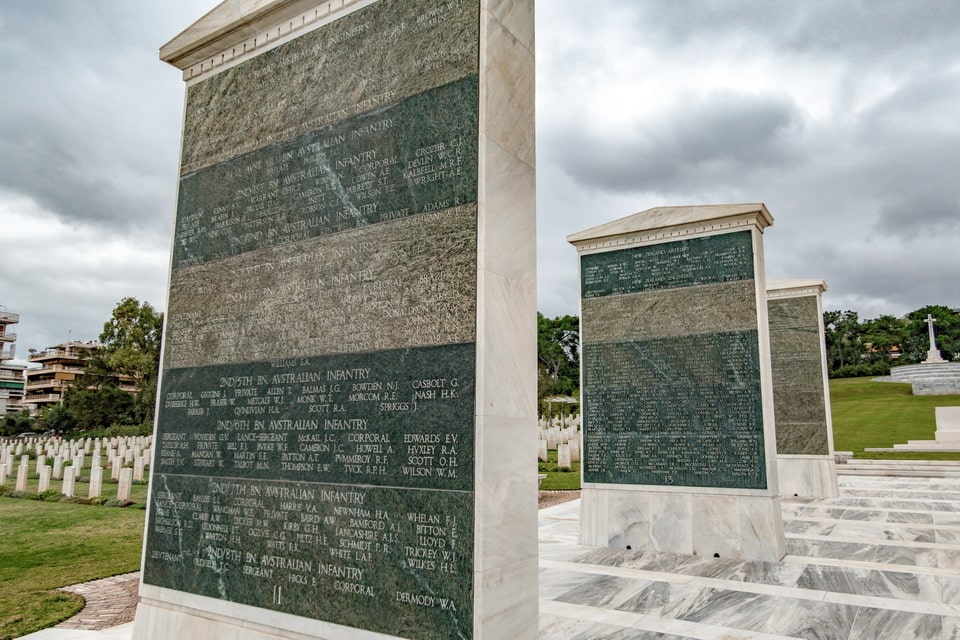
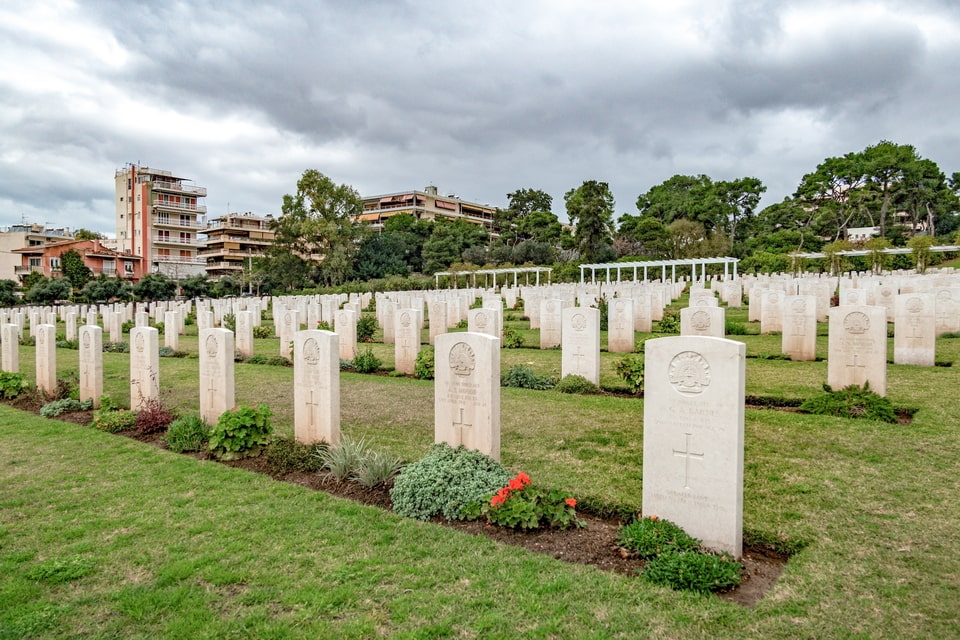
PHALERON WAR CEMETERY: 2,067 COMMONWEALTH GRAVES OUTSIDE ATHENS
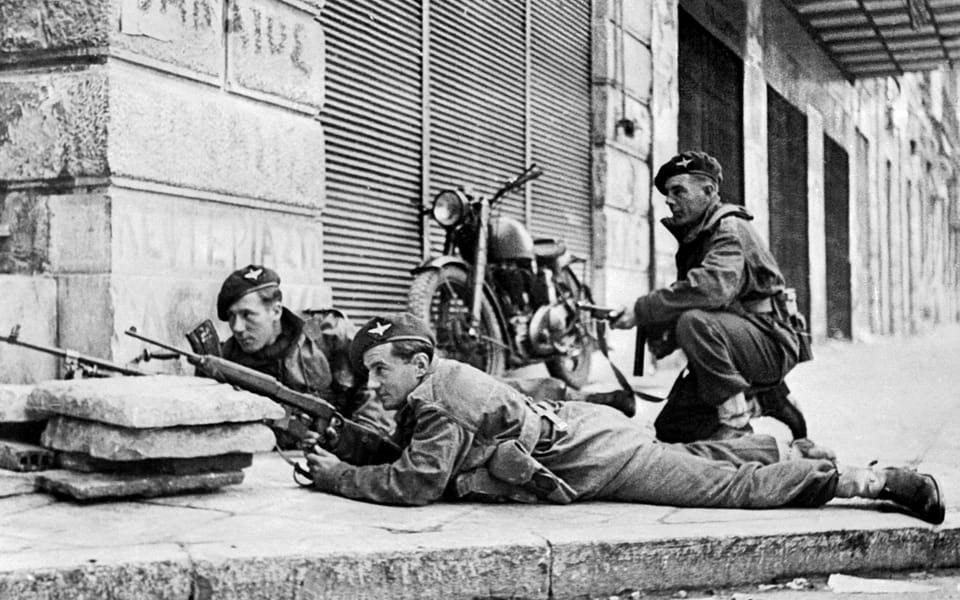
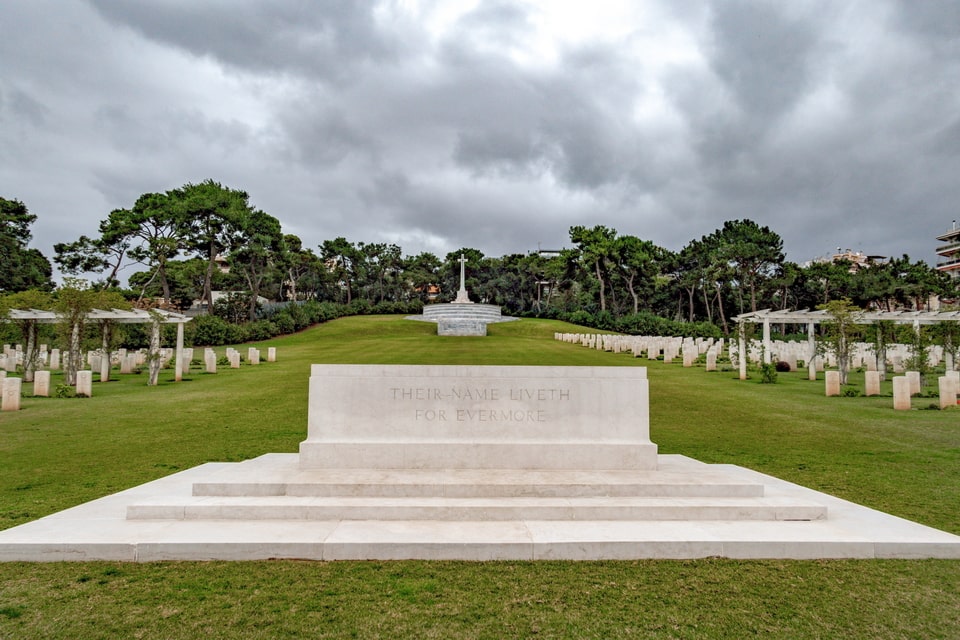
This small but impressive military cemetery was created at the end of the war. Its initial purpose was to provide proper burials for the Commonwealth and Greek soldiers who were killed during the Greek Civil War against the pro-communist rebellions. The guerrilla troops succeeded in taking control of Athens but were finally pushed away from the city into the countryside in January 1945. The city of Athens was liberated from the communist forces by the 4th Infantry Division, a well-famed unit created in 1809. They chose a spot of land on the coast to the south of Athens for the creation of a temporary cemetery, which was later expanded with the remains of Commonwealth soldiers who were killed in Greece in April 1941. The remains were delivered here from small temporary burials and civilian cemeteries across southern Greece. In total, the Phaleron Cemetery contains the remains of 2,067 Commonwealth soldiers who died during the battles of Greece in 1941 and then in 1944-1945, of which 596 are still unidentified. The Athens memorial here commemorates the memory of around 3,000 men who gave their lives to defend and liberate Greece.
THE GEORGIOS AVEROF: THE BATTLESHIP THAT ESCAPED TO ALEXANDRIA
Greece has been a naval state for more than two thousand years, and it should come as no surprise that one of the most visited WW2 landmarks in the country is the ship. In 1941, during the battle for Greece’s survival against the Germans, its crew disobeyed orders to surrender the ship to the enemy, and after the end of the war, it became a flagship of the Greek fleet. At the turn of the XX century, the country’s fleet was not equal to its past glory, and Greece invested resources in renewing its battleships. Initially, the ship was to be built by the Italian government, but after budget cuts, the Greek government bought the project with the donation of a famous Greek businessman, Georgios Averof (1815-1899), who died years earlier but left a part of his heritage to the state. The newly built armored cruiser named after Georgios Averof was inaugurated on March 12, 1910, and became the last ship of its kind in the world, though a modest modern battleship in the Balkans. When the First Balkan War broke out in 1912, the ship became the flagship of the Greek fleet and took part in several naval battles against the Ottoman Navy, inflicting significant damage on the enemy ships.

Compared to the Balkan War, during World War I, Georgios Averof did not see much action and, after its end, remained the flagship of the Royal Hellenic Fleet, participating more deeply in the Greco-Turkish War between 1919 and 1922. The ship underwent a modernization in the 1920s and served peacefully until 1941, when, on April 18, its crew decided to obey orders to surrender and escape the Greek harbor. Georgios Averof reached the Souda Bay port in Crete and then moved to Egypt, arriving at the British port of Alexandria on April 23, the day King George II left Greece. Considered too old and slow for effective service in the Mediterranean, Georgios Averof was transferred to the Indian Ocean and joined British convoys there. When the Germans left Greece in October 1944, Georgios Averof was privileged to carry the Greek government-in-exile from Cairo to Athens in the role of the country’s flagship once again. The ship served as the main ship of the Hellenic Fleet until 1952, then spent another three decades in the harbor. Finally, in 1984, the government ordered the repair of the ship and turned it into a naval museum in the South of Athens, though it is still symbolically considered an active service, thus being the oldest operational steel warship on the globe.


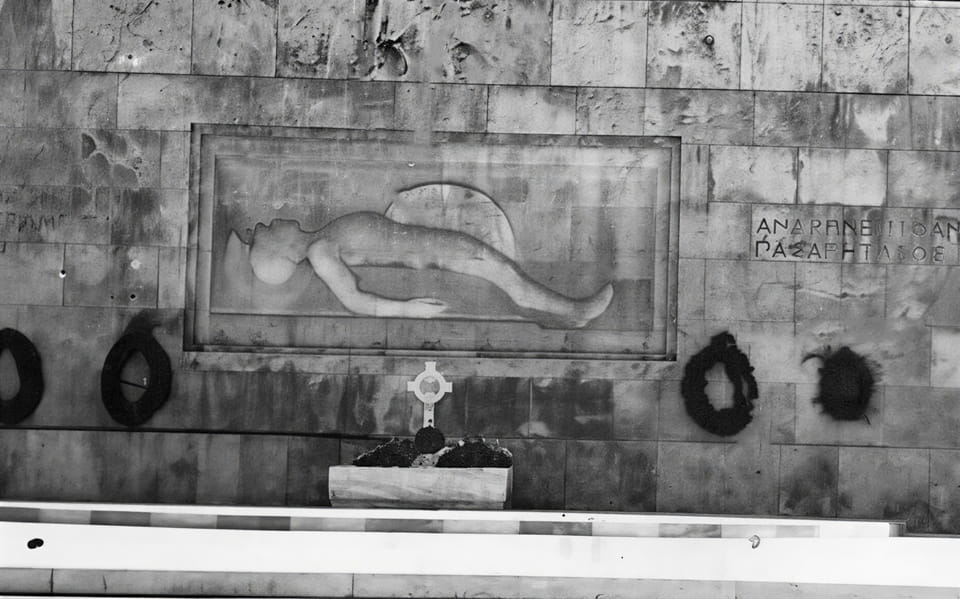
SYNTAGMA SQUARE AND THE TOMB OF THE UNKNOWN SOLDIER UNDER OCCUPATION
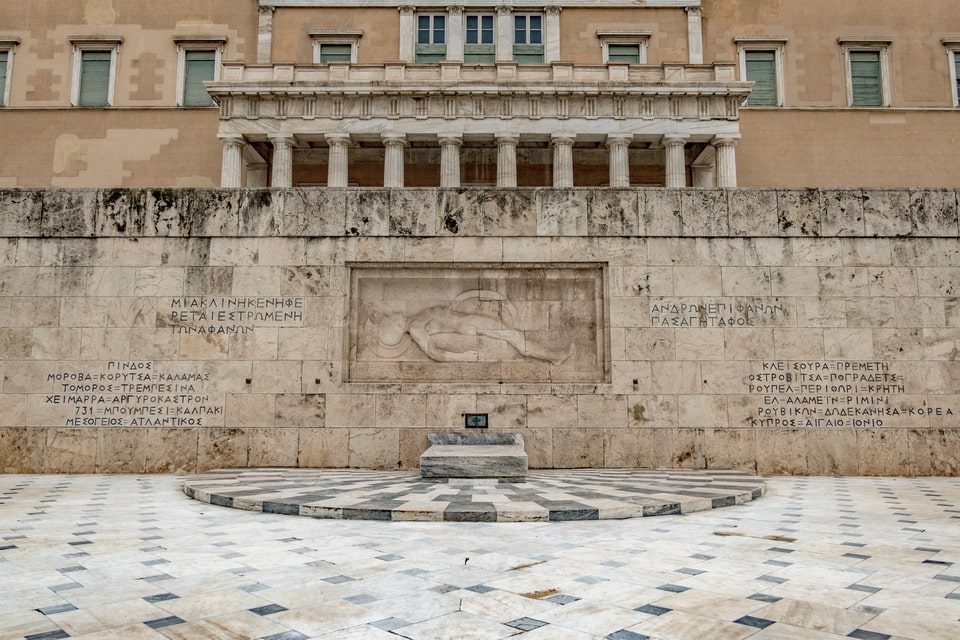
The symbolic Tomb of the Unknown Soldier was not unique to Greece, as most of the major participants of the First World War inaugurated such memorials in the 1920s. France and Britain were the first to open such commemorative memorials under the Arc de Triomphe and in Westminster Abbey, respectively, in November 1920. A year later, the United States unveiled a similar memorial at the Arlington National Cemetery, and Italy buried its unknown soldier on November 4, 1921. The Greeks waited until 1926, when the government decided to create its own Tomb of the Unknown Soldier in Athens. Syntagma Square next to the Old Royal Palace was chosen, and it took six years to unveil the monument, as late as March 1932. The sculpture presents a figure of a Greek gunner lying on the ground, with the names of the battle locations of different wars Greeks participated in carved on the walls around the figure. One side is devoted to the Balkan Wars and the First World War, and a significant part of the memorial is dedicated to the battles of the Second World War.
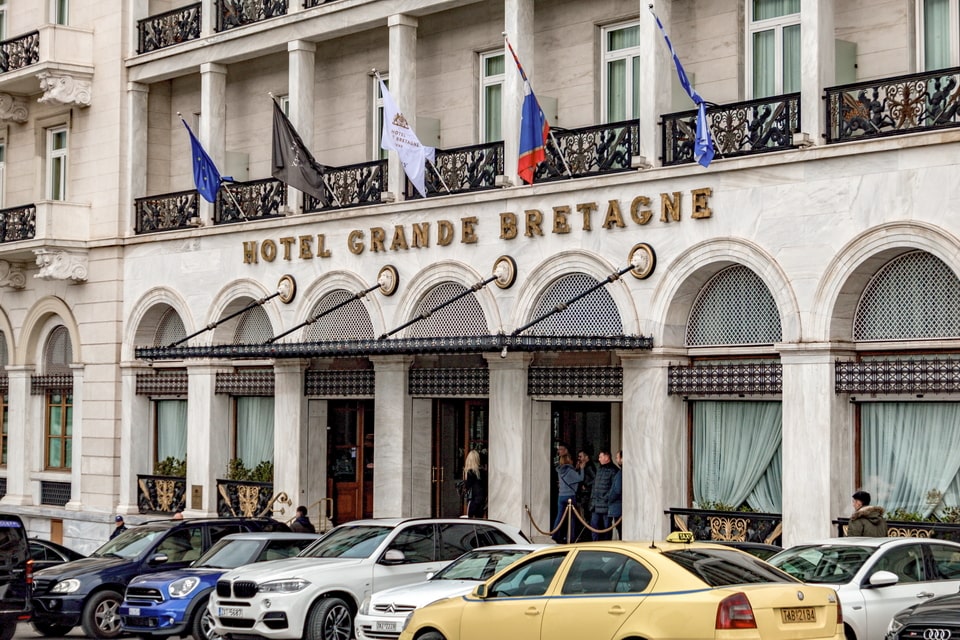
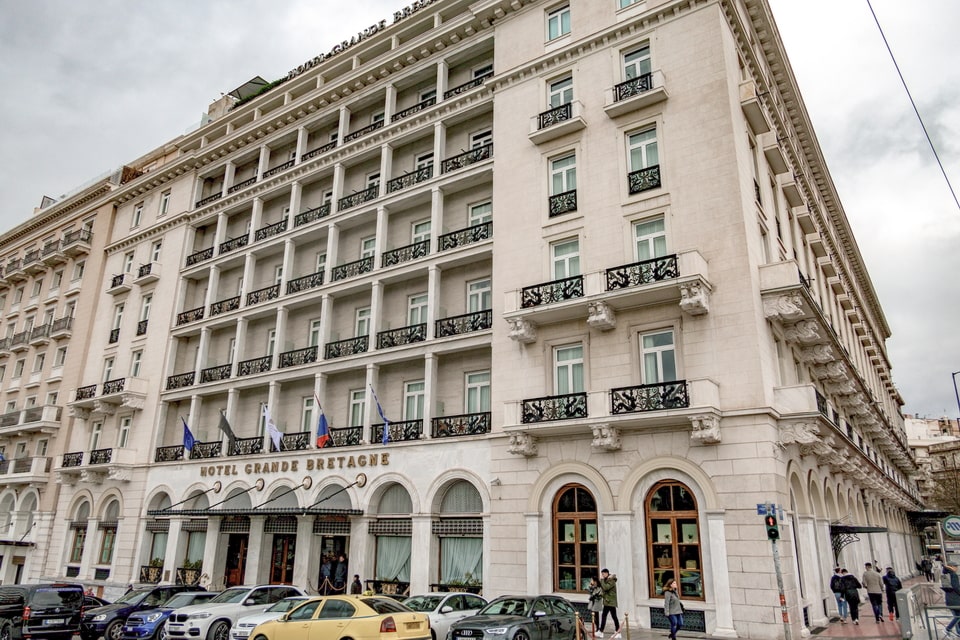
THE HOTEL GRANDE BRETAGNE: GERMAN HEADQUARTERS, THEN CHURCHILL’S
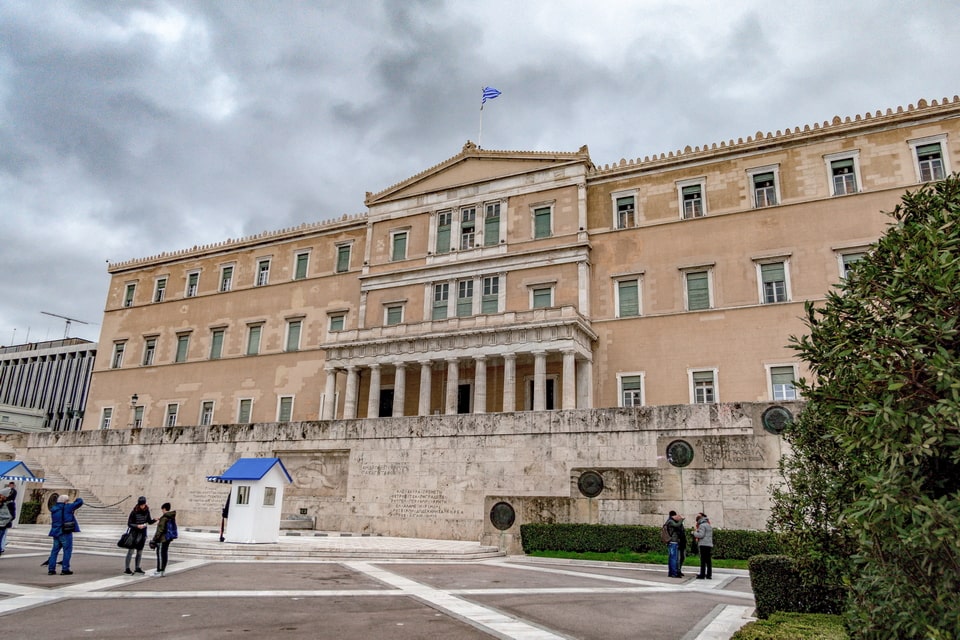
This luxurious building on Syntagma Square has a long and event-saturated history. It was built in 1842 when Athens lacked its modern look and the look of a capital city, and once finished as the mansion of wealthy man Antonis Dimitriou, it was one of the most gorgeous in the city. It was built in the heart of Athens, just next to the Royal Palace, a neoclassical building on Syntagma Square that was inaugurated a year later, in 1843. Three decades later, the mansion of Antonis Dimitriou was bought for 800,000 drachmas and turned into the hotel called Grande Bretagne. While it was considered a luxurious destination of its time, suitable for hosting royal persons, the hotel only had two bathrooms for eighty guests. In 1888, the hotel was electrified thanks to the arrival of new technology in Athens. By the turn of the XX century, the hotel was modernized with central heating, elevators, and telephones. It became a place for making business deals, creating political alliances, and provoking intrigues. A new luxurious wing facing Panepistimiou Street was added in 1930 with a new set of the most luxurious rooms for VIP guests, including foreign diplomatic delegations.
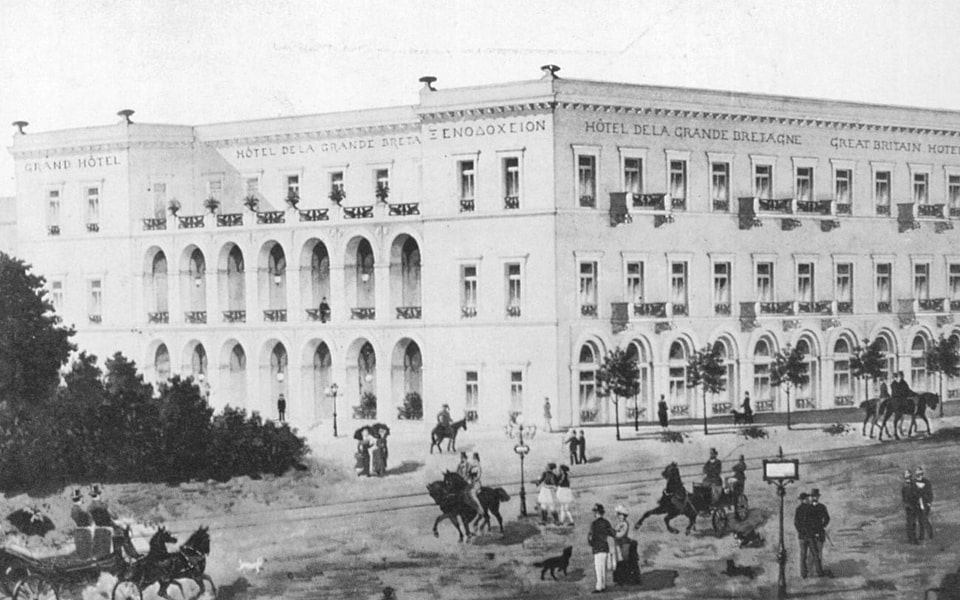
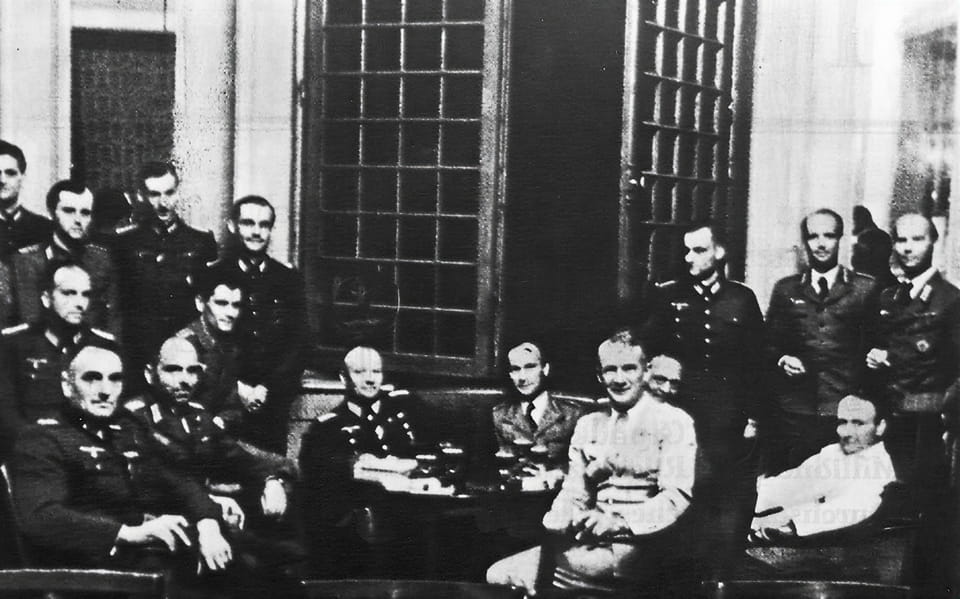
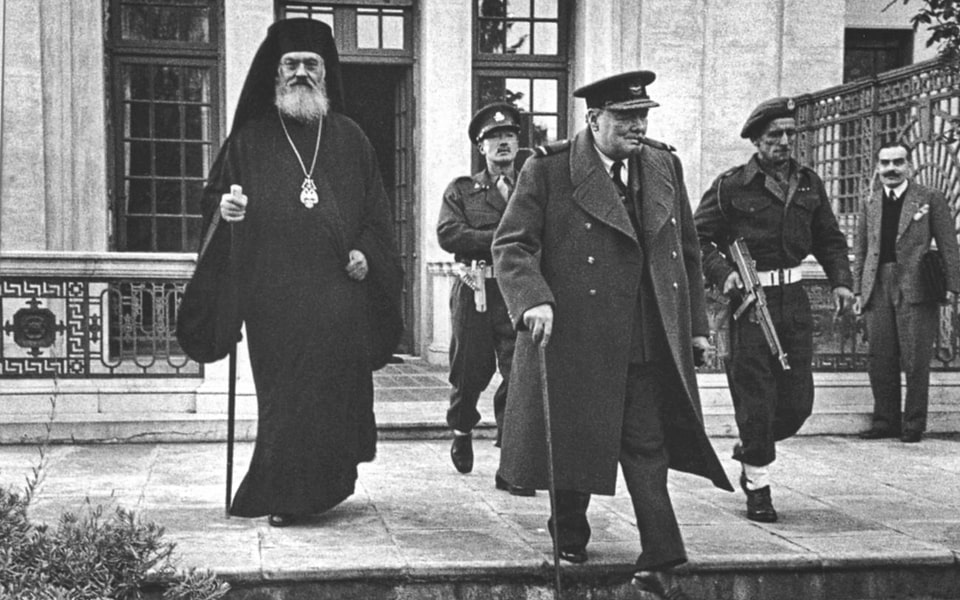
During the Second World War, ‘Grande Bretagne’ was used by the British headquarters in Greece, and all guests were asked to leave the hotel for a new purpose. After seizing Greece and entering Athens, the Germans took advantage of the imposing building and opened their headquarters in it, similar to the British officers before them. Among the top Third Reich visitors here during the occupation were Heinrich Himmler, Hermann Goering, and Erwin Rommel. During the famine in 1941-1942, the local Greek civilians had to search for the remains of food from the German banquets in the garbage behind the hotel. When the Germans fled Greece in 1944, ‘Grande Bretagne’ was once again occupied by the British forces, this time by the officer staff of the Expeditionary Forces. The hotel witnessed the visits of British Prime Ministers: Winston Churchill, Anthony Eden, and Harold Macmillan. In 1956, an additional four storeys were added to the historical building. Throughout its long history, Grande Bretagne welcomed more than four dozen heads of state, including kings and Queens, and it still bears the statues of a meeting place for state affairs. The latest renovation was made in 2003, and the hotel is still one of the most luxurious in Greece.
WALKING THE OCCUPATION SITES IN ATHENS
Everything in this article except the two seaside sites is within an hour’s walk of Syntagma Square, and none of it costs anything except the Acropolis ticket. Here is the route in the order that makes sense on the ground.
Start at Syntagma. The Tomb of the Unknown Soldier is on the terrace below the Parliament — the Old Royal Palace, which appears in the archive photographs in this article with a German transport column parked in front of it. The Hotel Grande Bretagne is on the north-west corner of the same square: German headquarters until October 1944, British headquarters afterwards, and the building under which the sewer charges were laid at Christmas that year. You can walk into the lobby.
Then Korai 4, five minutes away. Walk up Panepistimiou and turn into Korai street. At number 4, in the basement of what is now an ordinary commercial building, are the Gestapo interrogation cells, six metres below street level — the prisoners’ inscriptions are still on the walls, scratched by people charged with stealing bread or jumping onto German lorries. It opened to the public in May 1991, closed for restoration from 1995 and reopened in 2008. Check opening hours before you go: it is run on limited hours and is easy to find closed.
Panepistimiou itself is a site. On 22 July 1943 a crowd of at least a hundred thousand — some accounts say three times that — marched down this street from Omonoia Square towards Syntagma, protesting against the planned extension of the Bulgarian occupation zone. German armour, Italian cavalry and the collaborationist gendarmerie broke it up at the junction with the university buildings. Twenty-two people were killed and more than two hundred wounded. Nothing on the street says so.
West, to Kerameikos. Down Ermou to the far end, where the Holocaust Memorial stands at the edge of the Kerameikos site — a broken Star of David in marble, carrying the names of the Greek Jewish communities destroyed between 1943 and 1944. The Athens synagogue is a few streets away on Melidoni.
Then up to the Acropolis, and specifically to the eastern bastion, where the flagpole stands. That is where the swastika flew from 27 April to 30 May 1941. There is no plaque.
The two coastal sites need the tram. The Georgios Averof is moored at the Trocadero quay in Palaio Faliro, open as a museum ship; Phaleron War Cemetery is a further stop or two along the coast road at Alimos. Allow half a day for both, and go to the cemetery late — the light off the sea in the afternoon is the reason the photographs in this article look the way they do.
FREQUENTLY ASKED QUESTIONS
When did Germany invade Greece?
On 6 April 1941, under the codename Operation Marita (Unternehmen Marita), simultaneously with the invasion of Yugoslavia. The campaign lasted three weeks. Mussolini’s Italy had invaded first, from Albania, on 28 October 1940, and had been driven back — the German invasion was in part a rescue of that failure.
Who occupied Greece, and how was it divided?
Three powers. Bulgaria took Eastern Macedonia and Western Thrace and administered it as annexed territory. Italy took roughly two-thirds of the mainland and most of the islands. Germany kept Thessaloniki and Central Macedonia, the Thracian strip on the Turkish border, most of Crete, and several Aegean islands. Athens and Piraeus were occupied jointly by Germany and Italy. After Italy’s surrender in September 1943, the Germans took over the Italian zone.
Was Athens bombed in the Second World War?
The city centre, essentially no — it was declared an open city and was not defended. Piraeus was destroyed twice: by German bombers on the night of 6/7 April 1941, when the ammunition ship Clan Fraser exploded in the harbour, and by Allied bombers on 11 January 1944, when about seven hundred Greek civilians were killed.
Did Hitler ever visit Athens or the Acropolis?
No. Hitler never entered Greece. The German field marshals photographed on the Acropolis are Walther von Brauchitsch and Wilhelm List.
How many people died in the Greek famine?
Around 300,000, most of them in the winter of 1941–42, with mortality in Athens reaching about 300 deaths a day in December 1941 — the International Red Cross put it higher. The causes were requisitioning by the occupiers, the Allied naval blockade, the collapse of transport and currency, and the fact that the three occupation zones would not move grain between them.
Did anyone send relief?
Yes, eventually. The Turkish Red Crescent began shipments in September 1941 with the SS Kurtuluş, which delivered some 6,700 tons before she was wrecked; Turkey sent around 17,500 tons in all. In February 1942, the Allies partially lifted the blockade for Swedish ships carrying Canadian wheat, and from March 1942 a Swedish-run Joint Relief Commission distributed food under International Red Cross supervision. It reduced the death rate; it did not end the shortage.
What happened to the Jews of Greece?
Of roughly 72,000–77,000 Greek Jews before the war, about 60,000 were deported to Auschwitz and between 82 and 92 per cent were murdered. The community of Thessaloniki, some 50,000 people and one of the oldest in Europe, lost about 96 per cent; the first transport left on 15 March 1943. The Jews of Athens, in the Italian zone, survived longer — the round-up there came on 23 March 1944, and a larger proportion escaped into hiding.
When was Greece liberated?
German forces withdrew from Athens on 12 October 1944 and from the Greek mainland over the following weeks, pulling back through Yugoslavia to avoid being cut off. The government-in-exile returned from Cairo aboard the Georgios Averof on 17 October. Within seven weeks, the country was fighting itself.

I am very grateful to war archives, museums, libraries, private collections, and writers for the historical photos in this article. To the extent that some author or a copyright owner may not want some of the above black-and-white photos to be used for educational purposes here, please contact me for adding credits or deleting the pictures from the article.