

Pawiak Prison Museum in Warsaw, 1939-1944
The Pawiak Prison (Polish: Więzienie Pawiak) in Warsaw was, by most historical accounts, the deadliest Gestapo-run prison in occupied Europe: between October 1939 and August 1944, an estimated 100,000 people passed through its gates, of whom 37,000 to 40,000 died on its premises or were executed nearby, and around 60,000 more were deported to concentration and death camps — Auschwitz, Sachsenhausen, Ravensbrück, Majdanek, and others. Built in 1835 as a state prison of Imperial russia, Pawiak had already served as a place of incarceration for Polish patriots in the 19th century, long before it became the primary detention and interrogation center for Polish intellectuals, resistance fighters, and Jews under Nazi occupation.
Today, the Pawiak Prison Museum (a branch of the Museum of Independence, Muzeum Niepodległości) occupies the surviving underground cell blocks VII and VIII — the only fragments left standing after the Germans dynamited the entire complex on August 21, 1944, in a final attempt to destroy the evidence of their crimes. This guide is an exceptionally detailed, section-by-section history of Pawiak: its 19th-century origins, its transformation into an instrument of Nazi terror against the Polish intelligentsia and the Warsaw Ghetto, and the fate of the site after the war — illustrated with over 80 archival and personal photographs, including images spanning from 1864 to the present day, and dozens of detailed biographies of both victims and the SS officers who ran the facility, among them commandants Otto Gottschalk, Helmut Heiss, and Herbert Junk, and the notorious deputy commander Franz Burkl. Full, up-to-date visiting information — including the museum’s current closure for renovation — follows at the end of this guide.

PAWIAK PRISON MUSEUM IN WARSAW: HISTORY BEFORE WORLD WAR I AND WORLD WAR II (1835–1939)
While memorial sites of the former Nazi-organized ghettos, concentration, and death camps are generally associated with the genocide of the European Jewry between 1933 and 1945, Hitler’s Holocaust during WWII stretched its deadly hands to other nations, where people were persecuted and murdered based on their national, historical, and cultural identity. In the process of what historian Richard C. Lukas called the ‘Forgotten Holocaust’ toward Poles, there was one location that has become the most notorious symbol of deliberate institutionalized Nazi policy against this brave nation during the six years of occupation: the Pawiak prison in Warsaw. Initially set in the old Polish state prison of the 19th century as a temporary incarceration facility for Polish intelligentsia, Pawiak was later transformed into a microcosm of terror and brutality: torture, humiliation, mass killings, and deportation of tens of thousands of people. The Nazis turned the old prison walls into an instrument of brutal suppression of any resistance in Warsaw, characterized by inhumane living conditions in the overcrowded facility.


Those Poles who were incarcerated in Pawiak for their often only supposed anti-German activities and beliefs followed the path of their ancestors from the previous century, who had been put in jail for rebelliousness toward the tsars. Among the prisoners and victims of Pawiak prison in Warsaw were also thousands of Jews, Soviet prisoners of war, and Roma and Sinti. Functioning under the Gestapo between 1939 and 1943 and another year as a part of the so-called KL Warschau, Pawiak left its mark in history as one of the cruelest and deadliest places in Europe during the Second World War.


One of the most notorious prisons in human history actually took its name trivially: thanks to the location on ‘Pawia’ street, which can be translated from Polish as ‘Peacock’. Pawia was one of the few Warsaw streets that made its way into the city map in the 17th century and was named after birds, along with Orla (Eagle) and Gesia (Goose). They were the so-called ‘Droga Narolna’ or ‘farm roads’ and once linked Warsaw with the farming lands to the West of the city, which was visibly smaller two centuries ago. In 1776, when the United States of America gained its independence, Pawia Street in Warsaw was extended in length, and at the turn of the 19th century, it served as a home for three dozen houses. Unfortunately for the street residents, the 1830s changed the nature of the location once and for all with the building of a large state prison.
While Pawiak prison later became an instrument of the occupational tsarist regime against the Polish resistance after the November 1830 Uprising, the initial idea of building up this prison had come earlier in the late 1820s. The authorities came up with the need to create a new large prison in the Warsaw area and approved the design of Henryk (Enrico) Marconi (1792-1863) as early as July 1829. Born in Rome, Italy, he came to Poland in 1822 and later became a prominent architect and the father of dozens of palaces, hotels, churches, and town halls. In his work on the design of the Pawiak complex, Marconi was backed by a Polish political figure, historian, artist, and reformer, Fryderyk Florian Skarbek (1792-1866). As the design was ready, the local authorities assigned a plot of land between Pawia and Dzielna streets already in September 1829, and the construction lasted for six years, with several delays until the opening of a new prison complex in 1835. At that time, Pawiak was the most modern prison in the whole of Poland and soon became the primary place of incarceration in Warsaw and the country’s central region.
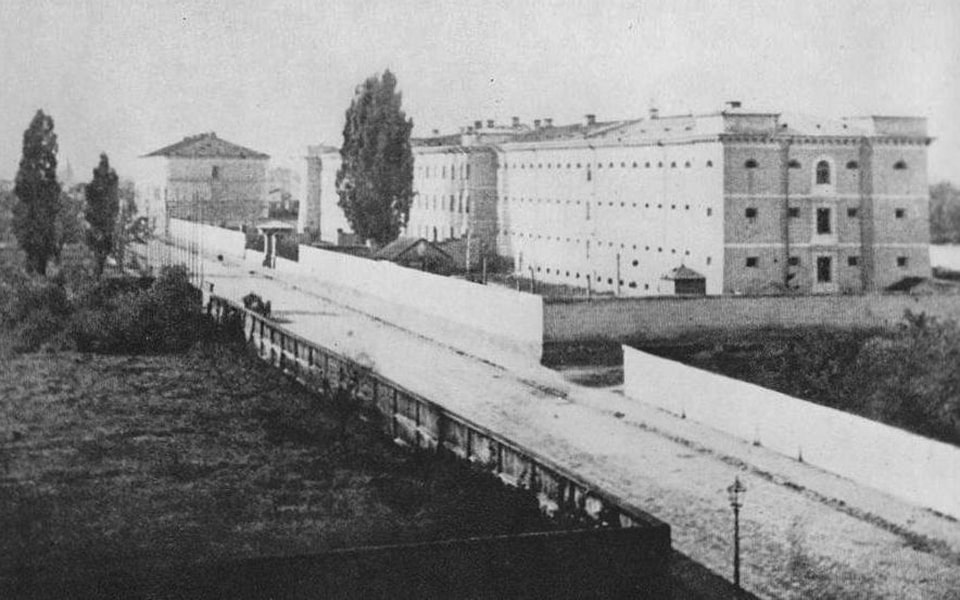
As I stated before, the prison was not initially planned for the Polish patriots of the 1830 Uprising, but it soon became such a place. Another attempt by the Polish people to gain independence from the oppressing Romanov Empire came in January 1863. The conflict, which in total lasted one and a half years and engaged all the layers of Polish society, later brought all those layers to russian prisons such as Pawiak. During and after the Uprising, the prison served both as a detention and interrogation center in central Poland and a transit facility for thousands of Poles who were deported to the Eastern outskirts of the Empire, particularly to notorious Siberia. During this time in 1864, Pawia Street was paved. With the influx of prisoners, the need arose to build a separate building for female prisoners, and the adjacent courthouse was turned into a women’s prison. In 1877-1878, the building temporarily housed a hospital for the wounded of the Russian-Turkish war (in which the Russian Empire lost more than 100,000 people), also known as the ‘Serbian War’, and later, the female prison got its nickname ‘Serbia’.
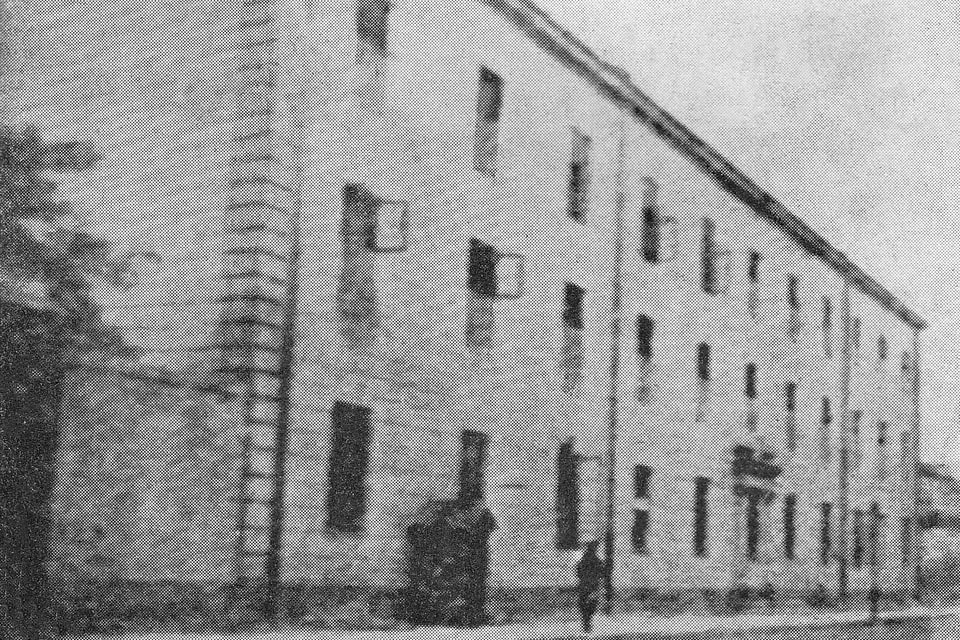
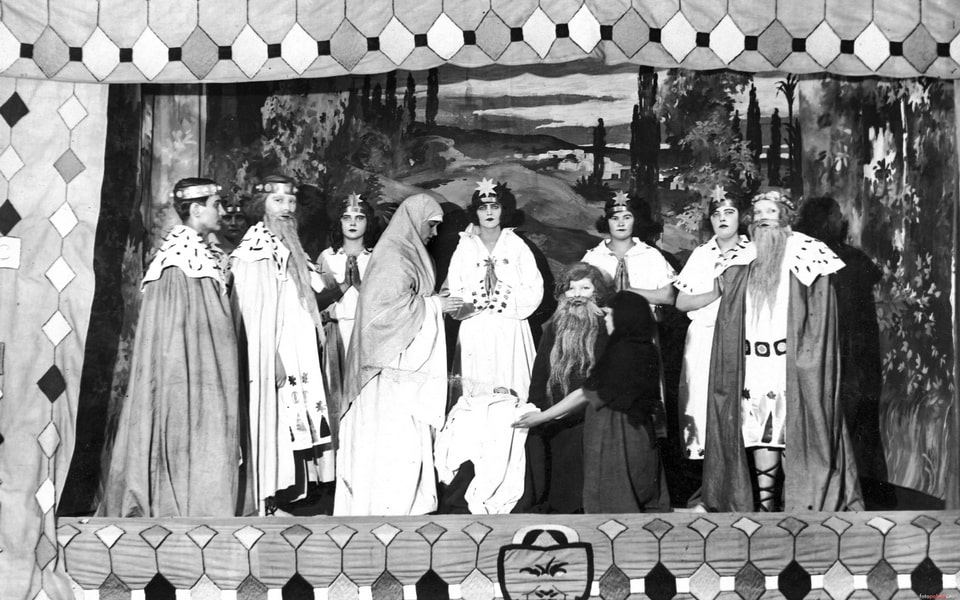
Decades passed, but the nature of the Pawiak Prison as a punishment destination for political opponents remained in the XX century. 1905 witnessed the largest anti-government strike ever as part of a larger revolutionary climate in the empire, and many of the insurgents from the Warsaw region were incarcerated in Pawiak. A year later, the prison experienced the most serious assault/break attempt in its history, when on April 24, 1906, the members of the PPS Combat Organization (Organizacja Bojowa Polskiej Partii Socjalistycznej) took the uniform of the gendarmerie and assisted in the escape of ten political prisoners, who had been sentenced to death. The accident was widely discussed and admired in Polish society, and the Pawiak administration later demolished the old wall facing Dzielna Street (which the escapees used) and built a new one, thicker and higher. The organizer of that courageous raid, Jan Jur-Gorzechowski (1874-1948), was caught a year later and sent to exile. In November 1918, when the regime fell, he became the commander of the city militia in Warsaw. Jur-Gorzechowski retired from service in the Polish army in March 1939, half a year before the outbreak of the war.
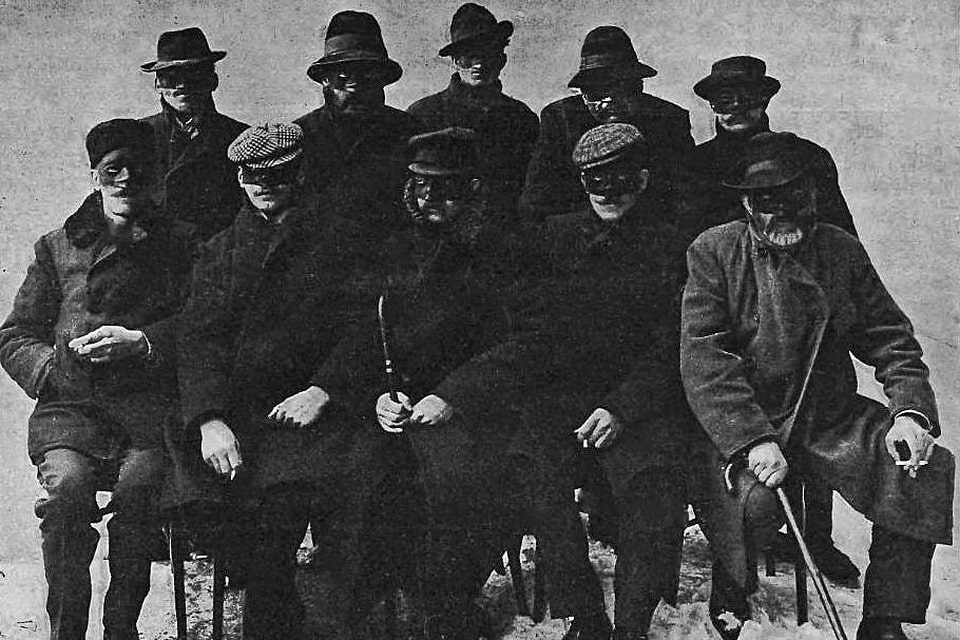
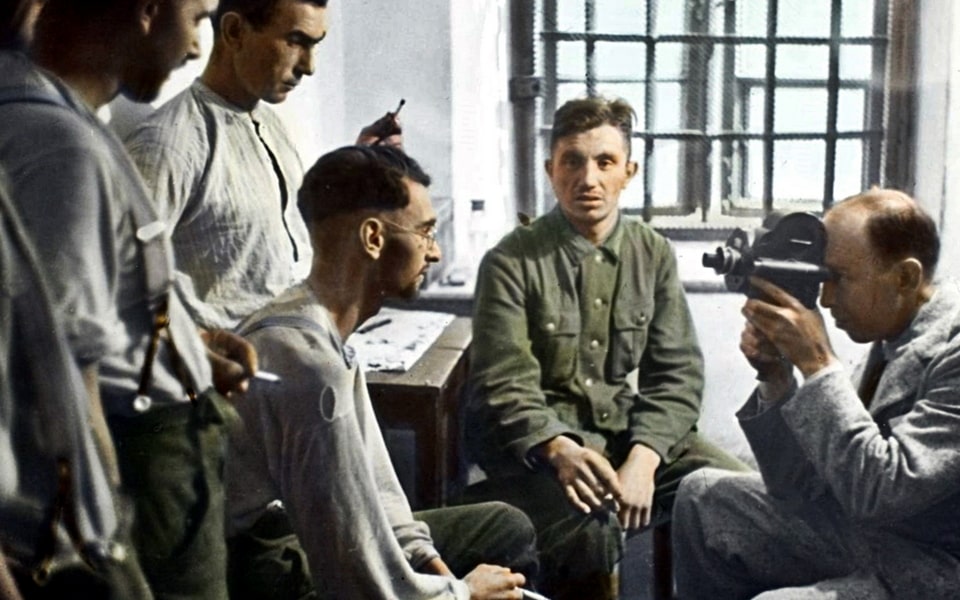
The Polish people lived without a state for one hundred and twenty-three years until finally regaining their independence on November 11, 1918. While the reborn nation, similar to many countries in the post-Great War era, experienced political turmoil in society, Pawiak prison in Warsaw got a new life, this time becoming a place of internment for the new era of political opponents to the newly established government. Both Pawiak (at Dzielna 24) and the adjacent Serbia complex (at Dzielna 26) became the main male and female prisons, respectively, in the city. It is interesting to note that 1931 saw the premiere of the Polish film called ‘Ten from Pawiak’, which was based on the memoirs of Jan Jur-Gorzechowski and told the story of the release of ten Polish prisoners by the PPS fighters. The former participants of the Pawiak prison escape used to gather annually on April 24, even decades after the events, and in 1936, the four surviving participants, including Jur-Gorzechowski (the other three were: Franciszek Łagowski, Antoni Kolla, Edward Dąbrowski), invited the Polish president Ignacy Moscicki (1867-1946) to participate in the commemoration ceremony at the Pawiak facility. Two days later, on April 26 (other sources state April 25), Stepan Bandera (1909-1959), a Ukrainian right-wing patriot, was brought to Pawiak for temporary detention.


THE NAZIS IN PAWIAK PRISON, WARSAW: ONE OF THE DEADLIEST GESTAPO PRISONS IN OCCUPIED EUROPE
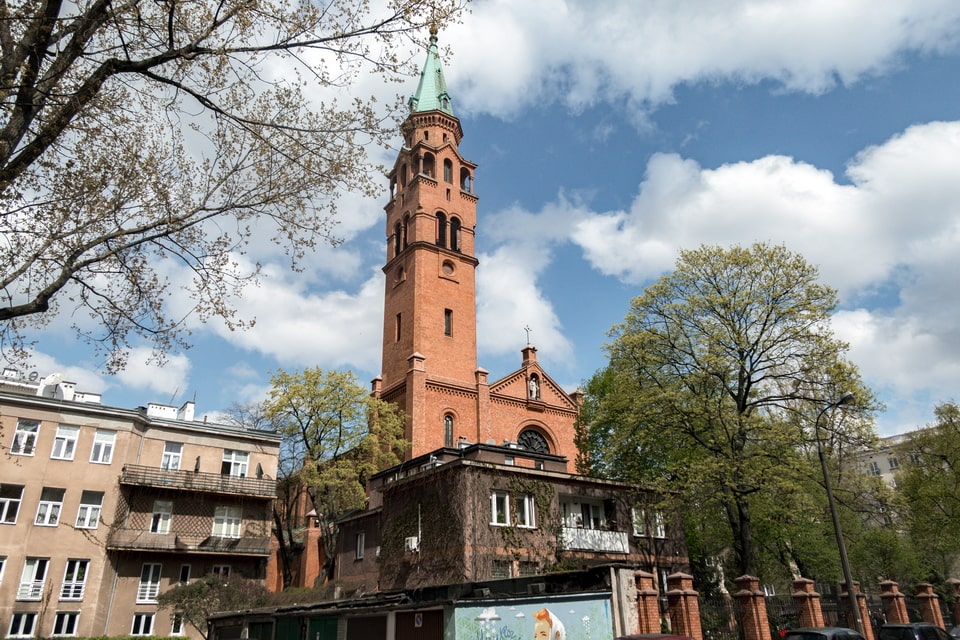
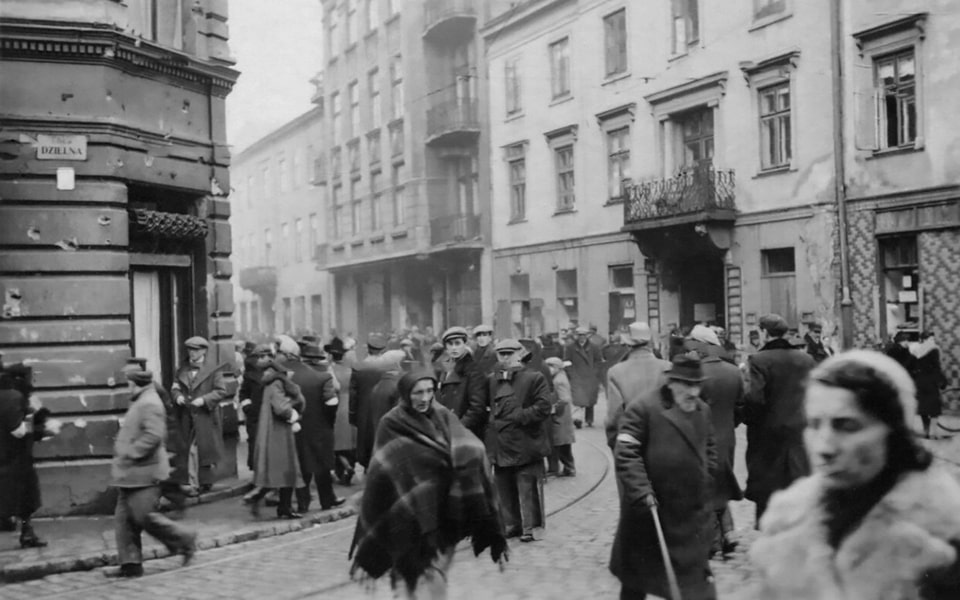
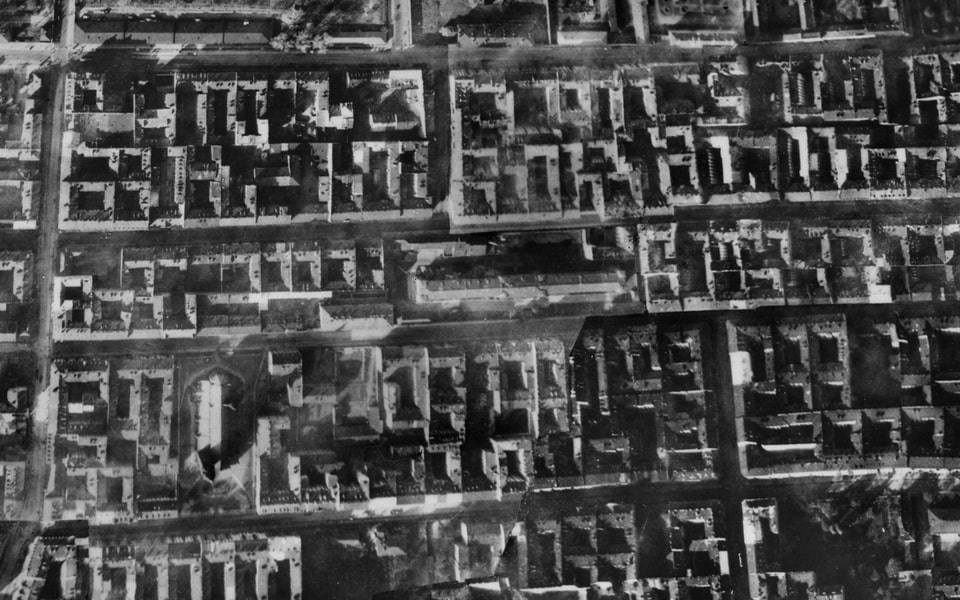
When the Second World War broke out in September 1939, the whole complex of two prisons, which the local Warsawians always referred to as Pawiak without a reference specifically to Serbia, covered an area of 1.5 hectares. The prison area was squeezed between Pawia Street in the North and Dzielna in the South. The modern John Paul II Ave did not exist then and was later laid on the site of Serbia. Karmelicka Street was not as long as today and ended at the intersection with Dzielna. Tenement buildings surrounded the Pawiak complex, and the area had a high percentage of Jewish population since the 19th century. Only a few hundred meters away was the famous St. Augustine’s Church at Nowolipki Street, built in 1896, and the only structure in the whole nearby area that survived WWII. Pawiak complex was surrounded by a high wall, which was heightened in 1942 to the height of an impressive six meters, with two guarding towers facing Pawia and Dzielna respectively.
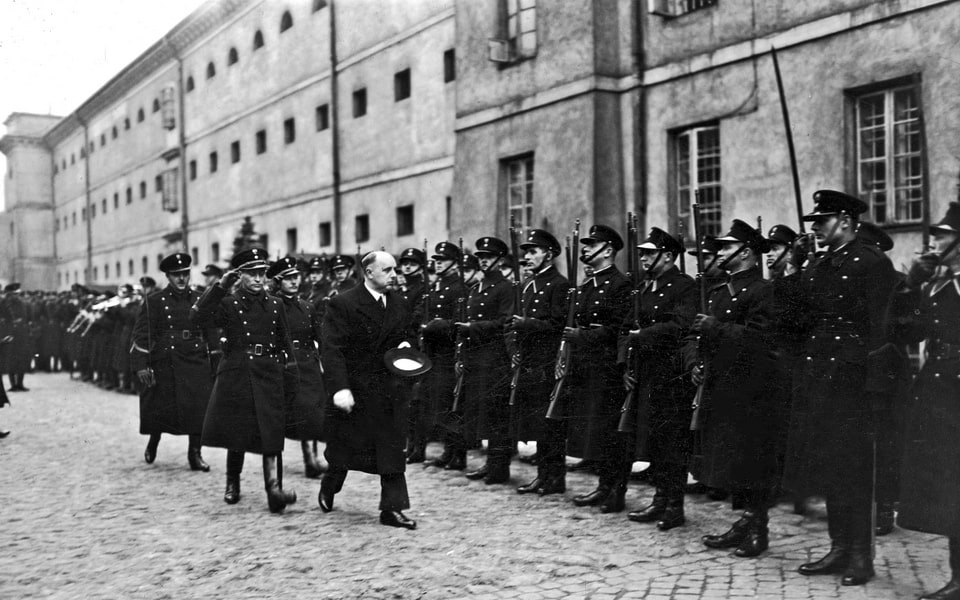
The main building for male prisoners was the largest in the complex, stretching for around 150 meters in length in parallel to Dzielna and Pawia Streets, facing Dzielna. It had a basement floor and three above-ground floors. Squeezed between the building and the wall was a narrow courtyard, approximately 15 meters in width, which was a place for prisoners to walk before WWII. In the left part of the courtyard were the workshops, and behind the main building was another courtyard and buildings: larger workshops, a small hospital for male prisoners, and after 1943, new workshops in the north-east corner of the whole complex. The ‘Serbia’ complex for female prisoners was separated from the male perimeter with a high wall with a guarded gate. This prison inside the prison also had the main building with three above-ground floors, though much smaller in size than the male one. Behind it was also a small walking area and an orangery. To the left was a laundry and administration building.
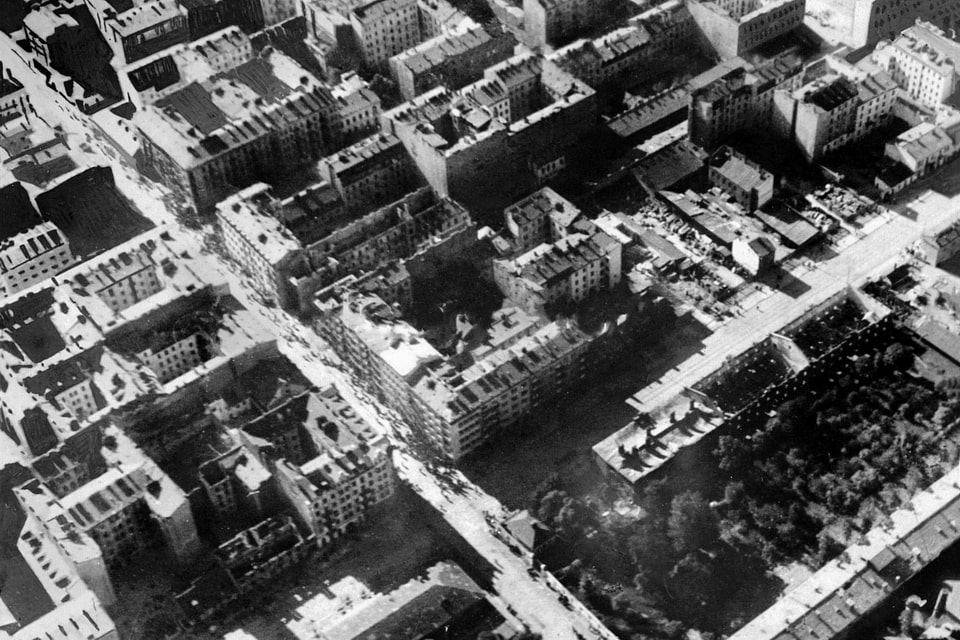

In the early stages of occupation, the Germans preferred to convert the existing pre-war structures into detention facilities rather than building new ones. Locations like Pawiak in Warsaw were regarded by the Nazis as a continuation of their persecution system in the ‘Old Reich’, aimed at ‘political enemies’. While back home the definition of the enemies of the state included mainly political opponents, and those whom the regime regarded as ‘asocials’, in the occupied territories in the East, the Nazis’ approach to defining categories of people for persecution was murderously flexible, including dealing with the Polish population. Since the first days of occupation in September 1939, a wide range of people, whose country was split and raped, now found themselves on the Nazis’ list of political threats. In parallel with the moving of the Wehrmacht armies across Poland territory, the Germans unleashed the notorious ‘Intelligenzaktion’ (Action against intelligentsia), which targeted educated, political, or military active citizens, who could become a nucleus of resistance to Germanization: doctors, lawyers, former army officers, professors, and teachers, retired and active politicians, Catholic priests, journalists, writers, musicians, and even 1936 Olympic sportsmen. This anti-Polish campaign of mass extermination was codenamed ‘Unternehmen Tannenberg’ (Operation Tannenberg) and claimed the lives of around 50,000 people killed in shootings and another 50,000 sent to prisons like Pawiak and later to concentration camps.

Pawiak was seized by the Germans immediately after the capitulation of Warsaw on September 28, 1939, and turned into a detention facility for the victims of the ‘Intelligenzaktion’. The first prisoners of the occupational period were brought here already on October 2, three days before Adolf Hitler visited Warsaw and the so-called ‘Victory Parade’. Those persecuted people had been previously included in the so-called ‘Sonderfahndungsbuch Polen’ or ‘Special Prosecution Book-Poland’, the infamous list of around 61,000 members of the Polish intelligentsia, which had been prepared by the Gestapo before the invasion. Those from the list who had not been executed by ‘Einsatzgruppen’ mobile killing units in September were put into prisons. That first contingent of Pawiak included 163 people, whose names were later smuggled by a local Polish nurse, Stanislawa Sroka, who had worked in the Serbia section since 1929. Born in 1902, she survived the war and in 1946 testified that those first October 1939 prisoners were mainly educators, judges, and priests, who were brought to Pawiak on trucks with 20 to 30 people in each. They were taken to the administration building for registration and then put into temporary cells because the main male building was not yet ready to accept inmates.

The officers of the infamous Einsatzgruppe IV arrived in Warsaw in early October and unleashed the persecution of the Polish intelligentsia in the city, conducting secret killings or sending many of them to Pawiak. The first public execution in Warsaw, though conducted not in Pawiak, involved its prisoners. On November 4, 1939, two Polish women, Elżbieta Zahorska and Eugenia Włodarz, were shot at Fort Bema on the outskirts of Warsaw. Elżbieta Zahorska, born in 1915, volunteered to join the army after the outbreak of the War and bravely served in a machine gun unit. After the capitulation, she fled the city but later came back to Warsaw and was arrested for ripping off a German poster and sent to Pawiak prison. She was sentenced to death by shooting. Another woman who was shot next to Zahorska was Eugenia Włodarz, who slapped a drunk German soldier who tried to assault her on a Warsaw street. Zahorska’s mother, Anna Antonina, a famous Polish novelist, was later imprisoned in Pawiak too and killed in Auschwitz in 1942.

Toward the end of 1939, the extermination of the Polish intelligentsia not only did not stop but also acquired a systematic, well-calibrated character throughout the occupied ‘General Government’, particularly in the Warsaw area. The second phase of this murderous campaign was supervised by the notorious Hans Frank, a man who regarded himself as the new king of Poland under Nazi rule. The new phase was codenamed ‘AB-Aktion’ or ‘Außerordentliche Befriedungsaktion’ or ‘Extraordinary Operation of Pacification’ in English, another Nazi euphemism for mass murder, which claimed the lives of around 7000 Polish intellectuals. Among those most prominent victims was Stefan Starzyński, mayor of Warsaw between 1934 and 1939. Born in Warsaw in 1893, Starzyński fought in the Great War and later had a successful political career. During the siege of Warsaw in September 1939, Stefan Starzyński rejected the possibility of his evacuation. He was arrested already on October 27, interrogated by the Gestapo, and then he was taken to the infamous Mokotów Prison and finally to Pawiak. While there existed a historical debate in Poland regarding his date of death, the modern investigation ascertained that Starzyński was murdered by the Germans before Christmas 1939, with his body never found.

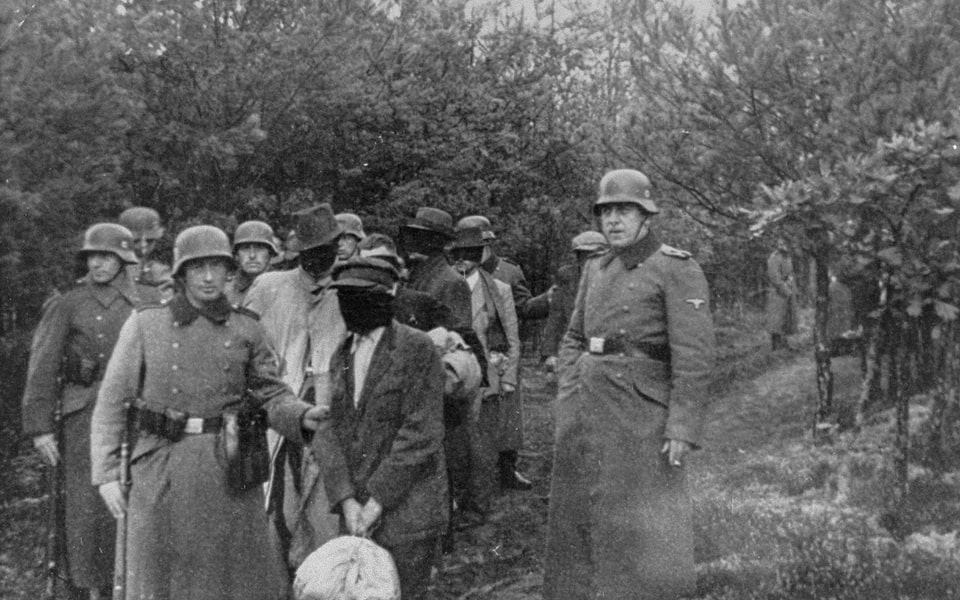
Toward November-December 1939, the pattern of the new killing phase was determined: people were taken from prisons, including Pawiak, at night or dawn in the covered trucks to one of the remote areas in the Warsaw district and killed, then buried in mass graves. The first and most notorious of such execution sites are known as ‘Palmiry’ or ‘Kampinos Forrest’, while the former is a village located in the area of the latter. The Nazis needed a remote area near Warsaw, where they could easily control the access for outsiders, still in the nearest proximity by lorries. The Kampinos forest, like many other places of mass murder created by Germans in Poland, was a pine forest with sandy ground and high moisture. The ditches were dug beforehand, sometimes many days before the actual execution: generally long graves up to 30 meters long, 3 meters wide, and 3 meters deep. When people were taken to trucks in the courtyard of the Pawiak prison, they were calmed down by being told about a routine transfer with no need to worry, allowed to take their possessions and documents, and even fed. The cover-up lie was so effective, at least in the first months, that most victims did not suspect the origin of their final destination until being led to the edge of the ditch before being shot. After another grave was filled with bodies, it was covered with pine needles and soil, and young trees were planted above them.
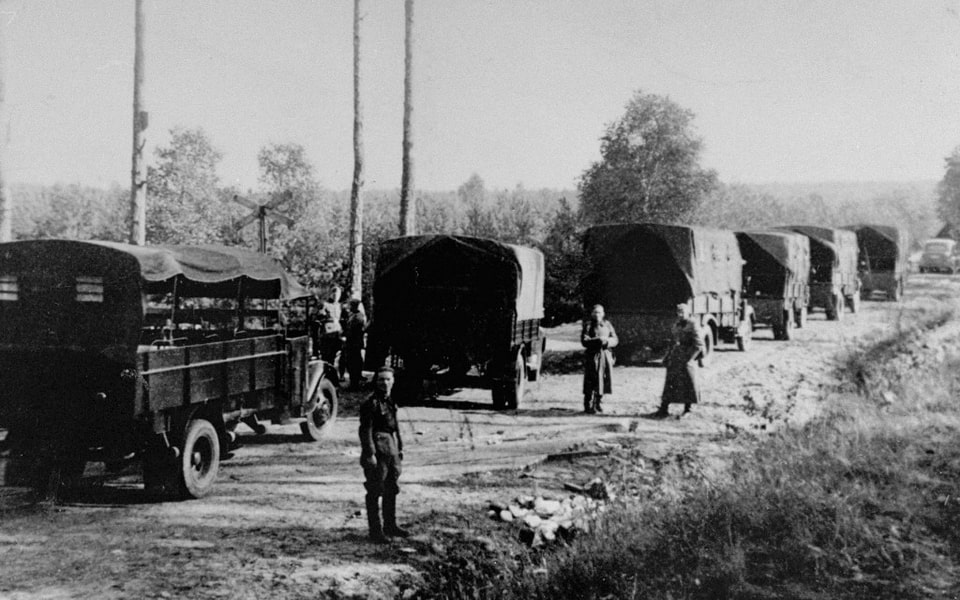
The first known mass execution at the Kampinos Forest took place in two days on December 7-8, 1939, when Germans killed around 150 people and took photos of the process. The site witnessed several more actions of such kind until the end of the year, then the killings occurred in 1940 and until July 1941. At least twenty-one known executions to the South of the village of Palmiry took the lives of around 1800 people until the Germans shifted to other locations in the area: Wydmy Łuże, Stefanów, Laski, and Szwedzkie Góry, killing another five hundred people from the Warsaw area, primarily from Pawiak and Mokotów prisons. Of the 1793 bodies which were exhumed after the war, the investigators identified 577 victims, and another 485 are known to have been killed in the place, which became the largest graveyard of the Polish intelligentsia of such kind during WWII.
Among the victims of the A-B action, who were interrogated by the Gestapo, imprisoned mainly in Pawiak, and then killed in the mass graves in the forest area outside Warsaw, were:
- Maciej Rataj (1884-1940). A prominent Polish politician. He was the speaker of the Polish Sejm (Parliament) between 1922 and 1922 and twice served as the President of Poland: one week in 1922 and three weeks in 1926. After not leaving Warsaw after the start of the war, Rataj was arrested in November 1939, interrogated for three months, then released to be once again arrested, and finally executed in Kampinos Forest in June 1940.
- Mieczysław Niedziałkowski (1893-1940). A well-known Polish socialist politician, he was a member of the Parliament between 1919 and 1935. Before WWII, he was one of the advocates of a stronger national defense. Like Rataj, Niedziałkowski actively participated in the defense of Warsaw, was arrested in December 1939, and killed in Kampinos on the same day of June 21, 1940, as Maciej Rataj.
- Jan Poholski, a former deputy mayor of Warsaw
- Jan Belcikowski (1874-1940). Born in the territory of modern Ukraine, a highly regarded Polish writer. He was an advocate of women’s rights, and his last book, ‘Polskie kobiece stowarzyszenia i związki współpracy międzynarodowej kobiet’ (Polish women’s associations and unions of international cooperation of women) was published in 1939. He was executed in Kampinos during the same mass actions of June 20-21, 1940, when 358 prisoners were transported from Pawiak and killed.
- Janusz Kusociński (1907-1940). A famous Polish sportsman and athletic champion, he won a gold medal at the 1932 Olympic Games in Los Angeles when he ran 10,000 meters in 30 minutes and 11 seconds. He retired from the sport in 1934 but returned in 1939 before the war, winning another 10,000-meter distance at the Polish national championship. He fought during the September campaign and participated in the Polish underground activity after the capitulation. Janusz Kusociński was arrested by the Gestapo in March, sent to Mokotów Prison, and in June executed near Palmiry.
- Tomasz Stankiewicz (1902-1940) was another famous Polish sportsman, a well-known cyclist, killed during the AB-action after being imprisoned in Pawiak.
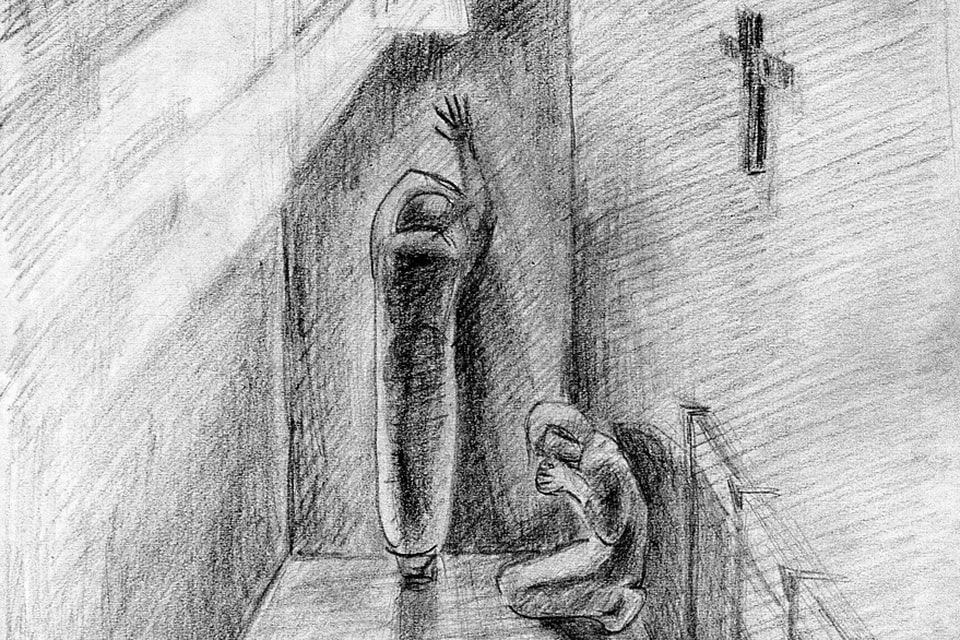
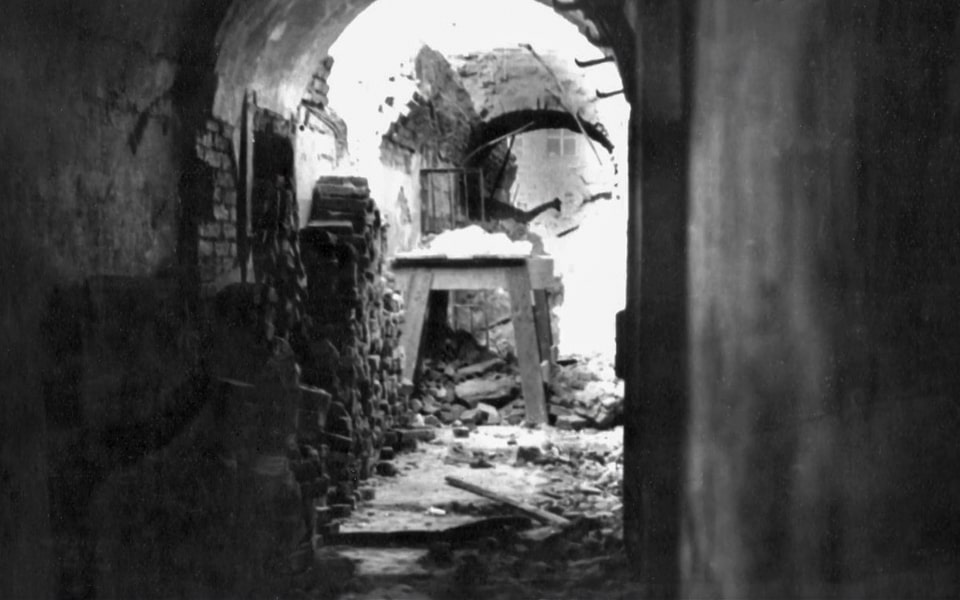
The results of the deliberate campaign of the extermination of the Polish intelligentsia are presented in the dramatic figures. During six years of German occupation, partition, and extermination, around 40% of its pre-war professors and 15% of teachers were killed, as well as 45% of Polish physicians and dental doctors, 60% of lawmakers, 20% of clergy representatives, and more than two hundred journalists also lost their lives. Those who were spared from extermination faced harsh circumstances when they had to work physically without appropriate skills and with broken health, with only tiny assistance from relief and charitable organizations. Apart from bodily issues, those educated people lived through the humiliation of unemployment, especially in the period until 1942, when the Germans felt the shortage of hands, and the former Polish intellectual obtained even some civil servant posts previously held by the Germans. On the other hand, the Polish underground did its best to occupy these people, who had been previously deprived of living means by the occupational regime.
The persecution of Polish intellectuals, thus the elimination or suppression of the active carriers of national ideas, the Nazis targeted Polish culture and history in a variety of forms and means. Apart from arresting teachers and depriving them of their work, the regime deliberately confiscated and destroyed Polish books and persecuted the underground education efforts. The notorious Hans Frank, the General Governor, on one occasion claimed that Polish land should be transformed into an intellectual desert and that Polish people do not need ‘excessive education’. Apart from restricting higher and secondary education, the Germans permitted only a small number of elementary schools. For example, pre-war Warsaw had 380 elementary schools, and by 1941, their number was cut in half to 175, and Polish children starting from age twelve were meant to work. We should also not forget the process of Germanization when German teachers taught Polish children the basics of the German language, just enough to understand simple orders. The process of destruction of German history and culture also included the removal of monuments and memorials of national heroes: in Warsaw, they took down the statues of an iconic composer, Frederic Chopin (1810-1849), military hero Tadeusz Kosciuszko (1746-1817), and Marshal Jozef Pilsudski (1867-1935).
As I have stated above, the Nazis, particularly the perpetrators of the mass murders from the SS and Orpo (Ordnungspolizei), were highly effective in the deception of the early victims in late 1939 and early 1940. Polish intellectuals who were imprisoned in Pawiak did not grasp the full scale of the AB-Aktion against them: the full understanding came only after the war and post-WWII investigations. Even leaving for a time the mass shootings in the Kampinos Forest, for months, only a small number of Warsawians realized that thousands of arrested people were taken to Pawiak prison in the Muranów district. Among the first ‘investigators’ of the nature of Pawiak was Ludwik Landau (1902-1944), a social activist and a former economic statistician, the author of the scholarly acclaimed ‘World Economy’ book. A representative of the Polish intelligentsia himself and being a half-Jew, Landau fought during the siege of Warsaw and later continued his research during the occupation by taking an essential part in the Polish underground movement. Starting from the Fall of 1939, Landau kept a diary in Warsaw, documenting the living conditions of people, and marked the arrests of his fellow intellectuals. Even though he unmistakably chronicled the persecution and arrests starting from October 1939, as late as April 1940, Landau concluded that the destination was Pawiak and, in July, that many of them were already dead. As a Jew, he was later put into the Warsaw ghetto, from where he escaped and hid until being caught by the Gestapo in February 1944 and killed. Landau’s wartime memoirs, called ‘Kronika Lat Wojny i Okupacji’ (Chronicle of the Wartime Occupation), were published in three volumes between 1962 and 1963.


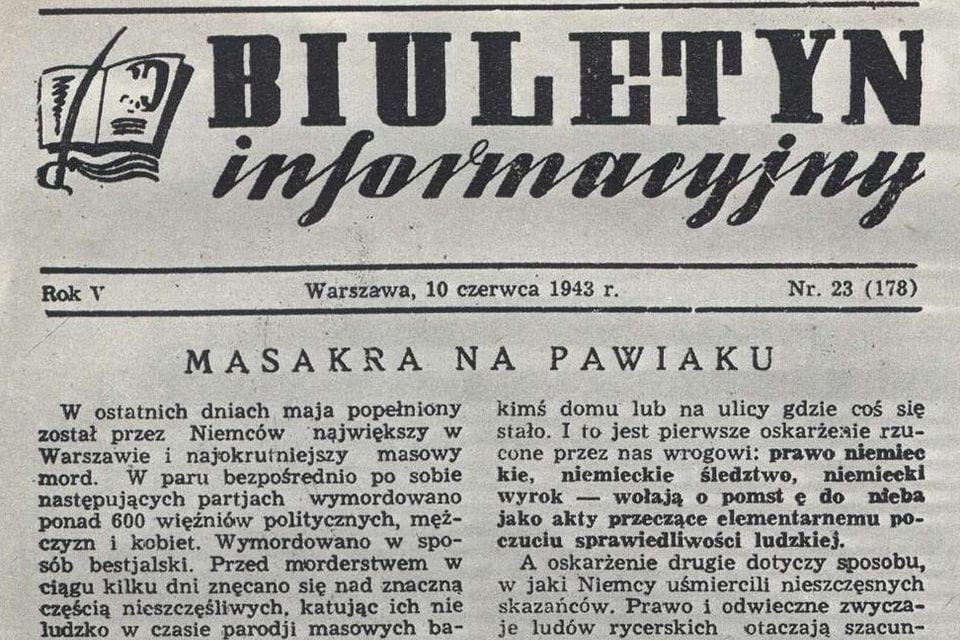
At the same time, Landau came to understand the mass killing process of Poles, who were taken to Pawiak in July 1940, and information about the nature of the prison emerged in the Polish underground newspaper called ‘Biuletyn Informacyjny’ (Informational Bulletin). The main underground source of information at the time, the newspaper discussed centralized political arrests of the previous months and Pawiak as a destination center of this terror in Warsaw. Starting from summer 1940, the nature of the Pawiak became well-known among Warsawians, even though there was little information from inside the facility. Pawiak prison was visited by Reichsführer-SS Heinrich Himmler during his tour to Poland as early as April 29, 1940, at a time when the prison was overcrowded by Polish intellectuals. Even though the facility was one of the largest in Poland, it could not cope with more than 2000 prisoners at a time. An especially difficult situation was in the basement of the men’s building, the so-called ‘section VII’ and ‘section VIII’, where mostly Jews were crammed. Himmler ordered to deal with the overcrowding, and already on May 2, 1940, 823 people were sent to the notorious Sachsenhausen concentration camp to the North of Berlin, thus opening a new page in the history of Pawiak: sending inmates to concentration camps and killing centers.

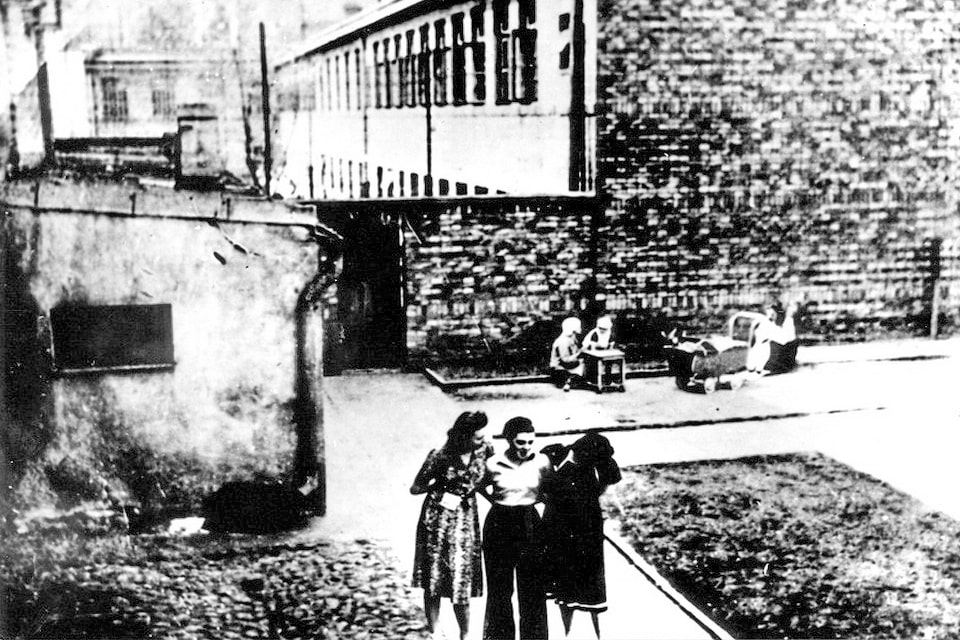
PAWIAK PRISON AND AUSCHWITZ: DEPORTATIONS OF POLISH PRISONERS, 1940–1942
When dealing with overcrowding in Pawiak, Himmler would like to employ the newly created concentration camp for Poles in the city of Oświęcim, though the facility was not yet ready to receive people in May 1940. The first transport with Polish prisoners, 728 people, which was brought to Auschwitz ‘Stammlager’ on June 14, 1940, was not from Warsaw and Pawiak but from the city of Tarnow. It took the Nazis another two months to send the first 513 people from Pawiak to Oswiecim on August 14. That first transport from Warsaw was composed mostly of Polish intelligentsia and several dozen Jews: pre-war politicians and activists, doctors, lawyers, clergymen, students, and the officers of the Polish army. Apart from 513 men from the Pawiak prison, the train included another 1153 men from Warsaw, the targets of street roundups. Among those pioneering deportees from Warsaw were:
- Edmund Wojciechowski (1903-1941), was a lawyer and the son of Stanisław Wojciechowski, the second President of Poland. In Auschwitz, he was given the camp number 2297.
- Stefan Boleslaw Perzynski (1881-1941), was a lawyer and a senator from 1928 to 1935. He got camp number 2218.
- Aleksander Izycki (1866-1941), was a famous Polish publicist and a senator from 1928 to 1930.
- Stanislaw Kielak (1885-1940), was a member of the Polish parliament in the 1920s and 1930s. His Camp number was 1727.
- Jozef Chacinski (1889-1954), was a well-known Polish lawyer and a member of the Sejm. He survived Nazi camps but was again arrested by the Soviet regime in 1945.
- Wladyslaw Starzak (1895-1941), was a social activist and a member of Parliament between 1935 and 1938. He was arrested in Warsaw and taken to Pawiak as early as March 1940.
- Stefan Szlachciński (1888 – ?), a veteran of the Polish Army and later a Sejm member. His Auschwitz number was 1797.
- Henryk Świątkowski (1896-1970), was another politician who, like Jozef Chacinski, survived the War. Świątkowski was a famous lawyer and later a member of a Socialist party. He was put in Pawik in July 1940, deported to Auschwitz on August 14, but released a year later. After WWII, Świątkowski even served as the Minister of Justice of Poland.

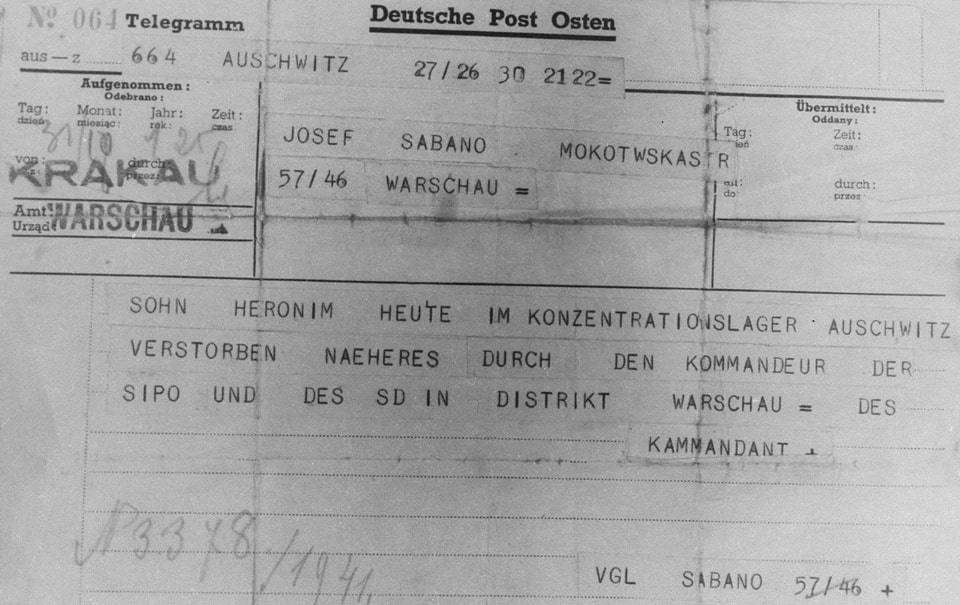
On September 22, 1940, Auschwitz camp absorbed another large number of deportees from Warsaw: 1,705 people, of whom 566 were deported from the Pawiak prison. Among those people were several men who were destined to become essential members of the camp’s underground movement.
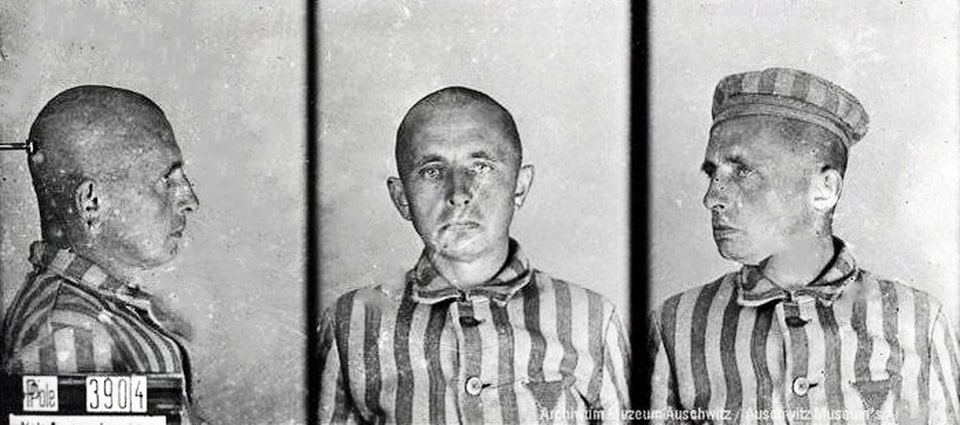
- Stanisław Dębski Dubois (1901-1942), was a pre-war publicist and political activist of the Socialist Party. He was a member of the Polish Parliament for five years from 1928 to 1933, and in December 1938, he won the elections to become one of the councilors of Warsaw. Dubois was arrested along with his fellow anti-German activists in the Warsaw cafe on August 21, 1940, and after spending a month in Pawiak, found himself in Auschwitz on September 22. His camp number was 3904. He was sent back to Pawiak in November for interrogation and in May 1941 once again to Auschwitz, where he led a socialist underground cell until being shot in August 1942 at the infamous wall of Block 11 at the Stammlager.
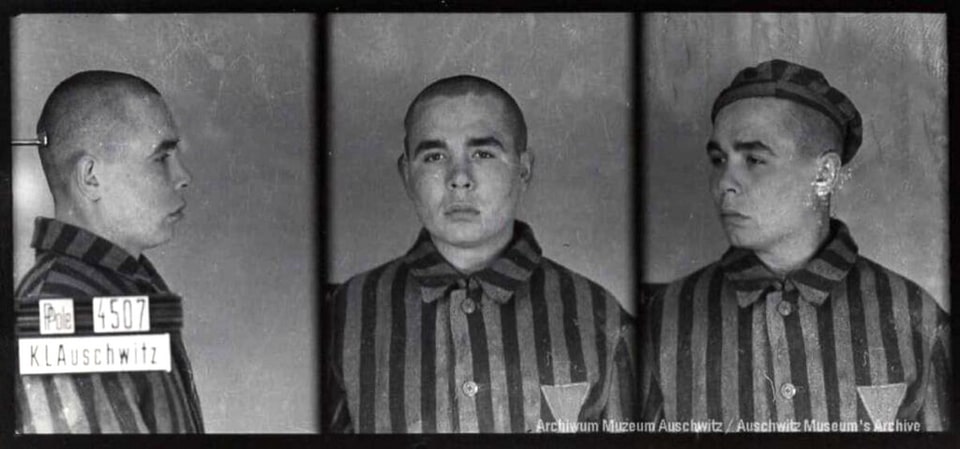
- Konstanty Jagiełło (1919-1944), was a fellow socialist activist to Stanislaw Dubois. When he was taken to Pawiak in August 1940, Jagiello was beaten so severely during the interrogation that he lost all his teeth and was later nicknamed ‘toothless’. As a part of the September 22 deportation train from Warsaw, he got camp number 4507 (4007 in another source) at Auschwitz. He managed to escape the camp but was later killed by the SS guards of Auschwitz during his attempt to free some more prisoners in October 1944.
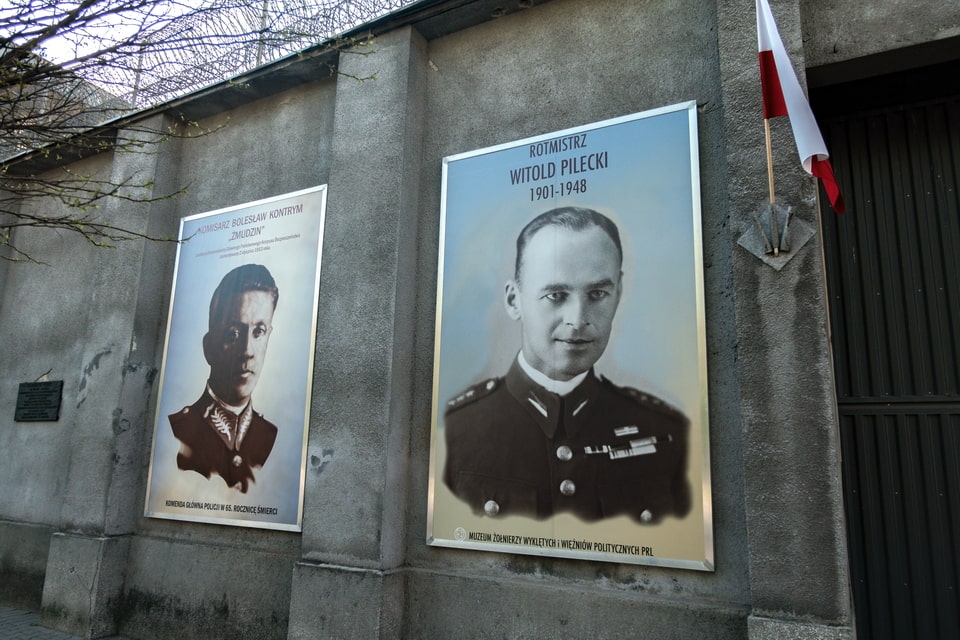
- Witold Pilecki (1901-1948), was probably the most recognized prisoner of the Auschwitz camp. A veteran of the Polish army and particularly of the Polish-Soviet war, he fought in the Battle of Warsaw in September 1939 and later joined the underground. Pilecki was arrested (he opted to join the arrestees) only a few days before being sent to Auschwitz in September 1940, and he used the documents of Tomasz Serafinski. Upon arrival, he got his camp number 4859. Piclecki was one of the architects of the underground movement in the camp and smuggled important information about Auschwitz to the outside world. He managed to escape in April 1943, and in 1944, he fought in the Warsaw Uprising, survived, and was imprisoned until the end of the war. He was arrested in 1947 by the communist regime, taken to Mokotów prison, where he was tortured as the ‘enemy of the state’ (the pro-Soviet puppet state), and executed on May 25, 1948.
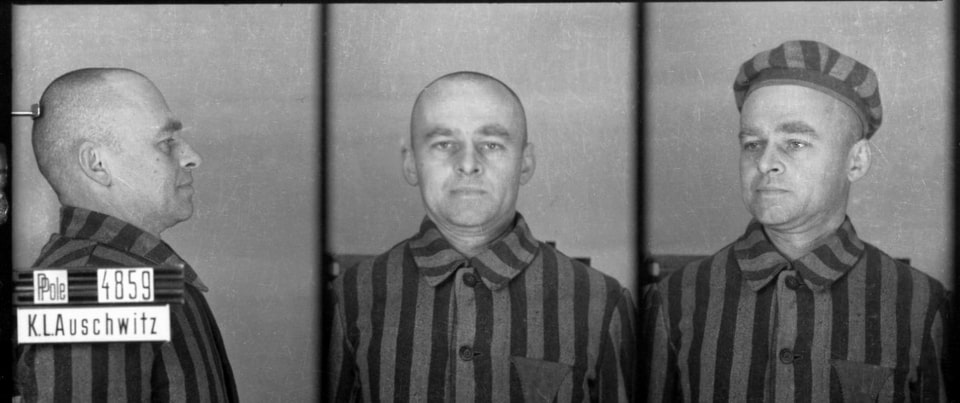
By the end of 1940, more than 8000 people from Warsaw were taken to Auschwitz, many of them former prisoners of Pawiak. At this early stage in the war, before Birkenau was put in full-scale operation and Auschwitz was still mainly a camp for Poles, Pawiak prisoners amounted to a large percentage of the camp population. On July 23, 1941, another large transport with 350 Pawiak prisoners was brought to the camp. Among those men were Polish economist and Sejm member Roman Rybarski 1887-1942), ten-time running champion Jozef Noji (1909-1943), professor and parliament member Witold Teofil Staniszkis (1880-1941), and train union activist and the after-war Minister of Labor Adam Kurylowicz (1890-1966). 108 people were deported to Auschwitz from Pawiak on October 15, 1941, 174 people on November 19, another 62 on January 8, 1942, 65 on January 14, and 176 people on February 2. At the beginning of 1942, Auschwitz held around 12,000 prisoners, of whom Poles still comprised three-fourths, and the majority of them were from Warsaw and prisoners of the Pawiak.


THE WARSAW GHETTO AND PAWIAK PRISON: NOVEMBER 1940 AND THE SS TAKEOVER
Modern historians define several periods in the history of the Pawiak Prison, and the consensus states that the initial period lasted between October 1939 and November 1940. As I showed above, during these thirteen months, Pawiak, along with Mokotów prisons, has become the primary destination detention point for thousands of Polish intellectuals and those whom the Gestapo regarded as anti-German elements. It is important to know that Pawiak operated under the so-called ‘Main Department of Justice in the Cabinet of the General Government’ in the first months of occupation. It was re-subordinated to Department IV of the Reich Security Main Office, known as Gestapo, in March 1940, which later simplified both the interrogation process at Gestapo headquarters at Szuch Boulevard No. 25, the deportations to Auschwitz and other camps in the KL system of terror under Heinrich Himmler. While Mokotow served only an auxiliary function, Pawiak became the largest political and investigative prison in the occupied Polish territories.
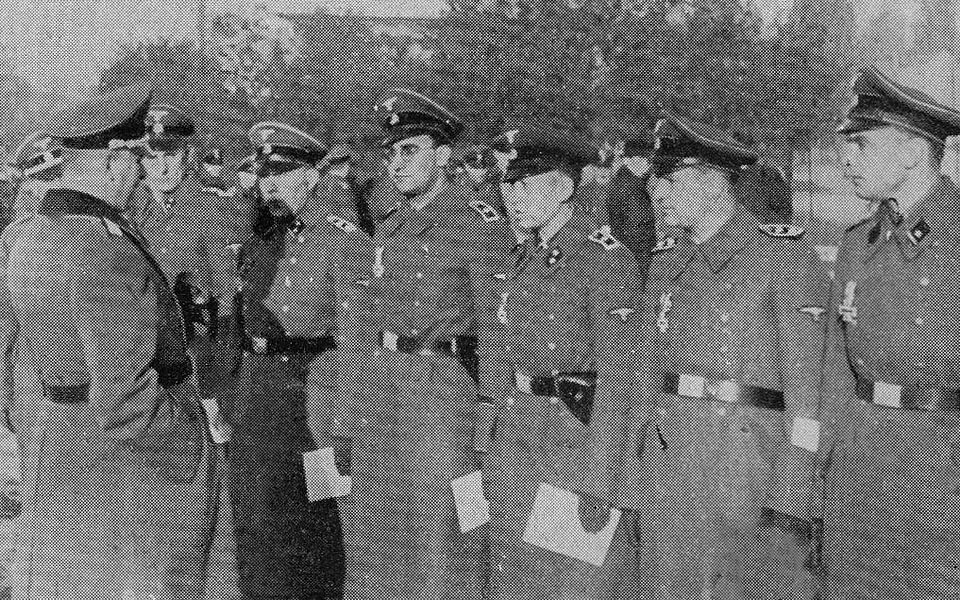
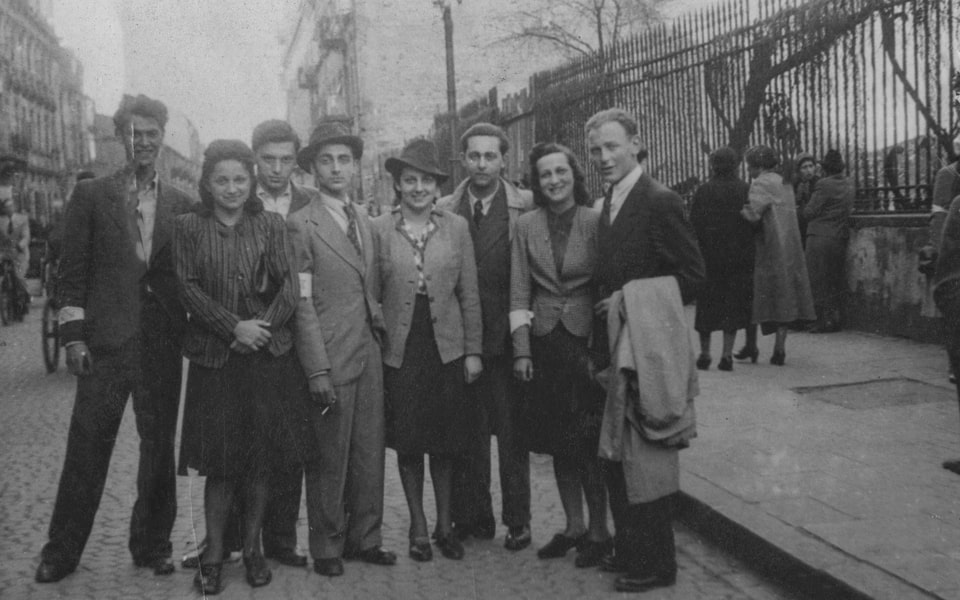

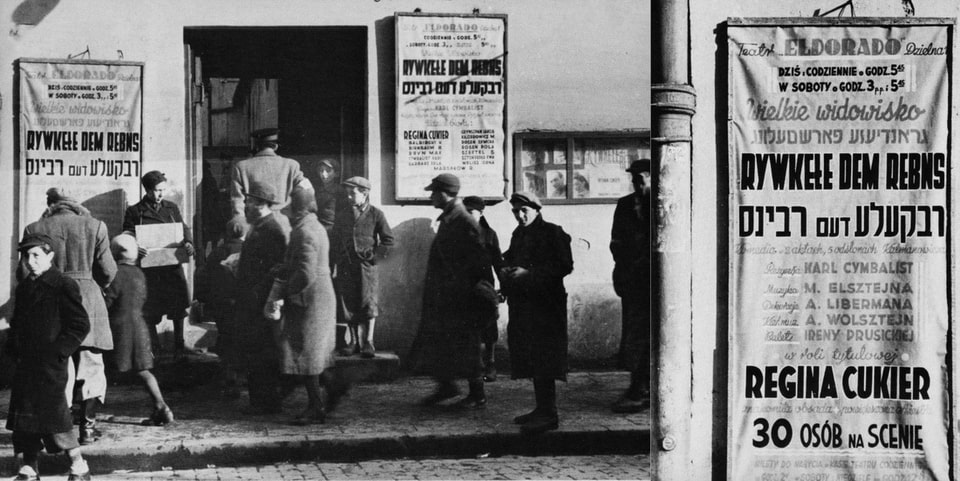
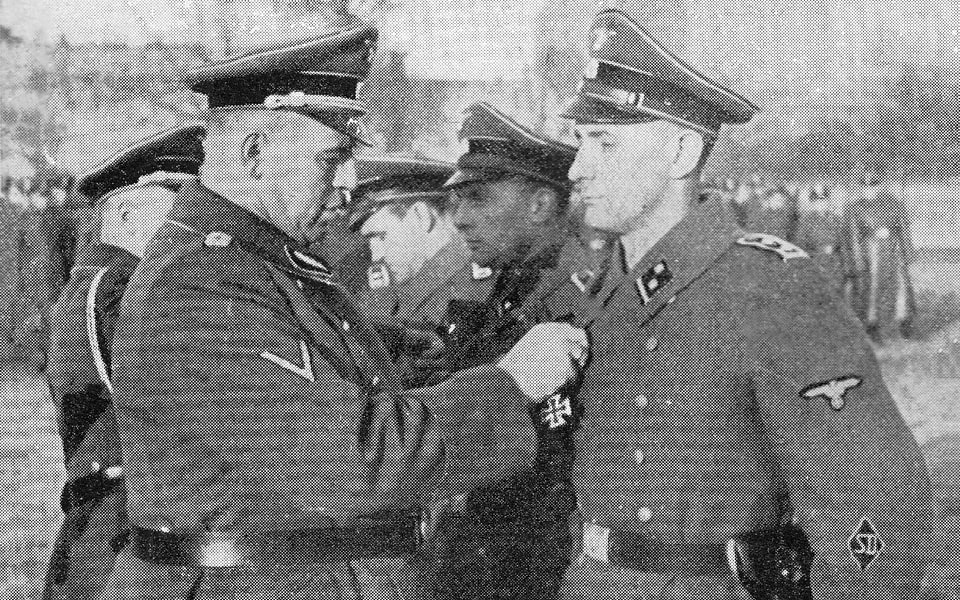
The area around Pawiak prison was known for a high percentage of the Jewish population long before 1939, but when the Nazi authorities declared the creation of the ghetto area in late 1940, the Polish residents of Dzielna, Pawia, and Karmelicka had to leave their houses. When the Warsaw ghetto was sealed in November 1940, the Pawiak complex became part and in the same months, the prison was overrun by the Gestapo staff and after that ruled by SS officers. The first commandant of Pawiak after November 1940 was SS-Obersturmführer Otto Gottschalk. Born in 1898, he was an early member of the SS with membership number 18 682 and was promoted to the rank of Obersturmführer as early as 1937. In his post, he was assisted by a deputy, Hans Fehlhaber, and around fifty SS officers who provided day-to-day operation. Most of the former Polish guards were arrested, and only a part of them were allowed to work in the Serbian section. The coming of the permanent SS staff also meant the tightening of the regime of the inmates. The fate of Otto Gottschalk, except for the fact that he left the post in March 1941, is unknown. His deputy, Hans Fehlhaber, was born in 1908 in Pasewalk, the town where Adolf Hitler stayed in hospital in 1918: the moment in the Nazi movement that was highly mystified. Fehlhaber was a typical Gestapo functionary with sadistic tendencies, who organized mass deportations of Pawiak prisoners to Kampinos Forest.

From November 1941 to March 1942, Pawiak’s commandant was SS-Unterscharführer Helmut Heiss. He was fifteen years younger than the previous commandant: Heiss was born in 1913 in the Austrian city of Innsbruck and was only twenty-eight years old when he was appointed the ruler of Pawiak. From March 1942 to March 1943, the prison was ruled by SS-Obersturmführer Herbert Junk, who was born in Breslau (modern Wroclaw) in 1898. Junk was killed by the Polish patriots on June 15, 1944, in the Northern part of Warsaw. SS-Obersturmführer Norbert Bergh-Trips, another Gestapo officer, became the last commandant of Pawiak. Like Helmut Heiss, he was an Austrian born in Graz in 1912. He left his country in 1933 and joined the SS in Germany, becoming a Gestapo officer in 1938. In the post of Pawiak’s commandant, Bergh-Trips repeatedly directed executions of prisoners in the summer of 1944, but after the war, he was never tried and lived until 1980.
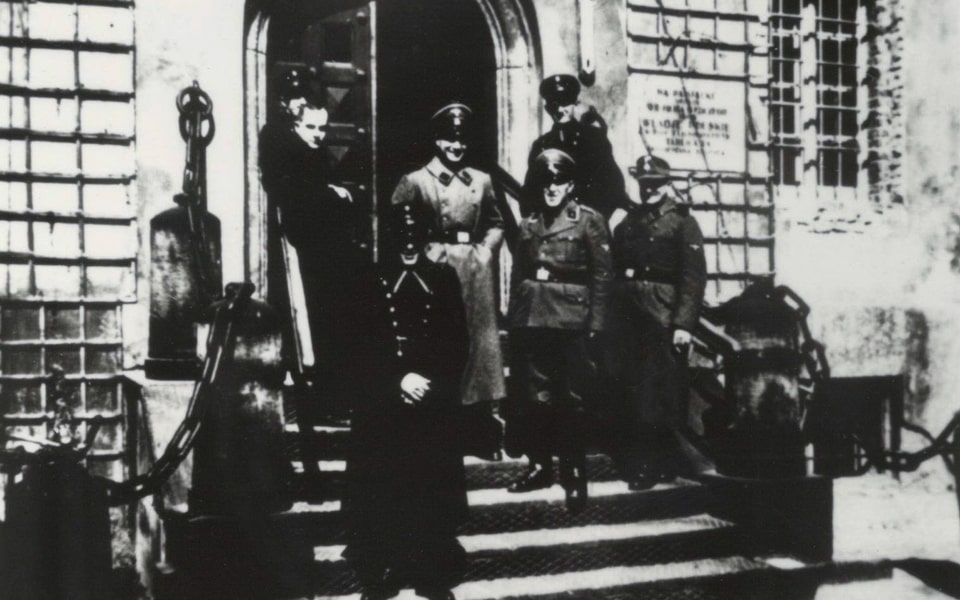
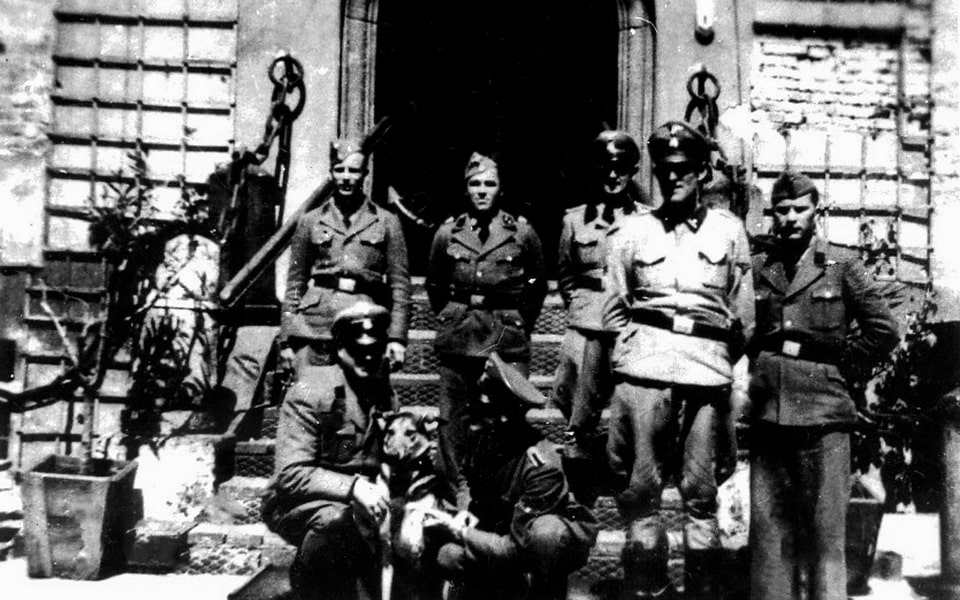
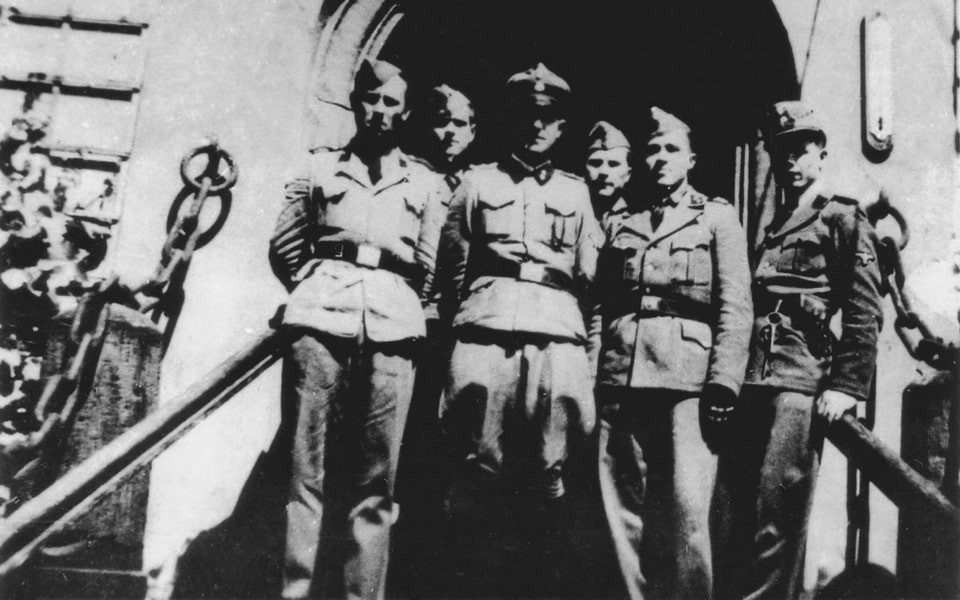
Apart from commandants, the functioning of the terror in Pawiak highly depended on the zealousness of its deputy commanders whose identities became infamously known during the occupation and after the war. In many ways, it was deputy commanders who set the level of violence on a day-to-day basis. After Hans Felhaber was SS-Sturmscharführer Gerhard Hiersemann, who was born in the German city of Döbeln and was known for his cruel attitude toward Pawiak prisoners. He died of jaundice in August 1943. The longest-serving deputy commander in Pawiak and the most notoriously known was Franz Burkl, who ran the facility between September 1941 and April 1943 under several commandants. His unprecedented brutality made him one of the most hated men in the occupied territories and a primary target for the Polish underground movement. The operation of his assassination was similar to the one against Reinhard Heydrich in 1942 in Prague: an armed squad attacked Bukl’s car during a stop at the intersection in Warsaw on his way between an apartment in the ‘Aryan’ part of the city and his office at the Gestapo headquarters at Szucha Boulevard. On September 7, 1943, eight Germans, including Burkl himself, were killed, but a group of Pawiak prisoners was executed as a reprisal.
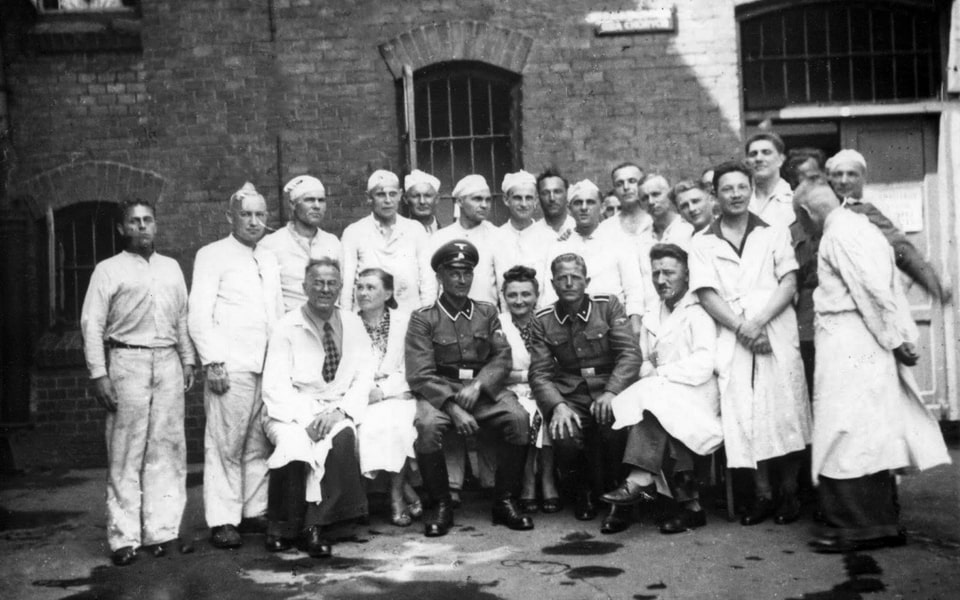
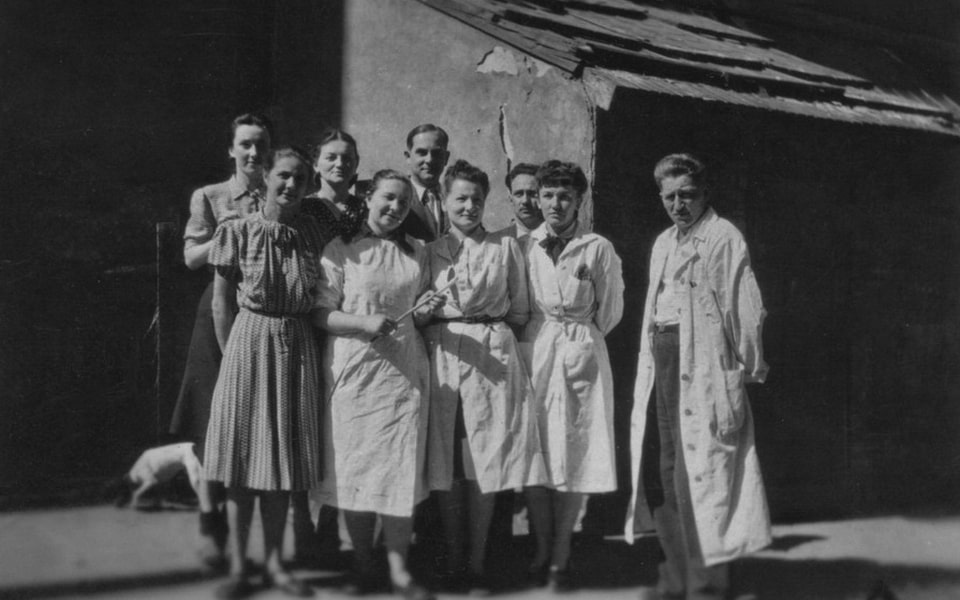
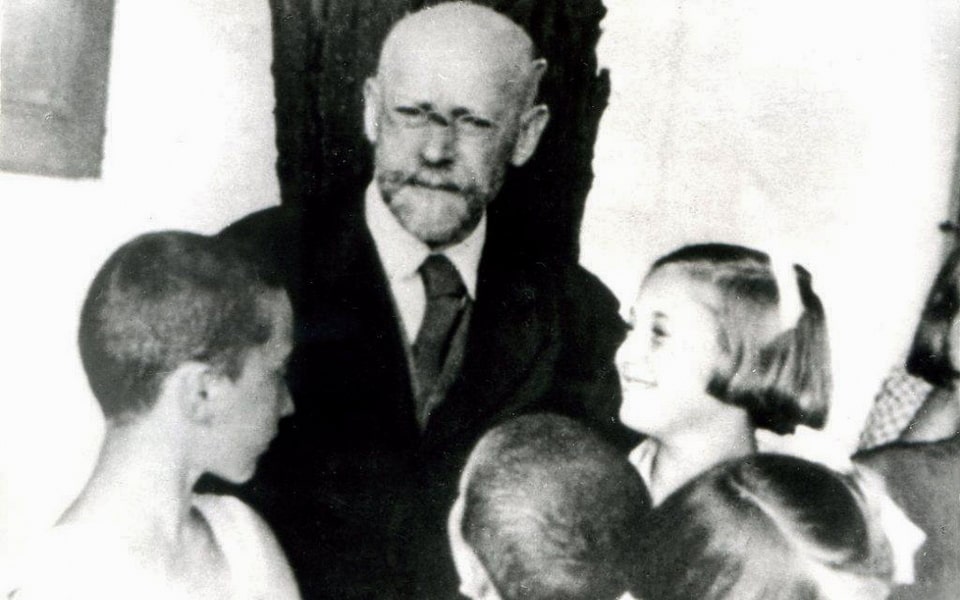
Getting back to the establishment of the Jewish ghetto in Warsaw in November 1940, the Judenrat leader, Adam Czerniakow, was taken to Pawiak for the night because one of the Gestapo informants had not received an apartment during the resettlement and held a grudge against Czerniakow. In his post as a Jewish leader of the Warsaw ghetto, he later received numerous threats of being taken to the Gestapo and Pawiak, as well as many of the Judenrat members, who, with time, just ignored such threats. Adam Czerniakow was not the only recognized Warsawian Jew who was taken to Pawiak during the establishment of the ghetto in November 1940 and survived. A world-renowned Doctor Janusz Korczak (1878-1942) was brave enough to protest to the Gestapo that the orphanage’s potatoes were confiscated during the move to the ghetto. They used the pretext of a doctor not wearing his Star of David armband and sent him to Pawiak, where he spent one month. The elderly Korczak, who was sixty-two, managed to survive imprisonment just because he was put into the cell with criminals and not with political prisoners who were deliberately tortured and killed. Janusz Korczak was finally released in late December 1940 thanks to the connections of one of his former orphans, “Harry” Kaliszer, who bribed a local Nazsi collaborator for thirty thousand zloty. Children in the orphanage greeted their headmaster in the same way when he had returned from the Great War two decades before. On August 6, 1942, Doctor Janusz Korczak, his nursing staff, and his orphans made their last walk next to the Pawiak prison across Karmelicka and Dzielna Streets, up to Zamenhofa in the direction of Umschlagplatz for deportation to the Treblinka death camp.
DAILY LIFE IN PAWIAK PRISON, WARSAW: THE MICROCOSM OF NAZI TERROR
When the Nazis seized the Pawiak complex, it had been a part of the urban landscape of the Muranów district, a Polish-Jewish neighborhood, for more than a century since 1835. People used to bypass its walls and two gates, once facing Pawia, the other facing Dzielna Street, routinely. According to the initial blueprint of its architect, Enrico Marconi, the Pawiak prison for men could detain 428 prisoners at a time. The basement floor had space for twenty prisoners, assigned to work in the kitchen, prison laundry, and food storage. The first above-ground floor had space for another 80 inmates, as part of it was occupied by administrative facilities. The second floor, with more offices, also had the capacity of 80 people in detention. Finally, the upper third floor accommodated a small hospital and cells for 248 prisoners. Apart from isolation rooms for individual punishments, each cell was designed to accommodate ten to fifteen people.


When the prison complex was taken by the Germans, the Gestapo estimated the capacity of the whole complex to be capable of holding in custody up to 950 people at once: 700 men and 250 women in the Serbia area, twice the originally planned spaciousness. During the spring-summer 1940 period of dangerous overcrowding, the Pawiak complex held up to 3000 people, with more than two thousand men cramped into a three-story building planned for four hundred, five times as many as Marcony’s design supposed. Even considering mass deportation to Sachsenhausen, Auschwitz, and other camps in Nazi-controlled Europe, Pawiak maintained a stable level of overcrowding up to its termination in the summer of 1944. Like in many other SS-held facilities and camps, from the very beginning, the arrival was inextricably linked with violence. Before being brought to the Dzielna/Pawia complex, people were often harassed and beaten during the roundups in the streets of Warsaw, or forcibly evicted from their apartments. Some arrivals were so severely beaten that they died soon upon arrival, even before being interrogated by the Gestapo staff, and many others committed suicide to avoid torture, especially after the summer of 1940, when the nature of Pawiak became notoriously known in Warsaw.
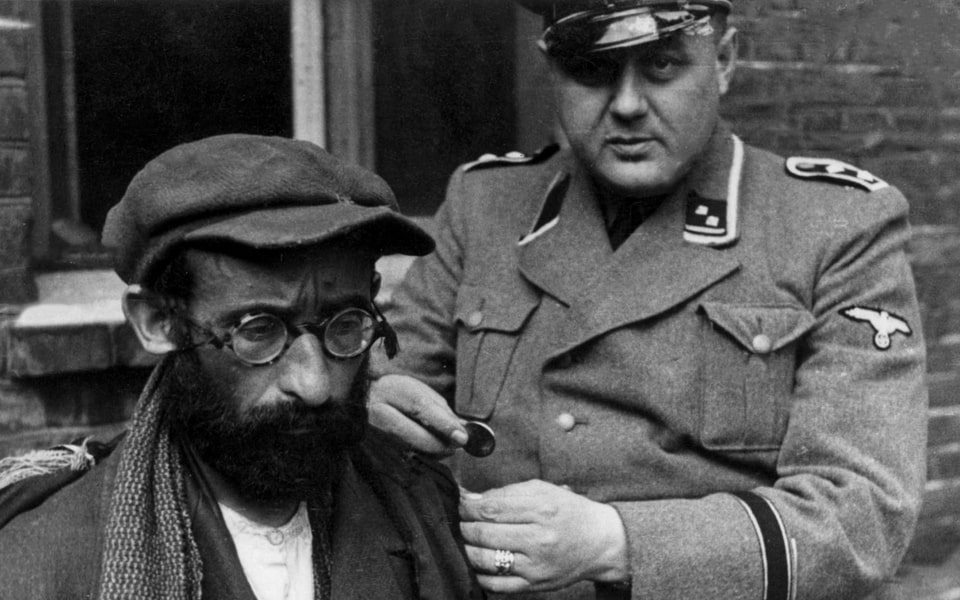
When families were brought to Pawiak, their members were separated: men were taken into custody, women to a Serbia complex across the wall, and sometimes mothers with children were released. When men were brought alone, they were usually delivered in trucks with no windows. What all the people faced was a large, heavy iron gate with two guarding towers and guards with sticks, accompanied by trained police dogs from three cages located in the courtyard. The courtyard in Pawiak was a stage for depriving people of their possessions, if they were allowed to take some with them, beatings, and humiliation, regardless of the number of new arrivals or weather conditions. The SS staff mockingly called these people ‘guests’. After the initial portion of violence and humiliation, new prisoners were exposed to shaving heads, registered, and then men were taken to the basement floor, which served as a quarantine. At this stage, men were medically examined, and thus Jewish men were separated from the others. The new arrivals had to spend up to fourteen days here in the cold, moist cells, which accommodated five times more people than was meant for: up to fifty in one room, which did not have blankets or mattresses, and only a few beds for several dozens of men. They were badly fed by something that was supposedly soup with no spoons. Because of the lack of sanitary basics, prisoners suffered from lice and diseases.

After the quarantine period of two weeks and separation, most newcomers were transferred to the upper floors and put into regular cells with slightly better conditions. In contrast to the basement premises, these cells were not as dumpy and cold, had mattresses and even a washstand for primitive sanitary conditions, but lacked heating in winter daylight except for small windows. The prisoners were deprived of soup or toilet paper. Like the barracks in the Nazi concentration camps with the ‘capo’ system, each cell in Pawiak had its elder, who was responsible for maintaining order and the presence of inmates from his cell during the daily roll-call procedure. Despite the overcrowding, prisoners were forbidden to communicate with other inmates beyond some basic interaction in their cells, and the disobedience of this rule may well result in brutal beating and interrogation. The Gestapo had informants and provocateurs among inmates, and Pawiak prisoners had to invent sophisticated means for communication either with each other or with the outside world.
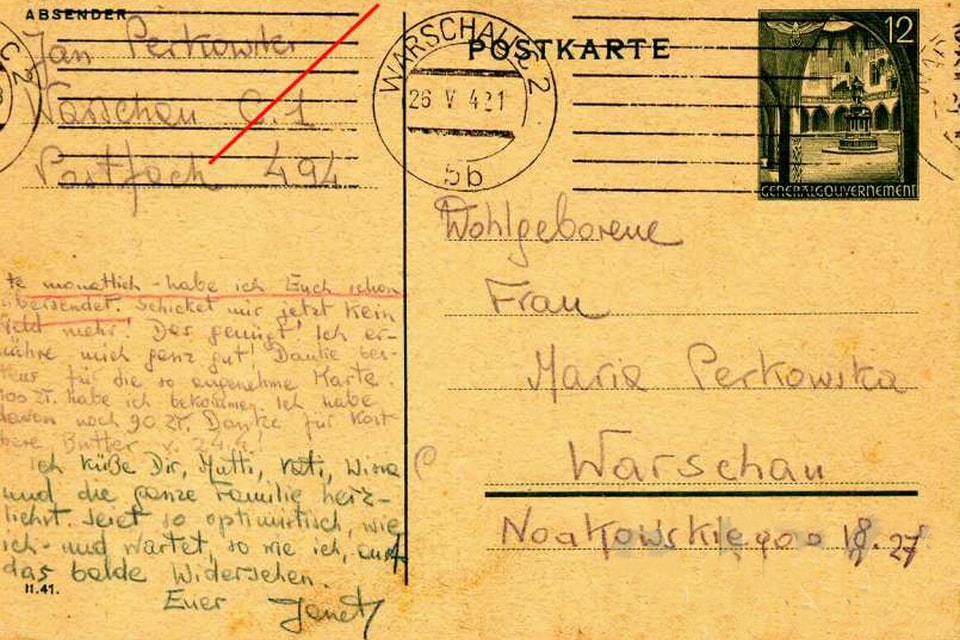
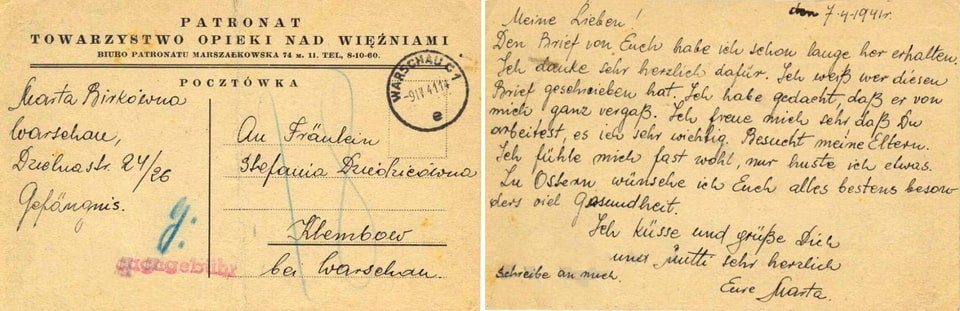
The communication with the outside world was meticulously controlled, not letting the information about Pawiak leave its walls. Generally, the prisoner was allowed to send a postcard to his relatives with generalized information that he or she was fine and in good health: on many occasions, those senders were already dead. The prisoners were deprived of correspondence, but some Poles were allowed to get packages with food and mail, while the goods were conventionally robbed. In rare instances, a small number of prisoners got parcels from ‘Stołeczny Komitet Samopomocy Społecznej’ (Capital Social-Help Committee) or SKSS, a Polish social welfare organization, which operated during the first years of occupation and provided more than 40 million meals to Polish citizens with the consent of the Germans. A vivid desire to communicate with relatives and the outside world resulted in the first centralized manifestation of opposition among Pawiak prisoners to the German oppressors. The inmates wrote code messages on cigarette paper and smuggled sheets, then left them in toilets at the end of each floor to exchange between the cells, or threw them from windows with an appeal to bypassing Poles to take them further. After November 1940, when Pawiak prisoners became a part of the ghetto, the messages were smuggled with the help of Polish staff from the prison hospital, laundry, or kitchen, or through the bribed guards.

Centralized separation, segregation of different groups of prisoners: criminal, political, Jews, gypsies, and the deprivation of communication were all a part of the common Nazi system of terror. In the Gestapo’s worldview, the fragmented society of prisoners, regardless of their number, could be controlled with less effort and danger, just with a high level of never-ending violence. In the initial phase of Pawiak’s insistence, when the guards were mostly Polish, the prisoners had more chances to bribe them or provoke some compassion compared to Germans, Volksdeutsche, or other ethnic groups, who were conventionally more brutal. While the overall agenda of violence was masterminded by the commandant, his deputy, and a bunch of SS officers, the day-to-day terror was covered by guards, many of them notoriously known for their sadistic nature and narrow-mindedness. While the small percentage of Volksdeutsche among prisoners was rarely targeted, and Poles comprised the absolute majority of the Pawiak population, it was Polish Jews who were mistreated by the guards in the most brutal ways. The pre-war racial prejudices were also orchestrated to provoke antagonism among different groups of prisoners.
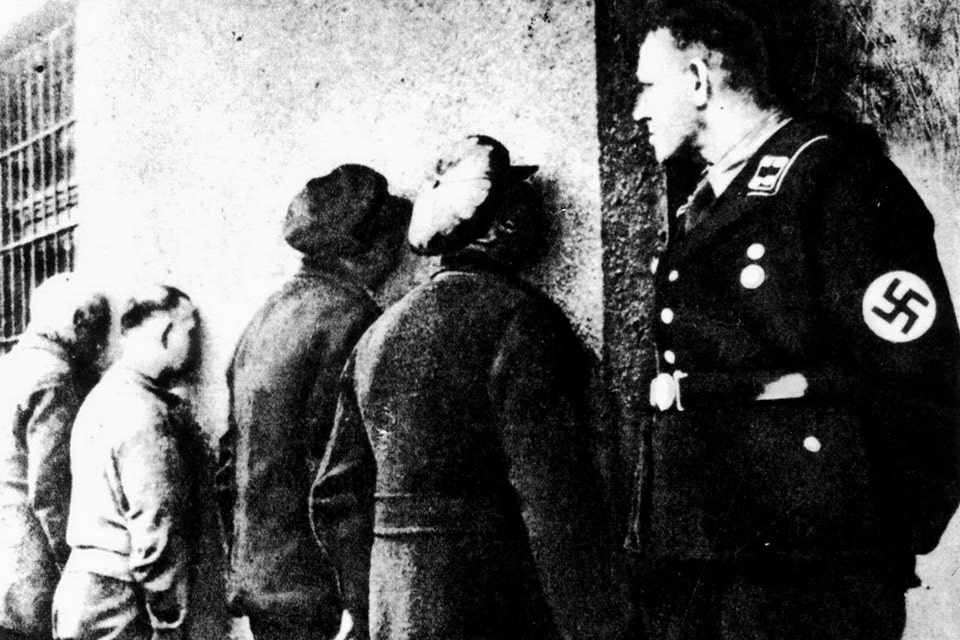
The daily life of prisoners in Pawiak in Warsaw was routinized to the extent of the daily orchestrated agenda, unchangeable in different seasons, on calendar weekends or holidays. The daily wake-up was steadfastly set at 5.30 a.m. with a strictly manageable roll call by both cell elders and guards. The morning routine included a time for basic washing, which was a kind of a challenge in periods of severe overcrowding, and a breakfast usually consisting of 250 grams of low-grade bread and half a liter of a liquid that was meant to be coffee, similar to breakfast in the Nazi labor and concentration camps. Those inmates who were chosen for interrogation that day were put into covered trucks and taken to the Gestapo headquarters in Warsaw at Szuch Boulevard 25 in the southern part of the city, next to the Belvedere Palace and Ujazdow Avenue, where Adolf Hitler received the so-called ‘Victory Parade’ on October 5, 1939. The Nazis expelled Polish citizens from the area and turned the area into a ‘police district’ and even renamed Szuch Boulevard into Strasse der Polizei (Police Street). Before the occupation, the giant building seized by the Gestapo had accommodated ‘Ministerstwo Wyznań Religijnych i Oświecenia Publicznego’ (Ministry of Religious Beliefs and Public Enlightenment).
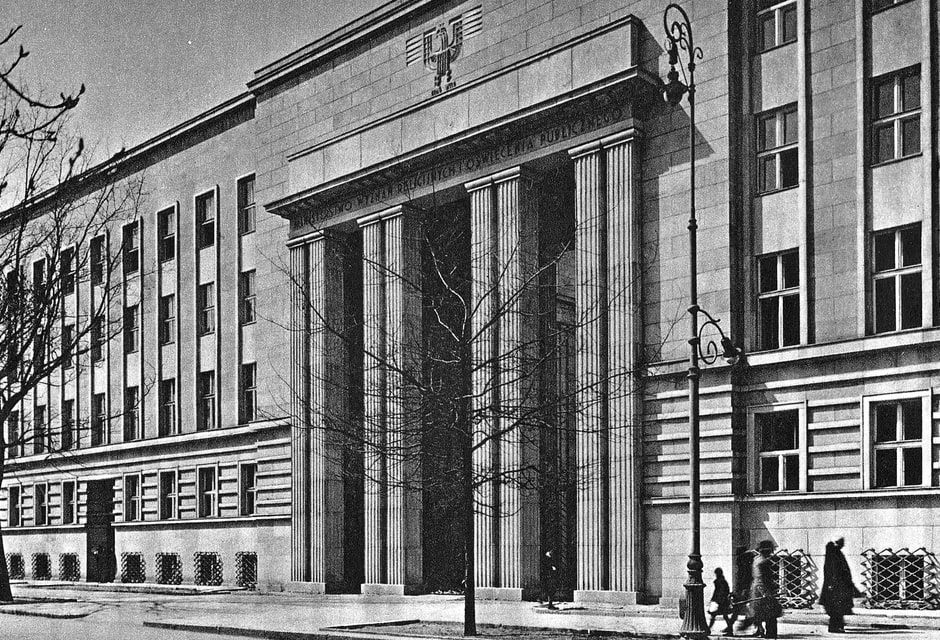
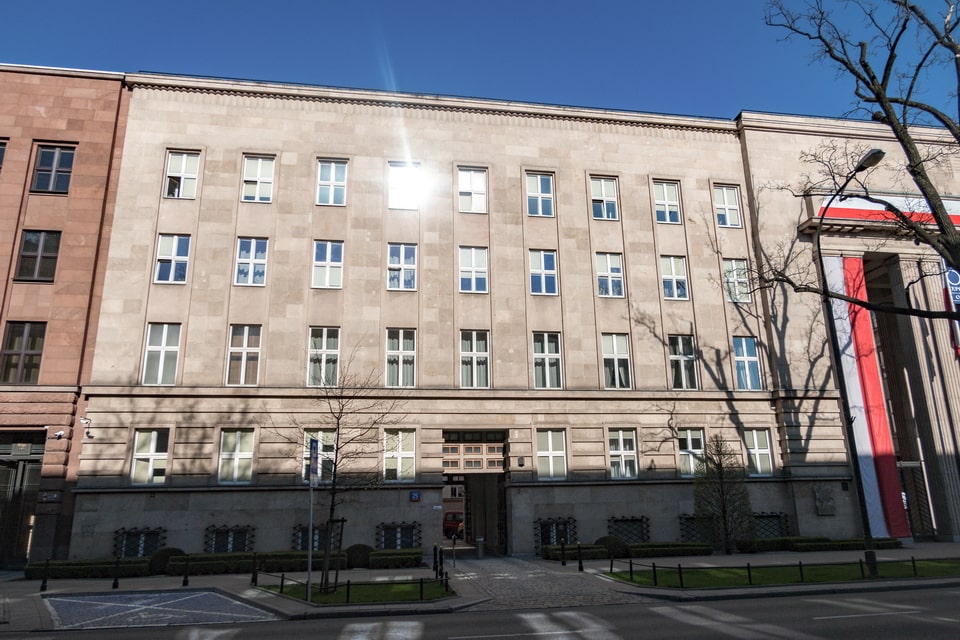
The trucks that brought the prisoners from Pawiak to Szuch Boulevard 25 were bulletproof and escorted by a guarding cortege. People, who were left in their cells for weeks in anticipation of the interrogation, could hardly see the streets from the inside as they were invisible behind gray steel sides and small opaque windows of the lorries. Apart from the Pawiak prison itself, the Gestapo headquarters was one of the most fearful and deadliest places in Warsaw during WWII. Those brought here in the morning around 8 a.m. were left to wait in the basement premises of the building in the cells with wooden benches. When it was someone’s turn, he was brutally taken to another section beyond the metal grid. In the presence of an interpreter, the victim was ordered to speak about himself and answer questions regarding his contacts, while the charges were often forged. The Gestapo interrogators brutally beat them with rubber sticks, crushed their fingers, broke ribs, and pulled out nails. Depending on the level of cooperation and the extracted information, the victim was left in the basement for another session of violence, released, got back to Pawiak or Mokotów prisons, sent to concentration camps, or prescribed for execution at Kampinos Forest or other similar killing sites. In the evening, those designated for being taken back to Pawiak were taken to the prison in the same trucks and thrown into their cells or the camp hospital.

Getting back to the Pawiak prisoners’ schedule, those who evaded being taken to interrogation spent the entire day inside the prison walls. A small percentage of inmates got assignments in the workshops, laundry, kitchen, hospital, and administration premises. Before 1942, the male prisoners had a brief walk session in the courtyard, which was later forbidden. Occasionally, there were medical examinations, and when the evening came, some of the interrogated prisoners were taken back, and there was an obligatory roll-call procedure before the light went out at 8 p.m. Apart from bread and a poor mimicry of coffee at breakfast, the prisoners got a large portion of vegetable soup with no meat at around noon, and another soup and coffee-like liquid for dinner. The overall calorie intake for prisoners in Pawiak was mortally low, with only around 1000 calories, and mirrored the obscure situation in the Warsaw ghetto. Malnutrition and exhaustion made prisoners weak and vulnerable during the interrogation and provoked the outbreak of diseases in the overcrowded prison cells. In contrast to many Nazi concentration camps, the hospital in Pawiak, with forty beds for men and forty for women, was well equipped, and getting here did not mean death. Until April 1944, not only did prisoner doctors work here, but also Polish physicists hired from the outside.
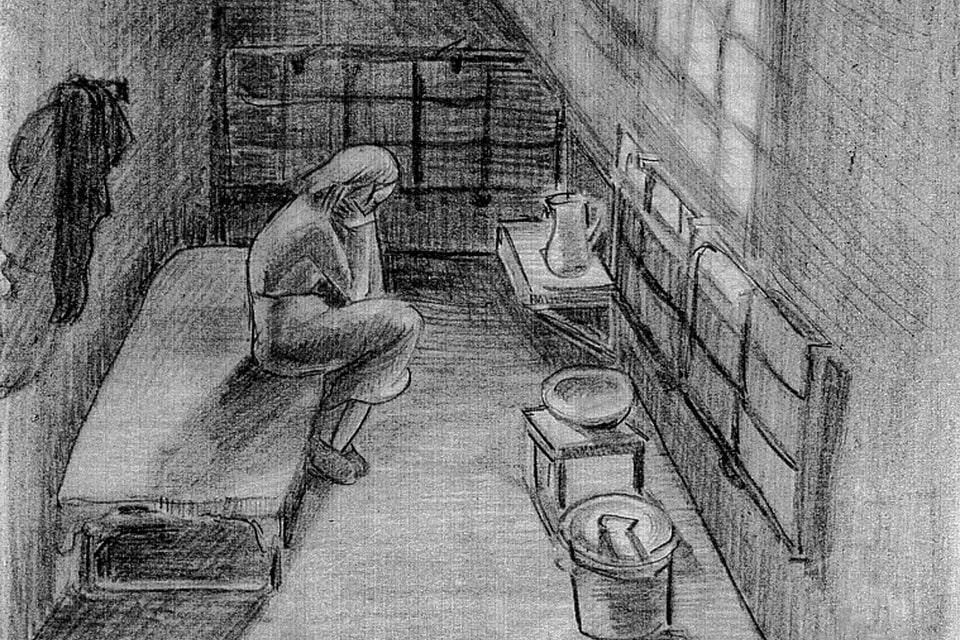
It is important to mention that the lion’s share of the prisoners in Pawiak throughout its operation between 1939 and 1944 were men, and the absolute majority of victims executed in secluded locations such as Kampinos Forest were also male. In the first years, women were often brought with their husbands, fathers, sons, and brothers and had a good chance to be released home, especially those with children. Nevertheless, in particular periods, the Serbian prison for women was also badly overcrowded, and some women even gave birth here. Some of them were pregnant when taken to Pawiak. Others experienced sexual harassment by the guards. Female prisoners were exposed to interrogations, tortures, mistreatment, and even executions, as well as males beyond the wall. The whole complex of buildings was inseparably regarded as Pawiak, though the Serbia compound was separated by the wall with gates: the only entrance to this section was the pre-war gates to Dzielna walled up. Female prisoners got assignments in the kitchen, the laundry, a vegetable house, workshops, and the administration building opposite the prison. Like the male section, Serbia had its inner courtyard for walks between the main building and the wall facing Pawia Street. The main building had three floors: the first with cells, an admission office, a store room, and a bath; the second and third floors included corridors with cells on both sides. Like male prisoners, women were also exposed to being sent from Pawiak to the KL camps, primarily women Ravenscruck, also to Auschwitz and Majdanek.

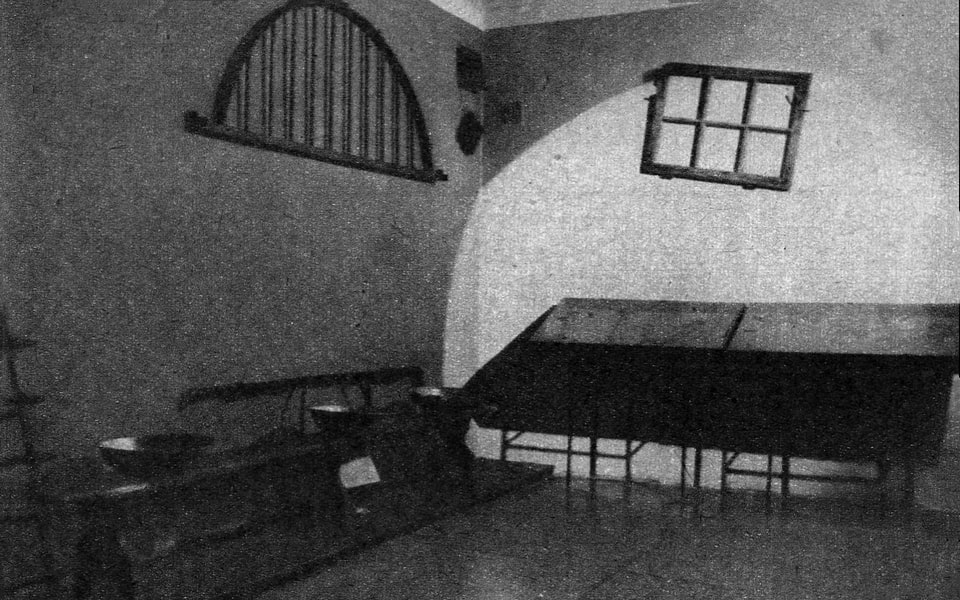
THE THIRD PHASE OF PAWIAK PRISON OPERATION AFTER MARCH 1942: THE WARSAW GHETTO UPRISING
As I have already stated above, the initial phase of the Pawiak operation under the Nazis covered the period between October 1939 and November 1940, with the establishment of the ghetto. The second phase lasted a little more than a year until March 1942. The reason for such a separation was the definite replacement of the formerly predominant Polish guards by Volksdeutsche or ‘Hilfswilliger’ auxiliary volunteers. The post-war testimonies of the surviving prisoners in Pawiak determined the deterioration in the treatment of inmates, even compared to the previous unbearable conditions. While Pawiak was a world of violence in itself, a prison city inside the city of Warsaw, it could not be isolated from the Warsaw Ghetto where it stood since November 1940. In the summer of 1942, when the Nazi regime decided to eliminate the Jewish community in Warsaw in one unprecedented large-scale ‘Grossaktion’, Pawiak and its staff willingly became a part of the process of the destruction of the Warsaw Ghetto.
On July 21, 1942, the Germans used their well-proven practice from the time of the actions against Polish intelligentsia by taking sixty hostages among Jewish leaders, including the members of the Judenrat, to Pawiak prison as hostages. The next day, ghetto leader Adam Czerniakow was ordered to organize a mass deportation of the Warsaw Jews to the East, which meant transportation to the Treblinka death camp, 75 km to the North-East of Warsaw. Between July 22 and August 18, 1942, around 265,000 people were taken from the ‘Umschlagplatz’ at Stawki Street in the northern part of the ghetto in cattle cars to the train station of Malkinia and from there to Treblinka and were gassed upon arrival. The Pawiak staff participated in this obscure action, and some belongings of the Jewish community, particularly medicine, were for some time stored on the territory of the prison. It is also worth mentioning that two weeks before the start of the operation in the ghetto, 110 prisoners of Pawiak, mainly for minor charges, were executed by the Germans. The occupational authorities explained such a public act as a reprisal for the systematic disobedience of the German orders. The announcement was signed by Heinz Auerswald (1908-1970), a Warsaw ghetto commissar, who survived the war and later worked as a lawyer and was never sentenced for his crimes in occupied Poland. Both the Polish and Jewish societies praised the victims of the action.
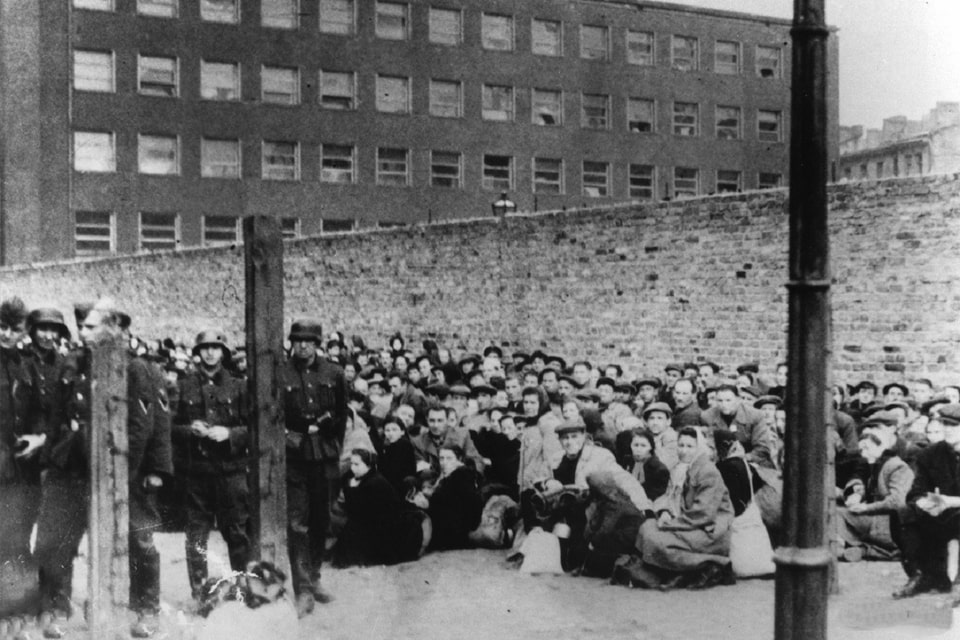

After months without mass deportations, the Germans invaded the Warsaw ghetto on January 18, 1943, in an attempt to further ‘cleanse’ the area of the remaining Jewish residents. In contrast to bureaucratically efficient operation in the summer of 1942, this time the Jewish fighting organizations, first of all ŻOB ( Żydowska Organizacja Bojowa or ‘Jewish Fighting Organization’) and ZZW (Żydowski Związek Wojskowy or ‘Jewish Military Unit’), attacked the ‘cleansing’ units. The revolters were so successful in their resistance that the SS had to halt the operation, and it became known as the ‘January Ghetto Uprising’. The Polish underground movement also intensified its operations, and in March 1943, the AK (Armia Krajowa) attacked the convoy with resistance members on its way to the Pawiak Prison. All the young prisoners were released at the expense of losing the lives of three fighters and killing four Germans, though the latter executed 160 prisoners from Pawiak as a bloody reprisal.
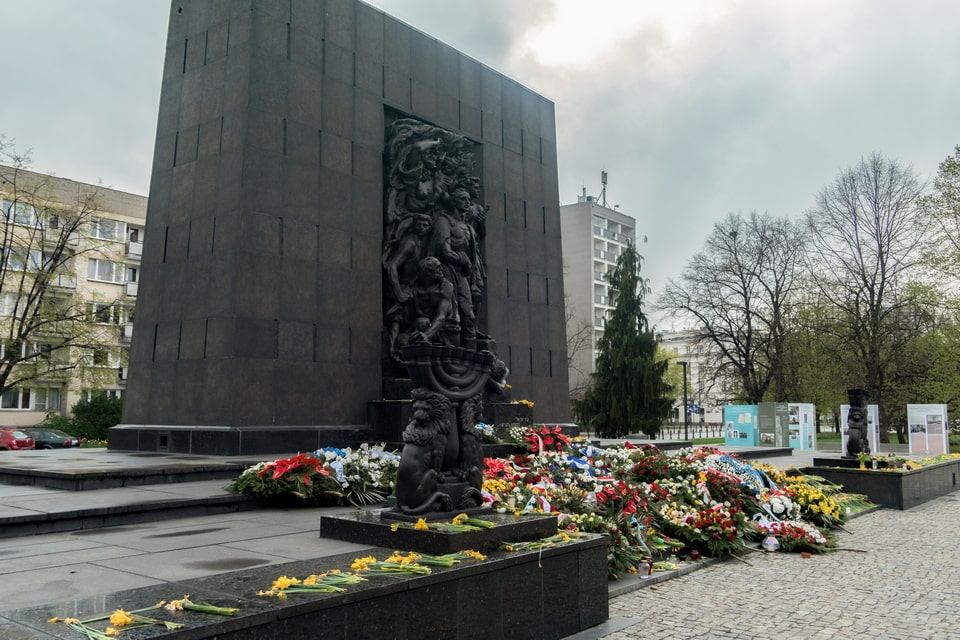

On April 19, 1943, a large force made of SS troops and auxiliaries aimed at crushing the revolt, entered the ghetto, and faced a force of resistance. What would be known in history as the ‘Warsaw Ghetto Uprising’ meant severe fighting for every street and house, and even ruins. Despite scheduling the operation on a large Catholic and Jewish Holiday of Passover, the surviving Jews were ready to fight. Being lightly armed with pistols, rifles, hand grenades, and bottle gasoline grenades, the fighters knew the area better than the attackers and fought bravely for almost a month before the coming of the heavy weapons and destroyed the area building by building with explosives and flamethrowers under the command of notorious SS Polizeiführer Jürgen Stroop. When the main fighting ended on May 16, 1943, around 13,000 Jewish fighters lay dead in the ruins of the former ghetto area, many of them buried alive or burned, and another fifty thousand were caught and deported to the death and concentration camps.
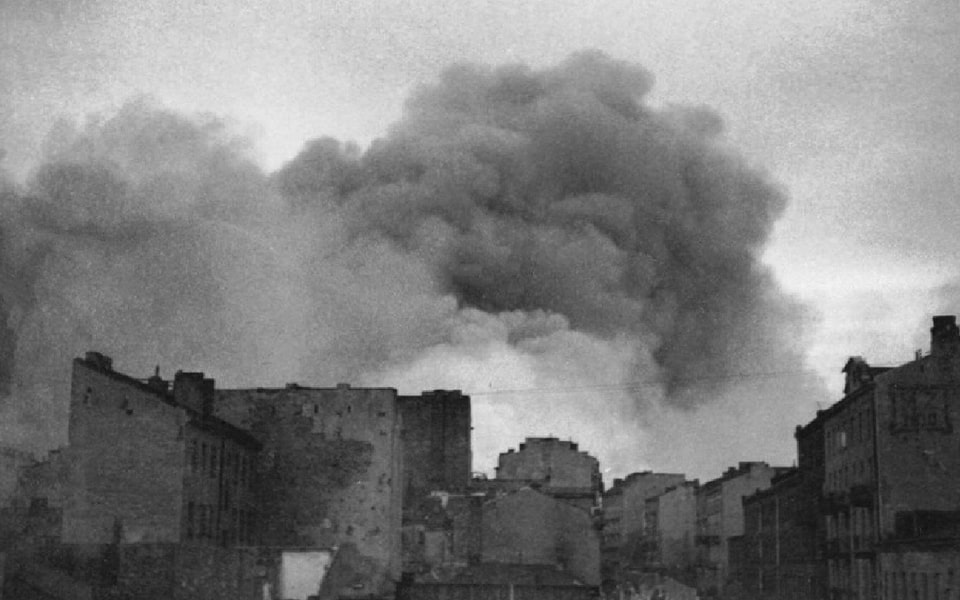
Despite the heavy fighting in the streets of the Warsaw ghetto, Pawiak prison remained operational both in January and April-May 1943, even though it was surrounded by the ghetto. Some of the Jews who were hiding in Warsaw, when caught, were taken to Pawiak and brutally treated. During the Ghetto Uprising, fire brigades had to deal with the fires in the adjacent buildings on Dzielna, Pawia, Karmelicka, and Gesia streets, and the prisoners suffered from smoke. At this time, after the crushing of the revolt, the Germans created the so-called ‘KL Warschau’, a camp on the site of the former Gęsiówka military prison, whose prisoners, among other assignments, were ordered to deal with the rubble and collect valuables in the ruins of the destroyed ghetto area. According to the idea of Heinrich Himmler himself, Pawiak was to become a concentration camp itself, but with time, the plans were restricted to the establishment of KL Warschau nearby, and Pawiak was an auxiliary compound.
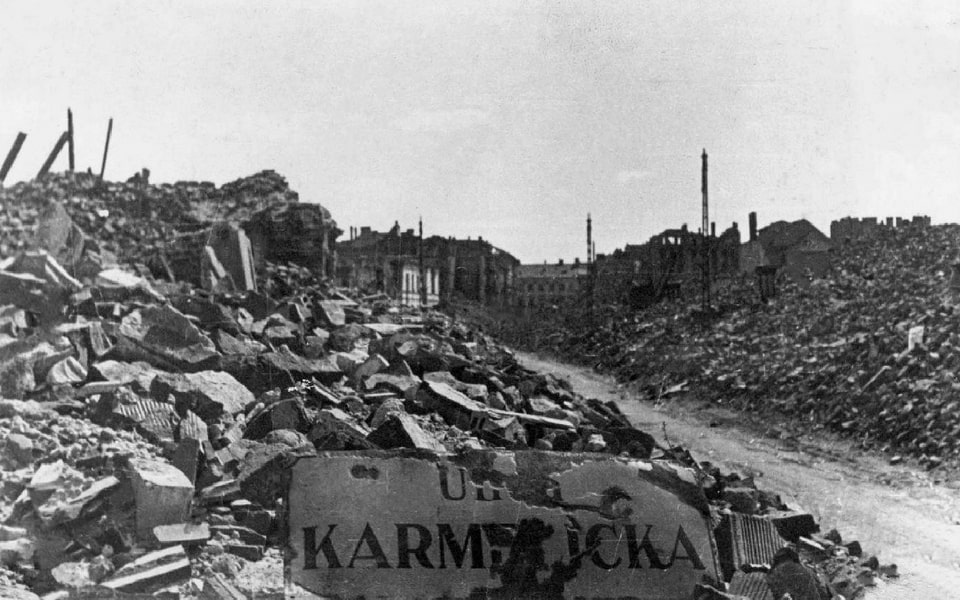
The crushing of the uprising in May 1943 and turning most of the ghetto area into rubble opened a new dramatic page in the history of Warsaw and Pawiak prison, in particular, notoriously known as ‘Executions in the ruins of the Warsaw Ghetto’. The guards began to shoot prisoners from Pawiak in the adjusting ruins of the former tenement buildings on Dzielna, Gesia, Nowolipki (particularly 29), Zamenhofa (especially Zamenhofa 19), Karmelicka, and Lubeckiego. One of the most common places of such executions was the ruins just opposite the main gate of the prison, around the former buildings at Dzielna 21-27. Among those executed even before the end of the Uprising (in late April) were the former members of the Jüdischer Ordnungsdienst (Jewish Order Police) and their leader Leon Pizyc, who had themselves previously helped in round-ups and deportations of their fellow Jewish people. On May 7, 1943, another 94 prisoners from Pawiak were executed across the road in the ruins on Dzielna Street, and an enormous 530 people were killed on May 29. Soon after the start of this new wave of violence, signs like ‘We will take revenge for Pawiak’ started to appear on the walls and boards in Warsaw, even though the activation of the underground activity was still ahead.

Since the Germans halted the practice of sending victims to secluded forest areas such as Kampinos and decreased the pace of deportations to concentration camps in this period, an increasing number of people were executed near Pawiak, mainly in the ruins. Most of the victims, starting from May 1943, experienced a brief formal investigation of their so-called ‘anti-German activity’ or often the lack of any. The executions continued into the summer with around two hundred people executed on June 24, another three hundred on July 15, and 132 more Pawiak prisoners on July 16. Since most of the Jews from the former ghetto were already dead or were in hiding on an individual basis, Poles once again regained their role as the main targets of German persecution and terror.

The new intensified wave of executions against the Polish population came with the coming of the infamous Franz Kutschera (1904-1944) as the SS and Police Leader of Warsaw in late September 1943. He was an Austrian who early joined the Nazi party and the SS and made a meteoric career, being praised by Himmler as a specialist in anti-partisan reprisals first in Yugoslavia and then in the Soviet Union. His appointment to Warsaw initiated a new wave of round-ups, public executions in the streets, and almost daily executions in the ruins of the ghetto, including prisoners from Pawiak. With a pretext of reprisals against any anti-German opposition, a reign of unprecedented terror was unleashed starting from October 1943 and lasted until February 1944 and Kutschera’s assassination. During these four months, prisoners from Pawiak and people caught in the round-up were executed up to several times a day in small groups, including an unprecedented number of women, including pregnant women. The Germans intentionally placed announcements with the lists of people for execution, but many were killed beyond them in less massive or sporadic actions. While there were people like Irena Sendler, who were taken to Pawiak and brutally treated, though later released, the chance of survival in this period was minimal. The prison population in Pawiak in this period dramatically increased again to 3000 people at once, with approximately 2200 in the men’s section and 800 women in Serbia. The executions in the ruins were so severe that some executioners committed suicide.
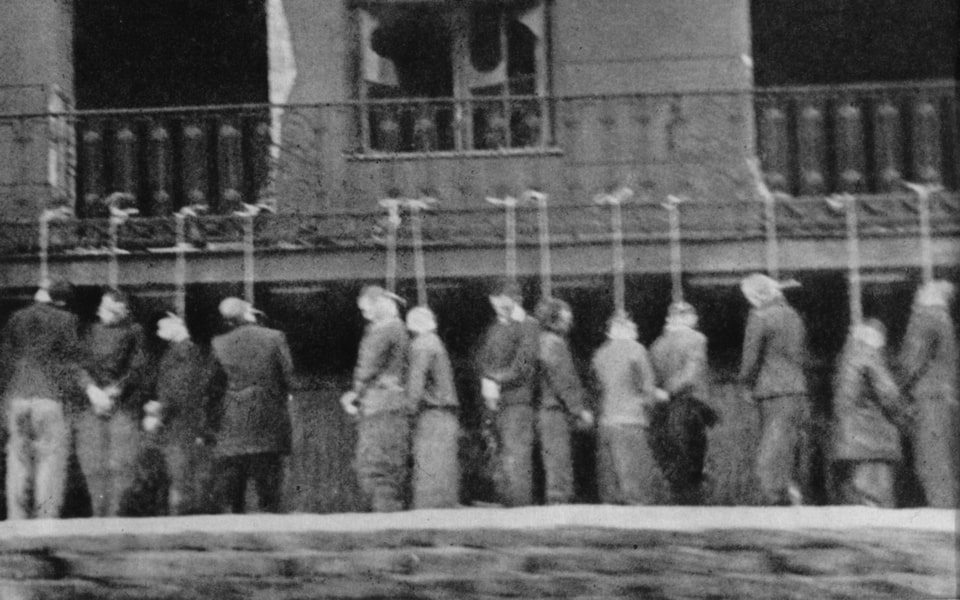
While providing a murderous policy against the Polish population, German reprisals were also not an invention, as the intensification of the German terror was mirrored by the increasing operations by the Polish underground, first of all, the AK (Armia Krajowa). They constantly added their lists of targets among the officials of the occupational administration, the SS and SA officers, members of the so-called Labor Office, and the police. From January to July 1943, the AK succeeded in killing 123 Germans, of which 121 were officials: the number which alarmed even Berlin. Probably the most numerous group among the targets of the Polish underground were policemen, of whom 361 were killed in 1943 and another 584 in 1944. With the intensification of the reign of German terror, the AK killed up to ten occupants every day in Warsaw alone. One of the early successful targets in Warsaw among top officials was Kurt Hoffmann, the head of the so-called ‘ Arbeitsamt’ or ‘Labor Office’. He survived the first assassination attempt in March 1943 and was finally successfully eliminated on April 9 at his office at 38/40 Długa Street.
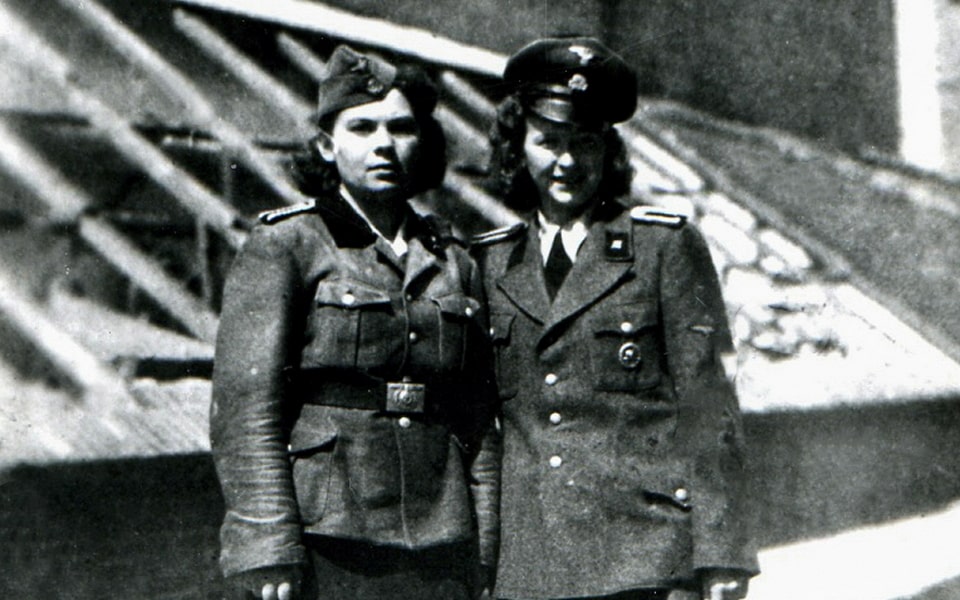
Among those killed by the AK were also SS officers from the staff of the Pawiak Prison and the Gestapo headquarters at Aleja Szucha. For example, SS-Oberscharführer Herbert Schulz was assassinated on May 6, 1943, and another Pawiak officer, SS-Rottenführer Ewald Lange, followed on May 22. On October 1, 1943, the AK managed to kill SS-Sturmmann Ernst Wepels on his way back to an apartment, and on October 5, SS-Obersturmführer Jacob Lechner. Also killed was SS-Scharführer Stephan Klein on October 25, 1943. Among the executed executioners were also female guards from Serbia, like Hedwig Podhorodecka, who was killed on January 29, 1944, and Olga Narewska. Probably the most well-known SS officer from Pawiak executed was Franz Burkl, the most notorious deputy commander. who was shot dead at the corner of Marszałkowska Street and Litewska Street in Warsaw on September 7, 1943. The most VIP target in Warsaw, who unfortunately evaded liquidation, was Ludwig Fischer (1905-1947). He had been the governor of the Warsaw district since 1939 and was responsible for mass crimes against both the Polish and Jewish populations, round-ups, executions, the annihilation of the Warsaw ghetto, and later the crushing of the Uprising in 1944. On January 2, 1944, the AK unit attacked Fischer’s car, but he had previously switched it for another. Ludwig Fischer was extradited to Poland after the war and executed for his crimes in March 1947 in the Mokotów Prison.
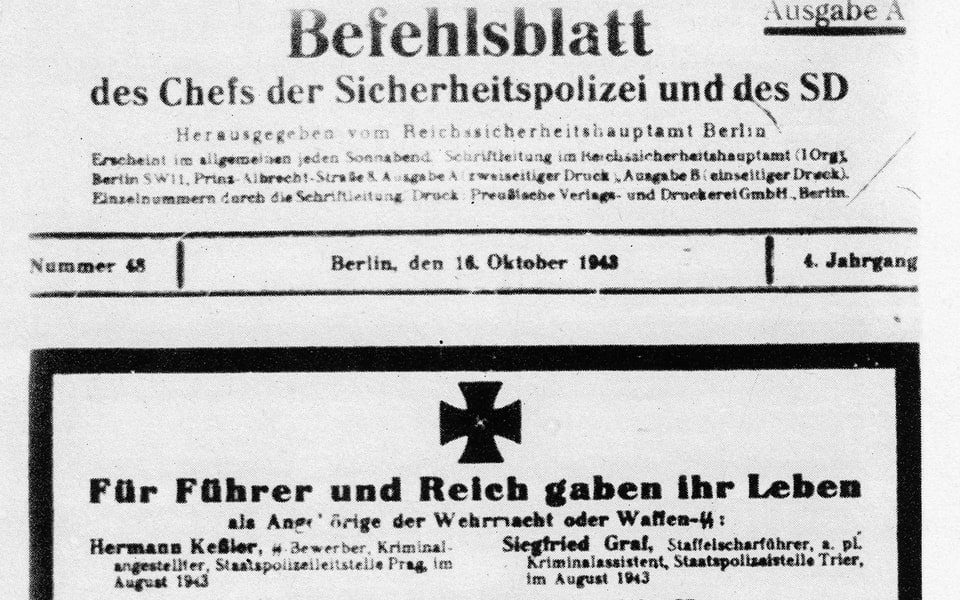
While Fischer, as a top Nazi in Warsaw, escaped a death sentence by the AK during the war, the most well-known successful target of the Polish underground in Warsaw was Franz Kutschera, whom I have mentioned before as an architect of street executions starting from October 1943. Kutschera was included in the AK list for liquidation already in December 1943, two months after his appointment as the SS and Police Leader of Warsaw. The assassination was approved by the Polish government in exile in London and entrusted to the ‘Pegaz’ (Pegasus) unit of the AK under the command of a twenty-year-old Polish patriot, Bronisław Pietraszkiewicz (1910-1981). The unit ambushed Kutschera’s car just in front of the SS headquarters in Warsaw on Ujazdowskie Avenue 23 with converging fire, killing the main target and several Germans and losing four patriots. The next day, the Germans executed 300 Poles as an act of reprisal, of which one hundred were executed next to the ambush site and another two hundred in the ruins of the Warsaw ghetto. The Nazi retaliation was brutal, but it put an end to the reign of mass street executions to an end. The executions by the Polish underground continued well into 1944. For example, only in the short period of one week in early June, 136 Gestapo officers and informers were killed in the provinces of Warsaw, Lublin, and Kielce.
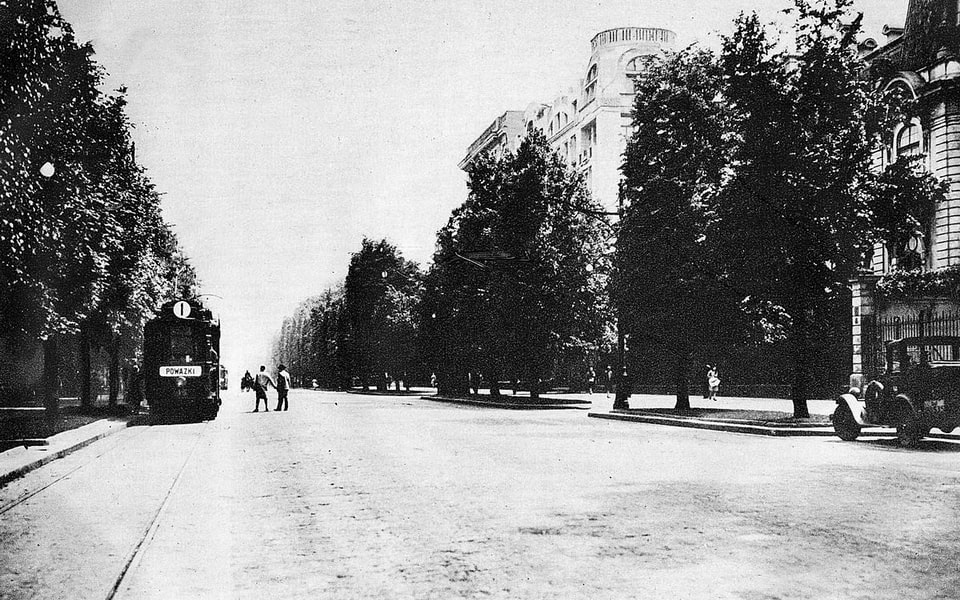
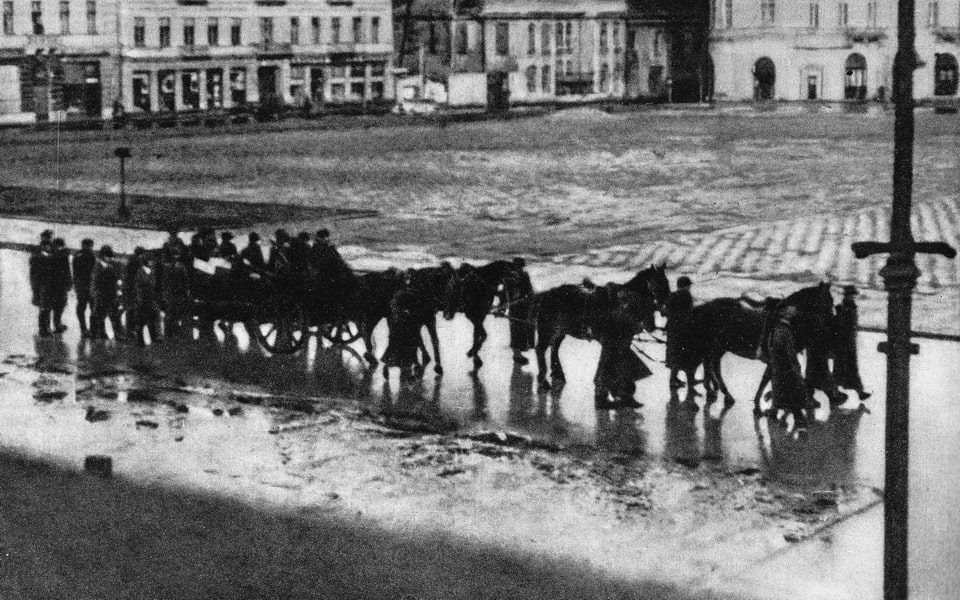
THE LAST MONTHS OF PAWIAK PRISON: THE 1944 WARSAW UPRISING AND ITS FINAL VICTIMS
The death of Franz Kutschera reduced the number of street executions but did not stop the nature of the occupation and bloody persecution of Polish and Jewish citizens in Warsaw. While the lists of the victims were no longer placed in public and announced by the loudspeakers, the killing of people in the ruins of the ghetto, particularly the prisons from Pawiak, continued, though the Germans were more careful and even launched a campaign to eliminate the traces of the previous war crimes by destroying the bodies. Several mass executions in the ruins followed Kutschera’s assassination on February 3, 10, 15, and 28, with a total number of victims around eight hundred, including a large proportion from Pawiak. Hundreds of new victims followed in March 1944, among them the later well-known chronicler of the Warsaw Ghetto Emanuel Ringelblum (1900-1944), who was betrayed, taken to Pawiak, and killed. The following months brought an end to the lives of several thousand men and women who were killed in the ghetto ruins, with around five hundred people killed in late May only: among them were Jews who had escaped death in the previous years of German occupation.
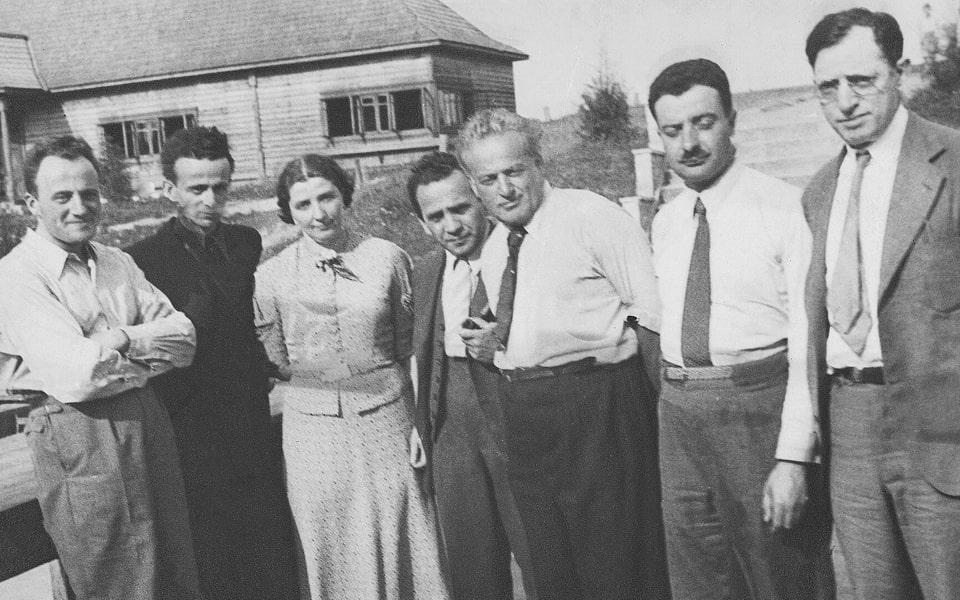
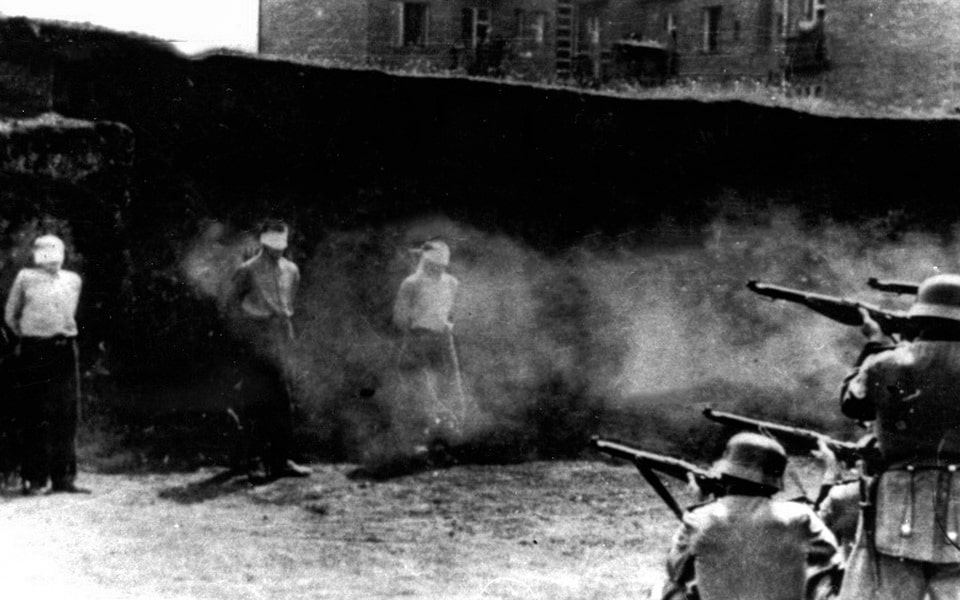
The approach of the Eastern Front in mid-1944 intensified German efforts to eradicate previous traces of the crimes: the campaign, which they had initiated as far back as December 1943. They demolished several buildings previously used as common execution sites. For example, on June 8, the demolition squad blasted the former tenement house at Nowolipki 29, a frequent location for mass shootings in the previous months. In parallel with the plans for fleeing Warsaw, the Nazis did not neglect their genocide against the Jews: on July 10, thirty men and several women of Jewish origin were hunted down in hiding, taken to Pawiak, and executed. For days later, another forty-two Jews were executed: they were previously employed in the prison workshops. On the night of July 20, several hundred prisoners attempted a revolt and a mass escape. of which more than one hundred and fifty were later executed. Starting from July 23, the Germans began the liquidation of the Pawiak prison as an entity in their system of terror in Warsaw.
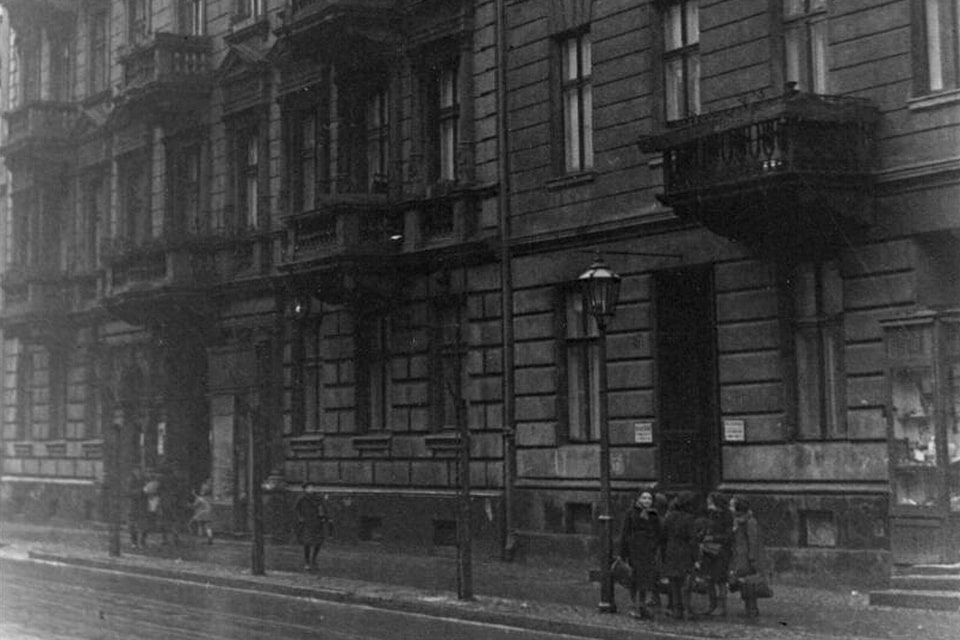
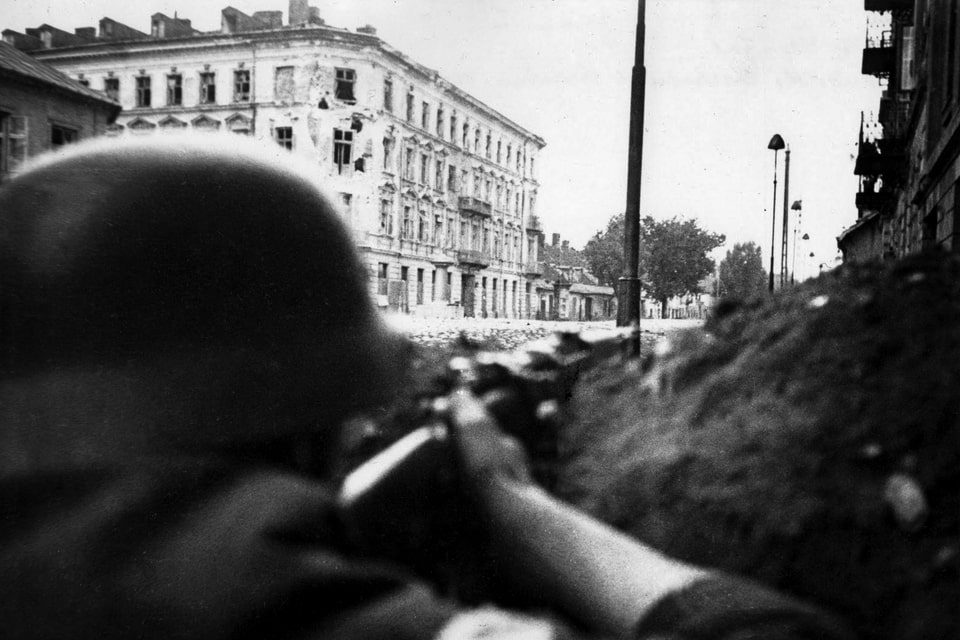
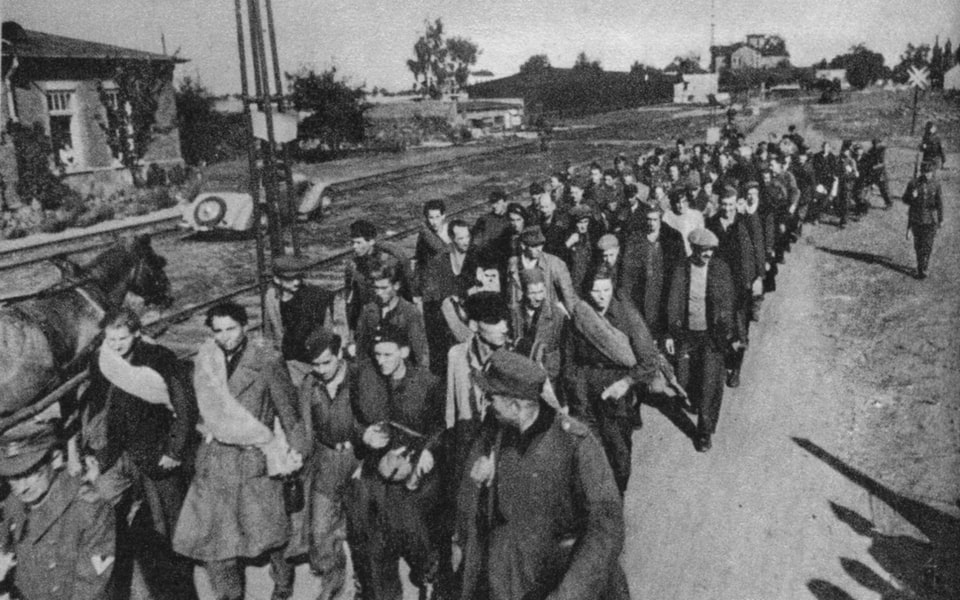
The Nazi administration decided to evacuate the remaining prisoners in Pawiak to other SS facilities in the West, which resulted in several transports with the maximum deportation of 1800 men and women taking place on July 30, 1944. 1400 Men were deported to the infamous Gross-Rosen camp in Lower Silesia, and around 400 female prisoners were sent to Ravensbrück in the Reich. The transport of around 1000 men finally reached one of the Gross-Rosen subcamps, called Pumpitz, on August 7, of whom around a hundred were from the initial train with Pawiak prisoners. Getting back to the prison, on July 31, the Germans released a small group of women with children, as well as female physicians who had not been deported by train a day before. When the Warsaw Uprising erupted on August 1, the prison facility was already almost empty. A few days later, the Polish patriots released several hundred prisoners from the KL Warschau camp. Among them were also women previously brought here from Pawiak on July 31. The Ak fighters reached Pawiak on August 5, but the prison was already empty and was later retaken by the Germans. The last execution near Pawiak took place on August 13 and claimed the lives of around one hundred men and women who had not been evacuated due to the outbreak of the Uprising. On August 20, the remaining Gestapo staff was evacuated, and the next day, the facilities of the Pawiak complex and several adjacent buildings were blown up by the German engineers, thus trying to erase the traces of the horrible crimes of the past five years. It is estimated that around 20,000 people, mostly Poles and Jews, were executed in the ruins of the Warsaw ghetto, not far from Pawiak, in 1943-1944. Being hidden on the other side of the river carried the same risk. Jan and Antonina Żabiński sheltered around three hundred people at the Warsaw Zoo in these years, in the knowledge that discovery meant Pawiak or a transport east.


PAWIAK PRISON VICTIMS: TOTAL NUMBERS AND POST-WAR JUSTICE FOR THE NAZI PERPETRATORS
Like in many other camps and sites of terror of the Nazi regime, the actual documents from the Pawiak prison and the Gestapo headquarters in Warsaw, first of all, the prisoners’ identity cards, did not survive the war and were damaged or destroyed. The information about the exact number of people who were taken to Pawiak between 1939 and 1944 was reconstructed from the documents of both Polish and Jewish underground, collateral documents like deportation lists of the concentration camps, memoirs of the survivors, post-war exhumations in the former killing sites like Kampinos Forest, and case documents from the trials of the Germans and collaborators. One of the first researchers of Pawiak was Władysław Bartoszewski (1922-2015), a Polish publicist and an underground member during WWII, who was not imprisoned in Pawiak but began spreading information about the prison starting in 1941. Bartoszewski was imprisoned in Auschwitz in 1940-1941, and starting from November 1942, he worked in the underground department responsible for assisting prisoners, including those from Pawiak. After the end of the war in 1945, he worked with the Institute of National Remembrance and was an official observer of the exhumations near Palmiry in the Kampinos Forest. He published numerous books on WWII, the Polish underground, and Warsaw, including the destruction of the Polish intelligentsia and the extermination of Jews.
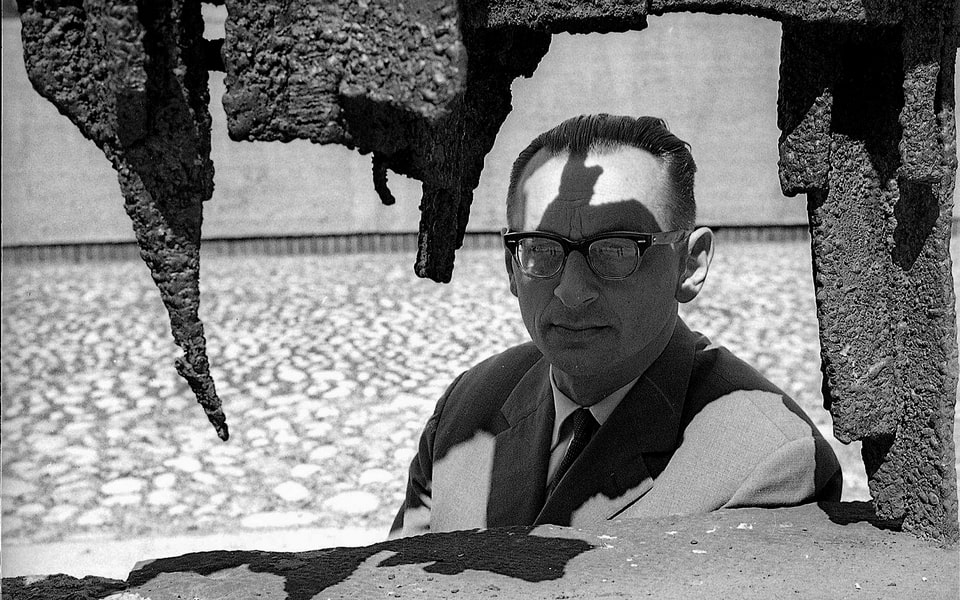
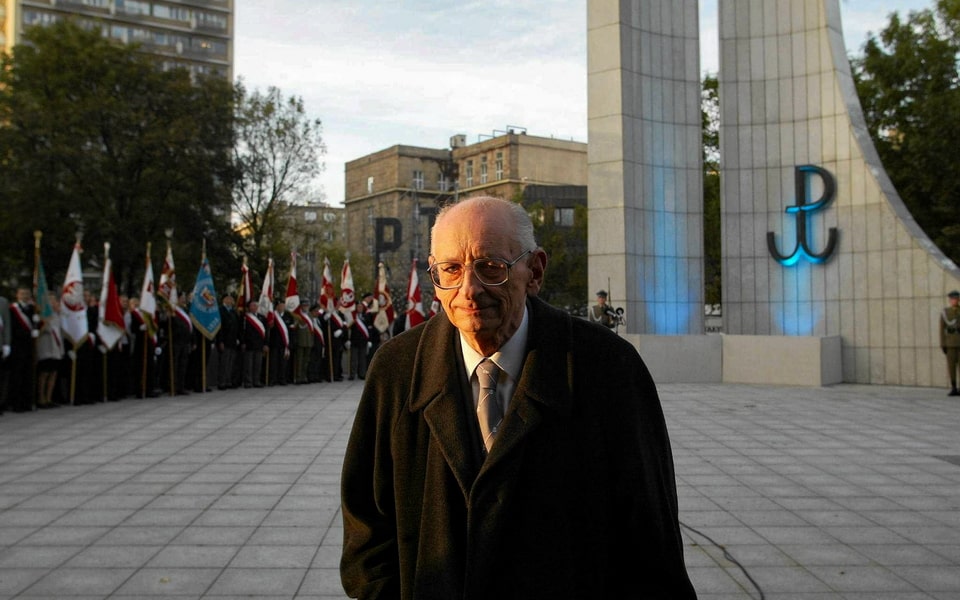
Regina Hulewicz-Domańska (born 1922) is another well-known Polish researcher of the history of the Pawiak prison in Warsaw. In contrast to Władysław Bartoszewski, she was imprisoned in Pawiak in 1943, while her life had been connected with the place two years before. Her two brothers, Jerzy Hulewicz (1886-1941) and Witold Hulewicz (1895-1941), published a Polish underground newspaper called Polska żyje (Poland alive) in Warsaw, were arrested by the Gestapo in 1940, put in Pawiak, where they were killed in the summer of 1941. Regina was adamant about investigating their fate, and she started to collect information about the fate of Pawiak prisoners and even ran an underground radio broadcasting in Warsaw. She was arrested in 1943, brought to the Serbia complex in Pawiak, and later deported to Ravensbrück. After the war, Regina Hulewicz-Domańska was an advocate of the establishment of the memorial complex, whose director she later became, and conducted an unprecedented research work collecting the names of people who went through Pawiak and died there. She published the first anthology of the prisoners in 1964, and the new edition in 1978 already contained the names of 65,000 people.

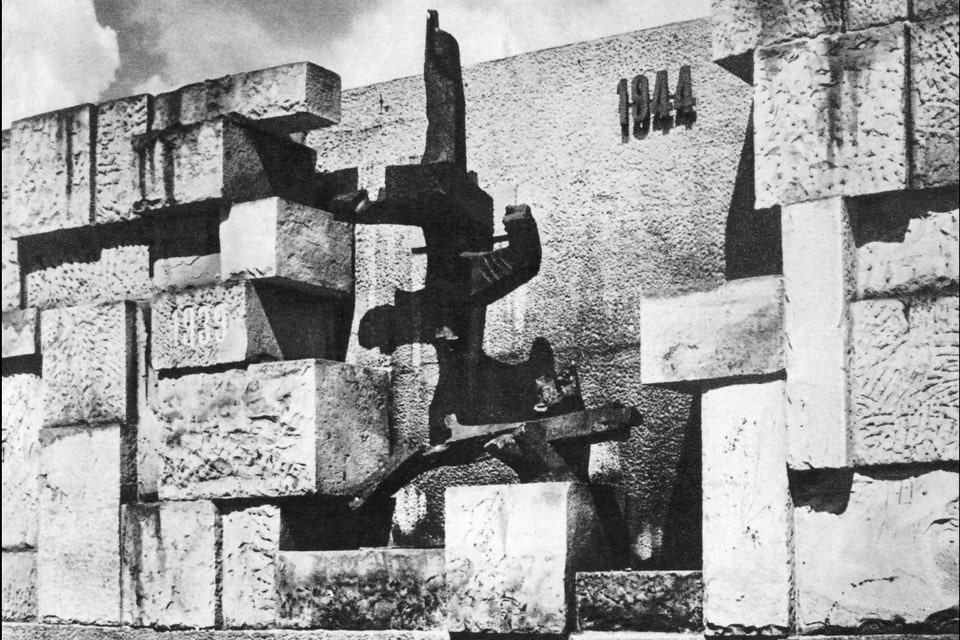

The latest research, initially based on Hulewicz-Domańska’s work and significantly added to by modern scholars, estimated that 100,000 people went through Pawiak between October 1939 and August 1944, while some prisoners used forged names and remained unidentifiable. Among these numbers, 37,000 to 40,000 people died on the premises of Pawiak from malnutrition, diseases, beatings, were executed in the forest killing sites outside Warsaw, like Palmiry, tortured to death in the Gestapo prison, killed in the roundup, or executed in the ruins of the Warsaw ghetto. The estimates regarding the Jewish victims vary, but the minimum figure here is 8,000 killed (large numbers also passed through Pawiak unregistered): most of them were residents of the Warsaw ghetto. The remaining 60,000 prisoners were deported to concentration camps (often not directly, but they were later transferred several times) like Sachsenhausen, Ravensbrück, Gross-Rossen, Bergen-Belsen, Stutthof, Mauthausen, Flossenbürg, Buchenwald, and death camps of Auschwitz, Treblinka, and Majdanek. A substantial number of them died in the camps, which made the total death toll among Pawiak prisoners much higher. A small number of people were released, most of them in the initial period of 1939-1940, and often they were women. The two major groups were Poles and Jews, but among the prisoners were a small number of other nationalities, including Soviet POWs and Sinti and Romas.
Reconstructing the lists of all victims of Pawiak: those who survived and those killed, was not the only challenge for the post-war Polish society. The investigation of the Nazi crimes in Warsaw and particularly in Pawiak was complicated by several factors:
- The Germans had enough time to destroy important documents regarding their crimes in Warsaw before fleeing the city in January 1945, and the post-war investigators and scholars had to rely on surviving sources, eyewitness accounts, underground archives, and exhumations.
- The demolition of the remains of the ghetto ruins, where tens of thousands of people were killed in 1943-1944, and the rise to the ground of the Pawiak complex in August 1944 destroyed important physical evidence.
- Like with many other concentration camps, POW camps, death facilities, and prisons led by Hitler’s regime during WWII, the process of calling former SS officers and guards to justice stretched for decades and was only partially successful.

Getting back to the fate of the German SS officers who ruled Pawiak as commandants, Otto Gottschalk was not executed by Polish patriots, though his further history is unknown or at least difficult to find in the open sources. The same situation is with the second commandant, Helmut Heiss. On the contrary, Herbert Junk (1898-1944) was to become the only of the four commanders in Pawiak killed by the AK in Warsaw, while his successor Norbert Bergh-Trips never faced a real trial for his crimes and died in 1980. Among the deputy commanders, Hans Fehlhaber died in Moravian Ostrava in 1945, Gerhard Hiersemann died of jaundice in August 1943, and only the notorious Franz Burkl was killed by Polish patriots in Warsaw in September 1943. The post-war years were merciful for most of the Pawiak former SS staff and guards who managed to survive until 1945.
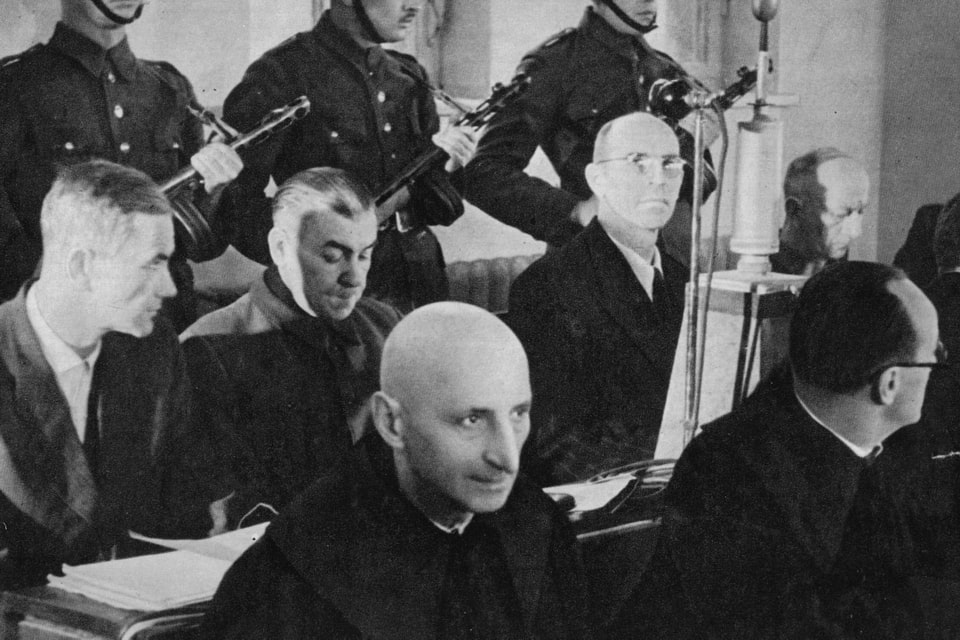
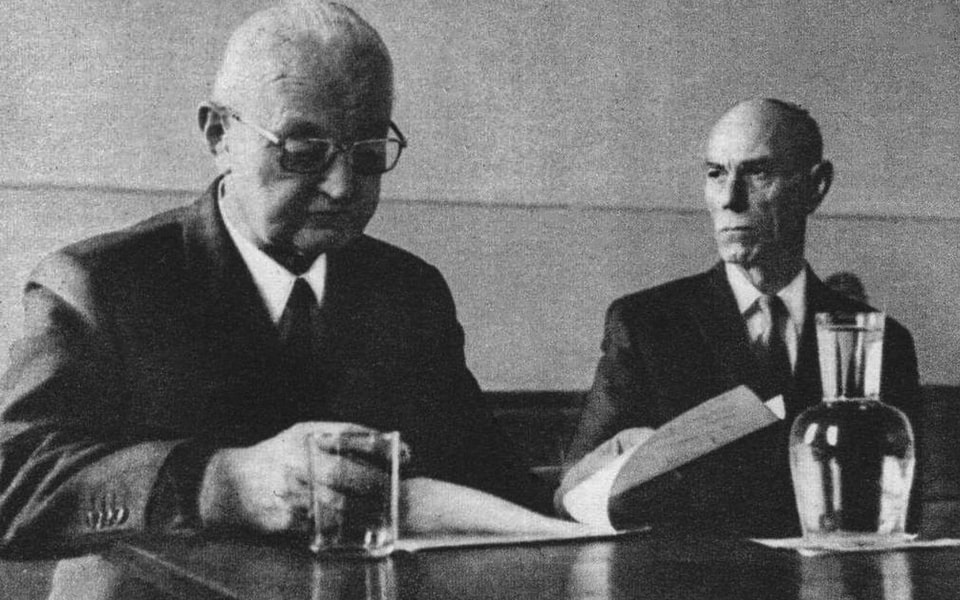
The horrors of Pawiak finally came to publicity outside Poland only in 1972-1973 at the trial of the former SS-Standartenführer Ludwig Hahn (1908-1986), which took place in the National Court of Hamburg. He was heavily involved in the operations against the Polish intelligentsia. Later, he was appointed a commander of the SiPo in Warsaw and supervised the annihilation of the Jews in the ghetto, and the crushing of both the 1943 Ghetto Uprising and the 1944 Warsaw Uprising. Despite being responsible for the death of tens of thousands of people, Hahn was found guilty of killing a group of Pawiak prisoners on July 21, 1944, and sentenced to twelve years. Along with him, the court charged a Pawiak guard, Thomas Wippenbeck, the former SS-Rottenführer, for his crimes, but due to a juridical loophole, he evaded the penalty. Hahn was released from prison in 1983 because of his state of health.
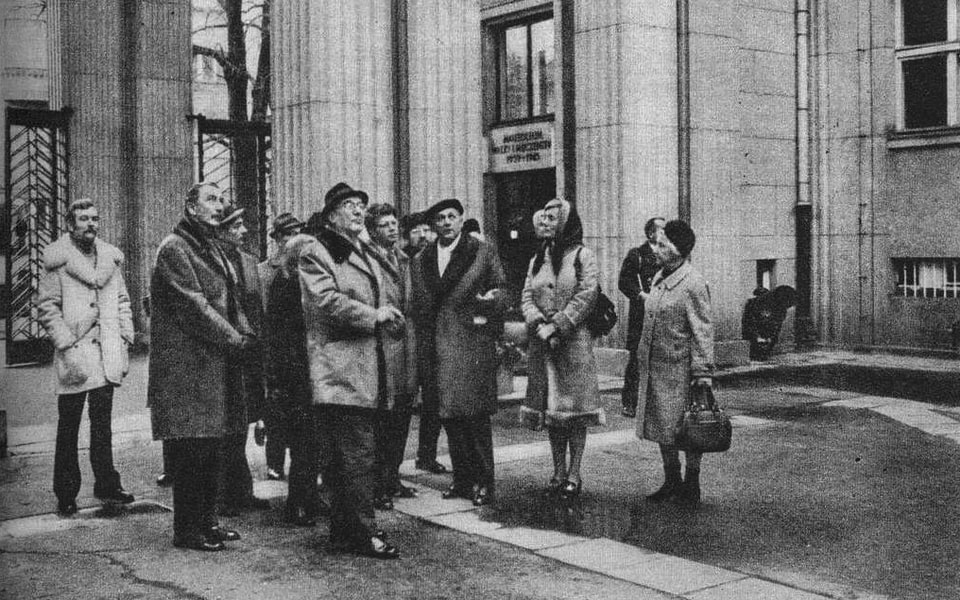
When dealing with other high-ranking SS functionaries in Warsaw, responsible for the terror and the operation of Pawiak, we should speak about five of the so-called ‘SS and Police leaders in Warsaw. Paul Moder, who occupied the post from November 1939 to July 1941, was killed in action on the Eastern Front in 1942. Arpad Wigand (in the position between August 1941 and April 1943), a man who suggested Oswiecim as a site for the camp construction, though being tried after the war, lived until 1983. The infamous Jurgen Stroop, badly known for the suppression of the Ghetto Uprising in 1943, was executed by the Polish justice in March 1952. His successor, Franz Kutschera, was executed by the AK in February 1944. Finally, the last ‘SS and Police Leader’ in Warsaw, Paul Geibel, was imprisoned in Poland after the war and committed suicide in the Mokotów Prison in 1966. On the other hand, many of the German executioners in Pawiak and those who killed people in mass in the ruins of the Warsaw Ghetto avoided justice. Among them were the SD officers at Szuch Avenue, SS staff members of the ‘KL Warschau’, members of the 23 SS Police Battalion, and dozens of Pawiak staff members.
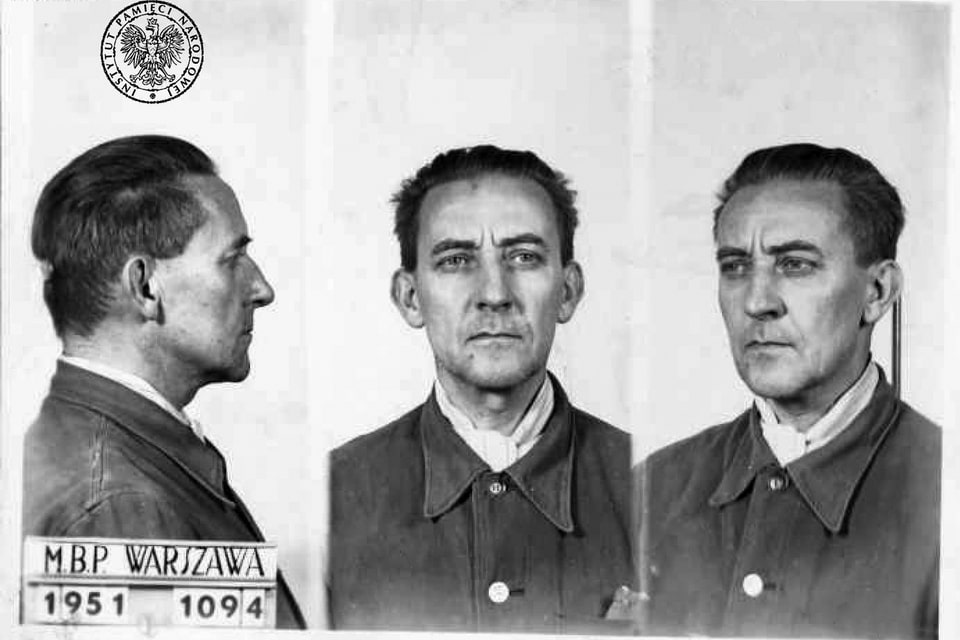
THE FATE OF PAWIAK PRISON AFTER THE WAR: RUINS, MEMORIAL, AND MUSEUM TODAY
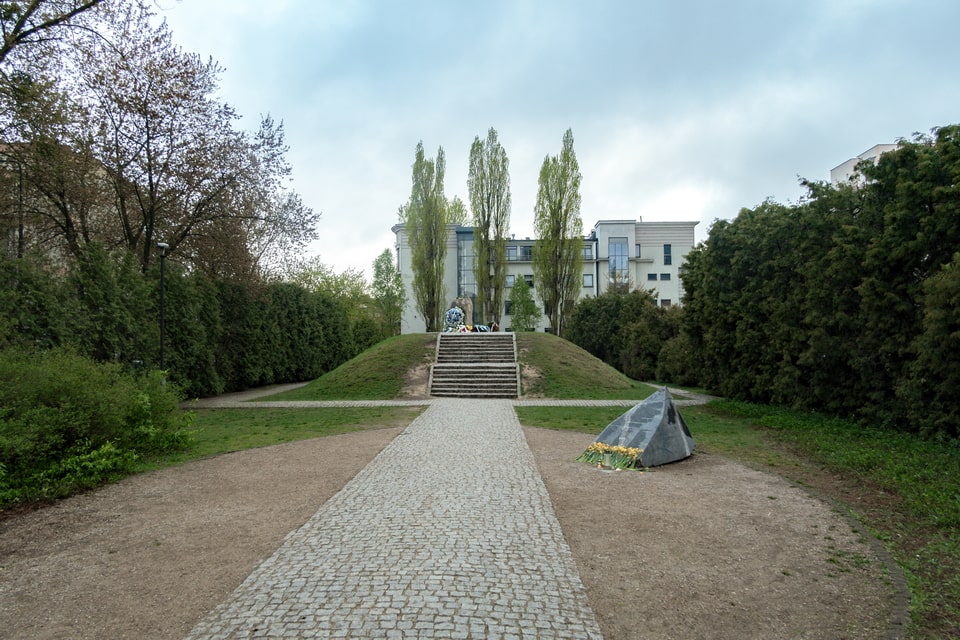
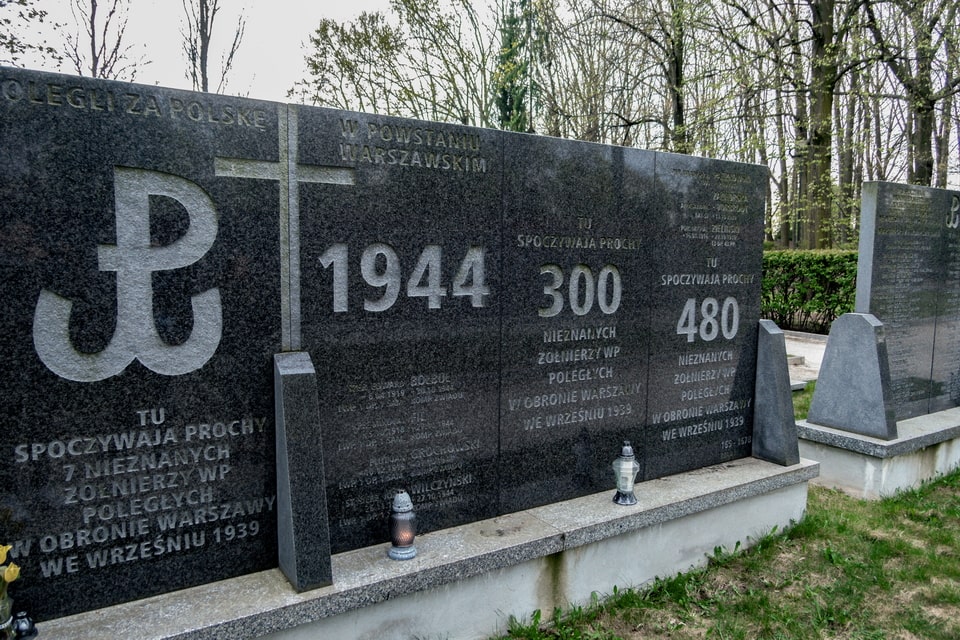
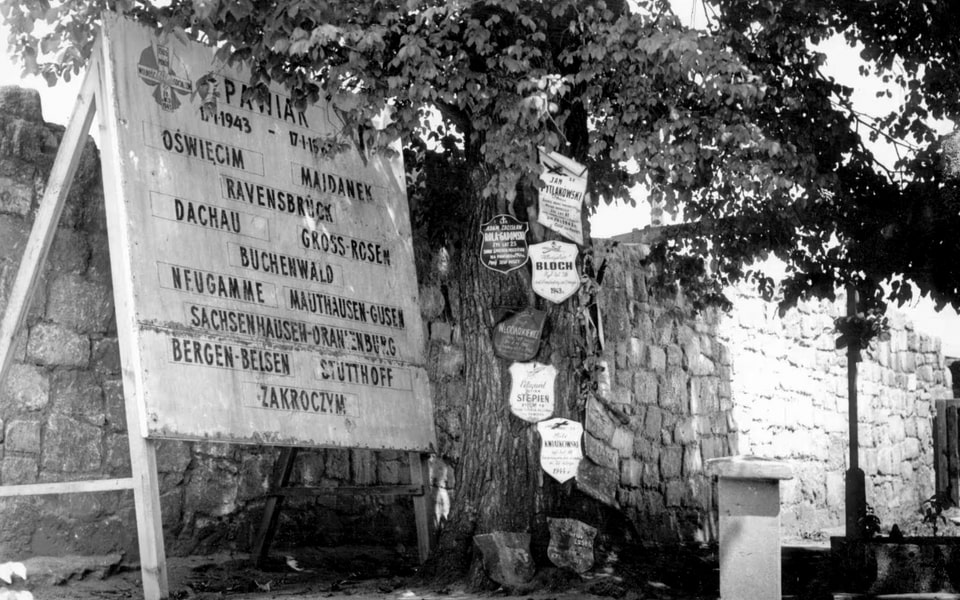
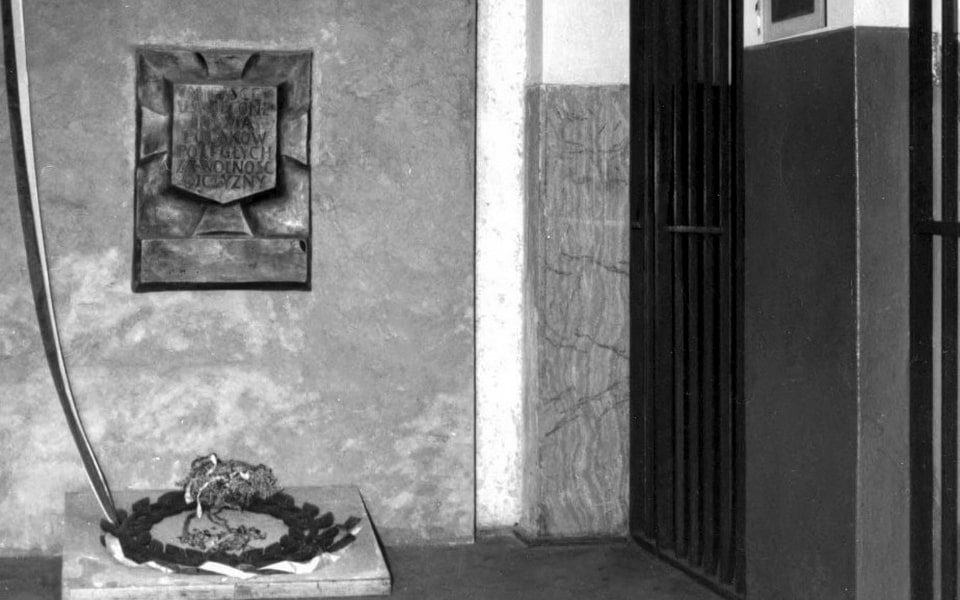
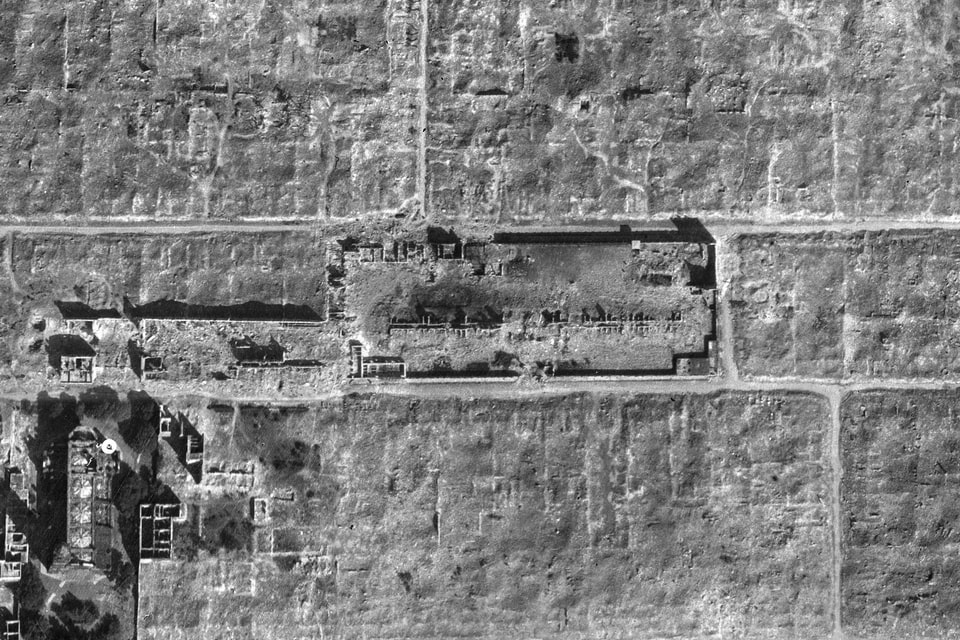
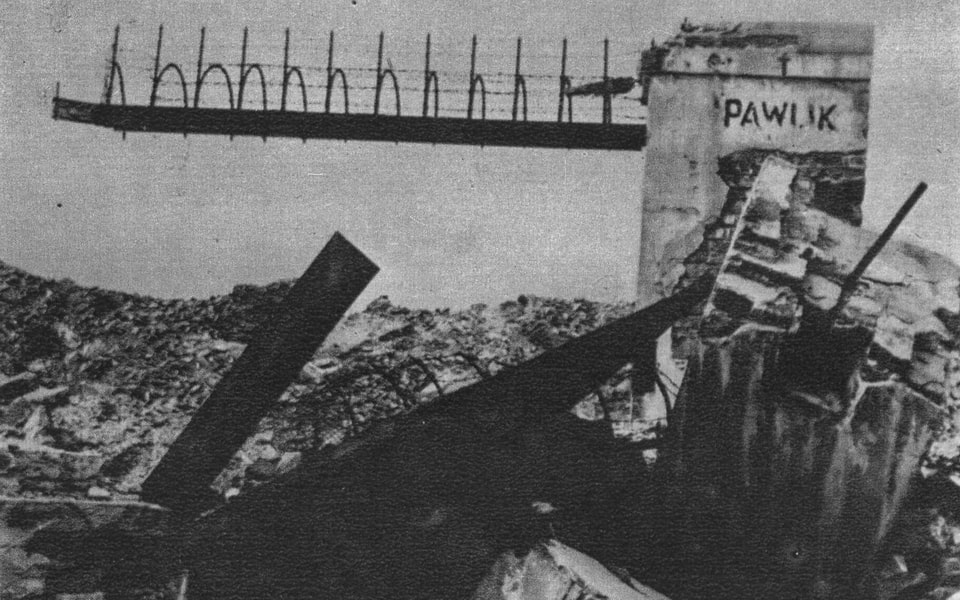
All main structures of the Pawiak prison complex, including the women’s Serbia section, were blown up by the German police bomb squad on August 21, 1944, thus leaving the neighboring St. Augustine’s Church at Nowolipki Street, the only surviving building in the area. All that remained of Pawiak were the remnants of the ground floor of the main building where the notorious VII and VIII sections were located, a part of the entrance gate from Dzielna, and a tree, a lime elm next to it, which later became a symbol of the site. The partially surviving wall of the complex was another reminder of Pawiak and its century of history, with the last six years of hell. The first post-war visitors in 1945 were the surviving former prisoners themselves as well as the families of those killed. They brought flowers to the site, turned the standing tree into the first memorial, and cleared the rubble with their own hands, among other things, in the partially surviving ground floor with the former cells. An old elm next to the pillar of the main gate facing Dzielna became a kind of shrine, a guardian of memory, and was, over time, covered with improvised signs, plaques, photos, and personal belongings.
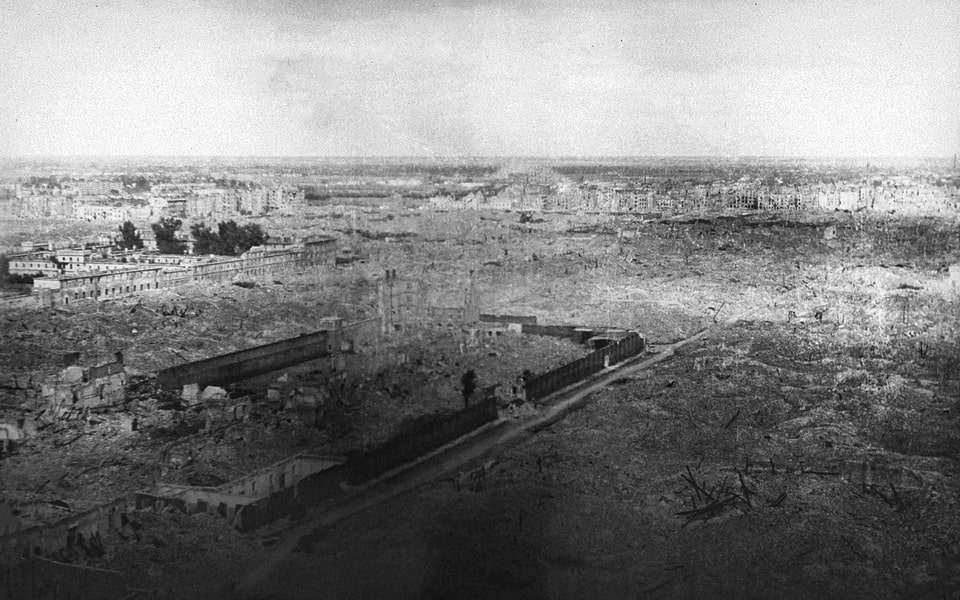
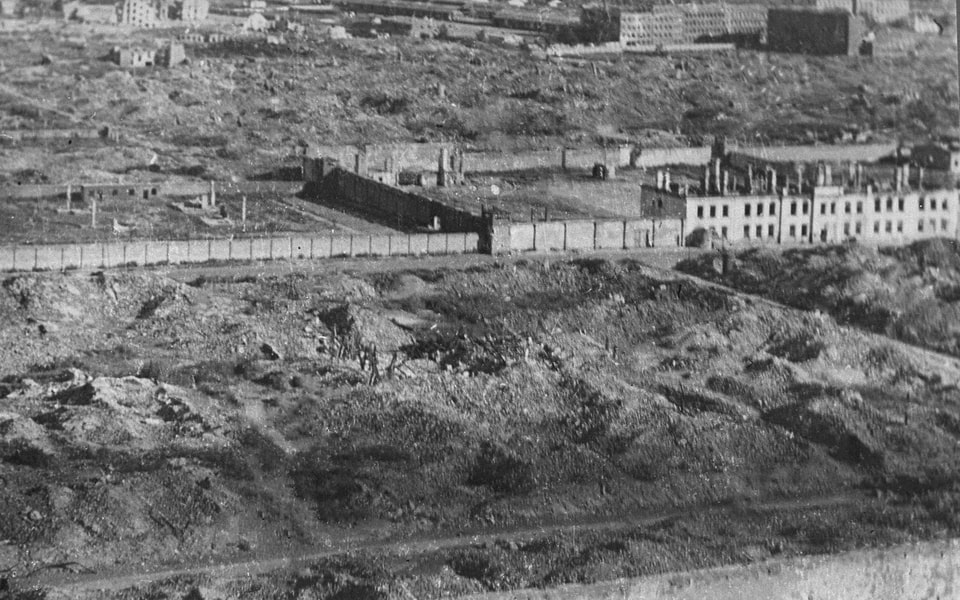
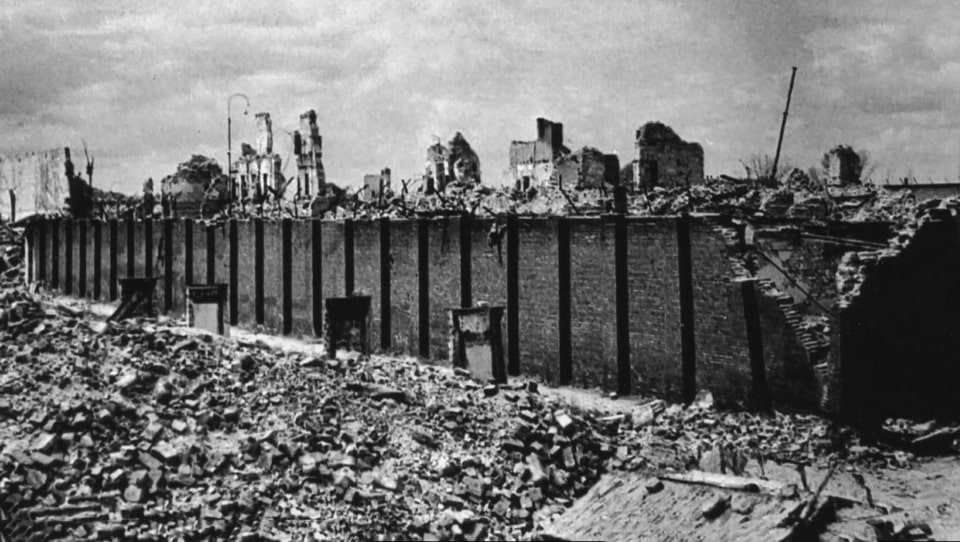
It should come as no surprise that the area was not restored since 10 455 of the pre-war 24,700 buildings in Warsaw were completely destroyed, most of them on the Western bank of the Vistula River and the former Warsaw Ghetto. In the 1950s, city authorities decided to turn the area of the former ghetto into a modern housing estate, including the site of the former Pawiak complex and many other places of remembrance. The former prisoners raised the need to preserve the memory of the site in 1959, and the wider public supported their appeal to turn at least a part of the former Pawiak area in the Muranów district into a memorial for commemoration of the martyrdom during the occupation. Among the most devoted advocates was Pola Gojawiczyÿska (1896-1963), a famous Polish writer and a former prisoner of the Serbia complex, who told about her sufferings in a book of memoirs and lobbied the creation of a memorial. In the same year, 1959, the area, around half of the former complex, was separated from the terrain of intensive urban development in Muranów, and the centralized cleansing works in Pawiak began in August 1959 by former prisoners and the pupils of a nearby school (opened in 1958), which was in 1966 named ‘Szkoła Podstawowa nr 210 im. Bohaterów Pawiaka (Primary School №210 of Pawiak Heroes).
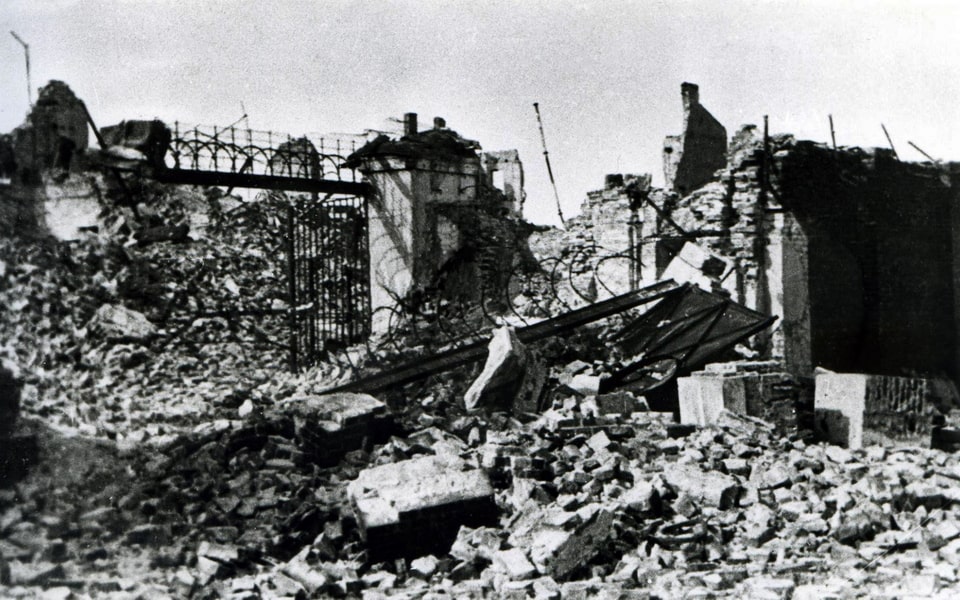
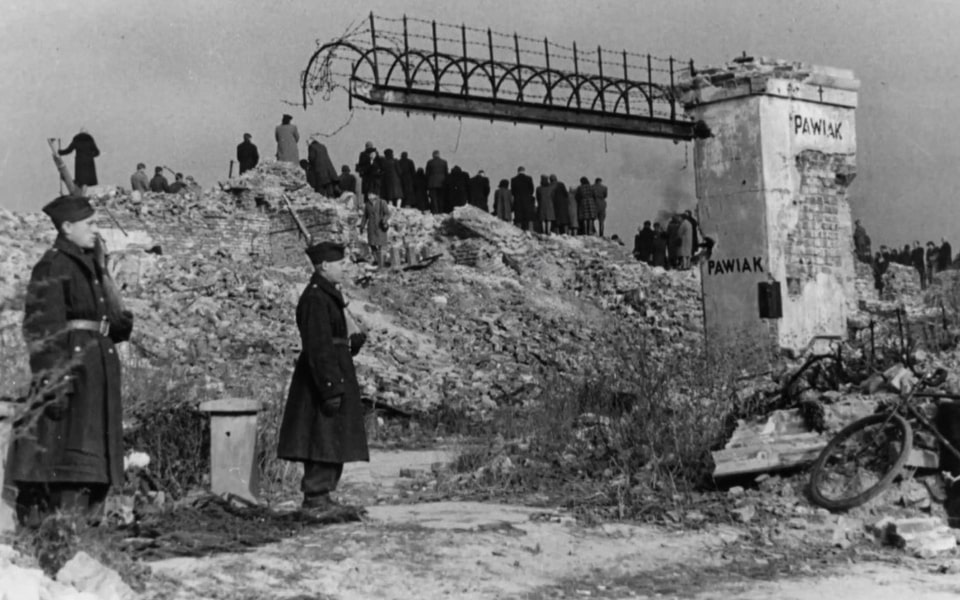
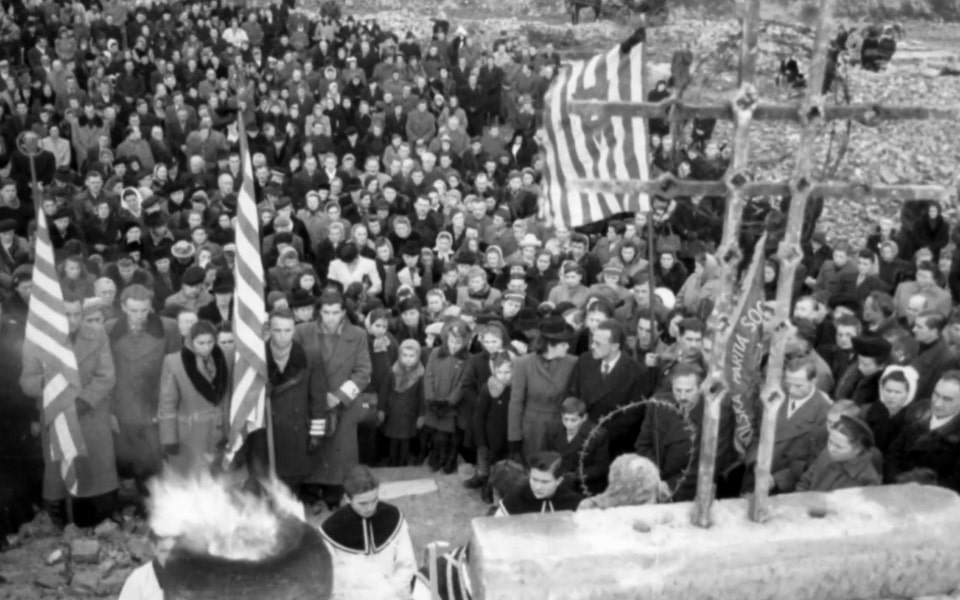
The cleansing of the former site continued into the early 1960s, and the volunteers were finally backed by the centralized efforts of the Warsaw authorities. By removing tons of bricks from the debris, all important remnants of the former Pawiak complex were preserved, including the pillar of the gate, the tree, the cells, and one preserved door, window bars, and prison beds, and personal belongings of the former prisoners found in the ruins. During this period, the found relics were taken to a local history museum. Meanwhile, the survivors formed a ‘Pawiak Commemoration Council’ in 1963, the body which intensified the efforts of creating a memorial complex and a museum of Pawiak, and the research work on the names of all victims. The first full-fledged exhibition devoted to the history of Pawiak was opened in September 1964 in a municipal building at Wawelska 56 in southern Warsaw, while the memorial complex was finally inaugurated on November 28, 1965. The ceremony was attended by many Pawiak survivors, their families, Warsaw citizens, and guests.
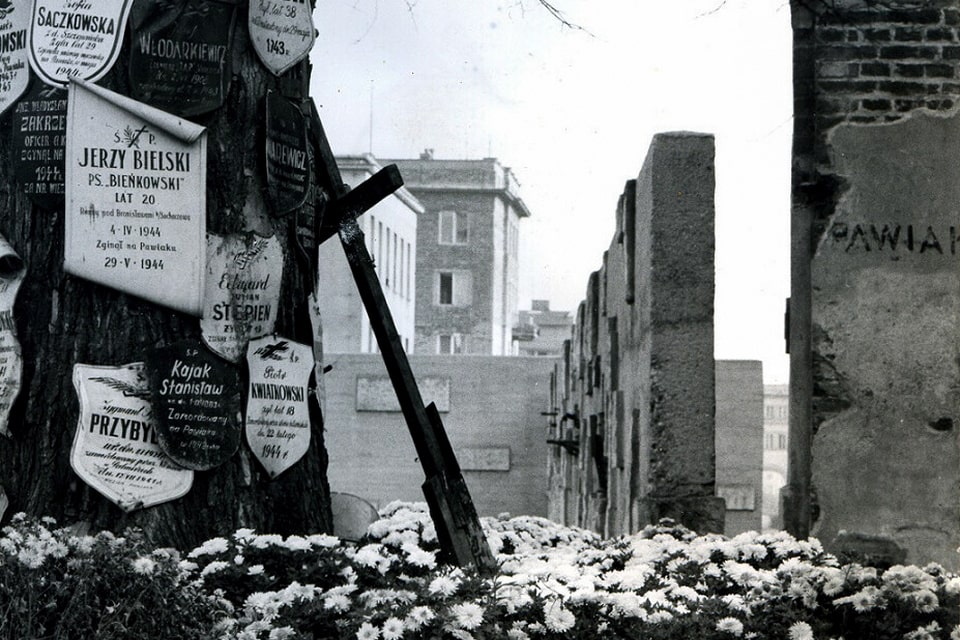
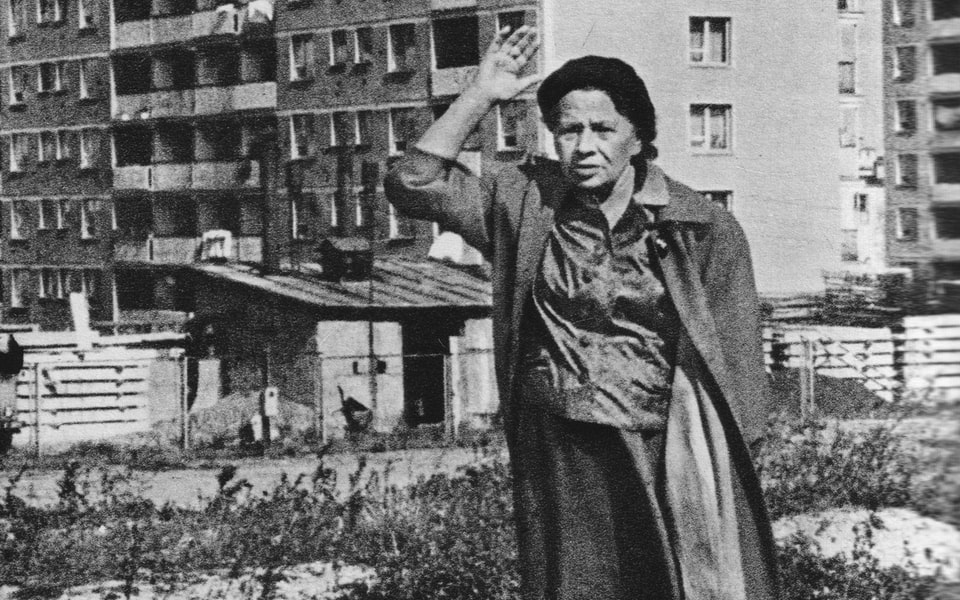
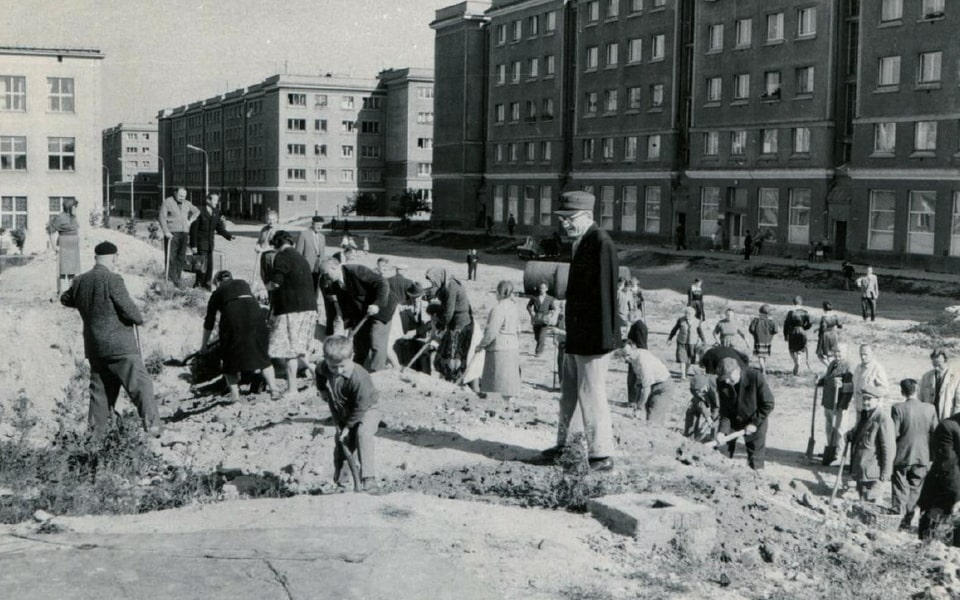
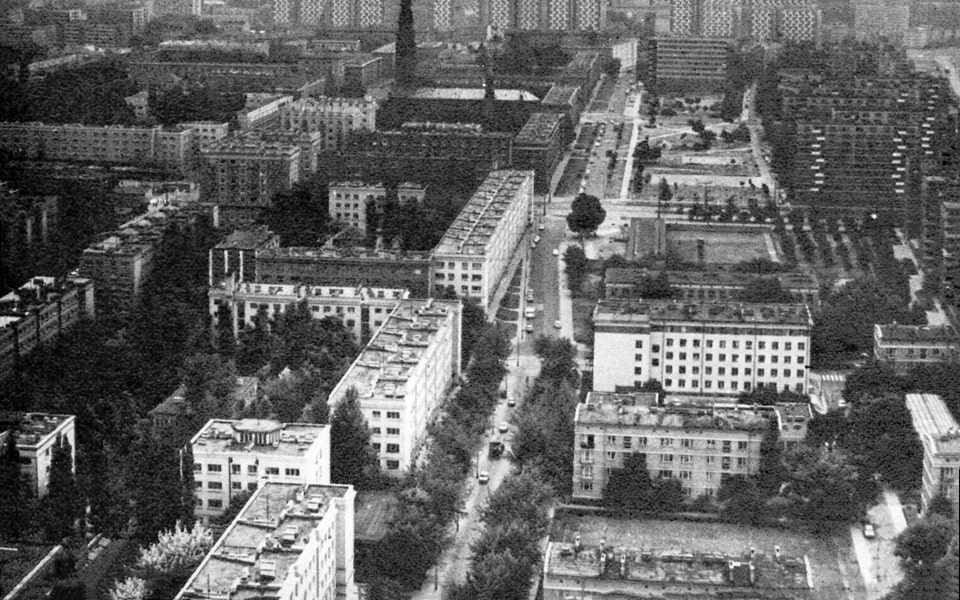
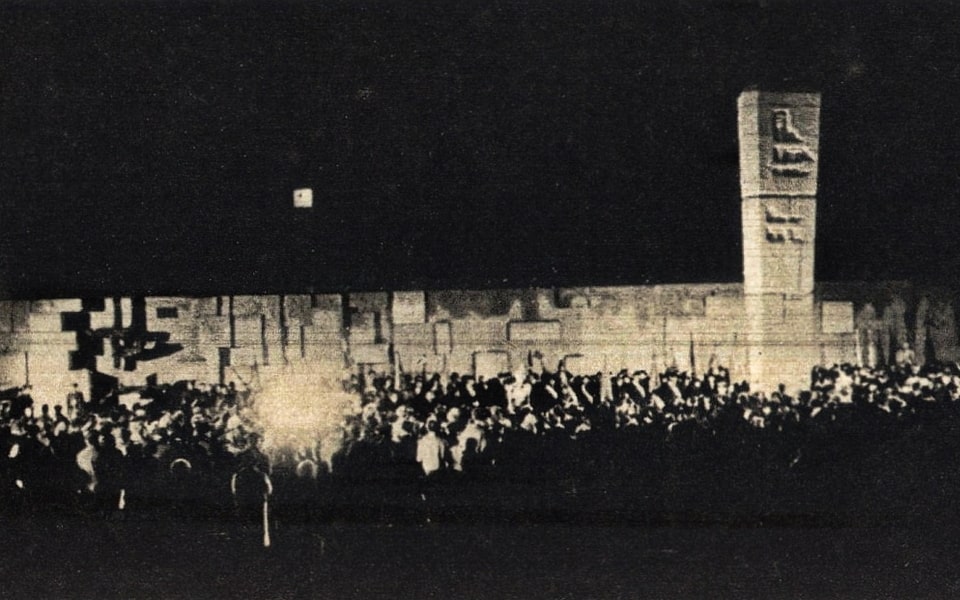
The first permanent exhibition opened in November 1965 and ran until 1991. The total area of the memorial covered 8000 m2 and included the preserved pillar of the main gate, the elm tree, and the recreated corridor of the former VII section on the ground floor with five cells (former quarantine area for the new arrivals), meticulously reconstructed according to the recollections of the prisoners, archival documents, and drawings. The area also included an open square with monuments and commemorative plaques, the sign on the site of the former Serbia prison. The surviving remnants of the outer wall were preserved and restored. Between 1965 and 1988, there was a screening room with documentaries and voice messages from the former prisoners. The museum tells the history of Pawiak from three historical perspectives: from its creation until 1918, between the Proclamation of Independence and 1939, and finally the years of occupation and martyrdom between 1939 and 1944. The permanent exhibition was updated and reopened in April 1991, and the latest revision took place in 2001. It is currently active. The research work on cataloging Pawiak prisoners continued.
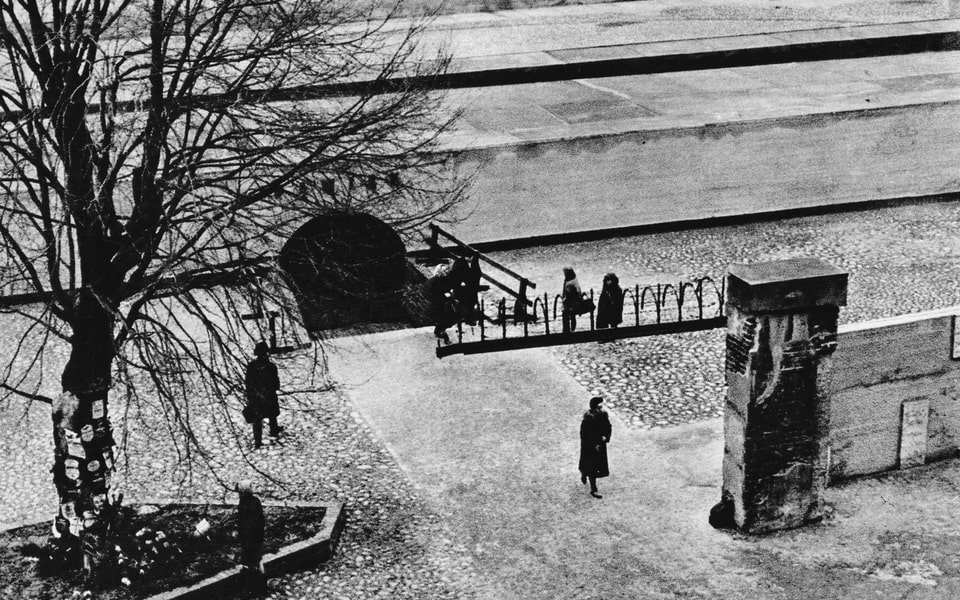
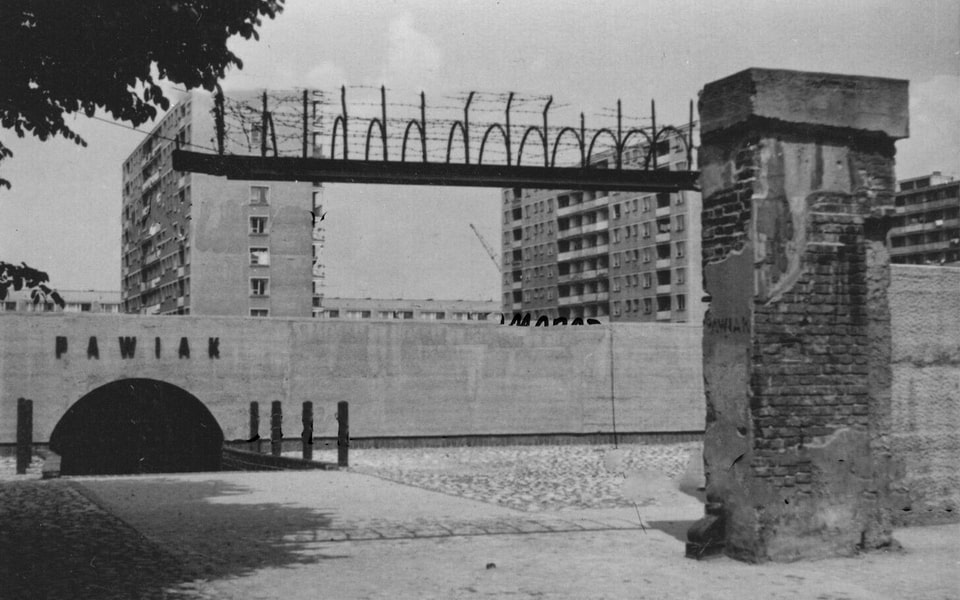
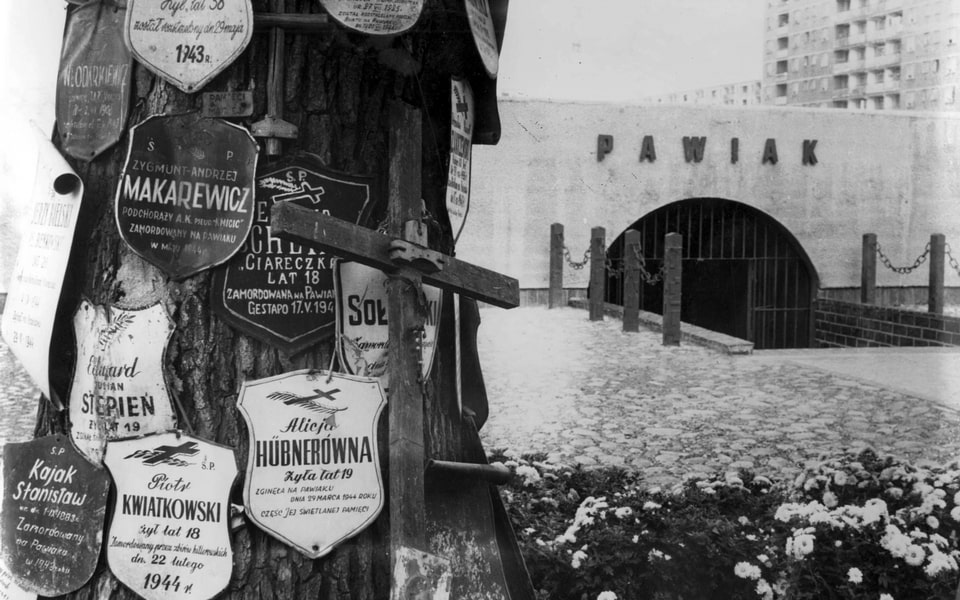
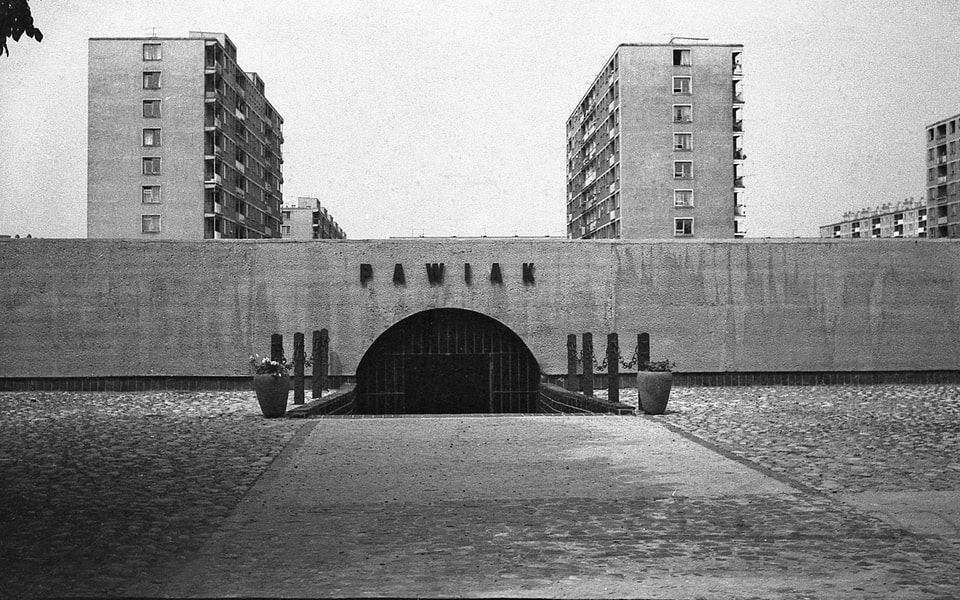
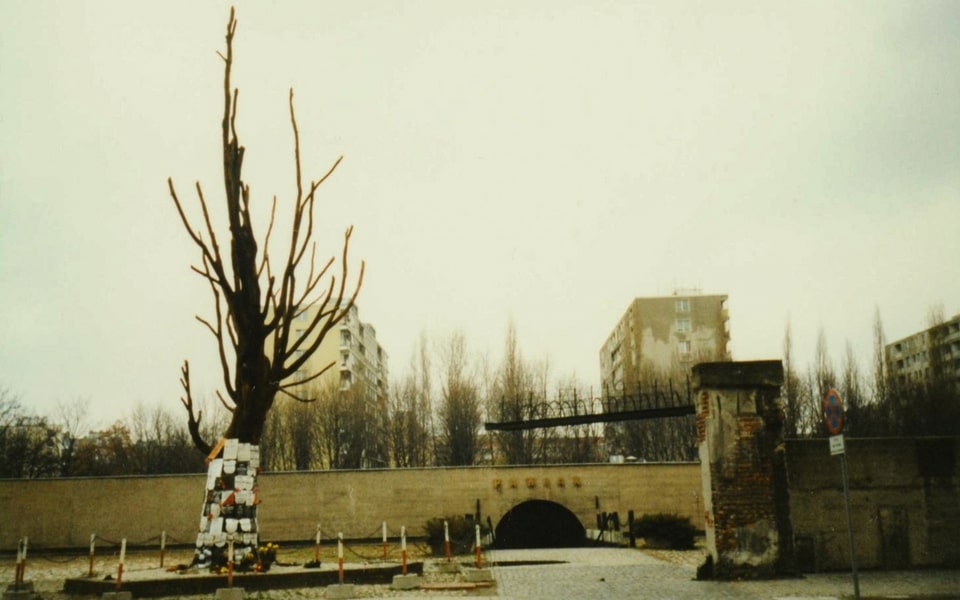
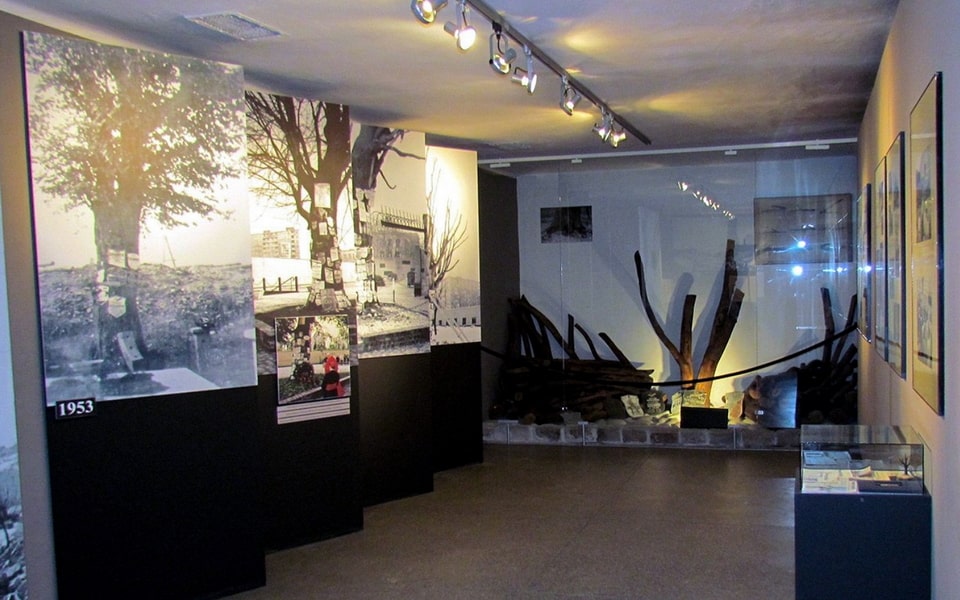
Annually, Pawiak welcomes guests from different countries, and probably still the most well-known visit here was in 1983 when Pope John Paul II came to Pawiak to commemorate the memory of tens of thousands of its victims. A Polish himself, the Pope prayed for the dead under the famous elm tree. Unfortunately, in 1984, the lime elm tree died of graphiosis, which was a grief event for all survivors of Pawiak. It took another two decades before June 8, 2005, when the new memorial, a bronze tree, was finally unveiled on the site of the dead elm. The event was attended by Lech Aleksander Kaczyński (1949-2010), the president of Warsaw at that time and later the sixth President of Poland. It is interesting to note that the original elm was preserved in special liquids for all those years, but it was decided to create a bronze monument, as there was no chance to plant the original into the ground once more. The branches of the elm were preserved for the museum exhibition. The remnants of the gate, as well as the original walls and foundations, were also renovated in the 2000s. Getting back to the Pope, a large avenue next to the Pawiak museum was named after him, and there is a plaque devoted to the infamous Serbia prison.
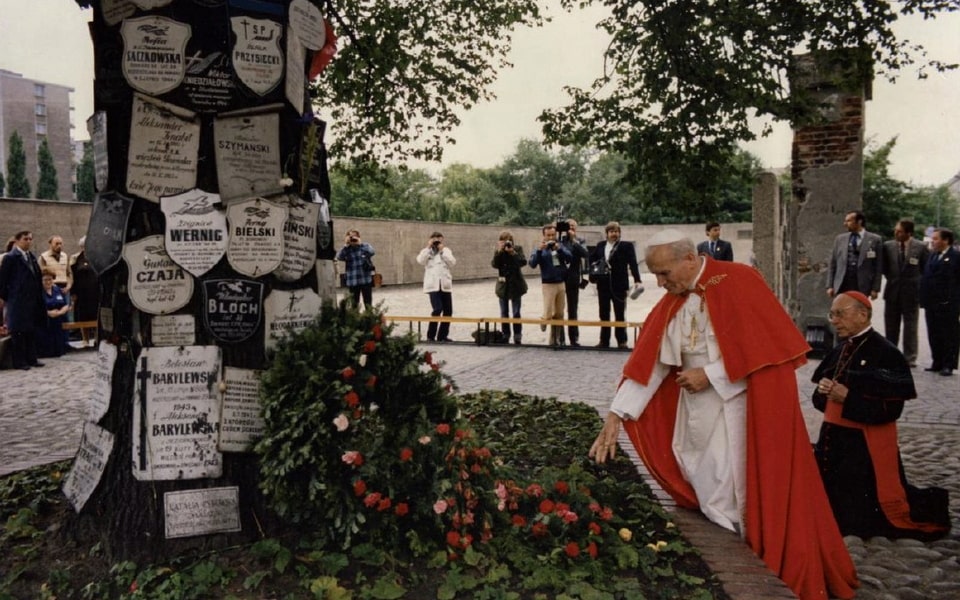
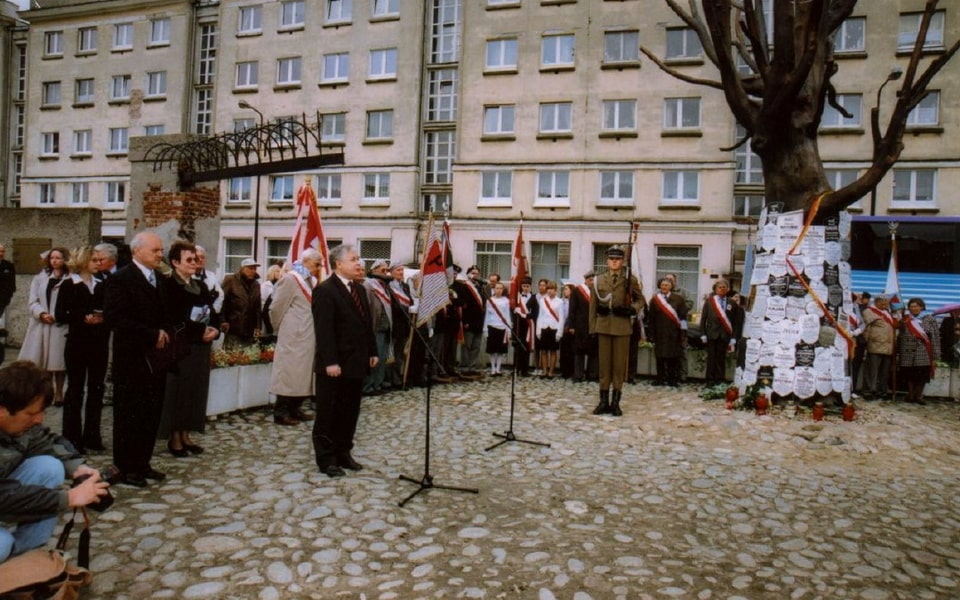
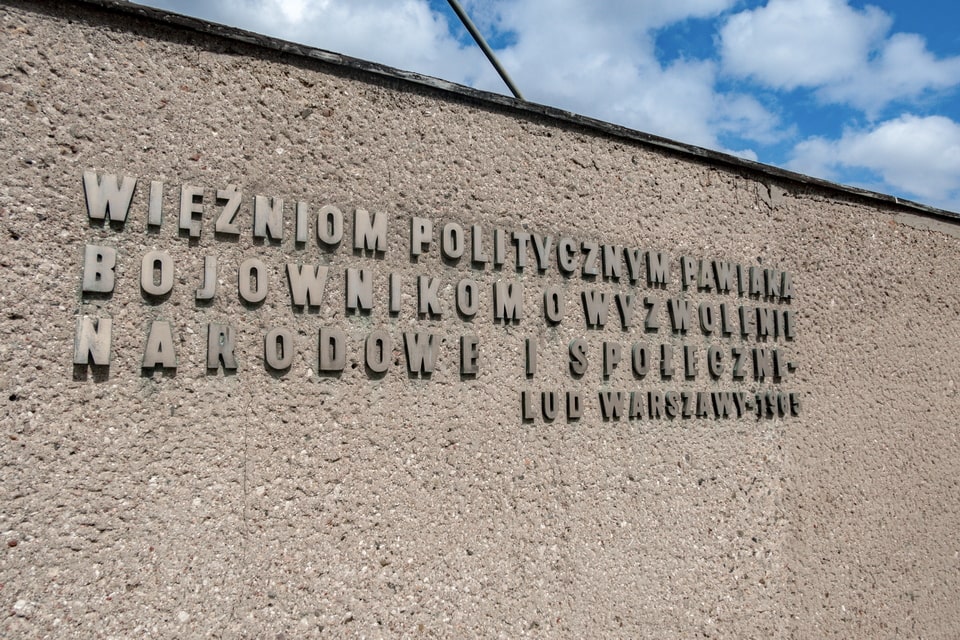
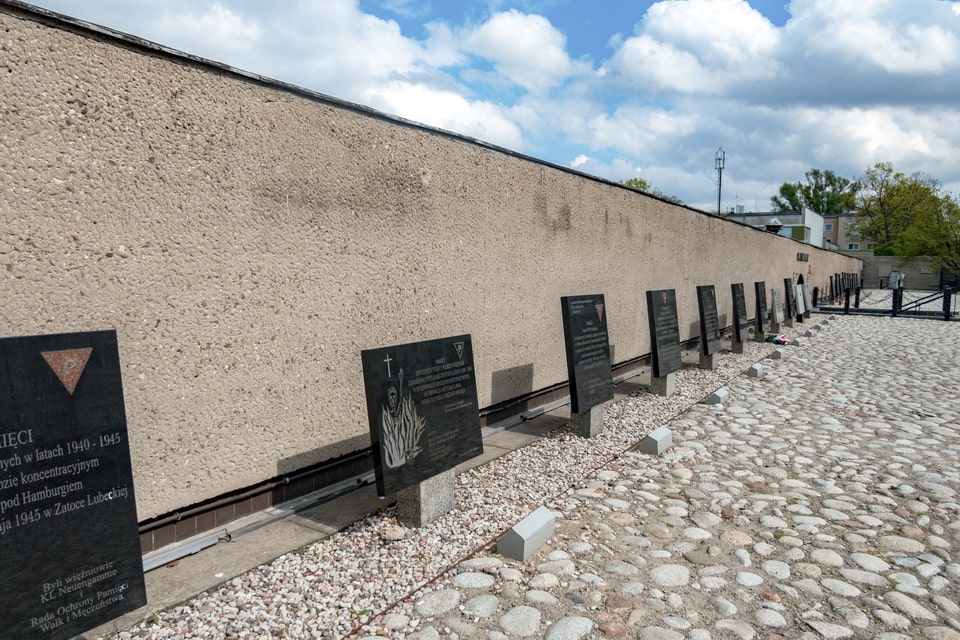
VISITING THE PAWIAK PRISON MUSEUM TODAY: HOURS, TICKETS, AND CURRENT CLOSURE STATUS (2026)
Current status (2026): the museum is closed for renovation. As of writing, the Pawiak Prison Museum has been closed to visitors since February 27, 2026, with a reopening expected in autumn 2026. No details about the scope of the renovation have been made public. Check the official website of the Museum of Independence before planning a visit.
Address & location: ul. Dzielna 24/26, 00-162 Warszawa, in the Muranów district, on the site of the original prison. The nearest tram stop is Anielewicza, and the museum is roughly a 10-minute walk from Metro Ratusz Arsenał (M1 line).
When open, typical hours are: Monday 10:00–18:00, Tuesday closed, Wednesday 10:00–20:00, Thursday 10:00–18:00 (free admission), Friday 10:00–18:00, Saturday–Sunday 10:00–20:00. A free audio guide, available in ten languages including English, is considered essential by most visitors, since much of the exhibition’s context comes from recorded survivor testimony rather than the information boards alone.
Combine your visit: A single ticket also covers the Mausoleum of Struggle and Martyrdom at Aleja Szucha 25 — the former Gestapo interrogation headquarters described in detail in this very guide (see the section on daily life and interrogations). Together, the two sites give a complete picture of the machinery of Nazi terror in occupied Warsaw; allow half a day to see both.
Nearby sites: The POLIN Museum of the History of Polish Jews and the adjacent Monument to the Ghetto Heroes are a 5–7 minute walk away. The Warsaw Uprising Museum is about 1.5 km away, a 20-minute walk or a short tram ride.
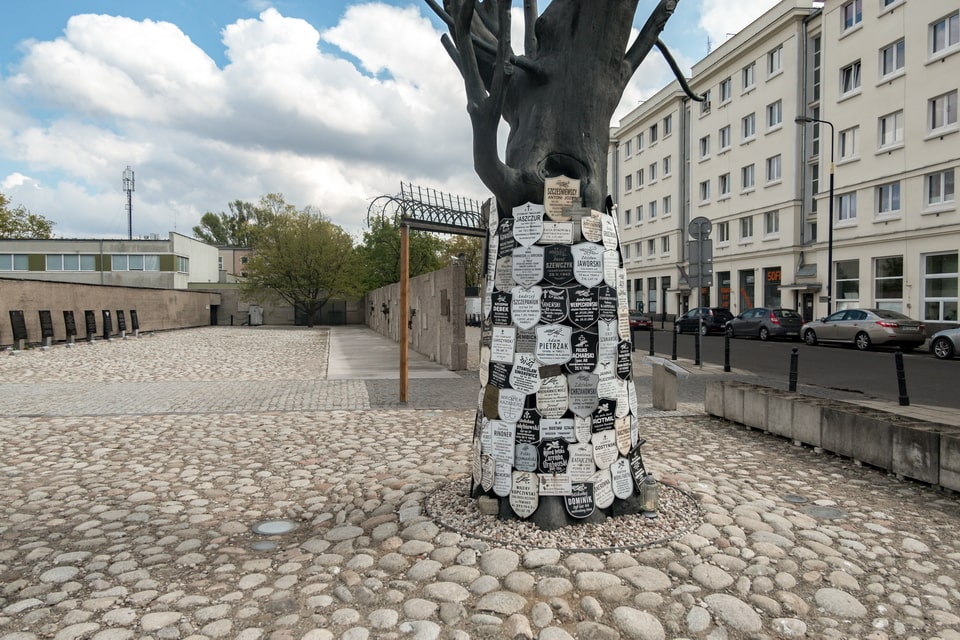
Frequently asked questions
Is the Pawiak Prison Museum open? As of 2026, the museum is closed for renovation, having shut its doors on February 27, 2026, with reopening expected in autumn 2026. Check the official Museum of Independence website for the latest updates before planning a trip.
How many people died at Pawiak Prison? Historians estimate that between 37,000 and 40,000 people died on the premises of Pawiak itself — from executions, torture, disease, and malnutrition — out of roughly 100,000 who passed through the prison between 1939 and 1944. A further 60,000 survivors were deported to concentration and death camps, many of whom did not survive.
Why was the prison called Pawiak? The name comes simply from its location on Pawia Street («Pawia» meaning «peacock» in Polish), one of several 17th-century Warsaw streets named after birds. The prison itself was built between 1829 and 1835 on a plot between Pawia and Dzielna streets.
What happened to Pawiak Prison after the war? The Germans dynamited almost the entire complex on August 21, 1944, leaving only fragments of the ground floor, the entrance gate, and a memorial elm tree standing. A museum was established on the surviving underground cell blocks and officially opened on November 28, 1965.
Who ran Pawiak Prison during the German occupation? Pawiak had four SS commandants between 1940 and 1944 — Otto Gottschalk, Helmut Heiss, Herbert Junk, and Norbert Bergh-Trips — but its day-to-day brutality is most closely associated with deputy commander Franz Burkl, whose extraordinary cruelty made him a primary target for assassination by the Polish underground in 1943.
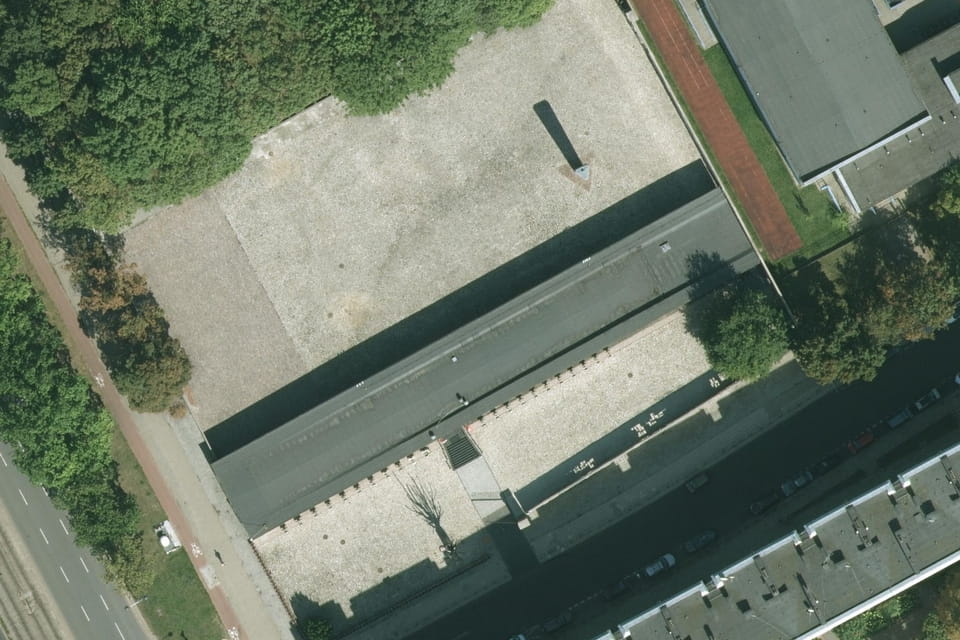
I am very grateful to war archives, museums, libraries, private collections, and writers for the historical photos in this article. To the extent that some author or a copyright owner may not want some of the above black-and-white photos to be used for educational purposes here, please contact me for adding credits or deleting the pictures from the article.