

The April 1938 Plebiscite in Austria: Hitler’s Second Visit to Vienna
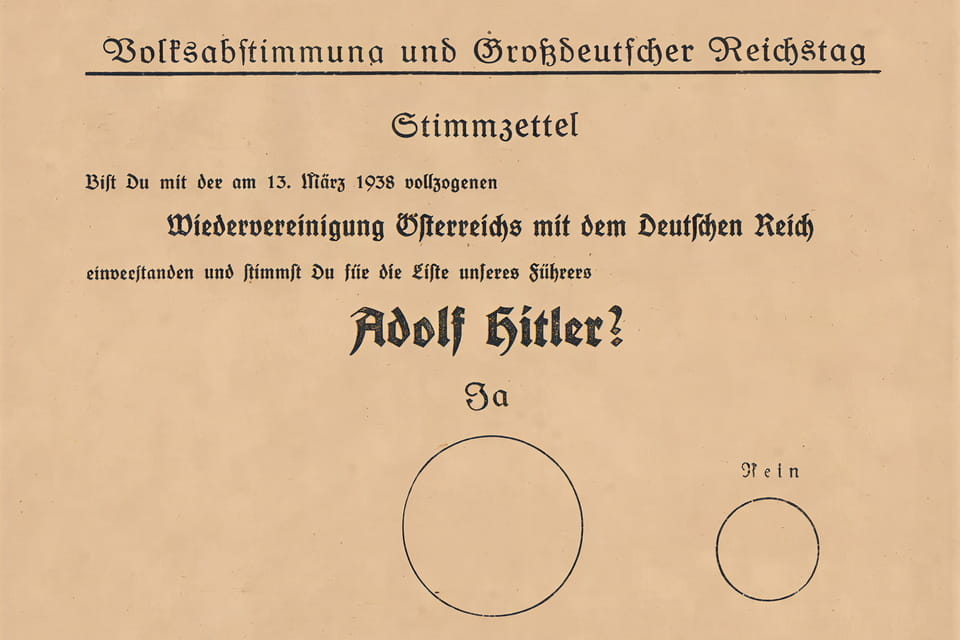
On 10 April 1938, four weeks after German troops crossed the border, Austria was asked a single question: did it approve of the reunification with the German Reich carried out on 13 March, and did it vote for the list presented by Adolf Hitler? Two questions, one circle. 99.73 per cent of ballots said yes.
The number is meaningless as a measurement and revealing as a document. 360,000 people — around 8 per cent of the electorate, among them some 200,000 Jews — had already been struck off the rolls. The ballot paper itself was designed with a large circle for Ja and a small one for Nein. And in the four weeks in between, the head of the Austrian Catholic Church and the man who had written the constitution of the First Republic both told Austrians to vote yes.
This article is about those four weeks. It follows the campaign Hitler ran across fourteen cities between 25 March and 9 April — the last election campaign of his life — and his second visit to Vienna, on the eve of the vote, which is far less remembered than the first. He arrived at the Westbahnhof, drove the Ringstrasse, spoke from a balcony of the City Hall that had been built specially for him and is still there today, and gave his closing eighty-one-minute address that evening in a railway hall in Brigittenau, half a kilometre from the men’s hostel where he had lived as a failed painter twenty-five years earlier.
WHY AUSTRIA WAS READY: FROM DOLLFUSS TO BERCHTESGADEN, 1934–1938
In Adolf Hitler’s distorted worldview, Austria had always been a part of what he considered a ‘Greater Reich’, and taking over the country was one of his key foreign policy objectives long before he became the German Chancellor. At the same time, Hitler’s aspirations were not entirely illusory, since a significant part of Austrian society yearned for a political marriage first with the Weimar Republic and, after 1933, with Hitler’s Germany. As early as 1919, seventeen political movements combined into the so-called ‘Großdeutsche Vereinigung’ (Greater German People’s Association), which, the following year, transformed into a party. It relied on nationalistic and pro-German sentiments and openly called for unification with Germany. In the early 1930s, the Greater German People’s Party lost most of its members to the Austrian Nazi Party and was banned in 1933. The latter’s rise in Austrian society was not as rapid as it is sometimes considered. On November 9, 1930, two months after the NSDAP’s triumphal victory in Germany with 18.3% of the vote, the Austrian Nazis received only 3% of the vote, or 110,638. More profound results followed in the provincial elections the next year, and in 1933, they won an astonishing 41% in Innsbruck.
After Hitler’s rise to power in Germany in January 1933, his policy toward Austria focused on supporting the Austrian Nazis and radicals in a pursuit to destabilize the country and take over power. After a series of violent turmoil known as the 1934 ‘February Uprising’, the forces of the right-wing government ‘Fatherland Front’ came to power in Austria. Led by Engelbert Dollfuss, they banned all other parties in the country, including the Austrian Nazi Party, and adopted an authoritarian Constitution. On July 25, 1934, 154 Nazis broke into the Chancellor’s office in the heart of Vienna and killed Engelbert Dollfuss (1892-1934). The following attempt to take over power in the country was violently suppressed, and thousands of Nazi supporters were put in jail. Kurt Schuschnigg (1897-1977), a zealous Catholic and a skilful bureaucrat, became the new Austrian chancellor, whom Italy and Benito Mussolini also supported. After the failed putsch, Hitler made taking Austria one of his key objectives, and Germany unleashed both internal and external pressure on the new regime in Austria, despite the pretended assurances of respect for the country’s independence.
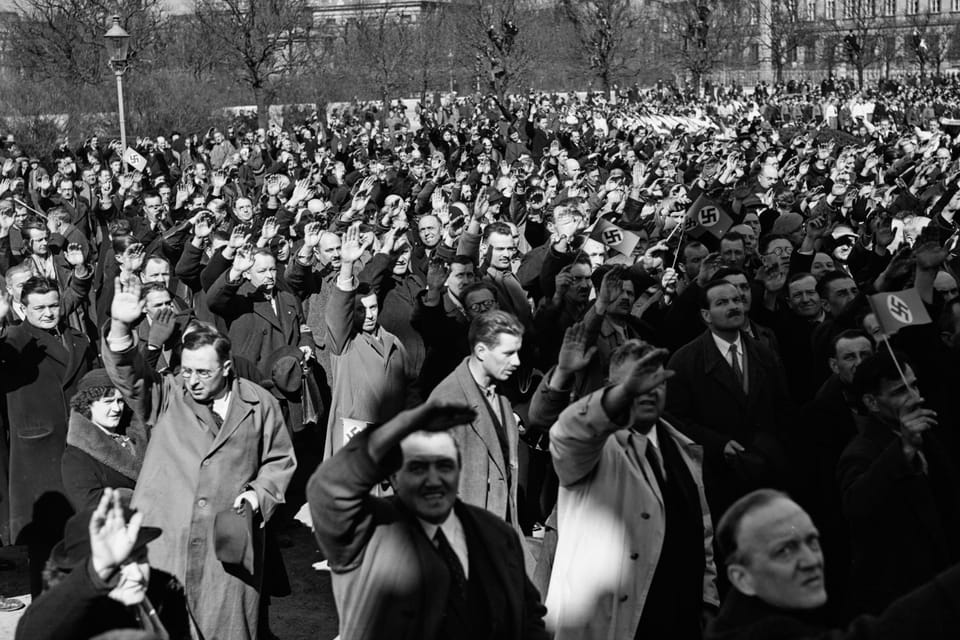
By 1936, Mussolini improved his relations with Hitler, and Austria soon became politically isolated, which made it an easy target for the Nazi aggressive expansionist aspirations. In November 1937, Italy joined the so-called Anti-Comintern Pact with Germany and Japan, and on November 5 in Berlin, Hitler openly expressed his plans to his military and diplomatic VIPs to annex Austria. The German dictator took a more aggressive approach to ‘the Austrian question’, which now meant military takeover rather than political ‘merging’. Hitler invited the Austrian chancellor Schuschnigg to his Alpine retreat, the Berghof, on February 12, 1938, and openly threatened invasion if Schuschnigg refused to make significant concessions. While an amnesty for the arrested Nazis in Austria was a relatively insignificant event, Austria now had to appoint Arthur Seyss-Inquart (1892-1946), a former lawyer and a Nazi frontman in the country, as Minister of the Interior. Along with that, in opposition to the Austrian sole governmental dominance of the ‘Fatherland Front’, the Nazis received a free hand in political activities in Austria. With the appointment of Arthur Seyss-Inquart, another Austrian Nazi, Edmund Glaise-Horstenau (1882-1946), became a Minister without Portfolio. On February 17, 1938, only one day after becoming Minister of the Interior, Seyss-Inquart traveled to Berlin to receive further instructions from Hitler.
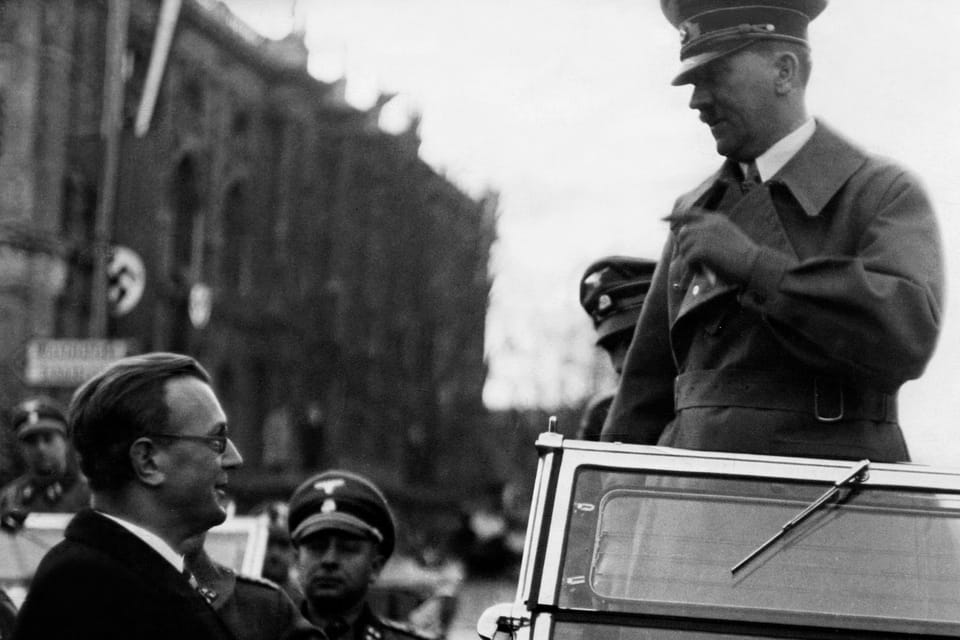
Despite fulfilling Hitler’s demands, pressure on the Austrian government continued, although the German dictator did not make the final decision on the Anschluss until March 10. Despite Hitler’s aggressive rhetoric and an ambition to take over Austria since at least 1934, the whole military operation scheduled for March 12 was improvised at the last moment. On the night of March 11, two Wehrmacht army corps stationed in Bavaria were hastily placed on a war footing to cross the border into Austria the next day. When Wehrmacht and SS units finally crossed the border on March 12, the logistical and operational mess, which remained largely unknown to the outside world, did not go unnoticed by the German generals, a vivid sign of the low level of preparedness for a large-scale war in 1938. On the evening of March 11, 1938, Chancellor Kurt Schuschnigg announced his resignation in a radio broadcast, and, after midnight, the pro-Nazi Seyss-Inquart became Austria’s puppet leader.
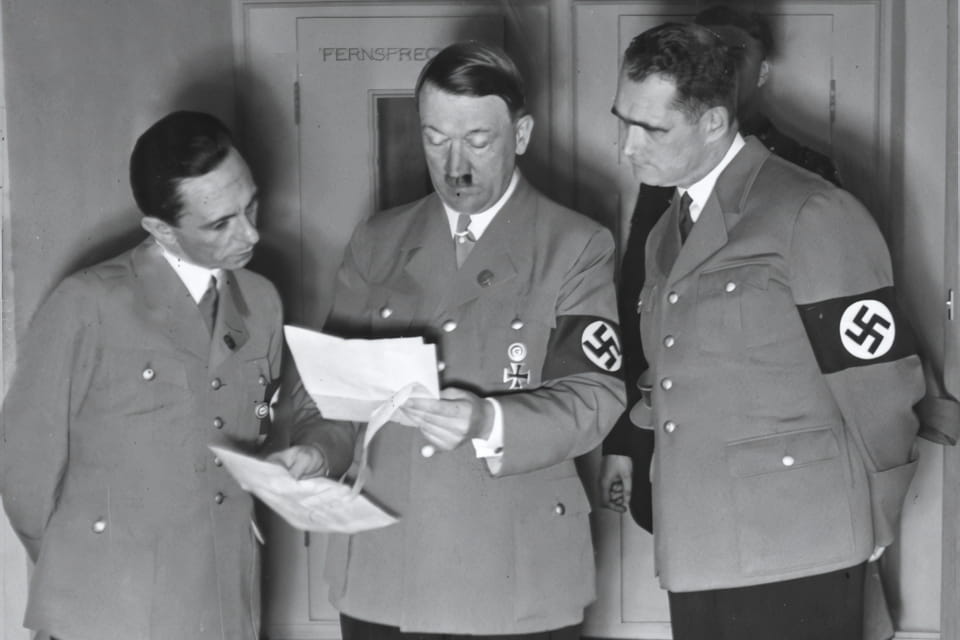
Notably, March 11 saw another important event, which preceded Hitler’s later visit to Austria. Several Nazi figures came to Vienna that day, thus increasing pressure on the Austrian government and threatening their neighbors with war. Among those who came to the Austrian capital on March 11 were Rudolf Hess (1894-1987), Hitler’s deputy in the party and still an influential person in 1938; Joseph Bürckel (1895-1944), the head of the Nazi party in Austria and the future Gauleiter of Vienna; Wilhelm Keppler (1882-1960), German businessman and one of the advisors of Hermann Göring. When it came to the Reichsmarschall, he preferred to remain in Germany and acted by telephone, issuing threats and ultimatums to the Austrian government. Göring dictated the Austrian ‘appeal for assistance’ to Keppler, who forwarded it to Seyss-Inquart; thus, the newly appointed puppet chancellor invited German troops into the country while simultaneously sending an appeal to the Austrian army not to intervene.
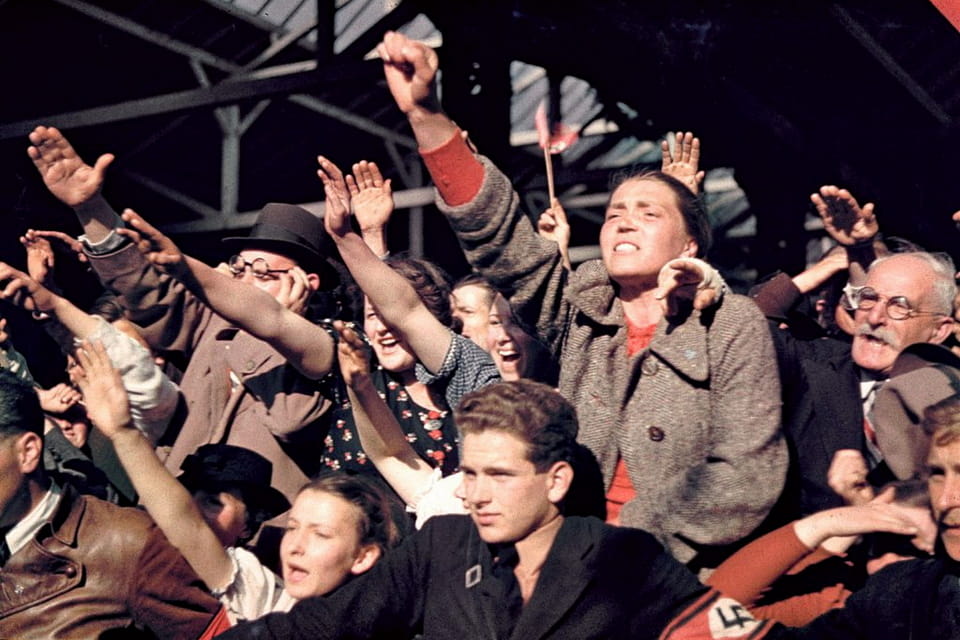
It is essential to note that the image of the Anschluss that entered general acceptance was formed by German propaganda afterward. Wehrmacht soldiers indeed were greeted with flowers in many locations, as well as Hitler’s visit to the country and, particularly, to Vienna, which provoked great public agitation. On the other side of the spectrum, the photographs of the jubilant receptions were of hundreds of thousands of Austrians, particularly Jews, who saw the coming of Nazi rule to their country with anxiety and frustration. The German public was informed about the ongoing Anschluss of neighboring Austria by radio broadcasts and Joseph Goebbels’s voice around midday on March 12, 1938, when he read Hitler’s proclamation of a ‘Führer’s decision’ to come to the assistance of the German people in Austria. The still-unfinished event was proclaimed a national holiday, prompting the display of flags across the country for three days.
Before leaving Berlin for his ‘pilgrimage’ to the conquered Austria, Adolf Hitler temporarily appointed Hermann Göring his deputy during his absence. It was another propaganda lie to undermine the claim that he could not return due to danger. Hitler’s entourage and bodyguards boarded nine Ju-52 aircraft and departed from Berlin at 8:10 a.m., arriving at the Oberwiesenfeld Airport near Munich around 10:30 a.m. on March 12, 1938. Later that year, British Prime Minister Neville Chamberlain and the French Prime Minister Édouard Daladier came to the same airport in their pursuit to prevent Hitler from invading Czechoslovakia in what would be known as the infamous ‘Munich Agreement ’. Hitler used the automobile cortege stationed in Munich to travel to Mühldorf am Inn. Here, he visited the headquarters of the newly created 8th Army under the command of Fedor von Bock (1880-1945), whose recently attached Army Corps VII (Munich) and XIII (Nuremberg), as well as the motorized XVI Army Corps, were ordered to enter Austria. The headquarters was temporarily located at the Muhldorf Central School. Among those who came to the site to see Hitler was city mayor Hans Gollwitzer (1896-1979), who, despite later being a Nazi regime official, regained his mayor post between 1952 and 1966. Between July 1944 and April 1945, a subcamp of Dachau operated in Mühldorf am Inn.
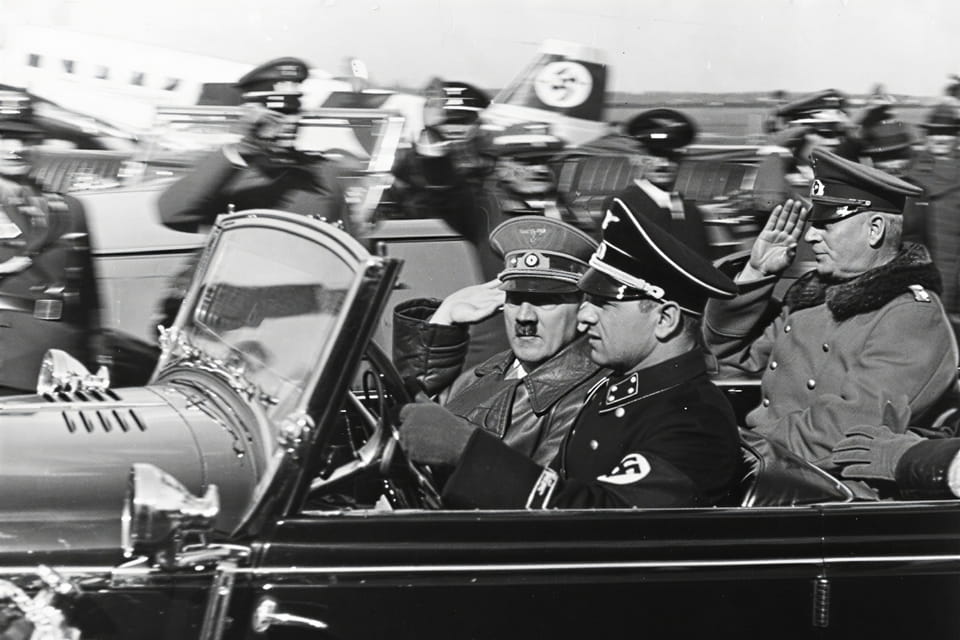
THE ANSCHLUSS TRIP: TWELVE MERCEDES, THIRTY-ONE BODYGUARDS, 12 MARCH 1938
The protection measures, like during all of Hitler’s trips, were comprehensive, despite the ‘peaceful’ nature of the German takeover of Austria and the most improvised timing. His ‘Anschluss trip’ across the border was supervised by SS-standartenführer Johann Rattenhuber (1897-1957), who commanded his own men from the Reichssicherheitshauptamt (Reich Security Service, or RSD) and from the SS-Begleitkommando: thirty-one bodyguards in total, of whom ten acted as drivers. While Rattenhuber held overall command, SS-Sturmbannführer Bruno Gesche (1905-1982) served as his deputy during the journey, and Hitler’s personal driver, Erich Kempka (1910-1975), oversaw the drivers’ work. Johann Rattenhuber was responsible for Hitler’s protection since 1933. He ended the war in the SS rank of Gruppenführer in Soviet captivity, from which he was released as late as 1956 and lived only one year more before he died in Munich in July 1957. Bruno Gesche joined the NSDAP and SA as early as 1922 when he was just seventeen, and since 1934, he commanded the Führerbegleitkommando and at the end of the war was taken prisoner in Italy by US troops. Erich Kempka, the youngest of the three, worked as Hitler’s personal driver since 1932, burned Hitler’s body in Berlin in 1945, and after two years of imprisonment was released in 1947. In 1951, he wrote memoirs devoted to the years spent close to Hitler.
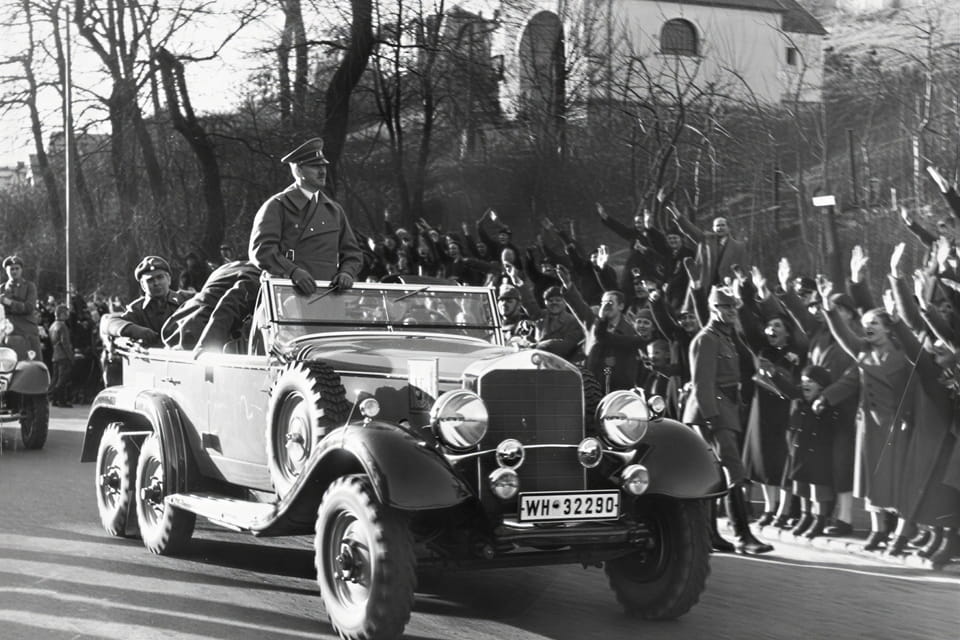
The members of both the RSD and the Führerbegleitkommando wore identical SS uniforms during the trip and were therefore indistinguishable. Apart from ten men acting as drivers, two guards cared for the luggage, among them Otto Günsche (1917-2003), a later personal adjutant of Hitler, who, like Kempka, burned the bodies of Adolf Hitler and Eva Braun in the courtyard of the Reich Chancellery on April 30, 1945, and spent eleven years in Soviet captivity. The remaining bodyguard staff was divided into three smaller units. The whole cortege consisted of twelve Mercedes-Benz cars, and Hitler used a three-axle off-road Mercedes-Benz W31 type G4 with a WH-32290 Wehrmacht Heer licence plate. The bodyguard crew under Rattenhuber in total had fourteen machine guns with 2,596 rounds with them, and each of the SS crew also carried two pistols. Hitler’s entourage included:
Chief of Staff of the Deputy Führer Martin Bormann (1900-1945)
Nazi Party Press Chief Otto Dietrich (1897-1952)
Hitler’s official photographer Heinrich Hoffmann (1885-1957)
Chief of the Wehrmacht High Command Wilhelm Keitel (1882-1946)
Hitler’s personal physician, Dr. Karl Brandt (1904-1948)
Chief Adjutant to Hitler, Wilhelm Brückner (1884-1954)
Aide and Adjutant to Adolf Hitler, Julius Schaub (1898-1967)
Hitler’s personal valet, Heinz Linge (1913-1980)
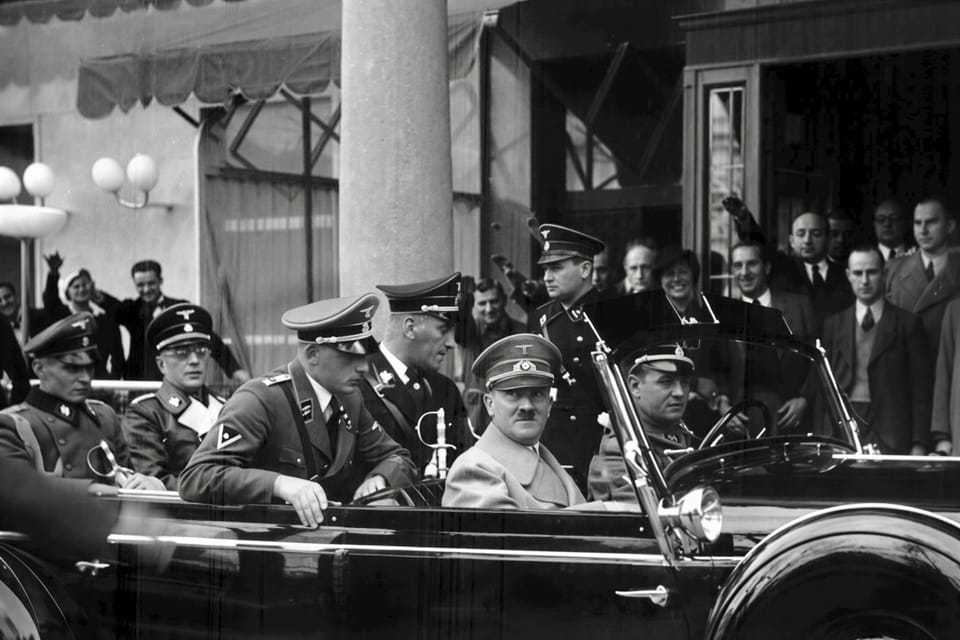
Even though Wehrmacht troops entered Austria without armed resistance and on their way across the country, Hitler’s cortege was mainly met with jubilant crowds; the security measures were at least questionable. First of all, German troops entered towns and villages just a few hours before Hitler followed their way, and cordoning off streets was inadequate. On several occasions, the bodyguards from the cortege had to walk on both sides of Hitler’s car to create space between him and the crowd, which got very close to the German dictator, who stood in the front passenger seat. That day, Hitler wore his new leather coat over his uniform and a cap with a cockade and the Wehrmacht-style golden oak leaves, thereby projecting an image of a supreme commander of the armed forces who was triumphantly entering Austria.
HOTEL WEINZINGER, 13 MARCH: THE LAW THAT SET THE DATE
Hitler’s impressive cortege crossed the border between Germany and Austria by entering Braunau am Inn from the North. Starting his voyage from his place of birth was not only symbolic for a German dictator but also logistically convenient, since this town in Upper Austria is located across the river from Bavaria. The cavalcade of Mercedes-Benz cars entered Braunau am Inn around 3.50 p.m., where they were met by a large crowd, with church bells chiming. In the narrow streets of the town, Hitler was extremely vulnerable in his open car, but no one tried to kill him during this trip. There are several photographs of his Mercedes with WH-32290 plates on the streets of Braunau, but there is no known photograph of Hitler visiting his birthplace, though he made a stop there. A further journey from Braunau am Inn to Linz took almost four hours, and along the way, Hitler’s cortege passed through another location associated with his childhood in Austria. Fischlham near Lambach, southwest of Linz, where the Hitler family lived between 1895 and 1897 and where young Adolf attended the local school.
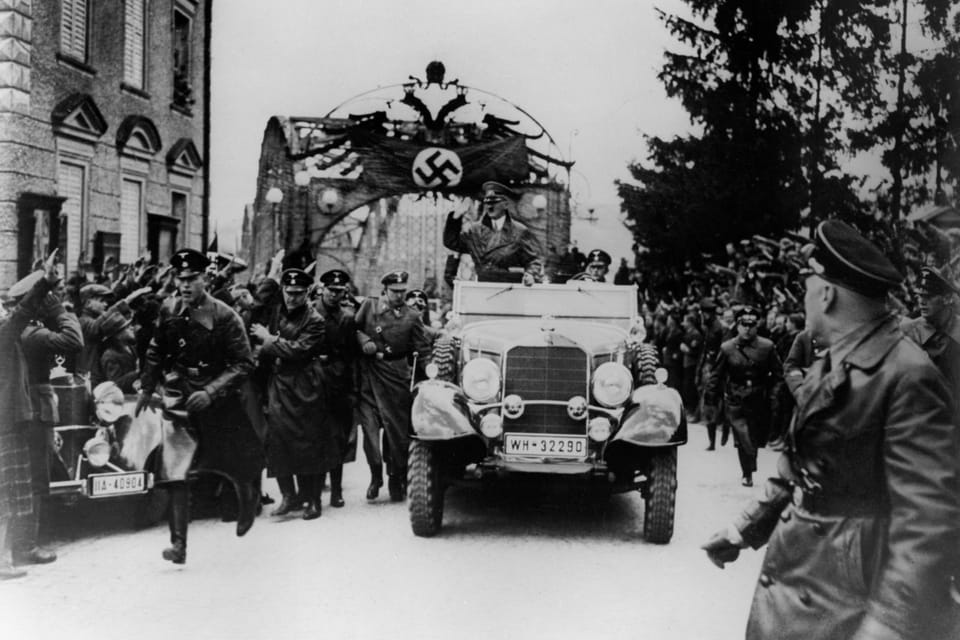
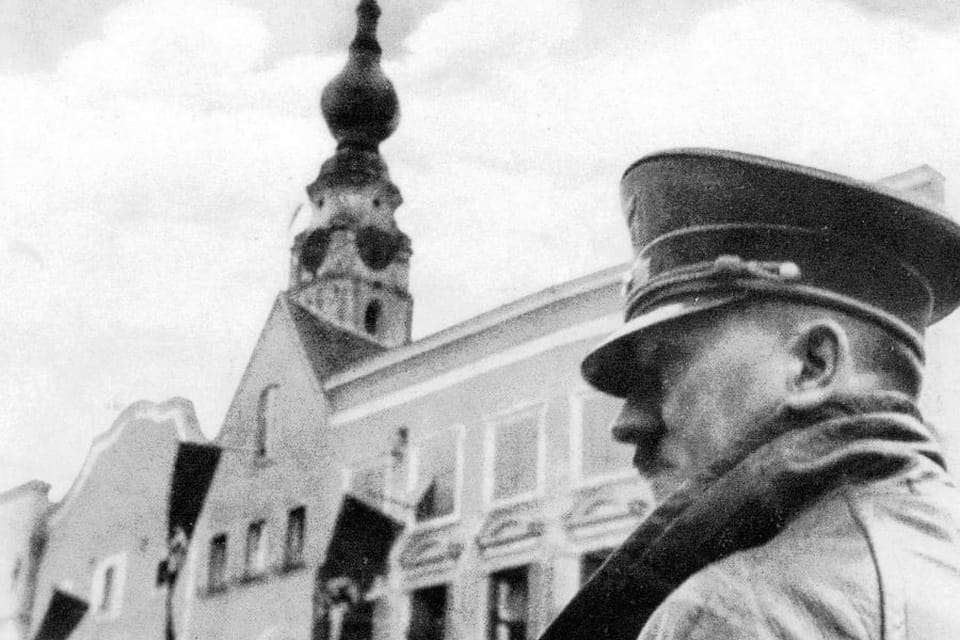
In anticipation of Hitler’s arrival were Arthur Seyss-Inquart, Edmund Glaise-Horstenau (1882-1946), and Heinrich Himmler, who waited for the cars fifteen kilometers from Linz and then joined the procession. Hitler’s cortege entered Linz around 7:30 p.m. and drove through the main city square, named Franz-Joseph-Platz (after Emperor Franz Joseph I) since 1934. After the Anschluss, it was renamed Adolf-Hitler-Platz and Hauptplatz in 1945. It was already dark when Mercedes’s cortege neared Linz, and Hitler entered the city’s Town Hall in the main square and soon after gave a speech from the balcony facing the square and thousands of people who had come to the event. Arthur Seyss-Inquart was also present on the balcony. In his speech, Hitler discussed providence, which had chosen him to restore the city to Germany. A British journalist, George Ward Price, who adored Hitler’s Germany and Mussolini’s Italy, spoke in German to the Austrian broadcasting services and congratulated the Austrians. Three days later, he would be present on the Hofburg Palace balcony in Vienna, next to Adolf Hitler.
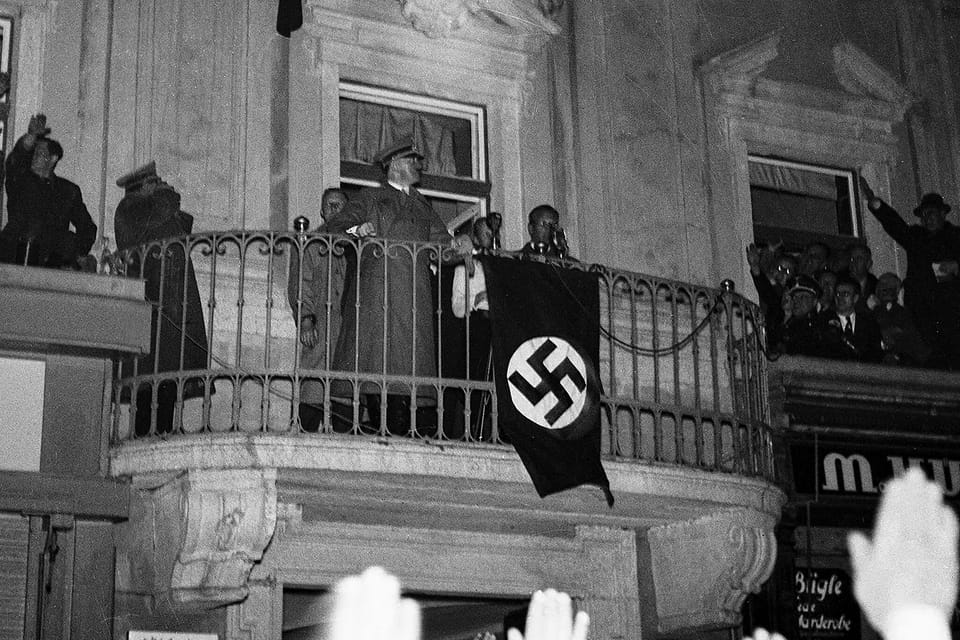
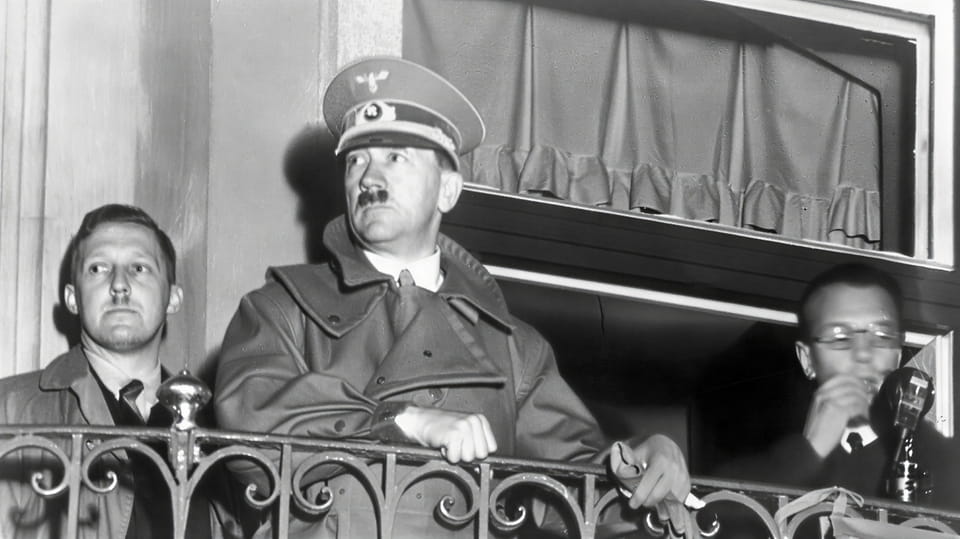
That night, Hitler and his entourage stayed at Hotel Weinzinger, just across the road from the Hauptzollamt (Main Customs Office), a building that a thirteen-year-old Hitler had visited with his father. While staying at the hotel, Hitler made several important decisions on March 13. First, he signed the hastily prepared document that formalized the Anschluss. The so-called Gesetz über die Wiedervereinigung Österreichs mit dem Deutschen Reich (The Law for the Reunification of Austria with the German Reich) was signed by Hitler and Seyss-Inquart at the Hotel Weinzinger. The document made Austria, yesterday’s independent state, a ‘Land’ of the German Reich and set April 10, 1938, as the date of the so-called plebiscite, aimed at formalizing the state’s takeover through an orchestrated vote. Josef Bürckel, the acting head of the Austrian Nazi Party, was ordered to carry out the plebiscite. On April 23, 1938, he became the Reich Commissioner of Austria. He also gave an interview to the above-mentioned Daily Mail British journalist and Nazi sympathizer George Ward Price, in which he blamed former Chancellor Schuschnigg.
While Hitler stayed in Linz on March 13, 1938, he made a short visit to Leonding, a suburb of Linz, to visit the graves of his parents. The Hitler Family moved into a house in Leonding, a village with approximately 3,000 inhabitants, in February 1899 and lived there until June 1905. Alois Hitler died in the nearby restaurant Gasthof Wiesinger on January 3, 1903, and was buried two days later in the cemetery just across the road from the family house. Klara Hitler followed her husband four years later and passed away on December 21, 1907, at the age of forty-seven. Two days later, her body was taken from the family apartment on Blutengasse 9 in Linz to the village cemetery in Leonding and buried next to Alois Hitler and her son Edmund, who had died in February 1900. Three decades later, now the sole ruler of Germany and Austria, Hitler came back to Leonding and laid flowers at the graves of his parents and brother. Several photographs of him visiting the Leonding cemetery on March 13, 1938, are preserved.
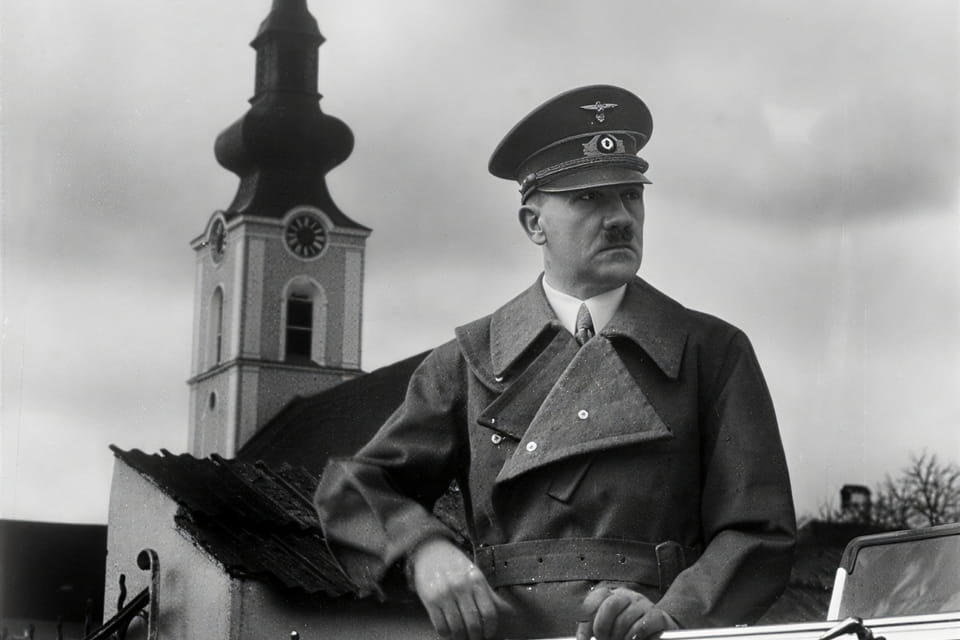
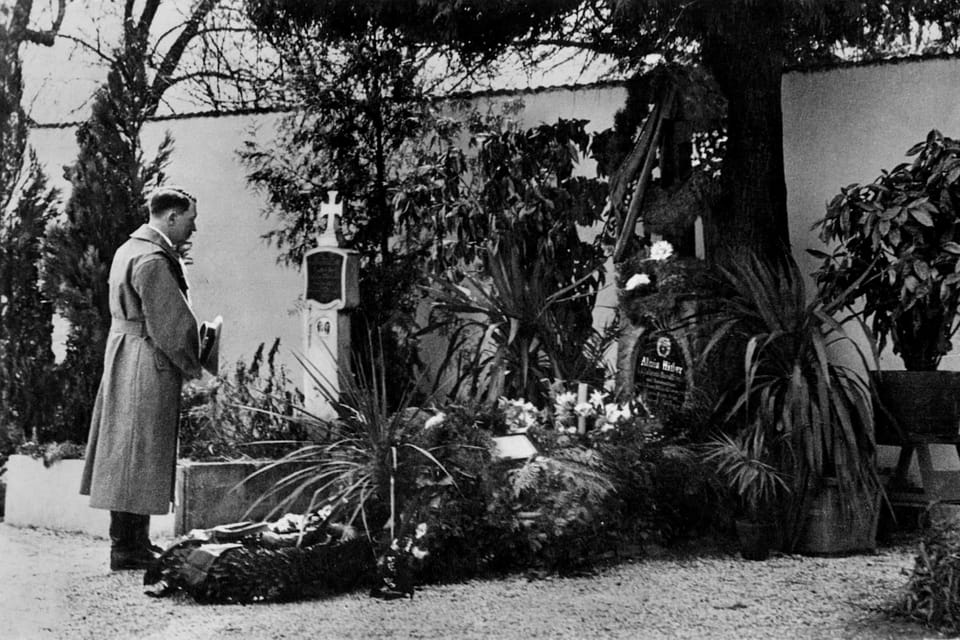
After a short visit to the suburb, Hitler came back to Linz, where he held a meeting with leading Austrian Nazis to coordinate the political takeover of the country. The same day, he sent a telegram to Mussolini, calling the Italian dictator ‘His Excellency’ and implying that he ‘will never forget him for this’ in the sense that Mussolini allowed the takeover of Austria. The fascist dictator was actually infuriated by Hitler’s Anschluss, and he had no alternative but to pretend that he supported the takeover of Austria. He sent his reply the next day, and where Hitler used ‘His Excellency’, Mussolini addressed his addressee ‘Hitler-Vienna’ and wrote about the friendship between the two countries and the Axis agreement. Both short letters were later published in German and Italian media, and Mussolini retained the telegram in his personal files. However, the Italian press was instructed to downplay the significance of the German annexation of Austria. In fact, Hitler kept his word and never forgot Italy’s non-intervention during the Anschluss in 1938. In later years, he suppressed criticism of Mussolini and sought to keep his Italian partner in power. That day, Hitler also met with Josef Wolkerstorfer (1905-1990), a former district leader of the Nazi Party in Linz, who was now appointed city mayor. Wolkerstorfer complained about the financial strain of the situation with city funding and the lack of museums, and Hitler promised his assistance in turning Linz into ‘a city of art’.
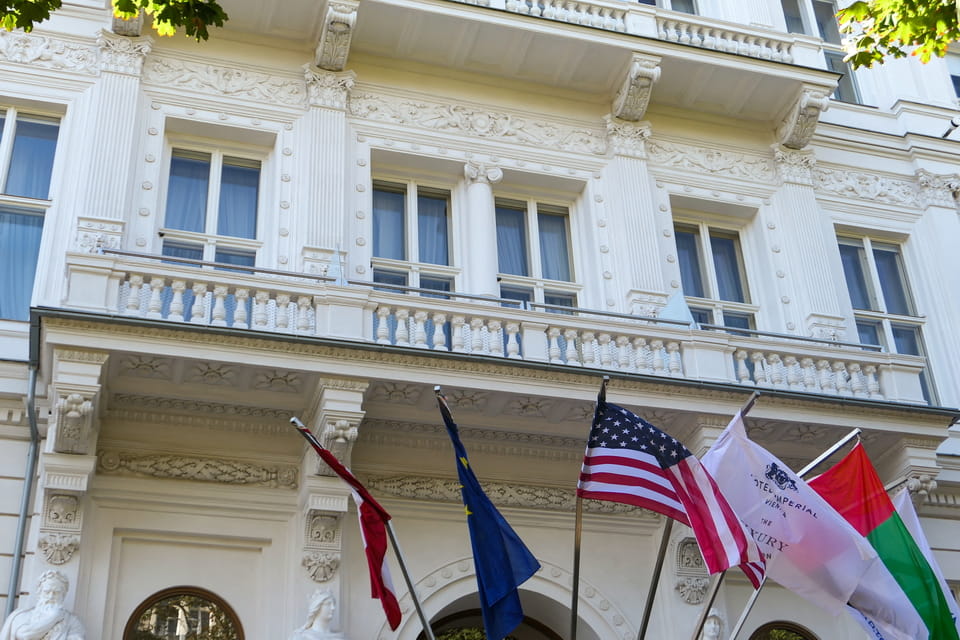
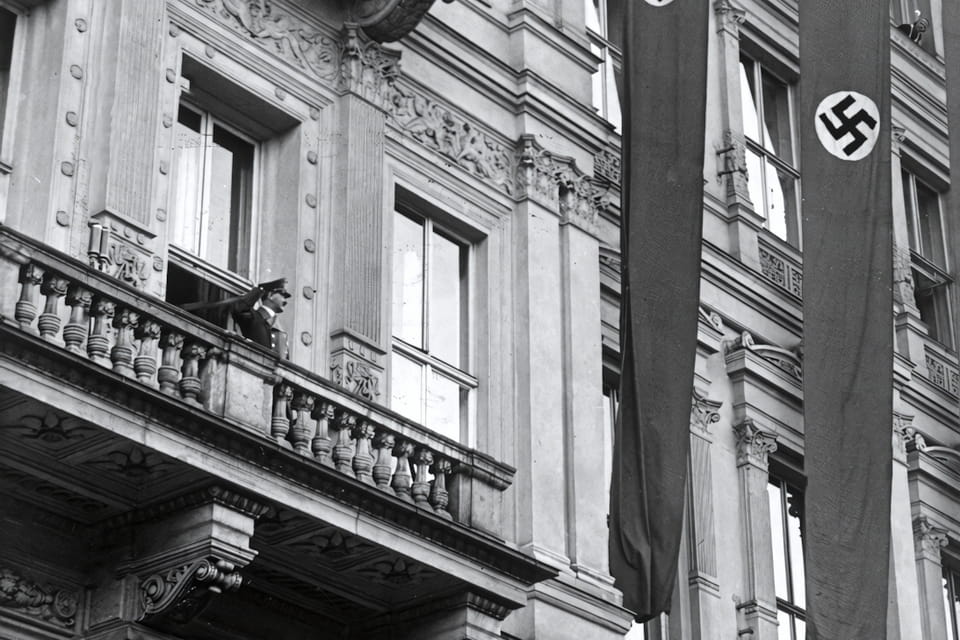
Hitler’s cortege left Linz around 10 a.m. on March 14, 1938, and headed toward Vienna along the so-called ‘Nibelungen Road’ (Nibelungenstrasse) near the Danube River. The cortege passed the historic Abbey of Melk and, after Sankt Pölten (Saint Pölten), reduced its speed from approximately 40 to 20 kilometers per hour. While Hitler was in motion toward Vienna, within two days of the resignations of Schuschnigg on March 11 and President Wilhelm Miklas (1872-1956) on the 13th, the Nazis under Seyss-Inquart assumed control of the country. The Austrian army not only remained neutral during the Anschluss but was also obliged to swear loyalty directly to Adolf Hitler. Goebbels sent his propaganda staff to Vienna to take over and reshape the former Austrian press and to prepare the city for the arrival of Hitler. The cortege entered the city around 4.30 p.m. and was greeted by tens of thousands of people along the roads and by the church bells. His car and the entourage headed towards the Hotel Imperial, located in the heart of Vienna at the famous Ringstrasse. Although Hitler did not plan to address the public that day, the crowd next to the hotel was so loud that, around 7 p.m., he appeared on the balcony to greet the crowd.
While Hitler’s appearance on the balcony of the Hotel Imperial remains less recognizable in historical retrospect, March 15, 1938, witnessed more profound events. Around 10:00 a.m., several hundred thousand people came to the Heldenplatz square in front of the former Imperial residence, Hofburg Palace, to hear Hitler’s speech from another balcony. Apart from those Austrians who supported the Anschluss, many came out of curiosity, and thousands of Nazi supporters were brought here by buses from all over the country. Additionally, the day was declared a day off in Viennese schools. In his speech before the microphone, the German dictator addressed the ‘historical reunification’ of his homeland with the German Reich, thereby recalling his Austrian origins. After delivering his message, Hitler and his entourage laid flowers at the Austrian War Memorial outside the Burgtor gate of Hofburg facing the Ringstrasse. Subsequently, there was a large military parade on Ringstrasse that lasted several hours.
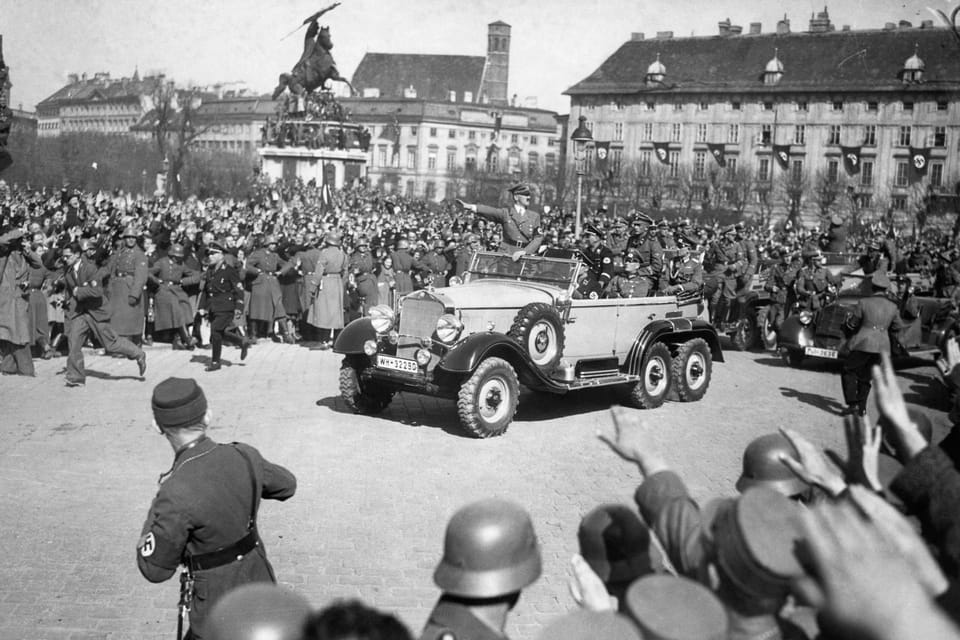
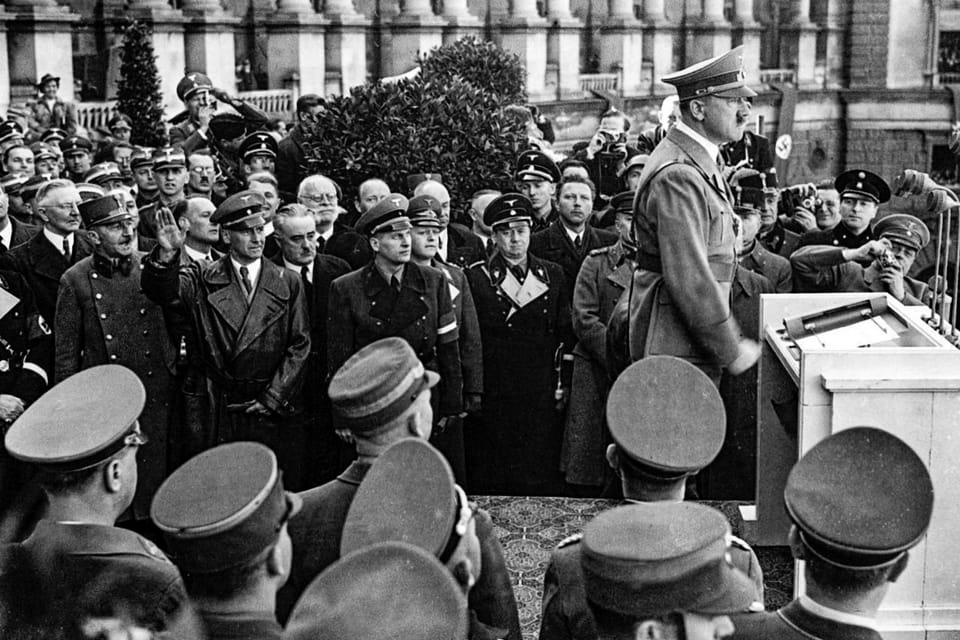
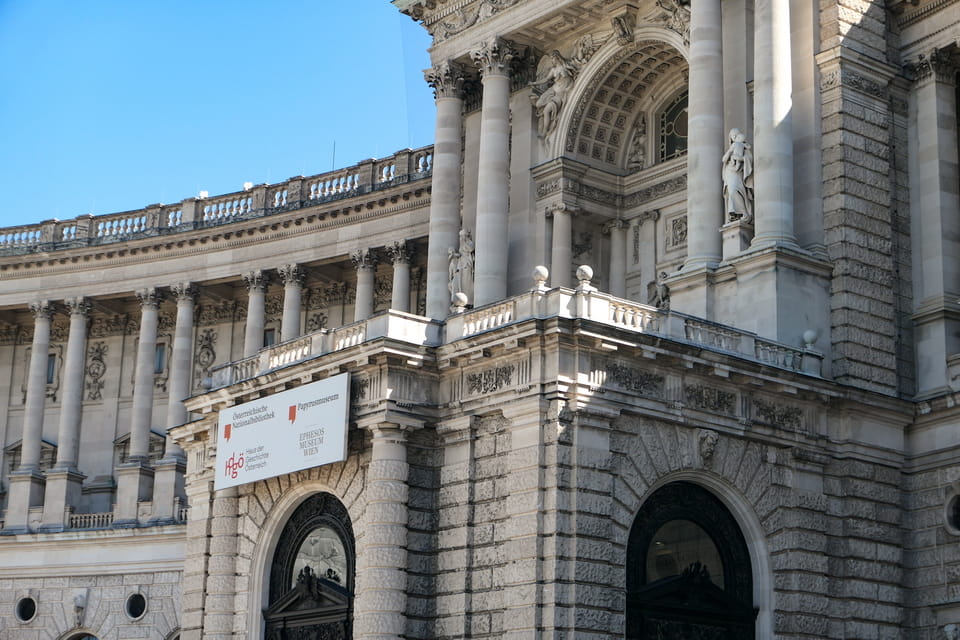
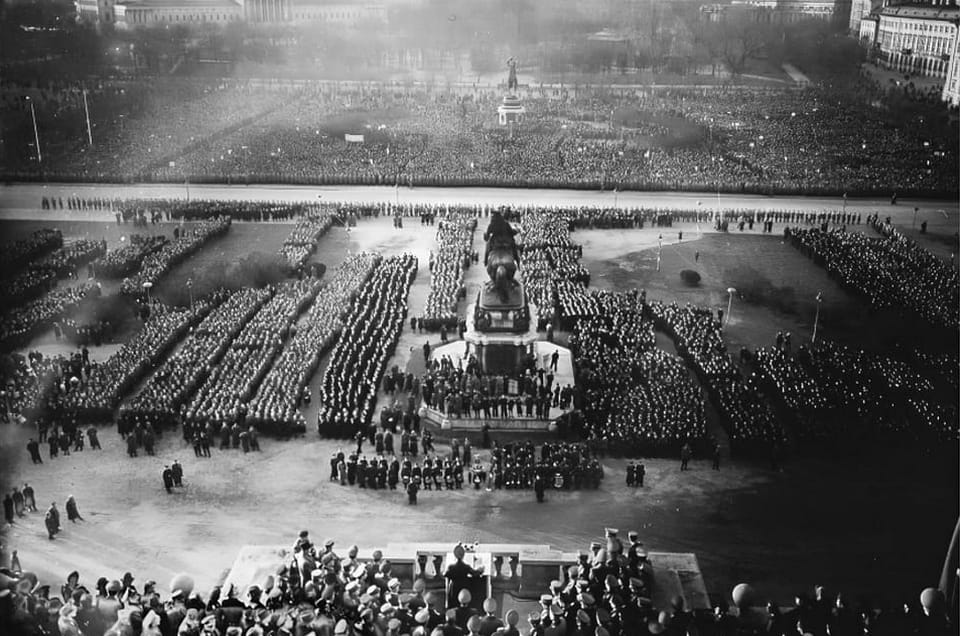
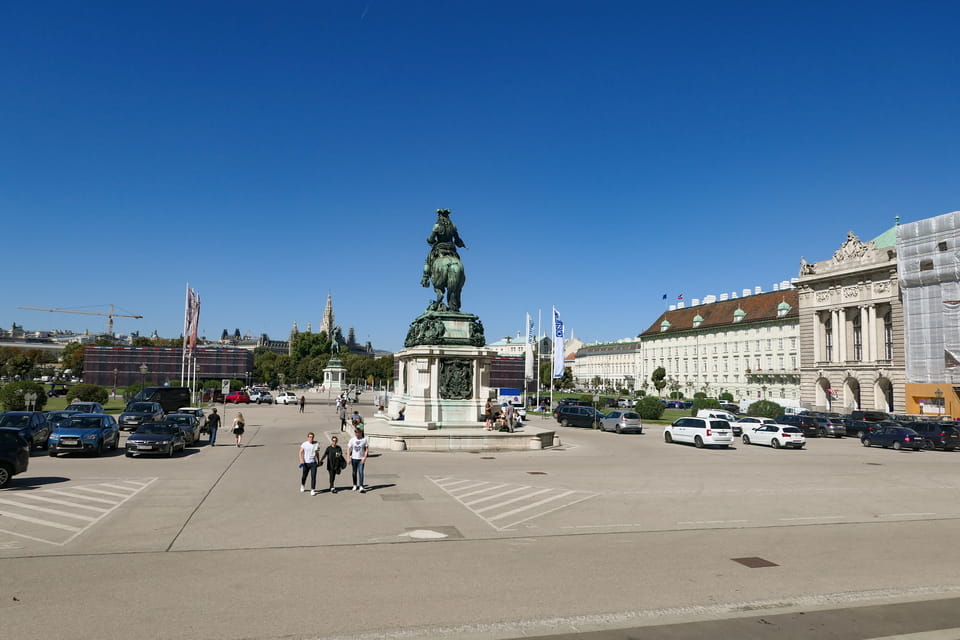
Hitler stood on the rostrum next to Maria-Theresien-Platz and observed the movement of troops in front of him. The historical photos also captured Reichsfuhrer SS Heinrich Himmler (1900-1905), Chief of the Army High Command Colonel General Walther von Brauchitsch (1881-1948), State Secretary of the Reich Air Ministry Erhard Milch (1892-1972), the retired Austrian General and fervent Nazi supporter Alfred Krauss (1862-1938), the latter wore civilian cloth, also were present Arthur Seyss-Inquart (1892-1946) and the former Vice-Chancellor and former ambassador to Austria Franz von Papen (1879-1969). It’s interesting to note that that day, March 15, 1938, also witnessed an unfinished and lesser-known assassination attempt on Hitler’s life. A liberal Catholic and monarchist, Doctor Fred Payrleithner, took a pistol in his pocket to shoot Hitler. Still, after walking the streets of Vienna and witnessing the jubilant reception of the Anschluss, he returned to his apartment.
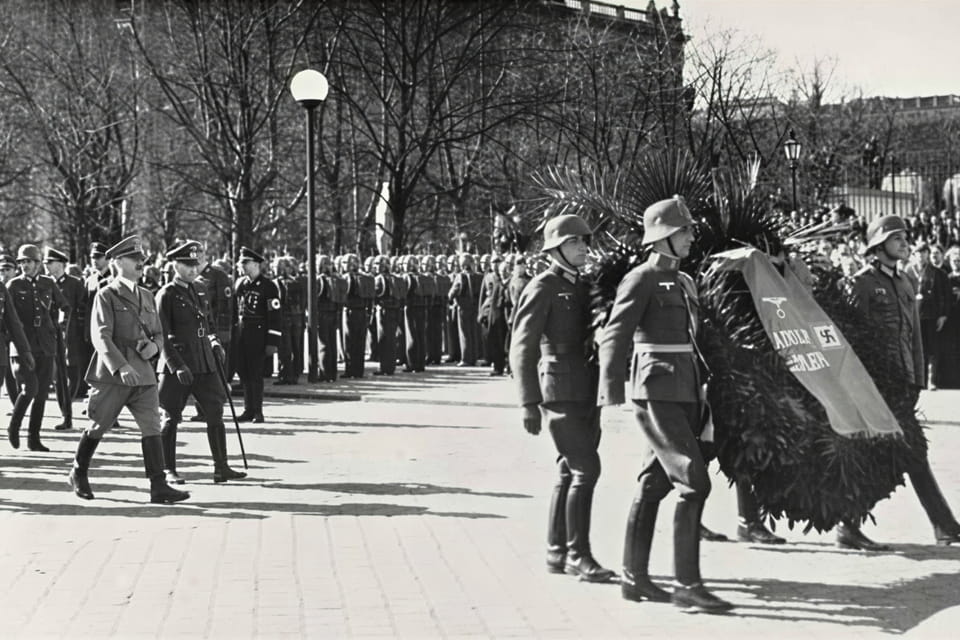
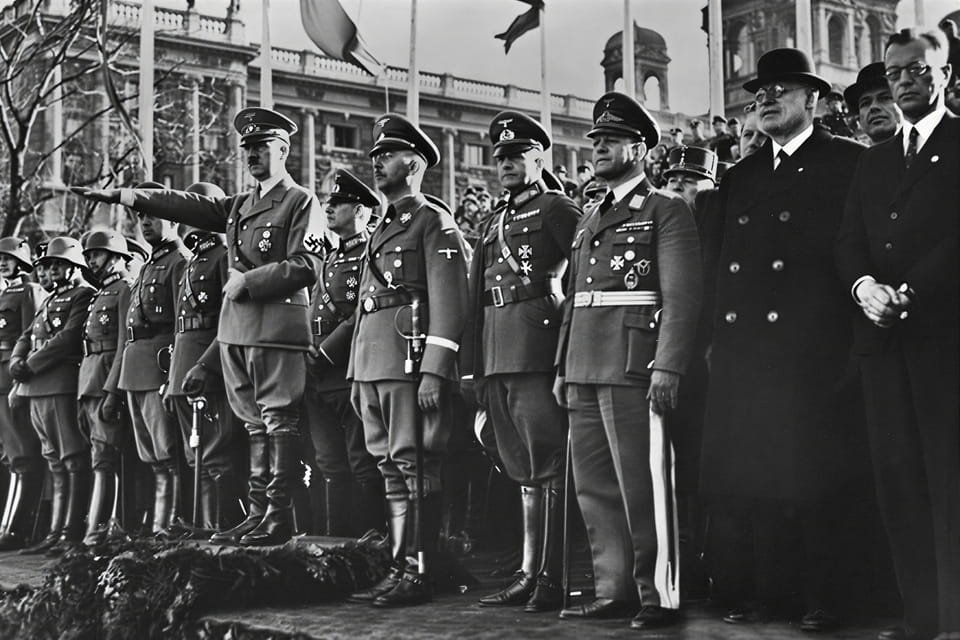
After the parade on Ringstrasse concluded, Hitler returned to the Imperial Hotel, where he held several meetings. He gave an interview to the Italian journalist Filippo Bojano for Popolo d’Italia, an Italian newspaper founded by Mussolini in 1914. Afterwards, Hitler received Cardinal Theodor Innitzer (1875-1955), the Archbishop of Vienna. Even though the cardinal had been a supporter of the previous Austrian government under Engelbert Dollfuss and Kurt Schuschnigg and a critic of the Nazis, he now expressed his support for the Anschluss. He showed his adoration, which the latter appreciated. The German dictator faced difficulties in dealing with the German Catholic Church, and he welcomed the opportunity to conduct cooperation more smoothly in Austria with the help of figures such as Innitzer. Three days later, he and other Austrian Catholic bishops wrote and signed a note supporting the Anschluss, and Innitzer personally added ‘Heil Hitler’. While staying at the hotel, Hitler also had a half-hour meeting with his younger sister, Paula Wolff (1896-1960), and he even gave her money to improve her constrained financial circumstances.
As a result of Hitler’s decision to annex Austria, the Reich’s territory increased by 84,000 square kilometers, and the population grew by another 6.7 million, of whom 60,000 men, former Austrian soldiers, were soon incorporated into the Wehrmacht. Swallowing Austria gave the regime access to significant deposits of oil and iron ore, and German economic requisition drew gold and money from the Austrian National Bank. At the same time, a subsequent report showed that consumption in the annexed Austria was higher than the supplies provided to ‘Greater Germany’.
BETWEEN ANSCHLUSS AND THE PLEBISCITE. THE LAST ELECTION CAMPAIGN: FOURTEEN CITIES IN SIXTEEN DAYS
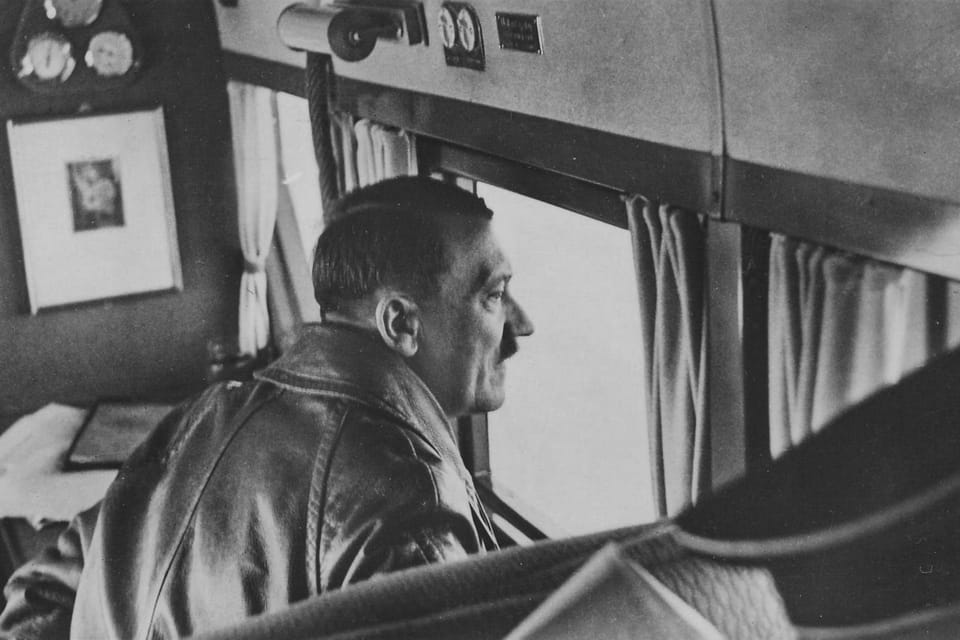
Hitler and his entourage left Vienna around 5 p.m. on March 15, 1938, to return to Munich by air, arriving in the late evening. Welcomed at the Oberwiesenfeld airport by the Reich governor of Bavaria, Franz Ritter von Epp (1868-1947), Hitler arrived in a car and reached his spacious Munich apartment at Prinzregentenplatz. On their way from the airfield, the motorcade was greeted by jubilant crowds in the streets. Meanwhile, in Berlin, Reich Minister of Propaganda Joseph Goebbels, who was also the Gauleiter of Berlin, used administrative measures to mobilize the city’s citizens to welcome Hitler the next day. People were given the day off from work and were instructed to gather at designated locations to join the mass demonstration by party activists, and were also asked to display flags on windows and balconies. While the actual figures remain disputed, the official Nazi propaganda later claimed that 2.5 million people poured out into the streets of Berlin to welcome their ‘Führer, who came with triumph from Austria’. Hitler left Munich at 2.50 p.m. and arrived at the Berlin Tempelhof airport two hours later, welcomed there by Hermann Goering. A cavalcade of cars proceeded through the streets to the Reich Chancellery in the city center, where Hitler delivered a brief speech from its balcony. The dictator declared that ‘Germany has become Greater Germany’.
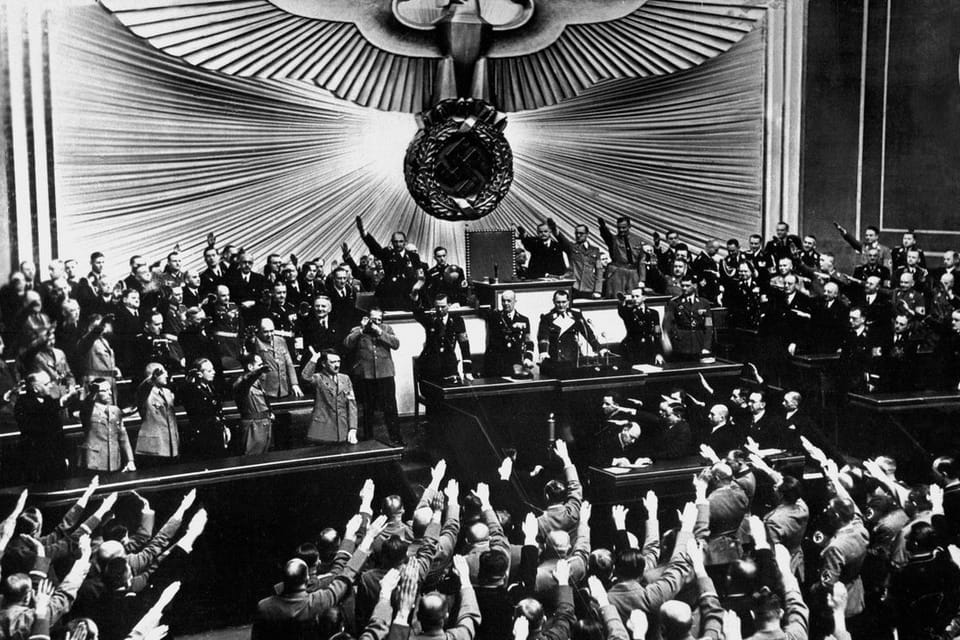
It is interesting to note that the overall enthusiasm for Hitler’s Anschluss of Austria in German society should be explained not solely in terms of glorifying domination. People were happy that Hitler’s action did not start a new large war in Europe against the Western powers. Two days later, at 8 p.m. on March 18, he spoke again, this time to the Reichstag deputies in the Kroll Opera House across from the damaged Reichstag building. Hitler declared that Germany would become a great power, mentioned an alliance with Mussolini, and announced the plebiscite in Austria scheduled for April 10. Moreover, Hitler announced another Reichstag election on the same day, which would be the last of its kind during the Third Reich.
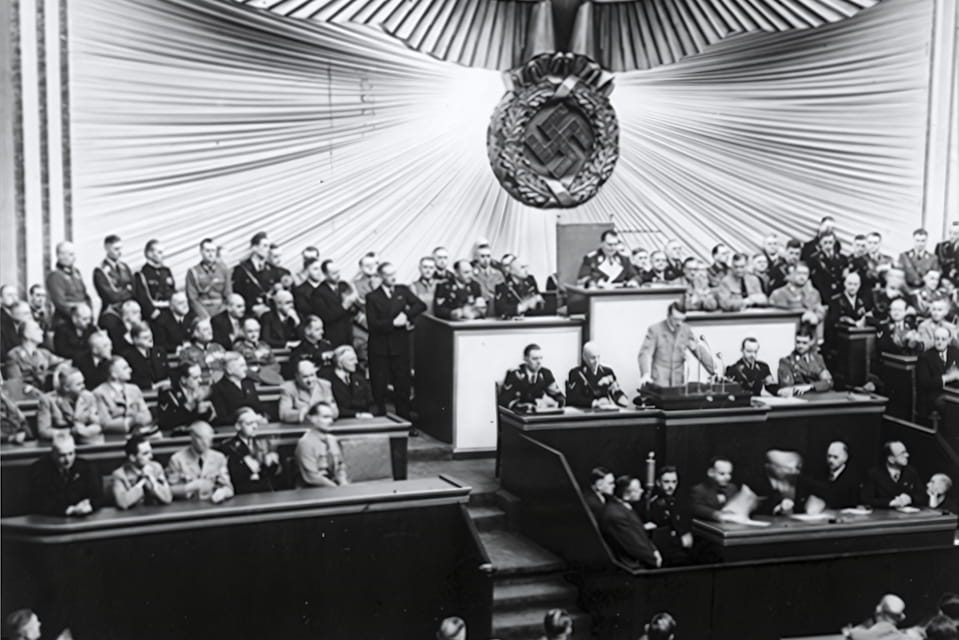
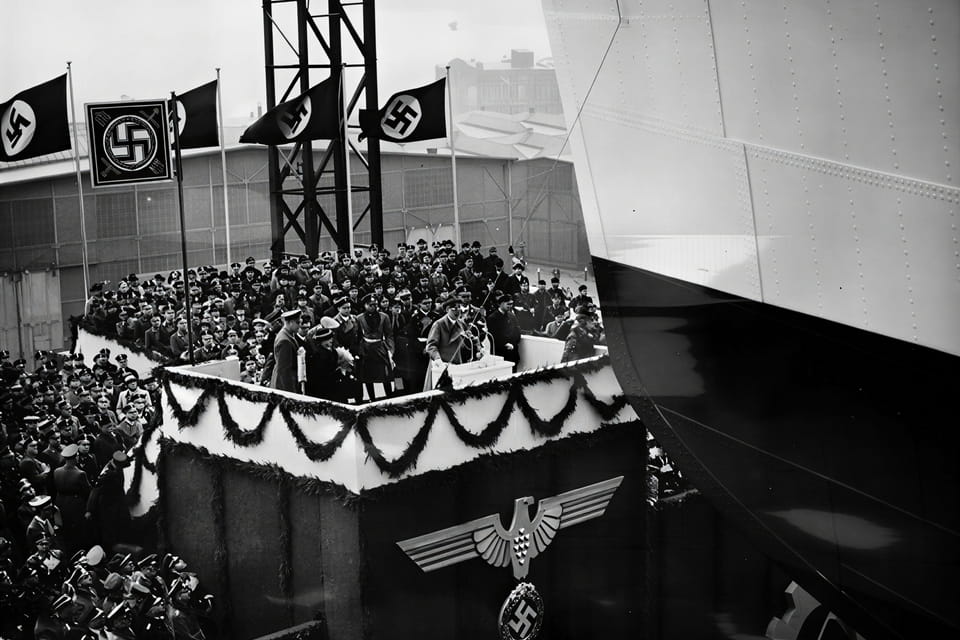
Even though Adolf Hitler and his party solely dominated the political landscape of Germany and had recently annexed Austria, he conducted an active election campaign. Between March 25 and April 9, he conducted an election tour across the country. He delivered numerous public speeches in eight German and six Austrian cities, most of which focused on the planned Reichstag elections and the justification for the Anschluss of Austria. The time would later prove this to be the last election campaign in Hitler’s life. On March 25, he spoke about his reasoning for the takeover of Austria at the Koningsberger Schloss castle and the Schlageterhalle center in Königsberg. The next day, the German dictator gave a speech in Leipzig with the same pro-Anschluss agenda. Two days later, on March 28, he addressed the audience at the Berlin Sportpalast event hall in the Schöneberg district of Berlin. The same day, he met with Konrad Henlein (1898-1945), the founder and leader of the Sudeten German Party in Czechoslovakia, with whom he discussed further destabilization of the neighboring country. On March 29, Hitler arrived at Hamburg, where he christened a cruise ship Robert Ley, named after the leader of the so-called German Labour Front, Robert Ley (1890-1945). Later that day, he addressed the public gathering from the balcony of City Hall.
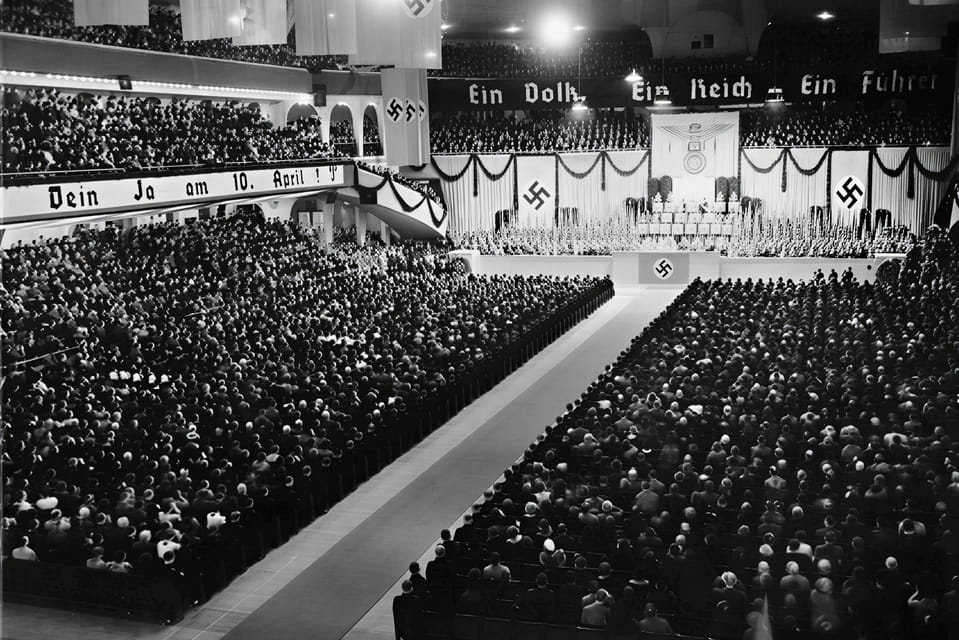
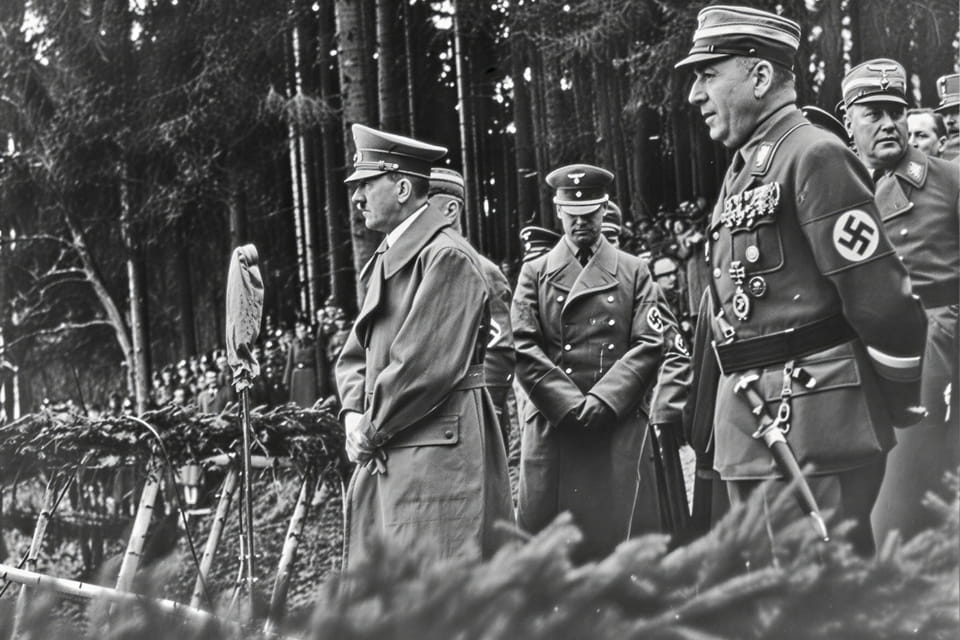
The next day, March 30, Hitler addressed an audience of approximately 60,000 in the local exhibition hall in Cologne, and the following day, he spoke at the Kaisersaal (Emperor’s Hall) and the Festhalle multipurpose hall in Frankfurt am Main. From there, he went to Heidelberg and stayed at the Hotel Europäischer Hof, and from there, Hitler took a train to Stuttgart. After a brief speech at the city hall, Hitler gave another, more prolonged address in front of a mass meeting in the evening. The dictator received the presentation made by the so-called ‘Beauty of Labour’ (Schönheit der Arbeit) organization regarding thousands of sports facilities, workrooms, and workshops ‘beautified’ across the country. On April 2, he spoke in Munich and then left for Austria, where Linz was his first stop the next day to address the crowd. On April 4, Hitler gave two speeches in Klagenfurt, first at the city hall and then inside the local event hall. In Klagenfurt, he paid an hour-long visit to an old history teacher, Leopold Poetsch (1853-1942), who taught Hitler in the Realschule in Linz three decades before, and whom he even mentioned in Mein Kampf. In the last years of his life, Poetsch changed his enthusiasm toward Hitler to antagonism, considering the latter an enemy of Austria.
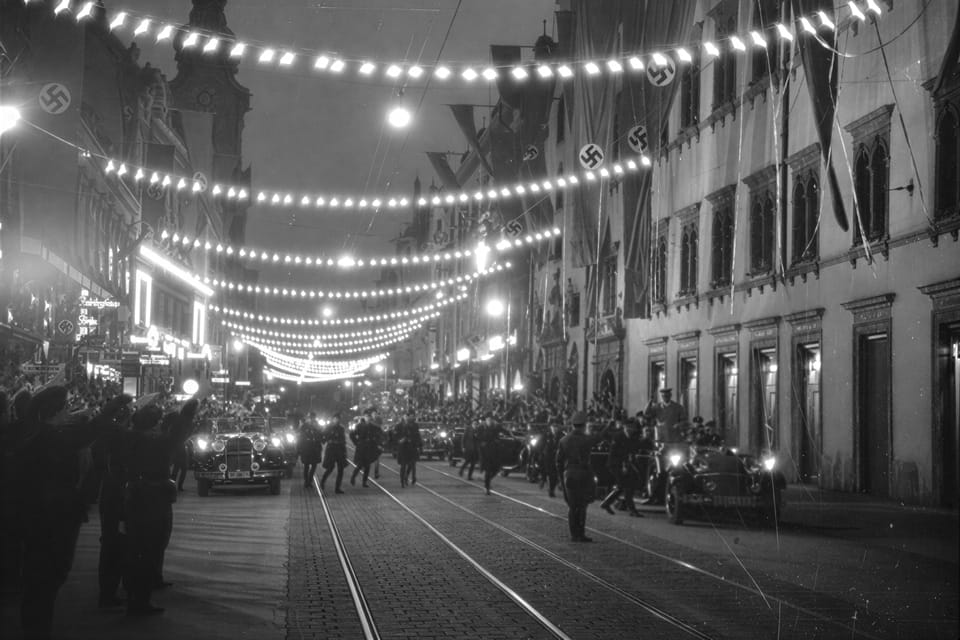
On April 5, Hitler arrived in Innsbruck, where he once again defended his decision to take over Austria. A day later, he entered Salzburg by car from the side of Staatsbrücke like his Wehrmacht troops just three weeks before. That day, Hitler spoke to the mass gathering on Residenzplatz square and later gave another address at the Festival Hall. Hitler and his entourage spent a night in Salzburg, and on April 7, he attended a ceremonial opening of the construction of the autobahn near the village of Walserberg, where he spoke to the construction workers. On April 8, he returned to Linz, where he once again stayed in Hotel Weinzinger. Hitler paid a visit to the Landesmuseum and had a meeting with its director, Doctor Theodor Kerschner (1885-1971). The same day, August Kubizek, Hitler’s friend from the 1900s, tried to meet Hitler and was asked to come the next day. On April 9, Hitler and Kubizek finally met at the Hotel Weinzinger after three decades. Hitler called his old friend ‘Der Gustl’, as he had in the old times, and promised to sponsor the education of Kubizek’s three sons, which he later fulfilled. Despite suggestions to obtain an important position, Kubizek decided to remain a minor Austrian official.
9 APRIL 1938: HITLER’S SECOND ARRIVAL IN VIENNA, FROM WESTBAHNHOF TO THE RINGSTRASSE
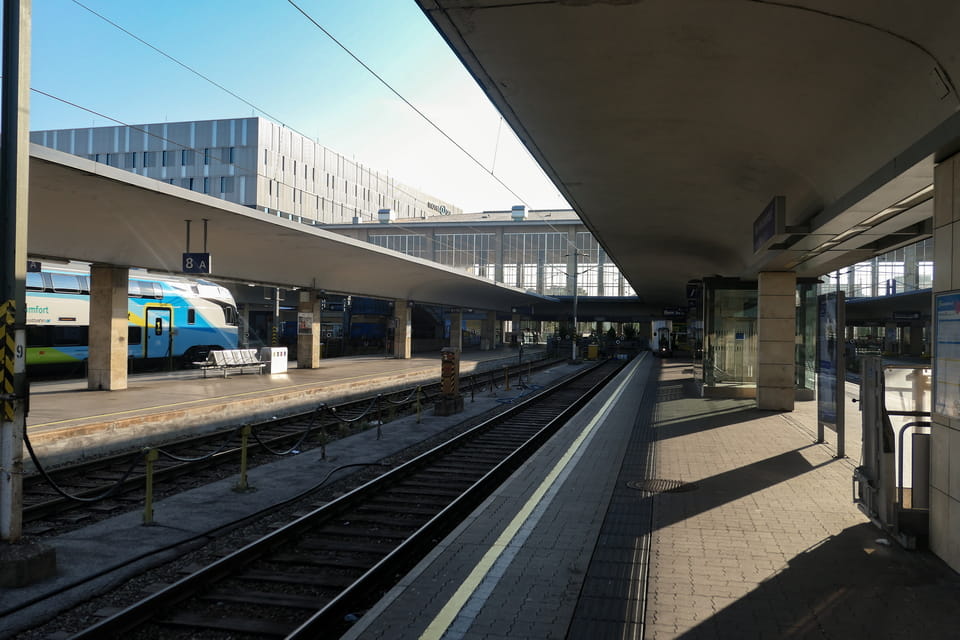
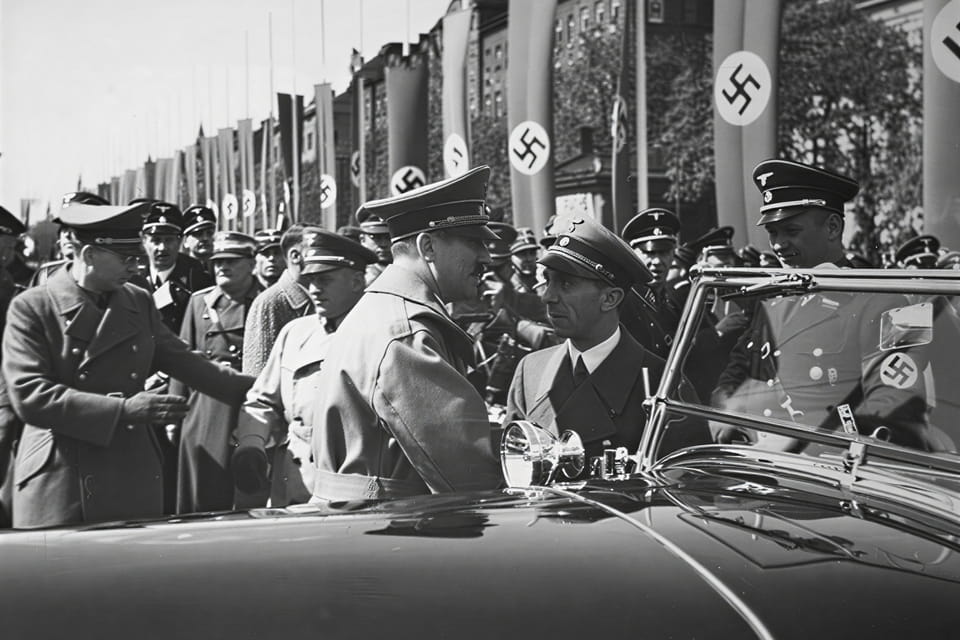
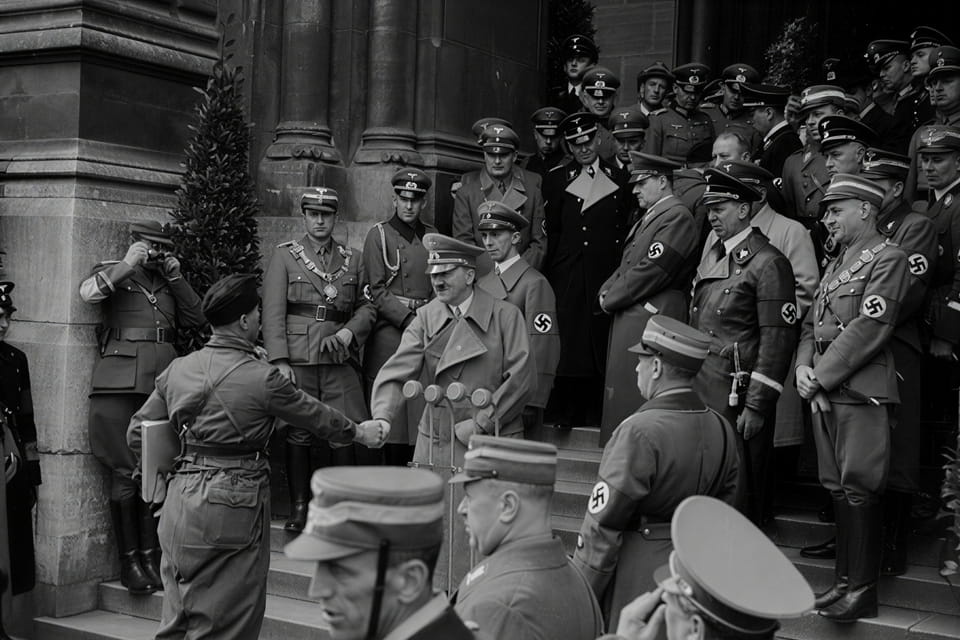
Hitler departed from Linz by train and arrived at the Westbahnhof station of Vienna at 11:00 a.m. on April 9, 1938. The train station had special personal meaning for Hitler. He came to Vienna for the first time in May 1906, using this gate to the city. He came back to the city the next year, then used the West station for his trips to Linz and back to see his ill mother. In February 1908, Hitler welcomed his friend August Kubizek on one of the platforms, and in July, the two said goodbye here before Kubizek departed for army service. Thirty years and two months later, the two met in Linz, and the same day, Hitler once again came to Vienna using Westbahnhof. The previous weeks following the Anschluss witnessed a massive election campaign orchestrated in Austria. Cinemas in Vienna showed Leni Riefenstahl’s ‘Triumph of the Will’ as well as short propaganda movies devoted to the voting procedures. Election placards and Nazi banners were seen all over the city, including those with Hitler’s portraits and pro-Anschluss slogans. The platform where Hitler’s train arrived was covered with a red velvet carpet, and Westbahnhof was decorated with flowers and plants. The dictator was greeted by Josef Goebbels, Rudolf Hess, Heinrich Himmler, Ernst Kaltenbrunner, Joseph Bürckel, and Arthur Seyss-Inquart.
THE RATHAUS BALCONY: BUILT FOR ONE SPEECH, STILL STANDING
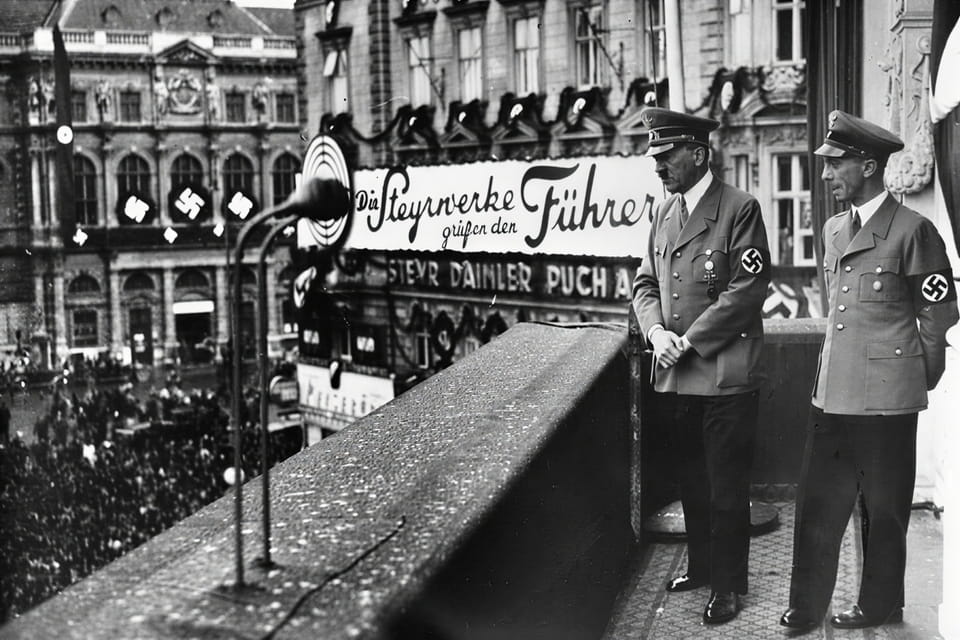
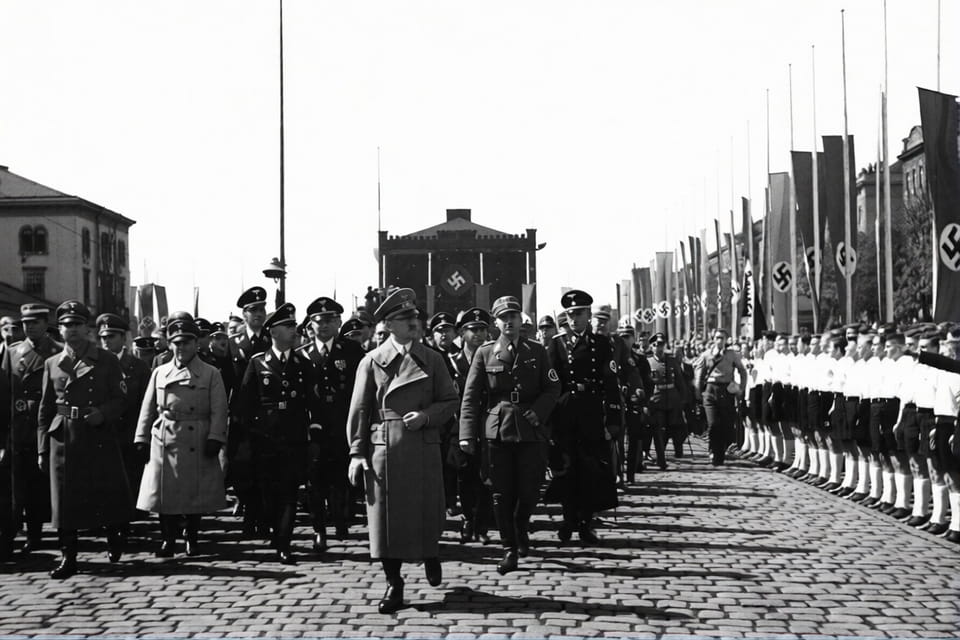
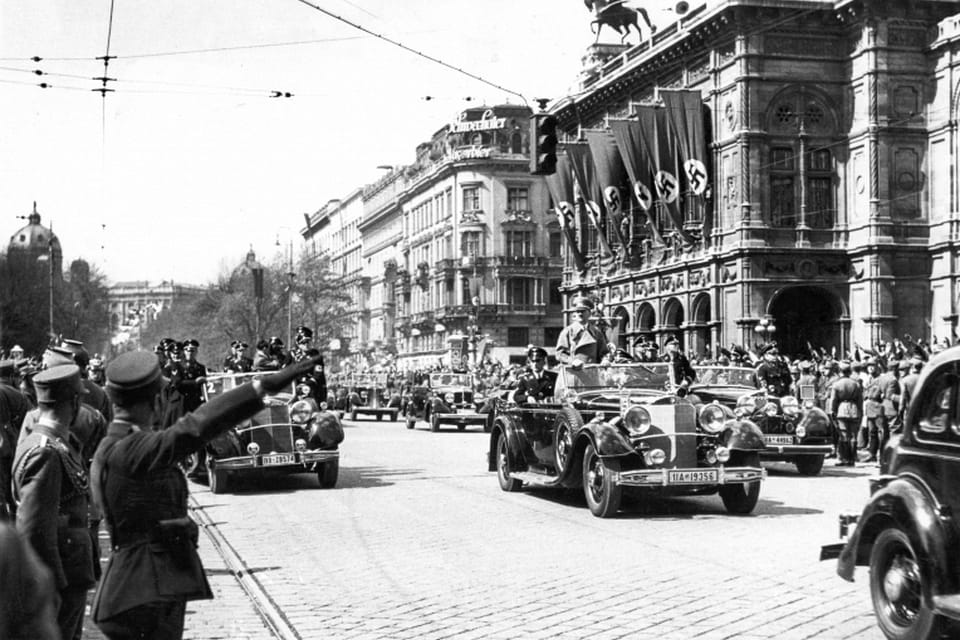
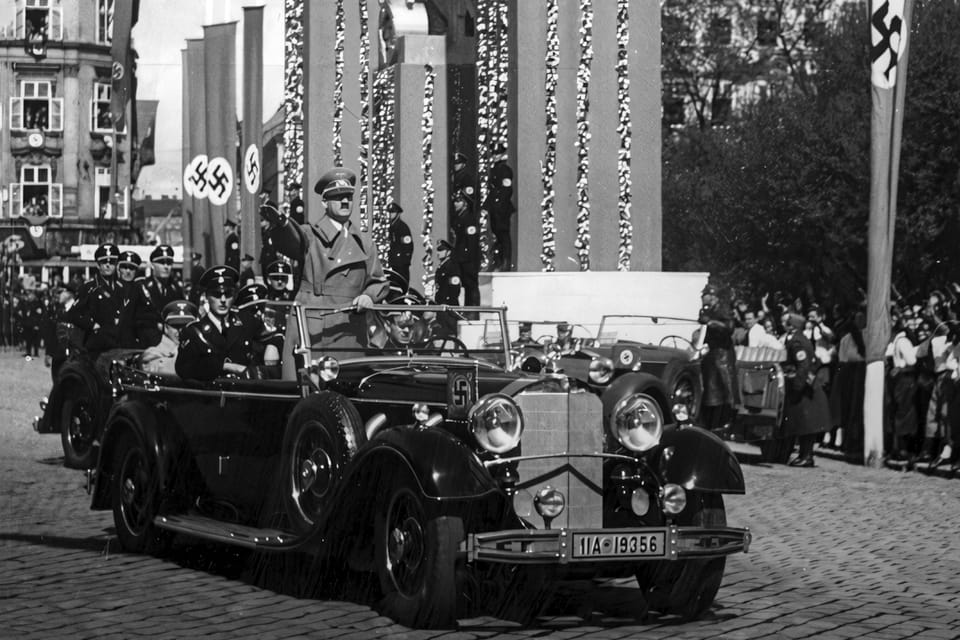
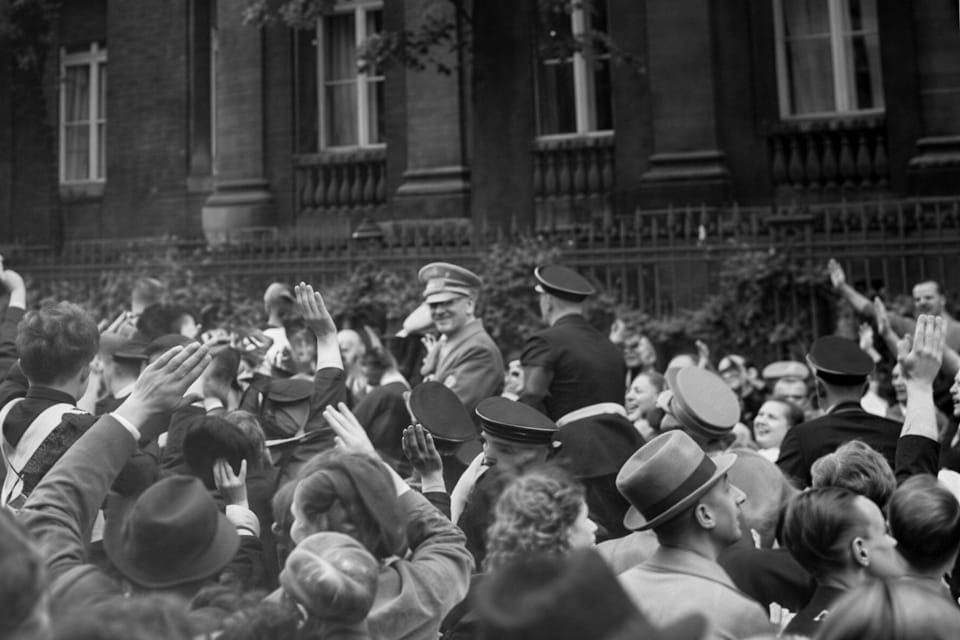
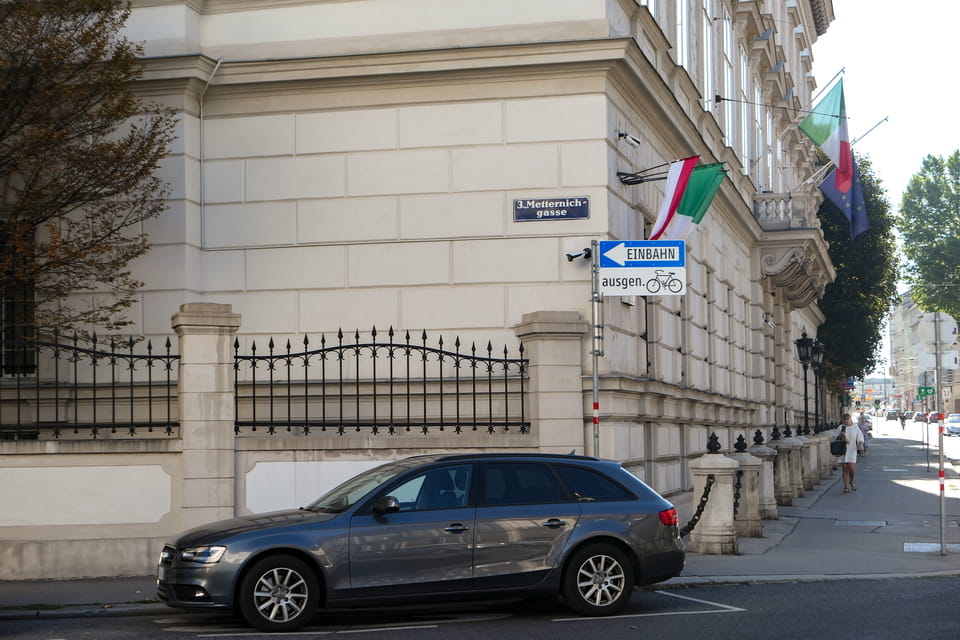
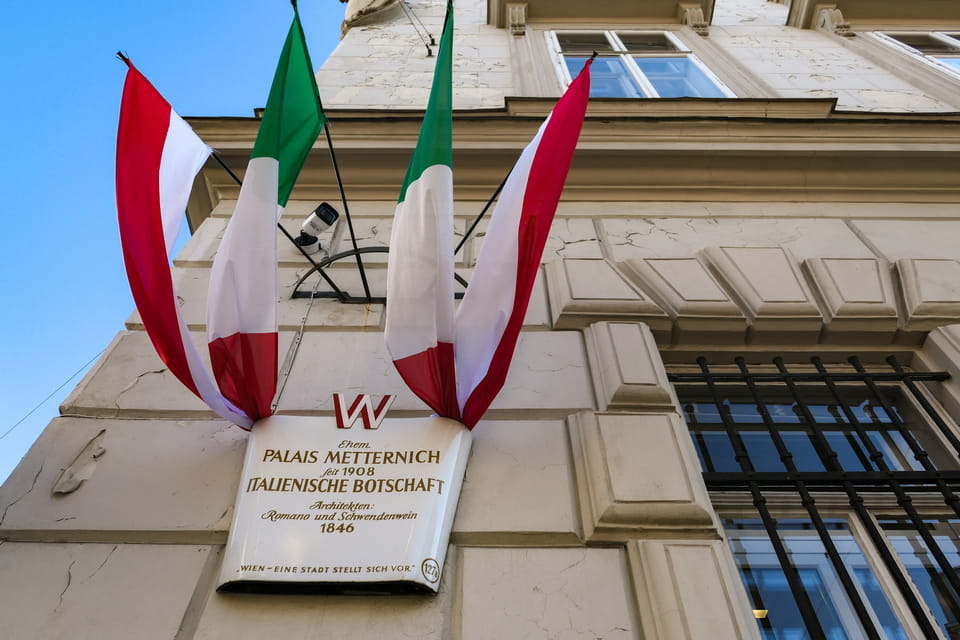
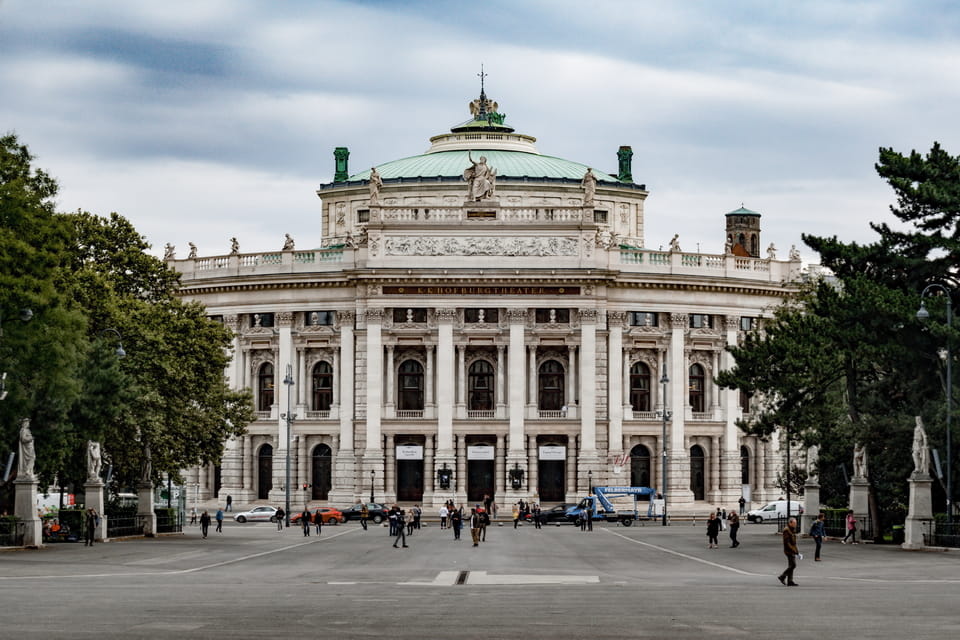
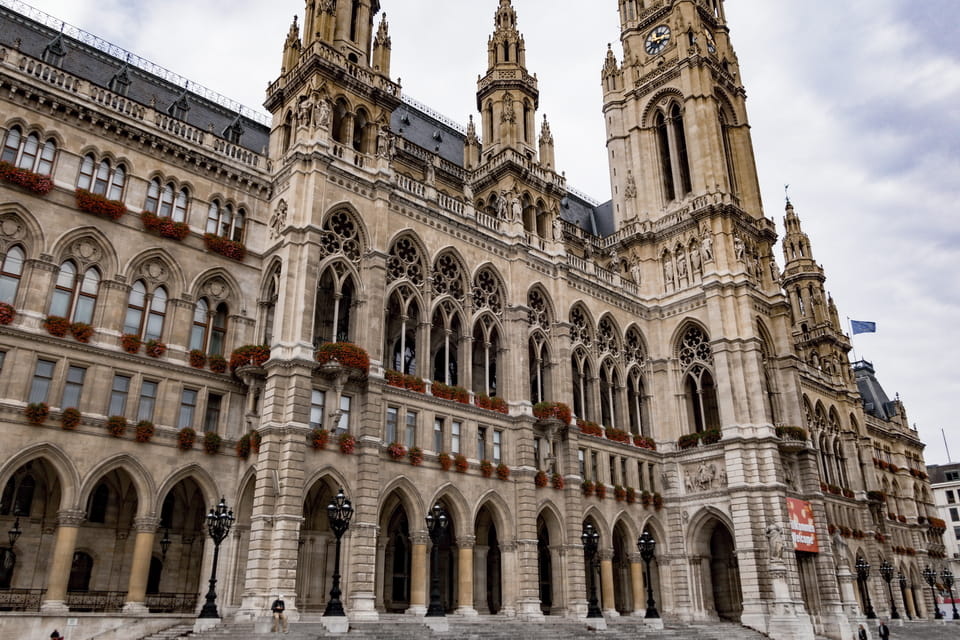
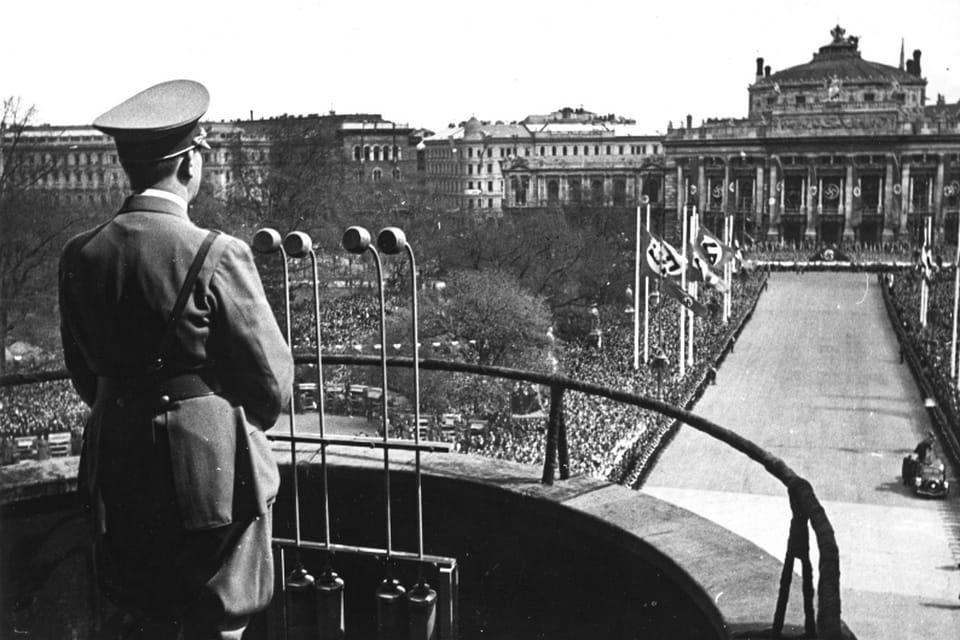
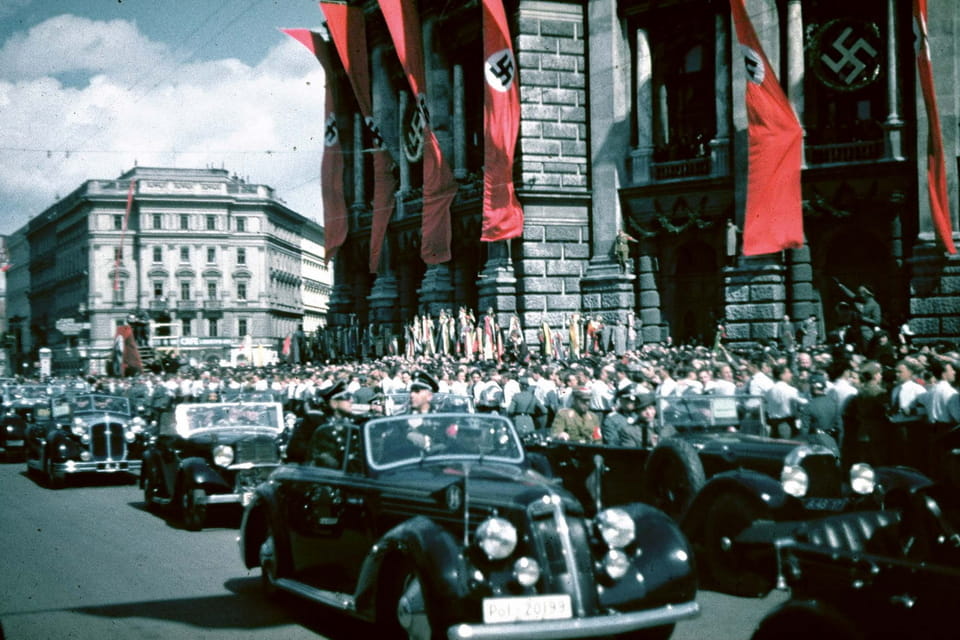
Similar to the March visit, Hitler’s cortege was greeted by jubilant crowds in the streets of Vienna. There is a preserved historical photograph of Hitler stopping in front of the Italian embassy on Rennweg, near the Belvedere Palace. The cortege turned on the Ringstrasse and, after approaching the Burgtheater, turned left to the Viennese City Hall. This open space, 150 meters long, was now renamed Adolf Hitler Platz. Hitler’s car was in the vanguard of the three columns, drawing slowly toward the Rathaus, passing the cross on both sides. Hitler entered the magnificent building and was greeted by a newly appointed mayor of Vienna, Doctor Hermann Neubacher (1893-1960). A fervent Austrian Nazi, Neubacher took a seat from Richard Schmitz (1885-1954), who had been arrested and later sent to the Dachau concentration camp. The new mayor greeted Hitler with a fiery speech, and around noon, Hitler and Goebbels appeared on the balcony of the festive hall facing the square and the Burgtheater in the background. The Minister of Propaganda announced the ‘Greater Germany Reich Day’ and 30,000 pigeons were released into the square. Hermann Neubacher served as the mayor of Vienna for two years until December 1940 and was sent to the Balkans.
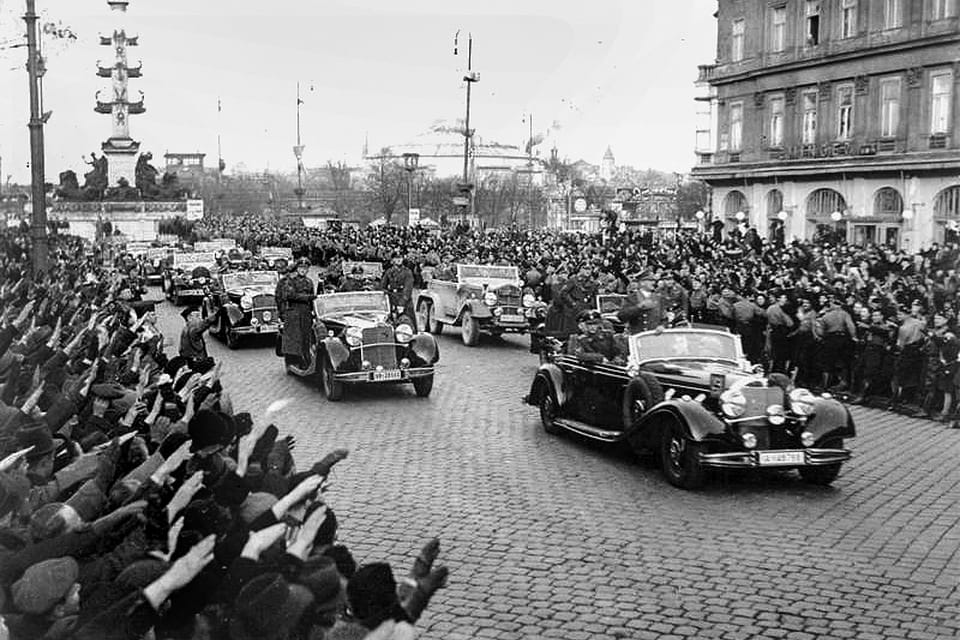
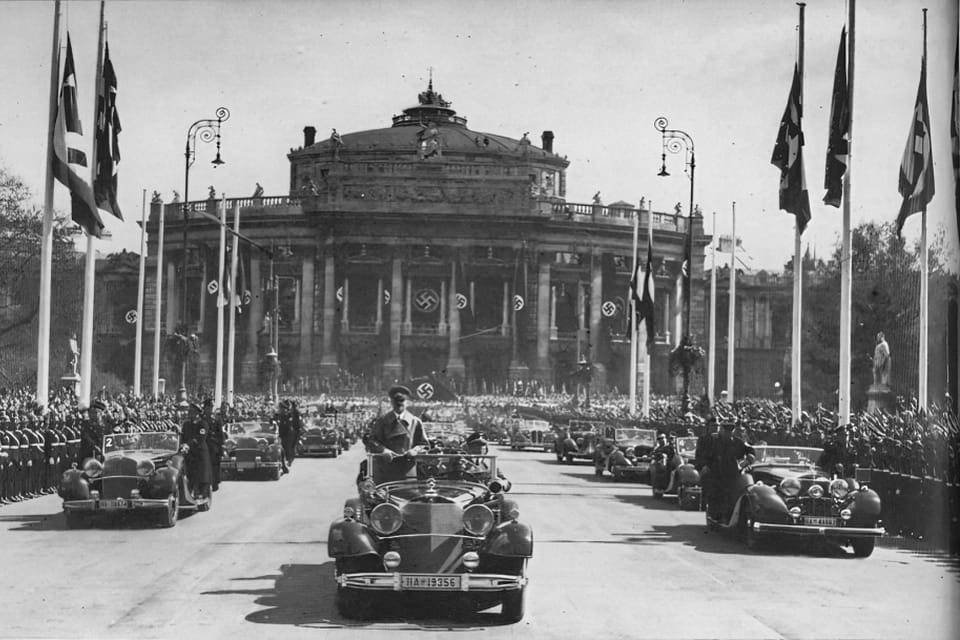
The neo-Gothic facade of Vienna’s City Hall, finished in 1883, had no balcony in the centre. The one Hitler used on 9 April 1938 was put up in timber specially for that appearance — a temporary stage on the front of the building, facing the square that had been renamed Adolf-Hitler-Platz a few weeks earlier. Photographs from that day show it clearly. What happened afterwards is the part almost nobody knows. The wooden structure was later replaced with a permanent one in stone, so that the speech would have a monument. That balcony is still on the front of the Rathaus today. Nothing marks it, nothing explains it, and most of the tourists photographing the building from the Rathausplatz have no idea it is there for that reason.
The question of what to do with it surfaced again in 2018, in the year of the centenary of the First Republic and the eightieth anniversary of the Anschluss, when the artists’ collective Memory Gaps called publicly for the balcony to be removed. The proposal was reported internationally and produced the familiar Austrian argument: whether removing the object erases the memory or whether keeping it unmarked amounts to quiet commemoration. The balcony is still in place. It is worth setting it beside the other one. Vienna has two Hitler balconies. The famous one, on the Neue Burg above the Heldenplatz, is not strictly a balcony at all but a terrace — an Altan — that was part of the original design and would exist regardless. The one on the Rathaus exists because of the speech. Of the two, the second is the more uncomfortable object, and it is the one nobody photographs.
THE NORDWESTBAHNHALLE SPEECH: EIGHTY-ONE MINUTES ON THE EVE OF THE VOTE
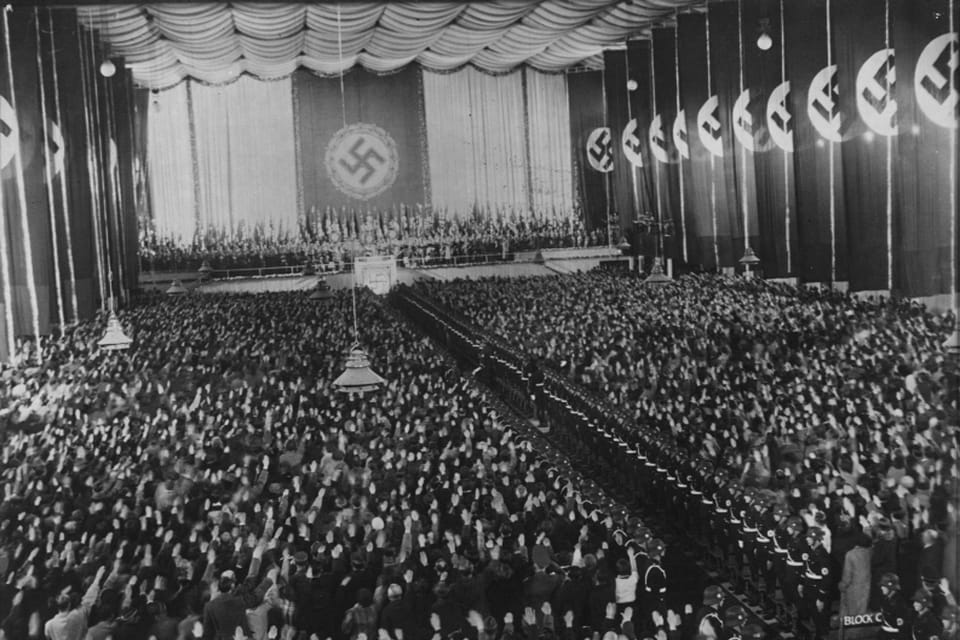
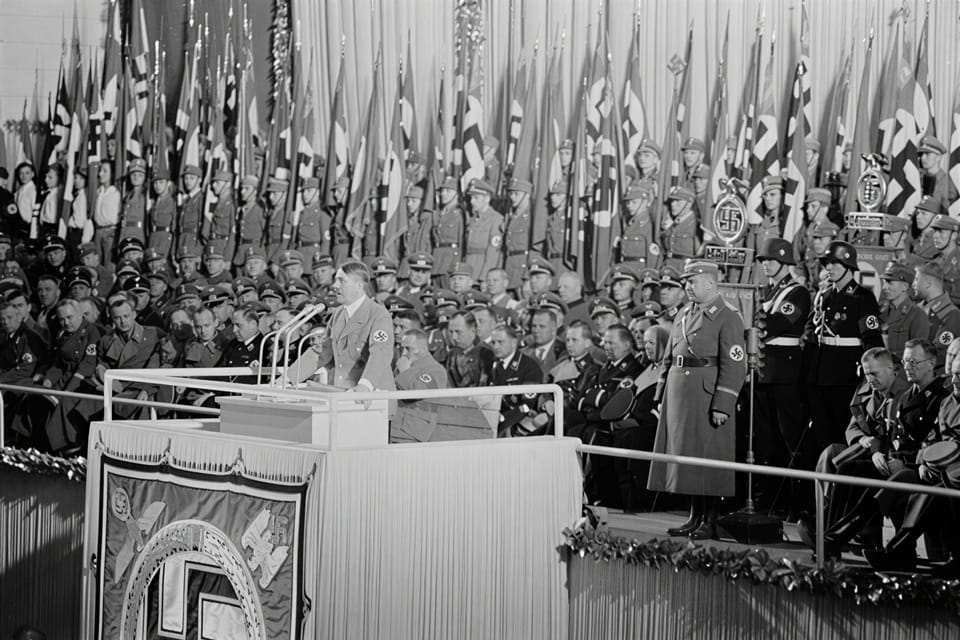
On the evening of April 9, 1938, around 7 p.m., Hitler gave his concluding election speech in Vienna, in the hall of Wien Nordwestbahnhof (Northwest station) railway station in the Brigittenau district. Between 1910 and 1913, Hitler spent three years of his life in a room in the Männerheim Hostel for Men, just half a kilometer to the north of the station. Now he returned to the Brigittenau as the master of Germany and Austria. Hitler’s address to the public lasted eighty-one minutes and was broadcast throughout the country: his voice was confident, and Hitler tried both to justify the annexation of Austria and to persuade those who were still against the nazi takeover of the independent country. While Hitler made a reference to his previous speeches on March 4, 1933, in Königsberg and on March 28, 1936, in Cologne, the Vienna address was weaker. The orchestrated reaction to Hitler’s speech was not limited to the radio broadcast, and bells across the city were ordered to ring at the same time, giant searchlights created a tower of light above the city center, and the fireworks brightened the sky. Tens of thousands of people came to the Prater park to hear Hitler’s speech from the loudspeakers, though the Nazi propaganda later claimed millions.
THE BALLOT OF 10 APRIL: HOW THE PAPER ITSELF DID THE WORK
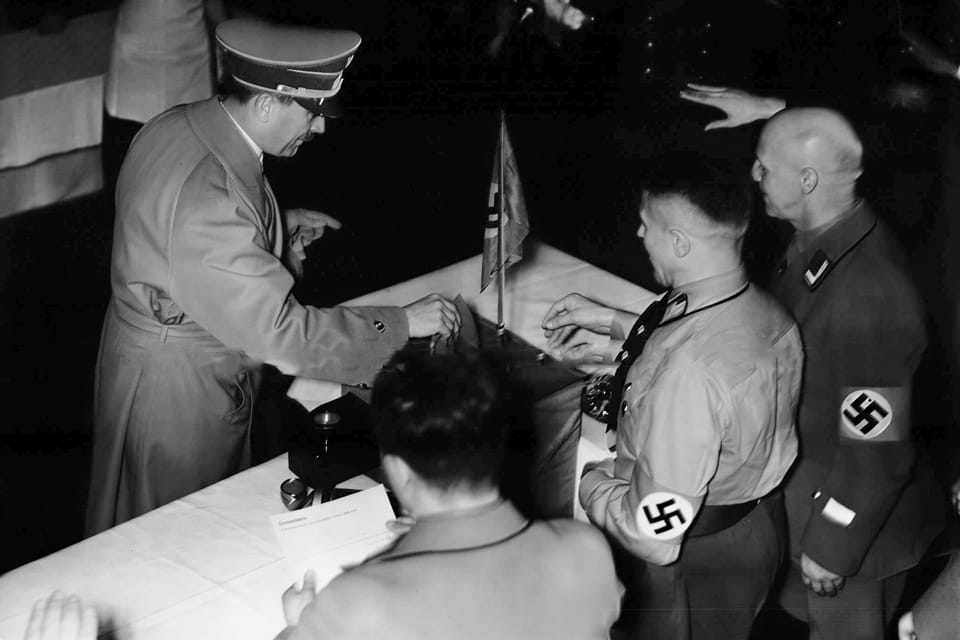
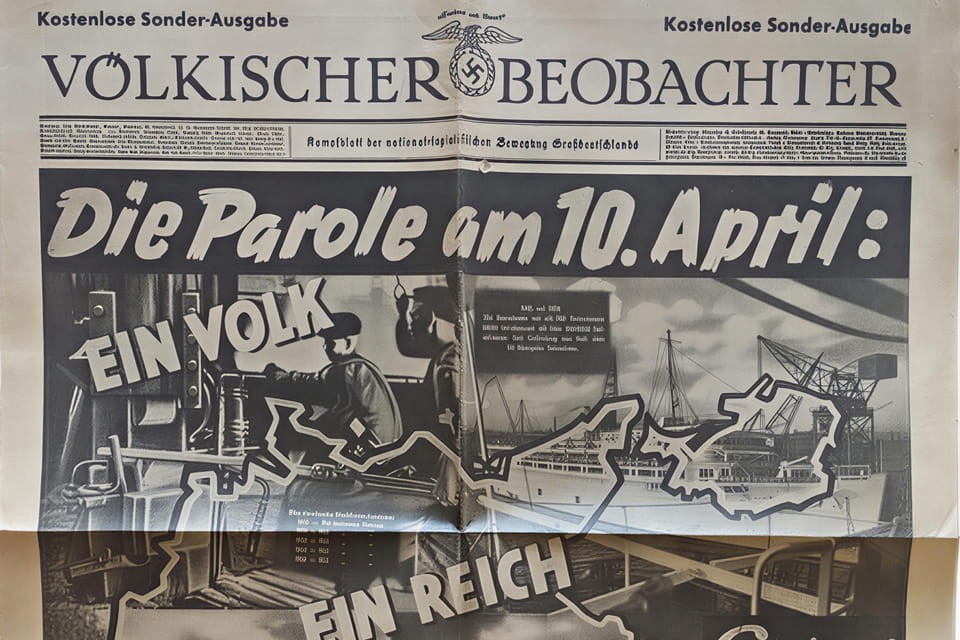
After delivering his evening address at the North station, Hitler and his entourage boarded their Mercedes cars and departed for the night stay at the Hotel Imperial on Karntner Ring. He left Vienna on a special train at 10 p.m. on April 9 and arrived at the Anhalter Bahnhof in Berlin at 1:25 p.m. the next day. It was the day of the election, and the plebiscite aimed to justify the Anschluss. Hitler voted here at the station by putting his vote into the ballot box. The ballot had two circles, one larger for ‘Ja’ (Yes) and a smaller one for ‘Nein’ (No), as an answer to the question of whether an Austrian citizen agreed with the reunion of Austria with Germany as announced on March 13, 1938, and whether he or she voted for the list presented by the Führer Adolf Hitler. The manipulative message and design of the ballot were obvious, but not something unexpected for the Nazi regime.
The design of the paper is worth looking at closely, because it is a compact lesson in how a plebiscite is engineered.
— Two questions were fused into one. The voter was asked simultaneously whether he approved of the reunification carried out on 13 March and whether he voted for the single list presented by Adolf Hitler. There was no way to accept one and refuse the other.
— The circles were not the same size. The circle for Ja was large and placed centrally; the circle for Nein was noticeably smaller and set to the side. The eye is directed before the hand moves.
— The question was written as a statement of fact. The reunification is described as something that had already happened — the voter is not being asked to decide anything, only to confirm.
— Secrecy was formal rather than real. SS and SD men were present at most polling stations. In many places voting took place in the open, and a folded ballot was itself a signal.
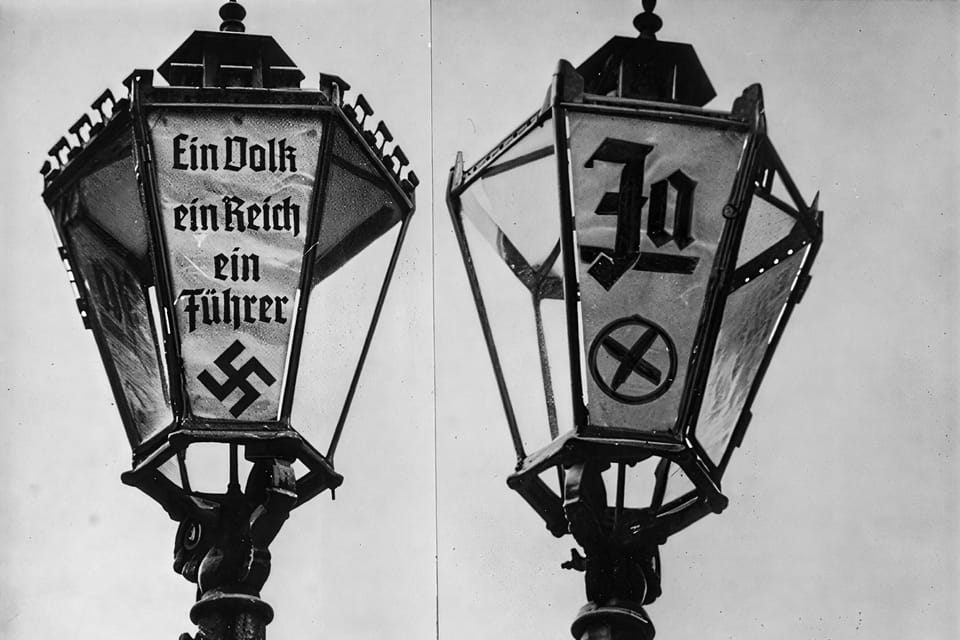
99.73 PER CENT: THE RESULT AND WHAT CAME NEXT
The results of the general election were predictable because the Nazis remained the only active party in the country. The NSDAP claimed to gain the support of 99.08% of voters and all 814 seats in the Reichstag. Speaking about the plebiscite in the annexed Austria, the results orchestrated by the Nazis showed that 99.73% of voters, or 4 million 484 thousand people, gave their ‘Yes’ to the only ballot question, and only 11,929 people voted ‘No’, which, of course, was an influenced result. Another 5776 election forms were registered as spoiled. It is important to note that over 360,000 people were banned from voting in Austria, of whom around 200,000 were Jews, 170,000 in Vienna only. The others included political enemies of the new regime, those in jails, and ‘undesirable’ groups of the population: a fact that was ignored by the foreign watchers at the time. SS and SD men were present at most of the polling stations and created an atmosphere of fear for those who wanted to show their negative ‘No’ attitude. More than that, the public support for the Anschluss by Cardinal Theodor Innitzer and the well-known politician Karl Renner (1870-1950) also influenced the voters’ support.
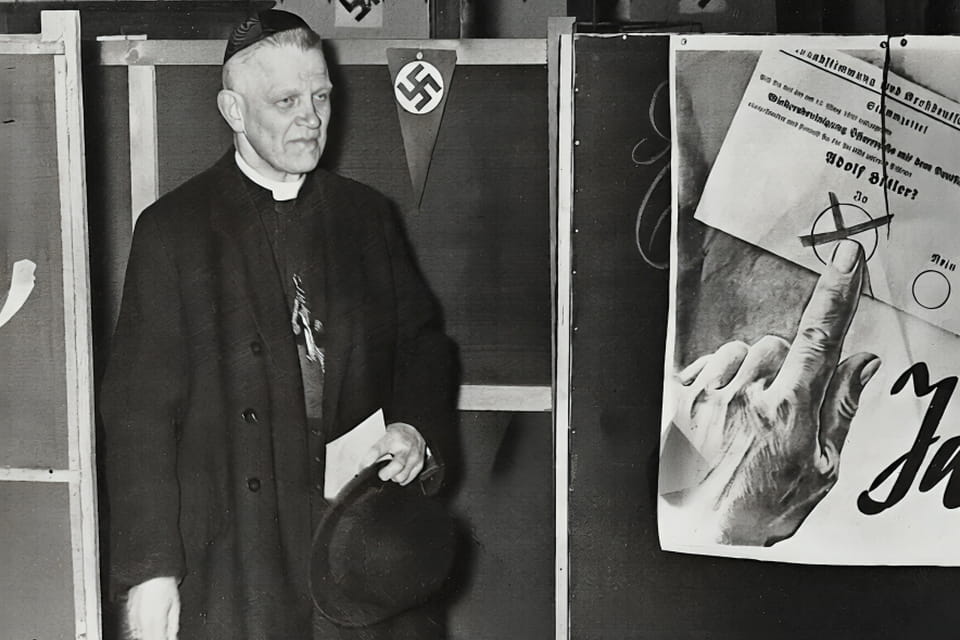
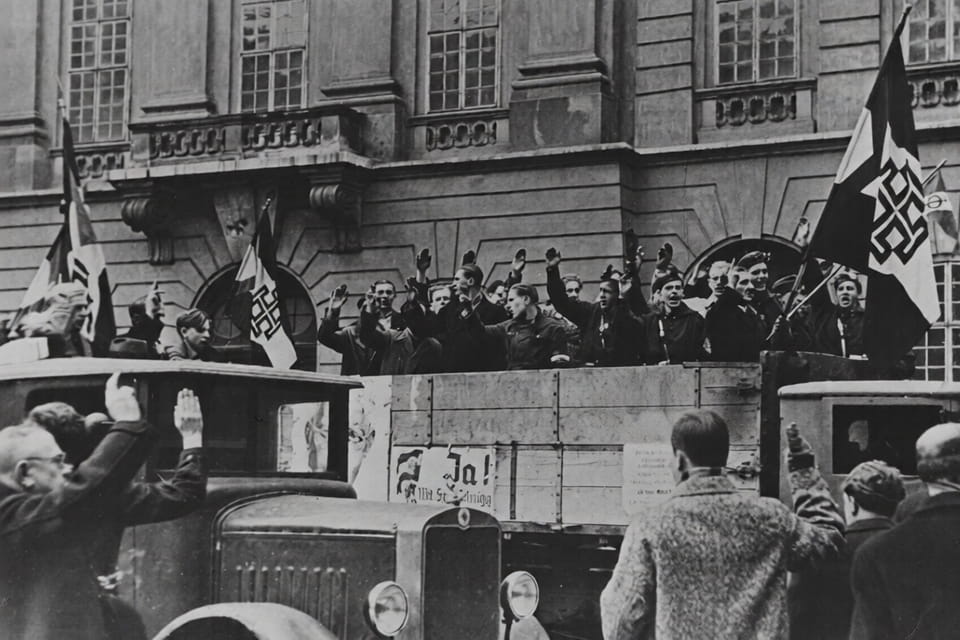
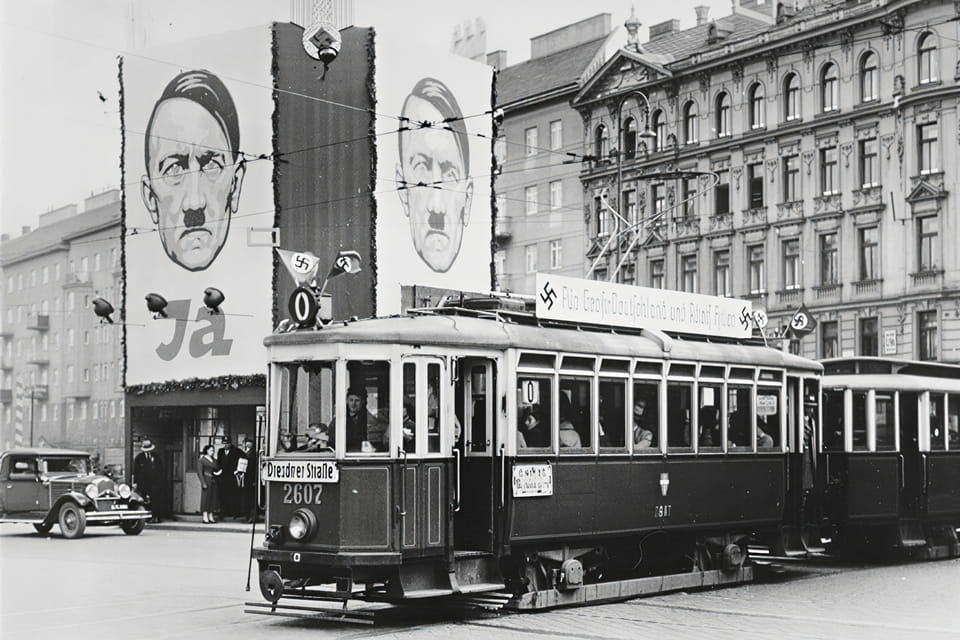
The newly appointed Gauleiter Josef Bürckel announced on the radio that the result of the plebiscite clearly showed that the Austrians were actually Germans and that the whole nation now belonged to its Führer, Adolf Hitler. Two weeks later, on April 23, Bürckel was appointed by Hitler as Reich Commissar for the Reunification of Austria with the German Reich. Soon after, the former Austria was renamed by the Nazis as ‘Ostmark’ and, after 1942, as Alpen- und Donau-Reichsgaue (“Danubian and Alpine Reichsgaue”), thus erasing the country’s identity. Unfortunately for unprotected groups of the population, there was no significant protest or opposition to Hitler’s system of getting rid of those ‘undesirables’, first of all, Jews. Soon after the Anschluss, the Jewish population of Austria experienced the anti-semitic legislature measures already adopted in Germany. They were excluded from the civil services and many professions, and their property and businesses were Aryanized. For example, by August 1938, 30 000 out of 33,000 Jewish businesses in Vienna were closed and the remaining 10% Aryanized, thus expropriated.
After swallowing Austria, Hitler became obsessed with another part of his self-implied ‘mission’: the annihilation of the Czechoslovak state. As early as April 21, just eleven days after the plebiscite in Austria and five weeks since the formal Anschluss, Hitler gave instructions to prepare military plans for crushing Czechoslovakia. The Wehrmacht was still not in a position to oppose the Western opponents, France and England, but the German dictator evaluated the moment to be in his favor to conquer another country and destroy its national identity.
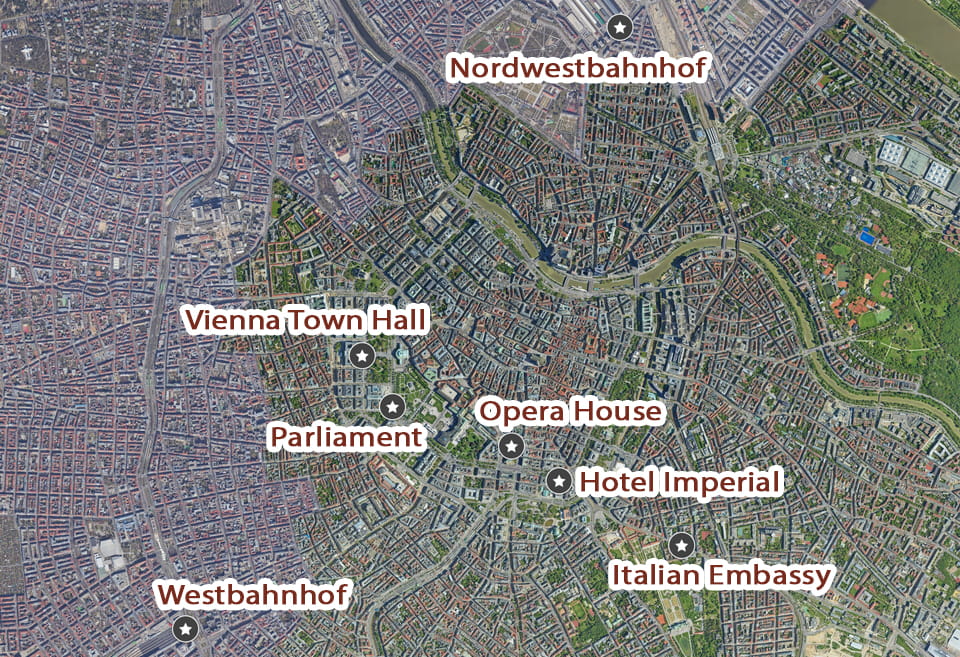
THE APRIL 1938 SITES IN VIENNA TODAY
Everything Hitler did in Vienna on 9 April 1938 happened along three kilometres of the Ringstrasse and one detour to Brigittenau. Six of the seven locations still stand.
Westbahnhof. Completely rebuilt — the station Hitler arrived at in 1938, and first arrived at as a seventeen-year-old in 1906, no longer exists in any recognisable form. The modern building dates from the 1950s, with a further reconstruction in the 2000s. U3 and U6.
Palais Metternich, Rennweg 27. Still the Italian embassy, and externally unchanged from the photograph of Hitler’s car stopping in front of it. Not open to the public. Tram 71.
Rathaus und Rathausplatz. The square was renamed Adolf-Hitler-Platz in 1938 and reverted in 1945. The balcony is the one described above; it is on the central axis of the facade, above the main entrance, and you can see it from anywhere on the square. U2 Rathaus.
Burgtheater. Directly opposite the City Hall — the building visible behind Hitler’s car in the photographs from that day, and the same view from the same spot works today.
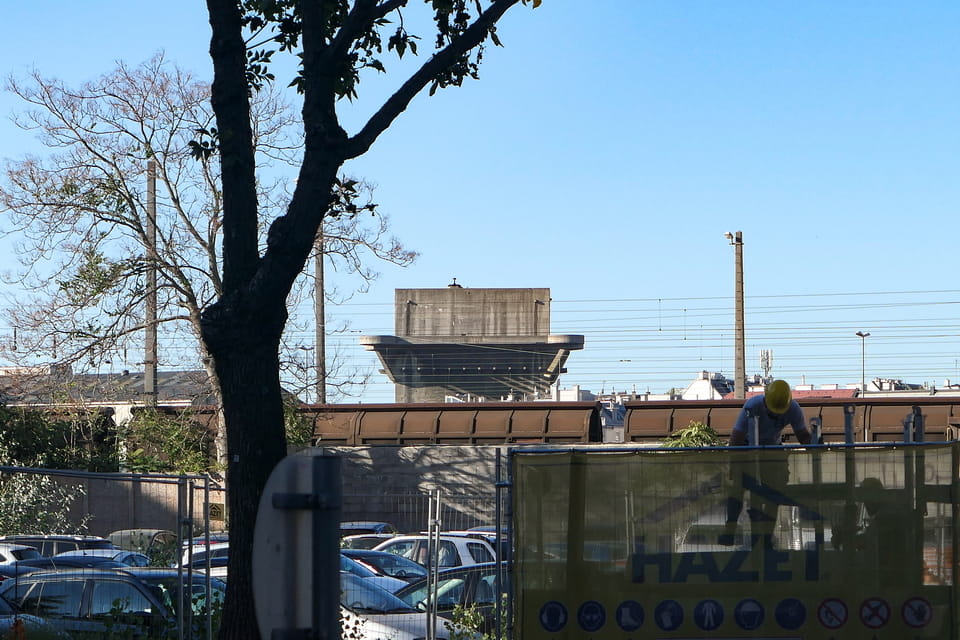
Nordwestbahnhof, Brigittenau. The hall where the closing speech was given is gone; the freight station that survived it was closed in 2024, and the whole area is being redeveloped. What is still there, a few hundred metres away, is the Augarten flak tower — visible in the background of my photograph of the site. U6 Dresdner Straße oder Handelskai.
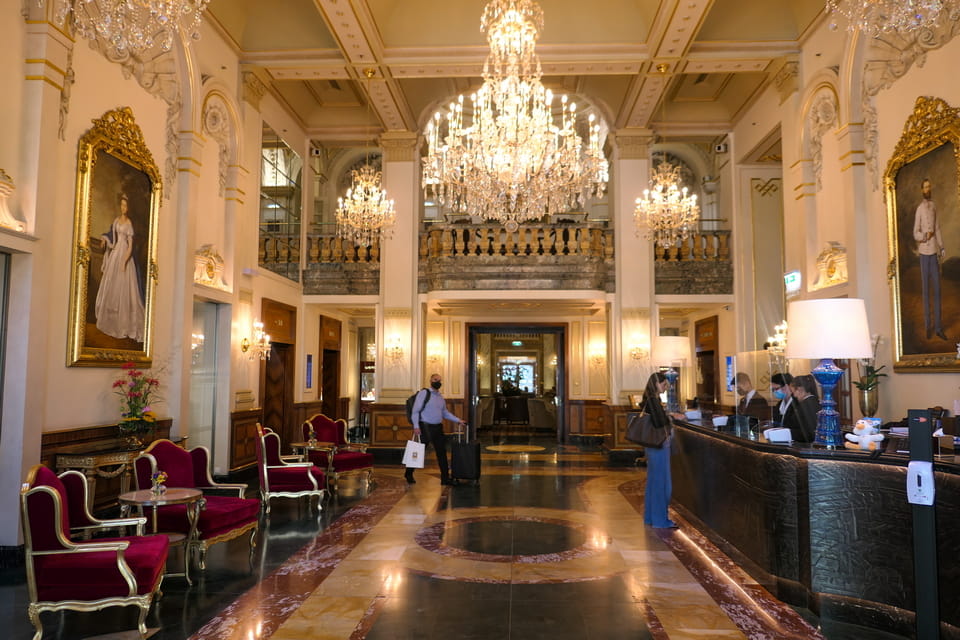
Hotel Imperial, Kärntner Ring 16. Still a working hotel and still recognisable. Hitler stayed here on both visits; the lobby is accessible without being a guest.
Walking the Ring section takes about an hour. Nothing along it is marked as connected to April 1938 — the only object on the route that carries any interpretation at all is the flak tower in the Augarten, and that for a different reason.
FREQUENTLY ASKED QUESTIONS
What was the April 1938 plebiscite? A vote held across Germany and annexed Austria on 10 April 1938 to retrospectively approve the Anschluss carried out on 12–13 March. In Austria, the official result was 99.73 per cent in favour — 4,484,000 yes votes against 11,929 no. The date had been fixed four weeks earlier, in the law Hitler signed at a hotel in Linz on 13 March.
Why was the result 99 per cent? Four reasons working together. Around 360,000 people — roughly 8 per cent of the electorate, including some 200,000 Jews — had been struck off the voting rolls. The ballot paper fused two questions into one and gave Ja a visibly larger circle than Nein. SS and SD men were present at most polling stations, and voting was often not secret in practice. And both the Catholic Church and the leadership of the former Social Democrats publicly called for a yes vote.
What was the purpose of Hitler’s speech on 9 April 1938? It was the closing address of the campaign, delivered the evening before the vote in a railway hall in Vienna’s Brigittenau district and broadcast across the country. It ran eighty-one minutes. Its aim was less to persuade the convinced than to make abstention feel impossible: bells rang across the city at the same hour, searchlights were turned on over the centre, and loudspeakers carried the speech into the Prater.
Where did Hitler speak in Vienna in April 1938? Twice on 9 April: from a balcony of the City Hall around midday, and in the Nordwestbahnhalle in Brigittenau that evening. Neither is the Heldenplatz speech, which was on 15 March from the Hofburg — a different visit, a different building and a different occasion.
Is the balcony Hitler spoke from still there? Both of them are. The one on the Neue Burg above the Heldenplatz is a terrace that was part of the palace’s original design. The one on the Rathaus was built specifically for the speech of 9 April 1938 and was afterwards replaced in stone to commemorate it; it is still on the front of the building and carries no explanation of any kind.
Did the Catholic Church support the Anschluss? Cardinal Theodor Innitzer, Archbishop of Vienna, had backed the government the Nazis removed — and then, within days of the annexation, declared his support for it. In late March, the Austrian bishops signed a solemn declaration recommending a yes vote, to which Innitzer personally added a greeting to Hitler. His role has been argued about in Austria ever since.
Did the Social Democrats support it too? Karl Renner, the man who had led the first republican government in 1918 and would lead the second in 1945, publicly endorsed a yes vote on 3 April 1938. Taken together with the bishops’ declaration, this meant that the two blocs representing most of the Austrian population had both told their people to vote for the annexation.
Was the plebiscite recognised internationally? Effectively, yes — and quickly. Britain and France protested and accepted the outcome; foreign observers reported that the vote broadly reflected Austrian opinion and largely ignored the 360,000 disenfranchised. The historian Evan Burr Bukey later warned that the figure must be treated with great caution, which remains the standard position today.
I am very grateful to war archives, museums, libraries, private collections, and writers for the historical photos in this article. To the extent that some author or a copyright owner may not want some of the above black-and-white photos to be used for educational purposes here, please contact me for adding credits or deleting the pictures from the article.