

Warsaw Uprising 1944 Locations: Then & Now
WARSAW UPRISING LOCATIONS THEN AND NOW
Warsaw in August 1944 looked like a city that had decided to die on its feet. In sixty-three days of street fighting, the Polish Home Army and the city’s civilian population transformed every block, every building, and every church into a battlefield or a refuge. The Warsaw Uprising of 1944 left behind a landscape of ruins so complete that the post-war reconstruction of the Polish capital became one of the greatest acts of collective memory in European history.
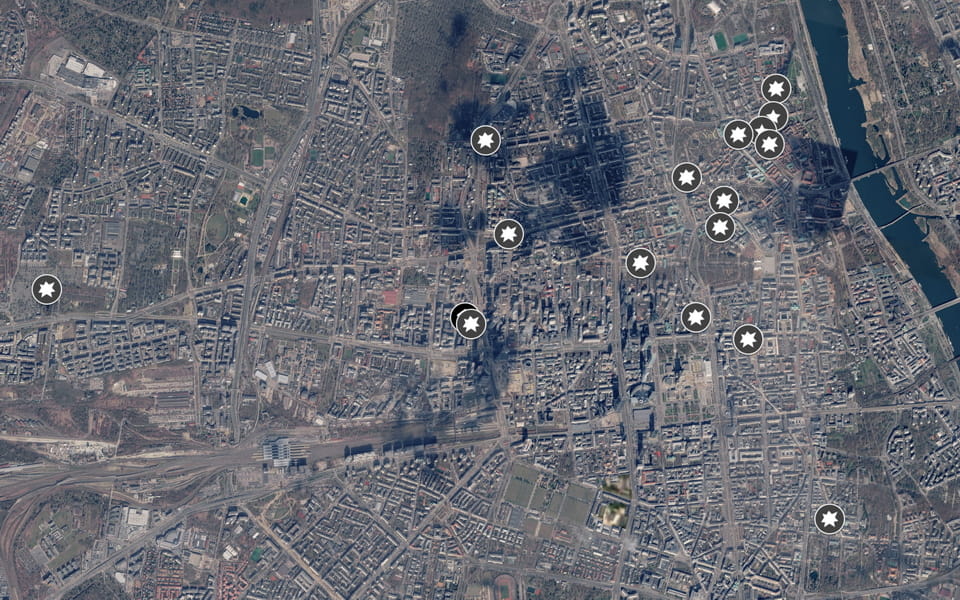
This article is not a standard account of the Uprising’s military history. What you will find here is something different: a tour through specific Warsaw Uprising locations then and now that played a decisive role in the 1944 fighting, documented with archive photographs taken during or shortly after the battle, alongside my own photographs of how each site looks today. Some locations were rebuilt stone by stone; others carry the scars of 1944 to this day.
I visited all of these Warsaw Uprising sites in person, and the then-and-now comparison you will see across this guide is based on firsthand observation, over fifty primary and secondary sources, and a selection of the best-preserved archive photography from 1944. Whether you are planning a visit to Warsaw, researching the Uprising, or simply want to see what these places looked like then — and what remains now — this guide is built for you.
POLAND SHOULD BE FREE: THE BACKGROUND OF THE 1944 WARSAW UPRISING
The Polish Warsaw Uprising in August-October 1944 was neither a stand-alone occurrence in occupied Europe under Nazi rule, nor an abrupt event when it came to Poland. The question of nation-building, undisputed sovereignty, and freedom became vital in the country, which had only two decades of state authority in the last 1.5 centuries. After a series of partitions of Poland in the late 18th century, particularly the partition between the Russian Empire, the Habsburg Empire, and Prussia in 1795, the country lost its sovereignty for 123 years. The state of Poland reemerged in November 1918, and its status was reaffirmed the next summer in the clauses of the Treaty of Versailles, with the final recognition of the borders in the early 1920s. The country saw a short period of state autonomy and national building in the 1920s-1930s until the invasion of Hitler’s Germany and Stalin’s USSR in September 1939 and another partition of the country. The years of occupation, which came with the outbreak of WWII, can be characterized as the most brutal period in Polish history, and the need for resistance against the occupiers was in people’s blood in Poland, a country with a long history of uprisings.
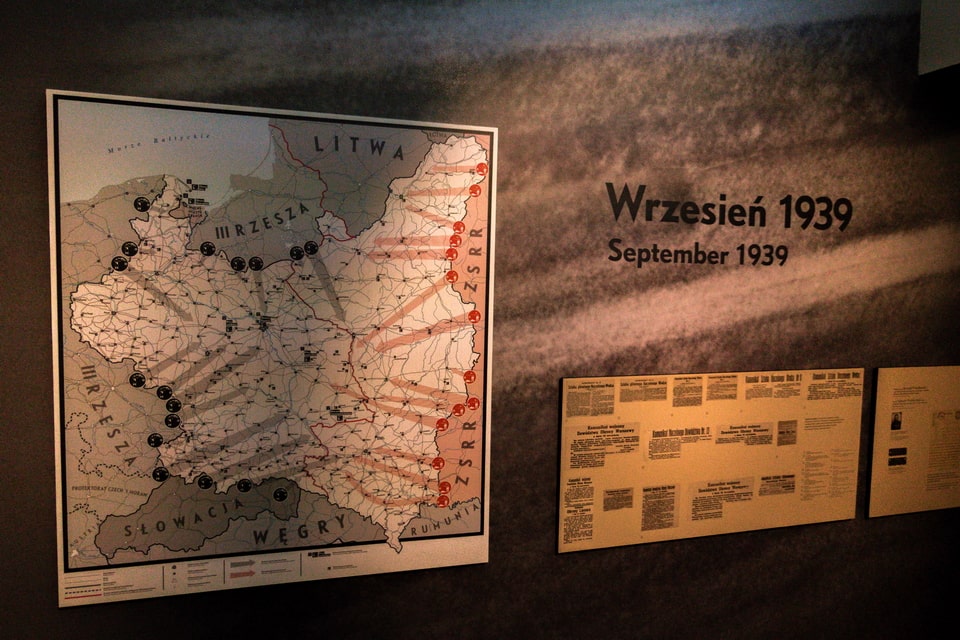
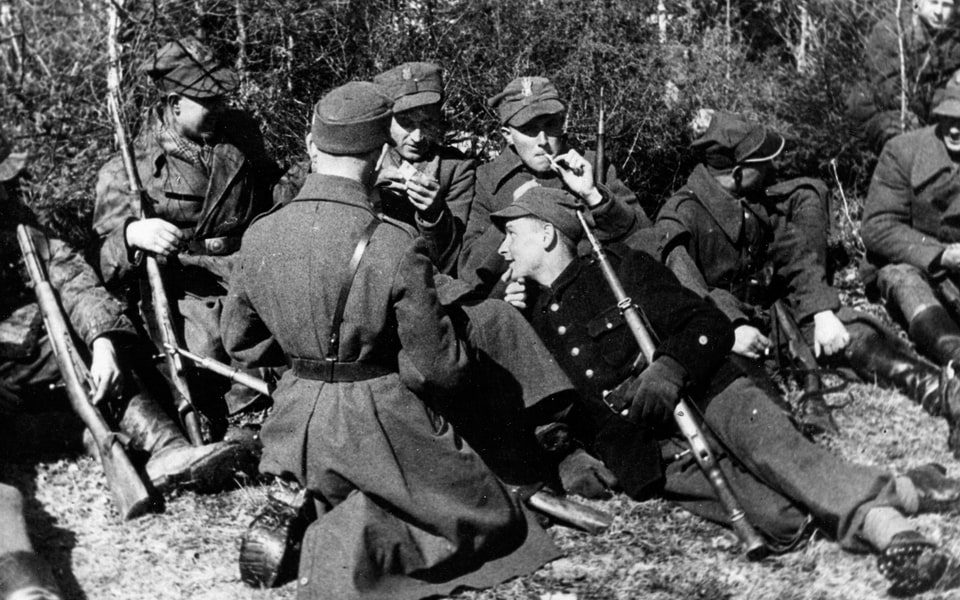
The events of September 1939 came as a terrible shock for the Polish nation, and the brutal occupation from the first days by both invaders, the Soviet Union and the Third Reich, left little space for collaboration and coexistence. Not only Polish Jews but hundreds of thousands of ethnic Poles were targeted for extermination and persecution, and neither of the two dictatorships regarded people in the occupied territories as human beings with rights and a future. Considering the violent treatment, Poles resisted their invaders from day one, and the 1944 Uprising should not be treated as an isolated event. There were no Polish SS divisions in World War Two, rare instances of Nazi-led pogroms against minorities, and the level of cooperation was minimal. Quite the opposite, people who felt the bitter despair and anger against the occupants created a network of resistance groups and underground cells, which became primarily anti-German after June 1941 and Hitler’s invasion of the Soviet Union. By 1942, thousands of resistance groups in Poland consolidated efforts under ‘Armia Krajowa’ or ‘AK’ or, better known in the Western world, the Polish Home Army. With time, this underground army, supervised by the Polish government in exile in London, rose to 300,000 members, men and women, throughout the country, thus the largest anti-Nazi underground army of such kind in occupied Europe, except for the partisan movement on the Eastern front.

After a shocking betrayal of the leader of the AK, Stefan Rowecki, by the collaborators and his arrest in June 1943, the Polish Home Army was headed by General Tadeusz Bor-Komorowski (1895-1966). Even though the skeleton of the Polish officers corps was taken prisoner and killed, ‘Armia Krajowa’ had a well-disciplined and structured organizational structure based on the traditions of the Polish army. On the other hand, when it came to particular groups and cells, their members only knew people of their immediate AK surroundings for the sake of secrecy in case of spies or interrogation. Members of the Home Army were taught how to use weapons in reality, when each rifle or pistol was precious, and the issue of munitions was always urgent, and they were taught how to make bombs and operate explosives. The Home Army leadership dreamed about the national uprising for years under occupation. The overriding motivation for the underground fighters was not only getting rid of territorial occupation but also regaining dignity, a sense of national importance, and honor. The Polish patriots wanted to show the world that they were not the objects of the other nations’ will and ambitions, but the rulers of their own lives and country; they did not want to get their freedom from someone else, but they were ready to fight for it.

During the first three years of the Second World War and the occupation of Poland, its people and the Home Army leaders mainly directed their hopes of assistance in their struggle to the West: England and the United States. The Allied landing in North Africa, not even on the European continent, in November 1942, and the later snail-paced invasion of Italy in mid-1943, moderated the hopes for help from the West. On the contrary, the German defeat at the gates of Stalingrad and Kursk in 1943 made it apparent that the Soviets were the probable front-runners against the Wehrmacht. The possibility of the return of Stalin’s forces to Poland justifiably raised concerns, as no one in Poland cherished the illusion that the second coming of the russians since 1939 would be less oppressive and violent. The Polish government in exile knew that the Soviets were responsible for the killing of tens of thousands of Polish officers and soldiers in 1939-1940, and hundreds of thousands of people were persecuted and evicted from their homes. Germans found the graves in the Katyn forest in April 1943 and made it public, and Soviet dictator Stalin, who was responsible for the mass murder, used the scandal as a pretext to cut off relations with the Polish government in exile, thus making further cooperation between the Home Army and the Red Army impracticable.
In October 1943, the Polish government in exile in London passed its directives to the leaders of the Home Army in the country, calling for the sabotage of the German war efforts while evading Soviet attention, which later proved to be impracticable. The planned sabotage-diversionary operations and uprisings against the Nazis were codenamed “Akcja Burza” or ‘Operation Tempest’ in English. The large-scale national uprising was planned for the situation when the Germans were at the point of collapse, with Soviet troops at the gates of Poland. As time showed later, the Polish fighters who opposed the Germans and assisted the advancing Soviet troops were often mistreated; the AK units were disillusioned, their members forcibly incorporated into the Soviet formations, and thousands were imprisoned and killed. When it came to Warsaw, the AK leaders, particularly General Tadeusz Bor-Komorowski, made efforts to exclude the capital from the ‘Burza’ activity to save the city population, but several important events in the summer of 1944 changed the situation with the possible Polish uprising and the fate of Warsaw.
With the Allied armies advancing into France, by mid-July 1944, it was also apparent that the German Army on the Eastern Front was collapsing, and one of the key routes of its retreat in Poland lay through Warsaw. The success of the Soviet ‘Bagration’ offensive operation in Belarus led to the rapid advance into Lithuania, Poland, and Romania. On July 20, 1944, Adolf Hitler survived the assassination attempt, and the leaders of the Polish Home Army considered this event as another indication that the German colossus was about to collapse: the moment they had been waiting for since 1939. Another factor that the AK leadership in Warsaw considered was a relatively successful uprising in the pre-war Polish city of Lwow (modern Ukrainian Lviv), which took place on July 22-27. The pattern of the revolt against the Germans followed the ‘Burza’ (Operation Tempest) objectives, and the Home Army units fought the Wehrmacht side by side with the Red Army units until the city’s seizure. What was unknown in Warsaw at the time was that just in a few days, the AK leaders in Lwow were falsified by the russians, arrested, and the local combat cells dissolved on August 2, 1944, putting most of the Polish patriots in the Soviet GULAG camps.

Getting back to Warsaw, the German administration spread a climate of uncertainty in the city. On July 24, 1944, Ludwig Fischer, the so-called German Governor of Warsaw, issued an appeal to the Volksdeutsche and German civilians to flee to Lodz, but in just two days, he ceased the order. The roads in the Western direction were already crammed with thousands of people, who preferred to sell their possessions for nothing and leave the city. On July 27, Fischer issued another order, this time aimed at the Polish citizens, prescribing that 100,000 people be summoned to construct defense lines around Warsaw. The Home Army spread a counter appeal to people to ignore the directive, and only a few people followed Fischer’s order. The occupational administration ordered the dismantlement of the large factories, but the directive was once again sabotaged. The AK leaders regarded the lack of a German reprisal as a sign of weakness. At this time, the vanguard Soviet units reached the line of the Vistula River at Pulawy and Magnuszew, 50 kilometers south of Warsaw, and another advance was coming from the East. It looked like Stalin’s army was at arm’s end from entering the city. By 1944 the northern districts were already a field of rubble. The ghetto that had stood there was emptied in 1942 — among those deported were the children of Janusz Korczak‘s orphanage — and levelled after the rising of April 1943.


When the AK leaders, first of all, Generał Tadeusz Bór-Komorowski and Colonel Antoni Chrusciel, the commander of the Polish underground forces in Warsaw, held a meeting on July 31, 1944, and decided to launch an uprising on the following day, they based their decision on several key misconceptions, which I have touched on before. They lacked the information that while Red Army units created a bridgehead to the South of Warsaw, the fighting was fierce and the Wehrmacht sent substantial reinforcements to the area, thus the advance toward the city was not an easy walk for the Soviets, while the Germans still possessed strength. The movement of soldiers out of the city to the front gave Poles the incorrect impression that the Germans were retreating in disorder. Above all, apart from the regular Wehrmacht units, the SS and police formations were still in full presence in Warsaw. By July 31, 1944, when Komorowski and Chrusciel coordinated the upcoming revolt, two occupational newspapers in the city, called ‘Warschauer Zeitung’ and ‘Nowy Kurjer Warszawski,’ stopped new publications. The Germans tried to convince the Polish population that they should not expect the coming of the Soviet forces and thus should continue to work for the occupational war purposes.
The leaders of the Home Army made their decision based on the misconception that the Polish fighters needed to hold out for only a week before help from the outside would arrive. Another factor, which is rarely discussed in the books devoted to the 1944 Warsaw Uprising, is the false hope for the military involvement of the Polish units under Allied powers from the West. The government in exile in London had plans of dispatching the army units made of Polish patriots specifically to Poland to help in the fight against the retreating Germans if the occasion arose. The Home Army leadership regarded the upcoming battle for Warsaw as an appropriate occasion, but the involvement of the Polish units in the summer of 1944 was completely unrealistic. A complete Polish Parachute Brigade under General Stanislaw Sosabowski (1892-1967) was formed in Scotland in September 1941 with the initial purpose of being sent to Poland one day to assist the national revolts and the liberation of the country. On July 27, 1944, the Polish government in exile urged the Allied command to allow the use of the Brigade in Warsaw, but after heated disputes, the issue was taken off the agenda. The Brigade was used for the first time during Operation Market Garden in Holland in September 1944, at the time of the fierce fighting in the streets of Warsaw. The same situation was with the Polish Air Force (PAF), a part of the Royal Air Force stationed in Italy, whose objective was to drop supplies to the underground fighters in Italy, France, and Yugoslavia. The AK leadership was informed about the little possibility of help from the West as late as July 29.
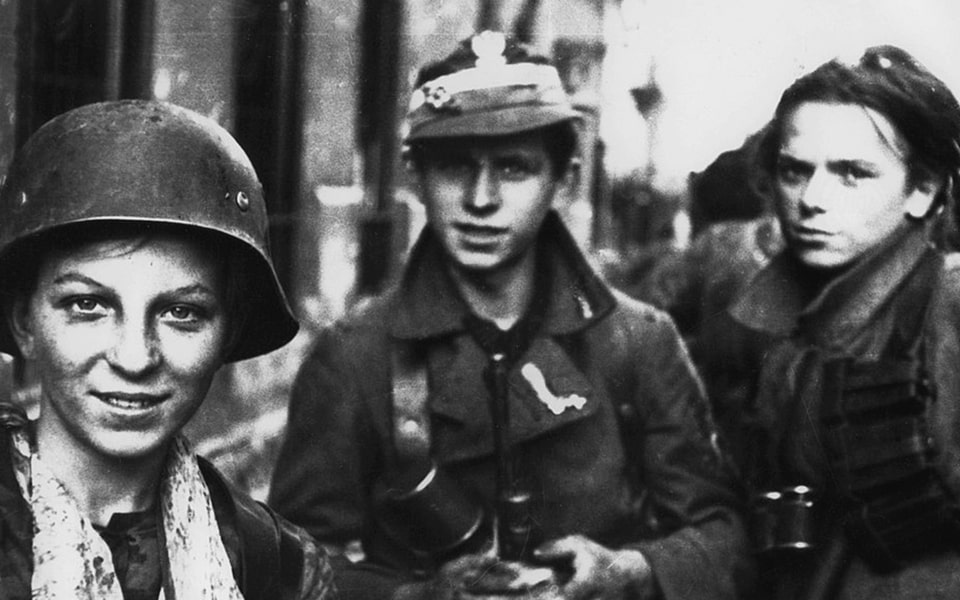
While there was a zero probability of getting assistance from the Polish units from the West, the imminent coming of the Red Army could bring only hostility to the AK fighters and their mission to set Poland free. When the Soviets proclaimed the creation of their puppet body called ‘The Polish Committee of National Liberation,’ better known later as ‘The Lublin Committee’ on July 22, 1944, the Home Army felt the threat and accelerated preparations for the revolt in Warsaw. In the AK’s paradigm, the city had to be liberated in the name of the Polish government in exile in London before the coming of the marionettes, and they hoped to present russians with a fait accompli. Among the Home Army leaders were those who opposed the idea of launching an uprising in Warsaw, like Generał Kazimierz Sosnkowski (1885-1969), the Commander-in-Chief of the Polish Army, who sent a telegram to Bor-Komorowski on July 29. Unfortunately, his warnings reached Warsaw as late as August 6 at the height of the Uprising. On July 31, when the key Polish underground leaders discussed the launch of the revolt, they received inaccurate intelligence stating an advance of the russian tanks into the Praga district of Warsaw, which was not true at the moment. The Uprising was decided to launch at 5 p.m. on August 1, 1944, at the time of the heaviest city traffic, which theoretically simplified the movement of the fighting units in the streets.

As I stated above, the leaders of the Warsaw Uprising hoped for help from the outside in days, and they clearly understood that they just did not possess enough weapons to fight for more than one for a maximum of two weeks at most. In many ways, the launch of the revolt was like playing an all-or-nothing game that could not be reversed after the outbreak. When it came to the storage of weapons and ammunition, between February 1941 and July 1944, only 305 tonnes of this sort were smuggled or parachuted to Poland, of which only a part reached Warsaw. The amount was minuscule in contrast to the 3,400 tonnes sent to support the anti-German formations in Yugoslavia during the same period. On the day of the launch, August 1, the Home Army fighters in Warsaw, which comprised 50,700 members, possessed only 1,000 rifles with 190 bullets per unit, six light machine guns with 500 rounds each, seven heavy machine guns with 2,300 rounds per unit, and 25,000 hand grenades. These numbers meant that only ten percent of fighters had access to firearms and could hold them for a limited period.
Unfortunately for the Warsaw Uprising, a significant amount of weapons, including 9,000 submachine guns, were sent from Warsaw to East Poland in early July, while two large storage sites of German munitions, with hand grenades and flame-throwers, had been located in the Praga district on the other bank of the Vistula river and thus were not accessible by the AK for seizing. Despite the shortages of food supplies in Warsaw during the occupation, the underground movement managed to create several storage sites, but in the areas of the city that were never controlled by the Home Army during the uprising. The situation with food deteriorated in late July when the Germans took most of the supplies to the front or further to the West. Considering the depressing numbers of weapons, it should sound even more grim that several large caches of firearms were found years later, after the war. One arsenal contained 678 British Sten 9*19 mm sub-machine guns with 60,000 rounds, but its keepers failed to pass weapons to the AK fighters, and it was found only in 1947. Another arsenal, when revealed in 1957, was so large that it took two weeks to empty the storage. On August 1, 1944, the closest Western-controlled airfield was in Brindisi in Italy, some 1,312 kilometers from Warsaw, and the Soviet at 118 km in Deblin.

WARSAW IN FLAMES: THE AUGUST 1 – OCTOBER 5 FIGHTING
Considering the poor level of armament of the fifty thousand AK fighters in Warsaw on August 1, the initial plans looked unrealistic. The leaders of the revolt hoped to capture bridges over the Vistula River and the larger part of the city on the Western bank, including Stare Miasto (The Old Town) and Śródmieście (City Center), also Mokotów, Wola, Zoliborz, Ochota, Powisle, Czerniaków, and even Praga on the eastern bank. Whatever the case, Polish patriots had a high combat spirit, and the orders at the start of the uprising were accepted with enthusiasm and relief after years of waiting and humiliation. Messages were passed by the couriers and telephones across the city, and the AK fighters rushed to their meeting points, including those who crossed the river to the Western bank. From the early hours of August 1, 1944, the streets of the Warsaw city center and the surrounding streets were filled with thousands of young men and women in bulky clothes and rucksacks with weapons, munitions, and supplies. As the Polish military uniform was banned in 1939, most of the Warsaw fighters came in civilian clothes. The civilian population was not informed about the upcoming revolution for security reasons, but the atmosphere in Warsaw was heated.
While the ‘Godzina W’ (W Hour) for the start of the Warsaw uprising was planned for 5 p.m. on August 1, 1944, the first shots were heard three hours before. The Germans spotted a car with weapons in a dormitory district called Żoliborz, and soon the heavy fighting swept the whole area. The occupational authorities did not give much thought to the gunshot in Żoliborz in the wider context of the general uprising until other trouble spots emerged in other districts. Around 4 p.m., the Polish fighters attacked the German garrison at Napoleon Square in the city center, and the fierce fight began for control over the main post office and the Prudential building, a famous Warsaw skyscraper, approximately an hour before the scheduled time. At 5 p.m., the Western bank of the Vistula, from Mokotów and Wola to the Old Town, erupted in numerous battle theaters with movement of forces, ambushes, roadblocks, and fierce gunfire. Thousands of civilians rushed to their homes for cover as most of them had no idea about the nature of the events, but some joined the AK fighters from the very beginning, and in the days to come, many more enrolled. The ranks of the AK fighters also increased with the members of other fighting organizations like ‘Gwardia Ludowa’ (People’s Guard) and ‘Armia Ludowa’ (People’s Army), communist partisan forces. Around 1,000 Jews, including two battalions of ŻOB (Żydowska Organizacja Bojowa, or ‘Jewish Fighting Organization) joined the fight. Among the Warsaw fighters against the Germans were escaped Soviet and French POWs and even one Englishman, John Ward, Italian deserters, Slovaks, and Hungarians.

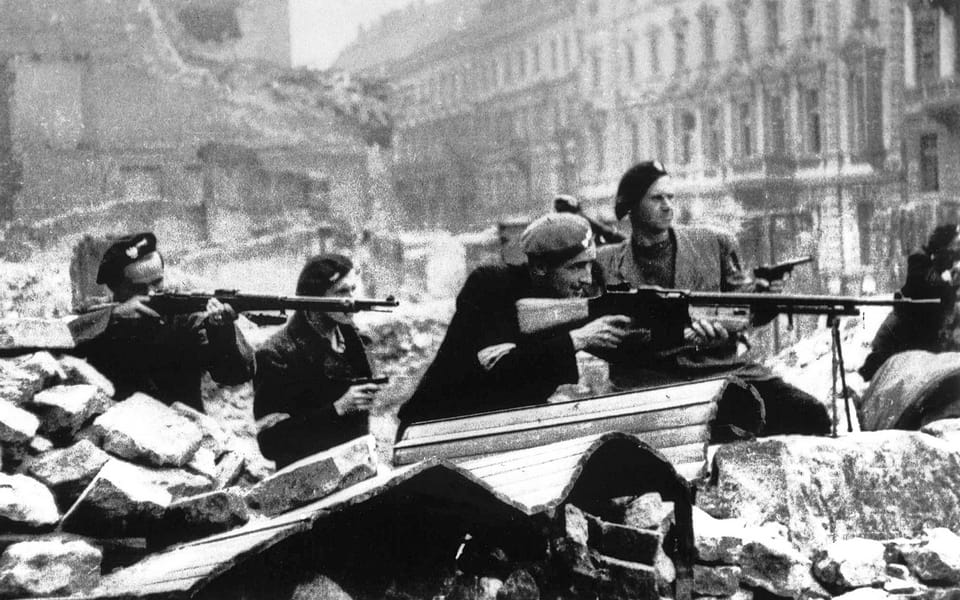
The first days of the Warsaw Uprising in early August 1944 indicated numerous successes of the Home Army, and the civil population responded with euphoria, seeing Polish flags hung from the captured buildings. They sang patriotic songs, assisted in building barricades, and helped the fighters with medicine and food supplies, which the insurgents lacked so much. In the first days of the uprising, the fighters seized numerous buildings in the city center, and even a power station in Powiśle near the Vistula River. Poles took numerous photos of the captured German soldiers, and many of them survived until the present. The revolt was more successful in the Old Town, Ochota, Wola, Powiśle, and Czerników districts, but in Mokotów and Żoliborz they faced more fierce resistance from Germans and had to retreat. Unfortunately, even at the initial phase, the Uprising witnessed painful failures like the lack of control over the bridges and unsuccessful attempts to seize Okecie and Bielany airports. Unfortunately, the initial attack on the central communication facility in Pius Street failed, and the Germans preserved their communication unhindered for weeks. Even though the Germans were caught by surprise, in the first days of the Warsaw Uprising, they lost only around 500 men killed, captured, or wounded, compared to ten times higher casualties suffered by the poorly armed insurgents.
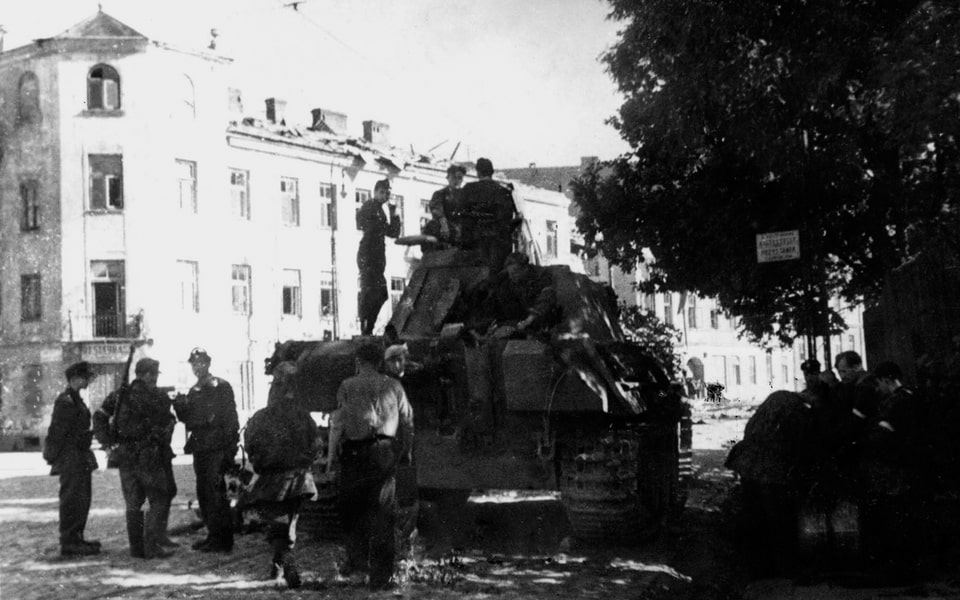

The Germans suffered temporary disorganization of the command on the first day because General Reiner Stahel (1892-1955), the commander of the Warsaw garrison, was surrounded for several hours in his headquarters at the Saxon Palace and lost control over the situation. A high-ranking Luftwaffe officer, Stahel had no experience with counterinsurgent measures. When the news of the Uprising in Warsaw reached Adolf Hitler, his first idea was to perform a devastating bombardment of the city to reduce it to rubble, but the German dictator was persuaded from this scenario to evade massive German casualties. On August 2, the command of the German forces in the city was passed to the infamous Waffen-SS General Erich von dem Bach-Zelewski (1899-1972), and a special SS brigade under SS-Obersturmbannführer Oskar Dirlewanger was sent to Warsaw to crush the revolt. While Wehrmacht units were mainly left outside the city to prevent help for the Uprising from the outside, the crushing of the revolt was assigned to the SS and German Police, with specific orders to make no distinctions between the actual Polish fighters and the civilian population of Warsaw. In parallel with the new orders for Warsaw, the Reichsführer Heinrich Himmler personally ordered the execution of the former AK leader Stefan Rowecki, which was conducted on the night of August 2, 1944, in the Sachsenhausen concentration camp.
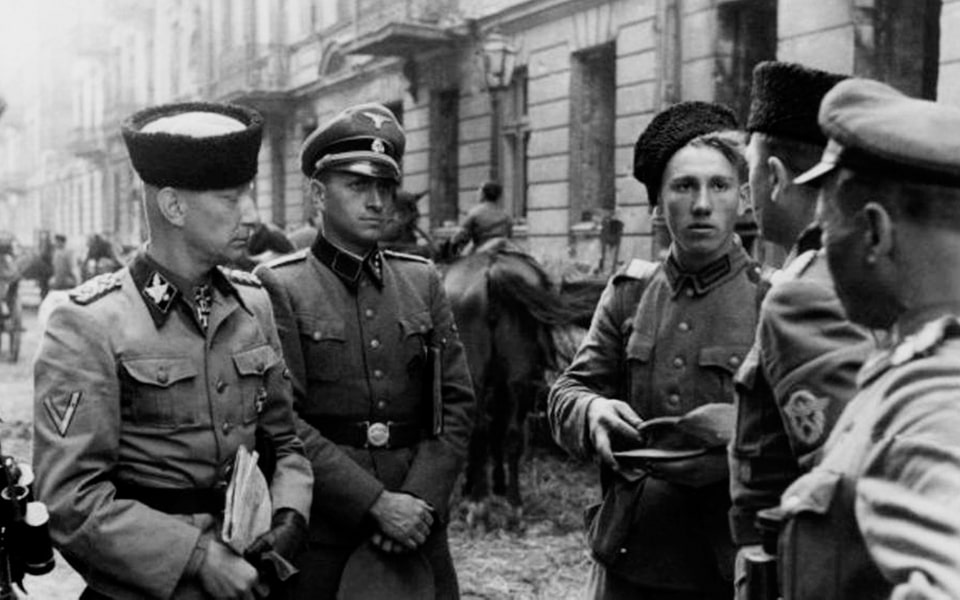

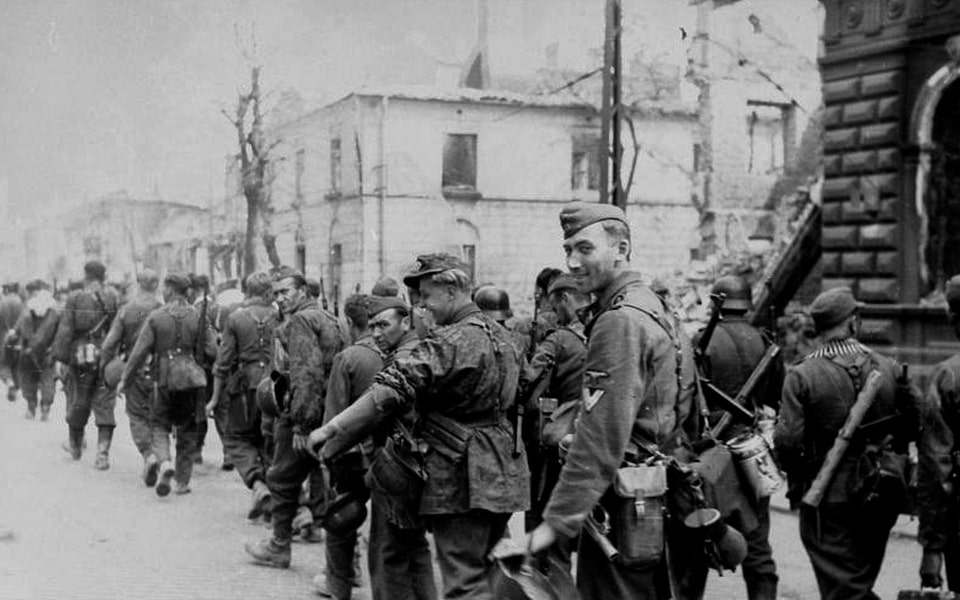
All the forces assigned to the crushing of the Warsaw Uprising, including the Dirlenwanger Brigade and the ‘Waffen-Sturm-Brigade RONA’ under Soviet collaborator Bronislav Kaminski (1899-1944) were placed under the overall command of General Bach-Zelewski, who was known for his rich experience in dealing with the Anti-German partisan movements. Now he summoned up to 17, 000 men under his command of the forces called ‘Korpsgruppe Bach’. The reestablished German formations armed with the order of total annihilation of the resistance, advanced into Warsaw street by street in the next weeks and murdered tens of thousands of civilians, apart from the actual fighters. The later coming of the survivors of this massacre, especially in the Wola district, to the city center, partially controlled by the Home Army, diminished the morale of those still fighting and hiding. Apart from the German advance on the ground, German aircraft dominated the sky, first of all, the infamous Stuka bombers, which reduced entire city blocks to the ground with no sign of either Soviet or Allied air forces.

Even though the Polish government in exile warned the Home Army leaders in Warsaw about the high risks of launching a revolt and the impracticality of sending forces by air when the news about the start of the revolt reached London, the issue of assistance arose immediately. Edward Bernard Raczynski, an ambassador to Great Britain since 1934, asked the Allies for help, and Winston Churchill commanded his air forces to conduct air drops of weapons and supplies to the besieged Warsaw. The red dictator Stalin rejected Churchill’s appeal for permission to use Soviet-controlled air bases in Eastern Poland, and British and Polish pilots had to cover an enormous 1300 km distance from the airbase in Brindisi in Southern Italy to Warsaw. The first drop from the Halifax bombers was successful when twelve loads with Sten machine guns, hand grenades, PIAT anti-tank weapons, and ammunition landed on the cemetery under the AK control, who had managed to seize 125 square kilometers of Warsaw at that time. The second drop came on August 8-9 and boosted the morale of the fighters, also having no significant effect on the fate of the battle.

In total, between August 5 and September 21, the courageous British and Polish pilots, who had to fly over the German-controlled territories, operated 199 aircraft in hazardous flights from Brindisi to Warsaw. Among the lost aircraft, one was hit and had to land on the Soviet airbase, where its crew was arrested until the British embassy intervened. Speaking in terms of weapons delivered, in total 1,344 small guns, 130 rifles, 380 light machine guns, 3,855 machine pistols, 3,000 anti-tank grenades, 237 bazookas, 14,000 hand grenades, and over 4 million rounds, and eight tonnes of explosives reached the Warsaw fighters, while it is estimated that around half was misdropped into German hands. Some parcels contained civilian clothes and cigarettes apart from forty-five tonnes of food. The percentage of successful seizures of British forces fell dramatically when the Germans fought back into significant territories, and a part of the deliveries was aimed at the AK positions in the Kampinos forest outside Warsaw. While the numbers sound significant, especially compared to the initial AK arsenal on August 1, this aid had no significant impact on the fate of the Battle of Warsaw on the ground.

Soviet forces were in a preferred position to send air supply to the Warsaw fighters, but the problem was in Stalin’s delinquent mind, who refused to assist the Uprising since it was not pro-communist but led by the Polish Home Army and supervised from London. Stalin had his agenda of establishing a puppet ‘Lublin Committee’ in Poland, and with his army at the gates of Warsaw, led the uprising to drown in blood. He ignored Winston Churchill’s constant appeals for air support of the besieged city, and even a common appeal of Churchill and the US President Roosevelt, even though the latter had a large impact. On August 15, the American aircraft were denied landing in Poltava, Ukraine, in the case of conducting flights to Warsaw. It took six weeks for Stalin to allow Soviet air drops over Warsaw on September 13-14, when the fate of the uprising had already been decided. These droppings from the East, which lasted until September 29, had extremely low efficiency, as most of the containers hit the ground from a low altitude and were destroyed. On September 18, the United States Army Air Forces was finally allowed to deliver air assistance to Warsaw, but of the 1,300 containers dropped, only 388 were delivered to the area controlled by the AK, and the remaining landed in German hands.

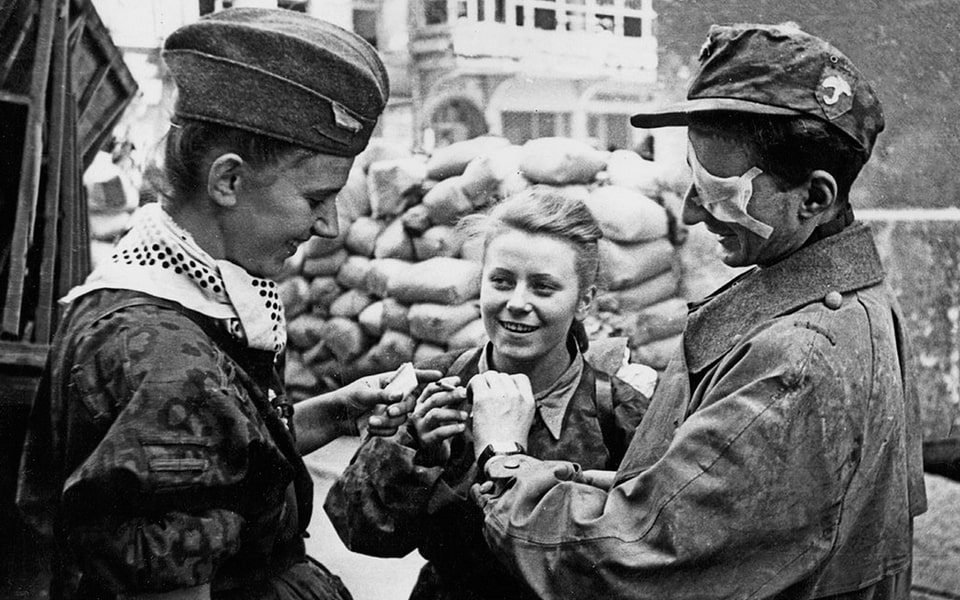
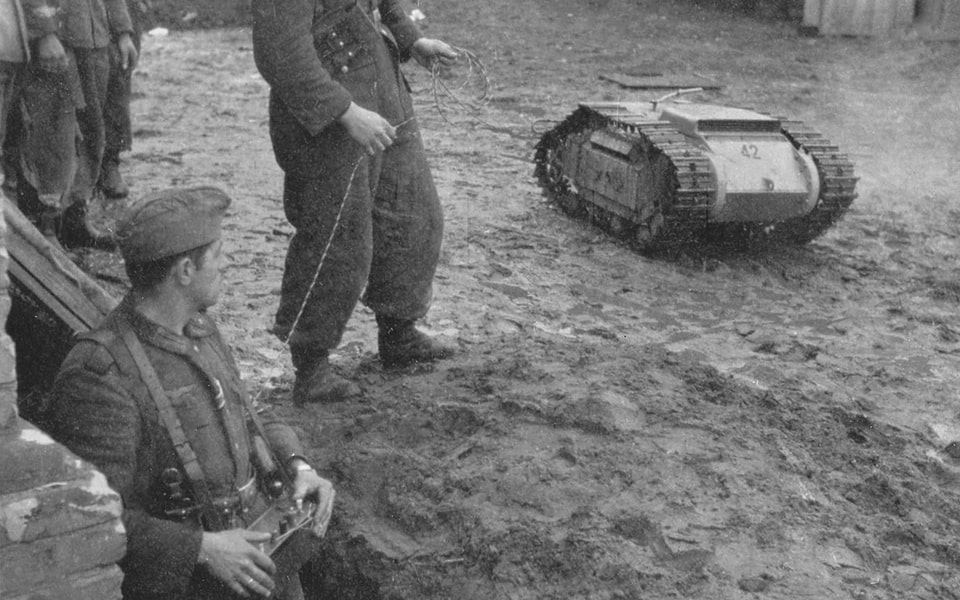
Getting back to the fight on the ground, the Germans ruthlessly moved across the districts of Ochota and Wola, where they massacred up to 40,000 people between August 5 and 12 until the halt order was received to evacuate the civilian population to the concentration camps. After gaining initial successes in counterattacks and establishing control over several city districts, including the desolated Wola, Bach-Zelewski’s forces, now in full strength, finally launched a large attack on the city center and the Old Town, where the insurgents had gained most of the successes and territory gains at the beginning of August. Up to 8,000 men supported with dense shellfire, tanks, and heavy armored vehicles moved to the city center on August 9-10. To avoid heavy losses from the Polish fire and Molotov cocktails, the Germans actively used the firepower of dive-bombers to destroy Warsaw Old Town block by block, thus turning the ancient Polish city into rubble full of corpses. It was estimated that between 17 and 23 August 1944 at least 4,000 tonnes of bombs and shells fell on the Warsaw Old Town. Bach-Zelewski’s forces used not only conventional weapons but inventions like the 370 kg Goliath remote-controlled vehicles used to deliver explosives to demolish buildings and barricades. The battle for the Old Town lasted until September 2, resulting in the death of at least 5000 Polish fighters, and the Home Army decided to evacuate remaining forces and the civilians from the area.
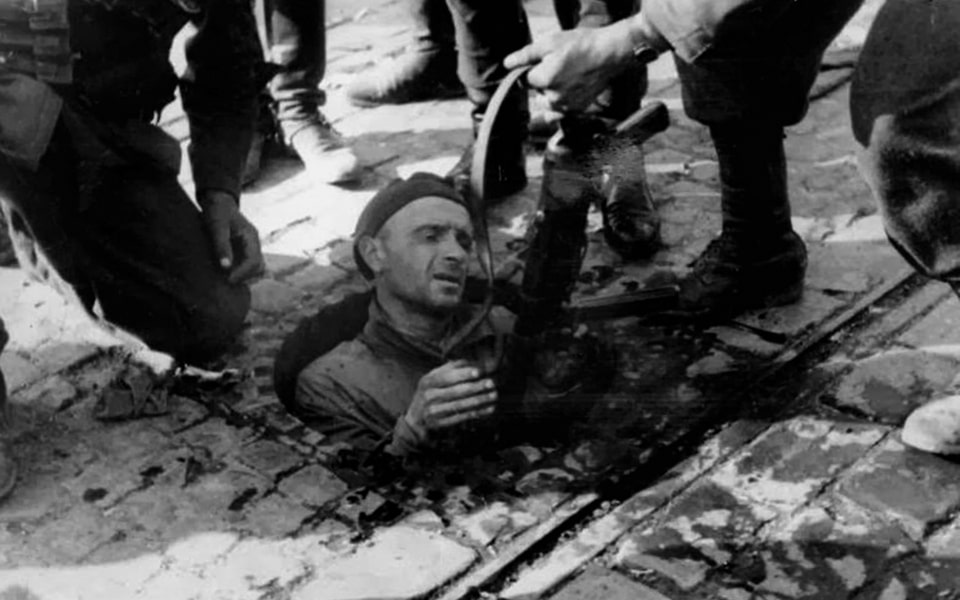
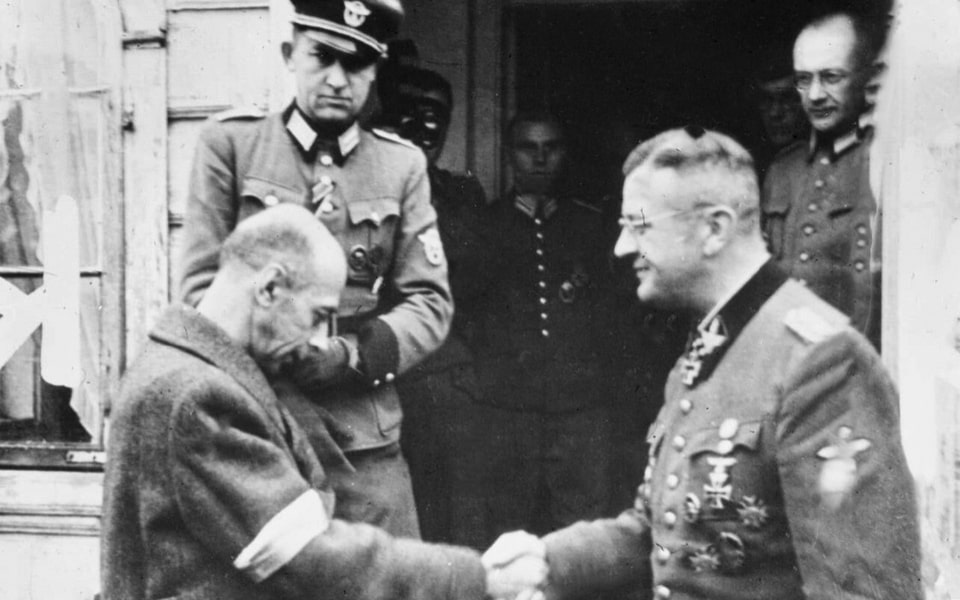
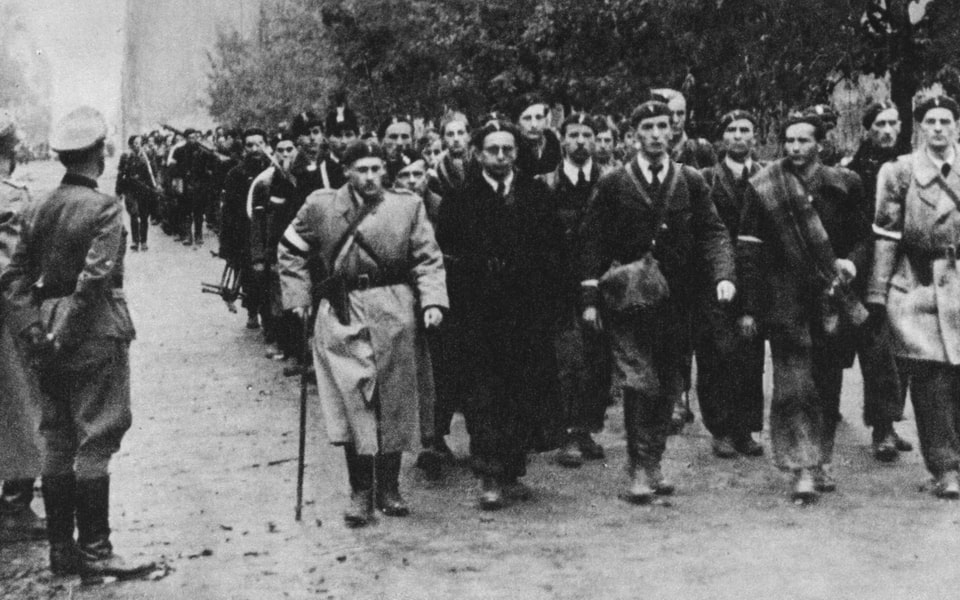
When the insurgents lost most of their previously controlled territories in the September fights, the fate of the Uprising was decided, and on October 4, Generał Tadeusz Bor-Komorowski sent a message to London about the imminent surrender, which had been agreed with the German side on the eve. The next day, 15,378 remaining AK fighters, including around 3000 women, marched into German captivity. It was a grim part of the 40,000 to 50,000 patriots who fought in the Warsaw Uprising between August 1 and October 5. Thousands managed to flee the city or went into hiding in the ruins or the untouched part of the city, while at least 10,000 were killed in street fighting or under shelling, another 7,000 were missing in action, with most of them killed, and another 5,000 badly wounded. of whom many died in the coming weeks. The estimates of German losses vary, but the modern historical consensus is that 2000 to 3000 were killed. When it comes to civilian casualties, an enormous 150,000 to 200,000 citizens of Warsaw lost their lives or were massacred during the Warsaw Uprising in August-October 1944. The remaining population was evicted from the city, and from 150,000 who marched the streets between October 3 and 7, up to 90,000 were sent to German labor camps, while 60,000 were taken to concentration and death camps, including Auschwitz. Another 200,000 were refugees.
BANK OF POLAND (BIELAŃSKI BANK): WARSAW UPRISING FORTRESS – 1944 BATTLES AND THE BUILDING TODAY
This old and battle-scarred building at ul. Bielańskiej 10, next to a modern business center in the heart of Warsaw, is one of the most recognized preserved reminders of the events which took place in Warsaw in August-September 1944. Originally, the site became known in the late XVIII century with the construction of a two-storey building of the royal mint of the last Polish King Stanislaw August Poniatowski (1732-1798), who reigned the country before the infamous 1795 partition. As Warsaw had been occupied by russians since then, they had little sentiment for the Polish historical buildings when the occupants decided to build the local division of an Imperial bank on the site of the mint. The construction in the neo-Renaissance style lasted four years between 1907 and 1911, and four years later, the fiascos of the First World War made the former Romanov’s empire satraps flee the city. After regaining Polish independence in 1918, the building was accommodated by ‘Polska Krajowa Kasa Pożyczkowa’ (Polish National Loan Bank) and, after 1926, finally by ‘Bank Polski’ (Bank of Poland). After the German occupation of Warsaw, between 1940 and 1944, the building accommodated a branch of the so-called ‘Emissionsbank in Polen’ (Issue Bank of Poland), the Nazi-created bank in the General Government.
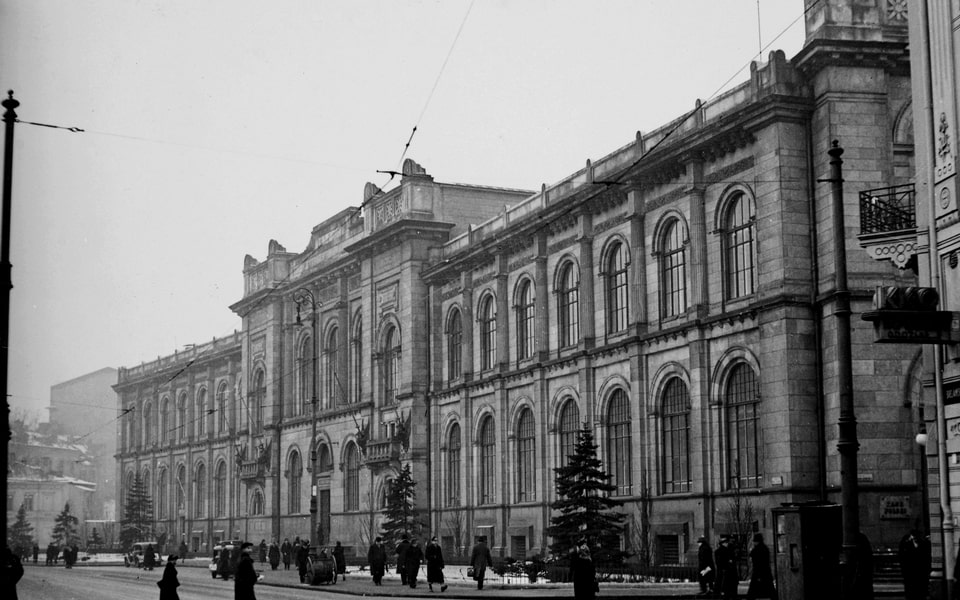

The building on Bielańskiej Street witnessed heavy fighting already on the very first day of the Warsaw Uprising. It was part of a broad Polish operation against several German-controlled objects in the city center led by a ‘Barry’ unit of the Home Army, named after its leader Włodzimierz Kozakiewicz (1911-1954) and his AK pseudonym. The Bank building was defended by forty well-armed German soldiers, and they threw the initial assault back and held positions until the night of August 4, when fifty-six people, including civilian staff, were evacuated in a lorry with a backup of three tanks. When the AK fighters under Major Barry took the Bank of Poland, they stationed 180 men inside and set up barricades next to it. On August 11, the Germans launched a series of heavy counter-attacks against the insurgents’ positions in the city center, using heavy artillery shelling, bombers, and the mass of infantry supported by tanks. One of these advances was backed by two tanks and aimed at the barricades defending the Bank of Poland. Determined Polish defenders with a heavy machine gun stopped the infantry and set one of the tanks on fire with incendiary bottles, and the second one retreated: one of the entrances to the Old Town held out that day.
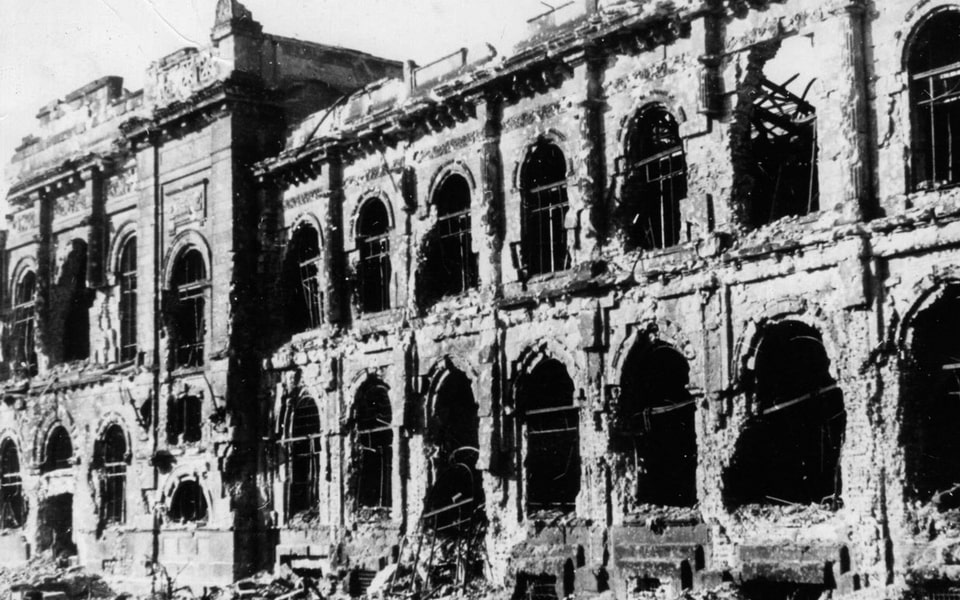
Similar to other locations where German infantry attacks had little success, the Bank of Poland was heavily shelled with artillery fire, mortars, Stuka bombers, and even anti-aircraft cannons at point-blank range. The defenders and civilians who took cover inside had to deal with constant fires and fumigation, lack of food and medicines, and even drinking water. The infantry attacks resumed after August 20, and toward the end of the month, the AK fighters inside exhausted their resources of munitions, and on September 1, they finally left the building in the north direction of Hipoteczna Street. The remaining civilians who hid in the basement had to surrender to the Germans.

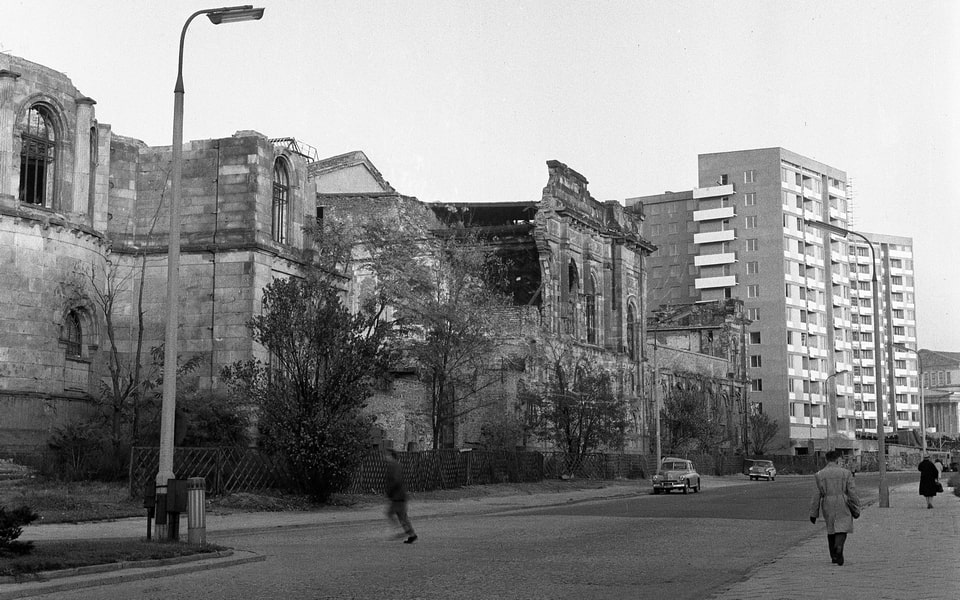
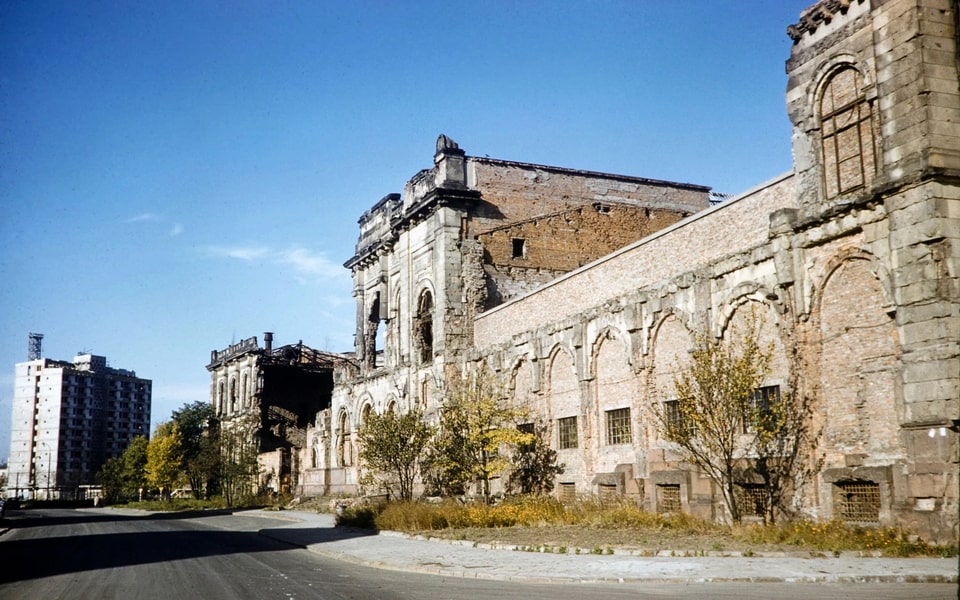
For years after the end of WWII, the building of the former Bank of Poland stood heavily damaged and desolate. The most damaged parts of the building were demolished in the 1960s, and the right part of the facade was spared. The preserved wing later accommodated some premises of the Ministry of Finance, and after gaining Independence in 1989, there were talks of turning the Bielanski Bank into an Uprising Museum. When the museum was finally decided elsewhere in 2003, the former Bank of Poland witnessed archeological works in 2007, which helped to recover the history of the 1944 fighting and to preserve the remaining structure. In 2012, a large commercial six-storey building was built next to it, which recreated the shape of the large pre-war bank.
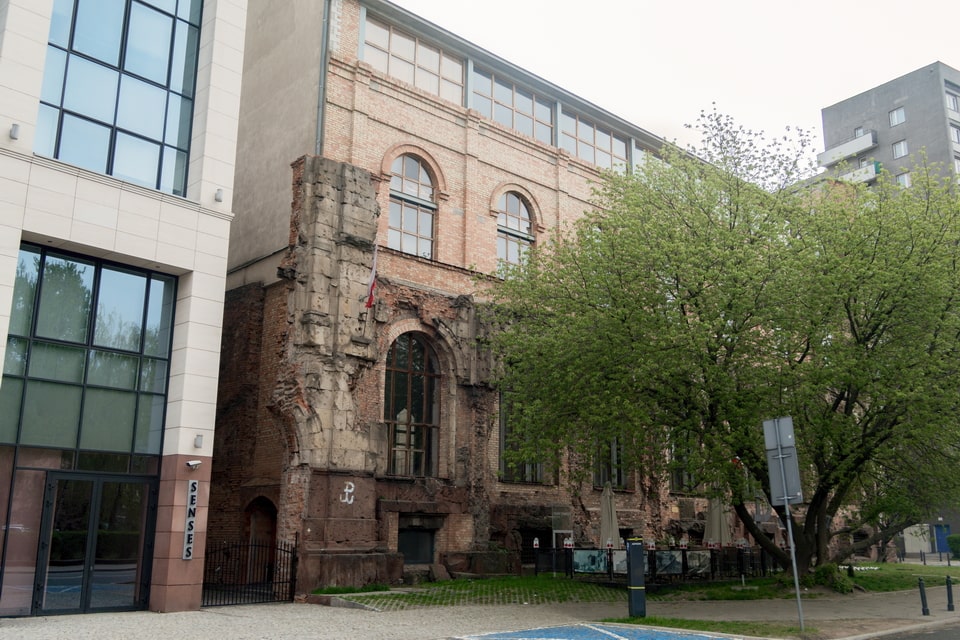
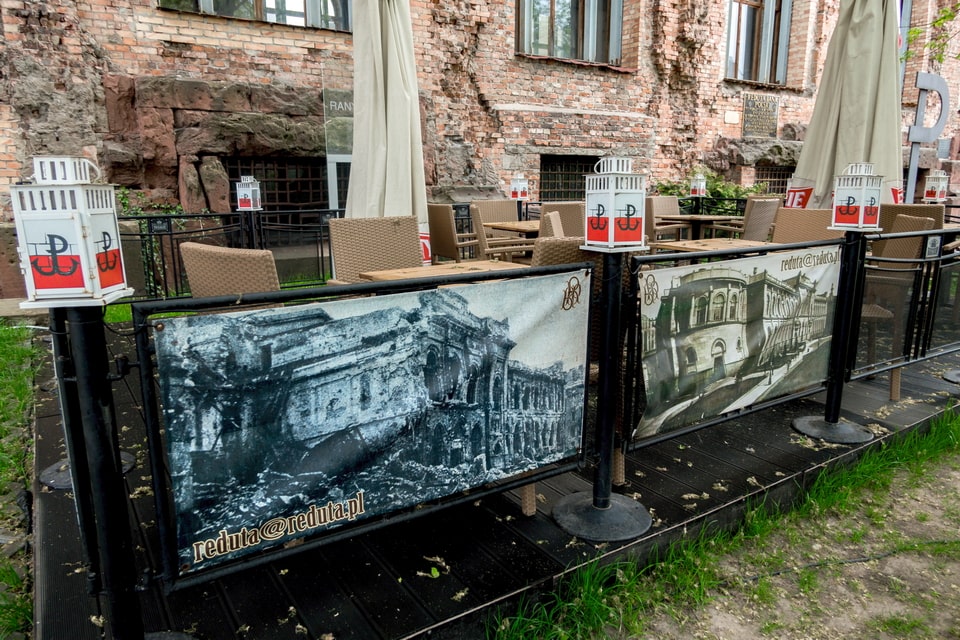
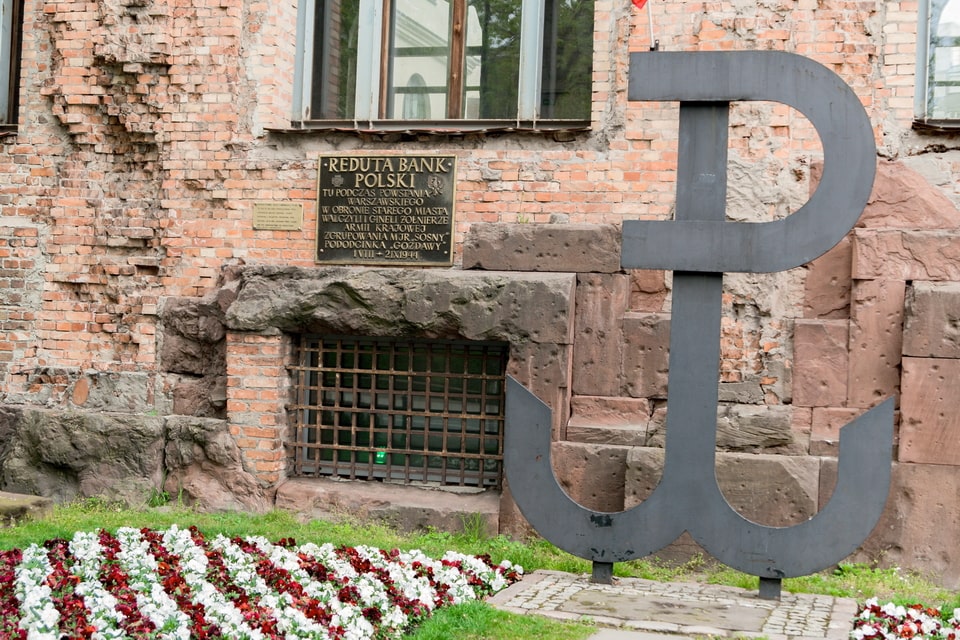
Visitor Info (2026): The surviving interior spaces of the bank are currently used as a private event venue and are generally closed to casual tourists. However, the conserved ruins of the western wing and the facade, which remains heavily scarred by World War II bullet holes, can be freely examined from the street at any time. Located at ul. Bielańska 10.
THE PRUDENTIAL BUILDING: WARSAW TALLEST SCYSCRAPER IN 1944 – THEN AND NOW
A few people know that Prudential Insurance Company, which gave its name to one of the most recognized buildings in Warsaw, had not Polish but English roots. The company, aimed at giving loans to working-class representatives, was established in London as far back as 1848. It should be noted that in the interwar period, the company opened its first Polish branch in Kronenberg Palace in Warsaw, once the most luxurious residential building in the late 19th century in the whole country. Toward the 1930s, it was decided to find a new, more spacious seat for the headquarters, and the company management issued the construction of a new building on Napoleon Square at the heart of Warsaw. Formerly (before 1901), the site was occupied by Infant Jesus Hospital until it moved to a newly created residence in the Ochota district. When the construction of a new Prudential HQ started in 1931, the tallest building in the city belonged to ‘PASTa’, the Polish Telephone Joint-Stock Company, and it was destined to be surpassed.
Initially, the new skyscraper on Napoleon Square was planned as an 11-floor building, but the architects decided to extend the plans up to 16 floors to achieve appropriate dominance in the neighboring area. The principal construction lasted for two years between 1931 and 1933 under the leadership of Marcin Weinfeld (1884-1965), a Jewish-Polish architect, who would be sent by the Nazis to Dachau in 1940 as a political prisoner, where he survived the Holocaust. While Weinfeld made the overall design of the Prudential building, the welded steel skeleton put on the reinforced concrete foundations was created by Stefan Bryła (1886-1943) and Wenczesław Poniż (1900-1967). Bryła was a member of the Polish Sejm from the Lviv district, and for his underground activity during the occupation, he was arrested by the Germans, put in custody in Pawiak prison, and later shot during one of the street executions. Wenczesław Poniż also participated in the underground university activities in Warsaw during WWII, and after the war, he participated in the reconstruction of several landmarks, including the famous ‘Hale Mirowskie’ market hall. Above the side entrances of the newly created Prudential skyscraper, there were sculptures by Ryszard Moszkowski (1906-1945), a sculptor of Jewish origin who was shot in early 1945 with his German wife in a hiding place in Warsaw.

When the Prudential building was finished in 1933, it became the tallest in the whole of Warsaw with 66.5 height and was visible from many points in the city. In total, the construction consumed 2 million bricks, two thousand tonnes of concrete and cement, and over 1500 tonnes of steel. The construction works were performed by a Polish engineering company called ‘K. Rudzki i S-ka. T’, which had operated in Warsaw since 1858 and was better known for building bridges. The lower stories accommodated office spaces, which housed not only the headquarters of the Prudential company itself but also offices of other companies, including from 1935 to 1938 the commercial department of a Spanish diplomatic representative office (an institution one rank lower than the embassy). The upper floors house apartments, the most luxurious of which has a space of up to 240 square meters and has six rooms and three bathrooms. From October 1937, an experimental Television station operated on the upper 16th floor of the building, with a huge 11-meter antenna on its roof. The first test transmission of the TV signal was broadcast on August 26, 1939, less than a week before the outbreak of WWII and the Battle of Warsaw. A famous Polish singer, Mieczysław Fogg (1901-1990), participated in that experiment. At the outbreak of the war, the Prudential company insured 4,623 people in Poland.
Napoleon Square became one of the first active battle scenes on the first day of the Warsaw Uprising on August 1, 1944, when the ‘Kiliński Battalion’, named after Jan Kilinski, a Polish national hero from the 18th century, attacked German positions aiming at taking both the Prudential building and the Main Post Office (8/10 Napoleon Square). The latter garrison repelled the first two Polish attacks, but the skyscraper was seized successfully. Understanding the reputation of the Prudential building and its dominance in the Warsaw panorama, the fighters hung a large Polish flag, which could be seen from many points in the city and boosted morale both in the insurgents who had just started the uprising and the civilian population who had not seen anything like this since 1939. Many Warsawians, who survived the war, later recalled their enthusiasm when they saw the banner hoisted over the famous skyscraper. The capture of the post office and the employment officer on the adjusting Malachowski Square followed on August 2.


When the Germans restored command and forces to fight back, they heavily shelled all key objects previously seized by the insurgents, including the Prudential building. It was calculated that in the following weeks, up to 1,000 artillery shells hit the famous building, and on August 28, 1944, the AK cameraman Sylwester Braun captured one of the most recognized images of the whole Warsaw Uprising: the moment when the Prudential building was hit by a 2-tonne bomb from the so-called Karl-Gerät self-propelled siege mortar. The shell was shot from a park in the Wola district, approximately 3 km from Napoleon Square. The hit resulted in spraying a large cloud of dust and smoke. While the fire started, which burned out the building and made its defenders leave the building, its steel structure withstood the wreckage and did not collapse. After the war, the Prudential building was nationalized like many others in Warsaw, but stood devastated for years until the new reconstruction took place in 1950-1953. Marcin Weinfeld, the original architect, was invited to restore the skyscraper, this time for ‘Hotel Warsaw’. It was reborn in a socialist realist style and lost its original look. It operated until 2002, then was closed for years and reopened in 2018, also as a luxury five-star hotel. The last renovation made Prudential look closer to its original design.
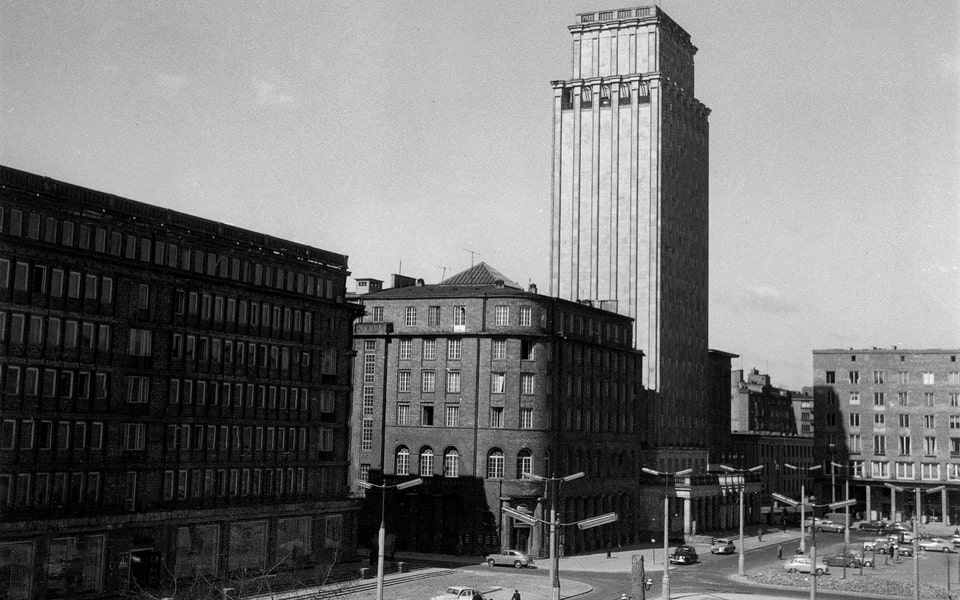

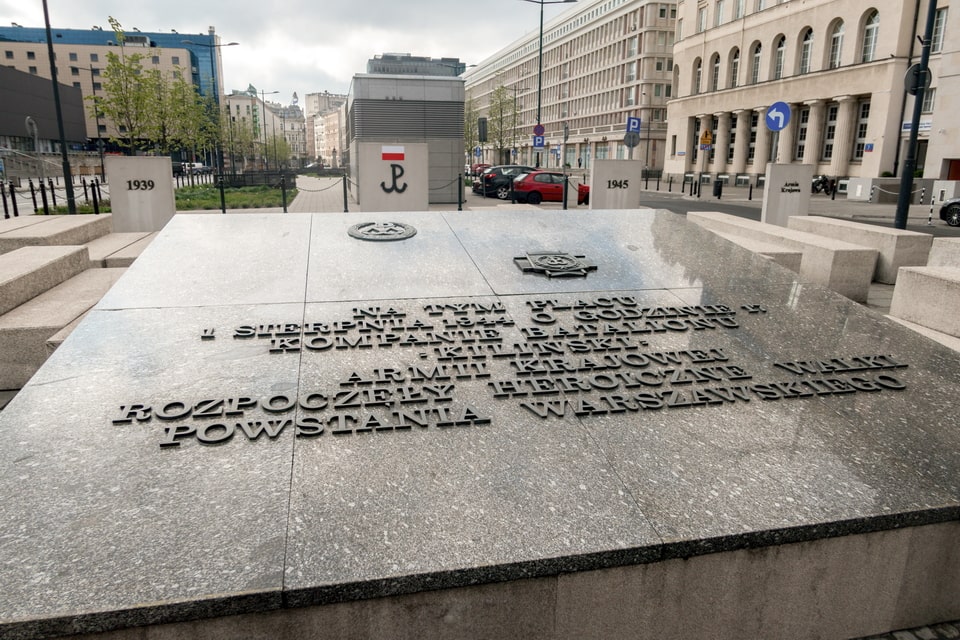
Visitor Info (2026): The fully restored Prudential building now operates as the luxury 5-star Hotel Warszawa. You may enter the lobby to admire the preserved Art Deco architecture. Located at Plac Powstańców Warszawy 9.
PASTa BUILDING: KEY WARSAW UPRISING STRONGHOLD – WHAT REMAINS TODAY
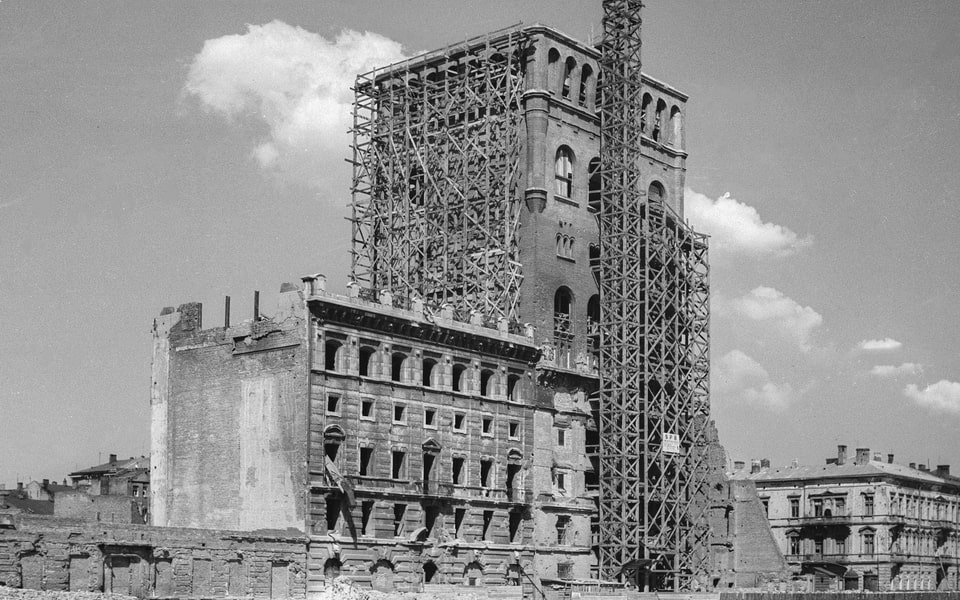
As I mentioned above, Prudential took the reign of the tallest building in pre-war Warsaw from another skyscraper with a longer history. In 1900, ‘Cedergren’, a Swedish telephone company, won a tender for launching the first telephone network in Warsaw and thus became the pioneer operator in the city. The new role demanded the construction of a communication hub in the city’s center, which could accommodate both the telephone exchange and the company’s headquarters. The site was chosen on Zielna Street, where a two-story tenement house was once located. The construction of the ‘Cedergren’ center lasted six years in two phases, and when it was finished in 1910, it became the tallest building in the city. The skyscraper indebted its design to Bronislaw Brochwicz-Rogoyski (1861-1921) and Izaak Classon (1856-1930). When the company’s license expired in 1922, the building was sold to ‘Polska Akcyjna Spółka Telefoniczna’ or simply PASTa in Polish (Polish Telephone Joint-Stock Company).
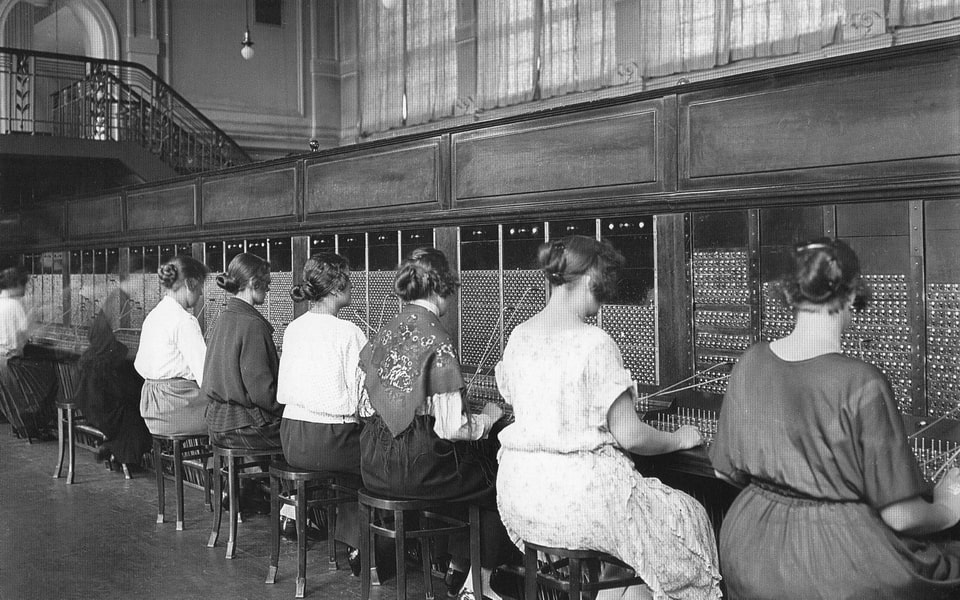
Since the nature of the building changed slightly under the new name, in the interwar years, the PASTa building remained an important communication facility with the key telephone equipment and switchboards in Warsaw. During the Nazi occupation, it was used as a regional center in the General Government, and that’s why it became one of the key Polish objectives of the initial phase of the Warsaw Uprising. In more practical terms, the communication hub in the building linked the military communication on the Eastern front with the West, taking it as a chance to disrupt the German ability to send armed reinforcements into Warsaw. Unlike the Prudential building, the second-tallest skyscraper in the city was attacked for the first time in the early hours of August 2. The German garrison was backed by heavy armored vehicles, including tanks, and threw the initial AK assault back, and German snipers operated from the upper floors of the building. After losing the main post office around 5 p.m., the Germans sent reinforcements to their garrison at the PASTa, which included two more tanks and eighty men. The latter, sent from the Wola district, were all destroyed by the AK fighters at the expense of only two wounded insurgents: an episode that boosted morale among the Polish patriots.

Another attack on the telephone center destroyed a tank and a lorry, and captured another tank in operation and several trucks. The battle for the PASTa building lasted for weeks, and in total, around two hundred Germans defended it. The Home Army fighters launched multiple attacks against the besieged garrison, an isolated island of the Germans among the AK-controlled city center, and the fate of the battle was decided by fire and smoke. The climax of the PASTa siege came on the night of August 20, when the insurgents pumped petrol into the basement and set the lower floors on fire, pushing the remaining garrison to leave their hideouts. The AK fighters hunted their enemies to the upper floor, but the Germans managed to go down another set of stairs, where they finally gave up. One hundred and fifteen (another source claims 121) German defenders were taken prisoner that day in the boiler room of the PASTa building, while dozens died or were fatally wounded, at the expense of four dozen Polish soldiers.
When the German garrison surrendered, the Home Army was restocked with the captured weapons and supplies. Despite almost three weeks of heavy fighting, the seizure of the PASTa building became one of the key successes of the Warsaw Uprising. The Nazis lost not only a stronghold in the Old Town and men but also a viewing point for the snipers and artillery fire adjusters. Unfortunately, heavy fighting and setting the building on fire damaged the telephone equipment important (as they thought about it) to the Home Army, while the Germans reestablished connection by other means. Dozens of soldiers lay on the streets around the building, many of them burned unrecognized. When PASTa was set on fire, the trapped Germans threw themselves from the windows. Meanwhile, the men of the ‘Kilinski’ group succeeded in seizing the building on Piusa 19, also known as the ‘little PASTa’, which also housed the company’s offices and a telephone center, and fell to the AK’s hands on August 23.


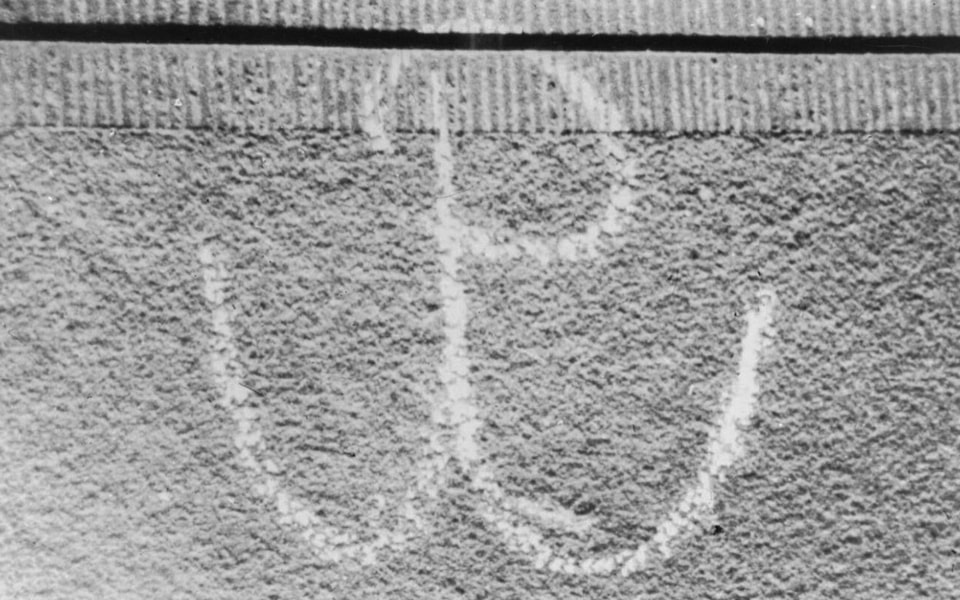
PASTa building was so badly damaged during the Uprising that after the War, there were plans to demolish it, but finally, in 1954, the local authorities decided to restore the legendary Warsaw skyscraper, which had stood abandoned for ten years. It was rebuilt with changes, and as early as 1965, it was listed as a historical monument. The telephone company never made its way back to the building, and the former PASTa accommodated different institutions, including the offices of the Polish Ministry of Chemical Industry and classes of the Academy of Science. It took the Poles half a century to get rid of the communist regime in the country and commemorate the Warsaw Uprising, the Home Army, and its struggle. Finally, in November 2000, Polish Prime Minister Jerzy Buzek (born 1940) handed the ownership of the legendary PASTa building to the ‘Foundation of the Polish Underground State’ veterans group in the presence of many of its former fighters in their eighties and nineties. Three years later, in August 2003, on the fifty-ninth anniversary of the Uprising, the ‘Anchor’ Fighting Poland Sign made of aluminum and gold was placed on the roof of the former PASTa. This giant sign of Polish struggle, created by a former AK soldier, an architect Jacek Cydzik (1920-2009), is six meters high and four meters wide and is illuminated at night. Every year, August 20, the anniversary of the capture of the building by the Home Army, is regarded as a local celebration date.
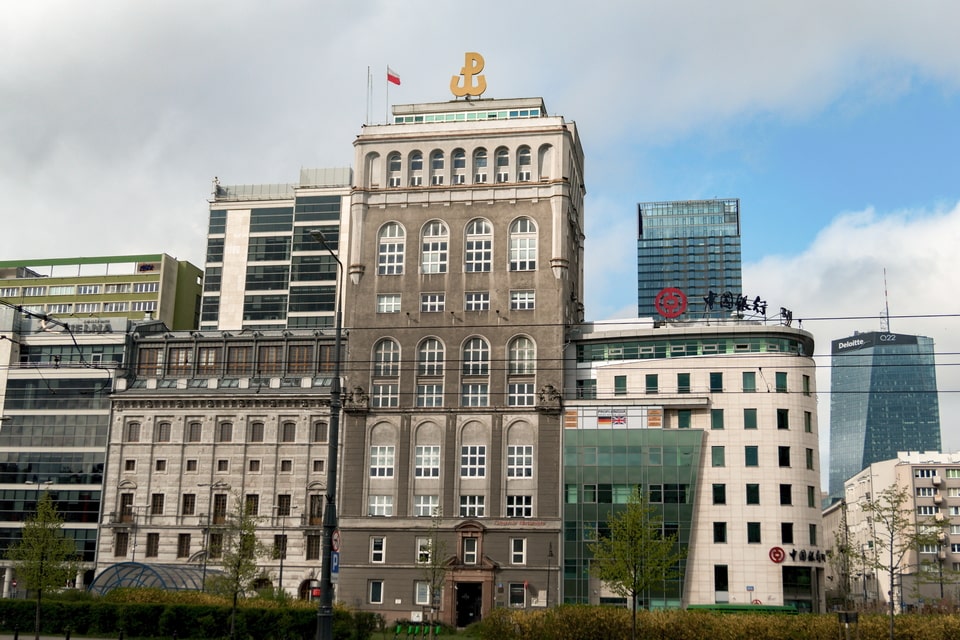
Visitor Info (2026): Today, the PASTa building is a functioning office center managed by the Home Army veterans’ foundation. The rooftop observation deck and internal historical exhibitions are typically open to the public only during Uprising anniversaries (around August 1st) or by prior arrangement. However, the historic facade bearing the iconic “Kotwica” symbol is accessible 24/7. Located at ul. Zielna 39, just a short walk from the Palace of Culture and Science.
WOLA MASSACRE SITE: WHERE 50,000 CIVILIANS DIED – THEN AND TODAY
While the PASTa and Prudential building serves as a symbol of Warsaw Uprising successes, another toponym, Wola, is associated with a tragedy and one of the most cruel war crimes during the Second World War. As I have written above, on August 5, the German forces embarked on a merciless advance on the city districts of Ochota and Wola, thus moving from the West in the direction of the Warsaw city center and killing every civilian on their way with no aim to distinguish the Home army insurgents from the remaining population. The whole operation was launched to drown the Uprising in blood and to discourage the Polish population. The advance into the Wola district was executed by the troops under the overall command of Erich von dem Bach-Zelewski, and particularly by the forces under Gruppenführer Heinz Reinefarth (1903-1979), SS-Oberführer Oskar Dirlewanger (1895-1945), and SS-Brigadeführer Bronisław Kaminski (1899-1944). Between August 5 and 12, these units massacred up to 40,000 civilians in what would be known as the ‘Wola massacre’. While Kaminski was executed on Himmler’s order and Dirlewanger died in captivity, Heinz Reinefarth spent only three years in captivity and, after the war, was elected a mayor of a seaside resort, Westerland, and received a general’s pension after retirement, holding no account for his crimes in Warsaw. Erich von dem Bach-Zelewski also never faced trials for his crimes in Poland or the USSR and was later sentenced for his pro-Nazi activities against political opponents in Germany in the 1930s.

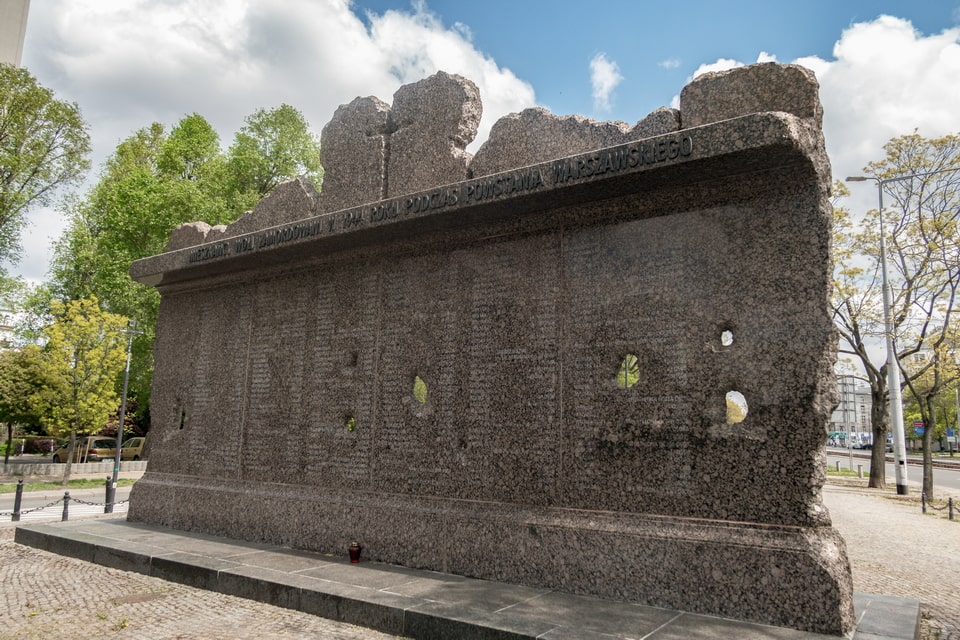
While the Wola district had many smaller monuments after the War, it took sixty years to erect an appropriate commemorative space. The Wola massacre monument was designed by sculptor Richard Stryjecka, sculptor Mieczysław Syposz, and architect Olaf Chmielewski and unveiled on November 27, 2004, at the intersection of Solidarity Avenue and Leszno Streets in Warsaw. Made of Finnish granite, it commemorates the memory of citizens of the Wola district who were mercilessly killed in August 1944. It bears the inscription made in Polish: “Mieszkańcy Woli Zamordowani w 1944 roku Podczas Powstania Warszawskiego” (Residents of Wola who were murdered in 1944 during the Warsaw Uprising). The opposite side of the monument included the following words: ‘In memory of the 50,000 inhabitants of Wola murdered by the Germans during the Warsaw Uprising of 1944’, thus estimating the total number of victims in the area as 50,000. The human silhouettes symbolize people waiting for their execution at the wall.
CHURCH OF ST. ANTHONY OF PADUA: UPRISING LANDMARK – WARTIME RUINS AND TODAY
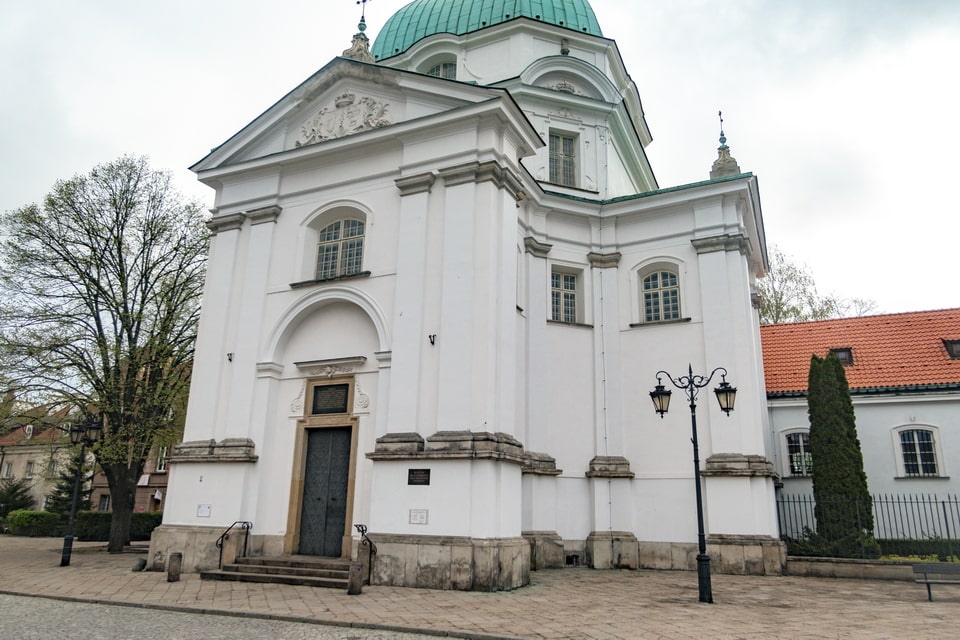
The story of this baroque style catholic church originated thanks to the battle of the 17th century when Polish troops under King Sigismund III (1566-1632) won the twenty-month siege of the russian city of Smolensk. Years later, the king ordered the construction of a monastery devoted to that triumph, the date of the 1611 siege ended, and June 13 was chosen as the date to commemorate Saint Anthony of Padua as the patron. The construction started in 1635, and a wooden church was built and passed to the order of the Franciscan reformers. It lasted for only two decades until, in 1657, it was deliberately burned down by Swedish troops during the Second Northern War (1655–1660). The new church in the same place was built under the supervision of architect Simone Giuseppe Belotti between 1668 and 1680, this time with bricks. In the later years, Belotti worked on the Krasinski Palace, the Basilica of the Holy Cross, and other memorable landmarks in Warsaw. The church territory expanded with time, and in 1866, the Franciscan parish was founded, but it was dissolved the next year by government decree, and the area was taken by the Diocesan priesthood.
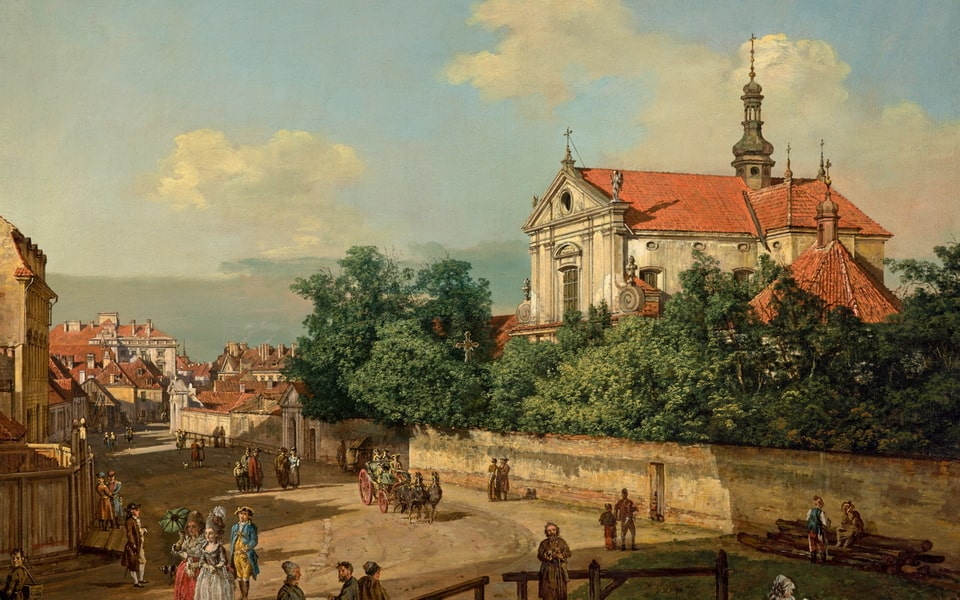
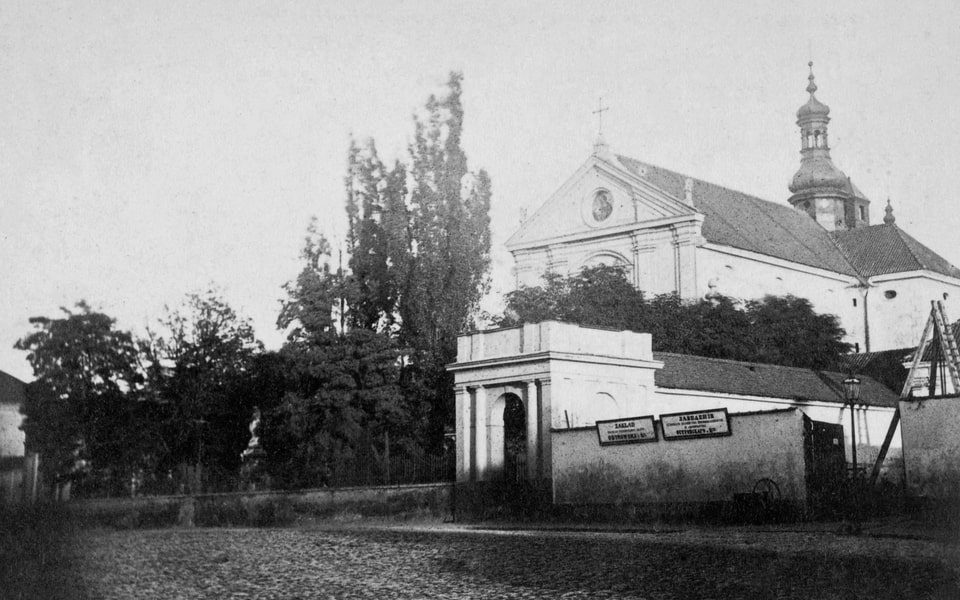
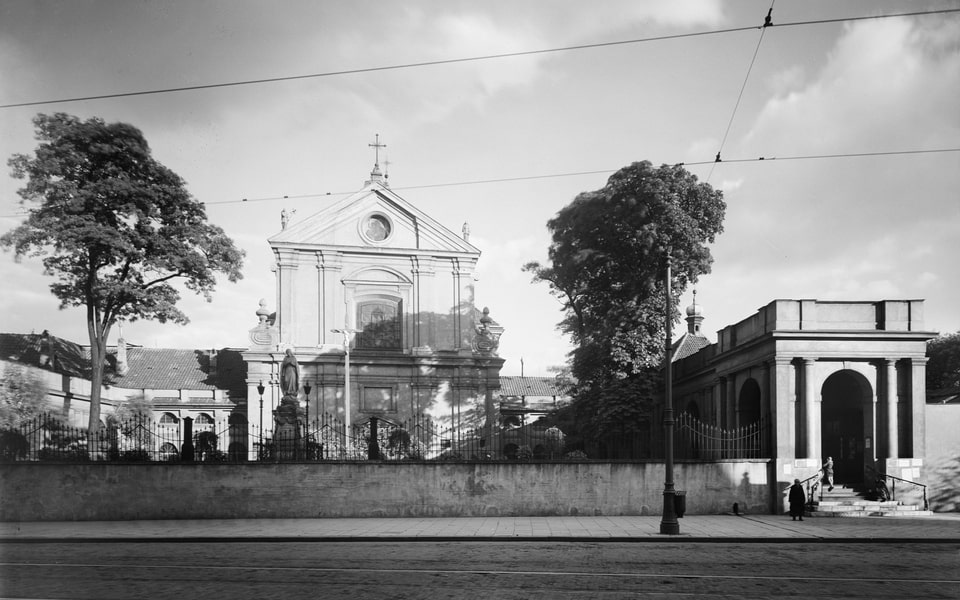
During the Warsaw Uprising, the area of the church became a part of the battle for the city center and was badly damaged by German fire. There was no specific stronghold here, but the Home Army fighters used the territory as a route from the Old Town. In one instance, they found dozens of bodies murdered by the Germans, some of them were partially burned with gasoline. The exact figure differs in sources, but more than one hundred people were executed by the Waffen-SS troops on the territory of this sacred place. Like many other buildings in post-war Warsaw, the Church of St. Anthony Padua stood in ruins for years until it was finally restored between 1950 and 1956. The renovated main altar was consecrated as late as 1969. It should be noted that back in 1949, both the church and the parish on its territory were passed back to the Franciscan Order.
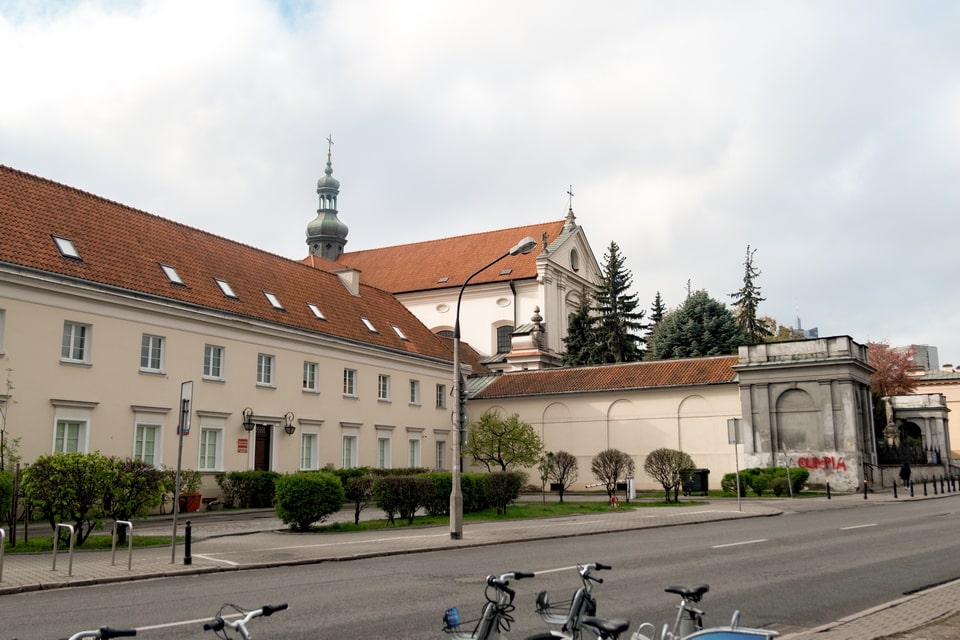
Visitor Info (2026): As an active place of worship, the church is open daily, and entry is free. Visitors are welcome to step inside and examine the interiors where intense fighting took place. Located at ul. Senatorska 31.
HYACINTH’S CHURCH (KOŚCIÓŁ ŚW. JACKA) BEFORE AND AFTER 1944
This famous church in the Old Town of Warsaw was also a child of the 17th century and was finished in 1638 after more than three decades of construction on the site of the wooden church of the Dominican order. In the years to come, a monastery and a bell tower were built on the territory. Similar to St. Anthony Padua, the area was badly damaged by the Swedish army and was restored in the 1660s. Another bad luck came in 1750 when a fire badly damaged the bell chamber. During the Napoleonic wars, a military hospital was temporarily located in the monastery, and we should keep this fact in mind. Maria Skłodowska Curie, who was born in Warsaw in 1867, lived with her family on Freta Street just next to St. Hyacinth’s church. Throughout the XVIII and XIX centuries, the church witnessed a period of peace and prosperity, and its library became one of the largest in the whole of Poland.
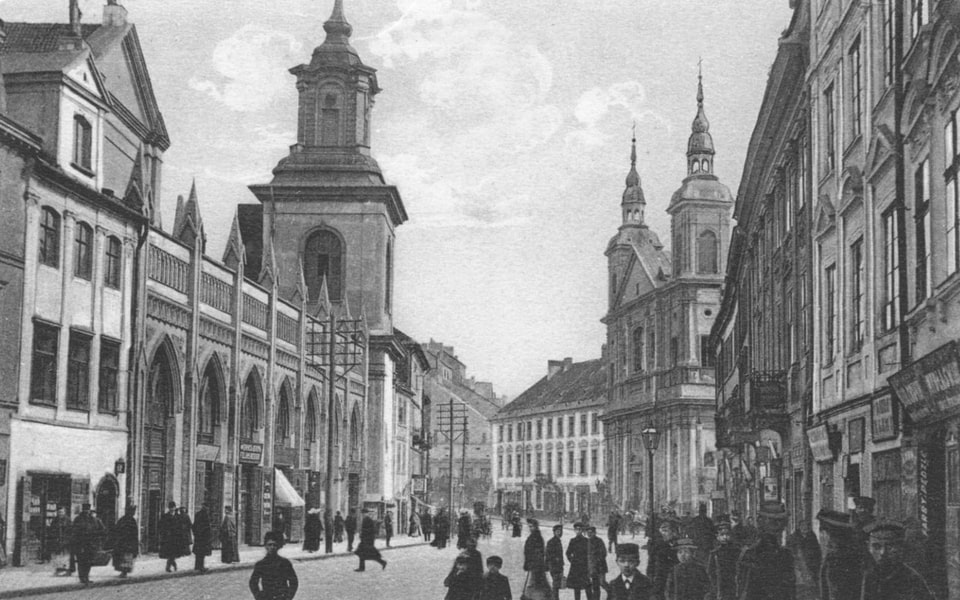
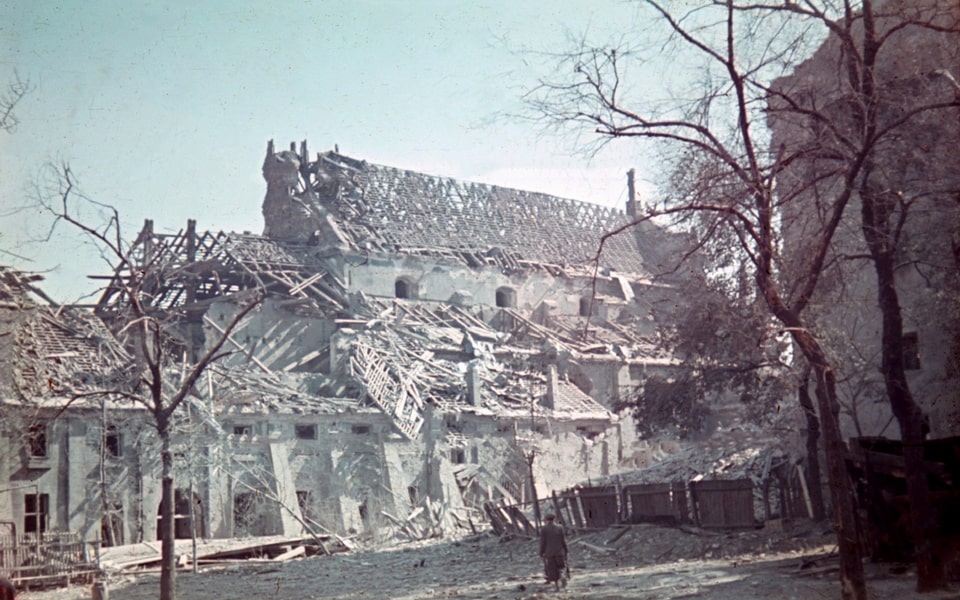
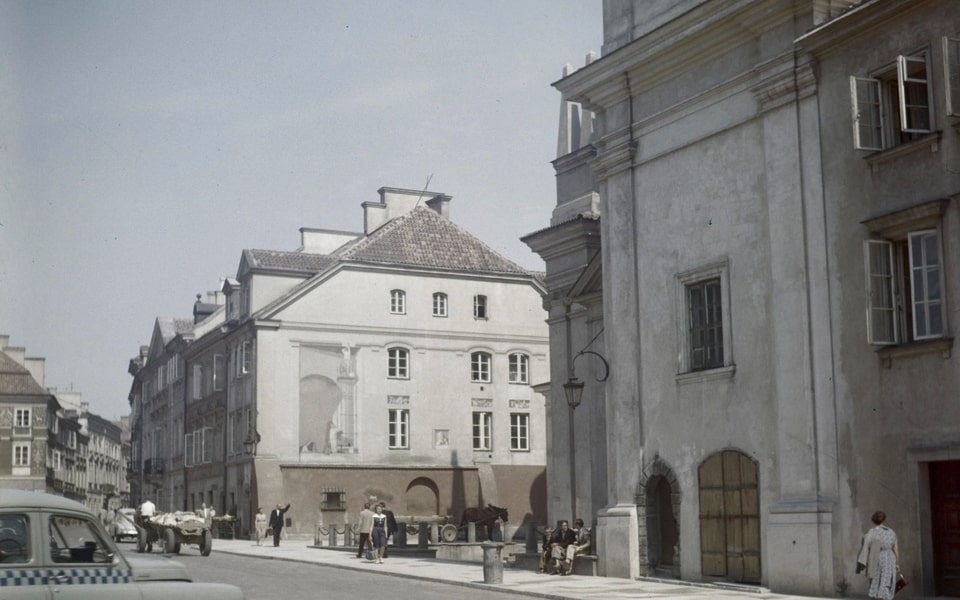
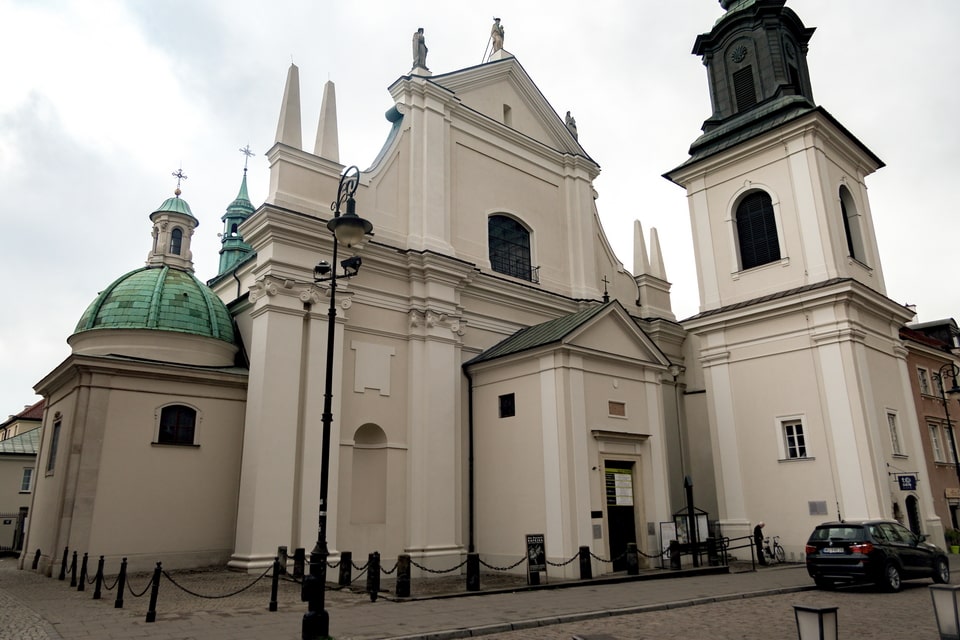
During the Warsaw Uprising, the AK command established several field hospitals in the controlled area, which treated both the fighters and the wounded civilians, and often served as a hiding place. The church and monastery of St. Hyacinth’s, better known to the Polish people as St. Jacek (named after the 13th-century Polish priest), became one of the largest hospitals of its kind during the Uprising. As the scale of the fighting and German retribution rose throughout August 1944, the number of people treated here skyrocketed to hundreds at a time. When the German forces identified the former sacred place as an insurgents’ stronghold, they specifically targeted it with artillery shelling. Hundreds of wounded people were buried under the ruins. When those who could walk left the area on August 29 with the hope of finding shelter in the city sewers, two hundred critically ill were left waiting for the German, who came on September 2. They brought petrol and set the building with people on fire, and most of them died of fire, smoke, and were finally buried when the ceiling collapsed. Dozens of bodies still in their hospital beds were found under the ruins in 1946. The reconstruction of St. Jacek began as early as 1947 but lasted for twelve years until 1959. The church restored its early Baroque style but lost the neo-Gothic elements. In 1965, St. Hyacinth’s church was included in the list of historical monuments.
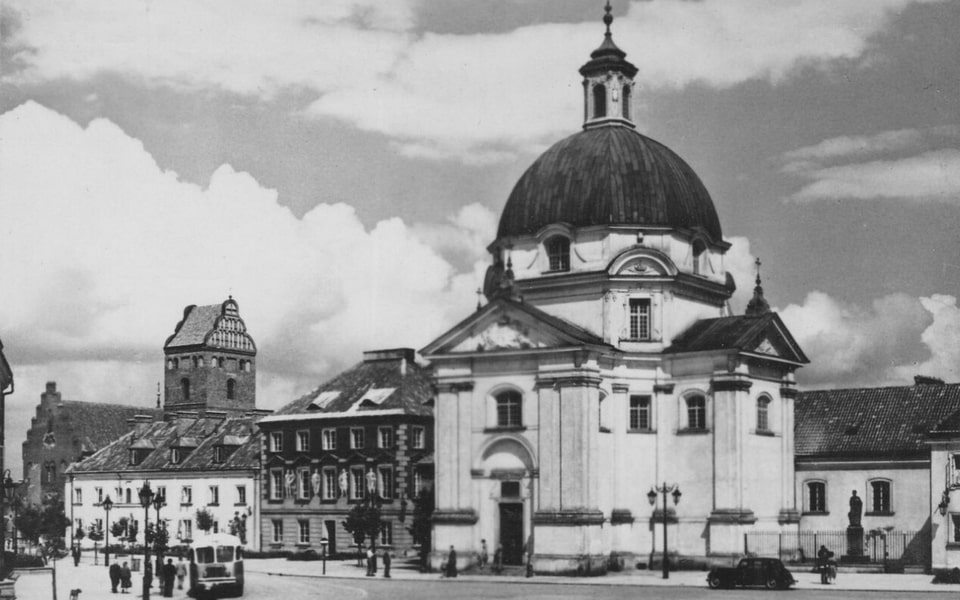
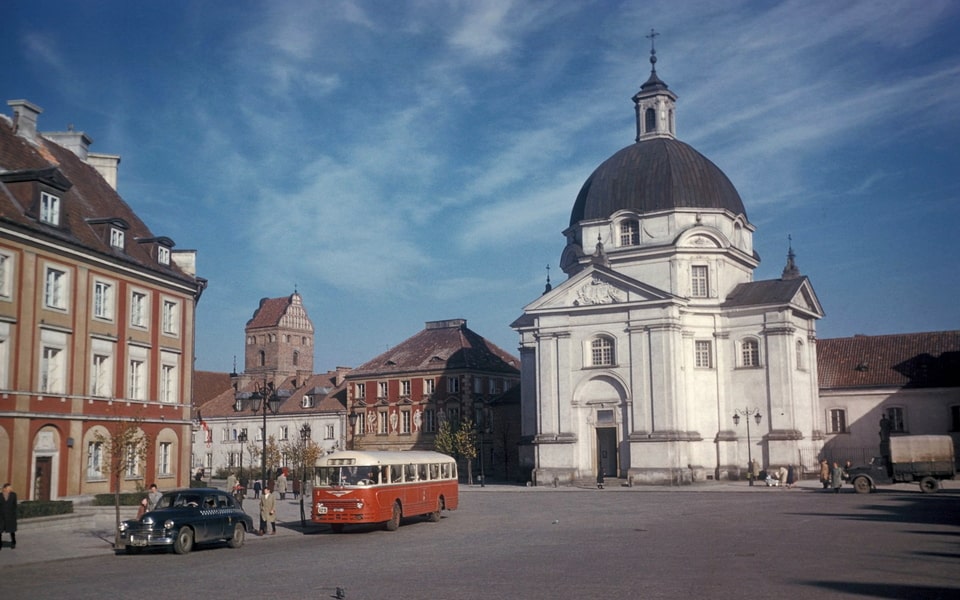
CASIMIR CHURCH (Kazimierz): AK HEADQUARTERS DURING THE UPRISING – ARCHIVE PHOTOS AND TODAY
The third church I want to talk about was the newest of the three discussed, though also built in the 17th century. There was no wooden structure on the site, but a mansion of a wealthy Polish family of Adam Kotowski built between 1682 and 1684. Four years after completion, the property was bought by Marie Casimir Sobieska, Queen Consort of Poland, Grand Duchess Consort of Lithuania, and the wife of King John III Sobieski. The Queen wanted to praise her husband’s victory in the battle of Vienna in 1683 and decided to build a church for the Benedictine Sisters of Perpetual Adoration of the Most Holy Sacrament. This was a female Catholic order founded in Paris and invited to Poland by Queen Marie Casimir Sobieska. When the new monastery and church for them were finished in general terms in June 1688, the nun moved in. The complete period of construction lasted for another four years until 1692. The new parish prospered in the XVIII century with new patrons and sponsors, which resulted in the construction of new altars devoted to Saint Casimir and the Virgin Mary, and later adding the crypts of the Sobieska family. In 1794, during the Kościuszko Uprising against russian and Prussian rule, the nuns donated some precious silver and equipment to the Polish army. The territory was badly damaged during the fire in 1855 and later renovated, and another renovation took place in 1936, a few years before the outbreak of WWII.
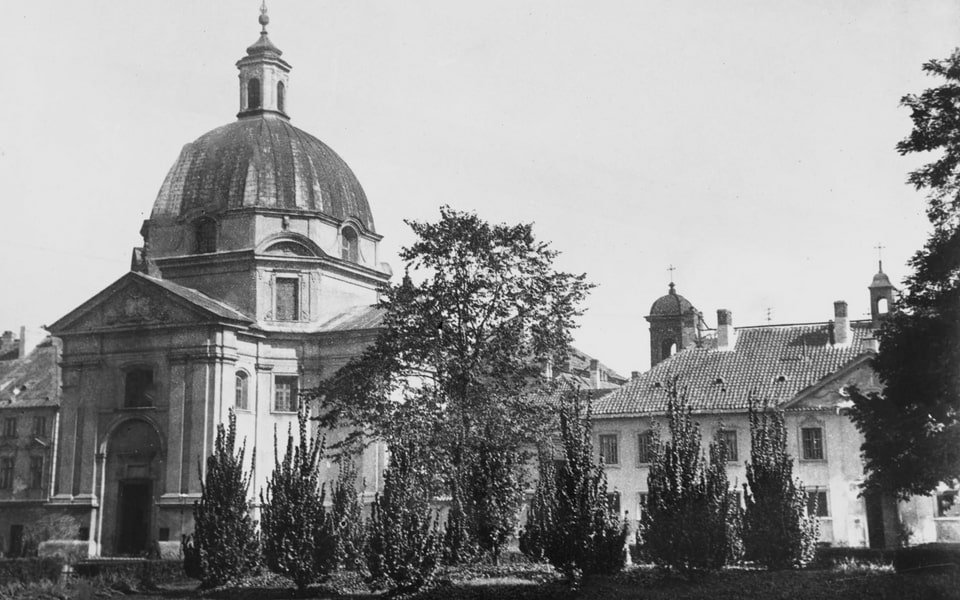

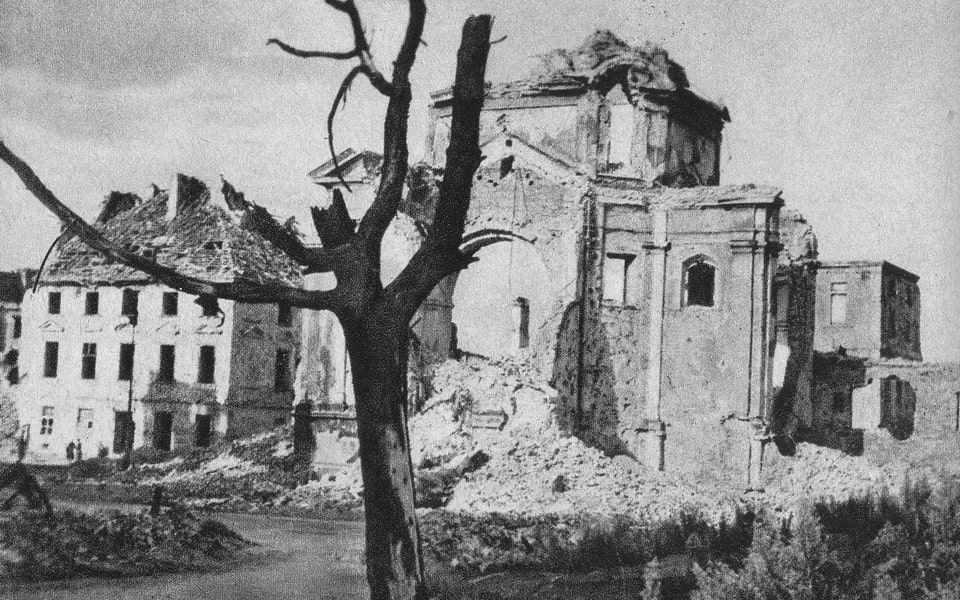
During the occupation, the church became a place of secret educational meetings, when Polish boys used to come here and listen to lectures on religion and history, which were forbidden in city schools. Similar to Jacka church, St. Casimir’s also became a hospital during the 1944 Warsaw uprising. Initially, it treated only wounded civilians and people whose homes were destroyed, but later on, the nuns and priests decided to take care of the wounded insurgents too, thus obeying their three hundred years of neutrality. When the Germans were informed about this fact, they targeted St. Casimir’s church with shelling and air bombardment. August 31 came as a day of great tragedy when at 3 p.m. the Luftwaffe bombers destroyed the crypt with four Catholic priests, thirty-five nuns, and around a thousand people inside, most of them buried under the ruins. A magnificent home for the Sisters of the Sacrament, with its white walls and a copper-domed roof, was destroyed. The church and its adjacent buildings witnessed restoration between 1947 and 1952 and were marked as a historical monument in 1965.
HALE MIROWSKIE MARKET (HALA MIROWSKA) AS AN UPRISING FIGHTING BATTLEGROUND
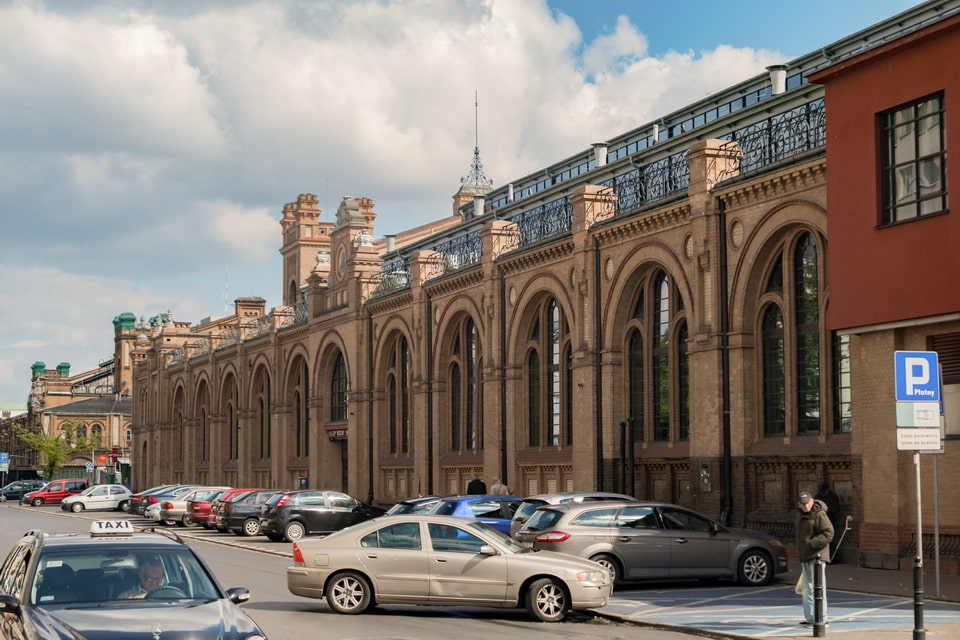
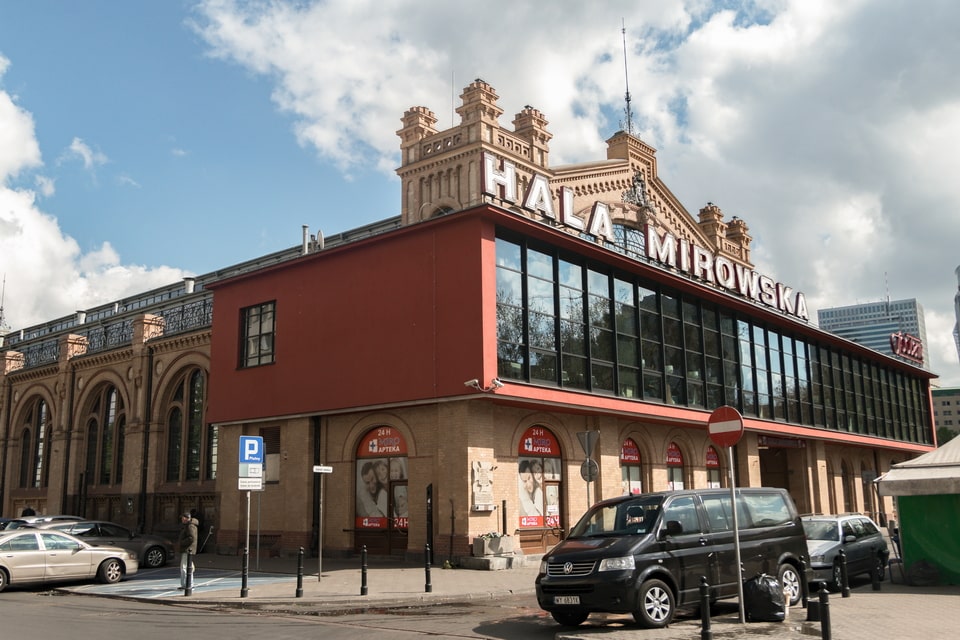
In the decades before the outbreak of the Second World War and the occupation of Warsaw, the Hale Mirowskie was the largest marketplace and commercial facility in the city. The construction began on October 15, 1899, and lasted for three years on the site of the former Polish military barracks from the 18th century. Two market halls, the western ‘Hala Mirowska’ and the eastern ‘Hala Gwardii,’ were created according to the designs of Bolesław Milkowski and Ludwik Panczakiewicz. The Polish word ‘Hala’ serves for ‘Hall’, and ‘Hale’ is the plural form. That’s why you can deal with two different variants: ‘Hala’ means one of the twin halls here, and ‘Hale’ the facility in general. The market was named after General Wilhelm Mier (1680-1758), the commander of the ‘Crown Guard Regiment’, whose barracks stood on the site where the market was finally built. The construction of an indoor commercial facility improved hygienic conditions and boosted trade relations in Warsaw. Each of the twin market halls was 95 meters long and 43 meters wide, and the metal structures were manufactured by K. Rudzki i S-ka, the construction company of the Prudential building. In total, the newly built complex, divided into sections based on the classes of goods, included 515 separate commercial stands. The market facility was so popular among citizens that an open-air market rose next to it in addition to several other retail facilities nearby, thus turning the area into a commercial center of Warsaw.
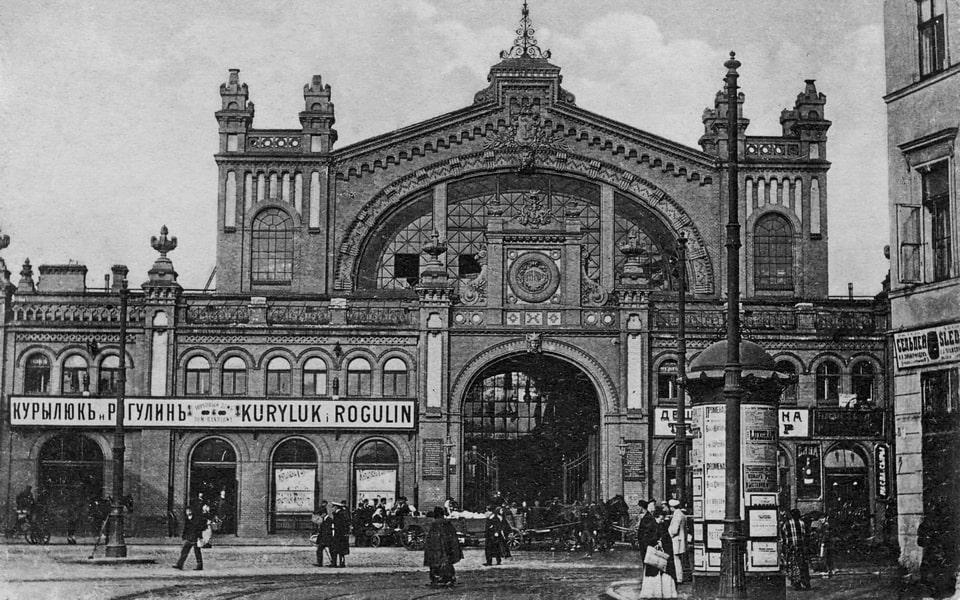
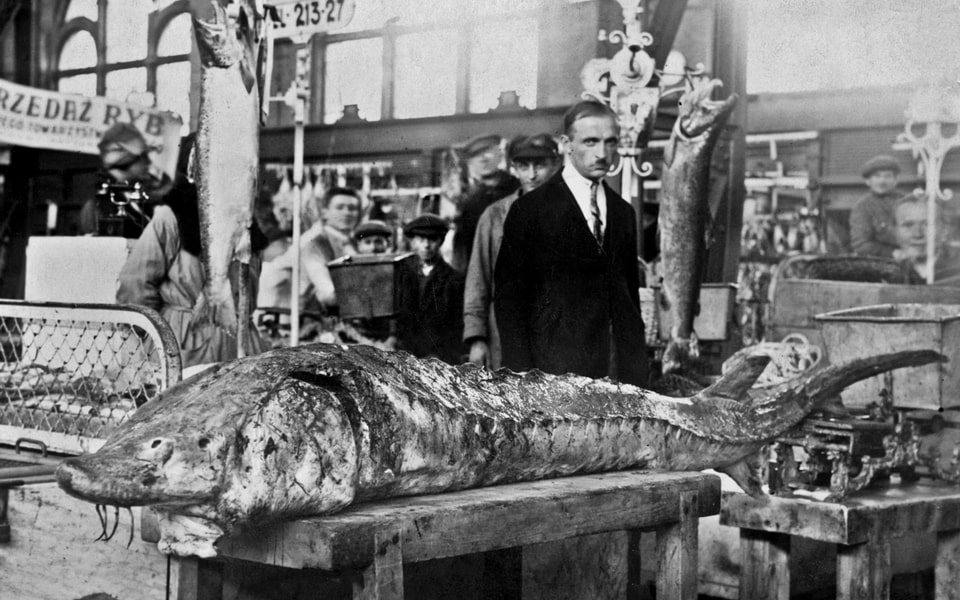
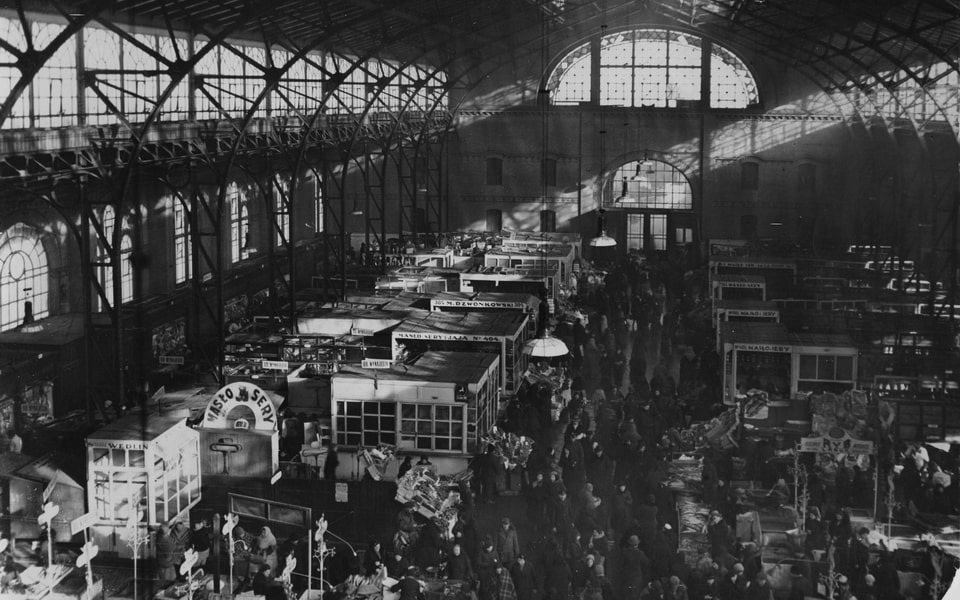
After the occupation in 1939, Hala Mirowska continued its commercial activity, and the number of retail stalls doubled compared to the pre-war period, with 1600 different commercial stalls at peak. In 1940, the facility became a neighbor to the established Jewish ghetto in Warsaw, being squeezed between the larger northern part and a small southern part of the restricted area, not far from the infamous ‘Bridge of Sighs’. With the outbreak of the Warsaw Uprising on August 1, the Hale Mirowskie market facility became one of the AK targets in the city center, not least because the Germans had used some premises as their food supplies storage. A small unit inside was defeated by the Polish patriots, who took their machine gun and four rifles and turned the two market halls into one of the Home Army’s strongholds.
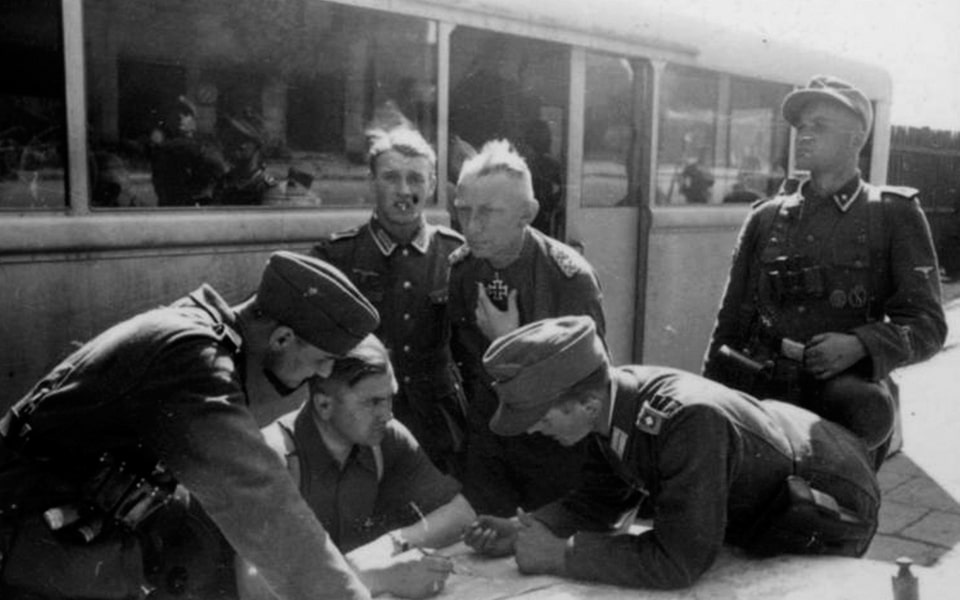
The SS men came back with the fight to Hale Mirowskie in the late hours of August 7 under the command of SS-Sturmbannführer Kurt Weisse. Their idea was to move faster in the direction of the Saxon Gardens and the Bruhl Palace by setting the whole area in front of them on fire to make advances behind the flame and smoke. The German units got an order to seize the ‘Markthallengelände’, and at noon on August 8, they took control of the market facility. On their way, they annihilated the AK units by cutting the latter’s line of retreat, and the SS men also massacred several hundred civilians, whom they ordered to clean the barricade on the streets, and then they machine-gunned them at the territory of Hale Mirowskie, and many more died because of fire. When one of the groups of civilians reached the facility several days later, they found piles of dead bodies, among them children and women, with their belongings piled next to them. The German units finally reached the Bruhl Palace on August 9.
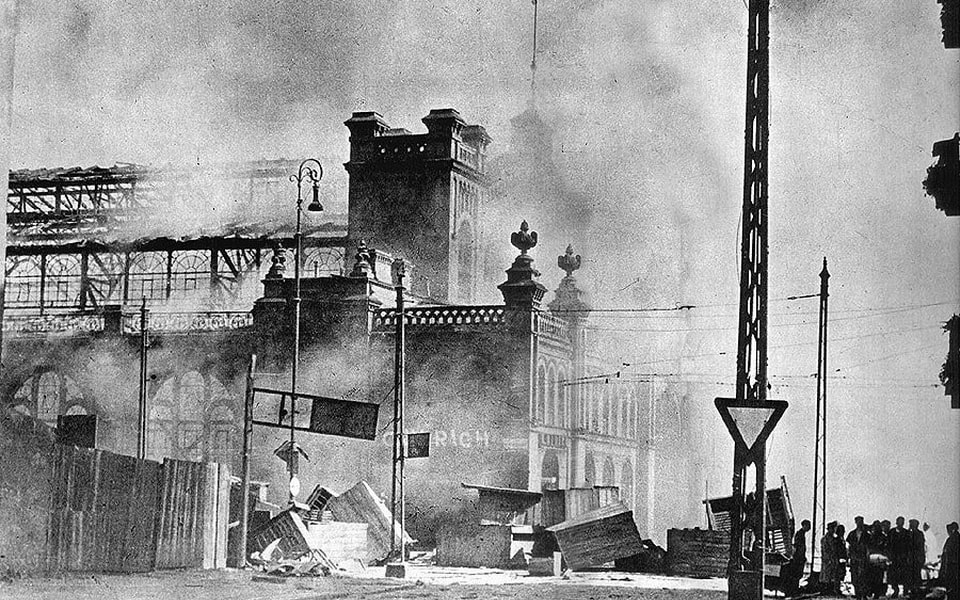
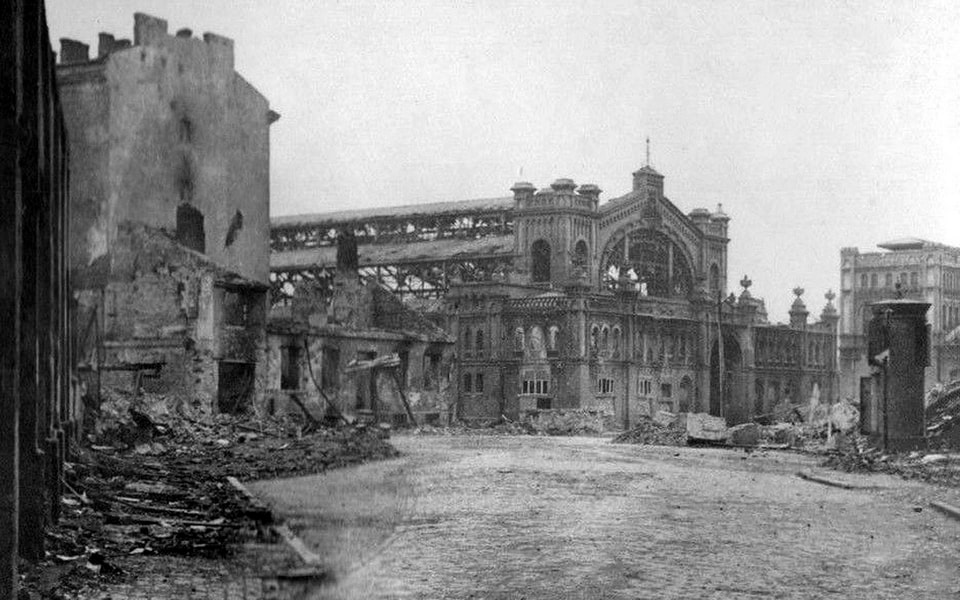
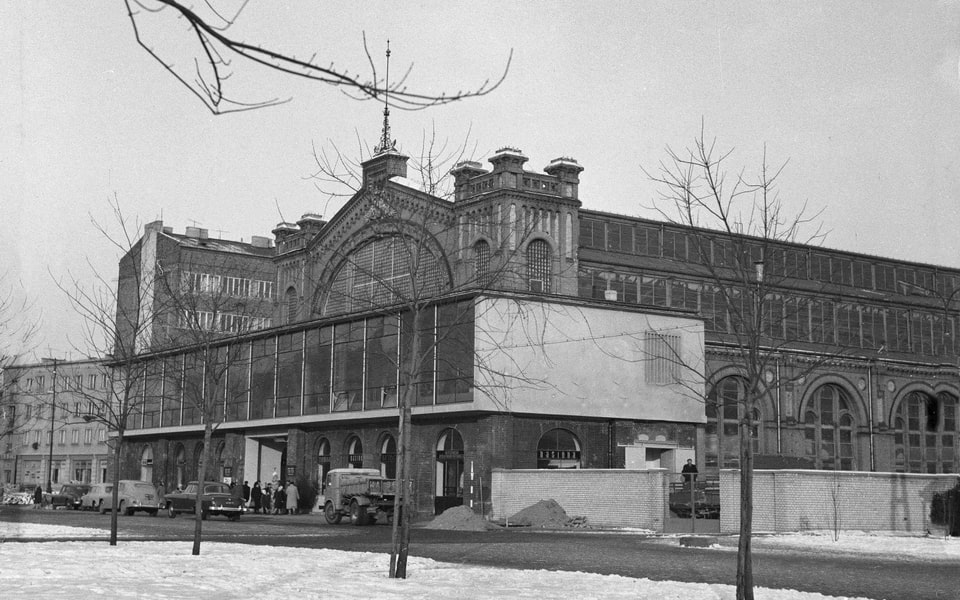
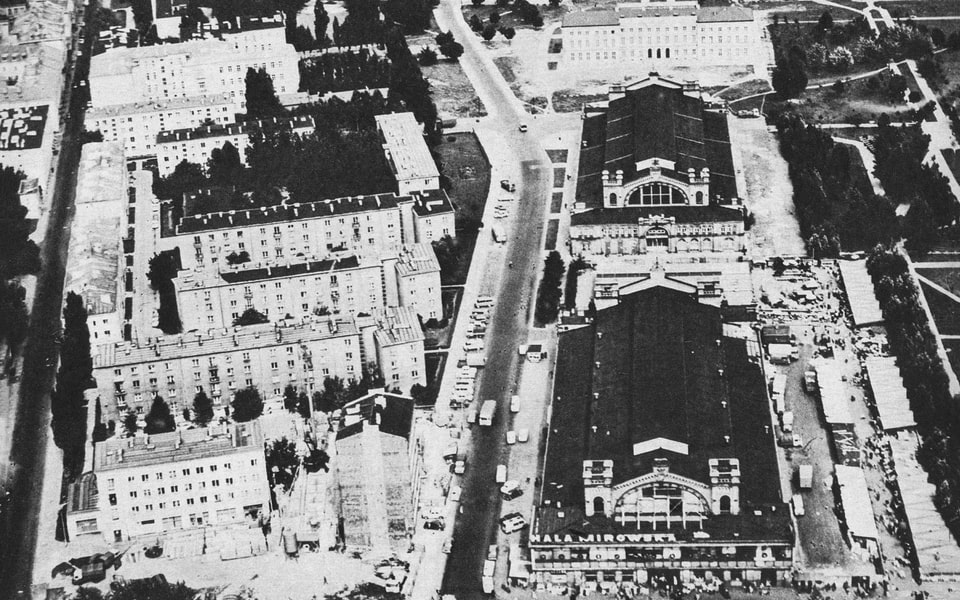
After the war, it was decided to restore the burned-out market halls, which had withstood the fire and did not collapse. Even before the facility was restored, a commemorative plaque devoted to the victims of the August 7-8 massacre was put on the wall of the Western hall known as ‘Hala Mirowskie’. It preserved the commercial nature after the reopening in 1962 and witnessed the addition of additional spaces, which enlarged the retail area. The Western hall was renovated one more time in 2011, and in the process, the traces of 1944 were preserved on the facade as a commemoration. The Eastern Hall, known as ‘Hale Gwardia,’ was put into use once again as early as 1948, and for some time, the hall served as a temporary bus depot, well recognized for its French Chausson buses. Already in 1953, ‘Hale Gwardia’ became a sports ground facility and that year even hosted a boxing championship with a ring able to accommodate more than 5000 people. After the fall of hated communism in Poland in 1989, the Eastern Hall regained its commercial nature, and nowadays it is still owned by the city of Warsaw, which ran a renovation in 2017. Similar to the Western hall, its twin brother preserved the traces of WWII on its walls as a reminder.
THE INFAMOUS MOKOTOW PRISON: WHAT THE BUILDING LOOKS LIKE TODAY
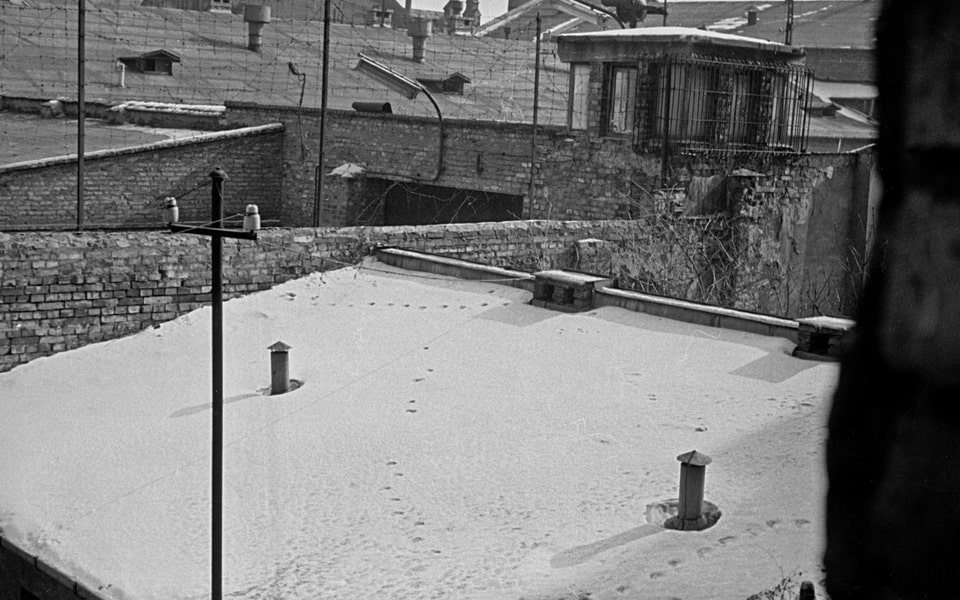
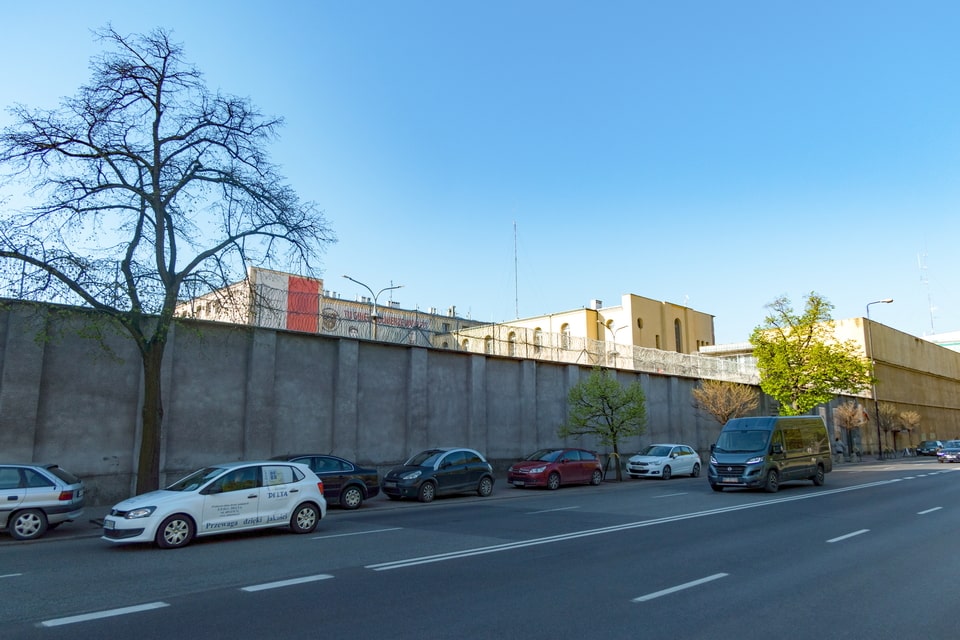
This prison has become infamous for the Polish people both in the pre-WWII period, during the German occupation, and the postwar era of the communist murderous regime. The point here is that the facility still serves its initial purpose as a place of detention in the same walls where thousands of people were tortured and killed. The prison in the Mokotów district was built by the occupational Tsarist authorities between 1902 and 1904. A large area of six square hectares with a large main building, additional premises, workshops, offices, a prison hospital, a kitchen, and chapels, was aimed to accommodate up to eight hundred inmates at once. In the years before the Great War, the prison complex was used by criminal police to detain people loyal to the regime. In the interwar years of Independence, Mokotów prison was expanded and refurbished for use by the Polish attorney’s office. Zygmunt Bugajski (1887-1940) was a theorist of the penitentiary system and became the prison’s first warden. He would be killed in the Katyn forest by the russians among other Polish patriots, in March 1940. Apart from Catholic and Orthodox chapels and a small synagogue, the late 1920s witnessed the construction of a prison library, a garden, and even a gymnasium.
Like many other prison facilities, during the German occupation, Mokotów prison was seized by the Gestapo and turned into a place of the suppression of Polish people by torture, humiliation, hard work, and executions. It became a kind of auxiliary detention center for the larger Pawiak Prison, where former Polish politicians, army officers, activists, intelligentsia, resistance fighters, and civilian hostages were held. Soon, Mokotów prison gained the same murderous fame as Pawiak had: often a final destination, from which one could leave only dead or being sent to one of the Nazi concentration camps. Throughout the occupation, Mokotów prison, like its older brother Pawiak, was constantly overcrowded and at its peak housed an enormous 2,500 prisoners on the territory designed for a third as many people. In late July 1944, only days before the outbreak of the Uprising in Warsaw, around a third of prisoners in Mokotów, 655 in all, were sent to other prisons (mainly Poles) or released (mainly Volksdeutsche).
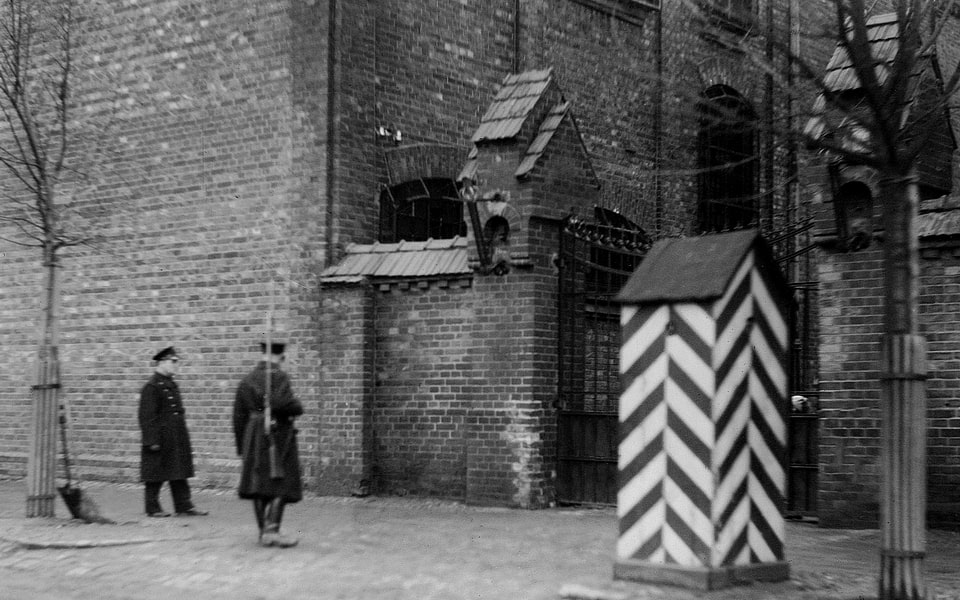
On the first day of the Uprising, August 1, 1944, there were 794 prisoners still detained at Mokotów, and this day saw the first attempt of the Home Army to take control of the facility. The fighters of ‘Obwód V Mokotów’ (Sub District V Mokotów) of the AK under the command of Aleksander Hrynkiewicz (1896-1981) attacked German-controlled buildings along Rakowiecka Street, and the 1st assault unit, comprised of 80 men and women, assaulted the territory of the Mokotów prison. The attackers managed to capture an administration building, but being poorly armed, were later forced to retreat by the German reinforcement from local SS barracks. The fight cost the Germans 9 people dead and another seventeen wounded, and they decided to retaliate. On August 2, after the AK unit was forced out of the area, the SS men killed the captured fighters, including those wounded. Then, they made several dozen prisoners dig three long ditches and then shot around six hundred people, including the former Polish guards of the prison. While the massacre was in progress, two hundred inmates managed to launch a revolt, barricaded themselves, and then managed to escape to the city, and many of them then joined the Polish fighters during the Uprising.
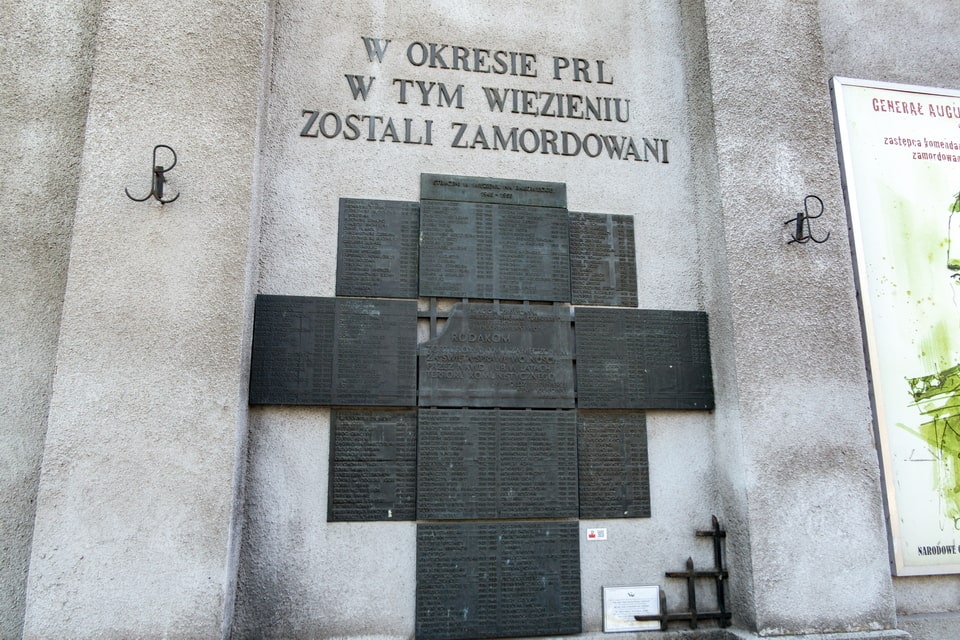
Despite fierce and courageous attempts of the Home Army to attack German strongholds in the Mokotów district, until the end of the Warsaw Uprising, the area around Mokotów prison on Rakowiecka remained in German hands. In contrast to the city center, the Mokotów area was not destroyed street by street, mainly because the occupational forces regarded the district as ‘Aryan’ and most of the buildings, including the infamous prison, remained standing after the Uprising. When the Germans finally left Warsaw in early 1945, the Mokotów prison facility was seized by the russians and turned into a detention center for their occupational purposes, first to detain Germans and later to prosecute Poles, including the surviving Home Army fighters. The prisoners were held in inhumane conditions, and were subjected to interrogation and torture, and this practice lasted until the fall of communism in 1989. The exhumation was conducted in April 1945, which revealed around seven hundred bodies of those killed and buried on the territory of the prison or the adjustment area. In 1980, SS-Obersturmführer Martin Patz, who commanded the 3rd SS Reserve Panzergrenadier Battalion, primarily responsible for the August 2, 1944, execution in Mokotów, was sentenced to only nine years of detention. Getting back to the prison, after gaining Independence, the facility remained a detention center, though nowadays visitors can see the commemorative plaques and banners on its walls devoted to Polish patriots tortured to death or murdered here.
RACZYŃSKI PALACE (PAŁAC RACZYŃSKICH); FROM RUINS TO RETORATION
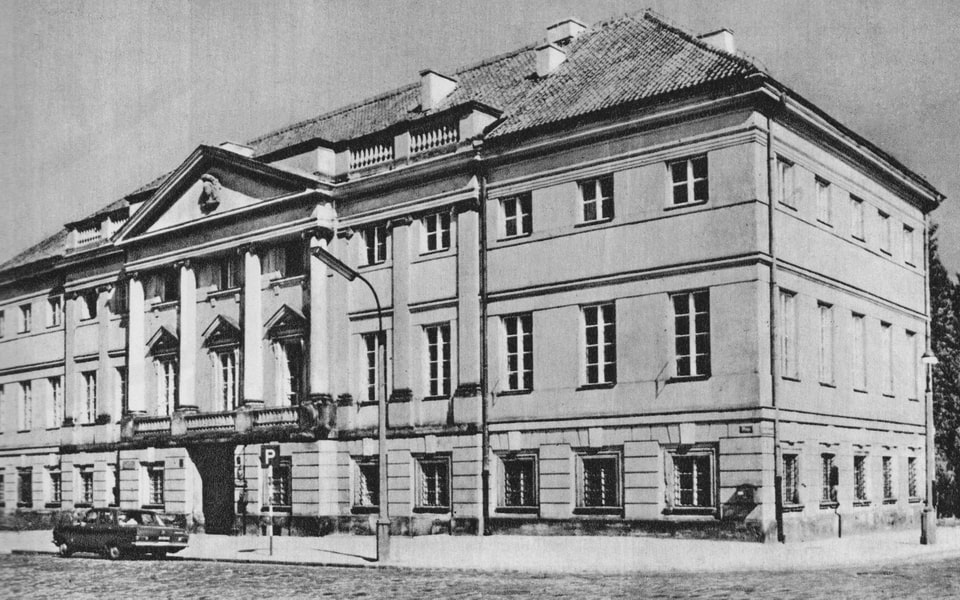
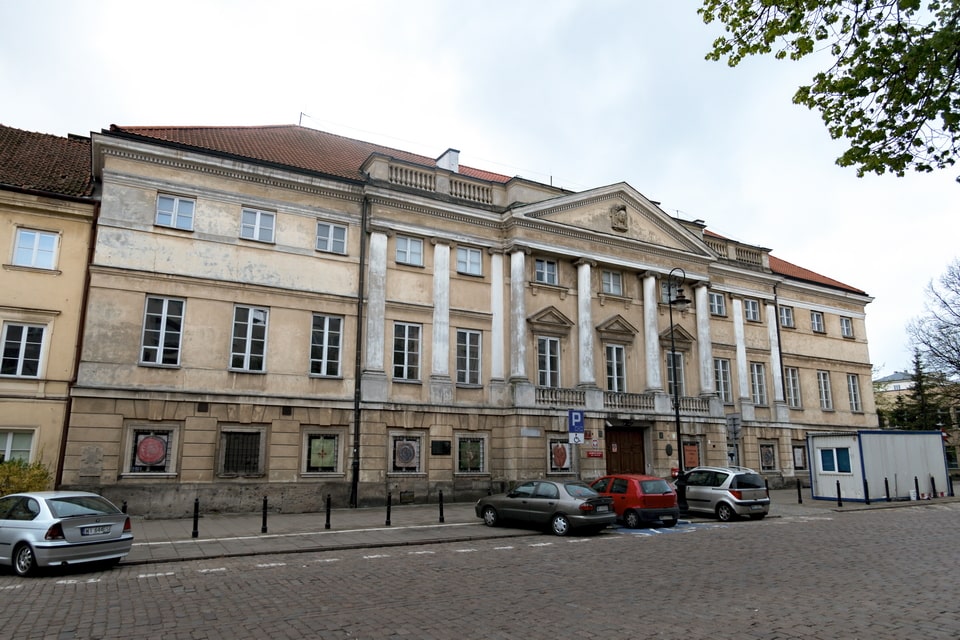
Getting back from Mokotow to the Warsaw city center one more time, to the area of the Jacka Church and the Museum of Marie Curie, here stands another memorable location closely connected to the German occupation and the 1944 Warsaw Uprising. ‘Palac Raczynskich’ was built at the turn of the XVIII century in 1702-1704 on the site of the older brick building. In the following decades, the newly built palace changed owners several times, who gradually renovated it with different stylistic elements. Finally, in 1827, the Palace was bought by the city and, since then, has accommodated the Government Commission of Justice. The 1850s witnessed another period of restoration and construction. During the Great War, the place was looted by the Germans, who confiscated some valuable elements of the interiors, but after gaining Independence, the palace was once again restored and became a seat of the Polish Ministry of Justice. The last pre-war renovation of ‘Palac Raczynskich’ took place in 1936.
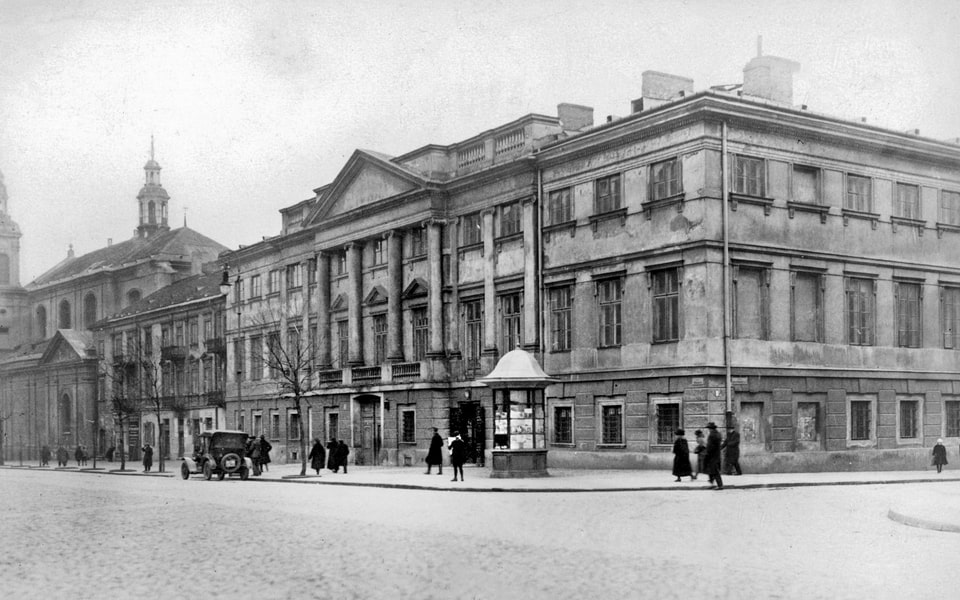
When the Germans came back in 1939, they seized the palace and turned it into the office of the so-called ‘Deutsches Obergericht’, in simple terms, the branch of the German court in the occupied Polish territories, which dealt with court cases against the Germans and Volksdeutsche. On January 24, 1944, one of the palace walls witnessed the mass murder of fifty Polish prisoners taken here from the infamous Pawiak prison and shot from the side of Kilinskiego Street. The seizing of the Raczynski Palace in the first days of the Uprising was one of the early successes of the Home Army in the city center. The site was destined to become the largest AK hospital in the Old Town area of Warsaw during the Uprising and was established here as early as August 4. In the following weeks, several other hospitals were evacuated here, and between August 13 and 20, the Palace also housed the temporary field headquarters of the Home Army in Warsaw. On August 13, a German Sd. Kfz. 301 (Borgward IV), a heavy cargo carrier with 500 kg of explosives aimed to destroy barricades, exploded on Kilinskiego Street, killing three hundred people, leaving hundreds more wounded, and damaging the right wing of the Palace. Around half of the bodies scattered across the area were then buried in ditches in front of the palace, and the wounded were treated in the hospital, whose surgical premises on the lower floors were crowded with up to five hundred wounded people at that time, among them even German soldiers.
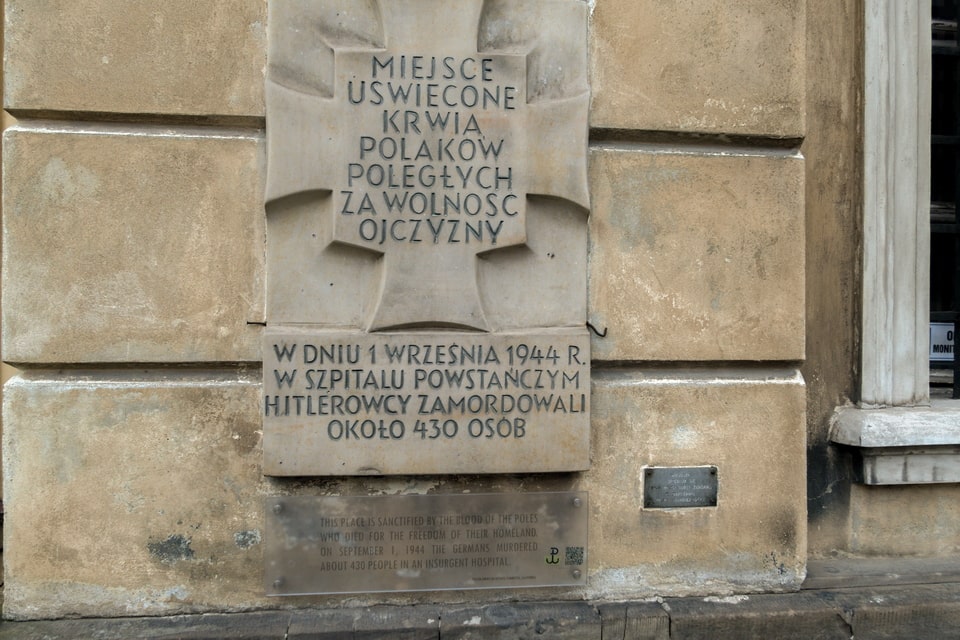
The Raczynski Palace hosted the field hospital throughout August 1944, but the situation deteriorated with the German advance into the Old Town. On September 1, the Home Army fighters and civilian patients who could still walk left the site, and those remaining were put into civilian clothes. The Germans came the next day, when around four hundred badly wounded people were still inside the Palace. The SS officer gave an order to his men to ‘clean out’ the site in ten minutes, who immediately blocked the entrances. The Germans set several surrounding buildings on fire, including the tenement houses across Kilinski Street, and then the shooting inside the former hospital at the Raczynski Palace began. They used pistols and Schmeisser submachine guns to kill the wounded people in their hospital beds, threw grenades into the basement rooms, and tried to set the staircase on fire with petrol. A few patients tried to escape but were caught by the SS men and shot on the spot; others vainly pretended to be dead but were killed anyway. Most of the patients, around four hundred men on the first and second floors, were massacred on the same day, September 2, 1944, but the palace was enormous, and a group of people managed to hide in the underground floors. Several days later, they were taken out of the basement by another group of Germans, who did not kill the survivors.
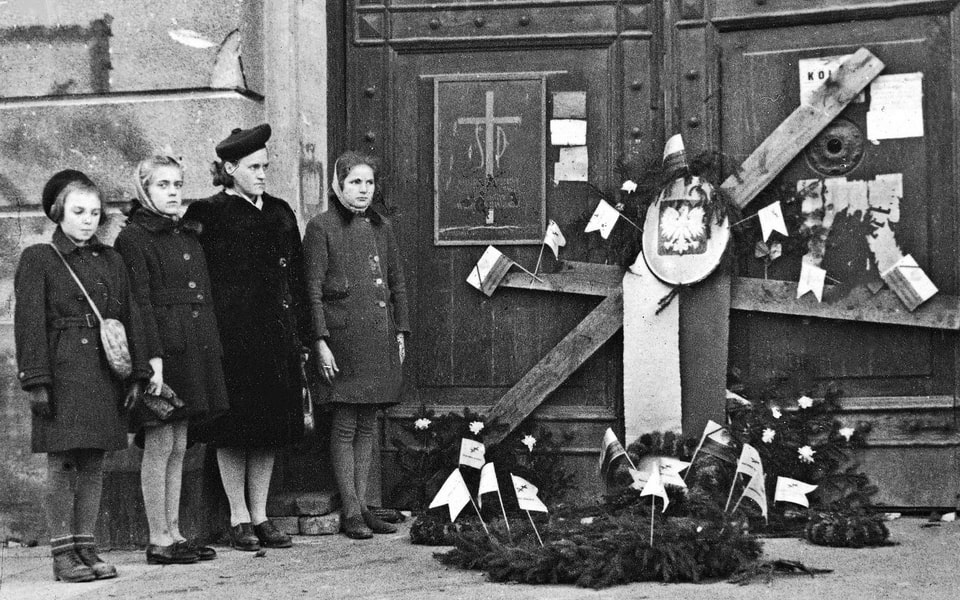
The Palace was restored in 1948-1950, and in 1952 accommodated the ‘Archiwum Główne Akt Dawnych w Warszawie’ (Central Archives of Historical Records in Warsaw), which included the historical records on the history of Poland starting from the 12th century. Unfortunately, during the war and particularly during the Warsaw Uprising, the Germans destroyed 90% of the pre-war archives. The years 1972-1976 witnessed another reconstruction of the palace, mainly its ballroom. Today, a plaque on the wall of Raczynski Palace commemorates the fate of the people who were killed in the Uprising.
THE WARSAW ARSENAL: WHERE THE UPRISING’S FIRST WEAPONS WERE SEIZED – SITE TODAY
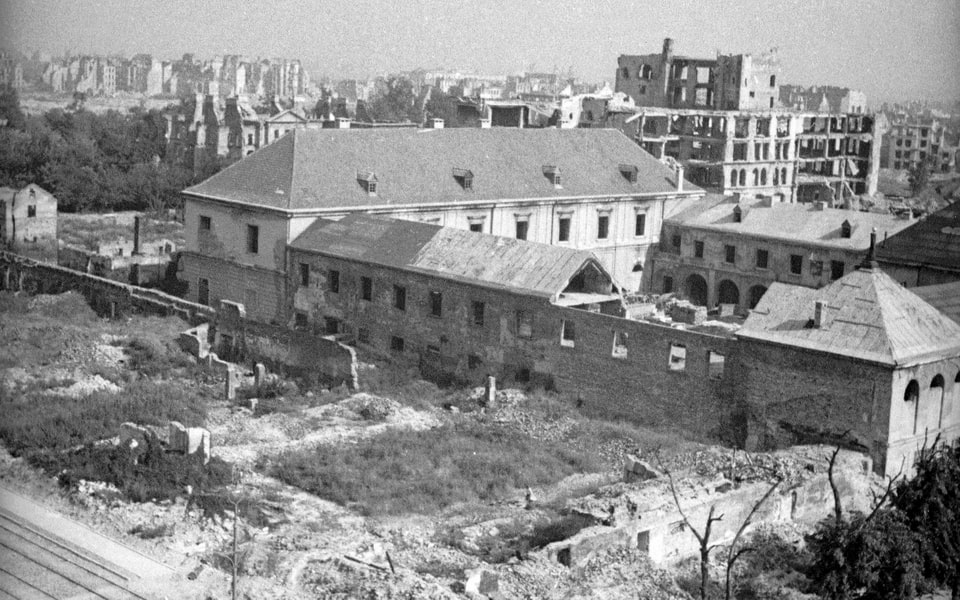
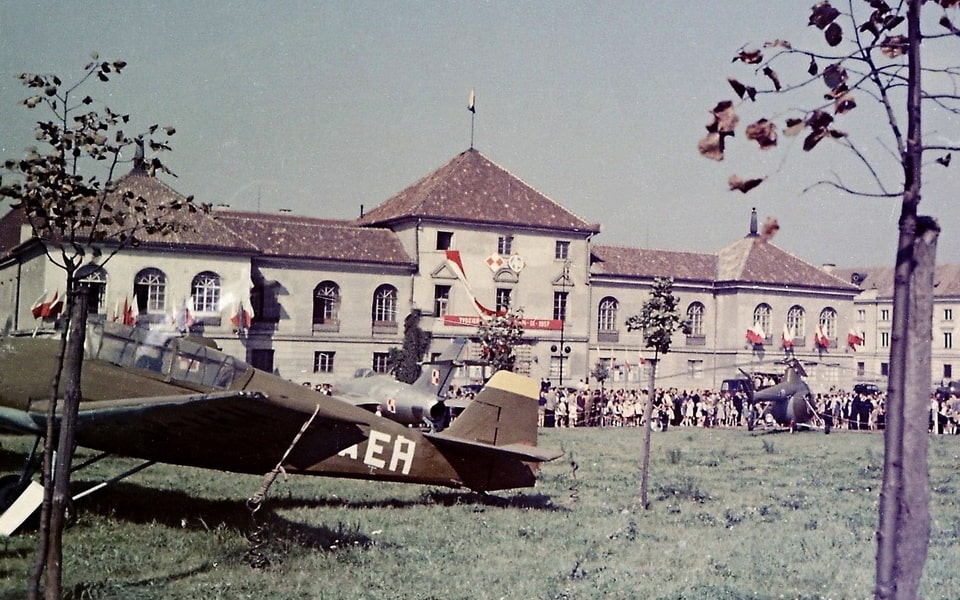
Another important Warsaw Uprising location can be found on Dluga Street, further south and adjacent to the famous Krasinski Garden. The first building on this site appeared in the mid-16th century as a veteran’s house, but took the better-recognized shape during the substantial reconstruction in 1638-1643. Built as a city’s arsenal, its walls gained additional strength for the possibility of defense and a necessity to sustain direct mortar hits. The XVIII century saw two renovations, and in 1794 the arsenal building became a scene of fierce fighting between Poles on the one side and occupational russian forces on the other. Another restoration came in 1817, and one more in 1835 following the ‘November Uprising’, after which the occupants used the arsenal as a detention center. After Poland gained its Independence in 1918, the building preserved its nature, and in the late 1930s, it was once again repurposed, this time into a city archive, in parallel with another renovation, which restored much of the original XVII century look. The Arsenal was spared from heavy bombardment in September 1939. On March 26, 1943, a Polish underground operation called ‘Akcja pod Arsenałem’ (Operation Arsenal) took place on Dluga Street next to it, when Polish fighters attacked the German police vehicle, which transported prisoners from Pawiak Prison to the Gestapo headquarters at Szucha Avenue. As a result, twenty-five men and women were freed.
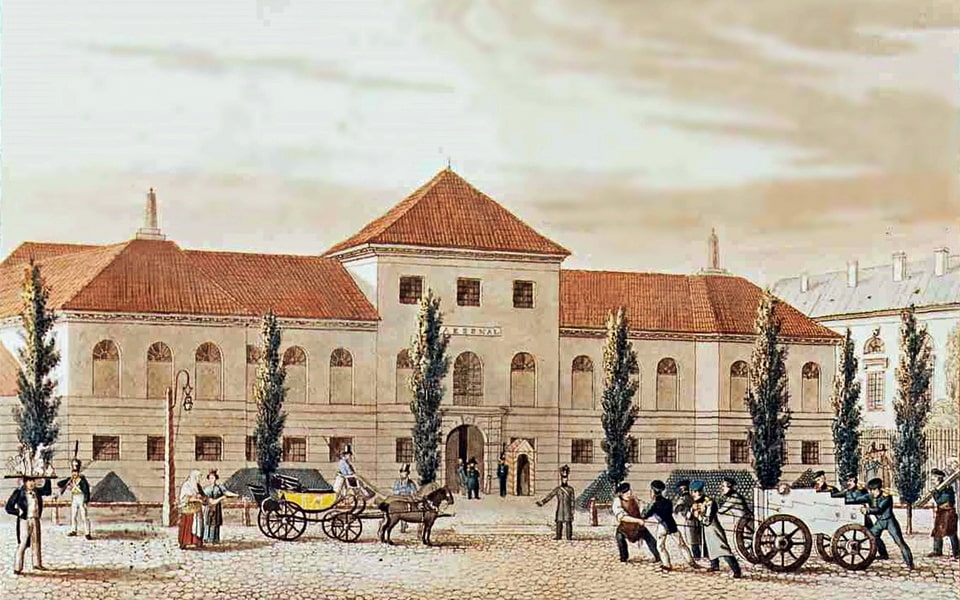
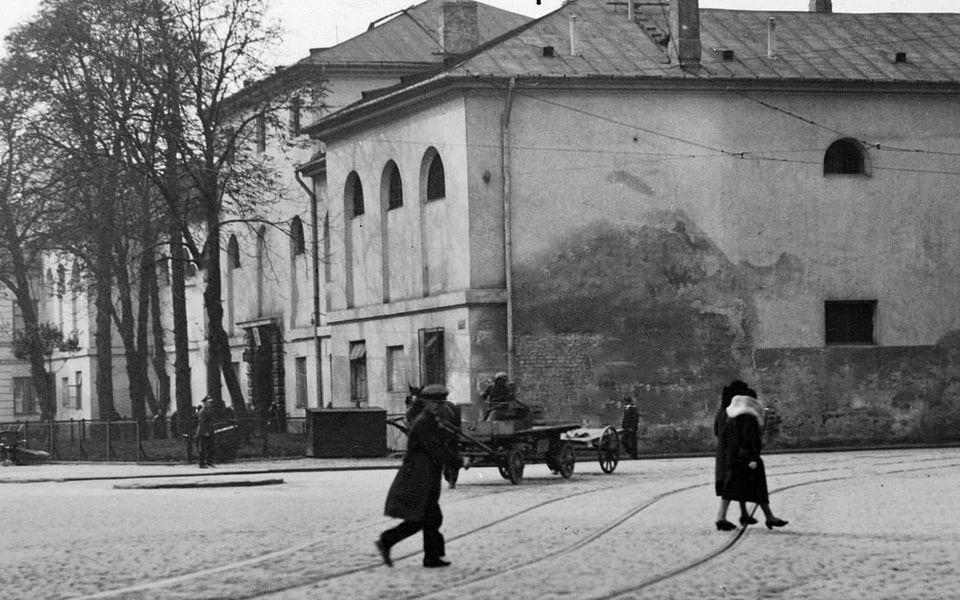
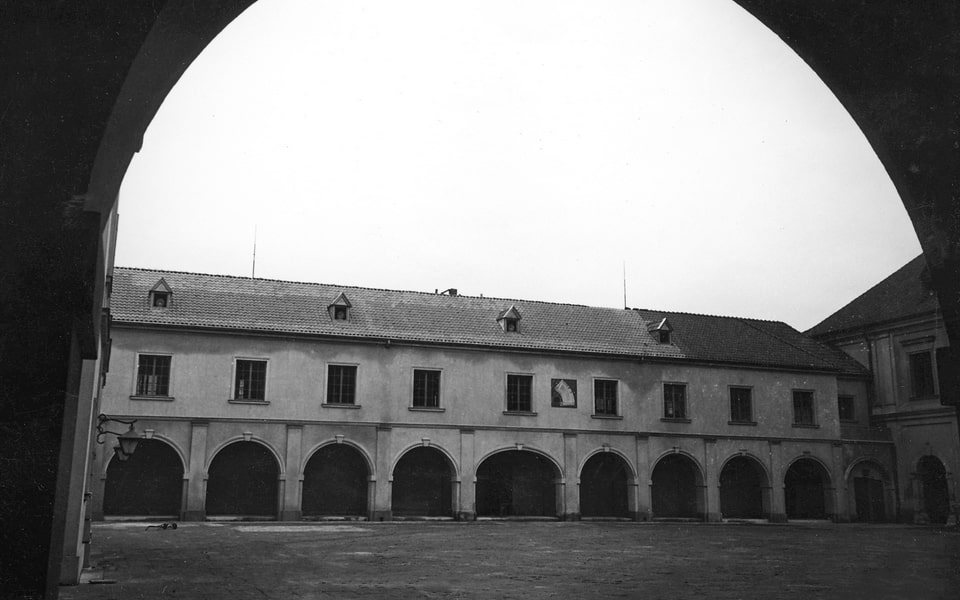
The Warsaw arsenal became one of the Home Army’s strongholds in the center of the city, particularly important as a gate to the Old Town from the Western direction. Even during the heavy fighting, Poles transferred some documents and pieces of art to the arsenal from other, less-defended locations. Because of its importance for the German advance into the city center toward the Vistula, the key bastion of the insurgents on Dluga Street became a target for bombs. On August 23, they unleashed incendiary air strikes on it, backed by the shelling with 75-mm assault guns, until the fire engulfed the whole building and the Polish fighters had to abandon the arsenal in the east direction. Unfortunately, after the fighting, the Germans destroyed the remnants of the legendary building. The arsenal was reconstructed in 1948-1950 under the supervision of a famous Polish architect, Bruno Zborowski (1888-1983), a former Home Army fighter and, after the war, an inspector of the Capital Reconstruction Office. In 1959, the building was accommodated by the local archeological museum.


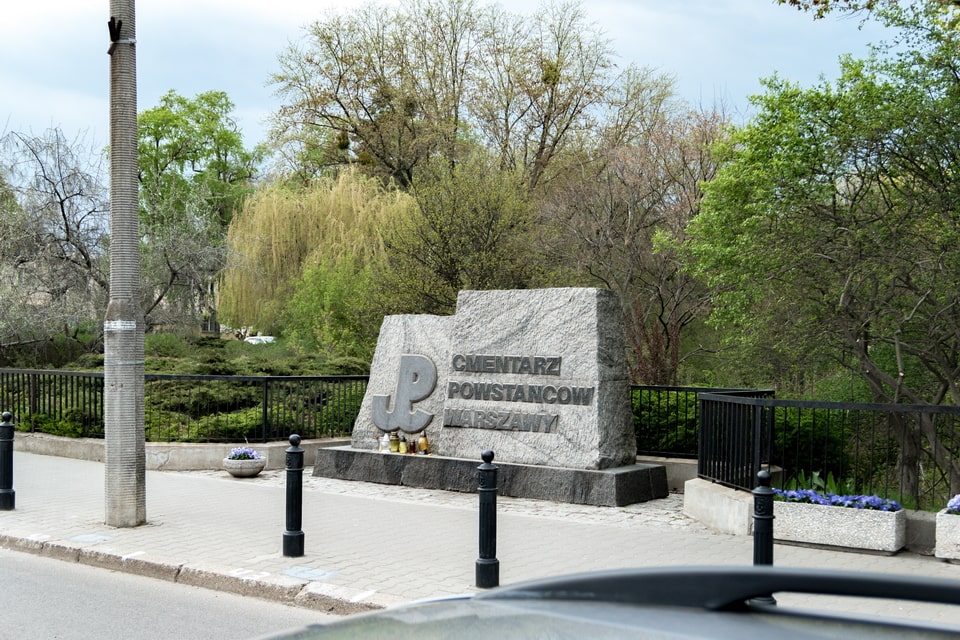
WARSAW INSURGENTS CEMETERY (CMENTARZ POWSTAŃCÓW WARSZAWY); RESTING PLACE OF THE 1944 UPRISING FIGHTERS
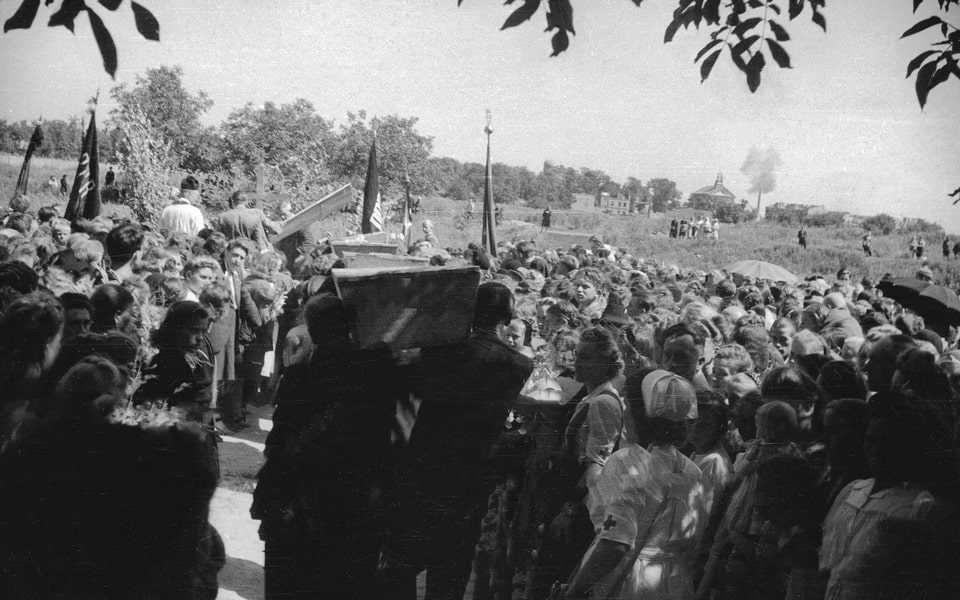
There are two large war cemeteries in Warsaw, and foreigners often get confused about the nature of these two monumental Polish resting places related to World War Two. The smallest of the two on Wolska Street in the western part of the city has an area of only 1.5 hectares but serves as a resting place for more than 100,000 victims of war in Warsaw. In simple terms, this cemetery was created in late 1945 to bury the victims of the Warsaw Uprising, particularly from the nearby Wola and Ochota districts, a place of the unprecedented massacre in August 1944. The first burial ceremony took place in November 1945, and the largest one in August 1946, when 117 symbolic coffins full of human ashes collected in mass burials in Warsaw, were taken here. More than five tonnes of human ashes included the civilian victims of the occupation between 1939 and 1945, including the victims from the Gestapo prison at Szuch Avenue, Pawiak prison, and several infamous execution sites. Apart from the ashes, tens of thousands of bodies were exhumed from smaller burials in Warsaw and reburied in the Warsaw Insurgents Cemetery between 1945 and the early 1950s, including up to 10,000 Home Army fighters. Of the remains of 104,000 men and women buried here, only about 5% were identified by name.
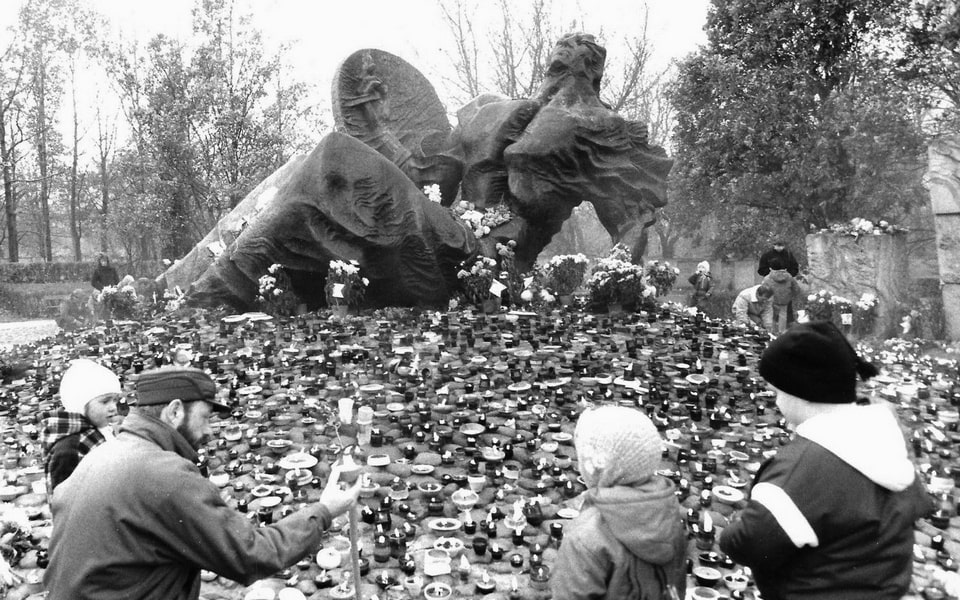
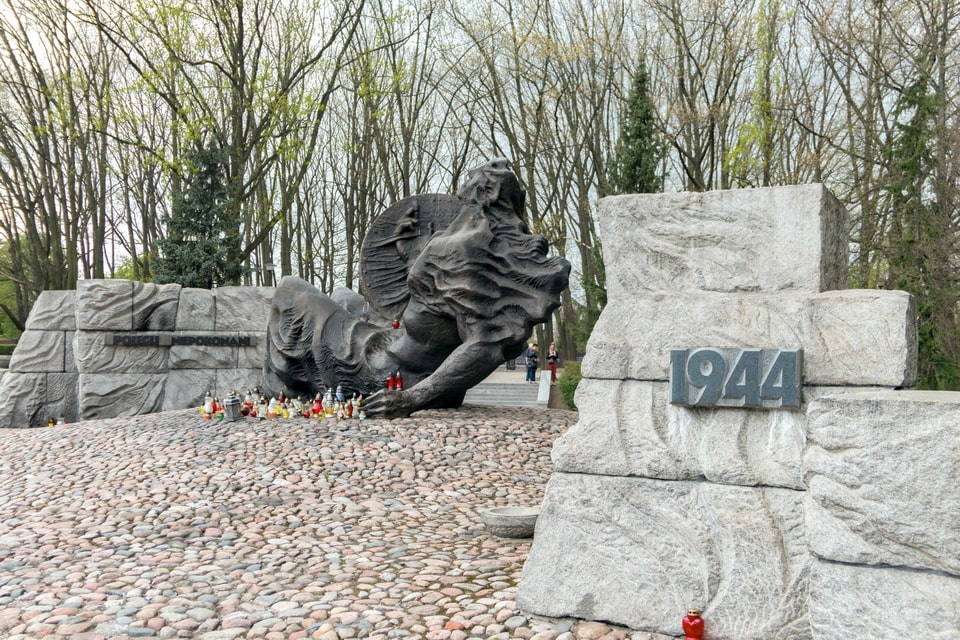
The central object of the cemetery is the monument known as ‘Polegli Niepokonani’(The Fallen Undefeated). A half-seated figure of a fighter is located in the center of an open space covered with cobblestones, bright here from the street of the Wola district. The figure holds a shield but not a sword, thus rendering the fact that most of the victims of the Nazi violence during the Warsaw Uprising were badly armed or unarmed civilians at all, and symbolizing the sacrifice of the people of Warsaw. It is important to say that as late as 2001, the Home Army anchor symbol was added to the figure’s shield and the components of the symbolic barricade, thus finally commemorating the Polish underground state during WWII. The Cemetery annually serves as one of the most important locations for commemoration ceremonies.
POWAZKI MILITARY CEMETERY: WARSAW HISTORICAL BURIAL GROUND AND UPRISING GRAVES
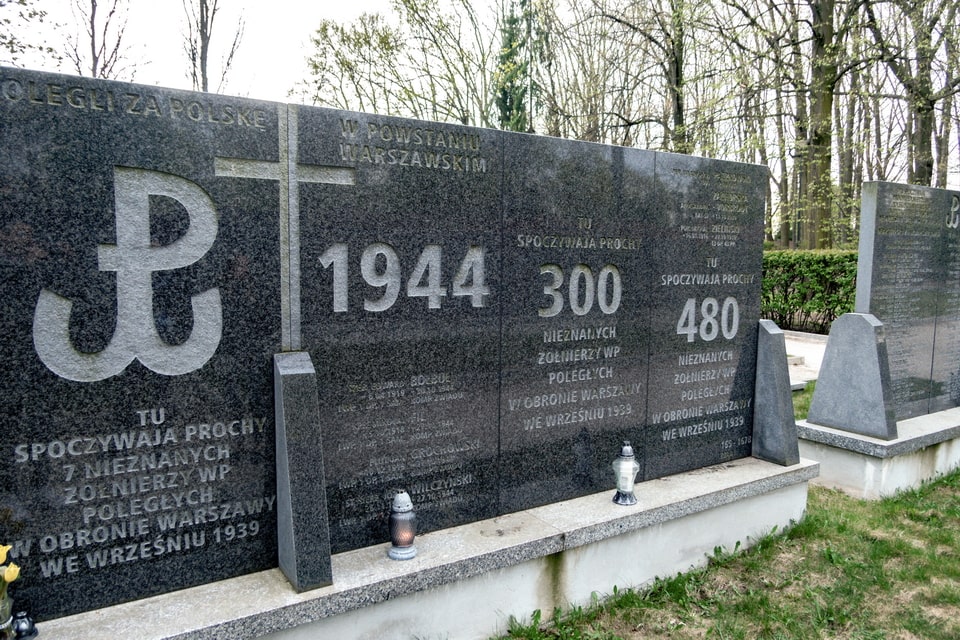
This cemetery is much larger than ‘Cmentarz Powstańców Warszawy’ and covers an area of 24 hectares in the northern part of Warsaw in the Marymont district, once the capital’s suburb. In contrast to the Insurgents Cemetery, whose burials mainly related to the Warsaw Uprising, ‘Cmentarz Wojskowy’ was opened back in 1912 and contains the remnants of Polish warriors who fought and died in the First World War and the Second World War. In the first years of its existence, the cemetery became the last resting place for the soldiers of the Tsarist army, the prisoners of war who were brought and died in Warsaw, and between 1915 and 1918, the Germans, who took control of the city at the time. After gaining Independence, the Polish state took control of the cemetery and turned it into a large WWI necropolis for its soldiers, with at least 650 graves of Polish soldiers. The next war came quickly with the aggression of the communist russia and the section of ‘Cmentarz Wojskowy’ devoted to the Battle of Warsaw in 1920, contains the graves of 2,513 Polish fighters. There is also a section with the burials of Polish soldiers of the so-called 13th Dabrowski Brigade, who fought in the Spanish Civil War (1936-1939).
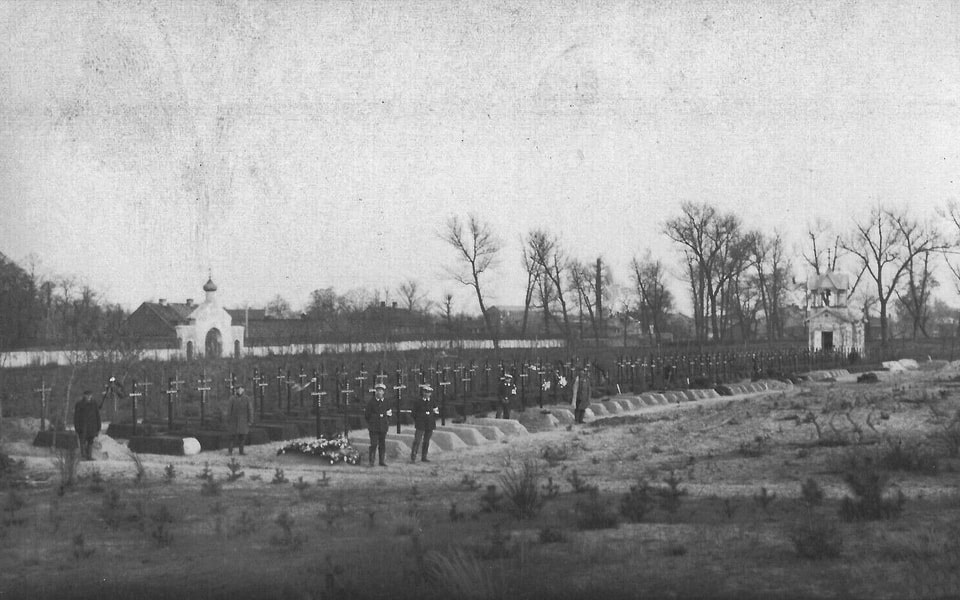
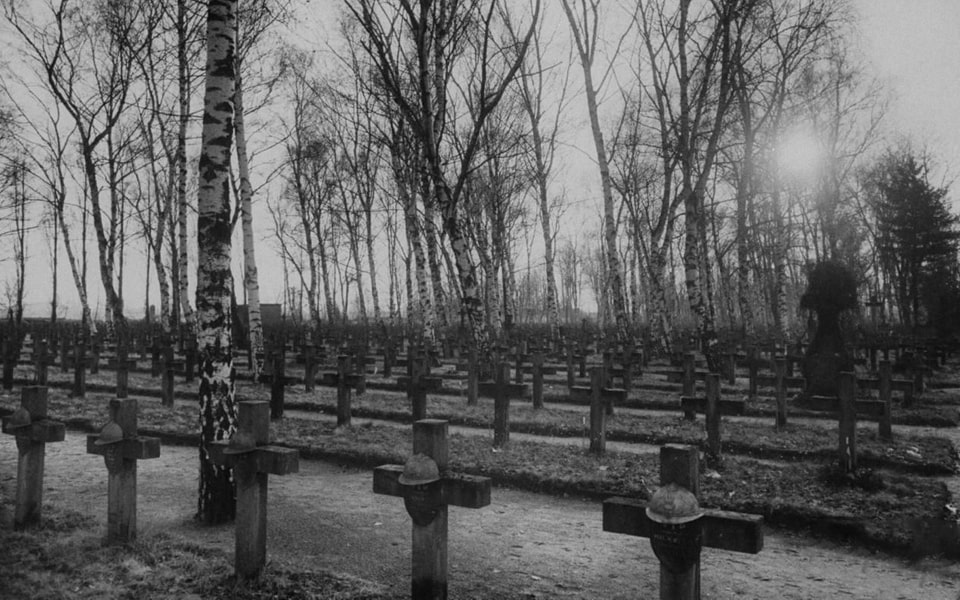
The largest section of the cemetery contains the graves of soldiers and civilians, the victims of the Second World War. At least 6,776 soldiers and officers who fell in the September 1939 campaign against the German invaders were buried here, as well as civilians, the victims of the air bombardment and German artillery shelling of Warsaw, which destroyed around 10% of the city’s urban area. During the occupation, the Germans designated a new area of around five hectares for the Wehrmacht soldiers. After the war, ‘Cmentarz Wojskowy’ became the last resting place for 3,700 warriors of ‘Ludowe Wojsko Polskie’ (Polish People’s Army), who fought around the Warsaw area in Polish units under Soviet control. In 1945-1947, thousands of bodies of civilians and AK fighters, mainly the victims of the Warsaw Uprising, were also buried here after being exhumed from other locations in the city. In 1990, the remains of 2,566 German soldiers were exhumed and taken to another cemetery outside Warsaw on the halfway to Lodz. In 1964, the cemetery was merged with the nearby civilian one and renamed Municipal. The ‘Cmentarz Wojskowy’ (War Cemetery) naming was finally restored in 1998. The cemetery also has sections devoted to the victims of the Katyn Massacre of Polish officers killed by Stalin’s regime in 1940, and the infamous 2010 air crash, which took the lives of President Lech Kaczyński and another 95 people.
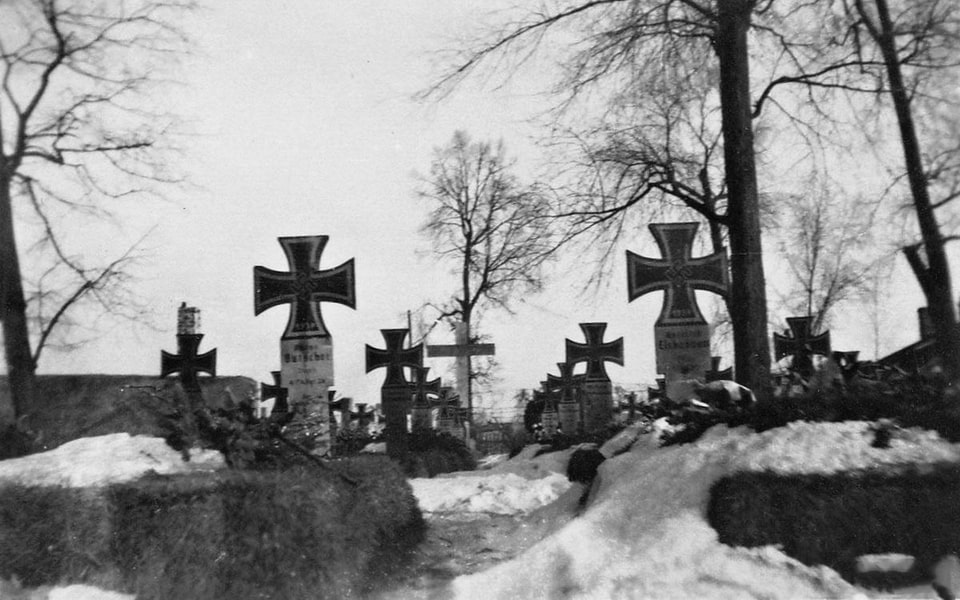
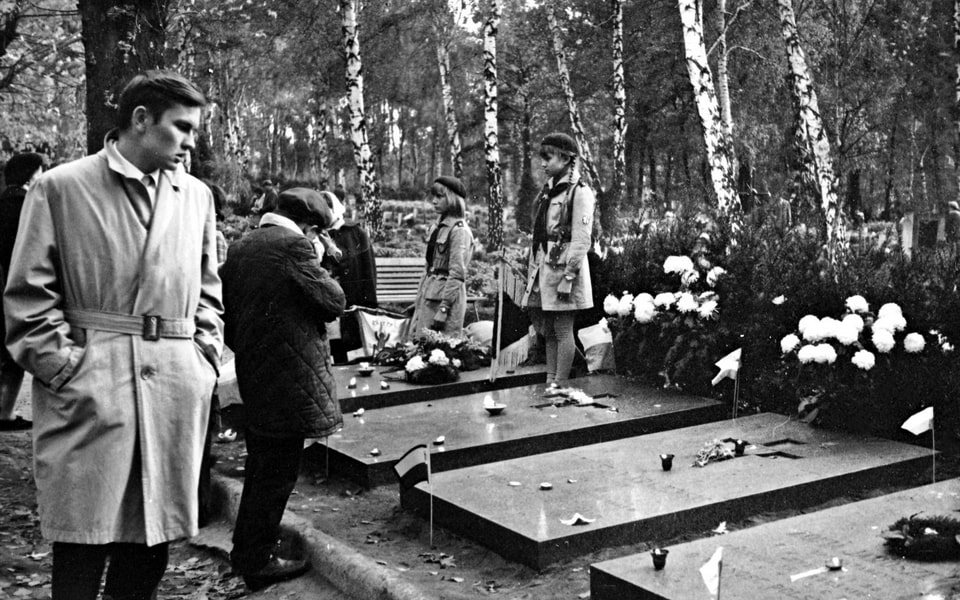
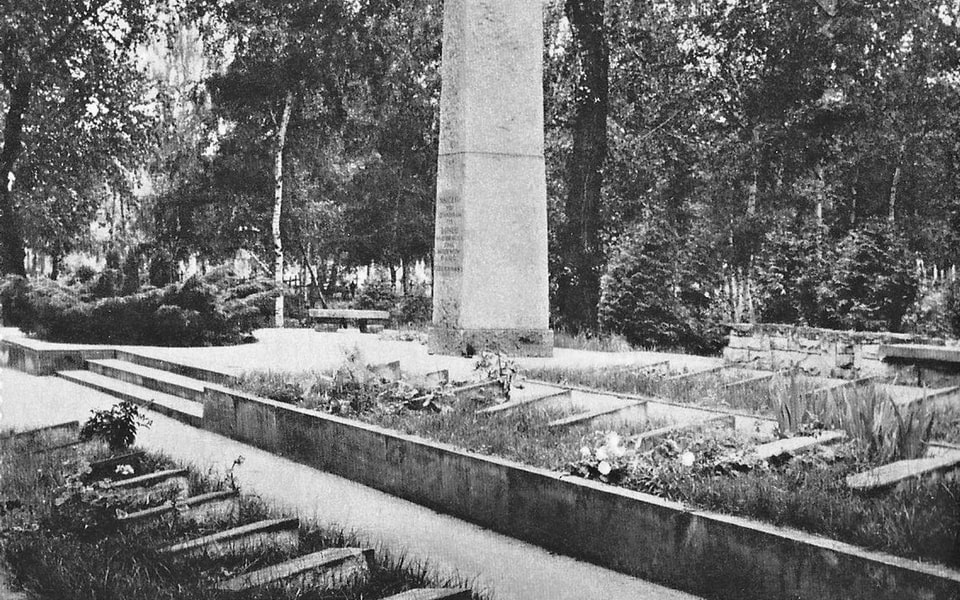
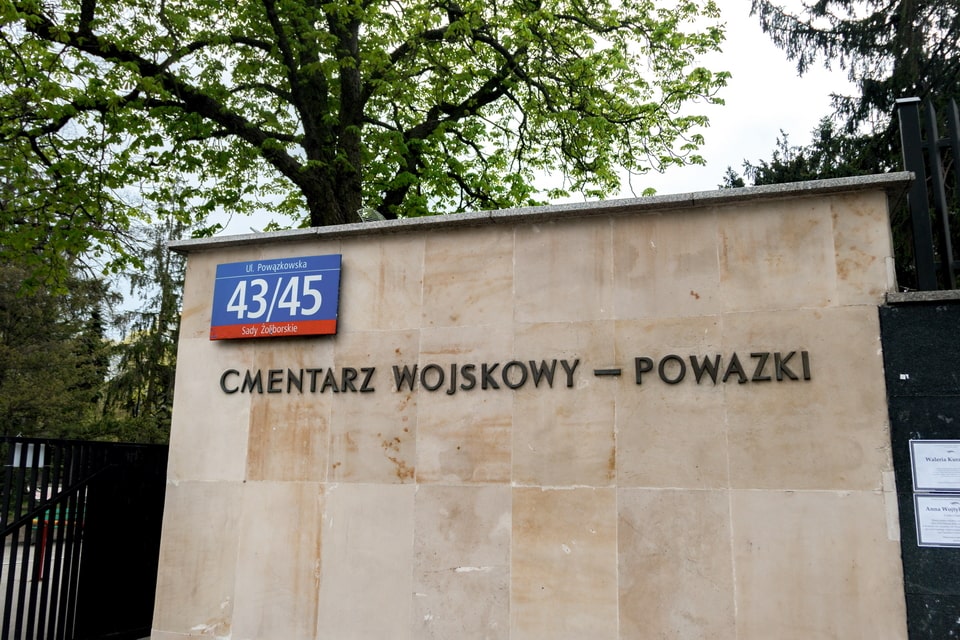
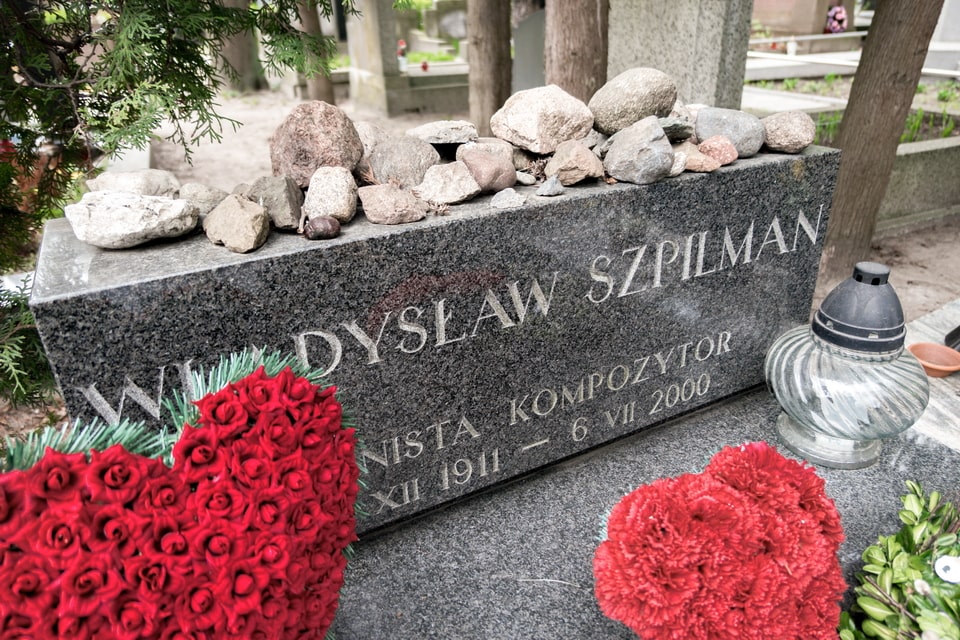
THE WARSAW UPRISING MUSEUM
Since the 1944 Warsaw Uprising was banned from public discussion by the communist regime in Poland in the years after the end of the War, until Soviet dictator Joseph Stalin was still alive, the need for the creation of a museum arose as late as 1956, when Stalin had already been dead for three years, and the cult of his personality was openly criticized. Unfortunately, talks remained talks until the 1980s when a special committee was created, and finally, in 1983, the Warsaw Uprising Museum was established as a branch of the Museum of Warsaw. In the following years, thousands of precious museum units were found and restored, but the construction of a fully-fledged museum took decades. As I have written above in the section devoted to the former Bank of Poland building, the site was considered as a possible location for the museum, but the time was wasted, and construction did not begin either in the 1980s or in the early 1990s when Poland was Independent again, and the need to create the Warsaw Uprising Museum became vital.
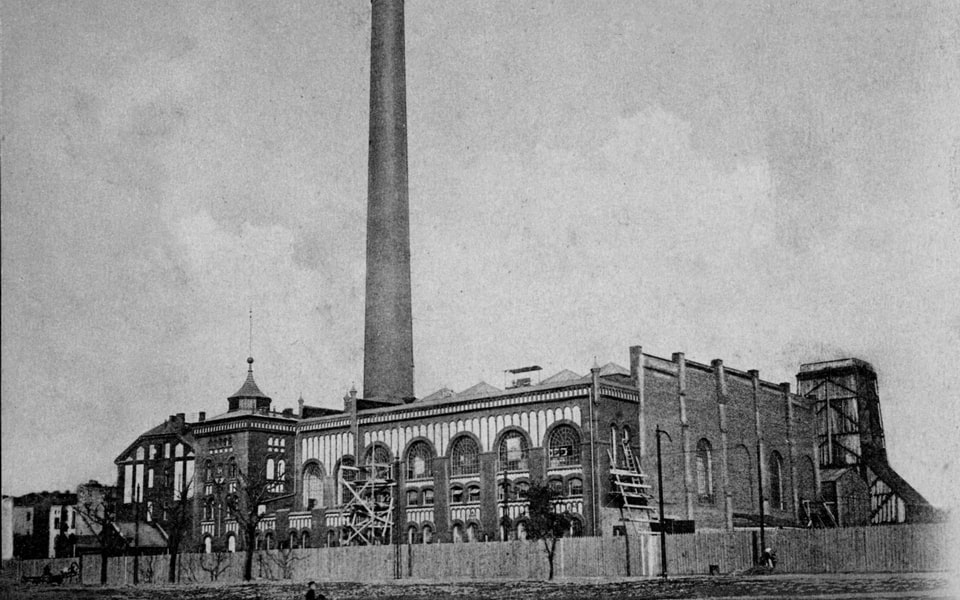
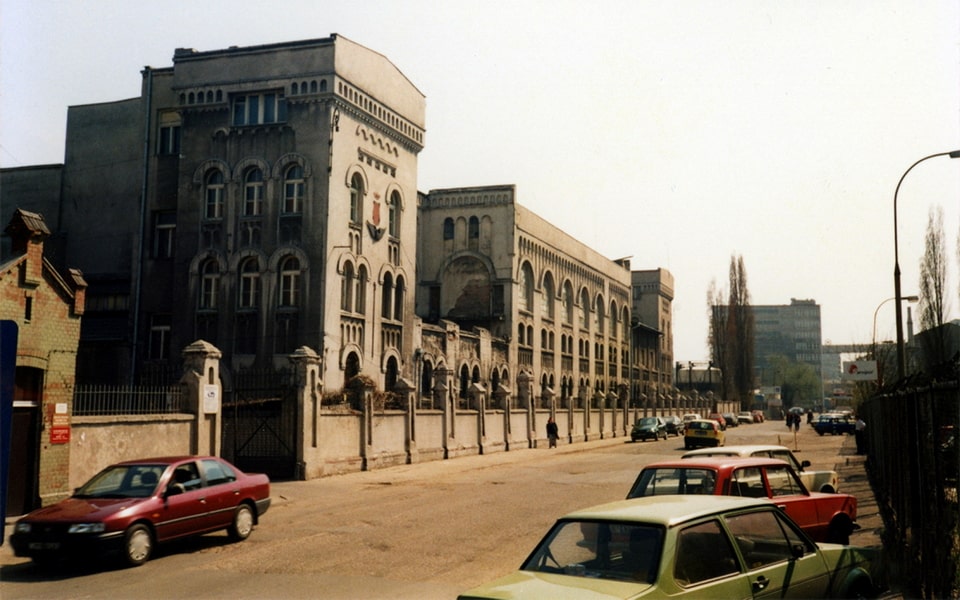
The situation finally got off the ground in 2002 with the election of Lech Kaczynski as the mayor of Warsaw. The future President of the Polish Republic resurrected the museum creation and promised the opening ceremony devoted to the upcoming 60th anniversary of the Uprising. The facility of the former Tram Power Plant at 28 Przyokopowa Street, a complex of buildings from the early XX century, was chosen for the museum. The old heavy equipment was dismantled, and the building was renovated to fit the needs of the Uprising Museum. Sticking to his promise, Lech Kaczynski ceremonially inaugurated the Warsaw Uprising Museum on July 31, 2004, a day before the 60th anniversary of the outbreak of the uprising in 1944. The exhibition covers three floors and an area of around 3000 m2 and leads its audience through the history of Warsaw during the occupation and the Warsaw Uprising, presenting more than 30,000 museum pieces accessible to visitors.
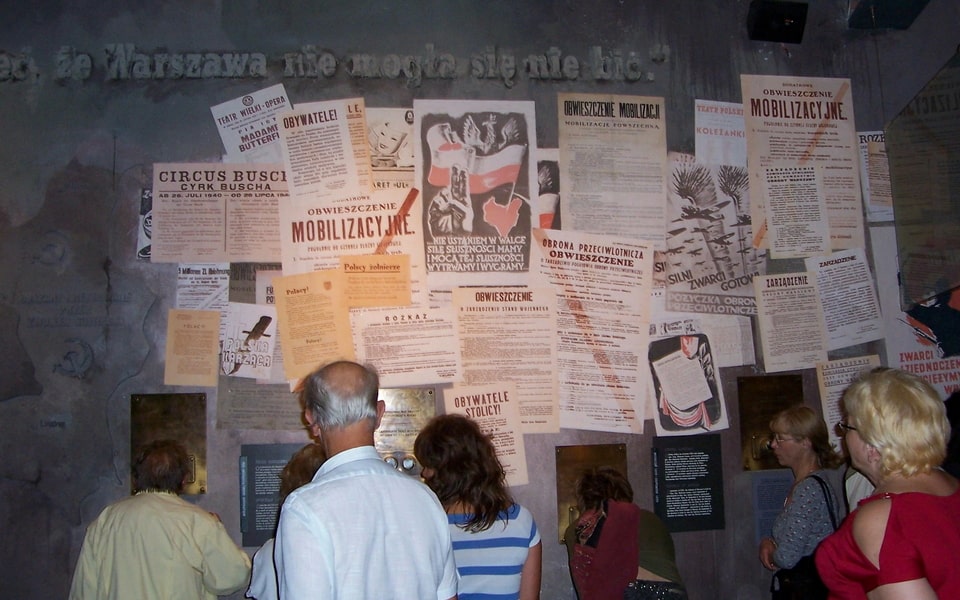
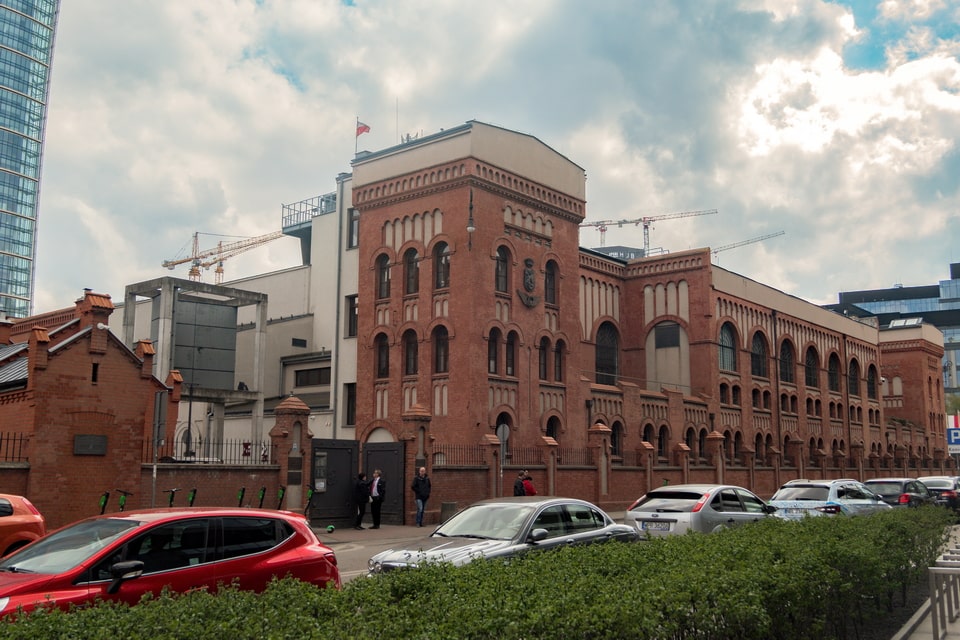
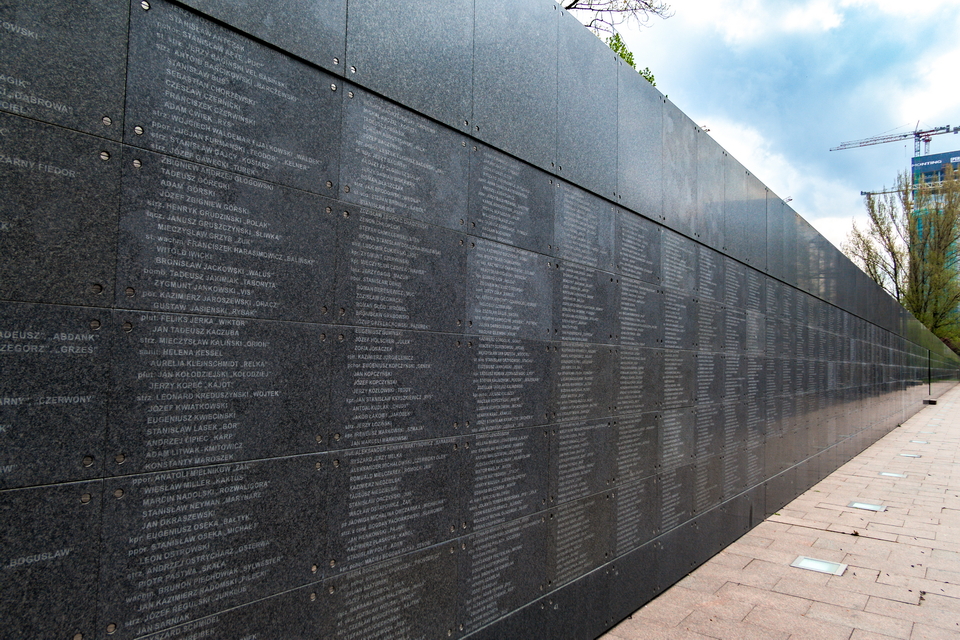
Visitor Info (2026): The Warsaw Uprising museum is open daily from 10:00 AM to 6:00 PM, but is closed on Tuesdays. Admission is traditionally free on Mondays. The museum is located at ul. Grzybowska 79 and is easily accessible by taking a tram to the Muzeum Powstania Warszawskiego stop.
WARSAW UPRISING MEMORIAL: LOCATION, PHOTO, AND HOW TO VISIT
Similar to the Uprising Museum, the chance to finally properly commemorate the memory of the Warsaw Uprising fighters came as late as the 1980s, when the communist regimes in Europe got off the rails. It took five years between the laying of the cornerstone in 1984 and the opening ceremony on August 1, 1989, to build the memorial, mainly with the help of private donations. The monument has two sections. The first larger one is composed of the figures of the Warsaw Uprising fighters with weapons, who engage in combat in the collapsing building. The smaller composition known as the ‘Exodus’ shows other bronze figures of the insurgents, who hid in the sewer hatch, thus symbolizing the extensive use of the sewer system during the Uprising. Some contemporary architects criticized the design for its similarity with the works of socialist realism. Along with its creator, Wincenty Kucma is a well-recognized Polish sculptor, also known for the Monument to the Defenders of the Polish Post Office in Gdansk.
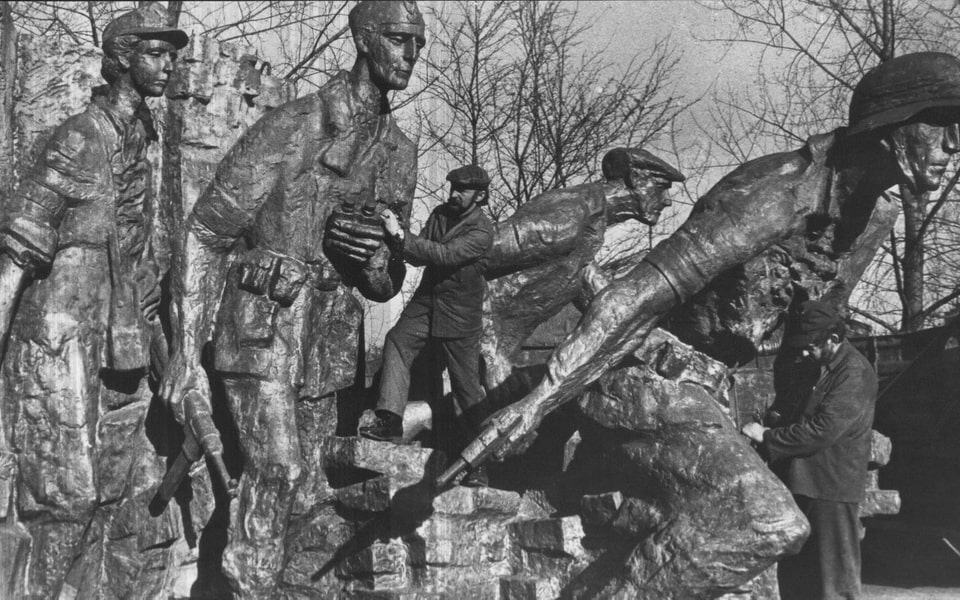
The memorial complex stands on Plac Krasinskich Square near the building of the Supreme Court (built in 1999) and across the road from Krasinskich Palace. On the 50th anniversary of the Uprising in 1994, the German president, Roman Herzog (1934-2017), visited the memorial by invitation of the Polish President Lech Walesa. Herzog made a speech apologizing for the German crimes against the Polish people during World War Two and also visited Auschwitz during the same trip.
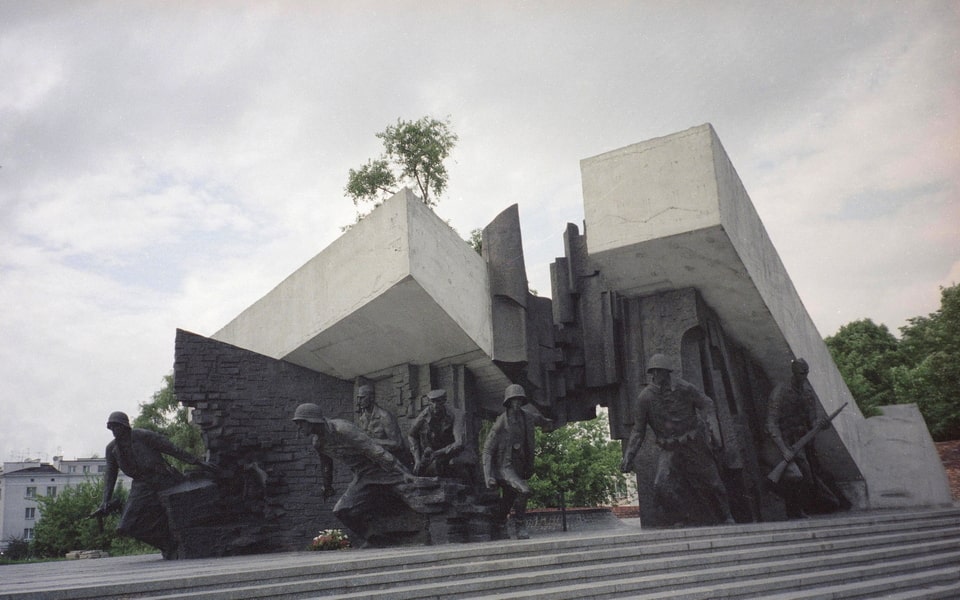
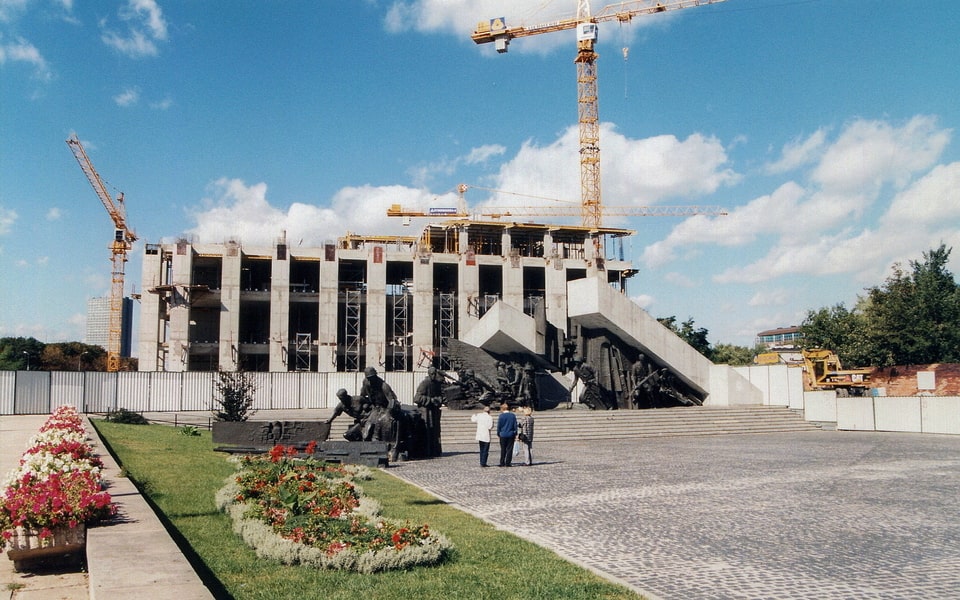
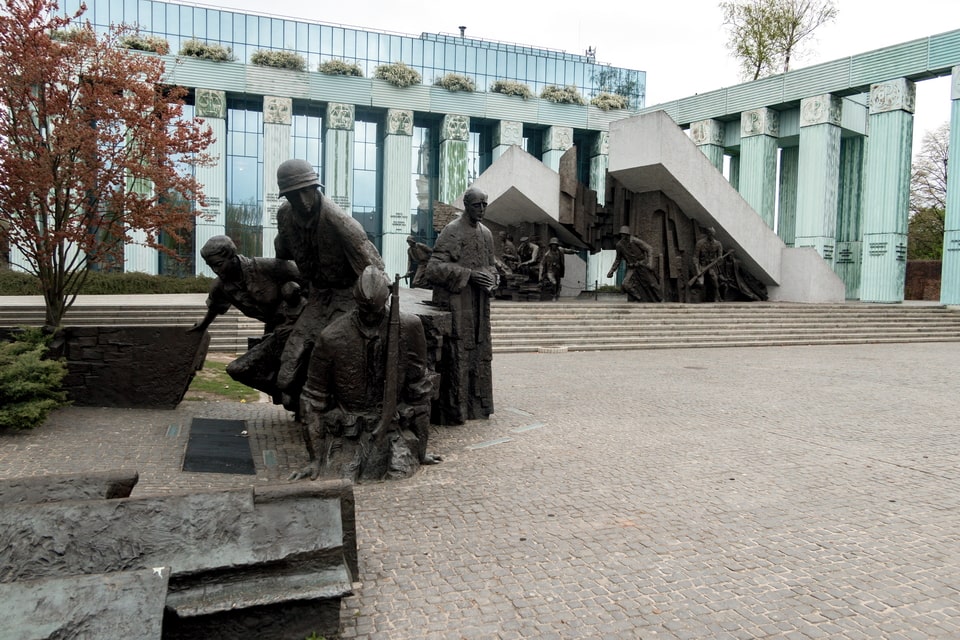
THE LITTLE INSURGENT MONUMENT (MALY POWSTANIEC): WARSAW’S BELOVED SYMBOL – PHOTOS AND VISITING TODAY
While it took years to unveil the Uprising Memorial and the Museum, October 1, 1983, saw the opening of a modest statue of a boy known as ‘Maly Poswaniec’ or ‘Little Insurgent’. On the other side of the coin, it took four decades to turn a design created by Jerzy Jarnuszkiewicz (1919-2005) back in 1946 into a fully-fledged monument in the center of Warsaw. A young Polish sculptor survived the war and objectified his impressions in a small figure of a Polish boy in an oversized German helmet. The figure and its small copies were popular among the Warsawians in the following decades. When, in the early 1980s, a well-known Polish scout organization voiced an initiative of creating a monument to the youngest insurgents of the Warsaw Uprising, Jerzy Jarnuszkiewicz suggested his design for the statue. The scouts gathered around one million Polish Zloty for the construction, and the monument was finally unveiled on October 1, 1983, in the presence of hundreds of scouts who came to Warsaw from different cities, and of local authorities. The Bronze figure of a boy with a British Sten submachine gun and an adult-sized German helmet on his head symbolized immature Polish kids, who often served as messengers during the Warsaw Uprising. The statue was inspired by the story of a 13-year-old boy, AK Corporal Antoni “Antek the Sprayer” Szczęsny Godlewski, who was killed during the Uprising on August 8, 1944.
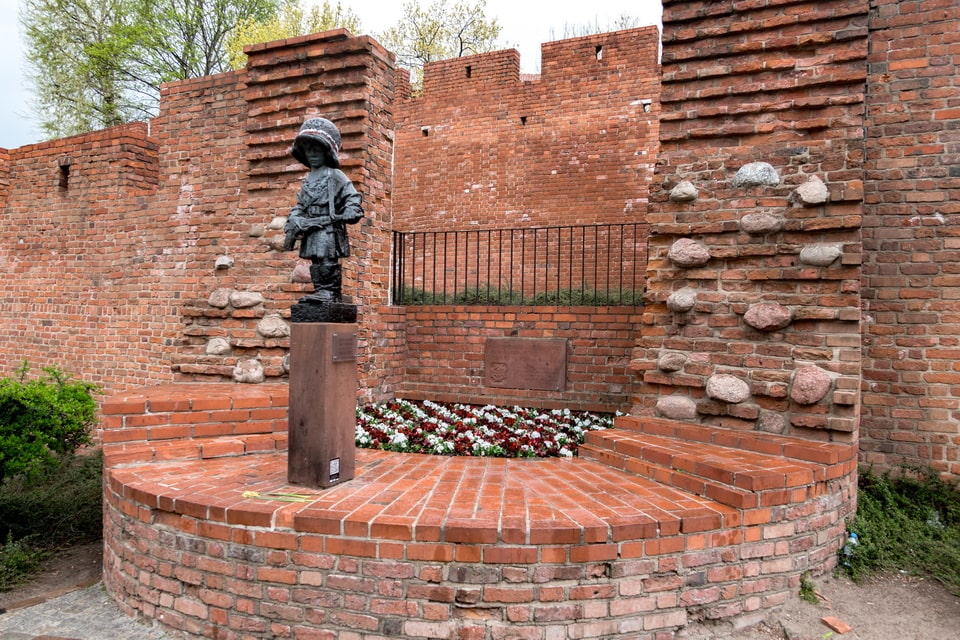
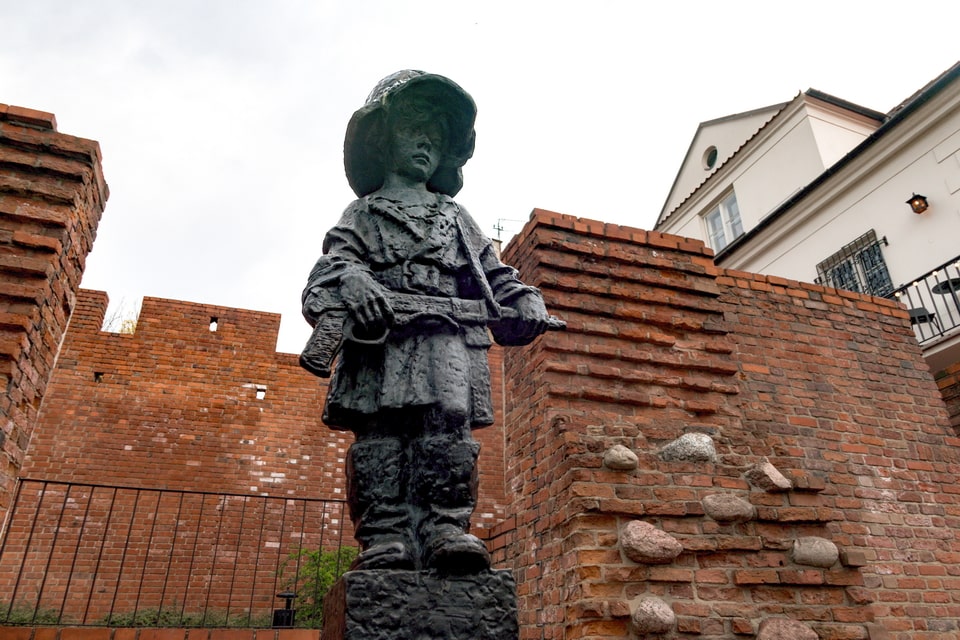
MEMORIAL TO THE POLISH UNDERGROUND STATE (POLSKIEGO PAŃSTWA PODZIEMNEGO)
While the previous two monuments saw the light in the 1980s, the people of Warsaw waited for the erection of the Monument to the Polish Underground State and Home Army until the late 1990s. As I said before, a commemoration of the Warsaw Uprising and the fighters of the Home Army (Armia Krajowa) was a taboo topic in communist Poland, and the veil of silence fell only with the fall of the regime in 1989. The first competition on erecting a proper memorial came in 1993, and the foundation stone was laid as early as August 2, 1994, during the 50th anniversary of the Warsaw Uprising. It took another five years and one more design competition to finish the monument. The unveiling ceremony took place on June 10, 1999, and the next day it was visited by Pope John Paul II. The memorial is presented by a 32-meter-high obelisk made of Polish granite, and it is located at the intersection of Wiejska and Jana Matejki Streets, not far from the building of the Sejm of the Republic of Poland. Annually, the monument serves as one of the key places for celebrating the Warsaw Uprising anniversaries and commemorating the Polish patriots during WWII.
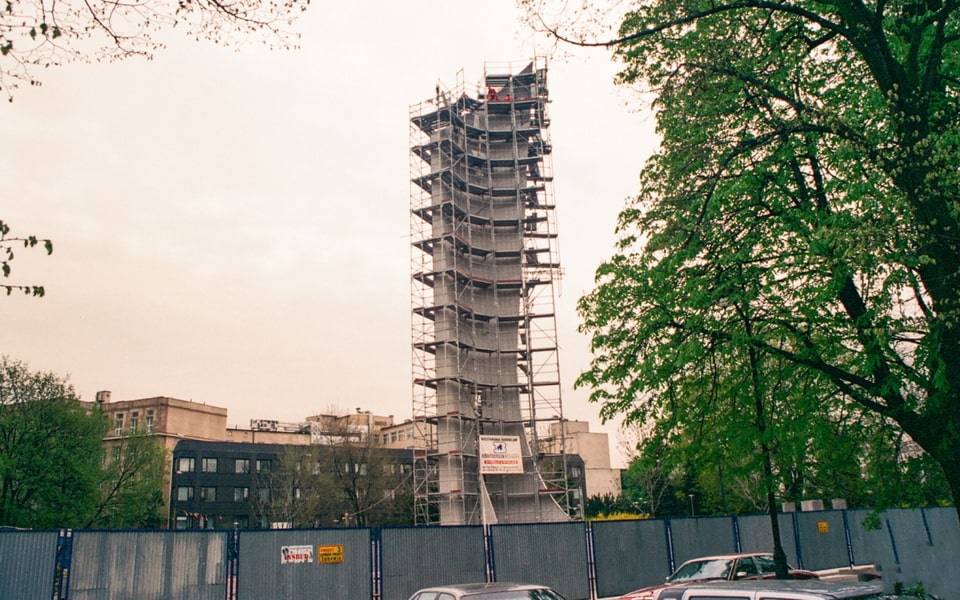
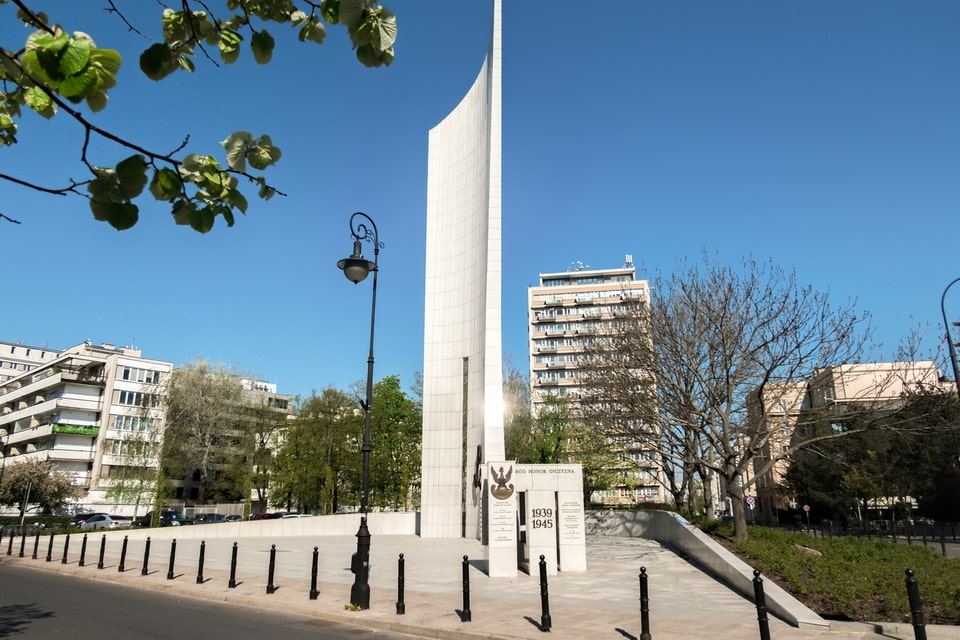
I am very grateful to war archives, museums, libraries, private collections, and writers for the historical photos in this article. To the extent that some author or a copyright owner may not want some of the above black-and-white photos to be used for educational purposes here, please contact me for adding credits or deleting the pictures from the article.