

Shoes on the Danube Bank in Budapest: The Memorial and the Holocaust
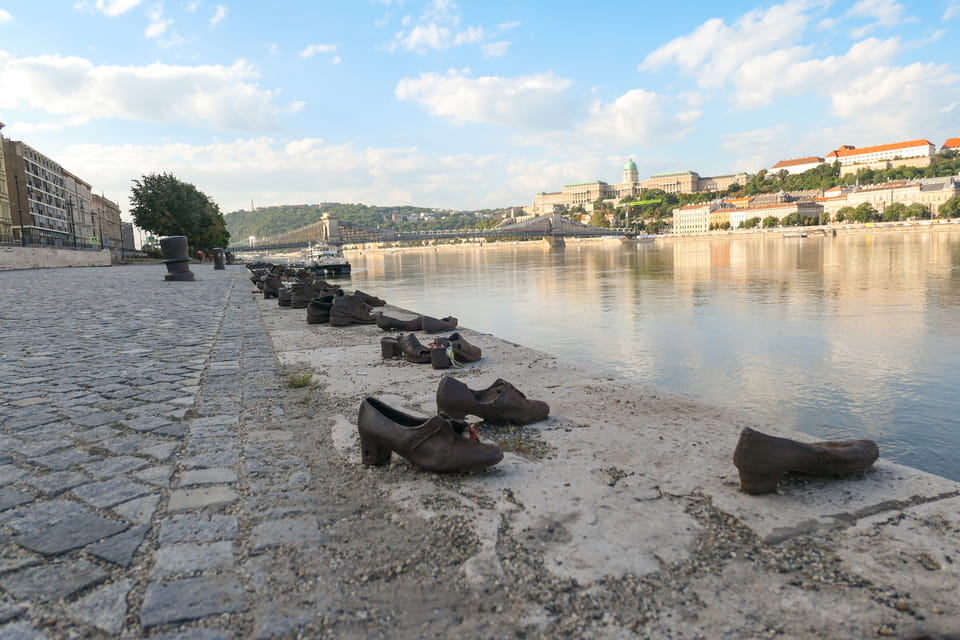
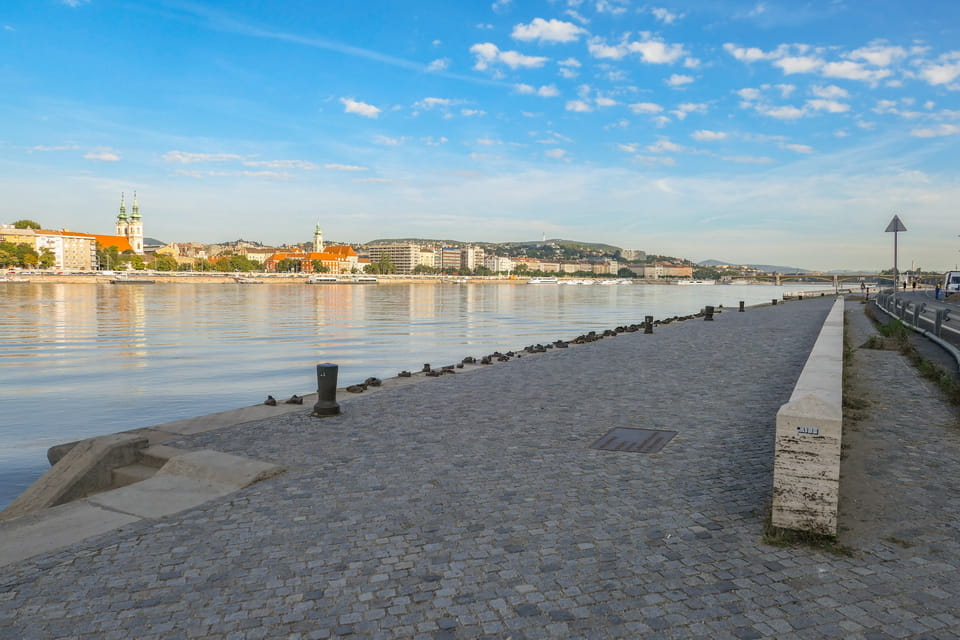
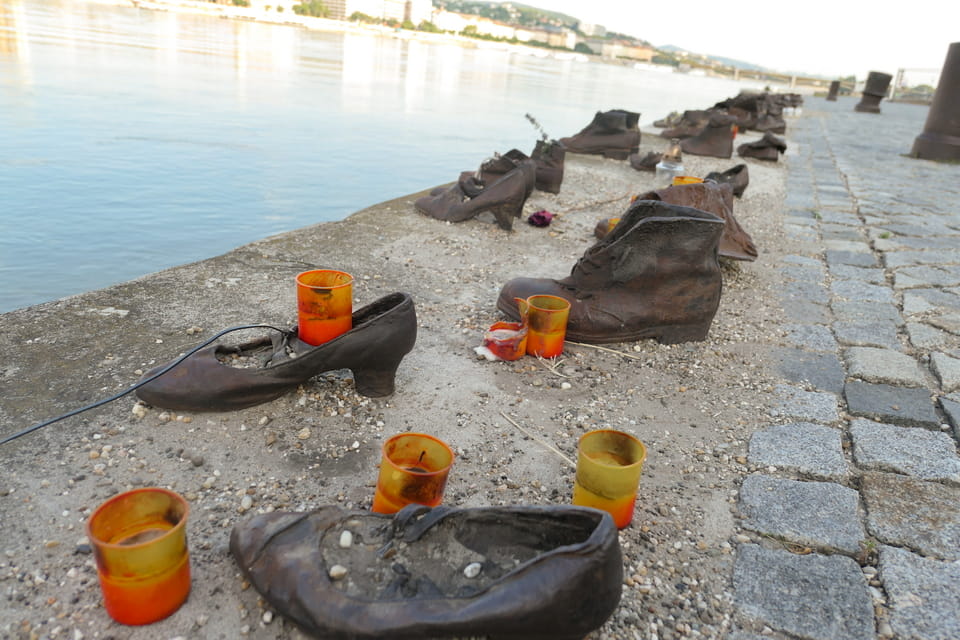
The Shoes on the Danube Bank (in Hungarian, Cipők a Duna-parton), also known as the Shoes on the Danube Promenade, is a Holocaust memorial on the Pest bank of the river in Budapest, about 300 meters south of the Hungarian Parliament. Sixty pairs of cast-iron shoes in the styles of the 1940s — men’s, women’s and children’s — stand at the edge of the stone embankment, as if their owners had just stepped out of them.
They mark the place where, in the winter of 1944–1945, militiamen of the Hungarian fascist Arrow Cross Party lined Jews up at the water’s edge, made them take off their shoes, which were worth money in wartime, and shot them so that the river would carry the bodies away. The memorial was conceived by the film director Can Togay and created with the sculptor Gyula Pauer, and it was unveiled on April 16, 2005, Hungary’s Holocaust Memorial Day. It is open day and night, and there is no admission fee.
I photographed the memorial during my visit to Budapest in September 2021. This article tells the whole story behind the shoes: the long history of the Jews of Buda and Pest, Hungary’s road into the war, the deportations of 1944, the Arrow Cross terror on the riverbank and the trials that followed. If you came for the memorial itself, go straight to its own section or to the practical information for visiting at the end.
THE HISTORY OF THE JEWISH COMMUNITY IN BUDAPEST BEFORE 1939
A consensus among modern historians holds that the first Jewish settlers arrived in the territory of modern Hungary at the end of the 9th century. They came with the tribes from the East, and some Jews were later known for their craft in gold work and silver work. By the 13th century, a separate Jewish quarter existed on Castle Hill in Budapest, with a synagogue to the south of a well-known Fisherman’s Bastion. During the great plague (1347-1351), also known as the ‘Black Death’ epidemic, Jewish communities across Europe were often declared scapegoats for mass death and experienced pogroms and widespread expulsions. A tight-knit Jewish community in Budapest had to move out of their homes as well and returned in part in the later decades. The houses of the evicted were given to the Hungarian nobles. Jews in Buda (two cities, Buda and Pest, reunited as late as 1873) on the western banks of the Danube were known as skillful craftsmen and merchants.
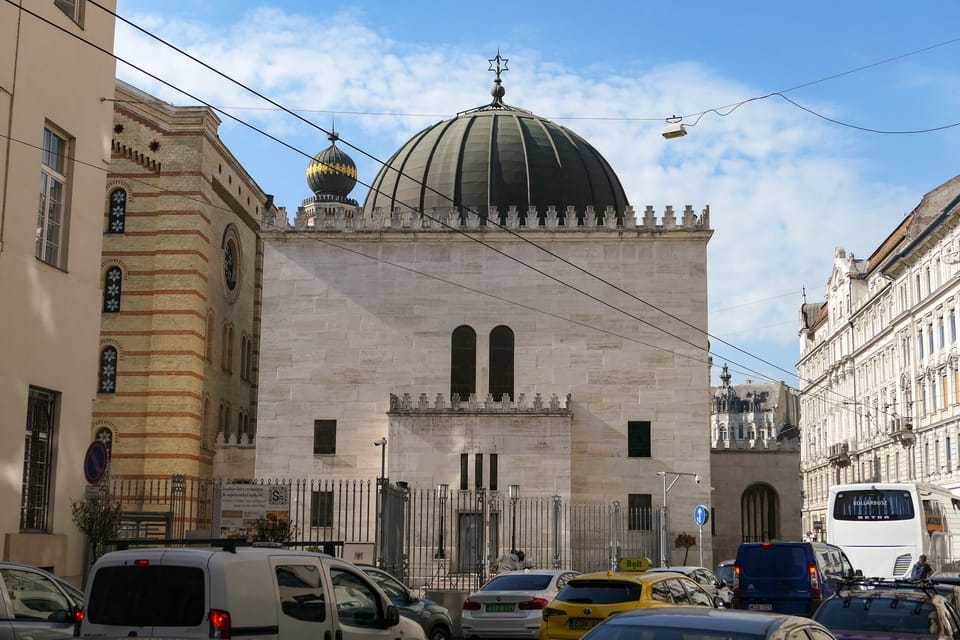
The Jewish community on the Castle Hill of Buda experienced its renaissance during the Turkish occupation between 1541 and 1686, as the Turks allowed practicing Judaism without restrictions. In this period, many Sephardic Jews came to the city and settled here next to the historical Ashkenazi community. In this period, the Jews became the second largest nationality in Buda, with 73 registered Jewish families in 1547 and 104 in 1590. By the middle of the 17th century, the Jewish population of Buda reached one thousand people or around 6% of the city population. Since Turks patronized Jews, the latter helped to defend the city from the army of the Habsburg Empire, which made them enemies in the eyes of the new masters when Buda was captured in 1686. A part of the Jewish community fled from the city with the retreating Turkish forces, and those left behind were killed, their property taken, and synagogues set on fire.
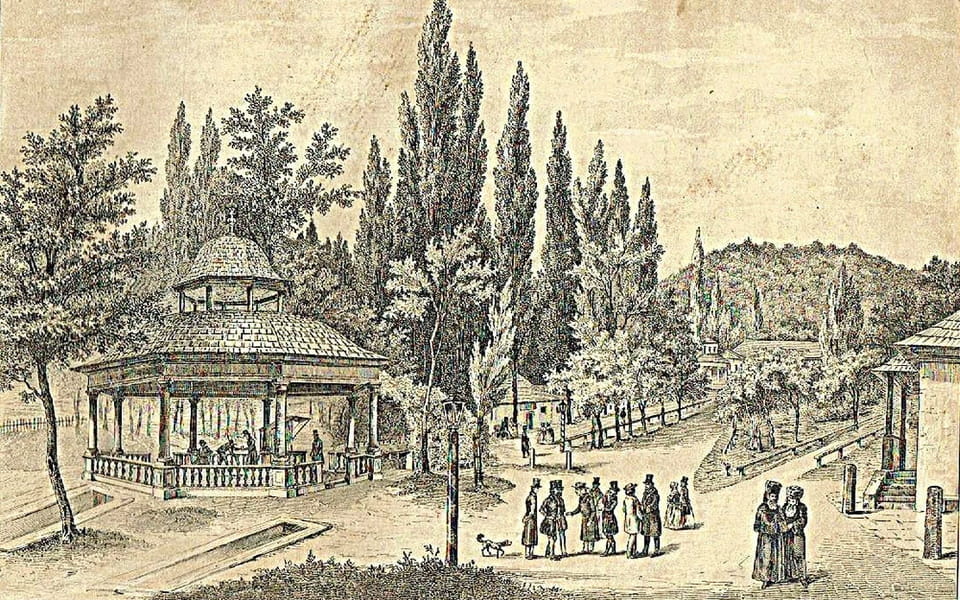
It took almost a century for Jews in the Habsburg Empire to live more freely, including those in the Hungarian lands. In 1747, under Maria Theresa, all Hungarian Jews were imposed with the so-called ‘Toleranzgebühr’ (tolerance fee), meaning that they paid for the ‘tolerance’ of the Habsburg monarchy and other nationalities toward them. They were allowed to proceed with professional activities such as craftsmanship and trade. In 1783, Emperor Joseph II, the son of Empress Maria Theresa, extended Jewish rights: they could now live anywhere across the empire, rent or buy property, and engage in any craft or trade. Such legal improvement led to the immigration of some European Jews to the Kingdom of Hungary, and by 1785, the number of Jews here reached 75,000. In 1793, the number of Jews living in the capital was still relatively small: 515 registered members in Pest. By the 1780s, around 1600 Jews also lived in Obuda, an addition to Buda, and this community even had a separate self-governing body.
Following the improvement of the situation in the 18th century, the 19th century witnessed a new age for Jews in Hungary and the flowering of the community in Budapest. While in 1806 the Jewish population in Pest comprised only 5.23%, in just a few decades by 1847, their share reached 12.96%, while the figure in Obuda was significantly higher, at a remarkable 37%. Since Jews supported the 1848 revolution, two decades later, when an autonomous Hungarian Parliament was established, it granted the Jewish community equal legal and civil rights. Such industries as the manufacture of machinery, sugar refining, steel production, flour milling, and even banking experienced an influx of Jewish capital and the workforce.
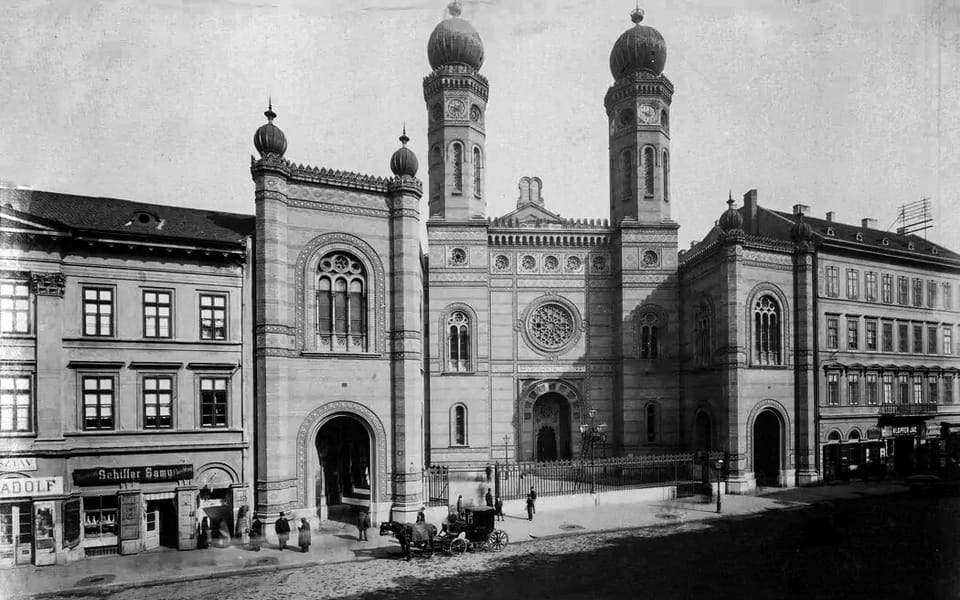
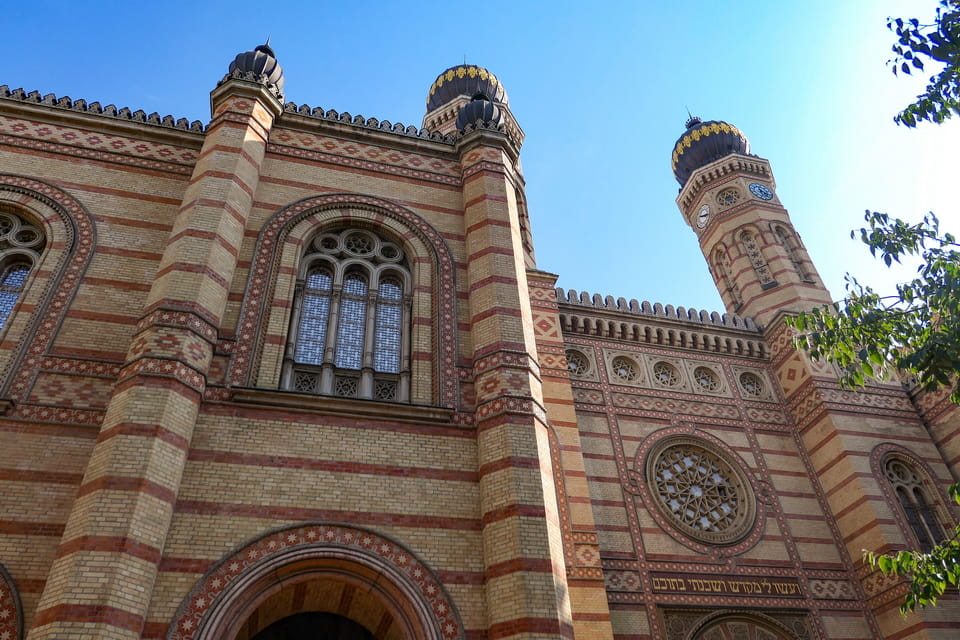
Legal freedom and prosperous involvement in economic life allowed young Jews to gain education in law, arts, medicine, and journalism. By the beginning of the 20th century, an increasingly prosperous and growing Jewish community existed in Budapest. Above all, in most cases, they practiced only a minimal set of Jewish religious traditions and were highly assimilated into Hungarian society and culture. By 1910, 77% of the Jewish population in Hungary regarded the Hungarian language as their native language. In just half a century, from 1854 to 1910, the Jewish population of Budapest rose from 11.3% of 156,506 to 23.1% of 880,371, an increase of 11.8% of the population. On the other hand, between 1896 and 1917, no more than 1.5% of Jews converted to Christianity.
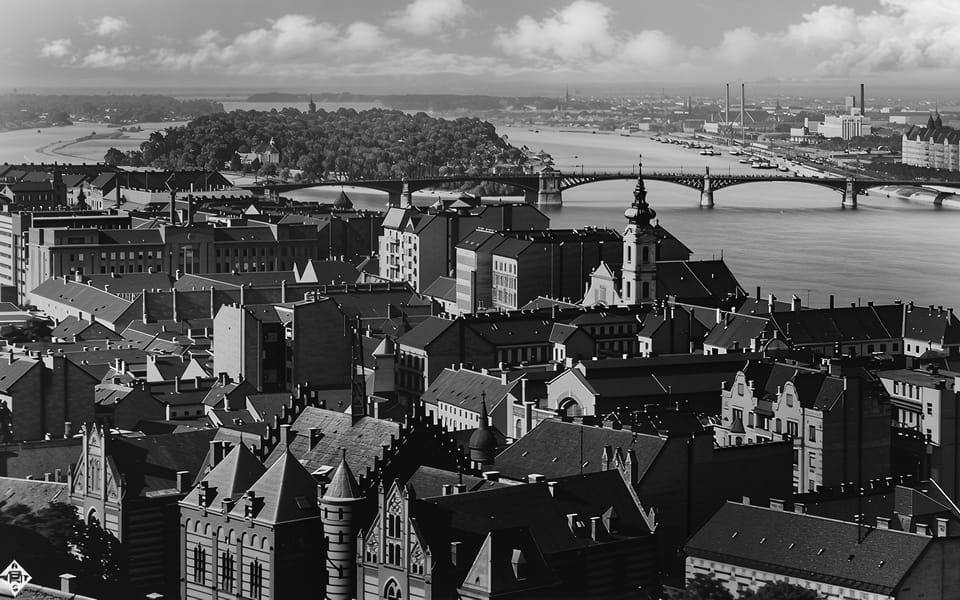
Despite the high level of integration of the Jewish community in Hungarian society and in the cultural and economic life of Budapest, anti-Semitism never vanished. Although Jews supported the independence of Hungary and gained legal equality, a new wave of antisemitic pogroms swept across the country in 1882-1884. During the First World War, thousands of Jews fought bravely and died fighting for their country. The post-war frustration and poverty in Hungarian society, which dismantled the monarchy, once again resurrected latent anti-semitism. When a revolution broke out in the capital of Hungary in October 1918, and later the First Hungarian Republic was proclaimed, a series of anti-Jewish pogroms swept across the country. In Kiskunfélegyháza, a city 120 km southeast of Budapest, local civilians and war veterans looted Jewish shops and property on the edge of the city, resulting in the injury and killing of several victims. In Salgótarján, the mob attacked the Jewish population several times in November and December 1918. Gyöngyös, Tótkomlós, Bököny, Pócspetri, and many other cities and villages witnessed antisemitic violence. According to the later calculation performed by the Jewish organizations, at least 6,206 Jews were beaten, killed, or had their property attacked in Hungary in the space of several months after the end of World War I.
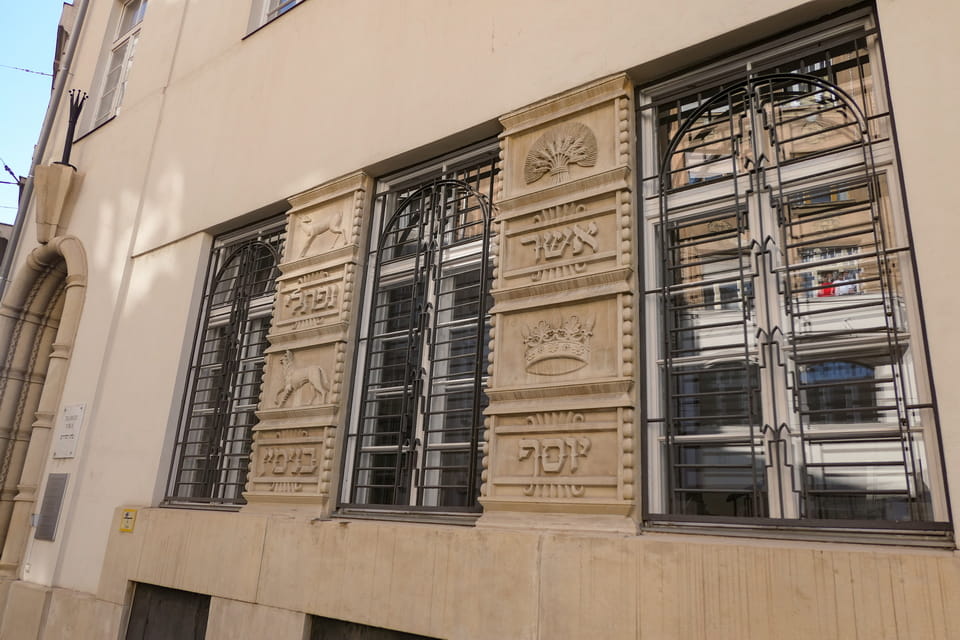
When the First Republic collapsed in March 1919, for a brief period of time, Hungary became a communist-led state, and many of its leading figures were of Jewish origin, though most of them, including their leader, Bela Kun, renounced their national identity in favor of revolution and socialism. The new communist regime brought down terror on the nation, and unfortunately, Jews were overrepresented among the victims of the ‘Red terror’ of Bela Kun’s dictatorship, while many Christians considered the whole regime to be Jewish. When the regime fell in the summer of 1919, the anti-Bolshevik revolt was led by Admiral Miklos Horthy (1868-1957), the last commander-in-chief of the Hungarian fleet during the war. On March 1, 1920, he was elected as the Regent of the Kingdom of Hungary over a regime with a strong autocratic nature, which lasted for another twenty-four years.
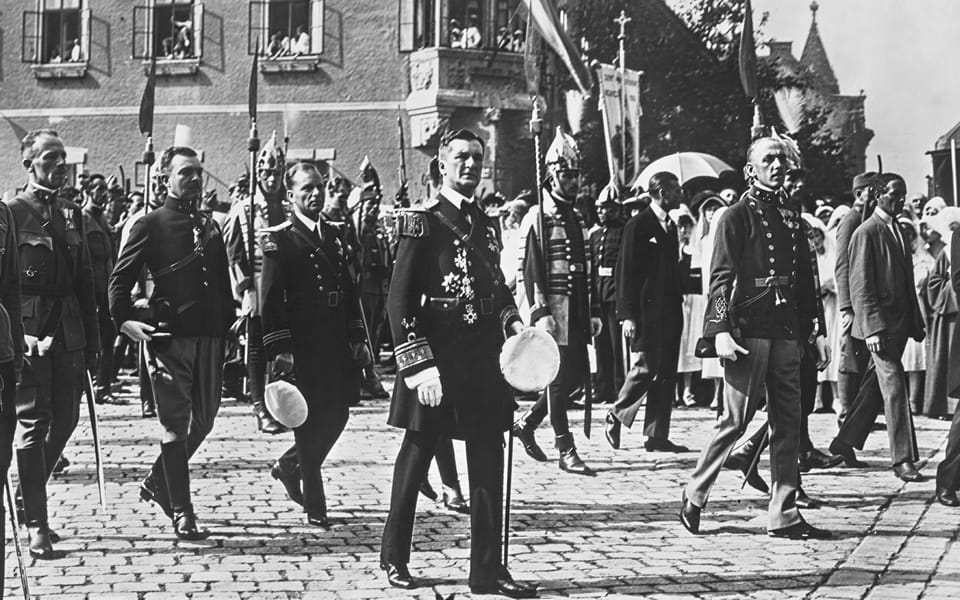
A new wave of violence swept the country after Horthy’s ascent to power, which lasted until the summer of 1920 and was known as the ‘White Terror.’ While the Bolsheviks previously targeted Hungarian Jews, often because of their success in business and capital, the paramilitary units across the country now attacked Jews in revenge for the communist rule, and often simply masked their anti-Semitic sentiments. The anti-Jewish pogroms were mostly inspired from below on local levels and resulted in plundering businesses and houses, attacking people in the streets, and even lynching, torture, and murder. While the exact number of victims could never be determined, modern estimations put the figure at several hundred. In June 1920, during the Paris Conference, Hungary had to sign the ‘Treaty of Trianon,’ and the country was forced to undergo harsh territorial changes in favor of its neighbors. The territory of the state was cut from 280,000 to only 93,000 square kilometers, thus losing 67% of its land and 56% of its population, from 18 million to only around 8 million people. Millions of Hungarians were now required to become citizens of Romania, Czechoslovakia, and Yugoslavia.
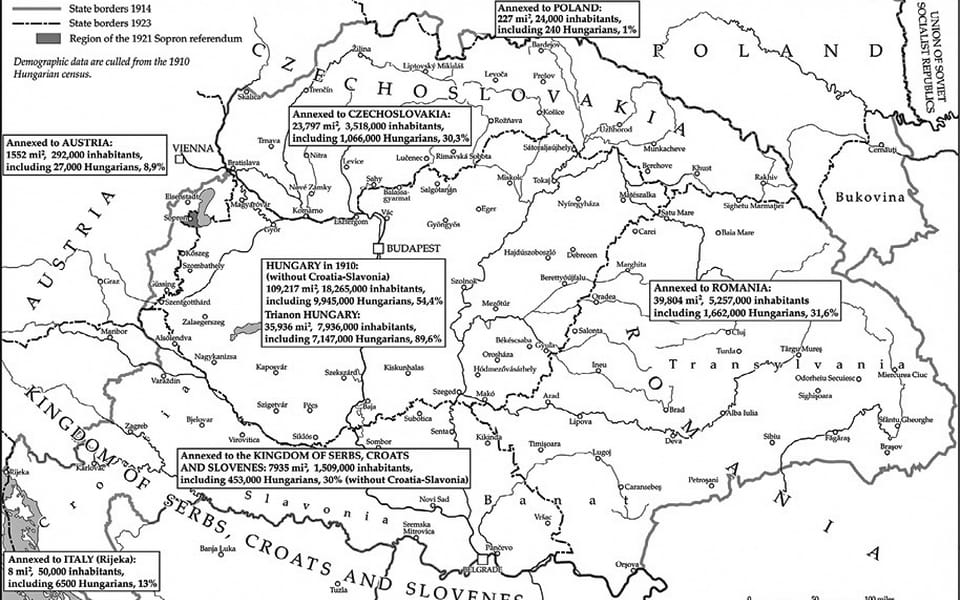
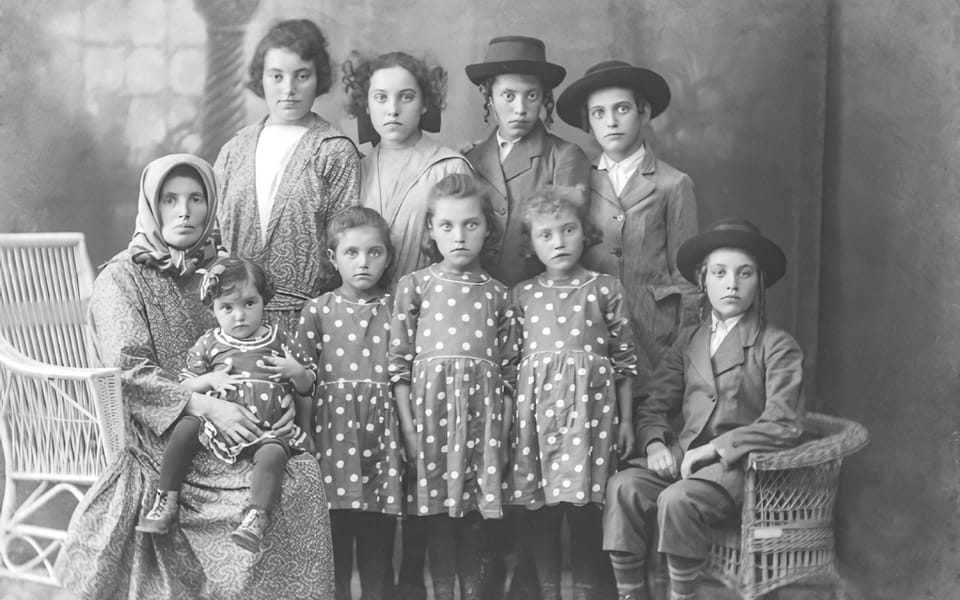
The ‘Treaty of Trianon‘ resulted in cutting the Jewish population of Hungary to around 470,000 and leaving around half a million outside its new borders in Czechoslovakia, Romania, Yugoslavia, and Austria. 215,000, or around 40% of all Jews who remained within the new Hungarian borders, lived in Budapest, comprising 23.2% of the city’s population. Speaking about the community that left, they were mostly modernized and urbanized ‘Neologs,’ a large communal organization of the Hungarian Jewry, while around one-third were Orthodox Jews. While antisemitic sentiments were a part of Hungarian society during Horthy’s regime, the Jews were not targeted as enemies, and the community lived a relatively safe life in the following two decades. The census of 1930 showed 444,567 people identifying themselves as Jews, or 5.12% of the total population, of whom 204,371 lived in the Budapest area. While comprising only 5% of the country’s population, Jews owned 70% of the large industry and 40% of Hungary’s commerce, while 55% of lawyers, 40% of doctors, and 36% of journalists were Jewish. At the same time, around half of the Jews living in Budapest were poor and existed in constrained conditions.
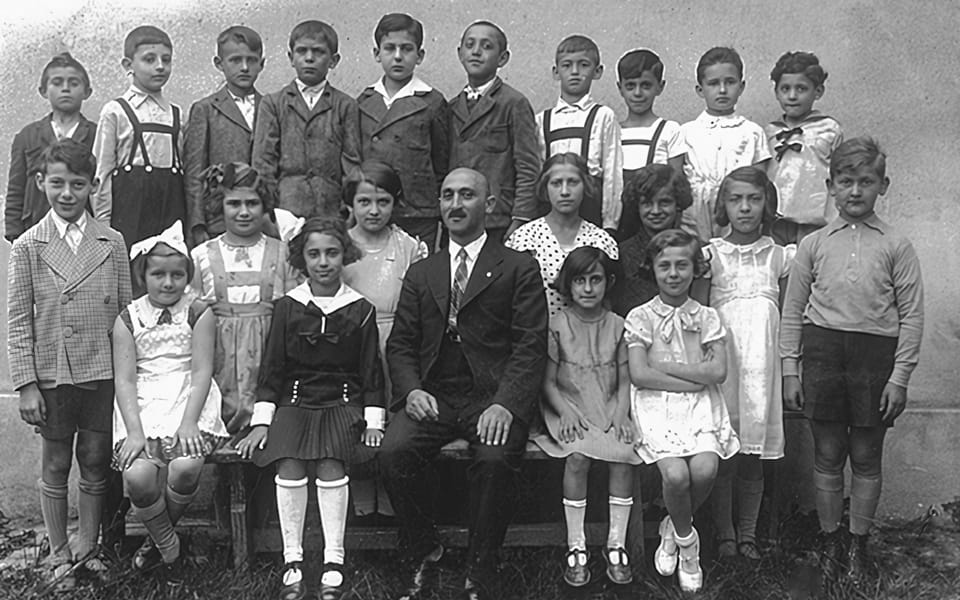
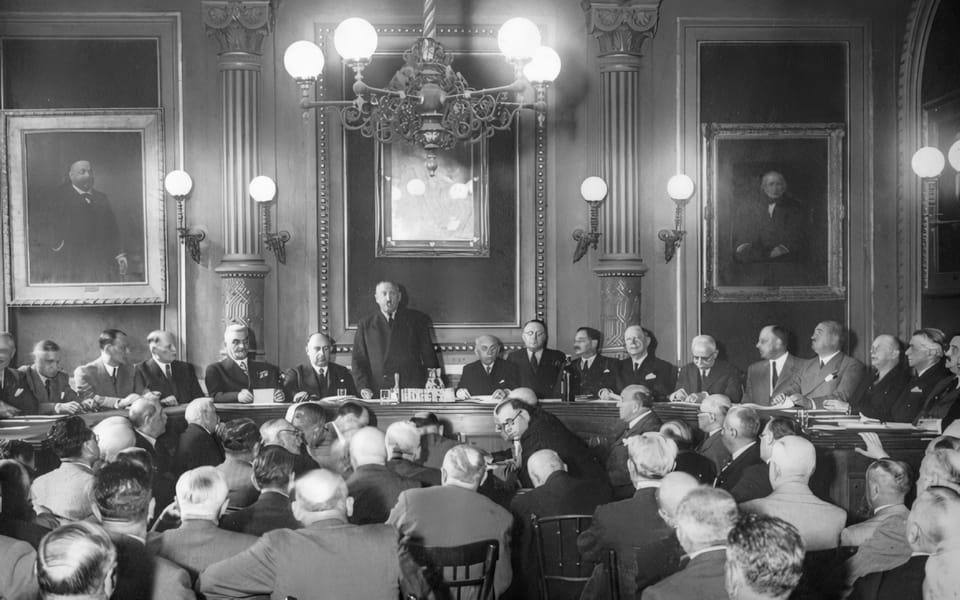
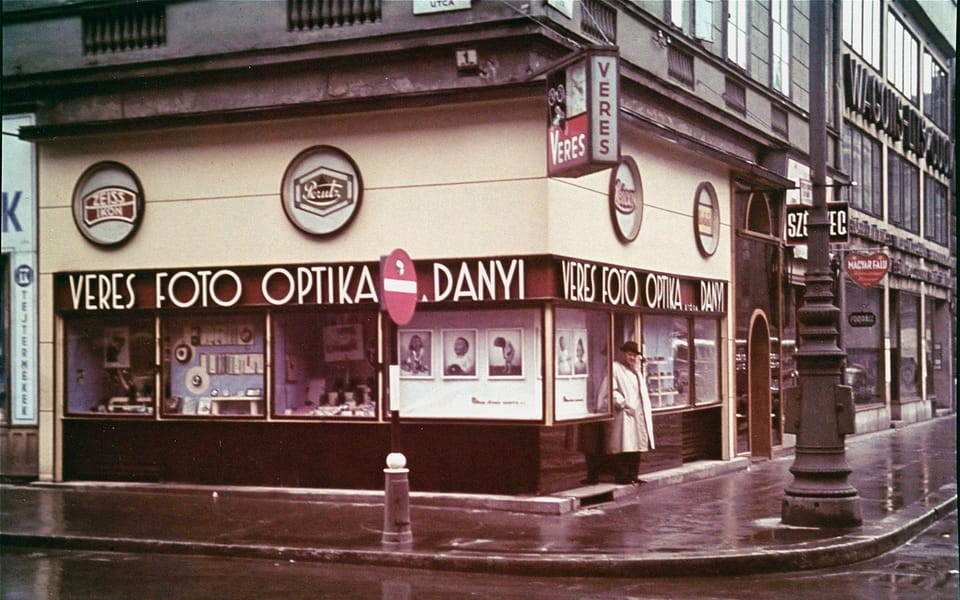
THE WAR, THE GERMAN OCCUPATION, AND THE DEPORTATIONS
More than 25,000 Hungarian Jews left the country in twenty years in the interwar period; most of them left Budapest, which was the densest community in the country. 80% of the Budapest Jewish community lived in four central city districts: V, VI, VII, and VIII. While the Orthodox Jews comprised around one-third of the country’s population, in the capital, they reached only around 5%, with the overwhelming majority being Neologs. Toward the end of the 1930s, the Jewish population did not yet grasp the shift of the country’s society to the right, which was dictated by inner sentiments of opposition to the ‘Trianon Peace’ and also by the events in the international arena and the rise of dictatorship regimes in Germany and Italy. Many Hungarians craved to restore the lost territories, and Hitler and Mussolini supported Horthy’s regime in these aspirations, especially Hitler, who launched his own campaign of reshaping European borders by annexations. When, in late 1938, Czechoslovakia was forced to give part of its territories under the infamous ‘Munich Agreement,’ under German and Italian pressure, it had to give 11,927 square kilometers to Hungary. When Czechoslovakia was annexed in March 1939, Hungarian troops occupied more of the Carpathian-Ukraine region. On August 30, 1940, Horty’s regime gained 43,492 km at the expense of Romania. Finally, in the spring of 1941, Hungary broke the ‘Treaty of Eternal Friendship’ and gained more territories by taking them from the crushed Yugoslavia. In three years, the country gained around 75,000 km of land with a mixed population of five million people.
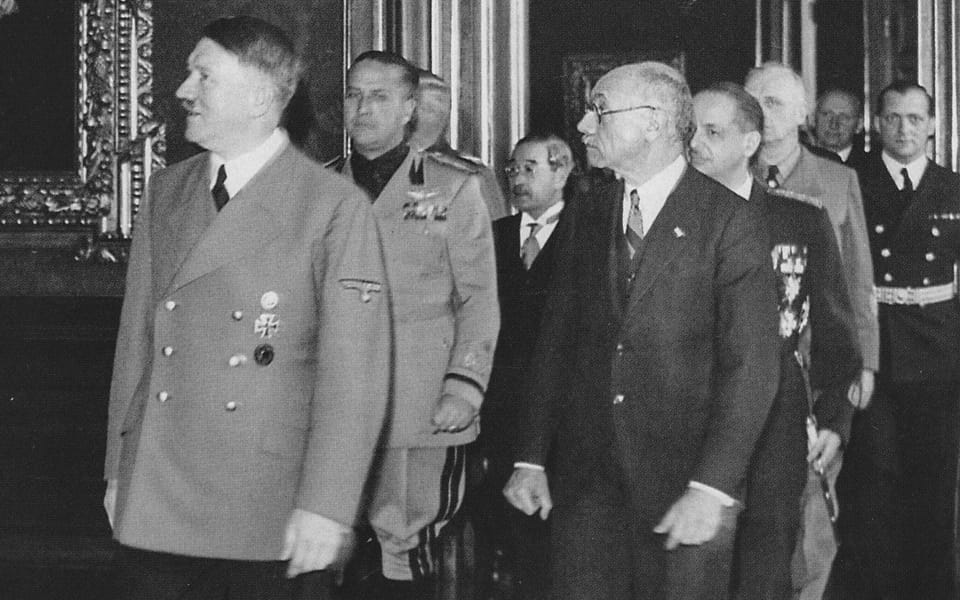
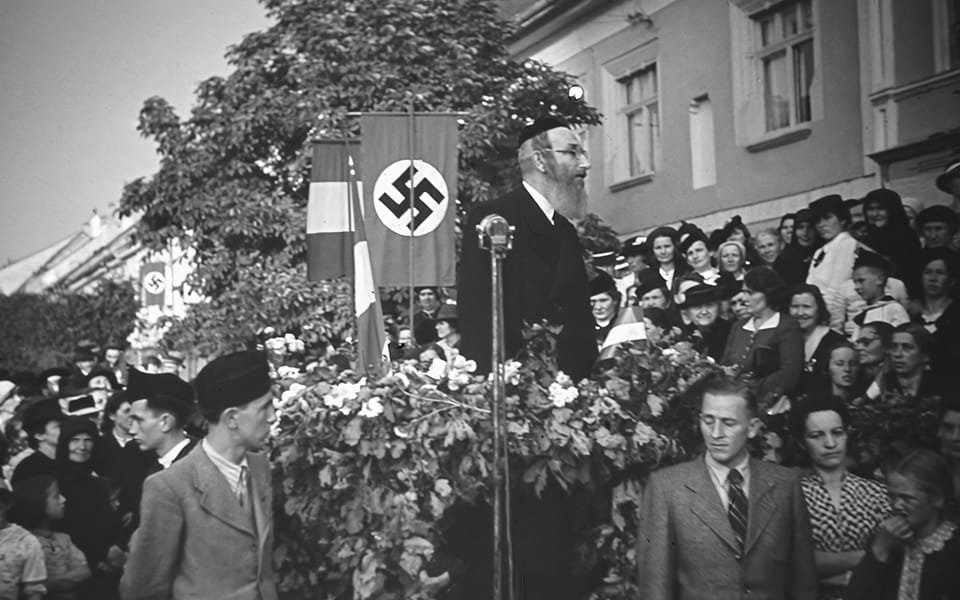
Since Hungary owed Hitler and Mussolini, on April 11, 1939, Hungary officially withdrew from the League of Nations, of which it had been a member since 1922. It was the second important political shift that year, after joining the so-called ‘Anti-Comintern Pact’ earlier in February. In November 1940, the Hungarian government joined another Hitler-managed alliance known as the Tripartite Pact, thus joining Germany, Italy, and Japan. Despite close cooperation with fascist and autocratic regimes, there were people in the Hungarian government, such as Prime Minister Pal Teleki (1879-1941), who tried to keep their country out of the general war. A day after German aggression against Yugoslavia, Teleki shot himself, which opened the way to his successor, Laszlo Bardossy (1890-1946), who, later that same year, declared war on the Soviet Union, when Axis armies invaded the country in June 1941.
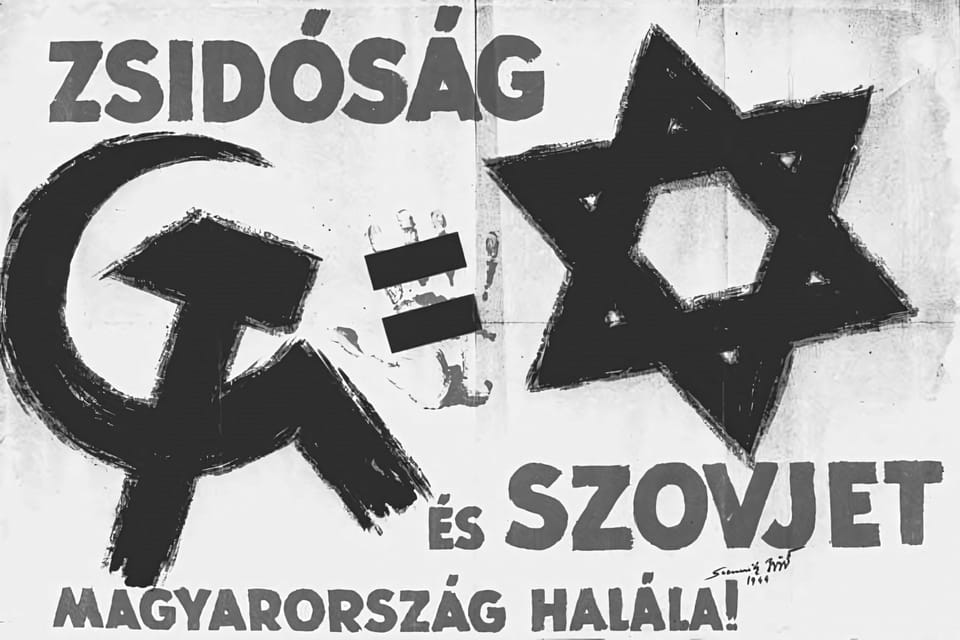
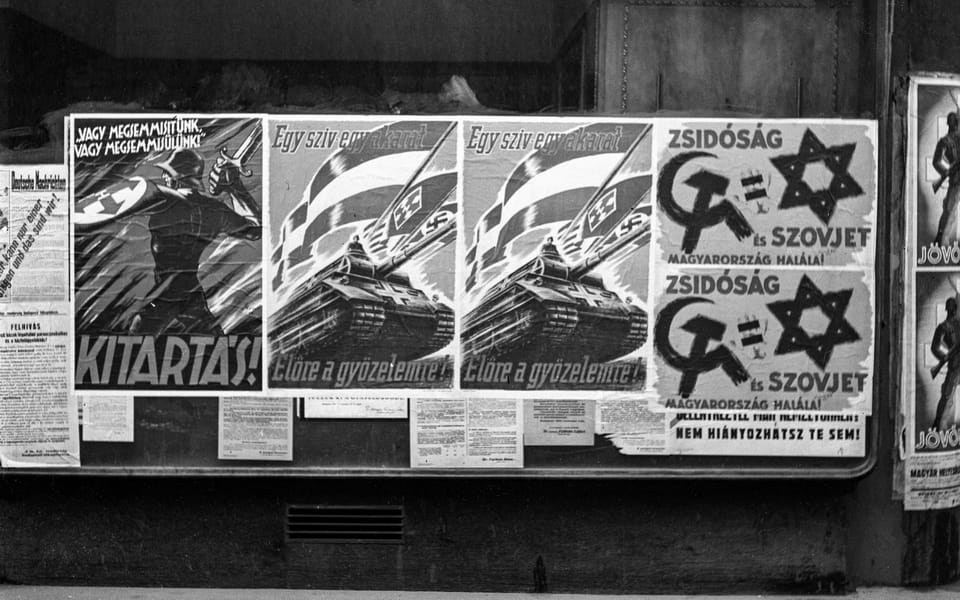
While the Jewish community in Budapest experienced the Holocaust as late as 1944, the harsh anti-Jewish policies were implemented first in the areas occupied by Hungary between 1938 and 1941. Tens of thousands of people were pushed to the borders of Romania and the Soviet Union, many of whom were arrested, and some simply froze to death in the winter months of 1940-1941. In this period, the Hungarian government enabled three stages of anti-Jewish legislation. On May 29, 1938, the first law deprived Hungarian Jews of their equal rights and excluded a large portion of the community from economic life by restricting the share of Jews who could work in specific spheres. The second legislation, adopted a year later in May 1939, was similar to the German law that defined who was a Jew on a racial basis. In August 1941, Jews and non-Jews were forbidden from interracial marriage, similar to the German Nuremberg Laws (1935). In September 1942, Jewish people were restricted in their right to buy land. In May 1939, the general parliamentary elections showed an increase in popular support for the right-wing parties, particularly the ‘Nyilaskeresztes Párt’ (Arrow Cross Party) with 14.39% of the votes. At the same time, as we have seen, the program of the governing ‘Party of Hungarian Life’ adopted an anti-Jewish policy.
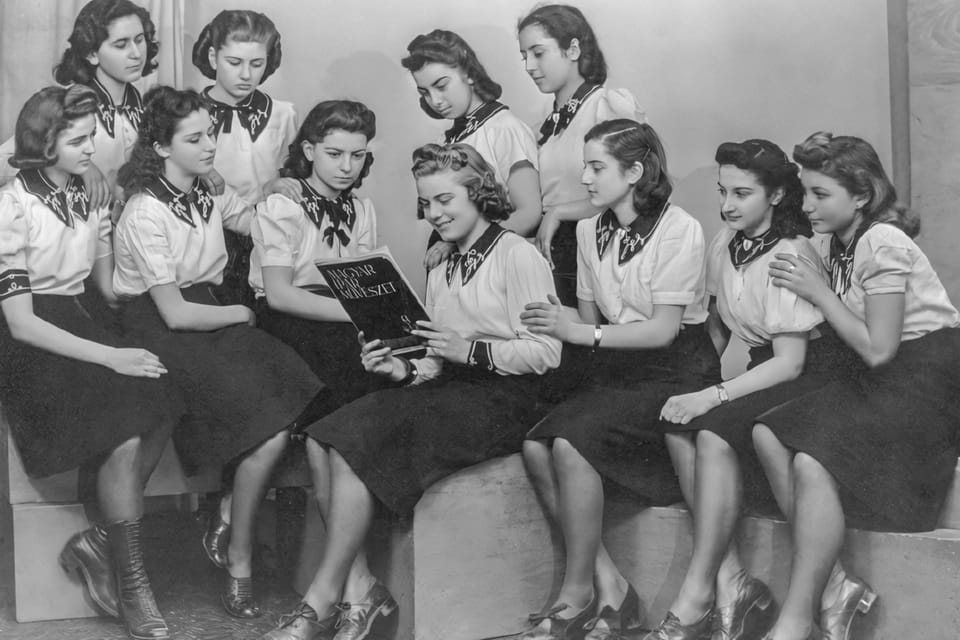
Since the start of the war, the Jewish population in the countries occupied by Hitler’s Germany had been persecuted and later exterminated; the Hungarian government rejected the idea of the ‘Final Solution.’ By the start of 1943, the government in Budapest was already well aware of the Holocaust. The country’s actual ruler, Miklos Horthy, and the prime minister (since March 9, 1942), Miklos Kallay (1887-1967), tried to distance Hungary from German policy, including the deportation of a large Jewish population. They argued that Hungary had already implemented harsh anti-Jewish measures and that further actions would damage the war effort, while in fact, Hitler failed to win the war, and its allies sought their own separate future. Above that, while a larger part of the government had antisemitic sentiments, they were not ready either to slaughter hundreds of thousands of Jews themselves or give them into the hands of the Germans.
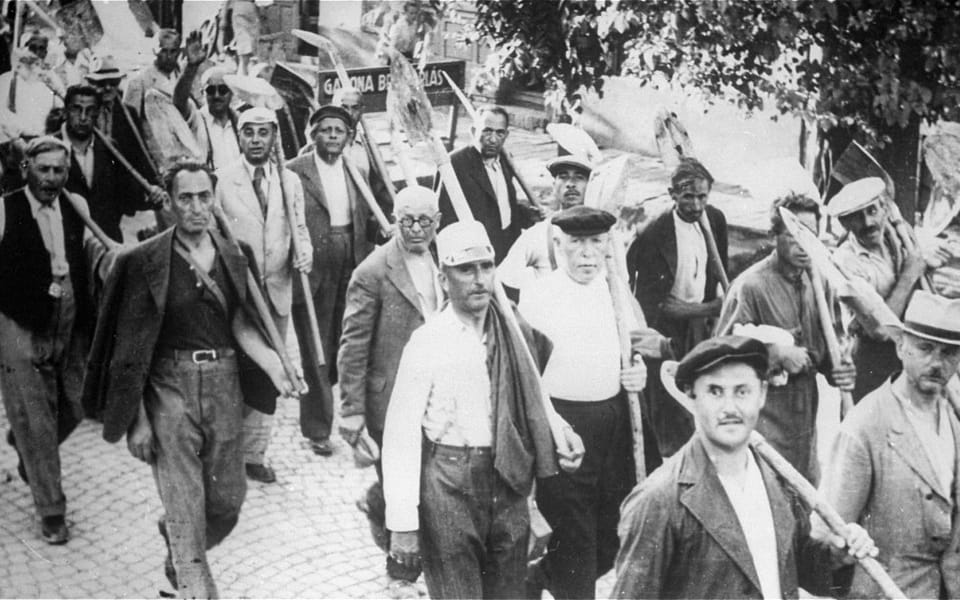
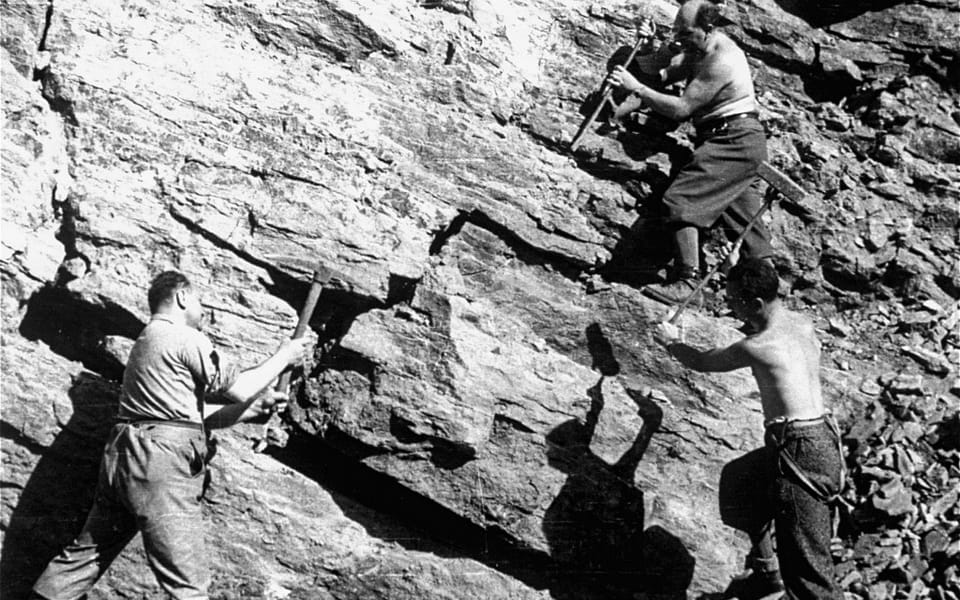
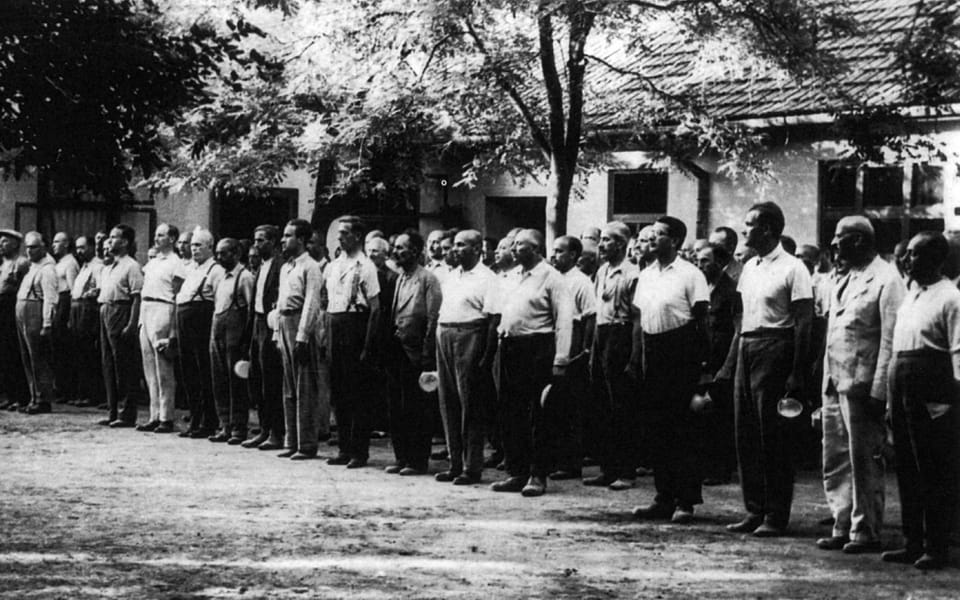
As a result of the territorial acquisition between 1938 and 1941, Hungary gained not only new lands, but also its population grew, including the influx of Jews. Of 14,669,100 (another estimate gives 13,683,323) people, those identifying themselves as Jews comprised 725,000, with another 62,000 who had previously converted to Christianity. Of this number, 185,000 Jews and 38,000 converts lived in Budapest. The later years saw both an influx of the Jewish population, particularly 12,000 to 16,000 refugees from Poland, Yugoslavia, Slovakia, Germany, and Austria, and a decrease. From 25,000 to 40,000 men died as a result of being used as forced labor in the so-called ‘Munkaszolgálat’ (Labor Service). In the summer of 1941, Hungary deported 15 to 18 thousand Jews to the occupied Ukraine, most of whom were killed by the Germans in the Kamenets-Podolsk massacre on August 26-28, 1941. The infamous ‘Novi Sad raid’ performed by the Hungarian army in January 1942 claimed the lives of another one thousand Jews out of the total 4,000 victims. Thousands of people also managed to leave Hungary during the war years. By the time of the German occupation of Hungary in the spring of 1944, 760 to 780 thousand Jews or converted Christians still lived within the Hungarian borders.
When the Wehrmacht occupied Hungary on March 19, 1944, it was declared a purely military solution aimed at securing the country from the possible Soviet advance. In actual terms, Hitler was more interested in preventing Hungary from a separate peace with its enemies and in deporting Hungarian Jews. Hitler previously demanded solving the ‘Jewish question’ from Hungary’s dictator Miklos Horthy, and now, with the coming of the German army, the future of the community became grimmer. The notorious Adolf Eichmann (1906-1962) arrived in Budapest on March 19, on the first day of occupation, followed by the members of the ‘Sicherheitspolizei’ (German Security Police), particularly from a ‘Sondereinsatzkommando’ supervised by Eichmann personally. SS-Standartenführer Hans-Ulrich Geschke, a young and fervent Nazi, was appointed Commander of the Security Police and the SS in Hungary. In the wake of the occupation, the special units spread across the country and arrested several hundred potential enemies: opposition journalists, anti-Nazi politicians, lawyers, doctors, and intellectuals, most of them Jews.
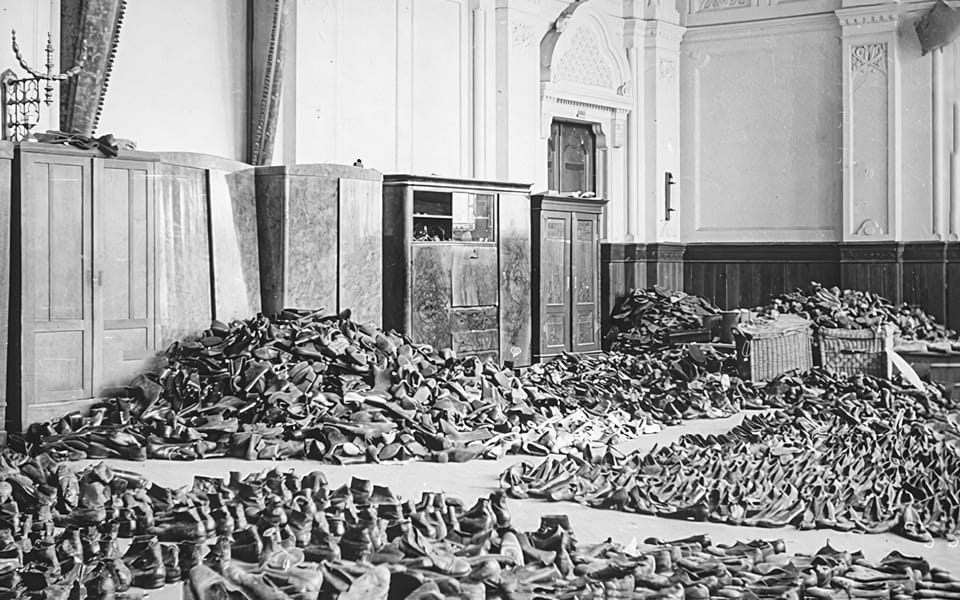
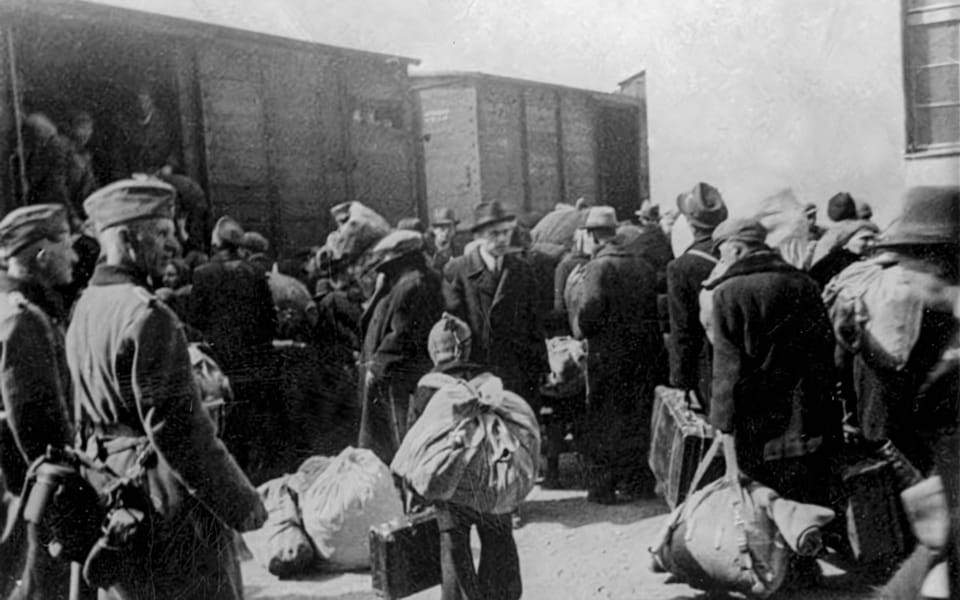
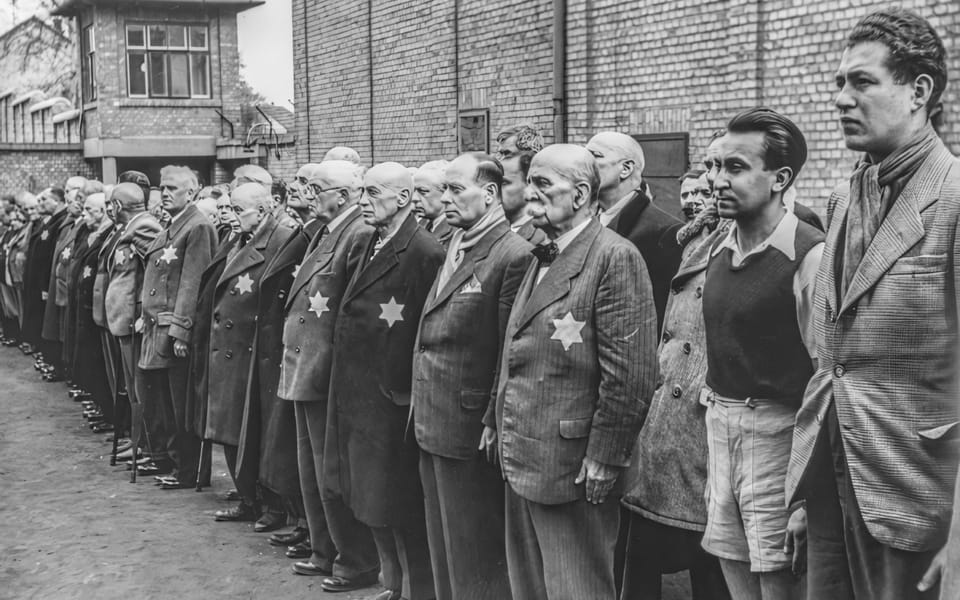
In parallel with the first ethnic operations performed by the ‘Sondereinsatzkommando,’ on March 22, the newly appointed puppet government led by Prime Minister Dome Sztojay (1883-1946) agreed to new Anti-Jewish actions. Nine days later, on March 31, a general plan for the ghettoization was approved by the recently appointed minister of the Interior, Andor Jaross (1896-1946). The whole undertaking was actually masterminded and prepared by Adolf Eichmann, Laszlo Endre (1895-1946), a zealous antisemite who was considered the Hungarian ‘expert on Jewish matters’; and Laszlo Baky (1898-1946). All three Hungarian politicians, Jaross, Endre, and Baky, were later sentenced to death for their crimes and executed in 1946. With the assistance of Hungarian police, in the first weeks after the occupation, thousands of Jews were arrested and attacked in train stations and streets across the country: in total, 3,364 people were interned by March 31. The plan of ghettoization meant the forced move of Jews from villages and small towns to larger collecting centers for further deportations to the death camps in Poland.
![Hungarian Jews and non-Jews walk along the Jozsef Körut [Ring] in Budapest. Many are holding shopping baskets](https://war-documentary.info/wp-content/uploads/2026/05/fate-of-the-hungarian-jews-1941-1944-08.jpg)
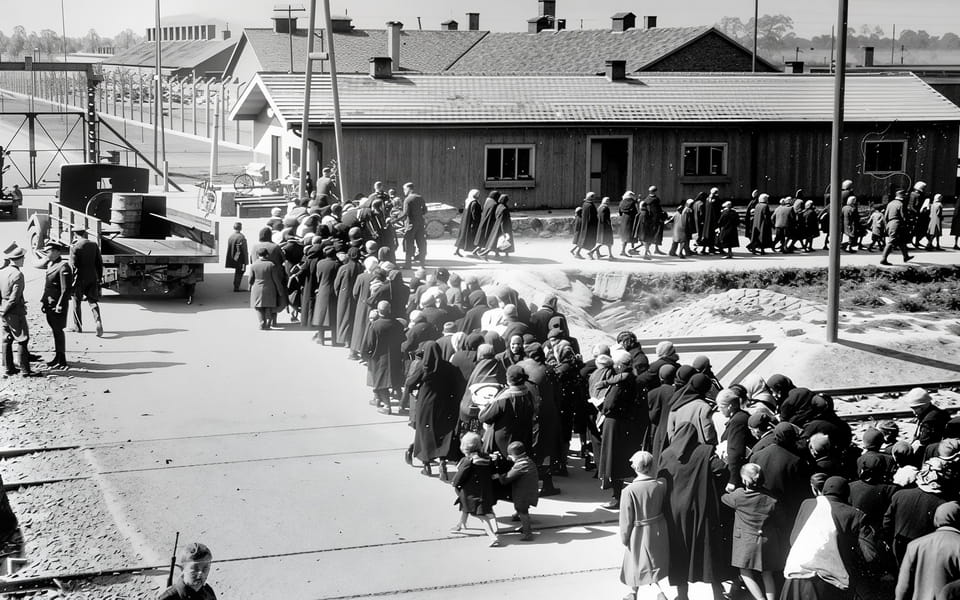
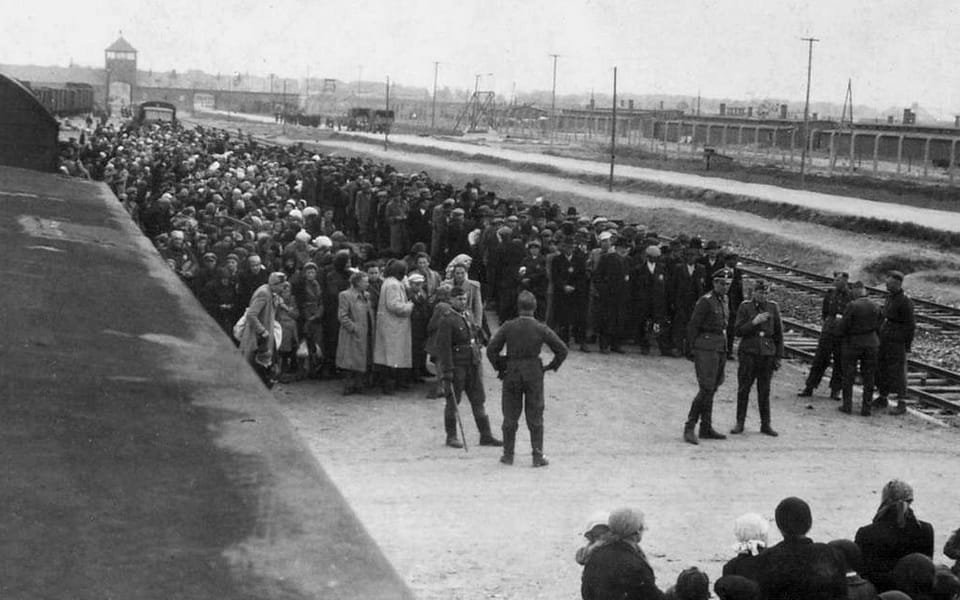
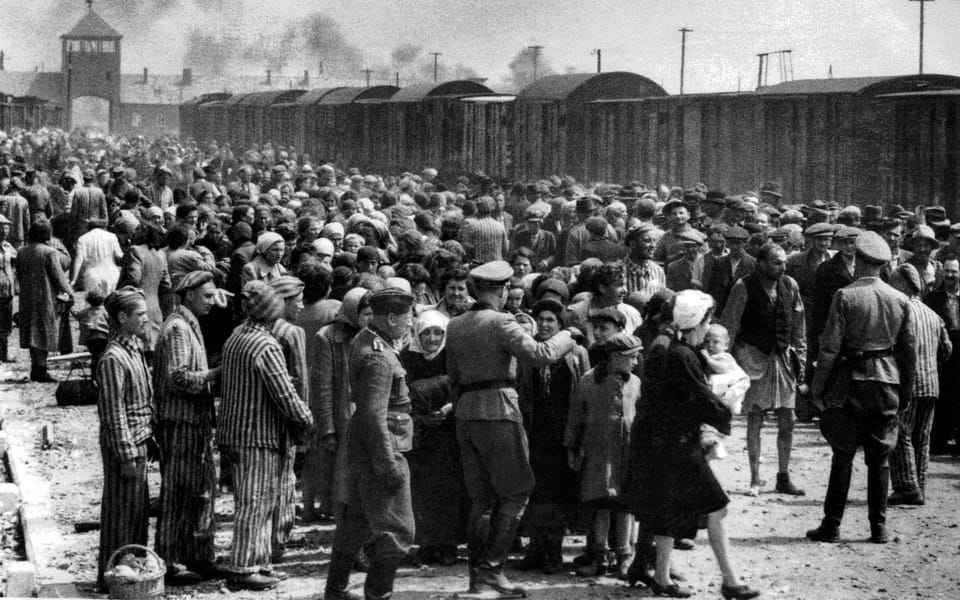
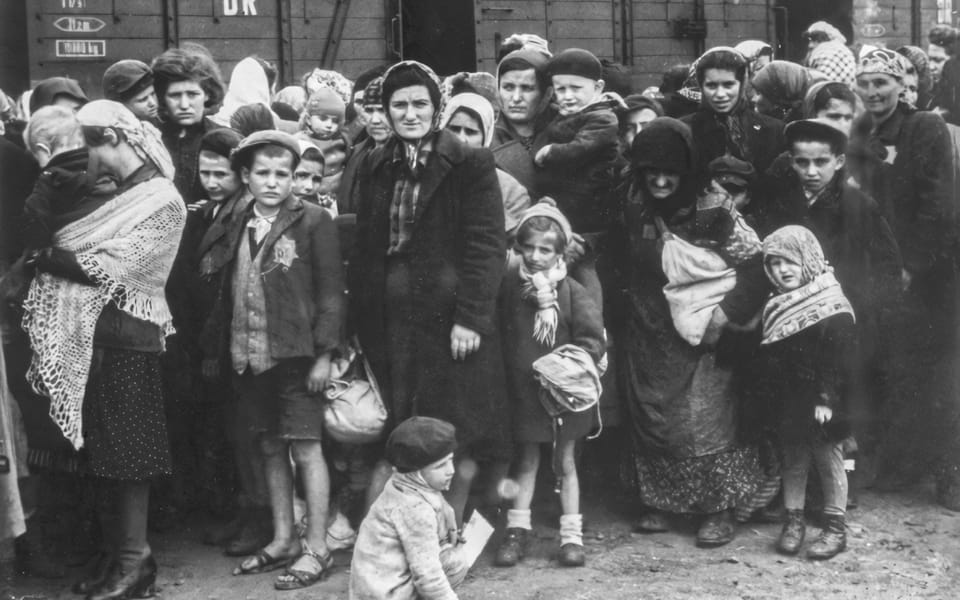
Hungarian provinces were emptied of the Jewish population, who now perished in the gas chambers and crematoriums of Auschwitz and other camps. By July 1944, only Budapest was still left relatively intact, with the largest remaining Jewish community in the country. What saved them was the tension that Regent Miklos Horthy experienced both from the inside and in his own country. The widely circulated testimonies of mass murder, as well as international protests from people like Pope Pius XII and the King of Sweden, Gustav V, and the military setbacks of the Germans and the Hungarian army, led Horthy to halt deportation in early July 1944. Above all, Horthy was simply afraid that the concentration of police gendarmes in the capital might be aimed not at deporting Jews but at overthrowing him as a ruler. The Regent ordered the withdrawal of the gendarmes from Budapest and brought army units from a loyal 1st Armored Division into the city. Despite German occupation, it appeared that the Germans were powerless in performing mass deportations without Hungarian assistance and Horthy’s approval.
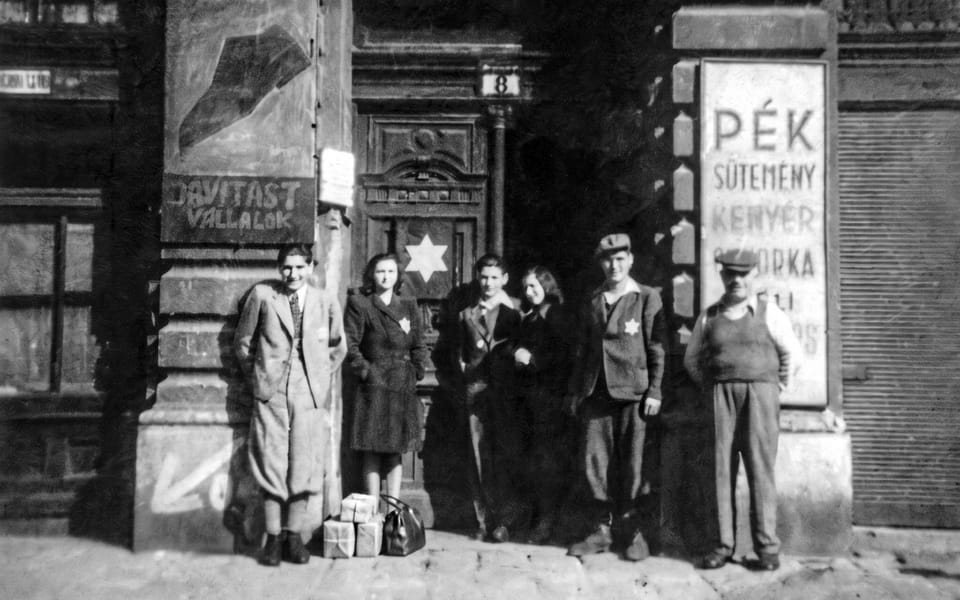
THE ARROW CROSS TAKEOVER AND THE TWO BUDAPEST GHETTOS, OCTOBER 1944 – JANUARY 1945
Since the middle of the deportations, the remaining Hungarian Jews, especially the community in Budapest, spent the next few months in a tense transitional state. On August 29, 1944, Regent Horthy dismissed Prime Minister Sztojay Dome from his post and replaced him with the more moderate Geza Lakatos (1890-1967), a colonel general and commander of the 1st Army. At the same time, Horthy refused Adolf Eichmann’s insistence on resuming the deportations of Jews. In September 1944, Soviet forces crossed the Hungarian border, and the government secretly tried to end the war by signing a separate peace with the Allies. On October 15, 1944, Horthy made a move and declared on the radio that he and his government requested an armistice with the Soviet Union. Hitler decided to remove Horthy from rule. A German special unit led by the notorious Otto Skorzeny kidnapped Horthy’s son Miklos Junior (1907-1993), and German units in Budapest captured the Regent. He was forced to sign an abdication and appoint the Arrow Cross leader Ferenc Szalasi (1897-1946) as Hungarian ruler. The German operation to take control of Hungary in October 1944 became known as ‘Operation Panzerfaust.’ Horthy Junior spent seven months in Dachau and was released as late as May 5, 1945. His father, the former regent, spent the remainder of the war under SS guards. The former regent was released from the Nuremberg trials‘ persecution and spent the remaining years in exile until he died in 1957 at the age of eighty-eight.
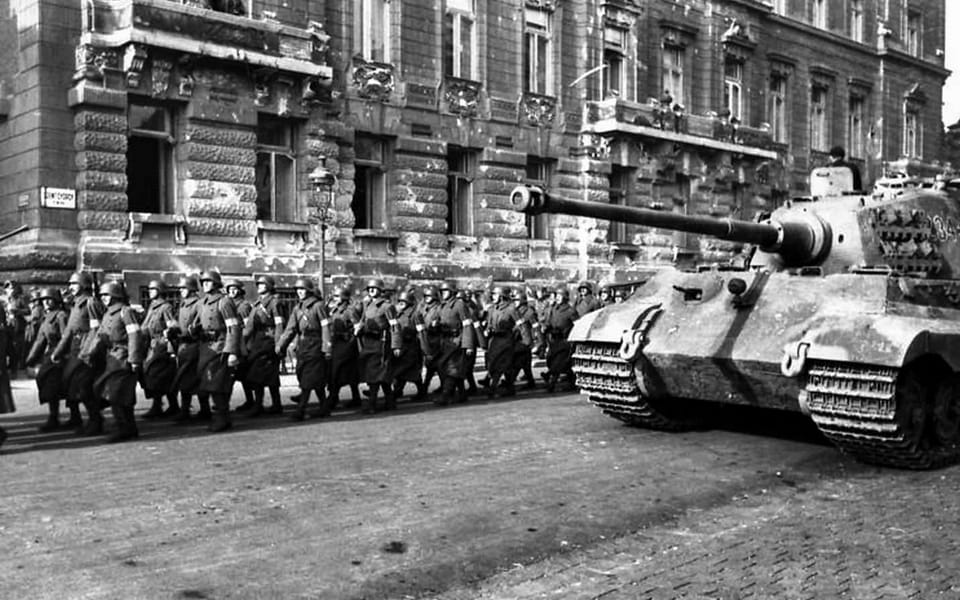
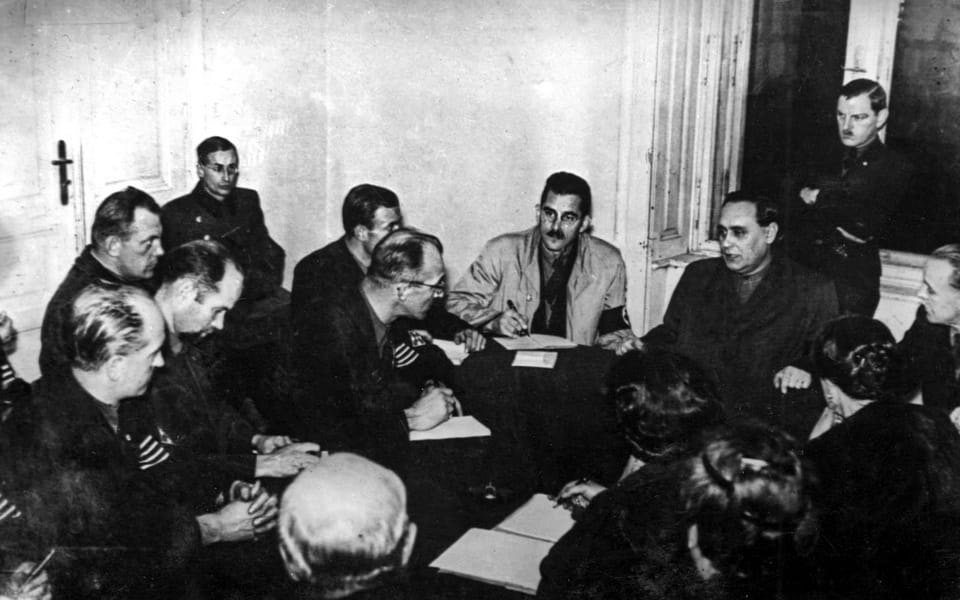
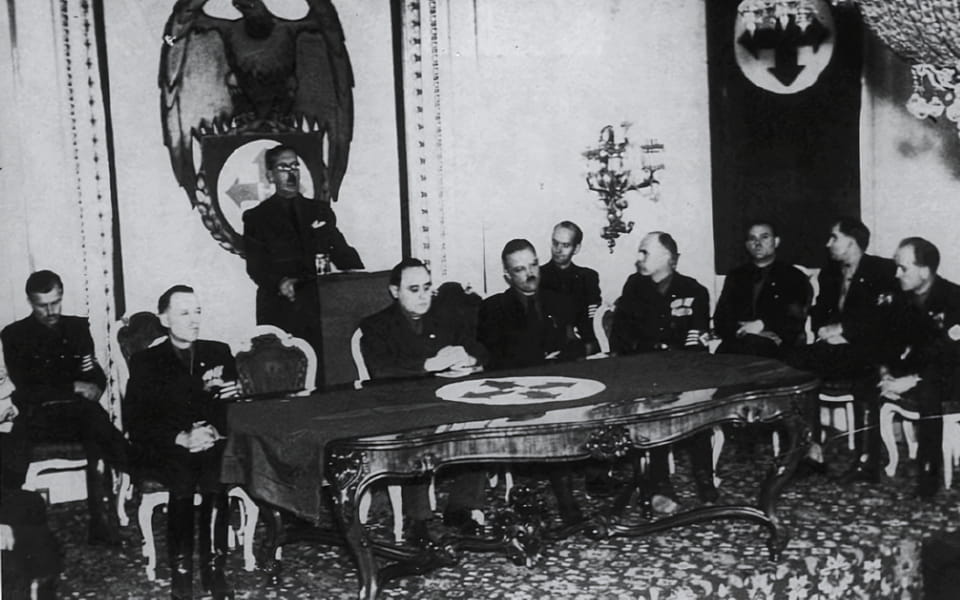
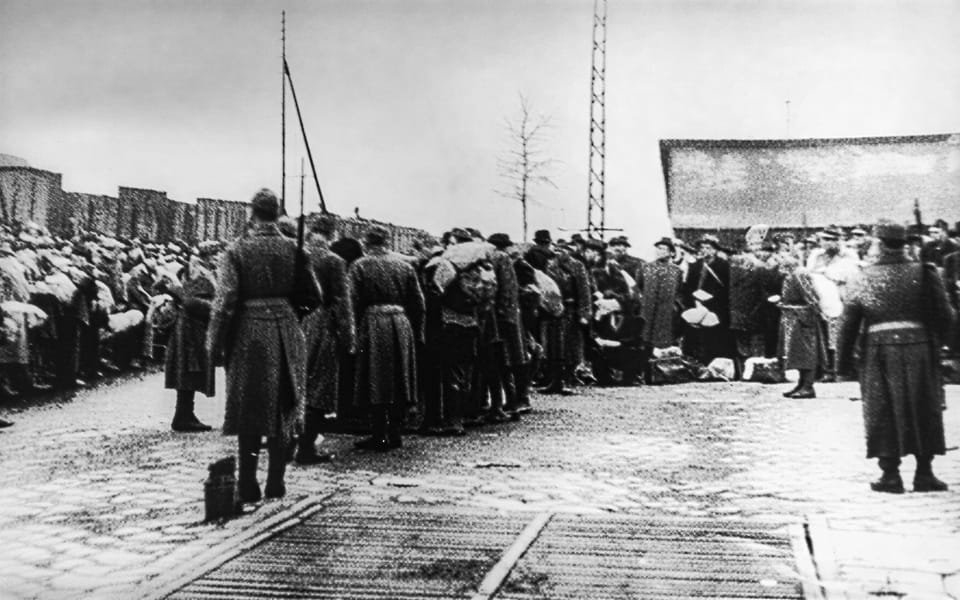
Followed by the abdication of Miklos Horthy, a larger part of the government apparatus and elites supported the far-right Ferenc Szalasi and his party. Adolf Eichmann came back to Budapest as early as October 17, just one day after the Arrow Cross Party had taken the lead in the country. He was zealous to resume mass deportations of the remaining Hungarian Jews from the capital, starting with tens of thousands of forced laborers. Before the preparations were completed in full alliance with the Hungarian government, first of all, its newly appointed Minister of the Interior, Gabor Vajna (1891-1946), Heinrich Himmler ordered the cessation of mass murder in Auschwitz. The largest German death factory in Europe lost its role as a destination from Hungary, and when the deportations resumed on November 6, 1944, due to the lack of trains, thousands of Jews were headed westward, mainly on foot. They were supposed to be used in the construction of German defensive lines. It was decided that able-bodied men were to be marched, while women, children, and those unfit for work were to be concentrated in the ghetto in Budapest. The ‘death marches’ lasted for about a month, and all deportations from Budapest were stopped in early December 1944. Later on, around 35,000 Jews were assigned to build fortifications around Budapest, of whom thousands died or were killed when the Soviets approached the city.
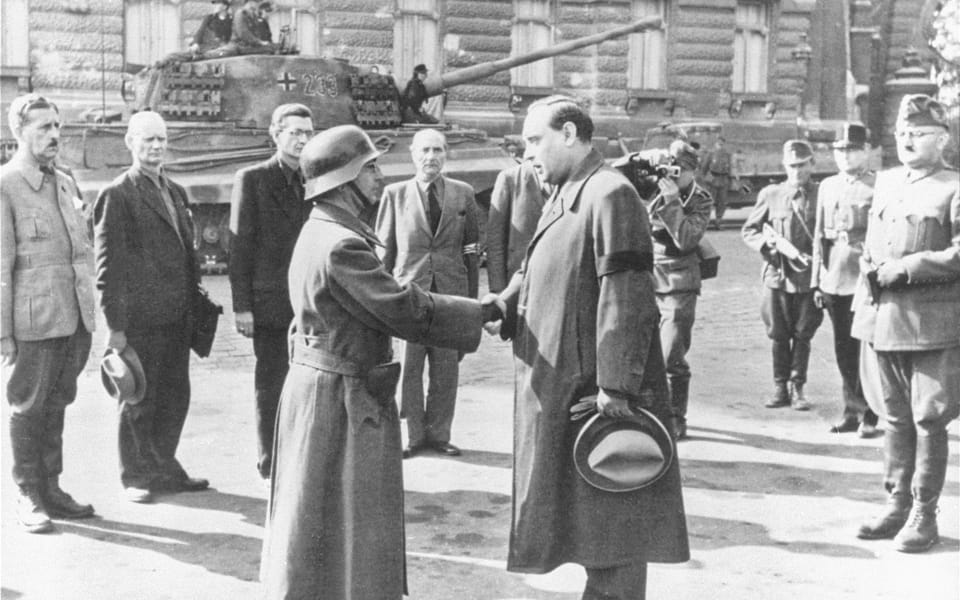
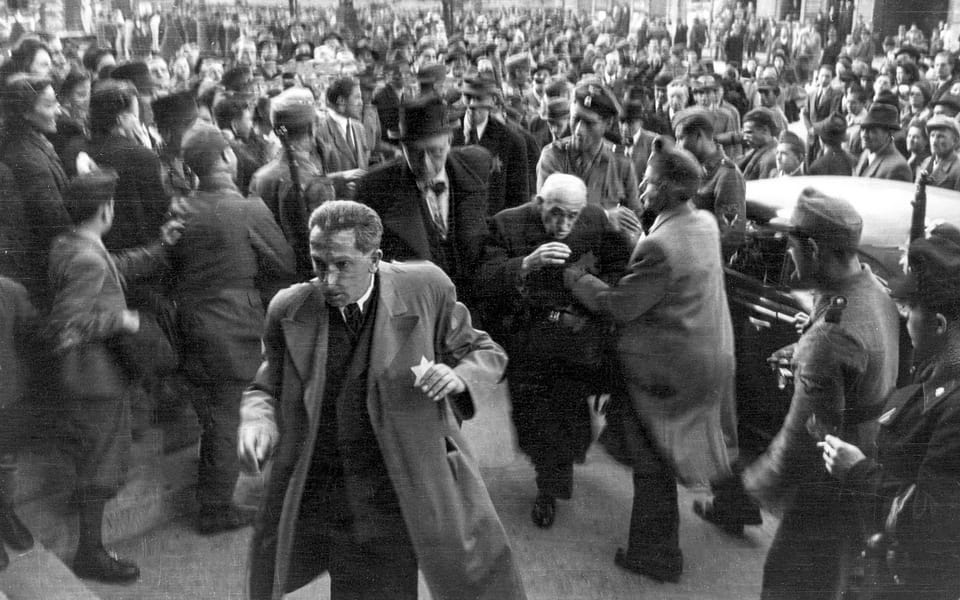
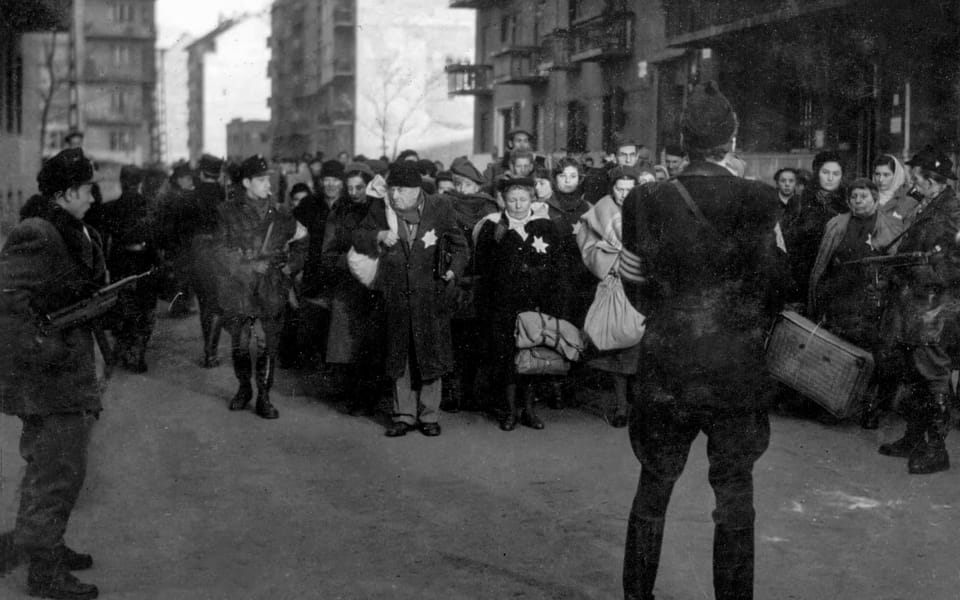
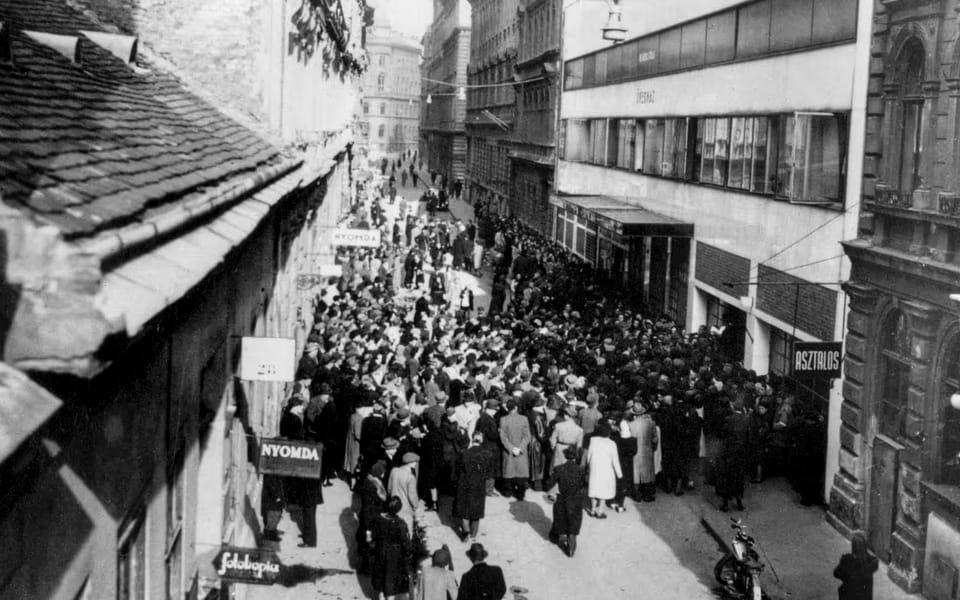
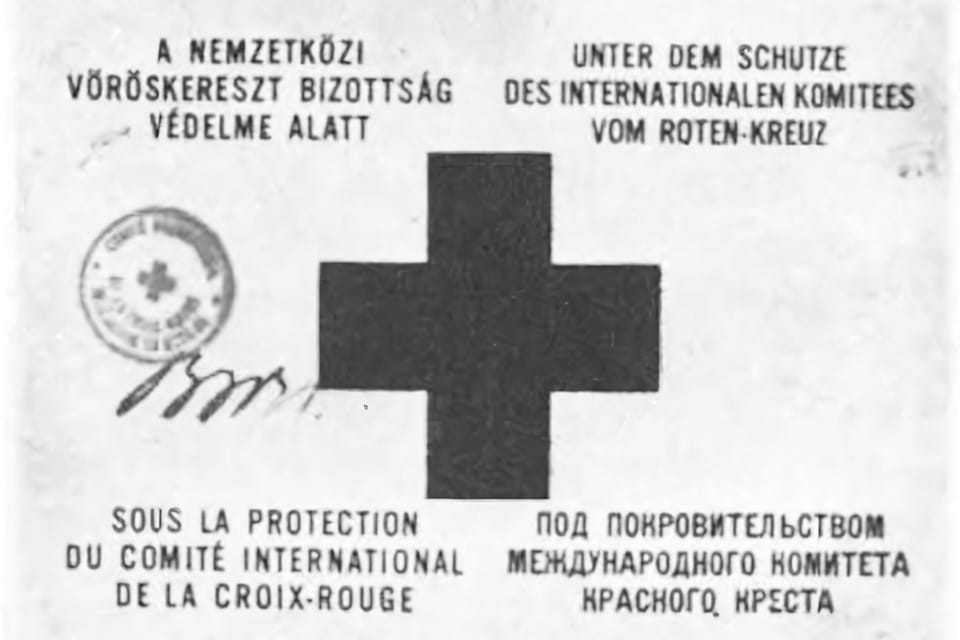
As opposed to the German wish to evict every Jew from Budapest, the Hungarian government decided to organize ghettos in the capital according to Ferenc Szalasi’s instructions. The first centralized Jewish ghetto in Budapest was created between 12 and 20 November 1944 and became known as the ‘International Ghetto,’ later also designated as ‘small’ or ‘protected.’ The area of the Újlipótváros (District XIII) of Pest was not sealed with either a wall or a barbed wire fence and was formally put under the protection of the Red Cross and neutral countries: first of all, Sweden and Switzerland; also, the Vatican, Spain, and Portugal. While the foreign embassies issued around 50,000 protection papers for the Jews in Budapest, another one hundred thousand forged papers were in circulation, and often people moved to the protected ghetto without any documents at all. According to the estimate of a Swedish diplomat, Raoul Wallenberg (1912-1945), who issued thousands of protective documents, up to thirty-five thousand people lived in the ‘International Ghetto‘ by mid-December 1944.
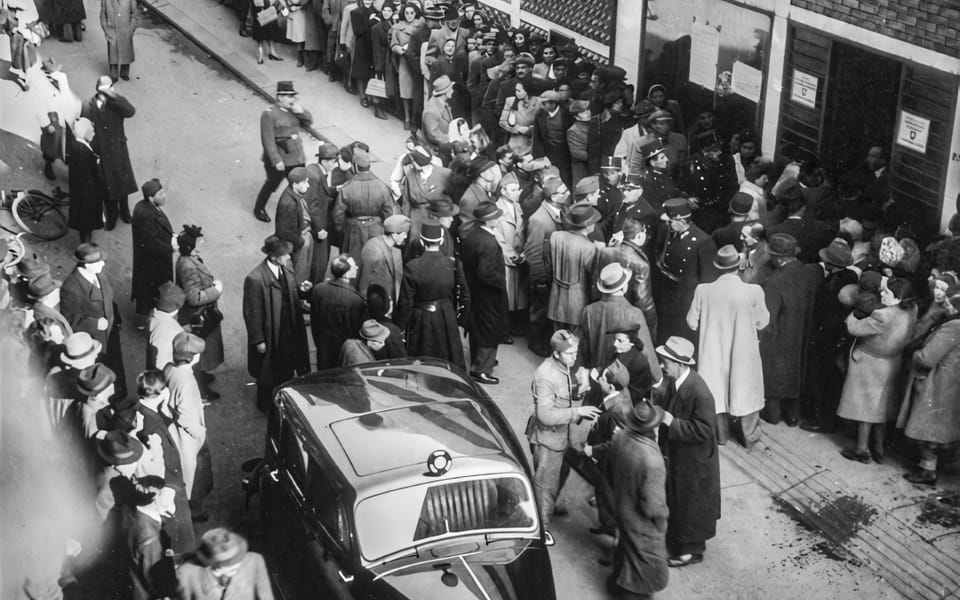
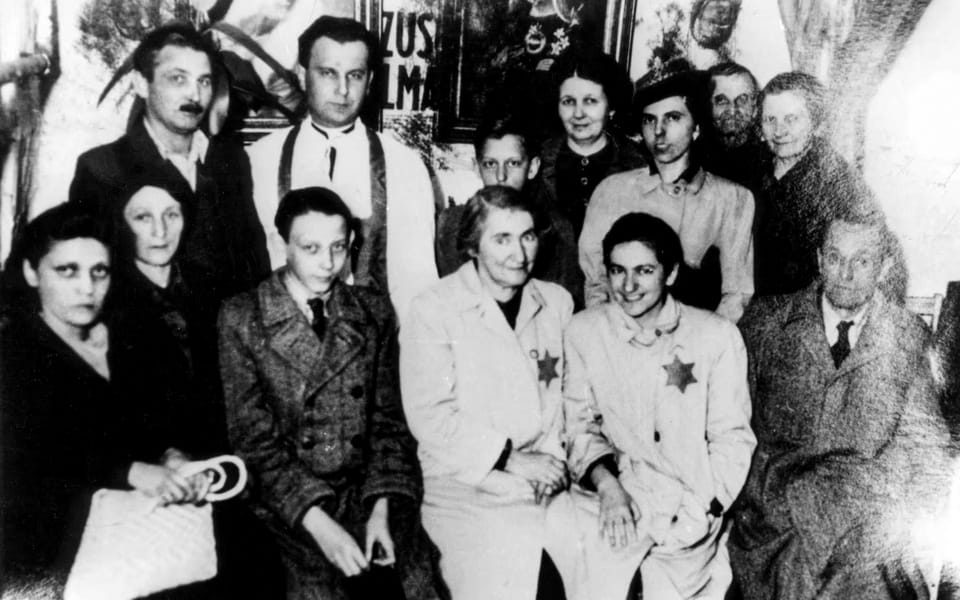
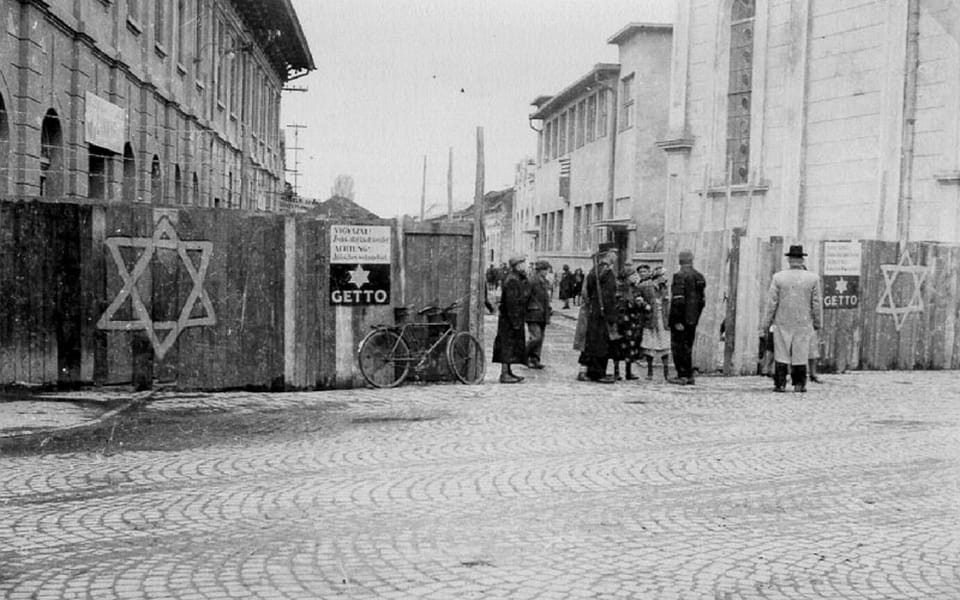
The creation of a second Jewish ghetto in Budapest for those without protective papers began on November 18, with the formal establishment on November 21. According to a decree issued by Minister of the Interior, Gabor Vajna, all Jews without protective documents were ordered to move into the ‘Ordinary Ghetto’ no later than December 2, 1944. The ghetto was established in the VII city district, which had already been densely populated by Jewish people, and around half of its buildings were marked with yellow stars. Such a choice of location thus required fewer efforts for the movement of Christians. On December 10, 1944, the designated area was closed off, leaving four exit gates. The government meant that up to 100,000 people should have moved to the territory with only 4513 apartments. Even with the number of 60,000 people who lived here in December, the density was sometimes unbearable, with fifteen people in one apartment and up to five in every room. The provided food ration was only 900 calories, but even such a minimum was never reached, and Jews relied on smuggling food into the ghetto with the help of Jewish organizations and neutral countries.
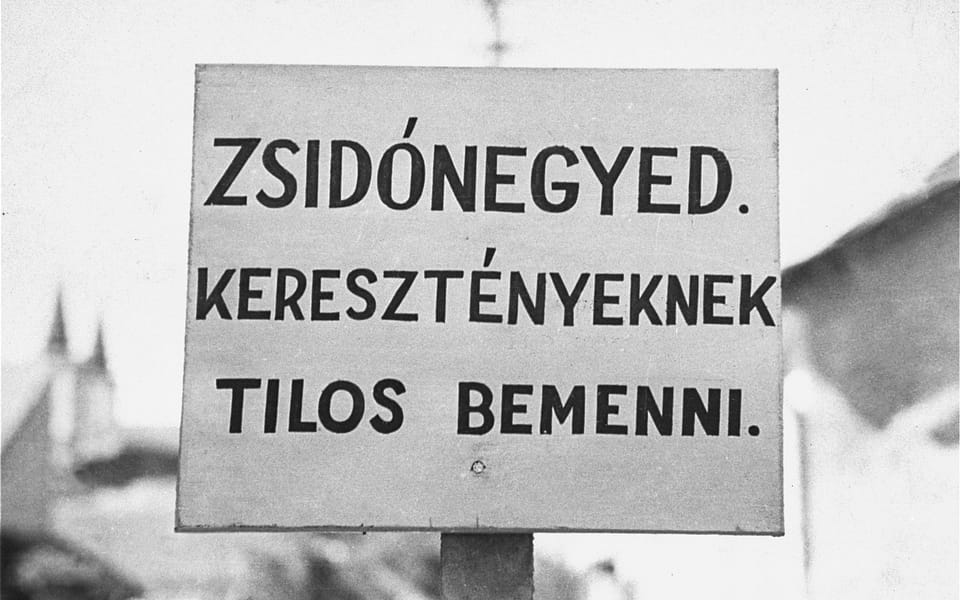
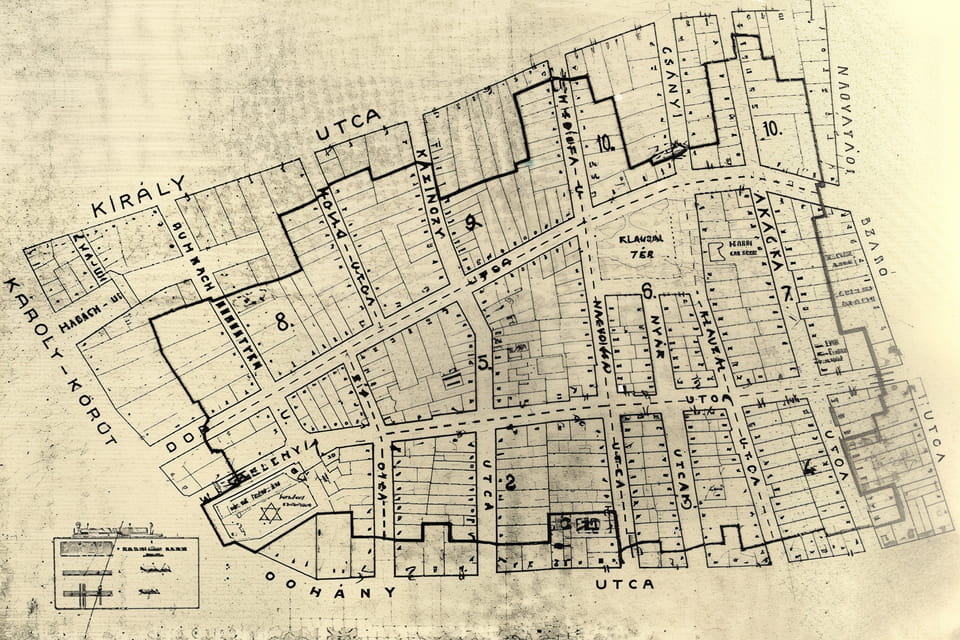
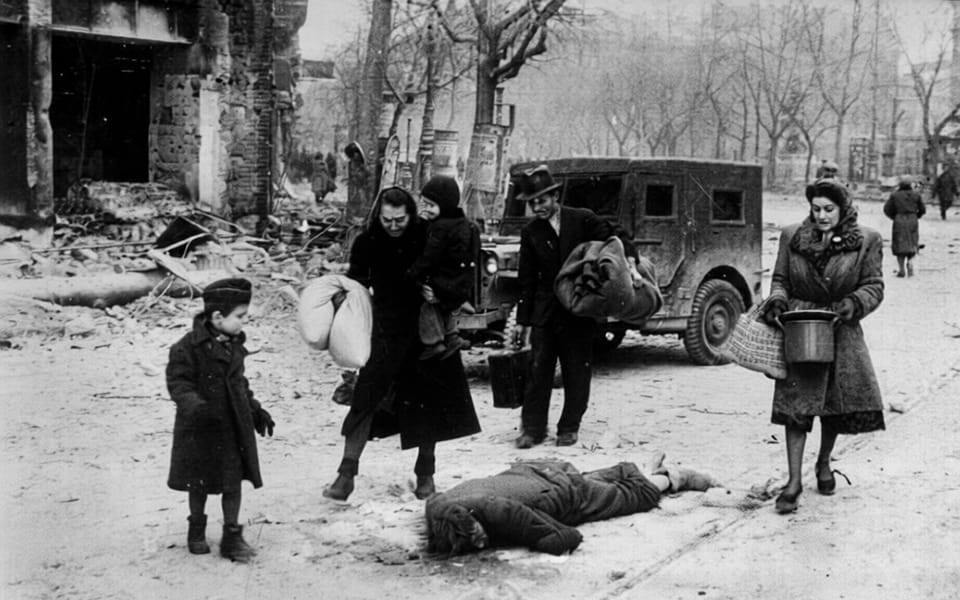
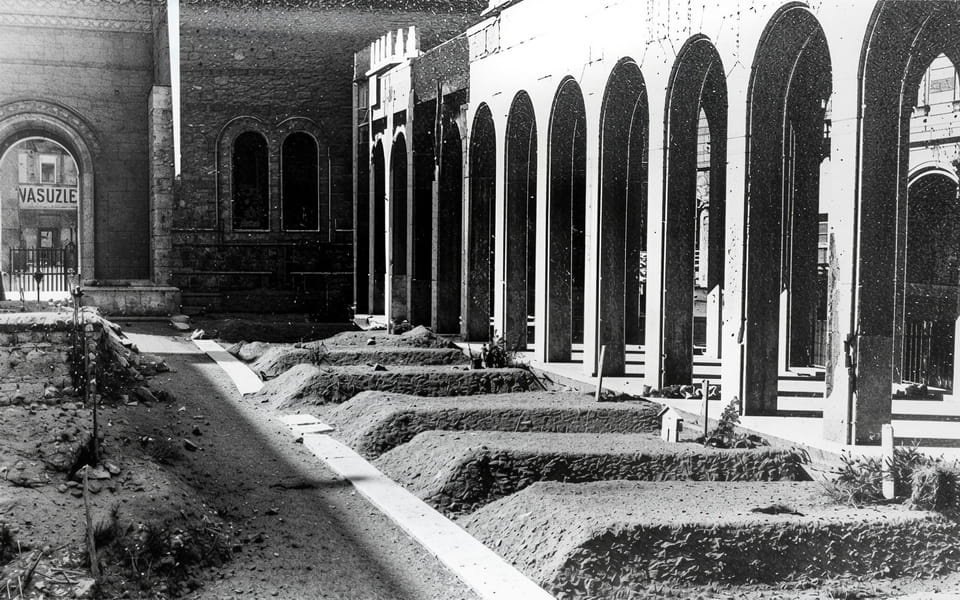
On December 23, 1944, the authorities ordered an immediate move of all Jews in hiding into the ‘ordinary ghetto’ in the VII district within twenty-four hours. By January 8, 1945, the Jewish population in this ghetto had peaked at around 70,000 people, which brought sanitary and food challenges to the sealed-off Jews. The situation deteriorated even more when the Soviet troops encircled Budapest in late December. Because of the mass malnutrition, the lack of beds in the hospitals and medical supplies, the artillery shelling by the Soviets, the atrocities performed by the Arrow Cross supporters, and a high suicide rate, the ghetto faced another crucial problem: dealing with the dead inside its restricted borders. While initially those who died were taken to the graveyards, the siege forced ghetto residents to bury the dead in the mass graves.
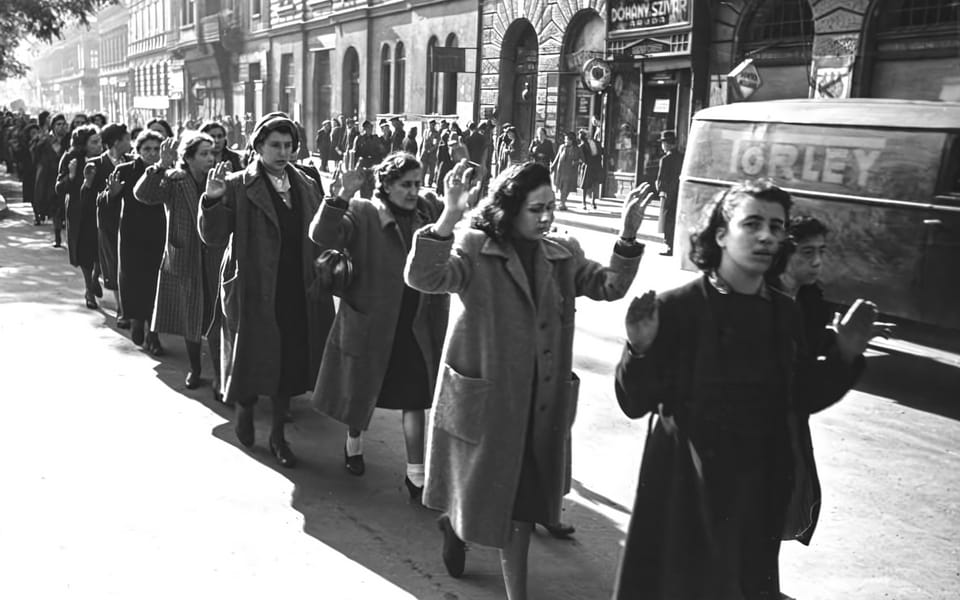
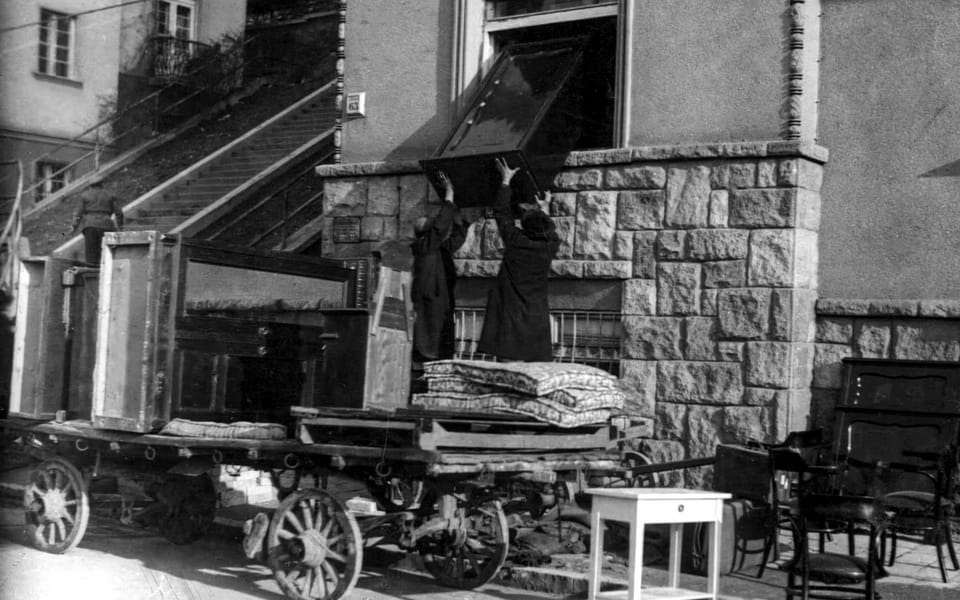
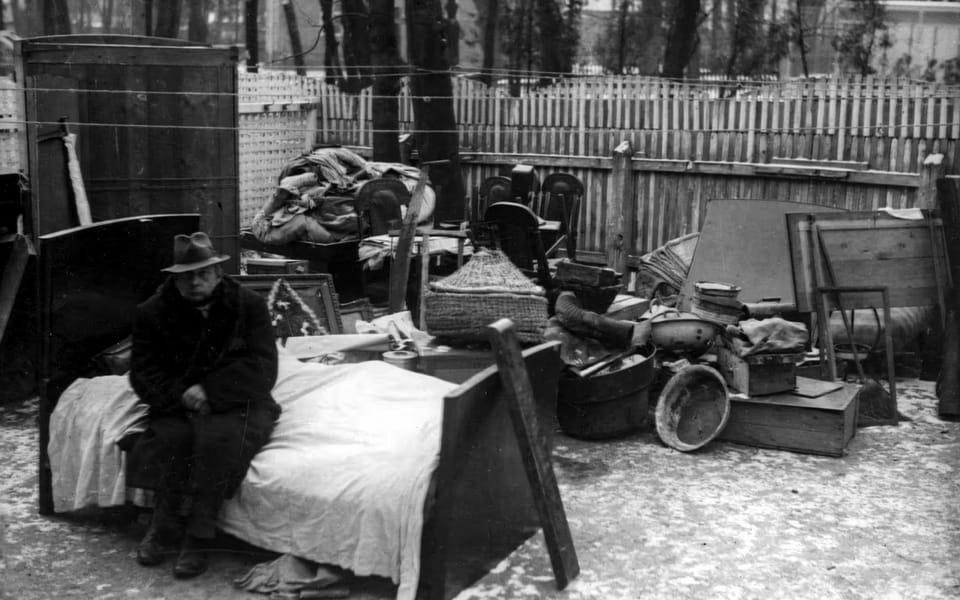
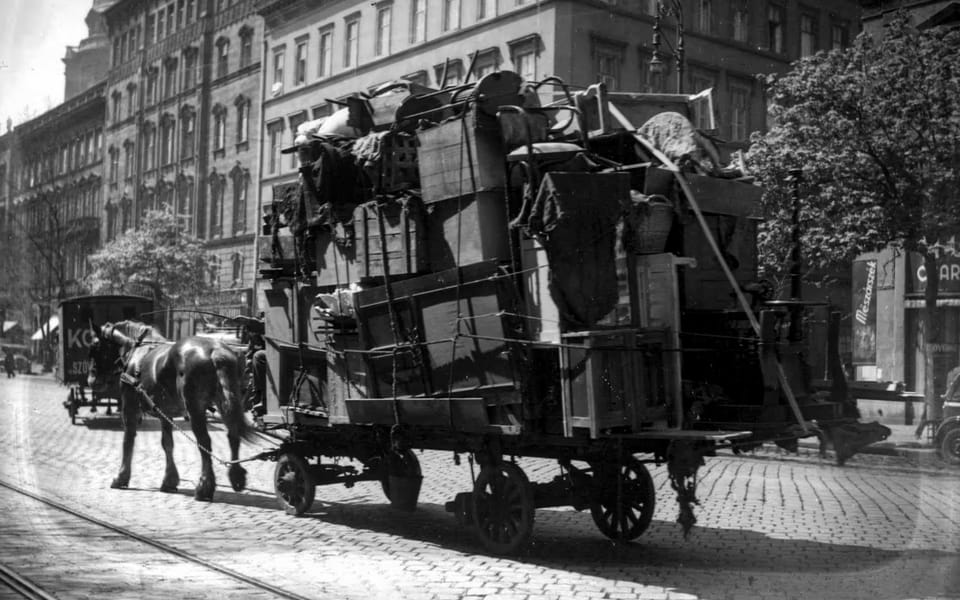
When the Szalasi government realized the scale of issuing forged protective documents and the number of Jews still living in the ‘protected international ghetto,’ they dissolved it in early January 1945. While efforts were made to postpone this process, the representatives of neutral countries, such as Raoul Wallenberg, facilitated the move of Jews from a former ‘International Ghetto’ to the ‘ordinary one.’ On March 5-6, up to five thousand people were marched to the ordinary ghetto, but on the next day, the Arrow Cross authorities halted the process, and on January 7, a massacre of 130 residents of one of the ‘Swedish’ houses occurred when people were marched to the bank of the Danube and machine-gunned. The ‘International Ghetto’ became much more dangerous because of its proximity to the river. The Arrow Cross militia planned a massive massacre of the residents of the ‘ordinary ghetto,’ but the undertaking was never fulfilled due to the intervention of Wallenberg and Wehrmacht commander Major General Gerhard Schmidhuber (1894-1945). The International Ghetto was liberated on January 16, and the larger ordinary one on January 18, 1945. The opposite bank of the river, Buda, was liberated as late as February 13.
SHOT INTO THE DANUBE: ARROW CROSS EXECUTIONS ON THE RIVERBANK, 1944–1945
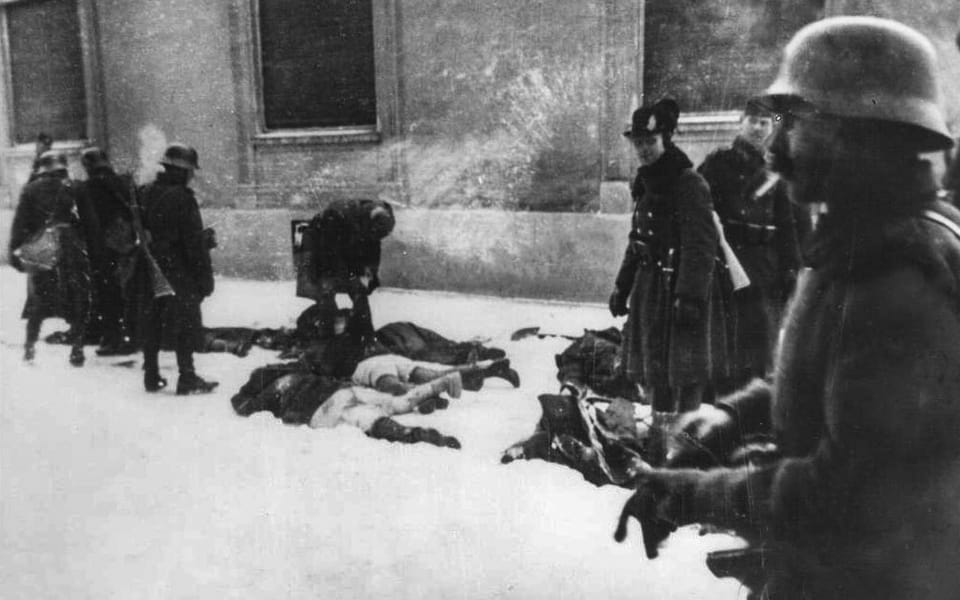
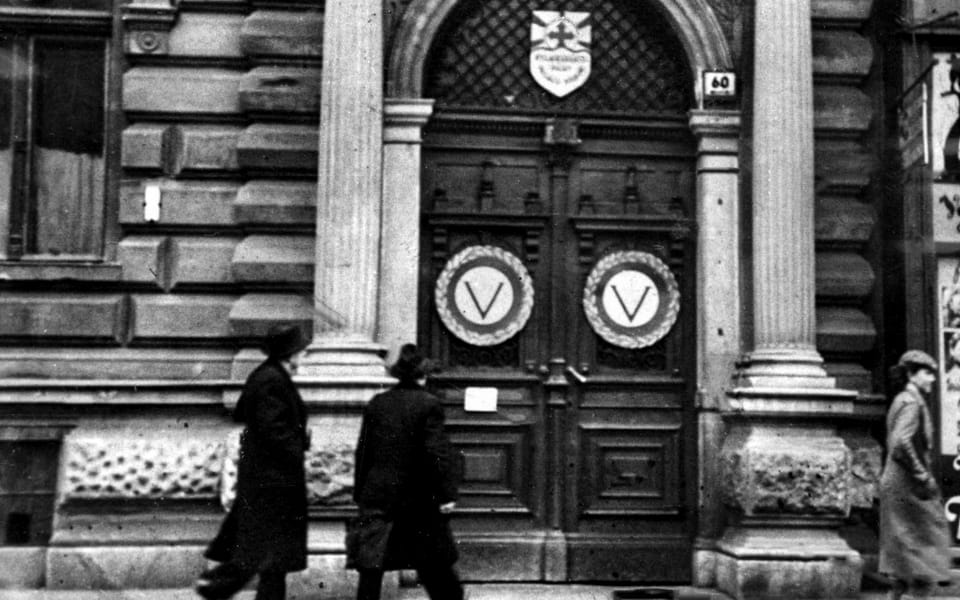
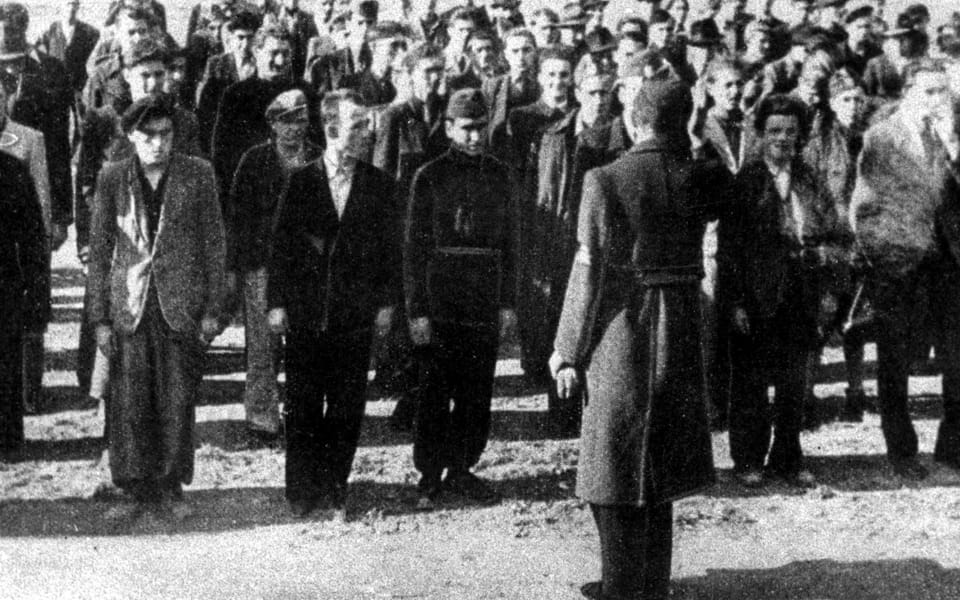
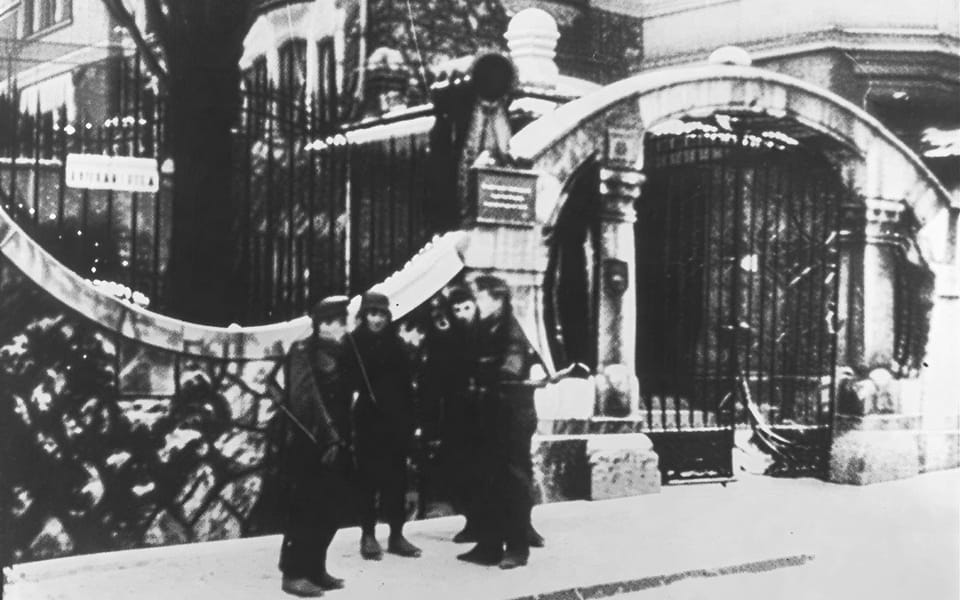
The coming of the Arrow Cross regime to power in Hungary on October 15-16, 1944, brought a grave danger to the remaining Jews in Budapest, with the first Jewish suicide registered on the first day at 7.32 p.m. Two days later, on October 17, the residents of several buildings in the VII district (where the ‘ordinary’ ghetto would be created a month later) were ordered to gather in the courtyard the next morning. They were first marched to the famous Tattersall horse racecourse, 4 kilometers to the east, and a day later, sent backward toward the Danube bank. People were lined along the river embankment, and only an order from a German officer prevented mass execution. While these people were sent back home, small killing incidents erupted soon after the change of power. Sometimes the victims were first taken to the prison on Andrássy út 60 and tortured. The building had served as the headquarters of the Arrow Cross movement since 1937. Today it houses the House of Terror museum.
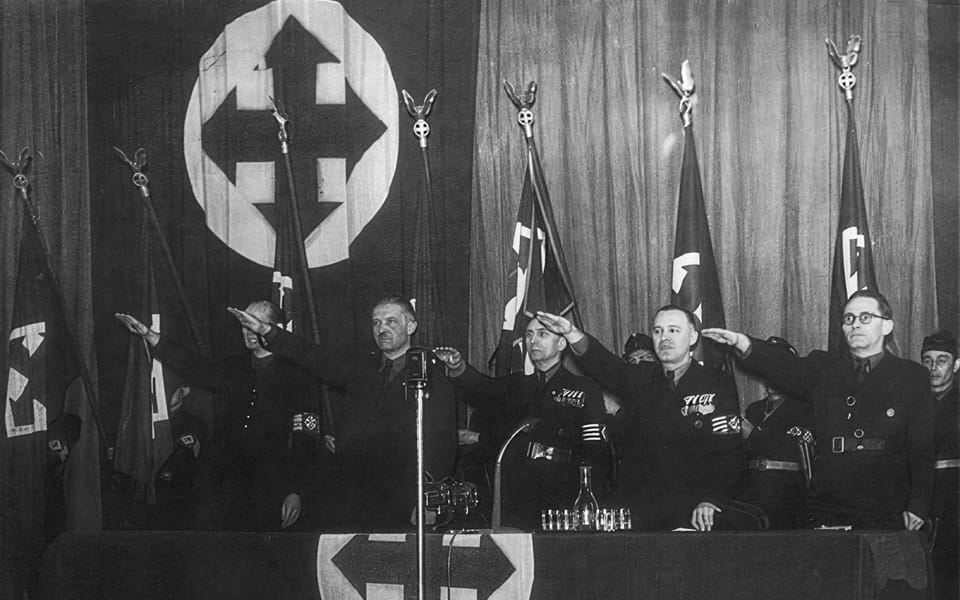
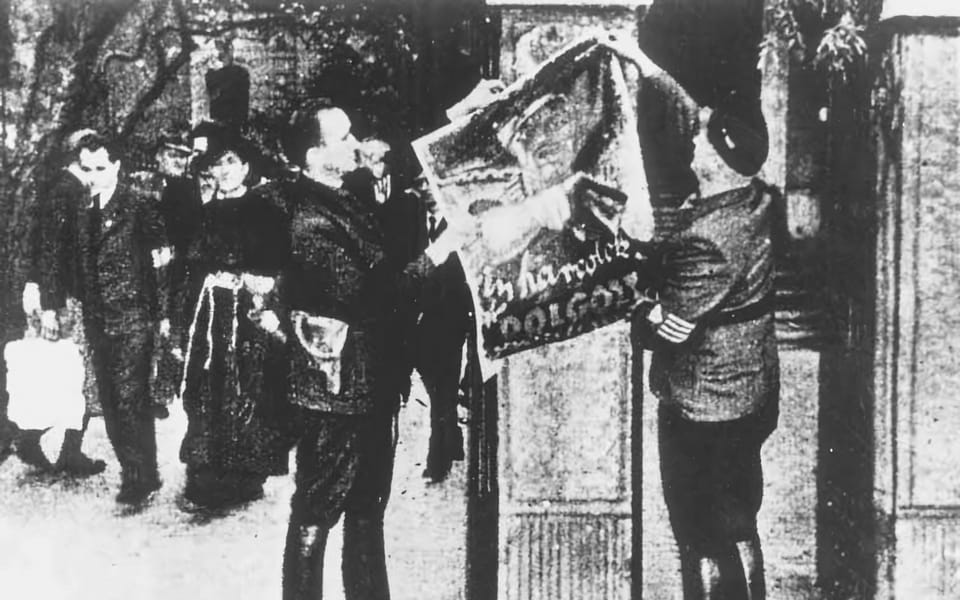
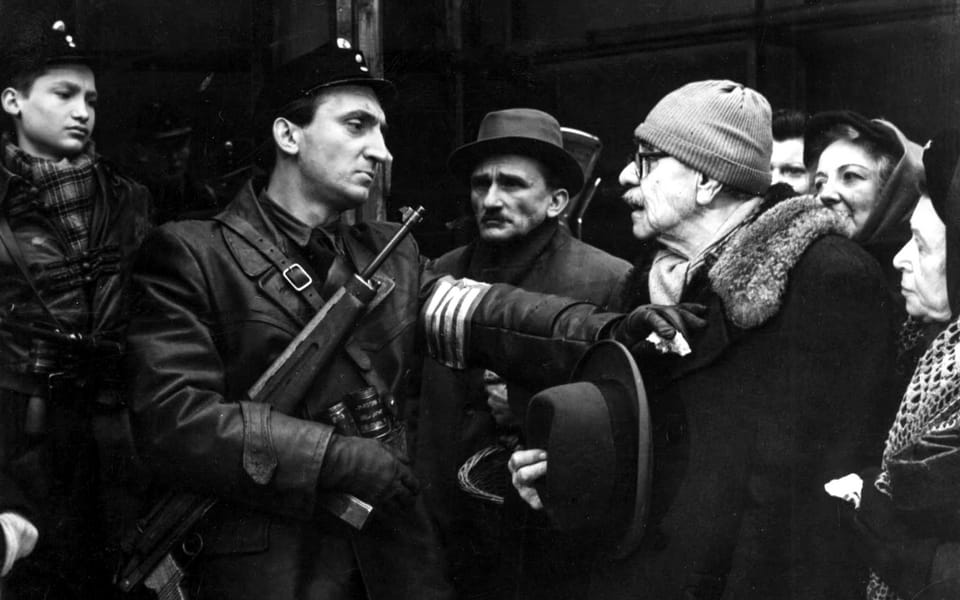
The Arrow Cross militia preferred executions of Jews on the Danube embankment to ease dealing with corpses, which just fell into the river. Major General Paul Hodosy-Strobl (1895-1976), who was appointed Inspector of the State Police in the new government, stated that killing Jews was not a problem, but dealing with dead bodies and finding an appropriate method should be addressed. A parliament member, Karoly Marothy (1897-1964), appealed that the mass death of Jews should not be registered officially, and Hungarians must not see the bodies in the streets. The Germans also raised the temperature by advising the Hungarian government to deal with the remaining Jewish population. That winter, according to Yad Vashem, the Danube became known as “the Jewish cemetery.”
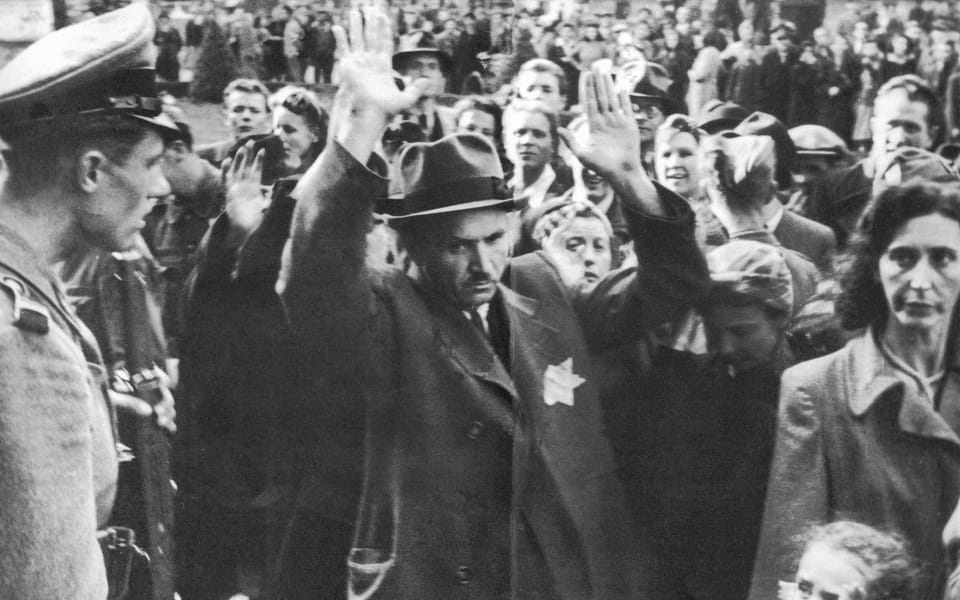
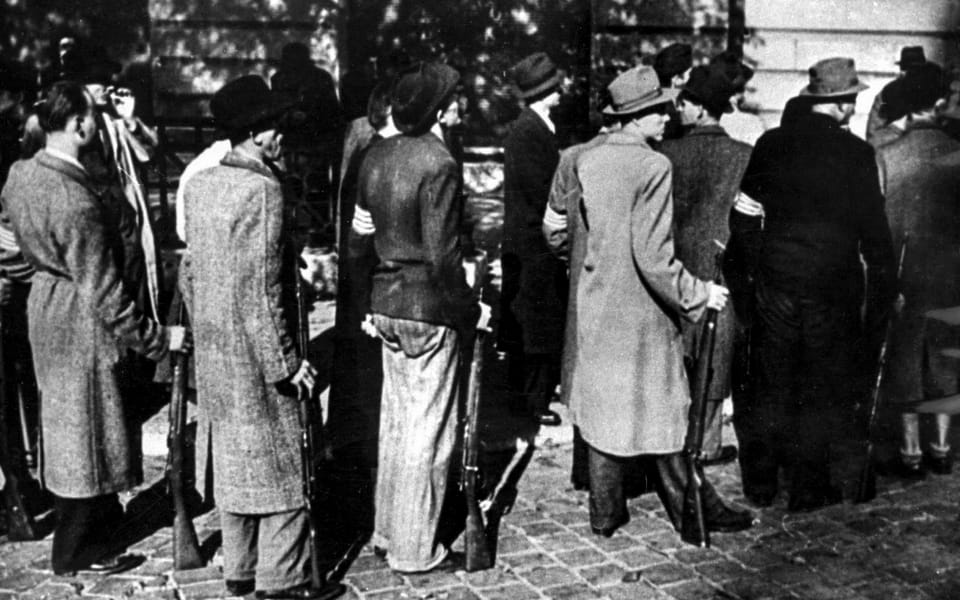
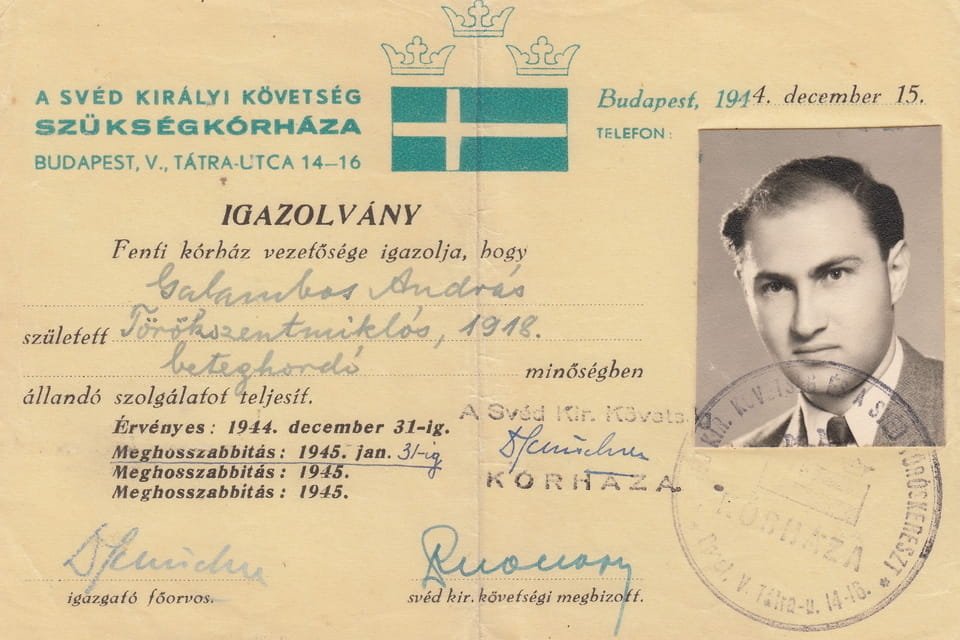
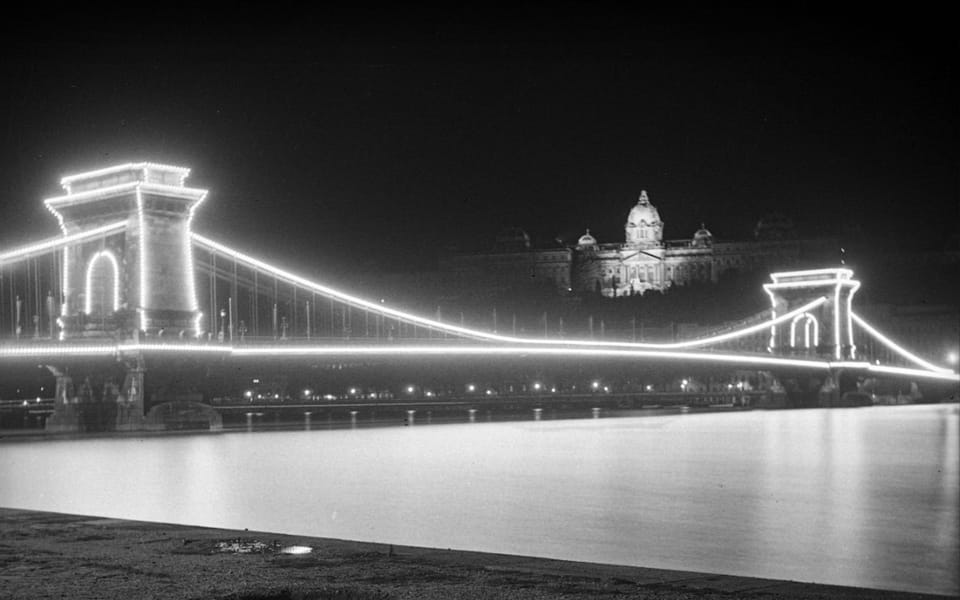
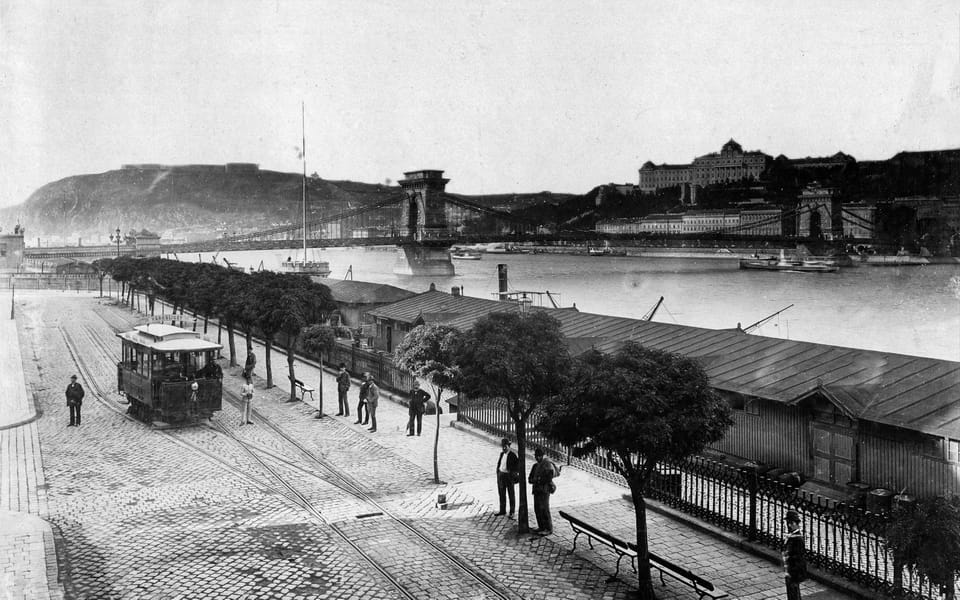
The first documentary mention of massacres along the Danube bank in the diary of a local ambulance was dated November 23, 1944, though Jews had been killed almost daily the whole previous month. Starting from this date, police and ambulance records mentioning executions in Budapest multiplied. In a report dated November 25, it was said about a Jewish man from a labor service, Andras Pitschoff, only twenty-two years old, whose body was found near the Danube with a gunshot wound. The most common place for executions became a section of the quay to the north and south of the Szechenyi Chain Bridge, at arm’s end from the VII district and later ‘ordinary’ or ‘large’ ghetto, and a Danube embankment across Margit Island just next to the ‘protected ghetto.’ When the executions happened at night, due to the often poor shooting skills of the Arrow Cross militia members, some victims managed to escape into the water. One police report of such a case survived, dated December 30, 1944, when five Jewish men were stopped in the street.
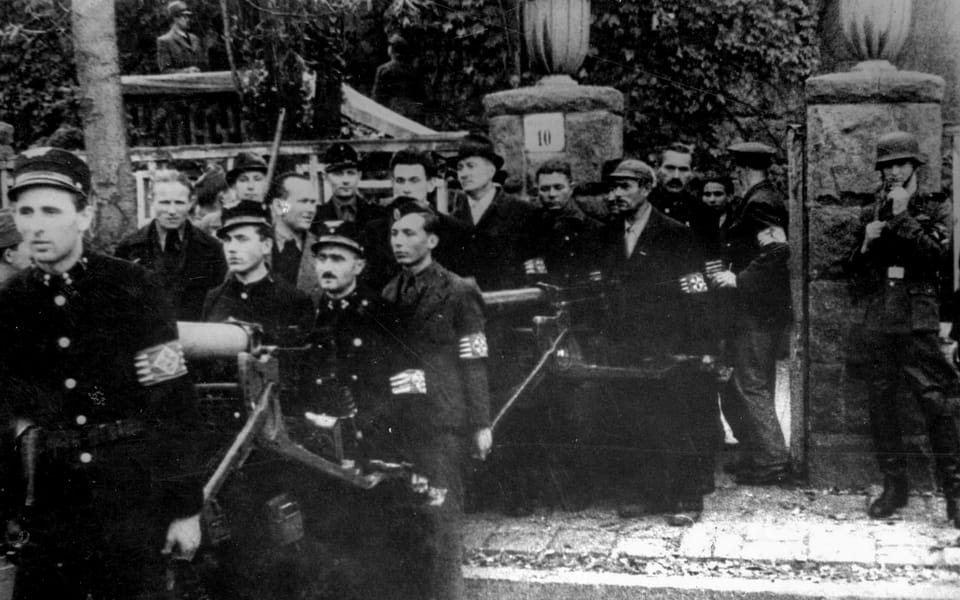
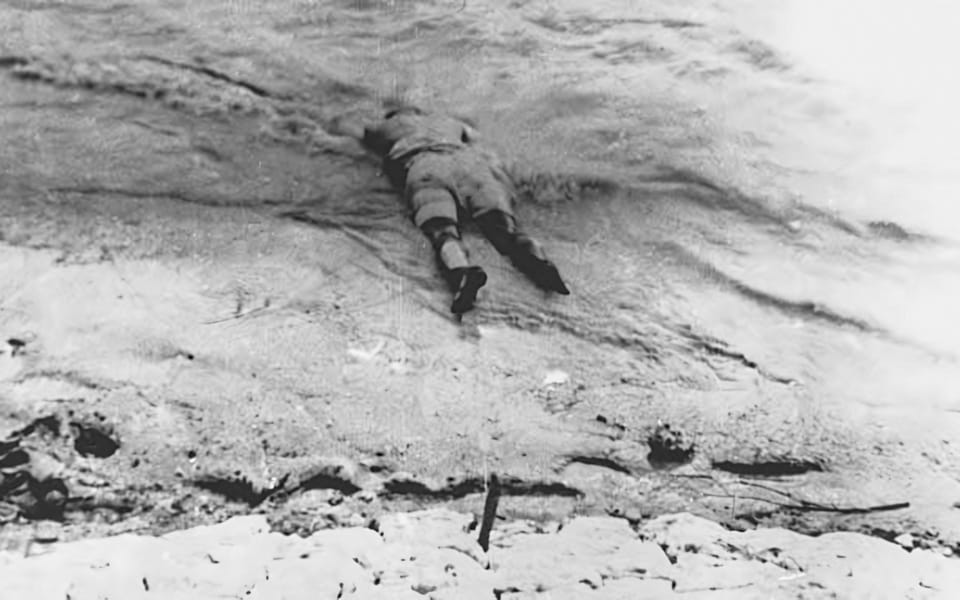
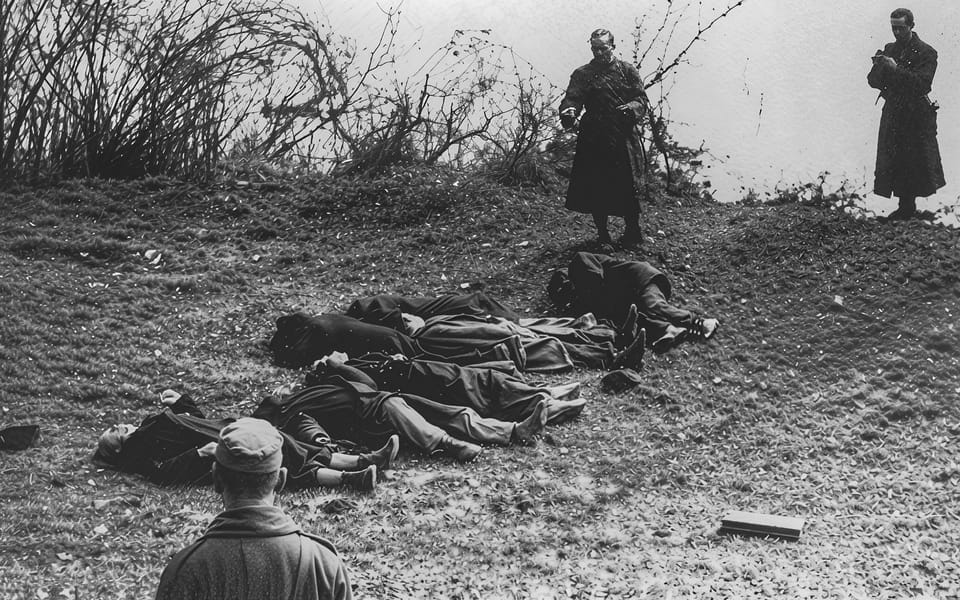
Just a few days before, in another accident on December 28, a group of Arrow Cross members, accompanied by some Germans, raided a Jewish hospital on Bethlen Gabor Square, seized several dozen men, marched them to the Danube, and executed them. On December 30, around 170 Jews from the ‘protected ghetto’ were brought to the Danube embankment, and fifty of them were shot. The Arrow Cross militia often evicted people from their houses without overcoats and barefoot and made them walk to the execution sites in the cold. At least part of the men who participated in the raids and executions were the youngsters, just under sixteen years old; most of them were recruited among the newly joined supporters. It is important to note that after the Arrow Cross leaders left the capital, the fate of the Jewish population lay in the hands of low- and middle-level local leaders. Sometimes they made the victims undress before the execution. Among the murderers were even Roman Catholic priests, such as Andras Kun (1911-1945), who commanded one of the execution units responsible for the death of around 500 people. He was later tried for murder and hanged in Budapest on September 19, 1945.
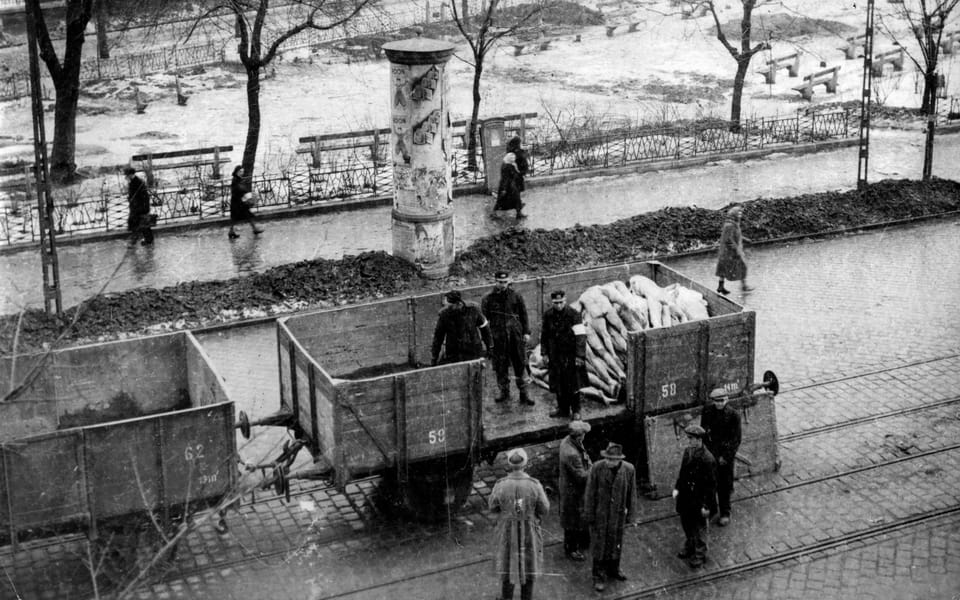
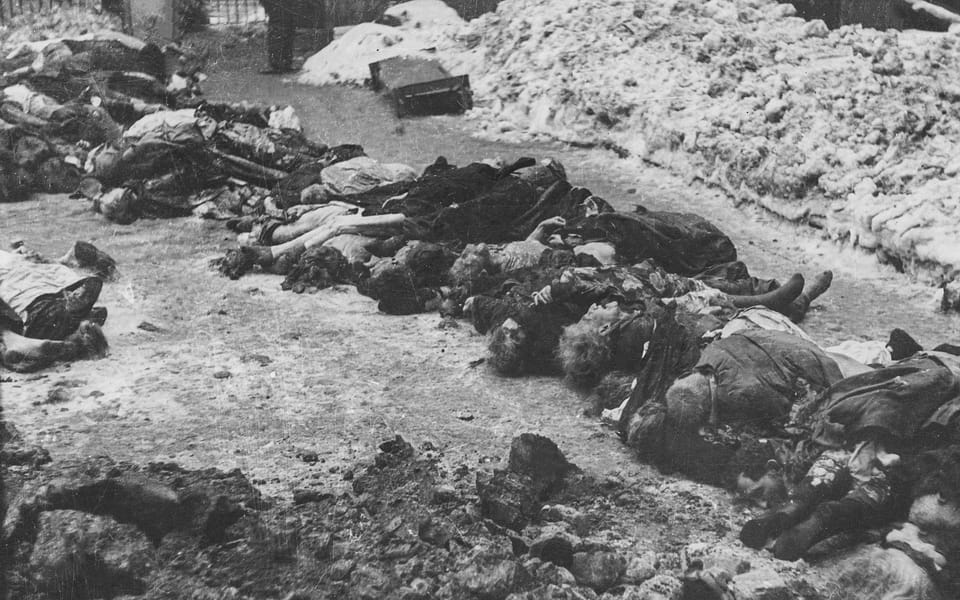
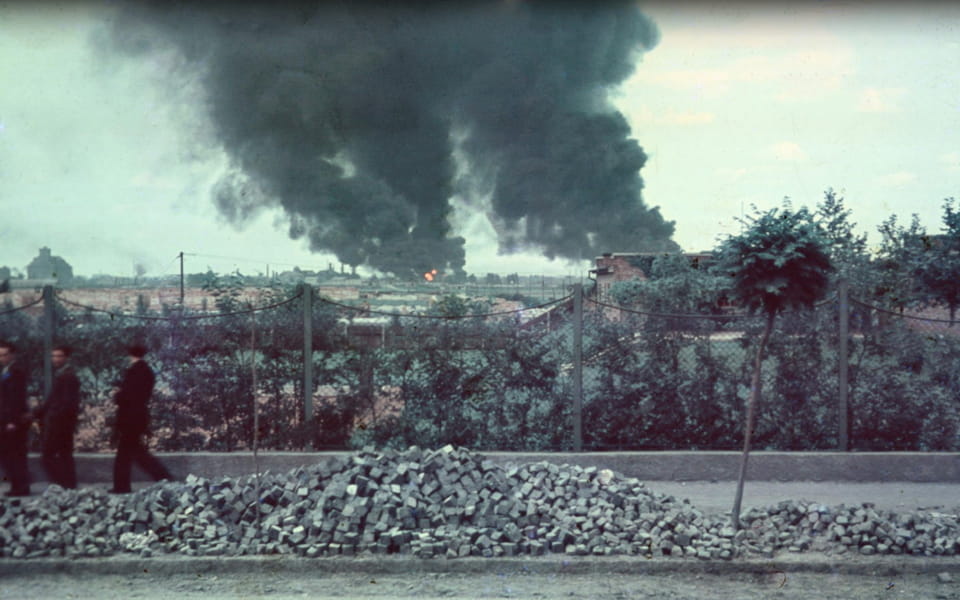
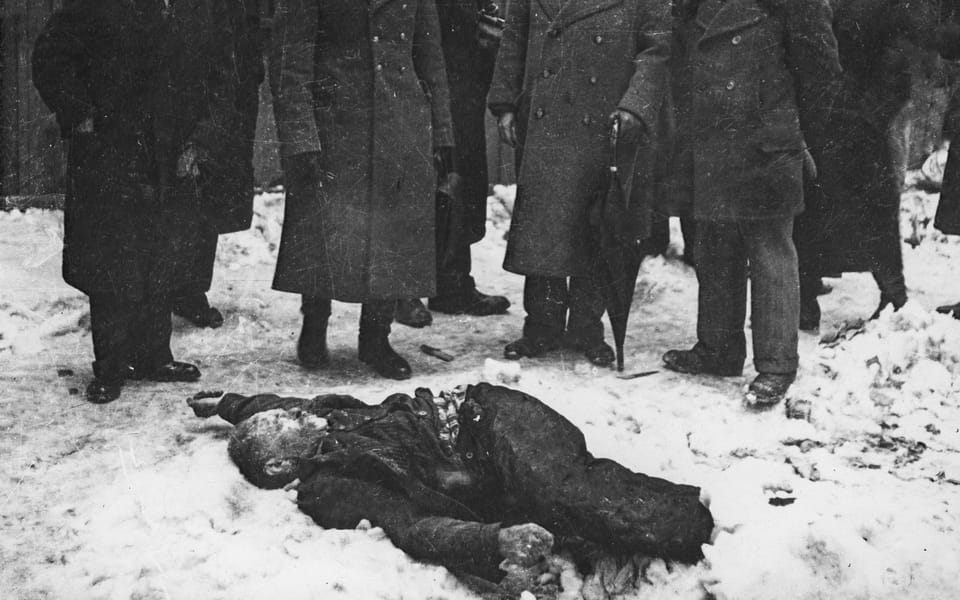
January 1945 witnessed a new wave of systematic raids, when people were taken from their homes and executed. On January 7, 130 people were dragged from their homes on Vadasz Street to the Danube embankment and machine-gunned. On January 8, a large group of 266 people was taken out of the house on Jokai Street and killed. In the middle of the month, the Arrow Cross supporters mercilessly attacked two Jewish hospitals. On January 12, 92 doctors and patients were killed at the Jewish hospital on Maros Street in the XII district. Two days later, a large massacre took place in a medical institution on Varosmajor Street when 130 Jewish patients and twenty-four staff members were killed. The last large execution in Western Buda happened on January 19, when the Arrow Cross killed ninety residents of the elderly house on the corner of Varosmajor and Alma Streets. Since most of the men were assigned to the Labor service, most of the victims were women, elderly and sick people, and children. When the city was completely (both banks) liberated in February 1945, around 70,000 Jews were still alive in the ‘ordinary ghetto,’ with another 50,000 on the territory of the former ‘protected ghetto’ or in hiding. At least 3,000-3,600 Jews were killed by the Arrow Cross activists in just a few months of their rule in Budapest. The USC Shoah Foundation puts the number of Jews shot into the river at about 3,000–4,000; the Foundation Memorial to the Murdered Jews of Europe in Berlin speaks of approximately 8,000 Jews murdered by some 4,000 Arrow Cross militiamen in Budapest as a whole; and the United States Holocaust Memorial Museum states that between December 1944 and the end of January 1945 the Arrow Cross took as many as 20,000 Jews from the ghetto and shot them along the riverbank.
THE RESCUERS: RAOUL WALLENBERG, FRIEDRICH BORN AND THE POLICEMEN OF JANUARY 8, 1945
While the Arrow Cross activists and sympathizers killed Jews of Budapest in the hundreds, some people interfered and saved thousands. Among the people who saved the Jewish population was a Lutheran pastor, Ferenc Kallo (1891-1944), who hid Jews in a garrison hospital in Buda until they got documents as Christians. He was dragged from his bed on October 28, 1944, and executed in the Budakeszi forest to the west of Budapest. Friedrich Born (1903-1963), a chief of the Swiss delegation of the International Committee of the Red Cross in Budapest, personally intervened in the plans for the execution of 90 residents of the elderly house on Varosmajor Street, though they would be killed anyway on January 19, 1945. Later, Friedrich Born fled Budapest because of the threats from the Soviet side, which persecuted foreign diplomats and people who saved Jews. A Calvinist bishop, László Ravasz (1882-1975), openly protested against the persecution of Hungarian Jews since the spring of 1944. On December 1, he wrote a letter of protest to Prime Minister Ferenc Szalasi and condemned anti-Jewish measures and killings. Bishop Ravasz had to go into hiding so as not to be arrested by the Arrow Cross militia. On December 23, 1944, foreign ambassadors issued a joint protest against the pogroms and deportations before they left Budapest.
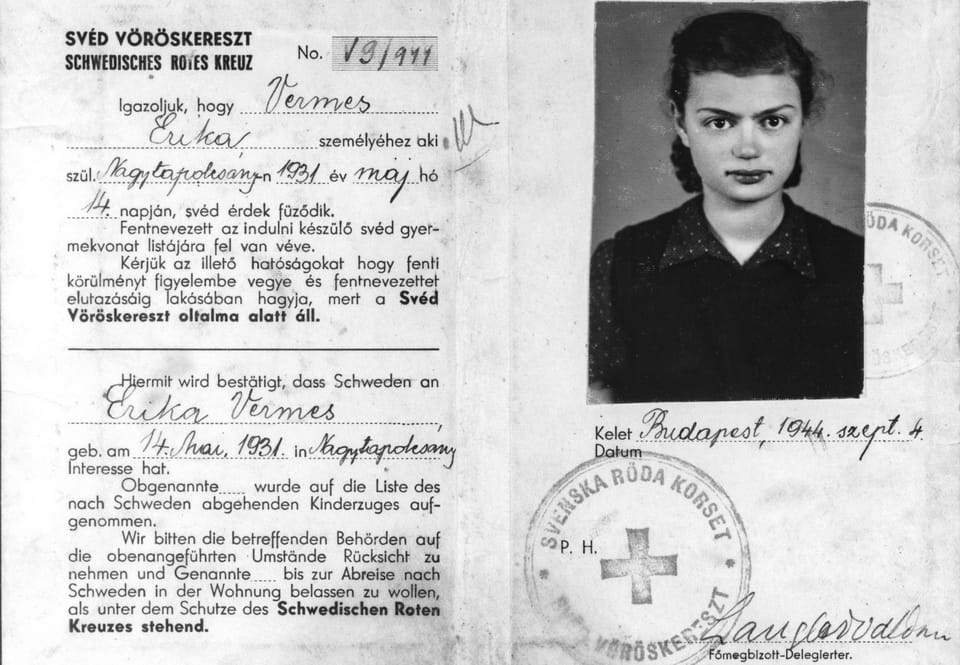
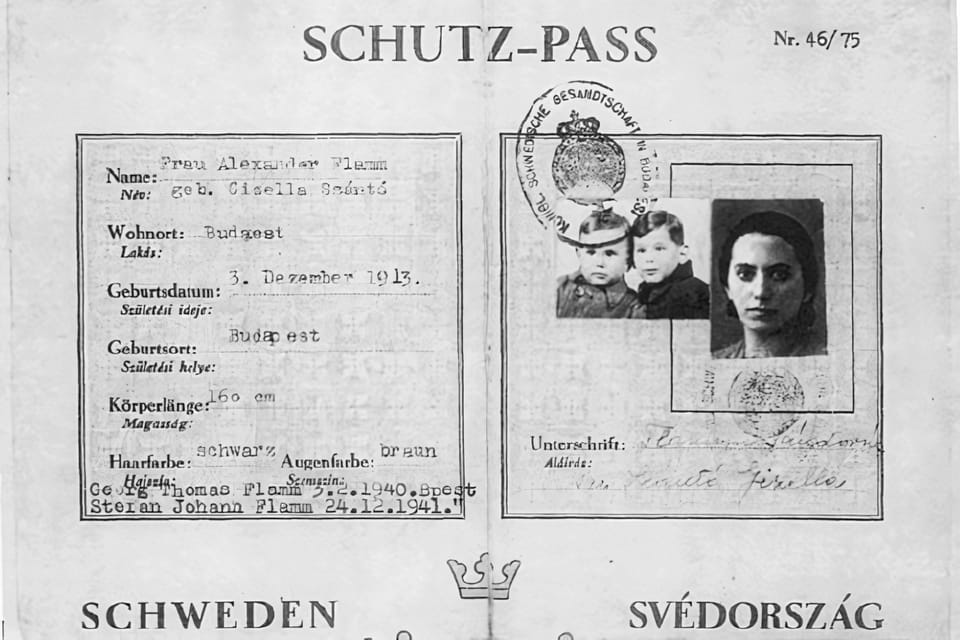
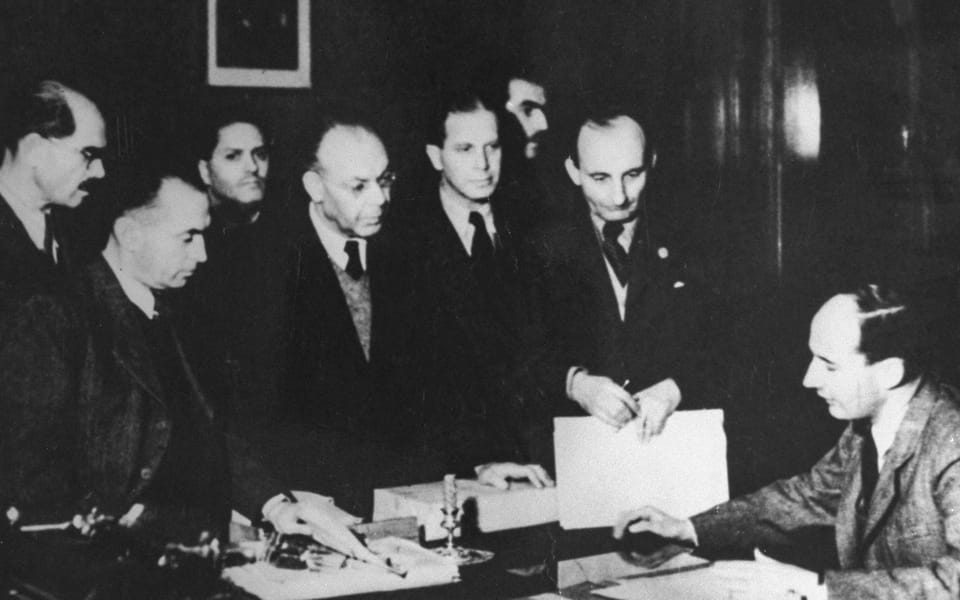
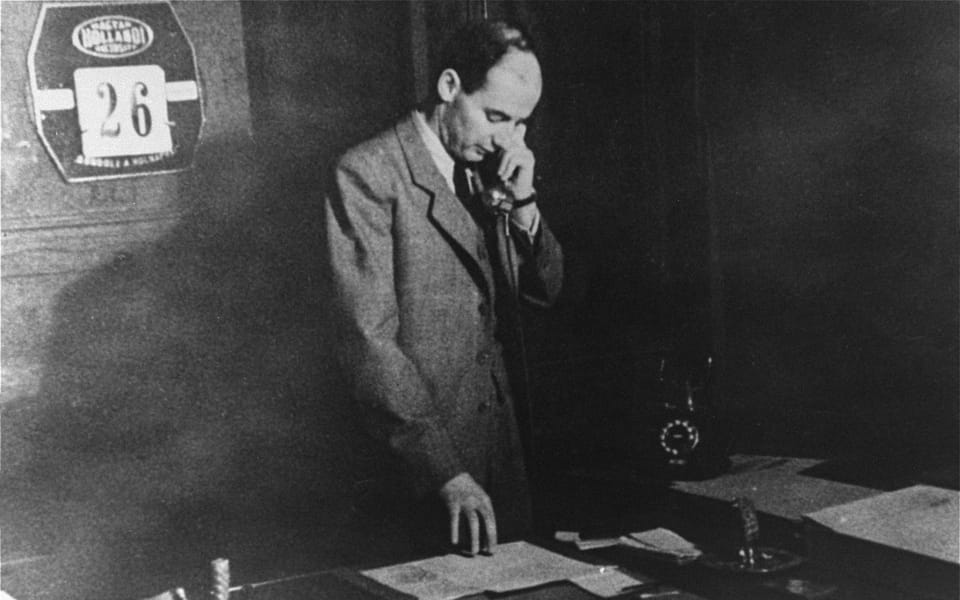
Evidently, the most well-known person, a Righteous Among the Nations, who contributed the most in saving Hungarian Jews and who paid with his life for his courage, was Raoul Wallenberg, a Swedish diplomat who was later killed by the murderous Soviet regime. Starting in 1941, Wallenberg made frequent visits to Budapest, Germany, and occupied France as a businessman. In July 1944, he was chosen as a special envoy for the Swedish Foreign Ministry, an attaché to the Swedish legation, secretly tasked with saving the remaining Jewish population in Hungary, mainly in Budapest. In the following months, Wallenberg issued ‘protective passports’ (Schutzpasses), established ‘safe houses’ under the Swedish flag, and actively intervened in the cases of deportations and mass executions. He even followed the ‘death marches’ to issue protective papers to their victims and made several visits to Jozsefvaros Railway Station to save Jews from deportations. On January 8, 1945, he saved 161 people from execution close to the Danube embankment, and after learning about the plans to massacre the remaining Jewish population, he persuaded General Schmidthuber (1894-1945), the supreme commander of the German forces in Hungary, to prevent mass killings planned by the Arrow Cross militia. Wallenberg was seen in Budapest for the last time on January 17, 1945, before being captured by the Soviets and executed by them in 1947.
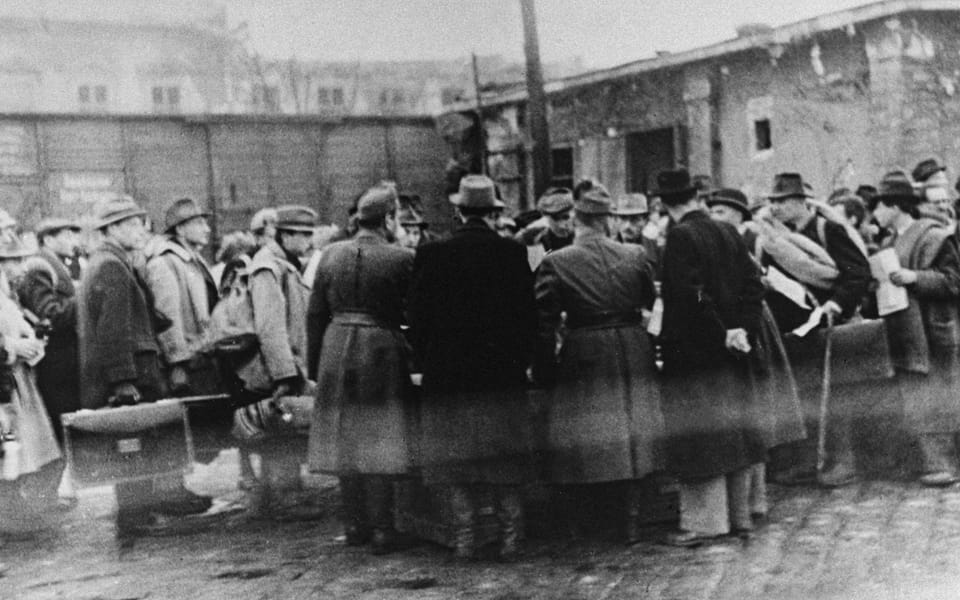
AFTER THE HOLOCAUST: THE PEOPLE’S TRIBUNALS AND THE FIRST MEMORIALS IN BUDAPEST
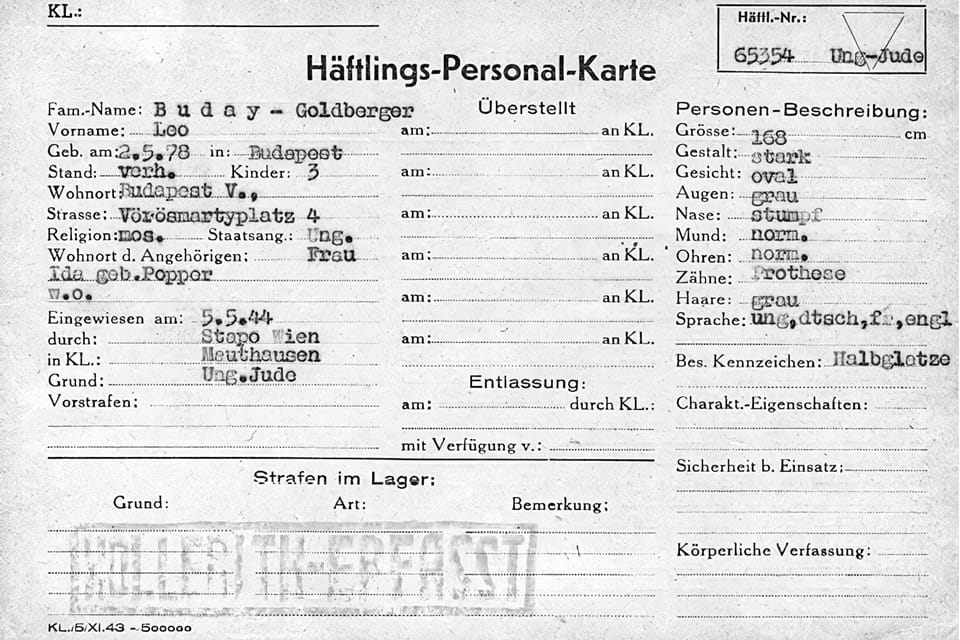
Out of 760 to 780 thousand Jews who were still alive in Hungary in the spring of 1944, around half a million were deliberately murdered or died in the course of the Holocaust, and the upper estimate is 560,000. Out of 422,000 people sent to Auschwitz in just two months, around 330,000, or three-fourths, were murdered in the gas chambers upon arrival. The total number of those who survived the Holocaust, including the converted Jews, was approximately 250,000 people, of whom around half survived the war in Budapest. Up to 60,000 died not at the hands of the Germans but from the actions approved or ignored by the Hungarian government, including deportations to the East, the victims of the massacre in the Ukrainian Kamenetz-Podolsk, those who died in the labor service battalions, from hunger and epidemics in the ghettos, and those who were deliberately killed by the Arrow Cross militia. Among those who died at the hands of the Germans, around half a million, tens of thousands found death not in Auschwitz but in other Nazi camps across Europe. The largest death toll of Hungarian Jewry in the camps outside Auschwitz was in Mauthausen (9,000 to 10,000); also, thousands died in Dachau, Bergen-Belsen, Ravensbrücke, Sachsenhausen, Gross-Rosen, and Neuengamme. The second half of those who survived the Holocaust in Hungary returned from the camps, survived the labor service, or were in hiding across the country.
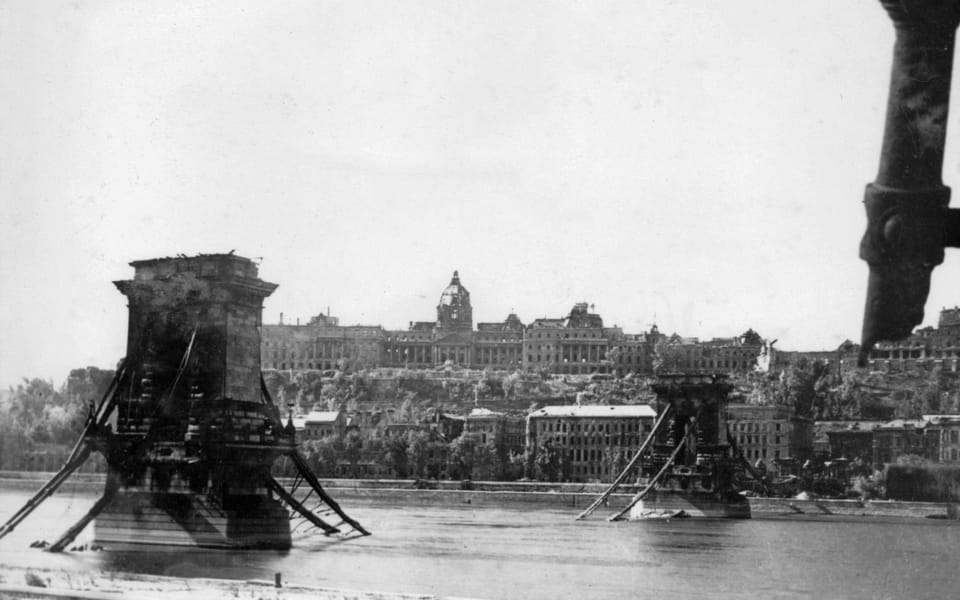
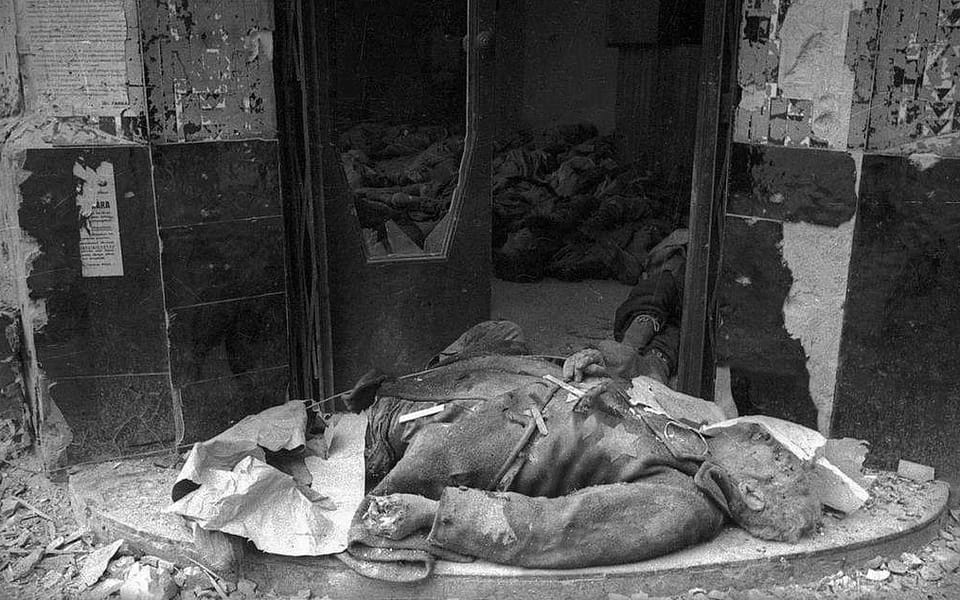
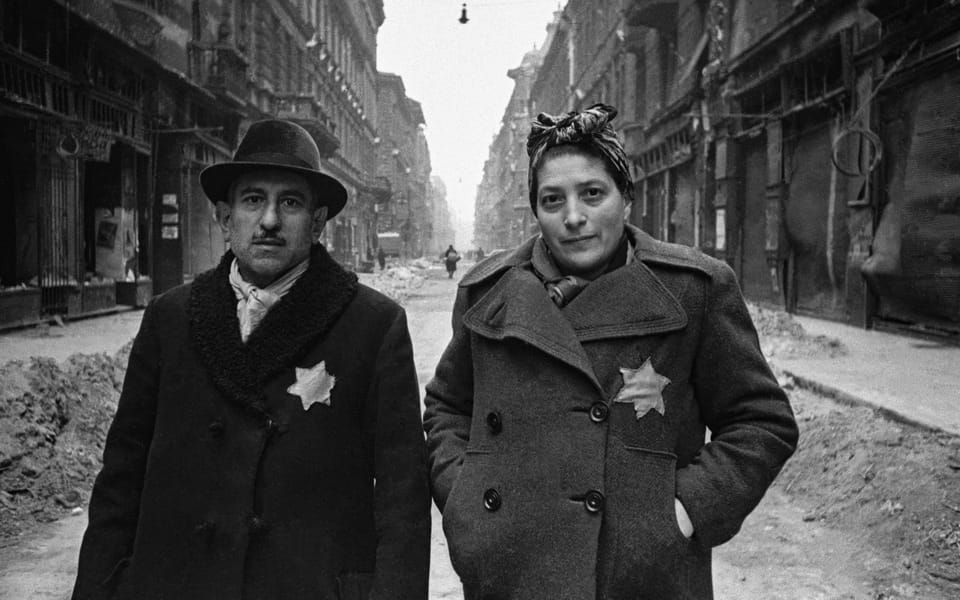
While the overall death percentage during the Holocaust in Hungary is estimated at 65% (560 out of 825 thousand, including the converted Jews), in Budapest it was around 52% and up to 78% in the territories that Hungary lost as a result of the Treaty of Trianon in 1920. The surviving fraction of the former Jewish population shrank even more in the years following the war, and in 1949, only around 150,000 Jews still lived in Hungary, of whom three-quarters lived in Budapest. The process of restoration of the pre-war congregations and communities was slow and disrupted by the exodus of tens of thousands, mainly to Israel, even though the country was fighting for its independence, surrounded by the enemy Muslim countries. A month after those who stayed in Hungary, more Jews moved to larger cities, not only Budapest, thus reshaping the geography of the pre-war communities scattered across the country. The urban concentration and nature of the Hungarian Jewry thus became even more obvious after the Second World War. Those who remained lived for decades in the communist-led regime with restrictions on Jewish culture and religion. The migration continued, and by 1992, only 56,000 Jews were officially registered in the country.
Similar to Poland and other countries in post-war Europe, Hungary also systematically arrested and persecuted war criminals among its former citizens and government members. In total, the established tribunals presented charges against 39,514 Hungarians accused of war crimes and collaborationism, of which 16,273 were convicted. While most of them got relatively small sentences, up to five years of imprisonment, there were also trials against major criminals. Among the most well-known convicted persons was former Prime Minister Laszlo Bardossy, who held office between April 3, 1941, and March 7, 1942. He was charged for his role in putting Hungary into the war and for the responsibility for deportations and massacres in Kamenets-Podolsk in August 1941 and in Ujvidek in January 1942. László Bardossy got a death verdict as early as November 1945 and was executed on 10 January 1946. Bela Imredy, a prime minister between May 1938 and February 1939, faced the People’s Tribunal in Budapest and was charged with building close relations with Nazi Germany and adopting anti-Jewish legislation, and was also executed on February 28, 1946.
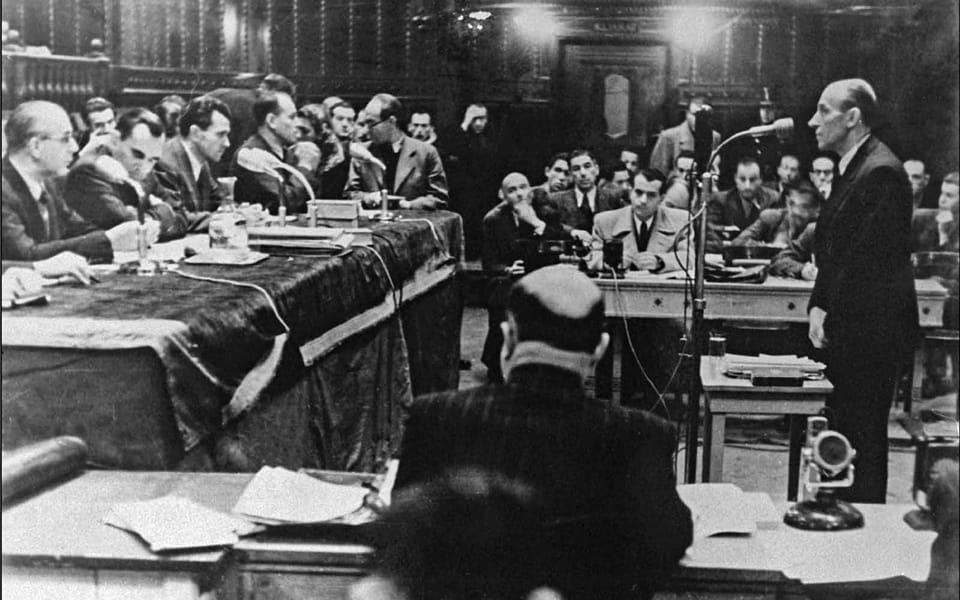
Another VIP condemned politician in the post-war trials in Hungary: three senior bureaucrats of the Ministry of the Interior, Andor Jaross, Laszlo Endre, and Laszlo Baky. All three were accused in the mass deportations of Jews in 1944 in close cooperation with the German SS. All three technocrats were condemned to death and executed in March and April 1946. A significant series of trials at the end of 1945 and early 1946 dealt with the Arrow Cross’s leading figures, especially those who were mainly responsible for the terror in Budapest after October 1944. Among those convicted of death penalties and executed in 1946 were Minister of Justice Laszlo Budinsky, Minister of Agriculture Fidel Palffy, Arrow Cross leader Ferenc Szalasi, Sándor Csia, Gabor Kemény, Károl Beregfy, Jozsef Gera, Jenő Szőllősi, Gabor Vajna, Lajos Szász, Jenő Rátz, and Lajos Reményi-Schneller. Antal Kunder received life imprisonment.
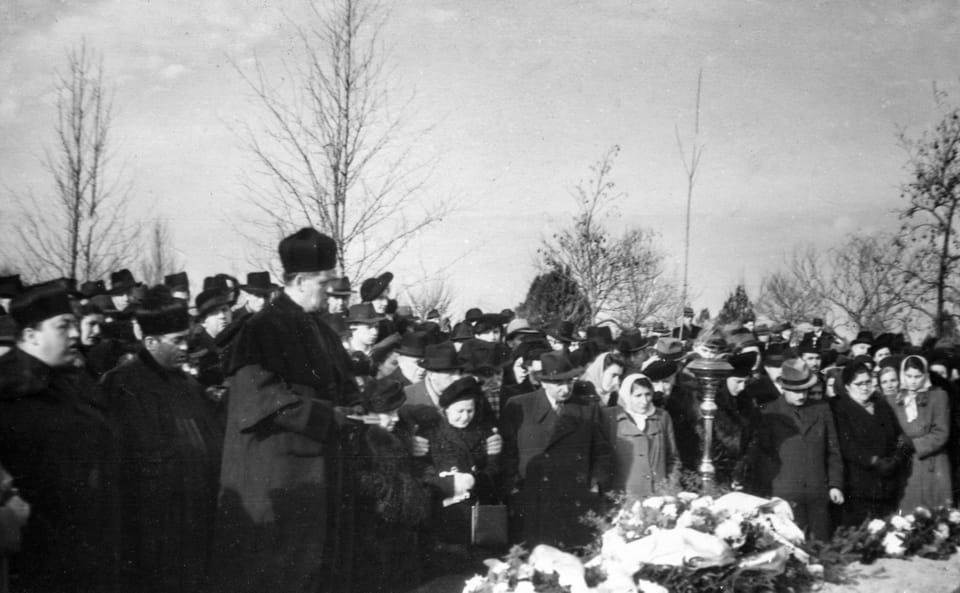
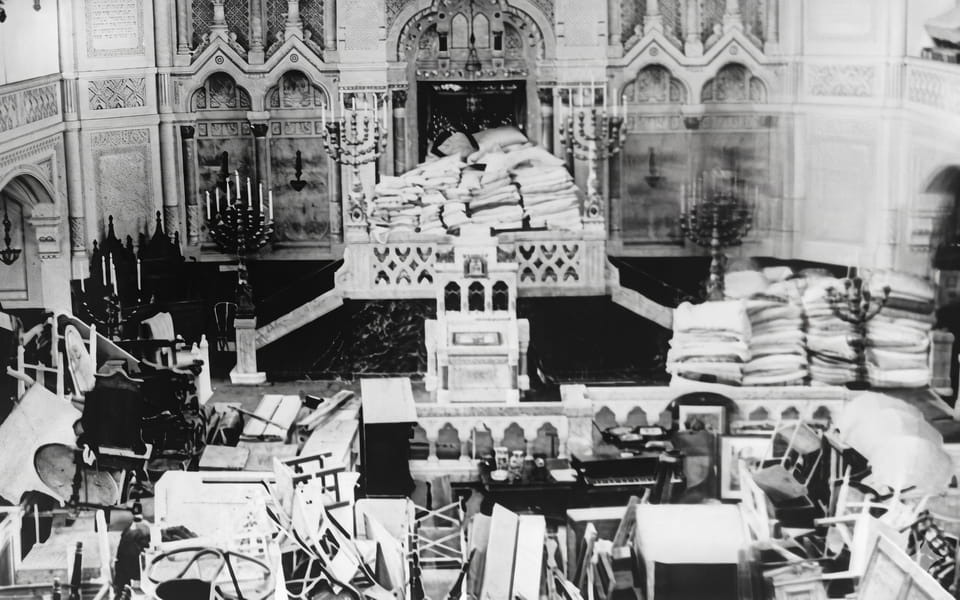
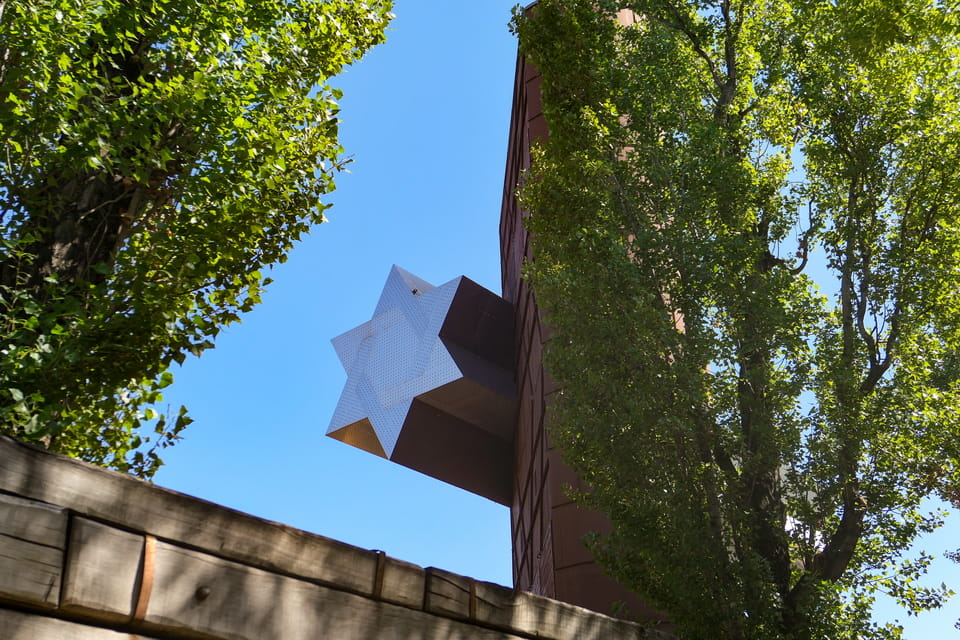
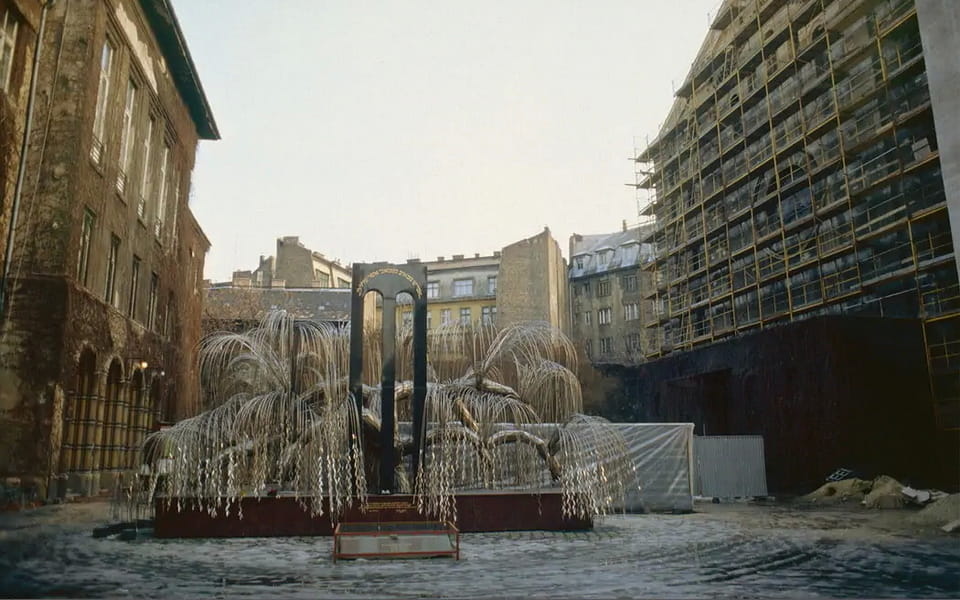
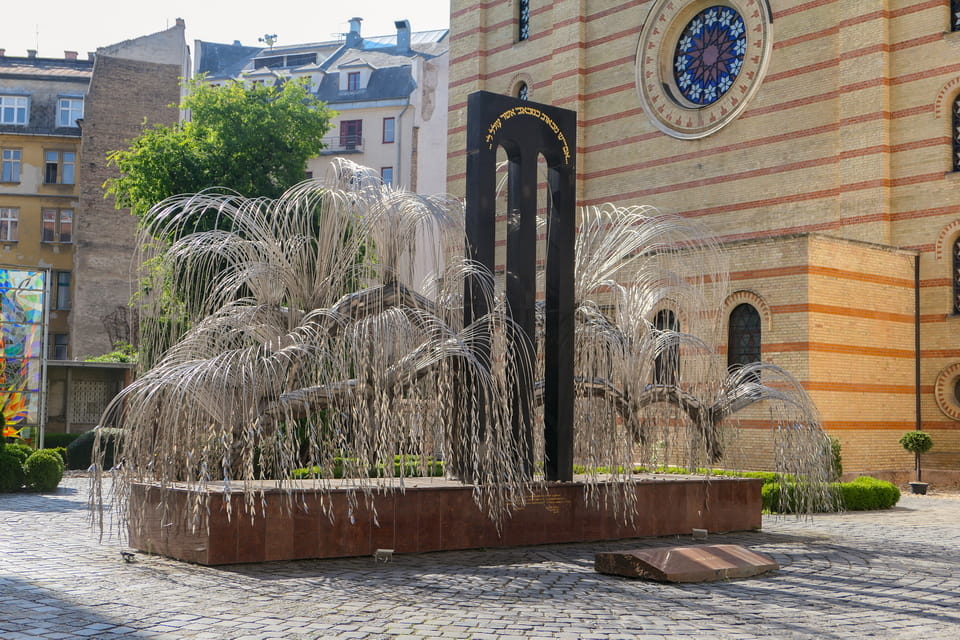
One of the first post-war Jewish memorials in Budapest was set up next to the Ujpest Synagogue in the IV district in July 1948. The memorial, unveiled in the presence of the president of the Hungarian Republic, Zoltan Tildy (1889-1961), featured four white reliefs depicting the fate of the Jewish community in Ujpest. It took almost half a century for another Jewish memorial to rise in the capital of Hungary, this time next to the largest synagogue in Europe, which miraculously survived the Second World War: the Dohany Street Synagogue in the VII district. Built between 1854 and 1859 by the Jewish community in Pest, the complex could welcome up to 3000 people at once. Its restoration started in 1991 and included the opening of the ‘Weeping Willow,’ or ‘A tree of life,’ or ‘A memorial to the Hungarian Jewish martyrs.’ A sculpture created by a famous Hungarian sculptor, Imre Varga (1923-2019), was unveiled in 1991, and the composition presents a willow with the names of the Holocaust victims on each leaf. The second important memorial opened in 1991 was a statue of Raoul Wallenberg, devoted to a Swedish diplomat who saved Jews. The statue was unveiled in the XIII district on the site where the ‘protected ghetto’ was once located. A holocaust memorial center was opened to the public in 2004.
THE SHOES ON THE DANUBE BANK MEMORIAL: WHO CREATED IT AND WHAT THE SIXTY PAIRS MEAN
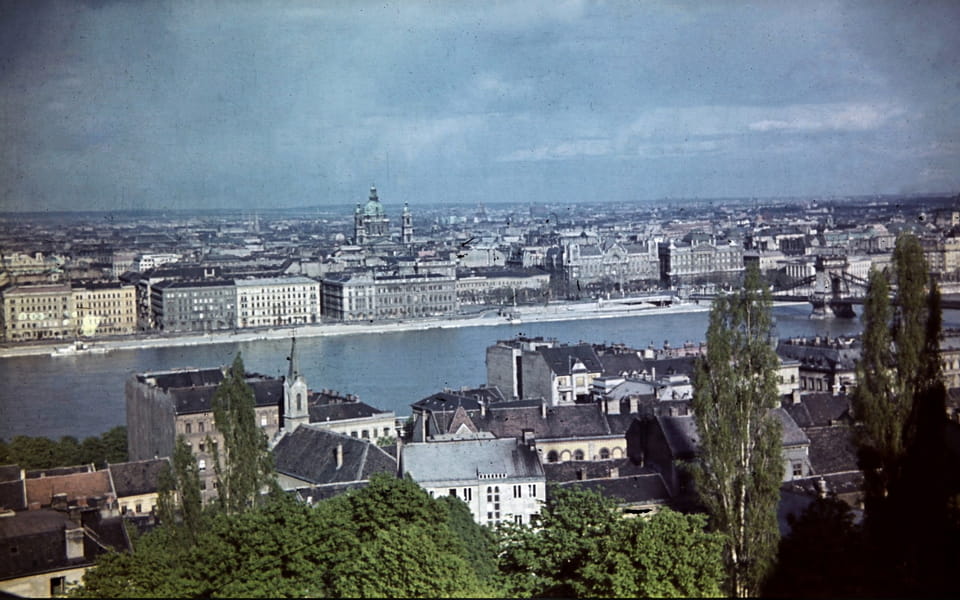
It took Hungarians sixty years after the end of World War Two to erect a Holocaust memorial in Budapest, which has since become noted throughout the world. The idea of raising a memorial belongs not so much to the local authorities or international institutions but to a Hungarian sculptor, Gyula Pauer (1941-2012). He had strong anti-authoritarian views and, for decades, secretly opposed the communist regime in Hungary. Gyula Pauer was born and lived most of his life in Budapest. His partner in creating ‘A cipő a Duna-parton memorial ‘(The Shoes on the Danube Bank) was a well-known Hungarian film director and poet, Can Togay (born 1955), who was also born in the capital. The memorial site was located on the bank of the Danube embankment between the Parliament building and the Széchenyi Chain Bridge, a primary execution site in 1944-1945. A new place of remembrance was raised to encapsulate the memory of the Jewish victims, who were killed during the Arrow Cross Terror in Budapest.
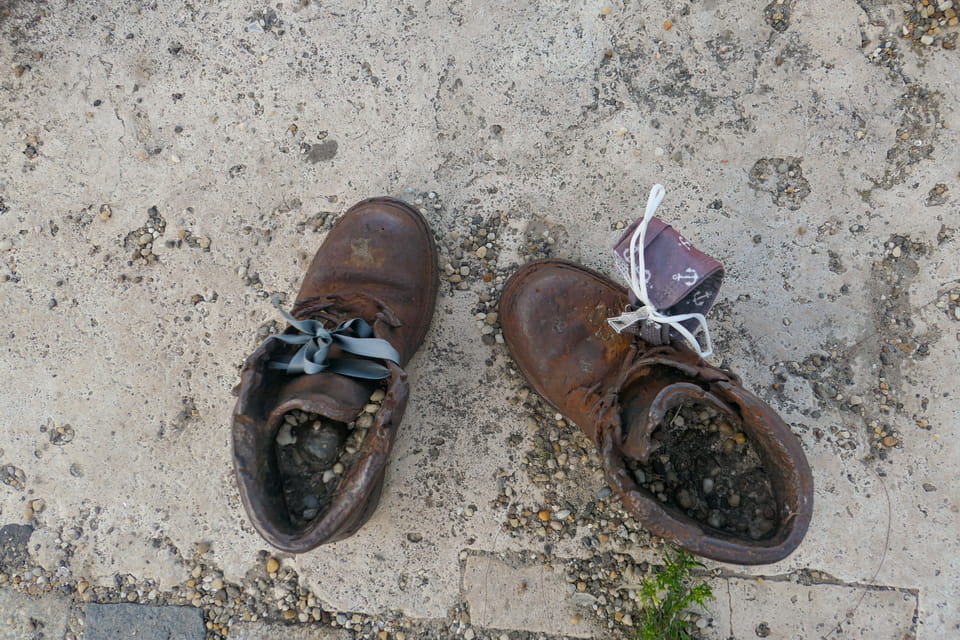
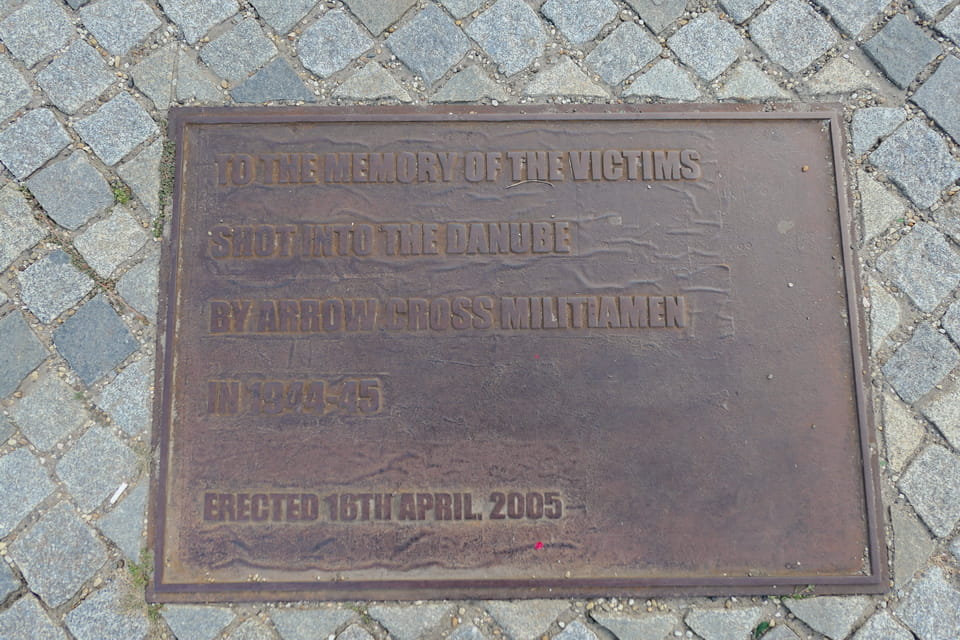
The composition of the Shoes on the Danube Bank memorial consists of several elements. The first one is a 40-meter-long stone bench with three commemorative plaques carved into the embankment. All three contain the same text in Hebrew, Hungarian, and English: To the memory of the victims shot into the Danube by Arrow Cross militiamen in 1944–1945. The second and more recognizable part of the composition is sixty pairs of iron shoes, all copies of the real models that existed and were in use in the 1940s. Why shoes? In the winter of 1944–1945, a good pair of shoes was worth money, so the militiamen ordered their victims to take them off before the shooting and kept or sold them afterwards. The victims themselves have no graves: the Danube carried their bodies away, and the empty shoes are all that is left on the bank. Even the number has a meaning. According to the USC Shoah Foundation, sixty is roughly the size of the groups that were driven to the river at one time, and the different sizes and styles show that the victims were of every age and social class.
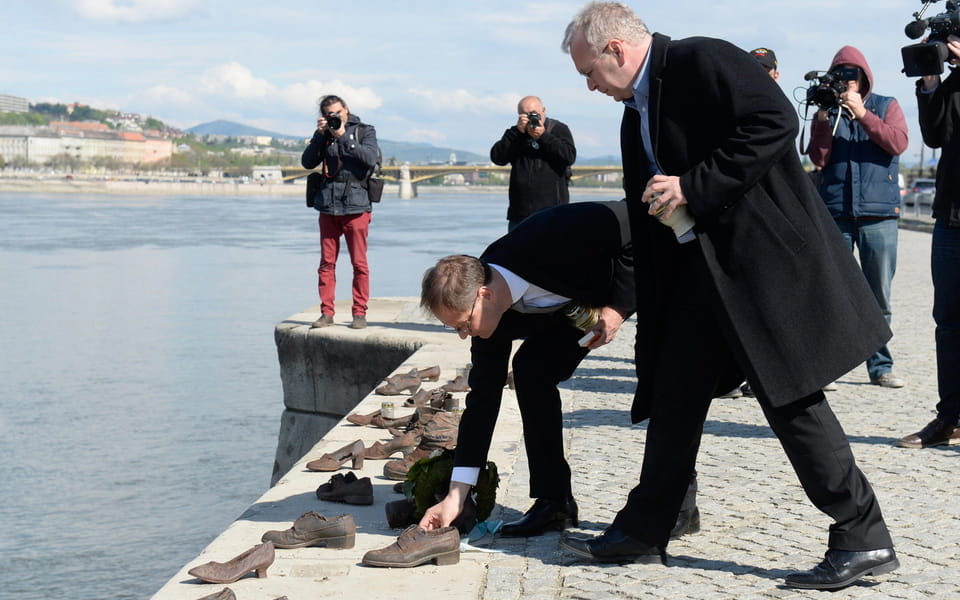
The opening ceremony took place on April 16, 2005, the sixty-first anniversary of the start of the deportation of Hungarian Jews in 1944 and, since 2001, a ‘Memorial Day of the Victims of the Hungarian Holocaust‘. The next day, the memorial was inaugurated by representatives of different religious congregations. The Danube Shoah Memorial is a key point in the annual commemoration ceremony on Holocaust Remembrance Day, when thousands of people come to the site with flowers and icon lamps.
On March 27, 2022, the monument was used in a memorial service to honor those who died in Mariupol during the genocidal russian invasion of Ukraine. Alongside the bronze shoes, 300 pairs of worn shoes appeared in memory of at least 300 women, children, and the elderly who were killed by a russian air bomb dropped on the Mariupol Drama Theater. The memorial has had to be protected as well as visited. In September 2014, several of the shoes were stolen; the police did not open an investigation because no crime had been formally reported. In August 2023, a tourist stepped into the shoes and posed for photographs, an act the Hungarian press described as a desecration. The shoes are fixed to the stone and the site is open day and night, so it depends on visitors treating it for what it is: a grave without bodies.
VISITING THE SHOES ON THE DANUBE BANK: LOCATION, HOW TO GET THERE, NEARBY SITES
Where it is. The memorial stands on the Pest bank of the Danube, on the riverside promenade between Kossuth Lajos Square, in front of the Parliament, and Széchenyi István Square at the Pest end of the Chain Bridge, close to the Hungarian Academy of Sciences. It lies roughly where Zoltán Street would meet the river if it continued that far.
How to get there. Take metro line M2 or tram 2 to Kossuth Lajos tér. From the stop, it is a walk of about five minutes south along the river. Tram 2 runs along the whole Pest embankment and is one of the most scenic rides in the city. From the Chain Bridge, walk about ten minutes north along the river.
How to behave. This is a memorial to people who have no graves. Do not step into the shoes or pose with them. You can leave a candle, flowers, or, following Jewish custom, a small stone. The stone bench behind the shoes is a place to sit and reflect.
When to go. Sunrise and dusk are the quietest and most moving times. On April 16, Hungary’s Holocaust Memorial Day, the shoes are a focal point of the commemorations, and thousands of people come with flowers and candles.
Nearby Holocaust sites
- The Glass House (Üvegház), 29 Vadász Street — the building from which the Swiss vice-consul Carl Lutz ran his rescue operation; today a small memorial museum run by volunteers. About 10 minutes on foot.
- Dohány Street Synagogue, 2 Dohány Street — the largest synagogue in Europe, with the Raoul Wallenberg Memorial Park and Imre Varga’s weeping-willow Tree of Life behind it. Closed on Saturdays. About 25 minutes on foot.
- House of Terror, 60 Andrássy Avenue — the Arrow Cross headquarters, where some victims were tortured before being taken to the river; now a museum of the Nazi and communist terror. Closed on Mondays. About 25 minutes on foot.
- Holocaust Memorial Center, 39 Páva Street — Hungary’s national Holocaust museum, opened in 2004; best reached by public transport.
- Raoul Wallenberg statue by Imre Varga (1987), Szilágyi Erzsébet Avenue — across the river in Buda.
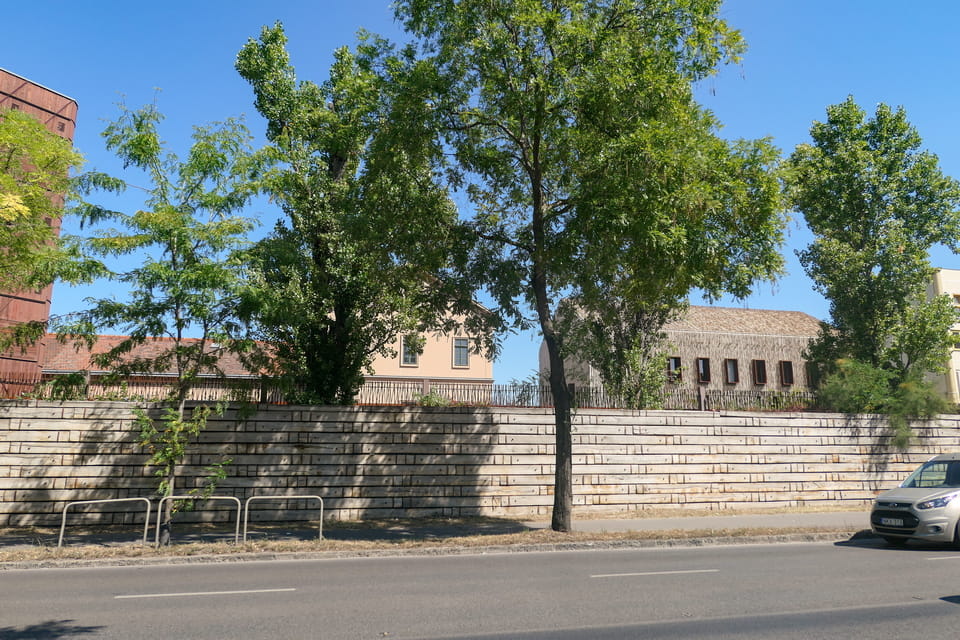
- Józsefváros railway station — the station from which Jews were deported in 1944 and where Wallenberg came to pull people off the trains. It was closed when I visited in 2021, so check before you go.
FREQUENTLY ASKED QUESTIONS ABOUT THE SHOES ON THE DANUBE
I am very grateful to war archives, museums, libraries, private collections, and writers for the historical photos in this article. To the extent that some author or a copyright owner may not want some of the above black-and-white photos to be used for educational purposes here, please contact me for adding credits or deleting the pictures from the article.