

Battle of Caen (1944): Locations & Casualties, Then & Now
The Battle of Caen was one of the longest and costliest campaigns of the Normandy invasion: rather than falling on D-Day as Field Marshal Bernard Montgomery’s plan had originally intended, the city held out for over six weeks, from the first Allied air raids on June 6, 1944 until its final liberation in mid-July 1944 — the southern suburbs were not cleared until Operation Goodwood concluded on July 20. The prolonged siege turned Caen, a historic city of roughly 60,000 people, into one of the most devastated urban centres in France: an estimated 3,000 French civilians died within the city between June and July 1944 alone, out of a much larger toll across the wider Normandy campaign, and by the time the fighting ended, fewer than 8,000 residents — barely 15% of the pre-war population — remained among the ruins.
This guide traces the battle in full: the strategic reasons Caen mattered so much to both sides, the devastating June 6–7 and July 7 bombing raids, the ground fighting through Operations Epsom, Charnwood, and Goodwood, and the city’s long post-war reconstruction. It also follows four of Caen’s landmark buildings — the medieval Caen Castle, Saint-Julien Church, the University of Caen, and the abbey of Saint-Étienne — through their wartime destruction and modern restoration, illustrated with my personal photographs from a July 2019 visit alongside rare wartime and post-war archival images. A full list of memorials worth visiting today, updated visiting information for the Mémorial de Caen museum, and a map of every location covered follow at the end of this guide.
A note on casualty figures: Sources cite different numbers depending on scope. This guide’s estimate of around 3,000 civilian deaths refers specifically to the city of Caen between June and July 1944. Wider figures sometimes seen online — such as roughly 20,000 civilian deaths — refer to the entire Normandy campaign (June–August 1944) across the whole region, not the city of Caen alone; always check what geographic and time scope a given figure covers before comparing sources.
THE STRATEGIC IMPORTANCE OF TAKING CAEN: MONTGOMERY’S D-DAY PLAN
June 17, 1940, was probably the grimmest day in the lives of almost sixty thousand people in the medieval French city of Caen. After six weeks of fierce fighting against the invading German army, an eighty-four-year-old Marshal Philippe Petain, formerly an acclaimed hero of the Great War, delivered the most blood-curdling speech in the history of French radio. As a newly appointed Prime Minister of France, the old marshal admitted the fall of the previous government, called the continuation of the fight on the fronts aimless, and openly sought peace with Hitler’s Third Reich. On the same night of June 17-18, the vanguard enemy units reached Caen, and the four-year period of humiliating occupation began. Four days later, the so-called ‘Feldkommandantur’ or military occupational body moved into Hôtel Malherbe on Place du Maréchal-Foch, an imposing building opened in 1933, and they set up horse stables opposite the street. The occupation brought German military parades and segregation in the city when the occupants had cinemas, cafes, and bookstores with German literature. On the contrary, those books which were regarded as hostile to Germany, the Nazi ideology, or too nationalistic were banned and confiscated. The centralized resistance was impossible, but local people in Caen secretly drew the Cross of Lorraine on walls, in leaflets, and on whistles during the screening of the Wehrmacht newsreel footage in the cinemas, four years before the actual Battle of Caen.

Three years after the first boots of the German soldiers set foot on the beautiful ancient streets of Caen, the progress of the War finally made the Allied invasion of France discussable not theoretically but in practical terms. While the United States and England were not ready to open a full-scale second front in Western Europe in 1942 or 1943 and instead focused on smaller operations in North Africa and Italy, the invasion was a done deal for the first half of 1944. Since the Allied command stripped out the idea of invading Calais as the most obvious and defended German stronghold, and the direct assault on the Cotentin peninsula was dangerous for obvious geographical reasons, in the spring of 1943, the decisive attention fell on the beaches of Normandy to the east of Cotentin. Regardless of a common misunderstanding, Caen became important because of its proximity to the landing beaches, the city’s importance, taking Cherbourg, and the seizure of key routes determined the landing beaches. The objectives came first, and the landing locations and the planned scale of the invasion became the means to reach those goals.
Much has been said in the WWII books about the over-ambitious plans for D-Day and the first days of the invasion. According to the grand strategy, the landing forces from the five beaches, the American ‘UTAH’ and ‘OMAHA’, and the British and Canadian ‘GOLD’, ‘JUNO’, and ‘SWORD’, backed by strong airborne forces, were expected to join up deep into the German lines, take Caen, cut the Cotentin from the continent, repeal German counter-attacks, and even open roads for Paris—all in the first twenty-four hours of the invasion. Putting the objectives of D-day in the words of Bernard Montgomery, at the top of the Allied priorities lay the capture of Caen, then taking Bayeux, and finally seizing control over the roads to St. Lo, Falaise, and Cherbourg. Caen was regarded as a communication hub, the largest city in Calvados, and the region had 400,000 people. The objective to take the city the same day as Bayeux sounded ambitious since in 1944, Caen had a population of 54,000 to 60,000 according to different estimates, compared to only 7000 in Bayeux.

The size and proximity of Caen to the coast were obvious, but not the only reasons for its importance during the planned invasion. Anyone who saw the Normandy region map easily grasped that Caen served as a huge road junction, including the important N13 highway. This ‘route nationale’ (road of national significance) stretched from Paris to Cherbourg for 330 km, of which 120 km lay between Cherbourg and Caen through the whole Cotentin peninsula and Calvados, including Bayeux. The control of Caen and the area to the North also provided the crossings over the Orne River, which divided the whole area into two parts. Before the invasion, the river was a natural boundary between two German armies: the 15th to the northeast and the 7th in the south. In wider terms, seizing the city within its limits was not enough for the Allied forces but demanded taking under control a waste area on all sides of Caen to ensure the safety of the flanks, the cutting of the Cotentin peninsula, and a smooth flow of Allied logistics deeper into France. The plains around the city were a desirable goal for the Air Force command since they were suitable for building airfields, and the existing Carpiquet airfield to the West of the city was an anticipated objective.

The area around Caen, so important for the Allied success in France, was a bit of a challenge for any armed force, especially for the advancing side. An advance on Caen from the North, geographically the most obvious direction with the shortest distance to the coast, meant movement through French villages with narrow streets, multiple hedges, and orchards. To the west and south lies the ‘bocage’ or ‘hedgerow country’, an extremely difficult terrain for the advance with its small fields up to only 100 meters wide, cut one from another by earth banks, high hedgerows, and orchards. The key high point here was the so-called ‘Hill 112’, as its name suggests, a high ground 112 meters high that dominated the area to the southwest of Caen. The hill, which the Germans used to call ‘Kalvarienberg’ (Cavalry Hill), became a scene of fierce fighting in June-July 1944. In addition, this direction was also cut into two areas by the Odon River. The east direction, known as ‘Caen Plain‘, was easier terrain than bocage but was also unsuitable for a rapid mechanized movement with its small villages, orchards, walled farms, lines of trees, and crop fields. In the southeast was a high ridge up to 80 meters high, later known among the British troops as the ‘Bourguebus Ridge.’

The only military solution for all these terrain-related difficulties was a rapid advance toward Caen and seizing the city in the first day or two of the invasion, to avoid the necessity to flank it from different directions and also to avoid fierce urban fighting in a large medieval city. The objective of taking Caen by the evening of D-Day was entrusted to the British Second Army under the command of Lieutenant-General Miles Dempsey (1896-1969) and primarily to its legendary 3rd Infantry Division under Major-General Thomas Gordon Rennie (1900-1945), backed by other British and Canadian units. The first Allied soldiers to set foot in the Caen area arrived by glider, not by sea: the bridges over the Orne and the Caen canal at Bénouville — Pegasus Bridge — were seized in the first minutes of 6 June, less than ten kilometres from the city centre.

D-DAY IN CAEN, JUNE 6, 1944: THE FIRST ALLIED AIR RAIDS
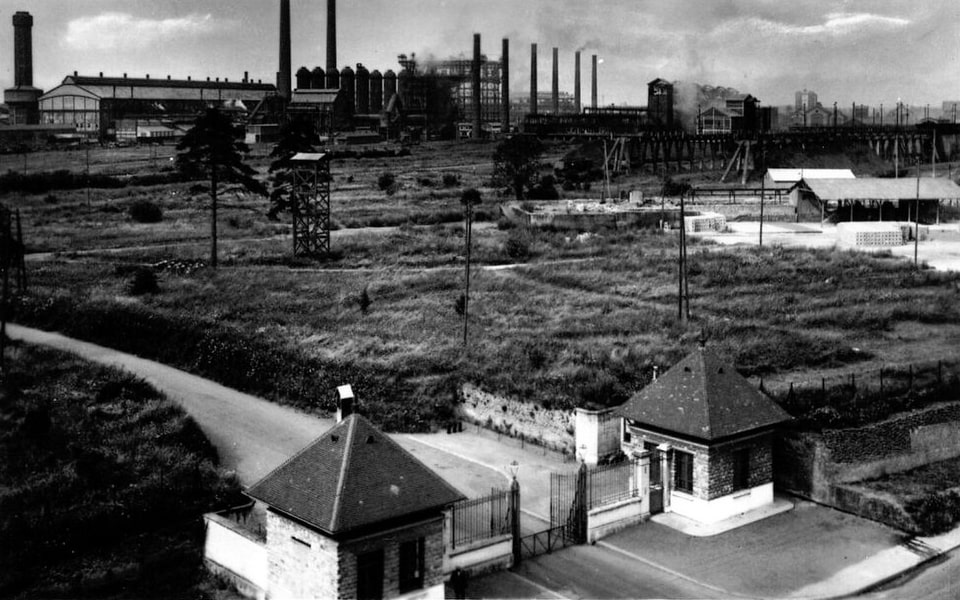
As a regional center of Calvados, the ancient city of Caen formed a dense rural agglomeration, surrounded by hundreds of small towns and medieval villages that took their historical shape around church squares and old chateaus, the highest points in each settlement. In 1944, all were stone-built, mainly from the whitish-yellow limestone that was historically provided by the local quarries around Caen, thus making them obvious military fortresses in the upcoming invasion, spaced 1-2 kilometers from one another. The houses generally had thick stone walls and spacious, deep cellars. From the industrial point of view, to the south of Caen lay a large area of iron ore mines in St-Martin-de-Fontenay, which supplied ore for a huge steel works plant area at Colombelles to the east of Caen, known for its twenty-two tall factory chimneys. The operation of this metallurgical industry in the area, particularly of a well-known pre-war Société métallurgique de Normandie (SMN), made it a target of the early Allied bombardment back in 1942, which, among other reasons, halted the tempo of production of shells for the German army.

After the initiation of the more centralized Allied air raid campaign against the military targets and transport logistics in Northern France in early 1944, the Caen area became one of the objectives, though the damage before D-Day was moderate and nothing to compare with the post-invasion period and civilian casualties. Being an old city, Caen had a dense urban development with narrow streets, and a hippodrome in the southern part was the only significant open space. At dawn on June 6, 1944, the cannonade of the Allied Invasion brought a wave of enthusiasm into the hearts of the citizens of Calvados and particularly in Caen, where some civilians even rushed closer to the coast on bicycles and brought back the news about a horizon full of ships. One local even climbed the tower of a famous ‘Église du Vieux Saint Sauveur’ Church (Church of Old Saint-Sauveur) and claimed to see the advancing British troops toward the city. In a few hours, the Germans, with loudspeakers, ordered people on the streets to get out of sight and issued the evacuation of a part of the city; the latter order was mostly ignored.


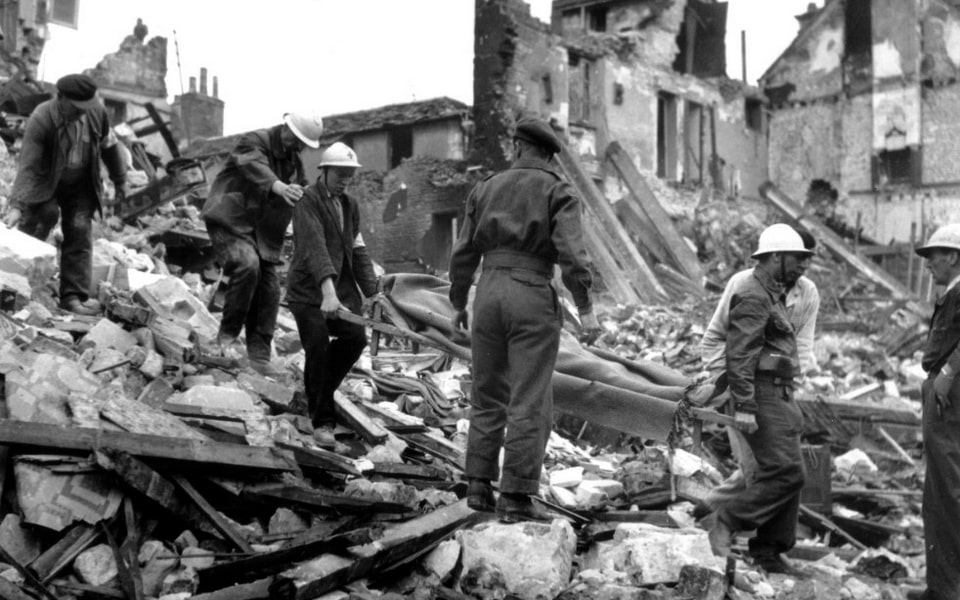
The occupants were not the only ones who appealed to the citizens of Caen to leave the streets and find shelter. Around noon, Allied aircraft dropped 20,000 leaflets calling civilians to leave the city; the appeal was ignored as well, and only a few hundred, mostly women with children, left. The first massive air raid on Caen, which halted the enthusiasm of the anticipated liberation, became a reality at 1.30 p.m. on June 6, when British bombers dropped 156 tons of bombs on the city. The second attack around 4.30 p.m. was more devastating and deadly for the civilians since it targeted mostly the center of Caen. A conservative estimation put the death toll of these two attacks on June 6 at least 600 people killed and thousands more wounded, of whom the Germans had a small share. The first artillery shells fell on Caen, also on D-Day, hitting buildings and killing civilians, including a nun from the staff of ‘Le Bon Sauveur’ hospital center. Among the targeted areas were the local train station and the prefecture. Toward the end of the first day of the Allied invasion, at least a quarter of the city of Caen was engulfed in smoke.


If Caen residents, discouraged by the bombing, hoped that this was the end of the horrors of the war, reality caught up with them the next night. The third raid around 2:30 a.m. on June 7, conducted by the mutual air effort of the British RAF and the U.S. Eighth Air Force, proved to be equally devastating. With an understanding that the seizure of Caen was not achieved on D-Day, the Allies targeted bridges in the city to disrupt German logistics and the move of reinforcements, which ran through the city to the coast. One of the bomb loads of incendiary bombs missed the bridge over the Orner River for 400 meters and made a direct hit into the La Miséricorde hospital building on rue des Carmes Street. Seventy-two people, ‘La communauté de la Miséricorde’ nuns and patients, were killed and buried under the rubble; another 171 were wounded. Another missed direct hit destroyed the local firefighting station, killing two dozen of its staff, destroying the equipment, and thus making dealing with the fire in Caen more difficult in the face of massive destruction. The Old Town Hall of Caen, the heart of city life since the 17th century, was reduced to rubble by twenty bombs.


In total, more than 800 civilians were killed in the course of three air raids on Caen on June 6-7, leaving thousands more wounded and homeless. The effect of the bombardment was so sobering that a third of the population fled the city, many of them in a hurry without belongings and even in nightshirts and barefoot. Their primary destination was the villages in the rural area since many people had relatives in the countryside. Around 15,000 former citizens of Caen took refuge in the old quarry tunnels to the south, which now served as air raid shelters and temporary accommodations. The lack of electricity and water for proper sanitation made hiding there an everyday battle with lice. More than 3,000 wounded people, initially many of them the victims of the June 6-7 raids, were accommodated at several hospitals: at the Bon Sauveur complex, at the Abbaye aux Hommes ancient abbey, and at the Saint Etienne church.
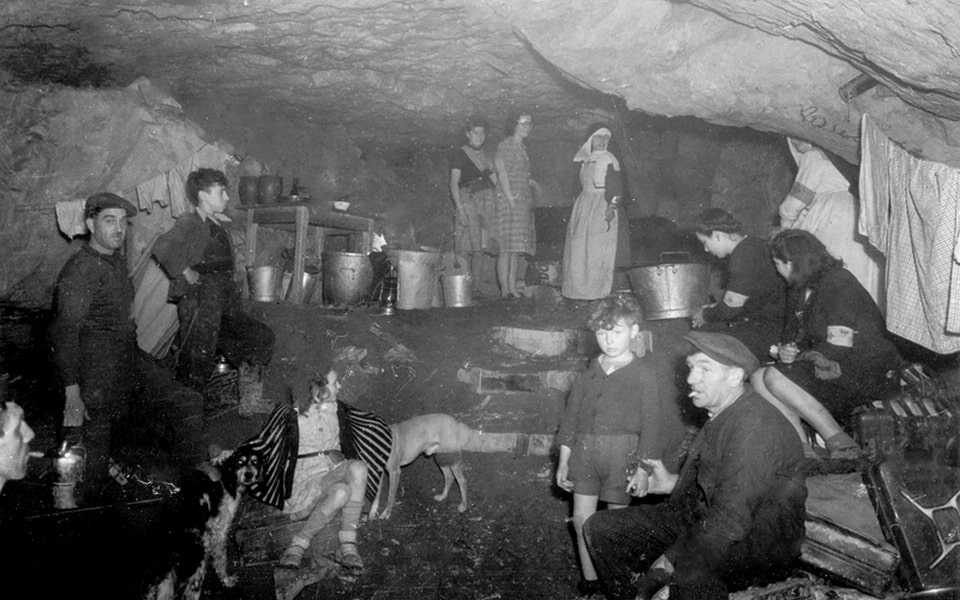
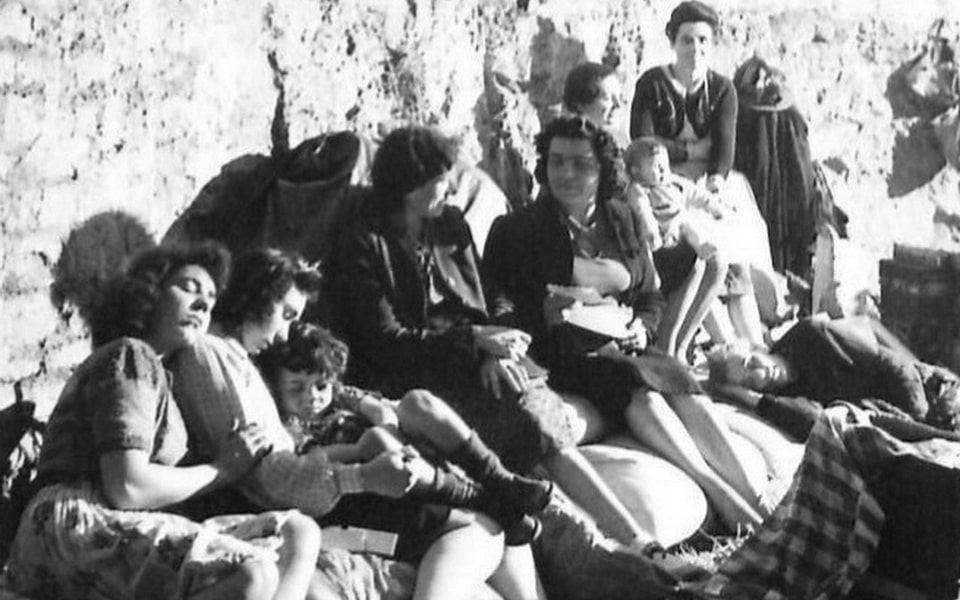
While the Germans were more concerned about the Allied anticipated advance on Caen and their movements of reinforcements in the area, the civil administration and people tried to overcome the consequences of the air bombardment and artillery shelling. One of the leading roles was taken by ‘Défense Passive’ (DP), a civil organization created in 1933 under the patronage of French President Gaston Doumergue, and now its headquarters is stationed in Bon Sauveur. Apart from large hospital installations, several mobile medical groups were formed on June 6 to help wounded people in the city. Many young people, boys, and girls volunteered to help wounded people and clean rubble in search of those who may still be alive under the ruins. Unfortunately, several looters collected valuables on the sites of destruction. In the upcoming days, ‘Le Secours national’, a French national relief organization, delivered 250 tonnes of supplies, first of all medical, to Caen; the action was sanctioned by the Vichy government. Delegates were sent to the surrounding villages for food, clothing, and medicine.
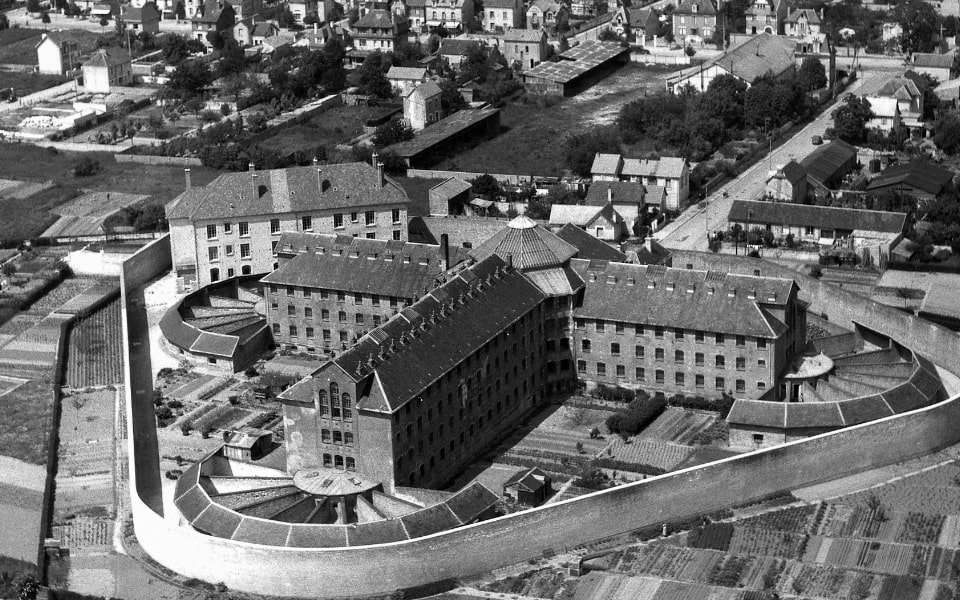
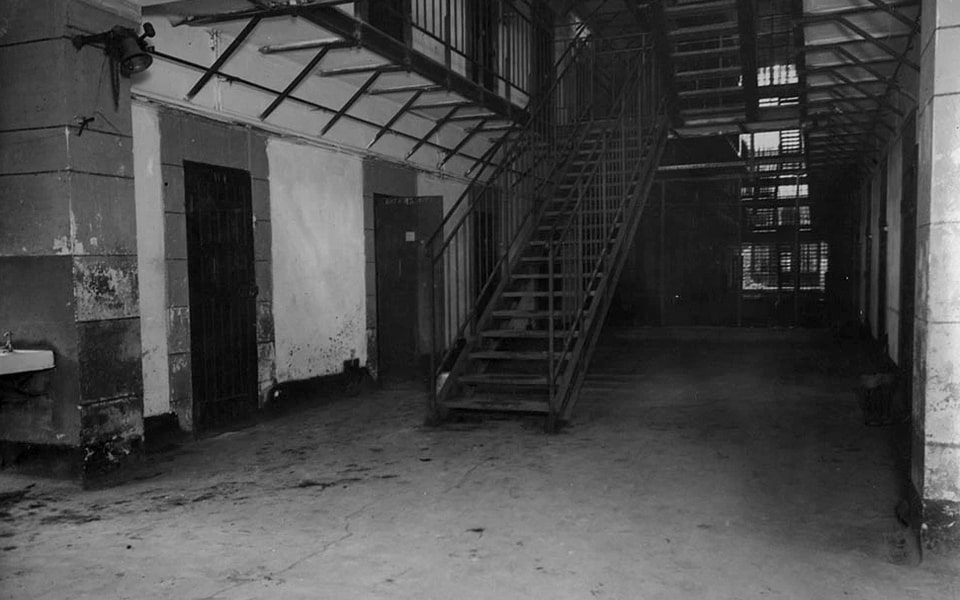
While the Wehrmacht units were fighting for their lives in the city, the German Gestapo had their agenda in Caen on the day of the invasion. The Nazis were concerned that dozens of political prisoners, whom they had previously caught and put in the local Maison d’Arrêt prison, could be freed by the Allied troops. Most of them were arrested in May 1944 as a result of the German round-up in the city as retaliation for the sabotage of the railway line, which disrupted the local logistics for days. The prisoners were representatives of polarized groups: mostly communist activists and the members of ‘Organisation de résistance de l’armée’ or simply O.R.A. On the day of the invasion, they hoped for liberation and even anticipated a bomb hitting the wall that could make them free. Initially, plans were made to evacuate political prisoners to Alençon, 80 km to the south, but at midday on June 6, the SD officers decided to liquidate the inmates.
The Germans came to Maison d’Arrêt Prison around 1 p.m., just before the first Allied air raid on the city. Three SD officers supervised the creation of a killing squad made of the prison guards, mostly former Soviet POWs, while the French wards watched the scene from hiding. The prisoners were taken to the prison courtyard by a small group of five to six people and then shot by a killing squad. A post-war estimate put the death toll of this execution at eighty-seven victims; at least seventy-three of them were confirmed by name later. The youngest prisoner was only seventeen years old; his name was Colbert Marie. The bodies of those killed were buried in the pit on the prison territory, but were later dug out and moved; the traces of them were never found. Among the political prisoners in Maison d’Arrêt, some were spared by the SD and later became witnesses in the investigation, which was initiated after the liberation of Caen. While the post-war trials sentenced several collaborators to death and life imprisonment, the head of the Caen Gestapo section, Harald Heyns, avoided holding responsibility for the June 6, 1944, Caen massacre. He lived under false papers until the 1960s, and even after revealing his identity, the East German government failed to prosecute Heyns. He lived until 2004 and died at the age of ninety-one.
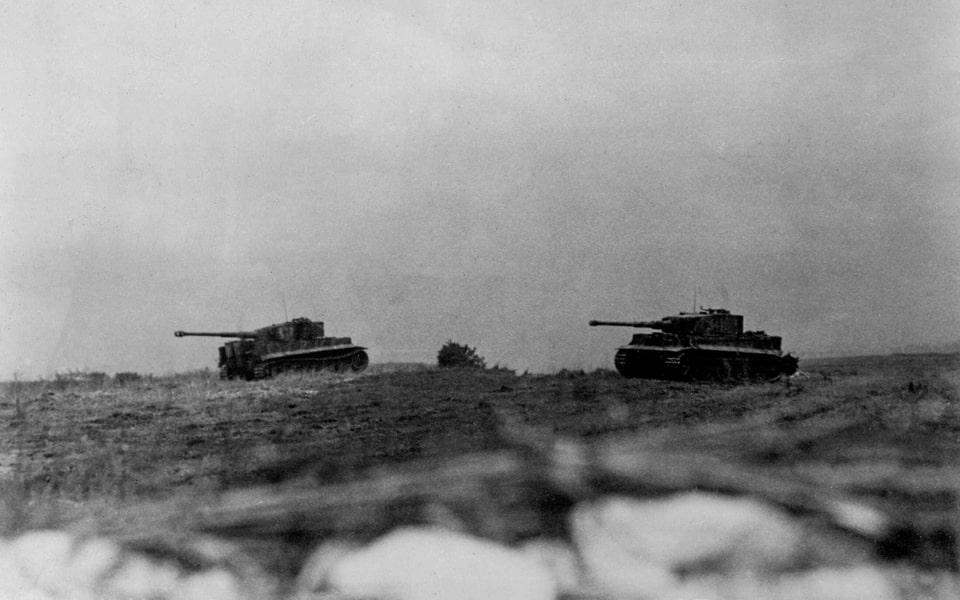
Had the Allied troops succeeded in taking Caen in the first few days after the invasion, then there was a possibility that, even despite the damaging air raid on the city, the liberation would have had a bitter taste but brought a halt to death and suffering. The reality was harsh and not to the advantage of the Caen citizens. The June 6-7 bombardment did not sufficiently disrupt the German ability to move their reserves of the 12th and 21st Panzer Divisions to Caen and the frontline around the city, and despite heavy destruction to the city, at least one bridge over the Orne River remained undamaged. By June 9, the Germans had withstood the initial invasion blow of the Allied armies and organized a strong line of defense to the north and west of Caen. The Allied landings did not bring immediate liberation to most of Calvados. The British and American aircraft’s power lacked sufficient accuracy in destroying specific military and logistic targets such as bridges, railway stations, fuel tanks, and enemy strongholds, which resulted in massive damage to civilian infrastructure, especially close to the landing areas. On June 6, at least 1,300 civilians were killed in Calvados alone, of whom half were the victims of the two raids on Caen. In total, around 3,000 French civilians died on June 6-7, the first of them as a result of a massive June 5-6 night raid on the coastline, when 946 aircraft unloaded five thousand tonnes of bombs. In winter, roughly the same number of French non-combatants died on D-Day as the Allied soldiers.

THE BATTLE FOR CAEN INTENSIFIES: THE JULY 7 BOMBING RAID
There were several reasons why the Allied forces failed to seize Caen on June 6, the number one objective in Bernard Montgomery’s eyes. First of all, as stated above, the goals were just too ambitious. Taking landing beaches was a historical achievement in itself, and the rapid advance into the continent in the first days was unrealistic. Secondly, despite sophisticated pre-invasion reconnaissance and planning, British generals misjudged the German ability to withstand the blow, move reinforcements, and efficiently fight superior forces back. That was particularly true regarding the German 21st Panzer Division that organized a fierce and resolute defense north of Caen. Under the command of Generalleutnant Edgar Feuchtinger, the men from the 21st were the first tank formation to repel the British attack from the direction of SWORD Beach. The third reason lay in the overestimation of air superiority, and the bombardment, a small military effect of the June 6-7 air raids on Caen was a dramatic example. While the vanguard Allied units had already moved toward Caen on June 6, they were poorly supported, and the British General Staff decided to postpone taking the city until sufficient hammerheads had been collected, which allowed the Germans to establish a defense.


Frustrated by the initial halt, on June 7, General Montgomery resumed the advance on Caen according to Operation Perch. While the British and Canadian forces aimed at taking Caen were reinforced, the German defense also included additional formations. On June 14, Montgomery craved the use of US heavy bombers for ground support, but Arthur Tedder, the Deputy Supreme Commander of the Allied Forces, vetoed the idea. On the night of June 18-19, the weather conditions in the English Channel deteriorated dramatically and morphed into a storm, which significantly affected the rate of Allied reinforcements on their way to France. Already way beyond the pre-invasion landing schedule, the Anglo-Canadian sector, with Caen as a main objective, felt a fifty percent reduction in vehicles and supply and seventy-five percent in men reinforcement. Montgomery wanted a simultaneous massive advance on the city both from the west and the east, but the bad weather and the delays in supplies cut his ambitions to the assault on Caen from the West in what would be known as Operation EPSOM.
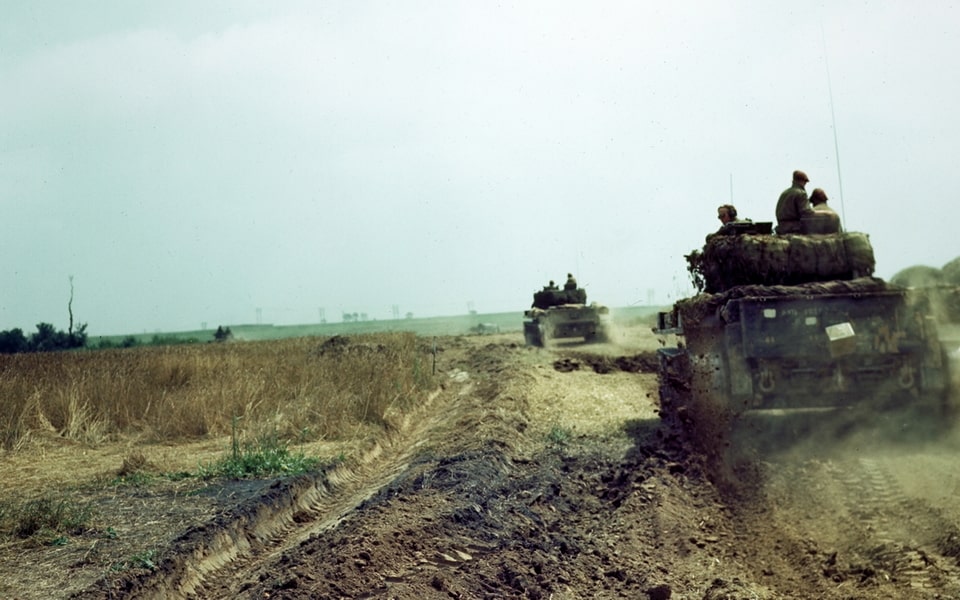
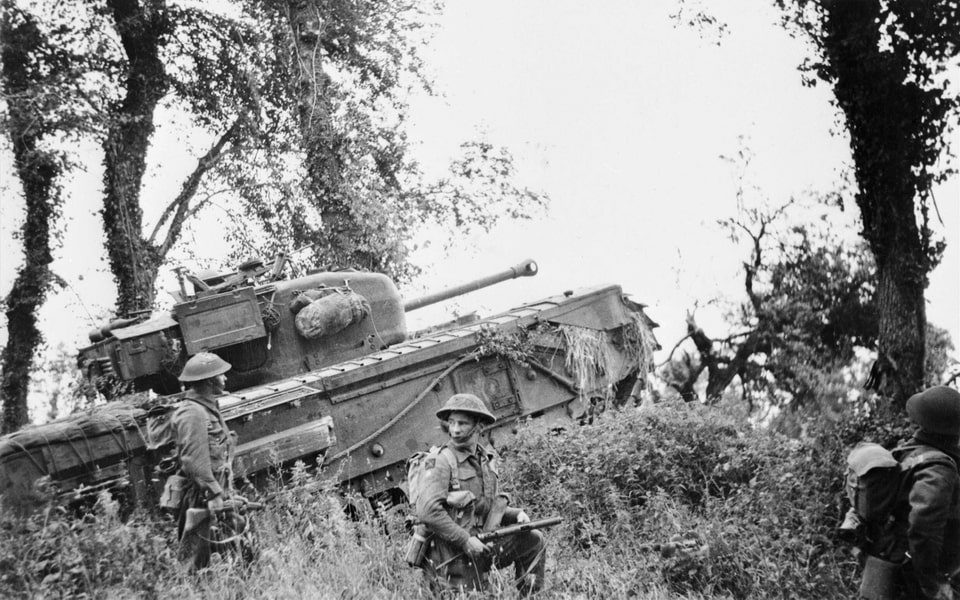
The alignment of forces from the British side included one armored, two infantry divisions, and additionally two tank brigades: 60,000 men and 600 tanks in total, aimed specifically at taking Caen. These formations were backed by 700 artillery pieces. They were opposed by the German 12th SS Panzer Division and the Panzer Lehr Division, both of which suffered significant casualties since D-Day. On paper, EPSOM was a predetermined success, but in reality faced significant obstacles. First, as was stated above, the terrain to the west of Caen was a bit of a challenge for a rapid mechanized movement, even in the case of initial success with cutting the defensive line open. Second, British supremacy in numbers was balanced by a narrow sector of the main thrust, around only 3 km wide, and the initial idea of breaking free deep beyond the frontline failed. Finally, the bad weather with rains not only made the soil difficult for an advance, but the clouds degraded the efficiency of air support, thus diminishing an important Allied advantage in Normandy. EPSOM was finally launched on June 26, and despite the initial successes, breaking through German lines and creating a foothold on the eastern bank of the river Odon, Caen was still far from being seized by British troops, and as early as July 1, the operation was put on hold due to reports of grave casualties.
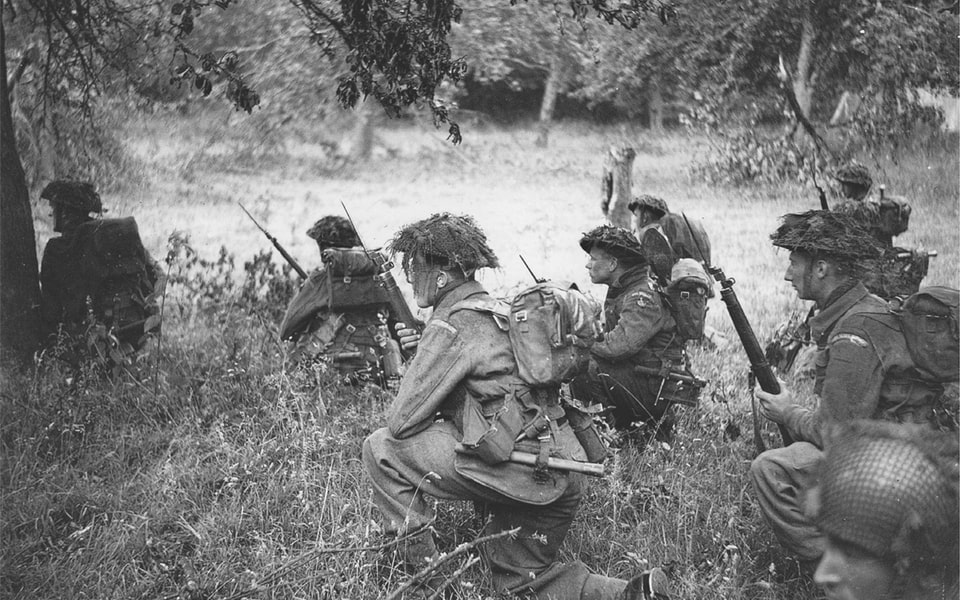

A series of Allied efforts to seize Caen in June 1944 resulted in the ongoing miseries of the civil population in the city and the immediate vicinity. Apart from the obvious deprivation of adequate rest, sleep, and nutrition in the besieged city, the citizens became collateral casualties of the artillery shelling and tactical air raids. On June 9-10, around two hundred and fifty artillery shells fell on the territory of Le Bon Sauveur hospital complex and the nearby school, which also turned into a ward, killing at least fifty people and wounding dozens more among around 4000 wounded and refugees who had previously found shelter here. A magnificent Saint-Pierre Church in the city center was hit by a huge 406 mm shell from a British HMS Rodney battleship, and on June 13-14, another shell attack badly hit the narrow streets in the heart of Caen, causing fires and death under the condition of a shortage of water supplies. Toward the start of July 1944, only around 15,000 citizens of Caen, among the pre-war 60,000, remained in the city. Another 12,000 men, women, children, and the elderly were hiding in the former iron ore and stone caves in the southern suburb, among the yellow limestone centuries used to build the magnificent churches and buildings in their region, which were now razed to the ground by the war. In July, the Germans tried to evict people, probably preparing to turn the area into defensive positions, but refugees refused to leave. Even after the liberation of Caen, up to five hundred homeless people remained in the caves with nowhere to go in the devastated city.


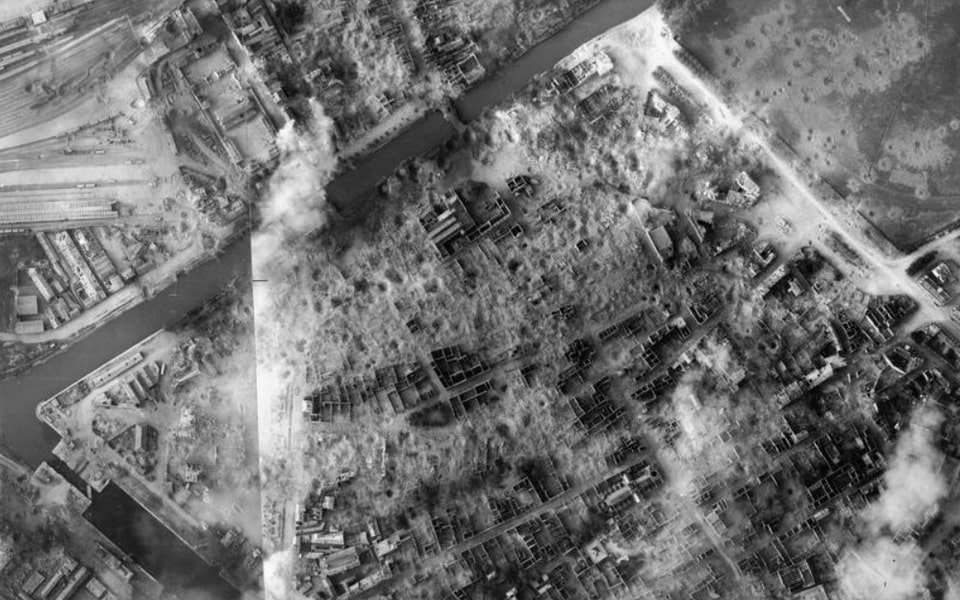
With two failed operations to outflank Caen, Montgomery decided to penetrate the city with superior forces of three infantry divisions and three armored brigades and unprecedented air support. Operation Charnwood’s Prelude was a massive RAF operation scheduled for July 7 and aimed at smashing the German defensive lines to the north of the city. Being afraid of the possible friendly fire, the targeted area was moved further to the south, thus targeting Caen itself rather than the frontline and Wehrmacht positions. The Germans ordered all people in the city to flee on July 6, but most of the remaining population, around 15,000, rejected the idea and stayed in the city, which was already a target of the upcoming raid. This was to become the first coordinated involvement of heavy bombers to support the major ground operation in Normandy, an indication of the Allied craving to finally take over Caen.
The massive air raid on Caen started around 9.45 p.m. on July 7, 1944, with the first wave of heavy bombers. Legendary Avro Lancasters and Handley Page Halifaxes, 467 in total (some sources use the 456 figure), approached the city from the North, guided by a pathfinder group of Mosquitoes. They unloaded 2,562 tons of bombs (the alternative figure is 2,276 tons), mostly high-explosive 250 kg and 500 kg bombs, from an altitude of around 1,000 meters. An hour later, a second wave composed of six squadrons of Mosquito light bombers attacked the same other part of Caen. The Germans had numerically insignificant flak units in the area, which managed to hit only three Lancasters and one Mosquito. Ten minutes later, around 11 p.m., Caen became the target of heavy shelling by 400 artillery pieces and large ship guns. At 7 a.m. the next morning, July 8, 192 American B-26 Marauder medium bombers attacked Caen in a new wave, releasing a further 133 tons of bombs on the city, even though only 87 aircraft unloaded their tonnage.


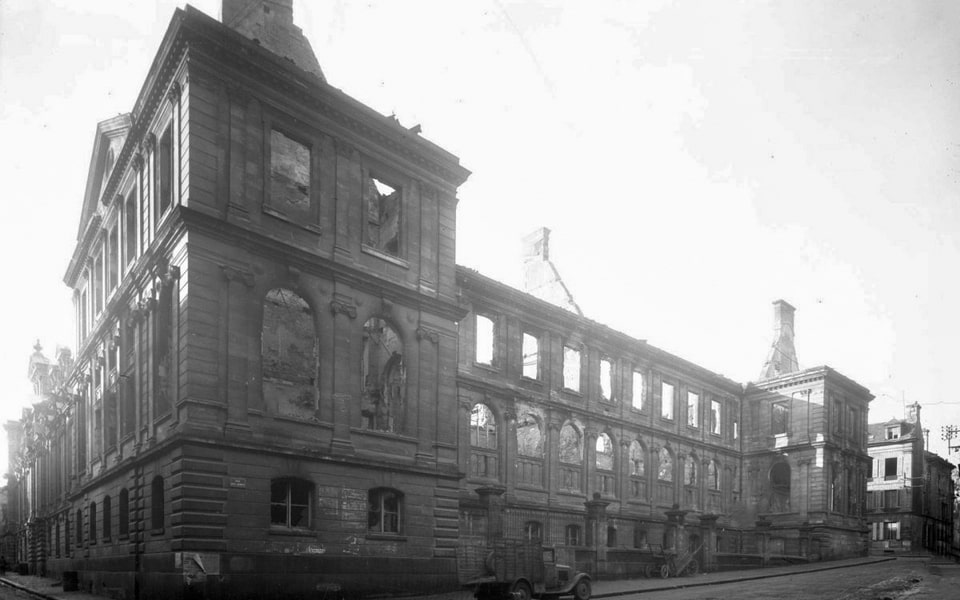
While the massive air and shelling attack on Caen on July 7-8 was later characterized as a means to boost morale among the advancing troops of Operation Charnwood, from 350 to 400 civilians were killed by the Allied fire in less than twelve hours, compared to only twenty German soldiers, who had been supposed to be the primary targets. The 12th SS Panzer Division lost only two of its tanks because of the attack, a miserable result of so many casualties among the citizens of Caen. Hundreds of civilians were badly wounded and needed adequate medical assistance, which was complicated by the heaps of ruins in which the northern part of Caen had now turned. One of the shells made a direct hit on the shelter near Saint-Julien Church, which caused the death of 54 people. Several bombs fell on ‘Palais des facultés de Caen’, Caen’s University, built in the 18th century, which caused an uncontrolled fire that destroyed the whole building in flames. At least a part of the bombs that fell on Caen in the raid had a delayed fuse and exploded six hours after hitting the city. The post-Charnwood investigation concluded that the air raids on July 7-8 made little impact on the German defense, and the future use of heavy bombers should have an integrated fire plan of targets.


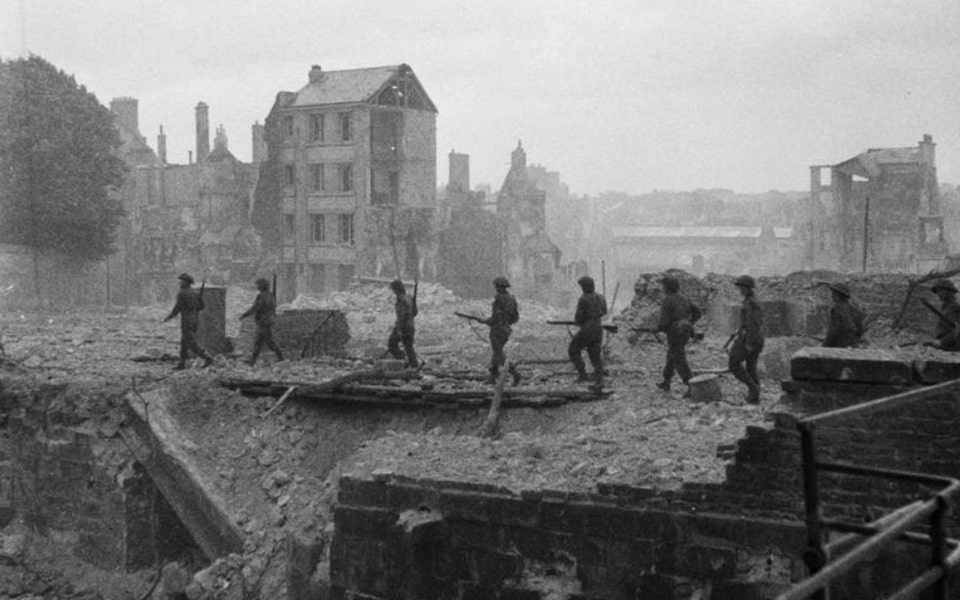
Summing up, the massive air bombardment and shelling attack in the wake of Operation Charnwood inflicted small damage to German defense compared to the destruction of the city. On July 9, the German units launched a controlled retreat to leave the left bank of the Orne River. The first Allied troops entered the liberated part of the city, including the long-suffering area of the Le Bon Sauveur hospital complex, and provided medical assistance and food supplies to wounded people, refugees, and staff: doctors, interns, nuns, and Red Cross representatives. The remaining civil administration informed the liberators about the dramatic situation in the city, and in the following weeks, both were concerned about the possible spread of diseases such as cholera due to the lack of clean water. The reconnection of the water supply became a bit of a challenge in Caen after the liberation. On July 10, the Allied guns fired 80,000 artillery shells toward the retreating Germans, and the latter answered them with 5% of this amount, once again targeting the devastated streets of Caen.



OPERATION GOODWOOD AND THE LIBERATION OF CAEN, JULY 1944
Reaching the bank of the Orne River and taking control over the northern and western parts of Caen was only a half-victory for the British army. A new operation called GOODWOOD was set to finally beat the Germans out of the city and reach the Bourguebus ridge with the overall strength of three armored, two infantry divisions, and two armored brigades. This time, the planning of the preparative air raid on German positions was more sophisticated and gained a new scale. On the dawn of July 18, 1944, British units in the area opened a dense counter-battery artillery fire to suppress the enemy’s anti-aircraft positions to clear the path for the RAF forces. Around 5.45 a.m., 1,056 heavy British bombers, Halifaxes, and Lancasters unloaded an unprecedented 4,800 tons of bombs on the Eastern part of Caen and the area beyond the Caen canal: Colombelles, Cagny, Touffreville, and Emieville. The raid, also backed by intense naval gunfire and artillery shelling, was aimed at disrupting the defensive and movement abilities of the 21st Panzer Division.


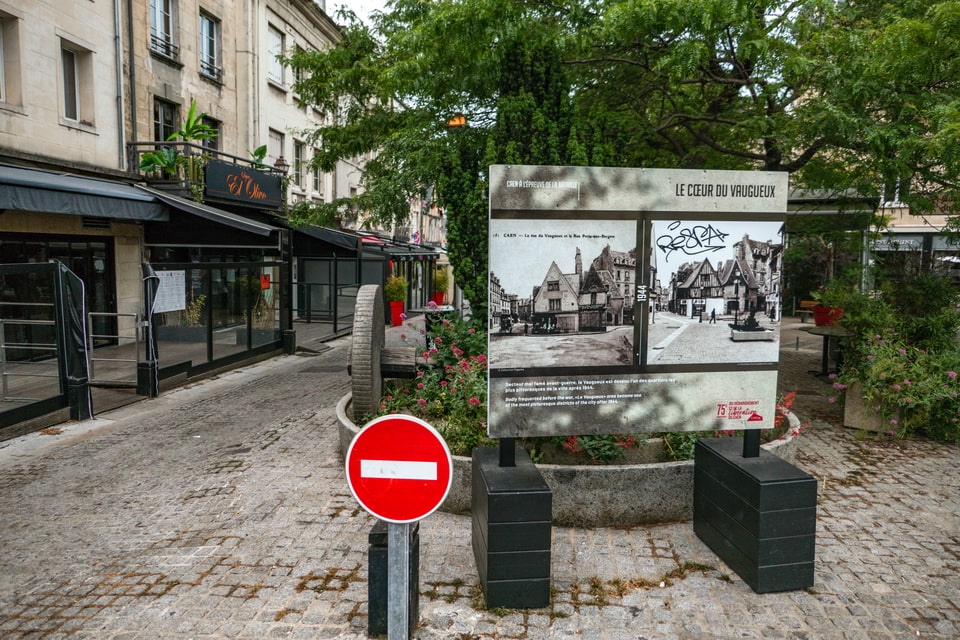
While the attack of more than a thousand heavy bombers was unprecedented already, new waves followed, this time of the American air forces. When the RAF aircraft turned back home, 570 heavy US bombers of the 7th Air Force, B24 Liberators, and B17 Flying Fortresses unloaded another 1,340 tons of bombs to the east and south of Caen. As if it wasn’t enough, 318 medium bombers, B26 Marauders, and B25 Mitchells dropped 560 tons of bombs on the positions of the German 16th Luftwaffe Field Division. The total payload of bombs unleashed that morning, including the shelling, was 7,000 tons, or approximately one thousand tons of bombs on every mile of the front, the amount which made even the highest Allied commanders voice skepticism, including Dwight Eisenhower, Supreme Allied Commander in Europe. In the following days, the British forces also fired around 250,000 shells toward a narrow frontline near Caen.


Despite the enormous tonnage of the Allied bombs that fell on German heads in the morning of July 18, toward the end of the day, the British and Canadian forces suffered notable casualties: the British 11th Division lost 126 tanks solely on this one day of advance. The city of Caen was finally liberated by the Allied troops on July 20 at the expense of 6,000 casualties and 400 tanks. The British and Canadians not only seized the eastern part of the city—they now controlled an area up to 7 kilometers around Caen in all directions—the initial objective of Operation Overlord for June 6. The Germans retreated further south and east and secured the Bourguebus line until early August. There are no calculations regarding the civilian casualties of the July 18 bombardment, but when Caen was finally freed of the Germans, only around 8,000 people remained in the city, or less than 15% of the pre-invasion population. Because of the sufferings and deprivation of the previous six weeks of survival in the besieged city, the people in Caen did not show much enthusiasm for their liberators. Decades after the war, historians still debate whether the massive air bombardment of Caen served the cause of the war or delayed the liberation. Most modern professionals regard the bombing of Caen as counterproductive in a military sense and inhuman toward the civilian population.


THE POST-WAR RECONSTRUCTION OF CAEN: FROM RUINS TO A REBUILT CITY
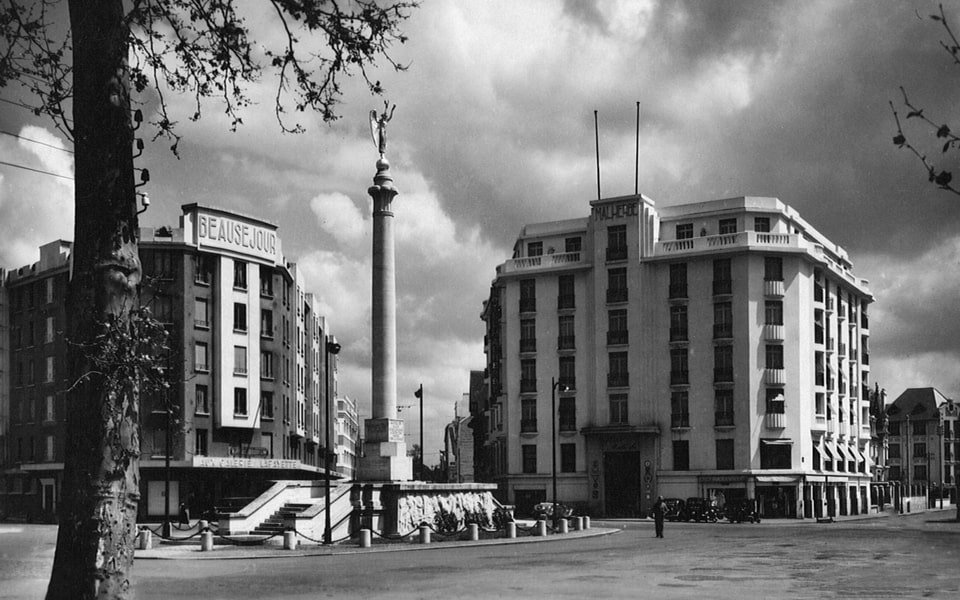
One estimate put the figure of civilian casualties in Caen between June 6 and July 20 at 3000 people who lost their lives. Most of those who survived the battle for the city found themselves to be homeless, 35,000 residents in total, because of the significant damage to the residential accommodation resources. 30% of the surface area of Caen was badly damaged, which meant more than 60% of residential areas. It was estimated that of the prewar 15,000 buildings in the city, up to 9,000 were destroyed without a chance for restoration, and another 5,000 were partially damaged, amenable to living and reconstruction. The industrial capacities of Caen, including the port infrastructure and metallurgical industrial capacity, took six years to renew their activity. Almost every historical landmark in the city was damaged to a varying degree, and some, like the Hôtel de la Monnaie, Saint Julien Church, Caen’s University, and the Old Town Hall, were inevitably lost.
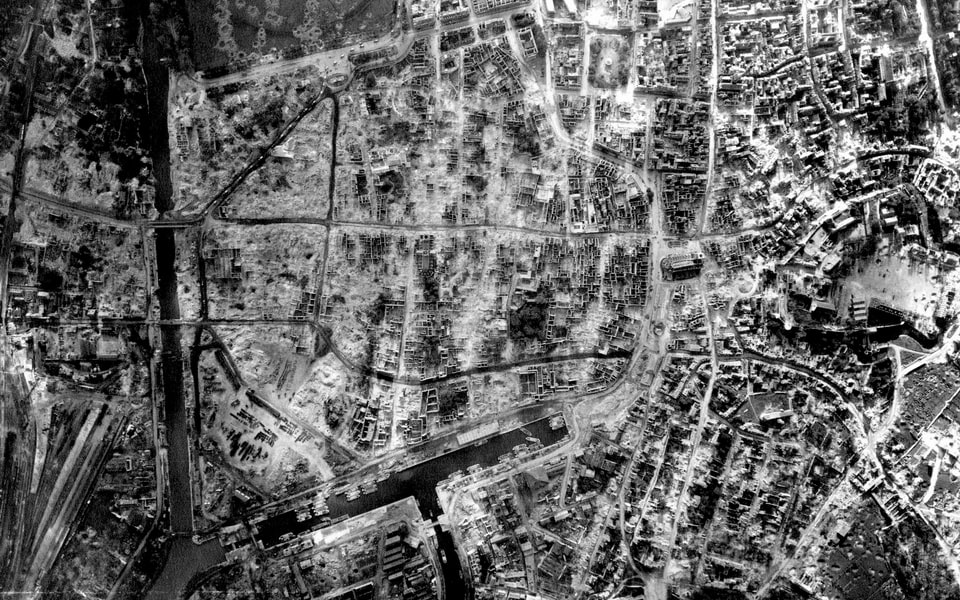


In the first days after liberation, tens of thousands of refugees in Caen were more concerned with their survival than with the state of the war against Hitler’s Germany. The devastated city streets became a place for mourning procedures for those whose bodies were dug out of the debris of ruins. For the Allied soldiers, the citizens of Caen looked unwelcoming, dirty, and estranged, often ill and exhausted. The war machine moved further inland, leaving people in Normandy in constrained conditions since, due to the June invasion, the region lost most of its 1944 harvest. The situation with food supply in Calvados deteriorated rapidly, and it was more severe in cities than in the countryside. Toward the fall, citizens in Caen could rely on 100 grams of bread per day and 120 grams of meat per week. What frustrated people the most was the fact that twelve thousand German POWs, who were left in Calvados to clear rubble and build roads, got from the Allies better clothing and rations superior to the nutrition of French civilians.
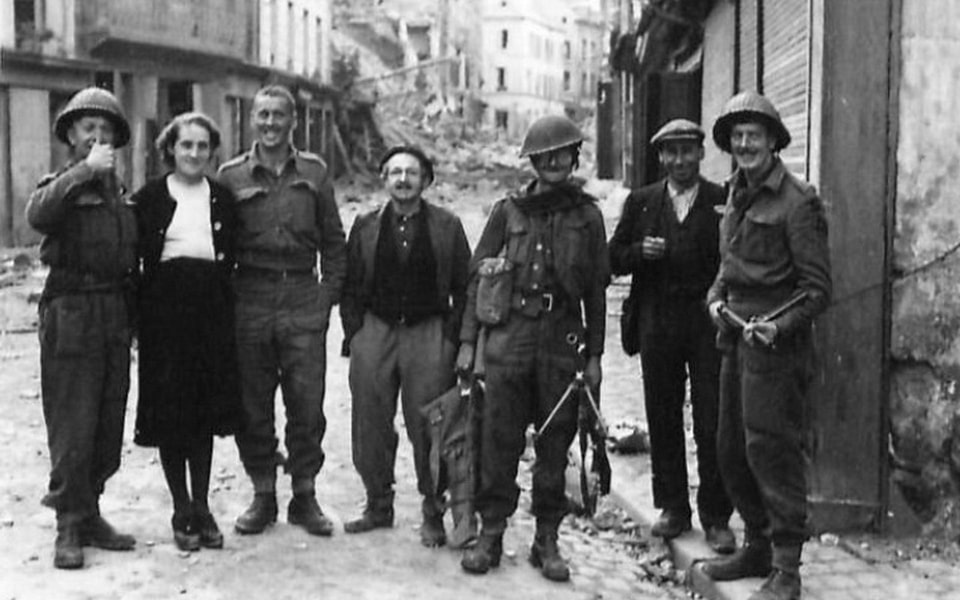

The reverse side of the coin of getting rid of the Nazis now included the black market and smuggling food—a process that was secretly controlled by Allied soldiers. Theft and looting of the destroyed houses became a reality and a real concern for local police and civil administration. The lack of transport, such as trains and buses until December 1944, provoked little enthusiasm either, as well as prostitution, when women used all means to get food for themselves and their families, often spreading venereal diseases among the Allied contingent. One of the local newspapers in Caen, called ‘Liberté de Normandie’ (Liberation of Normandy), appealed chokingly and mostly rhetorically both to the Allies and the rest of France for help in food supply and restoration of their damaged region. In decades to come, many citizens of Caen, who survived the war, would bear bitterness regarding the price that their city had paid for the liberation of France, and to which no appropriate tribute was paid.

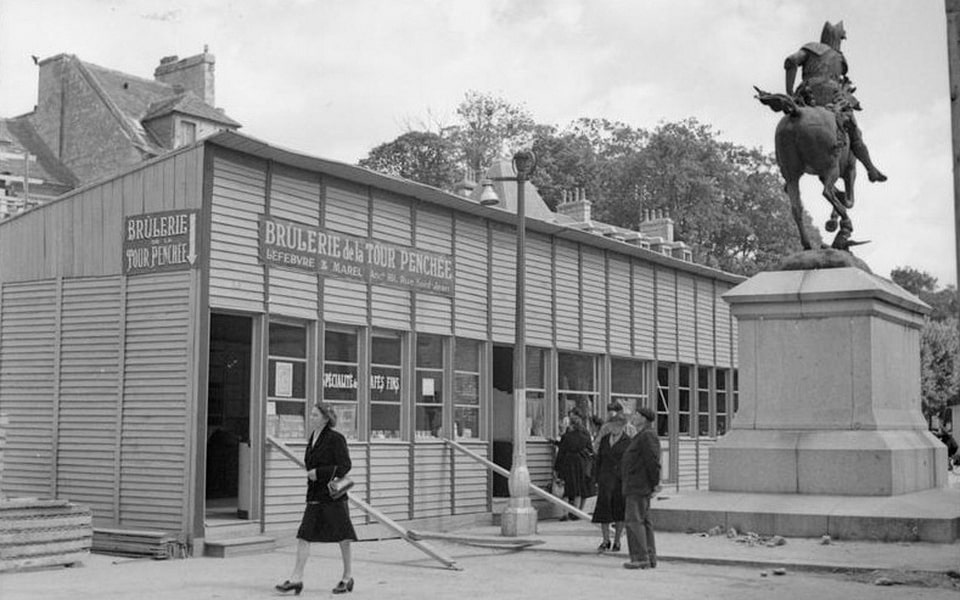
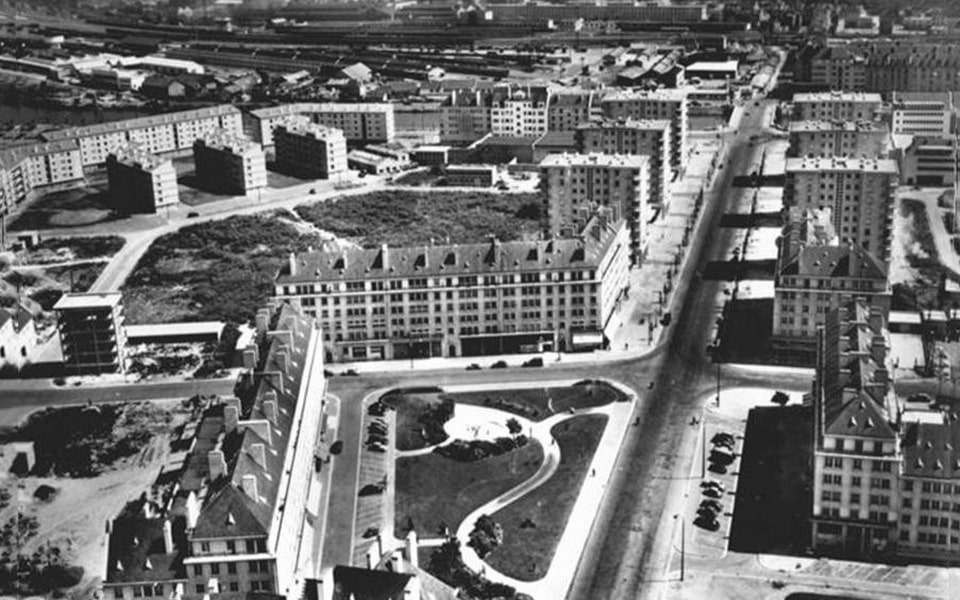
A small boost of morale came in October with the visit of Charles De Gaulle to Caen and with his promise of support in the restoration of the region. Then a harsh winter came, and in January 1945, the local authorities asked for 40,000 suits of clothes and 70,000 cots, mattresses, and blankets for the refugees. Cleaning of the ruins in Caen started as early as August 1944. An enormous calculated amount of 2 million cubic meters of rubble in the city took two years to clean. The assignment of German POWs was a palpable help, but the majority of the work was laid on the shoulders of local people. Usable construction materials were taken and utilized in the reconstruction of the city. In parallel with the centralized reconstruction, the local authorities decided to build temporary wooden barracks for thousands of refugees outside the city perimeter—some of them could still be found in Caen. The principal cleansing of the rubble took two years until mid-1946, but the restoration of much of the city took almost two decades until completed in 1963.
CAEN CASTLE (CHÂTEAU DE CAEN): THEN AND NOW
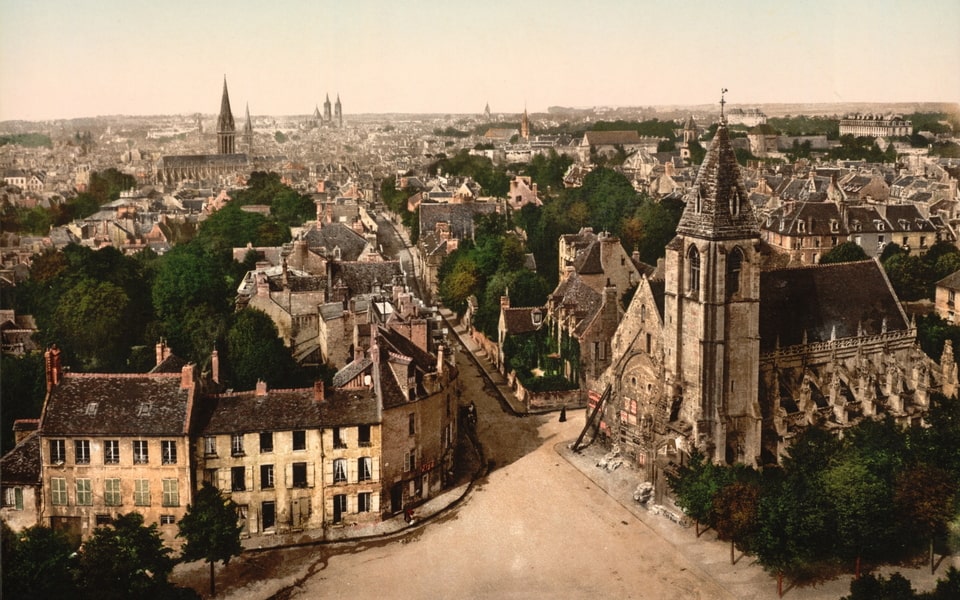
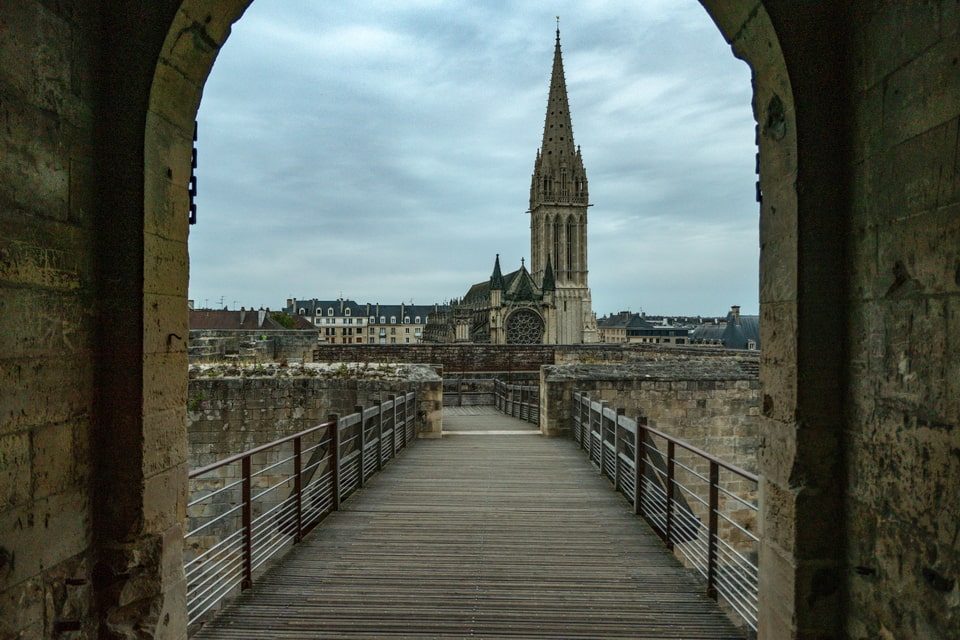
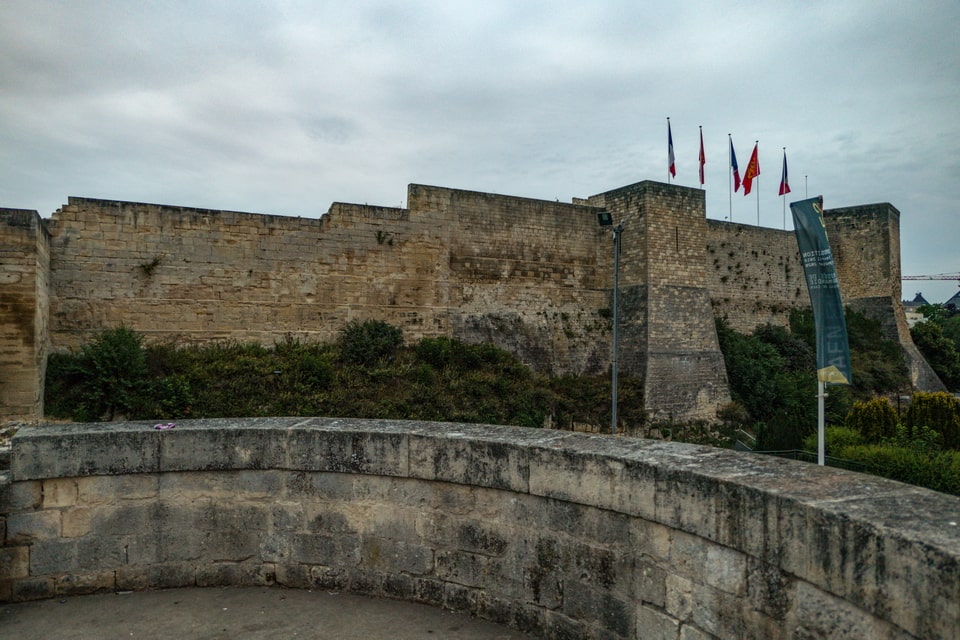
One of the largest fortified castles in Europe, Château de Caen dates back to 1060, when it was built as a residence and a stronghold of the legendary William the Conqueror (1028-1087), the first Norman King of England. The fortress complex consisted of several buildings located on an area of five hectares. The defensive walls were surrounded by moats, and the location of the ramparts has not changed since 1080. In 1204, the castle of Caen was taken without a fight and came under the control of the French crown. The King of France took further actions to modernize and strengthen the fortress. Eleven towers along the perimeter of the fortress walls were built during the 13th to 14th centuries, and over the next three centuries, the walls and towers were constantly reconstructed and restored. The fortress endured many sieges, but from the 17th century onwards, its defensive function stepped aside, and the towers were no longer restored.


A symbolic garrison in the castle was detained as a tradition until June 1940 and the German occupation of Caen. At the time, the former fortress was surrounded by more modern buildings in the heart of the city. During the four years of occupation, the Germans used the territory of the castle as a hospital facility in 1940 and later as a local training center with a firing ground for their soldiers. Neglected in the previous decades and with little interest from the occupants, in 1941, the southern section of the ramparts collapsed. In the first weeks of June 1944, after the invasion, the castle was used as a temporary detention center for captured Allied soldiers, British, and Canadians. During the WW2 Battle of Caen, the castle was not only targeted during the infamous air bombardment but also suffered from direct hits of artillery shelling. On February 10, 1945, it became a place of execution for the local French collaborator. Since the modern urban development area around the castle was mostly destroyed in 1944, after cleaning the rubble in 1946, Château de Caen reappeared as a dominant of the area. It was passed to the city in 1956 and then restored to become a museum.
SAINT-JULIEN CHURCH, CAEN: RUINS AND RECONSTRUCTION
While the first mention of this church dates back to 1150, modern archeologists suggest that the old Romanesque church was built on the foundation of a much older one from the 7th–8th centuries. Until 1312, the brick church and its cemetery were owned by the Order of Templars, and after the annihilation of the order, they passed to the Order of Saint John of Jerusalem. Eglise Saint-Julien de Caen was badly damaged during the Hundred Years’ War between France and England and restored in the second half of the 15th century. The church stood mainly unchanged until the end of the 19th century, when its exterior look was transformed with a new bell tower in neo-Gothic style, added elements, and improved interior decoration.
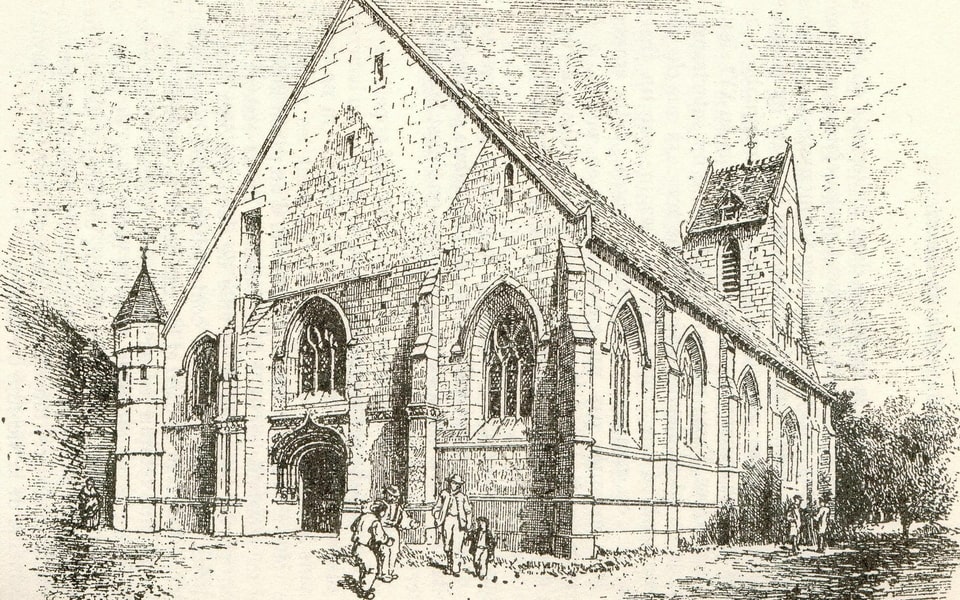
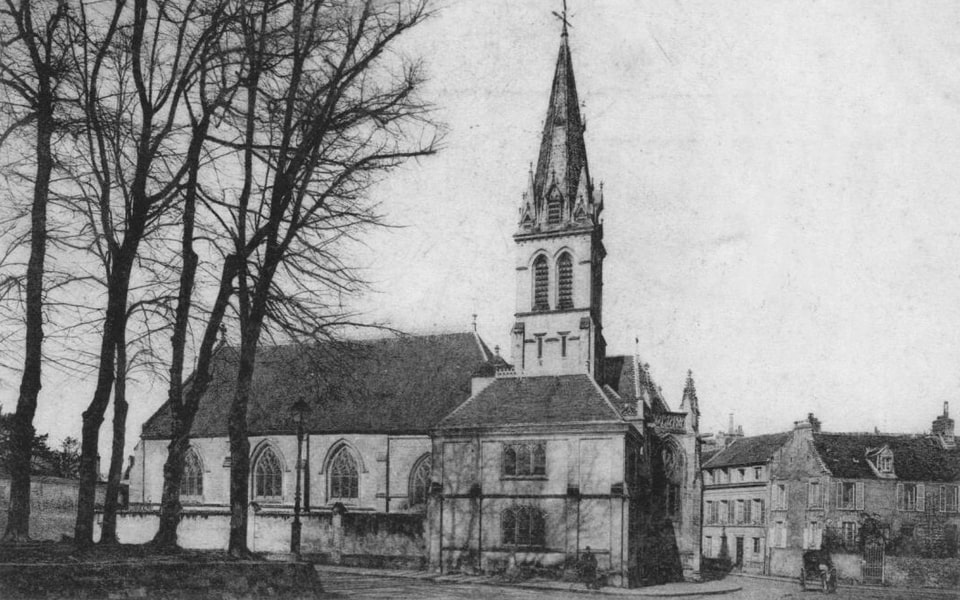

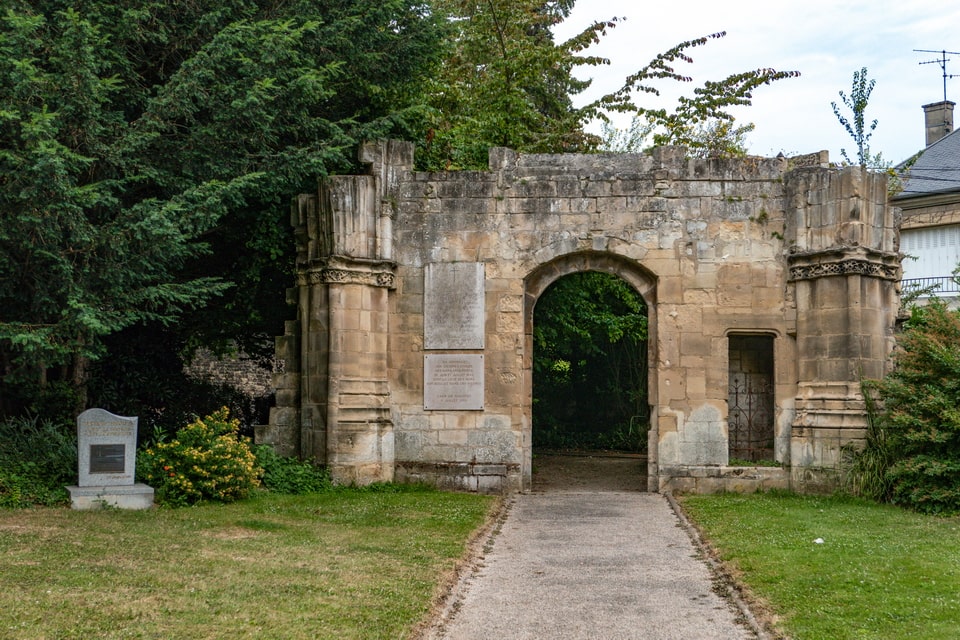
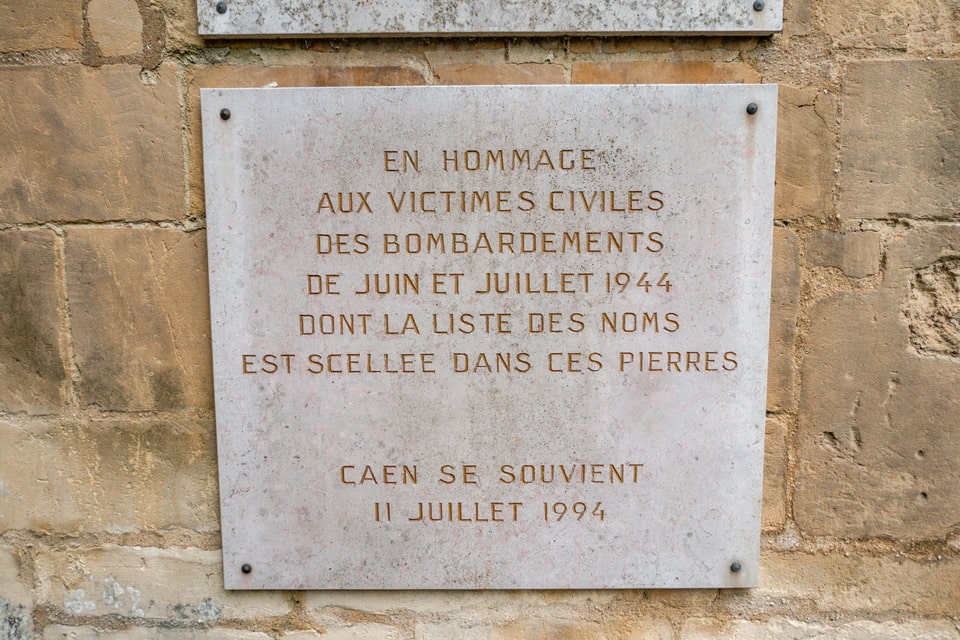
Unfortunately, the church received a direct hit during the July 7, 1944, air bombardment and collapsed. After the battle, a temporary wooden structure next to it was used for temporary religious services in the devastated district, but later the original Église Saint-Julien de Caen was excluded from the list of objects for restoration in favor of building its new version at another location. Only a section of the wall of the former western portal was preserved, and the markings on the ground show the old territory limits. In 1994, a plaque commemorating the victims of the 1944 bombardment was put on the remaining wall.
THE UNIVERSITY OF CAEN: DESTRUCTION AND POST-WAR
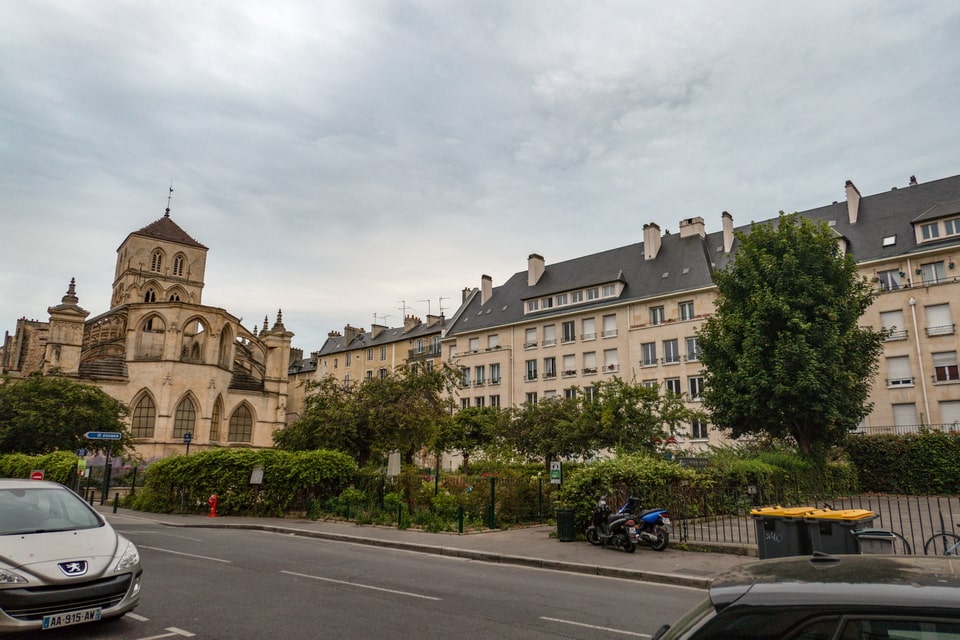
Before 1944, the famous Palais de l’Université was located 300 meters to the south of Caen Castle and Saint-Julien Church. The university was established in the city in the 15th century and moved next to a famous Saint-Sauveur church in 1476, where it operated for the next five centuries. The initial structures were rebuilt at the beginning of the 18th century with several wings around a spacious courtyard, and later in 1840, the university complex was remodeled again. During the July 7 air raid on Caen, Palais de l’Université was neither specifically targeted nor badly hit by the bombs, but several dropped munitions caused a fire inside a Chemistry faculty wing, which rapidly spread throughout the whole complex. After the war, the remaining library premises were temporarily used as a seat of local authorities, but the fate of the university was unfortunate. The remaining ruins were cleared in 1960, while a new campus for 3,5000 students was built in another location. The neighboring 12th-century Saint-Sauveur church was also badly damaged in July 1944 but was later restored.
SAINT-ÉTIENNE (STEPHEN’S ABBEY), CAEN: THEN AND NOW
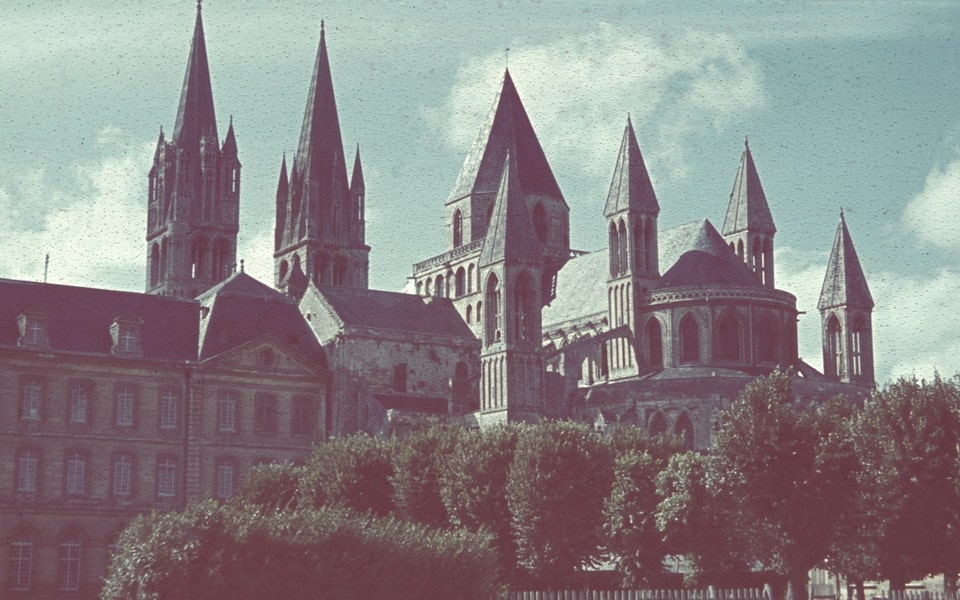
Like the Caen Castle, the history of this place was closely connected with William the Conqueror. It was founded in 1063 as an act of penance by the future conqueror of England. William’s sin lay in the fact that he was going to marry his cousin, Matilda of Flanders. Construction work began in 1066, and soon the men’s monastery was consecrated in honor of St. Stephen (Sainte-Étienne). Most of the complex was remodeled and expanded in the 18th century, and St. Stephen Abbey was spared the turbulence of the French Revolution and the Napoleonic rule.
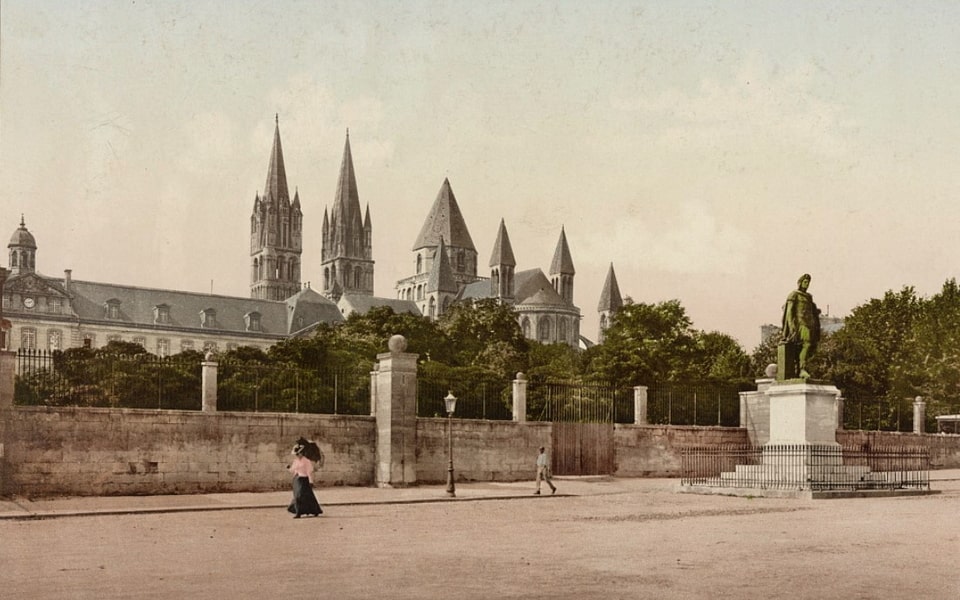
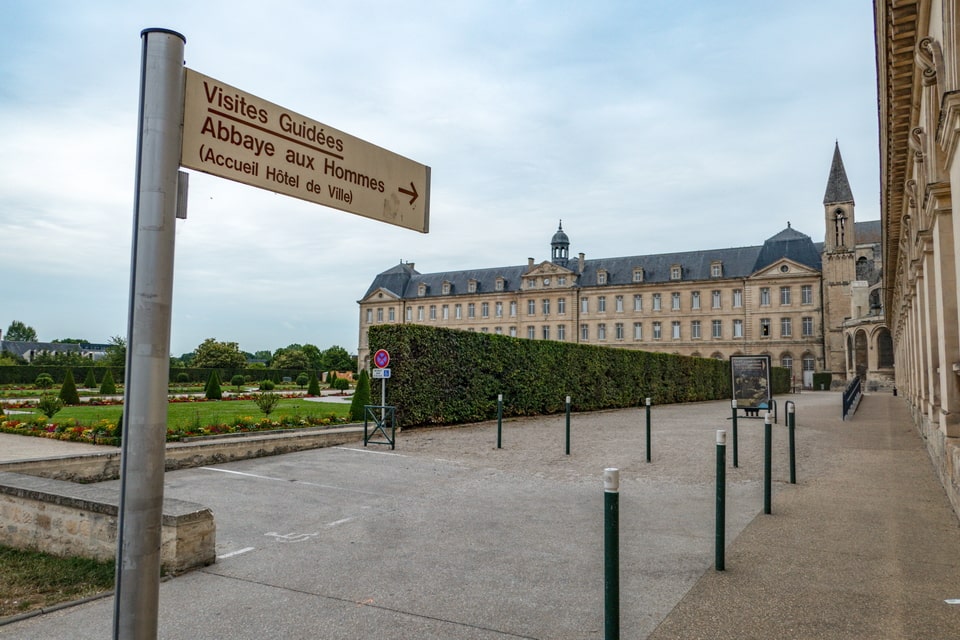
During the battle of Caen in June-July 1944, Abbaye aux Hommes became one of the key destinations for refugees in the city, men, women, and children who hid from the air bombardment and artillery shelling inside the abbey. A large white flag with a red cross on it was placed near the complex to save it from bombing. At its peak, up to 8,000 people took shelter on the territory of the ancient monastery of William the Conqueror, and one of the wings houses a hospital with 500 beds. On July 10, when the left bank of the city was liberated, French resistance fighters hosted a flag and sang the Marseillaise at Abbaye aux Hommes
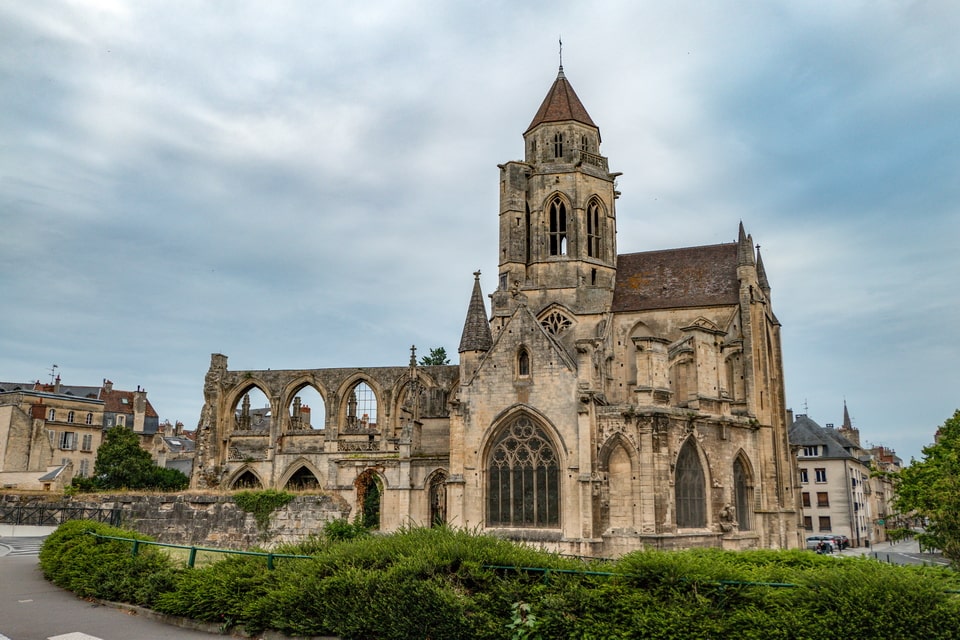
Another remarkable landmark next to the Abbey is Saint-Étienne-le-Vieux Church, located several hundred meters to the east. It should not be confused with the Saint-Etienne Church on the territory of the Abbey. It originated in the X century but was later transferred by William the Conqueror to the ownership of Abbaye aux Hommes. It was significantly damaged during the Hundred Years’ War at the beginning of the 15th century and was later restored. During the Battle of Caen, it was hit by an Allied shell while targeting the German troops located nearby and has been put under conservation since then as a reminder of the war damage to the city of Caen. Finally, in 2023, the city authorities announced a restoration of Saint-Étienne-le-Vieux Church until 2026.

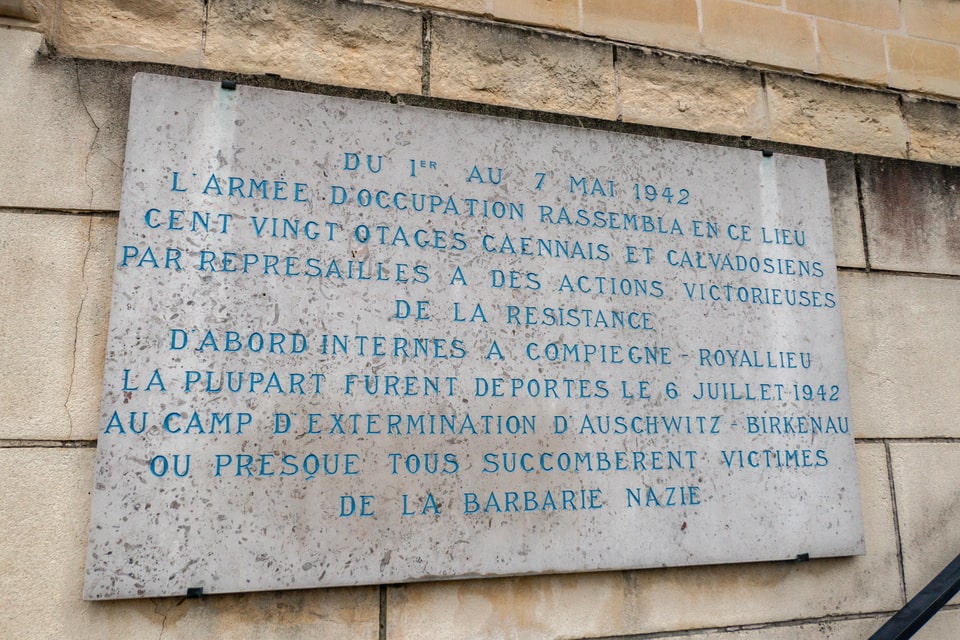
MEMORIALS AND MONUMENTS TO THE BATTLE OF CAEN
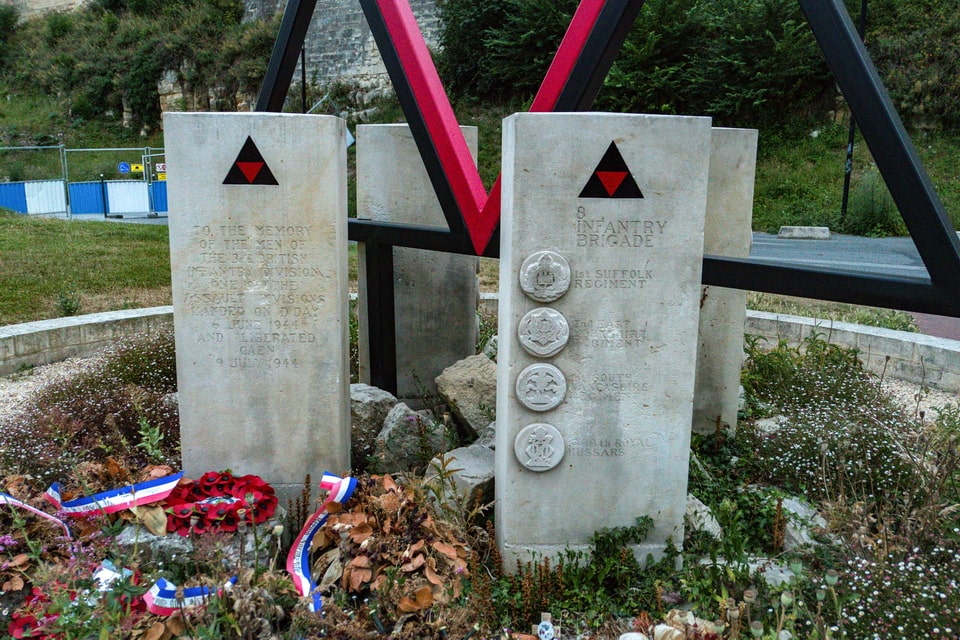
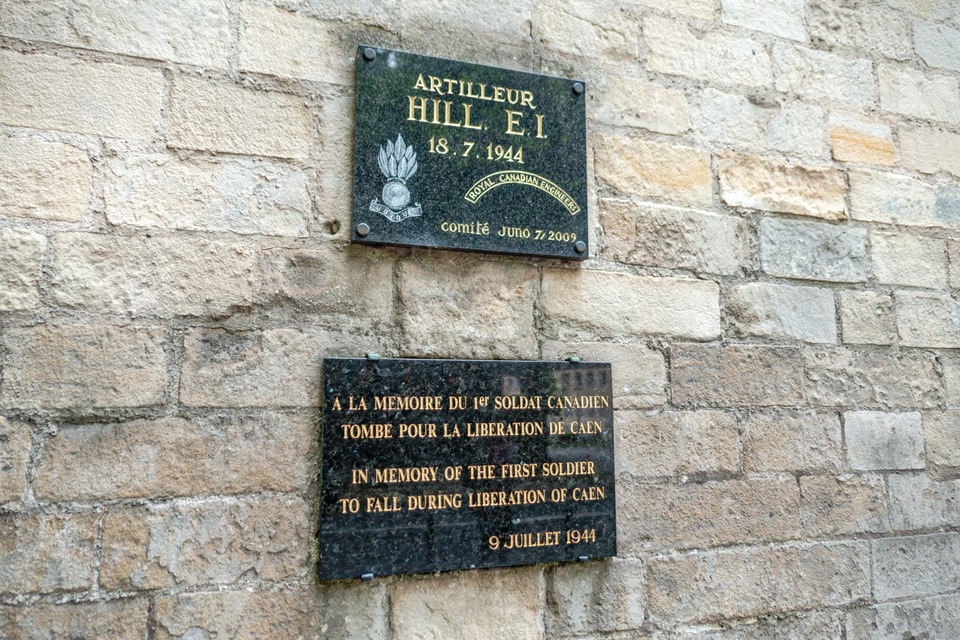


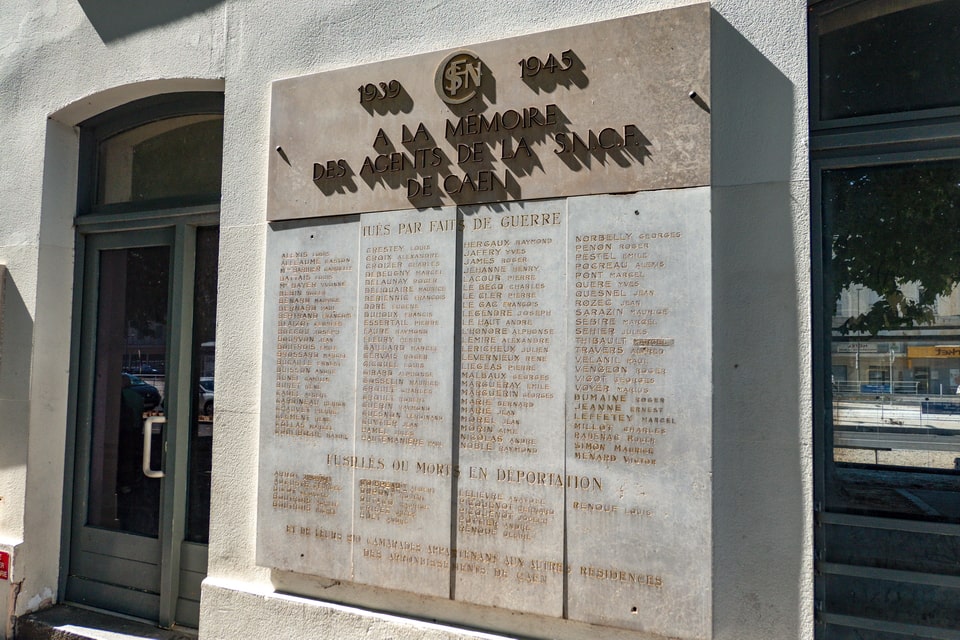
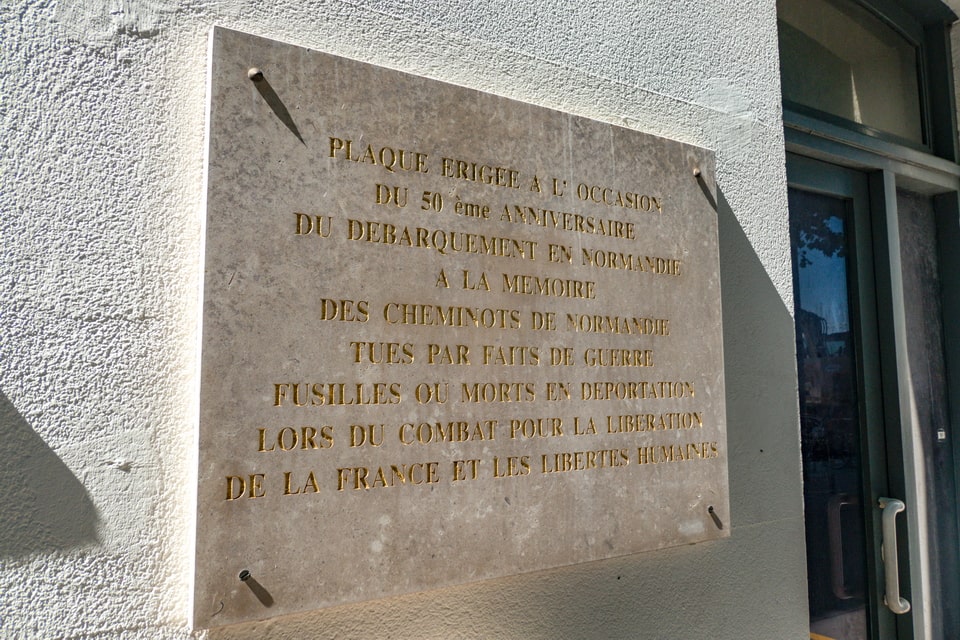

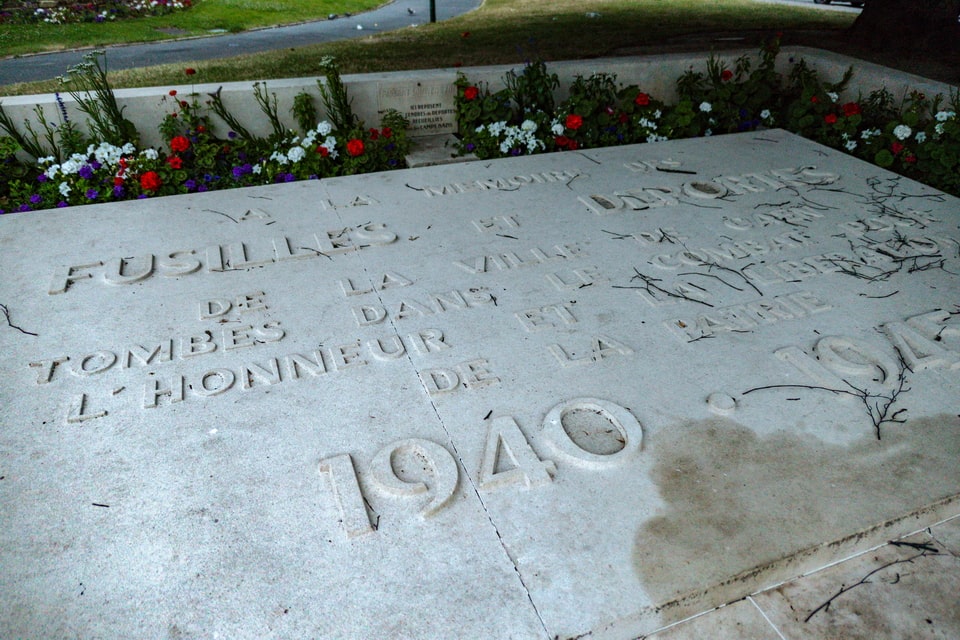
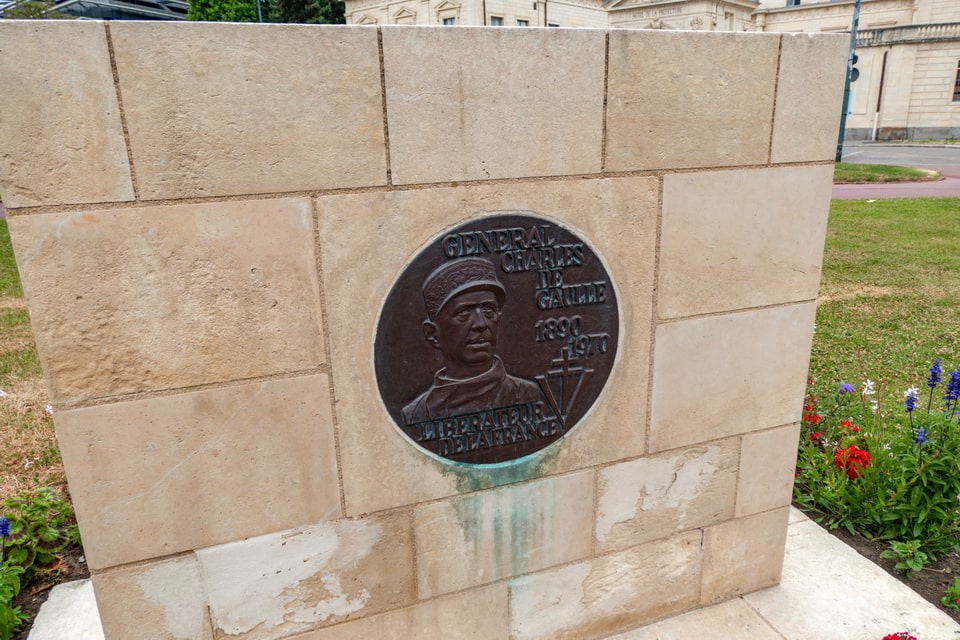
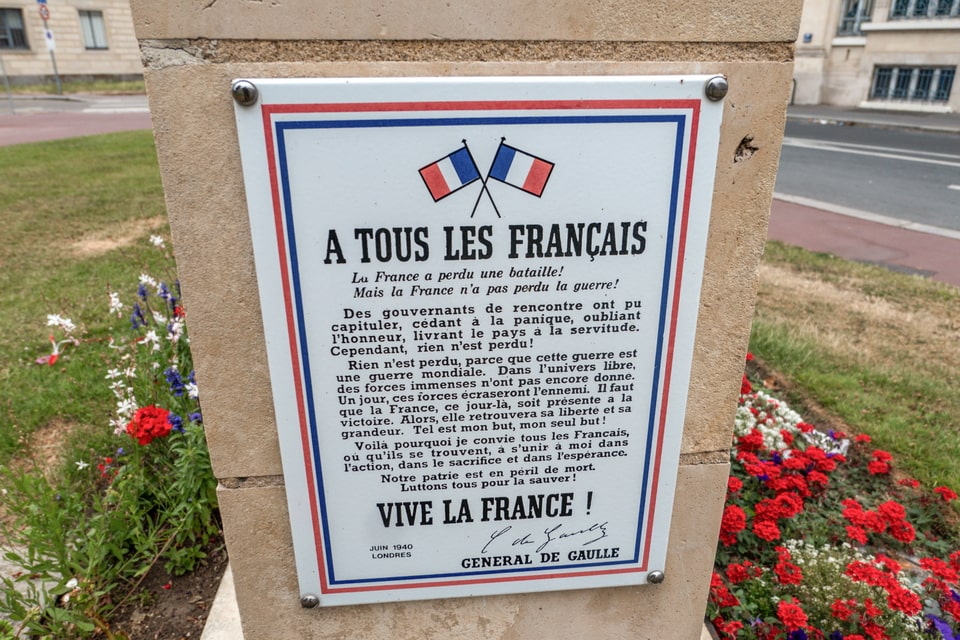
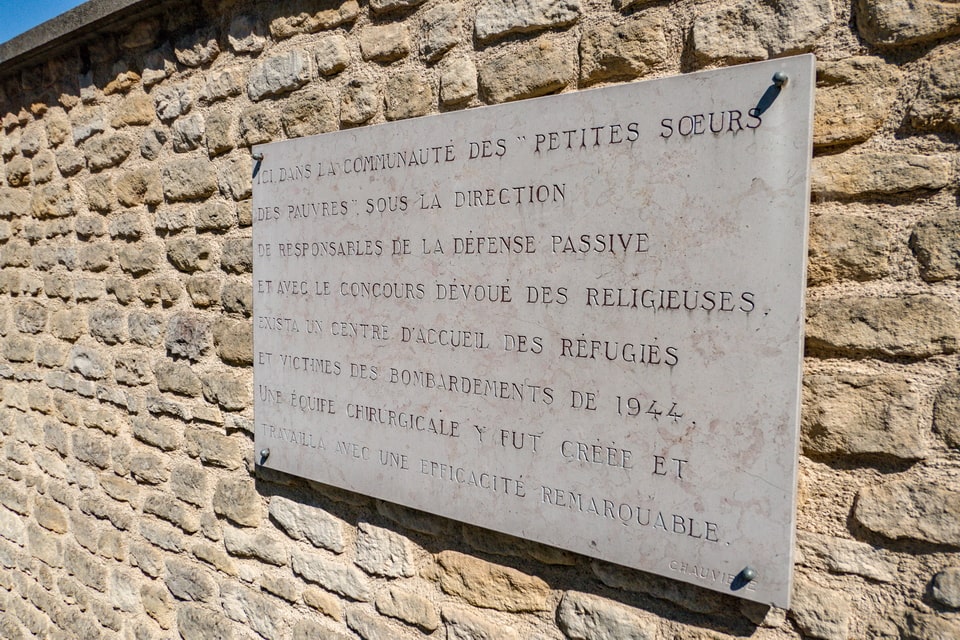
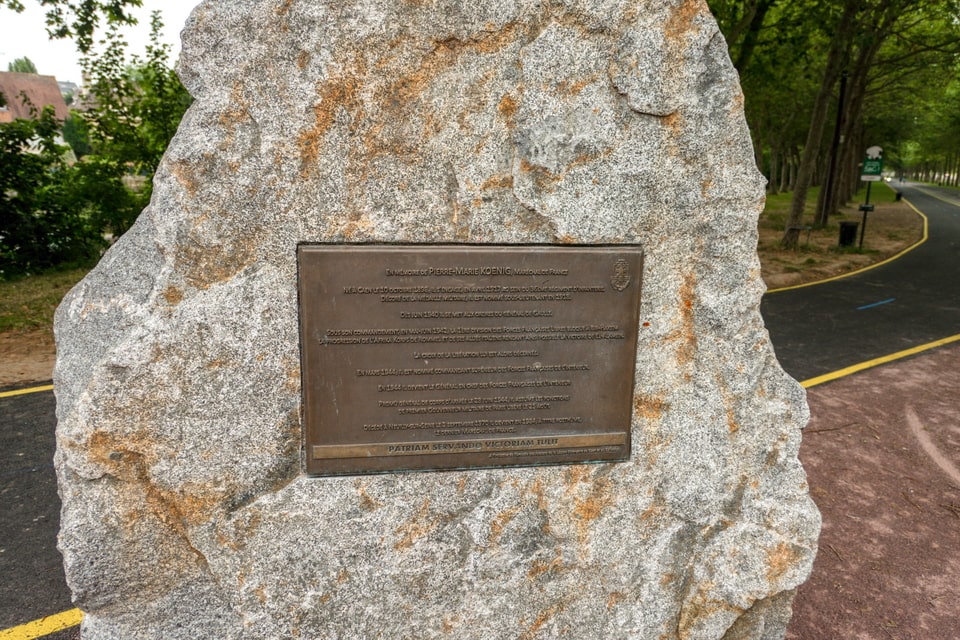
VISITING CAEN TODAY: MÉMORIAL DE CAEN MUSEUM, MAP AND PRACTICAL INFORMATION
Mémorial de Caen — the main WWII museum: Esplanade Général Eisenhower, 14050 Caen, built directly above the underground command bunker of German General Wilhelm Richter. Open daily 9:00–19:00 (closed December 25). Admission: 20.80€ for adults, 18.50€ reduced (ages 10–18, seniors), free under 10. Allow 3–4 hours for a full visit. Free on-site parking; reachable by bus from the city centre and train station.
Historic buildings covered in this guide:
— Caen Castle (Château de Caen): free access to the grounds, small museums inside charge separate admission
— Abbaye aux Hommes / Saint-Étienne: now Caen’s city hall; the church itself is open to visitors
— Saint-Julien Church (rebuilt, modern building): 3 Rue Malfilâtre — the original ruins stood near the Castle; a commemorative plaque marks the historic site
— Gare de Caen: railway station, useful transit hub
Suggested route: Most sites covered in this guide sit within a compact 1.5 km radius of the city centre and can comfortably be visited on foot in half a day. Start at the Castle, walk south to Saint-Étienne and the University area, then finish at the Mémorial de Caen museum, roughly 2 km further west (a short taxi, bus, or tram ride).
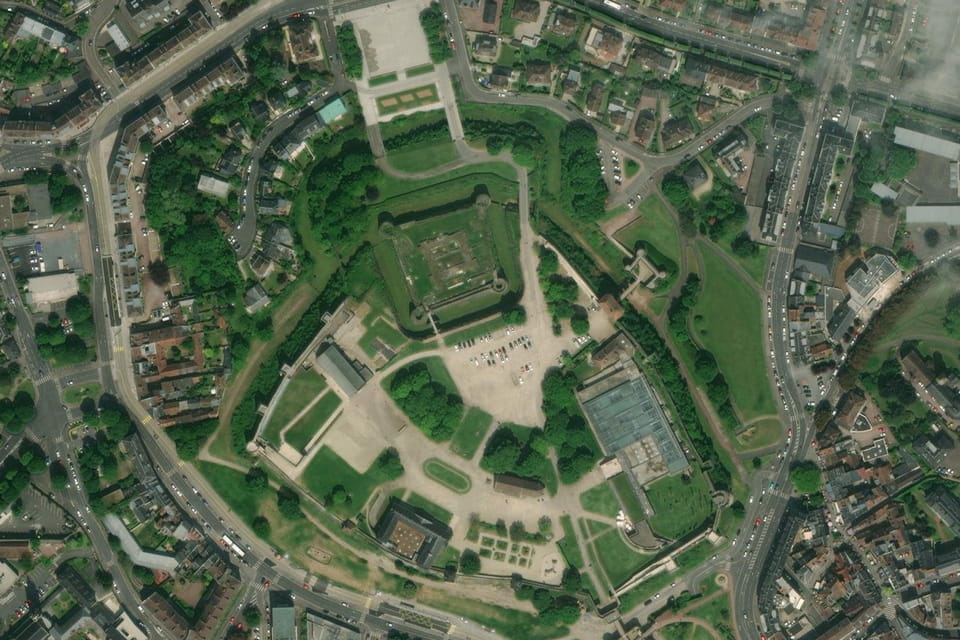
Frequently asked questions
When was Caen liberated? Caen was not fully liberated in a single day — the northern half of the city fell around July 9, 1944, following Operation Charnwood, while the southern suburbs across the Orne River were not cleared until Operation Goodwood concluded around July 20, 1944 (the date of the famous ‘Valkyrie‘, a July 20 plot to kill Hitler). In total, the fighting for Caen lasted just over six weeks from the first air raids on June 6.
Was Caen captured on D-Day? No — capturing Caen on D-Day itself (June 6, 1944) was one of Field Marshal Montgomery’s original objectives, but German resistance was far stronger than anticipated, and the city held out for more than six additional weeks. This delay became one of the most debated aspects of the Normandy campaign.
Who won the Battle of Caen? The Allies ultimately won, securing the city and its surroundings by late July 1944, which opened the way for the broader breakout from Normandy. The victory came at a high cost, however, both in military casualties on both sides and in the near-total destruction of the city itself.
How many civilians died in the Battle of Caen? Estimates for the city of Caen specifically are around 3,000 civilian deaths between June and July 1944. This is distinct from wider figures sometimes cited for the entire Normandy campaign, which run considerably higher across the whole region — see the note on casualty figures above for a full explanation of the different scopes involved.
What was Hill 112? Hill 112 was a strategically vital high point southwest of Caen, fought over repeatedly during Operations Epsom and Jupiter in June and July 1944; its capture and recapture cost thousands of casualties on both sides, and it remains one of the most storied battlegrounds of the wider Caen campaign.
I am very grateful to war archives, museums, libraries, private collections, and writers for the historical photos in this article. To the extent that some author or a copyright owner may not want some of the above black-and-white photos to be used for educational purposes here, please contact me for adding credits or deleting the pictures from the article.