

Krakow Ghetto today
HISTORY OF THE KRAKOW GHETTO. KRAKOW GHETTO DURING THE HOLOCAUST
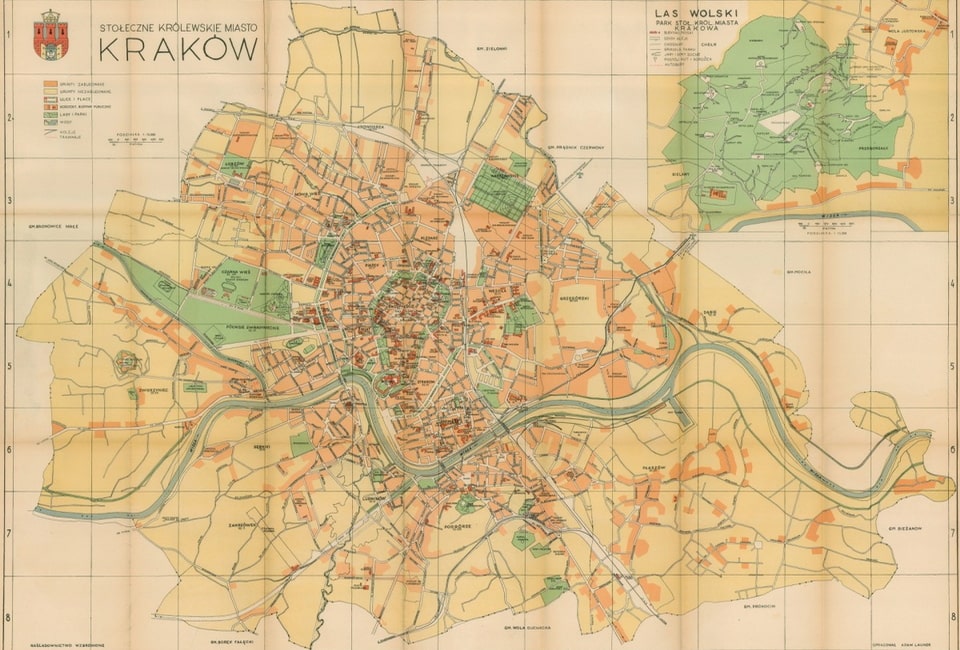
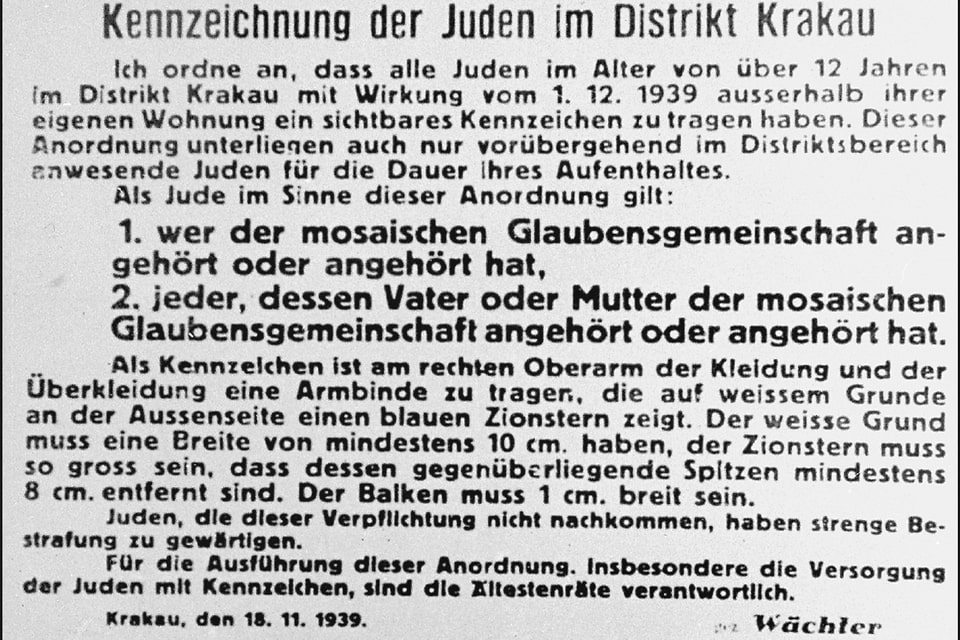
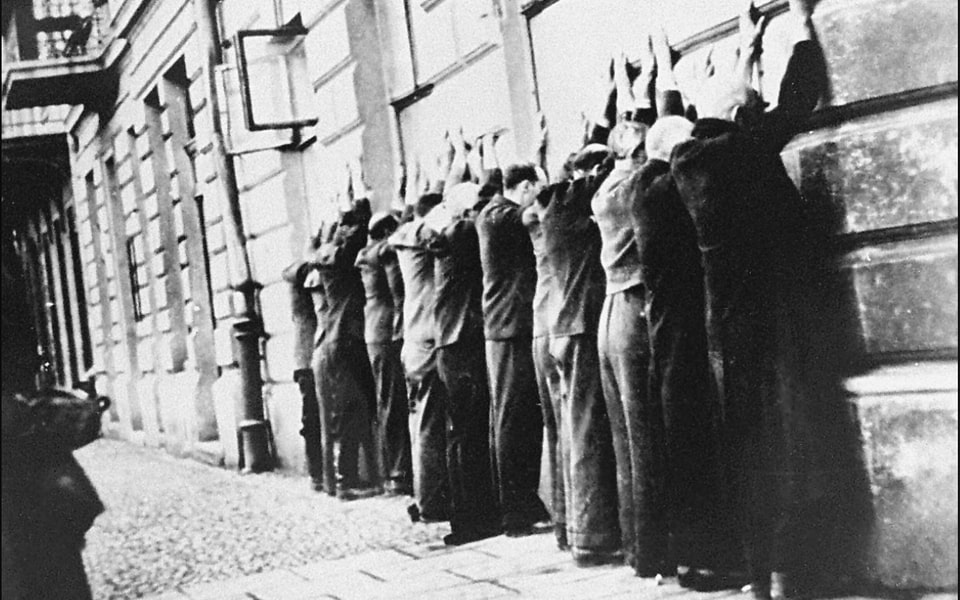
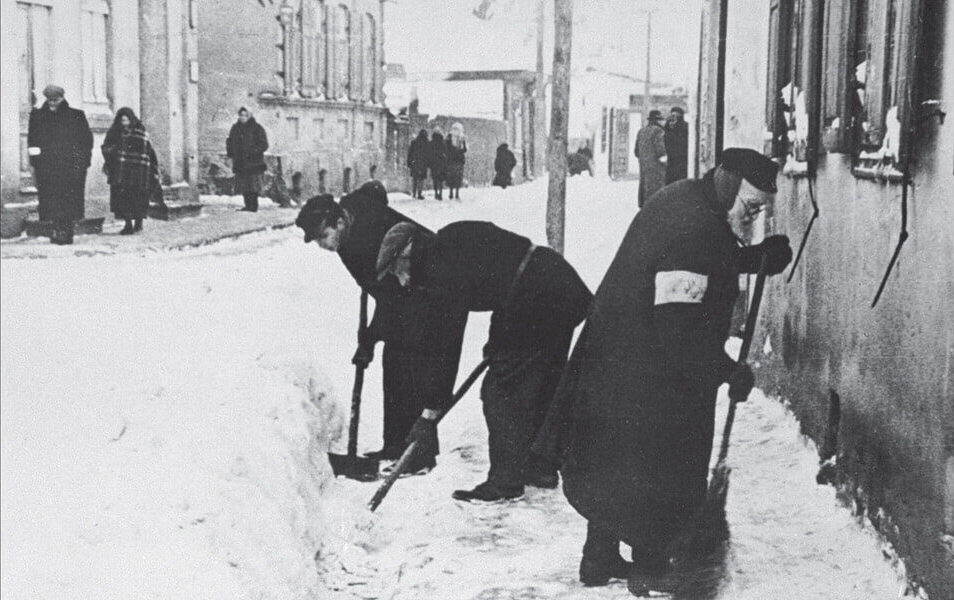
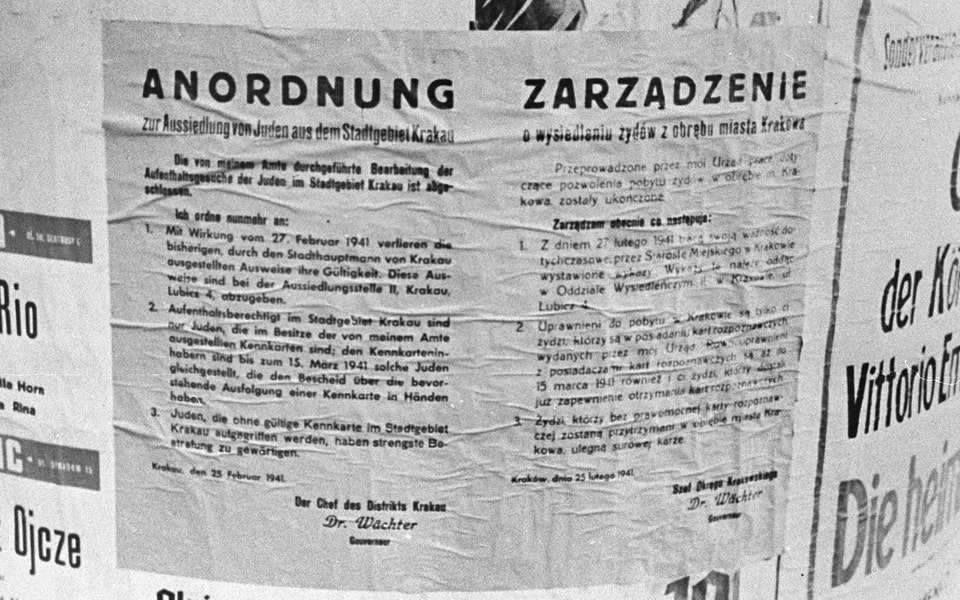
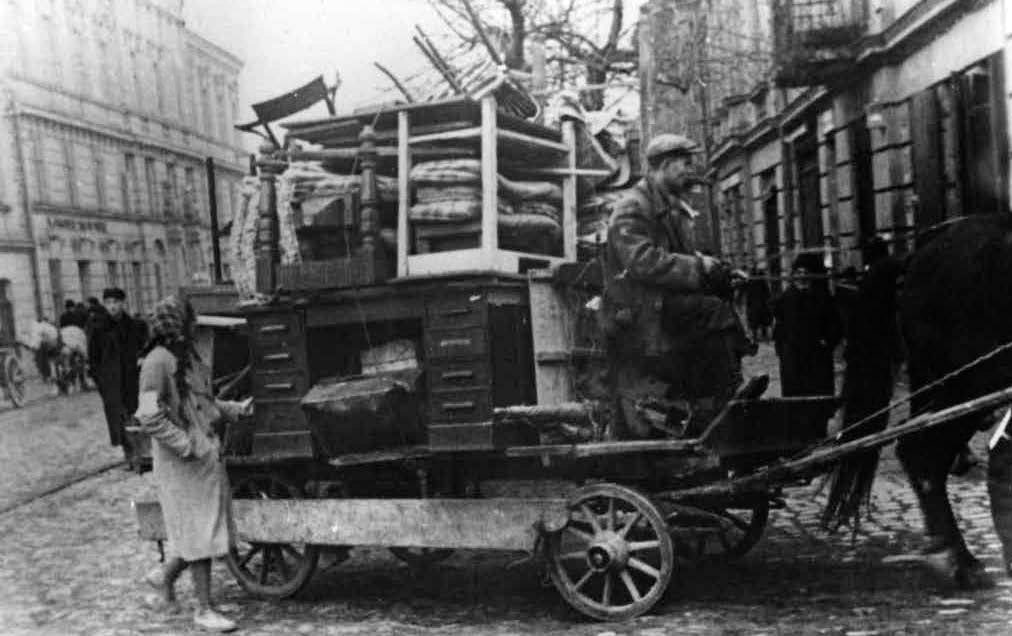
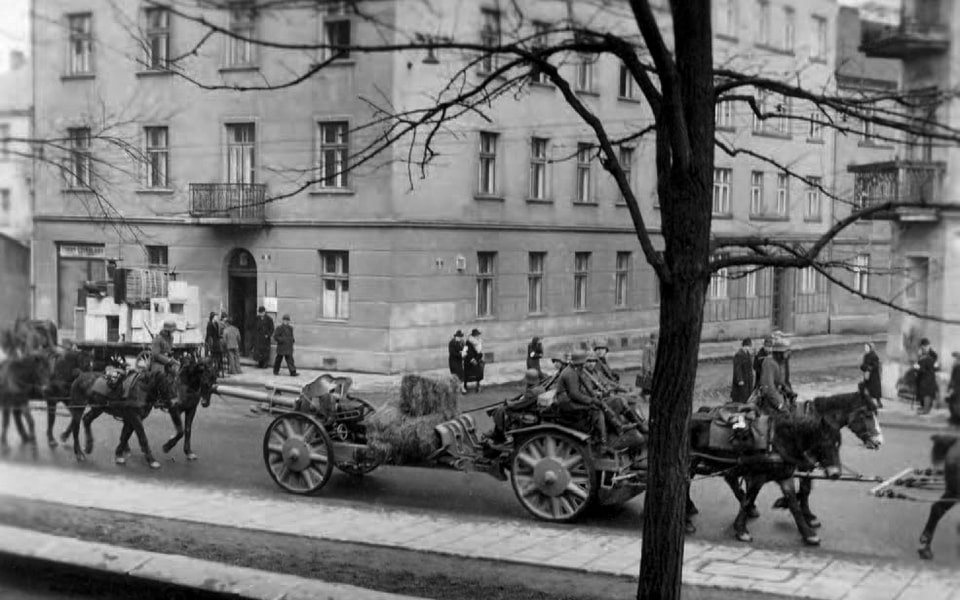
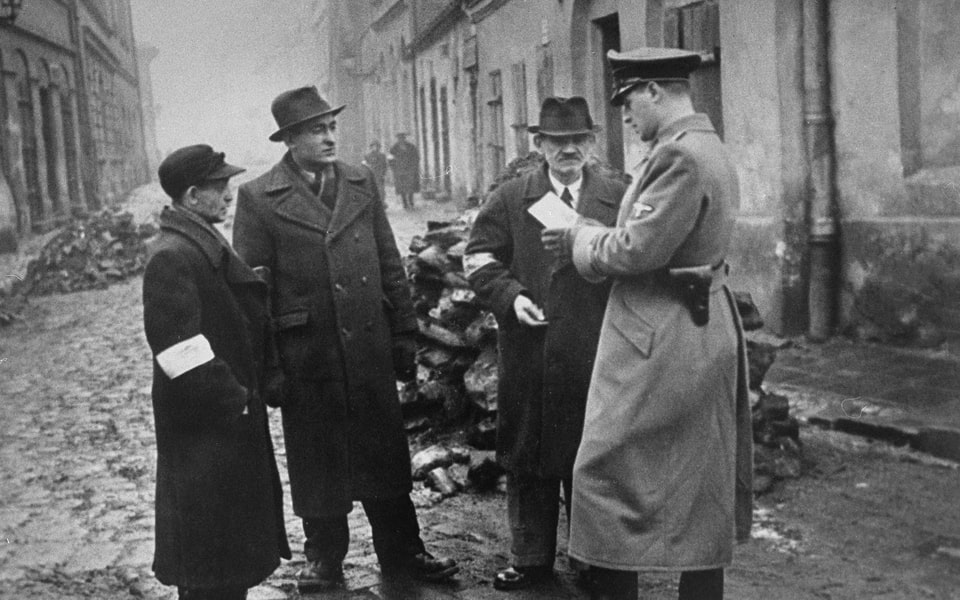
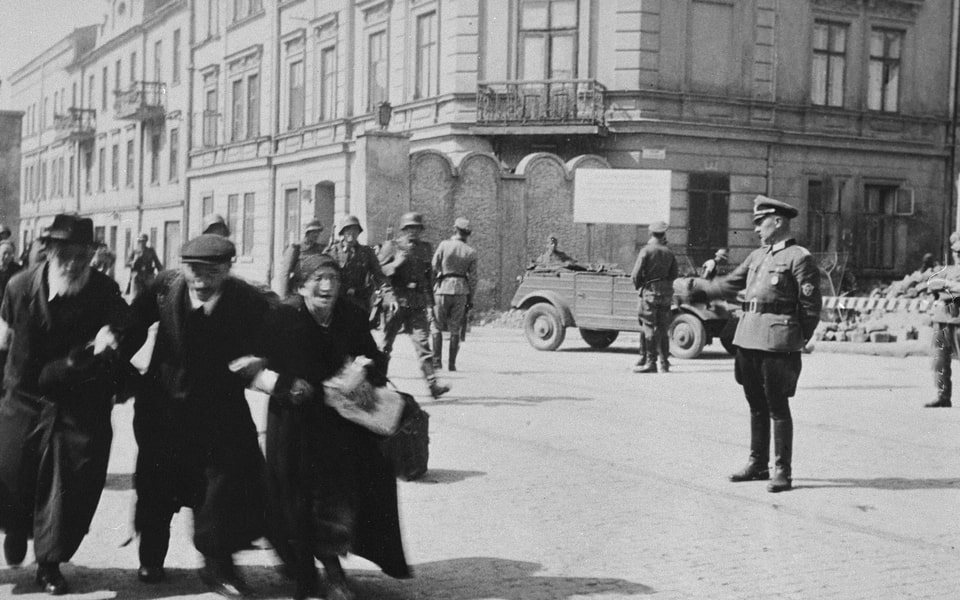
By September 6, 1939, when the German army occupied Krakow on the sixth day of the War, about 65,000 Jews lived within the city and the suburbs (The November census showed 68,482 Jews), including those who had previously emigrated from Nazi Germany. Soon after the invasion, the occupation authorities prohibited Krakow Jews from holding meetings, using public transport (initially the streetcars were separated by a rope barrier for ‘Jews’ and ‘Non-Jews’), and visiting public places such as parks. Starting from December 1, 1939, all Polish Jews over the age of twelve had to wear a distinctive badge known as the Star of David, and Jewish children were banned from attending schools. The local Jewish authorities distributed 54,000 badges for all Jews except those under twelve. In 1940, more than 40,000 Jews were resettled in nearby villages outside Krakow, in the Lublin district, and also in labor camps. On March 6, 1941, the issue of the local newspaper Krakauer Zeitung included a piece of information about the creation of a separate living area for Jews in Krakow, thus spreading the September 3 order by Otto Wachter, the governor of the Kraków district. March 20, 1941, was determined as the deadline for the creation of a Jewish ghetto in Krakow, an area of about 20 hectares. Podgorze district, to the south of the historic Jewish area of Krakow, Kazimierz, was chosen as the object of resettlement.

Since the special resettlement commission identified 2 square meters of living space for each inhabitant of the Krakow ghetto, about 18,000 people, several families in an apartment, would live in Podgorze toward the end of 1941, the area of around twenty-five square hectares, which had only 320 buildings, with 2436 apartments with 3167 rooms, and had been previously accommodated by around 5000 Poles. Most of the buildings, around three-fourths, were old and were mainly one-room apartments or studios, with only 108 apartments with three rooms, 21 with four, and only three with five rooms. The average population density was three times higher than in Krakow in general, with an average of four to five people in one room.
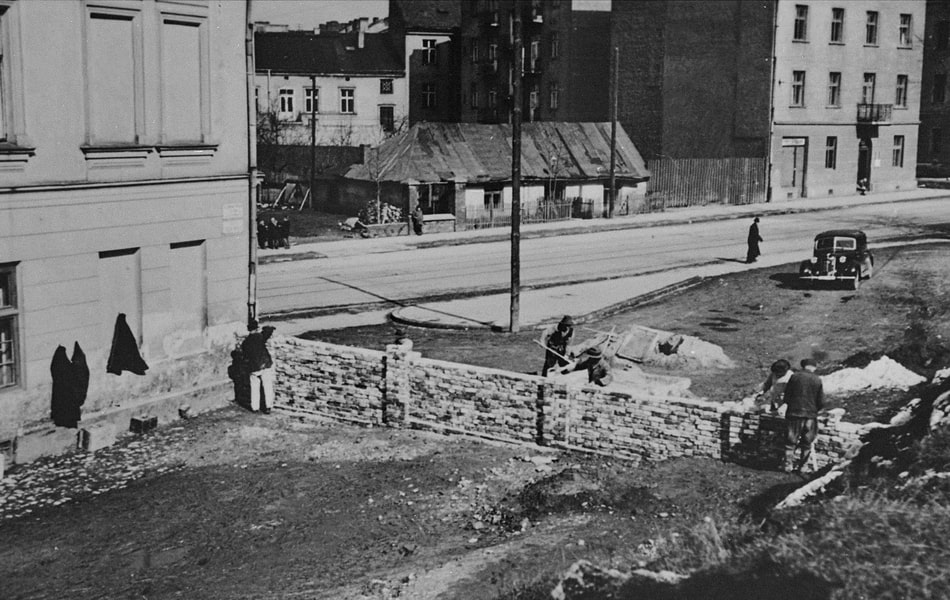
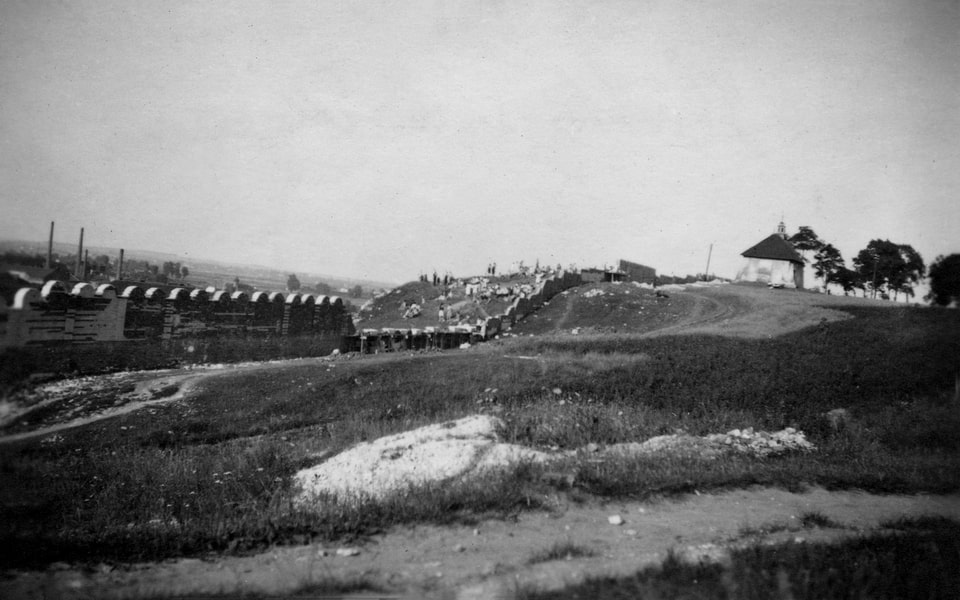
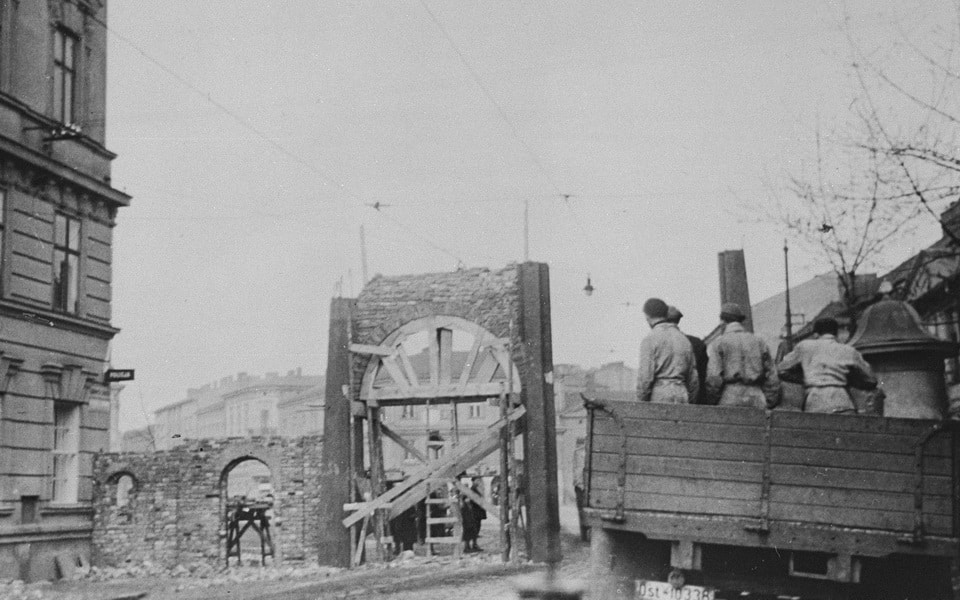
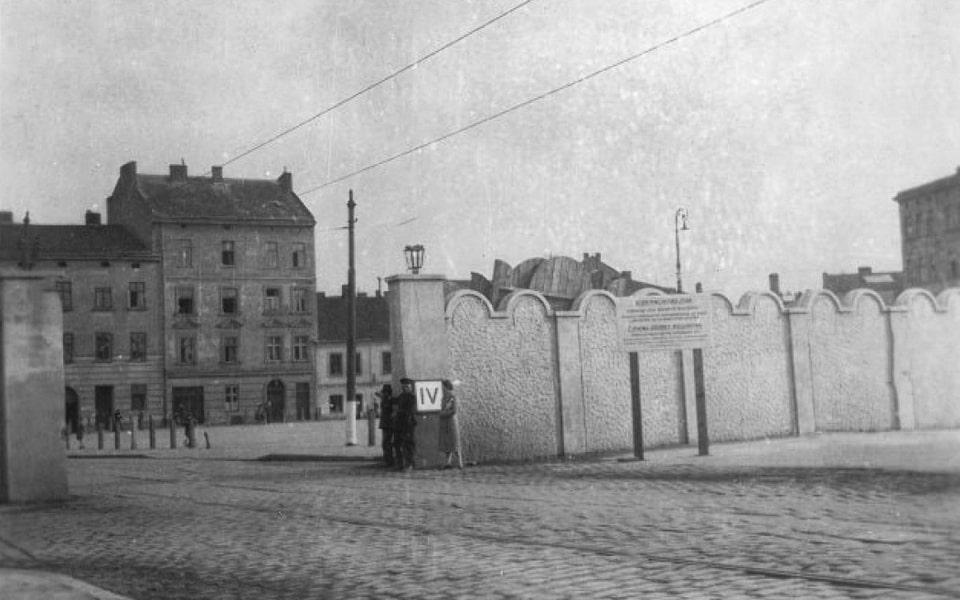
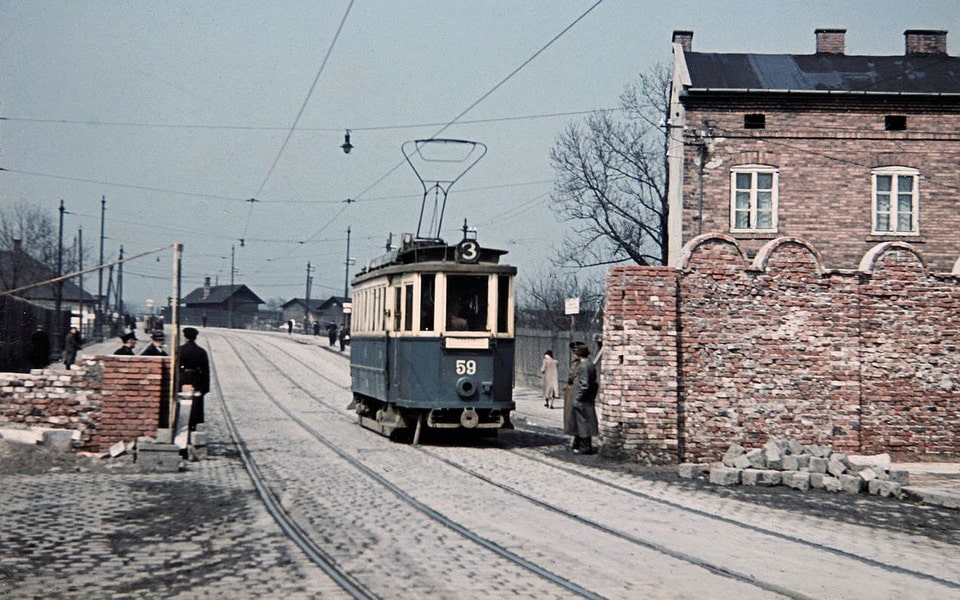
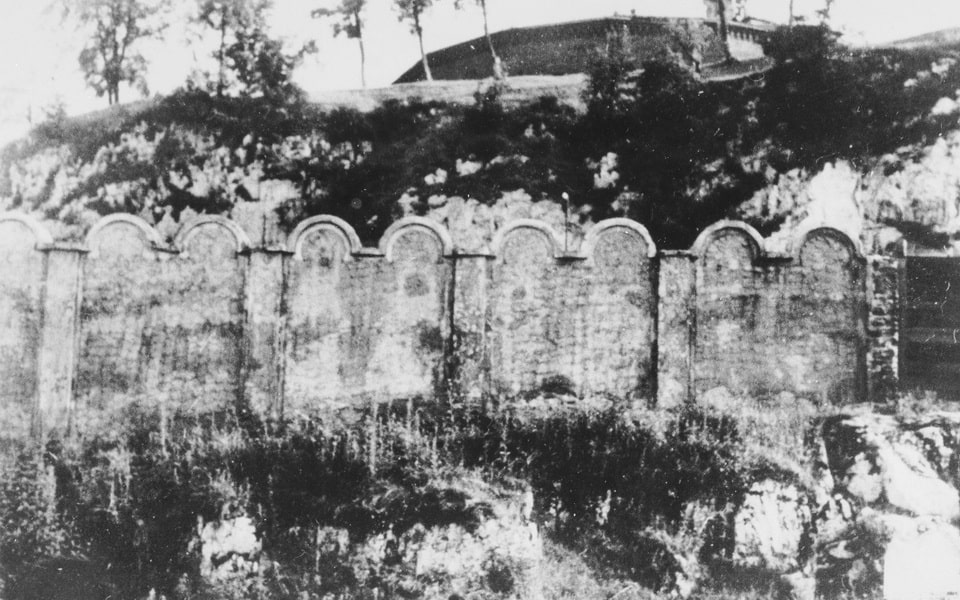
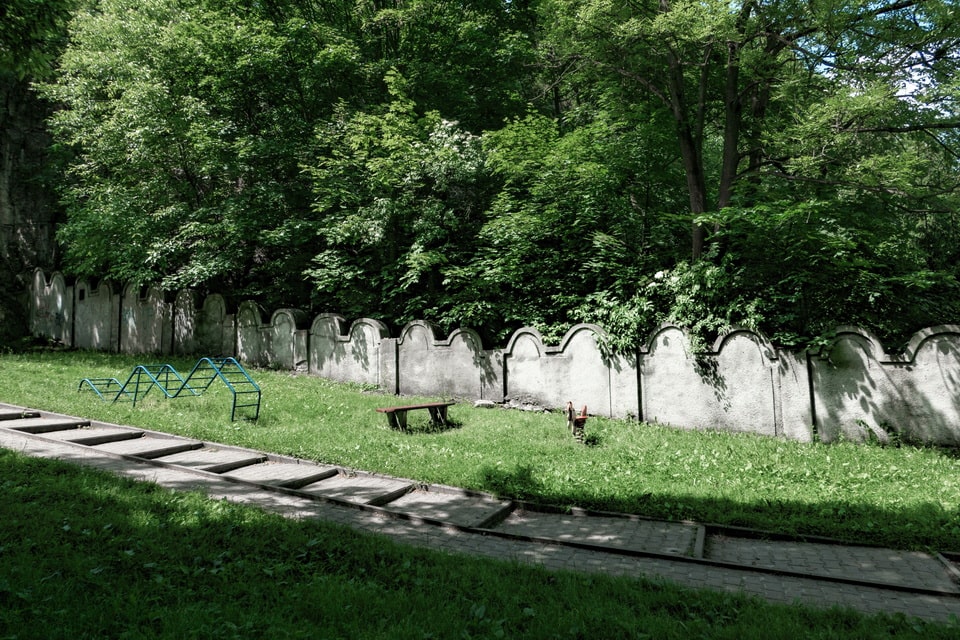
Almost a third of the Jewish population comprised children (18.4%) and the elderly above sixty (13.7%). Initially, the area was surrounded by barbed wire under security. In April 1941, a three-meter-high wall was erected around the perimeter, the upper part of which replicated the shape of the Jewish gravestones. The windows facing the non-Jewish rest of the city were walled up. It was possible to leave the ghetto walls only with a special work permit, which gave the right to work in Aryan enterprises outside the Krakow ghetto. Food and medicine supplies were at a minimum level of accessibility, and sanitation conditions were unbearable. The German administration approved the creation of a puppet management body called Judenrat (Krakow ghetto Jewish Council), which was initially located at the intersection of 41 Krakowska and 2 Skawinska Streets in Kazimierz.
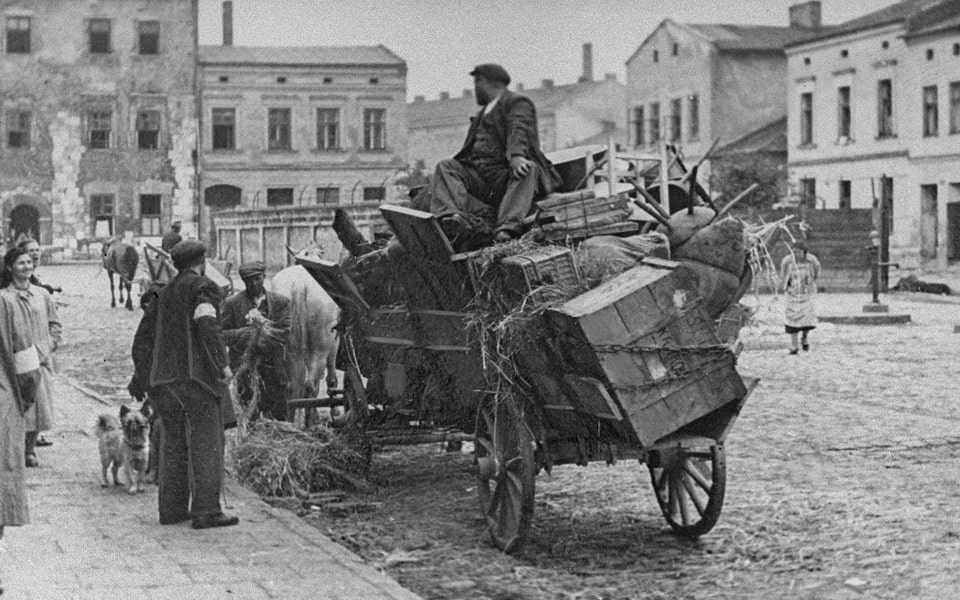
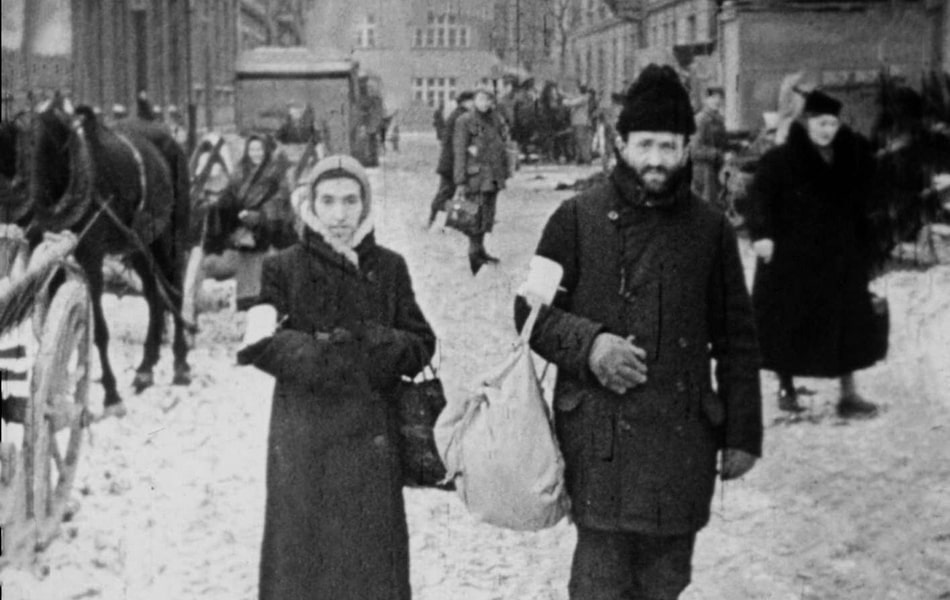
While the Germans meticulously controlled the flow of products in the ghetto, the Jewish authorities in the Krakow ghetto were given relative autonomy in food distribution, at least in the early stages. Even considering the significant impact of the black market, the food distribution applied the issuing of ration cards to the ghetto residents, applicable for buying food at special shops and kitchens. These cards were to be renewed monthly and were accessible only to Jews with the so-called ‘Kennkarte’ identity papers. The range of products in shops was limited, and the amount granted by ration cards was insufficient to live and work, not to mention periods of undersupply. The ‘promised’ food spectrum included only 100 grams of bread daily, some vegetables, sugar, and margarine monthly. Another source of calories came from workplaces. Those ghetto residents without permanent jobs, like children and the elderly, were supplied by the efforts of communal care, such as special kitchens. These food rations, for example, gave orphans reasons to attend the childcare institutions in the Kraków ghetto instead of begging and stealing. Children’s homes were also under the patronage of ‘Centralne Towarzystwo Opieki nad Sierotami’ or ‘CENTOS’ (Central Society for the Care of Orphans), an institution that had operated since 1924 and, during the German occupation, was active in the Jewish ghettos in Poland. While the poorest residents starved, those with money could afford to buy additional products and attend restaurants and bakeries inside the ghetto (a coffee shop was located on Limonowskiego Street, as well as a cafe, and another restaurant at Lwowska Street). With time, particularly after the first mass deportation in June 1942, Jews became more and more dependent on the Germans, who restricted and controlled the influx of products. On July 28, 1942, Rudolf Pavlu, the head of Krakow’s municipal authorities, banned Jews from buying food outside the ghetto and Poles from buying food for Jews. In the initial phase, the ghetto even had a mail service that allowed some residents to receive parcels with deficit food. Some Jews organized small vegetable gardens and enclosures for poultry and goats, and cages for pigeons. When it came to the black market, the prices steadily rose with time: for example, one kilogram of butter cost 35 Zloty in the Spring of 1941 and more than 200 Zloty at the end of 1942.
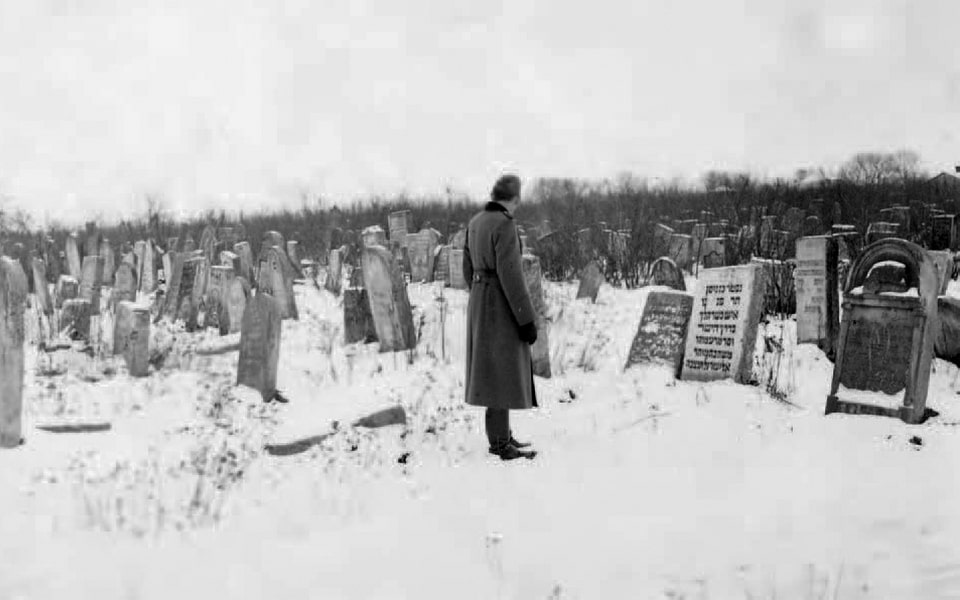



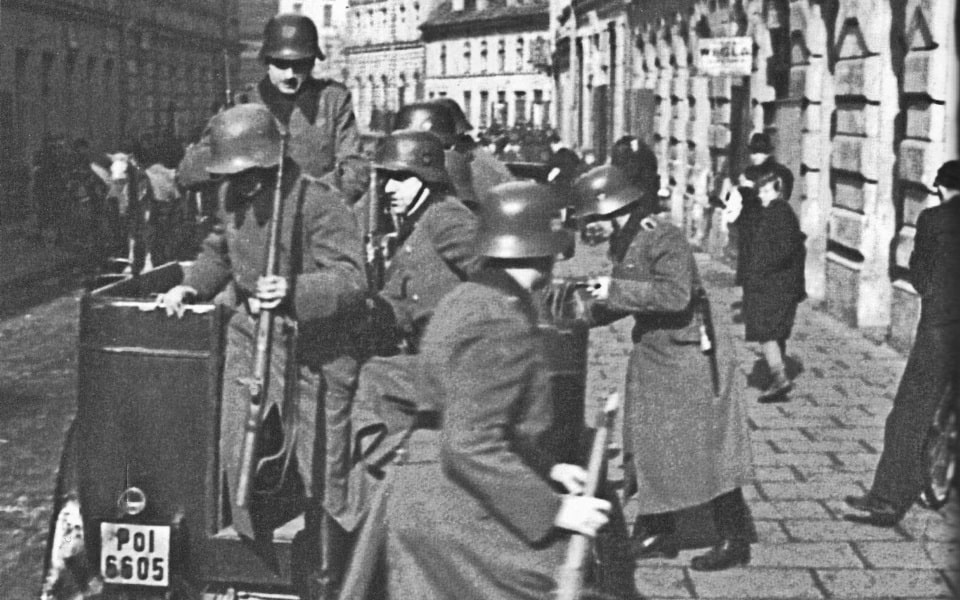
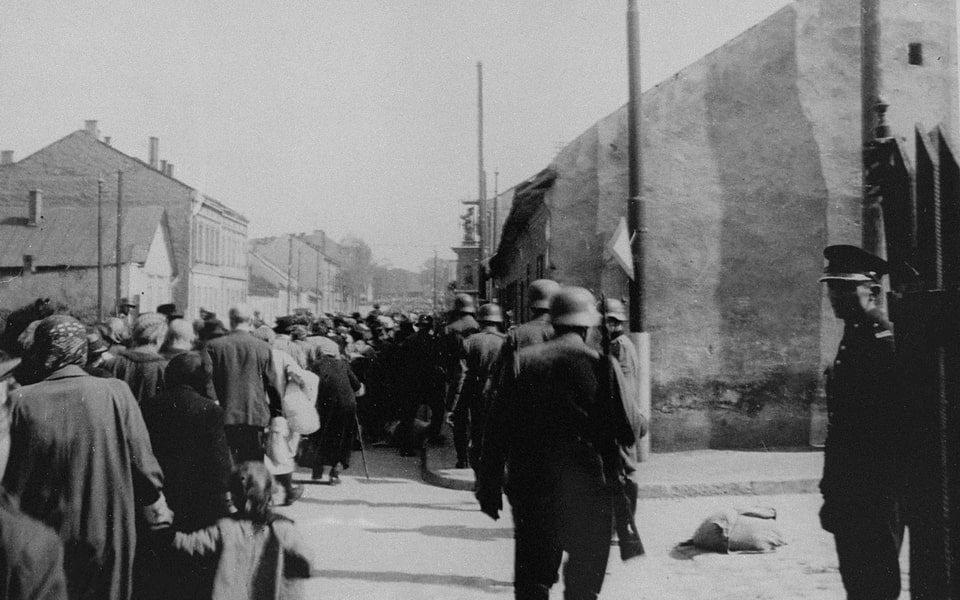
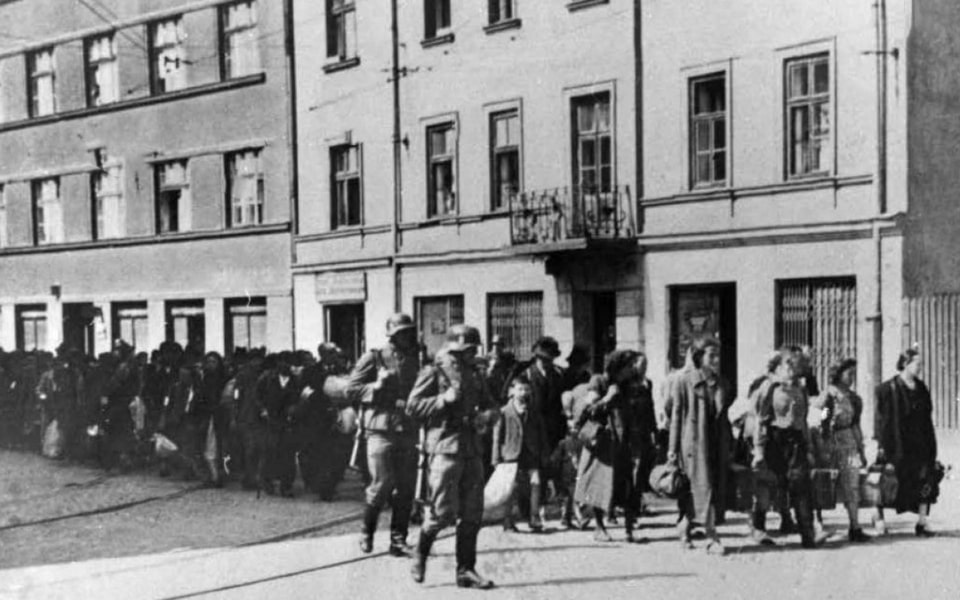
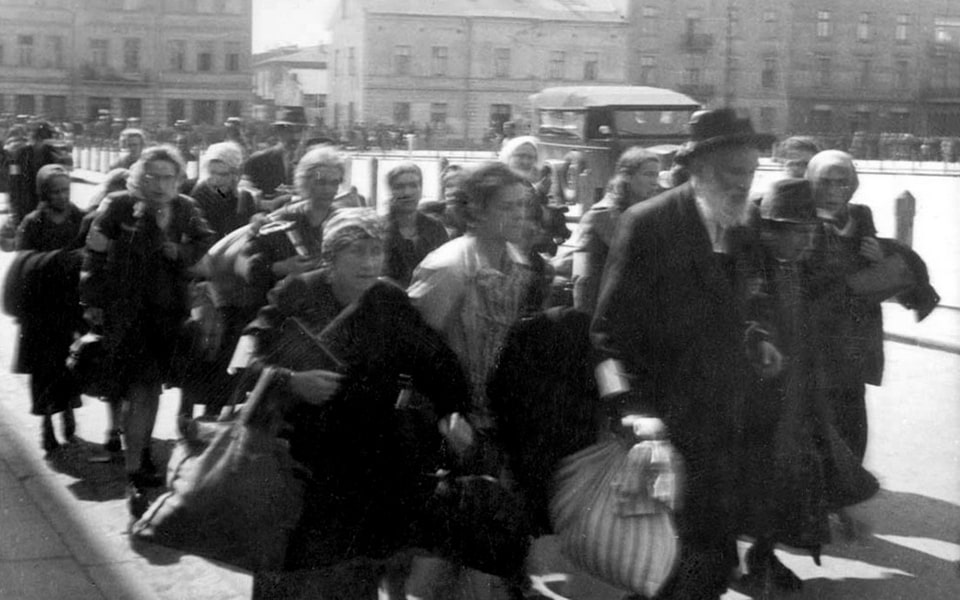
The first deportation of about 1,000 residents of the Krakow ghetto area took place in December 1941, and the deported Jews were simply released from the carriages near the city of Kielce. The second action was carried out in February 1942, when 140 Jewish intellectuals were arrested and then taken to Auschwitz and murdered. On the night of March 14, 1942, another 1,500 inhabitants were taken out to the Lublin district and released there. According to the census conducted in May 1942, 17,163 people lived in the ghetto in Podgorze. The most massive action took place on 1, 3-4, 6, and 8 June 1942, when about 7,000 Jews (some sources state 10,000) who did not receive new German work permits were herded into the territory of the Optima factory and within the Plac Zgody square. At the start, they were taken to the Plaszów railway station, cordoned off from the eyes of the bystanders, and then, in cattle cars, they were taken to the Belzec death camp, where they were killed shortly after their arrival. A new railway ramp was built in the camp to receive victims from Krakow, which could receive up to 20 wagons at once. One among those deportees, Jewish dentist Bachner, hid in the excrement at Belzec and managed to escape and come back to Krakow, where he informed Judenrat about the nature of the death camp where thousands of Krakow Jews had been sent in recent weeks. The influx of Jews to Belzec in June 1942 was so massive that the administration halted further annihilation until the building of new gassing facilities in place of the initial wooden-wall chambers. This mass action is known as the Kraków ghetto massacre. On June 20, 1942, due to the decrease in the number of residents, the Kraków ghetto area was almost halved.
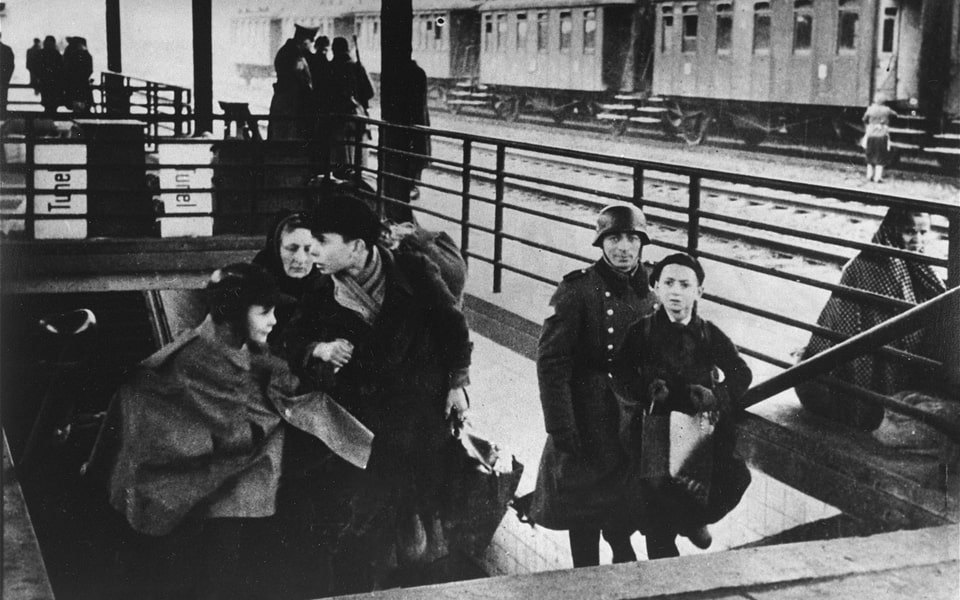
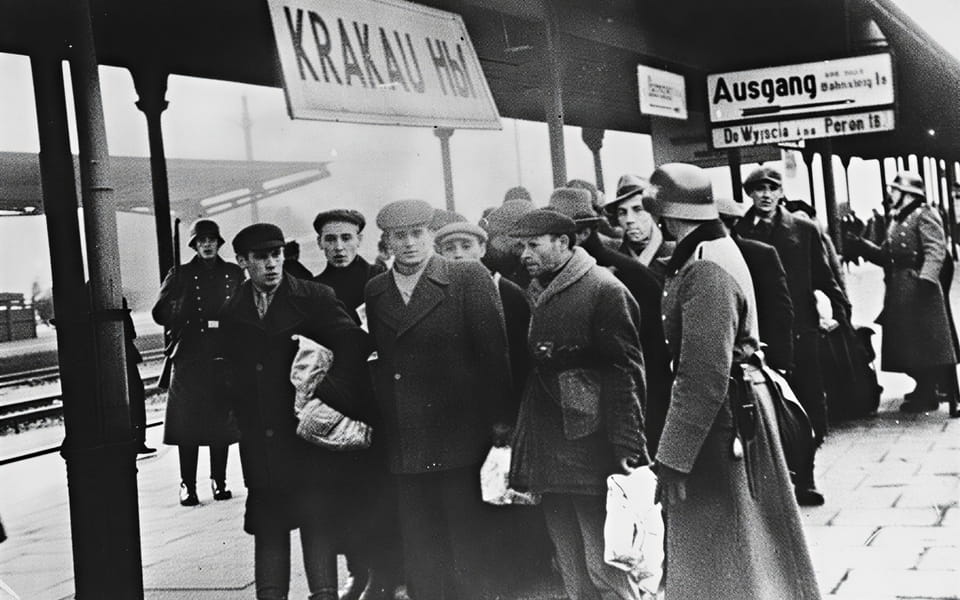

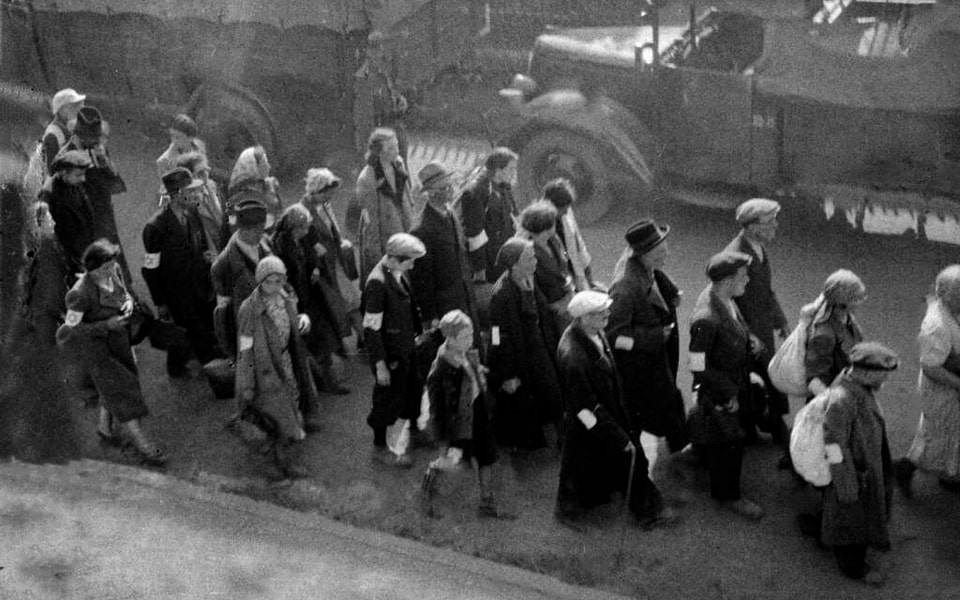
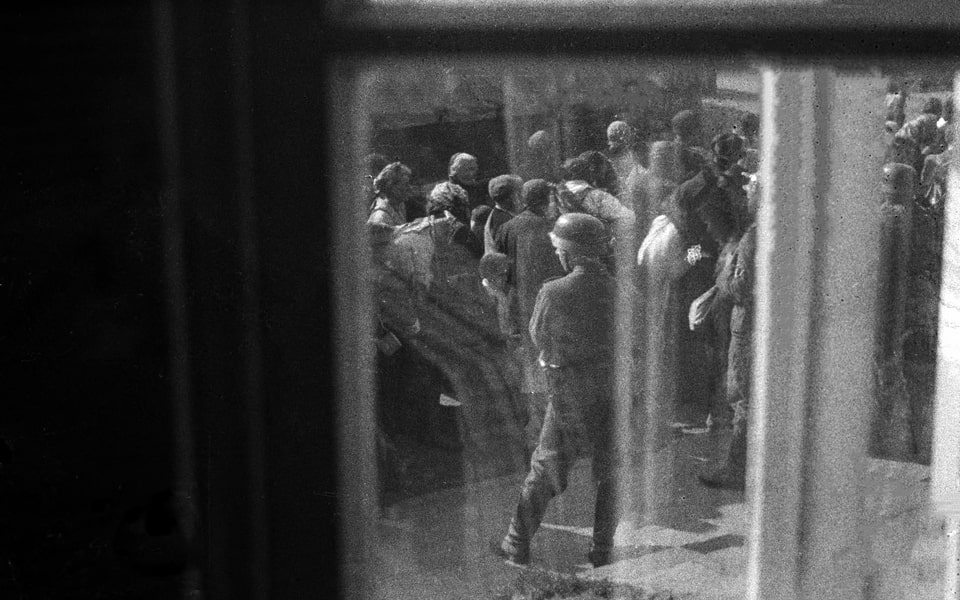
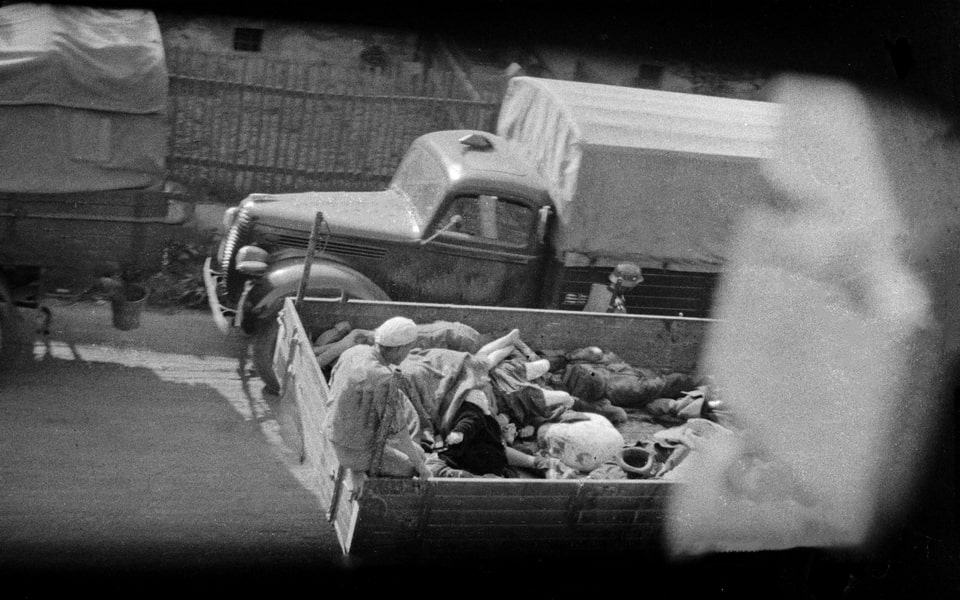
After a short standstill, the next mass deportation of Jews from the Krakow ghetto area was held on October 27-28, 1942, when 4,500 people were sent the same way to Belzec, and 600 residents, mostly children, the sick, and the old, were killed on the streets of the ghetto or in the Plaszow Concentration camp. A few days later, the Kraków ghetto area was again reduced. On December 6, 1942, the Krakow ghetto was divided into two parts: Ghetto A and Ghetto B, segregating those who were fit for work from all the rest, and the poorest residents of Ghetto B were forced to beg for food from their fellow Jews outside the fence. People there were not allowed to leave their homes and were insufficiently fed by the Jewish police.
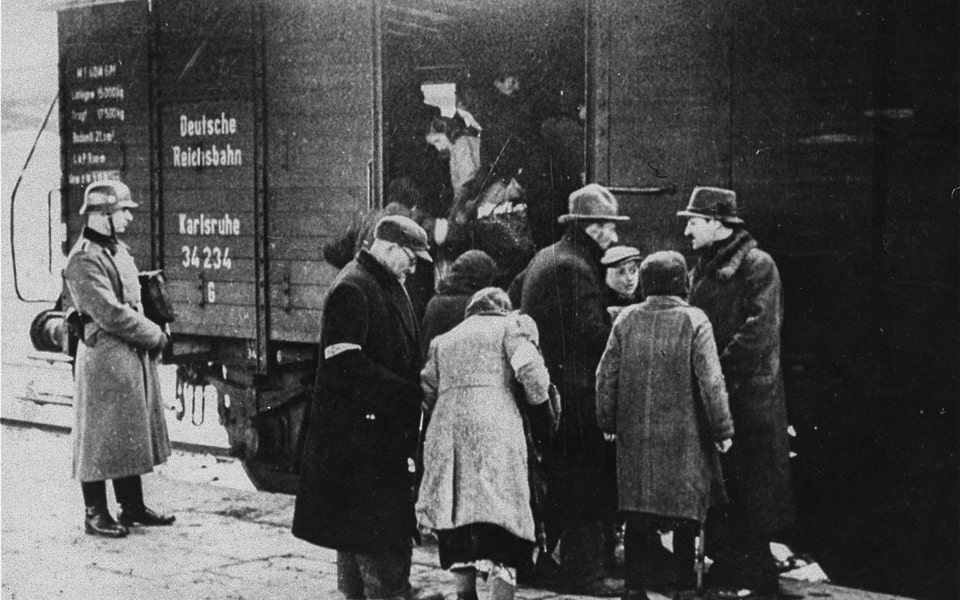
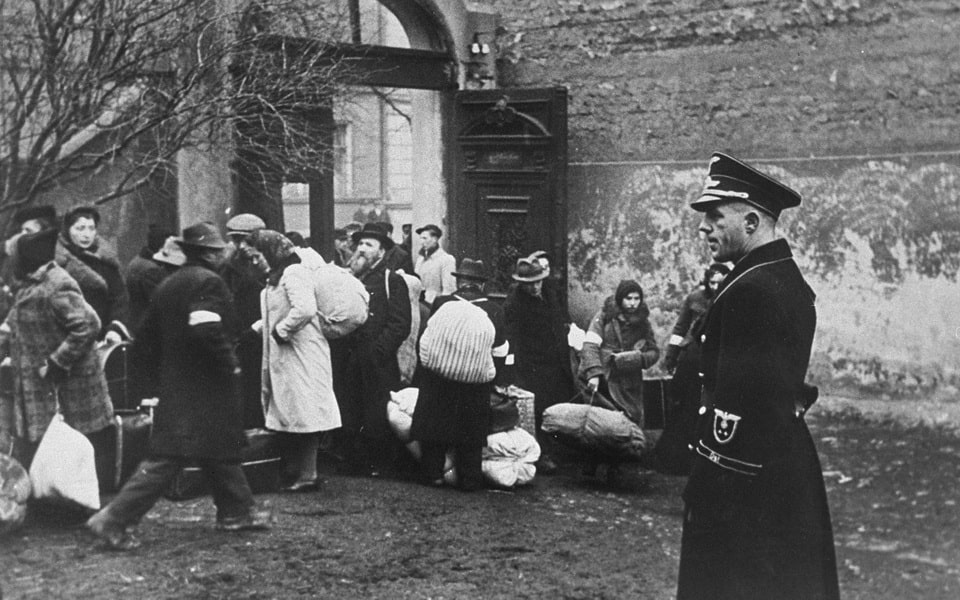
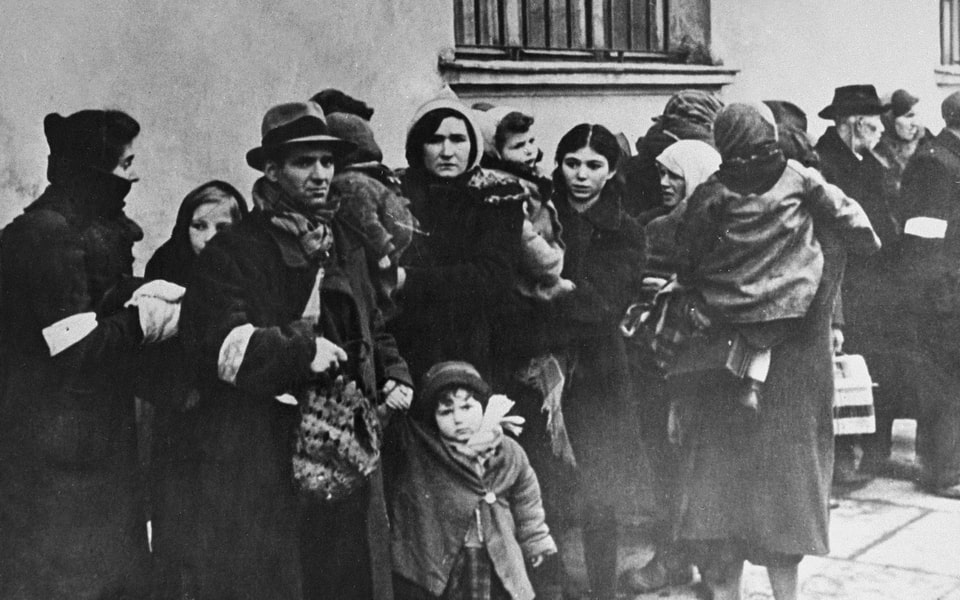
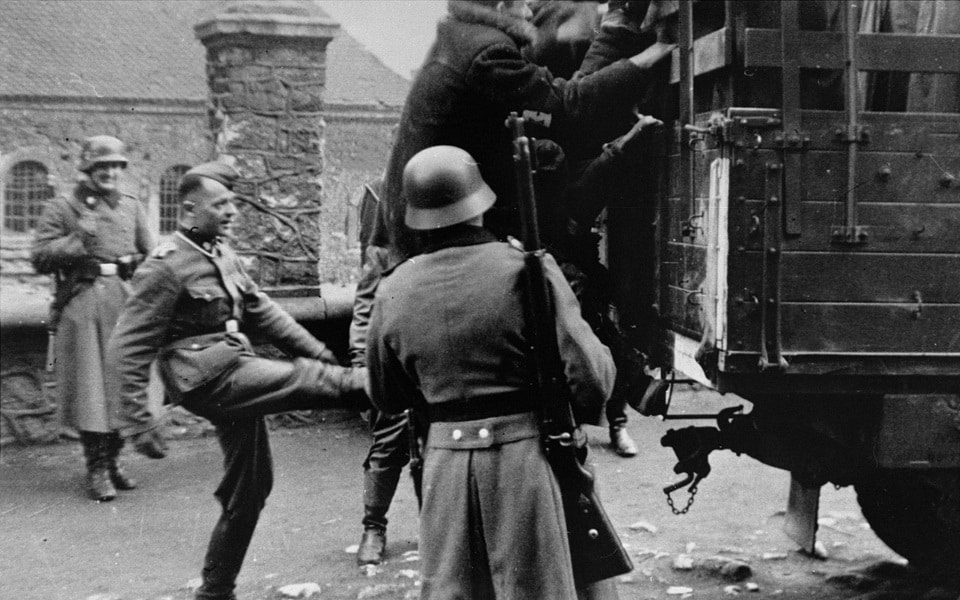
The final Krakow ghetto liquidation was performed on March 13-14, 1943. During the bloodiest action within the years of occupation, also known as the Krakow ghetto massacre, according to various sources, from 1000 to 2000 people were killed right on the streets. 6,000 fit-to-work were relocated to the Plaszów labor camp in the southern part of Krakow. 3000 old men, women, children, and the sick were loaded into cattle wagons and sent to Auschwitz-Birkenau, where only one among five was temporarily selected for work; the rest were sent to gas chambers shortly after. In September 1943, the last remains of the barbed wire were removed from the streets, symbolizing the complete liquidation of the Kraków ghetto. At the same time, the poor Poles eventually occupied part of the dwellings in Podgorze, and most of the Krakow ghetto has survived to the present day. Kraków was not the only Polish city where a small number of people were brought out and hidden on the other side. In Warsaw, the director of the Warsaw zoo and his wife sheltered around three hundred Jews in the empty animal enclosures.

KRAKOW GHETTO TODAY. GHETTO LOCATION
The Krakow ghetto today, in contrast to the larger and more well-known and infamous Warsaw ghetto, has survived to these days with almost the same appearance it had at the end of the war. Of the 320 houses that were inside the perimeter of the Krakow ghetto location in the spring of 1941, several dozen contained not only residents but also various kinds of organizations and institutions. Only a few of them at the intersection of Jozefinska and Na Zjezdzie streets have not survived until now: the Prison, the Order Police Building, and the orphanage house. Naturally, many of the buildings in the Podgozge Jewish area of Krakow have been renovated within the last eighty years, but altogether, the district has retained its gloomy appearance. Most of the buildings look the same as they did in 1941-1943, which makes the Krakow ghetto district a unique place for historical walks and among the most preserved Krakow World War 2 sites. The excitement is supported by various guides of the Krakow ghetto then and now, but I suggest you take a walk on your own and see all the key places of the Krakow ghetto today within 2-3 hours.
I’ve prepared a detailed Krakow ghetto map with all the main sites that became infamous during the Krakow Holocaust period.

- Ghetto Main Gate
- Ghetto Gate № 2
- Ghetto Gate № 3
- Ghetto Gate № 4
- Plac Zgody (Ghetto Heroes Square)
- Krakow Ghetto ”Pharmacy Under The Eagle” (Apteka Pod Orłem)
- Jewish Fighting Organization (ZOB) Safe House
- Judenrat first Office 1941-1942
- Order Police First Office at Jozefinska 17
- Order Police Office And a Prison (Jozefinska 31)
- Hospital For The Chronically Sick
- Infectious Diseases Hospital at Rekawka
- Infectious Hospital after June 1942
- Jewish Mutual Aid Society (Self-Help Organization)
- German Labor Office (Arbeitsamt)
- The Main Hospital Of The Ghetto
- Julius Madritsch’s Factory
- Optima Factory
- Krakow Orphanage at Krakusa 8
- Orphanage Moves to Jozefinska 31 (June-August 1942)
- The Last Refugee For Children: Jozefinska 41 (August-October 1942)
- Zucker Synagogue
- Fragments Of The Ghetto Wall (Limanowskiego 62)
- Fragments Of The Ghetto Wall 2 (Lwowska 25-29)
- ”Variete” Restaurant
- Jewish Orphanage At Jozefinska 22
- Judenrat Second Office
- Ghetto Gate After 20 June 1942
A note on the various names of this site: in German historical documents and current German-language searches, the site is referred to as the Krakauer Ghetto (Getto Krakau or Krakau Getto); in Polish, as Getto Krakowskie or Getto w Podgórzu; in French as ghetto de Cracovie or ghetto de Krakau; in Dutch as Joods getto Krakau. The name Cracow (older English spelling) and Kraków (Polish with diacritics) refers to the same city as Krakow. This article uses «Krakow» throughout as the current standard English spelling, while the historical term in all sources of the 1939–1945 period is «Krakau» in German and «Kraków» in Polish. The ghetto itself occupied the Podgórze district (Podgorze without diacritics) on the southern bank of the Vistula (Weichsel in German).
KRAKOW GHETTO MAIN GATE
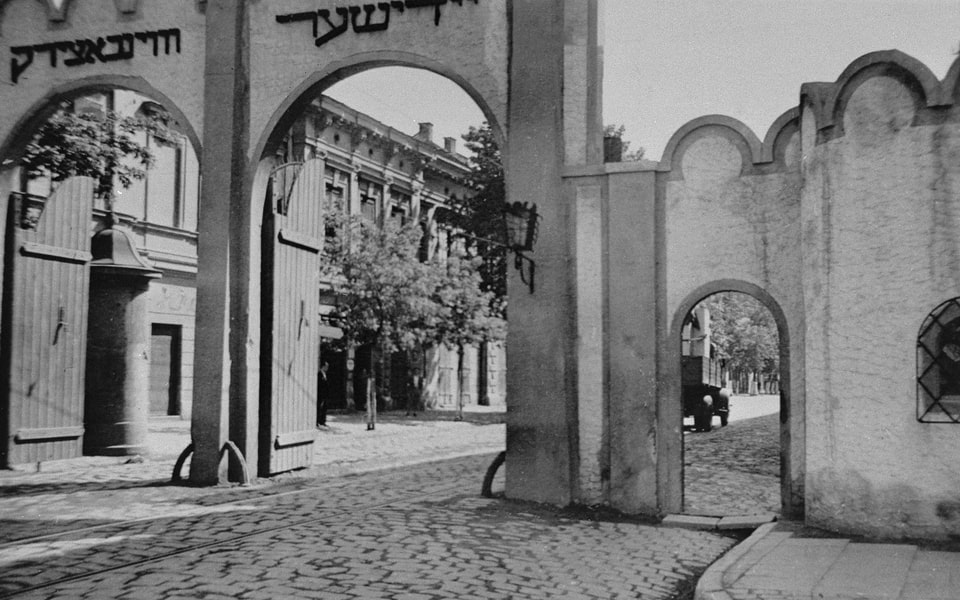
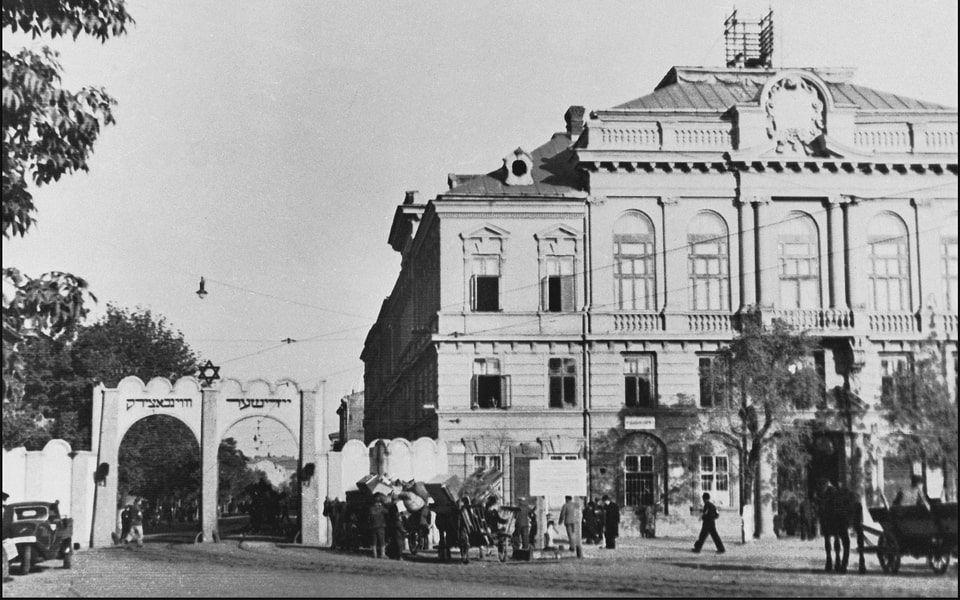
The main of the four gates to the Krakow ghetto area was located at the intersection of Rynek Podgorski Square and Boleslawa Limanowskiego Street. A tram line number 3 passed through them, and also trucks with goods, provisions, uniforms for German security guards, and Jews who were taken to work outside the ghetto used to enter and leave the area through this gate. In addition, people with the appropriate pass could use the pedestrian entrance. A Star of David and a Yiddish inscription, “Residential quarter for Jews,” were painted on the wall of the Main Gate of the Krakow ghetto.




GHETTO GATE №2
This Nazi Krakow gate was located at the descent of the Boleslawa Limanowskiego and Lwowska streets and had only a pedestrian passage, and traffic or military formations were prohibited here. Gate № 2 was used for the deportation of residents to the Plaszów labor camp or other camps using the Plaszów railway station.


GHETTO GATE № 3
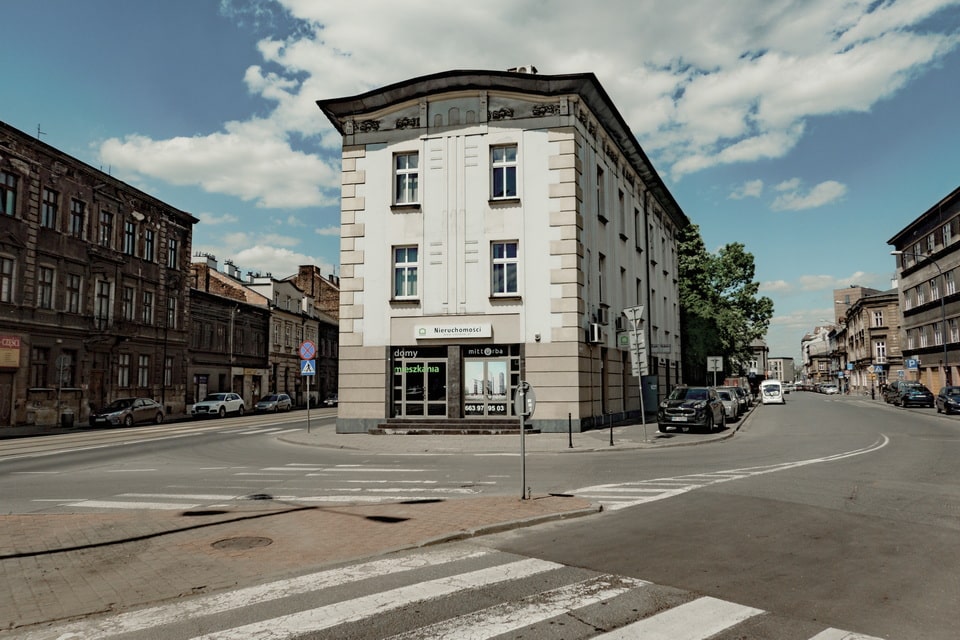
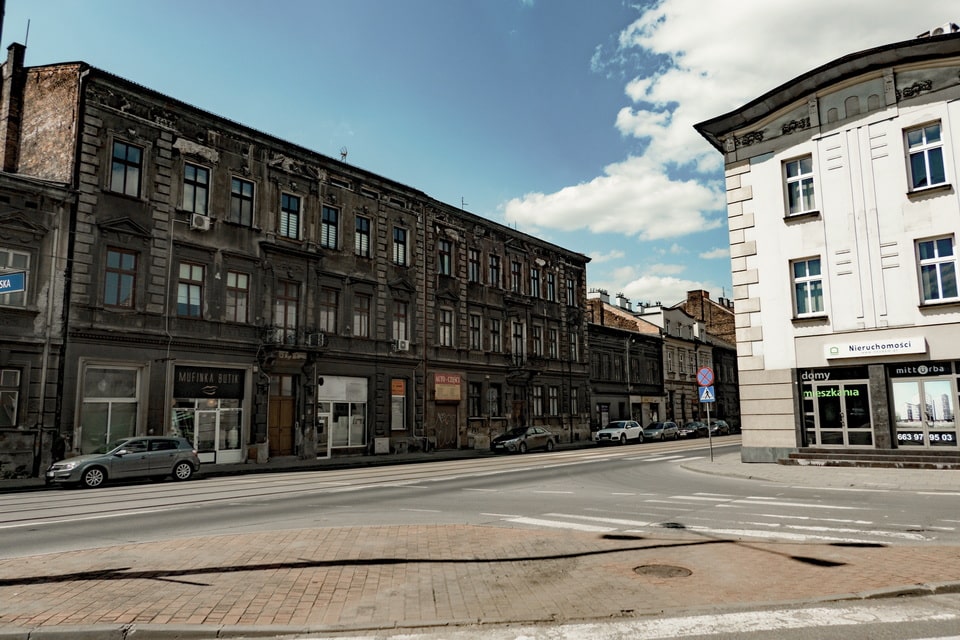
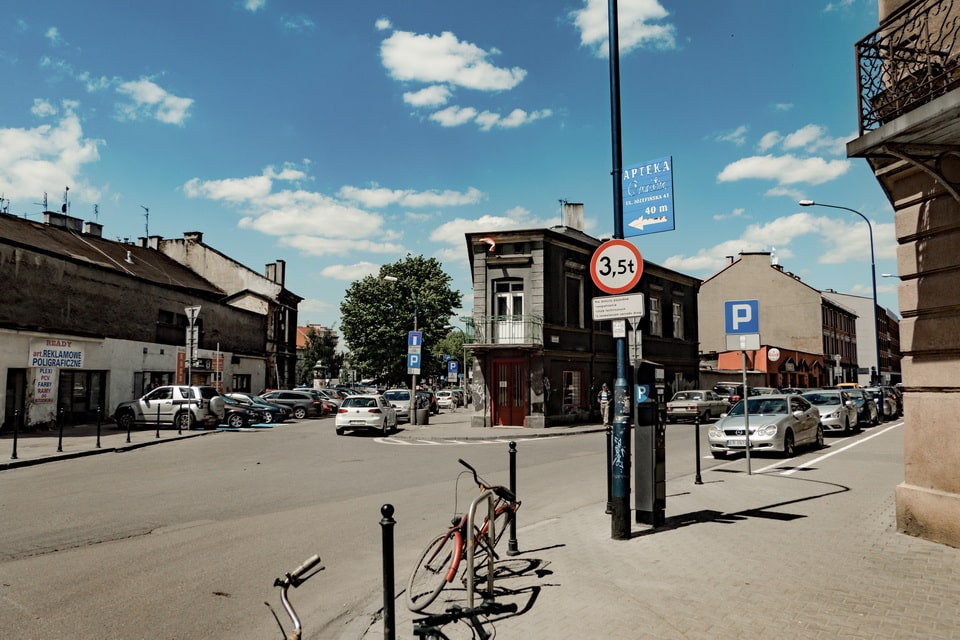
It was located at the convergence of the Jozefinska and Lwowska streets. Tram line number 6 passed through them, and it was forbidden to make stops inside the Krakow ghetto walls. Most of all, this route was used by Polish workers who used to make their way between the Podgozge district in the north and the factories in the south. Occasionally, they threw food and belongings to Jews in the ghetto from a passing tram. The gate was also used for the passage of German military vehicles



GHETTO GATE № 4
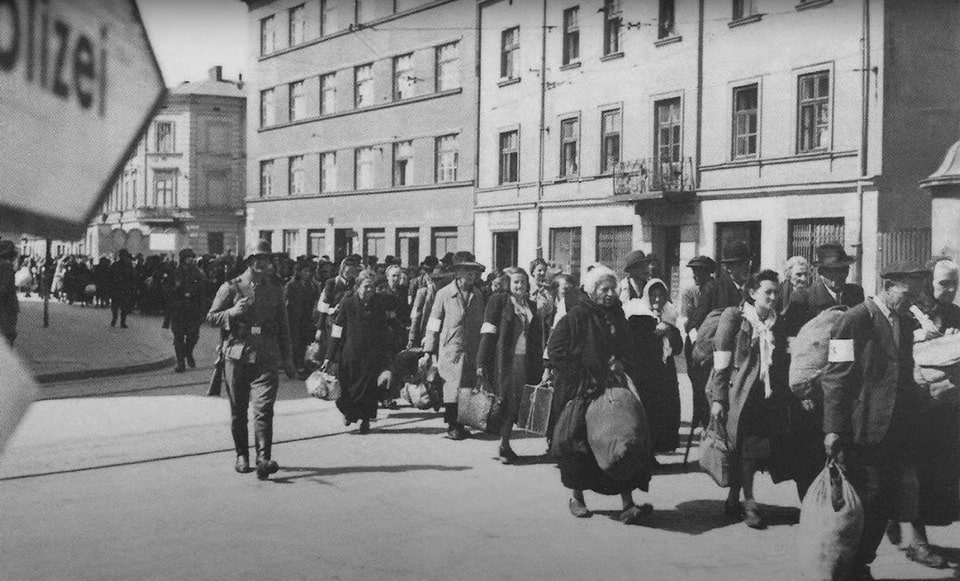
The last of the four ghetto gates in Krakow (a period from March 1941 until June 1942) was located in the northern part of Plac Zgody Square, at the intersection with Kacik Street. Jews who were lucky to be employed in enterprises outside the ghetto, for example, at Oscar Schindler’s DEF factory, generally left the walls of the quarter using this gate on a daily walk to the place of work. It was through this gate that the workers most often carried provisions into the ghetto walls, which they managed to obtain during the working day.


PLAC ZGODY (GHETTO HEROES SQUARE)
This area was ”created” in the Podgozge region as early as 1836. The largest open space within the walls of the Kraków ghetto was a traditional meeting place for its inhabitants. They used to manage their way out of the overcrowded apartments to the Krakow Jewish ghetto square to exchange news and products or just to chat with each other. The northern part of the square once housed one of the four gates to the ghetto, through which tram line 6 passed, as well as workers employed in factories outside the district walls. Plac Zgody was used by the Germans during mass deportations and the Krakow ghetto massacre as a gathering place for Jews to be sent to Belzec, Auschwitz, and Plaszow. Jews were executed within the square, and old people, children, women, and the weak were shot in the surrounding streets.
During the liquidation of the Kraków ghetto in March 1943, clothes and personal belongings of the deportees, as well as furniture from nearby houses, were dumped on the square into heaps. In 1948, the square was renamed “Ghetto Heroes Square”, but their memory was blurred by the placement of a public toilet and a bus stop. Only in 2005 was the area historically renovated. Among other things, a bus station in the northern part of the square was reconstructed, and today it contains the scheme of the former Krakow ghetto. 70 metal chairs (33 of 1.4 meters high and 37 of 1.2 meters high), known as ”Krakow chairs,” were installed within the open space as the Krakow ghetto memorial, symbolizing the horrors of the ghetto, deportation, massacre, and liquidation.





PHARMACY UNDER THE EAGLE (APTEKA POD ORLEM)
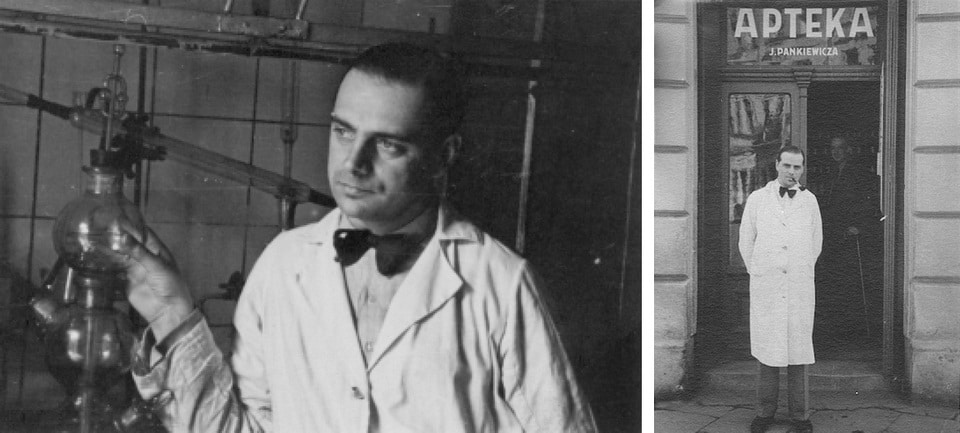
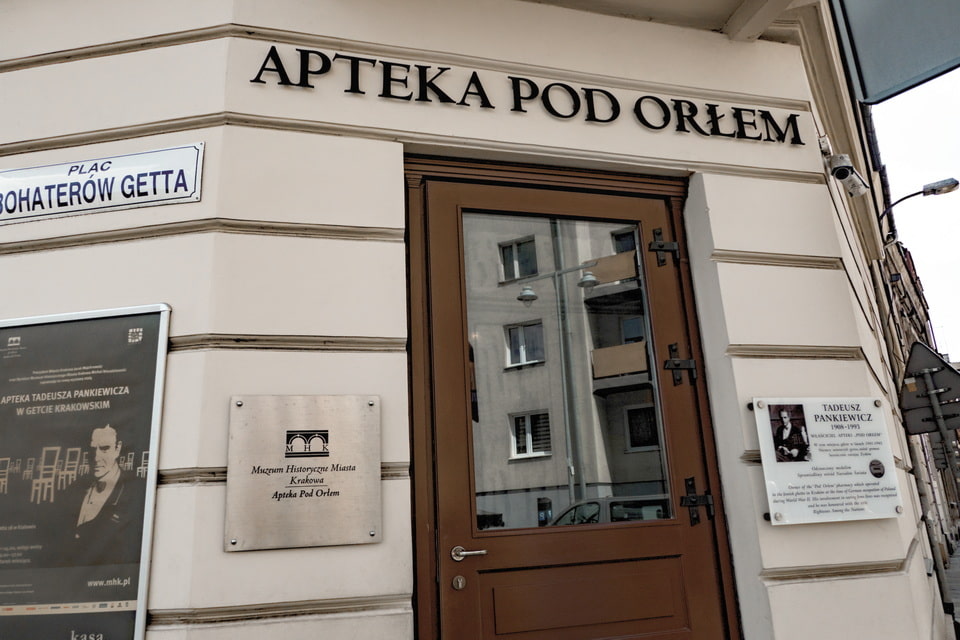
This Krakow ghetto pharmacy, located in the southwestern part of Plac Zgody Square, was the only institution of its kind within the walls of the Krakow ghetto. The pharmacy was owned by Tadeusz Pankiewicz, a Polish pharmacist and the only non-Jewish person who was allowed by the German administration to live and work within the Podgozge ghetto in Krakow. When the ghetto was sealed in March 1941, Pankiewicz’s pharmacy was the only one among the four in the neighborhood area included in the borders of the ghetto. Despite the German offer to leave the place and instead get control over one of the confiscated Jewish pharmacies outside Podgorze, he refused to move.
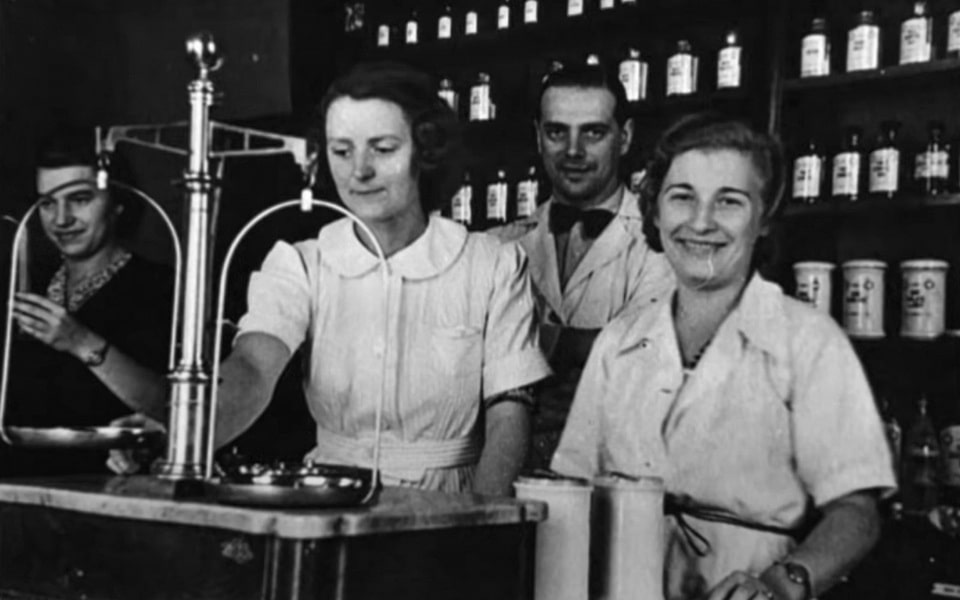
Pankiewicz supplied the necessary medicines to the Krakow ghetto and also provided Jews with provisions, temporary shelter, and even forged documents, saving human lives. Only four decades later, in 1983, Pankiewicz was officially honored as the Righteous Among the Nations, even though he made his first visit to Israel back in 1957. Along with Pankiewicz worked three female assistants: Helena Krywaniak, Aurelia Danek Czortowa, and Irena Droździkowska, because of whom the pharmacy worked without day-offs and breaks almost twenty-four hours a day. The Pharmacy under the Eagle was also a meeting place for Jewish intellectuals and former cultural figures and a place to share the latest ghetto news, and Pankiewicz had to pay bribes to continue to work in the ghetto. After the liquidation of the ghetto in 1943, Pankiewicz helped to save Jewish Torah scrolls, which he returned after the war.
In 1951, the pharmacy was nationalized, but Pankiewicz retained control until 1955. The pharmacy was closed in 1967, and the bar was located there until 1981. Two years later, a small historical exhibition opened in the building, and in 2003, thanks to the donation of the director Roman Polanski, once a prisoner of the Krakow ghetto himself, the museum was expanded. Today, the building of the former ”Apteka pod Orlem” houses the historical exposition of the Krakow Historical Museum, which consists of five rooms dedicated to life and death within the Krakow ghetto.



JEWISH FIGHTING ORGANIZATION (ZOB) SAFE HOUSE
By the end of 1940, before the establishment of the ghetto area in Podgozge, after a year of occupation, the Jews began to organize the Resistance Movement to stand against the Germans. Toward September 1942, several underground groups of young Jews like ‘Activa’, ‘Dror’, and ‘Iskra’ merged into one organization called ‘Zydowska Organizacja Bojowa’ (Jewish Fighting Organization) or ‘ZOB’. Initially, its members did not take active steps, but at the end of 1942, they began to carry out sabotage actions against the invaders, acts of wrecking, and even attacks on the Germans and collaborators. On December 23, 1942, members of the ZOB resistance threw a grenade at the ”Café Cyganeria”, where German officers liked to assemble. As a result of this courageous attack by the Jewish underground fighters, eleven people were killed and another thirteen were injured. The planned start of the Jewish uprising in the Kwakow ghetto was revealed by the Gestapo, and many underground activists were captured or killed. In February 1943, the surviving members of the ZOB organization left Krakow to join another underground group in Bochnia.
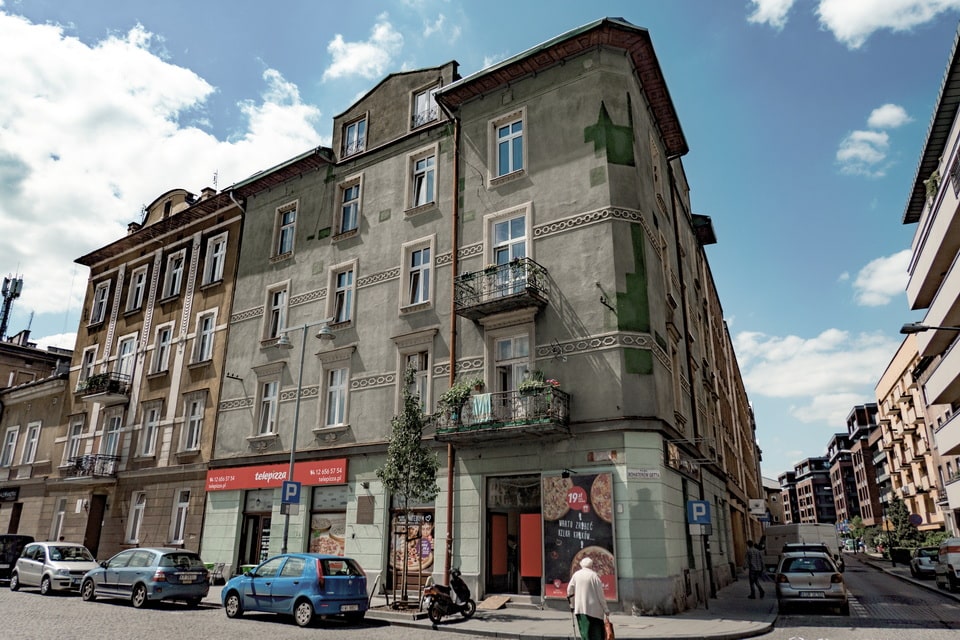
Although members of the resistance gathered in different places (for example, at Jozefinska 13), the headquarters of their organization is considered to be an apartment at Plac Zgody 6, right on the main square of the Krakow ghetto.
KRAKOW’S JUDENRAT’S FIRST OFFICE
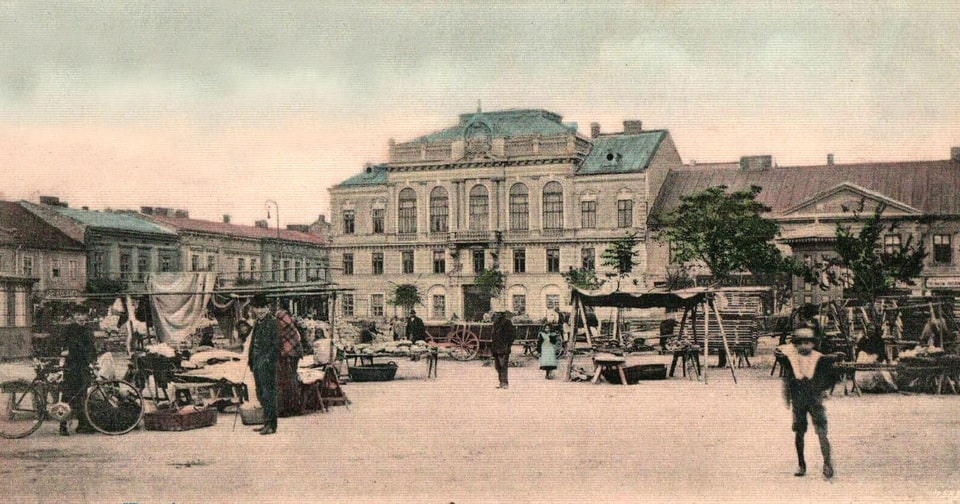
The office of the so-called Jewish administration or the Judenrat was located in the building of the former Podgorze Town Hall at the intersection of Rynek Podgorski Square and Boleslawa Limanowskiego Street for three years, from 1941 to 1942, and adjoined Main Gate No. 1. Initially, the office was located in the Kazimierz district at the intersection of Krakowska and Skawinska Streets and in March 1941 moved to Rynek Podgorski Square.
This Jewish body, under the careful control of the German administration, consisted of 24 members, twelve of whom were members of the executive board. A pre-war teacher, Marek Bieberstein (born 1884), was elected as the first nominal leader of the Krakow Judenrat or the ‘Council of Elders. ‘ If to be precise, Bieberstein was appointed the head of a temporary council called ‘The Board of the Jewish Religious Community in Kraków’, just several days after the Germans entered Krakow (probably September 12-13, while some sources claim September 8), and in November it was transformed into Judenrat under the leadership of Biberstein and his deputy, a former lawyer Dr. Wilhelm Goldblatt (born 1879). Other initial members were: Theodor Dembitzer, Wladislaus Kleinberger, Bernard Miller, Joachim Steinberg, Ferdynand (Feiwel) Schenker, Ascher Spira, Schabse Rappaport, Samuel Majer, Izydor Gottleib, Dawid Frisch, Maksmilian Greif, Maurycy Haber, Samuel Herzog, Bernard Leinkram, Leib (Leon) Salpeter, Dr. Dawid Schlang, Rafał Morgenbesser, Dawid Bulwa, Joachim Goldflus, Aron Schmur. Like in other cities with large Jewish ghettos: Warsaw, Krakow, and Lviv, the Judenrat members were prominent members of the pre-war Jewish community.
The German occupational forces regarded the new body as a mediator between them and the Jewish community, strictly supervised to fulfill German orders. The Krakow Judenrat issued its first appeal to the Jews as early as September 21, asking Jews to join work groups in the city: a precursor of the further forced labor practice. Marek Bieberstein was the head of Kraków’s Judenrat until being arrested in September 1940 for attempting to bribe the German officer who supervised deportations. He was later sent to Plaszów and killed there in 1944. He was shortly succeeded by Ferdynand (Feiwel) Schenker until the election of a former lawyer, Dr. Aron Rosenzweig, in November 1940. The Judenrat was supposed to ensure the maintenance of life within the ghetto walls, control the minimum sanitary conditions, and distribute food among the inhabitants. In December 1941, the Germans ordered all Jews to give up their furs, particularly taking them to the Judenrat office; they were transferred to the Wehrmacht in the deadly severe conditions on the Eastern Front. Its members had to collect information about residents for the Germans and prepare lists for deportation. After the arrest of Rosenzweig, the Krakow ghetto Judenrat was dissolved in its original form, and the new puppet ”government” moved to Wegierska Street 16. The former building was used as a warehouse for things stolen from the deported Jews.



ORDER POLICE OFFICE AND A PRISON
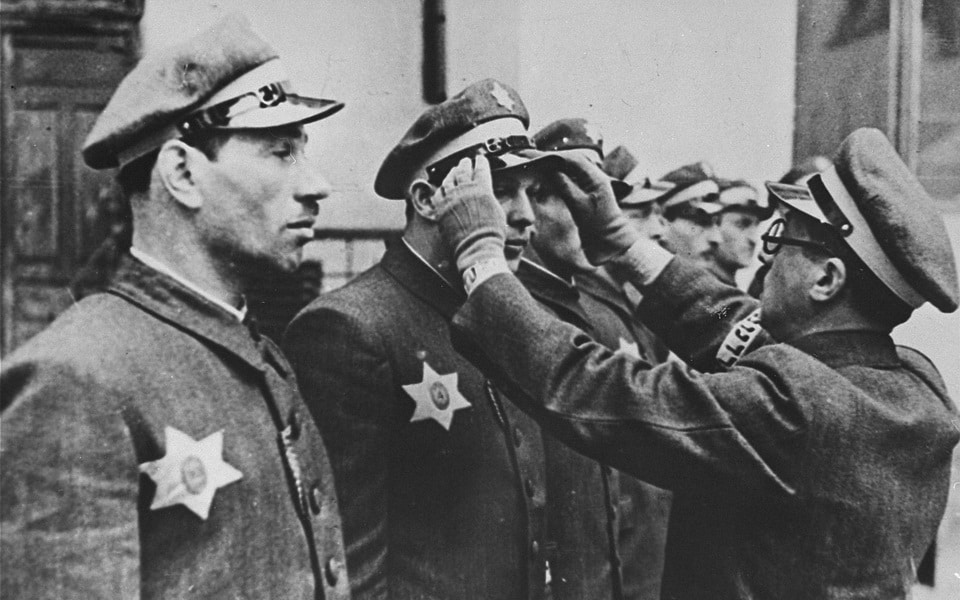
Like in many other cities in occupied Poland, the Germans did not want to use their own police forces inside the established ghettos, so they supervised the creation of the so-called ‘Jewish Order Service’ (Judischer Ordnungsdienst or shorty ‘OD’). The Order Police in the Krakow ghetto was created by the local Judenrat on July 5, 1940, and consisted of Jews, led by Simcha Spira, a glassmaker in the prewar years, who became infamous for his close cooperation with the Germans. A Polish pharmacist, Tadeusz Pankiewicz, characterized Spira as a megalomanic psychopath. Later, he and his family were executed in the Plaszów concentration camp in 1944, and during the time of the Krakow ghetto, the policemen maintained order in the district and played a cruel role in the deportation of Jews and the liquidation of the Krakow ghetto in March 1943.
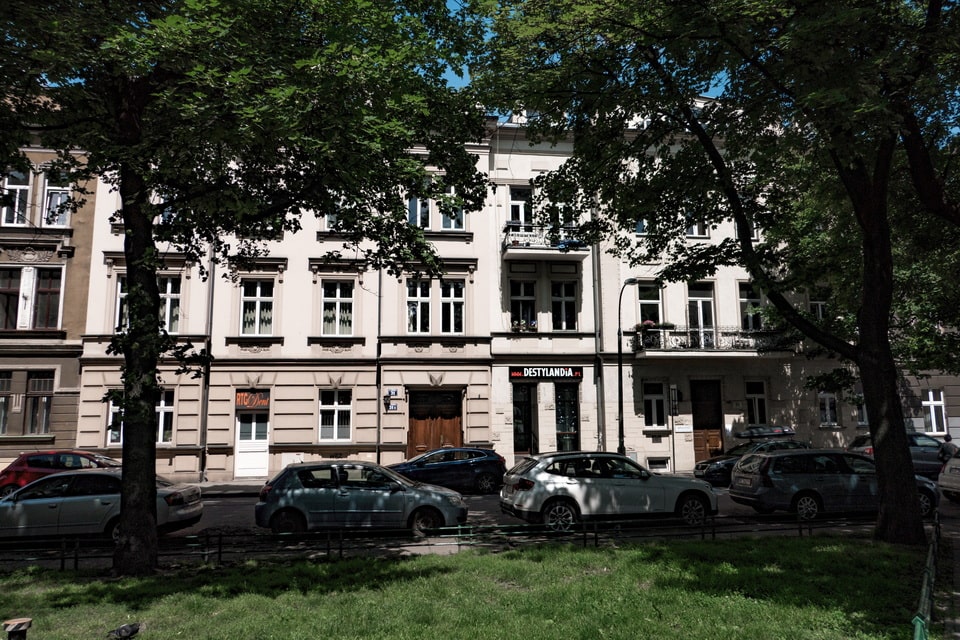
Originally, the OD in Krakow was located at Jozefinska 17 at the intersection with Krakusa Street, and in August 1942, they moved to Jozefinska 31 after forcing the local children’s orphanage to leave the building. Both offices of the OD included the prison cells and interrogation rooms, from where Jewish arrestees were forwarded to the infamous Montelupich Prison, or Plaszów, Auschwitz, or other camps. During the existence of the ghetto, the Jewish policemen and their families lived under privileged conditions, with permission to leave the enclosure area and with access to extra food, often through bribes. At some points, their supplies were enough to sell extra food to the black market. After the liquidation of the ghetto in March 1943, Simcha Spira was arrested, then released, and in December 1943, this time, finally arrested. He and his family were executed in Plaszów in 1944, like all members of the OD.
HOSPITAL FOR THE CHRONICALLY SICK
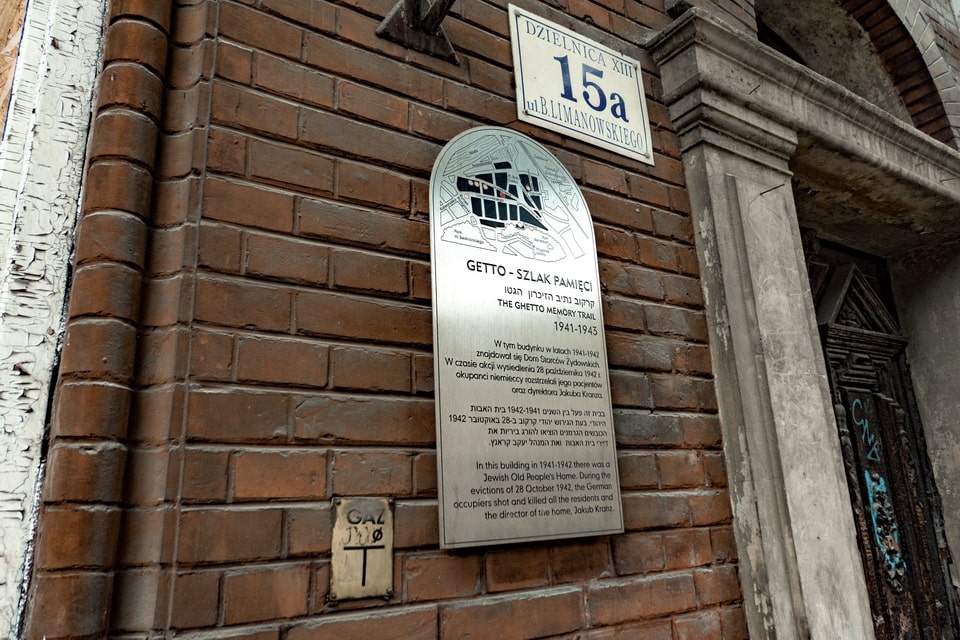
This medical institution was established in the Kazimierz district in mid-1940, already during the occupation, but before the establishment of the Krakow ghetto. In 1941, it was moved from the hospital with sixty beds at Miodowa Street in Kazimierz (near the local Jewish cemetery) to Boleslawa Limanowskiego 15. The hospital under the directorship of Doctor Jakub Kranz was called the ”Senior House” since many of its patients were already over 70 years old (14% of Jews in the Krakow ghetto were above 60 years old), and many of them had been previously evicted from the closed-down shelters. Also, here patients with chronic diseases were treated, and there were disabled and cripples at the outpatient clinic. The hospital was able to operate thanks to donations and symbolic fees from those patients who could afford charges.
The Hospital for the Chronically Sick (disabled and elderly) was one of the targets of the German ‘Aktion’ in the ghetto on October 28, 1942. Most of the patients, whom the Nazis regarded as useless eaters, were killed on the spot, either inside the hospital in their beds or in the courtyard. Among those killed was Doctor Jakub Kranz. A few patients who were able to work were put into horse-drawn carriages along with the children from the nearby orphanage on Jozefinska 41, taken to the Plaszów camp, shot, and dumped into pits.

INFECTIOUS DISEASES HOSPITAL
This hospital for patients with infectious diseases was opened in the previously closed Jewish school at Rekawka 30 on the initiative of the famous doctor Aleksander Bieberstein (1889-1979), whose brother Marek would later become the first head of Judenrat in the Krakow ghetto (killed in Plazow in 1944). Bieberstein was born in Ternopil (modern Ukraine), studied at the University of Vienna, and served as a medic in the Great War.
It is worth noting that even before WWII, the large Jewish hospital at Skawinska Street in Kazimierz lacked an infectious disease ward, and such patients were treated in Polish hospitals, which became impossible after the occupation. In April 1940, Dr. Bieberstein managed financial backing from the Jewish community and opened a small hospital at Rekawka Street with fifteen beds and a children’s ward. Since the Germans were afraid of getting infected themselves, they avoided hospital checks. For this reason, it has become one of the few relatively safe places within the ghetto walls. Medics sheltered the sick and infirm, and even ZOB members, at one time, kept weapons and contraband goods in the building. Apart from the residents of the Krakow ghetto, the hospital at Rekawka 30 treated Jews from other communities.
During the mass deportations in June 1942, about 300 people were hiding in the hospitals inside the Krakow ghetto. After June 20, when the ghetto territory was reduced to almost half, the hospital was a part of the now-dismantled southern part, and it was moved to Plac Zgody 3. At that new address, the infectious diseases hospital existed until the Krakow ghetto liquidation in March 1943. After the hospital was closed, Dr. Bieberstein became a prisoner in Plaszów, and in 1944, he was included in the famous Schindler’s List and taken to Brnenec, where he treated Jews with infectious diseases. After the War, he built a career in Poland, becoming a deputy of the Ministry of Health, but later immigrated to Israel, where he lived until he died in 1979. His book ‘The Holocaust of the Jews in Kraków’ was published in 1986, seven years after the doctor’s death, and it is regarded as one of the most valuable books about the Krakow ghetto.
JEWISH MUTUAL AID SOCIETY (SELF-HELP ORGANIZATION)
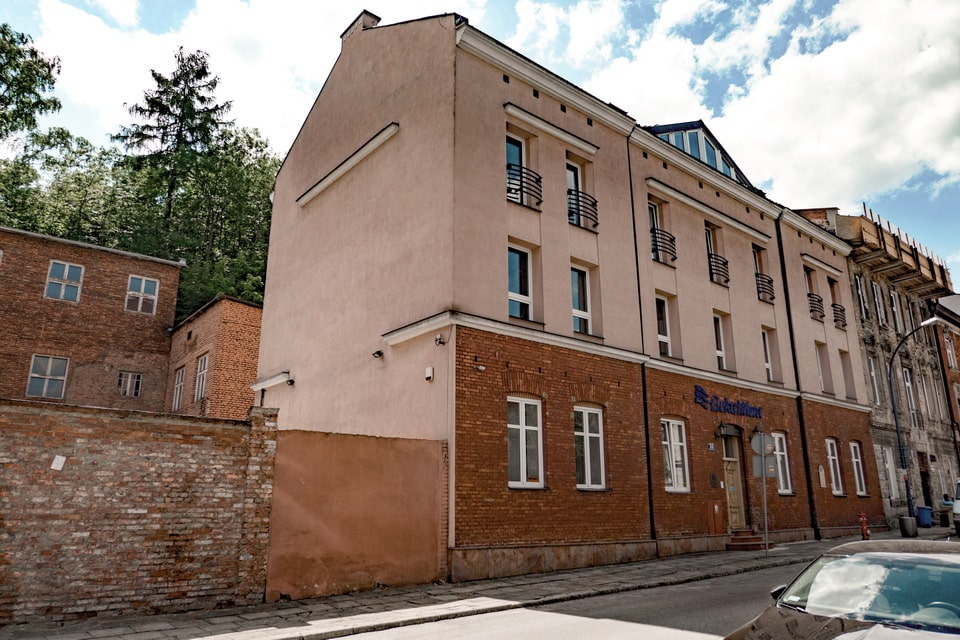
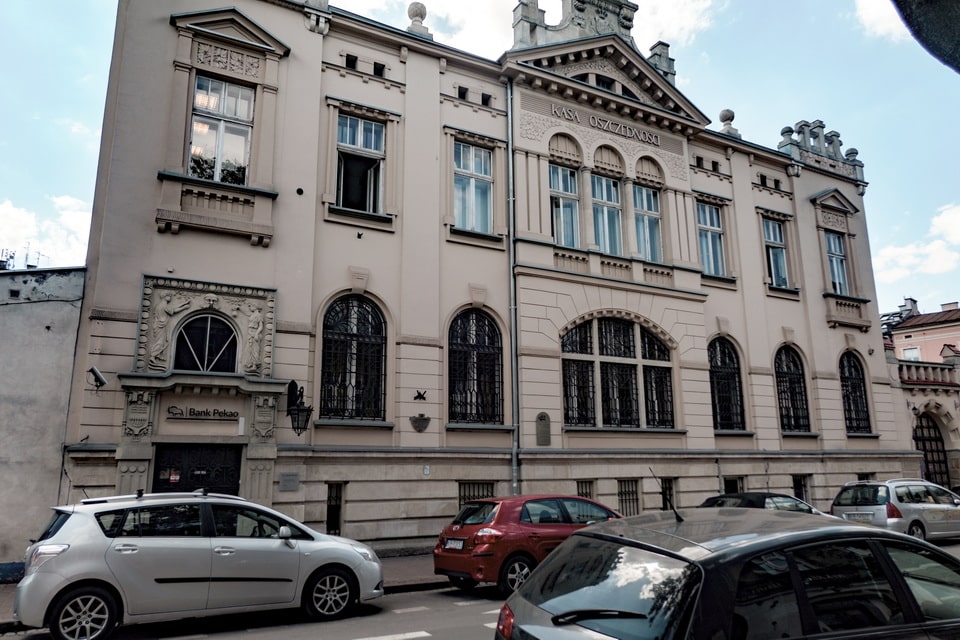
After the creation of the Krakow ghetto, the Jewish Self-Help Organization (JSS) was located in the building of the former pre-war bank (built in 1910) at Jozefinska 18. Formally, the body was created as early as May 1940, but it moved inside the ghetto already in March 1941. The body, under the direction of Jewish Michal Weichert (1890-1967), provided food supplies to public kitchens, medicines in hospitals, and assistance to other charitable institutions within the ghetto walls. JSS had numerous sources of supplies, including the Jewish charity organizations from Switzerland and Sweden, the International Red Cross, and the American Jewish Joint Distribution Committee. Apart from documented activity, the Jewish Self-Help organization in the Krakow ghetto used the black market to buy food for its residents. As the Jewish faith prescribed giving up to a fifth of one’s property for charity, the JSS also redistributed the supplies inside the ghetto to the most vulnerable.
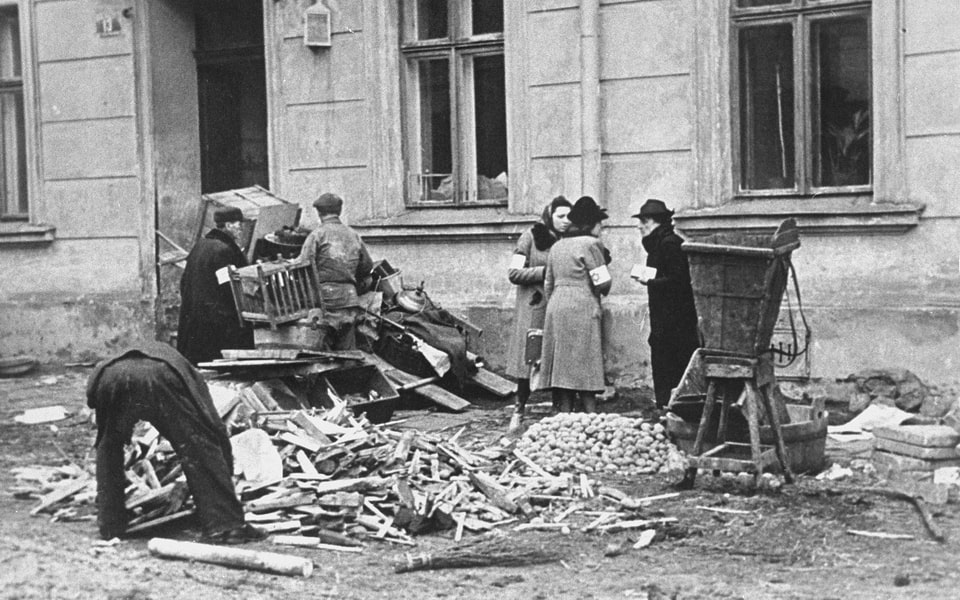
On May 29, 1942, every Jew in the Krakow ghetto was ordered to come to the office of the Self-Help Organization at Jozefinska 18. Those able-bodied Jews who were considered ‘useful’ got renewed identification cards and worker permits, and their families got a postponement from the upcoming deportation and extermination. Those whom the Germans considered ‘not essential workers’, along with their families, were deported to the Belzec extermination camp at the beginning of June 1942, up to 7000 men, women, the elderly, and children in total. It took Gestapo officers three days, between May 29 and June 1, to evaluate the lives of thousands of people in the Krakow ghetto.
The Jewish Self-Help Organization was dissolved by the Germans on December 1, 1942. Today, as well as before the war, the building houses the ”Kasa Oszczednosci Miasta Podgorza” Savings Bank. The persona of Michal Weichert was debated during the war and in the post-war years, as he had been regarded as a potential collaborator, and for some time, he was even on the list for potential elimination issued by the underground. In 1946, he was acquitted, and in 1958, he left Poland for Israel, where he peacefully lived, published memoirs, and passed away at the age of seventy-seven.
GHETTO GERMAN LABOR OFFICE (ARBEITSAMT)
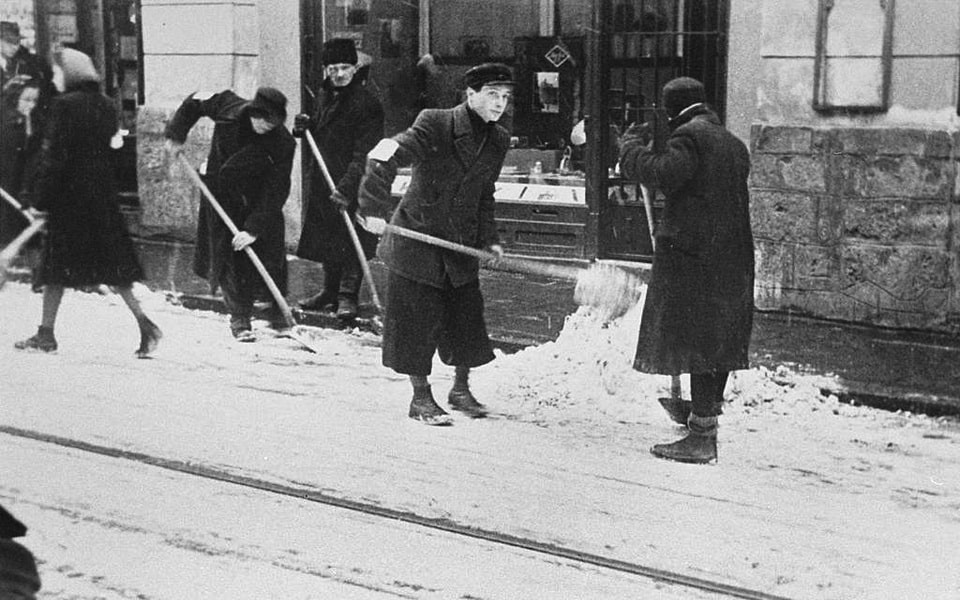
After the formation of the Krakow ghetto, the so-called Arbeitsamt (German Labor Office) was located in the building at Jozefinska 10. Despite the completely innocuous name, the body provided full employment for all Jews in the ghetto over 14 years old, of both sexes. About 60% of the Jews in the Krakow ghetto area were eventually employed at German enterprises outside the walls. The rest were used for clearing snow in the winter, sweeping the streets in the warm season, building, and various utility works, usually from 7 a.m. to 7 p.m. Each worker had to have a special document called Kennkarte, a work card permission, updated monthly within the Arbeitsamt building. A jew with permission was able to avoid deportations to death camps (like the one in June 1942 when people without ‘Blauschein’ permits were deported to Belzec), leave the ghetto walls daily, and return after the shift. The enterprises paid 4-5 PLN per worker per day to the German administration, and the Krakow Jews received nothing.
The Blauschein (German: blauer Schein, literally «blue slip» or «blue certificate») was a work permit document with a blue stamp issued in the Krakow ghetto by the Arbeitsamt, which certified that the bearer was employed by a German enterprise and was therefore classified as an «essential worker». In the context of the Krakow ghetto, possessing a valid Blauschein was a matter of life and death: Jews without a renewed Blauschein during the mass deportation action were not permitted to remain in the ghetto and were taken to Plac Zgody and subsequently transported to the Bełżec extermination camp.
There was always a queue outside the building of Jozefinska 10, Jewish men who desperately asked for a job assignment. Only a few ‘lucky ones’ got work inside the Wawel Castle, a seat of Hans Frank, or in the Gestapo workshops (the office was situated at Pomorska 2 in the northern part of Krakow). The Labor office was closed after the second mass deportation conducted on October 27-28, since the SS now took the role of employing all Jews in the ghetto.
GHETTO MAIN HOSPITAL
Before World War Two and the coming of the Germans, a large Jewish Community Hospital was located on Skawinska Street 8 (built in 1866) in the Kazimierz district, an area with a historically high percentage of the Jewish population. In the years before the occupation, the hospital used to operate up to three thousand admissions annually, with around forty thousand days for hospitalized patients. With the start of the occupation, the hospital was closed for a few months and then reopened with the support of the Judenrat, who managed to find money to pay Jewish physicians who were, from time to time, assigned by the Germans to perform labor in the city, for example, cleaning the snow.
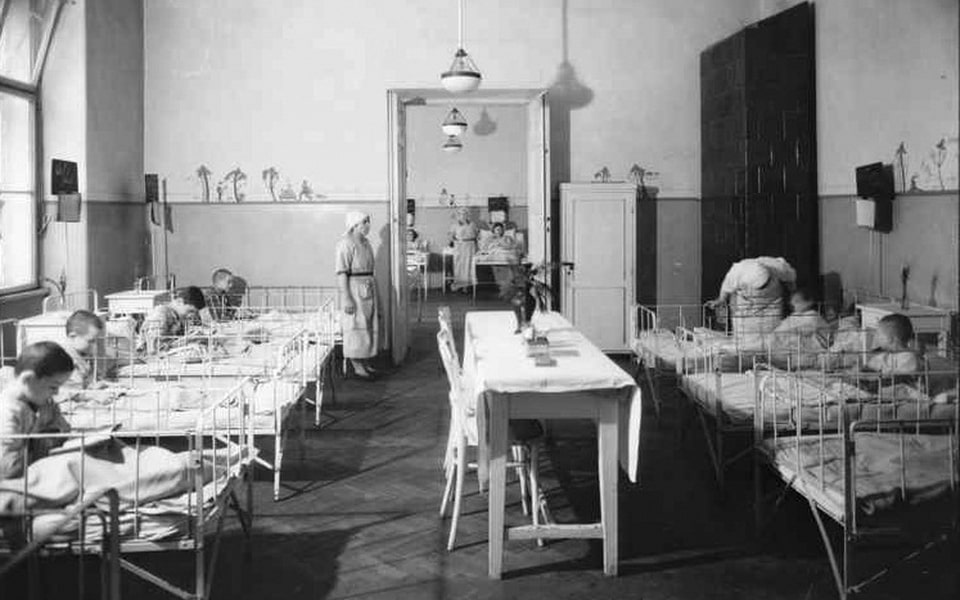
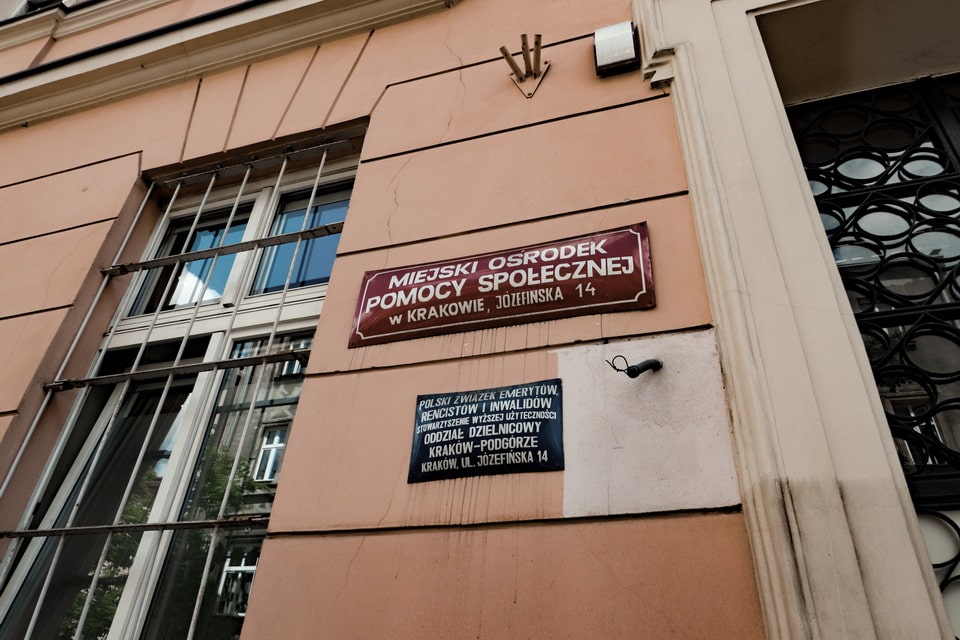
When the ghetto was sealed in March 1941, the hospital moved to a much smaller building on Josefinska 14 inside the ghetto area in Podgorze on October 31, 1941. The new hospital location was near both the German Labor Office and the children’s daily nursery on Jozefisnka 22. The Jewish Community Hospital treated not only Jews from the ghetto but also other settlements in the Krakow region, and during the heavy days, two patients could share one bed because of overcrowding, and some Polish doctors came to help. The Jewish staff worked under the directorship of a famous Doctor Maximilian Blassberg (born in 1875), who was known before WWII as an expert on resort medicine, and Doctor Jozef Nissenfeld.
During the liquidation of the Kraków ghetto in March 1943, all the patients and doctors were brutally murdered by the Germans, who did not spare even pregnant women. This scene, among others, became famous because of the “Schindler’s List” movie. Apart from the main hospital, there were other smaller clinics in the ghetto: gynecology and obstetrics at Swiętego Benedykta 3/7, a neurological department at Limanowskiego 42, the otolaryngological clinic at Limanowskiego 4, and a dental clinic at Krakusa 15.

JULIUS MADRITSCH’S FACTORY
Before the liquidation of the Krakow ghetto and the transfer of the enterprise to the territory of the Plaszow labor camp, the factory of Austrian industrialist Julius Madritch was located at Rynek Podgoski 2, next to the Judenrat office. The factory was engaged in tailoring, and its staff consisted of about 800 Jewish workers. Through the personal efforts of Madritsch himself and his administrator, Raymond Tisch, hundreds of lives were saved from being sent to the death camps. The enterprise of Julius Madritch was known for better working conditions and additional provisions, which the Austrian businessman bought for his own money.

OPTIMA FACTORY
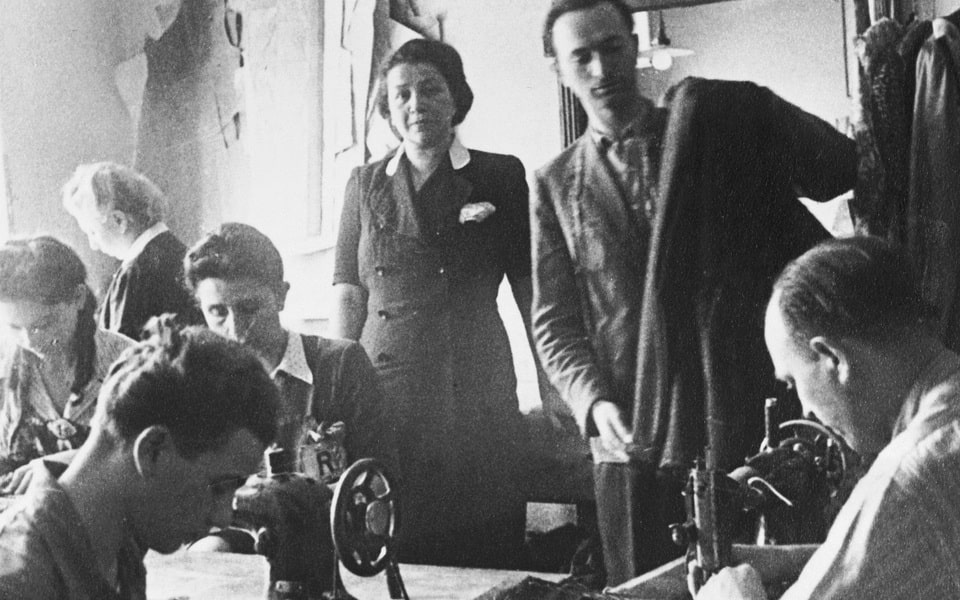
The capacities of the Optima factory, which had produced chocolate before the war, occupied almost a whole quarter, between the streets of Krakusa and Wegierska. With the beginning of the occupation, the profile of the factory was changed, and now, Jewish workers here were engaged in sewing clothes and shoemaking. Since the establishment of the ghetto, Jewish children were taught religion and culture secretly in the backyard of the Oprima factory at Wegierska 9. On February 25, 1942, the Jews opened a small concert hall on the premises of the former chocolate factory here, which was closed in May.
During the mass deportations and Krakow ghetto massacre on June 6, 1942, most of the captured Jews were temporarily detained on the territory of the Optima factory before being sent to Belzec. People without renewed work permits were crammed into the courtyard of the former OPTIMA factory for two days until June 8 and then escorted to the Prokocim railway station in the southeast part of the city and from there to Belzec, where all of them were gassed. After the reduction of the Kraków ghetto area on June 20, 1942, some of the former Jewish workshops and firms moved to the reduced area, including the premises of the Optima factory.
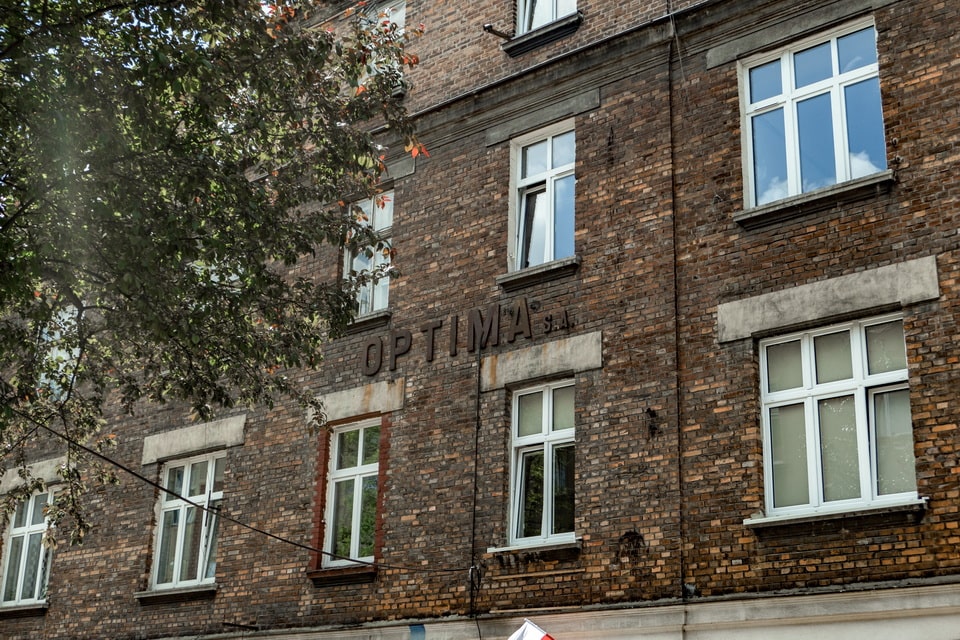
The original buildings of the Optima factory have not survived in their original form. At the same time, you can see the original Optima sign on the facade of the building at Krakusa 7.
KRAKOW ORPHANAGE FOR JEWISH CHILDREN
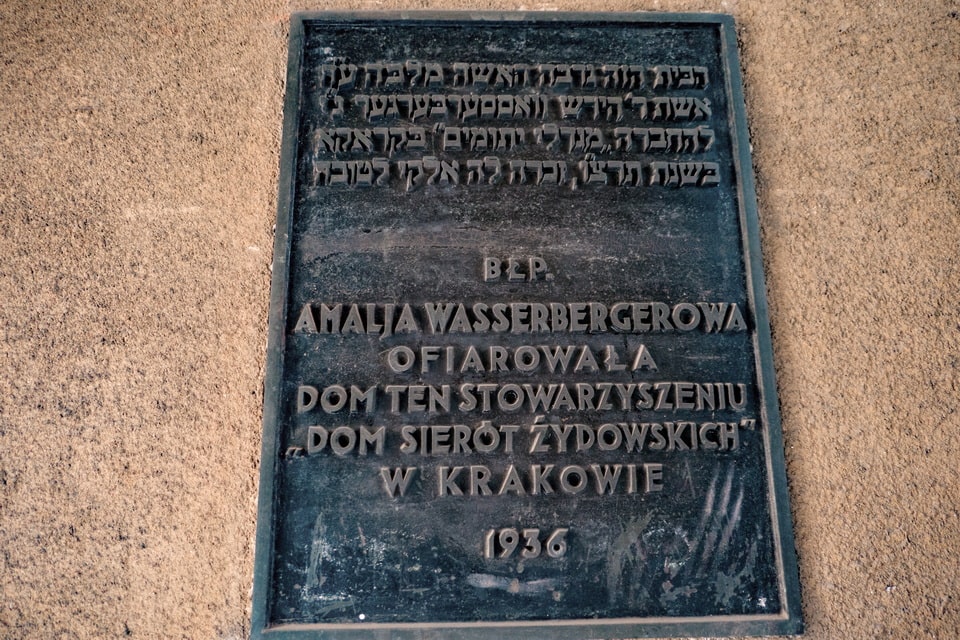
This Jewish orphanage in Krakow was created before the war, in 1936, and was located at Krakusa 8. In addition to the orphanage for children, school lessons were organized for them, which were taught by Anna Feuerstein. The woman was assisted by her husband, Leopold Feuerstein, and also by Rachela Ehrich, Rozalia Kreppel, and David Kurzmann. Anna Regina Feuerstein was born in 1891 in Kolomyia, Ukraine (modern Ivano-Frankivsk oblast).
After the mass deportations and reduction of the ghetto territory in June 1942, the shelter was moved to Jozefinska 31, at the building where the furniture factory had previously worked. After the decision to place an Order Police Office in the adjacent buildings, the orphanage was moved for the second time, down the street to number 41, probably in August 1942. At the same time, it received many children from the surrounding villages who arrived in bad conditions.
On the afternoon of October 28, 1942, the Germans broke into the children’s orphanage on Jozefinzka 41 as part of a broader action in the Krakow ghetto, which the Nazis euphemistically called the ‘Evacuation operation’. At that time, there were around 200 children there. They threw some children from the windows, and other Germans shot them. The small children, as well as ill and elderly ghetto residents from the nearby hospice at Limanowskiego 15, were put into horse-drawn carriages (children were put into baskets) and taken to Plaszow. There, the old people were shot, and children were thrown into the pits just to save bullets and buried alive.
Those children from the orphanage who were older were escorted, by four to five in a row, next to David Kurtzmann, Anna, and Leopold Feuerstein, by the Germans first to Plac Zgody, from there through the gate on Wegierzka Street (set up in June 1942) to Plaszow Train station (not far from the camp) and from there they were all deported to Belzec and killed there. Anna Feuerstein was offered to stay in the ghetto, but she refused to leave the children and was killed in Belzec as well.

ZUCKER SYNAGOGUE
At the time of the outbreak of the war, there were four Jewish synagogues in the Podgozge district, and three were temporarily open in the ghetto at the initial phase of its existence: The Zucker Synagogue at Wegierska 5, Bikur Cholim at Limanowskiego 13, and Skawina Synagogue at Jozefinska 3. The only one that has survived until today is the Zucker Synagogue at Wegierska 5. The occupation authorities banned any religious gatherings of Jews and turned the synagogue buildings into warehouses. The same fate befell the Zucker synagogue. First, valuables from other synagogues in the Kazimierz district were demolished here, and then the Germans set up a warehouse here, and after a while, a factory. The building, built in 1879-1881, was abandoned after the war and gradually collapsed before it was redeemed in 1996. The facade was restored and turned into an art gallery, which is still here today.

REMAINS OF THE KRAKOW GHETTO WALL: TOMBSTONE-SHAPED SEGMENTS AT LWOWSKA 25-29 AND LIMANOWSKIEGO 62
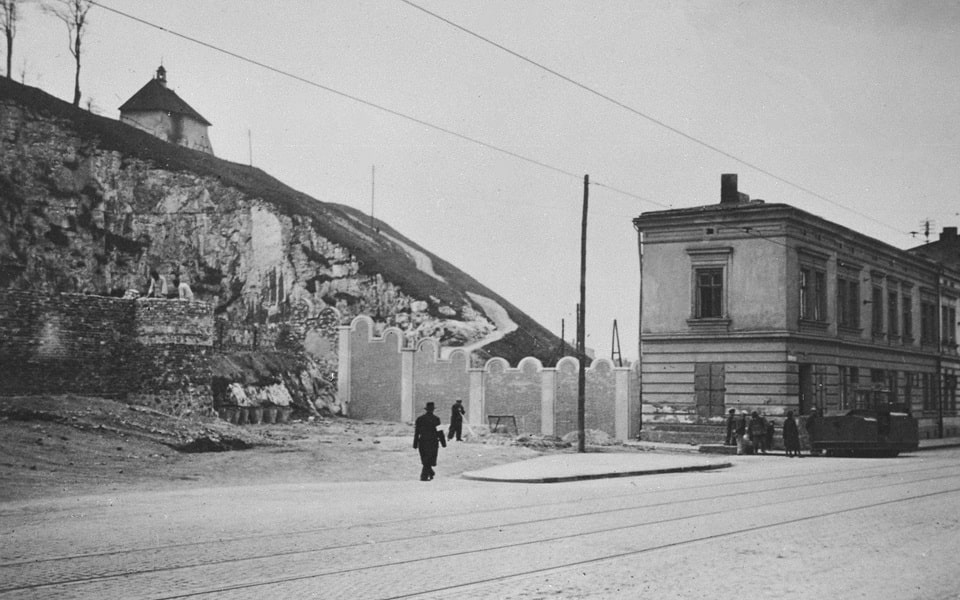
Two fragments of the Krakow ghetto wall have been preserved until today. The first, 12 meters long, is located near the Lwoska 25-29 buildings. Only in 1983, a plaque in Polish and Hebrew was placed here: ”Here they lived, suffered and died in the hands of German executioners. Here they began their way to the death camps”. The second 11-meter fragment of the Krakow ghetto wall is preserved in the courtyard behind the local school, at Boleslawa Limanowskiego 62, at the foot of the hill, and Fort Benedict. The upper part of the ghetto wall was erected in the form of Jewish tombstones – thus, the Germans, with cruel symbolism, made it clear what fate awaited Jews in these walls.


VARIETE RESTAURANT
After the establishment of the Krakow ghetto, several cafes were preserved in it, where the Germans spent their time. Among them was the Variete restaurant, located at Rynek Podgorski 15. It was owned by Aleksander Frostrer, a wealthy businessman of German-Jewish origin who arrived in Krakow in 1941. The cafe was located directly across the street from the Judenrat building, to the left of the Main Gate to the ghetto. Today, it houses a store.
JEWISH ORPHANAGE AT JOZEFINSKA 22
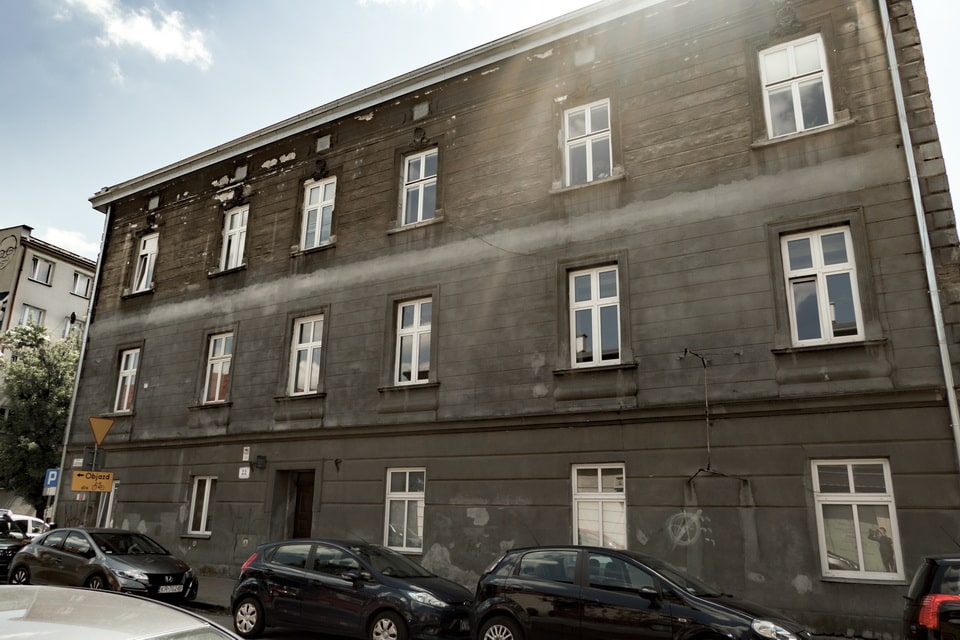
At Jozefinska Street 22, very close to the Jewish Self-help Organization, there was an orphanage for children aged 6-14 years old, who were placed there for a while while their parents worked during the daytime. During the liquidation of the Kraków ghetto in March 1943, the Germans broke into the building and brutally killed all the children and support staff who were there at the time.
While children at Krakusa 8/Jozefinska 31 and later 41 were in orphanages without parents, and probably that’s why they were killed first in 1942, many of the children at Jozefinska 22 had parents, and it was not an orphanage in a general sense, but a kind of a refugee, a place where children of Jewish parents could spend time during the day while their parents were at work. That’s why this ‘orphanage’ in the so-called ‘Ghetto A’ area lasted longer than the first one. Because they had parents, and those parents had jobs. The Germans even called this institution ‘Tagesheim’, which means ‘day hostel’ or ‘day nursery’. It was the murder of the children at Jozefinska 22 in March 1943 that changed Oskar Schindler’s worldview, rather than watching a girl in a red coat from the hill.
THE SECOND JUDENRAT OFFICE
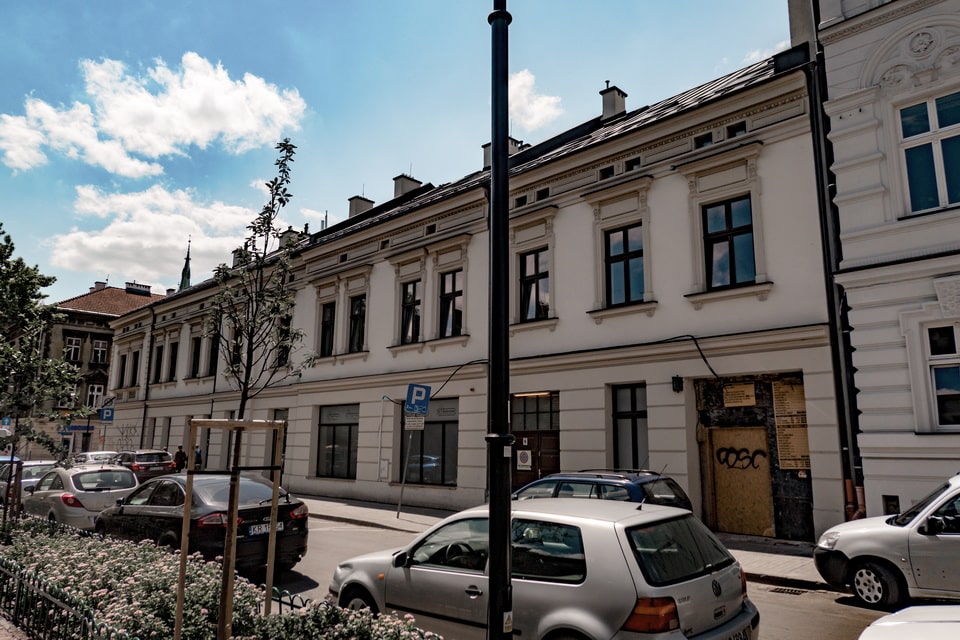
In June 1942, after the dissolution of the primary version of the Jewish Judenrat at Rynek Podgorski, and after the arrest of its leader, Dr. Aron Rosenzweig (the successor of Marek Biberstein since late 1940, Rosenzweig and his family were sent to Belzec and killed), a new body was formed by the Germans. It was named the ”Ghetto Management Board” and a new head Dawid Gutter (born 1905 in Munich) was chosen by the Nazis for the position, thus meaning the end of an electorary practice. The work of the puppet body at Wegierska 16 continued until the liquidation of the ghetto in March 1943, the dissolution of the council, and the expulsion of its members.
GATES AFTER JUNE 20, 1942
After a massacre and mass deportation of the inhabitants of the Krakow ghetto to the death camp of Belzec, on June 20, 1942, the German administration ordered the area to be reduced. The order came from the notorious SS-Hauptstrumfuhrer Rudolf Pavlu (1902-1949), the head of the Labor Department from October 1939 to February 1942 and later the head of Krakow’s municipal authorities. Pavlu summoned the newly appointed Judenrat leader, Dawid Gutter (who replaced Dr. Aron Rosenzweig, who had been deported in June 1942), and gave the Jews twenty-four hours to reduce the territory of the ghetto.
Almost half of the former territory in the south was now beyond the new administrative boundary and natural barrier along Limanowskiego Street. New gates on the south side were installed at the corner of Limanowskiego and Wegierska streets, adjoining the building where the new body of the ”Ghetto Management Board”, which replaced the first Judenrat, now worked.

JOZEF PILSUDKI BRIDGE
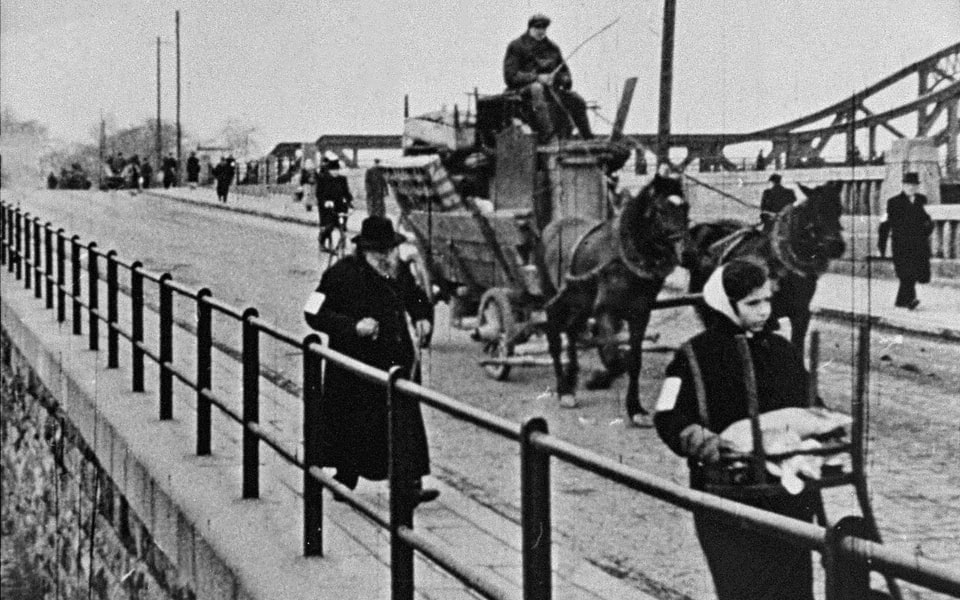
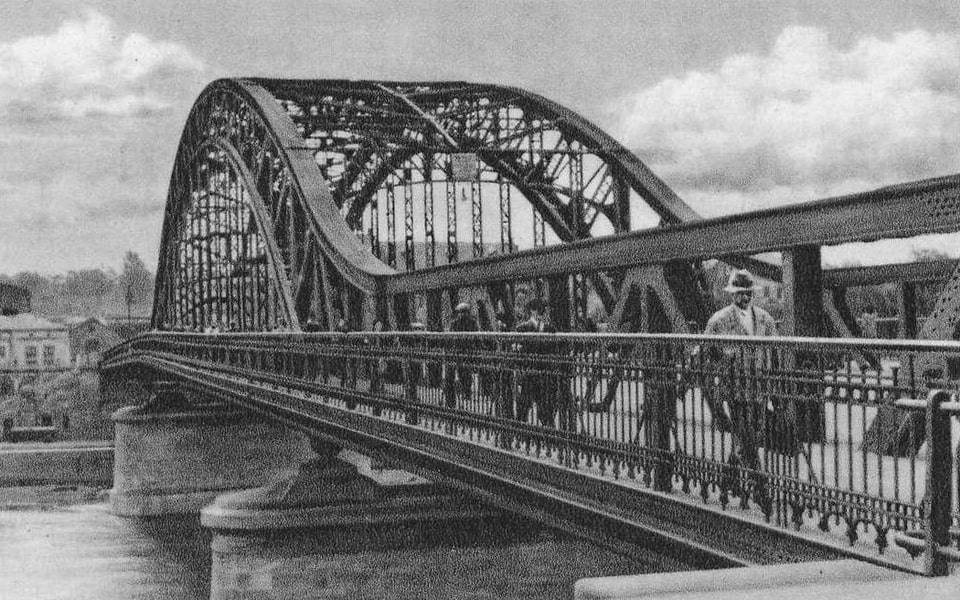
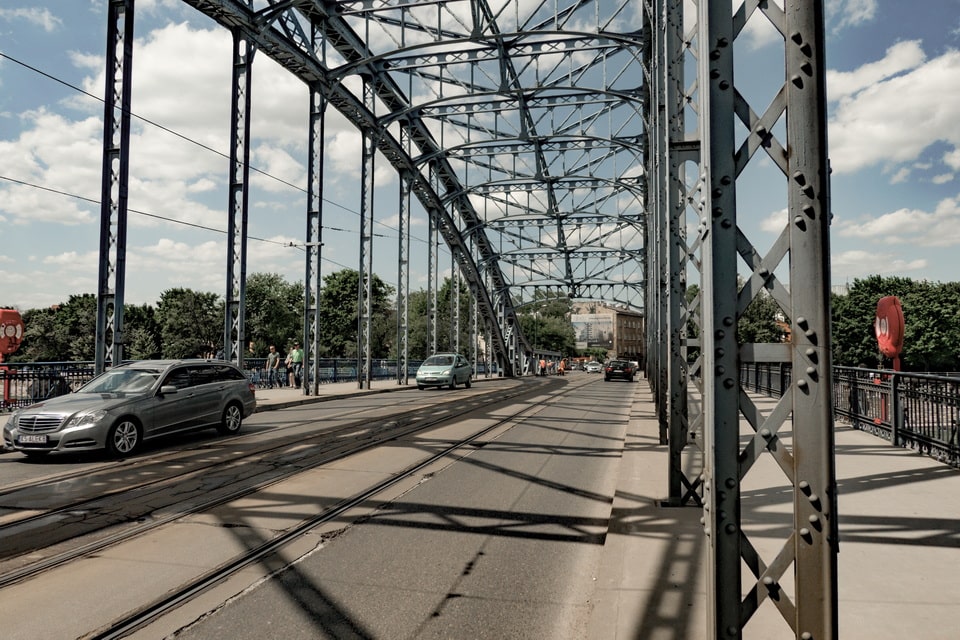
The first bridge with this name, 146 meters long, was opened in 1933, connecting the Podgozge and Kazimierz districts. During the forced relocation of Jews to the established ghetto in Podgozge in March 1941, the Pilsudski Bridge became (like the Krakus Bridge) a transport route for people to move from the Kazimierz district. During the evacuation of the German troops from Krakow in January 1945, the Pilsudski Bridge was mined and seriously damaged, and its current appearance, close to the original, was restored in 1948. It is located outside the territory of the former Krakow ghetto, but it is an important historical monument that deserves mention here.


Visiting the Krakow ghetto today: practical information
The former Krakow ghetto area (Podgórze district) is fully accessible to the public at all times — it is a normal residential neighbourhood with no fences, no gates, and no admission fees. The 30+ locations described in this article can be walked in a self-guided tour of approximately 2–3 hours.
Starting point: Plac Bohaterów Getta (Ghetto Heroes Square, formerly Plac Zgody) — the centre of the former ghetto and the site of the 70 empty metal chairs memorial. Tram lines 3, 19, 24 from central Krakow to the «Plac Bohaterów Getta» stop, approximately 10–15 minutes from the Old Town or the Main Railway Station.
Key sites with addresses:
— Pharmacy Under the Eagle (Apteka Pod Orłem museum): Plac Bohaterów Getta 18. Opening hours: Tuesday–Sunday 10:00–17:00. Admission fee applies.
— Ghetto wall fragment #1: Lwowska 25-29 (with tombstone-shaped top). Open 24/7, free.
— Ghetto wall fragment #2: Boleslawa Limanowskiego 62, courtyard behind local school. Free access during daylight hours.
— Main gate site: Rynek Podgórski / Limanowskiego intersection.
— Zucker Synagogue (now an art gallery): Wegierska 5.
— Oskar Schindler’s Factory Museum: Lipowa 4, about 1.2 km west of Plac Bohaterów Getta — allow 2–3 hours extra for the museum.
Guided tours: Krakow-based agencies offer Jewish heritage and WWII-themed walking tours of Podgórze; these are recommended if you want narrative context beyond what the (minimal) on-site signage provides. Most depart from the Old Town or from outside Schindler’s Factory Museum.